




Abstract
Women experiencing homelessness who are also survivors of violence require uniquely tailored programs to accommodate complex needs. To understand how violence shaped the lives of formerly homeless African American women, an instrumental case study design and community-based participatory research approach was utilized in this qualitative study. Focus group interviews with graduates (N = 40) from a long-term transitional housing program were conducted. Using thematic analysis, identified themes included: cycles of violence, violence in the community, relationships with children, and coping with violence. These themes illustrated survivors’ growth through supportive programming and highlighted services dedicated to empowering women who have experienced violence.
Introduction
African American women disproportionately experience various forms of violence across the lifespan (West, 2002, 2004). Several factors compound the experiences of violence in the lives of African American women, among them multiple and intersecting forms of oppression, historical trauma, systemic racism (Hampton et al., 2008; Johnson et al., 2021) sexism, classism, and poverty-related challenges (Crenshaw, 2019; Roschelle, 2017; Watson-Singleton et al., 2020). Women’s lifetime subjection to violence can lead to a myriad of physical and mental health concerns (Liu et al., 2016; Wong & Mellor, 2014), while evidence shows that violence has both short- and long-term effects on the physical, mental, and social health of affected individuals (Miller & McCaw, 2019). Experiences of violence represent a serious public health concern in the United States, especially among women who experience homelessness. As homelessness, violence, and substance misuse often co-occur, shelter programs designed to accommodate these intersecting health risks are crucial (Martin et al., 2008).
The purpose of this study was to understand how experiences of violence shaped the lives of homeless women who were residents of a long-term transitional housing program. In this qualitative study, focus group interviews were conducted with 39 women who had resided at Nia Imani Family, Inc., and an individual interview was conducted with the founder and director of Nia Imani, who had also experienced homelessness (N = 40). Nia Imani Family, Inc. is the only long-term transitional housing program developed to aid homeless African American women in the Milwaukee metropolitan area. Black feminist thought was used as the theoretical framework that guided the study design, data collection, and data analysis. This theoretical framework was seen to be consistent with Nia Imani’s emphasis on asset-based approaches for understanding and helping African American women and building capacity. A Black feminist approach was also valuable in informing our analyses of the complex intersecting factors that impact homeless African American women’s experiences of violence, including racialized poverty and gendered violence. In an attempt to explicate these complex realities, authors created Figure 1 to demonstrate the synthesis of these interactions.
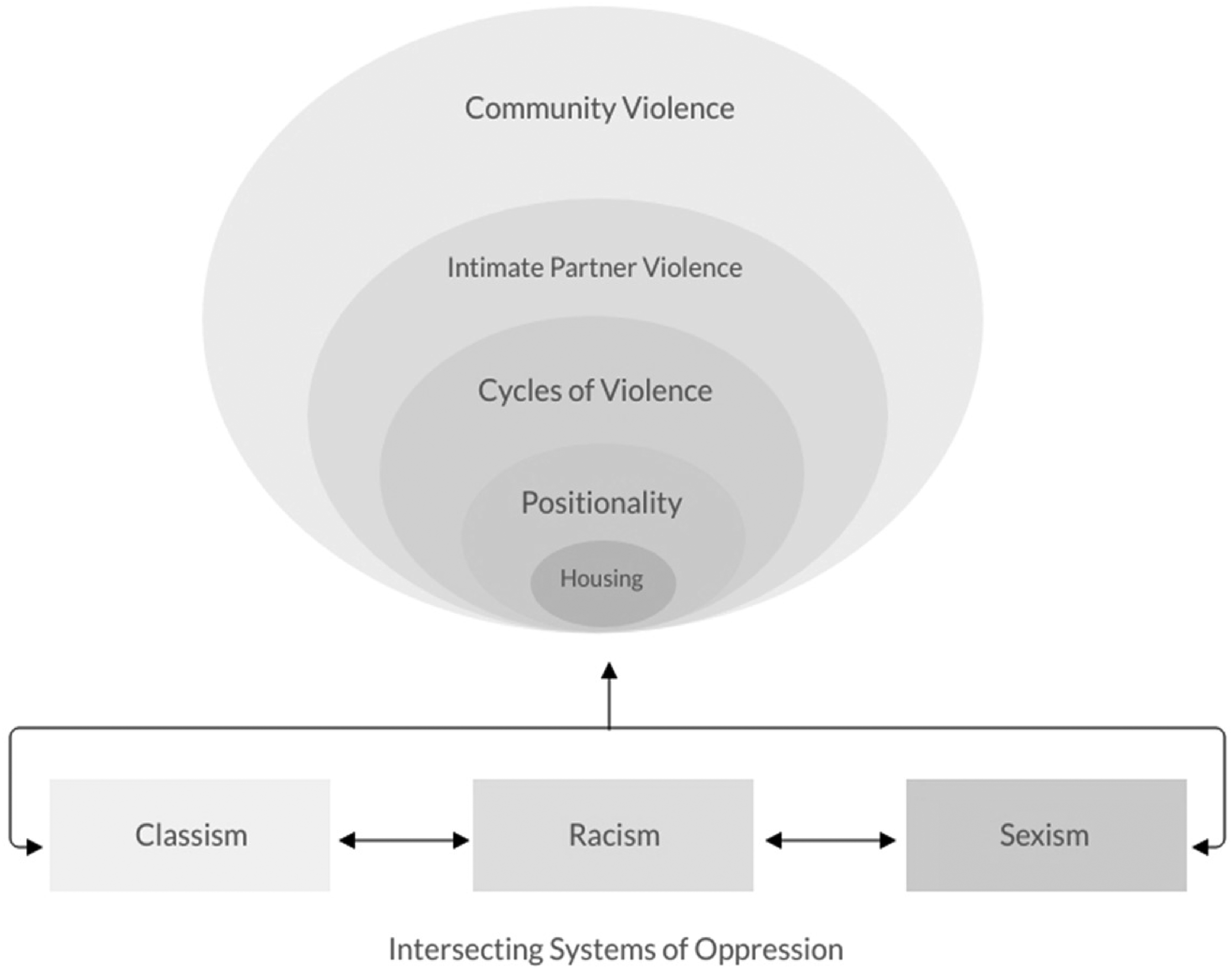
Visual Synthesis of Realities for African American Women Who Experience Violence and Homelessness.
This study adds to the limited literature on long-term residential programs that seek to accommodate the needs of African American women and their children who are homeless and seeking support. Given the current national dialogue around systemic racism, oppressive policies, and the violence that disproportionately affects communities of color, our goal through this manuscript is to center the voices of women who are otherwise silenced, emphasize their strengths, and discuss how race, gender, poverty, and violence specifically and uniquely shape the lives of African American women who experience homelessness.
Background
The complex oppressive systems of racism, sexism, and classism compound violence experienced by African American women (Crenshaw, 2019; Roschelle, 2017; Windsor, et al., 2010) and have implications for healthcare access (Watson-Singleton et al., 2020). In the following section, we discuss the theoretical framework that guided our study and continue by summarizing the literature surrounding violence and homelessness in the lives of African American women.
Theoretical Framework
Black feminist thought, as described by Patricia Hill Collins (2000), provided a theoretical framework for our study. Black feminist thought is a collection of perspectives written for Black women by Black women that speak to the intersectionality of race, class, and gender in contextualizing African American women’s experiences of oppression (Collins, 1989). A core tenet of this framework is to fundamentally empower African American women within all socially unjust contexts that are perpetuated by the existence of multiple oppressive realities (Collins, 2000). Ultimately, we seek to continue to develop scholarship as feminist advocates for women experiencing violence and homelessness by emphasizing survivor-defined and intersectional approaches (Nichols, 2013).
Consistent with Black feminist thought, we sought to use approaches that enhanced collaborative engagement with community partners. We thus chose community-based participatory research (CBPR) as the approach to our research process, including how data was collected, analyzed, and reported. There are few programs developed for women who are survivors of violence that are grounded in CBPR, an approach designed to build on the strengths and capacities of marginalized communities (Bhuyan et al., 2018; Ragavan et al., 2018; Williams, 2004). A critical component of the Nia Imani program, which aligns with CBPR, is the principle of co-learning and capacity building (Israel et al., 2008). While learning to build on the skills and strengths they already possess, women also aid each other in developing support systems (Dressel et al., 2020). In the tradition of Black feminist scholarship, our goal was to center the voices of African American women who have experienced violence and homelessness by contributing to an asset-based collection of scholarship, as well as to emphasize the positive impacts of the Nia Imani model of care developed in Milwaukee, Wisconsin. Lastly, our goal is to continue to develop scholarship that advocates for women experiencing violence and homelessness by emphasizing survivor-defined and intersectional approaches (Nichols, 2013).
Violence With a Capital “V”
Violence encompasses a broad range of acts and perpetrations and is well documented in the literature. Violence can manifest in many forms and variations: domestic, cultural, historical, systemic, contextual, physical, emotional, psychological, sexual, environmental, individual, and collective (West, 2002). What is lacking in violence discourse is how endemic violence is prevalent among poor women of color who reside in urban areas, and how varying forms of violence shape women’s lives. Due to the nature of intersecting oppressions, African American women are subject to violence due to racial, social, gendered, and economic factors (Roschelle, 2017; Watson-Singleton et al., 2020). Low-income African American women have one of the highest rates of domestic violence and childhood sexual abuse (Copp et al., 2015; Roschelle, 2017), while 43% of homeless women experienced sexual abuse before the age of 12 (Bassuk, 1996). With heightened impacts on African American women experiencing homelessness, violence can be embodied in ways that need to be analyzed in order to develop effective interventions that meet women’s unique and complex needs
The Cycle of Violence
The conceptual “cycle of violence,” steps to disrupt the cycle, and the effects of cyclical, intergenerational trauma are understudied in violence literature, while patterns of violence are often misinterpreted. Exposure to family violence affects millions of individuals before the age of 18 and is associated with a range of maladaptive outcomes, including an increased risk of future involvement in violent or abusive relationships (Carr & Vandeusen, 2002; Smith-Marek et al., 2015). Timing and longevity of violent experiences in the lives of children also impact the severity of outcomes later in life (Benedini & Fagan, 2018). Parental child abuse, or any form of abuse perpetrated by parents, is linked to intergenerational patterns of abuse (Anderson et al., 2018; Eriksson & Mazerolle, 2015; Black et al., 2010). Similarly, previous research has demonstrated that higher risk and severity of parenting stress can be related to a maternal history of maltreatment in childhood (Steele et al., 2016), further emphasizing the effects of intergenerational trauma. However, in Thornberry et al.’s (2012) systematic literature review examining the cycle of maltreatment, also known as the cycle of violence, the authors found that there is mixed support for the cycle of violence concept. Therefore, while we do not dispute the fact that maltreatment during childhood can potentially lead to poor outcomes in adulthood, we do not want to insinuate that abuse creates future abusers (Thornberry et al., 2012), as this rhetoric perpetuates prevailing negative stereotypes. We recognize that maltreatment can make later maltreatment more likely, though previous maltreatment is not necessarily causal for future maltreatment, as the hypothesis purports (Thornberry et al., 2012).
Community Violence
Community violence is defined as any act of violence taking place outside the home in the form of victimization or witnessing violence (Voisin et al., 2016). Victimization refers to the act of experiencing intentional harm (Sheats et al., 2018), while witnessing refers to hearing or seeing violent events (Sheats et al., 2018). Evidence indicates that urban-residing African American youth from economically-disadvantaged communities have a high risk of violence exposure (Woods-Jaeger et al., 2019). African American communities in urban metropolitan areas like Milwaukee are indeed disproportionately impacted by violence and continue to experience tensions with law enforcement (Frazer et al., 2018). Continuous exposure to any form of community violence has been related to the prevalence of adverse mental health outcomes (Gollub et al., 2019) and long-term physical disease and disability (Sheats et al., 2018), compounding each of the other oppressive intersections at play.
Intimate Partner Violence
Intimate partner violence (IPV) is a public health problem that encompasses stalking, sexual, physical, financial, and psychological harm by a current or former partner (Intimate Partner Violence, 2019; AJPH, 2015; Bates & Taylor, 2019). According to the National Intimate Partner and Sexual Violence Survey (NISVS), over one in three women in the United States has experienced sexual or physical violence by an intimate partner during their lifetime (Centers for Disease Control and Prevention [CDC], 2015). Though IPV affects individuals across all socio-economic levels and racial and ethnic identities, research has shown that IPV disproportionately affects women of color (Cheng & Lo, 2016; Basile et al., 2016). Forty-one percent of Black women have experienced physical IPV in their lifetime (CDC, 2015), while homicide is one of the leading causes of death for women aged 44 and younger (Smith et al., 2017). In a community-based study conducted by Mugoya et al. (2020) with African American women living in extreme poverty, approximately three-quarters of women had experienced some form of IPV. Mugoya points out that urban African American women tend to be underrepresented in studies focused on IPV despite experiencing IPV at higher rates (Mugoya et al., 2020).
Homelessness
On any given night, approximately 568,000 Americans were suffering from homelessness in 2019 (U.S. Department of Housing and Urban Development, 2020), of which 29% were women (Moses & Janosko, 2018). Across the U.S., African Americans continue to disproportionately account for all people experiencing homelessness; though African Americans account for only 13% of the U.S. population, 40% of the national homeless population are Black (U.S. Department of Housing and Urban Development, 2020). Nationally, men are only slightly more likely than women to be unsheltered, though gendered responsibilities often lead women experiencing homelessness to navigate child-rearing while undomiciled. Eighty-four percent of homeless families are headed by single women (U.S. Department of Housing and Urban Development, 2020). Among women experiencing homelessness, 60% have children under the age 18 (Family Homelessness Facts, n.d.) and 42% of those children are under the age of 6 (Bassuk et al., 2014). Homeless women are at a higher risk for violence victimization than their housed counterparts (Bassuk, 1993), with over 92% of homeless mothers reporting having experienced severe physical or sexual abuse during their lifetime (Family Homelessness Facts, n.d.). Regardless of homeless categorization, whether sheltered, unsheltered, chronically homeless, episodically homeless, or situationally homeless (Brown & Ziefert, 1990), little research has been conducted comparing the needs of men experiencing homelessness to that of their female counterparts, both women with and without children (Burt & Cohen, 1989). A few studies have shown that homeless women have different needs than homeless men (North & Smith, 1993), though both homeless men and women experience enormous health inequalities (Stafford & Wood, 2017). Even fewer studies have been done to support the notion that homeless women with children differ significantly both from homeless single women and homeless single men (Bassuk, 1990; Burt, 2001; Smith & North, 1994).
Housing Shelter Programs
Shelter programs not only save lives but also aid violence survivors in overcoming trauma, especially when experiencing homelessness and uncertainty. Shelters provide physical safety as well as psychological support, crisis aid, and connections to legal, educational, and employment opportunities (Hawkins et al., 2017; Martin et al., 2008). However, few shelters serving women with children experiencing homelessness are equipped with long-term residential support for women facing intersecting challenges such as violence and substance abuse. Improving self-efficacy, which Sullivan (2018) noted as culturally and socially situated, enhancing social support, and regaining a sense of hopefulness, reduces negative outcomes associated with violence. Moreover, because most programs that exist are run by non-profit organizations (Sullivan, 2018), programs may vary greatly, from serving several clients a year to others serving thousands (Martin et al., 2008). There are even fewer evaluations of such programs (Hughes, 2020). Thus, providing guidance and evidence-based recommendations for such programs is crucial (Gregory et al., 2017; O'Shaughnessy & Greenwood, 2020).
Milwaukee, Wisconsin
Located in southeastern Wisconsin, Milwaukee is considered one of the most segregated cities in the country (Frey, 2018; Rosenblatt & Cossyleon, 2018; Spicuzza, 2019). The poverty rate in Milwaukee county is 27.4% (Milwaukee, WI | Data USA, 2018), compared to 10.8% in the state of Wisconsin (Smeeding & Thornton, 2016). Thirty-eight percent of Milwaukeeans identify as Black (non-Hispanic), 35% as White (non-Hispanic), and 18% identify as Hispanic (Milwaukee, WI | Data USA, 2018), making Milwaukee the 6th most diverse large city in the U.S. (Mak, 2020). In Wisconsin, 32.4% of women had experienced physical IPV, sexual violence, and stalking in their lifetimes (Wisconsin Coalition against Sexual Assault, 2020).
While our study’s data collection predates COVID-19, it is difficult to discuss violence, homelessness, and substance abuse in Milwaukee, WI, without discussing COVID-19. Violence in Milwaukee has increased with the COVID-19 pandemic. By August of 2020, there were 56 reported homicides (Luthern, 2020), compared to 26 by August the previous year (Luthern, 2020). Forty percent of these homicides were due to domestic violence or IPV (Luthern, 2020). Homeless African American women are experiencing violence within the context of an ongoing, unabated COVID-19 global pandemic that is disproportionately affecting Black and Brown communities in the United States (Chowkwanyun & Reed, 2020; Yancy, 2020). In terms of homelessness, while data is unavailable since the COVID-19 pandemic started, pre-COVID-19 there were an estimated 900 homeless individuals living in the city of Milwaukee (Watson, 2019). Finally, substance abuse has also increased in Milwaukee during the COVID-19 pandemic (The Associated Press, 2020); in the first 2.5 months of 2020, there were 192 overdose deaths in Milwaukee (The Associated Press, 2020). It is within this context that Nia Imani seeks to serve homeless African American women experiencing violence. Advocates working with women who are survivors of violence continue to express concern about the increase in the lethality of violence in women’s lives resulting from isolation, increased unemployment, and other factors (Bradbury-Jones & Isham, 2020; Kofman & Garfin, 2020; Usher et al., 2020). It is important that our findings are reviewed within this backdrop as we strive to address violence in the lives of women in the context of the current climate in which we live.
Positionality
This manuscript was written by a group of female-identified doctoral students and faculty in Public Health and Nursing, and the director of a non-profit agency serving homeless African American women in Milwaukee. Authors self-identified as White, Latina, Black, and Peruvian, and two of the authors identify as African immigrants. Authors ranged in age and duration of time lived in Milwaukee, and several of the authors are mothers. As scholars, we value the opportunity to work in partnership with Nia Imani and other community-based advocates working with African American women experiencing complex, intersecting challenges within the context of a racialized urban environment. Our goal as scholars is to analyze women’s experiences in an effort to provide effective recommendations for improving women’s health outcomes.
Methods
Design
For this descriptive qualitative study, focus group interviews were used to examine the experiences of violence in the lives of women who were graduates of Nia Imani Family, Inc. A semi-structured interview guide was created through an iterative process between researchers and the Nia Imani founder, which was then used to guide focus group discussions. The semi-structured interview guide also adhered to principles of CBPR (Israel et al., 2008), both in its collaborative creation and in the inclusion of asset-based questions. A semi-structured interview format was chosen to focus the group conversation while allowing interviewees to guide the interview (Tolley, 2016). We were specifically interested in learning what components of the Nia Imani model of care were particularly helpful to participants (Dressel et al., 2020). Before study commencement, IRB approval was received from the University of Wisconsin-Milwaukee.
Setting—Nia Imani Family, Inc.
Nia Imani is a holistic long-term transitional living facility that serves homeless and at risk African American women in Milwaukee (Nia Imani Family, Inc., 2018). Length of stay in the program ranges from several months to two years. Nia Imani houses a maximum of 14 female residents, while also allowing resident’s children to reside with them. The program offers classes on budgeting, parenting, self-reflection strategies, and health and growth, while also assisting women with navigation through processes involving Medicaid registration and GED completion (Dressel et al., 2020). Similarly, the program also offers connections to sobriety services such as Alcoholics and Narcotics Anonymous. Established in 1994, this program is continuously adapting to meet the needs of the women it serves in the community, taking into account that many women accessing services have experienced violence in their lives.
Recruitment and Data Collection
Inclusion criteria for participants meant they had graduated from Nia Imani. A Nia Imani graduate refers to a woman who was determined both by herself and by counselors as able to access resources, live independently, and support herself and her children both emotionally and financially (Dressel et al., 2020). The Director and Administrative Assistant of Nia Imani contacted 50 program graduates by scripted phone call, inviting them to participate in the focus group interviews. Thirty-nine agreed to participate. In addition to the graduates, an individual interview was conducted with the director and founder of Nia Imani (N = 40). Participants received a $25 gift card as compensation for their time. Data were collected through 10 focus group discussions held between January of 2017 and June of 2018. Focus group interviews involved two to six women and lasted 1.5 h on average.
Data Analysis
Data were analyzed using line-by-line thematic analysis. The research team included multiple researchers with extensive qualitative research experience (AD, LM, PK). The process of analysis involved several steps. First, the focus group interviews were transcribed verbatim in preparation for the analysis. To maintain anonymity, participants used a pseudonym during focus group interviews and transcriptions were de-identified. Second, elements of both inductive and deductive qualitative analysis were incorporated. Two authors read every transcript and highlighted areas where experiences of violence occurred, either explicitly or in mention via storytelling (ED, MG).
From the selected parts of the interviews identified during the deductive portion, authors began the inductive portion of our analysis. Three authors independently read and coded the data line by line for instances regarding experiences of violence (ED, MH, MG). After three authors independently identified themes, a fourth reviewed the data and provided initial verification of findings (AD). Then, all four authors met, discussed, and resolved discrepancies and created a codebook. That codebook was then shared and discussed with the founder of Nia Imani (BP) who also verified the findings. Both structural and emergent codes were derived from the data. For example, “trauma” was an emergent code, while the “cycle of violence” and “coping with violence” were both structural codes. We established intercoder reliability through discussion and clarification (Tolley, 2016).
Rigor
We took steps during the data collection process to ensure trustworthiness, including credibility and dependability of the data (Tolley, 2016). Several authors spent two years working with the staff, founder, and participants at Nia Imani developing relationships to establish credibility (Cohen & Crabtree, 2008). For verification, the data, analysis, interpretations, and conclusions were all shared with the director of Nia Imani, a study participant who had also experienced homelessness earlier in her life. Following CBPR principles, the research process was fully explained and thick description, through the inclusion of meaningful quotations, helped to enhance transferability (Ponterotto, 2006). Finally, dependability in the research process was established through continual discussion and ongoing consultation with two co-authors who are experts in qualitative methodology (Anney, 2014).
Results
Data saturation was reached following focus group interviews and an individual interview with the founder of Nia Imani, who had also experienced homelessness (N = 40). Women’s ages ranged from 19 to 61 years, and the majority identified as African American (89.7%). Ninety-two percent of the women had children, and the average length of stay for women at Nia Imani was almost a year and a half (17.5 months). After graduating from the program, almost half (41%) reported currently being married or in a relationship, while others were not or chose not to respond (43.6% and 15.3%, respectively). Four major themes were identified from analysis of the focus groups interviews related to women’s experiences with violence. These themes included the cycle of violence, violence in the community, relationships with children, and coping with violence. Figure 1 was subsequently explicated to visually represent the interconnectedness these themes share with various intersecting forms of oppression, and how these complex realities are intrinsically linked.
The Cycle of Violence
Women at Nia Imani recognized patterns of violence in their lives. The cyclical nature of violent instances and experiences of violence across generational lines were noted. A numbing or normalization of violence, abuse experienced between a parent and child, and experiences of molestation, incest, and sexual abuse were recognized.
Several women referenced how witnessing violence as children may lead to violence experienced in adulthood, as one woman stated, “Cause some people, they witness they dads and stuff like that hit they mama. So they think it’s okay. And they, they just mimic what they see” (Focus Group #11).
Similarly, another woman touched on how normalized gender-based violence had become, stating, “so much now, even the kids in elementary, little boys putting their hands on little girls” and “yeah, especially when you got people telling they, they sons it’s OK to be out here fighting with females” (Focus Group #11).
Other references toward the cycle of violence included instances where IPV crossed over into violence between a parent and child, spanning generational lines. The recognition of this overflow, paired with a firm stance not to tolerate the abuse of her child, caused one woman to make a life change. When referencing her partner, this woman said: We lasted three years co-parenting. And then my daughter came home with a bruise on her. And I said I’ll be damned, if you put your hands on me, but I’ll be damned if you put your hands on what I – I gave birth to. Granted it’s yours, you got paperwork saying it’s your baby, but that’s mine. He has not seen her in four years (Focus Group #6).
Finally, the recognition of sexual assault experienced by one woman and her child years later was documented when a graduate noted, “When I left here, my 3-year-old was molested at daycare. So, I mean, you know, I was molested by family members, by my mother's boyfriend, it's even like getting a relationship, because at first my mother didn't believe me” (Focus Group #5).
Violence in the Community
Most Nia Imani graduates communicated a theme related to violence in their communities. We identified violence in the community to mean any sort of violence experienced outside of the family, personal residence, or close relationship. Regardless of community (examples included church or faith-based communities, communities marked by physical location or geographic boundaries, or communities based on circumstance such as single motherhood or states of homelessness), the scope of community violence encompassed a pervasive environment outside the home. The constant presence of violence, whether seen or heard about in a community, resulted in habitual exposure. One graduate noted, “When it came to street violence, we were taught that if the drugs don’t kill you, the lifestyle would” (Focus Group #2).
Violence in the community infiltrated all areas of life. When speaking about community violence, recidivism, and parenting, one woman stated: I think that the violence in the community does affect parenting because it's different types of parenting styles that each mother and father has their own children and sometimes when it's not fully enforced the way it should be or when it is caused by a lot of violence too, or something like when you discipline your child, then that’s what causes more violence in the world to our upcoming generations of children and teenagers (Focus Group #11).
Another woman spoke of a hushed, yet widespread endemic sexual violence in her community as a child. She said, “I wasn’t never molested, but my girlfriends, as we were growin’ up, they were. And, you know, it just was sad, you know, cause they kept it on the hush, you know. And it, it, it, shouldn’t a kept happening, but it just shouldn’t a” (Focus Group #7).
Lastly, violence in the community included gun violence. Women from Nia Imani often reported gun violence as a reason for having to alter their schedules or plans for the day. One woman lamented, “It’s a lot of violence, it’s too much violence that’s going on now. You know especially with gun violence. You hear about people getting killed every day, it’s terrible” (Focus Group #6). Others admitted to actively avoiding going out at night, visiting parks, or participating in social activities because of the threat of gun violence, stating, “It’s getting a little worser…so, try to go sit somewhere and enjoy yourself with a drink or even just go to socialize and go to anyway, you got to watch your head, somebody shooting; you got to watch the kids you got – so, that’s another reason why I don’t be in the streets or go too many places” (Focus Group #4).
Another woman echoed that comment when discussing quality time with her son. She said, “I be scared me and my son gonna get shot. Like seriously, I don't really like taking him outside or going places with him because I'm always scared that something's gonna break up, break up out here. So it's, it's just crazy” (Focus Group #11). The constant threat of violence in communities, specifically gun violence, created an inescapable exhaustion particularly for women with children experiencing homelessness. As one graduate said, “I hear a lot a gunshots where I stay at [now], I don't know where they be comin' from or whatever like that, but I just don't, I just don't, bein' and then the news so much bad stuff goin' on, a lot a times, I don't even like to listen to the news” (Focus Group #1).
Relationships With Children
During focus group interviews, all women spoke about their children. In the context of violence, an insightful focus group participant discussed how children suffer from trauma too, and that they are not immune to the violence in their surroundings. A mother said: The kids – what I found out working with them – that they have trauma in their life too - watching mothers and daddy and the grown folks do what they do -and it kind of - I'm gonna put it this way - there was two kids - when I was watching the kids while they was in a meeting - that had been abused and they was lashing out on the other kids and their mind frame is, like - well, it was done to me, why can't I do it? So, in reality, they needed help in that area too - watching abuse at home and then identifying and, you know, reacting on another child. And then there was one of the kids that, um, saw they mother cutting themselves. You know, so their mentality - they mind frame is, like - need help (Focus Group #9).
Other women spoke about their children in reference to how they attempted to alter their parenting practices, making sure to teach their children about non-violence and to speak up when violence was happening to them. One woman said
Coping With Violence
Many women in our study had used drugs as a coping mechanism for experiences with violence. During a focus group interview, one woman explained: I don't know the statistics, but a lot of people who've been involved in drug use have had some form of sexual assault coming up - I know I did. I had a minister in church - you know, my mother was very religious, she was a foster parent and the difficulties in the struggles - you know, I've been involved in incestuous relationship with family member and - you know, all of those things (Focus Group #2).
Another woman detailed how gun violence contributed to her drug abuse, stating, “I lost my father in ‘71 to gun violence, he was a cab driver, he was shot and killed and I believe that is when I was first introduced to wanting to suppress and use drugs, because my whole life flipped upside down” (Focus Group #2).
Several women at Nia Imani also discussed positive avenues for coping. After losing her son, one woman turned to advocacy and community outreach as a positive coping strategy. She said, “And so, as far as the community, it was just like when I lost my son, me and some other mothers, we organized a group, [called] Mothers Against Gun Violence” (Focus Group #2).
Others coped with physical abuse by making the conscious decision to get away from violence, as one participant said, “I vowed to come here to the program and get away from the violence. He split my jaw in three places an’ I stayed. And I used the excuse of, it'll get better” (Focus Group #6). Others detailed how the decision to escape violence was used as a healing strategy for going forward, and as a necessity for survival. As a woman described her life before entering Nia Imani, she discussed how the decision to join the program saved her life, stating: You know, over the years that I had been - been using (inaudible), which I just choose to call crack cocaine - you know, I've been stabbed 17 times, I've been shot twice, I've been pushed out of a second floor window, I've been hit by a car and I'm still here - you know, and been using 21 years. If I wouldn't have came to this building, I know I'd be dead. I know I'd be dead. This is a blessing. Guys, everyone who's sitting in this room right now or whoever [hears what I have to say], if you see anyone out there, Lord Jesus, and you feel that they need help, send them here (Focus Group #2).
Discussion
Our analysis suggests that African American women who experience homelessness are subject to intense, prominent, and endemic forms of violence, all of which are exacerbated by oppressions due to classism, racism, and sexism as shown in Figure 1. Here, women from Nia Imani’s experiences were foundational to our analyses, as centering the voices of African American women who have experienced violence and homelessness is critical to developing effective interventions (Collins, 1989; Patterson et al., 2016). In alignment with Black feminist thought, we sought to support broad principles of social justice while working to eliminate intersections of oppression where gender, race and violence collide (Collins, 2000). Models of care like Nia Imani’s foster group connections in a family-like setting, allowing residents to face past trauma, create relationships and assess their own healing. This model helps create realistic goals and healing plans for women, while centering survivor-defined practices for promoting independence and empowerment (Collins, 1989, 2000; Hughes, 2020; Nichols, 2013).
African American women with children experiencing homelessness could benefit from similarly-situated transitional living centers like Nia Imani in other U.S. urban metropolitan areas, where varying forms of violence are acknowledged in the healing process, and where all components of Figure 1 are evaluated and addressed. Similarly it is important to note that throughout our analyses, the “cycle of violence” was identified and was central to women’s explication of their experiences; however, newer violence literature suggests referencing a cyclical process of violence may be harmful or stigmatizing when used out of context (Thornberry et al., 2012; Widom & Osborn, 2021). Women’s experiences indicated that violence is a result of circumstance, influenced by factors of a structural and oppressive nature, including structural racism, sexism, and poverty as illustrated in Figure 1. Thus, themes of violence such as cyclical or intergenerational violence, violence in the community, relationships with children, and coping strategies for dealing with violence must be specifically identified in each woman’s unique situation and addressed compassionately and wholistically.
Limitations
Limitations of our study include a focus on women who successfully graduated from Nia Imani; self-selection bias in women who chose to participate and sample bias in only contacting graduates may have influenced responses collected. Though difficult, contacting women who had lived at Nia Imani but were not successful graduates could provide helpful insight. We also consciously chose to believe that recall bias did not skew participant’s recollections. In line with our feminist approach, we chose to believe that women could accurately recall challenging periods in their own lives.
Conclusions
To effectively understand how violence shapes the lives of homeless African American women, experiences of violence must be de-stigmatized, discussed, and marked as a nationwide concern. Programs developed to specifically address the physical, psychological, and emotional toll violence compounds are crucial for constructing successful long-term transitional housing models. Highlighting the intrinsic resilience, fortitude, tenacity, and perseverance of African American women who have experienced homelessness and violence is fundamental. Tailored asset-based and feminist approaches to long-term residential programs create a scaffolding for successful implementation of programs to help African American women and their families achieve independence, while working toward an overall cultural shift away from intrinsic and systematic oppression.
Footnotes
Acknowledgments
The authors would like to express heartfelt thanks to the strong and resilient women who participated in this project, as well as the women who did not or could not participate, but who had also been part of Nia Imani. As scholars, we are grateful for the opportunity to work alongside these women. We would particularly like to highlight our respect and reverence for Belinda Pitman, without whom Nia Imani would have never existed; her fortitude, kindness, and compassion are unbound. We would also like to express a deep gratitude for all of the women who shared their stories. With tenacity unbridled, we as scholars hope to mirror the perseverance of the women discussed above in our contribution to fight for social change, in an effort to ultimately eradicate all forms of violence against women.
Declaration of Conflicting Interests
The authors declared the following potential conflicts of interest with respect to the research, authorship, and/or publication of this article. A private Wisconsin foundation provides funding to Nia Imani Family, Inc. The same private Wisconsin foundation provides funding to the University of Wisconsin-Milwaukee. The foundation was not involved in financing the study, study design, collection of data, data analysis, or the interpretation or reporting of results.
Funding
The authors disclosed receipt of the following financial support for the research, authorship, and/or publication of this article: This work was supported by the Social Compact Grant from the University of Wisconsin-Milwaukee.
