



Abstract
Sexual misconduct incidents reported to Title IX coordinators and stability in incident characteristics within institutions of higher education (IHEs) over time were examined. Data included two waves of reported incidents in 2016–2018 (n = 2,598) and 2018–2020 (n = 2,778) across Maryland IHEs (N = 40). Findings showed most reported incidents were for Other Sexual Misconduct (e.g., sexual harassment) versus Sexual Assault I (i.e., rape) or Sexual Assault II (e.g., unwanted sexual touching). Types of sexual misconduct differed regarding reporting by responsible employees, nonstudent perpetrators, and the range of accommodations accessed; institutional-level profiles of sexual misconduct were stable across waves. Implications and future research are discussed.
Introduction
A significant body of prior research has documented the scope of gender-based violence victimization (i.e., sexual assault, domestic violence, dating violence, and stalking; Centers for Disease Control and Prevention [CDC], 2020) among college students (e.g., see Fedina et al., 2018). Experiences with gender-based violence may lead to a range of negative mental and physical health consequences as well as poor academic performance or withdrawal from courses or school out right (Banyard et al., 2020; Jordan et al., 2014). Taken together, gender-based violence has been identified as a concern for institutions of higher education (IHEs), as well as a form of sex discrimination in U.S. educational settings (U.S. Department of Education, 1997).
While decades of evolving federal legislation have sought to increase reporting and remediation of sexual misconduct at IHEs, research examining the context, processes, and outcomes of reported incidents is still in its nascent stages. The present study continues to build this body of work by examining aggregate data from the Maryland Higher Education Commission to assess the prevalence and context of sexual misconduct incidents reported to Title IX coordinators at Maryland IHEs and compare incidents reported in academic years 2016–2018 with incidents reported in 2018–2020 both across and within IHEs. In addition, differences in information for Sexual Assault I (e.g., rape), Sexual Assault II (e.g., unwanted sexual touching), and Other Sexual Misconduct (e.g., dating violence, stalking) are examined. Findings are discussed with regard to policy implications and priorities for data collection and future research.
Literature Review
Legislative mandates targeting gender-based violence—or “sexual misconduct” in IHE speak—among college students have primarily sought to increase incident reporting, establish disciplinary procedures that protect students’ rights to learn free of harassment, provide resources and protections for students who are harassed, and establish and expand strategies for prevention. Principal among this legislation, Title IX of the Educational Amendments of 1972 (hereafter, “Title IX”), prohibits sex-based discrimination, including sexual harassment (i.e., sexual misconduct), in any educational program receiving federal financial assistance. Title IX guidance requires, among other things, that IHEs have an identified employee (i.e., a Title IX coordinator) who is responsible for coordinating the IHE's anti-discrimination efforts including investigation into complaints of sexual misconduct (U.S. Department of Education, 1997, 2020). IHEs must also adopt and make available grievance procedures that provide for prompt and equitable resolutions of complaints and provide appropriate interim measures or accommodations (e.g., class changes, housing alternatives, etc.) to students alleging sexual misconduct (U.S. Department of Education, 1997, 2020).
Recently, targeted research efforts have begun to explore sexual misconduct incident reporting to Title IX coordinators at IHEs, including examining the context, processes, and outcomes of reported incidents. For example, Richards (2019a) examined aggregate data from all incidents of sexual misconduct reported to Title IX coordinators (n = 1,054) at public four-year IHEs, community colleges, and independent IHEs in a Mid-Atlantic state (n = 42) in the academic year 2015–2016. Findings showed that most reported incidents were reported within the same semester (48.67%) or sooner (i.e., within 24 h; 30.74%) and were perpetrated on campus or at a school-sponsored activity (57.30%). Further, about 57% of incidents were perpetrated by other students. Findings also showed that most reported incidents of sexual misconduct (75.52%) did not result in formal complaints (i.e., they were not investigated and/or adjudicated through a campus grievance process). Among formal complaints, less than half resulted in a student being found responsible for violating the IHE's policy on sexual misconduct, and less than half of formal complaints with a responsible student were associated with either an expulsion (18.49%) or suspension (28.57%) of the responsible student. Richards found that reporting sexual misconduct to a Title IX coordinator most often resulted in accommodations for the student complainant: 71.63% of reported incidents were associated with a referral to counseling and 29.13% with a no-contact order between the complainant and respondent. Finally, about 28% of incidents reported to Title IX coordinators were also reported to law enforcement.
Richards et al. (2021b) examined aggregate data from all incidents of sexual misconduct reported to Title IX coordinators (n = 3,829) at public four-year IHEs (n = 42), community colleges (n = 36), and independent IHEs (n = 131) in New York State in the academic year 2018–2019 and found many consistencies with Richards (2019a). Like Richards (2019a), Richards et al. found that most incidents were perpetrated on campus and less than one-quarter of incidents reported to Title IX coordinators at New York IHEs resulted in formal complaints. In both studies, slightly more incidents were reported to law enforcement (including campus police, campus security, or campus safety) than were processed through the formal Title IX grievance process. In New York, about 60% of formal complaints resulted in a finding of “responsibility” regarding a violation of the IHE's sexual misconduct policy and slightly more than half of the responsible students were either suspended (38.83%) or expelled (18.69%) because of the policy violation. Finally, like in Richards’ (2019a) sample, in New York, student accommodations were the most likely outcome of a report of sexual misconduct to a Title IX coordinator: more than 70% of incidents were associated with a referral to services such as mental health counseling and nearly 25% were associated with a no-contact order.
While these previous studies provided important baseline information on incidents of sexual misconduct reported to Title IX coordinators, additional research is needed to continue to build this body of knowledge. First, several important factors regarding sexual misconduct incidents have yet to be considered. For example, research has not yet assessed who is the most likely reporter of incidents of sexual misconduct to Title IX coordinators. While it might be expected that complainants would serve as the primary reporters of sexual misconduct, many IHEs have designated all faculty and staff as responsible employees with a duty to report sexual misconduct (Holland et al., 2018), and thus it is likely that many incidents are reported by responsible employees.
In addition, while Richards (2019a) notes that nearly 43% of perpetrators of sexual misconduct are not students, no information was provided as to whether nonstudent perpetrators were predominantly other types of campus affiliates (e.g., faculty, staff) or nonaffiliates (e.g., visitors, nonstudent intimate partners). Prior research identifies that faculty and staff perpetrate sexual harassment against students (see meta-analysis by Klein et al., 2021; Klein & Martin, 2021) and that some faculty are serial perpetrators of student harassment (Cantalupo & Kidder, 2018). Further, given that Richards (2019a) and Richards et al. (2021b) found that accommodations were the most likely result of reports of sexual misconduct, additional investigation into the types of accommodations accessed is warranted.
In addition, no research to date has examined incident information across different types of misconduct (e.g., rape versus sexual assault versus other types of sexual misconduct). Differences likely exist regarding formal Title IX complaints, appeals of findings of responsibility, and the use of sanctions based on the perceived severity of the misconduct or the sanction. For example, complainants might be more likely to file formal Title IX complaints in incidents of sexual misconduct which also constitute criminal law violations (e.g., rape) based on perceptions that the offense will be taken more seriously by Title IX coordinators. Likewise, respondents may be more likely to appeal findings of responsibility associated with allegations of sexual misconduct that are also crimes or more punitive sanctions such as suspensions or expulsions given fears regarding long-term implications for their academic or professional careers and reputations.
Finally, research has yet to assess information on incidents of sexual misconduct for the same IHEs over time to determine whether IHEs’ experiences with sexual misconduct are stable or vary from year to year. In other words, can an individual IHE or a state education system use existing data to plan for future needs or track goals (e.g., increased referrals to services)? The present study aims to address these gaps in the current literature by replicating the analysis of many of the same variables assessed in Richards (2019a) and Richards et al. (2021b) as well as information regarding reporters, nonstudent perpetrators, and accommodations across different types of sexual misconduct: Sexual Assault I (e.g., rape), Sexual Assault II (e.g., unwanted sexual touching), and Other Sexual Misconduct (e.g., sexual harassment, dating violence, stalking) for Maryland IHEs over two points in time (academic years 2016–2018 and 2018–2020).
Current Study
A significant body of prior research has demonstrated that sexual misconduct is an important problem on college campuses (Fedina et al., 2018). In response to sexual misconduct, Title IX guidance aims to increase reporting of incidents to Title IX coordinators and ensure IHEs take measures to stop sexual misconduct, remediate its impacts on students, and prevent its reoccurrence (U.S. Department of Education, 1997, 2020). At the same time, research on actual incidents of sexual misconduct reported to Title IX coordinators or the processes and outcomes for these incidents is still in the earliest stages. The present research uses aggregate data from the Maryland Higher Education Commission to assess the prevalence and context of sexual misconduct incidents reported to Title IX coordinators at Maryland IHEs and compares incidents reported with Title IX coordinators in academic years 2016–2018 with incidents reported in 2018–2020 both across and within IHEs. In addition, differences in information for Sexual Assault I (e.g., rape), Sexual Assault II (e.g., unwanted sexual touching), and Other Sexual Misconduct (e.g., dating violence, stalking) were examined.
Method
Sample
The sample used here includes all public four-year IHEs, community colleges, and independent IHEs (n = 42) operating in the state of Maryland in 2016–2020. According to data from the National Center for Education Statistics Integrated Post-Education Data System (IPEDS), during the study period (2016–2020) the sampled IHEs (n = 42) had an average total annual enrollment of 345,526 students and most students were female, 59.54% of all students on average (IPEDS, 2021). Regarding race, across the four years, students were predominantly White (48.80%) compared with Black (26.36%), Hispanic (7.04%), Asian (4.90%), and Native American (0.03%); 12.74% of students reported their race as “multiple races” or “other” or their race was unknown (IPEDS, 2021). On average, graduate students represented 19.77% of IHEs’ enrollment annually (IPEDS, 2021).
Data
Data were drawn from incidents of sexual misconduct reported to the Maryland Higher Education Commission (hereafter, “the Commission”) by Title IX coordinators pursuant to Maryland House Bill 571 (2015). Per the legislation, in an effort to collect a standardized set of data on sexual misconduct at the state's colleges and universities, IHEs are required to report biennial, aggregate data on all incidents of sexual misconduct reported to Title IX coordinators. An incident is defined as “an allegation of sexual assault or other sexual misconduct involving a student which was reported or referred to the institution's Title IX coordinator or appropriate institutional designee” (Maryland Higher Education Commission, 2021, p. 4). More specifically, IHEs are required to report all student-related incidents (i.e., student–student, student–staff/faculty, student–nonstudent perpetrator) for which the student could be the alleged victim or perpetrator. To ensure consistent reporting in incident data across IHEs, definitions of sexual assault and other sexual misconduct consistent with the University System of Maryland's policy on sexual assault were developed and used for reporting by Title IX coordinators.
Definitions as specified by the Commission include (2021, p.4):
Sexual Assault I—nonconsensual sexual intercourse: any act of sexual intercourse with another individual without consent. Sexual intercourse includes vaginal or anal penetration, however slight, with any body part or object, or oral penetration involving mouth-to-genital contact. Sexual Assault II—nonconsensual sexual contact: any intentional touching of the intimate parts of another person, causing another to touch one's intimate parts, or disrobing or exposure of another without consent. Intimate parts may include genitalia, groin, breast, or buttocks, or the clothing covering them, or any other body part that is touched in a sexual manner. Sexual contact also includes attempted sexual intercourse. Other Sexual Misconduct—Incidents are included in this category if they relate to any other category of violence or misconduct as defined by the institution. These may include dating violence, domestic violence, sexual exploitation, sexual harassment, sexual intimidation, sexual violence, and stalking.
IHEs reported these data to the Commission via an incident reporting form. IHEs reported data on Sexual Assault I, Sexual Assault II, and “Other” Sexual Misconduct on separate reporting forms. Reporting forms asked about the total number of the type of incident as well as contextual information on incidents (e.g., incident location type), information about Title IX processes (e.g., whether a formal Title IX complaint was made), and outcomes associated with reported incidents (e.g., findings of responsibility, accommodations, sanctions). Title IX coordinators compiled these data for their IHE and submitted it to the Commission. Two waves of biennial data were used for the present analyses: academic years 2016–2018 and academic years 2018–2020. Data were obtained directly from the Director of the Commission. This research was classified as not human subjects research by the Institutional Review Board at the University of Nebraska Omaha.
Missing Data
Data was unavailable for two IHEs: one public four-year IHE and one community college. In 2016–2018, the public four-year IHE only submitted data for Other Sexual Misconduct, while the community college submitted data for the three types of sexual misconduct collapsed into total numbers, not data for each type separately. Given that the aims of this article included examining the context, processes, and outcome of each type of sexual misconduct, and over time, these two IHEs were excluded from the analysis. Thus, the working sample used here is (n = 40) including public four-year IHEs (n = 12), community colleges (n = 15), and independent IHEs (n = 13).
Measures
Incident-related variables
Information about reported incidents included the number of incidents of Sexual Assault I, Sexual Assault II, and Other Sexual Misconduct; reported by a complainant, witness, responsible employee, anonymous reporter, or other reporter; reported within 24 h, within the same semester, after a semester or more, or where the time to report was unknown; and that took place on campus, at a school-sponsored activity, off campus, or at an undisclosed location. The number of incidents perpetrated by a nonstudent perpetrator was also captured. Of those incidents perpetrated by a nonstudent perpetrator, the number of incidents with a nonstudent perpetrator who was campus affiliated (e.g., faculty or staff) or not campus affiliated (e.g., visitors, nonstudent friends/dates, or partners) were identified.
Process-related variables
The number of incidents with the following accommodations were captured: alternative housing, a no-contact order, interim suspension, academic accommodations, referrals to counseling/health services, or referrals to off-campus services. The number of incidents that, to the Title IX coordinator's knowledge, were reported to law enforcement and the number of incidents that resulted in a formal Title IX complaint were also identified. Finally, the number of formal Title IX complaints with a finding of responsibility and the number of incidents with a finding of responsibility that were appealed were measured.
Outcome-related variables
In addition, of the incidents with a finding of responsibility the number of incidents that were sanctioned with a suspension, expulsion, alternative resolution, housing restriction, campus access restriction, disciplinary probation, disciplinary warning, no-contact order, and/or other sanction (i.e., termination of an employment contract) were captured.
Analytic Plan
These data are reported at the institutional level (i.e., by IHE), however, analyses began by calculating descriptive statistics for all incidents of sexual misconduct reported to Title IX coordinators across IHEs in academic years 2016–2018 and academic years 2018–2020. Then, institutional-level means, standard deviations, and paired sample t-tests for sexual misconduct incident information and for Title IX processes and outcomes were estimated (see Tables 1 and 2). Next, descriptive statistics disaggregated by type of sexual misconduct: Sexual Assault I, Sexual Assault II, and Other Sexual Misconduct incidents across the two waves of data were calculated and paired sample t-tests were estimated to assess institutional-level mean differences in waves 1 and 2 regarding incident information, Title IX processes, and outcomes by sexual misconduct type (see Tables 3–8). Paired sample t-tests are appropriate when examining differences between mean scores (e.g., the mean number of reports for Sexual Assault I) for the same participant (e.g., IHE 1) at two different time points (e.g., academic years 2016–2018 and 2018–2020). Post hoc tests were completed to determine which mean pairs were significantly different. Alpha was set at p < .05 for all analyses.
Sexual Misconduct Incident Information in Institutions of Higher Education: Paired Sample T-Tests for Academic Years 2016–2018 and 2018–2020 (N = 40).

Note. In 2016–2018, three cases were missing a reporter type; in 2018–2020, five cases were missing a reporter type and four cases are missing location. *p <.05.
Sexual Misconduct Incident Title IX Processes and Case Outcomes in Institutions of Higher Education: Paired Sample t-Test for Academic Years 2016–2018 and 2018–2020 (N = 40).

Multiple accommodations could be made for each incident.
More than one disciplinary action could occur for each incident with a finding of responsibility.
*p < .05.
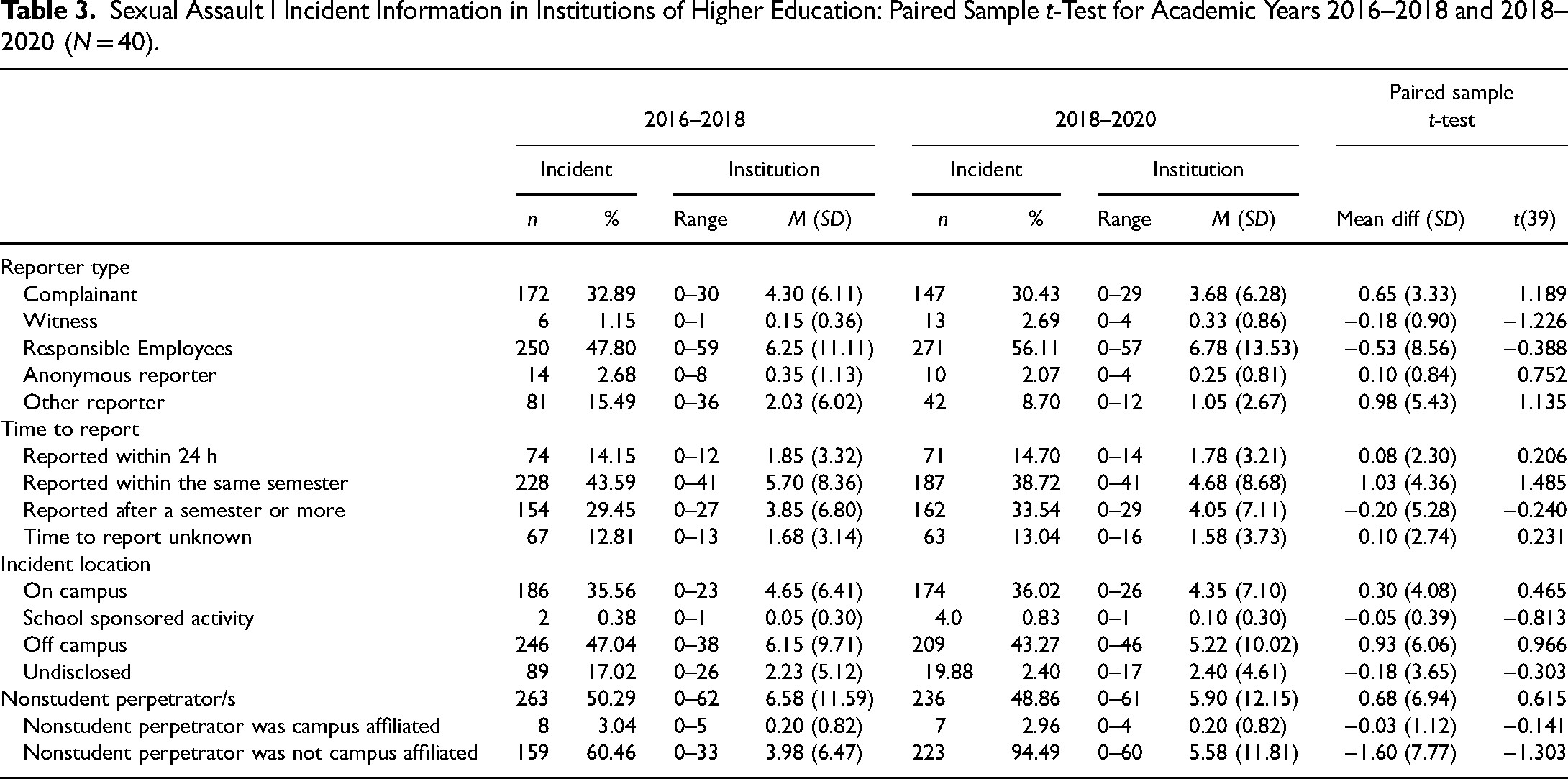
Sexual Assault I Incident Information in Institutions of Higher Education: Paired Sample t-Test for Academic Years 2016–2018 and 2018–2020 (N = 40).
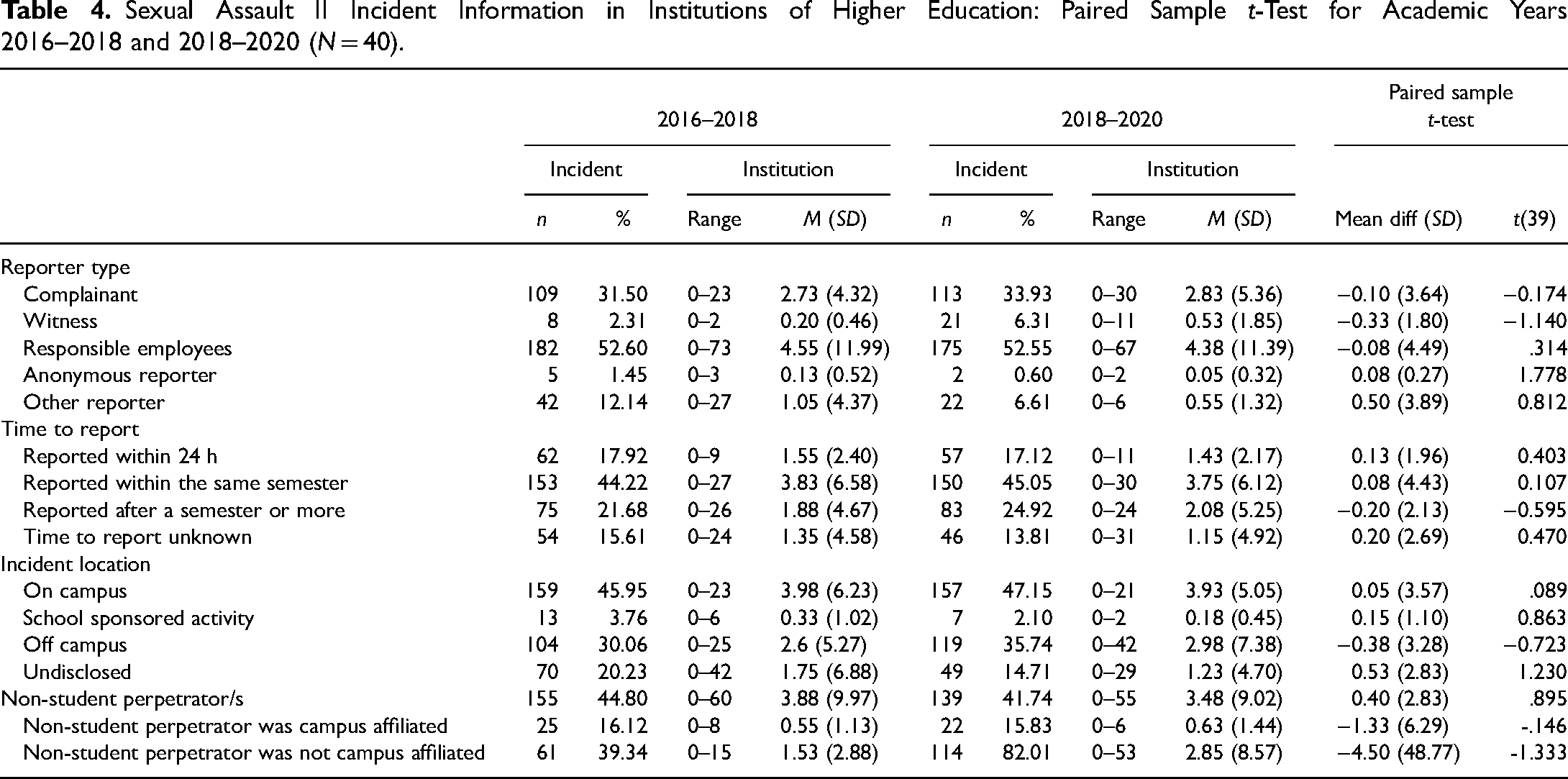
Sexual Assault II Incident Information in Institutions of Higher Education: Paired Sample t-Test for Academic Years 2016–2018 and 2018–2020 (N = 40).
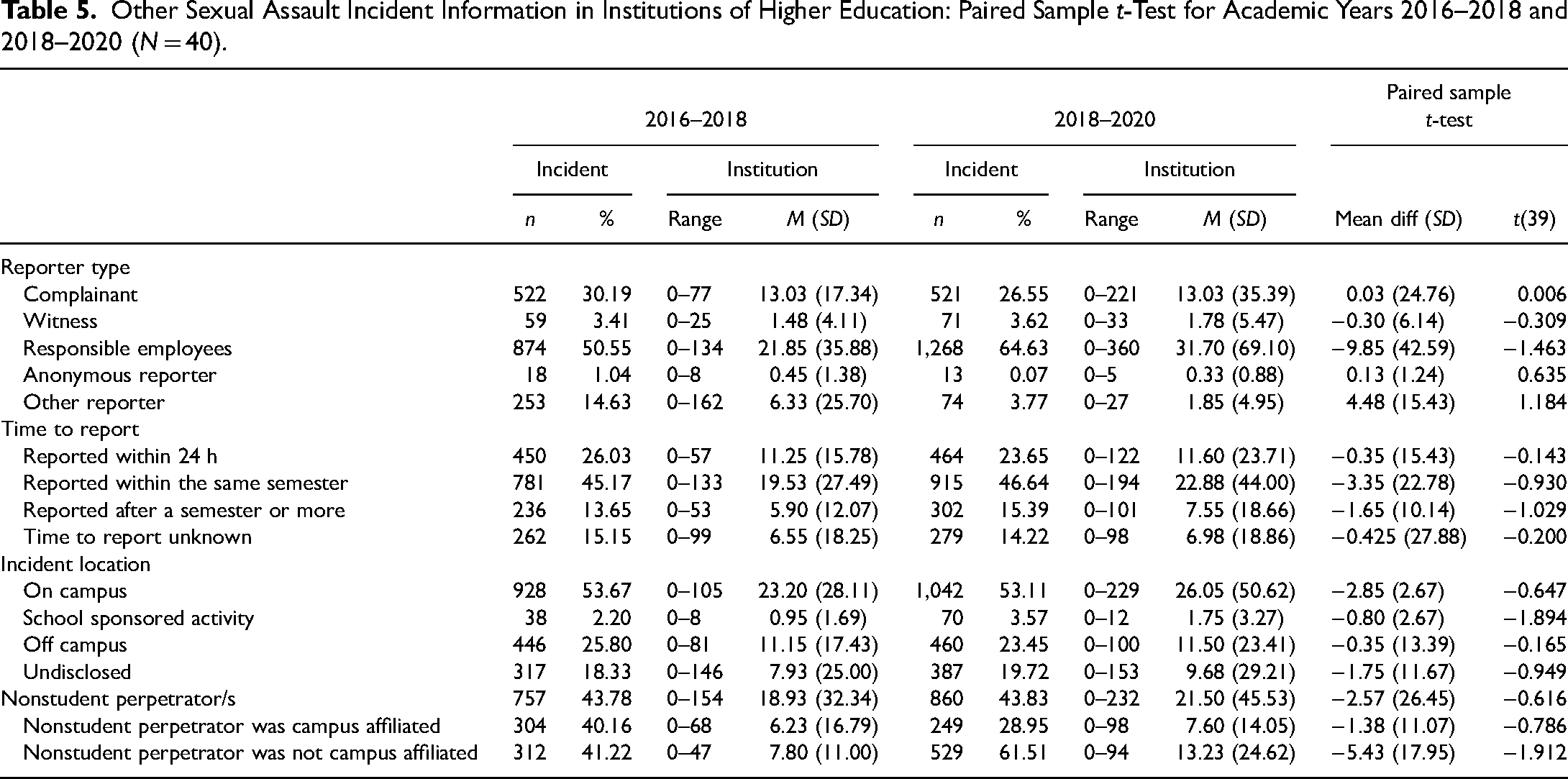
Other Sexual Assault Incident Information in Institutions of Higher Education: Paired Sample t-Test for Academic Years 2016–2018 and 2018–2020 (N = 40).
Sexual Assault I Incident Title IX Processes and Case Outcomes in Institutions of Higher Education: Paired Sample t-Test for Academic Years 2016–2018 and 2018–2020 (N = 40).

Multiple accommodations could be made for each incident.
More than one disciplinary action could occur for each incident with a finding of responsibility.
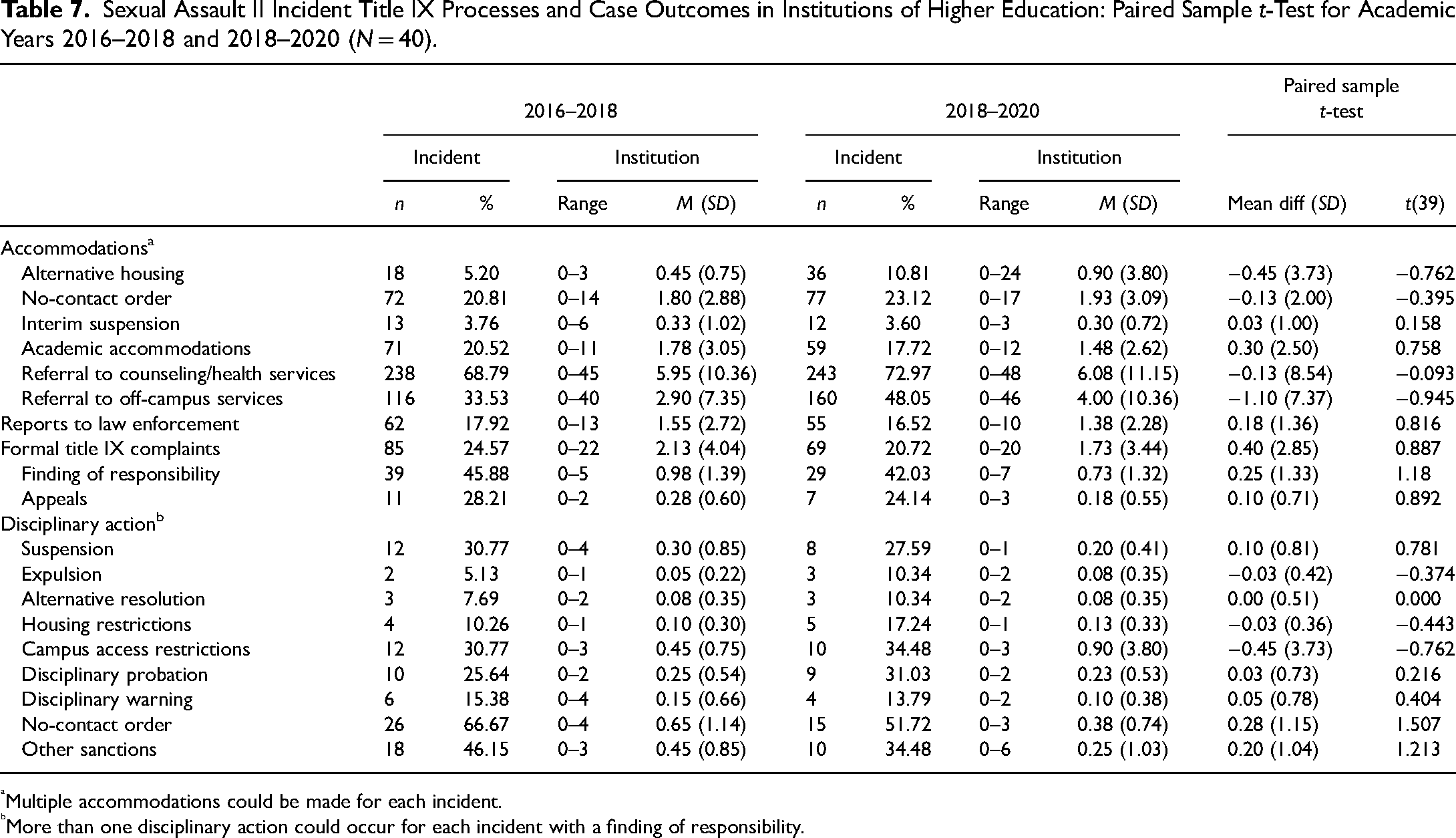
Sexual Assault II Incident Title IX Processes and Case Outcomes in Institutions of Higher Education: Paired Sample t-Test for Academic Years 2016–2018 and 2018–2020 (N = 40).
Multiple accommodations could be made for each incident.
More than one disciplinary action could occur for each incident with a finding of responsibility.
Other Sexual Misconduct Incident Title IX Processes and Case Outcomes in Institutions of Higher Education: Paired Sample t-Test for Academic Years 2016–2018 and 2018–2020 (N = 40).

Multiple accommodations could be made for each incident.
More than one disciplinary action could occur for each incident with a finding of responsibility.
Results
First, data on the context of sexual misconduct incidents reported to Title IX coordinators across two biennial waves of data (academic years 2016–2018 and 2018–2020) were assessed (see Table 1). Findings showed that Title IX coordinators received reports of 2,598 incidents in 2016–2018 and 2,778 incidents in 2018–2020. Most reported incidents were for Other Sexual Misconduct (66.55% and 70.63%) compared with Sexual Assault I (20.13% and 17.39%) or Sexual Assault II (13.32% and 11.99%). The average biennial reporting rate for Other Sexual Misconduct in 2016–2018 and 2018–2020 was 4.24 and 3.43 incidents per 1,000 students, respectively, compared with a reporting rate of 1.37 and 1.06 incidents per 1,000 students, respectively, for Sexual Assault I and 0.81 and 0.90 incidents per 1,000 students, respectively, for Sexual Assault II.
Most incidents were reported by responsible employees (50.33% and 61.70%) followed by complainants (30.94% and 28.11%) and were reported within the same semester (44.73% and 45.07%) or within 24 h (22.56% and 21.31%). In addition, nearly half of the reported incidents took place on campus (49.00% and 49.42%) and approximately 45% of reported incidents were perpetrated by nonstudent perpetrators. Of those nonstudent perpetrators, the majority were not campus affiliated (45.28% and 70.12%); however, in each wave of data, more than 20% of nonstudent perpetrators were campus affiliated (e.g., faculty, staff).
Incidents are of course nested within IHEs, and examination of the means and standard deviations demonstrate wide variation across institutions regarding the number and rate of reported incidents and likewise the number of different reporter types, times to report, incident locations, and nonstudent perpetrators. For example, the average number of sexual misconduct incidents reported to Title IX coordinators was 64.95 incidents in 2016–2018 and 69.45 incidents in 2018–2020; however, this ranged from 0 to 450 incidents and 0 to 537 incidents across IHEs, respectively. At the same time, results from the paired sample t-tests showed only one significant within-IHE difference in the means for the incident-related variables across the two waves of data, rates of Other Sexual Misconduct were higher in 2016–2018 than in 2018–2020, t(39) = 2.057, p = .046.
Next, data on the Title IX processes and case outcomes for incidents of sexual misconduct reported to Title IX coordinators were examined (see Table 2). Regarding accommodations, the most utilized accommodations included referrals to counseling/health services (64.93% and 78.04%), referrals to off-campus services (31.56% and 48.09%), no contact orders (25.34% and 17.17%) and academic accommodations (18.40% and 18.43%). In addition, across both waves of data, nearly 20% of incidents reported to Title IX coordinators were reported to law enforcement. In comparison, in 2016–2018, 21.21% of reported incidents resulted in a formal Title IX complaint compared with 15.84% of incidents reported in 2018–2020. Regarding the outcomes of formal Title IX complaints, in 2016–2018, 39.56% of formal complaints resulted in a finding of responsibility, while in 2018–2020, 34.55% of formal complaints resulted in a finding of responsibility. In addition, more than 20% of formal complaints with a finding of responsibility were appealed across both waves.
Regarding sanctions for formal complaints with a finding of responsibility, the most used sanction was a no-contact order, used in 53.67% and 57.24% of incidents, respectively. Campus access restrictions and disciplinary probation were also used in 28.90% and 35.53%, respectively, and 25.69% and 27.63% of incidents, respectively. Further, suspension of the responsible student was used in 26.61% and 23.03% of incidents, respectively, while expulsions were used in 17.89% and 17.11% of incidents, respectively. However, more than one disciplinary action could be used for an incident such that, for example, a student may have received disciplinary probation as well as been subject to campus access restrictions. In addition, other sanctions were used in 32.57% and 29.61% of incidents. IHEs were asked to provide examples of types of other sanctions and, while these data were reported in the aggregate and thus not linked to specific cases, qualitative examples yielded some information on how faculty/staff misconduct is sanctioned: “employee was trained and warned,” “termination of employment contract,” “contract not renewed for employee,” and “employment termination.”
There continued to be significant variation across IHEs as indicated by large ranges and standard deviations regarding accommodations, formal reports, and reports to law enforcement. For example, Title IX coordinators across IHEs referred from 0 to 446 students (M = 42.18) and 0 and 485 students (M = 54.20) to counseling/health services, respectively, and fielded from 0 to 166 (M = 13.78) and 0 to 117 (M = 11.00) formal Title IX complaints, respectively. There were much smaller differences across IHEs for each type of disciplinary action: the most used sanction, no contact orders, were used from 0 to 12 (M = 2.93) 0 to 11 (M = 2.18) times across institutions, respectively. In addition, results from the paired sample t-tests for Title IX processes and incident outcomes showed only one significant difference across the two waves of data: there were significantly greater numbers of other sanctions on average at IHEs in 2016–2018 compared with 2018–2020, t(39) = 2.185, p = .017.
The next series of analyses examined information on the context of incidents disaggregated across types of sexual misconduct (see Tables 3–5). Analysis of Sexual Assault I incidents indicated that most incidents were reported by responsible employees (47.80% and 56.11%) rather than the complainant (32.89% and 30.43%) and most were reported within the same semester (43.59% and 38.72%) or after a semester or more (29.45% and 33.54%). In addition, more than one third of reported incidents took place on campus (35.56% and 36.02%) and approximately 50% of reported incidents were perpetrated by nonstudent perpetrators. Of those nonstudent perpetrators, about 3% were campus affiliated (e.g., faculty, staff).
Overall, Sexual Assault II incidents resembled Sexual Assault I incidents, in that most incidents were reported by responsible employees (52.60% and 55.56%) rather than complainants (31.50% and 33.93%) and most incidents were reported within the same semester (44.22% and 45.05%) or after a semester or more (21.68% and 24.92%). In addition, nearly half of the reported incidents took place on campus (45.95% and 47.15%). Fewer reported incidents were perpetrated by nonstudent perpetrators (44.80% and 41.74%); however, nonstudent perpetrators who were campus affiliated (e.g., faculty, staff) perpetrated about 16% of incidents of Sexual Assault II, more than five times the number of reported incidents of Sexual Assault I.
Finally, regarding Other Sexual Misconduct, like Sexual Assault I and II, most incidents were reported by responsible employees (50.55% and 64.43%) rather than complainants (30.19% and 26.55%). And like Sexual Assault I, most were reported within the same semester (45.17% and 46.64%) or within 24 h (26.03% and 23.65%). Diverging from Sexual Assault I and II, more than half of reported incidents of Other Sexual Misconduct took place on campus (53.67% and 53.11%) and more than 40% were perpetrated by nonstudent perpetrators. Of those nonstudent perpetrators, about 40% and 30% were campus affiliated (e.g., faculty, staff), respectively, across both waves.
There was wide variation across IHEs regarding some of the incident characteristics: reporting by responsible employees, reporting within the same semester, and nonstudent perpetrators yielded particularly large ranges and standard deviations across types of sexual misconduct; however, results from the paired sample t-tests showed that there were no significant differences in incident information within IHEs for Other Sexual Misconduct across 2016–2018 and 2018–2020.
Finally, information on Title IX processes and case outcomes were disaggregated across types of sexual misconduct (see Tables 6–8). Analysis of Sexual Assault I incidents indicated that the most utilized accommodations included referrals to counseling/health services (72.28% and 78.26%), referrals to off-campus services (40.54% and 54.87%), and academic accommodations (32.70% and 36.44%). In addition, in 2016–2018, 24.28% of Sexual Assault I incidents reported to Title IX coordinators had been reported to law enforcement, while 27.15% resulted in a formal Title IX complaint. In comparison, in 2018–2020, 19.88% of Sexual Assault I incidents reported to Title IX coordinators had been reported to law enforcement, while 21.53% resulted in formal Title IX complaints. Of the formal Title IX complaints for Sexual Assault I, in 2016–2018, 35.92% resulted in a finding of responsibility, while in 2018–2020, 38.46% resulted in a finding of responsibility. In addition, about 45% and 40% of formal complaints with a finding of responsibility, respectively, were appealed. The most used sanctions for formal Title IX complaints for Sexual Assault I with a finding of responsibility included suspensions (47.06% and 40.00%), no-contact orders (43.14% and 55.00%), and campus access restrictions (41.18% and 57.50%).
Analysis of Sexual Assault II incidents indicated that, like Sexual Assault I incidents, the most utilized accommodations included referrals to counseling/health services (68.79% and 72.97%) and referrals to off-campus services (33.53% and 48.05%); no-contact orders (20.81% and 23.12%) were also used frequently for Sexual Assault II incidents. Fewer reported incidents of Sexual Assault II than Sexual Assault I were reported to law enforcement or resulted in a formal Title IX complaint. In 2016–2018, 17.92% of Sexual Assault II incidents reported to Title IX coordinators had been reported to law enforcement, while 24.57% resulted in a formal Title IX complaint. In comparison, in 2018–2020, 16.52% of Sexual Assault I incidents reported to Title IX coordinators had been reported to law enforcement, while 20.72% resulted in formal Title IX complaint. Of the formal Title IX complaints for Sexual Assault II, in 2016–2018, 45.88% resulted in a finding of responsibility, while in 2018–2020, 42.03% resulted in a finding of responsibility (i.e., were “founded”). In addition, fewer founded formal complaints of Sexual Assault II than founded formal complaints of Sexual Assault I were appealed: 28.21% and 24.14%, respectively. The most used sanctions for formal Title IX complaints for Sexual Assault II with a finding of responsibility included no-contact orders (66.67% and 51.72%), suspensions (30.77% and 27.59%), and campus access restrictions (30.77% and 34.48%).
Regarding Other Sexual Misconduct incidents, the most utilized accommodations included referrals to counseling/health services (61.94% and 69.57%), referrals to off-campus services (28.46% and 46.43%), and no-contact orders (26.78% and 15.09%). In addition, in 2016–2018, 18.62% of Other Sexual Misconduct incidents reported to Title IX coordinators had been reported to law enforcement, while 18.74% resulted in a formal Title IX complaint. In comparison, in 2018–2020, 20.74% of Other Sexual Misconduct incidents reported to Title IX coordinators had been reported to law enforcement, while 13.61% resulted in formal Title IX complaints. Of the formal Title IX complaints for Other Sexual Misconduct, in 2016–2018, 39.51% resulted in a finding of responsibility, while in 2018–2020, 31.09% resulted in a finding of responsibility. In addition, 8.59% and 13.25% of formal complaints with a finding of responsibility, respectively, were appealed. The most used sanctions for formal Title IX complaints for Other Sexual Misconduct with a finding of responsibility included no-contact orders (53.91% and 60.24%), disciplinary probation (25.78% and 33.73%), and campus access restrictions (23.44% and 25.30%).
Like the analysis of the context of incidents of sexual misconduct, there was wide variation across IHEs regarding some of the case processes and outcomes. For example, in 2016–2018, IHEs referred from 0 to 76 students to counseling/health services for Sexual Assault I, 0 to 45 for Sexual Assault II, and 0 to 325 for Other Sexual Misconduct and fielded from 0 to 46 formal Title IX complaints for Sexual Assault I, 0 to 22 for Sexual Assault II, and 0 to 98 for Other Sexual Misconduct. Results from the paired sample t-tests showed that there were no significant differences in Title IX processes and case outcomes within IHEs for any type of sexual misconduct across 2016–2018 and 2018–2020.
Discussion and Implications
The present study adds to the small but growing literature examining incidents of sexual misconduct reported to Title IX coordinators at IHEs by replicating prior work and adding information on reporters, nonstudent perpetrators, and the range of accommodations accessed by students. In addition, it is the first study to assess differences in incident information across types of sexual misconduct and explore whether incident information within IHEs changed over time. First, consistent with previous research by Richards (2019a), most incidents reported to Title IX coordinators are for Other Sexual Misconduct, then Sexual Assault I and Sexual Assault II. While much of the attention on campus sexual misconduct has focused on rape and attempted rape (i.e., Sexual Assault I and II), these findings highlight that sexual harassment and unwanted touching make up the bulk of the incidents reported to Title IX coordinators and thus, require most of Title IX coordinators’ time. Many of these types of “yellow zone” incidents may not rise to the level of a policy violation but may have a detrimental impact on the campus environment (Rennison, 2018; Richards & Rennison, 2022).
Findings further demonstrate that most incidents are reported by responsible employees, while approximately 30% are reported by complainants. In some cases, reports by responsible employees may lead victims to needed accommodations or to a formal Title IX complaint that would have gone unreported; however, it is likely that many incidents reported by responsible employees never move beyond the initial reporting stage because the victim/s are not inclined to seek out accommodations or file a formal Title IX complaint. The prevalence of incidents reported by responsible employees highlights how critical it is to train faculty and staff regarding how to respond to a disclosure of sexual misconduct, not just that they must report the incident to the Title IX coordinator (see Richards et al., 2021a). Further, researchers have outlined ethical issues associated with mandatory reporting (e.g., breaking student confidentiality, removing victim agency; Holland et al., 2018; Richards et al., 2021a), noted the lack of research on purported positive impacts of mandatory reporting (e.g., increased victim safety, increased connections to victim services; Holland et al., 2020; Richards et al., 2021a), and found support for a potential chilling effect of mandatory reporting on student's access to supportive services and accommodations (Holland et al., 2020). As such, some scholars argue in favor of supportive reporting that follows the direction of the survivor as opposed to mandatory reporting (Freyd, 2016; Holland et al., 2019; Richards et al., 2021a).
Moreover, only about 20% of reports of sexual misconduct to Title IX coordinators result in a formal Title IX complaint likely, at least in part, because so many of these reports are made by mandatory reporters, not the complainant. These findings are consistent with previous studies (e.g., Richards et al., 2021b), and underscore the need to critically examine whether the current Title IX processes—including mandatory reporting—are serving survivors and the overall campus climate. Indeed, the limited prior research on survivors’ experiences with reporting to Title IX as well as the Title IX investigation and disciplinary process notes overwhelmingly negative experiences (Holland & Cipriano, 2021; Cipriano et al., 2021) and high personal “costs” of reporting for survivors (e.g., retaliation, shame, disbelief; Know Your IX, 2021).
In addition, about 45% of reported incidents are perpetrated by nonstudents and most nonstudent perpetrators are not affiliated with the campus. As such, Title IX coordinators are fielding many incidents that are outside of the campus’ authority to formally address through campus sanctions. On the other hand, the IHE is not limited in its capacity to provide all available accommodations to students harmed by noncampus affiliates as well as to help these survivors report to law enforcement if they so choose. As such, these findings highlight the important role of off-campus support providers and local law enforcement departments. Official partnerships (i.e., through memorandums of understanding), where possible, may enhance an IHE's response to sexual misconduct, when for example, Title IX coordinators can provide a warm hand-off of a survivor in need of assistance to a community based agency (Richards, 2019b).
At the same time, more than 20% of nonstudent perpetrators are campus affiliated (i.e., more than 10% of all perpetrators), namely IHE faculty and staff members. This is consistent with a recent study reporting rates of faculty/staff sexual harassment of students ranging from nearly 6% to 16% (M = 9%) across 27 institutions (Klein et al., 2021). In addition, prior research suggests that some faculty and staff perpetrators may commit multiple acts of harassment and misconduct against students over their time at an IHE (Cantalupo & Kidder, 2018). Taken together, these findings show the importance of addressing faculty/staff-on-student harassment in prevention programming and awareness campaigns. Further, graduate students who work closely with faculty and are often employed by academic departments or centers as research assistants may be at particular risk of faculty and staff harassment (Kelley & Parsons, 2000; Wood et al., 2021), while also being in a particular risky position—as their academic and professional careers are enmeshed with those of faculty members—if reporting harassment by faculty or staff supervisors. As a result, IHEs should carefully consider whether their policies sufficiently protect graduate students from both sexual misconduct and retaliation.
Referrals to counseling/health services and/or off-campus services as well as no-contact orders are the most used accommodations for reported incidents. Little research to date has examined what students are looking for from Title IX coordinators when they report sexual misconduct, but these findings suggest that students need—or at least are receiving—support focused on their immediate mental and physical safety and well-being rather than academic accommodations.
Findings further show that nearly 20% of reports of sexual misconduct made to Title IX coordinators were also reported to law enforcement. These findings are similar to results from Richards (2019a) and Richards et al. (2021b) showing that approximately 25% of the reports of sexual misconduct made to Title IX coordinators were also reported to law enforcement. These rates of reporting to law enforcement are higher than some past research showing that as few as 2% (Fisher et al., 2003) of college student victims of sexual violence reported to law enforcement, but similar to other research finding that 17% of college student victims of sexual assault and 22% of college student victims of rape reported to police (here measured as either local police or campus police; Sloan et al., 1997). As such, the findings presented here and in Richards (2019a) and Richards et al. (2021b) suggest that sexual violence reported to Title IX coordinators may be reported to law enforcement at higher rates than are generally seen in surveys of college student victimization. At the same time, these data do not allow for investigation regarding why these cases are reported to law enforcement at higher rates. For example, it is unknown whether survivors or Title IX coordinators are making the decision to report to law enforcement, whether certain survivors are more likely to report to law enforcement (or have their cases reported), and what the consequences of reporting to law enforcement are for survivors.
Finally, results show that individual IHEs experience a stable institutional level “profile” of sexual misconduct incidents, both overall and across types of sexual misconduct, at least in the state of Maryland. In other words, these findings suggest that IHEs should expect similar year-over-year experiences regarding sexual misconduct reporting and should support on-campus resources and staff accordingly. Furthermore, prevention and intervention education should consider the campus-specific profile of incident characteristics (i.e., location of reported incidents, student accommodations). IHEs should also consider how these data could be used, or used alongside campus climate assessments, to gauge the impacts of prevention and intervention education programming over time (e.g., reduced victimization as measured by both campus climate surveys and reporting to Title IX) or to track goals such as increased rates of referrals to victim services.
Findings also showed variation in incident characteristics across the different types of sexual misconduct reported to Title IX coordinators. For example, while incidents of Sexual Assault I are most likely to occur off-campus, incidents of Sexual Assault II and Other Sexual Misconduct are most likely to occur on-campus. Relatedly, while few nonstudent campus affiliates (e.g., faculty and staff) were identified as respondents in Sexual Assault I incidents, they were respondents in more than 15% of Sexual Assault II incidents and more than 40% of Other Sexual Misconduct incidents. These data highlight the need to provide prevention education that uses scenarios inclusive of the range of sexual misconduct, types of perpetrators, and locations, both off and on campus, where assaults may occur. Given that much of the research and activism regarding campus sexual misconduct has focused on student-on-student misconduct it is likely that the focus of prevention education programs will need to be expanded to address faculty/staff-on-student sexual harassment. Campus stakeholders might also consider whether current policies allow for remediation of “yellow zone” behaviors by faculty and staff (Rennison, 2018; Richards & Rennison, 2022) and whether policies such as faculty-student consensual sexual relationship policies (Richards & Nystrom, 2022) would benefit their campus community.
Further, the greatest percentage of non-campus affiliated sexual misconduct (e.g., perpetrated by visitors, nonstudent friends/dates, or intimate partners) was for Sexual Assault I. These incidents—all completed rapes—are likely not within the IHE's authority to sanction. As such, students may feel a sense of betrayal from the institution if they report a rape to their Title IX coordinator only to hear that the IHE is limited in its response against the perpetrator. Again, community partnerships (e.g., rape crisis centers, legal aid organizations) may be particularly helpful for survivors who need continued support beyond what is available at the IHE.
Limitations and Future Research
While the present research provides novel information on incidents of sexual misconduct reported to Title IX coordinators and demonstrates within IHE consistencies over time, several limitations must be acknowledged. To begin, aggregate IHE-level data like what is used here (i.e., counts of incidents) does not allow for analysis of individual incident characteristics. In other words, these data do not track individual cases as to whether there was an official conduct process (or not), finding of responsibility (or not), or disciplinary action (or not). Relatedly, the structure of these data precluded tests of significant differences in incident characteristics, processes, and outcomes between institutions for the different types of sexual misconduct. Further, the data's accuracy is reliant on individual Title IX coordinators who input the data, and two IHEs’ data were not submitted and thus were omitted from the analysis.
Future research must include direct tests of the relationships between incident characteristics (e.g., on campus) and case processes (e.g., a formal Title IX complaint) and outcomes (e.g., findings of responsibility/nonresponsibility, reports to law enforcement), and further between complainant and respondent characteristics and processes and outcomes. These types of analyses require incident-level data, which in the author's experience are extremely challenging to obtain, as well as complainant- and respondent-level data that might not be routinely collected by Title IX coordinators (e.g., race/ethnicity). In addition, the present findings on the prevalence of reporting by responsible employees highlight the need for continued research regarding the impact of mandatory reporting policies on complainants, mandatory reporters, Title IX office resources, and general campus safety. Future research must also focus on nonstudent perpetrators of sexual misconduct, and in particular, the context and outcomes (e.g., findings of responsibility, sanctions) of faculty- and staff-perpetrated sexual misconduct. Finally, information must be gathered directly from student victims of sexual misconduct who do and do not decide to report their victimizations to Title IX coordinators as well as from students who are involved in the Title IX misconduct process as respondents. Better understanding what is and is not working for students regarding Title IX processes and why is critical to addressing educational inequity under Title IX as well as overall campus safety.
Footnotes
Author's Note
The author wishes to thank the Maryland Higher Education Commission for their assistance in obtaining the data for this research and the State Delegates who sponsored the legislation mandating the collection of these data.
Declaration of Conflicting Interests
The author declared no potential conflicts of interest with respect to the research, authorship, and/or publication of this article.
Funding
The author received no financial support for the research, authorship, and/or publication of this article.
