




Abstract
Survivors of campus sexual assault are often tasked with healing while sharing an environment with their perpetrators. However, little is known about the effects of a shared environment on survivor well-being. A qualitative thematic analysis design was employed to address this gap. We conducted semi-structured interviews with nine female survivors who identified their perpetrators as fellow students at a large state university in the southeastern U.S. The five themes that emerged are situated within an ecological framework, which is also used to guide our recommendations for supporting survivors’ well-being within higher education.
The term sexual assault can describe a range of experiences of unwanted sexual contact, including from touching to anal or vaginal penetration (i.e., rape). Sexual assault on women is a significant public health threat in the United States, with approximately 15–25% of women experiencing rape or attempted rape at some point in their lives (Cole & Lynn, 2010; Smith et al., 2018). The risk of experiencing sexual assault is notably high in college populations, with approximately one in five women reporting sexual assault (Krebs et al., 2007; Mellins et al., 2017). Female college students who survive sexual assault can experience a host of social, emotional, physical, and academic difficulties in the aftermath of the event that negatively impact their health and wellness over time (Mengo & Black, 2016; Wilson & Miller, 2016).
The consequences of sexual assault include, but are not limited to, psychological disorders (e.g., depression, posttraumatic stress disorder; PTSD), self-blame, loss of trust, substance use, suicidal thoughts, sleep disturbances, sexually transmitted infections, unplanned pregnancies, sexual dysfunction, academic impairment, and school drop-out (Campbell et al., 2009; Wilson & Miller, 2016). Evidence suggests that survivors of sexual assault experience higher rates of PTSD compared to survivors of other forms of trauma, such as motor vehicle accidents or bereavement (Shakespeare-Finch & Armstrong, 2010). This was underscored by a recent study (Jakob et al., 2017), which indicated that survivors of sexual trauma experienced more severe PTSD than survivors of all other forms of trauma, including combat trauma.
Individuals diagnosed with PTSD often evidence intrusive re-experiencing, including intrusive images, flashbacks, nightmares, emotional distress, and physiological reactions when exposed to triggers or trauma-specific cues (Ehlers et al., 2004; Wilson et al., 2012). During a sexual assault, individuals are exposed to a wide range of stimuli, including people, actions, events, characteristics of the environment, and interpersonal dynamics that can have specific physiological and psychological properties. Subsequently, these stimuli can evoke trauma-specific symptoms, intrusive memories, generalized emotional states, or flashbacks (Wilson et al., 2012). These intense sensory and visual memories result in “reliving” the assault, often accompanied by extreme physiological and psychological distress (Van der Kolk, 2000). Reliving traumatic experiences may intensify symptoms and lead to maladaptive coping strategies (Ehlers & Clark, 2000). Coping strategies that are considered maladaptive are those that are associated with poor mental health outcomes and higher levels of psychopathology symptoms, such as substance use, withdrawal, avoidance, and isolation.
Research on intrusive memories suggests that stimuli accompanying the event are likely to develop into “warning signals,” often visual, that indicate impending danger (Ehlers et al., 2004). If the perpetrator was visible to the survivor at the time of the assault, the perpetrator may be a direct visual stimulus linked with the trauma. The experience of seeing one's perpetrator, or the potential of encountering the perpetrator, may increase hypervigilance and activate the stress response systems, giving rise to avoidant coping behaviors (e.g., withdrawal, behaviors to try to forget the assault) (Ullman et al., 2007). This may be harmful to those sexually assaulted by someone affiliated with the university (e.g., fellow student) because they are likely exposed to their perpetrators and other assault cues on campus, potentially leading to re-traumatization (Rosenthal & Freyd, 2022). Therefore, survivors may have to compromise their well-being and safety to continue their education (Mengo & Black, 2016).
The recovery process for sexual assault survivors occurs in the context of their interactions within and among the multiple systems (e.g., family, peers, community, institution, society) in which they are embedded (Campbell et al., 2009; Moylan & Javorka, 2020). Survivors who remain on campus may face a unique constellation of proximal and distal influences that elevate the risk for maladaptation after the assault (Campbell et al., 2009). At present, minimal research has explored how remaining in a shared environment with one's perpetrator may impact recovery. The current study seeks to address this gap by exploring the experiences of survivors who share a campus with their perpetrators and how this shared environment influences survivor well-being and interactions with systems in which survivors are embedded. Our qualitative methodology provides a voice to survivors and yields the level of detail necessary to understand the nuance of recovering within a shared campus environment.
Ecological Framework of Survivor Recovery
According to the ecological model of trauma (see Campbell et al., 2009), the impact of college sexual assault on survivors’ well-being is affected by individual-level factors (e.g., pre-assault trauma history, sociodemographic variables, assault characteristics, acknowledgment status, relationship to the perpetrator, coping strategies), microsystem-level factors (e.g., social reactions, social support), exosystem factors (e.g., institutional support, available resources interactions with the legal system), macrosystem factors (e.g., campus rape-culture, acceptance of rape myths, the impact of current events), and chronosystem factors (e.g., the impact of trauma across the lifespan). Conceptualizing sexual assault from an ecological framework can highlight the numerous levels and factors that may influence a survivor's experience following the assault.
Individual-level factors
Many studies document minimal differences in post-assault distress across race and ethnicity (Campbell et al., 2009; Rothman et al., 2021; Ullman et al., 2007). Variability in assault characteristics (e.g., level of violence, substance-facilitation) and relationship to perpetrator may also impact survivor outcomes (Campbell et al., 2009; Littleton & Henderson, 2009). However, the findings are inconsistent. For instance, one recent study (O’Callaghan & Ullman, 2022) indicated that assault severity and relationship to perpetrator were not predictive of postassault survivor outcomes. However, another study of a community sample of sexual assault survivors (O’Callaghan & Ullman, 2022) demonstrated that rapes involving substance-use impairment and physical force were associated with higher PTSD symptoms than other forms of sexual violence. Beyond those factors, individual differences in prior trauma experiences and mental health consistently influence survivor well-being. Those who experienced previous sexual violence are more likely to experience revictimization during college (Cusack et al., 2021) and higher levels of deleterious effects (Turchik & Hassija, 2014). Prior trauma may lead to these impacts by affecting survivors’ coping strategies and perceived ability to cope, associated with postassault distress and well-being (Ullman & Peter-Hagene, 2014; Ullman et al., 2014).
Microsystem-level factors
Research suggests that social support from family and friends positively impacts survivors’ recovery (Hakimi et al., 2018; Ullman & Peter-Hagene, 2014). Both the type (e.g., emotional, informational) and quality (e.g., perceived helpfulness, the closeness between the survivor and provider of support) of social support received from friends and family over time is predictive of survivor well-being, such that higher quality support and support perceived as more helpful predict better well-being (Gameon et al., 2021; Ullman et al., 2007). However, many survivors of sexual assault do not receive any assault-related social support because they choose not to disclose their experiences. Across several studies, survivors’ reasons for not disclosing have included feelings of blame, shame, or guilt; fears of negative social reactions (e.g., “victim-blaming,” disbelief, attempting to control the survivor's actions, retribution); desires to avoid or forget the event; and the perceived acceptability of services (Caron & Mitchell, 2021; Holland & Cortina, 2017; Mennicke et al., 2021). Negative social reactions may lead survivors to disengage from seeking support from others in the future (Gameon et al., 2021) and rely on maladaptive coping strategies, which can contribute to more significant psychological distress over time (Ahrens et al., 2007).
Exosystem-level factors
Institutional responsiveness (e.g., legal system, educational institution) is also predictive of survivors’ recovery and, in some cases, can induce guilt and self-blame. It is estimated that as few as 4% of survivors who experience sexual assault on campus report their experiences to campus authorities or administrators (Fisher et al., 2003; Mennicke et al., 2021). Many survivors report being met with judgment and disbelief when they do disclose, an experience known as institutional betrayal (Smith & Freyd, 2013; Stotzer & MacCartney, 2016). Despite reports regarding the high prevalence of sexual assault across many campuses, a 2014 U.S. Senate Subcommittee report indicated that 40% of colleges and universities did not investigate a single sexual assault in the previous five years. Taken together, there is a clear need to understand how survivors make decisions about whether to report the assault to their educational institution and how those institutions respond.
Macrosystem-level factors
Limited research has investigated the impact of macrosystem-level factors (i.e., attitudes and ideologies of the culture) on the recovery of survivors. Dworkin and Weaver (2021) proposed a conceptual model to address this gap. Within this model, three components of global sociocultural settings (i.e., norms, structures, and environmental stressors) may affect survivor well-being by influencing how survivors’ social contexts, and the systems in which survivors are embedded, respond to sexual violence. Additionally, the conceptual model proposes that global sociocultural settings also influence survivor well-being by creating additional sources of stress, burden, or protection for survivors (Dworkin & Weaver, 2021).
“Rape myths” represent a sociocultural ideology that has received focus within the literature. Rape myths are defined as “false beliefs about rape shaped by sexism and other prejudices” (McMahon & Farmer, 2011, p. 71). These myths may include perceptions that the assault was a consensual experience, disbelief in some or all details of the event, or beliefs that survivors wanted the assault to occur. Research suggests that rape myths impact recovery by increasing survivor self-blame and the “victim-blaming” attitudes of individuals and institutions that interact with the survivor following the assault (McMahon & Farmer, 2011; Orchowski et al., 2013; Rosenthal, 2019). These attitudes and myths may be especially relevant for survivors who are embedded in the same context (e.g., social circles, institutions) as the perpetrator, which may enhance the level of disbelief or blame communicated to the survivor (Rich et al., 2021).
There are also noteworthy gaps in the literature in examining the impact of other cultural attitudes, current events, and social movements, such as the “#MeToo” movement, on survivor recovery. The #MeToo movement was founded in 2006 to help survivors of sexual violence, particularly Black women and girls, find pathways to healing (Me Too, 2021). Although the movement was founded to help survivors heal, few studies have examined the impact of public disclosures of fellow survivors, particularly for survivors who share environments with their perpetrators. A recent study (PettyJohn et al., 2021) indicated that exposure to MeToo disclosures on social media might increase distress for survivors through repeated exposure to distressing content. Another qualitative study of survivor experiences with the MeToo movement found that the movement provided survivors power but also acted as a trigger (Strauss Swanson & Szymanski, 2020). The present study seeks to expand these findings by examining the impact of the MeToo movement on the well-being of survivors who share a campus environment with their perpetrator.
The Present Study
Guided by an ecological framework, this study sought to examine college women's experiences of sexual assault. Specifically, this qualitative study aimed to explore the experiences of survivors who share a campus environment with their perpetrators and how survivor interactions across multiple systems within the shared environment influence postassault well-being. While several studies have examined the effects of sexual assault among female college students, relatively few studies have sought to investigate the unique impact of sharing a campus environment with one's perpetrator after the assault. Therefore, this is an exploratory study to provide insight into the experiences of these women and inform policy and practice in ways that better support the health and well-being of sexual assault survivors within institutions of higher education.
Method
Overview
The primary objective of the current study was to understand the experiences of campus sexual assault survivors who share a campus environment with their perpetrators through a qualitative design. Qualitative research facilitates the understanding of a phenomenon through the experiences of those who have directly experienced a phenomenon, while recognizing the value of participants’ unique viewpoints that can only be fully understood within the context of their experience and worldview (Castleberry & Nolen, 2018). Qualitative thematic analysis, a method for identifying, analyzing, and reporting themes within qualitative data (Braun & Clarke, 2006), guided the analytic process.
Participants and Recruitment
Participants included undergraduate women who were recruited from a large state university in the southeastern U.S. A sample of nine female students was recruited through the Department of Psychological Science's online scheduling system, SONA (56%; n = 5) and online recruitment methods (i.e., university-based emails, emails to chapters of Greek system sororities; 44%, n = 4). The inclusion criteria were as follows: (a) currently enrolled as a student, (b) aged between 18 and 30, (c) identified as female, (d) sexual assault (defined as any unwanted sexual contact) since attending the current university, and (d), identified the perpetrator of the assault as a fellow student at the university. Eligible participants signed a consent form prior to participation.
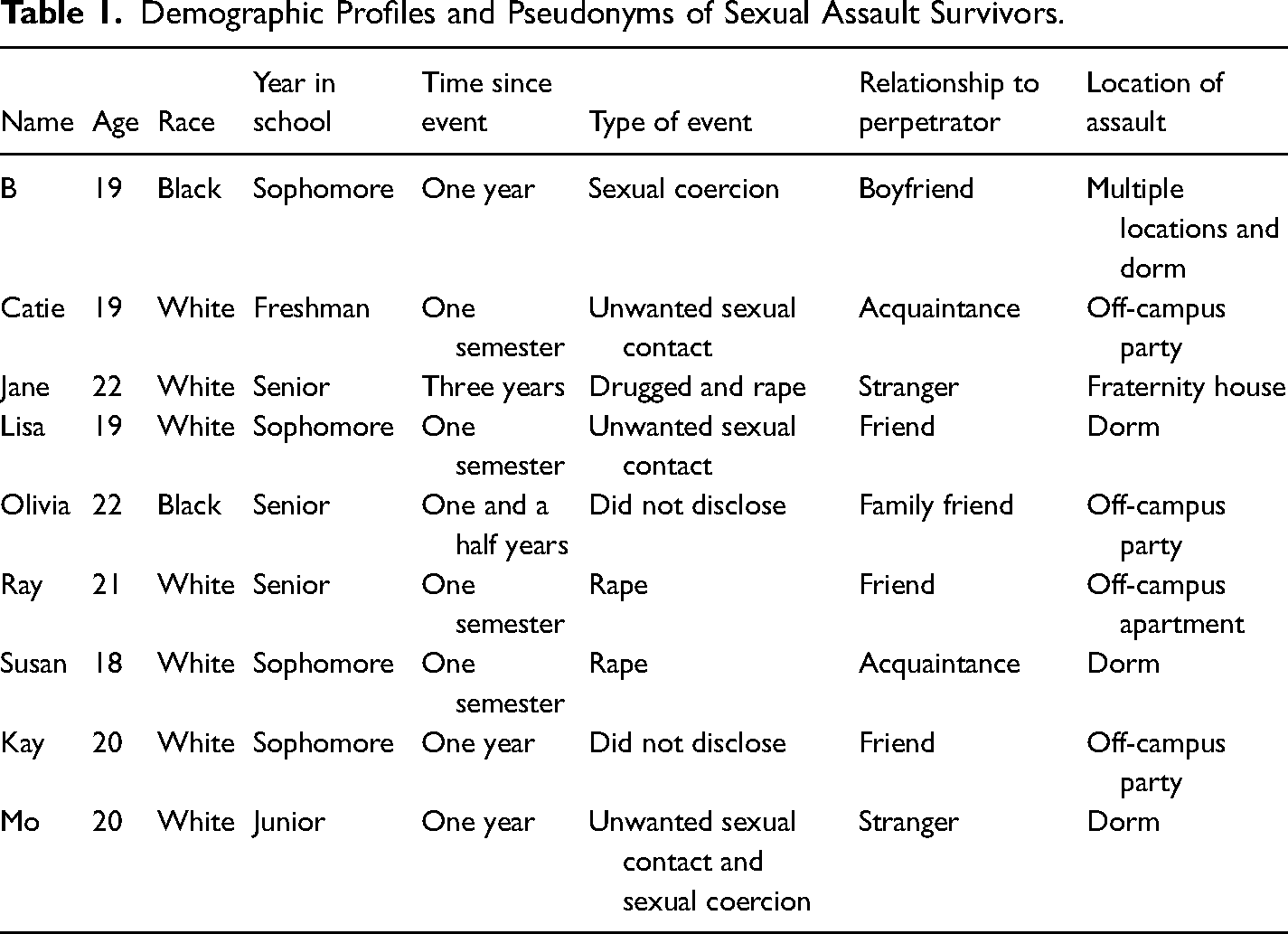
All nine participants were female, undergraduate students who reported experiencing various forms of sexual assault (e.g., unwanted sexual contact, drug-induced rape), from a fellow student at the university they currently attended. Two survivors chose not to disclose the type of assault they experienced. Participant ages ranged from 18 to 22 years, and the time since the event ranged from four months to three years. Table 1 provides an overview of participant and event characteristics. Each participant utilized a pseudonym to protect her identity.
Demographic Profiles and Pseudonyms of Sexual Assault Survivors.
Procedure
All data collection occurred during the COVID-19 pandemic. Semi-structured interviews were completed via an online video meeting platform (i.e., Zoom) to limit the risk of exposure to COVID-19 for participants and the lead researcher. Many participants no longer resided on campus due to the pandemic and referred to their experiences of sharing a campus environment before the pandemic. The length of interviews ranged from 35–71 min (M = 49.11; SD = 11.50), depending upon the nature and degree of elaboration in the participant's answers. Eight of the nine interviews were audio-recorded and transcribed verbatim. One participant declined to be recorded; in this instance, detailed notes were taken in place of the transcription.
Following interviews, participants were provided a debriefing form with a list of local resources for survivors of sexual violence, including local and campus-based mental health resources. Participants were also encouraged to contact the researcher with any questions about study findings or additional resources.
Data Analysis
NVivo 12 (QRS International, 2020), a computer software program used to facilitate qualitative data analysis, was utilized for analysis. Following recommendations for thematic analysis, six steps were followed: familiarizing oneself with the data, generating initial codes, searching for themes, reviewing themes, defining and naming themes, and producing the report (Braun & Clarke, 2006). First, each of the transcripts was read to ensure familiarity with the data and aid in analysis. During these readings, notes were taken about initial interpretations and ideas for codes. Next, initial codes were generated. Codes identify the semantic (explicit and surface meaning) and latent (underlying ideas, patterns, and assumptions) features of the data that appear notable and relevant to the research question, and coding helps to organize data into meaningful groups that will later be combined into broader themes (Braun & Clarke, 2006). Next, codes were systematically collated into potential themes. These themes were reviewed by checking that they were logical within both the coded excerpts and the entire data set (Braun & Clarke, 2006). After reviewing themes, the specifics of each theme were refined, and definitions and names were generated for each theme. Lastly, vivid and compelling excerpts were selected for each theme and subtheme (Braun & Clarke, 2006).
To ensure the trustworthiness of the data analysis, a second researcher completed a thematic analysis of two interviews (22%). After the completion of coding, both coders met to discuss and compare the themes. Both researchers collaboratively determined common themes to confirm or clarify the researcher's initial interpretation of the data (Creswell, 2002). Any disagreements were discussed during two separate meetings until a final theme was chosen.
Although respondent validation and member checking are commonly used to ensure the confirmability of interview data (Quinlan et al., 2012), the current study did not maintain contact with participants after the interview. By not completing a member check, participants were precluded from confirming and clarifying the researcher's initial interpretation of the data (Quinlan et al., 2012). However, the researchers chose to limit the collection of contact information and minimize contact with participants following interviews to protect participation information and reduce risks for confidentiality breaches.
Ethical Standards
The University's Institutional Review Board approved this study. In addition, a National Institutes of Health Certificate of Confidentiality was obtained to prohibit disclosure of data to sources outside of the research team, including in response to court orders and subpoenas.
Findings
Thematic analysis revealed five general themes: (a) exacerbating trauma through the shared environment, (b) shifting social relations, (c) balancing school and mental health, (d) accessibility and acceptability of university support, and (e) two sides to #MeToo. Several clear subthemes emerged within three of the general themes. Table 2 depicts the themes, subthemes, and example quotes for each.
Themes, Subthemes, and Example Quotes.

Exacerbating Trauma Through the Shared Environment
When asked about experiences of sharing a campus environment with one's perpetrator, survivors described the exacerbated symptoms of posttraumatic stress, fear, anxiety, and anger. By participants’ accounts, many of these symptoms were related to the experience of sharing a campus environment with the perpetrator after the assault rather than the assault itself.
I will see him, and it's kind of like, a level of anxiety, where everything kind of shifts to black. It's not like you're going to sit here and try and think about what you're about to do. It's just a, your heart's slightly racing, you're anxious, and you're just like, okay, so I see [him]—time to go. And there's no thinking about it. There's no anything.
I was kind of really looking over my shoulder because I didn't know where he lives or what his schedule was. So, it was very hard to navigate my schedule because…. Suppose like, is he behind me? Is he in front of me? Like, where is he? I was always scanning crowds like finding a space.
This anxiety often led survivors to change their schedules, avoid specific routes that their perpetrators may use, and even avoid campus altogether. This is exemplified by Lisa, who explained changes in her routine as: Let me find a different way home. Let me leave five minutes earlier, 10 min earlier. Walk a route that would take me around my back to get to my elbow, kind of way. Just so I wouldn't have to [see him], even if that made my everyday routine more difficult. But I would make myself, like force, push through it, just with the hopes that he wasn't there.
Mo shared that she feared her perpetrator “grabbing” her and “it happening again.” Jane also shared: It was difficult knowing that at any moment, I could turn around, and he would be right there. And not that he ever tried to hurt me or tried to threaten me in any way. Like, but it was always the question of, like, what could he do? You know, if he was, if you were capable of drugging me and assaulting me, what else is he capable of?
Despite the variability in assault characteristics and survivors’ descriptions of their well-being postassault, the theme of Exacerbating Trauma through the Shared Environment was at the center of almost every interview. The anxiety, fear and panic associated with the potential to encounter one's perpetrator influenced their mental health and ability to navigate campus.
Shifting Social Relations
Survivors reported that they had high levels of social support before and following the assault. Despite continued support, survivors shared that they experienced shifts in their broader social networks due to intentional choices to avoid encountering their perpetrator and unintentional changes due to the effects of the assault. Susan, who had been assaulted by a friend, explained, “I literally just tried to act like he didn't exist. Like even within our group and stuff, I just kind of separated myself saying because I was busy, stuff like that. [I] never got into it.” Kay, who was also assaulted by a friend, shared that the assault “tore apart my friend group.” She shared that many of her friends remained close to the perpetrator, despite knowing that he had assaulted her. She rationalized her decision to end her friendships, explaining, “if you're going to stay friends with him, I don't know how much I respect you over it.”
Some survivors described the changes in their social circles as a relatively simple process and did not indicate distress associated with these shifts. For example, Ray shared, “because we have so many mutual friends, I kind of just cut off all of his friends.” However, several survivors had more decisive shifts in their friendships that negatively impacted their well-being. As one case in point, Jane shared that her grades dropped after the assault and she was subsequently forced to drop out of her sorority for not meeting the academic requirements. She shared, … I didn't join clubs for a while, I dropped out of my sorority, isolated myself because I didn't trust myself to be on campus and to not see him or see someone that was involved. … My life would have probably been exponentially easier than it was [had he not lived on campus]. I lost my best friends all in one fell swoop. ..
For some, the perpetrator's connections within their social circle even influenced their decisions to disclose the assault and their feelings of guilt surrounding the incident. For example, Lisa explained that she did not “want to get him into any more trouble than he was” by reporting him to Title IX because she had previously been friends with her perpetrator. Similarly, Jane explained, “So I think that if it were someone that my friends didn't know. … I think I wouldn't have felt as guilty. I would have gone to the police immediately after, and I probably would have been able to have better success on campus.”
Several survivors also highlighted how the assault led to intimacy challenges due to their inability to trust others. For example, Susan shared, “I just completely lost my faith in men, truly… I completely like blocked out the idea of like having a relationship. Aspects like that are important in a college.” These challenges with intimacy centered primarily around the inability to trust others and their ability to respect boundaries around intimacy. Jane also highlighted such difficulties, “I have a very hard time trusting people. I have a very hard time believing that people are going to do what they say they're going to do…” Notably, when asked what researchers should know about sexual assault, several survivors suggested asking more questions about the effect of their assault on intimacy, underscoring the importance and challenges of intimate relationships in the view of the survivors in this sample.
Balancing School and Mental Health
A consistent theme that emerged was that sharing a campus environment challenged survivors’ capacity to maintain their academic performance and retain course material.
… sharing campus, just like when seeing him and stuff, would affect me in my school because I would literally be on the way to class and afterward. I would try to calm down but of course it's still there [the anxiety and fear] and I just don't feel, I didn't feel 100% within my classes.
Ray explained, “… it made it harder to focus… I think my mind was wrapped around all of that for a long time.” Additionally, survivors shared difficulties with recovering from the trauma of the assault while keeping up with coursework. As Jane explained, “… my grades tanked after this happened because it was about two weeks before finals. So, it was very hard to study. It was very hard to test well.” Similarly, Kay explained how the negative effects of the assault on her friendships ultimately impacted her schoolwork: “… It [the assault] didn't impact me immediately… it kind of started with my friend group. And then after, not really having them around, it slowly went into my schoolwork.”
Unfortunately, reductions in academic performance increased the stress level for survivors, contributing to the challenges they faced in recovering from the assault. For example, B stated, “… my GPA went down… I was in a bad place. Like my GPA went down. It was just a lot. So, I was overwhelmed with stuff.” Several other survivors explained how their reduced academic performance negatively affected their prospects beyond college. This is highlighted by Olivia, who explained, “Like I mentioned, my GPA went down. And it was definitely, a point… where I was just like, What now? Cuz I'm trying to go to law school in the future.”
For Olivia, her reduced GPA limited her ability to attend law school, despite her high academic performance in the two semesters before her assault. This experience was mirrored by Jane, who described how her prospects of attending a graduate program in psychology were diminished by her inability to attend class due to PTSD.
The survivors’ attempts to avoid campus to protect their well-being directly conflicted with their goals of academic success and the ability to maintain good academic standing. In a similar light, Jane explained how, despite the negative impact of sharing a campus environment on her mental health, she could not financially afford to transfer to another university: … Being on campus was the worst thing for my mental health and I wanted to transfer, but I couldn't afford to… I just had to deal, that was the only thing. That was the only option, was to just deal with it.
Accessibility and Acceptability of University Support
Survivors expressed challenges in both the accessibility and acceptability of university support while navigating the shared campus environment. These challenges involved difficulty accessing support due to psychological distress, inconsistent responses to disclosure from university faculty, and the lack of clarity about available resources and processes. Survivors also shared challenges in receiving support, describing how they felt alone in pursuing justice or navigating the university systems (e.g., Title IX, academic accommodations).
Survivors who did seek support through disclosure to university faculty described inconsistent reactions, which increased distress. Jane explained differences in these reactions: … The university itself doesn't care, I think individuals do… Professors sometimes they were really great… I had a few that were like, ‘we're here for you, whatever you need’.. . I had people that were waiving my final grades, my project grades. And, you know, there were others that were like, ‘this isn't an excuse.’ So, I feel like it should be more universal.
Lisa, who was assaulted by a student in her class shared, … a lot of the professors are absolutely amazing. And if you actually talk to them, they're willing to do whatever you need to pass. But then there are some that [are not at] all.
As a case in point about the disposition of one of her professors, Lisa also shared, If something like that happened in her [another professor's] class, like, I wouldn't be able to switch seats [to avoid sitting with her perpetrator], I wouldn't have been able to go. Like, I literally would have had to drop out.
Survivors shared that having a consistent response to the disclosure of assault or requests for accommodations would be beneficial to facilitate disclosure and access to support.
A clear pattern also emerged in which survivors were unsure about the steps to take following their assault. This was especially true regarding reporting their experience to the Title IX Office and the control survivors would have over the reporting processes. This uncertainty prevented survivors from seeking support. Susan described her challenges accessing support from the Title IX Office: They don't really tell you what the system is from there. And that could lead to fear and anxiety that really, definitely, not speaking up for making that appointment [with Title IX].
This was echoed by Kay, who shared: … I don't really know how reporting it or anything works… like the confidentiality of being anonymous and stuff like that. I think that would definitely help a lot of people come forward [if they had that knowledge].
As demonstrated by Kay, the lack of knowledge surrounding disclosure and reporting processes may prevent survivors from seeking support to manage ongoing distress associated with a shared campus environment.
Jane, who reported her assault to Title IX and sought justice for her assault explained, “… I didn't have a whole lot of people on my side, it was kind of me fighting for me the whole way.” Jane continued by sharing how, despite being supportive, the survivor-initiated structure of Title IX reporting felt isolating. … nothing happened in the Title IX office unless I pushed for it. So, you know, I had to push every day for the investigator to look at the evidence and the, my coordinator, to coordinate with the investigator and to coordinate with, you know, XY and Z that they needed to talk to. And I was running the show, essentially. So, my life revolved around my email. I was on it, you know, twice an hour, every hour, every day, for 10 months.
Lisa echoed this sentiment about the support of Title IX, stating, “Um, I think Title IX tries. They're doing the best they can but, because like legally, they have a certain path to follow, it kind of makes it really hard.” Lisa shared her challenges in receiving support from Title IX after she decided to drop her report in fear that a formal trial would negatively impact her ability to focus on school. Ray shared her recommendation for improving university support for survivors: I think explaining, being more specific about your law [for reporting]. Like how you can kind of choose your level of involvement [within Title IX]. Because I did have that giant, you know, packet of all the information… I read through it, but I thought that like, if, I don't know. I thought that they could get more involved in that I was just afraid of my parents finding out and stuff.
Two Sides to #MeToo
When asked about the role of social movements in their experience of sexual assault by a fellow student, survivors expressed appreciation for the #MeToo movement in providing a voice to survivors and in normalizing the discussion of sexual assault. However, survivors within the sample explained that others’ disbelief countered the benefits of the #MeToo movement for survivors due to the movement's popularity. Jane shared her experience during her trial, in which “[others stated] ‘this is a whole movement right now. Why wouldn't you lie about this?’ ‘You've got all these people that are blindly supporting you; you could just say anything.’”
Lisa shared a similar experience when disclosing the assault to her mother. Honestly, it's kind of man; it's a win-lose. Part of it is like, ‘hell yeah, I'm not alone.’ And the other part of it is, when I go and tell somebody they go… Like I told my mom a long time ago, when stuff started happening, and she goes, ‘Oh, you just want to be part of this MeToo movement, like grow up.’
Survivors also described how the movement was beneficial in normalizing the experience of assault and conveying to survivors that disclosure was both appropriate and empowering. Yet, Olivia explained that, although MeToo plays a role in holding people accountable, the movement is not changing the prevalence of assault on college campuses. She shared, I feel like they are doing very good work in a way where they're not letting this topic go like, under the rug. It's being discussed because [of] these… Unfortunately, these are things, especially during college, that happen every day. That's just the reality of it… You can’t keep people on a leash, like; you can’t do that.
These narratives highlight how social movements, particularly #MeToo, can provide support and validation to survivors. However, they also highlight that this support should be considered in the context of opposing, negative reactions to these broader social movements, particularly in the context of a shared campus environment.
Discussion
This qualitative study explored college sexual assault survivors’ experiences of sharing a campus with their perpetrators and the impact of that shared environment on their well-being. Analysis revealed several significant themes: (a) exacerbating trauma through the shared environment; (b) shifting social relations; (c) balancing school and mental health; (d) accessibility and acceptability of university support, and (e) two sides to #MeToo. The following discussion is structured using Campbell et al.'s (2009) ecological framework to situate these themes within the extant literature. This framework helps to demonstrate the connectedness of the systems in which survivors are embedded and how the interaction between systems may influence well-being. For example, in the current study, a survivor experienced high levels of distress surrounding sharing a campus with her perpetrator and was unable to attend classes. Her absences led to significant reductions in her academic performance. The decline in her grades led to her being forced to drop out of her sorority and lose her primary social support system. Without a support system, the stress of managing her trauma and attempting to recover academically became so overwhelming that she failed her classes and took leave from campus. Years later, she is still managing the residual symptoms of the assault and the influence of her reduced grades on her prospect of attending graduate school.
Individual Level
For survivors in the sample, encountering, or the potential of encountering, perpetrators most often led to fear, anxiety, anger, and panic. These narratives mirror the experiences of individuals with PTSD, who experience flashbacks or intrusive memories, often accompanied by extreme physiological and psychological distress (Van der Kolk, 2000). Following the experience of trauma, intrusive memories are constructed during memory consolidation and can be subconsciously triggered by stimuli associated with the event (Bourne et al., 2013). Within the context of PTSD, flashbacks, hypervigilance, overactivation of the stress response system, and avoidance are often responses to trauma-related cues (Wilson et al., 2012). For survivors of sexual assault, perpetrators are not just cues associated with a life-threatening trauma; they represent the trauma. Although activation of the stress response system is adaptive in protecting oneself from revictimization, it is maladaptive when it undermines critical developmental tasks for emerging adults (e.g., the successful navigation of educational and interpersonal contexts). In other words, findings from this study suggest that sharing a campus environment with one's perpetrator may result in prolonged and repeated activation of the stress response system, leading to a host of harmful consequences, including elevated anxiety, avoidance of campus, and reduced capacity to achieve academic and social goals.
Microsystem Level
Consistent with prior research on campus sexual assault, most survivors within the current study knew their perpetrators (Fisher et al., 2000), identifying their perpetrators as friends, classmates, or acquaintances. As such, perpetrators were often embedded within the survivors’ social networks. Survivors explained how they necessarily altered their friend groups in an attempt to avoid contact with perpetrators. Similarly, some survivors experienced a decline in their social contacts and an impact on their friendships by avoiding activities in which they could encounter their perpetrators (e.g., parties, university clubs, events, social gatherings).
Research demonstrates that social support, particularly in the context of positive responses to assault disclosure, benefits the recovery of survivors (Campbell et al., 2009; Hakimi et al., 2018; Ullman & Peter-Hagene, 2014). Although many survivors explained that their friendships had changed, the presence of other supportive relationships may have served a protective function and helped them to continue to utilize social support for positive coping.
Several survivors, however, described how shifts in their relationships connected to other aspects of well-being. For example, one survivor explained how her trauma symptoms disrupted her academics and forced her to drop out of her sorority. This highlights how organizations within the university, including social ones (e.g., Greek organizations), may not be structured to support survivors who experience more severe symptoms. For this survivor, the cascading effects of the trauma influenced her mental health, academic performance, and social support.
Consistent with prior literature, survivors within the sample also detailed their challenges with intimacy due to a lack of interpersonal trust and feeling a loss of control over their bodies (Ullman & Peter-Hagene, 2014). Although sexual assault can harm intimate relationships across the lifespan, sexual assault during college may be particularly harmful given the salience of romantic relationships for individuals transitioning into adulthood. According to Erikson's theory of psychosocial development (1968), intimacy is a central goal in emerging adulthood. It involves forming romantic relationships, developing mature ways of relating, and developing a sense of self within intimate relationships (Weisskirch, 2018). As one survivor articulated, intimate relationships can operate as core support systems and are salient experiences among college-age individuals. Thus, the disruption of intimate relationships may be an ongoing influence with downstream consequences on survivors postassault well-being.
Consistent with the existing literature, survivors in the sample also reported worse academic performance after the assault and considered dropping out of college altogether (see, e.g., Baker et al., 2016; Mengo & Black, 2016; Rosenthal, 2019). These declines in academic performance may have been related to the avoidance of class/campus or behavioral disengagement in completing course demands—coping behaviors common in trauma-related disorders (i.e., PTSD, depression; Grubaugh, 2018). Although avoidance is the predictive of overall distress (Dick et al., 2014) and is typically viewed as maladaptive, its usefulness largely depends upon context. For survivors in the current sample, avoidance of campus was initially adaptive. It reduced psychological symptoms associated with the threat of danger presented by the ongoing presence of their perpetrator. However, within the present study, avoidance of campus also appeared to increase the long-term distress experienced by survivors because it influenced their academic performance, engagement in college-related activities, and other academic and social goals. Thus, the purpose of maintaining safety and self-protection directly conflicted with survivors’ goal(s), such as academic success and social connectedness, creating a ‘no-win’ scenario for survivors.
Exosystem Level
Of particular salience, survivors experienced challenges accessing university support and felt alone despite the presence of a social support system or formal support entities, such as the Title IX Office. Only three survivors within the current study reported their experiences to the Title IX Office. Those survivors explained that, although Title IX was generally supportive, they felt as though the staff could not advocate for the needs and success of survivors. These sentiments may reflect the structure of the Title IX Office as a federal department that focuses on the due-process rights owed to students accused of sexual misconduct rather than solely the needs of survivors (Venetis, 2018). Recent changes to Title IX may exacerbate feelings of being unsupported by Title IX Offices, as they emphasize the importance of due process and the rights of accused students (Peeler, 2019); such changes have led to the potentially retraumatizing cross-examinations of survivors during college-based hearings (Peeler, 2019) and the sharing of a campus environment until formal sanctions are implemented. Results from the current study underscore that survivors would benefit from a campus-based advocacy group, separate from the Title IX Office, designed to help survivors navigate both academics and the reporting process.
Survivors also expressed concerns about accessing university support due to psychological distress, inconsistent responses to disclosure from faculty, and a lack of clarity in university processes. Though many universities provide information on sexual assault services and student resources, these materials often do not contain details about reporting procedures, confidentiality, and all available advocacy, mental health, medical, legal, and educational options (Moylan & Javorka, 2020). This circumstance is complicated further by the inconsistent implementation of policies surrounding responses to sexual assault disclosure (Reynolds, 2019) as well as their frequent focus on mandatory reporting requirements (Moylan & Javorka, 2020). In line with these issues, a 2014 report from the U.S. Senate Subcommittee on Financial and Contracting Oversight documented that 30% of campuses offered no sexual assault response training for faculty or staff.
Macrosystem Level
Despite potential benefits, survivors in the current sample highlighted another side to the widespread #MeToo movement: the popularity associated with #MeToo appeared to increase or be used to excuse disbelief in survivors’ experiences. Although this disbelief may appear to be the product of the movement and the attention it has garnered, questioning the integrity of survivors’ reports is a common occurrence (Ullman, 2021). Extensive research demonstrates that disbelief in survivors is frequent and often linked to rape myths, such as the belief that the survivor wanted to have sex or provided consent nonverbally through the choice of clothing (Stephens et al., 2016). Within the current study, survivors appeared to experience disclosure myths. For instance, some related that others viewed the survivor's disclosure as potentially motivated by a desire to gain attention through the popular #MeToo movement.
Unfortunately, macrosystem-level factors, such as rape myths, may lead to negative social reactions, including victim-blaming and disbelief (Rich et al., 2021). These reactions, in turn, may be internalized by survivors and lead to guilt and self-blame (Bachman, 1998). Additionally, these negative reactions may lead survivors to disengage from seeking support or resources to help manage distress associated with the assault, demonstrating the interconnection among various factors in the ecologies of postassault survivors. However, in the current study, the movement also appeared to have a positive influence on survivors’ experiences. Positive benefits included enhancing survivors’ confidence despite others’ disbelief, providing a voice to survivors, and emphasizing that blame lies with the perpetrators instead of the survivors.
Limitations, Strengths, and Directions for Future Research
There were several limitations in the study that were dictated by both practical and environmental constraints. The sample was relatively small, and only eight of the nine interviews were recorded. All participants identified as cis-gendered women, and data on sexual orientation were not collected. Thus, findings do not represent the perspectives of survivors with various gender identities and may not be reflective of survivors with various sexual orientations. A larger, more diverse sample may have added nuance to the current findings. For example, a larger sample size may have helped enhance understanding of the experiences of survivors with various social identities (e.g., racial identity, sexual orientation) and how those identities shaped the experience of sharing a campus environment with one's perpetrator.
Additionally, because of the COVID-19 pandemic, interviews were conducted over a virtual meeting platform rather than in person. This switch was necessary because in-person interviews could have presented significant health risks to the researcher and participants. Conducting interviews virtually may have made it more challenging to capture participants’ nonverbal behaviors, such as body language, eye contact, and other movements. These behaviors can provide valuable insight into participants’ affective state and experience.
Similarly, the removal of students from campus due to the coronavirus pandemic led to the increased temporal and physical distance between survivors and the contexts in which their assaults occurred. It also created challenges with recruitment. That said. many survivors noted that, despite the negative consequences of the pandemic, the distance from campus had improved their health. Thus, findings may have varied if the students had remained on campus through the interview. Despite these limitations, the reliance on virtual interviews may have helped increase survivors’ comfort by allowing them to conduct interviews in a safe and secure location (and affording them some distance in discussing their trauma). The current study also helped increase the survivors’ sense of control and reduce the potential for retraumatization by providing maximum control in the interview. Participants were not pressured to answer questions if they did not feel comfortable (Campbell et al., 2009). This, however, limited the information shared by several of the survivors, including the details of their assaults.
One of the strengths of qualitative research is that it provides a rich, contextual understanding of often nascent phenomena (Castleberry & Nolen, 2018). While the literature on sexual assault survivors has burgeoned in recent decades, the current study permitted exploration of college survivors’ experiences of sharing a campus environment with their perpetrators. This topic has received little attention. Building on the insights found in this study; future research should integrate quantitative methods to develop further theory surrounding the effects of sharing a campus environment with perpetrators on the factors of survivor well-being, assess potential factors of influence, and examine the generalizability of this theory in other populations and contexts.
Recommendations
Insights drawn from the current study can deepen the understanding of the experiences of survivors of college campus sexual assault, but they can also point to practical recommendations for college administrators. It is essential to provide specific policies surrounding faculty and staff responses and accommodations faculty members should provide following disclosure. Such policies or guidelines may help survivors feel supported, manage their academic challenges, and potentially experience more minor discomfort disclosing to other formal sources (e.g., police, university staff). First, when a student reports an assault by another student at the same institution, college administrators should develop protocols to help reduce the potential for survivors to encounter their perpetrator on campus. Although Title IX regulations were established to reduce gender-based discrimination in education, especially regarding sexual violence, staff in that office are also responsible for providing due process to students accused of assault (Cruz, 2021). Due process is critical for preventing unwarranted punishment of students who did not commit the assault. However, the length of Title IX proceedings and the difficulty in substantiating experiences of rape (Wilgus & Lowery, 2018) leaves survivors at risk for revictimization and secondary trauma associated with the potential to encounter one's perpetrator (Rosenthal & Freyd, 2022).
To better support and protect survivors of sexual assault, college administrators could create safe spaces for survivors, restricted areas of campus for students accused of sexual violence, alternative housing for survivors in locations away from perpetrators, disclosure of schedules for accused students, increased flexibility with withdrawals due to extenuating circumstances or pass/fail grading, and restructuring of courses (e.g., online course options for survivors). Given the benefits survivors noted about the distance from campus, administrators could also consider the potential benefits of extending remote learning options for survivors. These changes could make a meaningful difference in promoting the health and well-being of survivors who remain on campus.
Second, universities should develop a confidential, campus-based advocacy program to support survivors as they attempt to navigate school and the process of reporting to Title IX. These programs would provide ongoing support to survivors of assault who may be fearful about approaching administrators and unsure of the reporting process. A campus advocacy program could help clarify survivors’ rights, guide them in pursuing reporting or legal action, and provide staff to accompany survivors during administrative meetings and legal hearings. These programs might also provide trauma-informed workshops for survivors’ friends and families to build their capacity to support the survivor from the disclosure process through the longer-term needs and challenges of coping with sexual assault.
Third, Title IX Offices and other campus-based resources should ensure that the materials they provide to survivors are clear and digestible and disseminated to those whose symptoms may be too severe to access campus. Similarly, as survivors experience varying levels of distress following their assaults, the approach to interacting with and supporting survivors should be flexible. Many survivors who interact with Title IX may not be ready or able to act, whether in reporting the experience to a formal outlet, seeking out resources and institutional support, or pursuing an investigation. Developing a more individualized approach can account for variability in survivors’ motivation or readiness to act or seek services will help ensure more survivors receive support that aligns with their needs. This may involve training all faculty to respond to disclosure and collaboration with counseling centers that may be better equipped to provide emotional support compassionately.
The primary goal of university-based systems should be to provide safe learning environments for all students, regardless of gender. Research on the prevalence and effects of sexual assault across campuses highlights how campuses can be unsafe and often do not provide necessary access to support for students who experience sexual violence (Moylan & Javorka, 2020). Survivors who share a campus environment with their perpetrators may experience ongoing distress and safety concerns that exacerbate the harmful effects of sexual assault. In light of such findings, universities should make a concerted effort to protect students from violence and support students who share a campus environment with their perpetrators. These supports may reduce the negative effects of sexual assault on survivor health well-being.
Footnotes
Declaration of Conflicting Interests
The author(s) declared no potential conflicts of interest with respect to the research, authorship, and/or publication of this article.
Funding
The author(s) received no financial support for the research, authorship, and/or publication of this article.
