



Abstract
The current study explores the relationship between psychopathy, cognitive distortions that could promote sexual coercion, i.e., rape myth acceptance (RMA) and misperception of sexual intent (MPSI), and one's level of sexual arousal on the intentions to use sexual coercion. Using a sample of 218 college men (aged 18–69) and a hypothetical vignette design, we examine potential direct and indirect effects of psychopathy on coercion intentions. Psychopathy directly related to coercion intentions and also operated indirectly through RMA. Furthermore, RMA was related to coercion intentions through MPSI. Implications for understanding sexual coercion pathways and prevention efforts are discussed.
Literature Review
A number of empirical studies have examined the potential role of factors such as psychopathy and rape myth acceptance (RMA) in understanding the use of sexual coercion to obtain sex (Abbey et al., 2011; DeGue et al., 2010; Knight & Guay, 2006; Mouilso & Calhoun, 2012, 2013; Watts et al., 2017). In fact, both of these factors have been shown to be relatively consistent predictors of sexual coercion among college samples and among samples of known offenders. Mouilso and Calhoun (2013) have noted, however, that few studies have examined these two constructs within the same sample. Moreover, they suggested that rape myth acceptance might be viewed as a form of cognitive distortion (Newman, 1998) and that RMA shares a number of conceptual similarities with the features of psychopathy. Specifically, Mouilso and Calhoun (2013, p. 163) propose that “…acceptance of rape myths might be one mechanism that underlies the association between psychopathy and perpetration of sexual aggression.” Their suggestion derives from the work of Newman (1998) who proposed that individuals with psychopathic traits exhibit various information-processing deficits, especially in processing social cue information. This inability to accurately perceive various social cues, coupled with a general tendency to be callous, to feel entitled, and to seek exploitation of others in interpersonal relationships (consistent with several components of rape myth acceptance; see Watts et al., 2017) is then thought to foster the use of sexual coercion tactics (including the use of physical force) in pursuit of sex. Based on Mouilso and Calhoun's (2013) proposition, our study examines the potential interrelations between psychopathic traits, two types of potential cognitive distortion (rape myth acceptance and misperception of sexual intent) and other potential correlates (e.g., level of sexual arousal) of sexual coercion use among a sample of male college students.
Correlates of Sexual Coercion
In addition to psychopathy and rape myth acceptance as correlates of sexual coercion use, several studies have also examined the impact of one's level of sexual arousal on the likelihood of using coercion/force to obtain sex (Ariely & Loewenstein, 2006; Bouffard, 2002, 2011; Bouffard & Miller, 2014; Davis et al., 2006a, 2006b; Exum & Zachowicz, 2014; Hald & Malamuth, 2015; Loewenstein et al., 1997). Loewenstein (1996) has proposed that intense visceral states (e.g., alcohol intoxication, anger, sexual arousal) can “focus attention and motivation on activities… associated with the visceral factor,” and can lead the individual to essentially ignore other potential inhibitors to behavior, such as concern for others or for any potential negative consequences of the act (p. 274). Psychopaths may already exhibit such tendencies toward self-centered, impulsive behaviors and a lack of empathy needed to see a situation from another person's perspective. Among psychopaths then, a heightened state of sexual arousal and the attention-focusing effects that accompany it (i.e., focusing on one's own need to resolve the state, ignoring concern for the other person that might serve to inhibit sexual coercion) may be exacerbated, leading to even higher likelihood of the use of sexual coercion. Psychopaths may also experience less inhibition when presented with potentially arousing stimuli and as such experience higher levels of sexual arousal in response to those stimuli. Given that sexual arousal is a known correlate of the use of sexual coercion tactics, one might expect that the experience of even more pronounced sexual arousal among psychopaths further increases the risk of sexual coercion.
In line with Loewenstein's (1996) work, Abbey and her colleagues (2011) examined the role of alcohol intoxication as one visceral factor that can be related to sexual coercion. In particular, they attempted to test an expanded version of the Confluence Model of sexual coercion (see Malamuth et al., 1996) and noted that research on both alcohol intoxication and sexual aggressors suggests a set of cognitive distortions common to each. Specifically, they reviewed how sexual aggressors often exhibit traits such as lack of concern for others, deficits in social cue perception, a narrowed focus on the here-and-now, and difficulties in behavioral inhibition. They then note that these traits are similar to those seen among those who are under the influence of alcohol. Using a community sample of 470 men from the Detroit, Michigan area, they found that, among other things hostile masculinity (of which rape myths are a part) and misperception of sexual intent had direct impacts on sexual aggression. They also found that the impacts of psychopathy and the visceral state of alcohol intoxication on sexual aggression were at least partly mediated by their indicator of hostile masculinity (RMA) and misperception of sexual intent. Thus, in their model, psychopathy influenced sexual aggression by increasing perceptions of the victim's willingness to have sex and by increasing levels of hostile masculinity. They also found that alcohol consumption exhibited similar indirect effects on sexual aggression, specifically through hostile attitudes related to masculinity and perceived willingness of the woman to have sex. We add to the literature in this area by examining how the relationship between psychopathy and sexual coercion may also be in mediated by level of sexual arousal, consistent with Loewenstein's propositions and the past work by Abbey and colleagues examining the role of a different visceral state (i.e., alcohol intoxication).
Previous Research on Psychopathy and Rape Myth Acceptance
As previously described, a sizable body of research has examined how psychopathy relates to sexual coercion, and also how RMA predicts the use of such behaviors. Watts and her colleagues (2017) suggested however that little research has examined the correspondence between psychopathy and RMA, even though both are known predictors of sexual coercion and there is considerable overlap between the two concepts. Using data from two samples of college men, they found that several aspects of psychopathy (e.g., callousness, lack of empathy) were related to acceptance of rape myths. As such, these authors suggest that RMA could be one mechanism through which psychopathy relates to the use of sexual aggression. (Watts et al., 2017).
Debowska et al. (2015) examined the role of psychopathy and exposure to violence in childhood as these factors relate to attitudes toward rape and RMA in a sample of nonoffending university students, and in a sample of incarcerated individuals. The authors used structural equation modeling to examine these relationships and found that the Callous Affect scale of the SRP-III (Self-report Psychopathy, 3rd edition) and exposure to violence in childhood were significantly related to increased rape myth acceptance, further indicating the importance of personality variables (including stable psychopathic characteristics) in the explanation of sexual violence. In a recent and similar study, Cooke and colleagues (2022) examined how the personality traits associated with the three-factor model of psychopathy and adherence to traditional gender roles mediated the relationship between prior victimization and endorsement of rape myths in a sample of college men and women. Their path model indicated that prior experiences of victimization were related to increased egocentric psychopathic traits, which were in turn related to the acceptance of rape myths later in life. The authors also found that the egocentric facet of psychopathy had indirect effects on the acceptance of rape myths through traditional views of gender roles across gender. These findings further highlight the need to examine the role of psychopathic personality traits in the development of rape myths.
Mouilso and Calhoun (2013) examined the relationship between psychopathy and RMA as predictors of sexual coercion among a sample of 308 college males. Again, these authors noted that few studies have examined these two concepts together in the same sample. Moreover, according to Mouilso and Calhoun (2013), relatively little research has examined the link between psychopathy and sexual aggression among nonincarcerated samples. In order to explore the relative impact of these two concepts, they estimated a series of logistic regression models predicting a measure of “any past sexual aggression.” In the first model, they included only their measure of psychopathy, the 64-item Self-Report Psychopathy Scale (SRP-III; Paulhus et al., 2012). In another model, they included only their RMA measure, the 64-item Illinois Rape Myth Acceptance scale (Payne et al., 1999). Finally, they entered both variables into a single regression model to explore whether RMA might mediate the relationship between psychopathy and their measure of past use of sexual aggression tactics. Their results revealed that psychopathy maintained its effects when RMA was added to the models, although the effect of RMA itself became nonsignificant, implying that at least among their sample of college men, RMA did not mediate the relationship between psychopathy and past sexual aggression. Our study then adds to the literature in this area by further examining how psychopathy may relate to the decision to use sexual coercion tactics through its relationship to rape myth acceptance. We also do so with a sample of people who are not incarcerated, as called for by Mouilso and Calhoun (2013).
Situational Influences on Sexual Coercion
As we have noted previously, misperception of sexual interest is also a known predictor of sexual coercion (Abbey et al., 1998; Bouffard & Miller, 2014; Farris et al., 2006; Kunstman & Maner, 2011; Malamuth & Brown, 1994; Muehlenhard & Linton, 1987; Shea, 1993, and also see Farris et al., 2008 for a review of this literature). Research on this risk factor has typically used one of several methods to examine the role of misperception of sexual intent, either asking the research participants to interact directly with each other (and comparing each person's ratings of intent), or having a participant interact with a research confederate, or assess a hypothetical person's intent based on reading a scenario or viewing a video. In general, this body of research, regardless of the method used, has consistently demonstrated that the misperception of sexual intent is related to the likelihood of using sexual coercion. Research on misperception of intent has also examined several correlates of such inaccurate perceptions, including the extent to which one endorses rape supportive attitudes (Abbey et al., 1998; Farris et al., 2006, 2008), as well as how sexual arousal may relate to misperception of intent (Bouffard & Miller, 2014; Davis et al., 2006a, 2006b; Wilson et al., 2002).
Drawing inspiration from the expanded model proposed by Abbey and her colleagues (2011) and based on existing literature on correlates of the use of sexual coercion, we advance a similar model incorporating not only measures of psychopathic traits (considered stable traits across the lifespan; see Blonigen et al., 2006, Wissenburg et al., 2022), but several situational factors (i.e., misperception of intent, and in this case the visceral state of sexual arousal). We propose for instance that when asked to view pornography, psychopaths may be less inhibited and in turn experience higher levels of sexual arousal, which is itself a risk factor for sexual aggression. In addition, previous research (see Bouffard & Miller, 2014 for instance) suggests that psychopathy may increase the likelihood of misperceiving sexual intent because of its tendency to lead to self-centeredness and lack of perspective taking and empathy for others.
Current Study
Derived from a number of existing lines of research, we seek to examine the possible interrelationships of psychopathy, two potential indicators of cognitive distortions (i.e., rape myth acceptance and misperception of social cues that could indicate willingness to have sex), and the situationally experienced level of sexual arousal, as these various factors impact the intentions to use sexual coercion tactics. The current study then draws from some of the same processes proposed by Abbey and colleagues (2011) to advance a similar model examining how psychopathy may operate through both situational cognitive factors (misperception of intent) and situational visceral factors (in this case sexual arousal rather than alcohol intoxication), as well as attitudinal factors (rape myth acceptance) to influence the intentions to use sexual coercion. The current study also draws from the work of Mouilso and Calhoun (2013) as well as Newman (1998) to examine the suggestion that certain cognitive distortions could act as mediators of the impact of psychopathy on coercion. Thus, we attempt to both replicate the work of Abbey et al., as well as to expand upon it by exploring additional constructs (e.g., arousal rather than intoxication) that can potentially have important relationships to one's likelihood of using of sexually coercive tactics, and by incorporating the cognitive distortions perspective on psychopathy. In line with Mouilso and Calhoun's suggestion, we also explore these issues among a sample of college students rather than among a sample of incarcerated people.
Based on past research and theorizing, we advance several hypotheses. First, we expect that the levels of psychopathy will directly relate to the intentions to use sexual coercion tactics. Moreover, in line with past research, we propose that the levels of psychopathy will be related to higher support for rape myths and heightened perception of sexual intent from the woman described in the scenario. Likewise, we anticipate that higher levels of psychopathy will be related to increased levels of self-reported arousal in response to a short erotic video. We also hypothesize that each of these intervening variables (i.e., rape myth acceptance, misperception of intent, and current levels of arousal) will relate to higher self-reported intentions to use sexual coercion tactics. Finally, we will examine whether psychopathy continues to directly relate to the intentions to use sexual coercion, when these other possible indirect relationships (through rape myths, perceived willingness, and arousal levels) are included in path models.
Method
Sample
A total of 286 male college students were included in the current study. These students were solicited from several undergraduate, introductory-level social science courses (i.e., psychology, criminology, or criminal justice) at a medium-sized university in the Southwestern U.S.A. Given that the outcome variables used in this study refer to a man's intentions to use various sexual coercion tactics to obtain sex from a woman, we collected information on the participants’ sexual orientation. Sixty-one individuals did not respond to this question, reducing our potential sample to 225 cases. 1 In addition, seven individuals identified themselves as homosexual. We thus excluded these 68 cases from our later bivariate and multivariate analyses. Our final sample makes use of 218 of these respondents who identified their sexual orientation as either heterosexual, bisexual, or “questioning.” The average age of the final sample is 21.7 years (range = 18–69 years old, SD = 5.2). 2 Of the sample, 140 participants (62.2%) identified as White, non-Hispanic, 34 (15.6%) identified themselves as African American, and 13 (6%) identified themselves as Asian (including both Asian American students and international students). Among all racial groups, 28 (12.8%) identified as Hispanic ethnicity.
Procedures
The students enrolled in criminology/criminal justice courses received an in-class announcement from their instructors that they should expect an email invitation to participate in an IRB-approved research project related to “college student decision-making” that would require them to complete a survey online. The students were informed that volunteers would receive extra course credit. Subsequently, these students received an email invitation (approximately 570 male students were sent this invitation), containing informed consent information and a link to the study. A total of 396 male students completed at least part of the survey for a participation rate among criminology/criminal justice students of approximately 69%.
The students enrolled in psychology courses at this university must participate in any of several research-related activities as part of their course requirements. Psychology students can then locate and access available studies through an online system, where the present study was one of those listed. The students who were interested in volunteering for our study then clicked a link to go to a webpage containing informed consent information, and if they agreed to participate, clicked another button to begin the survey questions. A total of 206 male students from psychology classes completed at least part of the survey. 3
The data for the current study was originally collected to examine the impact of sexual arousal on the hypothetical intentions to use sexual coercion (controlling for several other attitudinal and personality characteristics, like rape myth acceptance and psychopathy), using an experimental design. In that original study design, the respondents were informed prior to volunteering that part of the study might involve them being asked to watch a short erotic video. After this notice, the respondents were randomized into either the arousal (i.e., erotic video) or control (watched a video of a 6-min academic lecture) conditions. Randomization occurred only after a student had agreed to participate, in order to reduce potential selection biases arising from the respondents withdrawing from the study after having learned to what group they had been assigned. The video clip used for the arousal group was 6-min long and depicted an adult white man and an adult white woman engaging in consensual sexual activities.
Given that one of the main intervening variables of interest in this study is the level of sexual arousal that the participants reported after having watched the video in the experimental condition, we utilize only half of the original sample (n = 218, as described in the Sample section) who had been assigned to the arousal condition (i.e., only those whose arousal was manipulated). 4 Research has generally found sexual arousal to be a significant correlate of the use of sexual coercion. In this case, we anticipate that male students who reported higher levels of psychopathy will also report experiencing higher levels of arousal in response to the video, and those heightened arousal levels should then be related to increased sexual coercion intentions.
Measures
In terms of the order in which various concepts were measured in our data collection procedure, we first asked the participants (in the arousal group) to watch the arousing video segment. This portion of the survey was described as part of an unrelated “pilot study.” The participants then answered several distractor questions about the video itself to further the claim that this activity was part of another, unrelated pilot study. They were also asked to rate their own current level of sexual arousal after watching the video. Next, the participants were instructed to begin the “main study” and asked to report their age, race/ethnicity, and sex. The participants were then immediately asked to read a 480-word hypothetical “date” scenario and respond to questions about that scenario. These questions included their own likelihood of using each of four possible coercion tactics to obtain sex from a woman if they were in a similar situation as that depicted in the scenario, as well as their perception of the woman's willingness to engage in sex based on what was depicted in the story.
The remaining items included in our current study were collected during the administration of part two of the survey, the link to which was emailed to the participants at least 24 h after completion of the first part of the survey. Specifically, our measures of psychopathy, the rape myth acceptance scale and the participants’ answers about their own sexual orientation were all presented on this second part of the survey. This split-survey administration technique was used in order to avoid potentially contaminating the participants’ responses about their endorsement of rape myths, in particular, during the period of experimentally induced sexual arousal during the first part of the survey administration (i.e., immediately after watching the experimental video on day one). There was also concern about potential biases (in either rape myth acceptance or sexual coercion intentions) that could arise from assessing one's level of support for rape myths either immediately before or immediately after asking the participants about hypothetical intentions to engage in sexual coercion tactics. This data collection procedure also avoids the risk of contaminating the measurement of our outcome variables (sexual coercion intentions) that could have happened had we asked about rape myth acceptance and other potential coercion correlates prior to asking the participants to rate their likelihood of engaging in coercion in response to the scenario.
Outcome Variables
To overcome prior methodological issues of temporal ordering (using current measures of various independent variables to predict past use of coercive behaviors) and extend existing research in this area, we examine how current measurements of psychopathy, RMA, perceived willingness, and arousal levels relate to the participants’ self-reported intentions to engage in each of several sexually coercive tactics, solicited in response to a hypothetical scenario. This hypothetical scenario methodology for soliciting sexual coercion intentions has been widely used in criminological research on decision-making, and specifically in research examining predictors of the decision to engage in sexual coercion (Bachman et al., 1992; Bouffard, 2002, 2011; Bouffard & Miller, 2014; Loewenstein et al., 1997).
Specifically, on part one of the survey (and immediately after watching the arousal video), the participants were asked to respond to a set of four items that represent the intentions to use specific coercion tactics solicited in response to the hypothetical scenario. This scenario describes a date between an adult male and adult female (intention measures were gathered in the first part of the survey). The scenario (approximately 480 words) depicted a college-aged man and a woman (named Susan) who meet at a party and then go to Susan's apartment where they engage in kissing and foreplay. The individuals are described as having been acquaintances prior to meeting at the party. The scenario is written in the first-person, so that the reader imagines himself as the man in the story. Near the end of the story, the man tries to remove Susan's clothing. At this point in the story, Susan is portrayed as saying “that she does not think she is interested in having sex but does not try to physically stop you.” This scenario is based partly on a longer version developed by Norris and her colleagues (2009) that was originally used to assess decision-making related to contraceptive use.
After reading the scenario, the participants were asked to report their likelihood of engaging in each of four sexually coercive tactics. Specifically, these items ask the participants to rate the likelihood that they would “verbally coax Susan to remove her clothes,” “say things you did not mean to get Susan to have sex with you,” “try to get Susan drunk in order to have sex with you,” and “have sex with Susan even if she protested.” Each of these four items was rated on a 0% (no chance) to 100% (definitely would) scale. In replicating a classification scheme used by Mouilso & Calhoun (2013), we created a “verbal coercion likelihood” variable and an “illegal coercion likelihood” variable from these four items. Our “verbal coercion likelihood” measure is the average likelihood rating given for the “coax” and “lie” items described above. The average score for this two-item scale among our sample is 38.9% (range = 0 to 100%, SD = 31.1). The second self-reported intention measure (i.e., illegal coercion) is the average reported likelihood of the “get someone drunk” and “use force” items, which we refer to as “illegal coercion” likelihood. The average score on this two-item scale among our sample was 13.8% (range = 0 to 100%, SD = 21.9). This type of scenario and these (or very similar) measures of sexual coercion have been successfully used in past research to demonstrate the link between arousal and sexual coercion likelihood (Bachman et al., 1992; Bouffard, 2002, 2011; Loewenstein et al., 1997).
Independent Variables
Self-Reported Sexual Arousal
Immediately upon starting part one of the survey on day one, the participants were presented with a 6-min segment of an arousing video (depicting a White adult man and woman engaging in consensual sexual activities; PHE, Inc.). The length of the video presentation was like that used in prior research (see George et al., 2009). As has been done in several previous similar studies in this area (Bouffard, 2002, 2011; Loewenstein et al., 1997), the arousing video was described as being part of an unrelated pilot study, for which the researchers wanted participant feedback. In order to reinforce this deception, the participants were presented with several distractor questions about the video itself (e.g., “How realistic was the video you just watched?”). Along with these distractor questions (presented immediately at the end the video), the participants were also asked to rate their current level of sexual arousal, on a 0% (not at all) to 100% (very) scale. 5
Among the men in this sample, the average arousal rating was 48% (range = 0 to 100%, SD = 29.9). In addition, the actual range of self-reported arousal ratings varied from 0% arousal to 100% arousal among this sample. While the intent of the experimental manipulation was to increase arousal levels, clearly not all participants reported that the video had been successful in so doing. In fact, there were roughly as many cases above the 50% arousal level (n = 95) as there were below the 50% arousal level (n = 90). While this suggests that the arousal manipulation itself was not entirely successful, this fact also created sufficient variation in levels of sexual arousal among this sample for us to examine whether that variation in arousal level relates to the intentions to use sexual coercion tactics.
Perceived Willingness
On part one of the survey, after having responded to the likelihood of sexual coercion questions presented after reading the hypothetical scenario, the participants were asked a question to assess their perception of the scenario woman's interest in having sex. Specifically, they were asked “How willing to have sex do you think Susan was in this story?” This question was rated using a 0% (not at all willing) to 100% (very willing) scale. Among the sample of participants examined here, the average rating of the willingness of the woman in the scenario to have sex was 59.4% (range = 0 to 100%, SD = 30.2).
Levenson Self-Report Psychopathy Scale
The Levenson Self-Report Psychopathy scale (LSRP; Levenson et al., 1995) was presented in part two of the survey and consists of 26 items designed to capture the indicators of Primary and Secondary psychopathy, as well as a Total psychopathy scale. Specifically, Primary psychopathy refers to indicators of attitudinal factors such as callousness and self-importance (e.g., “I enjoy manipulating other people's feelings.”), while Secondary psychopathy indicates behavioral aspects of psychopathy, such as impulsivity and frustration intolerance (e.g., “I am often bored.”). We use the Total score in our subsequent analyses in order to examine the role of psychopathic characteristics (attitudinal and behavioral) more broadly. Prior research has indicated that the LSRP total score has good construct validity in the assessment of overall psychopathy levels, especially in non-justice-involved populations (Brinkley et al., 2001; Colins et al., 2017; Levenson et al., 1995; Wissenburg et al., 2022).
The LSRP items were scored using a 4-point Likert scale (1 = strongly disagree, 2 = disagree, 3 = agree, 4 = strongly agree), with some of the LSRP items reverse coded for consistency (e.g., “Cheating is not justified because it is unfair to others.”). Previous research has demonstrated the reliability and validity of the LSRP in college samples (Levenson et al., 1995), as well as the correspondence of the Total, Primary, and Secondary LSRP scores with Total, Primary, and Secondary Psychopathy scores generated using the Hare Psychopathy Checklist-Revised (Hare, 1991; see Brinkley et al., 2001). We calculated the total LSRP scale score for each participant as the sum of the 26 items (with several items recoded for consistency) such that higher scores indicate higher levels of psychopathic traits (summed scores could thus potentially range from 26 to 104). The average score among our sample for this Total LSRP scale (i.e., the sum of the 26 items) was 49.0 (range = 27 to 77; SD = 10.0) and the Total LSRP scale score demonstrated adequate internal reliability (Cronbach's alpha = .82).
Rape Myth Acceptance
The Rape Myth Acceptance (RMA) scale, originally developed by Lonsway and Fitzgerald (1995), is a 19-item measure that includes statements such as “It is just part of human nature for men to take sex from women who let their guard down,” “When women talk and act sexy, they are inviting rape,” and “Many rapes happen because women lead men on” (Lonsway & Fitzgerald, 1995, p. 707). In part two of the survey, the respondents were presented with each of these 19 items and asked to respond using a 4-point Likert scale (i.e., 1 = strongly disagree, 2 = disagree, 3 = agree, 4 = strongly agree). Our measure of RMA then is the average rating of these 19 items provided by each participant. Internal reliability for these 19 items was high (Cronbach's alpha = .91), and the average score on this scale among our sample was 1.7 (range = 0 to 3.6, S.D. = 0.5).
Results
Analytic Plan
The central research question examined in this study is whether the relationship between psychopathy and sexual coercion may be mediated by the extent of one's attitudes supportive of rape myths, as well as the current levels of sexual arousal and perception of the scenario woman as willing to have sex. As such, we first examine the bivariate relationships among each of these possible predictors (psychopathy, RMA, arousal, and perceived willingness, see Table 1). We then examine how these variables relate to our two measures of sexual coercion, using either correlations (with the intention measures; see Table 2) or t-tests (for minority group membership). Then, we estimate a pair of multivariate path models (using AMOS v. 25) that examine the direct relationship between psychopathy and each of our sexual coercion measures, and also include potential indirect relationships through rape myth acceptance, current sexual arousal, and perceived willingness (see Figures 1 and 2). These models also control for participant age and membership in an underrepresented racial/ethnic group by including direct paths for these variables to the sexual coercion measures.
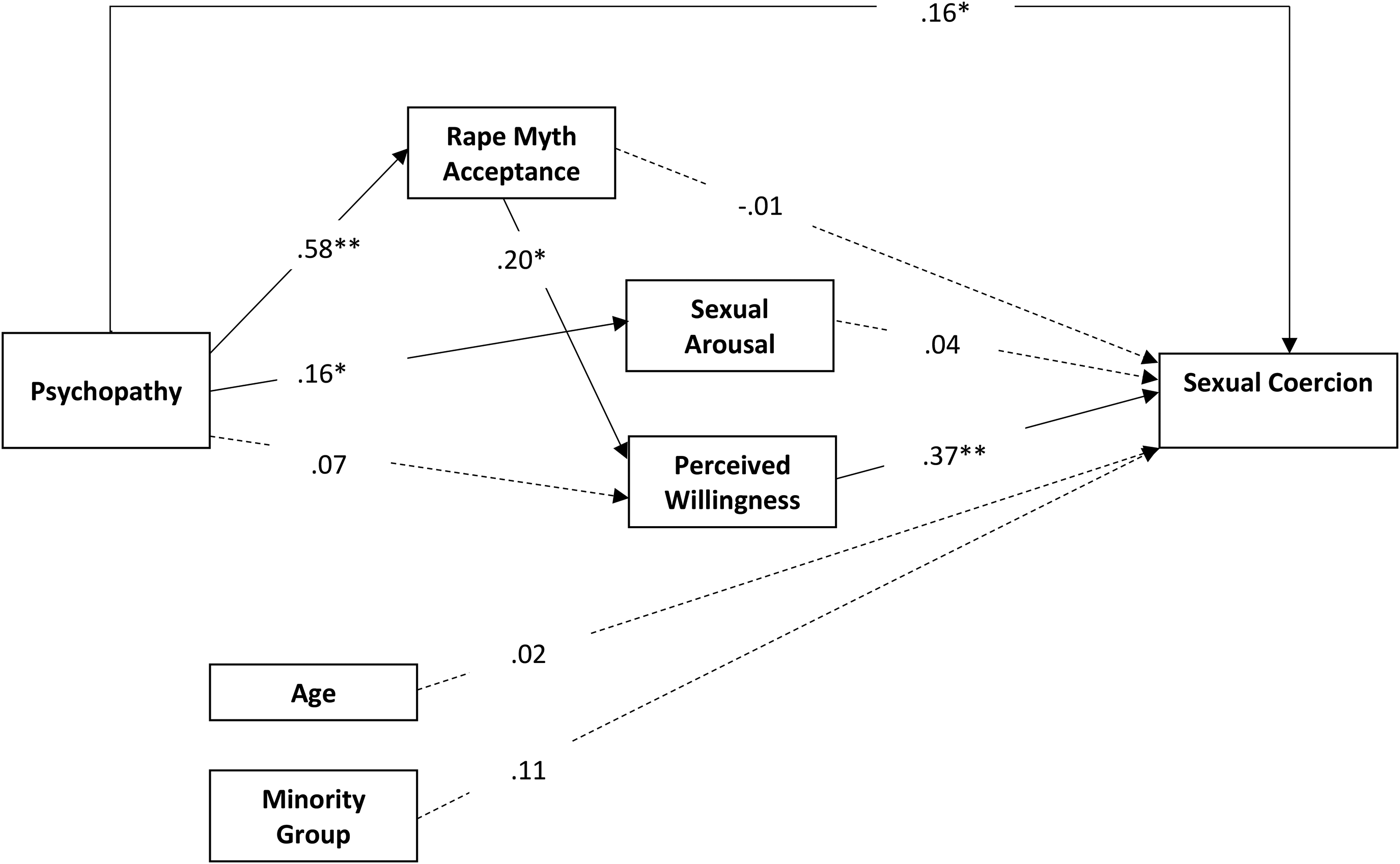
Path model of direct and indirect effects on likelihood of using verbal sexual coercion tactics
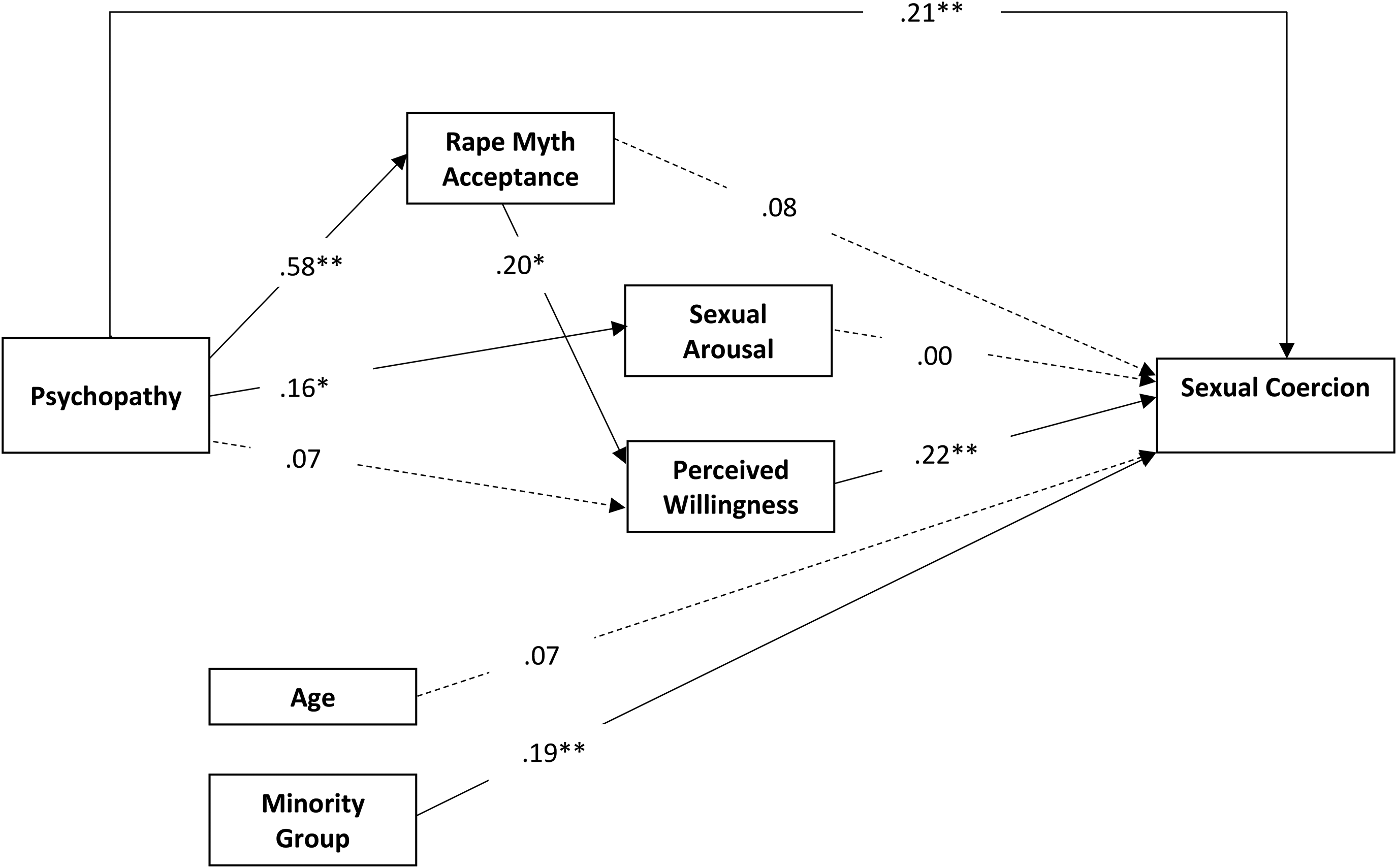
Path model of direct and indirect effects on likelihood of using illegal sexual coercion tactics
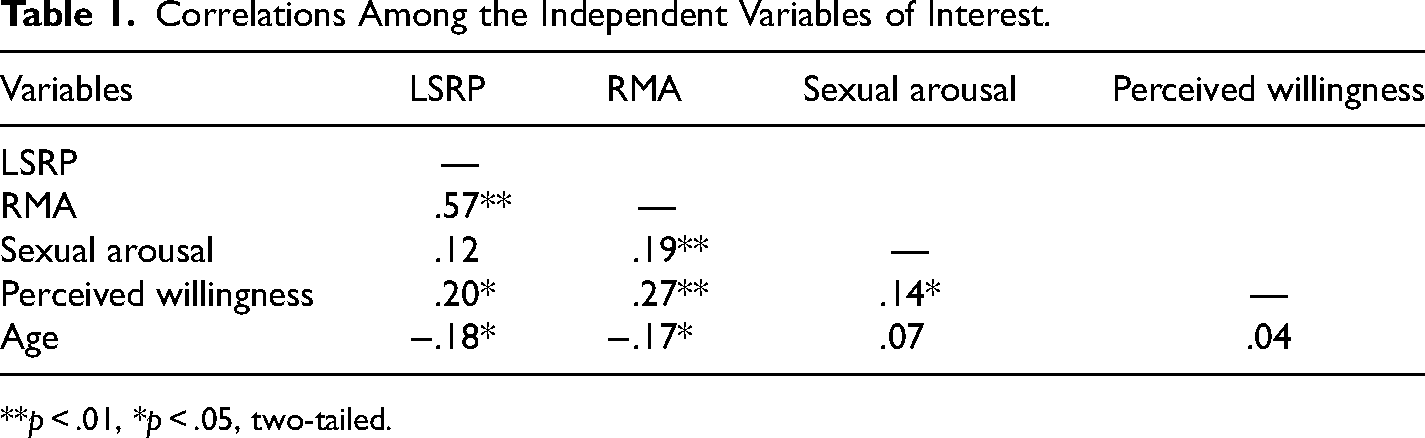
Correlations Among the Independent Variables of Interest.
**p < .01, *p < .05, two-tailed.
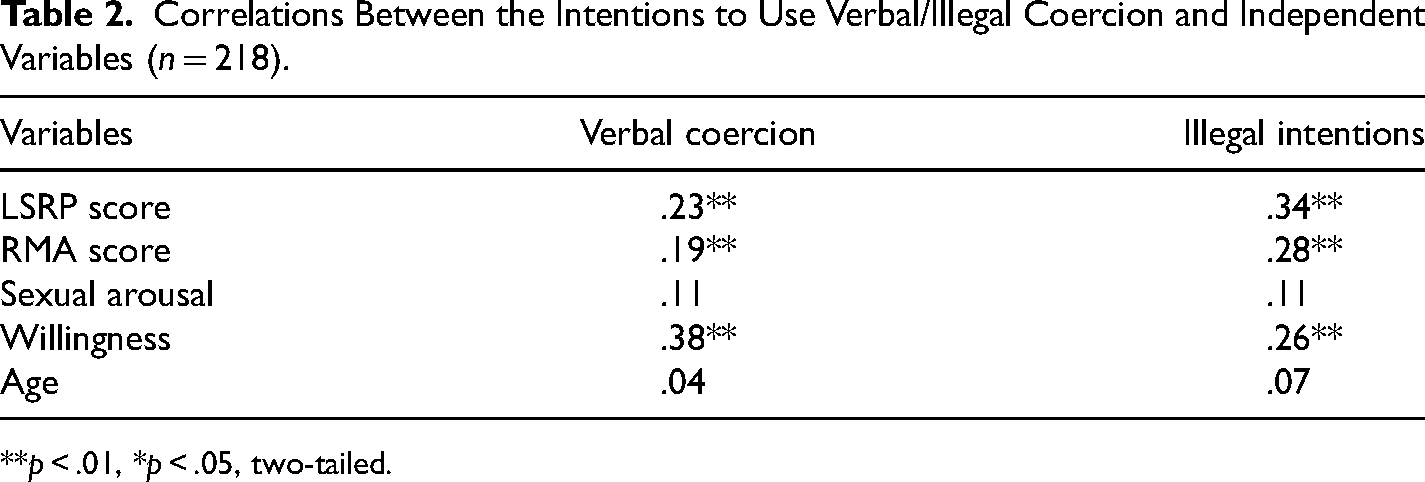
Correlations Between the Intentions to Use Verbal/Illegal Coercion and Independent Variables (n = 218).
**p < .01, *p < .05, two-tailed.
Finally, each of the independent variables included in our models were examined for normality of their distributions with none exhibiting significant skewness (all skewness measures were less than 1.0). Likewise, the skewness measure for verbal coercion indicated a normal distribution as well (0.36), while the skewness measure for illegal coercion was somewhat higher (1.8), though several authors have argued that data can still be considered normally distributed if skewness is between −2 and + 2 (see Byrne, 2010; George & Mallery, 2010; Hair et al., 2010).
Bivariate Results
Table 1 presents the results from a series of correlations that examine the interrelationship of psychopathy, RMA, sexual arousal, perceived willingness, and age. The results for the relationship of these factors to minority group status (t-tests) are not presented with the correlations contained in Table 1; however, only RMA scores were significantly different (higher) among members of an underrepresented racial/ethnic group (mean = 1.8) relative to White, non-Hispanic students (mean = 1.7, t = −2.04, p = .04). As expected, these correlations reveal that psychopathy is significantly related to both higher RMA and higher levels of perceived willingness attributed to the woman in the scenario. Contrary to our expectations and past research, the correlation between psychopathy and current arousal is not significant, even though as was noted earlier there is considerable variation in the level of arousal reported among those who were randomly assigned to watch the video. Finally, psychopathy levels were significantly lower among older individuals in our sample. The results in Table 1 also reveal that RMA was significantly correlated with perceived willingness, arousal levels, and age. As might be expected, those with more rape supportive attitudes were younger, reported experiencing more arousal to the video, and had higher estimations of the woman's willingness to have sex in the scenario (despite her specifically saying she did not think she was interested). Finally, arousal to the video segment was significantly correlated with heightened perceptions that the woman in the scenario was willing to have sex.
The results in the left side of Table 2 present the relationships between each of our predictors (psychopathy, RMA, arousal, perceived willingness, and age) and one's intentions to use verbal coercion tactics. Again, the results for the relationship of these coercion measures and minority group status (t-tests) are not presented with the correlations contained in Table 2. Sexual coercion intentions were, however, significantly higher among members of an underrepresented racial/ethnic group (verbal coercion mean likelihood = 45.4%, illegal coercion mean likelihood = 20.4%) relative to White, non-Hispanic students (verbal coercion mean likelihood = 35.3%, illegal coercion mean likelihood = 10.0%, t = −2.34, p = .02, and t = −3.14, p = .001, respectively).
As anticipated, both psychopathy and RMA were positively related to the intentions to use verbal sexual coercion, as were higher perceptions of the scenario woman's willingness to have sex (even though she is described as explicitly stating that she did not think she wanted to). Contrary to findings from prior research, the participants’ current level of sexual arousal was not significantly related to the intentions to use verbal coercion. Age was also not related to likelihood of engaging in verbal coercion tactics; however, the participants who identified themselves as members of an underrepresented racial or ethnic group reported significantly higher intentions to engage in verbal sexual coercion strategies. The same set of significant correlates were also identified in terms of the participants’ intentions to use “illegal sexual coercion” tactics (i.e., psychopathy, RMA, perceived willingness, and minority group membership, but not age nor arousal level; see the results contained in right hand column of Table 2).
Multivariate Path Model Results
Here, we estimate a series of multivariate path models (using Maximum Likelihood Estimation) using AMOS v. 25, predicting each of our two measures of the intentions to use sexual coercion (i.e., verbal and illegal coercion intentions). In each of these models, we include a direct path from psychopathy to each respective sexual coercion intention measure, as well as separate paths from psychopathy to RMA, to sexual arousal level and to the perceived willingness of the scenario woman. Each of these intervening variables (i.e., RMA, arousal, willingness) is then expected to relate to the sexual coercion intention measure in each respective model (e.g., a subsequent path is included from RMA to the coercion measure). In addition, each model also includes direct paths from age and minority group membership to the sexual coercion intention measure.
Verbal Coercion Intentions Model
After estimating our original conceptual model (described above), the results suggested that modifications to this conceptual model would improve its fit to the underlying data. Specifically, modification indices suggested that including a direct pathway from RMA to perceived willingness would improve the model fit (parameter change = 7.84). As such, we included this pathway and re-estimated the model accordingly (see Figure 1). The results from this modification did improve the model fit (for instance, CFI improved from .86 to .97). 6
Figure 1 includes those pathways (standardized coefficients presented) that were significant in this modified version of the model (that is, adding the path from RMA to perceived willingness). As predicted, the psychopathy scores were significantly related to higher levels of RMA. Likewise, the psychopathy scores were related to significantly higher arousal in response to the video, as we hypothesized (despite this relationship not having appeared at the bivariate level, see Table 2). Contrary to our prediction and the bivariate results however, the pathway from psychopathy to perceived willingness of the woman in the scenario was not significant. The suggested additional pathway between RMA and perceived willingness was in fact significant, as was the subsequent path (as originally hypothesized) from perceived willingness to coercion intentions. In addition, psychopathy also maintained a direct relationship to the intentions to use verbal coercion tactics. Finally, the students who identified as being members of an underrepresented racial/ethnic group reported marginally higher intentions to engage in verbal coercion tactics in response to the scenario.
Illegal Coercion Intentions Model
We again estimated our original conceptual model, though this time with the intentions to use illegal coercion strategies as the dependent variable, and again modification indices suggested adding the pathway from RMA to perceived willingness. In this case, the model fit also improved (e.g., CFI increased from .86 to .97). The results from this model are presented in Figure 2 and, as expected, reveal the same pattern of relationships on the left side of the model as were seen in the model of verbal coercion intentions (i.e., psychopathy's relationships to the intervening variables are the same in both models). Specifically, psychopathy scores were again significantly related to RMA and arousal to the video, but not to perceived willingness. Likewise, RMA was related to higher perceptions of the woman as willing to have sex, while psychopathy again maintained a significant direct relationship to heightened illegal coercion intentions, as did perceived willingness. Finally, in this model, the coefficient for the positive relationship between minority group status and the intentions to use illegal coercion tactics reached conventional levels of significance (p = .002).
Discussion
Researchers have consistently reported that high percentages of male college students acknowledge that they use verbal and physical forms of coercion to obtain sex from women against their wishes. Long ago, Koss and colleagues (1987) reported that 25% of male students in their sample said they had forced a woman to engage in a sexual act. Additionally, many other studies have found high rates of men's use of sexual coercion on college campuses (Abbey et al., 2001; Bhochhibhoya et al., 2021; Canan et al., 2018; Wheeler & George, 2002), ranging from 15% to almost half of male student samples. The concern over these high rates of sexual coercion on college campuses has led to significant research on understanding the causes of and attempting to prevent sexual assault among college students.
Some of the most promising research has determined that rape myth acceptance (RMA), psychopathy, sexual arousal levels, and misperceptions of sexual intent are among some of the best predictors of sexual coercion (Abbey et al., 2011; Bouffard & Miller, 2014; DeGue et al., 2010; Mouilso & Calhoun, 2012, 2013; Watts et al., 2017). Additionally, a recent research has examined how many of these factors may overlap and influence each other in the prediction of sexual coercion. The current study examined the role of RMA, sexual arousal, and misperceptions of sexual intent as they may be related to the levels of psychopathic characteristics, and thus mediate its influence on the intentions to use verbal and illegal sexual coercion tactics. First, we expected that psychopathy, RMA, sexual arousal, and misperception of sexual intent would directly relate to the intention of engaging in sexually coercive behaviors, and that all these variables would be significantly associated with one another, as in prior research. As predicted, most of these variables were significantly related to each other, demonstrating the complex associations between these constructs. Specifically, psychopathy scores were significantly related to increased endorsement of rape myths, and to a heightened arousal response to the experimental manipulation, even while psychopathy scores themselves did not directly relate to increased perceptions of sexual intent. The linkage between psychopathy and rape myth acceptance that our results demonstrated is consistent with Malamuth's (2003, p. 55) proposition of a “hierarchical-mediational” model in which general risk factors like psychopathy (comprised of traits that might predispose any number of different types of crime and deviance) are thought to relate to other more specific risk factors for sexual aggression (e.g., an individual's level of hostile masculinity, of which rape supportive attitudes are a part).
Likewise, Abbey and her colleagues (2011) suggested that research should explore the antecedents of misperceptions of sexual intent to gain understanding of the relationships with engaging in sexual coercion, in particular the personality characteristics and personal experiences that might relate to such misperception. Among our sample of college men (including some who are older-than-average students), rape supportive attitudes were significantly related to increased perceptions of sexual intent from the scenario woman, and as such, this relationship should be more fully explored in future research. For example, research should examine whether specific rape myths (e.g., beliefs about women's token resistance or victim precipitation) are more strongly related to the misperception of intent than others. If consistent results are found in subsequent research, college campus prevention programs could provide more focus on countering specific rape myths and inaccurate cognitions around consent.
One of the strongest relationships among the variables we investigated was the linkage between psychopathy and RMA (std. est. = 0.58), indicating potentially substantial overlap of these constructs. Prior research has raised the possibility of RMA as one mechanism by which psychopathy could be related to heightened use of sexually coercive behaviors (Watts et al., 2017), but findings have been mixed (Mouilso & Calhoun, 2013). Interestingly, our models further suggest that while rape myth acceptance itself does not maintain a significant direct relationship to the intentions to use either form of coercion, RMA did relate to perceived sexual intent from the woman in the scenario, which itself demonstrated a significant and direct relationship to coercion intentions in each of our models (i.e., verbal and illegal). As such, our results at least suggest a unique and complex potential pathway that may begin with psychopathic traits that seem to foster attitudes supportive of sexual aggression (i.e., rape myths). These rape supportive attitudes could then in turn serve to promote misperception of sexual intent on the part of potential partners, and that misperception may then be important in precipitating greater intentions to use both verbal and illegal tactics to obtain sex.
The extent to which the individuals in our sample were currently experiencing a heightened level of sexual arousal appears to have had no bearing on the intentions to engage in sexual coercion, contrary to the findings of a number of existing studies linking arousal to sexual coercion (Ariely & Loewenstein, 2006; Bouffard, 2002, 2011; Bouffard & Miller, 2014; Hald & Malamuth, 2015). Certainly, in our sample, the correlation of situational factors such as the misperception of sexual intent appears to be stronger (having been directly related to rape supportive attitudes and indirectly to psychopathic traits) than one's current level of sexual arousal. This result would support the important role for socialization and the development of rape supportive and other antisocial attitudes, in explaining sexual coercion more so than the idea that sexual coercion is motivated by a desire for sexual pleasure.
On the other hand, one's level of arousal to the experimental manipulation (erotic video) was found to be significantly higher among those with greater levels of psychopathy in our sample, such that had sexual arousal demonstrated a significant relationship to coercion intentions in our sample (as it has in a number of existing studies), it would likely have been an even stronger correlate among those characterized by higher levels of psychopathy. Recall that the average arousal level in our sample was below 50% despite the presentation of several minutes of an erotic video. In the future, researchers should attempt to create higher levels of sexual arousal in their samples in order to assess its potential impacts on sexual coercion likelihood. Given that past research has demonstrated the important role of sexual arousal, subsequent research should also continue to examine this potentially important indirect pathway (i.e., from psychopathy to arousal to coercion). Finally, while the relationship between psychopathy and the intentions to use either form of sexual coercion in our sample did not appear to have been mediated by the level of sexual arousal (or misperceptions of sexual interest), psychopathy itself did maintain a significant direct relationship to both forms of sexual coercion intentions, suggesting that there are other ways in which this constellation of personality and behavioral traits are influential (perhaps through other mediating variables not measured in the current study).
Limitations
While our results present some interesting and novel findings related to the role of psychopathy, rape myths acceptance, and sexual arousal as correlates of sexual coercion, our study design is not without limitations. For instance, our sample of college men was comprised of largely White, non-Hispanic individuals, so the generalization of our findings to other more diverse populations may be limited. Likewise, our results may not generalize to populations of older men (we included only eight men over the age of 30 in our sample), or to those who are known to have engaged in criminal activities. Our sample also did not include any women, and we excluded a small number of men who identified themselves as homosexual. Clearly, future research is needed to examine these processes to determine whether they may generalize to samples of women and also to gay men.
In order to avoid potentially biasing our measures of sexual coercion intentions, our survey administration was designed to gather those outcome variables first and potential correlates (i.e., RMA and psychopathy) afterward. In addition, we assessed RMA and psychopathy at least a day after the arousal manipulation to avoid even the potential that the situational arousal state could impact their measurements. While our empirical investigation of whether this question ordering impacted our results suggested no confounding effects (e.g., reciprocal effects of arousal on psychopathy scores, or differences in RMA or psychopathy by arousal condition), subsequent research on these issues should endeavor to assess possible correlates of sexual coercion prior to the assessment of such intentions. Future research using data on various attitudes (e.g., rape myths) and traits (e.g., psychopathy) measured prior to the assessment of intentions to engage in sexual coercion in order to more fully demonstrate causality.
Although we attempted to overcome a number of methodological shortcomings we identified in prior research, especially in relation to studies that have used past coercive behaviors as a dependent variable, the hypothetical scenario design does have its limitations. For instance, our dependent variables were the self-reported likelihood of engaging in verbal and illegal sexual coercion after reading a scenario. Although this scenario methodology has been widely used to study sexual coercion and avoids the temporal issues involved in some past studies that have examined (contemporaneously measured) correlates of past use of sexual coercion, it is important to recognize that self-reported intentions to engage in sexual coercion are not the same as the actual use of such tactics. Finally, while the arousal manipulation used in the original study from which this data is derived was successful in increasing self-reported levels of sexual arousal relative to those in the control condition, it still only resulted in an average arousal level of 48%. This may at least partly explain the failure of our study to find a significant relationship between arousal levels and coercion intentions, despite this being a relatively common result in the existing research.
Implications and Conclusions
Overall, we set out to explore how psychopathy might relate to the use of sexual coercion tactics indirectly, through possible influences of factors such as one's endorsement of rape supportive attitudes, and through situational factors including the misperception of sexual intent from potential partners and one's current level of sexual arousal. In addition to psychopathy levels and misperception of the woman's sexual intent being directly related to both verbal and illegal sexual coercion intentions, psychopathy levels were indirectly related to sexual coercion intentions through misperception of sexual intent. It seems that the cognitive component of psychopathy may be directly related to significantly higher endorsement of rape myths, and this in turn may increase the misperception that the woman is really interested in sex when she says no. If future research reports consistent results, prevention programs may want to concentrate on the role of psychopathy and misperception of sexual intent more closely. Men's misperception of a women's sexual intent is a less widely studied variable that seems to be directly related to sexual coercion. Additionally, because psychopathy is a personality pattern that begins at earlier ages than when students typically enter college, prevention programs should begin before individuals arrive on college campuses.
Our results suggest a number of novel and complex interrelationships between these factors that future research could explore in order to gain a better understanding of exactly how psychopathic traits interact within individual and situational factors to precipitate the use of sexual coercion. We hope our initial efforts to explore the ways in which the various cognitive deficits characteristic of psychopathy (i.e., lack of perspective taking, self-centeredness, as well as the inability to accurately perceive social cues) may lead to sexual coercion will spur other researchers to further investigate this potentially fruitful line of inquiry.
Footnotes
Declaration of Conflicting Interests
The author(s) declared no potential conflicts of interest with respect to the research, authorship, and/or publication of this article.
Funding
The author(s) received no financial support for the research, authorship, and/or publication of this article
