




Abstract
This article examines media representations of intimate partner violence against women (IPVAW) in Estonian news media between 2019 and 2021. Given that news media both shape and reflect public beliefs and attitudes, the article examines how IPVAW is represented and identifies its key features in media coverage. Using a mixed-methods approach that combines quantitative and qualitative content analysis, it identifies focal topics and key actors, and assesses whether it is represented as an individual or structural and social issue. To this end, six IPVAW-related parameters were identified, coded, and analyzed. The findings indicate that, despite statistical evidence of the gendered and systematic nature of IPVAW, terminology used in the media coverage does not reflect this. Although reporting frequency, explanations of the constitutive elements of IPVAW, references to support services, and recognition of children as co-victims suggest it is treated as a significant social issue, connections to its underlying causes—namely gender inequality and discrimination—remain weak. Overall, both media and policy responses adopt a predominantly individualistic approach, focusing on consequences—such as victim support and judicial responses—while giving limited attention to prevention, including the critical examination of traditional gender roles and stereotypes.
Keywords
Introduction
This article examines media representations of intimate partner violence against women (IPVAW) in Estonian news media between 2019 and 2021. Given that news media both shape and reflect public beliefs and attitudes toward IPVAW (Carlyle et al., 2008; Easteal et al., 2015), it identifies key features of its portrayal. Using a mixed-methods quantitative and qualitative content analysis, the study explores patterns of representation, principal themes and actors, and whether IPVAW is represented primarily as an individual issue or as a broader social and structural concern.
Despite formal legal equality in most Western states, women continue to face social, economic, and political barriers to the full realization of their rights in equal terms with men. Violence against women remains one of the most pervasive global human rights violations, recognized since the 1970s as a cross-cutting social, economic, and public health issue spanning public and private spheres. IPVAW—encompassing physical, sexual, emotional abuse, and controlling behaviors—is among its most widespread yet concealed forms (WHO, 2012). Feminist scholarship and women's rights practitioners consistently identify gender inequality and discrimination as its principal underlying causes, creating an enabling environment for its persistence (Choup, 2016; Kelly, 2020; Manjoo, 2014; Meyers, 1994). Population surveys indicate its scale: EU-wide studies report that one in three women has experienced physical and/or sexual violence in their lifetime, with considerably higher prevalence rates when psychological abuse is included (FRA, 2014; FRA, EIGE and Eurostat, 2024). This is illustrated by the results of a population survey conducted in Estonia in 2020, which showed that 48% of women had experienced physical, psychological and sexual violence, or a combination thereof, since the age of 15 (Pettai, 2022). Similarly, the 2024 EU-wide survey found that 41.2% of women in Estonia had experienced physical, sexual, or psychological violence by an intimate partner at some point in their lives (FRA, EIGE and Eurostat, 2024). However, these figures contrast sharply with official statistics on reported cases, underscoring the persistent invisibility, stigma, and social tolerance surrounding violence against women, which continue to deter disclosure and formal reporting.
The pervasive nature of IPVAW necessitates comprehensive, gender-responsive, and society-wide interventions addressing both causes and consequences. However, policy responses have frequently approached IPVAW as deviant behavior or pathology confined to a minority, prioritizing law enforcement and criminal justice measures and victim support (Choup, 2016). Accordingly, national policies tend to emphasize individual perpetrator responsibility and service provision to victims, while neglecting gendered approaches that challenge structural inequalities and enduring assumptions of male dominance (Choup, 2016; Hearn & McKie, 2010; Krizsan & Popa, 2014; Kuskoff & Parcell, 2021).
According to social-constructionist theory, knowledge is produced through social interaction, with the media playing a central role in shaping meaning via representations of social phenomena. When IPVAW is represented as individual pathology, its structural context is obscured and gender stereotypes may be reinforced (Bullock, 2007; Oxman-Martinez et al., 2009). By contrast, representations that situate IPVAW within discrimination and gender inequality can influence public attitudes and support its prevention and elimination. Despite growing recognition of its systemic and pervasive nature, research consistently shows that media coverage prioritizes individualized, often sensationalist narratives, attributing responsibility to perpetrators and victims rather than representing IPVAW as a structural issue rooted in unequal gender relations (Balica et al., 2022; Berns, 1999; Carlyle et al., 2008; Cuklanz, 2014; Easteal et al., 2015; Karlsson et al., 2021; Leung, 2019; Meyers, 1994).
In Estonia, IPVAW remained largely taboo until the early 21st century, when researchers and practitioners began to address it systematically. The first sociological studies were conducted during this period (Pettai, 2002; Pettai & Proos, 2003; Soo, 2010). In the following decade, a comprehensive project funded by Norway and implemented by the Estonian Institute for Open Society Research produced four reports on professional perceptions of intimate partner violence (IPV), based on interviews with healthcare workers (Pettai & Kase, 2014), social workers (Pettai & Proos, 2014b), lawyers (Pettai & Proos, 2014a), and police officers (Pettai & Proos, 2015), aiming to promote coordinated understanding and response across professional domains. The first shelters for victims were established by women's rights organizations in the early 2000s. Official statistics indicate that reported cases of family violence1 more than doubled between 2011 (1,939 cases) and 2019 (4,119 cases).2 Consequently, policy responses and support services for both victims and perpetrators have expanded steadily (Luht, 2021). Generally, rising reports are interpreted as reflecting increased societal awareness, a pattern also noted in the Nordic countries, often referred to as the “Nordic paradox.”
Since the early 2000s, IPVAW has received increasing attention in Estonian news media, partly due to several high-profile cases. However, scholarly research on media coverage of IPVAW remains limited. Pilvre (2011) argues that in the first two decades of post-Soviet Estonia, journalism was largely indifferent to gender equality, reflecting broader patterns of gender-blind reporting in Eastern and Central Europe. More recently, Vihmar (2018) found that most online media coverage of IPV focused on violence against women, confirming the gendered nature of IPV while primarily condemning violence and emphasizing support for victims.
Estonian policy documents and media coverage predominantly employ gender-neutral terms, such as intimate partner violence and family violence, to describe violence within domestic units. These terms encompass violence between all family members, including violence against women by intimate partner, and are sometimes supplemented by another gender-neutral term, couple violence, to distinguish partner relationships. However, this terminology diverges from Anglo-American usage by conflating forms of intra-family violence and obscuring the gendered nature of IPVAW. Terminology constitutes a key focus of this study and is discussed further below. In this article, I adopt the term intimate partner violence against women to emphasize both the specific form of violence and the disproportionate impact on women. While acknowledging that men and boys may also be victims, and that such violence occurs in same-sex relationships, the present corpus includes very few cases involving male victims and none addressing same-sex couples.3
Globally, a range of terms is used to designate IPVAW. Within the United Nations system, these include violence against women (UN, 1993), gender-based violence (UNFPA),4 and intimate partner violence (WHO, 2012). At the European level, both the Council of Europe Convention on Preventing and Combating Violence against Women and Domestic Violence (Council of Europe, 2011) and the EU Directive on Combating Violence against Women and Domestic Violence (EU, 2024) use the term domestic violence to refer to violence within the family or between current or former partners. The European Union Agency for Fundamental Rights employs the broader category of gender-based violence, and more specifically violence against women by an intimate partner (FRA, EIGE and Eurostat, 2024). These terms are widely used in academic literature. While each of these terms has its strengths and limitations, none fully captures the scope of IPVAW, including its prevalence, its perpetration by a (former) intimate partner, its disproportionate impact on women, and its roots in unequal power relations and discrimination against women.
Like other Central and Eastern European countries, Estonia's engagement with gender equality is complex, shaped by historical, social, and ideological factors. Since regaining independence in 1991, the political landscape has been dominated by liberal and conservative forces, balancing individual and economic freedoms with nationalist and traditional values. Collective memories of Soviet occupation and state socialism have limited broader support for social democratic policies promoting equality and social justice. During the Soviet period, women formally enjoyed labor-market participation but retained primary responsibility for domestic work and childcare, while IPVAW was largely invisible and denied. Post-Soviet transition initially seemed to relieve women of this double burden, but also encouraged essentialist and traditional views of femininity, a pattern observed in other former Soviet countries (Horvath, 2023; Radak, 2018). Since re-independence, family policy and concerns over low birth rates have led to strong pronatalist measures and benefits for large families, often imposing motherhood penalties. Overall, Estonia's public reluctance to recognize structural and social inequalities has limited attention to gender equality, except where driven by EU or international commitments. Yet the high prevalence of IPVAW highlights persistent social inequalities that cannot be addressed solely through individual freedoms and traditional family values. Estonia thus presents a particularly instructive case, where media representations offer insight into these contradictions and the societal tensions surrounding gender equality.
Theoretical and Empirical Framework
To contextualize this study on Estonian media representations of IPVAW, I first position it as a key manifestation of gender inequality, examining its causes, implications for gender relations, and the historical institutionalization of male domination. I then consider representation as a system of meaning-making and the role of media in shaping perceptions, understandings, and responses to social issues. This is followed by a review of research on media portrayals of IPVAW and an analysis of the Estonian context, focusing on its conceptualization and integration into national policy and strategic frameworks.
Gender Inequality, Male Domination, and Power
Feminist scholarship has consistently challenged claims that culturally conditioned traits, presented as “gender-typical qualities,” are biologically determined, particularly when such claims are used to legitimize women's unequal and unjust treatment (Wodak, 1997). It critiques and deconstructs stereotypical notions of femininity—such as the assumption that women are inherently caring in a biologically determined way—and the traditional division of labor that sustains them. More broadly, feminist social analysis positions gender as a central organizing principle of power relations in society (Brooks & Hébert, 2006).
The causes of IPVAW are complex, multiple, and overlapping, but research highlights three key interrelated factors: historical conditions, gender inequality, and profound social or economic change (Choup, 2016). From a feminist research perspective, gender inequality and discrimination against women are among the fundamental root causes of violence against women (Choup, 2016; Kelly, 2020; Manjoo, 2014). The UN definition emphasizes historically unequal power relations and the subordination of women as central drivers of violence, framing it as a mechanism that maintains women's subordinate position (UN, 1993). Heise's ecological framework further highlights interactions between individual, relational, and societal factors, with structural and societal inequalities creating conditions that allow violence to persist (Heise, 1998). However, the case of Sweden challenges the assumption that greater gender equality reduces levels of violence, a phenomenon referred to as the “Nordic paradox” (Karlsson et al., 2021; Lovett & Kelly, 2009).
A range of theoretical perspectives address and conceptualize the origins and consequences of gender inequality. Within feminist scholarship, male dominance is most commonly conceptualized as patriarchy: an institutionalized system of gendered power relations in which men are privileged, masculinity is valued more highly, and power and authority are systematically attributed to men while being denied to women (Lerner, 1986). A key feature of this system is the public–private divide, which confines women to the domestic sphere while positioning men in the public domain. The emphasis on the “privacy of the family” sustains the patriarchal mythology of this division, rendering women's experiences largely invisible to the outside world (Easteal et al., 2015, p. 107). The persistence of these power relations is sustained through their reproduction in social institutions such as the family, the church, and education. Bourdieu (1998) further argues that masculine domination operates through symbolic violence, whereby entrenched norms and everyday practices render gender hierarchies natural and resistant to challenge.
R. W. Connell (2005) coined the term hegemonic masculinity to describe attitudes and practices among men that perpetuate gender inequality, encompassing both male domination over women and the power of some men over other men, particularly marginalized groups. The concept highlights how certain men occupy positions of power and legitimate the social relations that sustain their dominance (Connell, 2014; Robinson, 2020). Most men do not embody the hegemonic ideal, yet they are often complicit in sustaining it, as they benefit from its existence. This idealized form of masculinity oppresses not only women but also many men, as it is unattainable for the majority (Connell, 2014). Hegemonic masculinity is not monolithic and exists in multiple forms, not all inherently negative. By contrast, toxic masculinity refers to socially destructive aspects of hegemonic masculinity that promote domination, including a propensity for violence and the subordination of women, homosexual men, and men exhibiting traditionally feminine traits (Kupers, 2005).
Media Representations of Intimate Partner Violence Against Women
From a social-constructionist perspective, the media are central to the production, reproduction, and legitimation of social change. They function as key vehicle for socialization and identity formation, shaping and reinforcing gendered and sexualized differences. As Kimmel (2011, p. 290) argues, the media not only reflect existing gender differences and inequalities but actively construct and naturalize them, presenting socially constructed gender hierarchies as given and self-evident. In doing so, media both mirror and create culture. With increasing pervasiveness, the media exert growing influence across institutions, including politics and the family, while providing shared spaces for communication and interaction (Hjarvard, 2008). Processes of mediatization further blur the boundaries between reality and representation, as well as between fact and fiction (Hjarvard, 2008).
Representation refers to the production of meaning in the mind through language, linking three interrelated domains: the material world of objects, the conceptual world of mental constructs, and the world of signs organized into language to communicate these concepts (Hall, 1997). Meaning is thus constructed through this process, and is not fixed but continuously produced and negotiated, varying across cultures and historical periods.
Media representations of IPVAW play a significant role in shaping societal knowledge and attitudes, with the capacity either to challenge or reinforce norms and stereotypes that sustain it. Research indicates that IPVAW is typically represented either as a private, individual and relational issue or as a broader social and structural problem (Berns, 1999, 2004; Karlsson et al., 2021; Meyers, 1994). Common patterns include the neglect of structural and social context, the sensationalization through a focus on rare forms of violence such as femicide, the attribution of blame to victims, the perpetuation of myths and misrepresentations, and the privileging of law enforcement voices for expert commentary over those of women and support organizations (Sutherland et al., 2015). Media portrayals also tend to reinforce conservative, patriarchal norms, thus perpetuating the status quo, and emphasize mutual responsibility, for example by representing IPVAW as a relationship issue rather than a criminal act (Easteal et al., 2015) or by suggesting that women are as violent as men (Berns, 2001). The overrepresentation of extreme cases further distorts public understanding in which the extraordinary is normalized (Carter, 1998). Overall, existing research indicates that the media coverage of gendered violence, victims, and offenders is problematic as it frequently individualizes violence, detaching it from its structural causes and gendered power relations (Easteal et al., 2015; Leung, 2019; Meyers, 1994).
In her analysis of domestic violence in women's magazines, Berns (1999) identifies four frames of responsibility: individual, institutional, cultural/structural, and integrational. She finds that most coverage attributes responsibility to individuals—victims, perpetrators, or couples—with dominant individual and institutional frames prioritizing intervention, while less frequent structural frames emphasize prevention. Individualized constructions foreground deviance and personal pathology of perpetrator and victim in comparison with a normative population, whereas structural portrayals situate IPVAW within broader social contexts, gendered power relations, and societal tolerance. Media coverage that challenges rather than reinforces prevailing gender norms, however, remains rare (Sutherland et al., 2015).
In Central and Eastern European (CEE) countries, IPVAW became a public concern in the early 2000s, accompanied by more systematic media reporting. Research highlights shared contextual features linked to the Soviet legacy, including strong scepticism toward feminism, denial of the systemic nature of IPVAW, and a culture of silence and family privacy. Media reporting often reflects these factors, employing individual and episodic framing, focusing on deviance, victim-blaming, stereotypical portrayals of women, and sensationalism (Baluta, 2015; Balica et al., 2022; Horvath, 2023; Mileiko & Hamilton, 2020; Radak, 2018).
However, notable exceptions exist, as illustrated by Spain, where feminist and women's organizations have shaped public discourse and policy, supported by successive Socialist governments (Comas-d'Argemir, 2015). Consequently, Spanish media tend to frame IPVAW as a public issue rooted in social and structural inequalities, employ thematic rather than episodic frames, and use terminology explicitly highlighting the problem (e.g., male violence against women, sexist violence). The media have also contributed to the adoption of progressive policies and fostered public rejection of such violence.
Institutional Responses to Intimate Partner Violence Against Women in Estonia
Institutional responses—including legislation, policies, strategies, and services—provide a framework for the language and discourses surrounding IPVAW. These responses both reflect and are shaped by social relations (e.g., gender inequality) ; and dominant ideologies (e.g., patriarchy and conservatism) (Fairclough, 1989, 1995). At the same time, they influence how practitioners conceptualize and address IPVAW. Journalists often draw on materials produced by interest groups—such as political speeches, institutional publications, press releases, reports, and expert commentary (Carvalho, 2008)—thereby mediating institutional discourses through the news media. It is therefore important to examine how IPVAW is conceptualized in Estonian institutional responses, as these also inform media representations.
As women's rights and violence against women, together with measures to prevent and address such violence, became embedded in international and regional law and policy, they were gradually transposed into national frameworks, particularly through organizational membership and the ratification of binding instruments. In 1995, Estonia participated in the Fourth World Conference on Women in Beijing and produced a national report, Estonian Women in Changing Society (United Nations Fourth World Conference on Women, 1995). One outcome was the establishment of a Bureau of Gender Equality within the Ministry of Social Affairs, marking the first explicit recognition of women's rights as a distinct policy area since independence. However, the most significant impetus for promoting gender equality arose from Estonia's aspiration to join the European Union. In 2004, Estonia adopted the Gender Equality Act as part of the accession process, defining gender equality as equal rights, obligations, and opportunities for women and men across professional and social life, while recognizing that positive action to address structural inequalities does not constitute discrimination.
A significant milestone was Estonia's ratification of the Council of Europe Convention on Preventing and Combating Violence Against Women and Domestic Violence in 2017. Prior to this, the Criminal Code was amended to introduce offences such as female genital mutilation, forced marriage, stalking, and sexual harassment, in line with the Convention. GREVIO, the Council of Europe's monitoring body, issued its first Baseline Evaluation Report on Estonia in October 2022 (Council of Europe, 2022). While noting overall progress, the report identifies gaps, including the absence of a comprehensive strategy addressing all forms of violence against women and domestic violence. GREVIO also recommends greater attention to gendered differences in experiences of violence, particularly regarding root causes such as inequalities, socio-economic discrimination, women's unequal social status, and persistent gender stereotypes.
Indeed, Estonia has chosen to address violence against women within the broader framework of combating violence, adopting three national violence prevention strategies since 2010 (Estonian Ministry of Justice, 2010, 2015, 2021). In 2019, the Government introduced the first action plan specifically targeting IPV (2019–2023), outlining multi-sectoral measures but failing to acknowledge its gendered nature, provide sex-disaggregated data, or move beyond gender-neutral language (Estonian Ministry of the Interior, 2020). The subsequent 2024–2027 Action Plan (Estonian Ministry of Justice, 2023) takes a more nuanced approach, incorporating GREVIO's recommendations from the 2022 Baseline Evaluation Report (Council of Europe, 2022).
Despite clear evidence that women constitute the majority of victims and men the majority of perpetrators in IPV, Estonian strategic, political, and legal frameworks continue to employ gender-neutral terminology. Comparable findings from a study examining domestic violence policies in Central and Eastern Europe indicate that gender equality norms are often diluted into degendered, individual-rights frameworks to secure broader policy support (Krizsan & Popa, 2014). Such neutrality obscures the systematic and gendered nature of VAW, which disproportionately affects women because of structural inequality (Manjoo, 2014). By construing violence as a universal threat in which male victims are seen as requiring and deserving comparable resources, such approaches overlook the reality that violence against men is not rooted in gender inequality or discrimination. Addressing the structural root causes of IPVAW is therefore essential for meaningful and transformational change; however, persistent resistance to recognizing gender inequality in Estonia may explain the reluctance to frame women as victims and men as perpetrators (Luht & Mitendorf, 2021).
In light of previous research in Anglo-American and Central and Eastern European contexts—where news media representations of IPVAW have often been found to be problematic, incomplete, or unbalanced—and the scarcity of comparable studies in Estonia, this article examines how Estonian news media cover this complex and pervasive issue and what conclusions can be drawn from such coverage. Specifically, it addresses the following research questions:
What are the focal topics and key actors in media representations of IPVAW in Estonian news media? Is IPVAW predominantly represented as a problem involving individual pathology, or as a social and structural issue rooted in gender inequality?
To answer these questions, the study analyses media texts according to six IPVAW-related parameters: language and terminology; types of violence; gender of the perpetrator; attribution of causes; and the contextualization of violence, including expert commentary and references to children.
Methodology
Data Collection
The empirical data were collected from online Estonian news media texts addressing IPVAW. The sample comprises articles from the two highest-circulation daily newspapers—Eesti Päevaleht (EPL) and Postimees (PM)—and the two highest-circulation weekly newspapers—Eesti Ekspress (EE) and Maaleht (ML)—published between 2019 and 2021.
The Estonian media landscape is increasingly concentrated among three main actors: two privately owned groups—the Ekspress Group and the Postimees Group—and the Estonian Public Broadcasting Company. The Ekspress Group publishes Eesti Päevaleht, Eesti Ekspress, and Maaleht, while the Postimees Group publishes Postimees and is the largest media organization in Estonia and the Baltic region, operating across print, online, television, and radio. The selected outlets represent the two principal private media groups, have nationwide reach, and combine print and digital formats, broadly aligning with quality news media. Maaleht primarily targets rural audiences, whereas Eesti Ekspress is particularly associated with investigative journalism.
The data were collected using the newspapers’ online search tools, which include print and online publications. The primary search term was “violence” (vägivald), supplemented by control search terms: “intimate partner violence” (lähisuhtevägivald), “family violence” (perevägivald), “domestic violence” (koduvägivald), and “violence against women” (naistevastane vägivald).
Media texts were selected according to three criteria: (a) publication date, (b) location, and (c) focus on IPVAW. The 3-year timeframe (2019–2021) enables detailed analysis of contemporary media representations and the identification of patterns, including events and landmark cases that prompted increased coverage or shifts in representation. Second, the cases discussed occurred in, or were directly linked to, Estonia. Third, the corpus includes only articles specifically addressing IPVAW, excluding other forms of violence against women (e.g., sexual harassment in the workplace). The search criteria employed did not yield any article on same-sex IPV during this period. In total, 176 articles were analyzed (see Table 1).
Sample of Media Texts Analyzed in This Study.
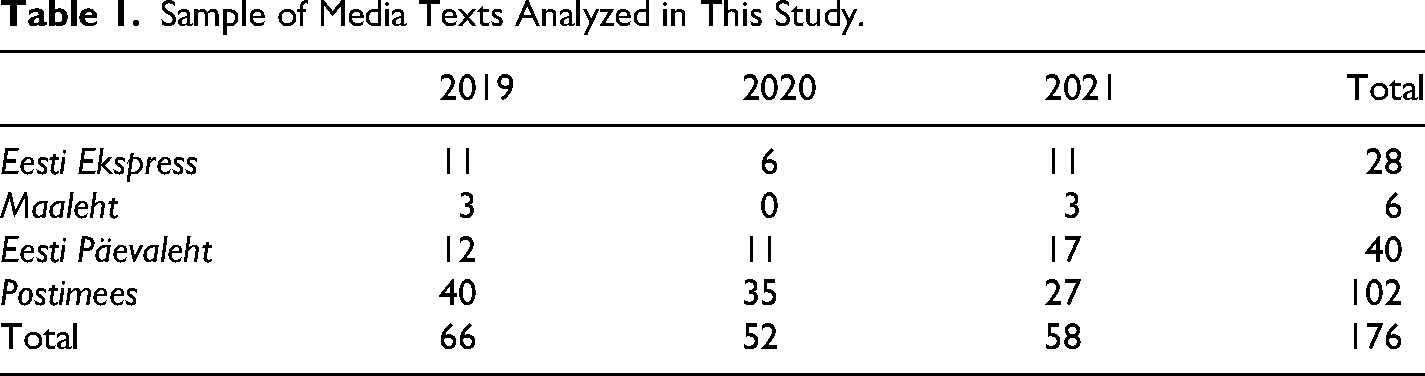
As shown in Table 1, most articles were published in Postimees, which accounts for 58% of the corpus. This overrepresentation is partly explained by the concentration of items in the digital edition's Tervis (Health) and Naine (Woman) sections, which together comprise one third (34 of 102) of its articles. A comparison of weekly newspapers further shows that Eesti Ekspress covers the topic more frequently than Maaleht.
Awareness-raising efforts appear to have contributed to a steady rise in reported IPVAW cases and police-initiated investigations in Estonia over the past decade.5 Population surveys similarly indicate an increase among women having experienced physical, psychological of sexual violence in their lifetime, from 42% in 2015 to 48% in 2020 (Pettai, 2022). These trends are generally interpreted as reflecting improved awareness and reporting rather than a substantial increase in incidence (Pettai, 2022). Media coverage mirrors the visibility of awareness-raising efforts, with recurring reporting on 25 November, the International Day for the Elimination of Violence Against Women. During the study period, two incidents generated substantial public attention and extensive media coverage: IPV allegations against a freshly appointed Minister of Foreign Trade and Information Technology in 2019, and a subsequent public statement by the Minister of Population Affairs questioning definitions of IPVAW. Increased coverage was also observed during the end-of-year holiday period, coinciding with peak police call-outs for family violence. In 2020, media discussion further addressed the potential impact of COVID-19 on IPVAW; however, official statistics did not indicate a corresponding rise in Estonia.
Study Design
To address the research questions, a mixed-methods design was employed, combining quantitative and qualitative content analysis to provide a comprehensive overview of the media landscape. Content analysis, widely used in media and communication research, enables valid inferences to be drawn from texts within their context of production and use (Krippendorff, 2004). Through the development of categories and variables, it facilitates the identification of broader societal patterns alongside more nuanced interpretations of the data. Quantitative content analysis presents findings in numerical form, such as frequencies, percentages, charts or counts of key categories (Krippendorff, 2004), whereas qualitative content analysis focuses on words and themes to generate interpretative insights (Bengtsson, 2016). The method further allows for the examination of both manifest and latent content (Robson, 1993). Manifest analysis remains close to the text and its explicit and literal meanings, while latent analysis seeks to uncover underlying meanings through interpretation (Bengtsson, 2016).
To address the research question on focal topics and key actors, the study employed both manifest quantitative and qualitative content analysis, with the individual article as the unit of analysis. The coding framework comprised six variables: (a) terminology used to denote IPVAW (e.g., domestic violence); (b) type of violence (e.g., physical, sexual); (c) gender of the perpetrator; (d) inclusion of expert commentary (e.g., from law enforcement, justice, or social services); (e) references to the presence and involvement of children; and (f) attribution of causes (e.g., mental health issues, alcohol or drug abuse).
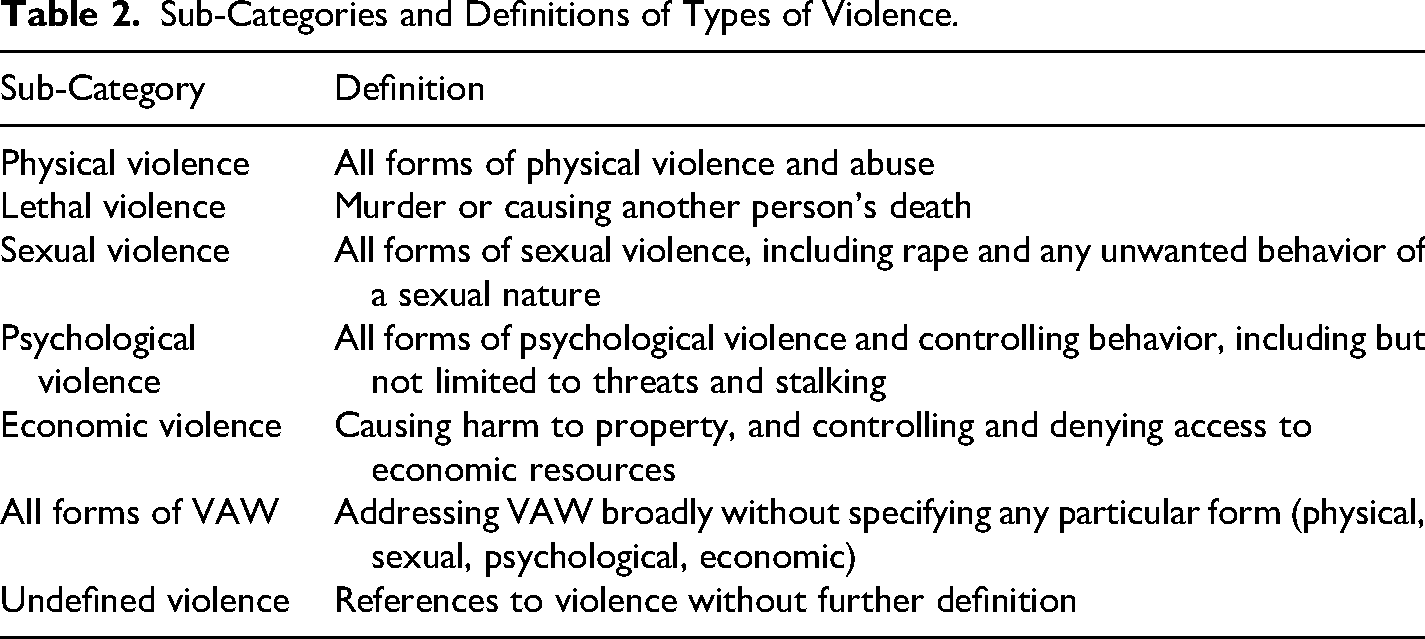
For the first four categories, a quantitative content analysis grid was developed, with each article coded according to predefined variables and frequencies recorded. This enabled analysis of the terminology used in relation to IPVAW and the relative prevalence of each term. The study also examined the forms of violence most frequently discussed, based on the sub-categories outlined in Table 2. Alongside the four forms specified in the Istanbul Convention (physical, sexual, psychological, and economic violence), lethal violence was included to capture cases resulting in death. Two additional sub-categories—general references to IPVAW and to violence more broadly—were added to account for articles not focused on a specific form. By analysing terminology, gender of the perpetrator, and types of violence, the study assesses the extent to which media link IPVAW to gender inequality. It also examines expert commentary in news coverage, identifying who these experts are, their institutional affiliations, and the focus of their commentary, including whether emphasis is placed on intervention or prevention. The remaining two variables—references to children and attribution of causes—were analyzed qualitatively, with dominant themes identified across the corpus.
Sub-Categories and Definitions of Types of Violence.
Results and Discussion
The analysis indicates that IPVAW is predominantly represented as a significant social problem rather than a private family matter, with emphasis on the need for public reporting and institutional response. Coverage also highlights its negative impact on children, who are explicitly mentioned in 51% of articles. Accordingly, many texts include guidance on recognizing violence, explanations of IPVAW, and information on support services; contact details are provided in 34% of the sample (59 of 176 articles). Overall, a substantial proportion of the coverage performs an awareness-raising function aimed at improving public understanding of IPVAW in Estonia.
Language and Terminology
In the dataset, the most frequently used terms for IPVAW were gender-neutral, including intimate partner violence, family violence, and domestic violence (see Figure 1). In the Estonian context, these terms also encompass violence between other family members, such as between parents and adult children or between siblings. In the analyzed material, contextual cues typically clarified when such terms referred specifically to violence between intimate partners. Many articles also cited statistical data; for example, 2022 figures from the Ministry of Justice indicate that 86% of family violence perpetrators were male, 79% of victims were female, and couple violence accounted for 66% of family violence offences.
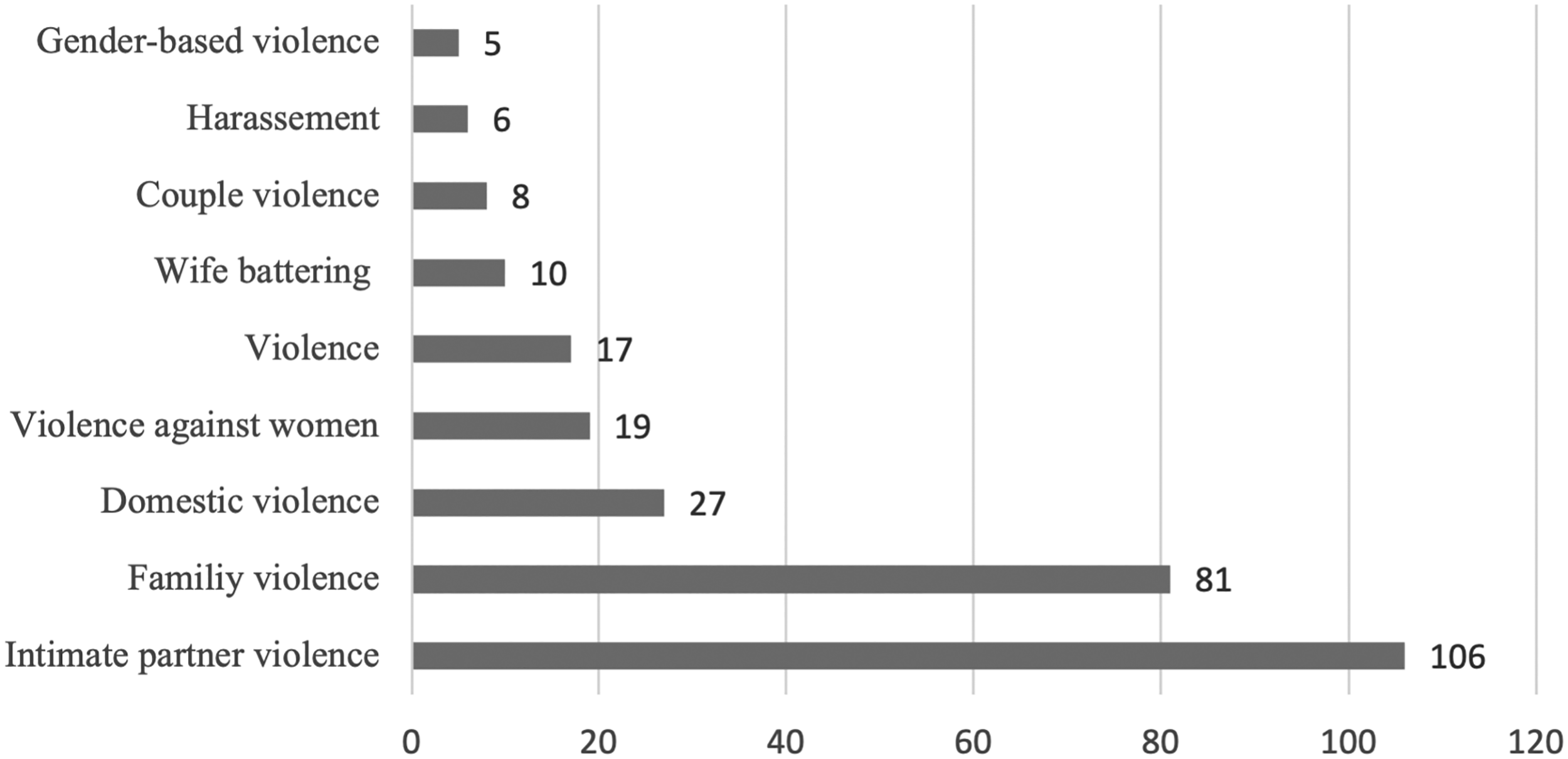
Terms used and counted in the sample.
Two terms explicitly referring to the gender of the victim appeared less frequently. Violence against women was used mainly in coverage of the International Day for the Elimination of Violence Against Women, in discussions linking gender inequality to VAW, and in references to the Istanbul Convention. The colloquial term wife battering (naisepeks) also occurred, but has largely fallen out of use due to its pejorative connotations and its reduction of violence to a solely physical dimension, thereby obscuring psychological and economic forms.
In several instances, authors provided explanations regarding the use of terminology. For example: “In Estonian legal sources, family violence and intimate partner violence are used as synonyms; however, intimate partner violence is more accurate, as it also includes former spouses and partners with whom one no longer lives” (PM, 22.01.2020).6 “Dating violence is a form of couple violence that occurs between young people who have met and are in a relationship but do not live together” (PM, 04.10.2019).
In most articles, two or more terms were used interchangeably, with the most frequent combination being family violence together with intimate partner violence (36 instances). Several other terms appeared less frequently, each occurring fewer than five times, including, dating violence, interpersonal violence, intra-family violence, violent relationship, abusive relationship, bad relationship, relationship violence, and violence and abuse in relationship.
Contextually, it is important to consider the evolution of terminology in the three violence prevention strategies adopted in Estonia since 2010 (Estonian Ministry of Justice, 2010, 2015, 2021). Across Estonia's violence prevention strategies, terminology has evolved but remains largely inconsistent. All three strategies employ “family violence” as an umbrella term covering violence between all family members, including current and former intimate partners, while “violence against women” appears only as a subcategory of family violence, typically in reference to international frameworks and without accompanying gender-specific measures. Although later strategies note that “family violence” and “IPV” are used interchangeably, and the term “couple violence” is also introduced without definition. The 2020 IPV prevention action plan primarily adopts “IPV” (Estonian Ministry of Interior, 2020). Overall, this terminological approach is mirrored in media discourse and fails to adequately reflect the gendered realities of IPVAW without supplementary explanation or data. While it could be argued that gender-neutral language may reduce stigmatization and broaden public engagement, this shift to neutrality also risks reinforcing existing inequalities by obscuring structural causes and sustaining traditional gender norms. Therefore, I argue that this ambiguity is politically significant and may be used strategically to avoid recognizing or challenging the patriarchal dynamics underpinning violence.
Second, in international law and practice, the term “violence against women” also encompasses forms such as female genital mutilation, honor-based killings, and forced or early marriage, in addition to IPV. In Estonia, however, these forms are not fully reflected in public discourse, partly due to their relatively low prevalence in a demographically homogeneous population, comprising approximately 70% Estonians, 25% Russians, and 5% other ethnic groups (Kütt, 2021). While the use of gender-binary terminology may be seen as excluding non-binary individuals and same-sex relationships, the search criteria for this study did not identify any articles addressing violence in such contexts.
The terminology used in this data sample and in Estonian violence prevention strategies insufficiently reflects the gendered nature of IPVAW, although statistical data do indicate this dimension. Recognizing the historical, structural, and social roots of IPVAW, as recommended by the Council of Europe's GREVIO report on Estonia (Council of Europe, 2022), would enable a more comprehensive understanding of its underlying causes and support more effective policy responses. To avoid ambiguity and foreground the central issue, the most appropriate term is IPVAW.
Types of Violence
The analysis of media texts indicates that physical (96 instances) and psychological violence (83 instances) were the most frequently discussed forms of IPVAW, followed by sexual violence (44), unspecified references to violence (43), economic violence (17), and lethal violence (14). No articles focused specifically on economic or lethal violence (femicide). Physical violence was the primary focus in nine articles, psychological violence in six, and sexual violence in a further six; however, most articles addressed multiple forms of violence simultaneously. This reflects a recognized characteristic of IPVAW, whereby victims—particularly women—often experience multiple, overlapping forms of violence, underscoring its systematic nature (Lippus-Metsaots, 2021).
Statistics published by the Ministry of Justice for 2022 show that 87% of recorded family violence crimes involved physical abuse, 7% psychological violence (threats), 4% sexual violence, and 2% other forms of violence. Despite its well-documented short- and long-term impacts on health and well-being (EIGE, 2023), psychological violence remains markedly underreported. This is partly because it is more difficult to identify and substantiate, and is therefore less likely to be criminalized or prosecuted (EIGE, 2023). Survey data further underscore its prevalence: a 2020 Estonian population survey found that 37% of women had experienced psychological violence, compared with 24% reporting physical violence (Pettai, 2022). Challenges in recognizing and interpreting psychological abuse were also evident in the media sample, often compounded by perpetrators’ manipulation of victims, as illustrated below: “The funny thing is that I didn't think anything was wrong until the very end. I actually realized what had been done to me about a year later, when I happened to read an article on intimate partner violence. Everything that was written there matched what was happening in our relationship,” she recalls, describing the shock she felt when she finally began to understand the truth about her relationship. […] “I tried to behave as best I could and avoid arguments, but the harder I tried, the worse his control became. When, with whom, where, what? […] He never hit me, and I don't think he would ever hit any woman, but those words… They cut like a knife,” Siret recounts her daily horrors. (PM, 30.04.2019)
In contrast to its relatively low representation in official family violence statistics, media portrayals position psychological violence as a central component of IPVAW. It is widely depicted and discussed, typically alongside physical violence, and is often explicitly explained or illustrated, as demonstrated in the following example: “Psychological violence can be very multifaceted: for example, nagging, threats, the so-called yo-yo effect (today I say bad things, tomorrow I apologise and give a hundred red roses), manipulations, creating material dependence, but also, excessive control over the movements and actions of the other party.” (PM, 14.10.2019)
In the analyzed sample, nagging is frequently characterized as a form of psychological violence attributed to women and is often portrayed as provoking male aggression. However, it may be more accurately interpreted as an expression of frustration within a social context that confers greater authority, power, and resources upon men—inequalities that are reproduced within intimate relationships. In such contexts, nagging may constitute one of the limited means through which women articulate discontent or resistance. Given the gendered nature of IPVAW, it is therefore essential to distinguish the differential impacts of such behavior according to gender. As psychotherapist Kait Sinisalu explains: “A nagging woman usually makes a man nervous, while a nagging man can scare his partner to death.” (PM, 30.01.2020)
Economic violence is only indirectly reflected in the sample, despite the prevalence of economic dependence in cases of IPVAW. While not explicitly labelled as such, financial dependence on an abusive partner emerges as a recurring theme. Women with young children, in particular, face significant barriers to leaving violent relationships when reliant on a partner's income. In Estonia, persistent norms position men as primary breadwinners and women as caregivers, reinforcing economic inequalities. These dynamics are reflected in the country's consistently high gender pay gap, with women earning substantially less than men (e.g., 20.1% in 2022)7. Although extended maternity leave may support the mother–child relationship, prolonged absence from the labour market can hinder women's career progression. Economic dependence thus heightens vulnerability to abuse and underscores, once again, the structural nature of IPVAW.
Gender of the Perpetrator
As expected, perpetrators in the majority of reported cases are male, a pattern also reflected in media coverage of IPVAW, where male perpetrators are explicitly identified in 34% of articles. Women are identified as perpetrators in only three instances, two of which involved acts of self-defence in response to prior abuse. In many cases, however, the perpetrator's gender is implied rather than explicitly stated, as illustrated in the following examples: “85% of aggressors are male,” “79% of victims are female,” “the perpetrator is usually a man,” “a father hitting a mother,” “victims are mostly women,” “a woman with a black eye,” “nine out of ten victims are women,” “housewives needing to seek help during holidays,” “children witnessing the abuse of their mothers,” “men are only rarely victims,” “wife batterer,” and “male frustration.” However, in nearly two thirds of the articles, there are neither direct nor indirect references to the perpetrator's gender.
A small number of articles explicitly downplay the relevance of gender, suggesting that both women and men may act as perpetrators of violence. In such cases, women are particularly portrayed as likely perpetrators of psychological violence, as illustrated below: “In the case of IPV, we are generally used to thinking that the perpetrator is male and the victim is female. Gender equality is popular, but women are often more skilled in the use of words, and both men and women can use manipulation techniques. So, my comment should be read in a gender-neutral way” (PM, 14.10.2019). “There are nagging men and women who attack their partners. We need to talk about genderless intimate partner violence” (EE, 16.10.2021).
The two preceding examples obscure gender inequality by emphasizing that both men and women may be perpetrators and victims of violence. Nancy Berns (2001) contends that such “degendering” constitutes a form of patriarchal resistance, with three key consequences: the normalization of intimate violence; the deflection of attention from men's responsibility and from the cultural and structural conditions sustaining violence; and the misrepresentation of women's violence (p. 277). However, in accounts of specific cases, perpetrators are overwhelmingly male. The fact that nearly two thirds of the articles address IPVAW without acknowledging its gendered patterns suggests that underlying causes rooted in gender inequality are frequently overlooked or denied.
Inclusion of Expert Commentary
Comments and expert opinions are integral to quality journalism, as they foster more nuanced understanding and balanced representation. In this study, 58% of articles included expert commentary or were authored by experts. Table 3 summarizes the categories of contributors.
Categories of Experts Providing Commentary and the Typical Focus of Their Contributions.

Table 3 and Figure 2 indicate that most expert commentary was provided by representatives of the judicial system (prosecutors, judges, lawyers, legal experts, probation officers, Ministry of Justice), social services (victim support services, women's shelters, child protection, Ministry of Social Affairs), law enforcement (police and Ministry of the Interior) and the health sector (psychologists, psychotherapist, medical doctors). Responses from the justice and law enforcement systems were frequently perceived as ineffective, with victims often reporting experiences of re-victimization by authorities. This pattern is reflected in article titles from the sample, such as: “Victim of violence: the victim has obligations, the perpetrator has rights” (EPL, 08.04.2020); “You will beat for eight months, you will spend four months behind bars” (EPL, 30.09.2019); “Constitutionally guaranteed right to drink and to be violent” (EPL, 24.08.2019); “I am stupid and guilty myself! Victims of domestic violence don’t know how to defend themselves” (EPL 16.06.2019); and “Lawyer admits: It is easier to defend a wife batterer than his victim” (PM, 22.10.2019).
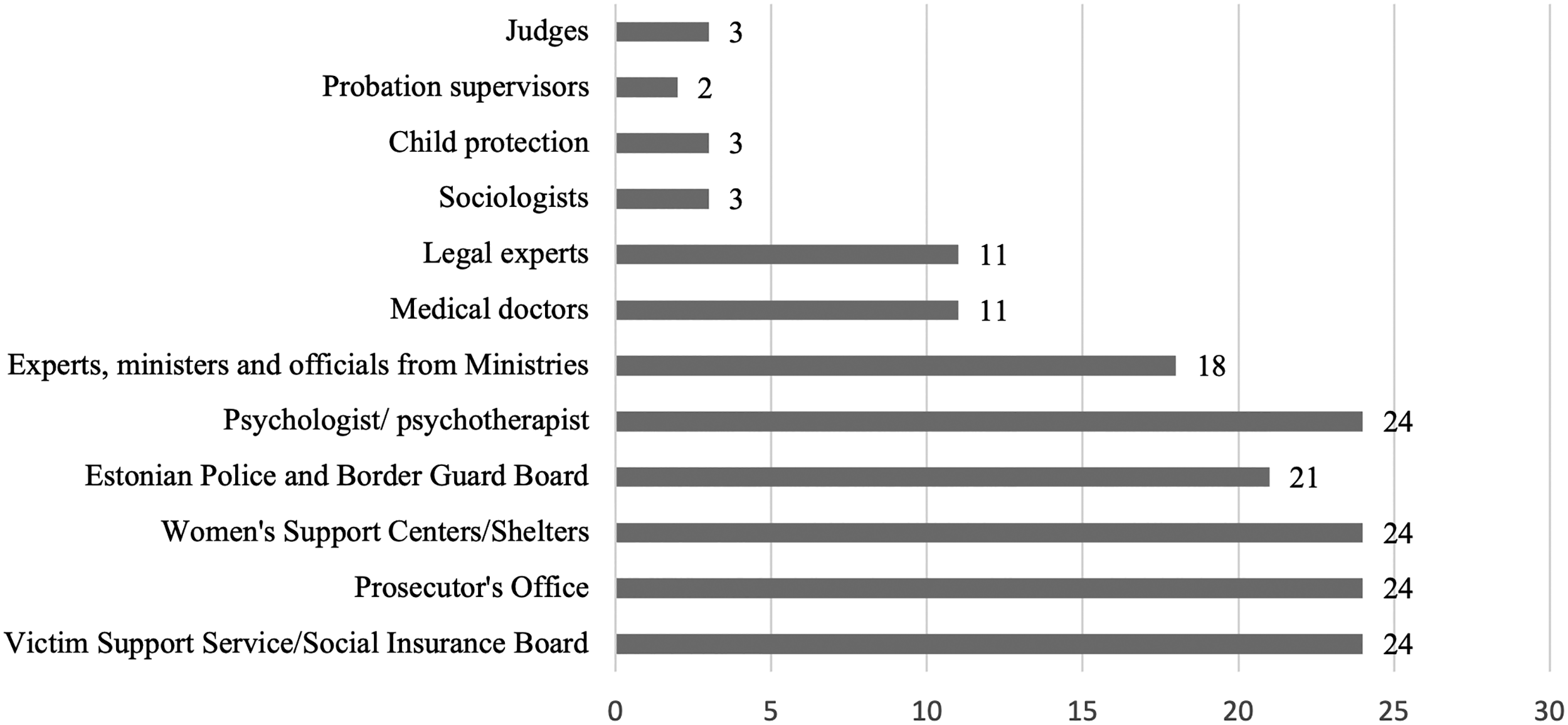
Frequency of expert opinions included in the analyzed media.
These findings corroborate earlier research indicating that policy responses and media representations focus primarily on the consequences of IPVAW (e.g., Berns, 1999; Choup, 2016). The criminal justice system addresses perpetrators, while social and health services concentrate on victim support, including child witnesses and, at times, perpetrators themselves, often also considered as victims. Although such interventions are essential, insufficient attention is paid to the structural, social, and historical roots of this violence. The gender inequality dimension is not entirely absent: the sample includes two opinion pieces and one contribution from advisers at the Ministry of Social Affairs’ Department of Equality Policies, as well as three contributions from sociologists. However, key institutions responsible for safeguarding equality and human rights—such as the Commissioner for Equal Opportunities and the Chancellor of Justice—are notably absent as sources of expertise. Similarly, representatives of the education sector, which is central to prevention, do not appear in the sample.
References to the Presence and Involvement of Children
References to children in the context of IPVAW are frequent: 51% of the articles mention children as witnesses, victims, objects of manipulation, or otherwise adversely affected. It is also commonly noted that around 30% of family violence cases involve children. Consistent with this, Ministry of Justice statistics for 2022 indicate that approximately 26% of such cases involve children as either victims or witnesses.
The qualitative content analysis identified three principal themes concerning children's involvement in IPVAW. The most prominent theme was the adverse impact of witnessing violence between parents on children's psychological well-being and development, with children portrayed as victims in their own right rather than passive witnesses. The articles frequently emphasized that exposure to violence is traumatic, undermines mental and physical health, and fosters maladaptive coping mechanisms, while also offering guidance on supporting affected children. Additionally, some articles noted instances of direct child victimization and highlighted that victims and perpetrators often originate from disrupted family backgrounds. In nearly a third of cases, a child is a witness or a direct victim of a crime of family violence, which means that over a thousand children have a direct experience of violence in their own home every year. A child's well-being and development are harmed by both direct violence and growing up amidst violent relationships. (PM, 25.11.2021) According to specialists, a child develops a special survival skill in constant anticipation of stress—to know at any moment how close an act of violence is and in what emotional state the mother is. A child uses all the energy that would be needed for his/her own growth in this anticipation of stress. The child loses the most important thing—trust in the loved ones. Loses a sense of security and trust in the world. Unfortunately, the fact that violence begets violence is not fiction either. (PM, 03.05.2019)
The second prominent theme concerned the manipulation of children, particularly instances in which men threatened to remove children from women to instil fear and deter separation. This was framed as a form of psychological violence: “Often, the man assumes full control and restricts the woman's communication with her loved ones. If the couple has children, the issue of custody is also used to manipulate women,” explained a social counsellor at a women's shelter (EPL, 11.06.2019).
The third dominant theme was the prevailing belief that children should be raised with fathers present, which often overlooks the more severe harms associated with exposure to family violence compared with single parenthood. This norm may discourage women from leaving abusive relationships. The findings also indicate that perpetrators are frequently viewed positively within communities, leading women to fear disbelief, and highlighting unequal power relations that tend to afford men greater authority and credibility. It is difficult for women to leave violent relationships, especially when they believe that children must have a father and that, by ending the relationship, they will harm children. It has always been said that a full-fledged family has a father and a mother, but no one gives instructions on what to do when one partner is violent toward the other. Often, the abusive partner behaves well in public, and it may happen that friends and relatives start blaming the woman for ending the relationship. (ML, 10.02.2021)
Several articles suggest that this belief is also shared by authorities responsible for addressing violence, who may encourage family reconciliation. This approach can re-traumatize victims by requiring ongoing contact with perpetrators and further undermine children's psychological well-being. If children are involved, professionals try to find solutions in their interest. What is in the best interest of the children is controversial. The process, called family reconciliation, is a solution strongly favoured by the state, but it causes some controversy among professionals. Namely, it is also applied in cases where violence has been proven. […] According to one lawyer, family reconciliation has become a nightmare for dozens of his clients. Family reconciliation can mean, for example, that the woman is forced to face the man once a week. There are group therapies where, for example, the task is to name a good quality in your partner. And then a woman, who used to get beaten by her husband maybe every few days, has to start praising her partner in front of everyone. (PM, 22.10.2019)
Recognizing children as victims rather than mere bystanders affected by IPVAW is an important step in reframing it as a structural and societal issue rather than a private family matter. Such exposure increases children's vulnerability both immediately and over time, potentially shaping distorted self-perceptions and understandings of relationships that may be reproduced in their future intimate partnerships. The example below illustrates this intergenerational pattern, noting that a victim who grew up witnessing IPVAW fears her own abusive relationship has caused psychological harm to her daughter. Pille has experienced abusive relationships since birth. Her father was beating her mother, and Pille has followed her mother's pattern: being in a series of violent relationships. Her last cohabitation, which was full of physical and mental violence and alcohol and resulted in a daughter, lasted 14 years. Pille's daughter is now 14 years old and completely withdrawn. She doesn't want to go anywhere; she doesn't enjoy life. The mother fears that she was hopelessly late in leaving the relationship and that the daughter will adopt the same pattern of behavior. The girl does not accept treatment and says that she wants to be sick. (EPL, 24.11.2020)
The analysis of children's involvement reveals several contradictions requiring further investigation. Drawing on Estonian violence prevention frameworks and the study sample, IPVAW is predominantly represented as an individual and interpersonal issue; however, when its impact on children is considered, it is instead constructed as a social problem affecting victims, perpetrators, wider society, and future generations. In this context, emphasis on individual responsibility tends to accompany the positioning of women as victims, whereas attention on children more readily shifts the discourse toward broader structural and intergenerational consequences.
The second contradiction concerns conflicting value systems. Estonia's pronatalist family policies, underpinned by conservative ideologies promoting large families and supported by generous financial incentives, tend to prioritize the preservation of the family unit, often regardless of harm. In this context, women may fear leaving violent relationships due to perceived risks to children, social stigma, and loss of community acceptance. This context also helps explain the frequent prioritization of reconciliation in IPVAW cases, despite perpetrators benefiting more from avoiding accountability than victims do from remaining in abusive relationships. Consequently, victims are often expected to endure ongoing abuse in the name of preserving the family. This dynamic reflects a patriarchal ideology that privileges men's interests and authority within unequal power relations, which facilitate abuse. The value system currently enacted through family policies and dominant social beliefs thereby marginalizes the well-being of women and child victims in favor of an idealized nuclear family.
Attribution of Causes
Violence in intimate partnerships is a multifaceted phenomenon that cannot be attributed to a single cause. Drawing on Heise's ecological framework, it arises from the interaction of individual, relational, and societal factors, with structural gender inequality providing a context in which violence is normalized and sustained (Heise, 1998). Table 4 summarizes the causes identified in the qualitative analysis, categorized in accordance with Heise's ecological model. At the individual level, frequently cited factors included alcohol misuse, jealousy, possessiveness, and learned behavior. Relational factors commonly comprised family conflict, poor communication, and prolonged cohabitation (e.g., during holidays), often alongside excessive alcohol consumption. At the structural level, the most prevalent explanations concerned social norms and attitudes that legitimize or enable violence.
Attribution of Causes of Violence.
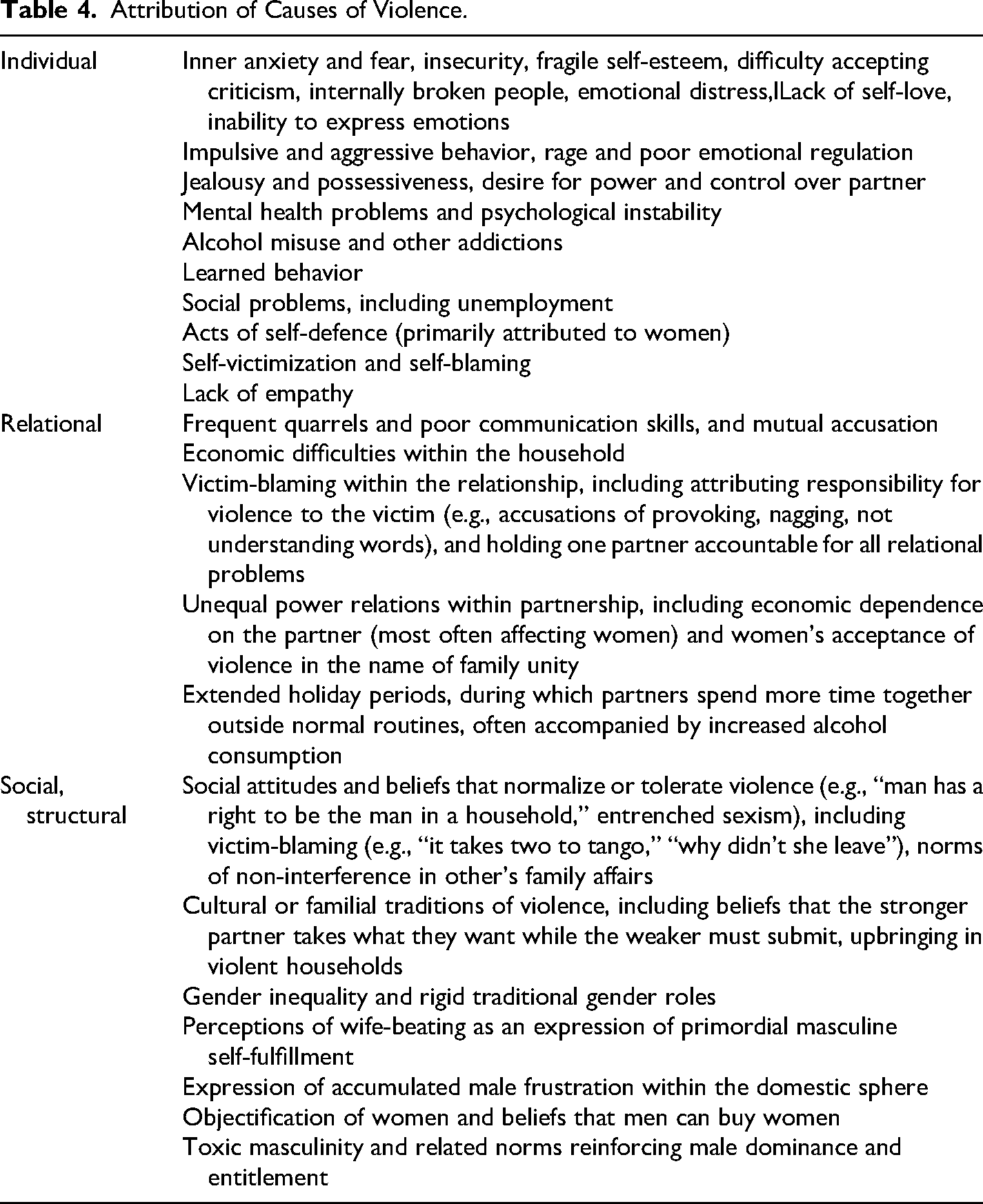
Several individual-level causes can be linked, directly or indirectly, to men's inability to meet societal expectations of masculinity, including being in control, emotionally and physically strong, fearless, protective, and the primary provider. This dominant form, termed hegemonic masculinity by Connell (2014), confers certain privileges but is largely unrealistic and unattainable for most men. Limited self-awareness of the resulting internal strain and discomfort may contribute to harmful and self-destructive coping strategies such as alcohol misuse and attempts to assert control through violence. As Kimmel (2011, p. 406) notes, “Men tend to use violence not when they feel most powerful, but when they feel relatively powerless.” Overall, such expectations can generate frustration and perceived failure, with violence often emerging as a socially tolerated response, frequently directed toward women.
From a relational perspective, it is necessary to explore why some women remain in violent partnerships while others leave at early signs of abuse. Many accounts indicate that women initially failed to recognize the violence and, through prolonged and systematic abuse, gradually lost their sense of self. Economic dependence and the desire to preserve family unity emerged as key factors for remaining in violent partnerships. Consistent with prior research (Berns, 1999; Hearn & McKie, 2010), ending violence is often presented as a matter of women's responsibility and agency, requiring them to take the decision to leave, frequently at the cost of abandoning their home, social networks, and support structures, and rebuilding their lives, often with recourse to shelters (there are no shelters for abusive men!).
Learned behavior is also identified as a contributing factor to victimization. As Andrea Kink of the Estonian Social Insurance Board notes, while no specific “type” attracts violence, prior exposure may increase vulnerability; women who experienced violence in childhood and have not processed these experiences may carry such patterns into adulthood (PM, 31.03.2020).
Conversely, childhood exposure to violence was also identified as a potential contributor to male perpetration, with such behavior understood as learned through socialization. In both cases, a lack of safety in childhood may significantly shape development, a pattern frequently observed in the sample. However, reducing violence to learned behavior alone would be overly simplistic, as not all individuals exposed to violence in childhood go on to perpetrate or experience it in adulthood.
At the social and structural level, the analysis identifies a recurring theme of male entitlement to use violence, sustained by a social environment that tolerates it. Soo (2016) finds in her study on attitudes and behaviors of Estonian men who have used violence against their intimate partner that men's violence is rooted in socio-cultural attitudes linked to patriarchal values that normalize and legitimize such behavior while diminishing accountability. In addition, the belief that violence within intimate partnerships is a private matter, beyond external intervention, remains prevalent in Estonia. This perception can be traced to the Soviet period, when IPVAW was not publicly addressed and law enforcement agencies largely refrained from intervening. The Head of Pärnu Women's Shelter estimates that only around 10% of those aware of violence intervene or report (EPL, 02.05.2019). Evidence from neighboring Latvia similarly indicates a high tolerance of violence, including justification of perpetrator's actions, victim-blaming, and a preference for addressing abuse privately rather than publicly (Mileiko & Hamilton, 2020). References to silence and non-interference are also prevalent in the data; consequently, experts frequently urge victims, as well as relatives, friends, and colleagues, to report incidents to the relevant authorities.
The analysis revealed a further gendered pattern in victims’ accounts, with many women describing the early stages of relationships in idealized, “fairy tale” terms: “I thought he was the love of my life,” “it was like a fairy tale,” “I thought he was the prince of my dreams,” “a dream come true.” Such narratives reflect broader media influences, which, as Kimmel (2011) argues, remain strongly gendered and play a key role in socialization. The media disseminate differentiated content to girls and boys, women and men; as Kimmel notes, there is “his” media and “her” media (2011, p. 291). Media representations, including those in Disney films, promote normative gender ideals by privileging hegemonic masculinity and emphasized femininity (Kang et al., 2017). These depictions foster in many women expectations of romantic love, idealized relationships, and protective, fulfilling, and providing partners. In some cases, such expectations intersect with additional vulnerabilities, as illustrated by the example below where a victim lacked parental protection and affection in childhood and was economically dependent. “I saw in him an escape from home,” Karin wrote. “I thought I had found the love of my life, someone who would be with me through thick and thin. Already at the beginning, when he humiliated and insulted me, I knew that I couldn't go back home. I was still in high school and had no income. Every time the quarrel was finished, I sincerely believed that it was the last. Above all, I wanted my own little family. I wanted people in my life who wouldn't abandon me like so many had.” (EE, 13.10.2020)
Family happiness may also be something women feel compelled to project publicly, making it difficult to acknowledge when relationships fall short of idealized expectations. This dynamic reflects broader societal norms surrounding women's roles, fulfilment, and happiness. Girls and women are often socialized to expect men to provide physical, economic, and emotional security and protection; paradoxically, reliance on these expectations may increase, rather than reduce, vulnerability to violence.
Conclusions
Analysis of six parameters associated with IPVAW and its frequency in Estonian news media indicates that the issue is represented as a significant social concern requiring recognition and intervention. However, media coverage tends to only loosely connect the phenomenon to its primary structural causes, namely gender inequality and discrimination. Although definitions of family and intimate partnerviolence frequently included in the articles acknowledge unequal power relations between partners—distinguishing such abuse from conflicts between ostensibly equal partners—the origins of this inequality are rarely questioned and examined. Instead, inequality is treated as a given and a fact, rather than as a product of broader social, cultural, and institutional processes.
Secondly, the prevailing terminology used to describe IPVAW does not reflect its gendered nature, obscuring both its gender dimension and the fact that most cases of family violence occur between current or former partners. This aligns with Estonian violence prevention strategies, which similarly adopt a gender-neutral approach. However, research shows that such ostensibly neutral approaches are themselves gendered and tend to reproduce rather than challenge existing inequalities (Hearn & McKie, 2010). The strong emphasis on neutrality may reflect the influence of liberal and conservative political forces shaping post-Soviet public policy in Estonia. In this respect, Estonian approaches diverge from those of the UN and the Council of Europe, although these differences are gradually narrowing with the progressive implementation of the Istanbul Convention.
Thirdly, analysis of expert commentary shows that media and policy responses focus primarily on the consequences of IPVAW, particularly the management of perpetrators through the criminal justice system and the provision of support services for victims, and in some cases perpetrators, who are occasionally also considered as victims. The findings also indicate that victims commonly experienced multiple forms of violence simultaneously, most frequently physical and psychological abuse, underscoring the systematic and patterned nature of IPVAW. Considerable attention is given to its impact on children's psychological development, with traumatized children often constructed as a potential future social problem. While causes are attributed in varied ways, a clear pattern emerges: coverage of specific incidents tends to emphasize individual-level explanations such as control, jealousy, and possessiveness, whereas broader discussions of IPVAW are more likely to reference social and structural factors, including norms and beliefs that normalize and enable violence.
This analysis of IPVAW representation in Estonian news media indicates a strong focus on victims—including children as co-victims—and perpetrators. This emphasis aligns with Estonia's political and ideological context, in which dominant liberal policy frameworks prioritize individual rights and freedoms. Consistent with previous research, IPVAW is primarily represented as an individual rather than a structural or social issue. As a result, media coverage concentrates on the consequences of violence while giving comparatively little attention to its causes and prevention. Although references to gender inequality and discrimination do appear, they remain marginal within dominant media narratives. The gender-neutral approach and terminology adopted in strategic policy documents further obscures the gendered nature of IPVAW. Overall, a more sustained and in-depth public and policy debate on its underlying causes has yet to emerge in Estonia.
Footnotes

Funding
The author received no financial support for the research, authorship, and/or publication of this article.
Declaration of Conflicting Interests
The author declared no potential conflicts of interest with respect to the research, authorship, and/or publication of this article.