



Abstract
Using supplementary police reports from 700 intimate partner violence calls, risk factors and victim's condition of being afraid were investigated as predictors of charges indicative of coercive controlling behavior. Police-assessed state of women's fear was a good indication of the presence of several coercive control risk factors. Women's fear and 20 risk factors were related to coercive control-type and lethality-type charges laid. Using multiple regression analyses, women's state of being afraid, and risk factors of threats to harm/kill, escalation of assaults/threats, and threats/use of firearms were predictors of coercive control and lethality charges/behavior. The findings have implications for tracking and predicting potentially lethal behavior.
A particular challenge for policing intimate partner violence (IPV) involves considering the concept of coercive control as an important dynamic of the situation (Barlow et al., 2020; Dawson & Piscitelli, 2021; Dichter et al., 2018; Johnson et al., 2019; Monckton-Smith, 2020; Spencer & Stith, 2020). In its earlier conceptualization, coercive control was generally understood as the use of tactics designed to create pervasive fear and to limit the actions and choices of one's romantic partner (Stark, 2007). With advocacy for the criminalization of coercive control in Canada and elsewhere, as well as legislative changes that criminalized coercive and controlling behaviors in some of Western Europe (Barlow & Walklate, 2021), policing coercive control has become a more prominent area of focus in the IPV literature (Aspinall et al., 2024; Barlow & Walklate, 2021; Brennan & Myhill, 2022; Hilton et al., 2023; Wiener, 2017). Understanding the nature, dynamics, and risks of coercive control within IPV is important for police to respond effectively to these service calls.
Coercive control is an aspect of IPV that pertains to ongoing nonphysical tactics—such as intimidation, humiliation, manipulation, threats, and isolation—used to instill fear, dominate, and maintain control over the victim (Home Office, 2023; Johnson, 2008; Stark, 2007). Coercive control is identified most commonly in heterosexual relationships with a male abuser intending to control their female partner (Barlow et al., 2020; Conroy et al., 2024a, 2024b; Johnson, 2008, 2017; Myhill, 2015; Stark, 2007). While mostly psychological in nature, these tactical behaviors sometimes involve physical violence and sexual coercion (Myhill, 2015). The use of occasional and/or severe physical violence can serve to make the nonphysical tactics even more effective (Johnson, 2008; Stark, 2007). Behaviors such as harming pets (Campbell et al., 2021); destroying property and sexual coercion (DeKeseredy et al., 2006; Garrido-Marcias et al., 2022); threats of violence toward the partner and/or loved ones and subtle physical abuse (e.g., holding without bruising or non-fatal strangulation; Messing et al., 2022) represent only a few examples of the physical techniques used by perpetrators to exert power over the victim and convey a sense of vulnerability and fear.
Victims understand the threat implicit in these tactics and their fear is an indication of coercive control (Crossman & Hardesty, 2018; Dichter et al., 2018). Victims of coercive control experience persistent fearfulness and distress that does not abate after the conflict dissipates (Hill, 2020), in contrast to transient fear that sometimes occurs in situational couple violence (Johnson, 2008). Coercive control-based abuse may go unrecognized as it often occurs without physical manifestation (e.g., visible injuries). For example, Robinson et al. (2018) found police investigation of verbal-only IPV incidents routinely failed to complete risk factor danger assessments despite the importance of denigration and verbal threats in coercive control.
Critics argue police are hesitant to rely on victim accounts of fear and reported use of nonphysical coercive tactics because evidence of violence against women is understood as physical violence only (Brennan & Myhill, 2022; Barlow et al., 2020). Even risk assessment tools in England and Wales, where coercive control is criminalized, rely mostly on prior physical evidence of violence during a discrete incident rather than on situational contexts (Barlow et al., 2020; Myhill & Hohl, 2019). The focus on concrete violent outcomes coupled with each incident being considered in isolation may obfuscate coercive control tactics that could be present and predictive of future violence (Snyder, 2019; Tolmie et al., 2024).
Coercive control is a much better predictor of physical violence (Hilton et al., 2023) and domestic homicide than prior violence itself (Chambers et al., 2018; Dawson & Piscitelli, 2021; Monckton-Smith et al., 2014; Myhill & Hohl, 2019). Yet, police and the justice system tend to focus exclusively on IPV criminal acts that result in immediately observable outcomes (Gill et al., 2019). Further, survivors/victims may not be able to articulate the coercive control circumstances they face and resulting fear they experience. Identifying coercive control is challenging for police as coercive control indicators are not as readily visible as physical injuries and often manifest in a repeated, longer-term fashion rather than in a single occurrence (Crossman & Hardesty, 2018; Myhill, 2015). Yet, a Canadian national framework for collaborative police action to reduce IPV places assessment tools at the center of the paradigm (Gill & Fitch, 2016). Given these challenges, we sought to examine police-identified risk factors and police assessments of the victim's presentation as afraid and their relation to charges aligned with coercive control-type behaviors using data from the mandated Domestic Violence Supplementary Report (DVSR) completed during police responses to domestic dispute calls (language note: within the context of the DVSR and call responses, police use terms of domestic violence and domestic dispute narrowly to refer to IPV).
Risk factors, which are not necessarily illegal, may be useful for predicting coercive control behavior escalation (Myhill & Hohl, 2019). For example, the risks of separation and fear of leaving an abusive relationship are generally not well understood by police yet are found to be a common risk of domestic homicide (Dawson & Piscitelli, 2021; Spencer & Stith, 2020). When investigating fatal IPV events, Dawson and Piscitelli (2021) found that abusers’ prior IPV behavior and violence escalation clustered with coercive control behaviors of victim fear of abuser, death threats, victim leaving the relationship, isolation, and obsessive behavior. This cluster of violence and coercive control characterized two-thirds of the IPV homicides examined. In many of these cases, there had been previous interactions with the police. If risk factors are not assessed and tracked, these markers of coercive control (e.g., victim fear, death threats) may be missed by police in cases that later escalate to more severe violence or even homicide.
Frontline police officers are commonly required to complete risk assessments when responding to domestic dispute calls. These risk assessments may be actuarial tools to predict recidivism (e.g., Ontario Domestic Assault Risk Assessment [ODARA]; see Hilton et al., 2004) or structured professional judgment tools designed to identify and manage risk (e.g., Domestic Abuse, Stalking and Honour-Based Violence [DASH]; see Richards, 2009–2026). However, structured professional judgment tools are not necessarily used to predict behavior. Indeed, the DASH states explicitly that it is not a predictive instrument (Richards, 2009–2026).
Optimal use of risk factor assessment is of particular importance if it helps police to track and prevent escalation. Police intervening earlier in the coercive control process might help prevent repeated police calls, mitigate escalating violence, and reduce risk of femicide and filicide (Goodman-Delahunty & Crehan, 2016). While certain coercive control factors are linked to domestic homicide (Dawson & Piscitelli, 2021; Spencer & Stith, 2020) and many of these are present in non-fatal IPV studies (e.g., Crossman & Hardesty, 2018; Myhill, 2015), how these same factors are present in non-fatal IPV police reports has been examined less. Risk tools designed for use by frontline officers often contain items that capture coercive control tactics and behaviors; however, they tend to prioritize physical violence and discrete incidents that may not capture coercive control factors adequately (Myhill & Hohl, 2019). Examining coercive control-related risk factors in the context of non-fatal IPV police reports could strengthen understanding of how this information might be applied more effectively in criminal justice situations.
Some research has begun to examine coercive control risk factors in relation to police risk assessment data (Hilton et al., 2023; Myhill & Hohl, 2019). Both studies extracted coercive control evidence embedded in police risk assessment tools or police reports. Hilton et al. (2023) found that coercive control, based on variables extracted from 1990s police records consisting of behaviors and attitudes, many of which are not illegal (e.g., jealousy, controlling activities)—was a better aggregate predictor of future IPV recidivism than a past IPV behavior index. Factors present in police risk forms have the potential to add to the understanding and response to coercive control more broadly. It is in this context that we explored evidence from mandated DVSRs completed by police in response to domestic violence calls and charges laid in a small Ontario community. The current study adds to this literature by investigating victim fear alongside risk factors as predictors of coercive controlling behavior, as documented by police on the DVSR. In this study, coercive control behaviors are indicated by relevant charges laid (e.g., uttering threats is an offence under the Criminal Code of Canada and is indicative of “intimidation”).
Current Investigation
Using DVSR data from police responses to domestic dispute calls involving criminal charges, we build on prior work (Aspinall et al., 2024; Dawson & Piscitelli, 2021; Hilton et al., 2023; Myhill & Hohl, 2019) by examining the relation between police assessments of victim fear and risk factors. Further, we investigate whether DVSR form risk factors are associated with coercive control-types of charges laid (e.g., stalking; legally termed “Criminal Harassment” in Canada's Criminal Code). A subset of these coercive control-type charges, labeled lethality charges (e.g., choking), are considered separately. To provide a window into the relationship between risk assessment and coercive control behavior, this study presents a quantitative, cross-sectional analysis of secondary data from IPV call responses over a three-plus-year period in a small Ontario, Canada community. Conceptually, we sought to extend the findings in the literature that risk factors and victim's fear predicted violent domestic behavior (cf., Dawson & Piscitelli, 2021). Consequently, we examined the associations between police assessments of the victim as afraid, risk factors, and charges indicative of coercive control and lethality risk.
Method
Study Context and Origin of the Data
As part of an integrated police–court–community response to domestic violence, police attending IPV calls (e.g., 911 calls, non-emergency calls, walk-in complaints) in Ontario must complete a DVSR form. Domestic violence is operationalized by police as IPV occurring within intimate relationships (e.g., marital, dating, same-gender). The DVSR is an investigative and information-tracking tool to support police decision-making, supervisory oversight, and use in court proceedings. The form was created by the office of the Ontario Ministry of the Solicitor General in collaboration with the Police Behavioural Science section following the 1998 May–Iles inquest into an intimate partner homicide and suicide. A central recommendation of the inquest was the systematic documentation of empirically supported risk and lethality indicators during domestic violence investigations by police. Along with background information (e.g., accused's criminal history, evidence collected), the form incorporates a checklist of risk factors intended to guide investigation and to provide supplementary information for court proceedings. Completion of the DVSR was mandatory, and failure to do so could result in disciplinary consequences for investigating officers attending IPV calls in Ontario.
Although not designed for research, an Ontario police service serving a small city and surrounding rural areas recognized that the accumulated DVSR data could be examined to better understand patterns of police response and risk indicators in IPV calls. New forms had been adapted for use by the end of 2014; however, these capture different details than the DVSR forms. Police personnel therefore invited the current research team to conduct a secondary analysis of data derived from the DVSR forms.
Data Collection Period
Anonymized DVSR data with charge information were provided for calls occurring between 2011 and 2014 for which judicial proceedings were complete and records were available for extraction under police privacy and access protocols. Although the DVSR form used herein was revised thereafter—some of the risk factors were omitted or wording changed; the condition of the victim checklist was eliminated; and included alternative risk assessment questions—the current data represent a stable period of standardized form use within this police service, allowing for consistent measurement across calls.
Inclusion Criteria and Data Characteristics
The data included 985 IPV calls involving charges. Because this analysis focused on coercive control, calls were limited to the most common couple-type situations where women were victims and men were accused (i.e., “traditional” heterosexual IPV couples; Conroy et al., 2024a, 2024b; Johnson, 2008, 2017; Myhill, 2015; Stark, 2007). After this exclusion, a final data set of 700 calls was produced. The unit of analysis was the call; that is, a couple or an individual could be represented in the data set multiple times if the person(s) were involved in more than one call.
The DVSR form did not provide a detailed description of the circumstances of the calls; age, gender, or race of persons involved; or other demographic information. The broader police record contains this data and was not provided. However, the involved persons’ genders were added by police after-the-fact with the anonymized DVSR data forwarded to the researchers. Consequently, this investigation was a secondary analysis of the available data. The DVSR form, associated documents, and raw data derived from the form are not publicly available in accordance with the research agreement. The study was approved by two University Research Ethics Boards in accordance with Canadian Tri-Council standards.
Measures: The Domestic Violence Supplementary Report
The DVSR form consists primarily of structured tick-box items with space for brief narrative notes and includes sections documenting victim and accused physical and emotional conditions, evidence collected, investigative follow-up, a risk indicator checklist based on the ODARA (Hilton et al., 2004), and actions to support IPV victims. Of relevance to the present analyses were two components: (a) police assessment of the victim condition checklist at the time of response to the call, specifically whether the victim was noted as afraid; and (b) the 20 accused-related risk factor questions recorded as yes, no, or unknown based on victim responses during the interview and/or police assessment. The full description of the items related to the conditions of the victim and the 20 risk factor questions is provided in the Appendix. Although the form contains additional sections (e.g., evidence documentation, prior contacts with police), these were not analytically relevant to the research questions and therefore not examined.
Predictor Variables: Risk Factors and Victim Assessed as Afraid
As indicated, the DVSR form had 20 risk questions with the accused as the main subject. Risk factor endorsement was based on victim responses; however, investigating officers were instructed to complete the form to the best of their ability, if a victim were unavailable or uncooperative. In addition, there were nine adjectives with tick-boxes to note the victim's condition at the time of the interview. Whether the victim's condition was reported by police as afraid was of interest. The presence of risk factors and condition of victim as afraid were coded as 1 = yes or 0 = no. Thus, non-parametric statistics are used primarily as most data were binary.
Outcome Variables: Charges
The police provided a narrative list of charges laid associated with each call on the DVSR form. These charges were coded based on the Criminal Code of Canada (1985). The number of charges ranged from zero to 23 with most calls resulting in one or two charges only. The total number of charges associated with a call was calculated by simply adding each charge laid.
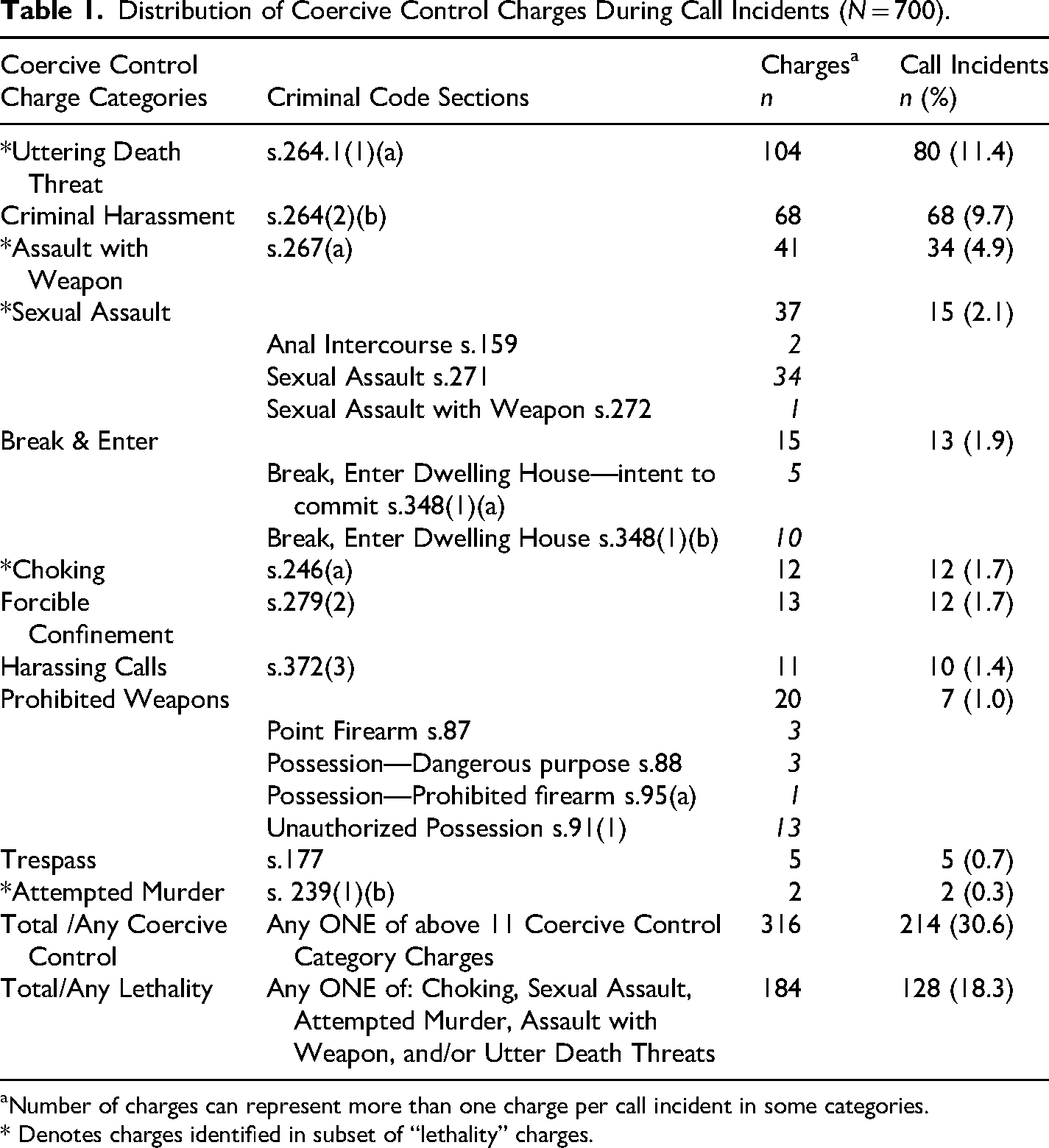
The Home Office (2023) report and Silverstone's (2021) brief outlined specific coercive and controlling behaviors and categorized these behaviors (e.g., physical violence, intimidation, and/or threatening behaviors). Based on these coercive control behavior categories, 11 coercive control-related charges present in the data were identified. A subset of five coercive control charges was identified as having the potential for a lethal outcome derived from Neilson's (2013) report containing facts associated with lethal outcome potentiality. These lethality charges indicate behavior that could potentially lead to domestic homicide. The coercive control-type charges are considered as proxy measures for coercive control behavior because charges are laid by police only when they believe there is ample evidence of such actions. Table 1 presents the list of coercive control and lethality charges and their incidence in the current data set.
Distribution of Coercive Control Charges During Call Incidents (N = 700).
Number of charges can represent more than one charge per call incident in some categories.
* Denotes charges identified in subset of “lethality” charges.
Analytic Strategy
The analyses addressed two overarching goals. First, descriptive analyses were conducted to characterize the prevalence of risk factor endorsement, police-assessed victim condition (i.e., being afraid), and charges laid across the 700 calls. Second, inferential analyses examined whether victim being afraid and risk factor endorsement predicted coercive control. Analyses included bivariate associations and logistic multiple regression models predicting total coercive control charges as well as the subset of lethality-related charges. Based on the findings of the logistic regression, follow-up analyses examined specific risk factors associated with individual coercive control outcomes.
Results
Descriptive Information and Univariate Relationships
Risk Factors
Risk factor endorsements were quite prevalent in this sample; for example, accused exhibiting externalizing behavior (i.e., accused personality features anger, impulsiveness, or poor behavioral control) was endorsed for 56% of calls, a separation or change in the relationship was endorsed for 47% of calls, and accused has demonstrated jealousy or obsessive behavior toward the victim/other partners was endorsed for 44% of calls. Most of the risk factors were present at least once in every five calls (i.e., 14 of the 20 risk factors were endorsed 20% of the time). However, there was very low endorsement of three risk factors (i.e., all less than 7% of calls): accused has access to/threatened use of firearms, accused has sexually abused the victim or previous partner, and accused has injured/killed the victim's pet.
The total number of risk factors endorsed per call ranged from 0 to 17. The average number of risk factors noted per call was 5.62 (SD = 4.43, median = 6, mode = 0). Twenty-three percent (23.0%) of calls had none of the risk factors endorsed. When considering only those calls where at least one risk factor was present (i.e., 77.0% of the sample), the distribution of risk factors was normal with an average number of risk factors of 7.30 (SD = 3.63, median = 7, mode = 8).
Guided by Dawson and Piscitelli's (2021) findings of coercive control factors identified in domestic homicides, a coercive control risk index was calculated by summing the coercive control risk factors of fear of ongoing assaults, escalation of assaults, separation or relationship change, obsessive or jealous behavior, stalking, and threat to kill/harm victim or loved ones. This ranged from zero to six; about a third of calls (30.7%) had a score of zero while the mean was 2.06 (SD = 1.8, median = 2, mode = 0). When excluding those who had a score of zero, most calls had only one or two of these coercive control risk factors (n = 200).
Victim Assessed as Afraid
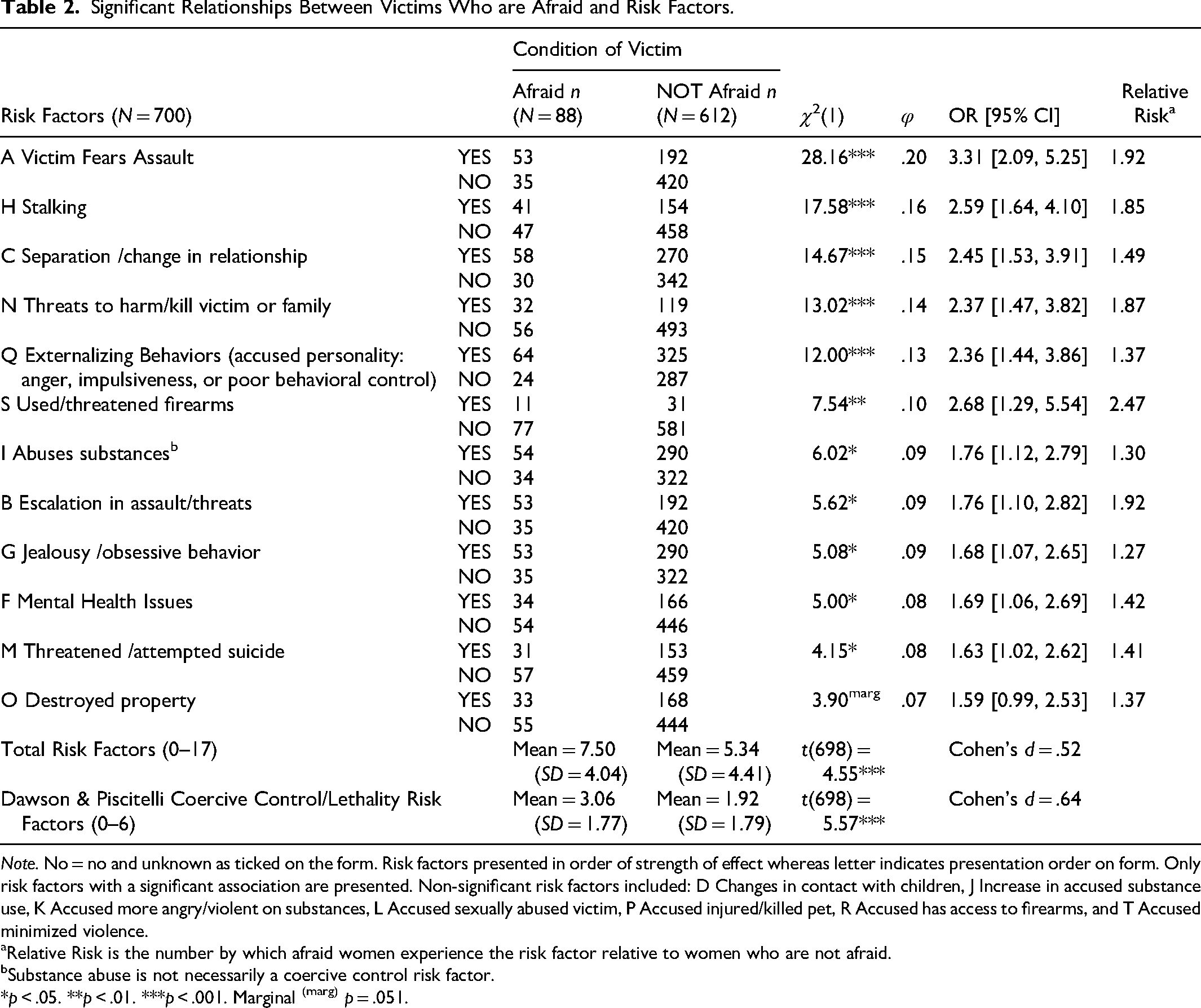
Among the various descriptors of the condition of the victim at the time of the interview, afraid was an option. Out of all 700 calls, 88 identified the victim as being afraid (12.6%). This was the third most endorsed state after calm (34.3%) and crying (33.0%). Fear was also embedded in one of the 20 risk factors; this risk factor involved greater specification (i.e., “Does the victim fear that the accused will continue the assaults, seriously injure or kill her or the children?”). Consequently, we assessed if police noting women's condition of being afraid was predictive of their acknowledgement of fear as a risk factor. This relationship was very strong; police were almost twice as likely to indicate fear as a risk factor when they assessed the woman as being afraid (see Table 2).
Significant Relationships Between Victims Who are Afraid and Risk Factors.
Note. No = no and unknown as ticked on the form. Risk factors presented in order of strength of effect whereas letter indicates presentation order on form. Only risk factors with a significant association are presented. Non-significant risk factors included: D Changes in contact with children, J Increase in accused substance use, K Accused more angry/violent on substances, L Accused sexually abused victim, P Accused injured/killed pet, R Accused has access to firearms, and T Accused minimized violence.
Relative Risk is the number by which afraid women experience the risk factor relative to women who are not afraid.
Substance abuse is not necessarily a coercive control risk factor.
*p < .05. **p < .01. ***p < .001. Marginal (marg) p = .051.
Risk Factors as a Function of Victim Assessed by Police as Being Afraid
Of the 20 DVSR risk factors, 11 significantly differed between women assessed as afraid versus not afraid (see Table 2). Aside from the fear of ongoing assaults risk factor, two other factors (i.e., stalking and separation/change in relationship) demonstrated strong differences. Women who were afraid were almost twice more likely to have experienced stalking by the accused (i.e., 25.2% vs. 46.6%) and one and a half times more likely to be separated (i.e., 44.1% vs. 65.9%). Moderate differences were found for two risk factors (i.e., accused threaten to harm/kill the victim/other loved ones and externalizing behaviors of the accused) and significant but weak differences were evident for the remaining risk factors. Aside from the 11 individual risk factors, there were differences at aggregate levels. Women assessed as afraid were different from those not afraid on both total risk factors and Dawson and Piscitelli's (2021) coercive control 6-risk factor index. In short, the police-assessed condition of being afraid is a good indicator of the elevated likelihood of risk factors.
Coercive Control and Lethality Charges
Although a wide range of charges was laid across calls, most (86.7%) involved three or fewer charges. The average number of charges laid per call was 2.03 (SD = 1.82, median = 2, mode = 1), although for almost half of the calls (44.6%), only one charge was laid.
Two coercive control charge variables were created: (a) any coercive control was a dichotomous variable of either yes or no if any one of the 11 charges identified in Table 1 were present; and (b) a continuous variable consisting of a simple sum of total coercive control charges laid. Incidents that involved any coercive control-type charges laid represented 30.6% of calls. Also, two parallel lethality variables were constructed using a similar binary yes/no based on whether any one of five lethal charges were laid. A total lethality charges score was constructed by adding all lethality charges per call. Incidents that involved any lethality charges laid represented 18.3% of calls. It is important to note that lethality variables are a subset of coercive control charges and are not independent constructs.
Prediction of Coercive Control-Type and Lethality-Type Charges
Risk Factors
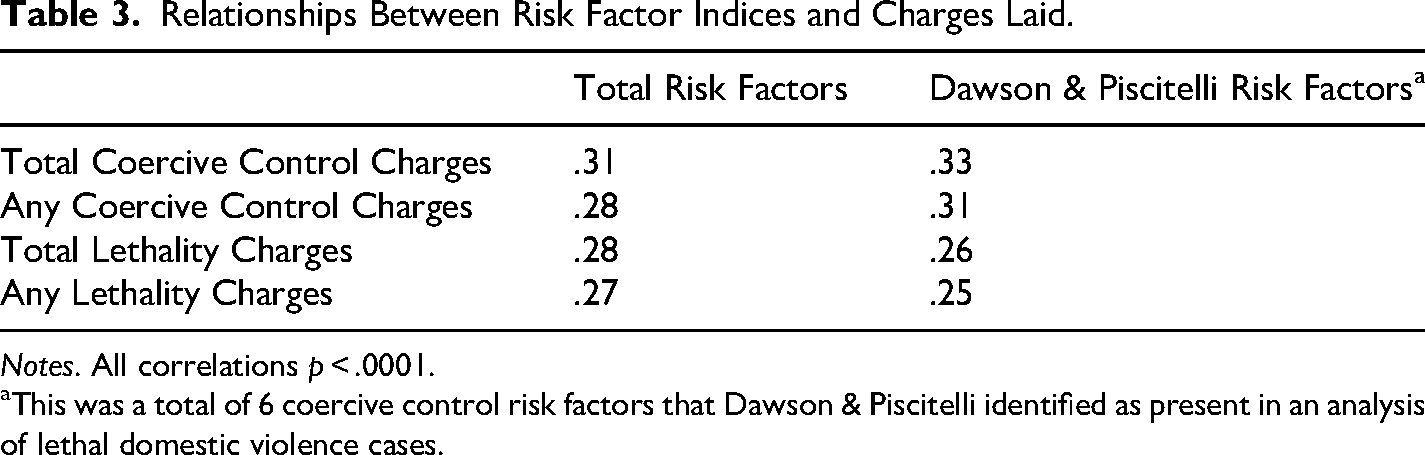
The risk factors and charges laid relationship was explored by correlating the total count of risk factors and the Dawson and Piscitelli coercive control-related risk factor index with total and any coercive control and lethality charges. Correlations ranged from .25 to .33 (see Table 3). While significant, these relationships are weak or fair in magnitude, with 6% to 11% of variance shared between risk factors and charges (Akoglu, 2018).
Relationships Between Risk Factor Indices and Charges Laid.
Notes. All correlations p < .0001.
This was a total of 6 coercive control risk factors that Dawson & Piscitelli identified as present in an analysis of lethal domestic violence cases.
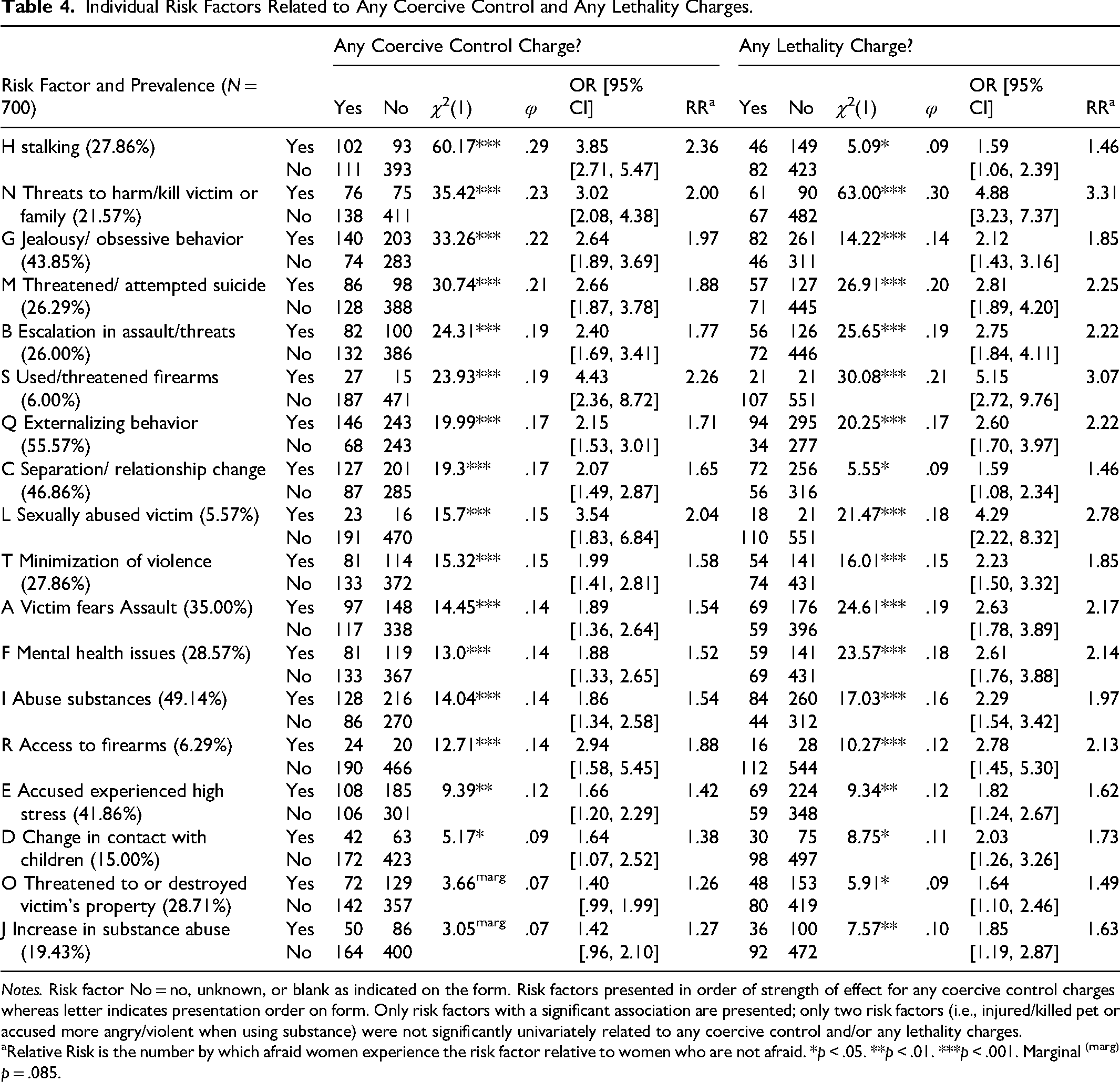
Table 4 presents relationships between the individual risk factors and (a) any coercive control charges and (b) any lethality charges subset. Almost all risk factors related to coercive control charges significantly. Phis (Φ) ranged from .07 to .29 for any coercive control charges and .09 to .30 for any lethality charges. Coercive control charges were 1.26 to 2.36 times more likely to be laid when individual risk factors were present. Similarly, the lethality charges subset were 1.46 to 3.31 times more likely to be laid when individual risk factors were present.
Individual Risk Factors Related to Any Coercive Control and Any Lethality Charges.
Notes. Risk factor No = no, unknown, or blank as indicated on the form. Risk factors presented in order of strength of effect for any coercive control charges whereas letter indicates presentation order on form. Only risk factors with a significant association are presented; only two risk factors (i.e., injured/killed pet or accused more angry/violent when using substance) were not significantly univariately related to any coercive control and/or any lethality charges.
Relative Risk is the number by which afraid women experience the risk factor relative to women who are not afraid. *p < .05. **p < .01. ***p < .001. Marginal (marg) p = .085.
Victim Assessed as Afraid by Police
Police more frequently laid a coercive control charge or a lethality charge, respectively, when the woman victim was assessed as afraid versus not afraid (any coercive control charge: χ2(1) = 22.69, p < .0001, phi = .18; any lethality charge: χ2(1) = 12.68, p < .0001, phi = .14). When the woman was assessed as afraid by police, any coercive control charge was 1.92 times more likely to be laid compared to when women were not assessed as afraid (i.e., 52.3% vs. 27.3%). Similarly, any lethality charge was 1.97 times more likely to be laid when women were assessed as afraid (i.e., 31.8% vs. 16.2%).
t tests were also conducted and found that significantly more coercive control charges and lethality charges were laid as a function of women being afraid versus not (total coercive control charges: Mafraid = 0.68, SD = 0.77 vs. Mnot afraid = 0.32, SD = 0.58; t(102) = −4.24, p < .001, Cohen's d = .61; r = .19, p < .001; total lethality charges: Mafraid = 0.39, SD = 0.63 vs. Mnot afraid = 0.18, SD = 0.42; t(98) = -3.02, p = .002, Cohen's d = .47; r = .15, p < .001; dfs were adjusted for unequal variance). These are medium-to-strong effects (Akoglu, 2018).
Multiple Regression
To investigate the collective predictiveness of the risk factors and women's condition assessed as afraid, multiple regression analyses were conducted with total coercive control and lethality charges as the dependent variables. The victim condition of afraid was entered first, while the 20 risk factor variables were entered on the second step. The stepped process allowed for an examination of whether the risk factors add anything above and beyond the victim's condition assessed as afraid in the prediction of coercive control and lethality charges.
Victim assessed as afraid was a significant predictor of total coercive control charges (F(1,698) = 27.10, p < .001, R = .19), accounting for 3.6% of the adjusted variance. Addition of the 20 risk factors added significantly to the explanation of the variance in total coercive control charges (Fchange(20,678) = 6.22, p < .001, Rdifference = .24) by 12.5% (adjusted R2). The final equation was significant (Ffinal(21,678) = 7.41, p < .001, R = .43; all VIFs < 2; all tolerance > .5), accounting for 16.1% of the adjusted variance in total coercive control charges. Five variables were significant in the multiple regression equation: stalking (β = .21), escalation in assaults/threat (β = .13), victim assessed as afraid (β = .12), threatened/used firearms (β = .11), and threatened harm/kill victim or loved ones (β = .10).
Total lethality charges were predicted by victim condition assessed as afraid on the first step (F(1,698) = 16.35, p < .001, R = .15, accounting for an adjusted 2.1% of the variance). The inclusion of the 20 risk factors added significantly to the prediction of total lethality charges (Fchange(20,678) = 6.55, p < .001, Rdifference = .27, an increase of 13.5% (adjusted); Ffinal(21,678) = 7.14, p < .001, R = .43; all VIFs < 2; all tolerance > .5). The significant variables in this prediction equation differed slightly with the strongest predictor as threatened harm/kill victim or loved ones (β = .23), then escalation in assaults/threat (β = .13), and victim assessed as afraid (β = .10). Other predictors included accused more angry/violent when using drugs/alcohol (β = −.10), accused threatened/attempted suicide (β = .10), accused sexually abused victim/previous partner (β = .10), firearm/weapon use against victim or loved ones (β = .09), and a recent separation or change in the relationship (β = −.08). The number of variables and the nature of the relationships in this equation indicate the complexity of predicting lethality-type charges.
Individual Charges and Specific Predictors
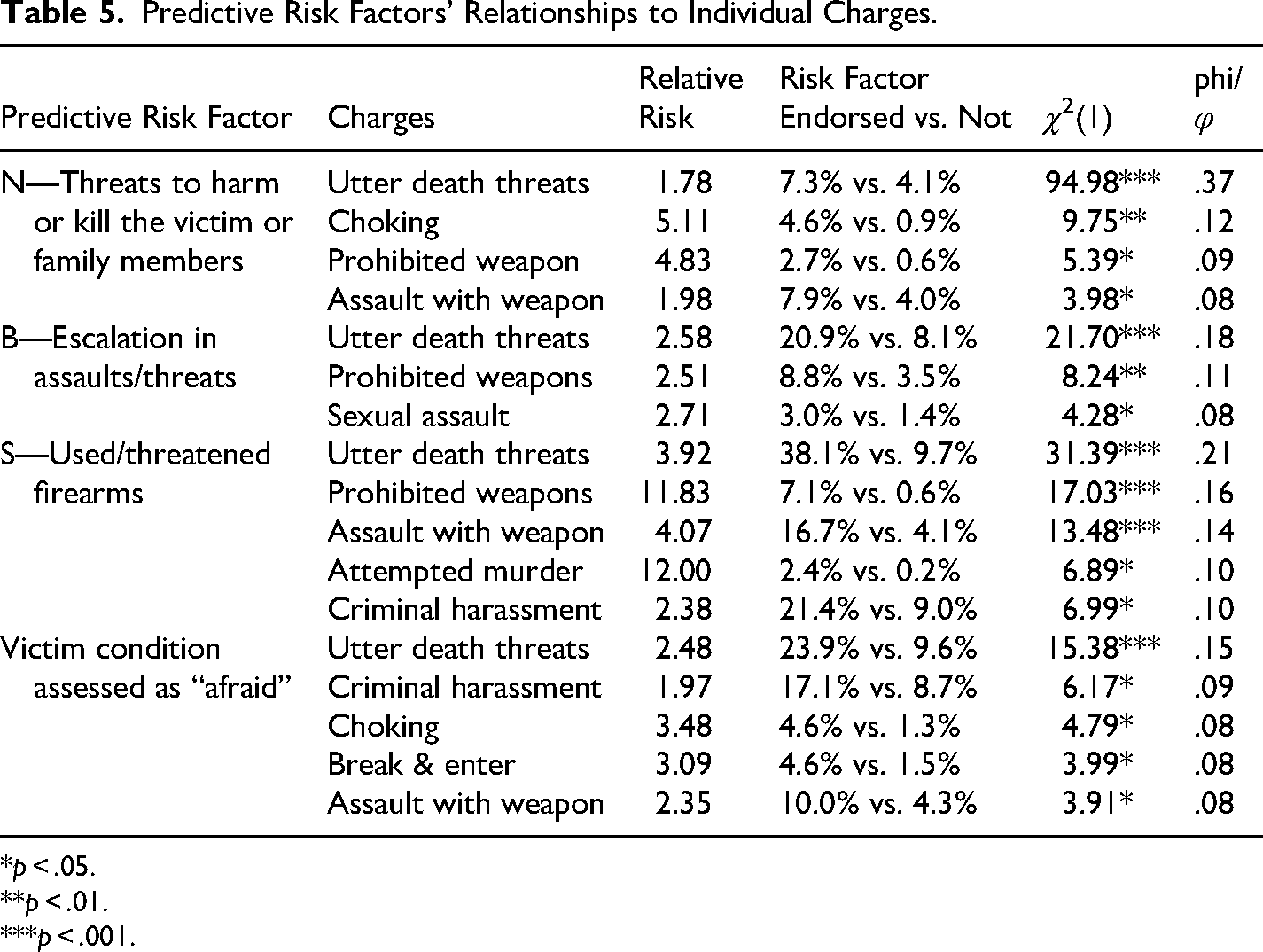
Because risk factors of threats to kill/harm the victim or family, escalation of violence/assault, and use/threat of use of firearms, along with the victim's condition assessed as afraid were significant multiple regression predictors for total coercive control charges and total lethality charges, these predictors are examined in greater detail in relation to individual charges. A total of eight different charges were more likely to be laid across these four factors. Uttering death threats was the charge predicted most strongly and by all four factors. Most of the time, these individual charge results were weaker and illustrate the importance of considering coercive control and lethality charges collectively rather than separately. See Table 5 for specific details.
Predictive Risk Factors’ Relationships to Individual Charges.
*p < .05.
**p < .01.
***p < .001.
Discussion
This study examined risk factors and police assessments of victims as afraid in relation to charges laid indicative of coercive control, as documented in DVSRs completed by police responding to IPV calls. The results are consistent with prior research showing that specific risk factors predict and likely precede coercive controlling, and in some cases, lethal IPV behavior (Aspinall et al., 2024; Dawson & Piscitelli, 2021; Hilton et al., 2023; Myhill & Hohl, 2019; Spencer & Stith, 2020). We expanded on this research by exploring victims’ emotional state of being afraid as assessed by police at the time of the call, rather than relying solely on the victims’ statement of fear of her abuser. Police risk assessments commonly include risk questions about victim fear because it is strongly associated with coercive control (Crossman & Hardesty, 2018; Dichter et al., 2018; Myhill & Hohl, 2019) and lethality (Dawson & Piscitelli, 2021). Critics argue police are hesitant to rely on victim accounts of fear (Barlow et al., 2020; Brennan & Myhill, 2022). When surveyed about IPV risk factors, Canadian police ranked victim fear as moderately important (i.e., 16th out of 36 risk factors; Aspinall et al., 2024). By examining police-assessed victim fear, we eliminate the reliance on the victim's report and use other data to capture this variable. While the police-assessed condition of the victim as afraid was not overly prevalent in this study—being noted in a little over one out of 10 calls—it was a strong indicator of coercive controlling behavior by the abuser.
Women assessed as being afraid correlated with many individual and total coercive control risk factors, as well, had significantly higher coercive control risk based on Dawson and Piscitelli's (2021) 6-risk factor index. Women's condition of being afraid also correlated—relatively strongly—with coercive control charges, including a subset of charges considered indicative of potential future lethality. This was true for both any or total coercive control/lethality charges laid. There is substantial evidence in these analyses to suggest that women who were judged by police as being afraid were more likely to be in coercive control relationships. This result corresponds with Myhill and Hohl (2019) findings that fear was one of the strongest factors associated with coercive control.
Investigating the 20 individual risk factors plus victim condition assessed as afraid as predictors of (a) total coercive control charges and (b) total lethality charges suggested that victim condition assessed as afraid, escalation of violence/threats of violence, threats to harm/kill the victim (or others), and threats or prior use of firearms or weapons were significant multiple regression predictors of these two sets of charges. The overlap between these models is unsurprising, as lethality charges constitute a subset of coercive control charges. These findings are consistent with other work identifying risk factors associated with domestic homicide (e.g., Campbell et al., 2007; Dawson & Piscitelli, 2021). In particular, threats to kill/harm, escalation of violence, and victim's fear have been identified as key indicators of risk. Although Dawson and Piscitelli's (2021) design did not isolate the strongest individual predictors, these factors were among those most prevalent in domestic homicide cases. In this study, threats to harm or kill the victim or others emerged as a particularly strong predictor of lethality charges and a more modest predictor of coercive control charges. Such threats warrant serious attention, as they reflect expressed intent, which is a well-established predictor of behavior (Kan & Fabrigar, 2020). This finding also aligns with Aspinall et al. (2024), who identified threats to kill as one of the most critical risk factors in police ratings of likelihood of future harm.
There were some differences in the prediction of the coercive control and lethality charges. Stalking, as a risk factor, was a strong predictor in the total coercive control charges but not significant in the prediction of lethality charges. This differs from other research on intimate partner homicide that found stalking to be a strong predictor (Dawson & Piscitelli, 2021; Hilton et al., 2023; Spencer & Stith, 2020). Risk factors of couple separation, sexual abuse, and more anger/violence when using substances were predictive of lethality charges, but not of coercive control charges. Unique to the current analysis was the importance of firearms-related factors. Dawson and Piscitelli (2021) did not investigate firearms factors because of low incidence in their data. Our analysis suggests that threats or use of firearms is a critical variable in predicting coercive control and/or lethality behavior. This finding must be taken in Canadian context where firearm access and use is more controlled than it is in some countries (e.g., United States).
Limitations
Conclusions or discussion of these findings need to be placed in the context of the substantial limitations to this study. The DVSR was not designed for research purposes. Completion of the form was inconsistent from officer-to-officer or call-to-call. Some police may rely on victim responses to risk questions rather than using their own discretionary assessment. All data were collected from a single, small jurisdiction, which would differ from other and larger communities and police services that may not use the exact same protocols and procedures; therefore, the practices of this force may not be representative of policing across the province (Brennan & Myhill, 2022). Minimal demographic information (e.g., age, race, cultural variables) was available about the victim, accused, or officers. The data itself was missing many details and incidents may have been excluded in the transfer to the research team. Further, the data was over a decade old by the time of publication. Based on trends identified in the intervening years, we may have seen more calls with greater severity of violence, and we may have seen a greater number of charges in relation to technological use in IPV (Statistics Canada, 2025; Thibaudeau & Jolin, 2025). Perhaps most importantly, although some individuals represented in this sample had repeat interactions with police, the data set did not allow for tracking of individuals/couples outside of three-plus years provided. We do not know, therefore, if police missed opportunities to intervene in earlier interactions with couples.
Implications
Regardless of its limitations, this study can be viewed as a strength as it offers a real-world perspective into day-to-day collection of risk assessment data that is not commonly found or examined in academic literature. This research provides a unique and critical scholarly contribution of construct validation for risk factors as predictive of coercive control and lethality behavior. The univariate and multivariate relationships between risk factors and coercive control behaviors offer evidence of the predictive value of risk factors. Researchers have investigated general increases in IPV as a function of risk factors (cf. Hilton et al., 2023); however, to our knowledge, this is the only study in which risk factors were examined as predictors of coercive control behavior. Nonetheless, the current findings must be interpreted in the context of the cross-sectional design; future research would benefit from longitudinal and data collection efforts intentionally designed for research purposes rather than secondary analysis.
These results may suggest a way for police or other service providers to identify high-risk and coercive control IPV situations using fewer risk factor questions/items than are available on risk assessment forms: stalking, death threats, escalation in violence, victim presenting as afraid at the time of the call, and, although rare, firearm threats should prompt heightened response from police. The current findings provide police with a stronger understanding of risk factors predictive of coercive control and the importance of their risk assessments at the time of their response. While there are advocates calling for the criminalization of coercive control, the criminal justice system needs a more nuanced understanding of the interactive dynamics and contexts of the victim's state of fear, accused's behaviors, and relevant charges. These results contribute to shaping the understanding of the relations between the relevant coercive control factors. Following couples who make repeated calls to police could provide further depth to this understanding, as could examining less common couple types (e.g., same sex, male victim/female accused), and the complexities of coercive control situations.
The impact of police assessing a woman's state as being afraid expands understanding of coercive control in the context of IPV. The police assessment process considers more than simply what victims are stating by attending to other cues. Developing the skills to assess more effectively for fear in IPV situations, outside of relying on the victim to self-identify fear, could strengthen preventative approaches or contribute to more substantive support by those who are intervening. An accurate assessment is key to intervening appropriately, which can mean the difference of life and death for women who are experiencing IPV and coercive control (Dawson & Piscitelli, 2021). These women can benefit from police and courts, along with support workers, recognizing their emotional state of being afraid as a strong indicator of their need for safety and support in situations of coercive control-related IPV.
Conclusion
In this analysis of 700 DVSRs completed by police in response to IPV calls where women were victims and men were accused, many risk factors were related to coercive control-type and lethality-type charges laid, which we used as a proxy for coercive controlling behavior. Over a quarter of the calls involved coercive control-type charges being laid. In contrast, women were assessed by police as afraid for only about one call in 10. However, the woman assessed as being afraid was significant in the prediction of coercive control and lethality behavior. While all risk factors investigated have theoretical, logical, or practical value in assessing IPV situations, three risk factors (i.e., threats to harm/kill the victim or other loved ones; recent escalation in frequency or severity of assaults/threats against the victim; and threat or use of firearms or weapons against the victim or other persons), along with the woman's condition of being afraid, are worthy of attention by police. In addition, prior stalking, sexual assault, and some mental health behaviors (e.g., suicide threats/attempts) could be of value in identifying coercive control situations. Domestic dispute calls where these specific factors are present could be earmarked for preventative intervention follow-up.
Footnotes

Ethics Approval
This study received ethical approval from the Lakehead University Research Ethics Board (1464736) on September 13, 2015 (renewed: April 4, 2024) and the University of Waterloo Office of Research (40082) on October 19, 2018. This is an REB-approved retrospective study based on secondary data; all data information was de-identified prior to the researchers receiving the dataset and consent was not required. This data will not be shared with third parties.
Funding
The authors disclosed receipt of the following financial support for the research, authorship, and/or publication of this article: This work was supported by the Social Sciences and Humanities Research Council of Canada [Grant #430-2016-00325].
Declaration of Conflicting Interests
The authors declared no potential conflicts of interest with respect to the research, authorship, and/or publication of this article.
Data Availability
Due to the nature of the legal research agreement involving this secondary dataset, the data is not available and nor can the source of the data be publicly disclosed.