



Abstract
Currently, a majority of actuarial risk-assessment tools for sexual recidivism contain static risk factors that measure various aspects of the offender’s prior criminal history in adulthood. The goal of the current study was to assess the utility of extending static risk factors, by using developmental and criminal career parameters of offending, in the actuarial assessment of risk of violent/sexual recidivism. The current study was based on a sample of 204 convicted sexual aggressors of women incarcerated in the province of Quebec, Canada between April 1994 and June 2000. Semistructured interviews were used to gather information on the offender’s antisocial history prior to adulthood, and police records were used to collect data on the criminal career of these offenders in adulthood. For an average follow-up period of approximately 4 years, the violent/sexual recidivism rate for the sample was 23.7%. The results provided support for the inclusion of both developmental and criminal career indicators for the prediction of violent/sexual recidivism. More specifically, recidivists were characterized by an early onset antisocial trajectory and a pattern of escalation of antisocial behavior between childhood and adolescence. The findings suggest that risk assessors should look beyond broad adult criminal history data to include aspects of antisocial development to improve predictive accuracy.
Keywords
Introduction
The fact that childhood antisocial behavior is a risk marker for serious and violent offending in adulthood carries substantial implications for the assessment, prevention, and treatment of violent/sexual offending (LeBlanc & Loeber, 1998; Loeber & LeBlanc, 1990). Developmentalists have argued that to more accurately identify individuals at risk for the most serious antisocial behavior in youth and adulthood, it is critical to examine antisocial behavior prior to the period of adolescence, a developmental time frame where manifestations of antisocial behavior (e.g., aggression) tend to be more age-normative (Moffitt, 1993). Therefore, to enhance the early and accurate identification of potentially serious and violent offenders, and, in turn, improve the efficacy of preventive efforts, Moffitt (1993) stressed the importance of early childhood antisocial behavior as a key risk factor for practitioners to consider. Several prospective longitudinal studies have demonstrated the strong association between childhood antisocial behavior and various maladaptive outcomes in adolescence and adulthood (e.g., Moffitt, Caspi, Harrington, & Milne, 2002).
These considerations, however, have not been echoed in more narrow areas of research, such as sexual violence. For example, until recently, it was hypothesized that a similar antisocial behavioral background characterized adult sexual aggressors of women with minor variations between offenders. More specifically, sexual aggressors of women have typically been considered to constitute a relatively homogeneous group of persistent and versatile offenders (e.g., Simon, 2000). Previous studies that have examined the antisocial backgrounds of sexual aggressors of women, however, have typically not elaborated beyond between-individual differences on specific criminal history variables, potentially contributing to such overly broad conclusions about them. More recent empirical studies, however, have provided evidence that (a) a diversity of antisocial behavioral trajectories in youth lead to sexual aggression in adulthood; (b) antisocial trajectories differ according to several developmental indicators (e.g., onset, persistence, escalation); and (c) antisocial trajectories are differentially associated with various criminal career parameters in adulthood (e.g., adult age of onset, versatility/specialization in offending, and frequency of offending; Cale, Lussier, & Proulx, 2009; Cale & Lussier, 2011; Lussier, Leclerc, Cale, & Proulx, 2007). Currently, however, it remains unclear whether such findings possess utility for the screening of violent/sexual recidivists.
Typically, the risk assessment of violent/sexual reoffending in adult sexual aggressors focuses predominately on risk factors in the period of adulthood (e.g., Epperson et al., 1998; Hanson, 1997; Hanson & Thornton, 2000, 2003; Quinsey, Harris, Rice, & Cormier, 1998). In addition, aspects of the adulthood criminal career of these offenders (e.g., the number of prior convictions for sexual offences, nonsexual violent offences, and any offences) constitute an essential component of the predictive accuracy in the most commonly used actuarial instruments. Few instruments, however, assess the contribution of risk factor variables pertaining to antisocial behavior prior to the adulthood period in spite of evidence of the association between early childhood antisocial behavior and adulthood serious and violent offending (e.g., Farrington, 2003; LeBlanc, 2005; Moffitt, 1993; Patterson & Yoerger, 1993; Thornberry, 2005). Therefore, in the current study, we assessed the utility of considering the antisocial developmental history of sexual aggressors of women in youth and how their antisocial development is related to the persistence of violent/sexual offending in adulthood. More specifically, we compared adulthood criminal career parameters with antisocial trajectories of adult sexual aggressors of women to determine the utility of a developmental approach to actuarial risk assessment of violent/sexual recidivism.
Risk Assessment of Sexual Recidivism
The risk assessment of violent/sexual recidivism in adult sexual aggressors of women has focused substantially on static/historical risk factors (i.e., risk factors that cannot be modified through criminal justice/therapeutic intervention) related to the criminal history of offenders in adulthood (e.g., the number of prior sexual, violent, and property offences, failure on conditional release; Hall & Proctor, 1987; Proulx et al., 1997; Quinsey, Rice, & Harris, 1995). This is exemplified considering the majority of items included in the most prominent actuarial tools, such as the Rapid Risk Assessment for Sexual Offence Recidivism (RRASOR; Hanson, 1997), the Static-99 (Hanson & Thornton, 2000), the Static-2002 (Hanson & Thornton, 2003) the Sexual Offender Risk Appraisal Guide (SORAG; Quinsey et al., 1998), and the Minnesota Sex Offender Screening Tool–Revised (MnSOST-R; Epperson et al., 1998), are static predictors of sexual recidivism. In addition, several researchers have provided evidence that these indicators are tapping an underlying stable propensity to reoffend over time (Barbaree, Langton, & Peacock, 2006; Doren, 2004; Seto, 2005).
These tools have been critical in guiding risk assessors’ determination of the risk of reoffending and include predictors related to offenders’ criminal history such as the number of prior convictions for any crime (Hanson & Thornton, 2000, 2003), the presence of property crimes (Hanson & Thornton, 2000, 2003; Quinsey et al., 1998), the presence and/or the number of prior convictions for violent crime (Hanson & Thornton, 2000, 2003; Quinsey et al., 1998), the presence and/or the number of prior convictions for sexual crimes (Epperson et al., 1998; Hanson, 1997; Hanson & Thornton, 2000, 2003; Quinsey et al., 1998) as well as the failure of conditional release (Epperson et al., 1998; Hanson & Thornton, 2003; Quinsey et al., 1998). These indicators comprise a critical component of risk-assessment tools because they have demonstrated empirical relationships to sexual recidivism in adult sexual aggressors of women. In effect, as the presence and magnitude of these risk factors increases, so does the risk of sexual reoffending. The criminal career approach can be used to understand the link between these static risk factors and the risk of reoffending in adult sexual aggressors of women.
Risk Prediction and the Criminal Career Perspective
The criminal career approach is concerned with the longitudinal sequence of crimes committed by an offender (Blumstein, Farrington, & Moitra, 1985). In addition, a majority of actuarial tools designed to predict the risk of sexual recidivism in sexual aggressors incorporate static risk factor variables pertaining to aspects of an offender’s criminal career (e.g., frequency of previous convictions, length of the criminal history in adulthood). Furthermore, when considering the static risk factors pertaining to offenders’ prior criminal history in the most commonly used actuarial risk-assessment tools, three key themes are evident.
The first is that the extent of involvement in prior general offending is predictive of sexual reoffending. In fact, the majority of static predictors included in actuarial risk-assessment instruments do not specifically pertain to aspects of their sexual offending. Furthermore, this is consistent with observations that most sexual aggressors of women are not characterized by specialization in sexual crimes, but rather their sexual offending represents a proclivity to act in an antisocial manner more generally (Lussier, Proulx, & LeBlanc, 2005). Second, the inclusion, in actuarial instruments, of items specific to various other types of crime, such as prior property, violent, or sexual offences, increases the predictive accuracy of these instruments. In effect, this suggests that the risk of sexual reoffending is higher among those sexual aggressors of women characterized by a more diversified criminal history. Several criminologists have argued that a more diversified criminal history is indicative of a higher propensity to reoffend (e.g., Hirschi & Gottfredson, 1995). More specifically, this may be especially pertinent with reference to sexual aggressors of women who have been shown to have a more diversified criminal background compared with other sexual offender types (Harris, Mazerolle, & Knight, 2009). Third, the repetition (i.e., increased frequency) of prior offending is a significant risk predictor of sexual reoffending. This is consistent with previous observations that the frequency of crimes committed by sexual offenders, and, especially by sexual aggressors of women, is substantial and similar to other groups that constitute “extreme career criminals” (e.g., DeLisi, 2001; Piper, 1985; Tracy, Wolfgang, & Figlio, 1990). In addition to these aspects of the criminal careers of sexual aggressors of women, more recently, other researchers have provided evidence that the age of onset of offending in adulthood should be considered by risk assessors to improve the overall predictive accuracy of sexual recidivism in adult sexual aggressors (Harris & Rice, 2007; Lussier & Healey, 2009). Taken together, these observations suggest that sexual aggressors of women most at risk of sexual reoffending are early onset, chronic offenders, who are characterized by a more extensive and diversified criminal history.
Should We Look Earlier in Offenders’ Histories?
Risk assessors typically focus on static risk factors that characterize the prior criminal activity of sexual aggressors in adulthood. Indeed, few empirical risk-assessment tools take into consideration risk factors that are present in youth and focus instead on the period of adulthood. There are, however, some exceptions to this. For example, the SORAG contains one item pertaining to antisocial behavior in youth (i.e., behavioral problems at school). Similarly, the MnSOST-R also contains one item pertaining to antisocial behavior in youth (i.e., adolescent antisocial behavior). Therefore, a key question that has yet to be addressed in the empirical literature pertains to the measurement of the propensity to reoffend. More specifically, it is unclear whether risk-assessment tools designed to capture this propensity would be enhanced by the consideration of offender’s antisocial behavior across multiple life stages (i.e., prior to the period of adulthood).
Moffitt (1993) made this claim by arguing that to identify juvenile offenders who are the most likely to persist into adulthood, assessors and clinicians should consider risk factors that are present in the childhood period. This claim led to the key distinction between early onset (i.e., childhood onset) and late onset (i.e., adolescent onset) offenders, the former group at the greatest risk of maladaptive outcomes in adulthood compared with the latter. In addition, empirical research that has emerged from the developmental perspective suggests that considering looking earlier in offenders’ histories may be useful for the prediction of reoffending (Farrington, 1989; Lipsey & Derzon, 1998). However, although there has been a commonly held perception that adult sexual aggressors of women are characterized by an early onset of, and extensive, criminal involvement over the life course, recent retrospective studies have produced conflicting evidence to this claim (Cale et al., 2009; Cale & Lussier, 2011). In effect, using a developmental perspective may be fruitful to identify those sexual aggressors of women that are most likely to persist in adulthood. More specifically, looking earlier in the offender’s personal history might unravel further information about the higher risk group.
The Developmental Perspective and Sexual Aggressors of Women
If there is utility for risk assessors in looking earlier into the developmental history of sexual aggressors of women, then an obvious and critical question concerns what they should be looking for. Developmental studies of the behavioral manifestations of deviance during childhood and adolescence have shown that antisocial manifestations are associated with a more extensive general and sexual criminal history (Lussier, LeBlanc, & Proulx, 2005; Lussier, Proulx, et al., 2005). However, recent studies have provided evidence that the antisocial background of adult sexual aggressors of women is characterized by a great deal of heterogeneity. Cale et al. (2009) found two metatrajectories of adult sexual aggressors of women, distinguishing early onset (55% of the sample) and late onset (45% of the sample) offender groups. In addition, they also observed that the early onset group, compared with the late onset group, exhibited an earlier onset and a more extensive and diversified criminal history in adulthood. Similar trends were observed for sexual offending more specifically. In other words, the early onset group was characterized by not only a more extensive general offending history but also a more extensive sexual offending history.
Cale et al. (2009) further distinguished three subgroups of early onset offenders by differentiating qualitative aspects of their antisocial behavior in youth. One subgroup of early onset offenders (15% of the sample) was characterized by a pattern of low-level (i.e., nonserious), chronic antisocial behavior that persisted into adolescence. A second group was characterized by a pattern of serious antisocial behavior beginning in childhood that escalated to serious and violent antisocial behavior in adolescence (28% of the sample). A high level of serious and violent antisocial behavior characterized the third group over the periods of childhood and adolescence (10% of the sample). Importantly, early onset offenders whose antisocial behavior was characterized by a pattern of escalation were the most criminally active group in adulthood in their sample; they exhibited the earliest age of onset and highest frequency of general offending, and they were the most criminally versatile group.
Aims
The aim of the current study was to determine the relative utility of developmental and criminal career parameters for the prediction of violent/sexual recidivism in a sample of incarcerated adult sexual aggressors of women. Therefore, first, we measured trajectories of antisocial behavior in youth and whether these trajectories were associated with violent/sexual recidivism in adulthood. Next, antisocial trajectories in youth were compared with general criminal career parameters in adulthood (i.e., age at first charges, frequency of general offending, criminal diversity) to assess the relative contributions of criminal career and developmental variables in the prediction of violent/sexual recidivism. Currently, actuarial risk assessment of sexual recidivism relies on static criminal history variables in adulthood to determine the likelihood of reoffending. Therefore, it is currently unclear whether considering the antisocial background of offenders prior to the period of adulthood can add to the prediction of the likelihood of sexual reoffending. Given these aims, three key research questions characterize the current study:
Research Question 1: Are developmental variables related to the likelihood of violent/sexual recidivism in adult sexual aggressors of women?
Research Question 2: Do developmental onset variables (i.e., early versus late onset of antisocial behavior in youth) prior to the period of adulthood contribute to the prediction of violent/sexual recidivism in adulthood?
Research Question 3: Do dynamic developmental variables (i.e., different qualitative patterns of antisocial behavior in youth) contribute to the prediction of violent/sexual recidivism in adulthood?
Method
Sample
For the current study, all adult men who were convicted of a sexual offence against an adult female (i.e., 16 years of age or older) and received a federal sentence (i.e., at least 2 years) between April 1994 and June 2000 in the province of Quebec, Canada, were included for analyses (n = 209). These offenders were all subject to consecutive admissions in this time period at the Regional Reception Centre of Ste-Annes-des-Plaines, which assesses risk and treatment needs of all individuals in the province who receive a federal sentence. The offences for which the sample were incarcerated for at the time were sexual assault (66%), armed sexual assault (28%), sexual assault causing injuries (9%), and aggravated sexual assault (4%). 1 The majority of the sample were general recidivists (80% had received a prior sentence), and for approximately 12% of the sample 50% of their previous charges were for a sexual crime.
Procedures
The research protocols for the current study were conducted according to the ethical guidelines stipulated by the Research Ethics Board of the University of Montreal during the time period in which data collection took place. The data used to identify scales measuring behavioral antecedents were collected during a single computerized semistructured interview with each participant, in which they were unaware of the research questions and hypotheses. Each participant signed a consent form after they were made aware that the information gathered was to be used for research purposes only. Interviewers were all graduate students in criminology and psychology and were trained by a licensed forensic psychologist to administer the interview. Official sources of information (i.e., police reports, victim statements, psychological assessments, etc.) were also used to corroborate information collected during the interviews. When disagreements were discovered between information garnered during interviews and official sources, official data were used.
Measures
Antisocial trajectories
A dynamic model of antisocial development to measure both between- and within-individual changes over time in antisociality was constructed. One method of accomplishing this is through cross-sectional pattern analysis and linking of patterns over time. This approach involves linking the results of cluster analyses in different time periods by cross-tabulating adjoining classifications and testing for significant types of cluster membership combinations (Bergman, 2000). Therefore, self-reported retrospective data of behavioral indicators of deviance in two time periods: (a) childhood (i.e., 0-12 years of age), and (b) adolescence (i.e., 13-17 years of age) were analyzed. Three forms of self-reported antisocial behaviors were examined in both time periods: (a) behavioral problems, (b) nonviolent delinquency, and (c) violent delinquency. Behavioral problems referred to frequent lying, being rebellious, temper tantrums, running away or being truant, and risky behaviors that endanger others or oneself (e.g., walking on the edge of a bridge). Nonviolent delinquency included minor and major theft, robbery without a weapon, breaking and entering, drug trafficking, fire setting, and property destruction. Finally, violent delinquency included serious and violent behaviors such as homicide, threats and intimidation, armed robbery, use of a weapon, nonsexual assault, and sexual assault. Each indicator was coded as either present (1) or absent (0) for the time period. The choice of these indicators over a measure of frequency was made to minimize potential biases associated with poor memory recall. Retrospective self-reported measures of delinquent behavior have demonstrated reliability, in longitudinal studies, when broad measures of participation are used (Farrington & Loeber, 2000). In addition, the concurrent and predictive validity of these indicators have been presented elsewhere (Lussier et al., 2007; Lussier, LeBlanc, et al., 2005; Lussier, Proulx, et al., 2005).
Next, two hierarchical cluster analysis procedures were performed (i.e., childhood and adolescence) using Ward’s method and squared Euclidean distance to identify nested groups of individuals in each time frame. Cases were joined based on their proximity to one another over successive iterations forming progressively larger groups until one single superordinate group was created. Scree plots and Mojena’s (1977) stopping rule were analyzed to determine when an inconsistent increase in the dissimilarity measure was observed. The internal validity of the cluster solutions was examined first by repeating the cluster analysis procedure using a different measure of proximity specifically designed to examine dichotomous data (i.e., Russell-Rao) and then cross-tabulating the results with those obtained using Ward’s method. Kappa measures of agreement showed high stability of the cluster solutions (κ = .90-.93). Next, a split-sample validation technique was performed by randomly dividing the sample into two equal subsets and rerunning the cluster analyses on both samples. The cluster solutions were then cross-tabulated with the original solutions and again showed high stability (κ = .91-1.00). These results have been presented in more detail elsewhere (Cale et al., 2009), and their construct validity have been demonstrated in another study (Cale & Lussier, 2011).
For the purposes of the present study, the antisocial trajectories were operationalized in two ways. First, antisocial trajectories were recoded to distinguish childhood onset (i.e., early onset) offenders from the rest of the sample on the grounds that this subgroup of individuals has been shown to exhibit the most extensive criminal career profile in adulthood (Cale et al., 2009). Therefore, nondelinquents and initiators were recoded to formulate a reference group for comparison purposes based on the absence of antisocial behavior in childhood, and the stable-low, escalator, and stable-moderate/high groups were recoded into the early onset group. Next, the three early onset antisocial trajectories were examined independently to assess qualitative differences in antisociality over childhood and adolescence. These trajectories differed according to criminal activity in adulthood in a previous study (Cale et al., 2009). The stable-low antisocial trajectory was examined to assess “persistence” (i.e., behavior problems only in childhood and adolescence), the escalator antisocial trajectory was examined to assess “escalation” (i.e., behavioral problems and nonviolent delinquency in childhood and nonviolent delinquency and violent delinquency in adolescence), and, finally, the stable-moderate/high antisocial trajectory was examined to assess the process of “aggravation” (i.e., violent delinquency in childhood and violent delinquency in adolescence). Cale et al. (2009) found that the trajectory characterized by escalation was related to an earlier onset, and higher frequency, of general and violent crimes, higher criminal versatility, and lack of specialization in sexual crimes in adulthood.
Control variables
In the current study, four demographic control variables were included as covariates in the prediction models. They were (a) level of education (0 = less than high school and 1 = greater than high school); (b) ethnicity (0 = non-White and 1 = White); (c) employment status (1 = employed, 2 = on social assistance, 3 = unemployed); and, (d) the age of the offender at the time of release. The overwhelming majority of the sample was White (83%) and had achieved less than a high school education (92%). In addition, nearly two thirds of the sample was on social assistance (65%), while just above one fifth (7%) were unemployed. Age at release refers to the age of the offender at the time they were released from custody for their index offence and marks the beginning of the follow-up period for each individual. The average age at release for the sample was 35.9 years old (s = 9.0, range = 20-66). In addition, offenders in the sample spent, on average, 4.1 years incarcerated (s = 2.1, range = 2-12) for their index offence.
Parameters of general offending
Three static criminal career parameters pertaining to general offending in adulthood were assessed in the current study. The first was the age at first charge for any offence in adulthood. 2 On average, individuals in the sample were 24.1 years old (s = 8.23, range = 16.06-65.10) at the time of their first charges. Next, the frequency of general offending (i.e., number of charges) was examined. The mean number of charges for the sample was 19.5 (s = 22.1, range = 1-102). Finally, we considered the degree of versatility in offending in adulthood (i.e., the average number of different crime types in the offense history). The versatility scale included the following 17 items: mischief, theft, car theft, breaking and entering, fire setting, homicide, assault, kidnapping, robbery, sexual assault, aggravated sexual assault, exhibitionism, fraud, crime related to driving a vehicle, drug-related offenses, crimes related to the administration of justice, and other. Therefore, the criminal versatility score can vary between 1 and 17: The higher the score, the higher the criminal versatility. The mean level of criminal versatility for the sample was 5.8 (s = 3.0, range = 1-13).
Follow-up period and recidivism
The follow-up period was computed by determining the time between the date of discharge for each of the offenders in the study and the period at which data collection on recidivism ended. Therefore, this measure was primarily influenced by (a) the date of admission to custody, (b) length of prison sentence, (c) length of stay in custody, and (d) whether the offender reoffended prior to the end of the follow-up period. In June 2004, recidivism data were collected for each offender marking the end of the follow-up period. Of the 204 individuals remaining in the sample, 27 had not been released by this date leaving a final sample of 177 offenders. The mean follow-up period for these individuals was 51.4 months (s = 23.0, range = 0-80), just below 4.5 years. Following the recommendations of Quinsey et al. (1998) among others, we combined violent/sexual recidivism to include all convictions for any violent or sexual crime during the follow-up period. This was done for two primary reasons. First, the exclusive rate of sexual recidivism for the current sample was low (6.2%), and, second, some charges for sexual crimes may have resulted in convictions for violent crimes due to plea-bargaining. In total, 20.3% of the sample received a conviction for a violent/sexual crime during the follow-up period.
Table 1 displays the correlation matrix of the covariates for the present analysis. An early onset antisocial trajectory was significantly related to the three criminal career parameters suggesting this group had an earlier age of onset of their adult criminal career, higher number of criminal charges, and a more diverse criminal repertoire in adulthood. However, these relationships appeared to be driven by a pattern of escalation and, to a lesser extent, a pattern of aggravation. Indeed, when looking at qualitative aspects of the antisocial trajectories in the early onset group, escalation and aggravation were both related to the three criminal career parameters; however, persistence was not. Furthermore, two general criminal career parameters were associated with violent/sexual recidivism (i.e., early onset of general offending in adulthood and high frequency of offending), in addition to an early onset antisocial trajectory and a pattern of escalation. Finally, a younger age at release was the only demographic covariate significantly correlated with violent/sexual recidivism.
Correlation Matrix of Covariates
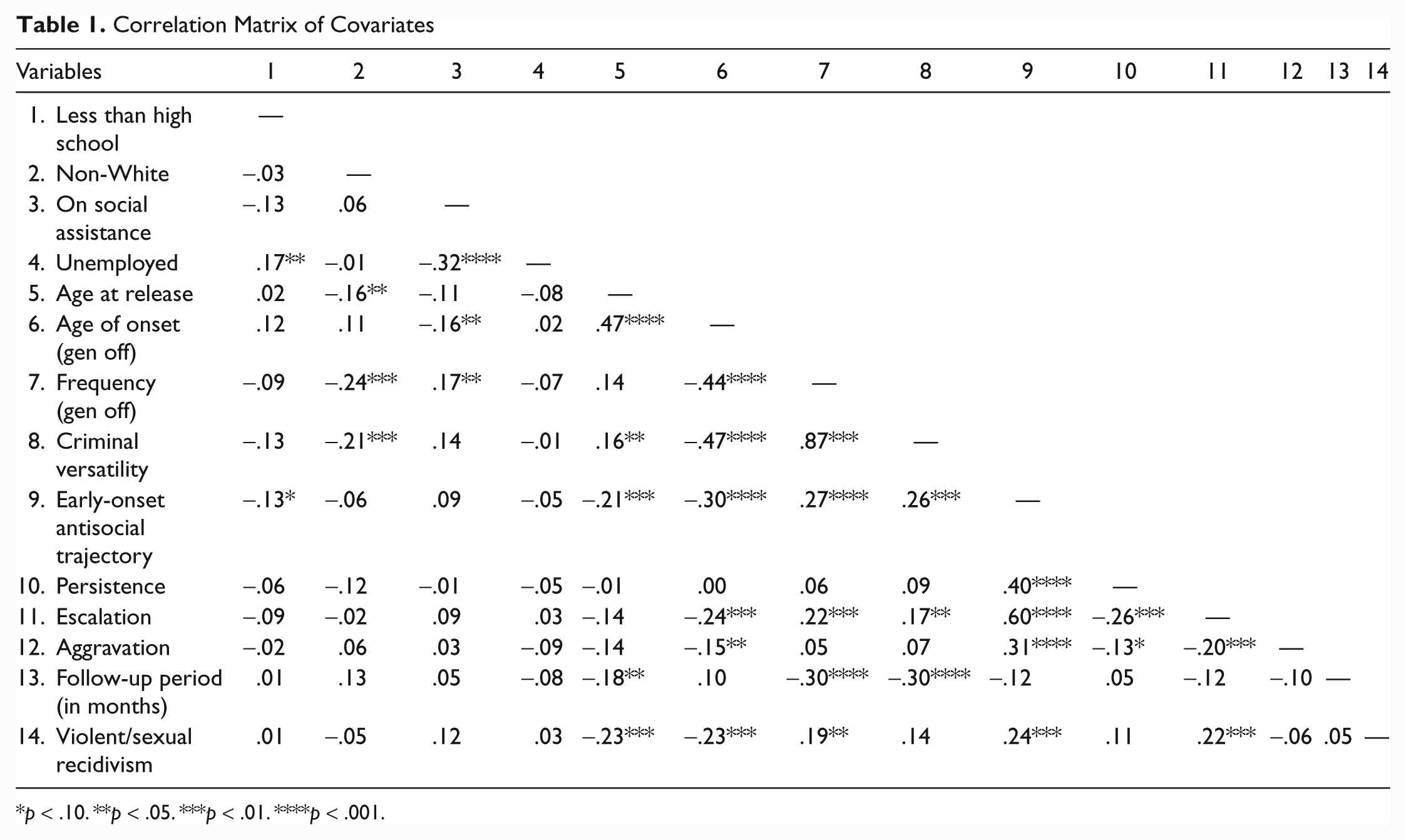
p < .10. **p < .05. ***p < .01. ****p < .001.
Analytic Strategy
Cox Regression
Cox regression (or Cox proportional hazards) was employed to determine whether survival time (i.e., not reoffending) was related to antisocial trajectories while controlling for demographic covariates. Cox regression was preferred over other methods (i.e., logistic regression) because of the ability of this technique to control for censored data (i.e., nonrecidivist cases who may reoffend past the end of the follow-up period; Fox, 2002; Hanson, 2005). Furthermore, several recidivism studies (e.g., Barbaree, Blanchard, & Langton, 2003; Hanson, 1997; Lussier & Healey, 2009; Prentky & Lee, 2007) have employed this technique to control for the length of the follow-up period because failing to do so can create biases when interpreting parameter estimates. To assess the proportionality of hazards assumption to ensure that the effect of the covariates remained constant over time, for each of the covariates, Schoenfield residuals (partial residuals) were plotted (y-axis) against the time of the survival period (Grambsch & Therneau, 1994). A Loess smoothing curve was then analyzed to determine whether the residuals were randomly distributed over the length of the follow-up period. These analyses revealed that the residuals were randomly distributed over the length of the follow-up period (i.e., close to the reference line or zero on the y-axis) suggesting proportionality of the covariates. Finally, squared multiple correlations (SMCs) were computed to ensure that the covariates were not too highly correlated, and the results revealed that none of the covariates were redundant (Initial Communalities < .90) ensuring there was no statistical multicollinearity among the variables for the prediction models.
Predictive Accuracy of Models
Two methods were employed to estimate the explained variance of the final Cox regression models. Given that the models are nonlinear, the predictive power of the model was determined first by using Receiver Operating Characteristic (ROC) analysis to calculate the area under the curve (AUC). The AUC coefficient varies from 0.5 (chance discrimination accuracy) to 1.0 (perfect discrimination accuracy). Next, Allison’s (1995) R2 formula also allowed for the examination of how well covariates in the Cox regression models predicted violent/sexual recidivism. Allison (1995) points out that this method should be interpreted as how strongly the covariates are related to the outcome variable as opposed to the overall explained variance. The formula is computed as
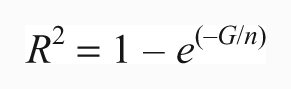
where e is a constant (the base of the natural log), –G is the difference between the log likelihood chi-square statistic for the smaller model (e.g., without the covariates) and the log likelihood chi-square statistic for the larger model (e.g., including the covariates), and n is the sample size for the analysis.
Prediction Models
A series of Cox regression models were run to examine and compare the impact of static (i.e., criminal career parameters in adulthood) and dynamic (i.e., antisocial trajectories in youth) antisocial propensity variables on reoffending. These models were analyzed for violent/sexual recidivism while controlling for the impact of covariates (i.e., low education, ethnicity, social assistance and unemployment, and age at the time of release). For violent/sexual reoffending, three sets of models were assessed: (a) a baseline model consisting of control variables; (b) seven independent models to assess the individual impact of the developmental variables (i.e., an early onset antisocial trajectory, persistence, escalation, and aggravation) and criminal career parameters (i.e., age of onset of general offending in adulthood, the frequency of general offending in adulthood, and criminal versatility in adulthood); and (c) a series of six models, the first three comparing the relative contribution of static developmental indicators of onset (i.e., early versus late onset) with that of the three criminal career parameters in adulthood: onset (i.e., activation), frequency (i.e., repetition), and versatility (i.e., diversification) and the second three comparing the relative contribution of dynamic developmental indicators in youth (i.e., persistence, escalation, and aggravation) to the same three criminal career parameters, in predicting violent/sexual recidivism. In effect, the adulthood criminal career parameters represent processes by which criminal activity in adulthood starts, becomes chronic, and, generalized. Therefore, the current analytic strategy allowed for the identification of the best combination of developmental and criminal career indicators for the prediction of the likelihood of violent/sexual reoffending.
Results
Chi-square analyses with odds ratios were computed to determine a baseline rate (not controlling for length of the follow-up period) for violent/sexual recidivism according to the different antisocial trajectories to initially explore whether early- versus late-starters differed in their likelihood to commit a subsequent offence. The overall base-rate of violent/sexual recidivism for the early onset group was 29.7%, and they were more than 3.5 times more likely (OR = 3.61, 95% CI = [1.60, 8.23]) than the late onset group to have recidivated with a violent/sexual offence, χ2(1) = 10.07, φ = .24, p < .001 (Table 2). In addition, the Mantel-Cox log rank test indicated that, on average, offenders characterized by an early onset antisocial trajectory recidivated approximately 8 months faster than those in the late onset antisocial trajectory (68.3 months compared with 75.91 months), χ2(1) = 10.06, p < .01.
Violent/Sexual Recidivism Rates According to Developmental Indicators
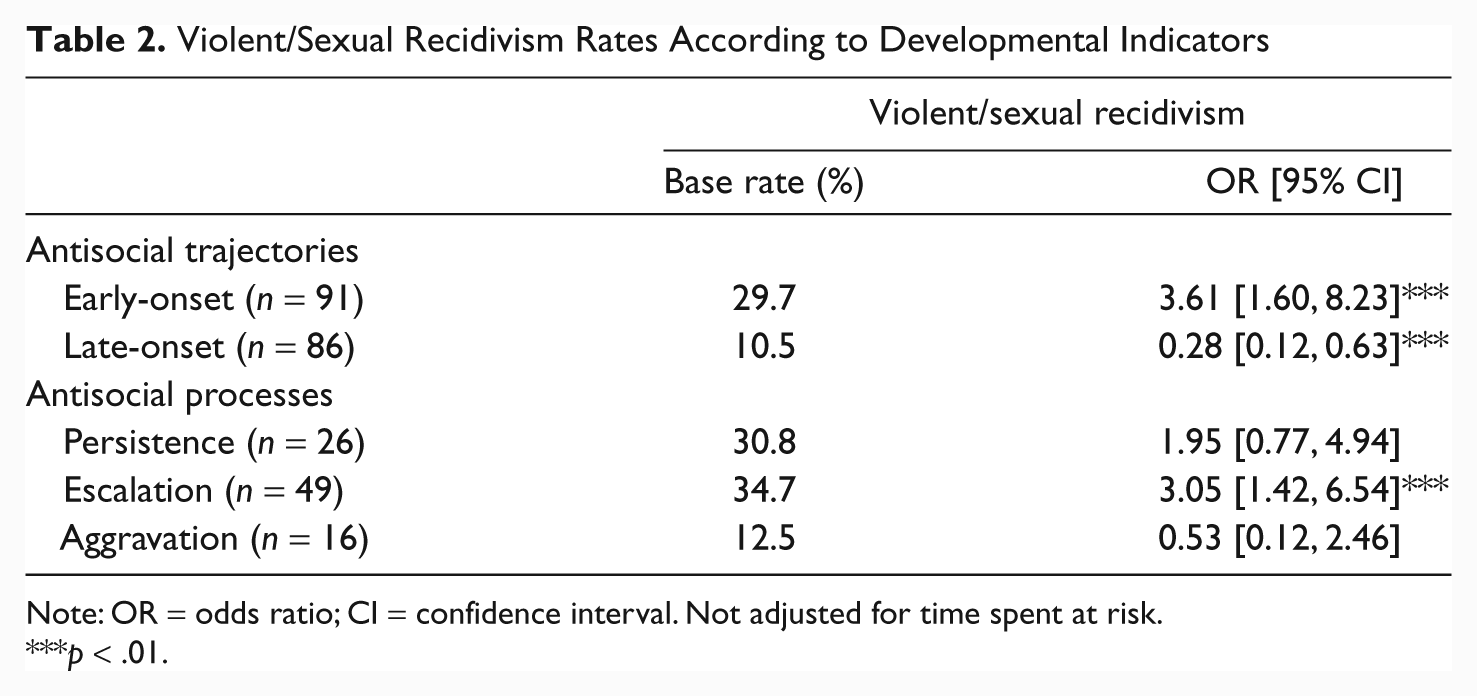
Note: OR = odds ratio; CI = confidence interval. Not adjusted for time spent at risk.
p <.01.
Cox Regression of Individual Criminal Career and Developmental Variables
Cox regression analysis was used to first examine an initial baseline model predicting violent/sexual recidivism that consisted of only demographic control variables taking into consideration the length of the follow-up period (Table 3). The baseline model consisting of demographic control variables was not significant. Next, seven separate models, controlling for demographic covariates, were examined, one for each independent variable in the study including (a) an early onset antisocial trajectory, (b) persistence, (c) escalation, (d) aggravation, (e) age of onset of general offending, (f) frequency of general offending, and (g) criminal diversity (Table 4). The first model examining an early onset antisocial trajectory showed a pseudo-R2 of 9.0% with an AUC of .65 (95% CI = [0.57, 0.74]). The likelihood of reoffending for those individuals in the early onset antisocial trajectory was more than three times that of those in the late onset antisocial trajectory (OR = 3.38; 95% CI = [1.5, 7.6], p < .05).
Baseline Cox Regression Model for Violent/Sexual Reoffending
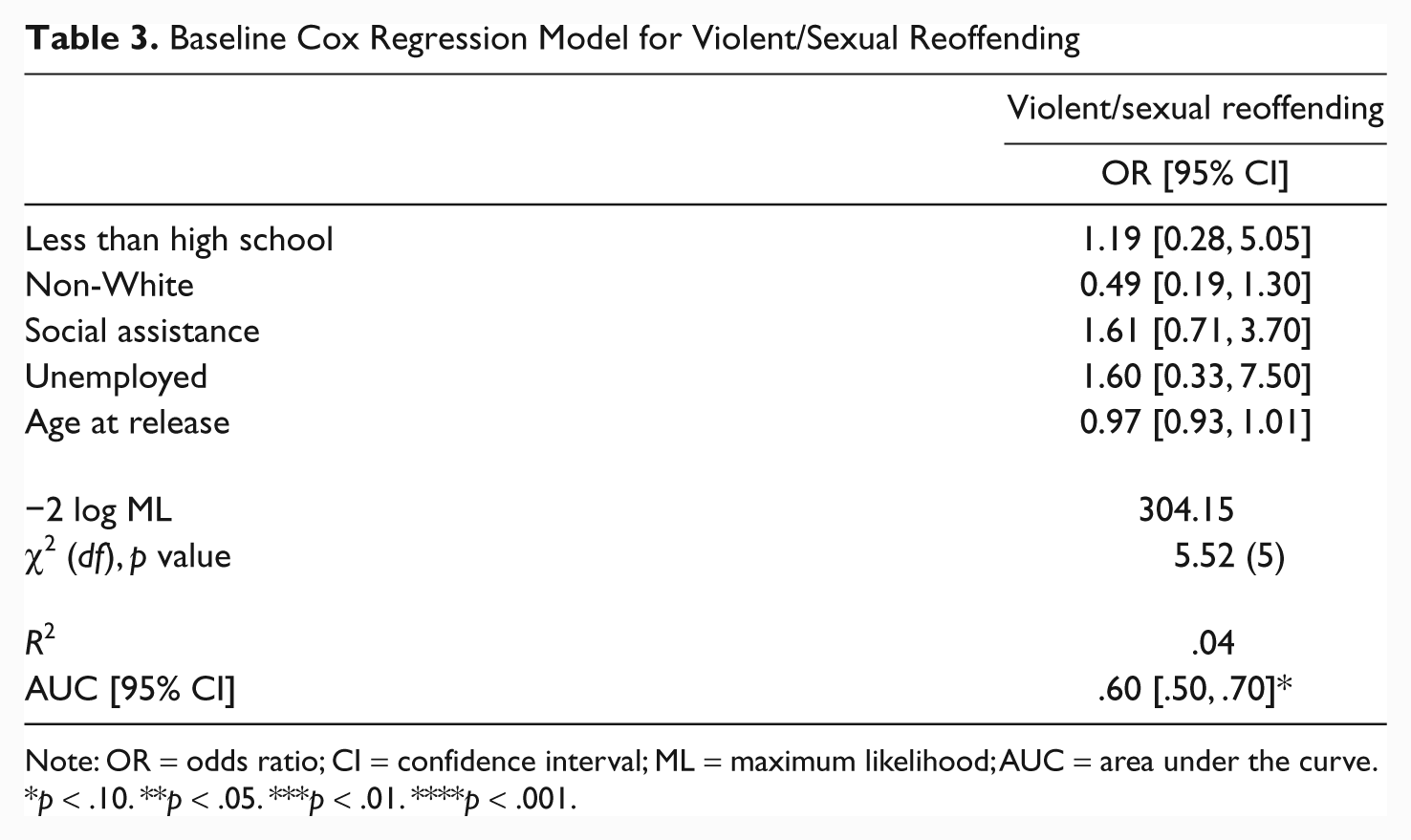
Note: OR = odds ratio; CI = confidence interval; ML = maximum likelihood; AUC = area under the curve.
p < .10. **p < .05. ***p < .01. ****p < .001.
Cox Regression Models of Individual Developmental and Criminal Career Indicators Predicting Violent/Sexual Reoffending

Note: OR = odds ratio; CI = confidence interval; ML = maximum likelihood; AUC = area under the curve. Analyses were conducted while controlling for level of education, ethnicity, employment, and age at release.
A log transformation was performed.
p < .10. **p < .05. ***p < .01. ****p < .001.
When examining different early onset antisocial processes, however, escalation was the only antisocial process significantly related to violent/sexual reoffending, showing a pseudo-R2 of 8.1% with an AUC of .63 (95% CI = [0.52, 0.73]). More specifically, those exhibiting a pattern of escalation were nearly three times more likely (OR = 2.87; 95% CI = [1.42, 5.79], p < .01) than those without to commit a violent/sexual offence in the follow-up period. However, all three general criminal career parameters predicted violent/sexual recidivism. First, the model assessing age of onset of general offending showed a pseudo R2 of 7.6% and an AUC of .64 (95% CI = [0.55, 0.74]). For every 1-year decrease in the age of onset of general offending in adulthood, the risk of violent/sexual reoffending increased by approximately 94% (OR = 0.06; 95% CI = [0.01, 0.60]). Conversely, for every unit increase in the frequency of general offending, offenders were approximately twice as likely to commit a subsequent violent/sexual offence (OR = 2.01, 95% CI = [1.38, 2.94], p < .01). In addition, the frequency of general offending showed the highest pseudo-R2 of 10.8% and an AUC of .67 (95% CI = [0.57, 0.77]). Similarly, the more diversified offenders were in their criminal repertoire, the more likely they were to reoffend with a sexual/violent offence. More specifically, the model assessing the impact of criminal diversity on violent/sexual reoffending showed a pseudo-R2 of 8.0% and an AUC of .64 (95% CI = [0.54, 0.75]). For every one-unit increase in criminal diversity, offenders were 20% more likely to commit a subsequent violent/sexual offence (OR = 1.20, 95% CI = [1.06, 1.36], p < .01). Next, it was necessary to evaluate the relative contributions of antisocial trajectories and criminal career parameters to rule out the possibility that both sets of variables were contributing to the same overall explained variance in violent/sexual recidivism.
Developmental Onset Variables Versus Static Criminal Career Indicators
The first model compared the relative contributions of an early onset antisocial trajectory and age of onset of general offending in adulthood to violent/sexual reoffending (Table 5). Importantly, both variables were independently related to violent sexual recidivism in the model (R2 = .11, AUC = .67, 95% CI = [0.58, 0.77]). Those individuals in an early onset antisocial trajectory, however, were more than 2.5 times more likely to recidivate than those who were not (OR = 2.69, 95% CI = [1.18, 6.12], p < .05). This is compared with those with an earlier age of onset of general offending in adulthood who for every 1-year unit increase in age were 87% less likely to commit a subsequent violent/sexual offence (OR = 0.13, 95% CI = [0.01, 1.31], p < .10). In other words, an early onset of antisociality in childhood was a stronger predictor of violent/sexual recidivism than the age of onset of general offending in adulthood, although, both appear important to this relationship.
Cox Regression Models Comparing Developmental and Criminal Career Indicators Predicting Violent/Sexual Reoffending

Note: OR = odds ratio; CI = confidence interval; ML = maximum likelihood; AUC = area under the curve. Analyses were conducted while controlling for level of education, ethnicity, employment, and age at release.
A log transformation was performed.
p < .10. **p < .05. ***p < .01. ****p < .001.
In the next model, an early onset antisocial trajectory was compared with the frequency of general offending in adulthood. Again, both variables were related to violent/sexual recidivism in the model (R2 = .14, AUC = .69, 95% CI = [0.59, 0.79]). Those individuals in the early onset antisocial trajectory were, again, nearly 2.5 times more likely (OR = 2.48, 95% CI = [1.11, 2.70], p < .05) to commit a subsequent violent/sexual offence. Similarly, a higher frequency of general offending was also predictive of violent/sexual recidivism; for every unit increase in offending frequency (i.e., for every subsequent offence) offenders were nearly twice as likely (OR = 1.82, 95% CI = [1.22, 2.70], p < .01) to commit a subsequent violent/sexual offence.
Finally, in the third model, an early onset antisocial trajectory was compared with the degree of criminal versatility in adulthood. Both variables again were related to violent/sexual recidivism in the model (R2 = .11, AUC = .67, 95% CI = [0.57, 0.77]). Individuals in the early onset antisocial trajectory were more than 2.5 times more likely (OR = 2.74, 95% CI = [1.21, 6.17], p < .05) to commit a subsequent violent/sexual offence. However, while criminal versatility in adulthood also predicted a subsequent violent/sexual offence, for each unit increase in the criminal versatility scale, offenders were approximately 15% more likely to commit a subsequent violent/sexual offence (OR = 1.15, 95% CI = [1.02, 1.31], p < .05). Based on these findings, it is apparent that antisocial development, marked by an early onset of antisocial behavior in childhood, exhibits significant predictive validity in terms of violent/sexual reoffending in adulthood, in addition to static general criminal career markers in adulthood. Next, we examined whether the qualitative differences in antisociality over childhood and adolescence assisted in the prediction of violent/sexual reoffending.
Developmental Dynamic Variables Versus Static Criminal Career Indicators
In the final three models, we compared the three dynamic antisocial processes of persistence, escalation, and aggravation with static general criminal career predictors to assess their utility in the prediction of violent/sexual reoffending (Table 5). In the first model predicting violent/sexual recidivism, the three antisocial processes were compared with the age of onset of general offending. In this model, the process of escalation and, to a lesser extent, aggravation and an early age of onset of general offending all significantly predicted violent/sexual recidivism (R2 = .12, AUC = .69, 95% CI = [0.61, 0.77]). More specifically, those individuals who exhibited a pattern of escalation in their antisocial behavior from childhood through adolescence were nearly 3.5 times more likely (OR = 3.44, 95% CI = [1.41, 8.39], p < .01) than late starters to commit a subsequent violent/sexual offence. The process of aggravation was also marginally related to the risk of reoffending (OR = 1.68, 95% CI = [0.33, 8.46], p < .10), as was an early age of onset of general offending in adulthood (OR = 0.13, 95% CI = [0.01, 1.33], p < .10).
Next, we compared the three early onset antisocial trajectories with the frequency of general offending in adulthood. In this model (R2 = .14, AUC = .72, 95% CI = [0.64, 0.80]), escalation was the only antisocial trajectory that significantly predicted violent/sexual reoffending (OR = 3.02, 95% CI = [1.25, 7.29], p < .05), in addition to the frequency of general offending in adulthood (OR = 1.76, 95% CI = [1.19, 2.62], p < .01). A similar pattern emerged in the final model where the process of escalation and degree of criminal versatility were both significantly related to violent/sexual recidivism (R2 = .12, AUC = .68, 95% CI = [0.60, 0.77]). More specifically, a pattern of escalation significantly predicted a subsequent violent/sexual offence (OR = 3.48, 95% CI = [1.44, 8.41], p < .01). At the same time, for every one-unit increase in the criminal versatility scale, offenders were approximately 15% more likely (OR = 1.15, 95% CI = [1.01, 1.30], p < .05) to commit a subsequent violent/sexual offence. Taken together, these findings suggest that an early onset of antisocial behavior in childhood, characterized by pattern of escalation to serious and violent behavior into youth, and chronic offending in adulthood, together, best predicted the likelihood of violent/sexual reoffending in adulthood.
Finally, the survival functions of the models containing developmental onset variables (i.e., early vs. late onset) and the developmental dynamic variables (i.e., persistence, escalation, and aggravation, where late starters comprised the reference group) were plotted using life-tables to graphically present the impact of developmental variables on violent/sexual recidivism (Figures 1a-1b). Figure 1a represents the plot of the survival function pertaining to early versus late onset antisocial trajectories and violent/sexual recidivism (controlling for demographic covariates). Next, considering that the frequency of general offending in adulthood was the strongest criminal career predictor of violent/sexual recidivism, a second survival function was plotted for the model containing the developmental indicator of onset and the criminal career indicator of frequency of general offending in adulthood (Figure 1b). These analyses were then repeated; Figure 1c represents the survival functions of the model containing developmental dynamic variables (i.e., persistence, escalation, and aggravation) while controlling for demographic covariates, and Figure 1d represents the survival function of the model containing developmental dynamic variables and the criminal career indicator of frequency of general offending in adulthood.
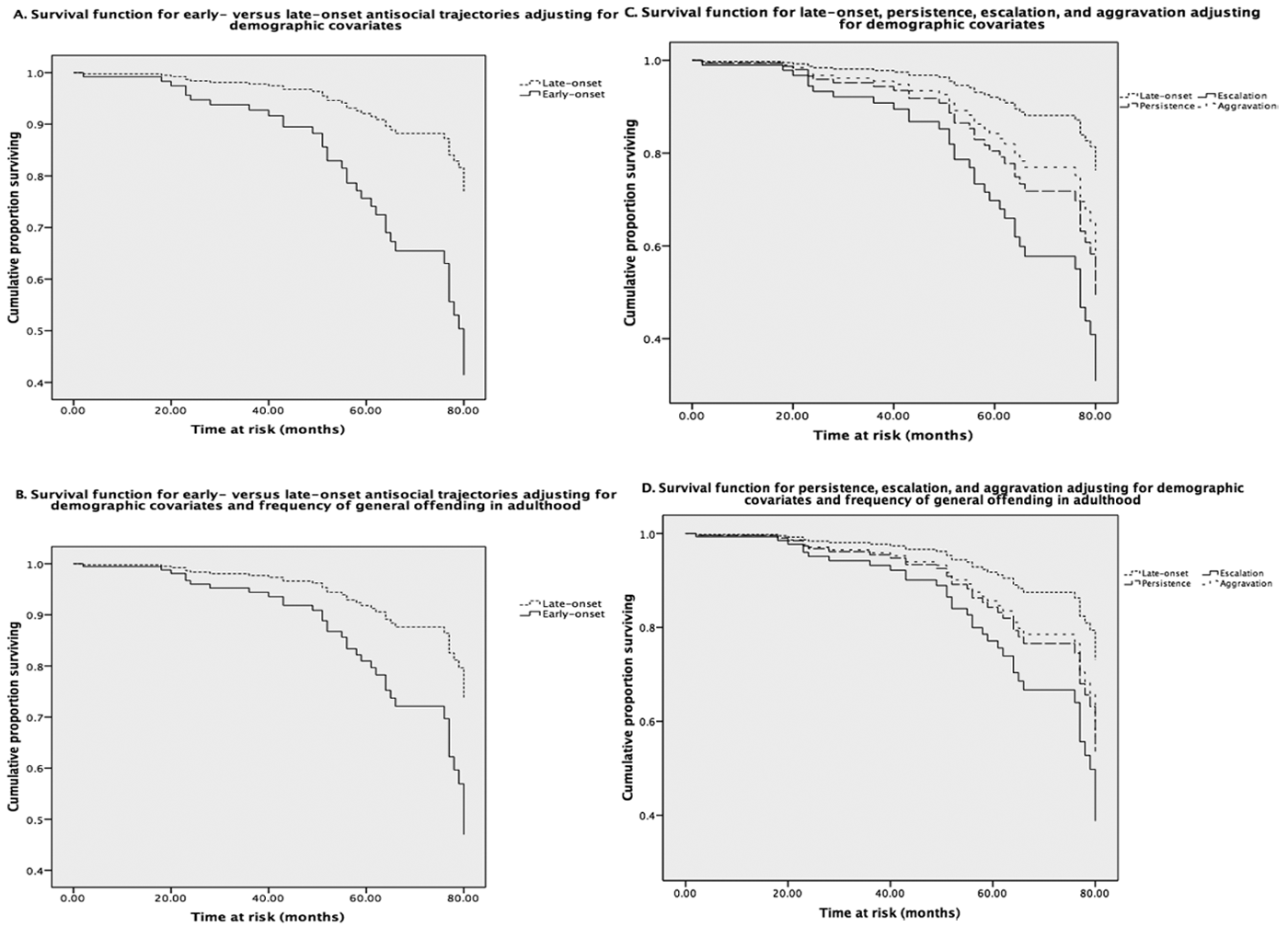
Survival functions of antisocial trajectories in youth for violent/sexual recidivism in adulthood
Figures 1a and 1b indicate that approaching the 2-year period representing time at risk, early starters demonstrated the first disproportional increase in the likelihood of recidivism compared with late starters. Similarly, the same pattern can be observed, albeit to a much greater extent, after 4 years spent at risk. Although similar, a more detailed pattern can be observed in Figures 1c and 1d. In this case, a greater proportion of escalators recidivated compared with the rest of the sample, following the same proportional declines at the time periods described above. Interestingly, however, it is worth noting the similarities in the proportions of offenders recidivating in the persistence and aggravation trajectories. In effect, these two extreme trajectories exhibited virtually similar proportions of offenders recidivating, with the less severe group (i.e., persisters), surprisingly, doing so more quickly than those in the trajectory characterized by more serious violence.
Discussion
The aim of the current study was to determine whether the consideration of the developmental period prior to adulthood contributed to the predictive accuracy of violent/sexual reoffending in adult sexual aggressors of women. Most importantly, this study provides evidence for risk assessors that antisocial behavior in youth contributes to the prediction of violent/sexual reoffending in adulthood in conjunction with current actuarial indicators. More specifically, in concordance with Moffitt’s (1993) original dual taxonomy, sexual aggressors of women with a childhood onset of antisocial behavior were at a greater risk of violent/sexual reoffending in adulthood than those with an adolescent or later onset pattern. Most importantly, we found that the risk of violent/sexual reoffending between early and late onset antisocial trajectories was predicted even after adjusting for criminal career parameters in adulthood.
Another key finding was the observation that the importance of antisocial trajectories in predicting violent/sexual reoffending was not limited to the timing of onset in youth but was also related to the qualitative changes in antisocial development prior to adulthood (i.e., dynamic developmental indicators). More specifically, sexual aggressors of women with an early onset of antisocial behavior and a pattern of escalation in the seriousness of their antisocial development in youth were the group at the highest risk of violent/sexual reoffending in adulthood. These key findings have important implications for risk assessment of adult sexual aggressors of women. Importantly, the indicators of antisocial behavior in youth were shown to demonstrate an additive effect when considered with current risk predictors of reoffending. On one hand, the indicators of antisocial behavior in youth were predictive of violent/sexual recidivism even after adjusting for the level of criminal activity of these offenders in adulthood. On the other hand, the criminal career indicators in adulthood also had an independent effect on recidivism suggesting the importance of considering risk factors across different developmental stages for the more accurate risk assessment of violent/sexual recidivism in adulthood. These important findings are reviewed in light of the scientific literature on risk assessment and prediction of violent/sexual recidivism below.
The Criminal Career and Reoffending
In the current study, the base rate of violent/sexual reoffending in the sample was relatively small, indicating that only a minority of sexual aggressors of women were reconvicted for such crimes when followed over an average of approximately 4 years after their prison release. Given that only a small minority of such cases are reconvicted over this limited follow-up period, identifying those specific cases presents a substantial challenge for risk assessors. The approach implemented in the current study suggests that combining developmental and criminal career parameters may be a valuable approach to assist risk assessors in accomplishing such a task. Perhaps most interestingly, the developmental indicators in youth and the criminal career parameters in adulthood assessed by the current study yielded complimentary predictive information. In other words, both frameworks proved to be useful in tapping aspects of the offender’s history that were associated with the persistence of serious/violent offending. Although the results pertaining to criminal career parameters are not surprising considering they are somewhat in line with indicators included by many current actuarial tools, those related to the developmental framework have not been previously assessed in terms of violent/sexual reoffending. Nonetheless, it is important to note that the predictive accuracy achieved by these indicators in the current study was relatively modest, and, as such, the “unexplained” variance was relatively high. In other words, there were still several false positives and false negatives in the study given the limited set of predictors included in the models. Therefore, these results should be interpreted as exploratory especially considering that the aim of the study was not to test a predictive model of violent/sexual recidivism for adult sexual aggressors of women but rather to evaluate the relative predictive value of a novel set of risk indicators.
Looking Earlier in the Development of Offenders
Harris and Rice (2007) have been advocating for the use of age of onset as a key risk predictor to improve the predictive accuracy of actuarial tools. Their recent study demonstrated that age at first offence provided increased predictive accuracy after adjusting for actuarial scores of the Violence Risk Appraisal Guide (VRAG; Harris, Rice, & Quinsey, 1993) in several samples of adult sexual offenders. Similarly, Lussier and Healey (2009) provided support for this claim by demonstrating that the adult age of onset of general criminal activity was predictive of reoffending in a mixed sample of adult sexual aggressors, after adjusting for scores produced by the Static-99. Our findings provided further empirical support for the consideration of age of onset as a risk predictor of violent/sexual recidivism in adult sexual aggressors of women. In the current study, “onset” was operationalized in two ways. From the criminal career approach, “onset” was operationalized by assessing the adult age of onset for general criminal activity. In contrast, from the developmental approach, “onset” was operationalized by considering the onset of antisocial behavior in youth. When comparing onset from these two perspectives in the current study, the prediction models demonstrated that the developmental definition of onset (i.e., of antisocial behavior in youth) provided somewhat better predictive accuracy compared with the criminal career definition of onset (i.e., of first criminal charges in adulthood). These findings are in line with theoretical models of persistent offending that emphasize the developmental, rather than the criminal career, conceptualization of age of onset as a key marker of persistent criminality (Moffitt, 1993; Moffitt et al., 2002; Odgers et al., 2008). Distinguishing between early and late onset offenders, therefore, is warranted based on the findings from the current study and, more specifically, the onset of general antisocial behavior in youth. In addition, these findings reinforce the fact that the propensity to violently/sexually reoffend, for adult sexual aggressors of women, can be understood in terms of a more general propensity to act in an antisocial manner (Lussier, Proulx, et al., 2005) and that this propensity develops early in the lives of offenders (Odgers et al., 2008).
Risk Classification of Sexual Aggressors of Women
Current risk classification models are based on scores produced by actuarial instruments that are composed of series of predominantly static risk factors. As such, current classification models categorize offenders according to the level of risk they pose for reoffending. For example, using the Static-99, offenders can be classified as low, medium-low, medium, medium-high, and high risk (Hanson & Thornton, 2000). This method of risk classification also characterizes other instruments (e.g., SORAG, MnSOST-R, RRASOR). However, the findings from the current study provide preliminary evidence for the benefit of classification other than for the purposes of risk prediction. More specifically, the recognition of the presence of two broad categories of adult sexual aggressors of women might also provide additional beneficial information for risk assessors. For example, distinguishing between early and late onset offenders was observed to provide a level of predictive accuracy that, independently, approximated the accuracy demonstrated by several actuarial tools that include numerous risk factors. Furthermore, three key issues emerge when considering this broad dual classification for adult sexual aggressors of women: (a) there is a stark contrast in the risk of violent/sexual recidivism between early versus late onset offenders; (b) prior findings have demonstrated marked differences in terms of the prior criminal history in adulthood between these two groups (Cale et al., 2009); and (c) most actuarial tools emphasize, to varying extents, the prior criminal history of offenders. Taken together, it is possible that current actuarial tools, without doing so explicitly, are indirectly tapping indicators that are distinguishing early and late onset offenders. Although we are not advocating the use of this broad categorization independently for risk-assessment purposes, it may provide a fruitful avenue to further develop risk-assessment tools and actuarial instruments.
Conclusion and Limitations
The current study provided preliminary support for the distinction between early and late onset offenders for risk-assessment purposes in adult sexual aggressors of women. One important aspect that needs to be addressed, however, is the basis for reoffending between these two offender groups. In other words, examining the function of reoffending for these two groups of offenders might be beneficial for not only risk-assessment purposes but also treatment providers in terms of the identification of differential treatment needs and targets for each of the offender groups. Current theoretical models that distinguish between early and late onset offenders suggest that the function of general and sexual offending may differ between the two broad groups (Lalumière, Harris, Quinsey, & Rice, 2005; Moffitt, 1993; Seto & Barbaree, 1997). In this regard, early onset offenders have been associated with competitive disadvantage, low self-control, poor self-regulation, and psychopathy, whereas late onset offenders have been associated with more situational and contextual strain factors. Few empirical studies, however, have examined motivational/attitudinal factors across the two groups. Cale and Lussier (2011) found that when comparing the early and late onset sexual aggressors of women, the former group scored high on measures of sexual drive (i.e., urges, thoughts, and fantasies) and mating effort (i.e., acting on urges, thoughts, and fantasies), whereas the latter group was characterized by high mating effort only. Sexual reoffending, therefore, for early onset offenders might be, at least in part, a function of high sexual drive. In contrast, sexual reoffending for late onset offenders may be more reflective of mating effort. In other words, it is possible that risk factors might differ between the two groups.
Importantly, this study suffered from methodological limitations. First, because the sample consisted of federal inmates at a regional treatment facility in the province of Quebec, Canada, the results may only generalize to federal inmates. Despite this possibility, given that all inmates who had offended against a girl who was 16 years of age or older over a 4-year period were included in the study, the sample also closely approximates a population. At the same time, current actuarial risk-assessment tools were designed to assess the risk of reoffending for general populations of convicted sexual offenders. Given that the current study was based on a sample of convicted sexual aggressors of women who had offended against a girl who was at 16 years of age or older over a 4-year period, the extent to which our findings are generalizable to other types of sexual offenders (e.g., child molesters, exhibitionists) remains unclear. Furthermore, the current study employed a follow-up period of about 4 years on average, and therefore this is an underestimation of the base rate of sexual recidivism if a longer follow-up period had been used (e.g., 10, 15, 25 years). Another key limitation is the fact that this study was based on retrospective data. Therefore, the identification of antisocial trajectories in the sample may have been biased by poor memory recall in addition to the fact that respondents may have minimized or exaggerated particular aspects of their history of their antisocial and sexual behavior given the setting of the interviews. In this regard, another key limitation was that it was not possible to assess the effects of social desirability of the responses related to delinquency in childhood and adolescence. Also pertaining to these latter measures, coding only participation (i.e., behaviors coded as present or absent), in contrast to frequency, for example, may have contributed to limiting the overall variance explained by the models. Finally, sexual criminal activity in adulthood was based on official data, and it is therefore possible that the results may have differed if self-reported data were used in this regard. In spite of these limitations, however, the results of the current exploratory study provide support for the consideration of antisocial trajectories, prior to the period of adulthood, in the assessment of risk of violent/sexual recidivism in adult sexual aggressors of women.
Footnotes
The author(s) declared no potential conflicts of interest with respect to the authorship and/or publication of this article.
The author(s) received no financial support for the research and/or authorship of this article.