



Abstract
In prospective longitudinal studies of juvenile offenders, the presence of multiple developmental pathways of antisocial behaviors has consistently been identified. An “antisocial” type of juvenile sex offender (JSO) has also been identified; however, whether antisocial JSOs follow different antisocial pathways has not been examined. In the current study, differences in antisocial pathways within JSOs and between JSOs and juvenile non-sex offenders (JNSOs) were examined. Data on Canadian male incarcerated adolescent offenders were used to identify whether behavioral antecedents differed within JSOs and between JSOs (n = 51) and JNSOs (n = 94). Using latent class analysis (LCA), three behavioral groups were identified. For both JSOs and JNSOs, there was a Low Antisocial, Overt, and Covert group. Overall, there were important within-group differences in the behavioral patterns of JSOs, but these differences resembled differences in the behavioral patterns of their JNSO counterpart. Risk factors including offense history, abuse history, and family history were more strongly associated with the Overt and Covert groups compared with the Low Antisocial group. Implications for JSO assessment practices were discussed.
The heterogeneity of juvenile sex offenders (JSOs) is well known among clinical researchers. To account for within-group differences among JSOs, various aspects of a youth’s developmental and sexual offending history have been used, including victim characteristics (e.g., gender, age; Ford & Linney, 1995; Seto & Lalumière, 2010), offending characteristics (e.g., co-offender, offending histories, offense motivations; Bijleveld & Hendriks, 2003; Butler & Seto, 2002; Hunter, Figueredo, Malamuth, & Becker, 2003; Knight & Prentky, 1993), and offending trajectories and criminal career patterns (Carpentier, Leclerc, & Proulx, 2011; Lussier, van den Berg, Bijleveld, & Hendriks, 2012). Researchers have also shown that individual characteristics, including personality characteristics and prior antisocial behavior, can be used to distinguish subtypes of JSOs (e.g., Hunter & Figueredo, 2000; Hunter et al., 2003; Hunter, Figueredo, Malamuth, & Becker, 2004; Richardson, Kelly, Bhate, & Graham, 1997; Smith, Monastersky, & Deisher, 1987; Worling, 2001). Using personality characteristics or measures of general delinquency/criminal history, these typological studies have consistently identified an “antisocial” group of JSOs (e.g., Becker, 1998; Hunter & Figueredo, 2000; Hunter et al., 2003; Hunter et al., 2004; Johnson & Knight, 2000; Richardson et al., 1997; Smith et al., 1987). Furthermore, examination of developmental pathways has revealed the presence of an antisocial path to sex offending (Freeman, Dexter-Mazza, & Hoffman, 2005; Hunter et al., 2003; Johnson & Knight, 2000; van Wijk, van Horn, Bullens, Bijleveld, & Doreleijers, 2005). This has prompted the suggestion that there is a single and homogeneous “antisocial” JSO type (Becker, 1998; Butler & Seto, 2002; Elliott, 1994; Lussier et al., 2012). However, this may have over-simplified the complexity of JSO antisocial behavior because, at least within samples of general offenders, multiple antisocial behavior pathways have been identified that differed depending on the nature of the antisocial behavior (e.g., Loeber & Hay, 1994). More precisely, measuring antisocial behavior pathways may indicate that there is more than one type of “antisocial” JSO, which could facilitate a more accurate assessment of JSO heterogeneity.
Pathways of Antisocial Behaviors
Developmental criminologists have argued and empirically demonstrated that antisocial behavior is multidimensional (e.g., LeBlanc & Bouthillier, 2003; LeBlanc & Girard, 1997; Loeber & LeBlanc, 1990). Developmentalists have distinguished four main sub-dimensions of antisocial behaviors: (a) authority conflict (e.g., being stubborn, defiant, rebellious against authority figures at home, school, and work), (b) covert (e.g., being deceitful, dishonest, lying frequently), (c) overt (e.g., physical aggression and violence), and (d) reckless (e.g., driving under the influence, driving dangerously, unprotected sex). Developmentalists have also shown that behaviors included in each of the sub-dimensions tend to appear in a hierarchical and orderly fashion (LeBlanc & Loeber, 1998). As a general rule, most children show some of the early manifestations in each of these behavioral dimensions (e.g., being stubborn, kicking, biting). In fact, longitudinal studies conducted with general samples of school-aged children have indicated that at least 90% of youth will show at least one manifestation of antisocial behavior during adolescence (e.g., LeBlanc & Fréchette, 1989; see also Moffitt, 1993, for a theoretical explanation). However, few children actually go through the whole sequence of authority conflict, covert, overt, and reckless behaviors. These findings have driven researchers to focus on antisocial behavioral pathways to identify, prevent, and intervene with children who are at risk of the most serious delinquency trajectories, such as chronic, serious, and violent offenders (e.g., Tolan & Gorman-Smith, 1998).
Rolf Loeber and colleagues have proposed a three-path theoretical model of antisocial behavior development (e.g., Loeber & Hay, 1994). Loeber’s three pathways are modeled in the shape of a pyramid in which three behavioral paths are presented: authority conflict, covert, and overt. In this model, the sequence in which behaviors are expressed is not considered random. There are different steps along each of the three pathways, and at each step the severity of the types of behaviors engaged in increases. In addition, the likelihood that an individual’s behavior will escalate decreases at each step. The most severe forms of behavior are identified at the top of the pyramid; these behaviors are rarely committed in general populations and are indicative of offenders who tend to be involved in serious and/or violent offenses (Loeber, Farrington, Stouthamer-Loeber, & White, 2008; Loeber & Hay, 1994). The three pathways are not mutually exclusive; one individual can follow multiple behavioral pathways (Loeber & Hay, 1994). Individuals who followed multiple pathways typically started with authority conflict behavior and then escalated to covert and overt behaviors. Individuals were considered most at risk of engaging in frequent and violent offending if they followed multiple pathways (e.g., Howell, Kriberg, & Jones, 1995; Loeber, Farrington, Stouthamer-Loeber, Moffitt, Caspi, & Lynam, 2001). Loeber’s model excluded behaviors that would be considered developmentally appropriate (e.g., normative). For example, only authority conflict behavior engaged in prior to the age of 12 is considered to be part of the authority conflict pathway because this type of behavior, when committed during adolescence, has been identified in longitudinal studies as normative teenage behavior (e.g., LeBlanc & Fréchette, 1989; Moffitt, 1993).
The three-pathway model has received considerable support, particularly in regard to different developmental pathways of antisocial behavior associated with serious and violent youth (e.g., Loeber, Farrington, Stouthamer-Loeber, Moffitt, & Caspi, 2001; Loeber et al., 2008; Loeber, Wei, Stouthamer-Loeber, Huizinga, & Thornberry, 1999). Yet, this model has rarely been used to examine the antisocial behavior of sex offenders (see Lussier, Leclerc, Cale, & Proulx, 2007) and has never been used to examine JSOs. In their model, Loeber and Hay (1994) made no reference to sex offending, aside from sexual violence, which was described as one of the endpoint steps in the overt pathway (see also Elliott, 1994). Other sex crimes such as child sexual abuse were not represented in any of the three pathways, meaning that JSO heterogeneity based on victim selection has not been explored in this model. However, Loeber and Hay (1994) did reference the heterogeneous nature of antisocial behavior and that this heterogeneity was captured by the developmental pathways in their model. Capturing this heterogeneity is critical considering the documented importance of accounting for JSO and juvenile non-sex offender (JNSO) within-group heterogeneity to provide more reliable assertions regarding whether between-group behavioral differences exist, and if so, to what degree (Freeman et al., 2005; Hunter et al., 2003; Johnson & Knight, 2000; Loeber & Stouthamer-Loeber, 1998; van Wijk, Loeber, et al., 2005). If these assertions can reliably be made, important theoretical and clinical implications will follow.
Given the complexity of antisocial behavioral pathways (Loeber & Hay, 1994; Loeber & Stouthamer-Loeber, 1998), the relationship between antisocial behavior and sex offending should also be complex. Moreover, the types of antisocial pathways that lead to sex offending may differ depending on the characteristics of the sex offender and their sex offense. Yet, to this point within the criminological literature, commentary on the relationship between antisocial behavior and later sex offending has been limited to suggestions that rape is preceded by overt forms of antisocial behavior that followed a predictable path of increasing severity (e.g., Elliott, 1994; Moffitt, 1993). This suggestion, however, has ignored the diverse nature of sex offending. For example, sexual abuse of children may be better represented as a covert form of antisocial behavior than an overtly aggressive behavior, and so it is currently unclear whether Loeber and Hay’s (1994) model can account for the different types of JSOs (e.g., peer abusers, child abusers). For example, is the overtly antisocial JSO always the peer abuser?
The contribution of antisocial behavior to the development of sex offending has been an important concern in JSO theory (Seto & Lalumière, 2006). Antisocial behavior is common among both JSOs and JNSOs. France and Hudson (1993) found that approximately half of the JSOs would meet the criteria for conduct disorder. Yet, Worling (2001) argued that a general delinquency explanation of sex offending is not appropriate because many JSOs do not have a history of antisocial behavior. However, this argument does not consider whether sex offending is a manifestation of a general juvenile delinquency (e.g., Smallbone, 2006). Longitudinal studies are needed to examine whether non-sexual delinquency follows sex offending after the onset of the sexual offense, even for offenders with no prior history of non-sexual delinquency, and preliminary findings do suggest such patterns exists (e.g., Lussier et al., 2012).
Others have argued that the general delinquency explanation is inadequate because of differences in the antisocial histories of JSOs compared with JNSOs. In six of the eight studies they reviewed, Seto and Lalumière (2006) found that JNSOs were more likely to be characterized by general behavioral problems. However, this trend was not consistent across all studies because JSOs self-reported more conduct problems. In addition, although parents and teachers reported more conduct problems among JNSOs, certain types of behaviors (e.g., fire setting) were more common among JSOs. JSOs and JNSOs may therefore follow different behavioral pathways based on qualitatively distinct types of behaviors. These differences may be attributable to within-group differences in JSOs based on victim selection. A higher prevalence of certain types of behaviors among JSOs may be related to findings in the adult sex offending literature that peer or adult victimizers tended to have more conduct problems compared with child victimizers (Seto & Lalumière, 2006).
In a second meta-analytic study, Seto and Lalumière (2010) found that JSOs engaged in less prior criminal behavior compared with JNSOs. As was the case in Seto and Lalumière (2006), it should follow that JSOs also engage in less early antisocial behavior (e.g., truancy, stealing, not listening to authority, fighting) compared with JNSOs. Yet, other studies have indicated that early antisocial and criminal behavior problems do not differ between JSOs and JNSOs (Butler & Seto, 2002; Ford & Linney, 1995; Hunter, Figueredo, Becker, & Malamuth, 2007; Jacobs, Kennedy, & Meyer, 1997; Leibowitz, Burton, & Howard, 2012; Ronis & Borduin, 2007; van Wijk, Loeber, et al., 2005; van Wijk, Vreugdenhil, van Horn, Vermeiren, & Doreleijers, 2007). This contradiction in the empirical literature could potentially be clarified through a more precise assessment of antisocial behavior that takes into consideration the multiple types of behavioral manifestations and developing pathways. Comparisons within JSOs and between JSOs and JNSOs that are based on general antisocial behavior problems may be too broad to identify true differences within and between groups.
The first study to use a prospective longitudinal research design to examine the criminal trajectories of JSOs was Lussier et al.’s (2012) examination of approximately 500 JSOs in the Netherlands. Lussier et al. (2012) identified five unique non-sex offending trajectories (late-onset adolescent-limited, adolescent-limited, low chronic, high-declining, and high chronic), which suggested that there were at least quantitative within-group differences in JSO antisocial behavior. Moreover, Lussier et al. (2012) revealed that these differences can be partially accounted for based on whether the JSO offended against a child or a peer. JSOs who offended against peers were more likely to offend over a longer time period and at a higher rate than JSOs who offended against children. However, what was not explained in this study was whether there was synchronicity between the rate/duration of antisocial behavior and the qualitative nature of antisocial behavior. For example, do JSOs who engage in overt antisocial behavior offend at a higher rate than JSOs who engage in covert antisocial behavior? Another explanation missing from trajectory studies is whether the qualitative nature of antisocial pathways of JSOs differs from those of JNSOs and also whether JSO peer abusers and JSO child abusers follow different behavioral pathways.
Aims of the Study
The current study operated on the assumption that antisocial behavior is pivotal in the etiology of juvenile sex offending, but its role may be more complex than previously discussed. This area of research is distinct from previous research on JSO antisocial behavior because, contrary to what has been argued elsewhere (e.g., Becker, 1998; Worling, 2001), the possibility of more than one antisocial JSO type was considered and examined. Instead of an ‘antisocial JSO’ type, there are possibly different antisocial pathways escalating to sex offenses that require distinct explanations as well as different intervention and treatment strategies. In addition, an aim of this study was to address whether the nature of antisocial behavioral pathways differed between JSOs and JNSOs. In doing so, this study involved an examination of whether JSOs were characterized by antisocial pathways distinct from those typically found in JNSOs.
The current study was guided by Loeber and Hay’s (1994) behavioral pathway model as a new approach to examining the diversity of early behavioral antecedents to juvenile sex offending. Latent class analysis (LCA) was used to unravel the heterogeneity of latent behavioral profiles and to identify whether behavioral antecedents to offending differed between JSOs and JNSOs. Behavioral antecedents can be seen as (a) an orderly sequence of behaviors, progressing in severity, that unfold over time and expose individuals to different opportunities, including the opportunity for sex offending (Loeber & Hay, 1994); (b) a manifestation of a general antisocial propensity, where sex offending is one type of manifestation (Elliott, 1994; Loeber et al., 2008); (c) an influence on trajectories related to the onset, persistence, and desistence of sex offending (Lussier et al., 2012); and (d) a form of maladaptive behaviors which increase the probability of risk of sex offending (Knight, Ronis, & Zakireh, 2009; Lussier et al., 2012).
Method
Sample
Male incarcerated adolescent offenders were interviewed in open and secure custody facilities in British Columbia, Canada between 2005 and 2011, during the second wave of data collection as part of the Incarcerated Serious and Violent Young Offender Study. The sample used was very specific (i.e., Canadian, incarcerated offenders, males), which could limit generalizability. For example, approximately 30% of offenders in the current study were Aboriginal, which was dissimilar from most incarcerated samples in the United States (e.g., Teplin et al., 2013). In addition, all offenders were incarcerated at the time of their interview. As such, these offenders could have differed from other juvenile offenders who received a less punitive sentencing option (e.g., probation). Participants were included in the study based on three criteria: (a) were English-speaking, (b) demonstrated an understanding of interview questions, and (c) were willing to provide accurate information. If subjects persistently lied about known information (e.g., their age, offense resulting in incarceration), then they would be permanently removed from the interview schedule. In addition to these criteria, despite all incarcerated offenders being eligible for participation, offenders with more serious offenses were prioritized in the interview schedule (e.g., murder offenders were prioritized over other offenders). In total, one offender was excluded because he did not speak English, four offenders were excluded because they persistently lied to research assistants (RAs), and two offenders were excluded because they did not appear to understand the interview questions.
The final sample consisted of 51 JSOs and 94 JNSOs. To be identified as a JSO, the subject had to have received an official criminal charge for a sexual offense that involved sexual contact or attempted sexual contact. 1 None of the JNSOs had been charged with a sexual offense, which included offenses such as exhibitionism. 2 A commonality between JSOs and JNSOs was that both were considered by the courts to be serious and violent young offenders. 3 Thus, differences detected between JSOs and JNSOs could not be attributed to sampling from different types of populations (e.g., community or treatment-based samples compared with incarcerated samples).
Procedure
Youth were recruited for the purpose of collecting self-report and official file information on risk factors associated with the onset of adolescent criminal activity and to determine the risk factor profiles associated with the development of serious and violent offending. Informed consent was provided by the British Columbia Ministry of Children and Family Development (MCFD). MCFD served as the legal guardian to all youth in custody, and their consent allowed this project to approach all youth in various custody centers throughout the province during the study period.
Youth were approached on their unit within the custody center and asked if they wanted to participate in a research study. Only 5% of youth declined to participate. RAs ensured confidentiality by interviewing participating subjects in an isolated room away from other youth and custody staff. All subjects were read and given a copy of an information sheet that explained the purpose of the study, how information would be collected (e.g., interview and file information), and that all information would be kept confidential by law, with the exception of the subject making a direct threat against themselves or someone else. Participants were also informed that although there were no physical risks of participating in the study, some questions may touch on uncomfortable topics, such as abuse experiences. Youth who agreed to participate in the study were asked to sign a consent form that indicated that they had been read and understood the details of the study.
RAs were granted access to case management files, which contained subjects’ pre-sentence reports and information on their behavior while in the institution. Some subjects lied about their age or the offense they were incarcerated for. Subjects also underreported the numbers of offenses they committed. RAs were trained to address these issues in a non-confrontational manner, such as by reminding the subject that their participation was voluntary and that they could refuse to answer questions that they were not comfortable answering. Subjects were expected to report that they committed more offenses than what was indicated by official records, and RAs were trained to accept this type of response as valid.
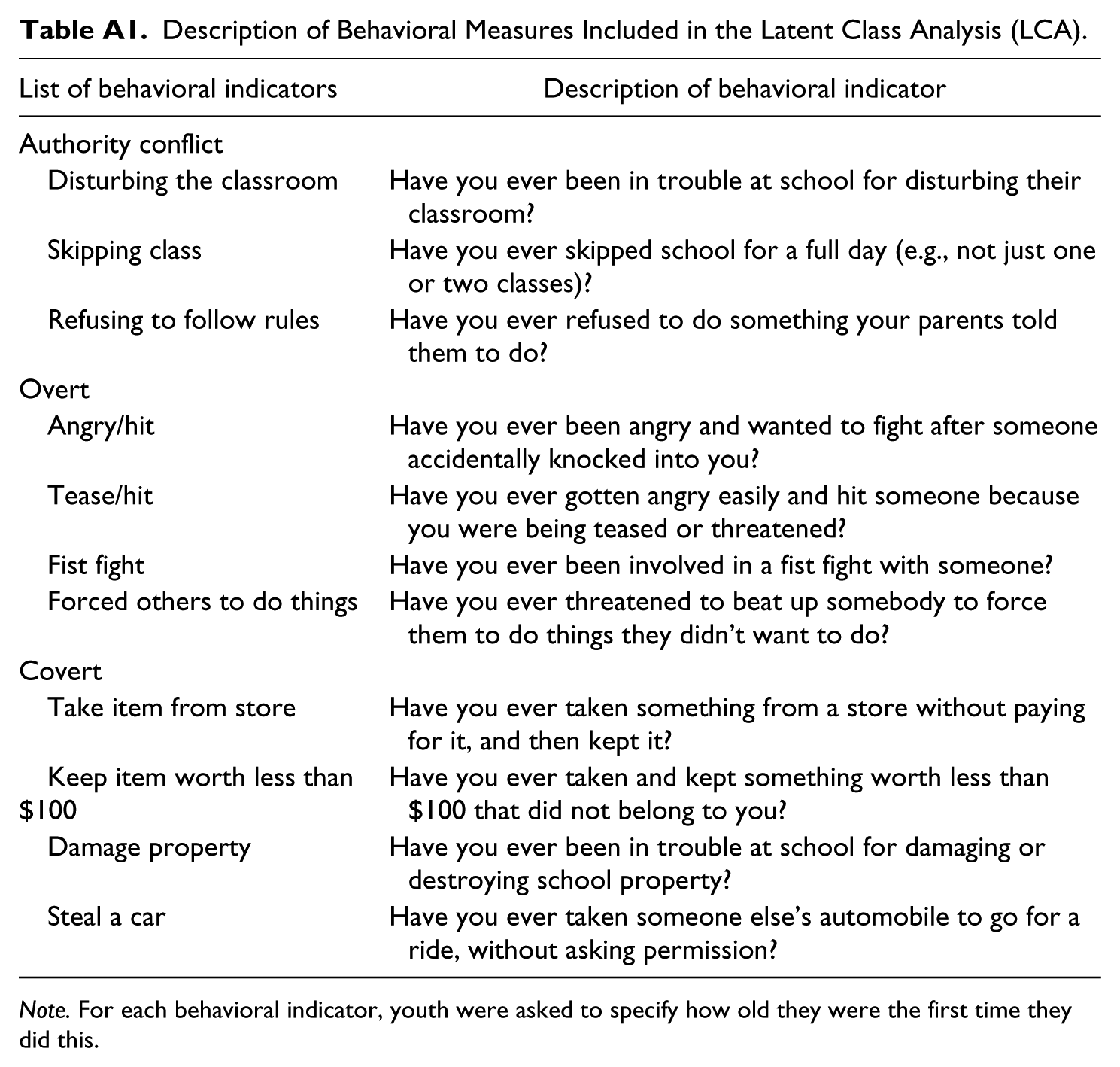
Measures
Subjects were interviewed using, among other measurement tools, the Measurement of Adolescent Social and Personal Adaptation in Quebec (MASPAQ). The MASPAQ has been shown to have relatively high reliability (LeBlanc et al., 1996). The MASPAQ contained measures of authority conflict, covert, and overt behavior. The behavioral items comprising these measures are outlined in Figure 1, and a more detailed description is provided in the appendix. Not all subjects in the study were of the same age, which meant that older individuals had a longer time frame to engage in particular behaviors and therefore would have a higher probability of having engaged in the behaviors measured. This bias was avoided by considering a behavioral indicator to be present only if it was engaged in before age 12. All else being equal, each subject had the same probability of engaging in all behaviors measured. Loeber and Stouthamer-Loeber (1996) found that antisocial behavior patterns of younger offenders differed from older offenders, so it was important that the age differences were controlled for when antisocial behavior profiles were compared. In addition, developmental theorists have noted that the onset of antisocial behavior needed to be investigated earlier than adolescence to identify those most at risk of becoming chronic offenders (e.g., Cale, Lussier, & Proulx, 2009; Moffitt, 1993).

Prevalence of each behavioral indicator examined in the latent class analyses (LCAs).
Measures of authority conflict behavior that were used in the LCA included getting in trouble for disturbing the classroom, getting in trouble for refusing to obey family rules, and skipping school (tetrachoric ordinal α 4 = .72). Measures of covert behavior that were used in the LCA included taking items from others, stealing from a store, getting in trouble for destroying school property, and taking a car without permission (tetrachoric ordinal α = .75). Measures of overt behavior that were used in the LCA included: hitting someone after being teased or threatened, fighting someone after being accidentally bumped into, getting into a fist fight, and forcing someone to do something they did not want to do (tetrachoric ordinal α = .88). The alphas were within adequate range, especially considering the small number of items (see Cortina, 1993). The level of severity varied for the different behavioral indicators, which is consistent with Loeber and Hay’s (1994) model. Based on chi-square analyses, there were no significant (p < .05) differences when the prevalence of each of the behavioral indicators was compared between JSOs and JNSOs. Figure 1 presents the prevalence of each behavioral indicator engaged in before age 12 for the sample as a whole (n = 145). Disturbing the classroom (55.9%) and getting into fist fights (53.8%) were the two most common behaviors, followed by refusing to follow rules at home (46.2%), stealing from stores (44.8%), and stealing from others (36.6%).
Three types of offender attributes were examined (criminal history, individual-oriented risk factors, and family-level risk factors) to identify whether covariates influenced the odds of membership in a particular latent class. Criminal history information was collected from Corrections Network (CORNET), an integrated system used for tracking offenders in institutions within British Columbia. Criminal history was measured using all official criminal charges that a subject had incurred prior to their interview. 5 Age of onset of offending was measured based on age at first charge. Chronic offenders were offenders with at least eight criminal charges. Individual-level covariates (physical and sexual abuse, substance use, and psychopathology) and family-level covariates (family substance use, abuse, mental illness, and criminal record) were measured through semi-structured interviews with the subject. Certain risk factors such as socioeconomic status and presence of a learning disability were not measured. As such, it could not be examined whether these factors influenced membership in a particular behavioral latent class.
Demographic characteristics, criminal history, individual-oriented factors, and family background were compared between JSOs and JNSOs (see Table 1). Depending on the variable’s level of measurement, comparisons were made using either chi-square analyses or t tests. There were no significant differences between JSOs and JNSOs within the individual-oriented and family risk factor domains. However, chi-square analyses indicated that JSOs were significantly (p < .05) more likely to be Aboriginal compared with JNSOs and that JNSOs were significantly more likely to have been identified as a chronic offender (at least eight prior charges). Based on t tests, JNSOs had a significantly greater mean number of criminal charges (14.9) compared with JSOs (10.0). Information pertaining to the characteristics of the sex offenses, including age and gender of the victim and relationship between victim and offender, are also included in Table 1. Although the most common victim-type was an extrafamilial female peer, less than 50% of JSO offended against this type of victim, indicating the heterogeneity of victim selection.
Descriptive Statistics of the Sample (n = 145).
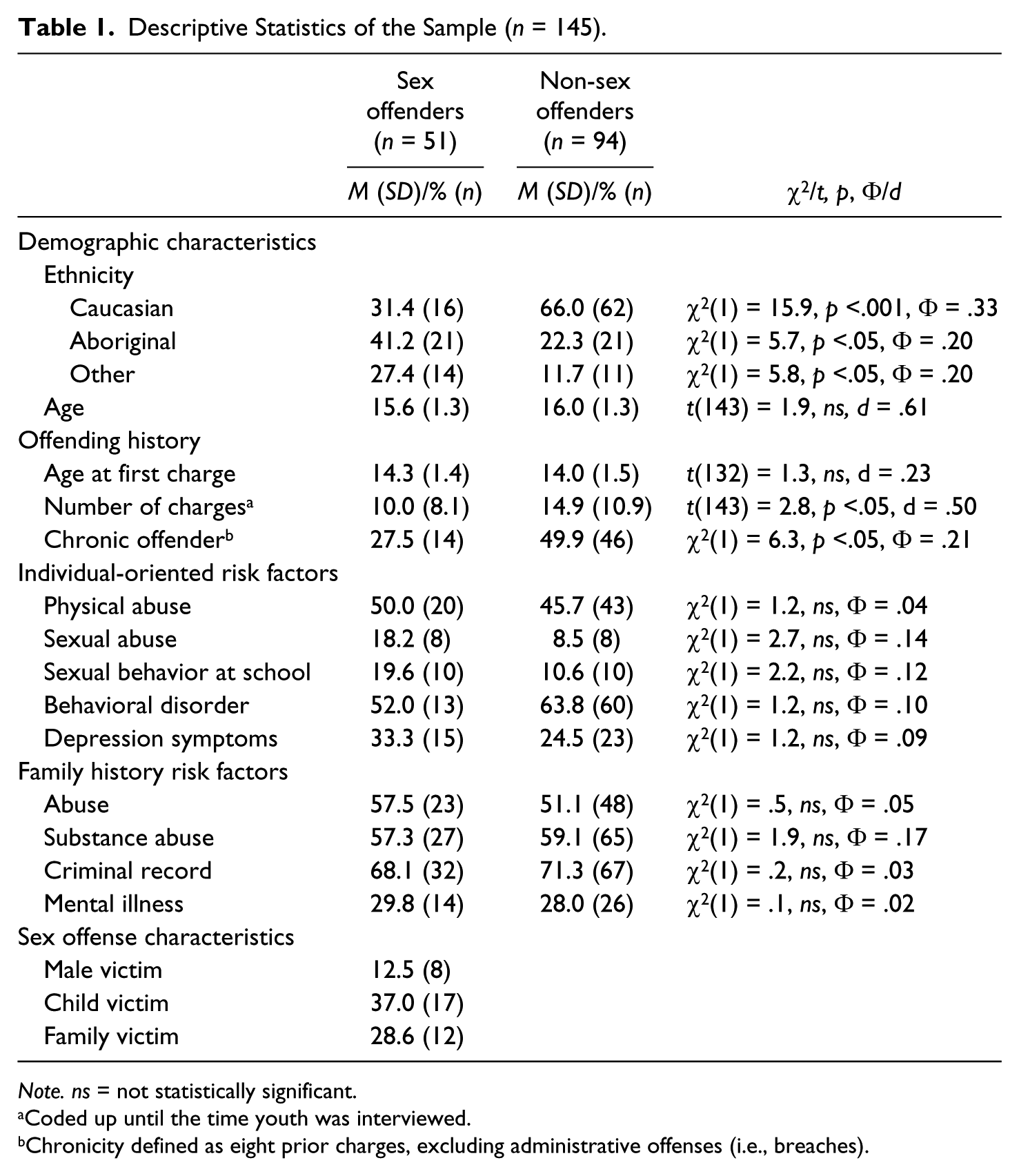
Note. ns = not statistically significant.
Coded up until the time youth was interviewed.
Chronicity defined as eight prior charges, excluding administrative offenses (i.e., breaches).
Analytic Strategy
LCA was utilized to construct behavioral profiles of offenders based on Loeber and Hay’s (1994) three-pathway model of authority conflict, overt, and covert antisocial behavior. LCA is a particularly appropriate analytic tool when the theoretical construct is comprised of qualitatively different groups of individuals, and the construct cannot be directly measured, such as type of behavior. In LCA, the appropriate number of latent classes is determined by running successive latent models, beginning with a one-class solution, and then comparing changes in penalized log likelihood values represented by Akaike Information Criterion (AIC) and Bayesian Information Criterion (BIC) values (Lanza, Collins, Lemmon, & Schafer, 2007). LCA assigns individuals to mutually exclusive and exhaustive (non-overlapping) latent classes, which represent the underlying construct. For the current study, the authority conflict, covert, and overt behavioral types represented latent constructs and were measured using eleven behavioral indicators that were considered manifestations of each construct.
Each of the eleven behavioral indicators mentioned above were entered into the LCA. Analyses were conducted using PROC LCA 1.2.6 for SAS 9.3. PROC LCA allowed for the specification of a grouping variable, which was used to measure whether the qualitative meanings of the latent classes differed across levels 6 of group membership (see Lanza et al., 2007). In the current study, the grouping variable was a dichotomous measure of whether or not the youth had been charged with a sexual offense.
Results
Identification of Behavioral Pathways
The first step conducted for the LCA involved identifying the number of latent classes that best fit the data on the eleven behavioral indicators. A baseline model was fitted to the full sample of juvenile offenders. AIC values indicated that a three-class solution best fit the data whereas BIC values indicated that a two-class solution was the best fit (see Table 2). A bootstrapping procedure was used to compare the relative fit of the two models and indicated that the three-class solution significantly improved model fit over a two-class solution. Moreover, in the three-class solution, G2 values were less than the model’s degrees of freedom, which is an indicator of good model fit (Laska, Pasch, Lust, Story, & Ehlinger, 2009). Furthermore, with an entropy value of 0.83, the three-class model indicated good classification accuracy based on Lanza and colleagues’ (2007) ranking of entropy values. In other words, the LCA suggested that the behaviors of the full sample of juvenile offenders were best represented by the presence of three behavioral pathways. In the next step, the meanings of each latent class were interpreted.
Goodness-of-Fit Test Statistics of Latent Class Analyses of Antisocial Behavior Indicators.
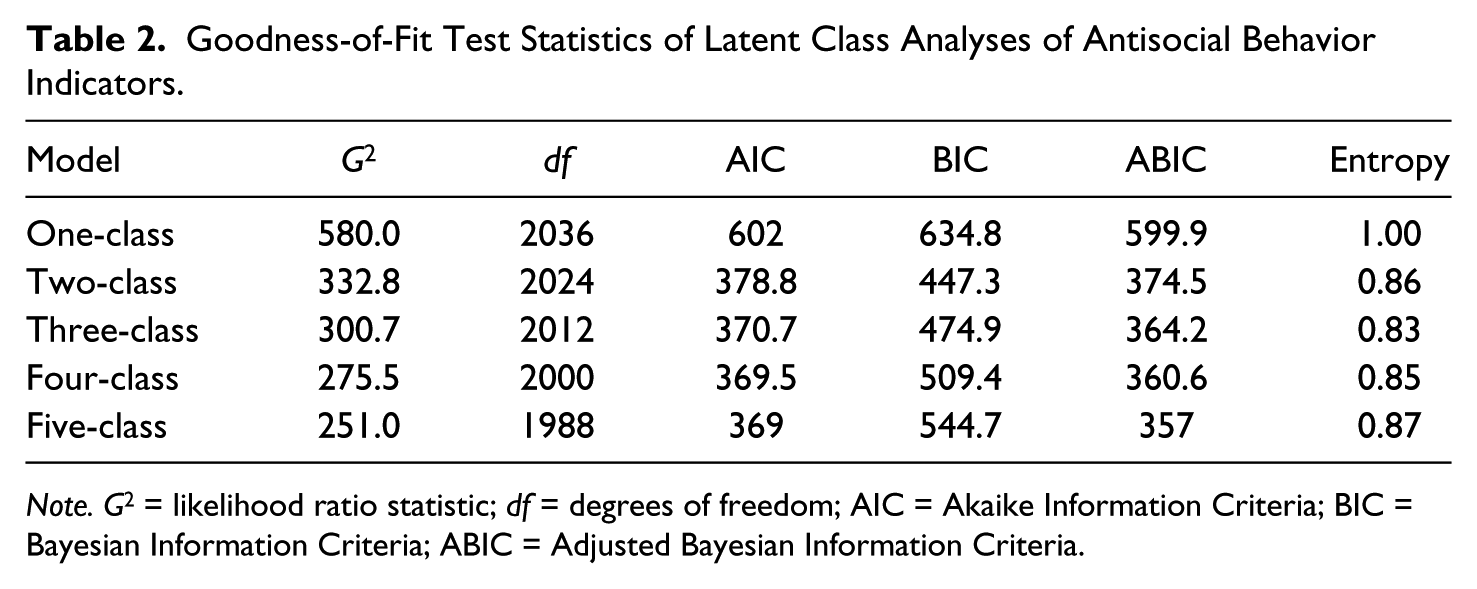
Note. G2 = likelihood ratio statistic; df = degrees of freedom; AIC = Akaike Information Criteria; BIC = Bayesian Information Criteria; ABIC = Adjusted Bayesian Information Criteria.
Interpreting the meanings of the latent classes required an examination of the item-response probabilities for each latent class (or behavioral pathway) found. Item-response probabilities indicated the probability that an individual within a particular latent class engaged in a specific behavior. Based on the pattern of item-response probabilities (see Figure 2), the three latent classes of antisocial behavior were named Low Antisocial (50% of the sample), Primarily Overt (hereinafter Overt; 27% of the sample), and Primarily Covert (hereinafter Covert; 23% of the sample). Offenders in the Low Antisocial group had low item-response probabilities for each type of antisocial behavior included in the analysis (most item responses < .20). The highest item-response probability found for the Low Antisocial group was “disturbing the classroom,” albeit the item response was still relatively low (<.30).
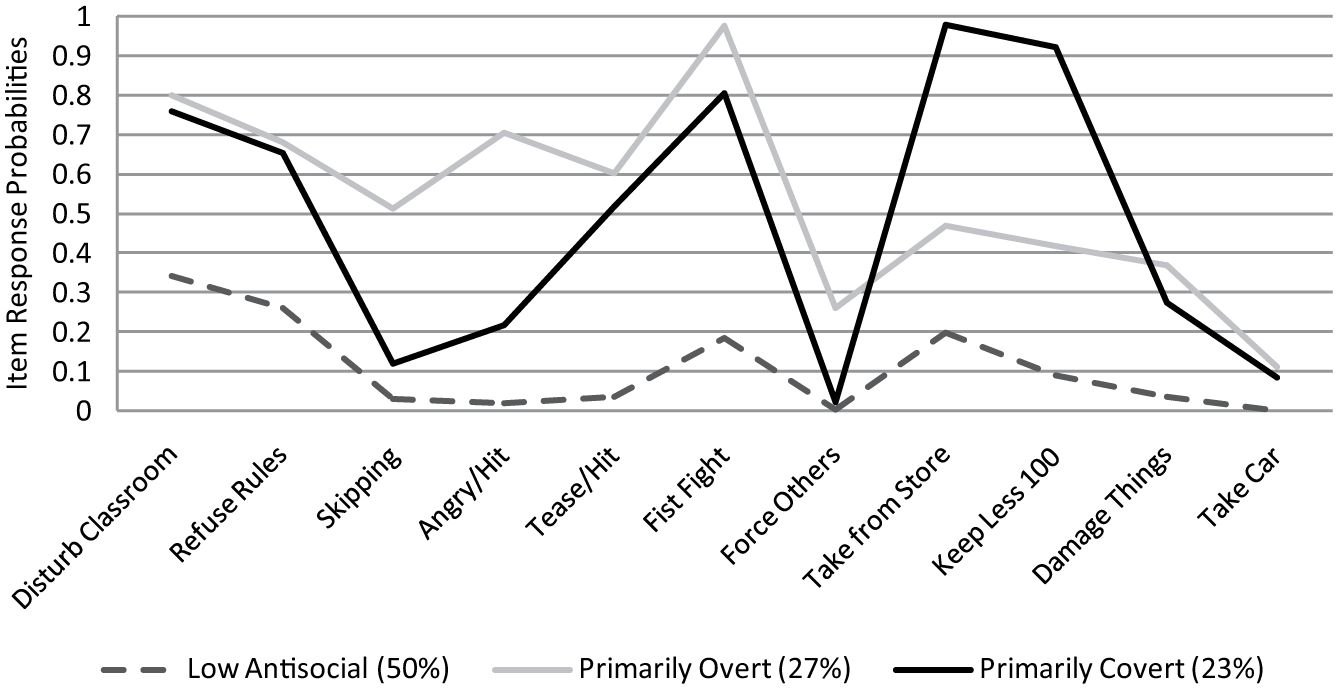
Three-class solution of behavioral patterns of juvenile offenders (n = 145).
Offenders in the Overt latent class had the highest probability of having engaged in aggressive or violent behavior such as fist fights (.98), getting angry and hitting someone (.71), and hitting someone because of being teased (.60). Offenders in the Overt group had the highest probabilities of having committed various forms of authority conflict behavior, particularly disturbing the classroom (.80). The least common type of behavior engaged in by Overt offenders was from the covert domain. Here, the probabilities were all lower than .5. For offenders in the Covert group, covert forms of behavior were most common and included theft from a store (.98) and taking things from other people (.92). Covert offenders also had a high probability of being in a fist fight (.81), disturbing the classroom (.76), and refusing to follow house rules (.65). All three latent groups had low probabilities of using force to dominate others and taking a car without permission. These two behavioral indicators were considered the most serious forms of overt and covert antisocial behavior included in the analysis. Overt offenders had the highest probabilities of using force to dominate others (.30) and stealing a car (.11). Although the baseline model could be used to interpret the meanings of latent classes, it could not be used to determine whether JSOs fit just one of these behavioral patterns, indicating that within-group heterogeneity of behavior did not exist for JSOs, nor could it be determined whether the behavioral patterns differed between JSOs and JNSOs.
Differences Between JSOs and JNSOs
To describe the association between behavioral pathways and offender type (JSO/JNSO), comparisons were first made in terms of the proportion of JSOs and JNSOs in each of the three behavioral pathways found (Figure 3). Comparisons were made using t tests; none of the tests were statistically significant. The Low Antisocial group was the most prevalent behavioral pathway and represented about 50% of the sample for both JSOs and JNSOs. The other half of the sample of both JSOs and JNSOs was almost evenly split between the Overt and Covert groups. Thus, the prevalence of JSOs and JNSOs across the three latent classes found was relatively similar, which suggested similarity in the developmental antecedents of the two groups.
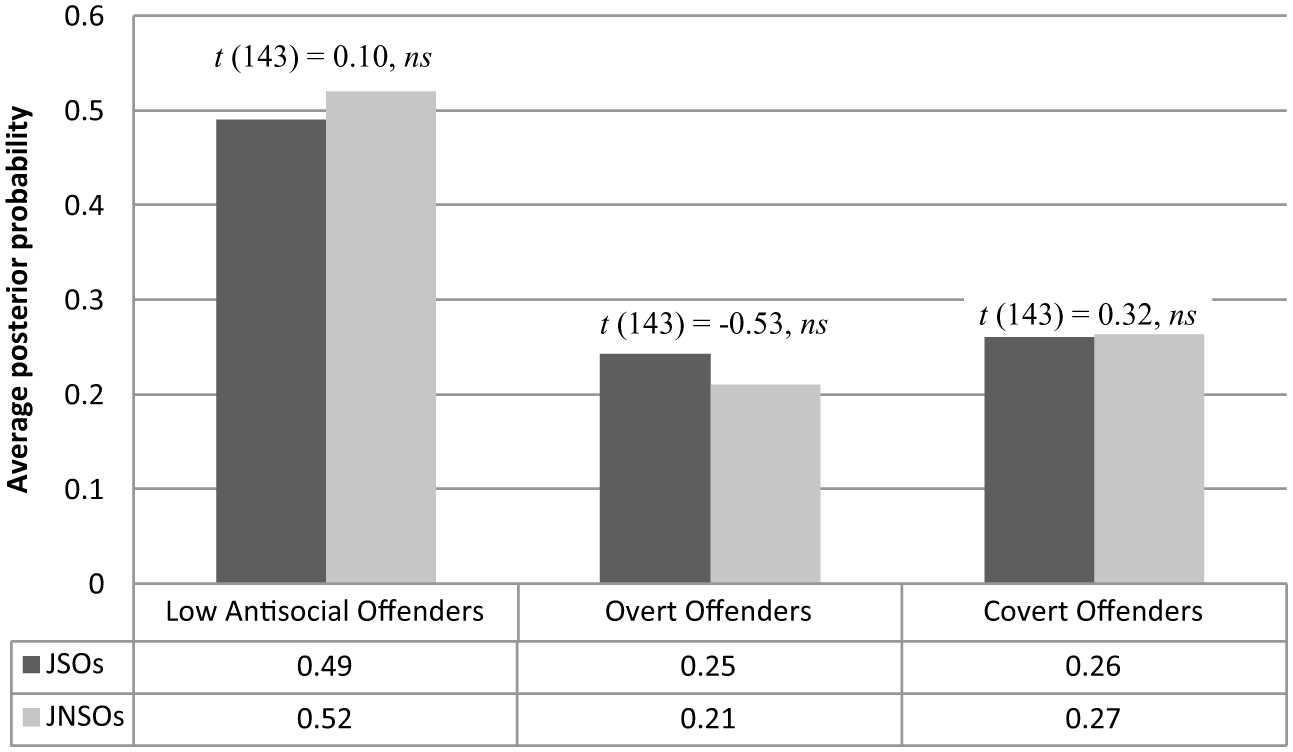
Average assignment probabilities based on the posterior probability of the baseline model.
Based on t tests, there were no differences between JSOs and JNSOs in terms of the accuracy in which subjects were classified to a particular latent class (accuracy measured using posterior probability values; Figure 3). However, it was possible that the baseline model had constrained differences in the behavioral patterns of JSOs and JNSOs, and so offender type (JSO/JNSO) was included as a grouping variable so that patterns of behavior could be examined separately for JSOs and JNSOs.
Offender Type as a Grouping Variable
Offender type (JSO/JNSO) was used as a grouping variable to examine whether item-response probabilities (e.g., behavioral patterns) differed between JSOs and JNSOs. LCA was run using a measurement invariance test, 7 which allowed for the examination of whether the antisocial behavior patterns of JSOs were qualitatively different from JNSOs. The measurement invariance test used a chi-square analysis that compared two models: (a) a measurement invariant model that assumed near identical item-response probabilities for JSOs and JNSOs, and (b) a freely estimated model that allowed the item-response probabilities within a latent class to be measured separately for JSOs and JNSOs. If the comparison between the two models yielded no significant differences in model fit, it would indicate that the latent classes found were the same for JSOs and JNSOs. Despite the less than optimal ratio of JSOs to behavioral items (51/11), the result of this test still indicated significant differences in the item-response probabilities of JSOs compared with JNSOs, χ2(33) = 55, p < .001, which indicated that JSOs and JNSOs are characterized by different behavioral pathways. In addition, based on posterior probabilities, classification accuracy in the freely estimated model was .96 for both JSOs and JNSOs, which is considered excellent (Lanza et al., 2007).
Antisocial Pathways and Developmental Covariates
The behavioral antecedent latent classes were examined again to confirm that the item-response probability differences that were identified between JSOs and JNSOs through the measurement invariance test could not be attributed to some other individual characteristics. This step was necessary considering that JSOs and JNSOs differed on individual factors, particularly offense history (see Table 1). Multinomial logistic regression was used to identify whether certain factors predicted membership in one of the three latent classes identified by the baseline model (n = 145). For the computation of odds ratios, the Low Antisocial group was used as the reference category to which the Covert and Overt groups were compared (see Table 3). First, offender type (JSO/JNSO) was included as a covariate and was not significant (p < .05), meaning that the odds of being in a particular latent class did not differ between JSOs and JNSOs. 8 Second, age and ethnicity were examined, controlling for offender type, and revealed a non-significant (p < .05) finding. Being of a certain age or ethnicity had no bearing on membership in a particular latent class, and this was evident for both JSOs and JNSOs.
Covariates of Antisocial Pathways Statistically Controlling for Offender Type (JSO/JNSO).
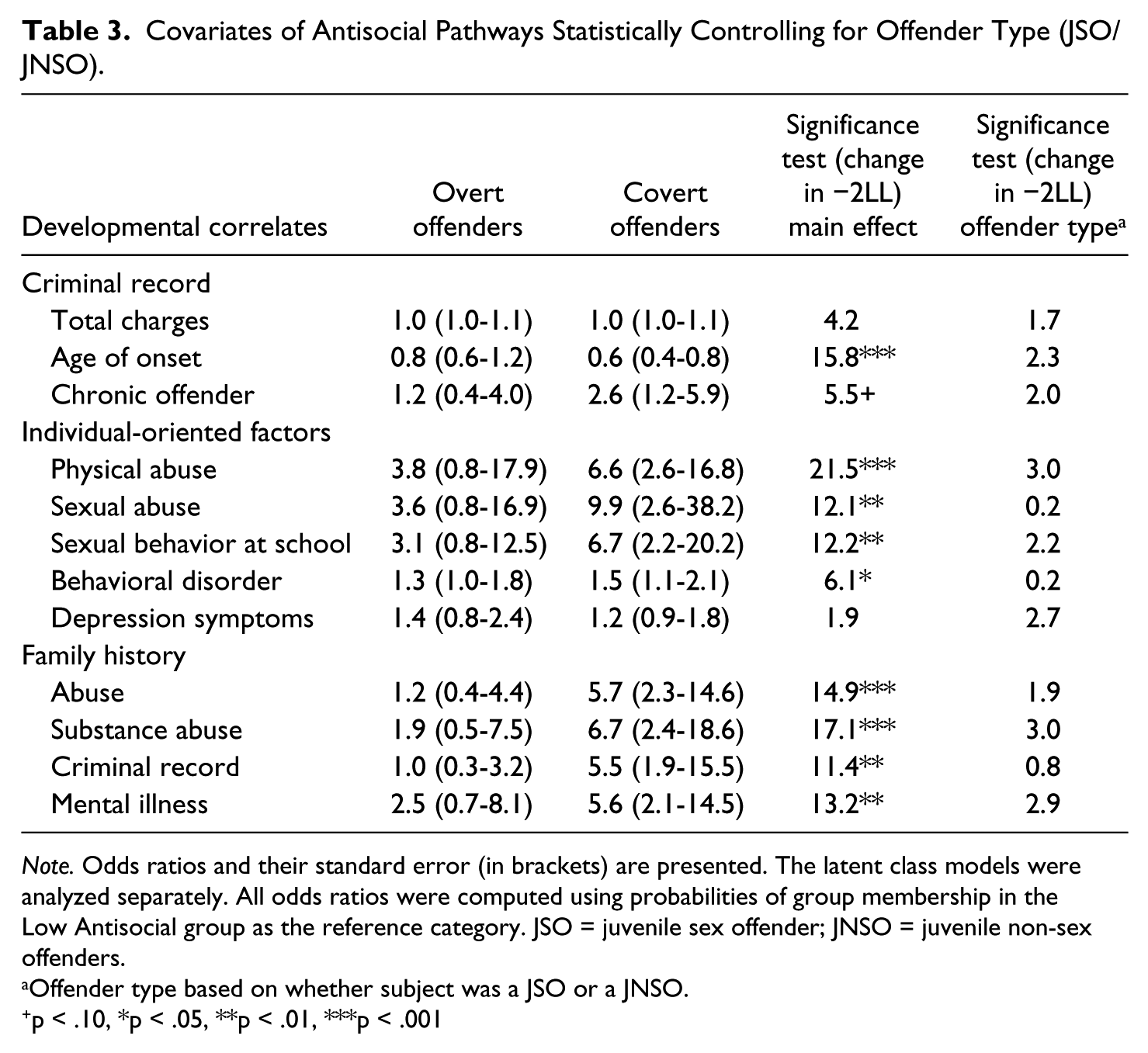
Note. Odds ratios and their standard error (in brackets) are presented. The latent class models were analyzed separately. All odds ratios were computed using probabilities of group membership in the Low Antisocial group as the reference category. JSO = juvenile sex offender; JNSO = juvenile non-sex offenders.
Offender type based on whether subject was a JSO or a JNSO.
p < .10, *p < .05, **p < .01, ***p < .001
Three domains of developmental covariates were also examined: (a) offending history, (b) individual-oriented factors, and (c) family factors. Within offending history, age of the onset of offending (i.e., age at first charge), total number of charges, and whether the individual was defined as a “chronic” offender were all significantly (p < .05) related to the early antisocial (Overt and Covert) behavioral patterns. When offending history was controlled for, offender type (JSO/JNSO) was no longer significant, which suggested that the different latent classes found were more reflective of criminal history than of being a JSO or JNSO. Specifically, individuals with a greater number of charges, an earlier age of onset of offending, and being identified as a chronic offender were more likely to be associated with the Covert and the Overt groups compared with the Low Antisocial group.
Within the individual-oriented risk factor domain, physical abuse, sexual abuse, sexual behavior at school, and self-reported behavioral disorder (e.g., attention-deficit hyperactive disorder [ADHD], oppositional defiant disorder, conduct disorder) were all significantly (p < .05) related to membership in the Covert and Overt latent classes compared with the Low Antisocial latent class. When adjusting for individual-oriented risk factors, offender type was no longer significant, which suggested that the different latent classes found were more reflective of individual-oriented risk factors than of offender type (JSO or JNSO). Specifically, individuals who had been physically abused, sexually abused, had been in trouble at school for sexual behavior, and those who had self-reported having a behavioral disorder were more likely to be associated with the Covert and Overt groups compared with the Low Antisocial group.
For the family history domain of risk factors, all factors were significantly (p < .05) related to the early antisocial behavioral patterns based on latent class. Adjusting for these family-based factors indicated that offender type was not significant, which suggested that the different latent classes were more reflective of differences in family-oriented factors than of being a JSO or JNSO. Family factors, including abuse, substance use, criminal record, and mental illness, were more prevalent in the Covert and Overt groups compared with the Low Antisocial group.
Discussion
In the current study, focus was on whether the antisocial behavioral patterns of JSOs were heterogeneous and whether the behavioral patterns of JSOs differed from JNSOs. Three conceptual issues in the sex offender literature were addressed. First, contrasting with previous studies (e.g., Seto & Lalumière, 2010), only behaviors that occurred prior to the onset of the subject’s sexual offense were considered in order to better understand antecedents to sexual offending. This ensured that behaviors were antecedents to the youth’s sex offending and not influenced by the sex offense through a process of state dependence (e.g., Laub & Sampson, 1993). Second, to address the long-standing issue of JSO within-group heterogeneity (Barbaree, Hudson, & Seto, 1993; Freeman et al., 2005; Hunter et al., 2003; Johnson & Knight, 2000; Seto & Lalumière, 2010; Smith et al., 1987; van Wijk, van Horn, et al., 2005; Worling, 2001) and JNSO within-group heterogeneity (Loeber & Stouthamer-Loeber, 1998), LCA was used to examine whether there were mutually exclusive categories of behavioral antecedents that differed in nature and frequency within JSOs and between JSOs and JNSOs. Third, issues associated with reliance on unidimensional measures of antisocial behavior (e.g., one general measure encompassing all forms of antisocial behavior) were addressed by using LCA to identify behavioral patterns within the sample based on three types of antisocial behaviors: authority conflict, covert, and overt.
The study findings indicated the presence of multiple antisocial behavioral pathways in a sample of JSOs that mirrored those of JNSOs, even when traditional correlates of sexual offending such as abuse were accounted for. This finding was not congruent with the general conclusion made by Seto and Lalumière (2006, 2010) that JSOs are less antisocial than JNSOs. The discrepancy in findings may be because the Seto and Lalumière (2010) study included both incarcerated/residential and community-based samples, whereas the current study included only incarcerated offenders. In addition, 5 of the 17 studies in Seto and Lalumière’s (2010) meta-analysis did not include sex offending as part of the operationalization of criminal behavior, which would bias the frequency of criminal behavior in favor of JNSOs. For example, if a JSO committed two sex offenses and a JNSO committed one property offense, the JNSO would be the only offender with a criminal history. The findings from the current study also contrasted with the research by Becker (1998) and Butler and Seto (2002) that identified the presence of a single antisocial pathway among JSOs. The results in the current study were more consistent with Lussier et al.’s (2012) finding of multiple antisocial trajectories associated with JSOs. Lussier et al. (2012), however, did not examine the qualitative nature of the trajectories (e.g., overt or covert behavioral manifestations). Findings from the current study may contrast with other studies because of the specificity of the sample (Canadian male incarcerated offenders).
From the results of the current study it was inferred that offenders can be distinguished based on their pattern of predominantly covert or overt behavior; however, neither group restricted their behavior to just one behavioral type. Loeber et al. (1993) noted that individuals who engaged in multiple and qualitatively different forms of antisocial behavior were the most frequent offenders. Similarly, in the current study individuals in the Covert and Overt groups were more frequent offenders, and their offending began earlier relative to individuals in the Low Antisocial group. The nature of the Overt and Covert groups’ criminal behavior represented a continuation and escalation from their early antisocial behavior. Within the family domain of risk factors, both Overt and Covert individuals were more likely than Low Antisocial individuals to have family members who had a criminal record, had been abused, abused drugs or alcohol, and had a mental illness. Similar family issues were found to exist for both JSOs and JNSOs. In the individual-oriented domain, the Covert and Overt groups were more likely to have experienced physical and sexual abuse, exhibited sexual behavior problems, and report having been diagnosed with a behavioral disorder. That Covert and Overt individuals were most likely to have a behavioral disorder and also to have been the most frequent offenders was consistent with the findings from other studies that behavioral disorders in adolescence were associated with persistent antisocial behavior in adulthood (Loeber, Keenan, & Zhang, 1997; Lussier, Blokland, Mathesius, Pardini, & Loeber, 2013). The different behavioral patterns and their associated offender characteristics from the three domains of covariates were possibly related to the modus operandi of an individual’s sexual offense.
Latent Class Type and Sexual Offense Characteristics
Elliott (1994) argued that drug use, robberies, and assaults preceded more serious criminal offenses (e.g., rape). Part of the explanation for this escalating pattern is that individuals with a pattern of engaging in a specific type of behavior will subsequently be exposed to expanded opportunities for serious antisocial and criminal behavior (Loeber & Hay, 1994). In other words, antisocial potential, whether covert or overt, will likely manifest itself differently in different social contexts, including sexual contexts. Thus, the sexual offenses of JSOs may be reflective of their observed behavioral patterns. For both Overt and Covert antisocial pathway groups, their sexual offenses can be considered as one stage or point in a continuing and escalating pattern of antisocial behavior (e.g., Butler & Seto, 2002; Elliott, 1994). In the Overt group, for example, JSOs may have engaged in sexual offending as part of an escalating pattern of aggressive and violent behavior. In effect, the recurrent pattern of aggressive antisocial and criminal behavior more likely exposed overt JSOs to different opportunities for sexual offending. For example, overt offenders had previously demonstrated that they would use violence when met with resistance (i.e., overt JSOs were likely to hit someone who had teased them). Furthermore, the Overt group had the highest probability of having dominated someone using physical force to get what they wanted. Although their sexual offense appears distinctive, it represents a more common characteristic of a long-standing (i.e., before age 12) pattern of antisocial aggressive and domineering behavior.
For overt offenders, their victims were likely aware of their victimizer because the nature of overt behavior involves direct confrontation. In contrast, the common types of behaviors engaged in by covert offenders require actively avoiding detection for success. For covert JSOs, their sexual offense may have reflected a well concealed and deceitful pattern of antisocial behavior. This pattern possibly included identifying vulnerable victims who were less likely to report their victimization (e.g., a mentally disabled child, children under their authority/supervision while babysitting, or others who are less likely to be aware that the offender’s sexual actions were wrong). Another potential target for the Covert group could be severely intoxicated individuals who would be unable to defend themselves or accurately recall the offense. For Covert JSOs, using victim gender to account for JSO within-group differences (e.g., Ford & Linney, 1995; Seto & Lalumière, 2010) may not be as useful as accounting for situational characteristics, such as whether the victim was intoxicated or in an isolated area. In other words, covert JSOs may be opportunistic in their sexual offending, targeting victims based on the likelihood of avoiding detection.
The development of juvenile sexual offending, however, cannot be explained entirely by “antisocial” covert and overt JSO types (e.g., Becker, 1998; Butler & Seto, 2002; Elliott, 1994; Lussier et al., 2012). Half of the JSOs in this sample did not engage in early antisocial behavior (the Low Antisocial group). This result was congruent with descriptive studies (e.g., France & Hudson, 1993; Seto & Lalumière, 2006) and reminiscent of the non-recidivist group described by Becker (1998). Lussier et al. (2012) found that most JSOs are characterized by a delinquency pattern that is occasional and limited to the period of adolescence. Consistent with this finding, low antisocial JSOs offended only in adolescence and at a low rate.
Clinical Implications
Offenders in the current study were the types of offenders most in need of intervention due to their extensive offense histories (see Tolan & Gorman-Smith, 1998). The relationship between latent classes and risk factors suggested that assessments by practitioners should move toward more precise categorizations of antisocial pathways rather than general categorizations of JSOs as antisocial or non-antisocial. Interview and assessment protocols should focus on the age of the onset of antisocial behavior, the nature of the antisocial behavior, and whether the offender’s pattern of behavior has escalated (e.g., from authority conflict behavior to overt behavior or from minor forms of overt behavior to more serious forms of overt behavior).
A more precise assessment of the offender’s antisocial behavior profile may also help determine whether there is a link between the nature of an offender’s antisocial behavior pathway and the type of sex offense committed. As suggested earlier, a prior pattern of antisocial behavior of a specific nature may influence the modus operandi of a JSO’s sex offense. Specifically, on one hand, sex offenses of overt JSOs may result from an escalation in an offender’s aggressive tendencies and manifestations of violence in a sexual context (see Marshall & Barbaree, 1990). On the other hand, sex offenses of covert JSOs may be part of a larger spectrum of deceitful and dishonest behavior. If there is congruence between antisocial pattern and sex offense, then the assessment of criminogenic factors becomes more important. This assessment should include antisocial behavior and the risk of general recidivism, which is the most likely outcome of JSOs who continue offending once released from custody (Caldwell, 2002; McCann & Lussier, 2008).
Limitations and Future Research
This was the first study to use Loeber and Hay’s (1994) three-pathway model to compare latent class profiles of behavioral antecedents of JSOs and JNSOs and as such should be considered exploratory. The current study was based on a sample of incarcerated young offenders in Canada with a high proportion of Aboriginal offenders (28.3%). Results should not be generalized to community-based samples because incarcerated populations contain a more serious group of offenders. There should also be caution when generalizing to offenders sampled from different populations because of potential ethnic differences (e.g., samples with a high proportion of Hispanic offenders). This was a retrospective longitudinal study, which means that the data may suffer from memory biases. Strategies were taken to minimize such biases, including using a versatility scale rather than measuring frequency of the behavior. The exploratory nature of the study warranted the use of such data before prospective longitudinal data become available. Also, the method selected allowed for more direct comparisons with prior studies on the topic.
Separating JSOs based on victim selection has been commonly used to address within-group heterogeneity (e.g., Hunter et al., 2004; Richardson et al., 1997; Smith et al., 1987; Worling, 2001). However, within the context of research on behavioral pathways of JSOs, studies have not separated JSOs based on victim selection nor type of non-sex offense history, such as in Butler and Seto’s (2002) sex-only and sex-plus groups. The current study did not make these distinctions because of the small sample size. It would be particularly valuable to use longitudinal data to examine how antisocial pathways of JSOs inform their later criminal offending; this would facilitate the examination of the escalation, persistence, and desistence of antisocial behavior pathways and later offending trajectories. For example, Lussier et al. (2012) found that JSOs followed five non-sexual offending and two sexual offending trajectories. It would be worthwhile to examine whether early antisocial behavior pathways are correlated with later offending trajectories. The small sample size in the current study also meant that there was the possibility that the results were sample specific. However, other exploratory studies using LCA have been conducted with a similar ratio of subjects to variables (e.g., Deslauriers-Varin & Beauregard, 2010). Finally, the research ethics board governing the current study prohibited the study from asking questions about sexually deviant behavior. It would be valuable for future research to examine how atypical sexual behaviors fit within the context of Loeber and Hay’s (1994) model.
Footnotes
Appendix
Description of Behavioral Measures Included in the Latent Class Analysis (LCA).
| List of behavioral indicators | Description of behavioral indicator |
|---|---|
| Authority conflict | |
| Disturbing the classroom | Have you ever been in trouble at school for disturbing their classroom? |
| Skipping class | Have you ever skipped school for a full day (e.g., not just one or two classes)? |
| Refusing to follow rules | Have you ever refused to do something your parents told them to do? |
| Overt | |
| Angry/hit | Have you ever been angry and wanted to fight after someone accidentally knocked into you? |
| Tease/hit | Have you ever gotten angry easily and hit someone because you were being teased or threatened? |
| Fist fight | Have you ever been involved in a fist fight with someone? |
| Forced others to do things | Have you ever threatened to beat up somebody to force them to do things they didn’t want to do? |
| Covert | |
| Take item from store | Have you ever taken something from a store without paying for it, and then kept it? |
| Keep item worth less than $100 | Have you ever taken and kept something worth less than $100 that did not belong to you? |
| Damage property | Have you ever been in trouble at school for damaging or destroying school property? |
| Steal a car | Have you ever taken someone else’s automobile to go for a ride, without asking permission? |
Note. For each behavioral indicator, youth were asked to specify how old they were the first time they did this.
Acknowledgements
The authors would also like to thank the three anonymous reviewers for helpful comments on previous drafts.
Authors’ Note
The sample described in this article is based on research conducted as part of the continuing Project on Incarcerated Serious and Violent Young Offenders, initiated in 1998 under the direction of Raymond R. Corrado.
Declaration of Conflicting Interests
The author(s) declared no potential conflicts of interest with respect to the research, authorship, and/or publication of this article.
Funding
The author(s) disclosed receipt of the following financial support for the research, authorship, and/or publication of this article: This work was supported by the Social Sciences and Humanities Council of Canada [410-2004-1875]. In addition, the authors gratefully acknowledge the assistance of the British Columbia Ministry of Children and Family Development (MCFD). The views expressed herein are those of the authors and do not necessarily reflect the views or policies of the agencies that funded or supported the research.