



Abstract
This study examined the predictive and concurrent validity of the Screening Scale for Pedophilic Interests (SSPI) and its recent revision (SSPI-2), using a large sample of 2,416 sex offenders deemed not to be in need of civil management in New York State. Both SSPI and SSPI-2 scores were significantly and positively related to sexual rearrest, but the SSPI-2 provided greater discrimination in rearrest within 5 years across possible scores. Neither measure significantly added to the prediction of sexual rearrest provided by the Static-99R. We also found evidence of concurrent validity, as both measures were positively and significantly correlated with clinician ratings of sexual preoccupation, emotional identification with children, and sexual offense–related cognitions (convergent validity), but were not significantly related to clinician ratings of self-regulation problems, noncompliance with supervision, or antisocial personality (divergent validity). Overall, the results suggest that the SSPI-2 is a specific and useful screening measure of pedophilic sexual interests among sex offenders with child victims.
Many risk factors for sexual recidivism by identified adult male sex offenders fall into two major dimensions, one pertaining to antisociality (e.g., early conduct problems, antisocial attitudes and beliefs, personality traits such as impulsivity or risk taking) and the other pertaining to atypical sexuality (e.g., paraphilias such as pedophilia or exhibitionism, excessive sexual preoccupation; Hanson & Bussière, 1998; Hanson & Morton-Bourgon, 2005). In fact, two of the strongest predictors of sexual recidivism among identified sex offenders are psychopathy and sexual arousal to children, with sexual arousal to children as a prototype for motivations to sexually offend and psychopathy as a prototype for factors that facilitate acting on such motivations (see Seto, 2008, 2013).
The Screening Scale for Pedophilic Interests (SSPI; Seto & Lalumière, 2001) offers a structured assessment of pedophilic sexual interests (operationalized as relative sexual arousal to prepubescent children) based on sexual victim history. The SSPI was originally designed as a brief clinical or research measure when phallometric testing results were not available (e.g., no facilities, individual refused testing, archival database). The SSPI is composed of four items regarding child sexual victims under the age of 14: (a) any boy victim, (b) more than one child victim, (c) any victims under 12, and (d) any unrelated child victim. Seto and Lalumière (2001) reported a significant correlation of .34 between SSPI score and phallometrically assessed sexual arousal to children. This positive association was later replicated in several studies, including one study of adolescent sex offenders (Canales, Olver, & Wong, 2009; Seto, Harris, Rice, & Barbaree, 2004; Seto, Murphy, Page, & Ennis, 2003). However, two other studies examining offenders with victims age 16 or younger found weak or no significant associations between SSPI scores and either phallometric test results or a diagnosis of pedophilia (Kingston, Firestone, Moulden, & Bradford, 2007; Moulden, Firestone, Kingston, & Bradford, 2009). These latter studies suggest that including information about sexual victims aged 14, 15, or 16—very few of whom would be prepubescent in appearance—attenuates the relationship between sexual victim history and sexual arousal to prepubescent children.
An informal survey of the Association for the Treatment of Sexual Abusers email listserv in early 2014 revealed that the SSPI is routinely used for clinical purposes in multiple jurisdictions, including for all sex offenders who are being screened for possible civil management by the New York State Office of Mental Health (OMH); sex offenders assessed in the Departments of Corrections in Arkansas, Minnesota, and Missouri; and in sex offender civil commitment evaluations in North Dakota and Wisconsin. Also, the SSPI is an acceptable substitute for phallometric test results on the Sex Offender Risk Appraisal Guide (SORAG; Quinsey, Harris, Rice, & Cormier, 2006). The SSPI is used as a proxy for sexual arousal to children in research conducted in countries such as Germany, where phallometric testing is not permitted (e.g., Mokros, Dombert, Osterheider, Zappalà, & Santtila, 2010).
A few studies have examined the predictive validity of the SSPI. Seto et al. (2004) found that SSPI scores were significantly related to violent (including contact sexual) recidivism in two samples of sex offenders with child victims, and with specifically sexual recidivism in the larger sample of 145 (vs. 113) offenders; the larger sample also had a higher base rate of sexual reoffending. However, the predictive validity of the SSPI was not supported by Canales et al. (2009) in their sample of 79 sex offenders with child victims, or by Moulden et al. (2009) in their sample of 206 sex offenders with victims aged 16 or younger.
More recently, Helmus, O’Ciardha, and Seto (2015) examined the predictive validity of the SSPI in a sample of 410 adult male sex offenders against children under age 14, drawn from the Dynamic Supervision Project (Hanson, Harris, Scott, & Helmus, 2007). As predicted, the SSPI significantly predicted new charges or convictions for sexual offenses, as well as a broader sexual recidivism outcome that included breaches of community supervision conditions that might involve sexually motivated behavior (e.g., being in the presence of children unsupervised). This result, which differed from Moulden et al. (2009), again suggests that the SSPI is most relevant for offenders against prepubescent or pubescent children, rather than older children (ages 14, 15, or higher) who would be very unlikely to be prepubescent in appearance. The SSPI did not, however, add to the prediction offered by an established actuarial risk tool, the Static-99R (www.static99.org: Hanson & Thornton, 1999; Helmus, Thornton, Hanson, & Babchishin, 2012).
Seto, Stephens, Lalumière and Cantor (2017) have recently described the development of a revised version of the SSPI, the SSPI-2, using data from a large Canadian sample of 1,900 sex offenders with child victims. The SSPI-2 was spurred by increasing public and professional attention to child pornography offending and growing evidence that child pornography offending is related to sexual arousal to children (Lam, Mitchell, & Seto, 2010; Seto, 2013; Seto, Cantor, & Blanchard, 2006). The SSPI-2 differs from the original SSPI in three ways: (a) offenders only receive 1 point on the SSPI-2 for having had a boy victim (on the original SSPI, this item was worth 2 points), (b) offenders receive an additional point if they have ever been arrested for or charged with a child pornography offense, and (c) the developmental sample for the SSPI-2 included offenders with victims under the age of 15 (the original SSPI developmental sample was of offenders with victims under the age of 14). Seto et al. (2017) found that the SSPI-2 was significantly and positively related to sexual arousal to children, incrementally more so than the SSPI. Furthermore, it was associated with self-reported sexual interest in prepubescent children.
The Present Study
The present study examined the predictive and concurrent validity of the SSPI-2 by (a) investigating whether it can predict sexual recidivism among adult sex offenders with child victims, using a large sample of sex offenders screened for civil management in New York State; and (b) examining its correlations with clinician ratings of variables reflecting antisociality or atypical sexuality. Because some users might continue to use the SSPI, we also reported the predictive and concurrent validity results for the original four-item SSPI.
Method
Data
Data for the project were provided by the New York State OMH, which reviews all offenders with a qualifying sexual offense (see the Sex Offender Management and Treatment Act [SOMTA], 2007) for possible civil management. 1 Under New York State law, all offenders convicted of a sexual felony or a sexually-motivated felony (such as burglary, assault, or murder where there was deemed to be a sexual element to the crime) receive a civil management review. These reviews begin approximately 6 months prior to an offender completing his or her sentence for a sexual offense and being released. OMH clinical staff complete the reviews using detailed file information including criminal history, mental health, substance abuse, sex offender treatment, and institutional and supervision conduct records. All data used in this study were pre-existing in OMH’s civil management data system, as they were previously entered by clinicians as part of their regular job duties during the civil management risk assessment and record review process.
Sample
The initial sample for the study consisted of 2,951 adult male sex offenders with victims under the age of 14 reviewed for possible civil management in New York State between April 2007 and July 2013. From this sample, 236 (8.0%) of the offenders were excluded from the analyses, as they were deemed to be in need of civil management by OMH, and many were, therefore, in custody and not at risk of sexual offending in the community. An additional 299 (10.1%) of the offenders were excluded due to missing data on one or more study variables, bringing the final sample to 2,416 sex offenders with child victims.
Attrition analyses revealed no significant differences between the 2,416 offenders in the final sample and the 299 offenders excluded from the study due to missing data. Most importantly for the study, these two groups were similar in terms of average SSPI score, average SSPI-2 score, and average Static-99R score (all ps > .50). Comparisons between the final sample and the 236 offenders recommended for civil management, however, revealed numerous significant differences between the two groups. Most importantly, offenders in the final sample had lower SSPI scores (M = 2.14 vs. M = 3.96), lower SSPI-2 scores (M = 1.95 vs. M = 3.24), and lower Static-99R scores (M = 1.98 vs. M = 5.28; all ps ≤ .001), as would be expected given the criteria for civil management. Given existing research on the predictive validity of the Static-99R (Hanson & Morton-Bourgon, 2009), offenders in the study sample appeared to be at significantly lower risk to sexually reoffend than those recommended for civil management. Offenders in the study sample also, by definition, had a more restricted range of scores on the SSPI, SSPI-2, and Static-99R than a sample including those recommended for civil management.
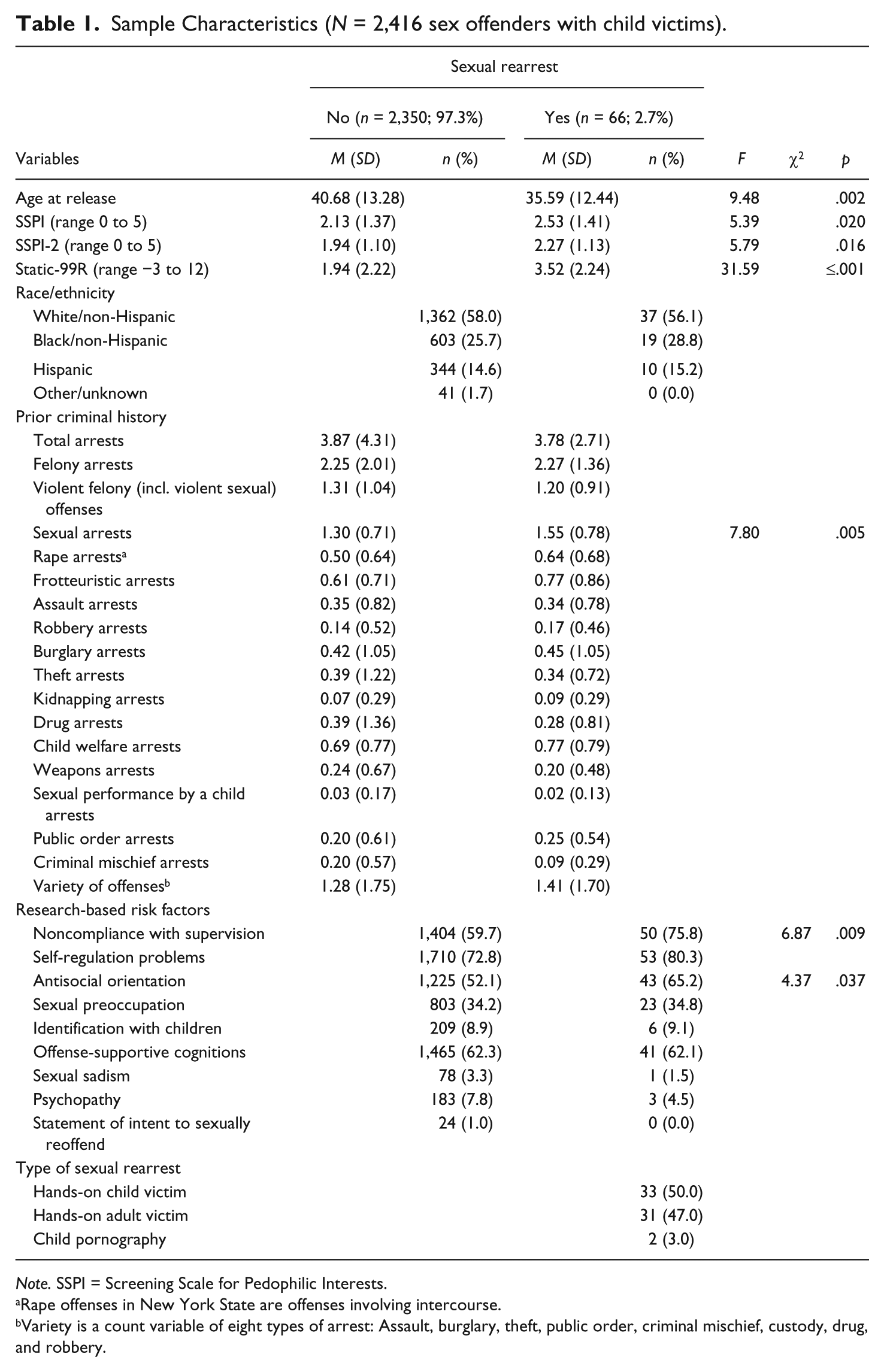
Characteristics of the sample can be found in Table 1, separated into offenders rearrested for a sexual offense (n = 66; 2.7%) and those who were not rearrested for a sexual offense (n = 2,350; 97.3%). The average offender in the final sample was 40.55 years old (SD = 13.28) at the time of his release following his review for civil management. The racial and ethnic breakdown of the final sample was 57.9% White (n = 1,399), 25.7% Black (n = 622), 14.7% Hispanic (n = 354), and 1.7% other or unknown (n = 41). Offenders were followed for recidivism through November, 2014. Average length of follow-up for the offenders was 4.28 years (SD = 1.67), whereas 856 offenders had at least 5 years of follow-up.
Sample Characteristics (N = 2,416 sex offenders with child victims).
Note. SSPI = Screening Scale for Pedophilic Interests.
Rape offenses in New York State are offenses involving intercourse.
Variety is a count variable of eight types of arrest: Assault, burglary, theft, public order, criminal mischief, custody, drug, and robbery.
Study Variables
SSPI scores
As part of their reviews, OMH scores each offender with a sexual victim under 14 years old on the SSPI. As stated above, the SSPI consists of four items assessing previous sexual offense child victim characteristics: (a) any boy victim under the age of 14, (b) two or more child victims under the age of 14, (c) victim under the age of 12, and (d) any unrelated victim under the age of 14. Victims were counted whether or not there was physical contact (e.g., scoring included attempted sexual offenses or noncontact offenses such as exhibitionism). Child pornography offenses, however, were not counted in scoring the SSPI. Each item was scored as present or absent on the basis of all credible information about child victims, including criminal records, allegations made to child protection services that were considered to be founded (whether or not they resulted in criminal charges), and self-report.
Each item that was present received 1 point, except for having any boy victims, which was assigned 2 points. Total scores could, therefore, range from 0 to 5. A prototypical offender with a score of 0 had a single female victim, age 12 or 13, who was related to him. A prototypical offender with a score of 5 had multiple child victims, at least one of which was male, under the age of 12, and unrelated to the offender. As stated above, the average SSPI score for offenders in the present study was 2.14 (SD = 1.37). Of the 2,416 cases in the final sample, 86 cases (3.6%) received separate SSPI scores from different raters, with the instrument demonstrating strong inter-rater reliability (r = .90; p ≤ .001; same score was given on 84% of the cases).
SSPI-2 scores
As stated above, the scoring of the SSPI-2 differs from the original SSPI in two ways: (a) offenders only receive 1 point on the SSPI-2 for having had a boy victim (as stated above, that item is worth 2 points on the SSPI), and (b) offenders receive an additional point if they have ever been arrested for or charged with a child pornography offense (Seto et al., 2017). Thus, SSPI scores were converted to SSPI-2 scores by taking each offender’s SSPI score and subtracting 1 point if the offender ever had a male child victim and adding 1 point if the offender had ever been arrested for or charged with a child pornography offense. Like the SSPI, total scores on the SSPI-2 range from 0 to 5. As stated above, the average SSPI-2 score for offenders in the present study was 1.95 (SD = 1.10).
Static-99R scores
Since the enactment of SOMTA, OMH has been scoring the Static-99 or the Static-99R for every adult male sex offender it reviews for civil management (Hanson & Thornton, 1999). Which instrument was used for which offender depended solely on timing; OMH switched from the Static-99 to the Static-99R in mid-2012. The two instruments both consist of the same 10 static risk items, with nine of the items coded exactly the same way; the only difference between the two instruments is that offender age is coded differently. All Static-99 scores in the present study were recoded into Static-99R scores. Previous studies have demonstrated that the Static-99 can be scored with high inter-rater reliability for both clinical and research purposes (e.g., Quesada, Calkins, & Jeglic, 2014). As stated above, the average Static-99R score for offenders in the present study was 1.98 (SD = 2.23).
Additional research-based risk factors
Given research that shows some static and dynamic factors show predictive validity beyond that of actuarial instruments, OMH also scores all offenders reviewed for civil management on several other factors that have been found to be significantly related to sexual recidivism (e.g., Hanson & Bussière, 1998; Hanson & Morton-Bourgon, 2005). These factors include three antisociality risk factors, five sexuality risk factors (one omitted from this study), and two additional risk factors (see below). These items are all scored by clinicians during the civil management review process from a detailed file review. The psychological components (e.g., sexual preoccupation, sexual sadism) of the research-based factors are scored by whether the offender’s record indicated the possible presence of the component; they are not formal psychiatric diagnoses. Although the definitions of these research-based factors were heavily influenced by the Stable–2007, a dynamic risk measure developed by Hanson and his colleagues (2007) for the assessment of adult male sex offenders, the items are not identical, despite the similarities in their labels. These research-based factors were coded during the routine course of the clinician’s job responsibilities and not specifically for this research study. Therefore, the OMH clinicians who scored and entered the research-based factors were unaware of their use for later empirical studies; they also could not be aware of recidivism outcomes. The research-based factors are scored by OMH clinicians to ensure these factors are considered in the case’s overall conceptualization and determination regarding the need for civil management.
To code the research-based factors, clinicians use a detailed coding guide that was developed by OMH and based on the extant literature. The coding guide includes clear operational definitions for each factor and provides anchors (examples) of what would constitute a score of “yes,” “no,” or “possible.” A “yes” indicates the factor is likely present, a “possible” indicates the factor may be present but additional information is needed, whereas a “no” suggests the factor is likely absent. Decisions regarding the presence of research-based factors are made by the clinicians based on the information available at the time of the civil management review and are generally based on the offender’s lifetime functioning, although emphasis is placed on recent functioning for many factors. For this study, the variables were all recoded dichotomously, with 0 = no indication of factor and 1 = possible or likely presence of factor. Using this dichotomous coding, inter-rater reliability for the additional research-based risk factors ranges from substantial agreement with kappa = .69 (p ≤ .001; general self-regulation problems) to excellent agreement with kappa = .87 (p ≤ .001; sexual sadism); kappa = 0 is agreement no better than chance and kappa = 1 is perfect agreement (Landis & Koch, 1977).
Antisociality risk factors
Clinicians scored three antisociality factors associated with an increased likelihood of sexual recidivism: (a) noncompliance with supervision, (b) general self-regulation problems, and (c) antisocial orientation. Noncompliance with supervision could range anywhere from deceiving a supervising officer to committing a new offense while under prior supervision (e.g., uncooperative or argumentative with supervising officer, frequently late for/missed mandatory supervision or treatment appointments). General self-regulation problems were scored affirmatively if the offender’s history had evidence of impulsivity (e.g., easily swayed by opportunities, easily bored, seeks thrills, little regard for personal safety or safety of others), a pattern of general acting-out behavior (e.g., reoffends despite sanctions, substance abuse, employment instability), poor decision making (e.g., proposes unrealistic solutions, lacks long-term plans, fails to recognize consequences of actions, difficulty solving problems), and/or grievance thinking (e.g., feels victimized, ruminates on negative events and feelings, dismisses or belittles helpful feedback, feels as if the world owes him something). Antisocial orientation was coded based on the criteria found in the Diagnostic and Statistical Manual of Mental Disorders (4th ed., text rev.; DSM-IV-TR; American Psychiatric Association, 2000) for antisocial personality disorder.
Atypical sexuality risk factors
Clinicians also scored five sexuality related risk factors: (a) sexual preoccupation, (b) emotional identification with children, (c) offense-supportive cognitions (i.e., attitudes or beliefs supportive of sexual offending, such as the idea that children benefit from sex with an adult or at least are not harmed by it), (d) sexual sadism, and (e) deviant sexual interest. Sexual preoccupation could manifest in terms of behavior (e.g., excessive masturbation or use of pornography, sexual behavior that interferes with functioning, multiple sexual partners or sexual experiences within the same day) or intrusive sexual fantasies. Emotional identification with children was coded not only by evidence of a connection with children but also by the lack of evidence of a connection with adults (e.g., feels more comfortable with children than adults, has no or few adult friends, strong child-oriented interests or pastimes, relies on children for emotional support). Offense-supportive cognitions included believing sex with children is not harmful, minimizing the harm done to victims, viewing sexual contact as a conquest, acceptance of sexual and/or interpersonal violence, and/or general hostility toward women. Sexual sadism was coded according to the Severe Sexual Sadism Scale, a file-based measure found to discriminate between sexually sadistic and non-sadistic sex offenders (Nitschke, Osterheider, & Mokros, 2009).
The fifth sexuality related risk factor, deviant sexual interest, was omitted from the study due to its lack of independence with the SSPI. This risk factor was designed to code for evidence of any non-sadistic deviant sexual interest, including pedophilia. Each offender’s SSPI score, therefore, was considered during the coding of the deviant sexual interest factor; SSPI scores of 4 or 5 indicated the presence of deviant sexual interest; SSPI scores of 1 to 3 indicated the possible presence; and a SSPI score of 0 indicated absence. Given this non-independence, the deviant sexual interest risk factor was excluded from analysis.
Other risk factors
The two remaining research-based risk factors coded by OMH clinicians during their civil management reviews are psychopathy and statements of intent to sexually reoffend. Offenders could be coded for psychopathy based on a Psychopathy Checklist–Revised score (PCL-R; Hare, 2003), if a score was recorded in the offender’s file at the time of review. If no PCL-R score was present, which was the case for most offenders, the research-based psychopathy factor was coded based on evidence of psychopathic traits corresponding to the factors and facets of the PCL-R. These traits, however, were qualitatively different from those considered under antisocial orientation; if some psychopathic traits were evident but better accounted for by antisocial orientation (e.g., the traits were not accompanied by evidence of the affective/interpersonal aspects of psychopathy), then clinicians would not assign a “yes” or “possible” for this factor.
Statements of intent to reoffend included clear statements of intent as well as indications by an offender that his sexual urges felt uncontrollable if released to the community, or statements regarding an offender’s unwillingness or inability to control his sexual offending behavior.
Prior criminal history variables
The study included a number of criminal history variables, some of which were measures of general offending (e.g., prior felony arrests, prior sexual arrests) and some of which were measures of specific offenses (e.g., prior rape arrests, prior robbery arrests; see Table 1). The study also included a measure of criminal versatility, which was a count of how many types of the following eight crimes an offender had been arrested for prior to his civil management review: (a) assault, (b) robbery, (c) burglary, (d) theft, (e) public order (e.g., loitering, harassment), (f) custody (e.g., escape, absconding from supervision), (g) criminal mischief (e.g., property damage, graffiti), and (h) anything drug-related. In previous sex offender research, this versatility variable has been found to be predictive of both sexual recidivism (Freeman & Sandler, 2010) and institutional sexual misconduct (Sandler, Freeman, Farrell, & Seto, 2013).
Outcomes
For the study, offenders were dichotomously coded (0 = no, 1 = yes) for the three different types of rearrest described below:
Any (including violent and/or sexual) rearrest
Offenders were coded for whether or not they were rearrested for any (including violent and/or sexual) offense following their civil management (SOMTA) review and release. Of the final sample, 23.1% (n = 559) of the offenders were rearrested for any offense following their SOMTA review. Of the 856 offenders who had at least 5 years of follow-up, 256 (29.7%) of them were rearrested for any offense within the first 5 years.
Violent (including violent sexual) felony rearrest
Offenders were also coded for whether or not they were rearrested for a violent (including violent sexual) felony offense following their release. Of the final sample, 3.7% (n = 89) of the offenders were rearrested for a violent felony offense following their SOMTA review. Of the 856 offenders who had at least 5 years of follow-up, 41 (4.8%) of them were rearrested for a violent felony offense within the first 5 years.
Sexual rearrest
The main outcome measure in the present study was whether an offender was rearrested for any sexual offense following his civil management review and release, whether or not it involved a child or adult victim. Of the final sample, 2.7% (n = 66) of the offenders were rearrested for a sexual offense following their SOMTA review: 33 (50.0%) were for a contact offense against a child, 31 (47.0%) were for a contact offense against an adult, and two (3.0%) were for child pornography offenses. Of the 856 offenders who had at least 5 years of follow-up, 41 (4.8%) of them were rearrested for a sexual offense within the first 5 years.
Analyses
Group differences between those offenders who were rearrested for a sexual offense and those who were not were assessed using one-way ANOVAs for continuous variables or chi-square analyses for categorical variables. The SSPI and SSPI-2 were then examined for Pearson correlations with the Static-99R and point-biserial correlations with the additional research-based factors and the study outcome variables. The predictive abilities of the SSPI, SSPI-2, and the Static-99R were assessed through receiver operating characteristic area under the curve (AUC) analyses. In this context, AUC analyses judge the ability of a variable to predict recidivism by reporting the chance that a randomly selected recidivist will be higher on the predictor variable than a randomly selected non-recidivist. An AUC of .50, therefore, indicates predictive accuracy no better than chance, whereas an AUC of 1.00 indicates perfect predictive accuracy.
Finally, two types of regression analysis were used. First, Cox survival analysis was used to test the ability of the SSPI and SSPI-2 to predict sexual rearrest while controlling for the impact of other variables. Second, logistic regression was used to generate 5-year sexual rearrest rates for the SSPI and SSPI-2 score groupings. The Cox survival analyses included all 2,416 offenders in the study sample, whereas the logistic regression analyses included only the 856 offenders who had at least 5 years of follow-up.
Results
Group Differences
Results of the ANOVAs and chi-square analyses revealed several significant group differences between those offenders who were rearrested for a sexual offense and those who were not. As can be seen in Table 1, offenders rearrested for a sexual offense scored significantly higher on the SSPI (p = .020), SSPI-2 (p = .016), and Static-99R (p ≤ .001); they were also younger at time of release (p = .002) and had more prior sexual arrests (p = .005). There were also significant differences on research-based risk factors: A greater proportion of those offenders rearrested for a sexual offense had a history of noncompliance with supervision (p = .009) and showed evidence of an antisocial orientation (p = .037). Sexual recidivists were also less likely to have been released onto parole supervision (p = .002). All of these significant differences were in the direction predicted by previous research (e.g., Hanson & Bussière, 1998; Hanson & Morton-Bourgon, 2005).
A supplemental ANOVA was used to check for differences in SSPI, SSPI-2, and Static-99R scores between those offenders rearrested for a sexual offense involving a child and those rearrested for a sexual offense involving an adult. Results indicated no significant differences between these two offender groups on any of the three measures.
Correlations
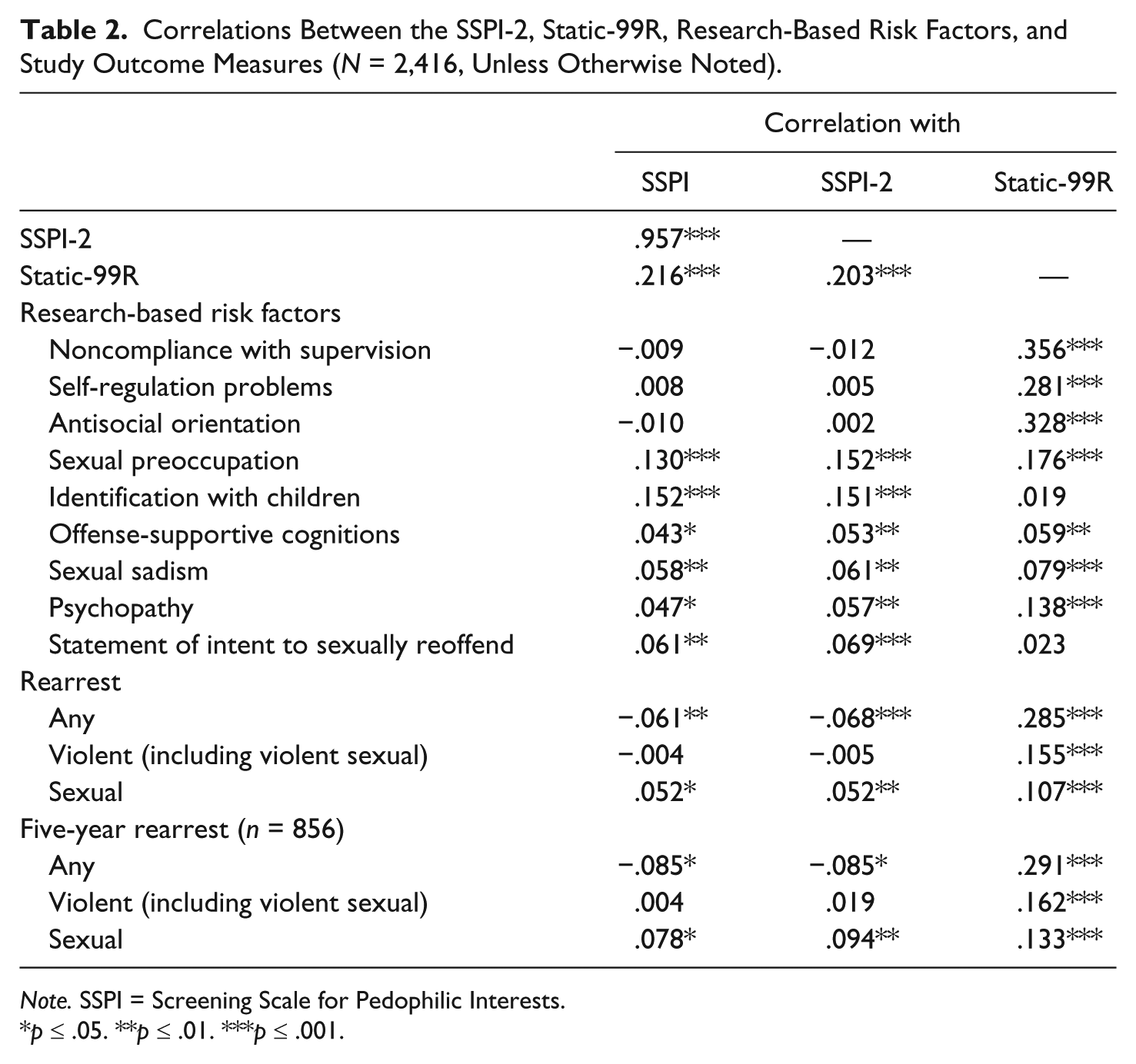
Correlations between the SSPI, SSPI-2, Static-99R, additional research-based risk factors, and the study outcome variables are presented in Table 2. As can be seen, the pattern of correlations was the same for the SSPI and the SSPI-2, with both measures correlating positively and significantly with the Static-99R (both p ≤ .001). Both measures also correlated significantly and positively with several of the additional research-based factors: sexual preoccupation (both p ≤ .001), identification with children (both p ≤ .001), offense-supportive cognitions (SSPI p = .038; SSPI-2 p = .010), sexual sadism (SSPI p = .005; SSPI-2 p = .003), psychopathy (SSPI p = .024; SSPI-2 p = .006), and statement of intent to sexually reoffend (SSPI p = .003; SSPI-2 p ≤ .001). Neither measure, however, correlated significantly with the three antisociality risk factors: noncompliance with supervision, self-regulation problems, and antisocial orientation.
Correlations Between the SSPI-2, Static-99R, Research-Based Risk Factors, and Study Outcome Measures (N = 2,416, Unless Otherwise Noted).
Note. SSPI = Screening Scale for Pedophilic Interests.
p ≤ .05. **p ≤ .01. ***p ≤ .001.
With regard to the study outcome measures, both the SSPI and SSPI-2 correlated positively and significantly with sexual rearrest at any point (SSPI p = .011; SSPI-2 p = .010) and with sexual rearrest within 5 years of release (SSPI p = .022; SSPI-2 p = .006). Interestingly, however, both the SSPI and SSPI-2 correlated negatively with any rearrest at any point (SSPI p = .003; SSPI-2 p ≤ .001) or any rearrest within 5 years of release (SSPI p = .013; SSPI-2 p = .013), whereas there was no significant relationship between either the SSPI or SSPI-2 and violent felony rearrest (whether ever or within 5 years of release). Increased scores on both the SSPI and SSPI-2, therefore, indicated an increased risk of subsequent sexual criminality as opposed to subsequent general criminality, just as the correlations showed that SSPI and SSPI-2 scores were associated with the additional sexual risk factors, but not the additional general risk factors.
The Static-99R correlated significantly and positively with all the research-based risk factors other than identification with children and statement of intent to sexually reoffend. With regard to the study outcome measures, the Static-99R was found to correlate positively and significantly with any, violent felony, and sexual rearrest (whether at any point or within 5 years; all ps ≤ .001).
AUC Analyses
All AUC values for the SSPI, SSPI-2, and Static-99R, for all six outcomes, are presented in Table 3.
Receiver Operative Characteristic Area Under the Curve (AUC) Values for Rearrest.

Note. Variables can be said to be a significant predictor of an outcome if the 95% confidence interval for that variable’s AUC does not include the value of .50. Furthermore, AUC values can be said to differ significantly if their 95% confidence intervals do not overlap. CI = confidence interval; SSPI = Screening Scale for Pedophilic Interests.
Rearrest at any point (N = 2,416)
The SSPI was found to significantly predict two of the three rearrest at any point variables. Higher scores on the SSPI indicated significantly lower risk for any rearrest (p = .003), but significantly higher risk for sexual rearrest (p = .022). The SSPI-2 was also found to significantly predict two of the three rearrest at any point variables, with the pattern of results being the same as for the SSPI: Higher scores on the SSPI-2 indicated significantly lower risk for any rearrest (p = .001), but significantly higher risk for sexual rearrest (p = .019). The Static-99R was found to significantly predict all three types of rearrest, with higher Static-99R scores indicating higher risk for any (p ≤ .001), violent felony (p ≤ .001), and sexual rearrest (p ≤ .001).
Rearrest within 5 years (n = 856)
As with rearrest at any point, the SSPI was found to significantly predict two of the three rearrest within 5 years variables. Higher scores on the SSPI indicated significantly lower risk for 5-year any rearrest (p = .014), but significantly higher risk for 5-year sexual rearrest (p = .034). Results for the SSPI-2 were similar to those of the SSPI: Higher scores on the SSPI-2 indicated significantly lower risk for 5-year any rearrest (p = .017), but significantly higher risk for 5-year sexual rearrest (p = .013). The Static-99R was again found to significantly predict all three types of 5-year rearrest: Higher Static-99R scores indicated higher risk for any (p ≤ .001), violent felony (p ≤ .001), and sexual rearrest (p ≤ .001).
Regression Analyses
In the survival analyses, there was a question of how to properly control for an offender being under community supervision (e.g., parole). In a traditional survival analysis, being under community supervision (no/yes) would be entered as a static predictor, meaning an offender who was under community supervision at any point during the follow-up period would be coded as being under supervision during the entire follow-up period. This is a problem for any offender who, for example, spent the first 10 months of his release under supervision, was discharged from supervision, and then was rearrested for a sexual offense a few months later. In a traditional survival analysis, this offender would appear as if he were on supervision at the time of his sexual rearrest, when in fact he was not (i.e., the statistical relationship would be the opposite of the actual relationship). Likewise, coding the offender as not having been under supervision during the entire time period (i.e., supervision = 0; to account for the fact that he was not under supervision at the time of his rearrest) would fail to account for any protective effects provided by community supervision during the first 10 months of the offender’s release.
To account for this issue, being under supervision was entered in the Cox regressions as a time-dependent variable, thereby allowing the value of the community supervision variable to change across time periods. This is possible because at each separate time point during the follow-up, a Cox regression estimates the likelihood of sexual rearrest given values of the independent variables in that time period. Thus, it is possible to change the value of an independent variable in a Cox regression from one time period to the next. For instance, in the example given above, the offender would be coded being under community supervision (i.e., supervision = 1) for the first 10 months of the follow-up, then coded not being under supervision (i.e., supervision = 0) for the last few months leading up to his sexual rearrest. Such coding allows for a more accurate estimation of the relationship between an offender being under supervision and the risk of that offender being rearrested.
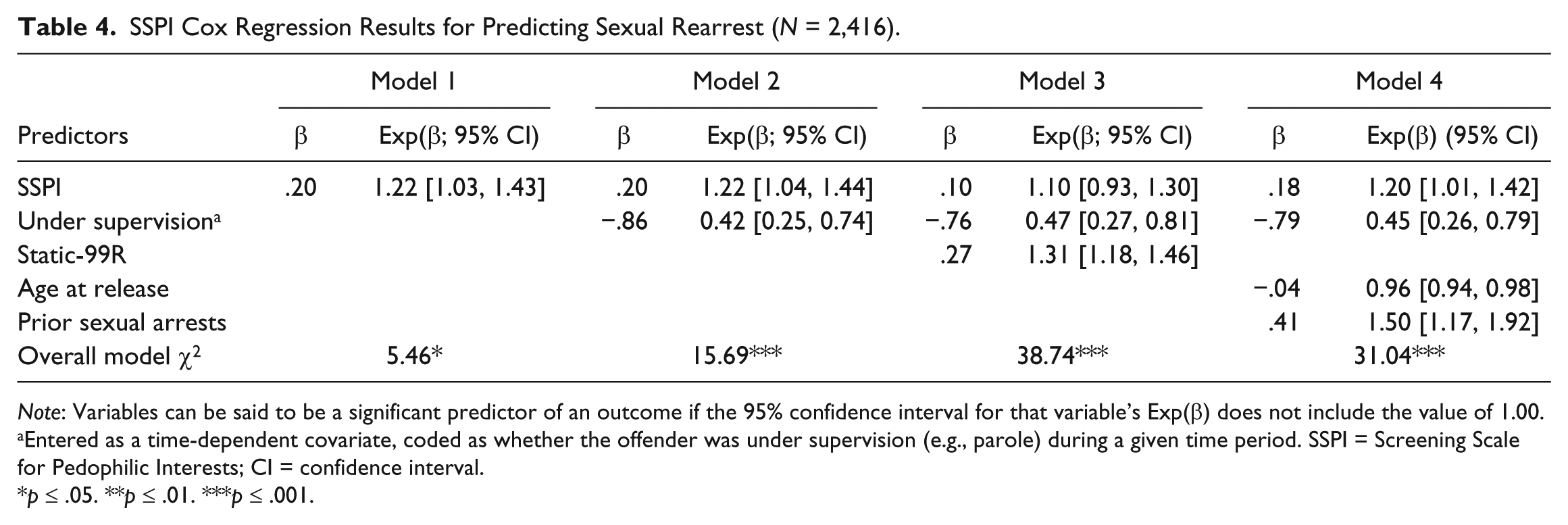
Four survival models were estimated for each of the SSPI and SSPI-2, with the outcome for each model being rearrest for a sexual offense. The first model for each, estimated for comparison and context, was a clean model including only the measure. The second model included the time-dependent covariate of being under supervision, as a way to control for any supervision-related effects. The third model included both the time-dependent covariate of being under supervision and the Static-99R, as a way to test whether the SSPI or SSPI-2 could add incremental predictive accuracy to the Static-99R. The fourth and last model included the time-dependent covariate of being under supervision, offender age at release, and number of prior sexual arrests, as a way to test whether the SSPI or SSPI-2 could add incremental predictive accuracy to these latter two variables, both of which have been established as reliable and valid predictors of sexual recidivism. The four models for the SSPI are presented in Table 4, whereas the four models for the SSPI-2 are presented in Table 5.
SSPI Cox Regression Results for Predicting Sexual Rearrest (N = 2,416).
Note: Variables can be said to be a significant predictor of an outcome if the 95% confidence interval for that variable’s Exp(β) does not include the value of 1.00.
Entered as a time-dependent covariate, coded as whether the offender was under supervision (e.g., parole) during a given time period. SSPI = Screening Scale for Pedophilic Interests; CI = confidence interval.
p ≤ .05. **p ≤ .01. ***p ≤ .001.
SSPI-2 Cox Regression Results for Predicting Sexual Rearrest (N = 2,416).

Note. Variables can be said to be a significant predictor of an outcome if the 95% confidence interval for that variable’s Exp(β) does not include the value of 1.00. SSPI = Screening Scale for Pedophilic Interests; CI = confidence interval.
Entered as a time-dependent covariate, coded as whether the offender was under supervision (e.g., parole) during a given time period.
p ≤ .05. **p ≤ .01. ***p ≤ .001.
As can be seen, both the SSPI and SSPI-2 significantly predicted sexual recidivism by themselves (Model 1) and after controlling for the effects of community supervision (Model 2). Furthermore, both the SSPI and SSPI-2 were found to be significant in the model that controlled for community supervision, offender age at release, and number of prior sexual arrests (Model 4), indicating that both measures appear to add incremental predictive accuracy to these other predictors. Neither the SSPI nor the SSPI-2, however, was found to significantly add predictive accuracy to the Static-99R. Across all four models, the SSPI-2 seemed to perform slightly better than the SSPI, although none of the differences was statistically significant.
Logistic regression found each additional point on the SSPI to increase the odds of an offender being rearrested for a sexual offense within 5 years by 29.0% (model χ2 = 5.04; p = .025) and each additional point on the SSPI-2 to increase the odds of an offender being rearrested for a sexual offense within 5 years by 48.2% (model χ2 = 7.56; p = .006). The logistic estimates for 5-year sexual rearrest rates for SSPI and SSPI-2 score groupings can be seen in Figure 1; estimates for the SSPI-2 are bolded. Logistic regression found each additional point on the Static-99R to increase the odds of an offender being rearrested for a sexual offense within 5 years by 34.5% (model χ2 = 16.38; p ≤ .001). Although this per-point increase is less than each additional point on the SSPI-2, the Static-99R as an instrument still holds more overall predictive power, as it has a much larger range (i.e., −3 to 12 for the Static-99R versus 0 to 5 for the SSPI-2).
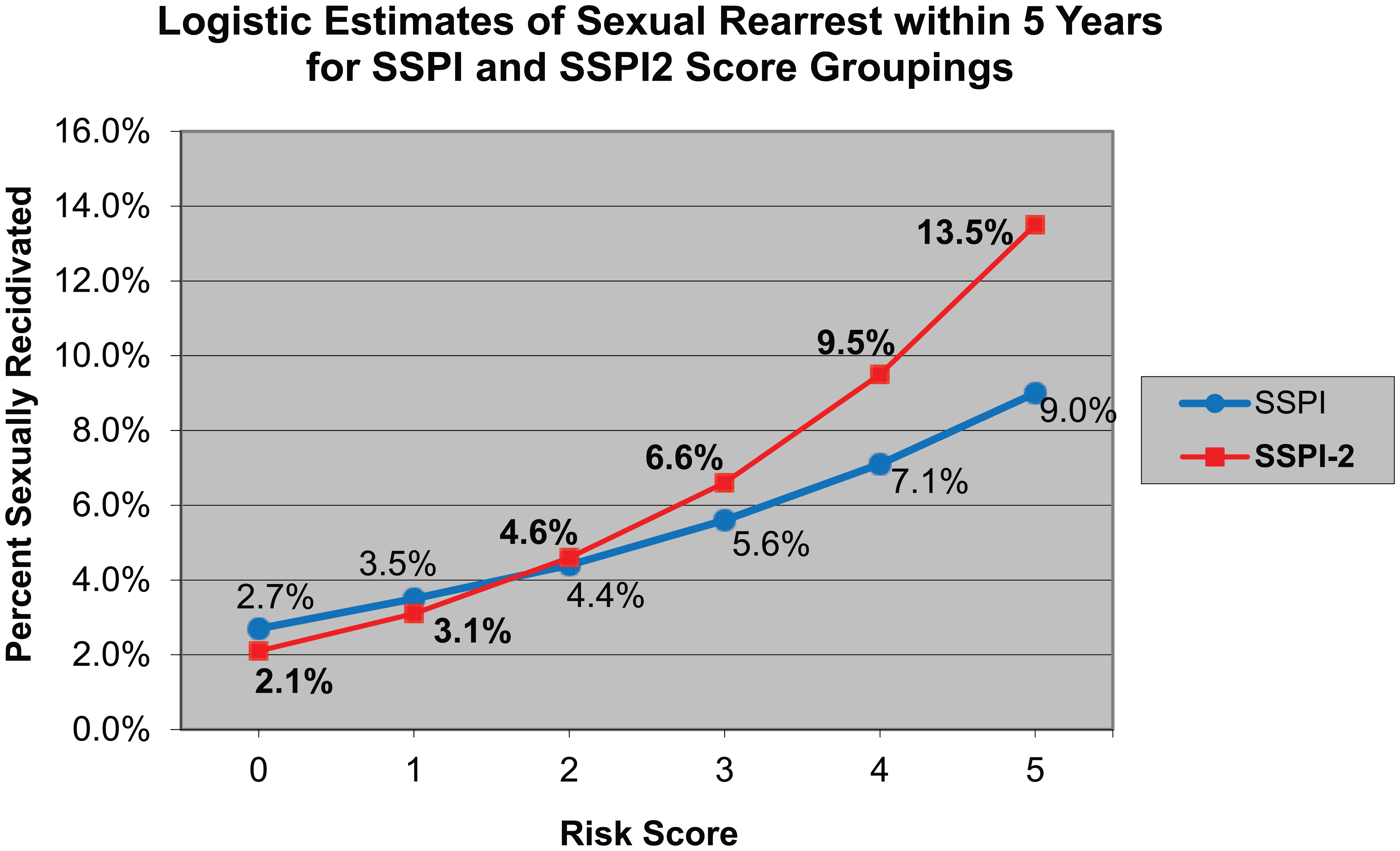
Logistic estimates for SSPI and SSPI-2 (bolded) 5-year sexual rearrest rates (n = 856).
Discussion
The SSPI and SSPI-2 were designed to be measures of pedophilic sexual interests for sex offenders with child victims, not risk of sexual recidivism. Nonetheless, consistent with meta-analytic findings that indicators of pedophilic sexual interests predict sexual recidivism, some previous studies have shown that the SSPI can predict sexual recidivism among offenders with child victims (Helmus et al., 2015; Seto et al., 2004; although others have not: Canales et al., 2009; Moulden et al., 2009). In this study, we found both the SSPI and SSPI-2 were significant predictors of sexual recidivism: Both SSPI and SSPI-2 scores were significantly and positively related to sexual rearrest, either at any time or within 5 years of release (for those offenders with a full 5-year period of opportunity). Furthermore, both measures were negatively associated with rearrest for any reason (whether at any time or within 5 years), suggesting that the SSPI and SSPI-2 are specific to pedophilic sexual interests and sexual recidivism, as opposed to general criminality factors and risk of any recidivism. These prediction results add to the accumulating evidence regarding the construct validity of the SSPI and SSPI-2.
There was also evidence of concurrent validity of the SSPI and SSPI-2 with additional research-based risk factors rated by OMH clinicians. Both measures correlated positively and significantly with atypical sexuality ratings such as excessive sexual preoccupation, emotional identification with children, and offense-supportive cognitions. Neither the SSPI nor the SSPI-2, however, correlated significantly with the three antisociality factors of noncompliance with supervision, general self-regulation problems, or antisocial orientation. The patterns of these correlations also support the construct validity of the SSPI and SSPI-2 as specific measures of pedophilic sexual interests.
The SSPI and SSPI-2 were also positively correlated with sexual sadism and with psychopathy. The positive association with sexual sadism is consistent with evidence that paraphilic sexual interests can co-occur, including pedophilia and sexual sadism (e.g., Abel, Becker, Cunningham-Rathner, Mittelman, & Rouleau, 1988; Bradford, Boulet, & Pawlak, 1992; Freund, Seto, & Kuban, 1997). Consistent with the small albeit significant correlations we found, these prior studies found that pedophilia and sexual sadism co-occur in only a small minority of cases. Also consistent with this idea, a recent analysis of digital pornography content found that a third (34%) of child pornography offenders also had any pornography depicting sadomasochistic themes, with 18% having content that was reliably judged to be indicative of a sexual interest in this theme, for example, in terms of amount or organization of the digital files (Seto & Eke, 2015).
The positive association with psychopathy was surprising given the finding that neither the SSPI nor SSPI-2 was significantly correlated with the antisociality research-based factors. It may be that clinicians who coded this factor as part of the civil management review process were more likely to note the presence of psychopathic traits if it was combined with atypical sexual interests for two reasons: (a) research that suggests that psychopathy and atypical sexual interests can interact in the prediction of sexual recidivism (Hildebrand, de Ruiter, & de Vogel, 2004; Serin, Mailloux, & Malcolm, 2001; Seto et al., 2004), and (b) the fact that these clinicians are responsible for identifying offenders who are at higher risk of sexual recidivism, not offenders who pose a risk for any recidivism. It is worth noting that the correlations with psychopathy (and with sexual sadism) were small in magnitude.
Strengths and Limitations
A strength of this study is its large, statewide sample with high-quality data and considerable follow-up time. Clinicians who scored the SSPI, Static-99R, and additional research-based factors analyzed here had access to a breadth of information, often including official criminal records, police reports, sex offender treatment documents, incarceration and supervision conduct reports, and victim statements. The depth of file information allowed for both official and self-report information to be included in the coding of the study variables. Also, by including supervision in the regression analyses as a time-dependent variable, we were able to more accurately account for the impact of supervision than if we had used a traditional, static coding. Therefore, we were able to more confidently conclude that the SSPI and SSPI-2 add incremental predictive validity to previously established risk factors (i.e., age at release and prior sexual offenses), even after controlling for supervision-related effects.
There was, however, some sample bias in this study, with 8% of all those scored on the SSPI having been deemed to be in need of civil management. These offenders would be expected to score higher on the SSPI, SSPI-2, and Static-99R—which was confirmed by the study attrition analyses—and would be expected to have higher rates of sexual recidivism had they been released into the community. This restriction of range on both the predictor and outcome variables would attenuate the observed association, so the true relationship would be stronger than found in this study. Another limitation is that we had to rely on proxy variables rather than formal diagnoses or assessments of pedophilia, other paraphilias, and psychopathy. Official diagnoses were only available for 57 (2.4%) of offenders in the final sample.
Another possible source of bias in the present study is that coders of the additional research-based risk factors were not blind to SSPI scores at the time of the risk factor coding. As stated above, the research-based risk factors used in the present study should all have been coded without consideration of SSPI score (the one risk factor to which an SSPI score contributed was omitted due to its clear lack of independence with the SSPI), but it is still possible that coders considered the SSPI. This possible limitation is mitigated, however, by two facts: (a) All the SSPI scores and research-based risk factors used in the present study were coded for the offenders’ civil management review, not for the study itself (i.e., the coders were blind to the study questions), and (b) the results of the recidivism analyses, which could not have been affected by any bias, still support both the predictive and construct validity of both the SSPI and the SSPI-2.
Future Directions
The results of this study support the predictive validity of both the SSPI and SSPI-2. Although the AUC results were very similar for sexual rearrest at any time during the follow-up period or after 5 years of follow-up, the logistic estimates of recidivism shown in Figure 1 suggests the SSPI-2 produced better discrimination than the SSPI across the range of possible scores. In conjunction with the results of Seto et al. (2017) showing that the addition of the child pornography offending item in the SSPI-2 improved on the association of the SSPI with phallometric test results, this study provides further support for the use of the SSPI-2 as a measure of pedophilic sexual interests.
There are a number of directions for future research. It would be valuable to replicate the SSPI-2’s predictive validity in other large, representative samples. These studies could address such questions as follows: Would the SSPI-2 interact with a relatively pure measure of antisocial tendencies or psychopathy, such as the PCL-R (only available for 19 [0.8%] of the offenders in the present study’s final sample), in predicting sexual recidivism, as was found in Seto et al. (2004) and other studies using different measures of atypical sexual interests (e.g., Gretton, McBride, Hare, O’Shaughnessy, & Kumka, 2001; Rice & Harris, 1997)? Can the SSPI-2 substitute for phallometric testing in risk assessment measures such as the SORAG? How does the SSPI-2 correlate and compare with other measures of sexual interest in children, such as viewing time or visual reaction time (e.g., Kingston et al., 2007)?
Conclusion
Results from the study indicate that both the SSPI and SSPI-2 can accurately identify pedophilic sexual interests, and thus have clinical utility in the assessment of sex offenders because it can be used to identify a potential treatment or supervision target, especially in cases where phallometric testing is not available or the individual refuses to participate in the procedure. Practitioners may want to consider implementing the SSPI-2, as it represents a less intrusive means of accurately obtaining information on pedophilic sexual interests. The SSPI-2 has the additional advantage of incorporating information about child pornography offending. The SSPI-2 is also useful for research purposes as a history-based indicator of pedophilic sexual interests, again when phallometric data are unavailable.
Furthermore, it appears that the SSPI-2 can accurately predict sexual recidivism after a 5-year follow-up, though not significantly better than the SSPI. This suggests the SSPI-2 can also be useful as a clinical or research indicator of sexual recidivism risk, especially in conjunction with an indicator of antisocial tendencies such as psychopathy (Seto, 2008, 2013). The SSPI-2 is not intended, however, to be a substitute for an established actuarial or structured risk measure such as the Static-99R.
Footnotes
Authors’ Note
Data for this project were furnished to the researchers by the New York State Office of Mental Health (NYS OMH). The NYS OMH, however, was not responsible for the methods of statistical analysis or the conclusions reached. Any opinions and suggestions within the article are those of the authors alone, and not representative of the views of the NYS OMH or the Royal Ottawa Health Care Group.
Declaration of Conflicting Interests
The author(s) declared the following potential conflicts of interest with respect to the research, authorship, and/or publication of this article: Michael C. Seto declared that this submission was reviewed independent of him as Editor-in-Chief of this journal (see Seto, 2015).
Funding
The author(s) received no financial support for the research, authorship, and/or publication of this article.