



Abstract
Few researchers have examined sex trafficking of girls with intellectual disabilities (IDs). Drawing from 54 juvenile sex trafficking (JST) cases, this exploratory, mixed methods study compared 15 JST cases involving girls with ID with 39 JST cases involving girls without ID. Findings revealed a disproportionate risk for exploitation in JST for girls with ID, endangering circumstances creating vulnerability among this population, as well as the perpetrator–victim dynamics that complicate prevention and intervention. Complicating dynamics included victim lack of awareness of exploitation and its endangerments, inability of victims to self-identify, and the relative ease with which traffickers manipulated these girls. The disproportionate risk faced by girls with ID substantiates the need for enhanced safeguards to prevent sexual exploitation of girls with ID including stiffer penalties for those who exploit and buy sex with youth with disabilities.
Introduction
Protecting children and adolescents from exploitation in sex trafficking is an emerging and urgent concern of child protection investigators, child welfare practitioners, and child maltreatment researchers. U.S. federal legislation, the Trafficking Victims Protection Act (TVPA, 2000), provides enhanced protection for children and adolescents exploited in sex trafficking and defines profiting from the sexual exploitation of minors as a severe form of human trafficking (TVPA, 2000). Similar to statutory rape laws, which obviate the need to prove coercion, the TVPA provides protection for minors whether or not they were coerced, forced, or tricked into involvement in prostitution or pornography. This enhanced protection was intended to protect U.S. minors who, due to disadvantaged or precarious circumstances, are exploited and frequently arrested in prostitution (Adelson, 2008).
When considering the most vulnerable children and adolescents, numerous studies have emphasized the higher rate of crime victimization and abuse of youth with disabilities in comparison with youth without disabilities (Harrell & Rand, 2010; Hershkowitz, Lamb, & Horowitz, 2007; Hibbard & Desch, 2007; Horner-Johnson & Drum, 2006; Putnam, 2003; Sobsey, Randall, & Parrila, 1997; Sullivan & Knutson, 2000). More specifically, researchers have noted that youth with intellectual disabilities (IDs) experience elevated rates of various types of sexual victimization (McCormack, Kavanagh, Caffrey, & Power, 2005; Skarbek, Hahn, & Parrish, 2009; Wells & Mitchell, 2014; Wissink, van Vugt, Moonen, Stams, & Hendriks, 2015) and are at greater risk for exploitation in sex trafficking (Clawson, Dutch, Solomon, & Grace, 2009; Estes & Weiner, 2005; U.S. Department of State [DOS], 2012).
Sex trafficking of minors is a particularly damaging form of abuse often resulting in physical harm, psychological problems, interpersonal difficulties, marginalization, and even criminalization (Gerassi, 2015; Reid, 2012a; Varma, Gillespie, McCracken, & Greenbaum, 2015). Due to the detrimental and potential lifelong psychological and health consequences suffered by trafficking victims, comprehensive protection of children and adolescents, including those with ID, from entrapment in sex trafficking is critically important (DOS, 2014). In light of these priorities, the purpose of the current exploratory study was to investigate the seldom researched topic of juvenile sex trafficking (JST) of girls with ID. By exploring the circumstances of trafficked girls with ID that may elevate risk for exploitation in JST and detailing victim–offender dynamics between sex traffickers and girls with ID, the findings of this study may be used to inform prevention strategies designed for these highly vulnerable youth.
Elevated Vulnerability to Victimization Among Youth With ID
Based on a research review, Wissink et al. (2015) stated that the “relative risk for sexual abuse was estimated to be 4-8 times higher for children with intellectual disability compared to children with average intelligence” (p. 32). The physical and psychological consequences of sexual abuse or sexual assault for girls with ID are similar to the consequences experienced by victims without ID (Campbell, Dworkin, & Cabral, 2009; Mason & Lodrick, 2013; Sobsey, 1992; Soylu, Alpaslan, Ayaz, Esenyel, & Oruç, 2013). Physical consequences may include pregnancy, sexually transmitted diseases, bruises, lacerations, and other physical injuries (Sobsey, 1992). Common psychological consequences include depression, anxiety, panic attacks, low self-esteem, shame and guilt, irrational fear, and loss of trust (Sobsey, 1992; Soylu et al., 2013). Behavioral difficulties related to sexual victimization observed in victims with ID include withdrawal, aggressiveness, and self-injurious and sexually inappropriate behavior (Sobsey, 1992; Wissink et al., 2015).
Estimates indicate that somewhere between 1% and 3% of U.S. nationals have an ID (Larson et al., 2000; Schalock et al., 2010). Intellectual functioning is most often measured using IQ tests with an IQ test score of around 70 or as high as 75 indicating a limitation in intellectual functioning (Schalock et al., 2010). Principally, ID impairs functioning in three domains, including the conceptual domain involving academic skills, the social domain involving communication and ability to make and retain friendships, and the practical domain that involves personal care, money management, and job skills (American Psychiatric Association, 2013). As a result, substantial functional limitations may occur in one or more of the areas of major life activity: (a) self-care, (b) receptive and expressive language, (c) learning, (d) mobility, (e) self-direction, (f) capacity for independent living, and (g) economic self-sufficiency (Developmental Disabilities Assistance and Bill of Rights Act, 2000).
ID heightens vulnerability to victimization and exploitation for several reasons. Most notably, the limited functionality common with ID heightens vulnerability to sexual victimization due to the victims’ lack of understanding of what is happening during sexual abuse, assault, or exploitation (Wissink et al., 2015). In addition, lack of understanding of sex results in unfamiliarity with sexual behavior, confusion over which behaviors are legal or illegal, and, ultimately, failure to realize their right to say no (Keilty & Connelly, 2001; Wissink et al., 2015). Some youth with severe ID may be unable to communicate or disclose an assault to a trustworthy person. Others with less severe limitations may not disclose due to fear of harm because of threats against them or their loved ones by the abuser (Keilty & Connelly, 2001; Wissink et al., 2015). Last, when reporting sexual victimization or sexual exploitation, persons with ID are often marginalized and disparaged by the police—they may not be viewed as credible due to having a disability (DOS, 2012; Keilty & Connelly, 2001; Wissink et al., 2015).
Sex Offenders and Victimization of Youth With ID
Perpetrators of sexual abuse and assault may select victims with a disability because they view them as less powerful, more vulnerable, or less capable of reporting the offense (Verdugo & Bermejo, 1997). Similarly, studies investigating victim-selection patterns of sex offenders have found that the level of vulnerability of a victim is an important factor in offender selection of specific victims (Beauregard & Leclerc, 2007; Beauregard, Rossmo, & Proulx, 2007). In a review of research examining patterns and characteristics of perpetrators of sexual abuse and sexual assault involving victims with disabilities, most authors have noted that very few perpetrators of sexual abuse or assault involving victims with disabilities were unknown or strangers of the victim prior to the assault (Verdugo & Bermejo, 1997). Sobsey and Doe (1991) found that 56% of the associations between perpetrators and victims with disabilities followed similar relationship patterns as perpetrators and sexual assault victims without disabilities. More specifically, the perpetrators were frequently family members, acquaintances, or dates, with only 8% of perpetrators identified as strangers. The remaining 42% of perpetrators of assaults involving victims with disabilities were classified as having a relationship with victims directly related to the victims’ disabilities (e.g., personal care attendants, psychiatrists, residential care staff, specialized foster care parents).
Due to the higher vulnerability of individuals with IDs to manipulation by those they consider to be their friends or caregivers, several researchers have coined the term “mate crime” to describe the faux–friendship strategy used by offenders to exploit those with intellectual vulnerabilities (Grundy, 2011; Landman, 2014). Mate crime was commonly observed among individuals with intellectual vulnerabilities who due to isolation and friendlessness are easily targeted and befriended by offenders, and then criminally exploited or forced into participation in criminal enterprises (Grundy, 2011; Landman, 2014). Typical scenarios of mate crime were described as beginning with individuals with ID or learning disorders being taken advantage of by friends, often recent acquaintances; by having their flats turned into crack dens; their residences used to store stolen goods; or “women with learning disabilities being pimped (sent to work as a prostitute) by their ‘boyfriends’” (Landman, 2014, p. 357). One strategy used by perpetrators of mate crime is known by the street term “cuckooing” (Butera, 2013; Equality and Human Rights Commission, 2011). This derogatory street term describes a strategy used by exploitive individuals who may move into the home of an individual with a mental or ID under the guise of being helpful but, in reality, they take advantage of the relationship to get access to food, clothes, and drugs, or to manipulate individuals to involve and exploit them in criminal activities including sex crimes and prostitution (Butera, 2013; Equality and Human Rights Commission, 2011).
Sex Trafficking and Victimization of Girls With ID
Similar to sex offenders who target individuals with ID, sex traffickers also target children and adolescents who are easier to manipulate, who are not likely to expose their illegal activities, and who are not viewed as credible by law enforcement (Brayley, Cockbain, & Laycock, 2011; Reid, 2008, 2013, 2016; Reid & Jones, 2011). Too often, persons with ID are considered as not sexually active, and as a result, they are not provided with sufficient sexual education needed to develop personal safety skills for protection from sexual victimization (DOS, 2012; Groce, 2004; Gust, Wang, Grot, Ransom, & Levine, 2003; Wissink et al., 2015). This common perception that individuals with ID are not sexually active elevates their susceptibility to sex trafficking. For example, girls with ID may be assumed to be virgins and, therefore, targeted for sex trafficking for those seeking to buy or sell sex with a virgin (Groce, 2004; Phasha & Myaka, 2014; Reid, Huard, & Haskell, 2015).
Existing research regarding JST involving those with ID is generally anecdotal, and our understanding of the problem is insufficient. Several researchers have documented the opinions of police, prosecutors, and social workers regarding individuals with ID involved in prostitution based on a small number of cases (Kuosmanen & Starke, 2011, 2013). Other researchers have examined the types of crimes committed by those with ID in comparison with those without ID (Lindsay et al., 2011) or compared sex offenders with ID with non-sex offenders with ID (Lindsay et al., 2004; van den Bogaard, Embregts, Hendriks, & Heestermans, 2013) with prostitution arrests recorded against both male and female adults with ID (Lindsay, Steele, Smith, Quinn, & Allan, 2006). However, research exploring the circumstances elevating risk for exploitation in sex trafficking of girls with ID or detailing victim–offender dynamics between sex traffickers and girls with ID is lacking.
Current Study
The current exploratory study focused on two sets of research questions. The first set of questions focused on JST victims by examining the demographics and mental health diagnoses of JST victims with ID, their maltreatment histories and environmental risk factors, and the consequences of sexual exploitation. The second set of questions centered on the characteristics and modus operandi of the traffickers of girls with ID.
Although JST is commonly linked to mental health problems, addictions, and behavioral disorders (Reid, 2011; Reid & Piquero, 2014), these other types of disorders were not used when classifying a youth as having a disability for the current study. For this study, the specific vulnerabilities of girls with ID were the primary focus. Comparisons between JST victims with and without ID facilitated greater understanding of the circumstances and risks factors unique to JST victim with ID to inform prevention strategies specifically designed for these most vulnerable youth.
Method
Sample of Case Records
The study sample was drawn from a sample of case records of 93 female youth with evidence of initial exploitation in sex trafficking prior to turning 18 years old. The case records were collected from 2007 and 2014 from four social service agencies located in major metropolitan areas in southern and central Florida. The four social service agencies provided case management and mental health counseling to girls who were exploited in sex trafficking. Such purposive sampling is often used when the probability of selection for all members of a population is unknowable, such as research with homeless youth (Hagan & McCarthy, 1997). Importantly, purposive sampling of case records of trafficked youth ensured several ethical considerations. By reviewing and analyzing information previously collected and available in the case records and interviewing social service providers engaged in assisting these youth, this study was conducted without exposing the youth to additional risk. The institutional review board of the University of South Florida and the University of Massachusetts Lowell approved the protocols of this research project.
Fifty-four of the 93 case records contained information on intellectual functioning of the trafficked girls, and therefore, these 54 case records were utilized for the current study. The remaining case records were not utilized for the current study due to missing data on intellectual functioning. The trafficked girls with missing data on intellectual functioning could not be categorized as individuals with or without ID. 1
Each of the 54 case files included three categories of de-identified information. First, biographical information was available, including demographics, family characteristics, reported history of maltreatment, and/or prior involvement in foster care or with child protective services. Second, the case records included results of psychological evaluations and/or assessments of the girls. Last, evidence of and circumstances related to sex trafficking were based on youth self-report, caregiver report, official report by law enforcement, and/or records provided by child protective services. Information was reported regarding the circumstances surrounding the youth’s initiation and involvement in commercial sexual exploitation such as details about the pimp/trafficker and their relationship with the victim, the initiation or recruitment process, the length and extent of sexual exploitation, and how the youth was eventually identified or escaped.
Data Collection
The primary data source for each subject was her case file, which included information gathered from evaluations and assessments during the intake assessment by the social service provider involved with the case. In addition to intake assessments, case file data also included reports from multiple sources external to the social service provider, such as previous psychological assessments, evaluations previously conducted by children services, and police reports related to the sexual exploitation of the subject. These external reports not only originated from different agencies but also were written at different points in the subject’s life to describe the subject and her life circumstances as they were occurring at that time. In many cases, children services records were available that predated the subject’s initial exploitation in sex trafficking. Access to these original reports helped to counteract the retrospective biases inherent in file research based largely on summary reports of a subject’s life written after effects of particular importance have already taken place (in the case of this study, after the onset of sex trafficking).
In addition, to validate and possibly elaborate on the data recorded in the case files, mental health therapists and case managers with in-depth knowledge of the documented cases were interviewed regarding the psychosocial histories and experiences of the trafficked girls. All mental health counselors and case managers who were interviewed had extensive and direct experience counseling or assisting trafficked youth. The semi-structured interviews were completed in approximately 1 hr (for more information of the interview questions, see Reid, 2016). The case file review and interviews with service providers were conducted between July 2012 and March 2014.
Data Analysis
This study explored JST of girls with ID through a combination of qualitative and quantitative data collection and analysis. Case file data provided both qualitative and quantitative data related to the subject’s psychosocial history and circumstances surrounding exploitation in sex trafficking. First, quantitative data on the demographic and background information of each girl as well as information regarding traffickers contained in the records were coded and analyzed. This information allowed for descriptive analysis of all 54 cases as well as a comparative analysis of the JST victims with and without ID. These analyses were conducted using SPSS Version 22.0 (IBM Corp. Released, 2013).
Beyond the examination and analysis of the demographic data, quantitative data on the psychosocial histories of the trafficked girls were also analyzed. Data regarding child maltreatment and sexual victimization prior to the onset of exploitation in sex trafficking, risk-taking behaviors such as running away, prostitution arrest, and involvement of state child protective services were coded and analyzed. Descriptive statistics and comparative analysis of these indicators and risk factors between girls with and without ID were also conducted using SPSS Version 22.0 (IBM Corp. Released, 2013). Due to prior research findings regarding the strong link between sexual abuse and assault and JST (e.g., Reid, 2011, 2012b; Tyler, Hoyt, Whitbeck, & Cauce, 2001; Widom & Kuhns, 1996; Wilson & Widom, 2008, 2010), qualitative data available in the case files were analyzed to provide further details regarding the timing, extent, and contexts of the sexual victimizations of girls with ID preceding JST.
Descriptive statistics of clinical symptomology of trafficked girls with and without ID were reported based on their scores on psychological assessments. Many case files contained results from both or either the Child Behavior Checklist (CBCL; Achenbach & Rescorla, 2001) and the Trauma Symptom Checklist for Children (TSCC; Briere, 1996). The CBCL is a popular standardized measure of problem behaviors during childhood and adolescence (Achenbach & Rescorla, 2001). The CBCL measures multiple childhood and adolescent problems, including anxiety and depression, aggressive behavior, social problems, thought problems, and attention problems. The TSCC is a broad-based assessment for use with youth aged 8 to 17 years of trauma-related symptoms and behaviors such as anxiety, depression, anger, and dissociation (Lanktree et al., 2008). Importantly, results of the TSCC have been shown to be congruent with the CBCL (Briere, 1996). When results from CBCL or TSCC were not available, results from other psychological assessments and clinical diagnoses with sub-classifications (e.g., mild, moderate, severe) contained in the case files were used to estimate symptomology levels for each subject. To allow comparison across the various psychological assessments, an ordinal scale was created based on the score interpretation designated with each psychological test or youth diagnosis with sub-classifications (0 = no problem reported, 1 = report of minor problem, 2 = clinical concern, 3 = mild to moderate clinical problem/diagnosis, 4 = severe clinical problem/diagnosis). Information on symptomology of each youth was independently rated by one researcher and by one licensed mental health counselor. When there was a disagreement in the ratings, the raters met to resolve discrepancies and reach consensus.
In addition, qualitative data contained in case files and interview data regarding the circumstances and methods of trafficking were coded and thematically organized. Template analysis (TA), a systematic method for thematically analyzing qualitative data, was used to synthesize the qualitative data (King, 1998). TA facilitates the organization of qualitative data based on the clustering of records and responses within a priori defined and/or data driven templates (King, 1998). Based on prior research regarding possible circumstances and vulnerabilities related to sexual victimization of youth with ID, an a priori template was designed encompassing possible vulnerabilities related to functional limitations (e.g., unfamiliarity with sexual behavior and relationships, confusion over which behaviors are legal or illegal, failure to realize their right to say no). In addition, an a priori template was designed encompassing known sex trafficker entrapment schemes (e.g., romancing/boyfriend schemes, financial incentives, recruitment through peers, abducting/transporting girl to another place; Anderson, Coyle, Johnson, & Denner, 2014; Reid, 2016). If these a priori themes fit the data, the data were coded based on these themes. If not, existing themes were modified or new themes were added. In addition, to facilitate application of the study findings to prevention strategies, particular attention was given to the environment circumstances that facilitated exploitation by the sex traffickers. The final data-derived template provided thematic framing and reporting of the study findings (King, 1998). Microsoft Excel 2010 supported the coding and organization of the data drawn from the case records and the interviews with service providers (Leahy, 2004; Taylor-Powell & Renner, 2003).
Results
Categorization of Subsets of Trafficked Girls With and Without ID
From the sample of 54 case records containing information on intellectual functioning, 15 girls (28%) were categorized as having an ID. 2 No difference was observed in the percentage of girls with ID across the trafficking cases from the two regions of Florida (i.e., central and southern regions). To facilitate classification of youth as having or not having an ID, the 54 files were reviewed and classified by two researchers who were familiar with the subject population. Agreement on youth classification was evaluated, and the results of the interrater analysis were Kappa = .83 (p = .000), 95% confidence interval (CI) = [.67, .99]. More explicitly, agreement in the initial classification was observed in 50 of the 54 cases. In the cases without initial agreement between raters, supplemental review of the case files revealed that, although the subjects were experiencing academic difficulties and several were placed in academic settings for students with special needs, the difficulties were based on truancy or emotional/behavioral disabilities not an ID. In addition, case notes provided by therapists or reports by caregivers indicated that these youth did not have an ID. Therefore, these four subjects were subsequently included in the subgroup of girls without ID.
Eight of the 15 files of girls with ID contained results of standardized assessments of cognitive or intellectual ability. Results from the Wechsler Intelligence Scale for Children (WICS-IV; Wechsler, 2003) were the most commonly available test results in the case files. For youth to be placed in the subset of girls with ID for this study, one or more of their composite scores (e.g., full scale IQ, verbal comprehension, perceptual reasoning, working memory, processing speed) on the WICS-IV was recorded as equal to or below 75. The WICS-IV composite scores for these youth were consistently interpreted as low average, borderline, or intellectual deficient. The second most commonly used standardized assessment of cognitive ability available in the case files was the Woodcock-Johnson Test of Cognitive Abilities (WJ-III-COG; Cizek, 2003). For youth to be placed in the subgroup of girls with ID, one or more of the WJ-III-COG composite scores (e.g., general intellectual ability, verbal ability, thinking ability, cognitive efficiency) was equal to or below 75. The composite scores for these youth were consistently interpreted as low or very low. Youth percentiles on the various WJ-III-COG composite scores ranged from the first percentile (age equivalent of approximately 7 or 8 years) to the 11th percentile (age equivalent of approximately 10 years).
Three of the 15 files of girls classified with ID did not contain the results from the WICS-IV or WJ-III-COG. These cases were assessed using CBCL scales for activities, social relations, school, and total competence (Achenbach & Rescorla, 2001). The CBCL provides cut points for normal, borderline, and clinical range scores for each scale. The three girls assessed using the CBCL and included in the ID subset scored in the clinical range (below the third percentile) for social relations, school, and/or total competence.
Four cases without standardized cognitive assessments were included in the ID group due to clinician statements in their files that strongly indicated limited cognitive abilities, including “Borderline Intelligence Score (Perceptual Reasoning Index = 75) WISC-IV,” “mental retardation and her intelligent quotient is 62,” “developmental delay,” “mental retardation,” “judgment and insight severely impaired,” “below average intelligence with limited ability to understand danger,” “IQ 50-55,” “cannot read, head injury, gunshot injury to head with poor insight,” and “born substance exposed and premature with developmental delay.” As noted previously, girls with extreme emotional disabilities who were in special education classes but without documentation or evidence of having an ID were not included in the subgroup of girls with ID.
Sample Demographics and Subsample Comparisons
For the full sample of 54 girls, initial JST occurred when the girls were between the age of 5 and 17 years old (M = 14.22, SD = 2.52). The range of ages at initial exploitation in JST of those without ID was wider (ranging from 5 to 17 years) in comparison with girls with ID (ranging from 13 to 17 years). However, no statistically significant difference was found between the average age of onset when comparing the two subsets of trafficked girls, t(47) = 1.47, p = .16. The race/ethnic distribution of the full study sample was 43% (n = 23) African American, 30% (n = 16) Hispanic, 17% (n = 9) Caucasian, 6% Haitian (n = 3), and 6% (n = 3) of other races/ethnicities. The racial/ethnic distribution of the two subsets of girls were not significantly different, χ2(4) = 1.96, p = .74. The racial/ethnic distribution of the subsample of youth with ID was 53% (n = 8) African American, 27% (n = 4) Hispanic, 13% (n = 2) Caucasian, and 7% (n = 1) Haitian.
The gender of the traffickers of the full sample was distributed as 64% (n = 32) male and 36% (n = 18) female. The gender distribution of traffickers was 60% (n = 9) male and 40% (n = 6) female for the subsample of girls with ID. The types of trafficker–victim relationships for the full sample were 31% (n = 15) stranger, 29% (n = 14) relative, 23% (n = 11) boyfriend, 11% (n = 5) girlfriend, and 6% (n = 3) drug dealer. For girls with ID, the reported trafficker–victim relationships were 53% boyfriend (n = 6), 13% stranger (n = 2), 13% girlfriend (n = 2), 13% relative (n = 2), and 7% drug dealer (n = 2). When examining reports of youth behaviors or circumstances likely to heighten vulnerability to exploitation in JST, there were no significant differences in the percentage of girls experiencing these risks across the two subgroups (Table 1). In addition, there were no statistically significant differences across subgroups when considering possible routes of victim identification or intervention by law enforcement or social service providers.
Descriptive Statistics of Subsamples.
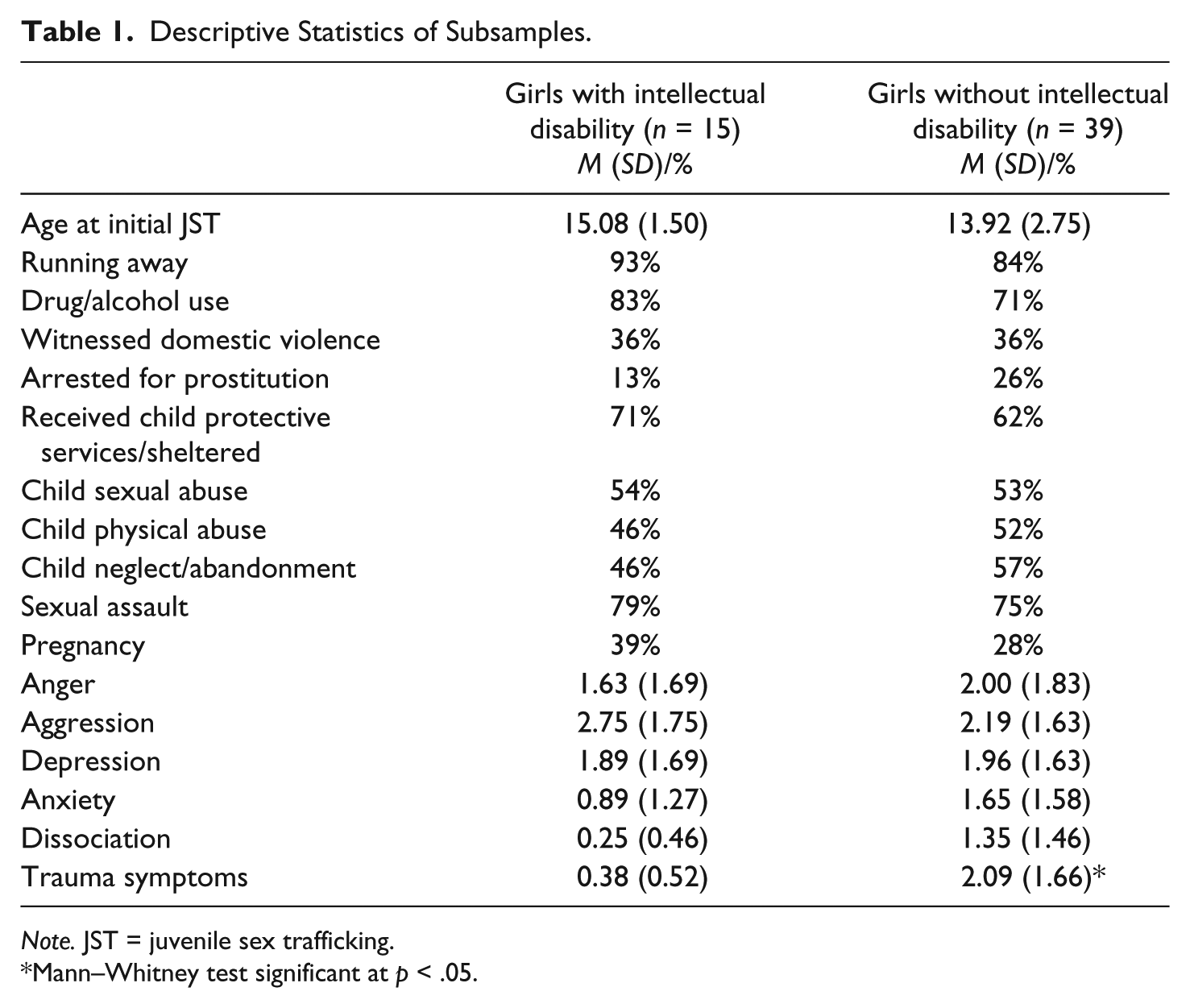
Note. JST = juvenile sex trafficking.
Mann–Whitney test significant at p < .05.
When considering youth histories of child maltreatment, both subgroups experience high rates of maltreatment with no statistically significant differences between the two subsamples (see Table 1). The case records contained descriptions of the extent of the sexual abuse and victimization. Many girls with ID were abused at young ages (“sexual abuse by biological father when 5 or 6 years old”; “sexually abused when she was 7 years old by adolescent boy”). Numerous descriptions of sexual abuse indicated that the sexual abuse was ongoing (“raped by biological father for several years starting when 11 years old”; “raped by foster brother at age 11 for 8 months”). As evidenced by these case details, some of the sexual victimization of girls with ID occurred in the girls’ homes or placements (“aunt’s paramour attempted to force child to perform oral sex”; “at age 11 raped by family friend . . . [subsequently] removed from mother’s care and molested by foster parents”). Others were sexually abused at school by peers (“boys at school have induced her to perform oral sex on school grounds with an unknown number of them who surrounded her in a circle while she did it. They were caught in this act by security guard.”; “raped at school when she was 10 years old by an older student”). Another cluster of sexual victimizations occurred when the girls with ID encountered strangers/sex offenders when running away or via the Internet (“raped by man she met on the Internet at age 15”; “child ran away and encountered three men who raped her. She was recovered by law enforcement.”).
Next, comparisons were made between the two subsets of girls on consequences commonly linked to sexual exploitation, such as arrests for prostitution and teen pregnancies (see Table 1). In addition, the group averages of the ordinal scores of symptomology of the two subsets of JST victims are shown in Table 1. Anger, aggression, and depression were among the most prominent trauma-based symptoms or behaviors observed in both subgroups. The data were not normally distributed according to the Shaprio–Wilk statistic. Therefore, the Mann–Whitney test was used to compare rankings of the two groups on the various types of trauma-related symptoms and behaviors. Statistically significant differences were only found between those with ID and without ID on trauma symptoms, U = 40.00, z = 2.35, p = .02, with the value of the mean rankings indicating that youth without ID were experiencing higher levels of trauma symptoms than those with ID.
Mixed aggression and depression symptoms were observed in girls with ID with histories of sexual victimization (“destruction of property, cutting, and aggressive behavior”; “admitted to a history of cutting . . . did this in order to feel pain . . . felt like she deserved pain”). After sexual victimization, others with ID displayed aggression and sexually inappropriate behavior at school toward peers (“cursed a teacher and was written up yesterday for not leaving a boy alone and finally touching him on the bottom”; “she is preoccupied with sexuality and is unable to control herself around boys and is quick to exhibit herself and engage in sexual behaviors. She says, ‘I can’t control myself.’”). Some of trafficked girls with ID had a history of psychiatric hospitalizations, both short term and long term, due to aggressive behaviors and/or self-harming behaviors (“has been Baker Acted 3 times in the last 6 months for her aggressive behavior”; “history of multiple psychiatric hospitalizations for aggressive behavior”). In addition, a theme of low self-esteem and friendlessness emerged (“has an ‘anger problem’ because she does not know how to cope with people harassing her because of her weight problem”; “tries to make friends but ends up feeling betrayed . . . mistrust of others”).
Details of Vulnerabilities and Circumstances of JST Involving Girls With ID
Triggering experiences of sexual victimization linked to subsequent JST
The incidents of sexual victimization detailed above were often linked to subsequent exploitation in sex trafficking (“school boys [boys who gang assaulted girl at school] brought her to a house to engage in sex with a stream of random men”; “forced to have sex after running away from home . . . since then she has been running away frequently and has been exploited in prostitution”).
Most common endangering circumstances linked to JST
Running away was the most commonly reported endangering behavior of trafficked girls with ID. As shown on Table 1, 93% (14 out of 15) of girls with ID ran away. Girls with ID were often described as chronic runaways and they ran away from home, school, or other places/activities (“runs away at times that her guardian will not be able to stop her”; “ran away for 8 days with 24-year-old [male] . . . left from school”; “left summer camp to meet an 18-year-old male to have sex”). Details provided in the 12 of the case records linked running away to initial exploitation in sex trafficking (“during her most recent runaway episode she was a victim of sexual exploitation/prostitution and became pregnant”). Moreover, case notes indicate that it did not take long for girls with ID to encounter sex offenders or sex traffickers when running away (“met pimp during her first or second runaway episode”; “during her stints of running away, she would get approached by strange men in cars who would ask her to come home with them and she would get in their car and go and engage in sex”).
Running away was often triggered or linked to the second most commonly noted endangering activity—chatting on the Internet (“ran away approximately 20 times starting when she began chatting online in elementary school”; “was kidnapped one day when she was skipping school by a man she had been in contact with over the Internet”). Sexting was also observed as Internet behavior that leads to further exploitation (“currently is ‘talking’ to a guy she met through sexting . . . she sent out a picture to one of her male friends [17 or 18 year old] and he sent out her picture to several friends and one of them contacted her”).
Less common endangering circumstances linked to JST
Beyond running away and Internet exposure, other circumstances heightened vulnerability of girls with ID. Getting into cars of strangers or being picked up at bus stops was mentioned numerous times within the case file descriptions of the circumstances surrounding trafficking incidences (“ . . . picked up from a bus stop, beaten, driven to downtown area and forced to have sex with men for money . . . .disclosed CSEC [Commercial Sexual Exploitation of Children] when found in the streets with little clothing”; “client has been known to jump into cars with strangers”). As shown on Table 1, a majority of trafficked girls with ID had documented histories of alcohol or drug use; however, few cases revealed a direct link between drug abuse and initial exploitation in JST (“exploited by drug dealers . . . exploited in exchange for drugs and money”). Recruitment by other trafficked girls’ at school or placement was also linked to JST (“placed in home with another child known to be involved in human trafficking”; “she was recruited by another girl in her school”). The biological mothers of two girls with ID were involved in their exploitation (“running away from adoptive mother to stay with her biological mother . . . biological mother involved in prostitution”; “mother used to invite men to home to have sex with child for money”).
Trafficker methods of operation
Several themes emerged from the case file descriptions of trafficker behavior and treatment of girls with ID. First, traffickers were described as taking care of the girls, giving the girls small amounts of cash, and practically facilitating ongoing sexual exploitation (“the pimp would provide her with material items and money to look after herself while she was on elopement . . . she was not able to keep all of the money she made . . . the feeling of ‘making money’ held her in the life.”; “reported her pimp and one of the other girls working with her would help her take care of herself”; “her pimp and johns got her around whenever she was solicited for sexual encounters”). Second, the case file data contained details regarding use of threats, abuse, and coercion by traffickers and buyers of sex with girls with ID (“her pimp slapped her”; “contusions on her legs and around her neck”; “scared due to her pimp threatening her that he would kill her if she left him”; “reported being raped and choked by a john about 5 months ago”).
Cognitive and social vulnerabilities linked to JST
Although computing an average of the number of times girls with ID were exploited was not possible based on case files, the details in the case files indicated that some experienced prolonged and repeated exploitation (“may have engaged in sex with up to 400 men”; “has been exploited by 21-year-old pimp for about a year”). Prolonged exploitation may be due to the cognitive and social limitations common among girls with ID. As noted earlier, traffickers of girls with ID were most frequently described as “boyfriends.” The description of traffickers as boyfriends may be reflective of a lack of understanding of sexual relationships or exploitation by traffickers and buyers of sex (“client does not understand the difference between ‘john’ and ‘boyfriend’ relationship . . . case manager did clarify multiple times during assessment”; “looking for friends and mistakes sex for attention”). The positive feelings that girls with ID had for their traffickers was not diminished by the abuse they experienced (“was shot in the head and the butt by pimp’s brother . . . is protecting pimp and brother who shot her”; “child said she will kill herself if she cannot be with [pimp] because she loves him”). Second, the girls were easily led and manipulated (“easily led and is impulsive in nature”; “unable to say no and just goes along with whatever she is told to do by anyone”). In addition, the girls with ID did not comprehend dangerousness of various situations (“ran away for up to 18 days . . . usually ran away to very poor and dangerous neighborhoods”; “unaware of danger she put herself in while on runaway status saying ‘I needed money so I got a job being a prostitute’”).
Discussion
In this exploratory, mixed methods study, we examined the proportion of girls with ID among the study sample of 54 trafficked girls, described the environmental circumstances linked to exploitation in JST of girls with ID, and detailed victim–offender dynamics observed between sex traffickers and girls with ID. Twenty-eight percent (15 out of 54) of a sample of sex trafficking cases of girls collected in two metropolitan regions in Florida involved girls with ID. Taking into account that estimates indicate that somewhere between 1% and 3% of U.S. nationals have ID (Larson et al., 2000; Schalock et al., 2010), the high percentage of girls with ID within the study sample suggests that girls with ID face a disproportionately high risk of exploitation in JST. This finding corresponds to prior studies that have documented disproportional rates of sexual abuse and sexual assault among those with ID, noting that poor communicative skills and greater dependence may diminish the ability of victims to resist the authority or power of an abuser (Wissink et al., 2015).
History of Childhood Maltreatment and JST
There were no statistically significant differences in the age of onset of exploitation in JST or maltreatment histories of exploited girls with or without ID. On average, both subsets of girls were initially exploited at around 14 or 15 years of age. In addition, both subsets of girls had extensive histories of maltreatment, particularly child sexual abuse and sexual assault (beyond exploitation in JST). This finding aligns with a substantial body of research that has consistently linked JST to child sexual abuse (e.g., Reid, 2011; Tyler et al., 2001; Widom & Kuhns, 1996; Wilson & Widom, 2008, 2010). The most severe psychological symptoms among girls with ID were aggression and depression. From the case records, the directionality of the relationship between childhood maltreatment, psychological symptoms, and JST was not always evident.
However, the detailed review of case files of girls with ID provided some evidence that the trauma of sexual assault functioned as a triggering mechanism for high-risk behavior, specifically running away which then resulted in JST. This connection between sexual victimization and a subsequent escalation in risky behavior among girls with ID supports recent research indicating that having poor decision-making and social skills moderated the commonly observed relationship between experiencing forced intercourse and subsequent adolescent risky sexual behavior (Marchand & Smolkowski, 2013). For girls with ID, the compounding disadvantage of maltreatment, particularly sex abuse or assault, in conjunction with limited intellectual and social functioning may trigger risky behavior and vulnerability to JST.
Evidence of “Mate Crime” Among JST With ID
“Boyfriends” were the most frequently reported type of trafficker of girls with ID with many girls not understanding the difference between a boyfriend, a trafficker, and someone buying sex. A smaller number of traffickers of girls with ID had no prior relationship with the girls (i.e., were considered strangers). This finding aligns with the notion of mate crime that has been recognized as a common offender strategy used to exploit adults with intellectual vulnerabilities (Grundy, 2011; Landman, 2014). Similar to adults with ID, girls with ID may experience isolation and friendlessness making them easy targets for sex traffickers who befriend them and then exploit them in JST. The belief held by some girls with ID that traffickers were “boyfriends,” and the girls’ assertions that they were in love with their traffickers despite abusive treatment, reflects a commonly observed phenomena among JST victims that has been compared with trauma bonding that occurs in other types of exploitive and violent relationships (Parker & Skrmetti, 2013; Reid, Haskell, Dillahunt-Aspillaga, & Thor, 2013).
Relative traffickers of girls with ID in this study were mothers of the victims, and this finding is similar to prior studies that have found that mothers were the most commonly observed relative trafficker (Reid et al., 2015). The other types of trafficker–victim relationships noted by the girls with ID (e.g., girlfriend, drug dealer) are similar to those noted in prior research on JST (Anderson et al., 2014; Cockbain, Brayley, & Laycock, 2011; Hanna, 2002; Parker & Skrmetti, 2013; Reid, 2016). The function of girlfriends as either the primary trafficker or the recruiter of girls with ID provides further evidence of the important role of peers or those considered friends by victims in the exploitation of girls with ID.
Endangering Behaviors and Circumstances
Circumstances or behaviors most commonly linked to incidents of JST involving girls with ID were running away, unsupervised Internet use, and getting into cars with strangers. Running away has been consistently linked to JST in prior research (Mitchell, Finkelhor, & Wolak, 2013; Reid, 2011). Prior research regarding victimization of individuals with ID indicates that heightened vulnerability is due to greater dependency and poor comprehension of dangerousness (Wissink et al., 2015). Findings of the current study also suggest that these two factors may also complicate the dangers of running away for girls with ID. Consistent with prior research on Internet-initiated sex crimes against minors (Kloess, Beech, & Harkins, 2014; Wolak, Finkelhor, & Mitchell, 2004), the study found that unsupervised Internet use by girls with ID presented traffickers with easy access to vulnerable teens.
Less commonly observed circumstances linked to JST of girls with ID were manipulation and sexual exploitation by male schoolmates, being picked up or abducted from bus stops, recruitment by female peers who were already involved in JST, and involvement of the girls’ biological mothers in prostitution. These less common endangering circumstances have also been observed in cases of JST involving girls without ID (Anderson et al., 2014; Cockbain et al., 2011; Reid, 2016; Reid et al., 2015).
Perpetrator–Victim Dynamics
The study findings regarding the treatment of girls with ID by traffickers after recruitment and exploitation replicates findings of prior research on schemes and strategies of sex traffickers used to maintain control over their victims (Anderson et al., 2014; Dorias & Corriveau, 2009; Reid, 2016). Similar to findings of prior studies, traffickers of girls with ID used threats and violence to keep girls entrapped and compliant. Buyers of sex were also violent and abusive toward the girls with ID. Some buyers not only bought sex with a girl with a disability but also facilitated the criminal activity by taking them to the next customer. Many victims with ID were confused and mistook sexual exploitation by buyers of sex for care and affection of a boyfriend.
In many ways, these victim–offender relationship dynamics evidenced in this study mirror the dynamics known to heighten vulnerability to sexual victimization for individuals with ID (Wissink et al., 2015). For example, some girls with ID in the study sample were not capable of protecting themselves from—and some did not even comprehend—exploitation by their schoolmates, strangers, or family members. These girls had very limited understanding of sexual or romantic relationships and could not distinguish a boyfriend from a sex trafficker or buyer of sex. Also, other girls with less severe disabilities seemed to understand to some degree that they were being exploited, but they did not know how to escape the exploitive situation nor did they grasp their right to say no. Intensifying these impediments, traffickers took an authoritative role and, through their use of threats and violence, were able to easily maintain victim compliance, decreasing the likelihood of detection of sexual exploitation and preventing victims from breaking away.
Implications for Prevention and Safety
These findings can be used to inform prevention efforts and safety strategies for girls with ID. In this study sample, running away from home, school, or shelter facilitated access and exposure of girls with ID to exploitation by sex traffickers and other sex offenders. Runaway minors have few options for obtaining shelter or other basic necessities, which opens them up to exploitation and involvement in criminal activities (Clawson et al., 2009; Wilson & Widom, 2010). Providing safe shelter for runaways with ID is needed to prevent initial victimization and sexual exploitation. In addition, personally tailored safety plans for youth at risk of running away and being exploited while on the streets may reduce the likelihood of future victimization. For example, vulnerable youth should be educated about how to find a “Safe Place” if they are ever lost or runaway. The National Safe Place program designates schools, fire stations, libraries, metro buses, and other youth-friendly organizations as Safe Place locations (National Safe Place Network, n.d.). These designated places display the distinctive diamond-shaped, yellow and black sign letting runaway teens know the places or buses are a “Safe Place” where they can ask for help. If a runaway or lost teen asks for help at one these places, a staff person from the local runaway shelter is immediately alerted and assists the teen. The development and use of a personally tailored safety plan for youth at risk of running away—including a precise plan of who to call in an emergency and where to go to find safety—could reduce the likelihood that youth would runaway at all and also provide them with the knowledge they need to find safety should they runaway. Implementation of personal safety planning concerning what to do in a crisis could be facilitated by case managers of girls in state care or by teachers and parents of vulnerable youth. Another potential prevention strategy may involve arranging regular supervision (similar to the presence of crossing guards near school bus stops) and/or installing surveillance cameras at school bus stops or other public areas to prevent the recruitment or exploitation of vulnerable girls, particularly girls with ID.
In addition, this research corroborates the recommendations from other studies regarding the need to provide youth with ID with sufficient education regarding healthy relationships to develop the ability to recognize the warning signs of “friendship,” financial, or sexual exploitation (DOS, 2012; Groce, 2004; Gust et al., 2003; Wissink et al., 2015). For example, materials have been developed in the United Kingdom designed to assist individuals with ID in identifying when they are being exploited by mate crime (The Association for Real Change [ARC], 2013). These materials are available in the form of an educational website, an easy-to-read brochure, and training materials for caregivers. Assisting individuals, particularly girls and boys with ID, by educating them about the possibility of such faux–friend exploitation is also needed in the United States.
Although educational interventions mentioned above are urgently needed, Finkelhor (2007) noted that “sexual abuse as a highly motivated activity of devious and powerful adults, intrinsically cannot be prevented or deterred by the actions of children” (p. 640). Therefore, it is critical for professionals interacting with youth with ID to be aware of the risk of JST and provide enhanced and effective protections. Based on the study findings regarding the extensive histories of child maltreatment among many of the trafficked girls with ID, there exists a high likelihood that many JST victims with ID are living in families with past or ongoing contact with child protective services. In fact, the study found that the majority of exploited youth with ID had previous contact with child services or had been placed in state care. Therefore, one clear opportunity to enhance prevention of JST would be to provide training to child protective workers and ensure skills and knowledge needed to facilitate proper identification of youth who have been or are being sexually exploited. In addition, parents and educators of youth with ID should be warned about the dangers of JST, be informed of the circumstances and behaviors linked to JST, know where they should report suspected JST, and be prepared to request immediate assistance from law enforcement and child services professionals with expertise in human trafficking.
Sentencing Enhancements for Sex Trafficking and Commercial Sexual Exploitation of Girls With ID
Persons convicted of sex trafficking by federal law enforcement agencies can face sentences ranging from 10 years to life imprisonment for sex trafficking of minors, with an increased minimum of 15 years for sex trafficking by force, fraud, or coercion or for sex trafficking involving minors under the age of 14 (DOS, 2010). Harsher penalties for traffickers of younger minors is comparable with an avenue that the courts have used to ensure that severely vulnerable individuals are protected from victimization through enhanced sentencing guidelines that authorize increased punishment for those who knowingly prey on specific vulnerabilities (U.S. Sentencing Guideline Manual, 2007). Based on the findings of this study, and the disproportionate risk for exploitation in JST faced by youth with ID, prosecutors should seek enhanced sentencing for traffickers who prey on youth with disabilities based on vulnerable victim laws.
In addition, buyers of sex who sexually exploit minors who have disabilities should also face harsher penalties based on vulnerable victim statutes. Buying sex with an underage girl who cannot recognize the difference between a boyfriend and someone buying sex with her and does not recognize that she has the ability to say no is statutory rape. To date, Tennessee is the only state that provides enhanced sentencing for those who procure a prostitute with an ID and defines it a form of commercial sexual exploitation (Patronizing Prostitution, Tenn. Ann. Code § 39-13-514). Such statutes are needed in all 50 states. Florida legislators are currently considering additional statutes to protect minors with ID from sex traffickers (Cordner, 2015). Warnings regarding the possibility of harsher penalties for offenses committed against individuals with disabilities should be part of all public campaigns focused on combatting JST and the demand for illegal commercial sex.
Study Limitations and Directions for Future Research
Although this study offers useful information regarding the vulnerabilities and circumstances facilitating exploitation of girls with ID, the study has several limitations. First, the case files used for the study were drawn from various social services agencies, and several limitations are related to the use of secondary data. Not all case files contained standardized intellectual or psychological assessments limiting comparisons and statistical significance testing across subgroups on certain components of the study.
Other study limitations are related to the size and characteristics of the study sample. First, the study sample is not nationally representative, and the case files were all from female victims of sex trafficking, restricting the generalizability of the study findings. The investigation of sex trafficking involving male youth with and without ID is also needed and should be a focus of future studies (Curtis, Terry, Dank, Dombrowski, & Khan, 2008; Reid & Piquero, 2014). In addition, the sample of cases utilized for the study was comprised of sex trafficking cases discovered or detected by law enforcement or social service providers. Given the hidden nature of JST, the characteristics and dynamics of undetected JST cases may differ in some ways from the sample of cases available for this study. Although this sample does not reflect a comprehensive or all-inclusive sample of trafficked youth, quantitative and qualitative data on JST victims are not commonly available, and, in particular, data from sexually exploited youth with ID are not easily obtainable.
Conclusion
Importantly, these findings regarding exploitation of girls with ID in sex trafficking dispel many of societal myths regarding girls in prostitution (e.g., there is no harm in it, the girls chose this and are in control of the situation, they are making good money; Kreston, 2000), as well as conclusions asserting that within JST, “most of these young people and their third parties have a strong interest in improving the overall conditions of street sex markets and a genuine sense of decency and concern for one another” (Marcus, Horning, Curtis, Sanson, & Thompson, 2014, p. 243). Kreston (2000) argued that, until these myths and misconceptions are successfully refuted, minors will continue to be victimized by the illegal commercial sex industry and their plight ignored by society. By minimizing the seriousness of crimes committed against victims of JST, society is spared from fully acknowledging and addressing the victims’ sexual exploitation (Goddard, De Bortoli, Saunders, & Tucci, 2005).
In closing, the findings of this exploratory study provide critically needed information regarding the disproportionate risk for exploitation in JST for girls with ID, the circumstances that facilitate JST among this vulnerable population of youth, and the perpetrator–victim dynamics that complicate prevention and deterrence. These complicating dynamics include victim lack of awareness of exploitation and its endangerments, the inability of victims to self-identify, and the ease with which traffickers can manipulate these youth. Awareness that girls with ID face elevated risk for JST justifies the implementation of enhanced safeguards to prevent sexual exploitation of girls with ID including stiffer punishments for those who traffic and buy sex with youth with disabilities.
Footnotes
Acknowledgements
The author thanks Rachael A. Haskell, Ph.D., LCSW, and Juliana Huard, MA, for their assistance with preparation of the study data. The author would also like to thank the editor and reviewers for helpful comments on the article.
Declaration of Conflicting Interests
The author(s) declared no potential conflicts of interest with respect to the research, authorship, and/or publication of this article.
Funding
The author(s) disclosed receipt of the following financial support for the research, authorship, and/or publication of this article: This research project was supported by the American Psychology-Law Society Early Career Professional Grant.