



Abstract
Previous research has found differences in sexual behavior and types of sexual offending by offense category and racial/ethnic group. The present study examined effects of offense category, victim age, and race/ethnicity on sexual behavior. Data from 561 confined adolescents adjudicated for illegal sexual behavior (AISBs) and adolescents adjudicated for illegal nonsexual behavior (AINBs) were included in the present study. A hierarchical multinomial logistic regression was run to test whether sexual experiences and behaviors differentially predicted AINBs, AISBs with child victims, and AISBs with peer/adult victims. Results supported the utility of distinguishing AISBs by victim age. Comparisons between AISBs and AINBs indicated AISBs had more sexual abuse and were more sexually restricted, whereas AINBs reported more sexual behavior, reflecting a finding potentially mirroring sexual development, sexual experiences, and caregiver approaches to discussing sexuality. Over 60% of AINBs and 30% of AISBs reported behaviors that could be classified as distribution of child pornography. Within the group of AISBs, select racial/ethnic group differences emerged such that European American participants were more likely to have had intrafamilial sexual experiences and were far less likely to have had vaginal intercourse than African American AISBs. Future directions and implications regarding policies related to sexual education and sexting are discussed.
Differences in sexual experiences and sexual behavior during childhood and adolescence might explain legal and illegal sexual behavior patterns later in life, including sexual offending (e.g., Browne & Finkelhor, 1986; Connolly & Woollons, 2008). Among adolescents with illegal sexual behavior (AISBs), differences in sexual norms and experiences could influence victim choice, particularly victim age (e.g., Leroux, Pullman, Motayne, & Seto, 2016; Miner, Romine, Robinson, Berg, & Knight, 2016). Furthermore, racial/ethnic group comparisons tend to be overlooked within the AISB literature, excepting a few studies (e.g., Fix, Cyperski, & Burkhart, 2017; Ikomi, Rodney, & McCoy, 2009), despite research suggesting racial/ethnic group identification may indirectly influence sexual norms among adolescents (e.g., Bauermeister, Zimmerman, & Caldwell, 2011). Accordingly, the present study examined whether sexual behaviors and experiences differed between AISBs and adolescents with illegal nonsexual behavior (AINBs) by race/ethnicity, and tested how sexual development and experiences distinguish AISBs with child victims, AISBs with peer and adult victims, and AINBs.
Early Sexual Experiences and Sexual Offending
It is well recognized that individual learning histories play an important role in the emergence of sexual preferences and behaviors (e.g., McGuire, Carlisle, & Young, 1965). In particular, social learning principles may explain the development of deviant and illegal sexual preferences and behaviors (Beauregard, Lussier, & Proulx, 2004). For instance, both growing up in a sexually abusive family environment and watching pornography during childhood and adolescence are associated with the development of deviant sexual preferences later in life among adult sex offenders (Beauregard et al., 2004).
The sexually abused–sexual abuser hypothesis (Seto et al., 2010) highlights the relationship between childhood sexual abuse and later acts of inappropriate sexual behavior (e.g., Aebi et al., 2015; Hershkowitz, 2014). Childhood sexual abuse is among the most frequently cited antecedents to perpetration of adolescent illegal sexual behavior, and is often a distinguishing factor between sexual and nonsexual offenders (e.g., Connolly & Woollons, 2008; Hershkowitz, 2014; Seto & Lalumière, 2010). However, research indicates that not even half of AISBs report a history of sexual victimization (Worling, 1995). Accordingly, other factors (e.g., sexual behavior, learned associations with sexuality) need to be considered to understand differences between AISBs and AINBs. A path analysis conducted by Casey, Beadnell, and Lindhorst (2008) not only indicated a direct effect of childhood sexual abuse on adolescent illegal sexual behavior, but also suggested that this relationship was partially mediated by other sexual experiences, namely, early sexual initiation (i.e., an earlier age at which they were first sexual). Such research evidences the need to examine early sexual experiences and sexual exposure among AISBs.
Race/Ethnicity and Sexual Behavior
African American (AA) youth are disproportionately represented in the criminal justice system, even among AISBs (Fix, Cyperski, & Burkhart, 2017; Fix, Fix, Totura, & Burkhart, 2017; Ikomi, Gibson, & Samuels, 2009; Miner et al., 2016). It is possible that such differences are either the result of racially biased decision making in the juvenile justice system, or that Black/AA and White/European American (EA) youth engage in different sexual behavior. Indeed, prior research describes racial/ethnic group differences on sexual maturation, normative sexual behavior, and inappropriate sexual behavior (Collins, Sutherland, & Kelly-Weeder, 2012; Herman-Giddens, 2006). Furthermore, given the relation between early sexual initiation and illegal sexual behavior, researchers have purported sexual maturation differences among AA and EA youth could result in observable racial/ethnic differences in rates of risky or illegal sexual behavior (Ikomi, Gibson, & Samuels, 2009).
Nonoffending AA adolescents, particularly those in the Southern United States (Bauermeister, Zimmerman, & Caldwell, 2011; Centers for Disease and Control, 2016), report an earlier onset of sexual activity and an earlier age of sexual maturity than their EA counterparts, possibly precipitating risky sexual behavior (Herman-Giddens, 2006). Recent studies of a newer form of risky sexual behavior, sexting (i.e., the process of sending or receiving sexually suggestive or explicit images or texts via electronic devices), indicate EAs (35%) are more likely to send sexts than AAs (27%), whereas both racial groups describe requesting sexts from others at similar rates (34% of EAs and 32% of AAs; Temple et al., 2012). Participation in such behavior is concerning because youth who send or receive sexts can be charged with a sexual offense (Lenhart, 2009). Taken together, extant research suggests there may be a relationship between racial/ethnic group and risk factors for risky sexual behavior, potentially influencing offending behaviors among AA relative to EA AISBs.
Also among AISBs, previous research indicates a lower rate of childhood sexual abuse among AAs relative to EAs (Cooper, Murphy, & Haynes, 1996; Murphy, DiLillo, Haynes, & Steere, 2001). Types of juvenile sexual offenses may also differ between AAs and EAs (Ikomi, Rodney, & McCoy, 2009). Studies considering offense type among AISBs indicate AA adolescents are charged with violent sexual offenses (e.g., rape, sexual assault) more often than EA adolescents, while EA adolescents are charged with nonviolent sexual offenses like sexual abuse more often than AA adolescents (Fix, Cyperski, & Burkhart, 2017; Ikomi, Rodney, & McCoy, 2009). Another pattern also appears present in these data; EA AISBs appear to have more charges with child victims, whereas AA AISBs have more charges involving peer or adult victims.
Differences in Sexual Behavior by Sexual Versus Nonsexual Offense Category
Just as there is significant within-group variability among AISBs regarding sexual experiences, a number of meaningful differences in sexual experiences between AISBs and AINBs have also been observed. For example, AISBs often report higher levels of early exposure to sexual behavior (e.g., witnessing sexual activity, being sexually victimized) than AINBs (Seto & Lalumière, 2010). In addition, AISBs tend to have earlier and higher frequency use of pornography and/or exposure to pornography (Seto & Lalumière, 2010), and report an earlier age of masturbation onset (Marshall & Marshall, 2000), compared with AINBs.
Although research suggests AISBs have earlier exposure to sexuality than AINBs, the prevalence of normative sexual behaviors within the juvenile offender population remains unclear among AISBs and AINBs. This is a glaring omission in the research literature for these populations, as the prevalence of normative sexual behaviors (e.g., frequency of masturbation, frequency and type of sexual activity, number of partners, contraceptive use, attitudes toward sex) for nonoffending adolescents is better documented (Robbins et al., 2011).
Another largely unexamined area of study is the extent of engagement by AISBs and AINBs in electronically mediated types of risky sexual behavior, such as sexting (i.e., texting sexual photographs) or using social media to establish sexual relationships, relative to nonoffending populations. Estimates of youth sexting vary considerably depending on the way sexting is defined. However, some surveys (e.g., Lenhart, 2009; Mitchell, Finkelhor, Jones, & Wolak, 2012; Temple et al., 2012) have found that 10% to 30% of nonoffending youth have sent a sext, and approximately 54% of these messages can qualify as production, dissemination, or possession of child pornography. Moreover, 46% of boys report having asked someone else to sext, whereas only 21% of girls report the same.
Victim Age and Sexual Behavior
Although childhood sexual abuse predicts sexual offending in adulthood, research indicates the pathway between abuse and perpetration may be mediated or moderated by different sexual experiences (Hunter, Figueredo, Becker, & Malamuth, 2007; Johnson & Knight, 2000; Leroux et al., 2016). One outcome of different sexual experiences is differential victim selection, including victim age (i.e., child vs. peer/adult). Victim age is one of the most widely used classification methods for AISBs (e.g., Leroux et al., 2016; Miner et al., 2016). Although a number of studies focused on understanding AISB typologies that have used victim age classification to better understand unique risks and needs for each subtype, only a few studies have examined sexual experiences of AISBs by victim age.
A meta-analysis found AISB-Cs (adolescents adjudicated for illegal sexual behavior toward a child) were significantly more likely to have survived childhood sexual abuse compared with AISB-Ps (adolescents adjudicated for illegal sexual behavior toward a peer or an adult; Seto & Lalumière, 2010). A relationship diverging from these findings was noted by Leroux et al. (2016), which considered differences in some sexual behaviors and interests by victim age (i.e., child, peer/adult, mixed). More specifically, AISB-Ps were more likely to report childhood sexual abuse, atypical sexual interests, and different sexual experiences (i.e., more mainstream pornography usage and consensual sexual intercourse) than AISB-Cs.
Few studies have specifically examined race/ethnicity while also using victim age typologies. Among those that did, consistent findings have been reported, as multiple studies observed that it is more common for AISB-Ps to identify as AA, and for AISB-Cs to identify as EA (Kemper & Kistner, 2010; Parks & Bard, 2006). Altogether, studies using victim age as a classifier indicate the need for future research, which provides insight about whether and/or how sexual experiences affect victim age among AISBs.
Current Study
The current study focused on four research aims: (a) replicate prior findings regarding the relationship between sexual victimization and sexual offending behavior (e.g., Browne & Finkelhor, 1986; Connolly & Woollons, 2008); (b) examine whether a number of factors including participant race/ethnicity (i.e., AA, EA), prior offending, and sexual development and motives for engaging in consensual sexual behavior predict offense category (i.e., AISBs with child victims, AISBs with peer/adult victims, AINBs); (c) examine differences in sexual behaviors and experiences by offense category and race/ethnicity; and (d) conduct racial/ethnic group and victim age comparisons within AISBs on sexual behaviors and experiences.
Broadly, it was hypothesized that the sexually abused–sexual abuser hypothesis would be partially supported, in that AISBs would be significantly more likely to have been sexually abused during childhood than AINBs (Seto et al., 2010). Furthermore, based on a review of prior research (Seto & Lalumière, 2010), a number of between-group differences would be anticipated between AISBs and AINBs on sexual development, sexual experiences, and sexual behavior. In general, it was anticipated that AISBs would be more likely to report a history of sexual victimization and would have fewer consensual sexual experiences than AINBs. Differences were also expected by racial/ethnic group, such that AAs were expected to have engaged in sexual behavior at an earlier age and to report more sexual behavior than EAs (e.g., Herman-Giddens, 2006). Comparisons between AA and EA AISBs were largely exploratory in nature but were also hypothesized to reflect some of the previously observed racial/ethnic group differences within AISBs (Ikomi, Rodney, & McCoy, 2009). In addition, differences between AISBs with child versus peer/adult victims were expected to mirror and build upon prior research by Seto and Lalumière (2010) and Leroux et al. (2016).
Method
Participants
Participants consisted of 561 confined male adolescents from a juvenile correctional center in a Southeastern state. Of these youth, 215 had adjudicated nonsexual (i.e., drug, property, violent) offenses (69% AA, 31% EA) and 346 had adjudicated sexual offenses (37% AA, 63% EA). There was a significantly greater representation of AA participants in the AINB group relative to the AISB group, χ2(1) = 53.78, p < .001. Overall, AISBs (M = 15.97 years, SD = 1.51) were significantly younger than AINBs (M = 17.26; SD = 0.78), t(559) = 11.59, p < .001. Participants who were in the AISB category were also subdivided into AISBs with child victims (n = 247) and AISBs with peer or adult victims (n = 92). Age was comparable between the two AISB victim age groups (p = .698), as was their racial/ethnic background (p = .198). The vast majority of our participants came from a lower socioeconomic status background.
In addition, because much of the obtained information was based on self-report and was information of a personal or sensitive nature, we examined select subscales from the Millon Adolescent Clinical Inventory (MACI; Millon, 1993) to determine whether there were any concerning response styles or between-group differences in response styles. Twenty-four participants’ data did not include the MACI, and these cases were therefore not included in these analyses. Results from these analyses suggested AINBs (M = 70.68, SD = 14.58) displayed more clinically elevated levels of desirability than AISBs (M = 66.69, SD = 15.49, p = .037), while comparable rates of disclosure were indicated among AINBs and AISBs (p = .532). AAs (M = 70.34, SD = 14.21) were higher on desirability than EAs (M = 65.14, SD = 15.98, p = .033), but there were no differences between AAs and EAs on disclosure (p = .356).
Procedure
Participation in the present study required adolescent assent and legal guardian consent. A comprehensive pretreatment psychological evaluation was provided to each youth for the purpose of informing court-ordered treatment, including a semistructured interview to obtain demographic information and a review of criminal records. Participants were informed that although the psychological assessment was a necessary part of their treatment, the inclusion of their data in a research study was voluntary. Out of 576 youth, 15 youth or their caregivers did not provide assent or consent, and therefore their data were not included in the present study.
Each evaluation was conducted approximately 2 weeks after participants’ arrival at the detention facility by one of 30 evaluators. Evaluators were trained graduate clinicians who were supervised by the last two authors. Each clinician underwent rigorous, standardized training over the course of several months prior to conducting evaluations to ensure they were fluent in scoring and administration of all measures. One individual coded each participant’s data, so coding reliability was unable to be assessed.
Measures
Semistructured interview
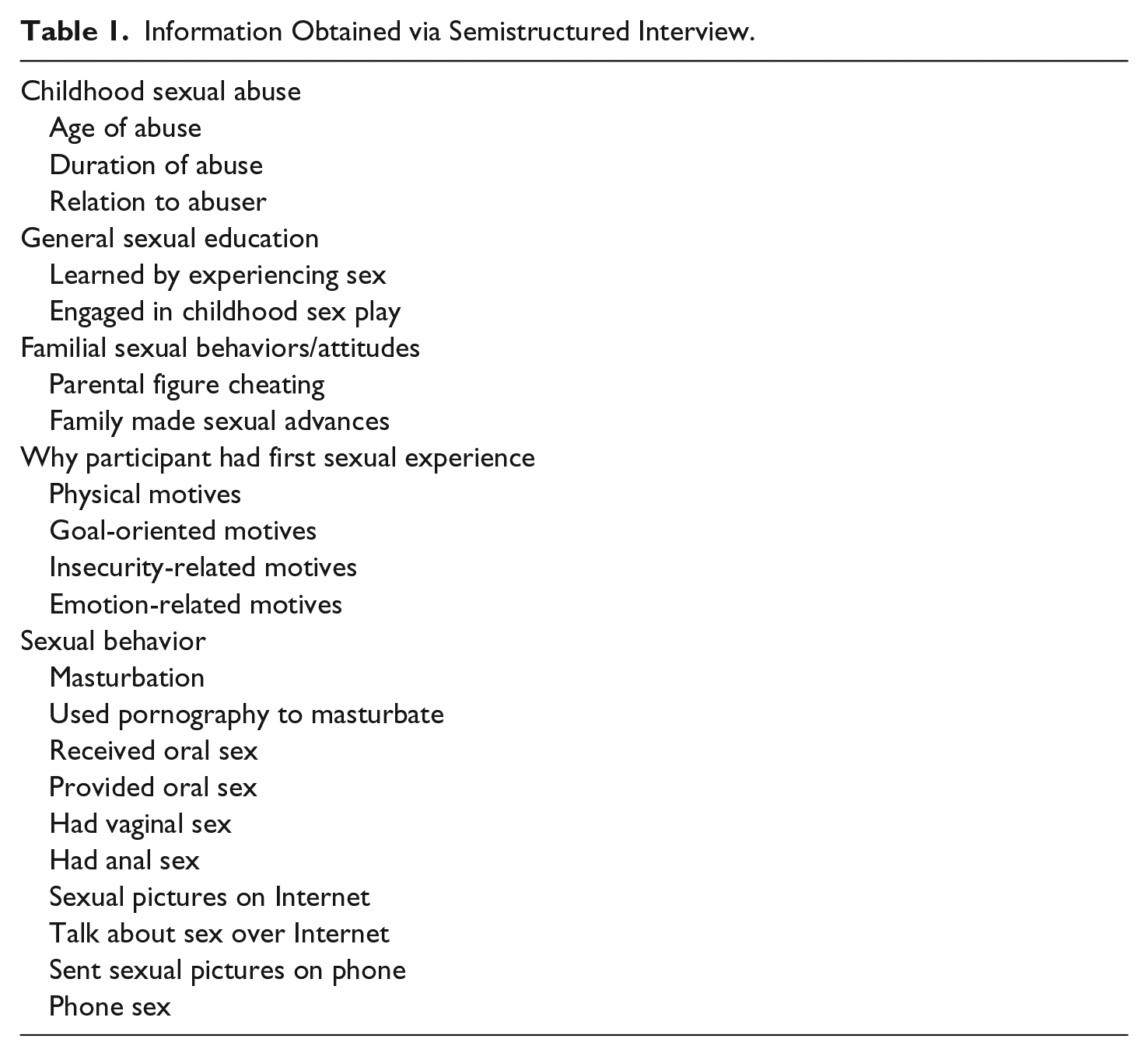
Clinical data were obtained via a 90-min semistructured interview. Data included in the present study pertain to childhood sexual abuse, sexual education from a caregiver and through other sources, why participants had their first sexual experience, sexual behaviors, and familial sexual behaviors and attitudes. For an overview of these constructs, please see Table 1.
Information Obtained via Semistructured Interview.
Records reviewed
Legal records were used in tandem with the interview to verify offense details and gather additional demographic information (i.e., race/ethnicity, age, grade level). In addition, the total number of documented arrests for sexual and nonsexual offending behavior was obtained for each adolescent to serve as a representation of prior offending behavior. Finally, whether AISBs had a child or peer/adult-age victim was coded. Participants were classified in the child victim category if they had a victim who was 4 or more years younger and who was less than 12 years old (Miner et al., 2016; Worling, 2001). Participants were classified in the peer/adult victim category if their victim was any less than 4 years younger or older than the participant. A total of 30 participants had both child and peer-adult victims, and were categorized based on the classifications of the majority of their victims, similar to Miner et al. (2016). Thus, 15 and 15 participants from the mixed age group were classified into the child group and peer or adult victim group, respectively.
Coding information on select sexual development variables
Information obtained during a semistructured interview on sex play was coded as present or absent, and was defined using a definition from Johnson (2002): Sex play is play that involves seeing or touching genitalia between children who are no more than 4 years apart in age. Four motives for first consensual sexual behavior were identified and coded depending on how participants responded. Goal attainment (e.g., to be perceived as “cool” by one’s peers, part of gang initiation or other gang activity, revenge), physical (e.g., feeling physiologically aroused), emotional (e.g., caring about a partner, wanting to feel closer to someone), or security responses (e.g., I didn’t feel good enough).
MACI
The MACI (Millon, 1993) has been used to assess mental health needs in juvenile offenders. In addition, it includes two indices of response styles: the Disclosure Scale (i.e., general openness during the assessment), and the Desirability Scale (i.e., attempting to present oneself in a positive light). Higher scores indicate more of a particular response style.
Data Analysis
Different types of sexual behavior and influences on the development of sexual behavior were compared between AISBs and AINBs using a hierarchical multinomial logistic regression. The tested model included three steps: (a) age, number of prior arrests, and race; (b) childhood sexual abuse, whether a family member had made sexual advances toward them, having at least one caregiver who had engaged in sexual intercourse with someone other than his or her spouse, childhood sex games, and learning about sexuality through experience; (c) reported motives for engaging in consensual sexual behavior the first time (see Table 2). The following reference categories were used: EA race/ethnicity and security-based motives.
Results of Multinomial Logistic Regression by Offense Category (e.g., AISB-Cs, AISB-Ps).
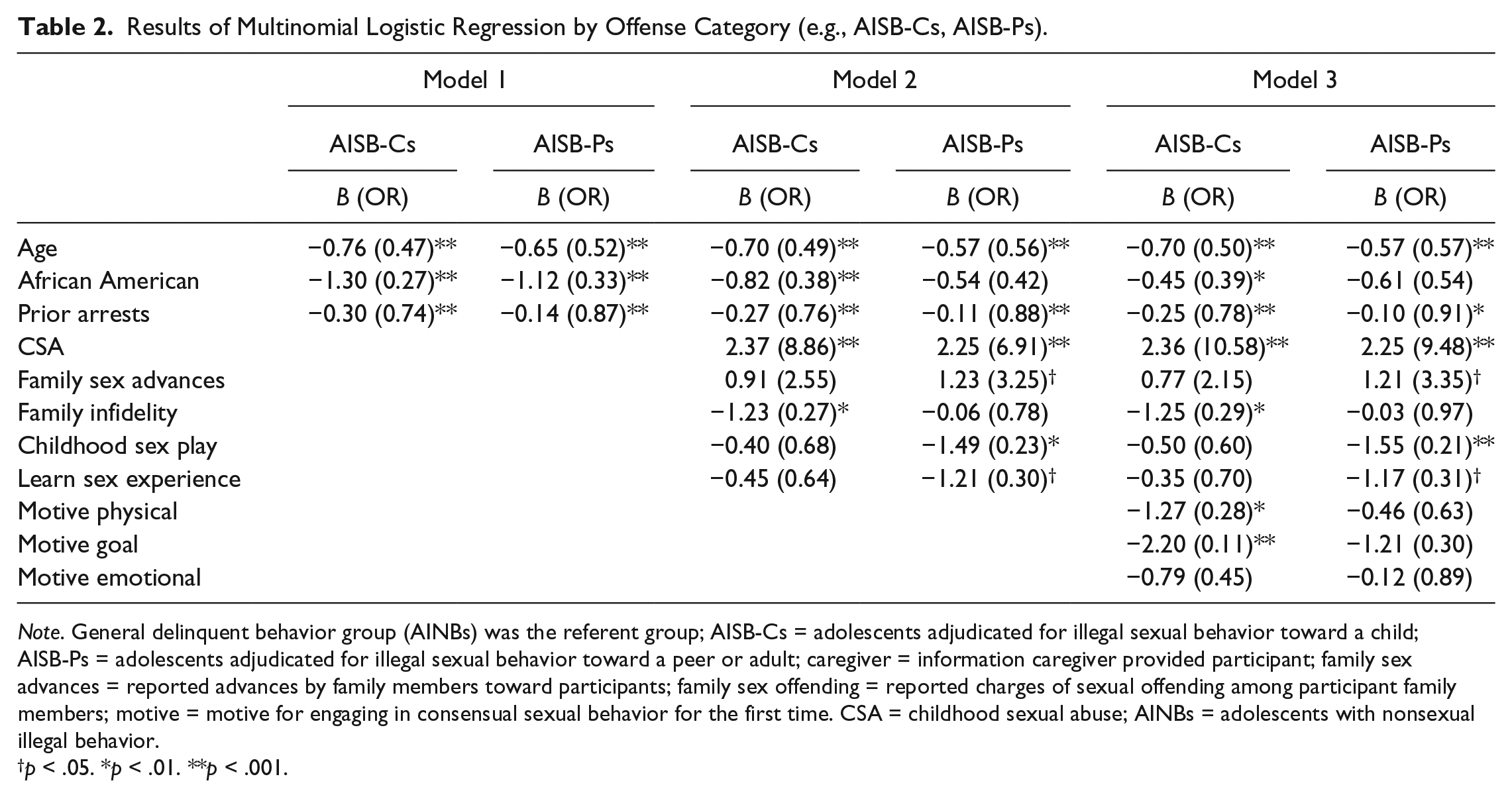
Note. General delinquent behavior group (AINBs) was the referent group; AISB-Cs = adolescents adjudicated for illegal sexual behavior toward a child; AISB-Ps = adolescents adjudicated for illegal sexual behavior toward a peer or adult; caregiver = information caregiver provided participant; family sex advances = reported advances by family members toward participants; family sex offending = reported charges of sexual offending among participant family members; motive = motive for engaging in consensual sexual behavior for the first time. CSA = childhood sexual abuse; AINBs = adolescents with nonsexual illegal behavior.
p < .05. *p < .01. **p < .001.
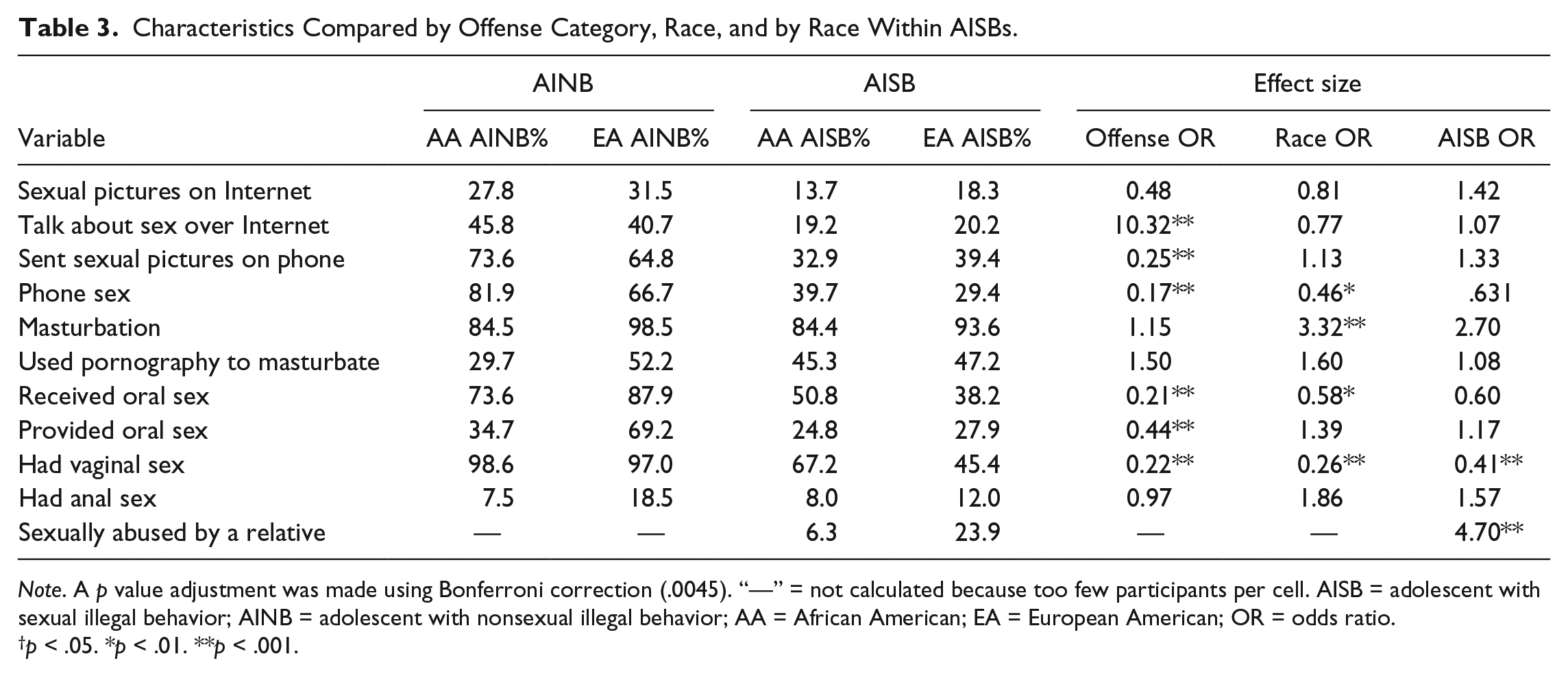
Three-way chi-square statistics were used to examine whether levels of reported consensual sexual behaviors were more frequently reported in a given offense category (see Table 3). This type of analysis can be used in place of a log-linear analysis (Lowry, 2001), and also calculates odds ratios. Odds ratio values were calculated for offense type and race/ethnicity, and to provide a clear overview of patterns in sexual behavior. Comparisons between AA and EA participants within the AISB group were also calculated using Three-Way Chi-Square Statistics and are also displayed in Table 3. A family-wise Bonferroni correction was run for all chi-square tests (.05/11), and a p value adjustment was made such that only values below .0045 were considered significant.
Characteristics Compared by Offense Category, Race, and by Race Within AISBs.
Note. A p value adjustment was made using Bonferroni correction (.0045). “—” = not calculated because too few participants per cell. AISB = adolescent with sexual illegal behavior; AINB = adolescent with nonsexual illegal behavior; AA = African American; EA = European American; OR = odds ratio.
p < .05. *p < .01. **p < .001.
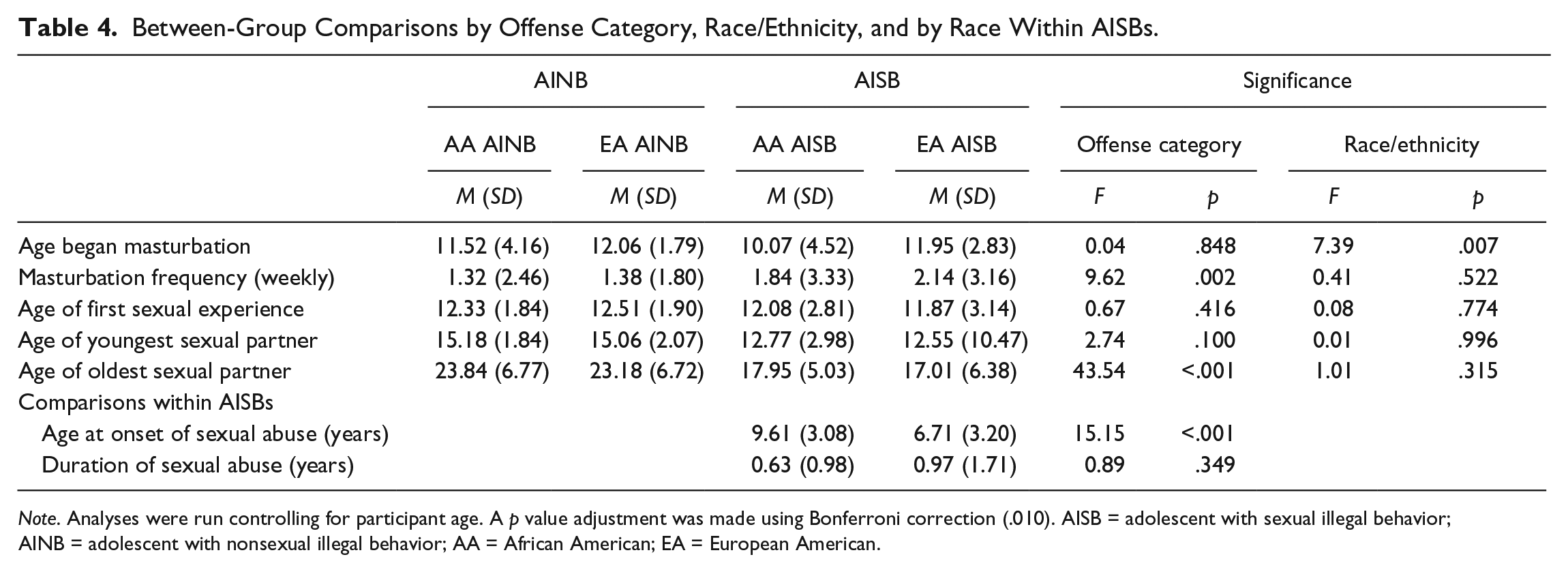
Univariate ANCOVAs were run on continuous variables of interest (Table 4). Participant age was included as a control variable. A family-wise Bonferroni correction was conducted for all univariate ANCOVA tests, and a p value adjustment was made accordingly (.05/5 = .010).
Between-Group Comparisons by Offense Category, Race/Ethnicity, and by Race Within AISBs.
Note. Analyses were run controlling for participant age. A p value adjustment was made using Bonferroni correction (.010). AISB = adolescent with sexual illegal behavior; AINB = adolescent with nonsexual illegal behavior; AA = African American; EA = European American.
Results
Predicting Child Versus Peer/Adult Sexual Offending Relative to General Offending
A model was developed to evaluate whether demographic, family sexual experiences, childhood sexual abuse, and motives for engaging in sexual behavior for the first time differentially predicted child sexual offending (AISB-C) versus peer or adult sexual offending (AISB-P) relative to AINB. To test this model, a hierarchical multinomial logistic regression was run using three steps (see Table 2). The chi-square goodness-of-fit test was significant across all steps of the tested model, and this value increased at each step. Model fit significantly increased at each step (279.26, 328.77, 349.58, 375.50; p < .001 in all models), suggesting the inclusion of later model variables improved the overall model fit.
Sexual offending against a child relative to general offending
In Step 1 of the hierarchical binary logistic regression model, AA race (p < .001), prior arrests (p < .001), and age (p < .001) negatively predicted AISB-C relative to AINB group membership. In Step 2, AA race (p = .003), prior arrests (p < .001), and age (p < .001) remained significant negative predictors of AISB-Cs. Also, experiencing childhood sexual abuse (p < .001) significantly predicted AISB-Cs relative to AINBs, whereas having at least one caregiver who had engaged in sexual intercourse with someone other than his or her spouse was significantly more likely to be associated with AINB group membership than the AISB-C group membership (p = .002). Childhood sex play and learning about sex through experience did not significantly predict AISB-C relative to the AINB group.
Reported motives for engaging in consensual sexual behavior the first time were added to the model in Step 3. Similar to Step 2, AA race (p = .001), arrests (p < .001), age (p < .001), and reporting at least one caregiver who had engaged in sexual intercourse with someone other than his or her spouse (p = .003) remained significant negative predictors of AISB-C group membership relative to AINB group membership. Childhood sexual abuse (p < .001) again predicted AISB-C group membership relative to AINB group membership. Physical motivations (p = .001) for the first consensual sexual experience and goal-based motivations (e.g., social status, revenge; p = .001) for the first consensual sexual experience were negatively predictive of AISB-C. Emotion-based motivations did not significantly predict AISB-C status in reference to AINB group status.
Sexual offending against a peer/adult relative to general offending
In Step 1 of the hierarchical binary logistic regression model, AA race (p < .001), prior arrests (p < .001), and age (p < .001) significantly negatively predicted AISB-P relative to AINB group membership. In Step 2, arrests (p = .001) and age (p < .001) remained significant negative predictors of the AISB-P group. Experiencing childhood sexual abuse (p < .001) and having a family member make sexual advances toward them (p = .024) also significantly predicted the AISB-P group. Childhood sex play (p = .001), and learning about sex through experience (p = .023) negatively predicted AISB-P group membership relative to AINB group membership. Participant AA race and reporting at least one caregiver who had engaged in sexual intercourse with someone other than his or her spouse did not significantly predict AISB-P group membership compared with AINB group membership during Step 2.
Reported motives for engaging in consensual sexual behavior for the first time were added to the model in Step 3. Prior arrests (p < .001), age (p < .001), childhood sex play (p < .001), and learning about sex through experience (p = .029) remained significant negative predictors of AISB-P relative to AINB group membership. In addition, childhood sexual abuse (p < .001) and having a family member make sexual advances toward them (p = .027) remained significant predictors of AISB-P relative to AINB group status. Participant race or reporting at least one caregiver who had engaged in sexual intercourse with someone other than his or her spouse remained nonsignificant as predictors of identifying as AISB-Ps in contrast to identfying as AINBs. Also, no tested motivations for the first consensual sexual experience were predictive of AISB-P group membership than AINB group membership.
Sexual Experiences, Attitudes, and Offense Category
Sexual behaviors
A subset of participants fielded a series of questions about their consensual sexual behavior and experiences (n = 204). For AA AINBs, 85% reported recent masturbation, and for AA AISBs, 84% reported recent masturbation. In addition, 99% of EA AINBs and 94% of EA AISBs reported recent masturbation. Thus, there was no main effect of offense category on reported recent masturbation, whereas a main effect of race did emerge on reported masturbation, χ2(1) = 16.10, p < .001. Results from an ANCOVA, with age and race/ethnicity as covariates, indicated AISBs reported a significantly higher frequency of masturbation than AINBs (p = .002, η2 = .02). There were no significant differences by offense category or race/ethnicity in usage of pornography while masturbating.
Participants were also asked about their participation in more specific sexual behaviors. When asked about receiving oral sex, the following percentages were reported by each group: AA AINBs (74%), EA AINBs (88%), AA AISBs (51%), and EA AISBs (38%). Accordingly, main effects of race, χ2(1) = 10.15, p = .001, and offense category, χ2(1) = 66.33, p < .001, on receiving oral sex were observed. There was also a main effect of offense category, χ2(1) = 20.00, p < .001, but not race, on providing oral sex. Overall, 35% of AA AINBs, 69% of EA AINBs, 25% of AA AISBs, and 28% of EA AISBs reported providing oral sex. When asked whether they had experienced vaginal sex, 99% of AA AINBs, 97% of EA AINBs, 67% of AA AISBs, and 45% of EA AISBs responded affirmatively. These differences indicated a main effect of offense category, χ2(1) = 127.46, p < .001, and also a main effect of race, χ2(1) = 47.48, p = .001, on reported vaginal sex. Far lower rates of anal sex were reported by participants across the board: 8% of AA AINBs, 19% of EA AINBs, 8% of AA AISBs, and 12% of EA AISBs, and there were no main effects of race or of offense category.
For AA AINBs, 82% reported engaging in phone sex, whereas 67% of EA AINBs reported having phone sex. Among AISBs, 40% of AAs and 29% of EAs reported engaging in phone sex. There was a main effect of offense category, χ2(1) = 52.25, p < .001, and race, χ2(1) = 11.05, p = .001. When asked about participation in online sex chats, 46% of AA AINBs, 41% of EA AINBs, 19% of AA AISBs, and 20% of EA AISBs responded affirmatively, indicating a main effect of offense category, χ2(1) = 20.38, p < .001, but no main effect of race, on online sex chatting. Seventy-four percent of AA AINBs, 65% of EA AINBs, 33% of AA AISBs, and 39% of EA AISBs said they had sent sexual pictures on their cell phone, with a main effect of offense category, χ2(1) = 32.49, p < .001, but no main effect of race. Participants were also asked whether they had emailed sexual photos or sent sexual photos to another person on the Internet, and the following percentages of youth by category reported doing so: 28% of AA AINBs, 32% of EA AINBs, 14% of AA AISBs, and 18% of EA AISBs. Findings did not quite indicate a main effect of offense category (p = .007) or a main effect of race. Finally, four AISBs and no AINBs had a charge of pornography distribution.
Participants were also asked to report their age at the time of their first sexual experience and about the ages of both their youngest and oldest consenting sexual partners (see Table 3). To account for potential age effects on these particular outcome variables, age was included as a covariate in all tested models considering age of sexual experiences. Results from the first ANCOVA revealed age of first sexual experience did not differ significantly by offense category or race. Results from a second ANCOVA further indicated the age of participants’ youngest consensual sexual partner did not significantly differ by offense category or race. Another ANCOVA was run, and results suggested the age of participants’ oldest consensual sexual partner was significantly higher among AINBs than AISBs (p < .001, η2 = .09), but did not differ by participant race. A final ANCOVA was run to test whether age of first masturbation differed by offense category or race/ethnicity. Results indicated commensurate age of first masturbation between AISBs and AINBs, while AA participants (p = .007, η2 = .01) had a significantly lower age of first masturbation than EA participants.
Analyses Within AISBs by Race
Analyses were run to test for race/ethnicity effects within AISBs (see Table 3). Select analyses were unable to be run because there was an insufficient number of participants within each grouping. Among AISB participants with a history of childhood sexual abuse, EAs were significantly younger than AAs at the onset of sexual abuse (p < .001, η2 = .12). However, EA and AA participants reported comparable durations of abuse (p = .349). Furthermore, EA AISBs were significantly more likely to have been abused by a relative than AA AISBs.
The AA and EA AISBs responded comparably in many instances when asked about sexual behavior and where they learned about sex and sexuality. Yet, select racial/ethnic group differences emerged within the AISB group. Significantly, more EAs reported a history of childhood sexual abuse and were more likely to report family members making sexual advances toward them than AAs. Also, significantly more AA AISBs reported having had vaginal intercourse than did EA AISBs.
Analyses Within AISBs by Victim Type (Child vs. Peer/Adult)
Sexual behaviors
Several more analyses were run within AISBs to determine whether AISB-Cs and AISB-Ps had a different sexual behavior profile. Both AISB-Ps (87%) and AISB-Cs (91%) reported a fairly high rate of recent masturbation (p = .266). There were also no differences in reported using pornography during masturbation, as 47% of AISB-Cs and 43% of AISB-Ps confirmed engaging in this behavior. Comparable numbers of AISB-Ps (64%) and AISB-Cs (48%) reported having had vaginal sex (p = .011). Anal sex was also reported at comparably lower levels among AISB-Ps (12%) and AISB-Cs (10%). In addition, receiving oral sex was reported at comparable rates by AISB-Ps (40%) and AISB-Cs (50%, p = .117). However, significantly more AISB-Ps (34%) reported providing oral sex than did AISB-Cs (24%), χ2(1) = 9.66, p = .008.
For AISB-Cs, 29% reported sending a sext, whereas 51% of AISB-Ps said they had sent a sext, χ2(1) = 7.53, p = .006. Moreover, 31% of AISB-Ps indicated they had talked about sex via instant messaging on the Internet, whereas only 14% of AISB-Cs reported engaging in similar behavior, reflecting a significant difference by victim type, χ2(1) = 7.02, p = .008. A similar rate of AISB-Ps (46%) and AISB-Cs (27%) reported having phone sex (p = .015).
Discussion
The present study aimed to examine whether different patterns of sexual behavior and motives predicted AISBs with child victims (AISB-Cs) or AISBs with peer/adult victims (AISB-Ps) relative to AINBs. Additional aims of the present study were to assess for differences in sexual behavior and sexual experiences by race/ethnicity and offense category and to test whether different sexual behaviors and experiences were present within AISBs by victim age and race/ethnicity.
Generally, results suggested differential patterns of sexual developmental experiences and sexual motivation for AISB-Cs and AISB-Ps. Furthermore, strong main effects of race/ethnicity and offense category were observed on select sexual behaviors. Additional comparisons revealed few sexual behaviors differed by race/ethnicity within the AISB group, whereas a number of differences in sexual experiences were observed using victim age classification.
Overview of Child Versus Peer/Adult Sexual Offending Relative to General Offending
Participants in the AISB-C group were 10.6 times more likely, and those in the AISB-P group were 9.5 times more likely, to report childhood sexual abuse than were AINBs. Overall, this finding is consistent with other literature and largely aligns with the sexually abused–sexual abuser hypothesis (Burton, 2000; Burton, 2003). Also, AISB-Cs and AISB-Ps were significantly younger and less likely to have a history of prior offending than AINBs, paralleling prior findings (Fix, Fix, Totura, & Burkhart, 2017; Seto & Lalumière, 2010).
Besides these noted commonalities, results also suggest a number of factors distinguish AISB-Cs and AISB-Ps from AINBs, with most of these factors either predicting one victim age classification but not the other relative to AINBs. For instance, AA race was a significant negative predictor of AISB-Cs relative to AINBs, but was not for AISB-Ps relative to AINBs in the last two steps of the model. Race became nonsignificant for AISB-Ps when motivation for engaging in sexual behavior was added to the model, suggesting that AA race is likely more predictive of both AISB-P and AINB group membership, while EA race is associated with AISB-C group membership. This finding is consistent with other studies that have considered race and victim age typology among AISBs (e.g., Kemper & Kistner, 2010; Parks & Bard, 2006).
Addition of motivation for first consensual sexual behavior improved the model fit overall and more clearly delineated AISB-Cs from AINBs. In particular, AISB-Cs reported goal-attainment and physical motivations far less often than AINBs, whereas AINBs and AISB-Ps do not identify different reasons for engaging in sexual behavior their first time. In general, these findings suggest that it may be important to screen AISBs in treatment for motives, as this understudied variable may reflect cognitions underlying participation in sexual behavior.
Family dynamics among participants varied by victim age and offense category. Caregiver infidelity was more common among AINBs than AISB-Cs, but not more common among AINBs than AISB-Ps. While childhood sexual abuse was far more predictive of AISB-Cs than AINBs, family sexual advances were only predictive of AISB-Ps. This could be reflective of different parent attachment, but support for the relationship between victim age and attachment is mixed (e.g., Leroux et al., 2016; Miner et al., 2016). Regardless, the present study supports examination of caregiver sexual behavior, as caregiver modeling appears to be influencing offending behavior, with AISB-Ps and AINBs having more caregivers who engage in acts of sexual behavior outside of their committed relationships.
Sexual Development and History
The most distinctive finding concerning offense category was that of sexual development and sexual history. Largely, between-group comparisons reflected a complicated and damaged sexual history in the AISB group, mirroring differences in behavioral outcomes for these youth relative to AINBs and youth in the community who are not victimized. Several notable between-group differences were observed involving how these juveniles learned about sex, their specific sexual practices, and their attitudes about sexual behaviors. Broadly speaking, AISBs came from more sexually exploitative backgrounds, had fewer developmentally appropriate sexual experiences, and had earlier and more frequent exposure to sexual activity and pornography, a finding consistent with existing literature (Beauregard et al., 2004; Seto, Maric, & Barbaree, 2001). However, a number of other forms of early exposure to sexuality (e.g., pornography rather than abuse) and the lack of access to information about healthy sexuality among most participating youth likely contributed to sexual development, as well. For instance, childhood sex play was less common among AISB-Ps relative to AISB-Cs and AINBs, whereas childhood sexual abuse was far more common among both AISB groups, indicating early sexual experiences may reflect relevant markers of sexual development, and ultimately sexual behavior.
Similar to other studies that have examined the prevalence of childhood sexual abuse among juvenile offenders (Seto & Lalumière, 2010), and adding to the literature on race/ethnicity and sexual development, both EAs and AISBs were far more likely to report a history of childhood sexual abuse than AAs and AINBs, respectively. In addition, significantly more EAs reported that a family member had made a sexual advance toward them than AAs and, perhaps not surprisingly, more EAs reported a history of sexual misconduct within their family compared with AAs, respectively. By noting a substantially higher rate of exposure to developmentally inappropriate and harmful sexual experiences during childhood among AISBs relative to their delinquent peers, observed race/ethnicity effects emphasize the need to consider race/ethnicity in future research (Fix, Cyperski, & Burkhart, 2017). However, it is also important to recognize the potential confound of race/ethnicity and offense type when evaluating sexual experiences and behavior, as race/ethnicity reflects one factor that can implicitly influence professionals who interact with these youth including clinicians, judicial decision makers, and stakeholders. Furthermore, beyond bias related to race/ethnicity, beliefs about sexual abuse may also affect juvenile case management. For instance, when judges receive a case, prior experiences may affect case outcomes, including case characteristics, the judge’s biases, and community pressure to punish AISBs. In sum, the deciding factor may be implicit. It is important to recognize that all professionals can be subjected to such biased decision making and to assert that many overlooked factors can affect trajectories of youth in the juvenile justice system.
Sexual Experiences
Although effects of race and offense category on sexual behavior and experiences largely differed, there were a couple of ways in which significant differences between AA and EA youth mirrored findings between AISBs and AINBs. There were parallel effects of offense category and race on reported phone sex and vaginal sex. However, there were far more differences in sexual behavior by offense category and race that did not follow a similar trajectory.
Perhaps extending from the differential findings regarding sexual development between AISBs and AINBs, there were a number of ways AINBs seemed to have more sexual experience than AISBs. While AISBs and AINBs engaged in some sexual behaviors at comparable rates (e.g., masturbation, pornography usage, anal sex), AINBs described significantly more in-person sexual encounters (e.g., receiving oral sex, vaginal sex) than AISBs. For instance, AINBs were approximately 5 times more likely to have received oral sex and nearly 20 times more likely to have provided oral sex than AISBs.
Sexual behavior also appeared to be substantially influenced by race and/or cultural background. Select differences emerged, such that AAs were far more likely to report having vaginal sex than EAs. Interestingly, EAs were 3 times more likely to report recent masturbation than AAs, whereas AAs were far more likely to report having phone sex, receiving oral sex, and having vaginal sex. Alongside rates of reported distribution of sexual images among AINBs and having explicitly sexual discussions, noted racial/ethnic group differences could reflect more comfortability discussing sexual behavior within the AA community relative to the EA community. Indeed, previous research has indicated AA caregivers may be far more likely to discuss sex and birth control with their children than any other racial/ethnic group in the United States (Regnerus, 2005). Furthermore, because experts in the field have recognized exceptional risk for engaging in risky sexual behavior among children of color, particularly AA youth, interventions have been developed and evaluated to improve caregiver–child communication about sexuality in communities of color (for a review of related literature, see Sutton, Lasswell, Lanier, & Miller, 2014). Thus, it is important to include and incorporate multiculturally sensitive information into sex-offense specific treatment to ensure culturally competent care.
Pornography and Distribution of Sexual Images
Contrary to prior research evidencing more exposure to pornography among AISBs relative to AINBs (Seto & Lalumière, 2010), no such differences were observed in our sample. No race effects were observed, either. It is possible that we did not observe comparable rates with previous studies because many of these studies were published over a decade ago, and the prevalence and accessibility of sexually explicit material has increased enormously in the past decade. It is also important to note that a fair number of participating youth described receiving or sending sexual images via sexting or online, phenomena that can be considered distribution of child pornography in many U.S. states, resulting in prosecution.
Because the association between offense category and race on sexual behaviors and experiences were examined simultaneously in the present study, observed main effect findings from either offense category are unlikely to be confounded by the other variable. Put another way, the evidence from the present study suggests that the effects of offense category and race/ethnicity are independent to some degree. Therefore, any study failing to measure both of these variables may potentially attribute one effect to the measured variable, when in fact the effect may be a result of both offense category and race, or only be associated with the unexamined variable.
Within AISB Comparisons by Race and Victim Age Classification
Few racial/ethnic group differences were observed among AISBs. The EA AISBs were about 3 times more likely to have been sexually abused during their childhood than AA AISBs, and of those who were sexually abused, EAs were nearly 5 times more likely to have experienced intrafamilial childhood sexual abuse. Moreover, EA AISB participants were also significantly more likely to have had family members make sexual advances toward them, and were twice as likely to have a family member with a sexual offense compared with AA AISBs. This association between offense category and race/ethnicity on sexual behavior highlights that confined EA AISBs are far more likely to have a history of developmentally inappropriate sexual experiences than AA AISBs.
Select sexual experiences and behaviors were differentially observed among AA and EA AISBs. The AA AISBs were approximately 3 times more likely to have had vaginal sex, and were almost two times more likely to report having received oral sex, than EA AISBs. Conversely, EA AISBs were about 3 times more likely to report having masturbated recently. These patterns of sexual behavior are similar to those observed across AISBs and AINBs, and may reflect treatment implications. For example, results from the present study suggest that adaptations may be beneficial in AISB-based treatment programs, perhaps borrowing from culturally informed models for improving understanding of sexuality and increasing communication with caregivers about sex (Sutton et al., 2014).
An examination of sexual experiences within AISBs using victim age classification suggested similar findings from Leroux et al. (2016), as AISB-Ps had more sexual experiences overall than AISB-Cs and as AISB-Ps reported more oral sex (providing), sexting, and sending sexual images and messages via social media. Therefore, the AISB-Ps profile appears to reflect a youth who has greater sexual maturity and possibly better social skills than AISB-Cs.
Study Limitations and Future Directions
The present study utilized a confined sample of delinquent males, comparing AISBs with AINBs, and had no community comparison group. Future studies on community samples of delinquent youth or sexually abused youth from the community, possibly court-involved youth, would provide further insight on the development of sexual behavior and attitudes. Our sample was geographically limited to a statewide sample of juvenile offenders from the Southeast, and sample restrictions therein included a male sample with limited racial/ethnic diversity (i.e., AA, EA). Accordingly, it is difficult to determine whether the observed differences in the present study reflect broader differences in community samples rather than solely in delinquent or adjudicated groups. It is therefore recommended that future studies measure constructs similar to those examined in the present study among female juvenile offenders, delinquent females in the community, and other racial/ethnic groups. Moreover, the vast majority of our participants came from a lower socioeconomic status background, meaning they are not representative of all youth charged with a sexual offense. Although we did not obtain comprehensive data on the socioeconomic background of each participant’s family, it is recommended that future studies find a reliable method for obtaining this information.
The present study employed a cross-sectional, case-control design. Though not a true experimental design, the case-control design affords the investigator the opportunity to examine critical causes and correlates pertaining to the nature of a particular variable by selecting subjects who fit predetermined criteria (Kazdin, 2003). Follow-up studies should obtain longitudinal data on the developmental trajectory of sexuality and attitudes about sexual behavior, particularly among at-risk youth like those with a history of childhood sexual abuse. Similar to most research studies on sexual behavior and sexuality among youth, the present study relied upon self-report data to measure sexual behavior. Thus, interrater reliability of coding in the current study was unable to be assessed. Future studies could use dual coding to improve the reliability of data.
There were also limitations associated with obtained sexting data. Like other sexual behavior data, information on sexting was collected through an in-person interview in a correctional setting, whereas data from prior studies on sexting were obtained over the telephone. Ultimately, the use of different methodologies limited comparisons between data collected for other studies and data from the present study. In addition, frequency of sexting was not measured in the present sample. Follow-up studies might assess the frequency of youth sexting, perhaps using a higher frequency sexting as a proxy of sexual preoccupation. Finally, it is unclear whether the distribution of pornography charges reflect sexting or another form of pornography distribution. Related measurement difficulties may arise in future research, and it is therefore important that researchers interested in sexting policy and associated punishment should be mindful when coding youth’s offenses.
Finally, there is also a potential confound of race and offense category on observed sexual behaviors and experiences, though analyses essentially tested for associations of race and offense category independently. Future studies may benefit from an oversampling of each racial/ethnic group within each offense category to ensure such confounds are countered. Beyond the confound of race and offense category, the real or perceived race/ethnicity of interviewers could have potentially influenced participant responding. While we were unable to control for interviewer race/ethnicity, it is advised that future studies aim to do so.
Study Implications
In AISB treatment settings, it is fairly common to use a standard, homogeneous protocol. However, research findings from the present study suggest that certain treatment components should be tailored depending on a youth’s experience and background, particularly his or her sexual experience and background. Naturally, AISBs with a history of sexual victimization may require trauma-focused interventions. Relatedly, AISBs with a history of atypical sexual experiences and behavior may require interventions that target healthy sexuality and sexual education. Indeed, AISB-Cs may need different or supplemental programming than AISB-Ps to address their motive for sexual behavior and their beliefs about sexuality, which may differ from AISB-Ps and AINBs based on their experiences. Further still, professionals working with AISBs might consider potential cultural influences for AA and EA youth. For instance, the fact that different races experience sexual abuse and engage in sexual behavior at different rates implies that AISB treatment could be more culturally informed.
Implications related to sexting
Whereas only four participants had official child pornography charges, 70% of AINBs and about 40% of AISBs in our sample reported sexting, suggesting sexting is a regular phenomenon among this population. In contrast, approximately 10% to 20% of youth in a community sample reportedly have received or sent a sexual text message (Lenhart, 2009; Mitchell et al., 2012). Though there are some data available for comparison, it remains unclear whether the higher prevalence of sexting and other electronic sexual communication among our juvenile offender sample reflects abnormal or deviant sexual behaviors specific to this group, or if these youth are simply engaging in normative sexual behaviors given their age and access to electronics.
Conclusion
In sum, AISBs present with a number of individual risk factors relative to AINBs that suggest a greater need for targeted treatment. In addition, the present study further evidences and recognizes the utility of distinguishing AISBs by victim age (e.g., Leroux et al., 2016; Miner et al., 2016). Overall, AINBs reported more sexual behavior than AISBs, reflecting a finding mirroring sexual development, sexual experiences, and caregiver approaches to discussing sexuality. Racial/ethnic group differences were also evident in the present study. For example, AAs had fewer instances of reported childhood sexual abuse, engaged in substantially more consensual sexual behaviors, and described a later onset of and less exposure to sexual activity and pornography than EAs.
Findings from the present study suggest some differences between AA and EA AISBs, and emphasize the role of differentiating AISBs by victim age classification, but generally highlight the markedly disparate sexual behaviors of AISBs from AINBs. AISBs have a sexual developmental course marred by inappropriate and adverse sexual experiences. Thus, these vandalized sexual experiences create a damaged developmental trajectory of sexual behavior leading to the clear differences in sexual behavior between AISBs and AINBs. However, observed racial/ethnic group differences indicate that race/ethnicity is also an important factor to consider when conducting research with juvenile delinquents. Accordingly, it would benefit future research to include race/ethnicity in models of sexual behavior in a parallel manner to models of delinquency generally (Fix & Burkhart, 2015) when working with the juvenile delinquent population. Moreover, recognizing the heterogeneity of AISBs through subgroup classifications like victim age can facilitate greater understanding of contributory factors for offending patterns and trajectories. Finally, certain sexual behaviors that have been considered sexual offenses (e.g., sexting, online sex chat) appear to be developmentally normative among all juvenile offenders, supporting related policy change efforts.
Footnotes
Declaration of Conflicting Interests
The author(s) declared no potential conflicts of interest with respect to the research, authorship, and/or publication of this article.
Funding
The author(s) received no financial support for the research, authorship, and/or publication of this article.