




Abstract

College and university campuses are inundated with visual images. As James Elkins (2008) argued, “Images are central to our lives…it is time they are central to our universities” (p. 8). Indeed, visuals and images are ubiquitous on college campuses and with the lives of students, faculty, and staff. Increasingly students, administrators, and faculty have access to the means of creation, production, and distribution of images. While particular images are crafted by institutions to communicate particular messages, the use of visuals and visual methodologies within higher education contexts should expand beyond what institutions create and produce.
Within this piece, we define visuals, visual methods, and visual methodologies differently. Visuals are objects and artifacts that contain and rely predominantly on images rather than text to convey meaning. Examples are prevalent within the first paragraph: banners, websites, and Instagram Stories. Visual methods are specific strategies used to collect visual data, most often associated with research efforts. Examples are prompting and collecting drawings and adding photographs to an interview. Visual methodologies are entire approaches to research undertakings. A prime example is photovoice, which is discussed later in this piece.
In the edited book, Engaging Images for Research, Pedagogy, and Practice by Bridget Kelly and Carrie Kortegast (2018), they discussed how student affairs practitioners could use visual methods to enhance student learning and development. This includes enhancing students’ visual literacy, multimodal learning and communication, and meaning- and sense-making for college students. Kortegast (2018) outlined four different contexts that visual methods might be useful to support students’ learning and development: (1) reflection on experiential learning, (2) social justice and student activism, (3) professional development workshops, and (4) assessment of campus environment. For example, the #itooamharvad social media campaign featured black students at Harvard sharing images of themselves holding a whiteboard with micro- and macroaggressions they experienced on campus (“I, too, am Harvard,” 2014). The goal was to spark conversation about the marginalization of students of color at Harvard and promote subsequent change. Through this social justice and student activism photo campaign, students raised awareness about the campus environment and advocated for change for students of color.
Engaging students with visual methods, using arts-based approaches may also help students develop resiliency. Heather Lou (2018) argued that “art can be a mechanism for students to not only process events but also move forward and create tangible action items to enhance their own ability to graduate” (p. 208). She provided an example of how she utilized art and arts-based approaches as a method to help students of color process a racist incident on their campus while simultaneously developing strategies to support their resilience.
Utilizing visuals, for us, means embracing the process of creating and selecting images but also the messages these images communicate. As Peter Felten (2007) stated, “The new ‘pictorial turn’ means that images no longer exist primarily to entertain and illustrate. Rather they are becoming central to communication and meaning-making” (p. 60). Visuals and visual methods in higher education research include analysis of existing images or artifacts as well as participant-generated visual methods such as photovoice. As Carrie Kortegast, Kristin McCann, Katie Branch, Amanda O. Latz, Bridget Turner Kelly, and Chris Linder (2019) explain participant-generated visuals often include individuals being provided a prompt to create an image. That image is then discussed through written reflections or interviews. The goal is to use images to create new understandings about particular experiences and topics.
Program Spotlights
#MyTruthMatters: Examining the Experiences of Graduate Students of Color
In an effort to engage in conversations about access and equity issues regarding the experiences of graduate students of color (GSOC), the Action Research Collective (ARC) was formed during the fall of 2016 during a period of local and national antiracist activism. ARC began as a student-driven initiative designed to engage critical participatory action research to bring together students, faculty, and staff to explore the experiences of GSOC at Clemson University. As Stephen Kemmis, Robin McTaggart, and Rhonda Nixon (2014) explained, critical participatory action research “expresses a commitment to bring together broad social analysis, the self-reflective collective self-study of practice, and transformational action to improve things” (p. 12). ARC came together to foster partnerships and critical dialogue within the Clemson University community to improve the campus climate. Furthermore, ARC continues to examine the experiences of GSOC at predominantly white institutions and aims to improve those experiences by addressing barriers and reinforcing support for GSOC.
Using photovoice as the foundation of our research, ARC sought to make sense of the experiences of GSOC at a predominantly white institution known for its racist history and lack of support for students of marginalized communities. The use of photographs told stories typically not heard, with the hopes of bringing about social change. Photovoice also allowed us—as Candace Nykiforuk, Helen Vallianatos, and Laura Nieuwendyk discussed—to gain insight on cultural practices and lived experiences (Nykiforuk et al., 2011). GSOC participants submitted photographs, which they believed best conveyed their experiences and stories. Study findings were conveyed in four themes: support, thriving, needs, and obstacles. Along with submitting photographs, participants engaged in interviews to make meaning of them and their relationship to one of the four themes. The photographs varied in impact, but shared common themes as they highlighted the racist and oppressive nature of the campus environment, the limited resources and support available to GSOC, and the trauma associated with the navigation of campus (Figure 1).
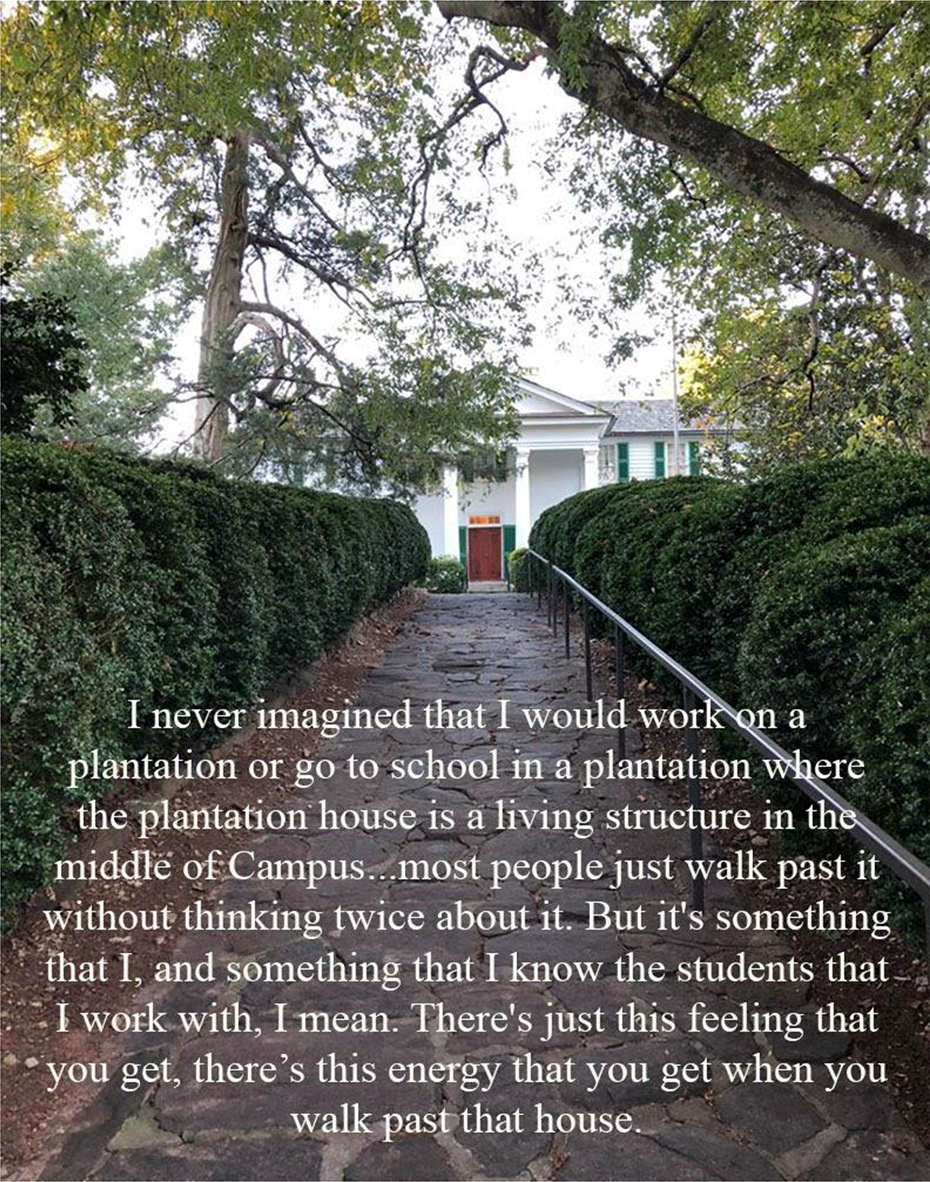
Obstacle—Fort Hill Plantation Home.
A by-product of ARC was the creation of a much-needed community of researchers, predominantly GSOC, that encouraged a space of authenticity, radical self-care, and healing in an attempt to combat the racial trauma we encountered on our campus and in the surrounding community. Here, researchers felt a sense of belonging and comfort, and were validated as we shared our personal experiences as they related to navigating spaces where representation was lacking, opportunities were few, and support was needed. Additionally, this community provided a developmental space for researchers to grow as scholars and professionals, while enhancing their skill set as researchers using visual methodologies without the constraints and limitations of the eurocentricity embedded within academia (Figure 2).

Thriving—Prove them wrong.
Upon the culmination of the research study, ARC disseminated findings through multiple venues, including conference presentations, papers, and three photovoice exhibitions conducted on Clemson’s campus. These exhibitions used photographs gathered from our research and were promoted across campus and throughout the Clemson community, attracting the attention of students, faculty, staff, upper administration, and community partners. During these exhibitions, attendees learned more about ARC’s vision and purpose, as well as participated in a guided tour that allowed attendees to view photos and quotes from participants to illustrate experiences of support, thriving, needs, and obstacles in relation to GSOC’s campus experiences.
As ARC looks ahead, the aim is to continue disseminating findings to invoke a positive change in the way GSOC are supported at predominantly white institutions. Currently, ARC is planning a town hall to present findings to upper administration and other stakeholders who play a role in the creation and implementation of the policies that create barriers for GSOC. ARC also created a social media campaign (#MyClemsonTruth and #MyTruthMatters) to encourage the usage of photos and conversations related to the experiences of students of color, graduate and undergraduate. ARC’s hope is these initiatives will spark conversations across colleges that focus on student of color experiences.
Seeing Is Believing: Using Photovoice to Bring Attention to College Student Food Insecurity
Seeing Is Believing: Using Photovoice to Bring Attention to College Student Food Insecurity was the title of my presentation for the Universities Fighting World Hunger (UFWH) 2020 Summit. Student food insecurity concerned me for a long time. Merely writing about food insecurity was insufficient; I was compelled to increase awareness of college student food insecurity and impact salient changes. Photovoice methodology resonated with me because it was one means to increase awareness of student food insecurity. As discussed, photovoice methodology is participatory; it makes a space for, and amplifies voices of marginalized populations, and attracts the attention of policy makers.
My research question was, “How do community college students experience food insecurity?” Students took photographs to answer prompts, such as “How does being hungry make your feel?” Through interviews about their photographs, four themes emerged: (a) being food insecure in community college, (b) asking for and receiving help, (c) surviving food insecurity and making choices, and (d) living with health issues related to food insecurity. Jane’s photo-narrative (Figure 3) was part of living with health issues related to food insecurity under the subtheme of emotional hunger/health and displayed with other angst filled photo-narratives on a stark background in a semi-enclosed space.

I Feel Hollow. Photograph and narrative by Jane, 2019.
I worked with the head of the art department to secure the campus art gallery for a three-week window for the exhibition. I wanted college leaders to see the photovoice exhibition and listen to students’ stories, so a public open house was scheduled in conjunction with the exhibition. I contacted the people who managed calendars for the college president and the campus chancellor; we selected a day when the president’s leadership team and campus board of trustees were meeting. The art department chair engaged study participants in planning an engaging, interactive, provocative, and visceral exhibition intended to have an emotional impact on attendees. The exhibition became a collaborative learning and awareness project across campus academic and support departments. Art students helped set-up the exhibit and staff the gallery.
Study participants wanted to serve food at the public event so the campus event planner and I connected with the culinary program. A nutrition class planned a menu using food from the pantry and culinary students prepared and served the food. Student Life coordinated a food drive in conjunction with the event. The distance learning department broadcast and recorded the speakers (video can be viewed at https://www.youtube.com/watch?v=yuvtJ07La_E). As part of the research cost for my dissertation, I funded the participant incentives, special paper for the photo-narratives, and food and supplies for the public event. The college covered the cost of color printing, exhibit staff, and the broadcast.
The use of 76 photographs with students’ narratives and hoops suspended from the ceiling (representing the hoops students jump through to get help; Figure 4) reached attendees on an emotional level. The student government president began to sob as she read narratives accompanied by photographs. She was unaware of the depth of food insecurity on campus. Additionally, five students verbally shared their stories during the event. Beyond viewing the photographs and reading the narratives, attendees engaged with the exhibit in several ways. First, they were invited to carry bags of food throughout the gallery to represent students who walked to grocery stores. Second, they placed a sticky dot on the county food desert map to indicate where they lived. Finally, they responded to questions designed by the students, using sticky notes or a QR code (Latz, 2017).

Jumping through Hoops. You have to jump through so many hoops with quotes from students and steps needed to get help, or appeal. Photo by Amanda O. Latz, 2019.
The exhibition of photos is the climax of a photovoice project. An outcome of photovoice is to influence policy makers. The most significant outcome of the open house for me was the congressional staff who took time to converse with each student individually, then provided the students with their business cards. Subsequently, I was invited to present to the board of trustees, at the UFWH 2020 Summit, and at a statewide student success summit. My presentation to the board resulted in a plan for connecting students to leftover food from events, formation partnerships with local food banks, and a food rescue agency, and the chancellor’s recognition the college needed a position dedicated to management of the food pantry and food procurement. I believe photovoice methodology drew attention to food insecurity and opened doors that might not have been possible with nonvisual or nonparticipatory methods.
Challenging the Stigma: Mental Health and Wellness in College
In February of 2019, Challenging the Stigma: Mental Health and Wellness in College, a student art exhibition, was held at Northern Illinois University’s main library. A collaborative effort, the art show was cosponsored by the School of Art and Design, the NIU Libraries, and Helping Huskies Thrive, a program dedicated to mental health awareness and suicide prevention funded by Substance Abuse and Mental Health Services Administration’s (SAMHSA) Garrett Lee Smith Campus Suicide Prevention Grant. Open to all students, the submission process for the art show required a photograph of the artwork with an accompanying artist statement; of the 88 submissions, most entries came from students enrolled in the School of Art and Design. The exhibition consisted of 21 works of photography, drawing, sculpture, and painting. The show was juried by artist Tara Wray, whose photographic work explores her experience with depression and has been featured on NPR, the Washington Post, and other national publications.
The pieces selected explored a variety of college mental health topics: isolation and loneliness, hiding or masking one’s feelings, trauma and loss, and particular mental health conditions (depression, anxiety, obsessive-compulsive disorder), as well as trying to understand the experiences of friends and family that experience mental illness. In Luke Pisha’s artist statement about his piece Alienation (Figure 5), he discussed the loneliness he experienced in college: In this piece I wanted to convey the feeling of loneliness a student may feel during their time at college. This type of isolation (or “alienation” referring to the title) can stem from intense anxiety. Speaking from personal experience, I still have an immense feeling of loneliness even when I am in my dorm room with my roommate. There is literally another human in the room with me, yet I still feel lonely. My social anxiety prevents me from making a strong if not, decent relationship with him. This is the case with other people I meet in class, or wait at the bus stop with.…When people look at this piece, I want them to see students they encounter who may show signs of intense anxiety or social anxiety. I want them to understand how it feels instead of judging them or laughing at them for their circumstance.
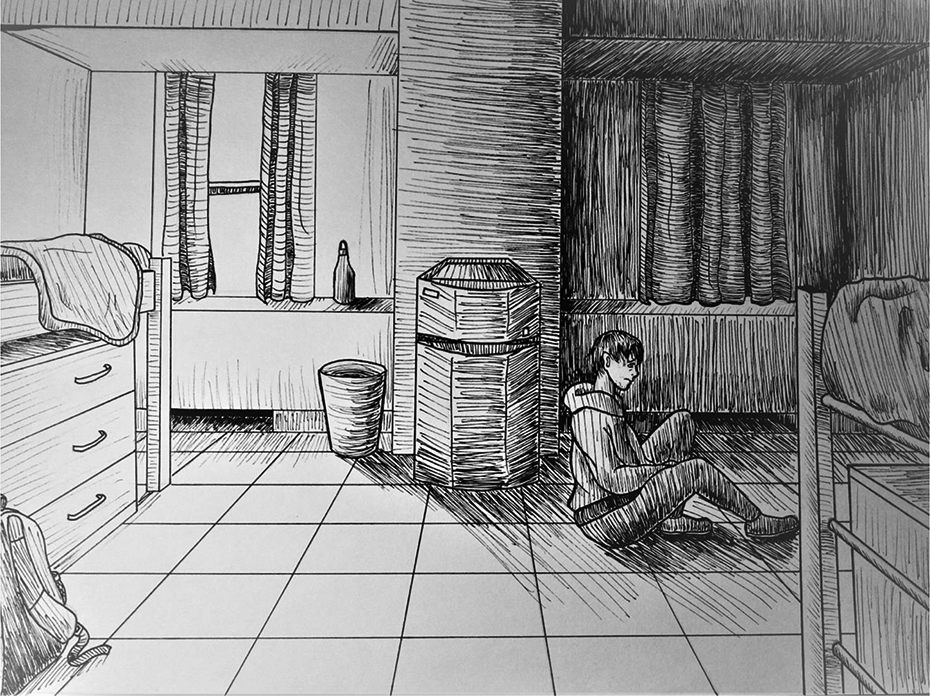
Alienation, 2018. By Luke Pisha. Pen and ink on fine tooth paper.
Like Luke, some student artists hoped their work would promote more empathy, compassion, and understanding of what it is like to struggle with mental health in college. About her work, I Just Want to Be Ok (Figure 6), Ashley Nania shared:
This is a photograph of my journey through depression and anxiety.…My goal for this image is not to make the viewer feel bad for me, but to make the viewer feel as if they are in my own head space and feel what I am feeling with their eyes. We all want to be okay.
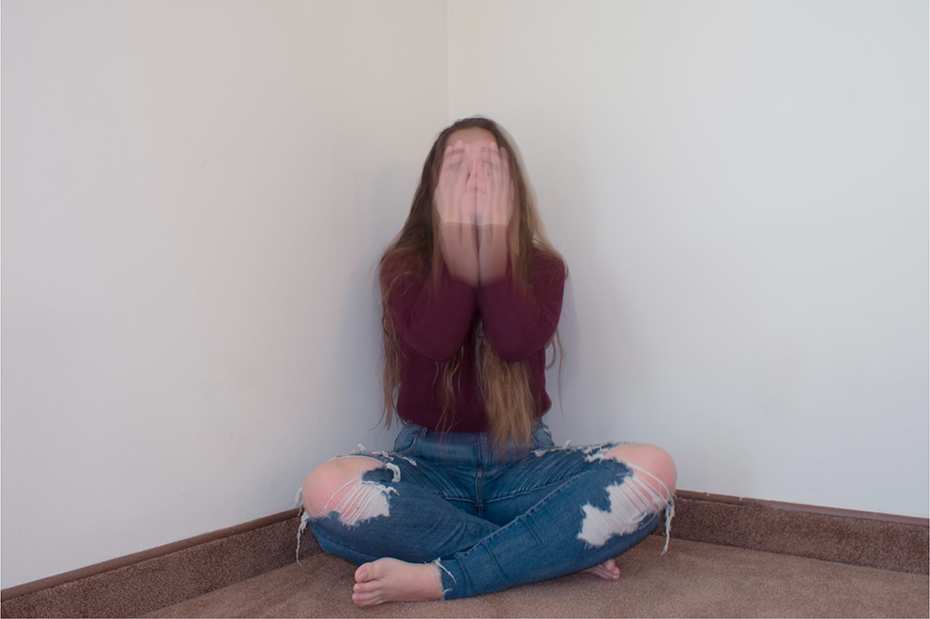
I Just Want to Be Ok, 2018. By Ashley Nania. Archival inkjet print.
Other student artists focused on messages of wellness, healing, and positivity. Hannah Schaumberg shared about her piece, Find your Inner Balance (Figure 7),
When I first looked at the [call for submissions] poster, I immediately read “Mental Health” and disregarded the part that said “Wellness.”…I started to think about how wellness can ignite the positivity inside oneself. The human brain is a powerful machine.…The past few weeks I’ve been taking the time to be proactive by practicing yoga. Any type of healthy activity can increase our brains to think positively.
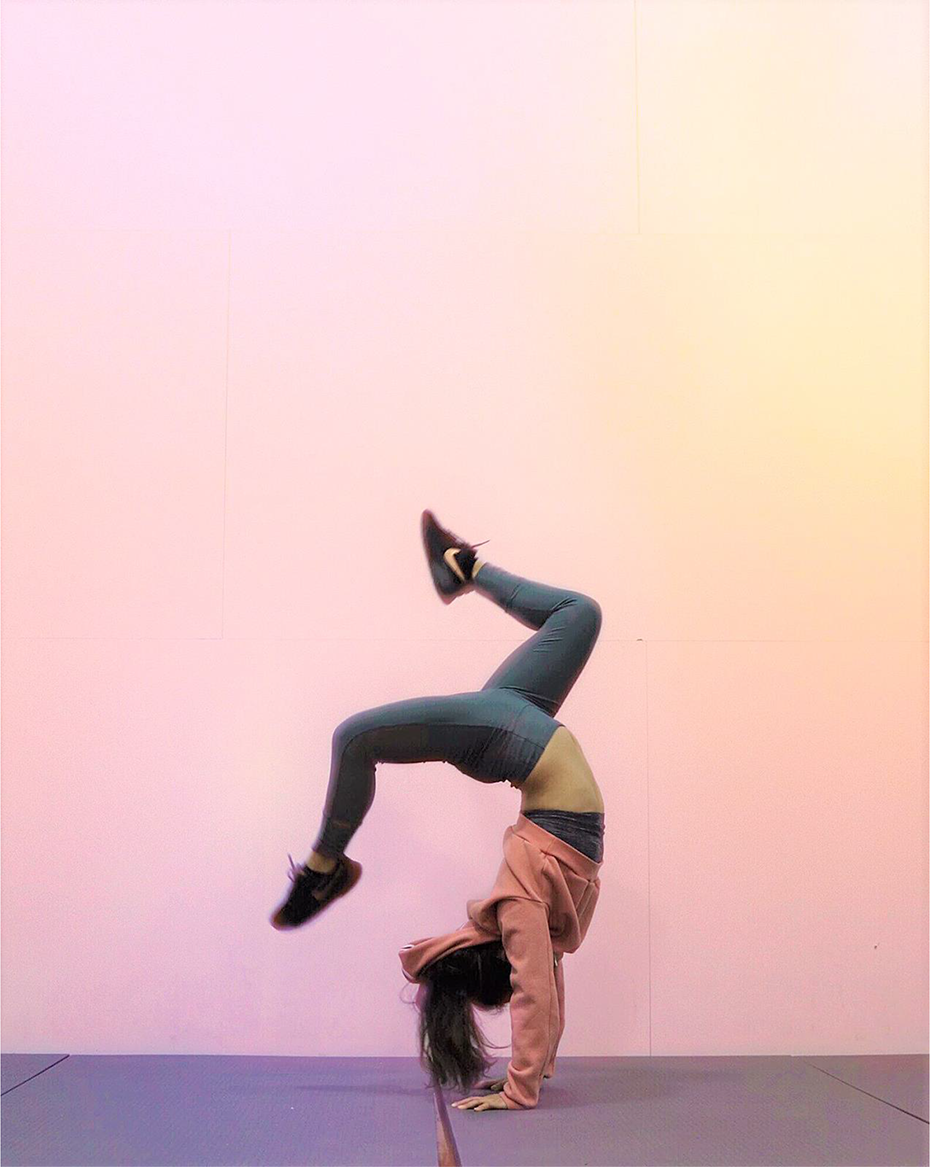
Find Your Inner Balance, 2018. By Hannah Schaumberg. Archival inkjet print.
The exhibition was located in Founders Memorial Gallery, a central event space in the library, and lasted for the entire month of February. Additional programming events that corresponded with the exhibition were also scheduled. There was an opening reception where materials about mental health and wellness were prominently displayed, a “Beads of Hope” table where participants could make their own bracelets to honor those who have been impacted by suicide and other mental health conditions, and a Visiting Artist’s Talk with Tara Wray and Lisa Lindvay that focused on mental health and art. To commemorate the show, an exhibition catalog was created that not only included artwork and corresponding artist statements, but a brief message about mental health in college and where to find help. The catalog was distributed to participating student artists and key administrators on campus and catalogued as part of the university’s archives and special collections (the catalog can be viewed at https://commons.lib.niu.edu/handle/10843/22483).
Ultimately, this student art exhibition provided an opportunity for students to creatively express, explore, and share their experiences related to mental health on campus and served as a forum for discussion and awareness of the mental health conditions. The art exhibition is a valuable example of collaboration across the university to raise awareness of mental health conditions and resources for support in an effort to challenge the stigma of mental health on campus.
What each of the above-mentioned examples held in common were utilizing visuals as a site for student meaning-making and exploration. Whether marginalized due to racism, food insecurity, or mental health, each visual project gave voice to often silenced student population on campus. Through art-based approaches (e.g., drawings, photographs, sculptures) students examined their own stories and voiced their lived reality on campus. Across different geographical locations, institutional types, and status at the university, students engaged in participatory visual methods and methodologies to raise awareness, advocate and outreach to stakeholders on their campus. Making stories hypervisible through catalogs, galleries, and open forums, students embodied experiences in multimodal fashion. No art stood unaccompanied. Audiences were also encouraged to interact and engage their senses through walking, writing, reading, hearing, feeling, and seeing students’ pain, discomfort, struggle, and resilience. The engaging visual methods combined with other participatory activities pierced audiences’ imaginations moved decision makers to action. Policies and programs were implemented because of the power of student advocacy and outreach.
A lot of research and initiatives evidenced the need for higher education professionals to work together for student learning and success. These examples highlight how change happens when students, faculty, and student affairs educators work together for social justice. Graduate student of color pictures and interviews at Clemson University reached upper administration at the university and folx beyond the campus through social media. An education student’s photovoice project on food insecurity involved art department faculty and students, culinary program staff and students, and student life and distance learning offices. It ultimately led to a presentation at the board of trustees and at a statewide summit. Student affairs faculty collaborated with art students and the library to spotlight mental health on campus. Instead of institutions being the primary source of images on campus, student-generated images could be harnessed for social justice. What could you do on your campus to utilize student-created images in advocacy and outreach efforts toward social justice? How might students’ resilience and meaning- and sense-making be fostered through their design, examination, and sharing of images?
