




Abstract
Keywords
Introduction
ADHD is estimated to affect 2% to 4% of the adult population (American Psychiatric Association, 2000; Barkley, 2006). Specific data on the proportion of university students with ADHD are not available, but recent research has indicated that ADHD symptomatology has been observed in between 2% and 10% of university students (Garnier-Dykstra et al., 2010; McKee, 2008), with higher numbers of students with ADHD pursuing higher education (Wolf, Simkowitz, & Carlson, 2009). Preliminary studies suggest that a notable percentage of college students (estimates range from 2% to 9%) report elevated ADHD symptomatology, which has been associated with increased risk for impaired academic, social, and psychological functioning (DuPaul, Weyandt, O’Dell, & Varejao, 2009; Weyandt et al., 2003; Weyandt et al., 2009).
The number of adolescents and college students treated with prescription stimulants for ADHD has steadily increased in the past decade (C. Advokat, 2010; Kolar et al., 2008), and stimulant medications (e.g., amphetamine, dexamphetamine, methylphenidate, lisdexamfetamine dimelsylate) are considered the “first-line” of therapy for young adults (Weyandt, DuPaul, et al., 2013; Weyandt, Marraccini, et al., 2013). Although a significant body of research attests to the effectiveness of prescription stimulants in the treatment of individuals with ADHD (Biederman et al., 2008; DuPaul et al., 2012; Kolar et al., 2008; Wigal, 2009), the non-medical use of prescription stimulant medications among university students with and without ADHD has been cited as problematic in recent years. Indeed, as psychostimulant medications have become increasingly available on college campuses, the use of stimulant medications without a prescription has been reported among undergraduate college students (DeSantis, Noar, & Webb, 2010; Dussault & Weyandt, 2013; Janusis & Weyandt, 2010; McCabe, Knight, Teter, & Wechsler, 2005; Rabiner et al., 2009a, 2009b; White, Becker-Blease, & Grace-Bishop, 2006). Rates of reported past-year non-medical use vary across studies, and range from less than 5% to nearly 20% of students (DuPont, Coleman, Bucher, & Wilford, 2008; Judson & Langdon, 2009).
A number of risk factors associated with increased use of prescription stimulants have been identified: students who are male, Caucasian, involved in Greek life, have a lower grade point average (GPA), report greater “academic strain,” and/or live in the Northeastern United States are more likely to report non-medical stimulant use (C. D. Advokat, Guidry, & Martino, 2008; DuPaul et al., 2009; Dussault & Weyandt, 2013; McCabe et al., 2005; White et al., 2006). Psychological variables have also been observed to associate with prescription stimulant use, and variables associated with non-medical use, including depression (Huang et al., 2006; Poulin, 2007; Teter, Falone, Cranford, Boyd, & McCabe, 2010), anxiety (Dussault & Weyandt, 2013; Weyandt et al., 2009), stress (Dussault & Weyandt, 2013; Peterkin, Crone, Sheridan, & Wise, 2011), and internal (e.g., mental) restlessness (Dussault & Weyandt, 2013; Weyandt et al., 2009).
In addition to undergraduate students, non-medical stimulant use has also been observed among other young adults and professional students (McNiel et al., 2011; Novak, Kroutil, Williams, & Van Brunt, 2007; Prudhomme, Becker-Blease, & Grace-Bishop, 2006). For example, Huang et al. (2006) analyzed data derived from a large (N = 43,093), representative sample of adults in the United States and found that non-medical use of prescription stimulants (specifically, amphetamines) was reported by 4.7% of participants, and higher rates of abuse and dependence associated with these medications were reported than any other category of medication (2%). Young adults appear to use stimulants regardless of educational trajectory, and non-medical use among non-students has been reported by 4.3% of adults aged 18 to 25 (Novak et al., 2007). Regarding students enrolled in professional programs, McNiel et al. (2011) found that 12.4% of dental and dental hygiene students reported non-medical use of prescription stimulants. Medical school students (10.1%; Frick, Frick, Coffman, & Dey, 2011) and students enrolled in an accelerated doctor of pharmacy program (11.6%; Tuttle, Scheurich, & Ranseen, 2010) have reported similarly high rates of non-medical use. Researchers examining stimulant use among medical students posited that non-medical use among post-graduate students may relate to observed associations between stimulant use and perfectionism, applying to competitive programs, and desire for academic success (Low & Gendaszek, 2002; McCabe et al., 2005; Teter, McCabe, Cranford, Boyd, & Guthrie, 2005).
Although studies have explored prescription stimulant misuse in undergraduate students and students enrolled in professional programs, few studies have explored use among graduate students, a population that reports elevated levels of stress and psychological distress (Aktekin et al., 2001; Dyrbye, Thomas, & Shanafelt, 2006; Eisenberg, Gollust, Golberstein, & Hefner, 2007; McKinzie, Altamura, Burgoon, & Bishop, 2006; Myers et al., 2012). Stress levels among graduate students may vary according to the nature, pace, and duration of the graduate program; students in an accelerated 3-year doctoral program reported significantly more stress than a comparison group from a 4-year program (Frick et al., 2011). Furthermore, graduate students from a variety of programs report elevated levels of stress stemming from academic coursework, research projects, clinical training, performance anxiety, institutional demands, lack of experience, time constraints, sleep deprivation, limited free time, competitive peer environment, interpersonal relationships, and financial strain (Badali & Habra, 2003; Nelson, Dell’Oliver, Koch, & Buckler, 2001). Ultimately, stress may manifest in internalizing disorders, and anxiety and depression have been observed to be highly prevalent among graduate, law, and medical students (Aktekin et al., 2001; Dammeyer & Nunez, 1999; Dyrbye et al., 2006; Eisenberg et al., 2007; Helmers, Danoff, Steinert, Leyton, & Young, 1997). Regarding perceived scholastic pressures, many undergraduate students report using stimulants during academic activities such as studying, test-taking, and writing papers (DeSantis et al., 2010; DuPont et al., 2008; Rabiner et al., 2009a, 2009b; Sharp & Rosen, 2007; Weyandt et al., 2009). This finding suggests that graduate students may also be at increased risk for non-medical use of stimulant medication related to academic demands.
Academic functioning can be more difficult to assess among graduate students, who are often held to high minimum GPAs to remain in their program (Silvera, Laeng, & Dahl, 2003). The construct of academic self-efficacy, however, has been associated with overall academic functioning and psychological adjustment among undergraduate and graduate students (Chemers, Hu, & Garcia, 2001; Multon, Brown, & Lent, 1991; Pajares, 1996; Zajacova, Lynch, & Espenshade, 2005), raising the question of whether graduate students who report lower academic self-efficacy may use stimulants at a higher rate to cope with academic demands. Previous investigations have likewise observed academic self-efficacy to correlate with symptoms of impaired psychological functioning among university students, including depression (Lavasani, Khezriazar, Amani, & Malahmadi, 2011), anxiety (Lavasani et al., 2011), and stress (Chemers et al., 2001; Lavasani et al., 2011). Weyandt et al. (2009) investigated the relationship between the non-medical use of prescription stimulants by university students and various aspects of psychological functioning. Results indicated that non-medical use of prescription stimulants was correlated with overall psychological distress, as well as symptoms relating to Somatization, Obsessive-Compulsive, Interpersonal Sensitivity, Depression, Anxiety, Hostility, Phobic Anxiety, Paranoid Ideation, and Psychoticism (Weyandt et al., 2009). More recently, Dussault and Weyandt (2013) investigated the relationship between the non-medical use of prescription stimulant medications and self-reported levels of depression, anxiety, and stress, and found a positive association between non-medical use of prescription stimulants and self-reported levels of anxiety and stress. Dussault and Weyandt also observed increased levels of self-reported internal impulsivity and internal restlessness, conceptualized as cognitive or mental restlessness (Weyandt et al., 2003), to correlate with self-report of non-medical prescription stimulant use. Furthermore, Weyandt et al. noted a significant positive correlation between self-reported non-medical use and self-reported internal distractibility, internal impulsivity, and internal disorganization.
To date, no studies have explored the relationship between academic self-efficacy, psychological variables, and internal restlessness with non-medical use of these medications among graduate students. The present study endeavored to examine the prevalence and nature of non-medical prescription use among graduate students, and to explore the relationship between such use with academic and psychological variables. For the purposes of the current investigation, the term “non-medical use” was used to describe use of prescription stimulants by individuals other than those for whom the medication was prescribed. Specifically, it was hypothesized that non-medical use of stimulants would be reported by graduate students at rates similar to those reported by professional and medical students (8% or greater reporting non-medical use over the past 12 months), as reported on the Self-Reported Prescription Stimulant Use and Perception of Prevalence of Prescription Stimulant Use Among Peers subscales of the Stimulant Survey Questionnaire (SSQ; Weyandt et al., 2009). Next, it was hypothesized that graduate students who reported non-medical use of stimulants would report greater perceived self-knowledge of stimulants, and regard stimulant use as being safer than graduate students who do not use stimulants, as measured by the Perception of Safety of Stimulants subscale of the SSQ (Weyandt et al., 2009). It was also hypothesized that graduate students who reported non-medical use of stimulants would endorse lower academic self-efficacy ratings than peers who did not report non-medical use of stimulants, as measured by the Academic Self-Efficacy Scale (ASES; Santiago & Einarson, 1998). In addition, it was hypothesized that graduate students who report non-medical use of stimulants would endorse higher ratings of depression, anxiety, and stress than peers who did not report non-medical use of stimulants, as measured by the Depression, Anxiety Stress Scales-21 (Lovibond & Lovibond, 1995). Finally, it was hypothesized that graduate students who report non-medical use of stimulants would endorse higher ratings of internal restlessness than peers who did not report non-medical stimulant use, as measured by total and subscale scores on the Internal Restlessness Scale (IRS; Weyandt et al., 2003).
Method
Participants
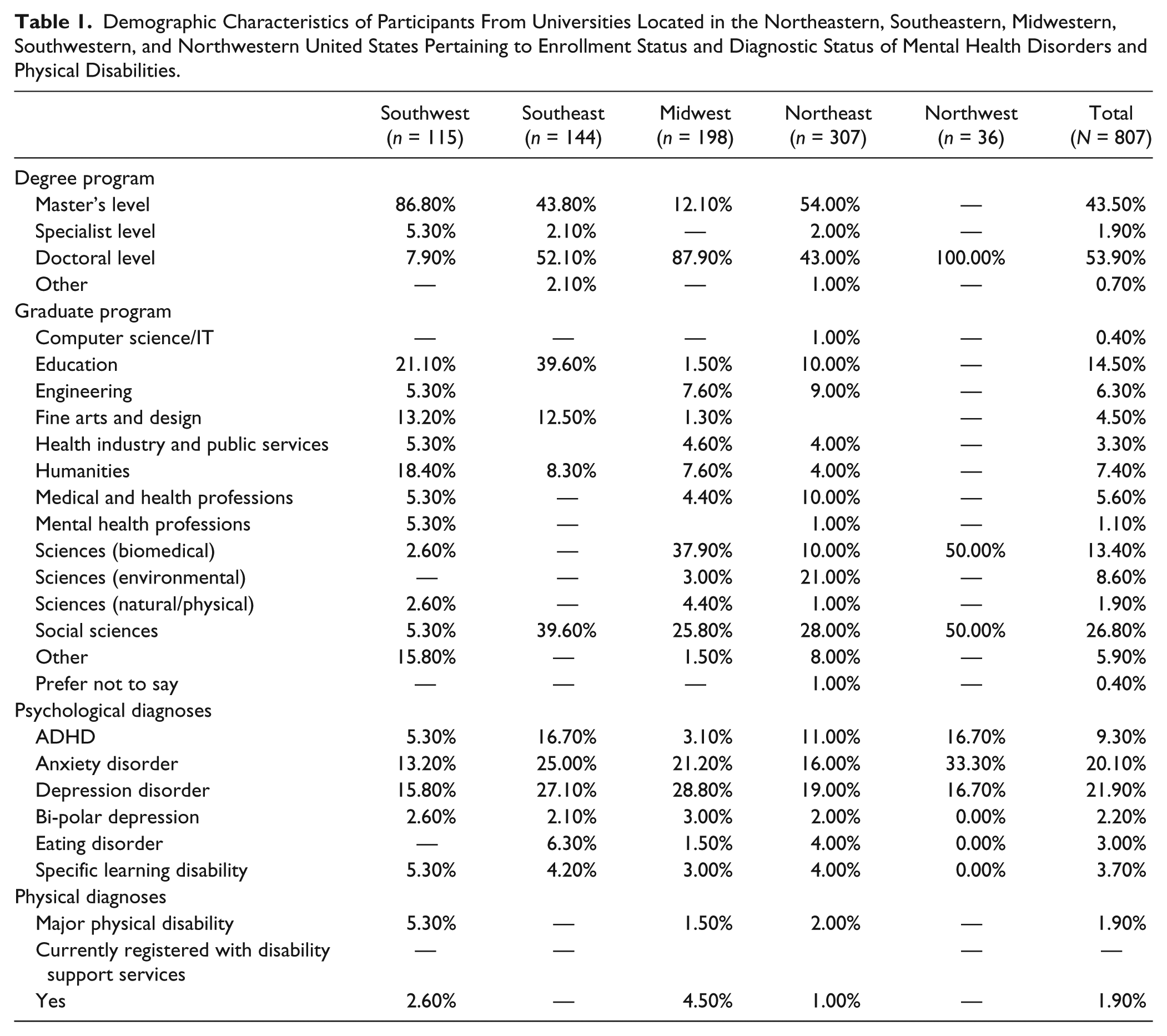
Participants were 807 male and female graduate students from a variety of masters-level, specialist-level, and doctoral-level graduate programs in the United States. Participants were recruited from five public universities located in regions of the United States: Northeast, Southeast, Central-Midwest, Northwest, and Southwest. Each of the large, public universities identified for inclusion was previously the site of at least one investigation of non-medical prescription stimulant use among students at the undergraduate level. A total of 854 students completed the survey measures online. Of this total, 33 students (3.7% of total respondents) reported currently taking stimulant medication as prescribed by a health care provider, and were excluded from the sample. An additional 14 students provided consent but did not complete sufficient items for analysis, and were eliminated from the sample. The largest proportion of participants coming from the university located in the Northeast (37%), followed by 24% from a university in the Midwest, 17.8% at a university in the Southeast, 14.1% at a university in the Southwest, and 4.5% at a university in the Northwest. A small number of participants, comprising 1.8% of the total sample, reported that they were enrolled at a university other than the five universities targeted by the researcher. A majority of participants were female (72.1%), with 26% identifying as being male and 1.9% not disclosing their gender. A majority of participants (65.8%) reported being between 22 and 29 years of age. A majority of participants (76.6%) identified their ethnicity as being White/European American; while 8.6% of participants self-identified as Latino/Hispanic American, 6.3% as Asian/Asian American, 2.2% as Multiethnic, 1.9% as Black/African American, and 0.4% as Native American/American Indian. Supplementary demographic information pertaining to academic enrollment of participants and reported history of physical and mental disabilities among participants is provided in Table 1. It is important to note that the exact rates of ADHD and other psychological disorders among this sample is unknown due to privacy protection for students with disabilities under the Americans With Disabilities Act (1991).
Demographic Characteristics of Participants From Universities Located in the Northeastern, Southeastern, Midwestern, Southwestern, and Northwestern United States Pertaining to Enrollment Status and Diagnostic Status of Mental Health Disorders and Physical Disabilities.
Measures
Demographic Information Form
Participants were asked to complete a demographic form, which included participant age, gender, ethnicity, university, and degree program. Students were also asked to indicate whether or not they have been diagnosed with ADHD or other mental illness, and whether they possessed a current medical prescription for stimulant medication. Graduate students who report having ADHD were not excluded from participation; however, those endorsing a current prescription for stimulant medication were excluded.
SSQ
The 40-item SSQ (Weyandt et al., 2009) is used to assess the medical and non-medical use of prescription stimulant medications among college students, as well as attitudes toward and knowledge about prescription stimulant use among other students. Thirty items of the survey utilizes a 5-point Likert scale, wherein for 20 of these items, the possible values endorsed range from 1 (never) to 5 (always) and the remaining 10 statements use range of value from 1 indicating “strongly disagree[s]” to 5 indicating “strongly agree[s].” The final 10 items are presented in a dichotomous forced-choice format. The SSQ generates a total score, and items have been observed to load on four factors: (1) self-reported prescription stimulant use, (2) perception of prevalence of prescription stimulant use among peers, (3) knowledge of atypical stimulant use among peers, and (4) perception of safety of stimulants. Preliminary analysis found the SSQ to have adequate internal consistency (α = .85). A principal-axis factor analysis indicated that the four factors accounted for 51.11% of the total variance. Internal consistency varied across the factors: self-reported prescription stimulant use (α = .92), perception of prevalence of prescription stimulant use among peers (α = .43), knowledge of atypical stimulant use among peers (α = .61), and perception of safety of stimulants (α = .61; Weyandt et al., 2009). In the present study, internal consistency varied across factors: self-reported prescription stimulant use (α = .87), perception of prevalence of prescription stimulant use among peers (α = .89), knowledge of atypical stimulant use among peers (α = .63), and perception of safety of stimulants (α = .69).
The IRS
The IRS (Weyandt et al., 2003) is employed to measure mental restlessness among college students. Twenty-four statements related to internal restlessness utilizing a Likert-style response. Responses indicate for what proportion of the time each statement is true for participants, and options range from 1 (none of the time) to 7 (all of the time). The IRS also generates a total score, and items have been observed to load on four factors: internal distractibility (i.e., inability to ignore unimportant thoughts), internal impulsivity (i.e., cognitive inhibitory control), internal restlessness (i.e., cognitive restlessness), and internal disorganization (i.e., inability to coordinate cognition). Previous studies utilizing the IRS have demonstrated adequate test–retest reliability, construct validity, and concurrent validity of the IRS based on correlations with self-report instruments frequently used to assess ADHD in young adults (Weyandt, Hays, & Schepman, 2005; Weyandt et al., 2003). More recent studies with undergraduate students have raised concerns about the construct validity of the scale given the relatively low internal consistency observed in two of the proposed factors (internal impulsivity [α = .66]; internal disorganization [α = .51]), but overall internal consistency for web administration of the IRS is commensurate with that observed in traditional administration (Dussault & Weyandt, 2013). Internal consistency for the present sample was as follows: internal distractibility (α = .89), internal restlessness (α = .79), internal impulsivity (α = .88), and internal disorganization (α = .77).
The Depression Anxiety Stress Scale–21 (DASS-21)
The DASS-21 (Lovibond & Lovibond, 1995) is a self-report measure designed to assess levels of anxiety, depression, and perceived stress among adults. The scale employs a Likert-style format to indicate how often a series of statements have applied to them during the preceding 7 days. Response options on the 4-point scale include values from 0 (did not apply to me at all) to 3 (applied to me very much/most of the time). Previous research (Antony, Bieling, Cox, Enns, & Swinson, 1998; Lovibond & Lovibond, 1995) has found internal consistency to be quite high on each of the three subscales: Depression (α = .91; α = .97), Anxiety (α = .81; α = .92), and Stress (α = .88; α = .92). The present study demonstrated adequate internal consistency on each of the three subscales as well: Depression (α = .89), Anxiety (α = .76), and Stress (α = .88; α = .87).
ASES
The 10-item ASES (Santiago & Einarson, 1998) was used to assess graduate students’ perception of their ability to meet a variety of academic demands. The scale asks respondents to use a Likert-style format to indicate how confident they are in their abilities to complete a number of tasks, endorsing a belief that that are “very,” “somewhat,” or “not at all confident” in their abilities to complete activities including completing their degree in a timely manner, handle coursework, and conduct research. Total possible scores range from 0 (very low degree of self-efficacy) to 20 (very high degree of self-efficacy). Previous studies have noted a high degree of internal consistency across items (r = .80; Santiago & Einarson, 1998), and internal consistency calculated on the present sample was adequate (α = .79).
Procedure
Data were collected in several waves across five consecutive months. Program directors and department chairs on each of the five campuses were contacted via email. Contacts were provided with a synopsis of the study as well as a request for facilitation of the solicitation of participation from graduate students. In the absence of a reply following the initial email contact, two reminder emails were sent at 10-day intervals. Interested department chairs and program administrators were asked to distribute the email containing the link to students who may be eligible and willing to participate. Students from all master’s-level, specialist-level, and doctoral-level graduate programs were eligible to participate, in an effort to obtain a diverse and representative sample of participants. A link was included in the email which enabled students to access the informed consent forms, all associated survey measures, and debriefing materials.
Participants were instructed to enter a secure and encrypted screen hosted via the website for commercial research platform SurveyMonkey, and were presented with the informed consent form, which contained contact information for the primary investigator, as well as a basic description and eligibility requirements of the research project. Participants who provided consent were presented with electronic versions of five measures: a demographic survey designed by the researcher, the SSQ (Weyandt et al., 2009), the IRS (Weyandt et al., 2003), the ASES (Santiago & Einarson, 1998), and the DASS-21 (Lovibond & Lovibond, 1995). The order of task administration was randomized across participants. They were also presented with the option to print a copy of the consent form in the case of undesired effects associated with participation or a desire to access a copy of the final report.
Results
The demographics of the sample were compared with university enrollment data for each of the five universities gathered via the Common Data Set Initiative (The College Board, Peterson’s, and U.S. News & World Report: www.commondata.org). It was also compared with the national population of graduate students via data of the Council of Graduate Schools (Gonzales, Allum, & Sowell, 2013). While the sample was consistent with the universities’ overall graduate student populations in terms of ethnicity, participants in the present sample were disproportionately female. Female participants comprised 72.1% of the total sample, whereas female students comprised 56% of full-time graduate students enrolled at the five universities during the 2011-2012 academic year and 55.3% of full-time national graduate students enrolled in fall 2012. A majority of participants (65.8%) reported being between 22 and 29 years of age and White/European American (76.6%). Participants reported being enrolled in master’s-level (43.5%), specialist-level (1.9%), and doctoral-level (53.9%) degree programs. Compared to graduate students in the United States, this sample may underrepresent master’s-level students (74.1%) and overrepresent doctoral students (25.9%). Participants endorsed a variety of previous diagnoses related to impaired psychological functioning, including ADHD (9.3%), Anxiety (20.1%), Depression (21.9%), Bi-Polar Depression (2.2%), Eating Disorder (3.0%), and Specific Learning Disability (3.7%). These prevalence rates are similar to lifetime prevalence rates observed by Kessler, Berglund, Demler, Jin, and Walters (2005), who found that, over the course of the lifetime, 8.1% of individuals will be diagnosed with ADHD, 28.8% will be diagnosed with an Anxiety Disorder, and 3.9% with Bi-Polar Depression.
Preliminary Data Analysis
Hypotheses were tested using a series of univariate Analyses of Variance (ANOVA) and standard multiple regression analyses. Preliminary assumption testing was conducted in accordance with the guidelines advanced by Tabachnick and Fidell (2007) with regard to unequal sample sizes, missing data, normality, linearity, outliers, homogeneity of variance, homogeneity of regression, ratio of cases to independent variables, normality, linearity, homoscedasticity, outliers, multi-collinearity, and singularity. Assumptions related to unequal sample sizes were of primary concern; given the fact the group failing to endorse previous non-medical use of prescription stimulants was far larger than the group reporting non-medical use of stimulants. Despite the significant disparity in sample sizes, results indicated that assumptions for homogeneity of variances and equality of means were met, and no further transformations or parametric modifications were required. Missing data ranged between 0.3% and 1.8%, well below the 5% limit suggested by Tabachnick and Fidell. Violations of assumptions regarding outliers were noted, and data were adjusted per the re-coding technique (e.g., coded as one unit higher than the highest non-outlier value) suggested by Tabachnick and Fidell. It was not possible to calculate a response rate because of the nature of survey distribution. The ultimate sample included 807 students, which represents only a small percentage (.025) of the total number of graduate students enrolled at the universities. However, because of the methodology of survey distribution, it is not possible to know what percentage of the total student population was ultimately given the opportunity to participate by receiving the emailed survey link. Preliminary correlational analyses indicated that none of the measures were highly correlated (r ≥ .90). Because a fairly large number of measures were used during the investigation, a more conservative alpha level of .01 during data analysis was used to control for experiment wise Type 1 error.
Graduate Students and the Non-Medical Use of Prescription Stimulant Medication
To investigate Hypothesis 1, that non-medical use of stimulants would be reported among graduate students at rates similar to those reported by professional and medical students (8% or greater reporting non-medical use over the past 12 months), descriptive statistics calculations were performed on specific items of the demographic questionnaire, as well as the subscales of Self-Reported Prescription Stimulant Use and Perception of Prevalence of Prescription Stimulant Use Among Peers subscale of the SSQ. A notable proportion of participants (17.5% of the total sample) reported having previously used prescription stimulants for non-medical purposes. Overall, 5.9% of participants reported non-medical use of prescription stimulant use within the past year. As depicted in Table 2, the most frequently reported (16.2%) motivation among students who endorsed past non-medical use of stimulant medication was “to perform better in my schoolwork.” The second most frequently reported (12.3%) motivation for use was “to feel more energetic.” Substantial proportions of students reported having used prescription stimulants “with alcohol” (10.7%), “at parties” (8.9%), “to help [them] socialize better” (7.4%), and “to get high” (7.8%). Student behaviors and beliefs regarding stimulant use and peers indicated that 27.9% of participants reported being offered prescription stimulant medication by other students and 4.5% reported having purchased the medications from peers. Furthermore, academic activities were the most frequently cited perceived motivation for the non-medical use of stimulants by peers, with 36% having reported knowing other students who use the medications “during tests,” with even higher numbers for the use of medications by peers “while studying” (43.8%) and “during finals week” (44.0%). Perceived social use among peers was also reported, with about 1 in 5 participants indicating that they knew students who use prescription stimulants “at parties” (20.4%), “with alcohol” (22.1%), and “with other drugs” (18.9%). Prescription stimulant medications appear quite accessible on campus, and perceived as relatively safe among students, as nearly 1 in 4 participants (24.9%) indicated that they “agree” or “strongly agree” that “using prescription stimulants occasionally is harmless,” and 15.2% of participants indicated a belief that the medications are “easy to get on this campus.” Still, not all students are comfortable with the level of prescription stimulant use among peers: 23.3% of students agreed with the statement that “prescription stimulant use on this campus is a problem.” Approximately a third of students indicated that they feel “knowledgeable about prescription stimulants” (30.5%) and about “the side effects of prescription stimulants” (32.7%).
Stimulant Survey Questionnaire Responses Pertaining to the Nature of and Motivations for Self-Reported Use of Prescription Stimulants Among Graduate Students.

For the purposes of further analysis, participants were assigned to groups based on endorsement of non-medical prescription stimulant use on the demographic questionnaire. A series of univariate ANOVAs was conducted on the two groups of participants: those who endorsed having used prescriptions stimulants without a prescription previously and those who did not. Means, standard deviations, effect sizes, and F statistics for all ANOVAs are included in Table 3. To investigate Hypothesis 2, that graduate students who endorse greater non-medical prescription stimulant use would report greater perceived self-knowledge regarding stimulants and regard stimulant use as being safer than graduate students who do not use stimulants, a one-way ANOVA was conducted, with the dependent variable being the Perception of Safety of Stimulants subscale of the SSQ. In support of Hypothesis 2, ANOVA, F(1, 799) = 15.197, p < .001, η2 = .019, results revealed a small but significant group effect for perception of safety, as students who reported a history of non-medical prescription stimulant use endorsed prescription stimulants as being safer than peers who did not report previous non-medical use.
Differences in the Perception of Safety of Stimulant Use, Reported Self-Efficacy, Depression, Anxiety, Stress, and Internal Restlessness Among Students Who Do and Do Not Report the Non-Medical Use of Prescription Stimulant Medication.
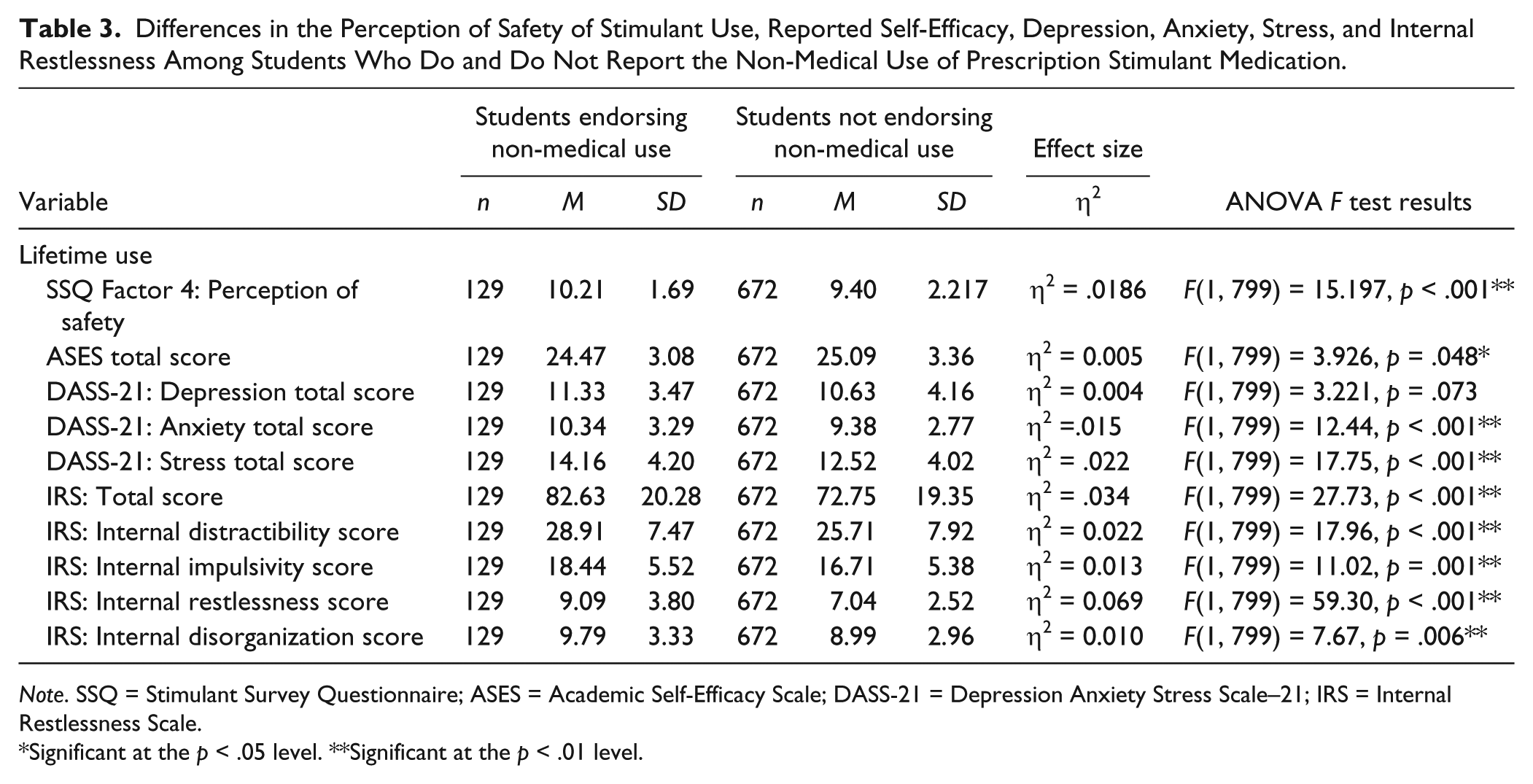
Note. SSQ = Stimulant Survey Questionnaire; ASES = Academic Self-Efficacy Scale; DASS-21 = Depression Anxiety Stress Scale–21; IRS = Internal Restlessness Scale.
Significant at the p < .05 level. **Significant at the p < .01 level.
Academic Self-Efficacy and the Non-Medical Use of Prescription Stimulant Medication
To investigate Hypothesis 3, that graduate students who endorse non-medical prescription stimulant use would report lower academic self-efficacy ratings compared with those who do not, a univariate ANOVA was conducted with the total score generated by the ASES as a dependent variable. ANOVA, F(1, 799) = 3.926, p < .048, η2 = .005, results initially revealed a small but significant group effect for academic self-efficacy. However, the results did not reach the level of statistical significance required at the .01 level, suggesting that students who endorsed previous non-medical use of prescription stimulants did not report lower levels of overall academic self-efficacy than peers who did not report previous non-medical use.
Depression, Anxiety, and Stress and the Non-Medical Use of Prescription Stimulant Medication
Hypothesis 4, that graduate students who endorse non-medical prescription stimulant use would report higher ratings of depression, anxiety, and stress, was tested via a series of univariate ANOVAs, with the dependent variables of interest being the Depression, Anxiety, and Stress subscales of the DASS-21. Pertaining to self-reported depressive symptomatology, ANOVA, F(1, 799) = 3.221, p = .073, η2 = .004, results failed to reveal a significant group effect for self-reported depression, as measured by the Depression subscale of the DASS-21. This finding suggests that, in contrast to the hypothesis, students who endorsed previous non-medical use of prescription stimulants did not report higher levels of depressive symptomatology than peers who did not report previous non-medical use. Concerning self-reported anxiety symptomatology, ANOVA, F(1, 799) = 12.44, p < .001, η2 = .015, results revealed a small but significant group effect for self-reported anxiety, as measured by the Anxiety subscale of the DASS-21. This suggests that students who endorsed previous non-medical use of prescription stimulants reported higher levels of anxiety symptomatology than peers who did not report previous non-medical use. Regarding self-reported levels of stress, ANOVA, F(1, 799) = 17.75, p < .001, η2 = .022, results revealed a small but significant group effect for self-reported stress level, as measured by the Stress subscale of the DASS-21. This finding suggests that students who endorsed previous non-medical use of prescription stimulants compared with those who did not reported experiencing higher levels of stress.
Internal Restlessness and the Non-Medical Use of Prescription Stimulant Medication
To investigate Hypothesis 5, that graduate students who endorse non-medical prescription stimulant use would report higher ratings of internal restlessness compared with those who do not, a series of univariate ANOVAs were conducted with the dependent variables of interest being the total score and factor scores (internal distractibility, internal impulsivity, internal restlessness, and internal disorganization) of the IRS. Regarding self-reported levels of mental restlessness, ANOVA, F(1, 799) = 27.73, p < .001, η2 = .034, results, consistent with Hypothesis 5, revealed a small but significant group effect for overall restlessness, as measured by the total score of the IRS. This outcome suggests that students who endorsed previous non-medical use of prescription stimulants, compared with those who did not, reported experiencing higher levels of mental restlessness. Pertaining self-reported levels of internal distractibility, ANOVA, F(1, 799) = 17.96, p < .001, η2 = .022, results revealed a medium significant group effect, as measured by the Internal Distractibility subscale score of the IRS, suggesting that students who endorsed previous non-medical use of prescription stimulants reported experiencing higher levels of internal distractibility than peers who did not report previous non-medical use. With regard to self-reported levels of internal impulsivity, ANOVA, F(1, 799) = 11.02, p = .001, η2 = .013, results revealed a small but significant group effect, as measured by the Internal Impulsivity subscale score of the IRS. This finding indicates that students who endorsed previous non-medical use of prescription stimulants reported experiencing higher levels of internal impulsivity than peers who did not report previous non-medical use. Regarding self-reported levels of internal restlessness, ANOVA, F(1, 799) = 59.30, p <.001, η2 = .069, results revealed a small to moderate significant group effect, as measured by the Internal Restlessness subscale score of the IRS. This indicates that students who endorsed previous non-medical use of prescription stimulants compared with those who did not reported experiencing higher levels of internal restlessness. Concerning self-reported levels of internal disorganization, ANOVA, F(1, 799) = 7.67, p = .006, η2 = .010, results revealed a small but significant group effect, as measured by the Internal Disorganization subscale score of the IRS, which suggests that students who endorsed previous non-medical use of prescription stimulants reported experiencing higher levels of internal disorganization than peers who did not report previous non-medical use.
Discussion
The present study is the first to exclusively explore non-medical prescription stimulant use among a general sample of graduate students and has clinical as well as intervention implications. It was hypothesized that non-medical use of stimulants would be reported among graduate students at rates similar to those reported by professional and medical students (8% or greater reporting non-medical use over the past 12 months). However, past-year usage rates for participants were actually lower than expected (5.9% of participants). Various factors could have contributed to a lower rate of past-year use being observed. For example, the current sample was disproportionately female and previous investigations of stimulant misuse among undergraduates have suggested that usage rates are higher among male students (e.g., Low & Gendaszek, 2002; Teter et al., 2005). Students from a variety of programs were also included, while two of the three previous studies on non-medical stimulant use that included graduate-level students surveyed students from programs that may give them increased knowledge of or access to prescription stimulant medications: medical school students and students enrolled in an accelerated doctor of pharmacy program (Frick et al., 2011; Tuttle et al., 2010).
The most frequently cited motivations for self-reported use of stimulant medications related to academic activities, consistent with previous research of undergraduate students (e.g., DuPont et al., 2008; Dussault & Weyandt, 2013; Judson & Langdon, 2009), include general academic performance, focus in class, and test performance. Also consistent with previous research with undergraduate students was the finding that students reported previous non-medical use that was recreational in nature, endorsing the use of stimulant medications while at parties, with alcohol, or to “get high” (DuPont et al., 2008; Dussault & Weyandt, 2013; Teter et al., 2005).
Results also provided insight into graduate student behaviors and beliefs regarding stimulant use among peers. More than one in four participants reported having been offered prescription stimulant medication by other students, and a smaller proportion of students reported having purchased the medications from peers. Academic activities were the most frequently cited perceived motivation for the use of stimulants among classmates, and participants reported knowledge of peers using the medications during tests and while studying. Relatively lower rates of perceived use among peers during social activities was reported, with about half as many participants reporting that their classmates were using stimulants non-medically at parties, with alcohol, or with other illicit substances. This discrepancy in reported academic versus non-academic motivations for use is more significant than that observed in previous research with undergraduates, where rates are more similar across the two domains (DuPont et al., 2008; Dussault & Weyandt, 2013; Teter et al., 2005). Because these data relate to perceived use by others rather than self-reported use by the individual, it is unclear how accurate these perceptions may be. However, it is plausible that academic motivations for non-medical use are more salient motivators for graduate students as compared with undergraduate students, although graduate students may be less likely to disclose their non-medical prescription stimulant use to peers, particularly if motivations are less socially acceptable, as with recreational use.
An unsettling finding in previous investigations with undergraduate students is that perceived social norms surrounding non-medical use of stimulants is associated with self-reported usage (Judson & Langdon, 2009). Indeed, results of the present study indicate that prescription stimulant medications appear quite accessible on campus, and are perceived as relatively safe among students, with nearly one in four participants indicating a belief that “using prescription stimulants occasionally is harmless.” About a third of students indicated that they feel “knowledgeable about prescription stimulants” and “the side effects of prescription stimulants.” Furthermore, students who reported a history of non-medical prescription stimulant use endorsed prescription stimulants as being safer than peers who did not report previous non-medical use. These findings are consistent with previous investigations of non-medical prescription stimulant use among undergraduate students (Dussault & Weyandt, 2013; Judson & Langdon, 2009). This result, in combination with the finding noted previously that many participants endorsed the medications as relatively safe, or even “harmless,” is troubling, and suggests that future prevention and intervention strategies may benefit from the inclusion of a psychoeducational component that targets false perceptions of safety surrounding non-medical prescription stimulant use.
The third hypothesis, that graduate students who endorsed non-medical prescription stimulant use would report lower academic self-efficacy ratings compared with those who did not, was not supported. Students who reported the non-medical use of prescription stimulants were no likelier than peers to demonstrate low self-efficacy as measured by the ASES, suggesting that, while actual academic failure may be a risk factor for non-medical stimulant use among university students, subjective academic stress does not appear to be a risk factor, at least among graduate students. The fourth hypothesis, however, that proposed that graduate students who endorse non-medical prescription stimulant use would report higher ratings of depression, anxiety, and stress, was partially supported. Specifically, students who endorsed previous non-medical use of prescription stimulants reported higher levels of anxiety symptomatology and higher levels of perceived stress than peers who did not report previous non-medical use. This finding has clinical implications as graduate students who experience higher levels of anxiety may be self-medicating with stimulants to increase their academic performance and thereby decrease their anxiety.
Previous research among undergraduate university students has suggested that psychological factors are significantly associated with non-medical stimulant use, including depression (Rabiner et al., 2009b; Teter et al., 2010; Weyandt et al., 2009), anxiety (Dussault & Weyandt, 2013; Weyandt et al., 2009), and stress (Janusis & Weyandt, 2010). The results of the present study are consistent with the results of Dussault and Weyandt (2013), who also assessed depression, anxiety, and stress levels using the DASS-21 and observed associations for anxiety and stress, but not depression. In previous studies that did observe a significant association between self-reported depressive symptomatology and non-medical stimulant use, other measures were used to assess depression (e.g., the Brief Symptom Inventory, Derogatis & Melisaratos, 1983; Center for Epidemiologic Studies Depression Scale, Radloff, 1977). Because results of previous investigations do support an association between depressive symptomatology and non-medical stimulant use, it is unclear whether a lack of observed relationship in the two studies which used the DASS-21 may be a function of the instrument rather than the true absence of symptomatology among participants who report non-medical stimulant use. Nevertheless, participants who reported prescription stimulant misuse did not report significantly more depressive symptomatology than peers, but did report significantly higher levels of anxiety and stress. This suggests that students who are experiencing significant levels of anxiety and stress may be at increased risk for non-medical use of prescription stimulant medication.
Last, the fifth hypothesis, which proposed that graduate students who endorsed non-medical prescription stimulant use would report higher ratings of internal restlessness compared with those who did not, was supported. Results revealed a small but significant group effect for overall mental restlessness, internal distractibility, internal impulsivity, internal restlessness, and internal disorganization. These results are consistent with results from previous investigations examining the non-medical use of prescription stimulants among undergraduate students (Dussault & Weyandt, 2013; Weyandt et al., 2009), suggesting that students who are experiencing significant levels of internal restlessness, distractibility, impulsivity, or disorganization may be at increased risk for non-medical use of prescription stimulant medication. High levels of internal restlessness have previously been observed among adults with ADHD (Biederman et al., 2008; Weyandt et al., 2003), which raises the possibility that students may be engaging in non-medical use of prescription stimulants in an effort to address elevated ADHD symptomatology or to self-medicate undiagnosed ADHD. This finding also has clinical implications and suggests that better referral and assessment methods are needed to identify students who may be in need of services for ADHD on college campuses.
Limitations and Future Directions
The present study has a number of limitations that should be considered when interpreting the findings. Although the sample was relatively large, participants were disproportionately White and female. Because the sample was one of convenience, it is important to note that participants may also differ from the population from which the sample was drawn in ways other than demographic characteristics. Future research should consider collaborating with graduate school administrators to gain greater access to all enrolled students, and potentially using a stratified sampling technique to increase representativeness. Another limitation of the present study was the relatively small number of students who reported non-medical use. Targeting a larger number of students to obtain a larger number of students who do report previous use, especially use within the past 12 months, should be considered. Because psychological symptomatology was among the variables of interest for the present study, co-morbid diagnoses of participants were also a limitation. While participants were asked to report any previous diagnoses, individuals who had previously been diagnosed with disorders other than ADHD (e.g., anxiety, depression, eating disorders) were not excluded from the sample. Future researchers may consider trying to establish a sample including only students with normative psychological functioning to help control for possible effects of the diagnosed students’ existing psychopathology. If students with existing diagnoses of mental illness are included in future studies, more thorough information regarding their mental health history should be gathered to differentiate past and present pathology among participants.
Although adequate (and in most cases, high) internal consistency was established for a majority of measures, relatively low internal consistency was observed on the SSQ Factor 3 (α = .63) and SSQ Factor 4 (α = .69). Future research including the SSQ, and particularly research examining subscale scores, may wish to undertake a full factor analysis prior to data collection, and consider removing items from the measure for the purposes of the study. The online nature of the present study may also serve as a limitation. In web-based research, sample bias may cause some groups to be excluded or underrepresented in the sample (Duda & Nobile, 2010; Wyatt, 2000), including certain economic, racial, and gender groups, as well as individuals who are not literate, not computer-literate, or not able to utilize computers because of disability (Rhodes, Bowie, & Hergenrather, 2003). On the other hand, web-based research has been observed to increase respondent openness and full participation (Rhodes et al., 2003), and reduce inhibitions and social desirability (Griffiths, 2009). The literature also suggests that emerging adults, specifically, may feel more comfortable disclosing sensitive information in a web-based survey, rather than a method that involves face-to-face interaction (Battles, 2010; Griffiths, 2009). Future research may also wish to compare usage rates for prescription stimulants between groups of students that would have greater access to the medications (e.g., medical or pharmaceutical students) and their peers.
Conclusion
The present study is among the first to explore non-medical prescription stimulant use among graduate students. Past-year rates of self-reported non-medical use were determined to be lower than hypothesized and the hypothesized usage rate was observed at just one of the five universities included in the present study. Motivations for use reported by participants were both academic and social in nature, although a greater emphasis was observed on academically motivated use, as compared with previously reported motivations among undergraduate students. Self-reported non-medical use of prescription stimulant medications was significantly correlated with self-reported levels of anxiety and stress, various aspects of internal restlessness, and perceived safety of the medications. Contrary to the study’s hypothesis, academic self-efficacy was not significantly associated with non-medical stimulant use. In conclusion, the findings of the present study support that non-medical use of prescription stimulants is problematic on university campuses, including the graduate student population. Effective intervention and prevention programs are needed to increase knowledge and awareness of non-medical stimulant use among higher risk populations on college campuses, to educate undergraduate and graduates students about the potential side effects and risks associated with prescription stimulant misuse, and to promote campus resources for academic and psychological support (Dussault & Weyandt, 2013; Rosenfield, Hebert, Stanbrook, Flegel, & Macdonald, 2011; Weyandt, Marraccini, et al., 2013). The findings also suggest that better referral and intervention services may be needed on college campus to help identify students with ADHD and other psychological difficulties, which in turn may lead to a decrease in the non-medical use of prescription stimulants among the undergraduate and graduate student populations.
Footnotes
Declaration of Conflicting Interests
The author(s) declared no potential conflicts of interest with respect to the research, authorship, and/or publication of this article.
Funding
The author(s) received no financial support for the research, authorship, and/or publication of this article.