



Abstract
Pharmacotherapy for children with ADHD may continue for many years. Therefore, it is important to estimate the long-term safety of ADHD medications. Serious cardiovascular events among children who were treated with drugs for ADHD were previously reported in Canada and the United States (Nissen, 2006; Wooltorton, 2006). Then, Cooper et al. (2011) concluded that even if there is an increased cardiovascular risk, the corresponding absolute risk is low, and there is no evidence of an association between use of ADHD medications and serious cardiovascular risk. However, there are still concerns about the safety of ADHD medications, such as adverse effects on the circulatory system (Shin, Roughead, Park, & Pratt, 2016). Meanwhile, the number of children diagnosed with ADHD is increasing in many countries, which likely means that pharmaceutical treatment for ADHD is also increasing (Davidovitch, Koren, Fund, Shrem, & Porath, 2017; Garfield et al., 2012). Therefore, we need to monitor trends of drug use for ADHD medications and determine their safety for children with ADHD. Drug utilization evaluation studies have been reported frequently overseas (Man et al., 2017; Shin et al., 2016; Song & Shin, 2016).
Treatment options for ADHD for Japanese children differ from those for children living overseas. In Japan, methylphenidate (Ritalin®) was approved for depression in 1961 and for narcolepsy in 1995. Recognizing the efficacy of methylphenidate for hyperactive children in overseas, methylphenidate began to be used in Japanese children with ADHD. However, because abuse and misuse of methylphenidate as an antidepressant increased, depression was dropped from its indications in 2007. At this point, methylphenidate was indicated only for narcolepsy in Japan. Methylphenidate-osmotic-controlled release oral delivery system (OROS) tablets (Concerta®), an extended-release form of methylphenidate, was developed to deal with drug dependence and was approved for children with ADHD in 2007. Prescription, dispending, and indication for use of methylphenidate-OROS and methylphenidate have been regulated by a third-party committee in Japan since 2008. Atomoxetine (Strattera®) was approved for children with ADHD in 2009. No regulations have been mandated for the prescription of atomoxetine.
There are various ADHD medications in foreign countries, whereas only two drugs were approved for ADHD in Japan until guanfacine was approved in 2017. Trends of drug use for children with ADHD before 2010 in Japan were reported in two studies (Obara et al., 2015; Okumura, Fujita, & Matsumoto, 2014). Obara et al. (2015) revealed increases in the use of methylphenidate-OROS tablets and atomoxetine just after approvals of these agents. Okumura et al. (2014) reported increases in the use of ADHD medications and off-label use of antipsychotics and antidepressants among children and adolescents. Satoh et al. (2016) also reported a tendency in the increase of methylphenidate-OROS tablets and atomoxetine in a study of drug use in children with pervasive developmental disorders (PDD). In addition, 17% of ADHD medications involved using a combination of two or more psychotropic agents (Okumura et al., 2014). Therefore, it is necessary to determine the safety of drugs used for ADHD, including newly approved drugs, long-term use, and combinations of psychotropic agents. However, even trends of drug use for children with ADHD after 2011 in Japan are unknown. The purpose of the present study is to investigate trends of drug use for children with ADHD after 2011 in Japan.
Method
Subjects
Data for this study were provided from the Japan Medical Data Center (JMDC) and are based on claims data sourced from the Japanese Union-Managed Health Insurance (Health Insurance Association; Kimura, Sato, Ikeda, Noda, & Nakayama, 2010). Of the 3,854,420 Health Insurance Association beneficiaries between January 1, 2005, and June 30, 2016, the JMDC had claims data for 3,672,951 people (95.3%) for whom claims had been made between January 1, 2005, and December 31, 2015. In conducting this study, the claims data of patients aged 1 to 17 years with an International Classification of Diseases–10th Revision (ICD-10) diagnosis of F80-F89 (disorders of psychological development) and/or F90-F98 (behavioral and emotional disorders with onset usually occurring in childhood and adolescence) were received from a total of 48,461 patients for whom a health insurance claim had been processed. The target of the analysis was pediatric patients newly diagnosed with ADHD (F90.0 in ICD-10) from January 1, 2005, to December 31, 2015. The dates of newly diagnosed ADHD were determined based on the year of first diagnosis. Patients reaching 18 years of age and withdrawing from Health Insurance Association during the target analysis period were excluded from the prescription data for that year and subsequent years.
Comorbidities
Under the ICD-10 classification, comorbidities fall into the following categories: mood disorders (F30-39), anxiety disorders (phobic anxiety disorder [F40] and other anxiety disorder [F41]), obsessive–compulsive disorders (F42), adjustment disorders (F43), emotional behavioral disorders (F98), tic disorders (F95), sleep disorders (nonorganic sleep disorders [F51] and sleep disorders [G47]), oppositional defiant disorders (F91.3), other conduct disorders (conduct disorders [F91] excluding oppositional defiant disorders [F91.3] and mixed disorders of conduct and emotions [F92]), specific developmental disorders of scholastic skills (F81), specific developmental disorder of motor function (F82), and PDD (F84). Epilepsy included epilepsy (G40) and status epilepticus (G41). Patients not falling under any of the above were defined as “others.” Patients with ADHD who had no concomitant psychiatric disorders were defined as “ADHD only.” The proportion of drug prescriptions for each comorbidity in 2010 and 2015 was evaluated.
Data Collection
Hospital admission/non-admission claims data submitted when a patient attended a hospital or clinic and pharmacists’ fee claims data submitted when a drug was dispensed by a pharmacy based on a prescription were used. The name of the disorder, ICD-10 code, and date of diagnosis were extracted from the hospital admission/non-admission claims data. The brand name, generic name, and dosage of the prescribed medication were extracted from the hospital admission/non-admission claims data and pharmacists’ fee claims data. The World Health Organization—Anatomical Therapeutic Chemical (WHO-ATC) codes using the ATC classification system, first published in 1976 by the WHO Collaborating Centre for Drug Statistics Methodology (http://www.whocc.no/news/, accessed November 3, 2017), were assigned to each medication.
Extraction and Tabulation of Drug Data
The claims data used in this research contained 520 drug types as classified by ATC class name and 1,972 drug types by generic name. For this research, drugs excluding general anesthetics, inhalational anesthetics, local anesthetics, topical local anesthetics, injected local anesthetics, non-narcotic and antipyretic analgesics, drugs used in opioid dependence, and narcotic analgesics were extracted from the class of nervous system drugs, as identified by the initial WHO-ATC code “N.” Prescribed drugs were tabulated for each year from 2005 to 2015 to exclude the effect of variations in prescriptions over the course of a year. A drug was deemed to have been prescribed in a given year even if only prescribed once in that year. To calculate the proportion of prescriptions, the number of patients prescribed a particular drug was used as the numerator and the cumulative number of ADHD patients younger than 18 up to the end of each prescription year was used as the denominator. Tabulation was done for each ATC class name, ATC code (classification for Level 3), and generic name; as a rule, dosage form was ignored. However, because of differences in the approval conditions of methylphenidate-OROS tablets and other dosage forms, proportions of prescription for this form were tabulated separately. Proportions of prescription were calculated to ascertain annual changes in all extracted ATC class names and generic names of the 30 most frequently prescribed drugs in 2015 and to investigate differences according to comorbidities between 2010 and 2015.
Ethical Approval
The Institutional Review Boards of Tohoku University School of Medicine approved this study (approval number: 2016-1-229).
Statistical Analysis
To analyze the relationship between years and age or sex, we compared means and proportions using analysis of variance (ANOVA), the Cochran–Armitage test, and the chi-square test for univariate analysis. We calculated the proportion of prescriptions for methylphenidate, methylphenidate-OROS, and atomoxetine. The numerator was the number of patients prescribed ADHD medications and the denominator was the number of patients with ADHD by each year. The details of medication prescribed for cumulative ADHD patients and newly diagnosed with ADHD patients were also examined by three age groups (1-6, 7-11, and 12-17 years) and sex.
In addition, we calculated odds ratios and 95% confidence intervals (CIs) to evaluate the trends of overall psychotropic medication use and polypharmacy (defined as prescriptions for three or more psychotropic drug classes) based on class names of WHO-ATC codes. We classified each psychotropic drug into one of six classes based on WHO-ATC codes including (a) psychostimulants, (b) antipsychotics, (c) antidepressants, (d) anti-anxiety drugs, (e) mood stabilizers, and (f) anti-epilepticum. We examined trends in the prescriptions of medications using multiple logistic regression analyses with adjustments for sex and age. We calculated odds ratio and 95% CIs to determine the relation between prescriptions and comorbidities. The proportion of drug prescriptions for each comorbidity in 2010 and 2015 was compared using the chi-square test. Values are expressed as means ± standard deviations unless otherwise noted. All data were analyzed using SAS version 9.4 (SAS Institute, Cary, NC, USA). The level of significance was p < .05.
Results
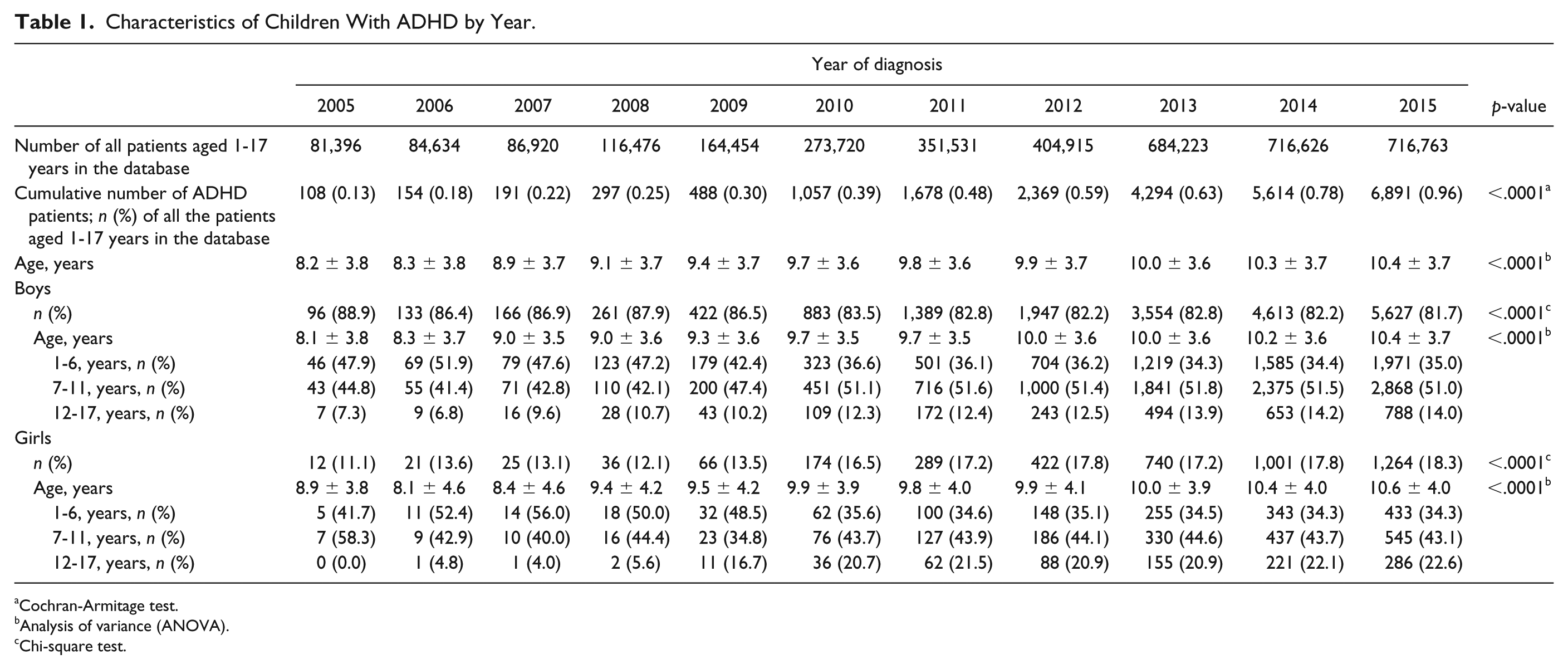
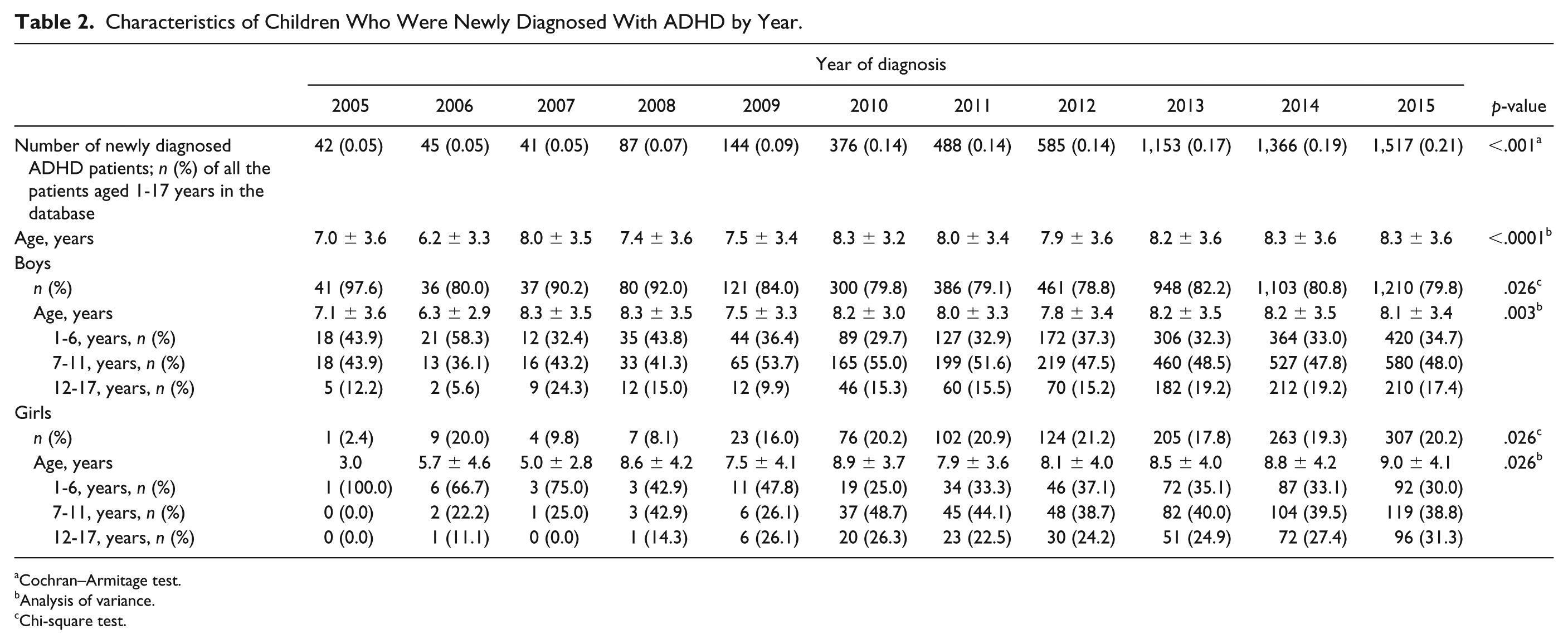
The prevalence and mean age of children with ADHD slightly increased, and the ratio of boys decreased in recent years. When data were examined by age and sex categories, the prevalence of children with ADHD aged 12 to 17 years increased (Table 1). Children who were newly diagnosed with ADHD were similarly analyzed, and the prevalence of those patients increased. In particular, the prevalence of girls aged 12 to 17 years with newly diagnosed ADHD increased (Table 2).
Characteristics of Children With ADHD by Year.
Cochran-Armitage test.
Analysis of variance (ANOVA).
Chi-square test.
Characteristics of Children Who Were Newly Diagnosed With ADHD by Year.
Cochran–Armitage test.
Analysis of variance.
Chi-square test.
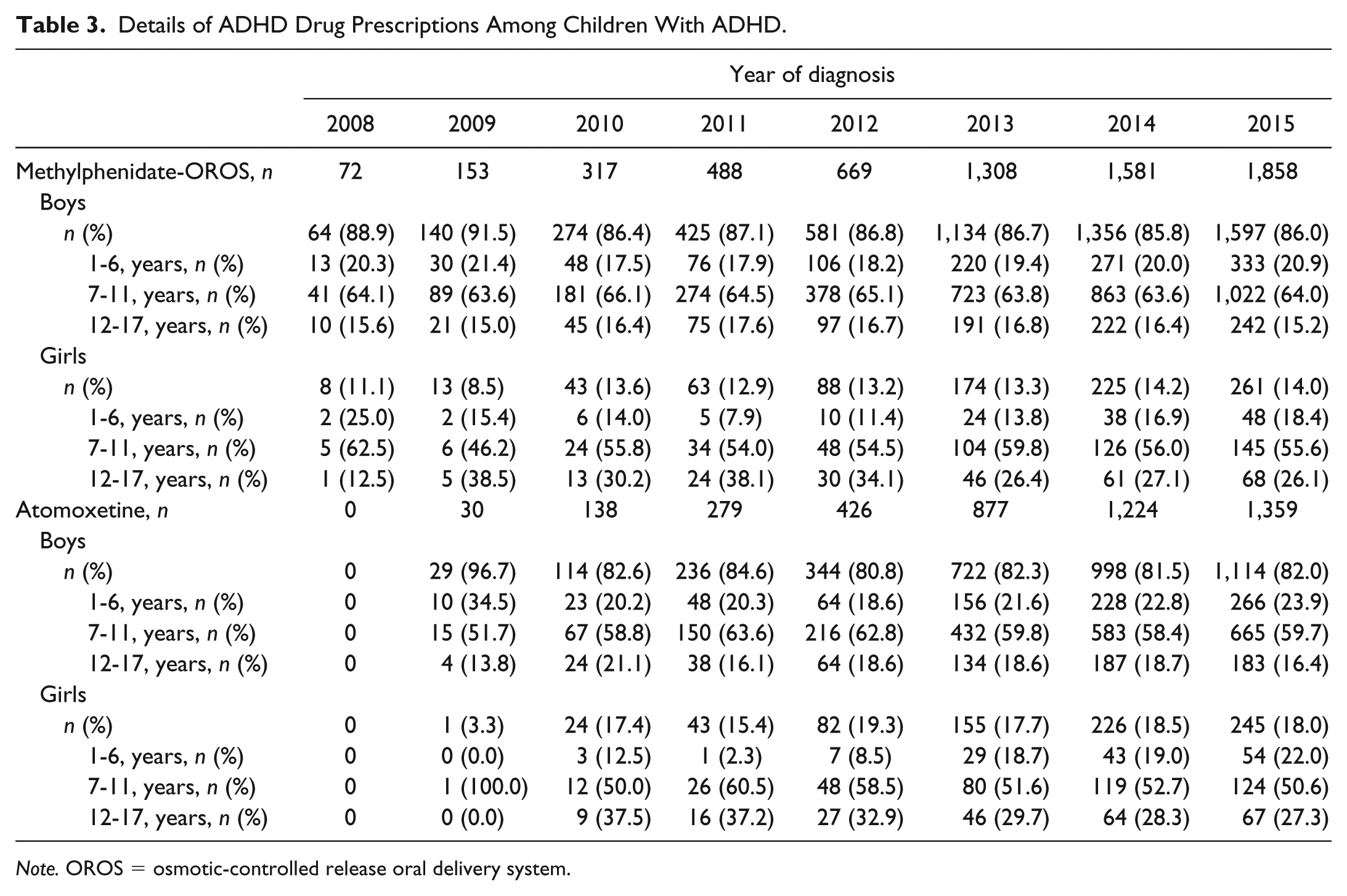
Figure 1 shows the annual changes in the proportion of prescriptions for methylphenidate tablet/powder, methylphenidate-OROS tablets, and atomoxetine. The proportion of prescriptions for methylphenidate-OROS tablets was 31.4% in 2009 after approval in 2007 (sex- and age-adjusted odds ratio [AOR] for 2007-2009 = 2.72; 95% CI = [2.12, 3.51]) and reached a plateau approximately after 2009 (sex- and age-AOR for 2009-2015 = 0.96; 95% CI = [0.94, 0.98]). The proportion of prescriptions for methylphenidate tablet/powder was reduced after approval of methylphenidate-OROS tablets (sex- and age-AOR = 0.37; 95% CI = [0.34, 0.42]). The proportion of prescriptions for atomoxetine consistently increased from 6.1% in 2009 to 21.8% in 2014 (sex- and age-AOR = 1.16; 95% CI = [1.13, 1.18]). Table 3 shows the details of patients prescribed methylphenidate-OROS and atomoxetine. Proportion of children aged 7 to 11 years was more than half regardless of kinds of drug or sex.

Annual changes in proportion of prescriptions for methylphenidate tablet/powder, methylphenidate-OROS tablets, and atomoxetine for children with ADHD in Japan.
Details of ADHD Drug Prescriptions Among Children With ADHD.
Note. OROS = osmotic-controlled release oral delivery system.
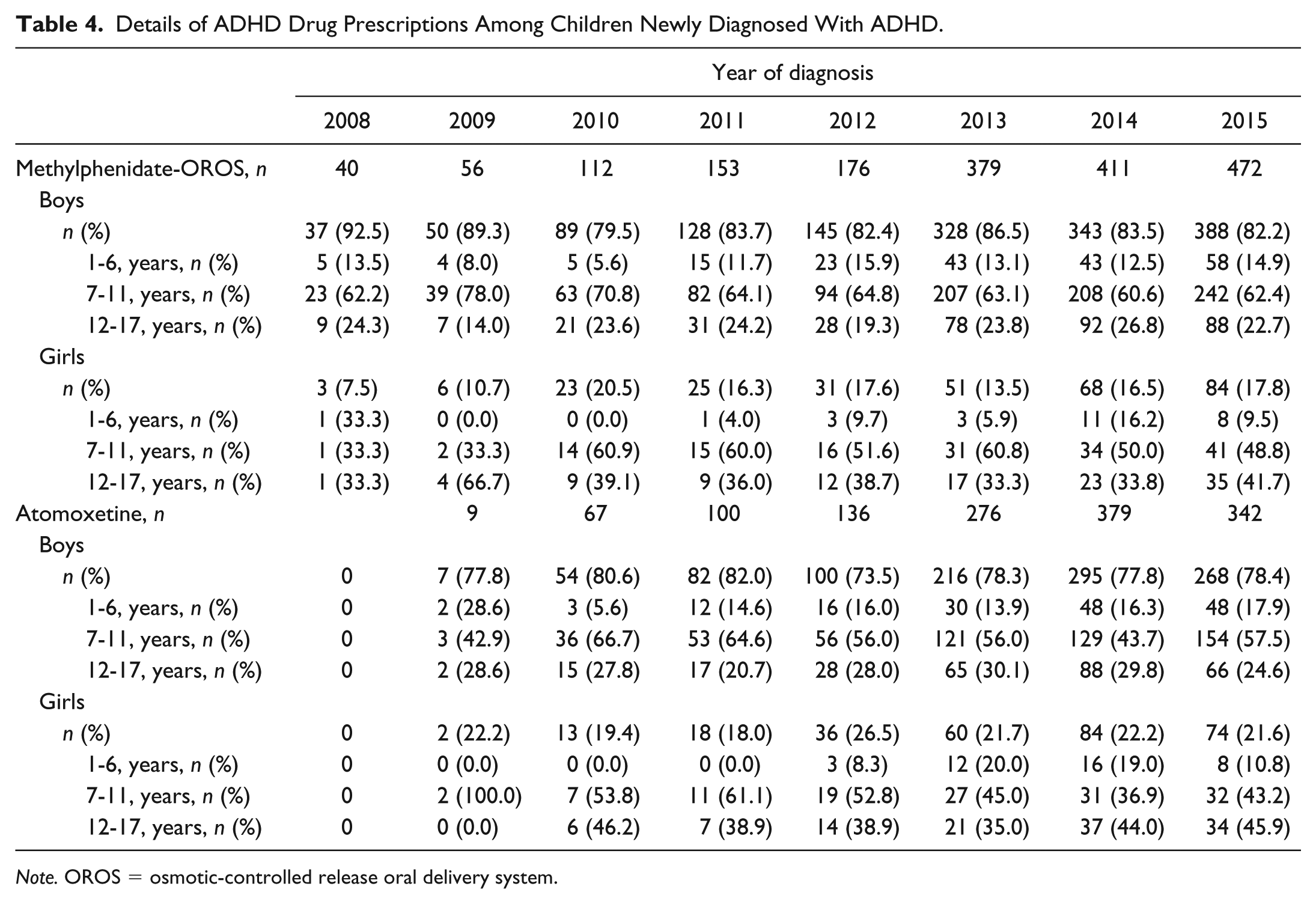
Figure 2 shows the annual changes in the proportion of prescriptions for methylphenidate-OROS tablets and atomoxetine for children who were newly diagnosed with ADHD. The proportion of prescriptions for methylphenidate-OROS tablets was 46.0% in 2008 (sex- and age-AOR = 1.48; 95% CI = [1.21, 1.80]) and 29.8% in 2010 and remained stable since then (sex- and age-AOR = 0.98; 95% CI = [ 0.95, 1.01]), whereas the proportion of prescriptions for atomoxetine increased from 6.3% in 2009 to 27.7% in 2014 (sex- and age-AOR = 1.14; 95% CI = [1.10, 1.18]). Table 4 shows the details of patients newly diagnosed with ADHD prescribed methylphenidate-OROS and atomoxetine. After 2013, the proportion of girls aged 12 to 17 years prescribed these drugs increased.

Annual changes in proportion of prescriptions for methylphenidate-OROS tablets and atomoxetine for children who were newly diagnosed with ADHD in Japan.
Details of ADHD Drug Prescriptions Among Children Newly Diagnosed With ADHD.
Note. OROS = osmotic-controlled release oral delivery system.
Table 5 shows the annual changes in the proportion of prescriptions for psychotropic drugs among children with ADHD. The proportion of prescriptions for aripiprazole and ramelteon increased (sex- and age-AOR =1.20; 95% CI = [1.16, 1.25] and sex- and age-AOR = 1.32; 95% CI = [1.24, 1.42], respectively), and risperidone rapidly increased to 2010 and remained stable since then (sex- and age-AOR = 1.01; 95% CI = [0.99, 1.03]). The proportion of prescriptions for lithium carbonate, levetiracetam, paliperidone, and escitalopram significantly increased. For other drugs with the proportion of prescriptions in the top 3 to 30 for 2015, proportions for valproate, triclofos, diazepam, carbamazepine, hydroxyzine pamoate, fluvoxamine, clomipramine, chloral hydrate, sertraline, biperiden, and haloperidol significantly decreased in the profile of annual changes.
Drugs Whose Proportions of Prescriptions Were in the Top 3 to 30 for Year 2015 and Their Annual Changes.

Note. — = not applicable.
Table 6 shows the annual changes in drug prescriptions among children with ADHD by ATC class name. Among all extracted ATC class names, psychostimulants had the highest proportion of prescriptions for these drug classes every year. All other agents affecting the central nervous system and atypical antipsychotics had the second and third highest prescription proportions, respectively, after 2011. The proportion of prescriptions for all other agents affecting the central nervous system and mood stabilizers significantly increased. The proportion of prescriptions for psychostimulants, other antipsychotics, selective serotonin reuptake inhibitors, other antidepressants, anti-anxiety drugs, anti-epilepsy agents, and Parkinson’s disease drugs significantly decreased. In terms of polypharmacy, prescriptions for three or more psychotropic drug classes decreased significantly.
Annual Changes of Drug Prescriptions Among Children With ADHD.
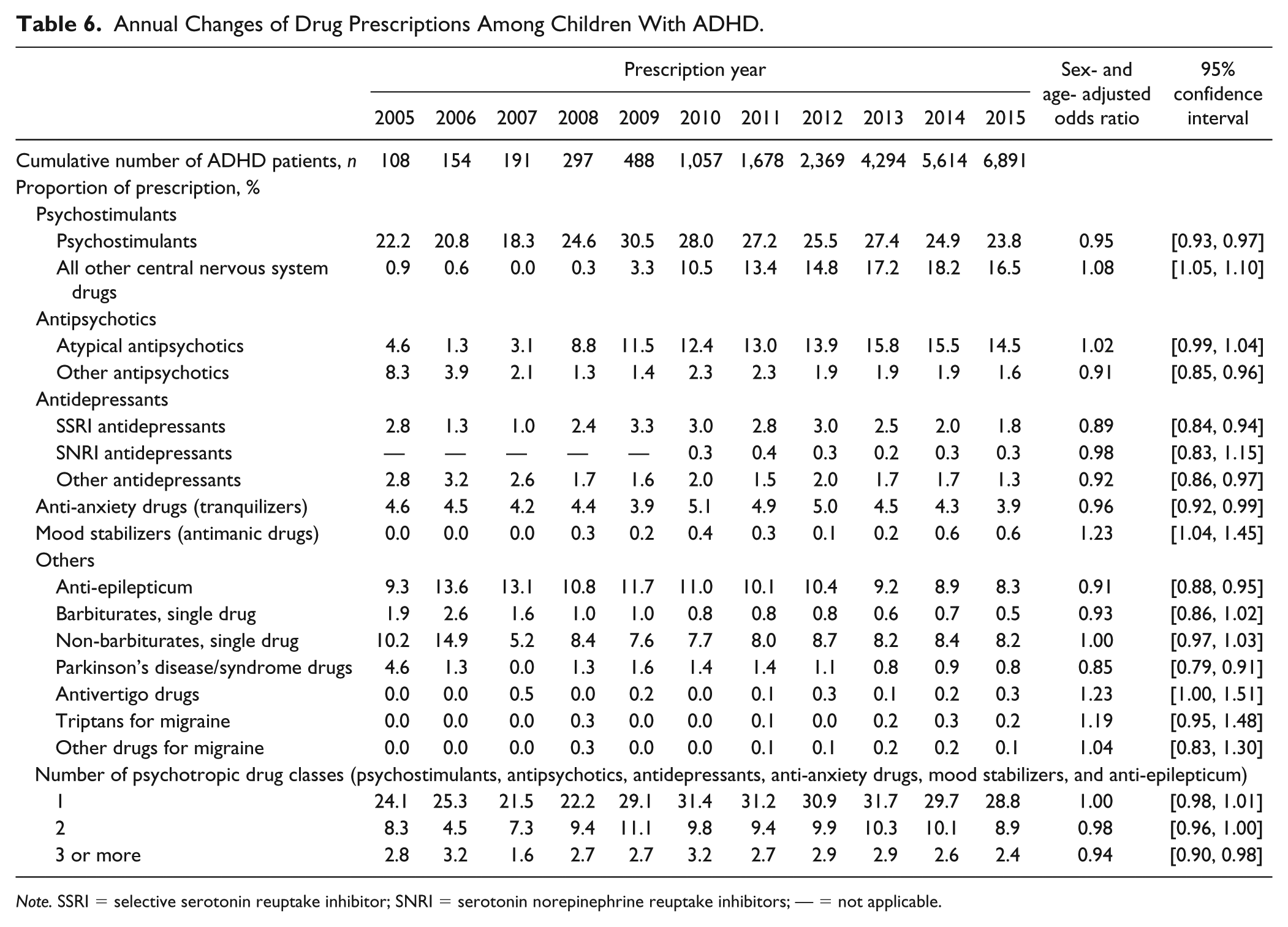
Note. SSRI = selective serotonin reuptake inhibitor; SNRI = serotonin norepinephrine reuptake inhibitors; — = not applicable.
Annual changes in drug prescription proportions by ATC code for third-level pharmacological subgroups were examined (Appendix A). The proportion of prescriptions for drugs classified as N05A and N05C tended to increase. The proportion of prescriptions for drugs classified as N03A, N04A, N04B, N05B, N06A, and N07A significantly decreased.
Drug proportion of prescriptions for each comorbidity in 2010 and 2015 was compared (Appendix B). There were significant increases in the proportion of prescriptions for aripiprazole among children with a comorbid mood disorder, comorbid sleep disorder, comorbid PDD, or comorbid epilepsy; for ramelteon among children with a comorbid mood disorder or comorbid sleep disorder; and for atomoxetine among children with a comorbid PDD, others, or patients with only an ADHD diagnosis. There were significant decreases in the proportion of prescriptions for fluvoxamine among children with comorbid mood disorder, comorbid sleep disorder, comorbid tic disorder, or comorbid PDD; and for diazepam among children with comorbid adjustment disorder or comorbid developmental disorders of the movement. For each comorbidity, including emotional behavioral disorder, sleep disorder, oppositional defiant disorder, and epilepsy, the prescription rate for methylphenidate-OROS increased. At the same time, the prescription rate for atomoxetine increased in comorbidities except for other conduct disorders. Most of the medications prescribed for children with only an ADHD diagnosis were methylphenidate-OROS and atomoxetine.
Discussion
The present study found that the prevalence of pediatric ADHD patients and newly diagnosed ADHD patients increased over time in Japan. These findings support findings in studies of children living overseas (Davidovitch et al., 2017; Garfield et al., 2012). In terms of the reasons for these findings, other studies have shown that an increasing mean age of fathers due to trends regarding late marriages (Kong et al., 2012) or increases in exposure to environmental chemicals (Council on Environmental Health, 2012) may have contributed to increasing the number of newly diagnosed ADHD patients. Due to enforcement of the Act on Support for Persons with Development Disabilities and the spread of the Baby Health Examination, awareness of ADHD in Japan might be improved and the number of children who visited a doctor might have increased. The age of children diagnosed with ADHD might be also affected by the 2013 revisions of the Diagnostic and Statistical Manual of Mental Disorders (DSM) in which the symptomatic age was raised from 7 years to younger than 12 years (American Psychiatric Association, 2013; Takahashi & Ohno, 2014). Therefore, it is probable that additional patients were diagnosed with ADHD. In addition, symptoms of ADHD in girls tend to present at an older age compared with boys (Nussbaum, 2012), and the number of girls diagnosed with ADHD might increase (Collins & Cleary, 2015). Compared with data before and after 2013, the prevalence of children who were newly diagnosed with ADHD and the age group of 12 to 17 years increased slightly after 2013. It was suggested that the present observations may have been affected by revisions to the DSM criteria for ADHD, particularly, in girls aged 12 to 17 years.
Methylphenidate tablet/powder, which was used to treat depression, became indicated for only narcolepsy in Japan after 2008, at which time the proportion of prescriptions for methylphenidate tablet/powder immediately decreased. While the proportion of prescriptions for methylphenidate-OROS tablets steeply increased from 2007 to 2009, it remained stable after 2009. The proportion of prescriptions for atomoxetine increased consistently up to 2014. Methylphenidate-OROS tablets and atomoxetine were the primary prescriptions, regardless of comorbidities. The present study suggested that these two drugs became commonly used among children with ADHD in Japan. Similar trends of the prescription of methylphenidate-OROS tablets and atomoxetine were reported in several studies (Beau-Lejdstrom, Douglas, Evans, & Smeeth, 2016; Boland et al., 2015; Man et al., 2017). However, there are differences in use of pediatric ADHD medications between Japan and other countries. The proportion of prescriptions for atomoxetine came close to that of methylphenidate-OROS tablets in Japan, with the proportion of prescriptions for methylphenidate-OROS tablets and atomoxetine in 2014 of 28.2% and 21.8%, respectively. In contrast, methylphenidate is by far the most used drug overseas (Garfield et al., 2012; Song & Shin, 2016). Bachmann et al. (2017) demonstrated ADHD medication use in five Western countries. Among all ADHD medications used in 2012, methylphenidate-related products (dexmethylphenidate and methylphenidate) and atomoxetine accounted for 81.3% and 17.8% of prescriptions in Denmark, 91.0% and 8.6% in Germany, 94.2% and 3.7% in the Netherlands, 86.6% and 12.5% in the United Kingdom, and 52.9% and 5% in the United States, respectively. In the United Kingdom, the prevalence of meth6ylphenidate and atomoxetine per 10,000 children were 46.8 and 6.3 in 2013, respectively (Beau-Lejdstrom et al., 2016). In Ireland, the prevalence of methylphenidate and atomoxetine per 1,000 children were 7.6 and 1.6 in 2011, respectively (Boland et al., 2015).
One of the reasons for the differences in prescribing patterns between Japan and other countries might be due to the different ADHD treatment guidelines. The guidelines for the diagnosis and treatment of ADHD in Japan recommend methylphenidate-OROS tablets and atomoxetine as first-line drugs (Saito & Watanabe, 2008). In the United States, the Texas Children’s Medication Algorithm Project recommends central nervous stimulants, such as methylphenidate, as first-line drugs and combined use of atomoxetine and central nervous stimulants, as well as antidepressants (serotonin and norepinephrine reuptake inhibitors) and alpha-2 agonists, as second-line drugs and beyond (Pliszka et al., 2006). European clinical guidelines for hyperkinetic disorder recommend central nervous stimulants, such as methylphenidate, as first-line drugs and noradrenergic agents, such as atomoxetine, if there is no improvement (Taylor et al., 2004). Differences among ADHD treatment guidelines may be based on approval status for ADHD medications, which depend on the region.
Another reason for the different prescribing patterns between Japan and other countries might be approval for children with ADHD. In Japan, it takes a long time for new drug applications to be approved. In addition, methylphenidate-OROS tablets were approved on condition of using a monitoring system for the prescription period or physician and pharmacy registration system (Concerta tablets proper distribution management system, http://www.ad-hd.jp/, August 3, 2017). No restrictions were mandated for atomoxetine. Therefore, the approval of these medications appeared to have occurred much later in Japan than in the United States and other Western countries, although methylphenidate-OROS was the first drug approved for children with ADHD in Japan.
Japanese physicians might find it easier to prescribe atomoxetine than methylphenidate-OROS tablets. In fact, for children who were newly diagnosed with ADHD, the proportion of prescriptions for atomoxetine was close to that of methylphenidate-OROS tablets after 2010. It is therefore possible that methylphenidate-OROS tablets and atomoxetine are prescribed equally for children with ADHD in Japan.
In terms of details of patients prescribed ADHD medications, 7 to 11 years represented more than half of all patients regardless of sex and drugs. In addition, the proportion of girls aged 12 to 17 years increased in girls newly diagnosed with ADHD after 2013. The increase in newly diagnosed girls aged 12 to 17 years occurred after revision of the DSM, after which there were increased opportunities to prescribe ADHD medications for older girls.
Considering comorbidities, methylphenidate-OROS was prescribed mainly for symptom of aggression or impulsivity, as the effects of methylphenidate-OROS appear immediately after oral administration. Prescription rates for atomoxetine tended to increase regardless of the kinds of comorbidity except for other conduct disorders. Atomoxetine became recognized as a medication for ADHD, since Japanese guideline recommended the use of methylphenidate-OROS and atomoxetine for treatment of ADHD in children (Saito & Watanabe, 2008).
Apart from methylphenidate-OROS tablets and atomoxetine, children with ADHD in Japan have often been prescribed antipsychotics, antidepressants, anti-epileptics, and hypnotic agents (Tables 5 and 6, and Appendix B). In several classification, the proportion of prescriptions for new type drugs tended to increase instead of traditional drugs. This finding suggests that prescriptions for carbamazepine and valproate, which are traditional anti-epilepsy or mood stabilizers, might switch to levetiracetam or lithium carbonate for new users. In addition, this finding also suggests that prescriptions for fluvoxamine and sertraline might switch to escitalopram oxalate, and that prescriptions for haloperidol might switch to risperidone or aripiprazole for new users. It is possible that prescribing trends among physicians differ according to the type of comorbidity and guidelines consulted. Looking at the proportion of prescriptions by ATC code, although statistically significant differences were not found, drugs classified as N05A (antipsychotics) and N05C (hypnotics) tended to increase (see Appendix A). In a questionnaire survey of Japanese physicians, it was reported that risperidone or aripiprazole may be used for children with ADHD (Makino et al., 2015). In particular, the proportion of prescriptions for ramelteon increased remarkably in the present study. In a nationwide survey, it was revealed that ramelteon was widely prescribed in Japanese children with developmental disorders, and manufacturers were expected to seeking approval for clinical use in children (Fukumizu et al., 2015). Okumura et al. (2014) reported that ADHD medications were used as combination therapy with other psychotropic agents in 17% of outpatients aged 18 years or younger in Japan.
Prescriptions for three or more psychotropic drug classes decreased significantly in this population. The reason for this decrease might be that pharmacotherapy for ADHD had been summarized with the approval of ADHD medications or guideline (Saito & Watanabe, 2008), and redundant medication use subsequently decreased. However, because polypharmacy use is still a concern (Winterstein, Soria-Saucedo, Gerhard, Correll, & Olfson, 2017), it would be necessary to monitor drug–drug interactions and adverse drug reactions. With certain comorbidities, several types of medications are often prescribed. These medications used depend on the comorbidity. Therefore, our findings suggest that medication use for ADHD would be different depending on the presence or absence of comorbidities and the types of comorbidities.
The adverse effects of ADHD medications have already been reported (Sert, Gokcen, Aypar, & Odabas, 2012; Shin et al., 2016). The possibility of long-term use of these drugs and the use of combination therapies are concerned. Therefore, there is an urgent need to gather data to evaluate safety based on actual utilization, using health insurance claims data and other information sources.
There are some limitations to the present study. First, all ADHD diagnoses and comorbidity terms were based on health insurance claims and therefore need to be validated regarding whether the disease names are correct or included in the health insurance. Second, prescription dates could only be determined to the month and year of diagnosis listed on the hospital admission/non-admission claims data, so the dates of all prescriptions and diagnoses within the same month were identical. It is therefore possible that some drug prescriptions in the tabulated data were made in the same month as a new diagnosis of ADHD but before the actual diagnosis. Third, the dates for patients newly diagnosed with ADHD were determined in the year for first diagnosis of ADHD. Fourth, we examined the trends of psychotropic drug use and relation with prescription and comorbidities or age or sex, by calculating odds ratio and 95% CI. We could not use more advanced modeling approaches due to the availability of specific variables.
Finally, potential factors that drive the proportion of prescriptions used are important. Because we focused the trends of psychotropic drug use after 2011 in Japan, future studies should examine the potential factors. It is possible that some drug prescriptions were left out after the year of first diagnosis of ADHD.
Conclusion
The prescribing patterns of drugs for children with ADHD changed in Japan between 2005 to 2010 and 2011 to 2015. The proportion of prescriptions for atomoxetine increased consistently until 2014, and methylphenidate-OROS tablets and atomoxetine came to be equally prescribed in Japan. Various psychotropic medications were prescribed depending on comorbidities. Because ADHD medications might be used for the long term, we need to establish a system for monitoring adverse drug reactions over long-term use of these drugs for children with ADHD.
Footnotes
Appendix A
We need to estimate the safety of pharmacotherapy for children with ADHD, since it is possible that ADHD medications might be used for long term. Thus, prescribing patterns of drugs for children with ADHD were investigated between 2005 and 2015 in Japan, using health insurance claims data. Refer to Table A1 for trends of drug use for children with ADHD. Proportions of prescriptions for World Health Organization—Anatomical Therapeutic Chemical (WHO-ATC) code were calculated as percentage values using the number of patients prescribed each drug classified by ATC code as the numerator and the cumulative number of ADHD patients aged <18 years up to each prescription year as the denominator.
Appendix B
We need to estimate the safety of pharmacotherapy for children with ADHD, since it is possible to be used long term. Thus, prescribing patterns of drugs for children with ADHD were investigated between 2005 and 2015 in Japan, using health insurance claims data. Refer to Table A2 for comparison of drug use for children with ADHD by comorbidities. Prescription rates were calculated as percentage values using the number of patients prescribed each drug as the numerator and the cumulative number of ADHD patients by comorbidities aged <18 years up to each prescription year as the denominator.
Acknowledgements
The authors thank the Research Group for Health Administrative Data and the Japan Medical Data Center Co., Ltd.
Declaration of Conflicting Interests
The author(s) declared no potential conflicts of interest with respect to the research, authorship, and/or publication of this article.
Funding
The author(s) disclosed receipt of the following financial support for the research, authorship, and/or publication of this article: This work was supported by a grant from the Ministry of Health, Labour, and Welfare (MHLW) of Japan (H24-iyaku-wakate-011).
