



Abstract
Objective:
To describe patterns and predictors of perinatal prescription stimulant use.
Methods:
We used MarketScan® commercial claims data (2013–2018) and a repeated cross-sectional study design to assess perinatal use of prescription stimulants. Clinical/demographic characteristics were compared across cohorts of women who continued versus discontinued stimulant treatment at various stages of pregnancy. Associations were tested for significance using chi-square tests (categorical variables) and independent t-tests (continuous variables).
Results:
Out of 612,001 pregnancies, 15,413 involved pre-pregnancy stimulant use. Of these, stimulant treatment was discontinued prior to conception in 6,416 (42%), discontinued during trimester 1 in 5,977 (39%), and continued into later trimesters in 3,020 (19%). Compared with pregnancies involving stimulant discontinuation prior to conception, those that continued into pregnancy occurred in women who were older (29.9 vs. 28.9 years) and had more severe ADHD (3.1 vs. 1.8 ADHD-related billing claims).
Conclusions:
There is considerable heterogeneity in the management of ADHD during pregnancy.
Highlights
This study aimed to examine the prevalence, patterns, and predictors of prescription stimulant use before, during, and after pregnancy.
We found that perinatal prescription stimulant use has been increasing in recent years. Women who remained on their stimulant through pregnancy, as opposed to those who discontinued use prior to conception, were generally older, had more severe ADHD, and had additional risk factors for pregnancy complication like concurrent prescription opioid use.
This study adds to existing literature by describing maternal characteristics associated with the decision to continue versus discontinue stimulant treatment along the pregnancy continuum.
Our data highlight the uncertainty and hesitancy around perinatal prescription stimulant use. Further research is warranted to better understand maternal and neonatal outcomes associated with the decision to continue or discontinue stimulant treatment during pregnancy.
Background
ADHD is a neurodevelopmental disorder characterized by inattention, hyperactivity, and/or impulsivity with negative effects on social, academic, and occupational functioning (NIMH, 2019). Although ADHD generally occurs in childhood, there is increasing awareness of its persistence into adulthood (Kessler et al., 2006). As such, the use of ADHD medications in adults has increased over time. This has resulted in greater exposure to ADHD medications among women of childbearing age (Anderson et al., 2018; Larsson et al., 2011) and during pregnancy (Anderson et al., 2020).
The safety of in utero exposure to ADHD medications is not well established. Amphetamine derivatives and methylphenidate are thought to increase the risk of vasoconstriction of the uterine artery, which may result in obstetric complications like placental abruption and fetal growth restriction (Cohen et al., 2017). Studies examining in utero exposure to stimulants and adverse outcomes have suggested an association with preterm birth (Cohen et al., 2017), preeclampsia (Cohen et al., 2017), miscarriage (Haervig et al., 2014), cardiac malformation (Huybrechts et al., 2018), and other birth defects (Anderson et al., 2020). However, this evidence is generated through observational studies, is not consistently demonstrated, and has not been proven conclusive. Thus, U.S. Food and Drug Administration labeling indicates that due to the absence of adequate and well-controlled studies, amphetamine-containing products and methylphenidate should only be used during pregnancy if the potential benefit for the mother justifies the potential risk to the fetus.
Although the gestational risk of continuing stimulants is inconclusive, evidence of maternal risks related to stopping stimulants abounds. Adults with poorly controlled ADHD face challenges in productivity at work or school, social functioning, parenting other children, and overall life skills (Asherson et al., 2012; Doshi et al., 2012; Quintero et al., 2019). Untreated ADHD in adults has also been associated with psychiatric comorbidities such as depression, anxiety, self-injury, and substance use (Corbisiero et al., 2017; Owens et al., 2017). Therefore, the decision to stop stimulants during pregnancy may have unintended consequences for maternal wellbeing, financial security, and overall family health (Baker & Freeman, 2018).
Prior studies using historical data have described increasing rates of stimulant use during pregnancy. However, they do not capture the maternal characteristics associated with the decision to remain on stimulants along the continuum of pregnancy (Anderson et al., 2020; Cohen et al., 2017; Huybrechts et al., 2018). The purpose of our study was to describe patterns and predictors of prescription stimulant use prior to conception, during pregnancy, and after delivery among a large commercially insured patient population between 2014 and 2018. The results of this study will shed light on the difficult decision faced by individuals and their health care providers to continue or discontinue stimulants during conception and pregnancy.
Methods
Study Design
IBM MarketScan® Commercial Claims and Encounters (CCAE) data and a repeated cross-sectional study design were used to examine the prevalence, patterns, and predictors of prescription stimulant use during pregnancy episodes. These data include medical and prescription claims for over 40 million U.S. beneficiaries across more than 100 different employer/insurance plans from 2013 to 2018 (the most recent years of data available at the time this analysis was completed). Pregnancy episodes consisted of three pre-pregnancy windows (0–90 days, 91–180 days, and 181–270 days prior to pregnancy), an 84-day window for trimester 1, a 98-day window for trimester 2, and a variable window for trimester 3. The third trimester varied from a 98-day window for a full-term birth to shorter and longer durations depending on the estimated gestational age assigned at birth.
Population Inclusion/ Exclusion Criteria
Patients were included if they had an inpatient or outpatient delivery claim. Pregnancies were identified through 9th and 10th Revision of the International Classification of Disease (ICD), Current Procedure Terminology (CPT), Diagnosis-Related group (DRG), or Healthcare Common Procedure Coding System (HCPCS level I) codes. We estimated the date of conception and length of gestation using a previously validated algorithm (Supplemental Appendix A, B, and D) (Ailes et al., 2016). This algorithm was developed using ICD-9 codes which were converted to ICD-10 codes using a National Bureau of Economic Research crosswalk (NBER, ). To capture patterns of stimulant utilization throughout pregnancy, only live births were included, thus excluding births resulting in spontaneous abortion, ectopic pregnancy, induced abortion, or still birth (Figure 1). Patients were also excluded if they were not continuously enrolled from 270 days prior to conception through delivery. Patients with more than one pregnancy were allowed to contribute multiple pregnancy episodes if there was a minimum 90-day window from the prior pregnancy to subsequent pregnancy.
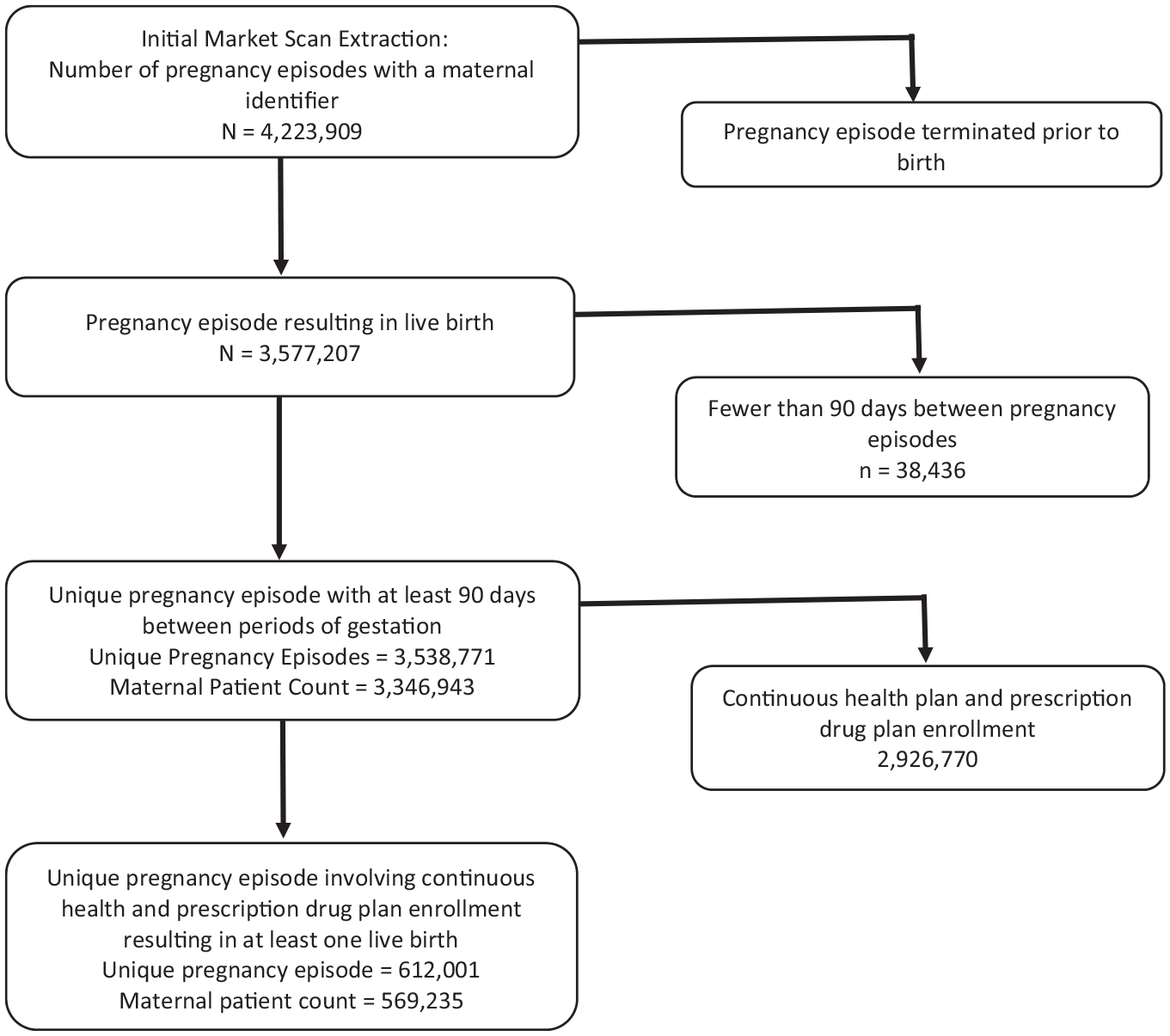
Identification of analytic sample of pregnancy episodes, Truven MarketScan® commercial claims and encounters database.
Stimulant Exposure
Prescription claims were used to identify utilization of methylphenidate and amphetamine-containing products. To examine characteristics of patients continuing or discontinuing treatment, we created three distinct cohorts thought to best represent different decision points during pregnancy (Figure 2). Cohort 1 comprised patients who discontinued stimulant treatment prior to conception. Cohort 2 comprised patients who used stimulants prior to conception, continued their use into the first trimester, but discontinued use prior to the second trimester. This population is thought to represent pregnancies where stimulant use was stopped upon learning of pregnancy. Cohort 3 represents pregnancies where stimulant use was continued into trimesters 2 and/or 3.

Cohort identification and stimulant utilization patterns.
Descriptive Comparisons
We first compared women who were treated with stimulants at any point during the pregnancy episode to those who were not. Second, women who stopped stimulants prior to pregnancy were compared with those who continued treatment into pregnancy (Cohort 1 vs. Cohorts 2 and 3). Last, we compared women who continued stimulant treatment into pregnancy but stopped during the first trimester with those who continued treatment into later stages of pregnancy (Cohort 2 vs. Cohort 3).
Descriptive variables were captured over an approximate 1-year period encompassing 270 days pre-pregnancy through the end of the first trimester. Variables included demographic information (age and U.S. geographic region), chronic comorbid conditions (e.g., hypertension and diabetes), psychiatric comorbidities (e.g., depression and anxiety), lifestyle factors that increase risk for pregnancy complications (tobacco, alcohol, and drug dependence), potential indications for stimulants (e.g., ADHD and chronic fatigue syndrome), and concurrent medications (e.g., opioids, benzodiazepines, and antidepressants). Finally, we examined patterns of health service utilization as a proxy for severity of health needs including number of ADHD visits (count of visits), number of unique therapeutic categories of medications used, and count of emergency department (ED) utilizations, hospitalizations, and outpatient visits.
Descriptive comparisons were made between cohorts using chi-square tests for categorical variables and independent t-tests for continuous variables. All testing was deemed significant at an alpha of .05 using SAS version 9.4. This study relied on the use of de-identified data and was deemed exempt from human subject research by the University of Minnesota Institutional Review Board.
Results
We identified 4,223,909 pregnancy episodes between 2013 and 2018 (Figure 1). Following the application of continuous insurance enrollment criteria, these episodes represent pregnancies from 2014 through 2018. After excluding pregnancies not resulting in a live birth (N = 646,702), episodes with fewer than 90 days between pregnancies (N = 38,436), and episodes without continuous insurance enrollment (N = 2,926,770), we identified 612,001 unique pregnancies in 569,235 individuals. Prescription stimulant use at any point from 270 days prior to conception through the end of the third trimester was identified in 16,105 pregnancies (2.6% prevalence). Prescription stimulant exposure specifically during pregnancy (i.e., during any of the three trimesters) was identified in 8,997 pregnancies (1.5% prevalence). Rates of stimulant exposure during pregnancy increased from 1.2 % in 2014 to 1.6% in 2018 (Figure 3). The most common form of stimulant exposure was amphetamine-containing products, which when combined with users of both methylphenidate and amphetamine, comprised 90% of all simulant exposed pregnancies (Supplemental Appendix C).

Patterns and trends in prescription stimulant exposure during pregnancy.
Clinical and Demographic Characteristics of Prescription Stimulant Users Versus Non-Users
Comparing pregnancy episodes involving stimulant exposure prior to or during the pregnancy to those without exposure, a number of differences were noted (Table 1). Stimulant exposed pregnancy episodes tended to occur in younger women (29.4 years vs. 30.7 years). ADHD was more prevalent among pregnancy episodes involving a stimulant than those without (68.4% vs. 0.4%). Stimulant exposed pregnancy episodes also had higher rates of comorbid anxiety (13.5% vs. 3.5%), depression (10.8% vs. 2.8%), asthma (7.1% vs. 4.4%), hypertension (3.5% vs. 3.0%), opioid use (26.4% vs. 16.9%), antidepressant use (35.2% vs. 10.7%), and benzodiazepine use (22.9% vs. 6.6%). Lifestyle risk factors for pregnancy complications were also more common among prescription stimulant users than non-users (e.g., tobacco use: 6.8% vs. 2.9%, alcohol use: 0.9% vs. 0.2%, and drug dependence: 1.8% vs. 0.4%).
Descriptive Comparison of Pregnancy Episodes with and without Prescription Stimulant Exposure.

Predictors of Continued Prescription Stimulant Exposure During Pregnancy
Prescription stimulant exposure was identified in the 270-day pre-pregnancy window of 15,413 pregnancies. Of these, stimulants were discontinued prior to conception in 6,416 pregnancies (42%) [Cohort 1] and continued into pregnancy in 8,997 (58%). Among the 8,997 episodes in which stimulants were continued into pregnancy, treatment was discontinued during trimester 1 in 5,977 (66%) pregnancies [Cohort 2] and continued into later trimesters in 3,020 (34%) [Cohort 3].
Pregnancies with stimulant discontinuation prior to conception [Cohort 1] involved younger women than those who continued into pregnancy [Cohort 2 and 3] (28.9 years vs. 29.9 years) (Table 2). Additionally, women continuing stimulants into pregnancy were more likely to have a diagnosis of ADHD (74% vs. 61.9%) and had more frequent ADHD-related billing claims—an indicator of disease severity (3.1 vs. 1.8). Pregnancies involving continued stimulant use also had higher rates of concurrent prescription opioid (27.3% vs. 24.8%), benzodiazepine (24.6% vs. 20.6%), and antidepressant (35.9% vs. 34.2%) use. Finally, women who continued stimulant use were more likely to fill stimulant prescriptions within 90 days of delivery as compared with women who discontinued use prior to conception (48.7% vs. 16.9%).
Descriptive Comparison of Stimulant Continuation Versus Discontinuation at Different Stages of Pregnancy.

Comparing Stimulant Discontinuation in Trimester 1 to Continuation into Trimester 2 and 3
No statistical difference in age was noted comparing pregnancies among women who discontinued stimulant use during the first trimester of pregnancy [Cohort 2] to those who continued use into later stages of pregnancy [Cohort 3] (Table 2). Pregnancies with continued use had higher rates of tobacco use (8.4% vs. 6.9%) and drug dependence (2.5% vs. 1.4%) than those who discontinued in trimester 1. Other potential risk factors (e.g., gestational diabetes and gestational hypertension) were similar between the two cohorts. Pregnancies with continued use into later trimesters had higher rates of concomitant benzodiazepine (26.8% vs. 23.4%) and opioid (29.5% vs. 26.1%) use than those that discontinued in trimester 1. Pregnancies with continued exposure also had more ADHD-related outpatient billing claims (4 vs. 2.6), ER visits (0.50 vs. 0.44), and hospitalizations (0.09 vs. 0.05). Lastly, women who stayed on their prescription stimulant through later stages of pregnancy were more likely to fill stimulant prescriptions in the 90 days following delivery as compared with women who stopped treatment during trimester 1 (69.9% vs. 37.9%).
Discussion
In a sample of more than 600,000 pregnancies, we identified prescription stimulant use prior to or during pregnancy among 16,105 (2.6% prevalence). Stimulant use during pregnancy has risen in recent years and the most widely used prescription stimulants were amphetamine-containing products. Women who continued their treatment into pregnancy were generally older, more likely to have a diagnosis of ADHD and associated outpatient clinic visits, more likely to take other psychotropic medications, and more likely to fill a stimulant prescription within 90 days of delivery, as compared to those who discontinued use prior to conception.
This study builds on a very limited literature base by describing exposure to stimulants along the pregnancy continuum. A prior case-control study by Louik et al. (2015) found that prescription stimulant use during pregnancy increased from 0.3% to 1.3% between 1998 and 2014. We too found increasing stimulant exposure during pregnancy from 1.2% in 2014 to 1.6% in 2018. This is the most contemporary data, to our knowledge, demonstrating increasing stimulant exposure during pregnancy. A multi-site US case-control study conducted between 2008 and 2011 which relied on patient self-report suggested that 42% of women using stimulants prior to pregnancy discontinued treatment in the 90 days prior to conception, while 39% continued into trimester 1, and 19% continued treatment into later trimesters (Anderson et al., 2020). Similarly, a study of Canadian pregnancies from 2011 to 2013 showed that 45% of prescription stimulant-users discontinued treatment prior to conception while 36% discontinued before the second trimester and 19% continued into later stages of pregnancy (Leong et al., 2017). The rates of discontinuation prior to pregnancy reported in our study were similar. This suggests that the decision to continue stimulants during pregnancy is shrouded in uncertainty for many patients and clinicians. Our study adds to the literature by describing stimulant reuptake during the 90 days following pregnancy. We found that many patients did not re-initiate stimulants once they were discontinued. In addition, the earlier stimulants were discontinued, the less likely women were to re-initiate treatment following delivery. Finally, we found that individuals who continued stimulants into later stages of pregnancy tended to have greater rates of morbidity as evidenced by greater health service utilization, ADHD visits, tobacco use, and concomitant medication use, including opioids and benzodiazepines.
The fact that approximately only one in every five individuals who used prescription stimulants prior to pregnancy chose to continue stimulants throughout pregnancy demonstrates the considerable uncertainty surrounding the risks of stimulant use during pregnancy. The maternal cost associated with stopping stimulant treatment remains unknown. While some women may be able to discontinue ADHD medications during pregnancy without adverse effects, others may experience significant functional impairment which may lead to a loss of productivity at work or school and associated financial stressors, an exacerbation of comorbid psychiatric conditions, and psychosocial stressors affecting interpersonal relationships (Freeman, 2014). Prior studies have shown that symptoms arising from untreated ADHD including inattention, hyperactivity, impulsivity, and emotional lability are associated with risky prenatal health behaviors such as poor eating, smoking, caffeine use, and decreased prenatal vitamin use (Jones et al., 2018). Similarly, Eddy et al. noted that symptoms of inattention and impulsivity could result in forgetfulness of important medical appointments, lack of preparation for the baby’s arrival, and impulsive spending leading to poor finance management (Eddy et al., 2019). Thus, aside from maternal costs, discontinuing stimulant treatment may eventually lead to unanticipated negative pregnancy and neonatal outcomes.
It was interesting to note that women who continued stimulant use into pregnancy were generally older and had more severe disease as measured by the frequency of ADHD visits billed in our data. Older individuals may have different demands than younger patients due to occupational roles or family needs such as caring for other children, and perhaps benefit more from the stability prescription stimulants provide in their daily life. Notably, those who tended to stay on their stimulant during pregnancy were more likely to fill a prescription stimulant within 90 days following delivery, indicating that these individuals may have had a pressing need to remain on their stimulant treatment due to family and life circumstances.
Another factor to consider when devising a care plan for pregnant individuals with ADHD is the presence of comorbid conditions and co-occurring risk factors for pregnancy complications. We found that those who received stimulants prior to pregnancy, as opposed to non-users, had a greater psychiatric burden, other comorbid conditions, and more pregnancy risk factors to begin with. They were also more likely to use benzodiazepines, opioids, and antipsychotics. The presence of such risk factors may result in similar outcomes despite discontinuation of the stimulant. Moreover, it is still unclear whether the underlying disease of ADHD or its treatment is associated with the observed adverse pregnancy outcomes, due to a paucity of studies in which residual confounding by indication has been controlled for. Hence, it is critical to weigh whether discontinuing stimulants will result in a meaningful risk reduction in adverse pregnancy and neonatal outcomes.
The maternal implications of stopping treatment have not been well studied. Little is known about the impact of treatment decisions on occupation, interpersonal relationships, health management, and quality of life. Qualitative research to explore patient experiences regarding stimulant treatment during pregnancy, its advantages, and disadvantages can help shed light on the costs associated with stimulant discontinuation. Additionally, with rates of stimulant exposure during pregnancy continuing to rise, it may be time to ask whether the gestational and maternal risk of stimulant exposure during pregnancy warrants a randomized clinical trial to prospectively assess safety and efficacy. All past studies have been observational and are subject to potential confounding and other sources of bias (Anderson et al., 2020; Bro et al., 2015; Cohen et al., 2017; Haervig et al., 2014; Huybrechts et al., 2018). It must be acknowledged that any randomized clinical trial would need to account for ethical challenges around risk from gestational exposure to stimulants. Clinical equipoise would need to be established before randomizing women with severe ADHD symptoms to continue or suspend treatment.
While past studies have described stimulant use during various stages of gestation, ours is unique in its exploration of prescription stimulant use patterns along the continuum of pregnancy from pre-conception through 90-days post-pregnancy. We also present the most current prevalence of stimulant use of any U.S. study to date and have demonstrated a continued rise in stimulant exposure both prior to and during pregnancy. However, our results must be interpreted in light of study limitations. Our data source prevents examination of race/ethnicity and other important social determinants of health like education level and annual household income in the decision to continue stimulant therapy into pregnancy. These factors may play a critical role in perinatal ADHD treatment decisions and therefore warrant further research in future studies which use alternate data sources. Additionally, variables like obesity, tobacco, alcohol, and drug use are likely underreported in insurance claims data.
Conclusions
With a dearth of literature to unequivocally determine safety of stimulant use during pregnancy, women and their healthcare providers are forced to make difficult decisions about whether to continue or discontinue stimulant treatment during pregnancy. This study revealed considerable heterogeneity in the characteristics of women who remained on their prescription stimulant well into pregnancy versus those who stopped prior to conception or at earlier stages of pregnancy. This may be the result of inadequate evidence and standard treatment guidelines to support shared decision making between clinicians and their patients. Further research is essential to ensure the safe and effective management of ADHD during pregnancy in this growing population of women receiving stimulant treatment.
Supplemental Material
sj-docx-1-jad-10.1177_10870547211073472 – Supplemental material for Maternal ADHD and Perinatal Prescription Stimulant Use
Supplemental material, sj-docx-1-jad-10.1177_10870547211073472 for Maternal ADHD and Perinatal Prescription Stimulant Use by Meena N. Murugappan, Sarah M. Westberg, Stephen Contag, Tanya E. Melnik, Arun Kumar, Abhijeet Rajpurohit, Katie Thorsness and Joel F. Farley in Journal of Attention Disorders
Footnotes
Acknowledgements
The authors would like to acknowledge Sarah Jane Brown, MSc for her contributions to the literature review for this manuscript.
Author Contributions
MNM – Conceptualization, Methodology, Project Administration, Writing – original draft, SMW, SC, TEM, KT – Conceptualization, Writing – review and editing, AK – Conceptualization, Methodology, Writing – review and editing, AR – Data curation, Formal analysis, Visualization, JFF - Conceptualization, Methodology, Resources, Writing – review and editing, Supervision
Declaration of Conflicting Interests
The author(s) declared no potential conflicts of interest with respect to the research, authorship, and/or publication of this article.
Funding
The author(s) received no financial support for the research, authorship, and/or publication of this article.
Previous Presentation
An abstract related to this research was submitted to and has been accepted by the International Society for Pharmacoepidemiology for presentation at the annual International Conference on Pharmacoepidemiology (virtual—August 23rd to 25th, 2021).

Supplemental Material
Supplemental material for this article is available online.
Author Biographies
References
Supplementary Material
Please find the following supplemental material available below.
For Open Access articles published under a Creative Commons License, all supplemental material carries the same license as the article it is associated with.
For non-Open Access articles published, all supplemental material carries a non-exclusive license, and permission requests for re-use of supplemental material or any part of supplemental material shall be sent directly to the copyright owner as specified in the copyright notice associated with the article.
