




Abstract
Objective:
The aim of present research was to make a Meta-Thinking educational program based on mental-brain simulation and to evaluate its effectiveness on executive functions, emotion regulation and impulsivity in children with ADHD.
Methods:
The research method was Embedded Design: Embedded Experimental Model. The research sample included 32 children with ADHD who were randomly assigned to two experimental and control groups. The intervention was implemented for eight sessions of 1.5 hr for the experimental group, and fMRI images were taken from them, while the control group didn’t receive any treatment. Finally, using semi-structured interviews, coherent information was collected from the parents of the experimental group about the changes made. Data were analyzed with SPSS-24, MAXQDA, fMRIprep, and FSL software.
Results:
The Meta-Thinking Educational Program had effect on performance of ADHD children and suppressed brain regions related to DMN.
Conclusion:
The Implementation of this educational program plays a vital role in improving psychological problems of children with ADHD.
Introduction
One of the most critical and well-known neurodevelopmental disorders is attention deficit-hyperactivity disorder (ADHD), which is highly co-morbid with learning disorders (Astle & Fletcher-Watson, 2020; Lonergan et al., 2019). ADHD is characterized by persistent inattention, impulsivity, and hyperactivity, which interferes with the natural evolution of a person (American Psychiatric Association, 2013). The prevalence of this disorder is 6.76% in adults and 5% to 7% in children (Fuller-Thomson et al., 2022; Polanczyk et al., 2007; Song et al., 2021; Willcutt, 2012). About 50% of children and adolescents with this disorder maintain their symptoms during adulthood (Dutta et al., 2022; Faraone & Biederman, 2005; Pellow et al., 2011). Attention deficit-hyperactivity disorder (ADHD) is accompanied by numerous issues in personality, psychological and educational fields, including media and internet abuse, a tendency to use drugs, poor academic performance, high-risk sexual behaviors, poor quality sleep, risk of suicide attempts, impulsive and unplanned behaviors, disturbed relations with family and friends, criminal actions, sever anxiety and mood problems in childhood and adolescence (Jia et al., 2021; Thapar & Cooper, 2016).
Although the neuropsychological profile of ADHD is heterogeneous, the results of different studies show that people with this disorder suffer from severe executive functions (EF) problems (Barkley et al., 1992; Crisci et al., 2021; Pennington & Ozonoff, 1996; Sergeant et al., 2002). The executive functions are a high-level set of cognitive functions that regulate the individual’s ability to adapt and change his/her behavior according to the demands of a complex environment (Funahashi & Andreau, 2013). One of the studies that examined the relationship between executive function and ADHD symptoms in children and adolescents showed that deficits in executive function were significantly associated with inattention symptoms (Landis et al., 2021; Martel et al., 2008). Early childhood is known as a stage of both rapid executive functions development and the initiation of ADHD, along with significant age differences in the developmental rates of various executive functions components (Best & Miller, 2010; Tu et al., 2020). Brocki et al. (2010) and Bohlin et al. (2012) studies showed that executive function at age 5 significantly predicts ADHD symptoms at age 7 (Fan & Wang, 2022). In addition, recent studies have shown that childhood executive functions are predictive later psychopathological symptoms in adolescents and emerging adults with ADHD (Meza et al., 2021; Miller et al., 2012; Orm et al., 2022; Owens & Hinshaw, 2016). Most children and adolescents with ADHD suffer from impairments in executive functions, particularly in the field of behavior inhibition, self-regulation, and selective attention, and the apparent symptoms of this disorder are due to deficiency in these three components (Crisci et al., 2021; Fay-Stammbach et al., 2014; Willcutt et al., 2005). In Barkley’s developed phenotype theory, the executive function actually is the use of self-directed actions to select the goals, enact and maintain the actions over time to achieve the goals in a social context that often relies on cultural and social tools to maximize the individual’s long-time well-being (Goldstein & Naglieri, 2014).
The studies related to the prevalence of ADHD among children, adolescents, and adults show that a significant number of them are facing emotional dysregulation. Emotion regulation means strategies used to reduce, increase or maintain emotional experiences (Aldao et al., 2010). The emotion regulation is related to the evolution and refinement of executive functions, including inhibition, planning, and working memory (Hofmann et al., 2012; Tarle et al., 2019). Overgaard et al.’s (2014) study implies that about 25% of preschool children with ADHD show some symptoms of emotional dysregulation significantly higher than children in the control group. Although there are a few studies about emotional processes, self-regulation, and social adjustment problems among people with ADHD, about 50% to 70% of children with ADHD have fundamental problems interacting with their classmates. Typically their socio-metric status is low (García et al., 2006). The main characteristics of the interactive pattern of these children include a low level of self-control and an inordinate increase in aggressive and oppositional behaviors (Fernández et al., 2011; Pardos et al., 2009). These destructive behaviors cause social rejection of the person by peers and increase the possibility of experiencing an emotional and behavioral imbalance in adolescence and adulthood, even if the main symptoms of ADHD (impulsivity, inattention, and hyperactivity) have been resolved (Mikami et al., 2014). Recent studies imply that the quality of parenting is related to the diagnosis of ADHD, and they consider ADHD a result of insecure attachment relationships (Roskam, 2014). Thus, children who grow up in difficult conditions may be more hyperactive and less patient than children who are accustomed to a calm and quiet environment (Swanepoel et al., 2017). It seems that Gross’s “emotion regulation process” model (2015) is a very appropriate and organized plan in the field of emotion regulation. The Gross model includes five basic strategies: situation selection, situation modification, attentional deployment, cognitive change, and response modulation (Gross, 2015). Among these strategies, the re-evaluation is often moresuccessfuls because it leads to desired changes in self-reported emotion, environmental physiology, and neural measures of emotion (Chang et al., 2015; Denson et al., 2011; Dillon & LaBar, 2005; Dörfel et al., 2014; Gross, 1998; Hajcak & Nieuwenhuis, 2006; Jackson et al., 2000; Kalisch et al., 2005; Lohani & Isaacowitz, 2014; Ochsner et al., 2002; Ray et al., 2010; Schaefer et al., 2002; Shahane et al., 2019). The re-evaluation is more successful when a negative emotion with a moderate (not high) intensity is experienced, it is raised from cognitive rather than affective-perceptual stimuli, and when there is relatively more time for regulation (Kalokerinos et al., 2017; McRae, Misra et al., 2011; Nelson et al., 2015; Shafir et al., 2015; Sheppes & Meiran, 2007; Silvers et al., 2015).
Another sub-branches of ADHD, which has been the focus of researchers for the past 20 years, is impulsivity, which emphasizes inhibition deficits (Adams et al., 2008; Barkley, 1997; Derefinko et al., 2008; Fillmore et al., 2009; Miller et al., 2010; Pennington & Ozonoff, 1996). Impulsivity can be understood as a tendency to react quickly against internal or external stimuli without considering the negative consequences of these reactions (Bechara et al., 1994; Factor et al., 2014). A deficit in response inhibition is indicated by impulsive behaviors such as responding before understanding the task, responding before access to all information, losing attention to irrelevant stimuli, or unfavorable responding (Eddy et al., 2019; Riding & Douglas, 1993; Romero-Ayuso et al., 2020; Schachar et al., 2010; Wright et al., 2014). Hence, in psychopathology, impulsivity is defined in three ways: (a) quick reaction without thinking and conscious judgment; (b) acting without sufficient thinking; (c) tendency to act with less thinking in comparison to others who have the same level of knowledge and ability (Arce & Santisteban, 2006). Impulsivity is associated with cognitive distortions. Thus, an impulsive decision-making style increases the probability of accepting incorrect beliefs without any questioning (Ciobotaru & Clinciu, 2022; Michalczuk et al., 2011). In children, impulsivity is related to impaired ability to interact with peers, including inappropriate interruptions, inability in listen to others, and failure to take turns. In adolescence, impulsive behavior is associated with behavioral problems with relatives and school peers. In adulthood, impulsivity is associated with various negative consequences such as interpersonal conflicts, unemployment, traffic accidents, and criminal acts (Figueiredo et al., 2021; Nigg, 2013). At 7 years, the prevalence of hyperactivity was 7%, inattention 9.5%, and impulsivity 7% for all children, while a significant decrease was observed at 18 years (Palili et al., 2011). Based on the neuropsychological approach, cognitive functions including inhibitory control processes (the ability to inhibit cognitive or motor responses) and decision-making are related to impulsivity (Rochat et al., 2017). Although impulsivity is not necessarily dysfunctional in nonclinical populations, in individuals suffering from mental disorders, impulsivity personality traits predict poor treatment outcomes (Bartholdy et al., 2016; Hershberger et al., 2017; Mallorquí-Bagué et al., 2018; Stoyanova et al., 2021; Testa et al., 2022; Wu et al., 2013). It should be noted that behavioral impulsivity is different from cognitive and emotional impulsivity. The behavioral impulsivity that is equivalent to response inhibition is mainly studied in animals, and it is related to the posterior-lateral prefrontal lobe and 5-hydroxitryptamine (Avila et al., 2004; Bechara et al., 2000; Brunner & Hen, 1997; Horn et al., 2003). While that cognitive impulsivity is characterized by an inability to compare the immediate and prospective consequences of events with each other and, therefore, the inability to delay gratification (evaluation via decision-making tasks), and it is related to the ventromedial prefrontal lobe (Bechara, 2002; Bechara et al., 2000). Emotional impulsivity also is characterized by boredom, intolerance of failure, quick anger, testiness, and emotional irritability (Barkley & Fischer, 2010). Studies show that children with ADHD, compared to healthy people, suffer from affective instability, severe reactions to emotional stimuli, and failure to inhibit adverse emotional reactions (Barkley, 2010; Crundwell, 2005; Jensen & Rosén, 2004; Skirrow et al., 2009). Nigg et al. (2007) recorded differences between sub-branches of ADHD in terms of cognitive and personality criteria. They suggested that it is possible to make a meaningful contribution to understanding the underlying mechanisms of ADHD by using the personality measure of inhibition (Nigg et al., 2007). Notably, the attention problem with low conscientiousness and resilience, hyperactivity-impulsivity with low reaction control, conduct-impulsivity with low agreeableness, a stubbornness-oppositional disorder with high negative emotion, and the combined ADHD related to low agreeableness, conscientiousness, and high neurosis (Martel & Nigg, 2006; Miller et al., 2010; Nigg et al., 2002).
Recently, neuro-imaging studies showed that ADHD symptoms are caused and exacerbated by atypical brain network organization and functional connection impairment (Cao et al., 2009; Cortese et al., 2015; Yin et al., 2022). Lou et al.’s (1984) research using brain imaging showed that the brain function in the prefrontal lobe of children with ADHD has decreased. The default mode network (DMN) that consists of brain regions of the medial prefrontal cortex (MPFC), retrosplenial cortex (RC), posterior cingulated cortex (PCC), and inferior parietal lobule (IPL), constantly involve in ADHD as a causative factor. Although this network has various roles, but the prevailing view is that DMN is the underlying of ADHD (Andrews-Hanna et al., 2007a; Broyd et al., 2009; Buckner & Carroll, 2007; Castellanos & Aoki, 2016; Duffy, 2012; Henry & Cohen, 2019; Konrad & Eickhoff, 2010; Posner et al., 2014; Raichle et al., 2001; Weissman et al., 2006). This brain system is activated during self-referential activities and mental wandering state. However, it is deactivated during performing step activities and muscle tonics that require attention to the surrounding world. In other words, when people are introspective and focus on their thoughts instead of focusing on the external environment, the DMN is activated (Buckner et al., 2008; Fransson, 2006; Gusnard et al., 2001; Mason et al., 2007; Mazoyer et al., 2001; Raichle et al., 2001; Shulman et al., 1997; Singh & Fawcett, 2008; Duffy, 2021). In addition, DMN activity is increased during social cognition (thinking about others) and distraction or attention slips because sudden slips in attention control can lead to a shift of attention from the external to the internal world (Weissman et al., 2006). Despite this, the DMN of the brain plays a critical and constructive role in the establishment and integration of memory, facilitating the simulations, flexible mental explorations concerning the self, processing the emotional stimuli, and the interrelationship between emotional process and cognitive functions (Dennis & Thompson, 2014; Gusnard et al., 2001; Ingvar, 1974; Maddock, 1999; Mohan et al., 2016; Raichle et al., 2001; Simpson et al., 2001). Compared to healthy people, persons with ADHD have stronger connections between DMN nodes than nodes related to the reaction inhibition network (including the interior frontal cortex, striatum, and thalamic regions) (van Rooij et al., 2015). The scientific evidence shows that interference due to DMN can weaken normal attention functions in people with ADHD (Posner et al., 2014; Cao et al., 2009). Based on new findings, the interaction between DMN and cognition control network (CCN) can be important in ADHD pathology (Posner et al., 2014). The CCN is activated when cognitive processes such as working memory, inhibition, or special organization occur (Cole & Schneider, 2007; Posner et al., 2014). These two networks act in opposite directions of processes related to attention so that by increasing the need for attention, the CCN activation is increased, but the DMN activation is reduced. Conversely, during resting periods, the activation of CCN reduces, and the activation of DMN increases (Fox et al., 2005; Posner et al., 2014; Raichle et al., 2001). Studies showed that in people with ADHD, in comparison to healthy people, the reverse control is weaker (Castellanos et al., 2008; Hoekzema et al., 2014; Posner et al., 2014; Sun et al., 2012). Given that DMN has the highest activity during passive cognitive states, that is, when thoughts are directed toward internal resources, it prompts us to accept that DMN is a central and main system in the brain that is related to spontaneous cognition or stimulus-independent thoughts (SIT), which is in moments that they are not occupied by external activities (Singer, 1966). In Antrobus et al.’s (1966), Antrobus’s (1968), Antrobus et al.’s (1970) viewpoint, stimulus-independent thoughts (SIT) occur in a completely pervasive way both during periods of rest and when doing tasks in progress, and they have an inverse relationship with the demands of external activities. McGuire et al. (1996), Binder et al. (1999), and Mason et al. (2007) showed that based on positron emission tomography (PET), the repetition of stimulus-independent thoughts is related to the activity of the medial prefrontal cortex (MPFC) and precuneus/posterior cingulate cortex (PCC). Antrobus et al. (1966, 1970), Fransson (2006), and B. J. Shannon et al. (2006) showed that the related spontaneous activity to DMN is weakened when people perform a task and cognitive activity at the same time because these types of activities reduce the repetition of stimulus-independent thoughts. In addition, the findings of Singh and Fawcett (2008), Eichele et al. (2008), and Daselaar et al. (2009) show that the more areas of this network are suppressed, the person better can perform the tasks related to external stimulus processing. In fact, the network suppression increases as the task become more complex because the attention resources are shifted from internal thoughts to external tasks. Fassbender et al. (2009) found that increasing the working memory load reduces the deactivation of DMN in children with ADHD. Furthermore, a decrease of activity in automatic sensory states during active and dynamic work conditions in comparison to passive work conditions resulted in the deactivation of DMN (Buckner et al., 1996, 2008; Haxby et al., 1994; Kawashima et al., 1994).
Given that people with ADHD have problems in planning and completing tasks, on time starting the assigned tasks, listening to others, maintaining attention while studying, and making thoughtful decisions (Wender, 1995), it seems that they are inefficient and confused in the correct use and application of thinking styles. There are several signs of cognitive processes and self-awareness problems in individuals with ADHD, and these problems are very evident in self-report performance tests, which could be due to limited ecological validity, neuropsychological tests, and impaired metacognitive abilities in these patients (Fuermaier et al., 2015). Individuals with this disorder tend to overestimate their abilities, especially in attentional functions, which may not correspond to subjective and objective measures of metacognition, suggesting that therapists should not rely solely on patients’ self-reports (Butzbach et al., 2021). So far, two types of thinking have been identified: logical and dialectical. Logical thinking follows specific regular rules and seeks to determine whether a conclusion, according to its position, can be justified or not. Furthermore, dialectic thinking seeks to discover and expand how to see and understand reality. Logical thinking includes three dimensions deduction, induction, and abduction. Dialectical thinking includes four dimensions: structural, process, relational, and transformational dimensions. These thought patterns can be used as a tool to open and reorganization of a person’s thinking about any particular concept. Since that in thinking about our thinking, we can move to a higher level, we can choose among the thought systems, so we use the logical, dialectical, or a combination of both types of thinking systems. The thought type, where in fact, we are thinking about different thought systems and their usage, is called “meta” because it includes both systems of thought and occurs beyond our thinking in a particular system of thinking (N. Shannon & Frischherz, 2020). The prefix “meta” is very common in psychology and other related sciences and is used in terms such as meta-reasoning, meta-attention, meta-communication, meta-cognition, meta-emotion, meta-motivation, meta-pathology, meta-needs and meta-memory (American psychological association, 2015; Garber & Wallis, 2015; Maslow, 1954; Meehl, 1992, 2002, 2004). Kahneman (2011) has distinguished between system 1 and system 2 of thinking. The “system 1” thinking is mainly automatic, fast, and unconscious. While that, the “system 2” thinking typically is slow, conscious, and intentional, and many of us do not have any desire to pursue it, mainly when it is difficult to find the answers we are looking for. It is possible that people with ADHD use system 1-based thinking, which leads to decision-making processes far from logic. The human mind has an essential capability called “reflective thinking” and Kahneman did not address it adequately. We have the capacity to examine and test our thoughts and to re-think about those thoughts based on this examination. This process of reflection is your own thinking process, whereby you achieve the capacity to change your thinking with attention to your thinking. We call this process “meta-thinking.” Using Kahneman’s words, it can also be called “system 3” of thinking. Although, based on Kahneman’s view, it is difficult to overcome on system 1- thinking, but knowing how to think and how to create thoughts will correct distorted thoughts and open the mind to other possibilities (N. Shannon & Frischherz, 2020). Therefore, meta-thinking is a dynamic, iterative process in which the thinker selects and develops a concept using dialectic thinking patterns. In other words, meta-thinking is a method to acquire, expand, refine, and evaluate reality-related knowledge and information. Using dialectical thinking in dialog helps to establish a more complete understanding of respect for reality because it encompasses different perspectives and viewpoints (N. Shannon & Frischherz, 2020).
One of the interventions that have been the focus of psychotherapists in recent years is mental imagery (Burnett Heyes et al., 2013; Caeyenberghs et al., 2009; Chevalier et al., 2003; Herbert & Esparham, 2017; Holmes & Mathews, 2010; Lewis et al., 2008; Tomasino et al., 2018; Williams et al., 2013). Imagery is a concept that includes a set of techniques based on mental exercises that people mentally repeat the performing a desired action or behavior in the future (Pham & Taylor, 1999a). Mental imagery corresponds to the ability to “see,” “move,” and “hear” with the mind’s “eye,” “body,” and “ea,” respectively, in the absence of external stimulation or actual movement. This ability plays an essential role in daily human life and cognition. The neuro-imaging studies showed that there is a strong paralleling between the brain network involved in performing the actual action and supporting the mental images of the same scenes (Djordjevic et al., 2005; Ehrsson et al., 2003; Kobayashi et al., 2004; Kosslyn et al., 1995; Stippich et al., 2002, quoted by Tomasino et al., 2018). Although there are different types of imagery, but guided mental imagery, mental stimulation, and functional mental imagery are more popular because they are used more than others (Chan & Cameron, 2012; Hattar et al., 2015; Knäuper et al., 2009; Knauper et al., 2011; Loft & Cameron, 2013). Studies show that mental imagery can cause both mental disturbance and mental disorders maintain and alsohelp in treatment of psychological problems (Holmes & Mathews, 2010). The goal of mental imagery exercises is to change the behavior by increasing confidence, attention, and concentration and motivating the desired behavior (Conroy & Hagger, 2018; Pham & Taylor, 1999a). Different psychotherapeutic approaches use the mental imagery to facilitate the emotional expression, increasing the individual’s concentration and awareness of emotion-provoking scenes, changing the differential states and strengthening the ego power, role-playing, preliminary training before practicing skills to reduce the fears and anxieties, linking the thoughts with emotions and behaviors, activating the logical activities and correcting the cognitive deviations, informing the clients about positive aspects of self, creating the pleasure moments and positive mood, controlling the behavioral problems and encouraging to hygiene observance, unconscious opening via creating the accurate detailed images and informing about the link between the mind and physical health (Arbuthnott et al., 2001; Beck, 1976; Cohn & Fredrickson, 2009; Ellis, 1973; Freud, 1958; Fromm, 1968; Gedde-Dahl & Fors, 2012; Hadjibalassi et al., 2017; Singer, 2006; Stopa, 2009; Tammie, 2011). When imaging future events, the frontal lobe and primary sensory areas are activated earlier and more than when a person remembers past events; imaging distant future events in comparison to imaging near future events involve more activation of frontal areas (D’Argembeau et al., 2008; Holmes & Mathews, 2010; Okuda et al., 2003; Pearson, 2019). Based on Freud’s theory, Rapaport (1951)suggested that imagery can sufficiently reduce the driving force and allow a person to tolerate a delay in gratification and avoid fruitless impulsive actions (Singer & Rowe, 1962). In addition, according to Taylor and Schneider’s theory (1989), mental imagery influences via the reduction of incoherence and negative emotions (worry and discomfort) and by respecting the behavior that will occur soon (Armitage & Reidy, 2012; Hagger & Conroy, 2020; Pham & Taylor, 1999b).
Mental simulation is one of the most frequent forms of mental imagery (Pham & Taylor, 1999b; Szpunar et al., 2014; Taylor et al., 1998). Mental simulations use some areas of the brain, such as supplementary motor area (SMA), premotor cortex (PMC), and primary motor cortex (PMC), that are used in performing the corresponding actual actions (Kappes & Morewedge, 2016; Munzert et al., 2009). So far, two types of mental simulation have been introduced: outcome simulation and process simulation. The outcome simulation requires the individual to imagery the positive feelings and emotions associated with successfully achieving a behavioral goal and to see what it would feel like to achieve that goal. Mental process simulation requires the individual to identify a specific set of actions needed to successfully participate in the desired action or accomplish the desired goal (Koka & Hagger, 2017; Pham & Taylor, 1999b). Process simulation is more effective than outcome simulation in facilitating goal attainment and increasing the level of behavioral intentions (Escalas & Luce 2003, 2004; Taylor et al., 1998). The process simulation instructions usually ask participants to emphasize cognitive components, such as the step-by-step process of doing something, while outcome simulation instructions ask participants to focus on affective components, such as the pleasure feeling for achieving something (Escalas & Luce, 2003, 2004; Pham & Taylor, 1999b; Taylor et al., 1998). The studies’ findings show that process and outcome simulations can have unique and predictable results in different processing modes (Castellanos et al., 2008). In cognitive mode, the outcome simulation, compared to process simulation, offers a more positive and favorable evaluation. However, in affective processing mode, the process simulation, in comparison to outcome simulation, leads to higher estimations and evaluations.
While those near-future events evoke more process-related thoughts, the distant future events awaken and activate more outcome-related thoughts (Liberman & Trope, 1998; Trope & Liberman, 2003). The mental simulation of an event makes it seem more likely to occur (Anderson, 1983; Carroll, 1978; Gregory et al., 1982; Koehler, 1991; Sherman et al., 1981). Simulations influence expectations about the future because, like actual experience, they are inferred as evidence of why and how events will actually happen (Kappes & Morewedge, 2016). According to Libby and Eibach (2011), those people who simulated the occurrence of an action in the future using the third person view (observer) more than those people who performed this using the first person view (themselves), have had a temperamental and situational inference and based on this, they have become more incline to that corresponding action in natural conditions and have participated in it (Libby et al., 2007; Vasquez & Buehler, 2007). Combining mental imagery exercises with mental simulation will improve the quality of mental images and subsequent imagination. Although the exercise time will be longer, but it will be a benefit for clients in the long run because imagery with higher quality can be more effective in behavior change (Conroy & Hagger, 2018). By using mental images to look at an event from a new perspective, different from their conventional and usual perspective (Mahoney, 1993). Based on what was mentioned above, the present research aimed to create a meta-thinking educational program based on brain-mental simulation and to evaluate its effectiveness on executive functions, emotion regulation, and impulsivity in children with ADHD in order to meet the psychological needs of these children. Considering the high prevalence and numerous problems that this spectrum of society has created for families and educational centers, many therapeutic and educational protocols have been introduced to the scientific community. But their comprehensiveness and applicability have not been satisfactory. The researchers are looking to implement this idea by creating a mental training program based on mental-brain simulation that includes teaching logical and dialectical thinking patterns in the form of imagery and mental simulation to suppress the brain’s default mode network without taking psychiatric drugs to improve their psychological performance.
Thus, the Construction of this educational protocol will help in the development and expansion of the basic knowledge about ADHD, as an application program can be helpful and practical for psychologists, psychiatrists, school counselors and parents to help nurture and form a healthy personality in children.
Methods
Information Source and Search Strategy
Regarding the goal, this is an applied study, and concerning the method, it uses an embedded design with an embedded experimental model.
The priority of this research design is a quantitative testing methodology, and the qualitative data are included in it, and more of the time, it plays a supportive role (Creswell, 2003; Creswell & Clark, 2011; Sharifian, 2008). The research society included all children with ADHD in 2021 to 2022 years with the age range of 7 to 12 years in Tehran. After clinical diagnosis, in the quantitative step, 32 children were selected as research samples using the available sampling method and randomly assigned to two experimental and control groups. Gall et al. (2007) believe that for validity and generalizability of experimental research, the sample volume should be at least 30 persons in both experimental and control groups. Also, in the qualitative step, to more accurately evaluate the effectiveness rate of the educational program and the stability of obtained results, the parents of participating children in the experimental group were evaluated by a semi-structured interview. According to Creswell (2002), 3 to 5 participants are sufficient for a case study. After the end of the research, to comply with the professional ethics and law of Dhaka, the treatment protocol was also implemented for the control group so that they could enjoy from its benefits to enhance their mental health. Also, the participants were assured about the confidentiality of information (Figure 1).
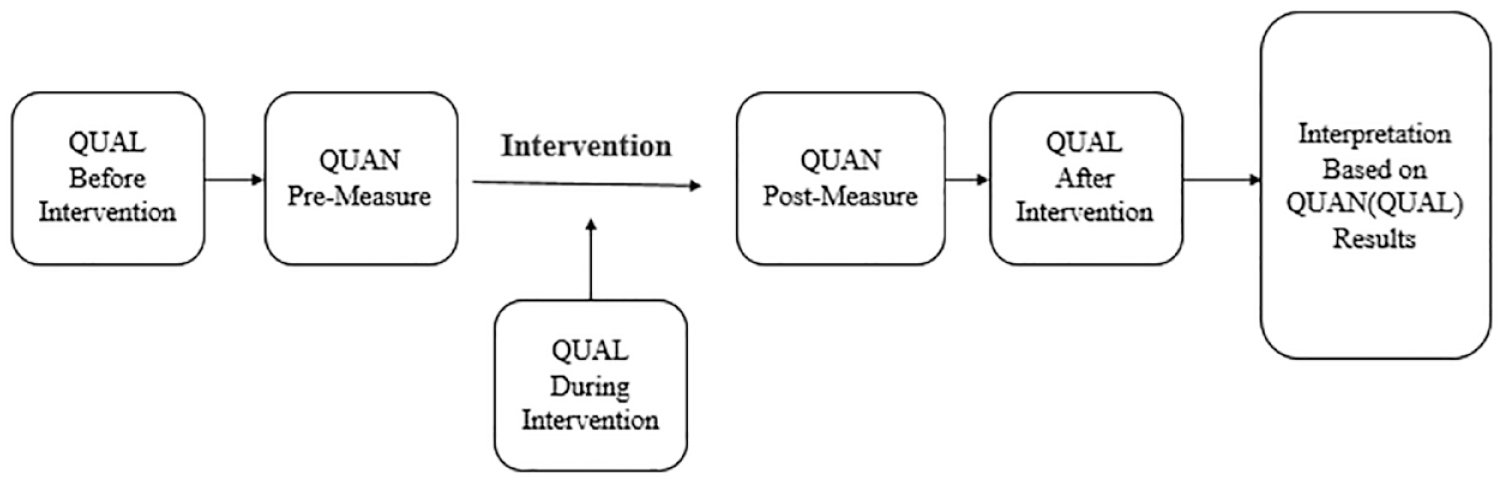
The embedded design: embedded experimental model (Creswell & Clark, 2011).
The Process of Research Implementation and Method of Protocol Creation
Qualitative Step
In this step, in order to identify and extract the related resources, the keywords of an educational protocol such as attention deficit-hyperactivity disorder (ADHD), meta-thinking, mental imagery, mental simulation, default mode network (DMN), and psychological treatment were searched in scientific databases of Elsevier, Wiley, PubMed, Taylor and Francis, Springer, API, Noormags, Civilica, Magiran and Irandoc in the period from 2000 to 2022. This search resulted in 143 scientific documents after initial review and 54 related documents used as the basis of the study and systematically reviewed. Walsh and Ward’s approach to text analysis (2013) was used to review the articles and to extract the concepts. The steps of this review based on Wach and Ward’s (2013) method included the determination of criteria for selecting the texts and documents, collecting the resources and texts, initial review of resources, identifying the desired features via note-taking, classifying the information according to the research problem, developing the educational protocol and gathering the experts’ opinions, and implementing the Lawshe’s “content-validity Ratio” (CVR) evaluation method. After preparing the initial version of the educational program, with the aim of determination of face and content validity, it was given to 15 experts (10 experts in the field of ADHD treatment, two experts in statistics, and three experts in psychometrics). After applying the changes suggested by experts in order to help children with ADHD, a new educational approach under the title of “meta-thinking educational program based on brain-mental simulation” was formulated in eight sessions (1.5 hr per session) to reconstruct the thoughts bases on meta-thinking principles, mental images rewriting and transforming the thoughts into adaptive actions. The obtained findings showed that the validity index for each therapeutic session is above 0.49% (for more studies, refer to Mahdavi et al., 2023).
Quantitative Step
This step included implementing and evaluating a meta-thinking educational program based on brain-mental simulation. In this step, children were randomly assigned to two experimental and control groups (16 in each group). Using a pre and post-test semi-experimental design with a control group, in the pre-test step, the questionnaire, fMRI imaging, and educational program were implemented for the experimental group. However, the control group only completed the questionnaires and received no educational program. Also, in the post-test step, the questionnaire and fMRI imaging were performed for the experimental group, but questionnaires only measured the control group. The quantitative analysis was performed using the multivariate covariance analysis method and SPSS-24 software.
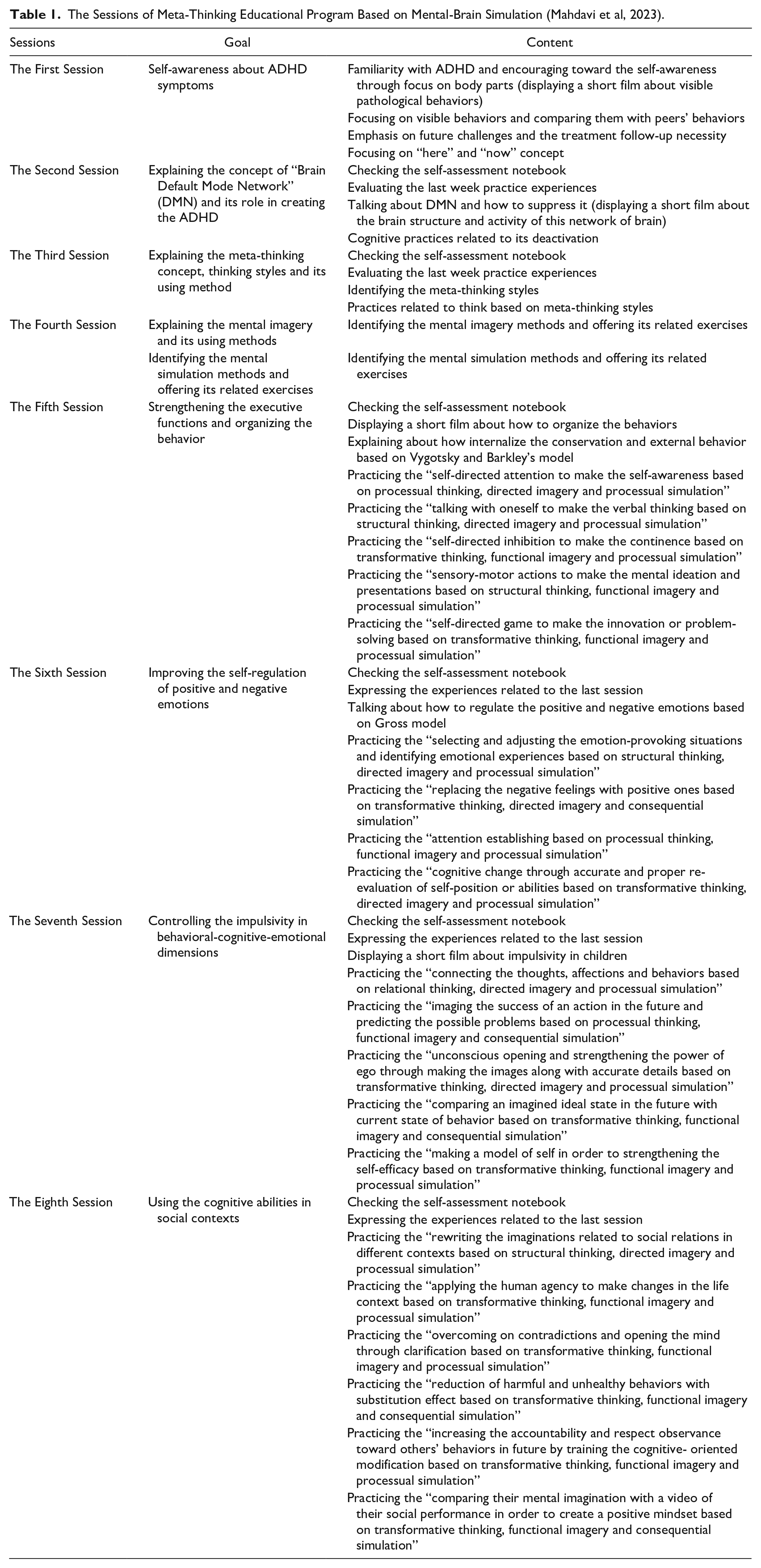
In the qualitative step, we gathered the needed data from parents of children who participated in the experimental group. For this purpose, we used the semi-structured interview. The participants in this step were selected by objective sampling method means that we selected those parents with experience living with a child with ADHD and had different and desirable viewpoints regarding the research problem. The qualitative data analysis was performed by MAXQDA software (Table 1).
The Sessions of Meta-Thinking Educational Program Based on Mental-Brain Simulation (Mahdavi et al, 2023).
Inclusion Criteria
The criteria for selecting the sample individuals included normal IQ, age between 7 and 12 years, absence of co-occurring disorders such as autism spectrum disorders, epilepsy, major depression, bipolar disorder, Tourettes syndrome, psychosis, not taking the antipsychotic drugs and serotonin absorption inhibitors, and obtaining a favorable score from Conners, parents rating scale “parents report form” (CPRS-R).
Exclusion Criteria
The exclusion criteria from the study included the use of psychiatric drugs and the absence of more than two sessions.
Questionnaires
Image Acquisition
Patients underwent brain MRI scans with a 3 T MRI (Magnetom Prisma, Siemens, Germany) using a 20-channel whole-head coil at the Center of National Brain Mapping Lab, Iran. A high-resolution three-dimensional T1 -the weighted image was collected with the following parameter: 160 slices; TR = 1800 ms, TE = 3.53 ms, Flip angle = 7°, 1 mm isotropic voxels. Two hundred twenty continuous resting state functional volumes were acquired using a gradient-echo EPI sequence; TR = 2000 ms, TE = 30 ms, FOV = 240 × 240, Flip angle = 7°, 3 mm isotropic voxels and a double-echo gradient field map (TR = 520, TE1 = 4.92, and TE2 = 7.38 ms, flip angle = 60°, voxel size = 2.1 mm × 2.1 mm ×2 mm, slices = 49). During the resting-state recordings, all participants were instructed to relax and stay awake, keep their eyes open, and their heads still without falling asleep, and think of nothing.
Data Pre-processing
Specifically, we used the fMRI data preprocessed pipeline through the fMRIprep version 21.0.1, a NiPreps (NeuroImaging PREProcessing toolS) application (Esteban et al., 2018). For each of the resting-state fMRI runs, the following preprocessing was performed. First, a reference volume and its skull-stripped version were generated using a custom methodology of fMRIPrep. In order to perform boundary-based registration, the blood-oxygen-level-dependent (BOLD) reference was first Co-registered to the T1w reference using bbregister (FreeSurfer). In order to adjust for head motion and susceptibility distortions, the BOLD time series were resampled onto their original, native space after slice-timing correction. The BOLD time- series were resampled into standard space, generating a pre-processed BOLD run in “MNI152NLin2009cAsym” space. The maximum value of the translational and rotational movement parameter was 3 mm. No discernible difference was seen when the head movements of the two groups were examined.
Results
Based on the demographic information of participants, about 34% of them in both experimental and control groups were in the age group of 9 years; 31% of them were girls, and 69% were boys; 66% of them were the first child of the family, 32% of them were the second and 4% were the third child of the family; the pregnancy age of about 59% of mothers was 20 to 30 years and for 41% of them were 31 to 40 years; 37.5% of mothers had a diploma, 12.5% had an associate degree, 25% had a bachelors degree, 15.6% had master degrees, and 9.4% had doctoral degrees; about 31% of mothers were employees, 19% were freelancer, and 50% of them were housekeeper; 25% of mothers had mental and physical diseases, and 75% of them had not any illness; 44% of fathers were employees, and 56% of them were freelancer; 15.625% of fathers had a diploma, 18.75% had an associate degree, 31.25% had bachelor degree, 25% had a master degree, and 9.375% had a doctoral degree.
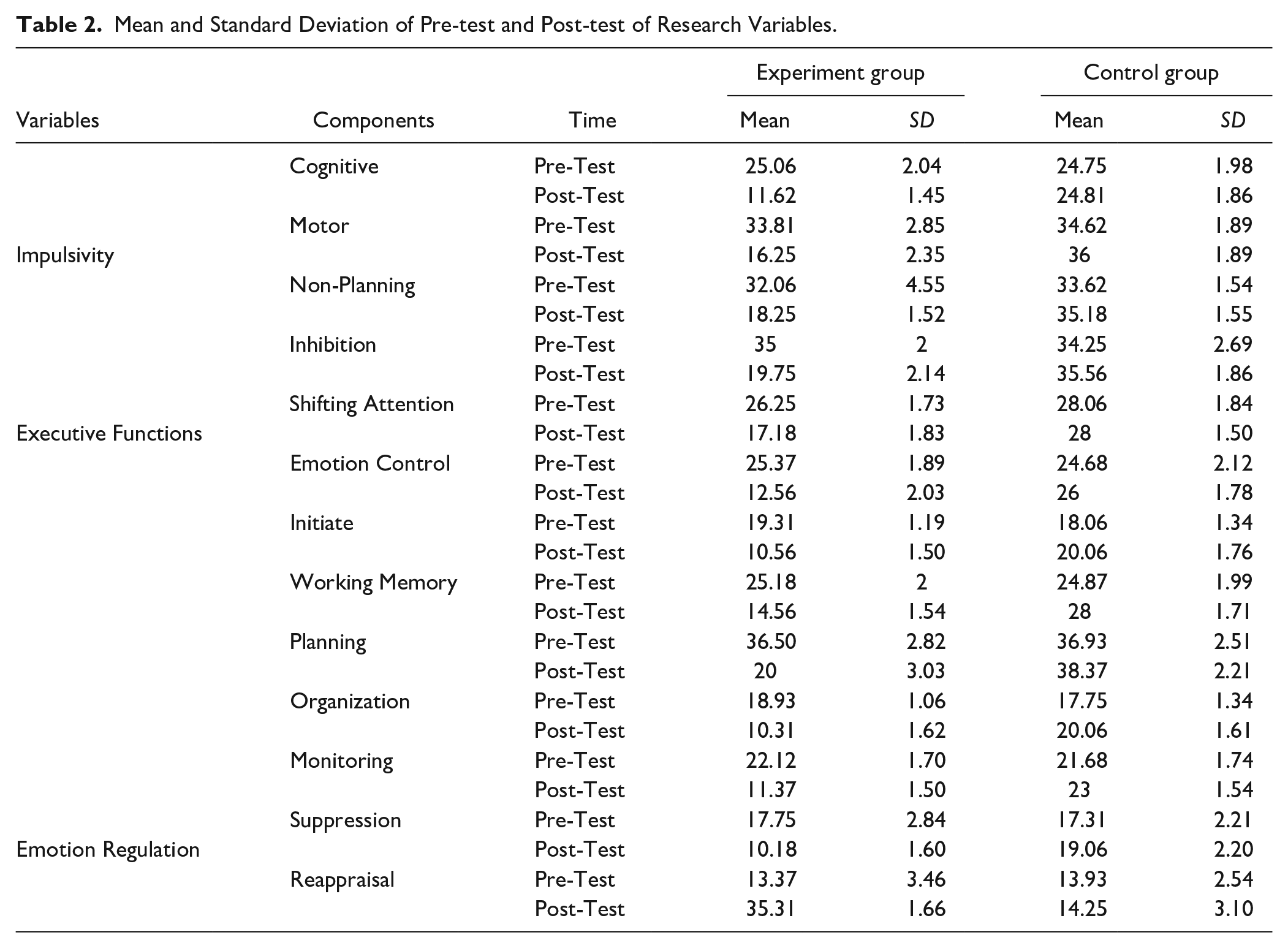
The findings of Table 2 show the adjustment of mean and standard deviation scores of impulsivity (cognitive, motor, non-planning), executive functions (inhibition, shifting attention, emotion control, initiate, working memory, planning, organization, monitoring), and emotion regulation (suppression and reappraisal) in post-test of the experimental group in comparison to its pre-test and in comparison to control group. We used the multivariate covariance analysis method to analyze the data and control the effect of pre and post-tests. Before using this test, the homogeneity assumption of variance/ covariance matrixes of research variables confirmed by Box’s M-test (executive functions p = .283, F = 1.123, Box’s M = 57.044; emotion regulation p = .092, F = 2.151, Box’s M = 6.955; impulsivity p = .347, F = 1.121, Box’s M = 7.551). The Levene’s test results showed the homogeneity of variance for both groups (inhibition: F = 2.060, p = .162; shifting attention: F = 1.237, p = .275; emotion control: F = 0.589, p = .449; initiate: F = 0.054, p = .818; working memory: F = 0.002, p = .967; Planning: F = 0.066, p = .114; Organization: F = 2.060, p = .799; Monitoring: F = 0.098, p = .756; cognitive: F = 0.865, p = .360; motor: F = 1.630, p = .211; non-planning: F = 0.026, p = .874; Suppression: F = 1.213, p = .279; reappraisal: F = 0.173, p = .681).
Mean and Standard Deviation of Pre-test and Post-test of Research Variables.
The results offered in Table 4 show that there is a significant difference between experimental and control groups regarding components of emotion regulation (suppression and Reappraisal; Wilks’ Lambda = 0.028, F = 466.333, p < .001). Based on these findings, the “meta-thinking educational program based on brain-mental simulation” effectively improved emotion regulation in children with ADHD, reducing the suppression rate and increasing the cognitive reappraisal in these children. The Eta coefficients show that the education effect can determine 85% and 97% variance for suppression and reappraisal variables, respectively.
The findings offered in Table 3 show that there is a significant difference between experimental and control groups regarding executive functions components (inhibition, shifting attention, emotion control, initiate, working memory, planning, organization, monitoring) (Wilks’ Lambda = 0.018, F = 142.092, p < .001). Totally based on the findings and differences between the two groups, it can say that the “meta-thinking educational program based on brain-mental simulation” was effective in improving executive functions in children with ADHD. The Eta coefficients show that the education effect determines 95%, 91%, 93%, 89%, 94%, 92%, 90%, and 94% of the variance for variables of inhibition, shifting attention, emotion control, initiate, working memory, planning, organization, and monitoring, respectively.
The Results of Multivariate Covariance Analysis of Executive Functions Components.

The results of multivariate covariance analysis for components of emotion regulation.

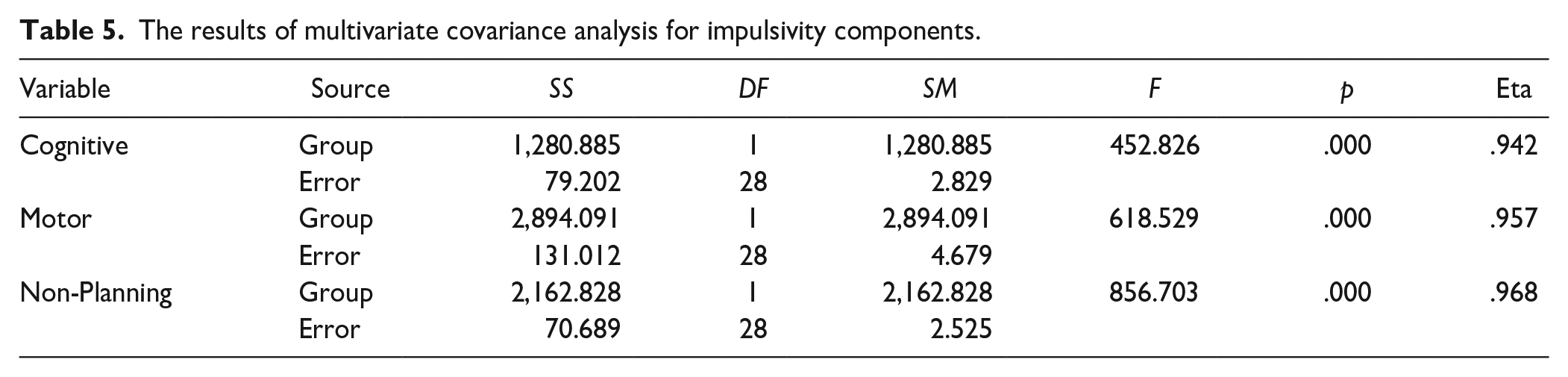
The results of Table 5 show that there is a significant difference between experimental and control groups regarding impulsivity components (cognitive, motor, non-planning) (Wilks’ Lambda = 0.015; F = 573.834; p < .001). Based on these findings, the “meta-thinking educational program based on brain-mental simulation” effectively reduced impulsivity in children with ADHD. The Eta coefficients show that the education effect can determine 94%, 95%, and 96% of the variance for “cognitive,” “motor,” and “non-planning” variables, respectively. In addition, the box plot (Figure 2) clearly shows the different scores of research variables in pre and post-test steps for participants. The box plot shows that scatter distribution of the obtained scores of each of the variables of executive functions, emotion regulation and impulsivity in the pre-test and post-test phases for the participants and it indicates that the "meta-thinking training program based on mental-brain simulation" has been able to improve the psychological performance of children with ADHD. As it is clear in the graph, a decreasing trend can be observed in the post-test scores of all variables except for the "reappraisal" variable. Also, behavioral impulsivity, reappraisal and planning variables have more variance than other variables, and this shows that children's performance in these variables had more changes than other variables. These changes show that the "meta-thinking training program" has been able to improve the psychological performance of the experimental group participants.
The results of multivariate covariance analysis for impulsivity components.

Box plot for components of executive functions, emotion regulation and impulsivity in pre and post-test steps.
ICA Analysis
Independent component analysis (ICA) is a data-driven technique and has been introduced as one of the most popular and accurate fMRI data analysis methods (McKeown et al, 1998; Brown et al, 2001). The underlying idea of this statistical technique is that the observed data is a linear combination of sources that are statistically independent of each other. The purpose of this technique is to extract in-dependent components based on an optimization method "such as minimum mutual information be-tween sources (InfoMax), maximum non-Gaussianity between sources (FastICA), or maximum likeli-hood estimation(MLE)"(Bell & Sejnowski, 1995; Hyvarinen & Oja, 2000; Stone, 2004). Considering that independent component analysis looks for non-Gaussian sources, most of its algorithms use prin-cipal component analysis (PCA) to remove Gaussian signals in the observed data (tharwat, 2016). In the field of difference between these two techniques, it can be said that ICA searches for statistically independent components with maximum possibility, and PCA searches for uncorrelated components with orthogonal features and maximum variance. ICA includes two types of spatial and temporal anal-ysis. If spatially independent components are detected, the voxels are the columns of the transferred matrix and the rows are the time points. If temporally independent components are detected, the col-umns of the transferred matrix are time points and the rows are voxels (McKeown et al, 1998; Cal-houn et al, 2001; Wang, Wu & Hong, 2022). Prior to preprocessing, we decided to delete the interesting volumes in a total of five volumes for a total duration of 10 s. Multivariate Exploratory Linear Optimized Decomposition into Independent Components was utilized to create 25 group-level components of the dataset using Control Temporal Concatenation (a stack of Pre-op and Post-op filtered images) Group ICA Analysis, To utilize ICA to break down FMRI data into time-courses and spatial maps at the subject and group levels (MELODIC, FSL; Zuo et al., 2010). The Eighteenths component of Group ICA was identified as DMN by visual examinations of the literature. In order to determine the subject-specific contributions to the group-level ICA, we can employ dual regression as a method in a group-level resting-state study. A collection of subject-specific spatial maps and time courses for each component at the group level (spatial map) are produced as a result of dual regression, which can then be compared between individuals and groups. The DMN ICA map for each individual was obtained using the dual-regression method. To compare group comparisons, using the contrast maps, we conducted paired two-sample t-tests to compare pre and post-intervention. The Bonferroni technique with an alpha level of 0.05 was used for multiple comparisons. Based on the pre-test and post-test images of the subjects, the most significant findings after the im-plementation of the meta-thinking training program have been the change in activation in the prefron-tal and limbic cortex of the brain. The images below show that children with ADHD experienced de-creased DMN activation, with the greatest decrease in activation occurring in the medial prefrontal cor-tex (MPFC) and posterior cingulated cortex (PCC). According to the studies, these brain regions that are related to the DMN have a prominent and significant role in emotion regulation, cognitive pro-cessing, motivation, and social interaction (Riga et al, 2014; Xu et al, 2019). After analyzing the group independent components(group-ICA) and identifying the areas related to the default mode network, the activity level of the areas related to the default mode network was calculat-ed for each of the subjects independently in the pre-test-post-test stages using paired t-test with Bon-ferroni correction. By comparing the pre-test and post-test statistics, it was determined the level of in-crease and decrease of activity in different areas of the brain's default mode network. Figures (3/5) show that there has been a significant decrease in the activity of the default mode network in the post-test stage compared to the pre-test. In other words, what was active in the pre-test stage compared to the post-test is inactive and suppressed in the post-test stage, as can be observed in sections A/B in Figures 3 and 5.
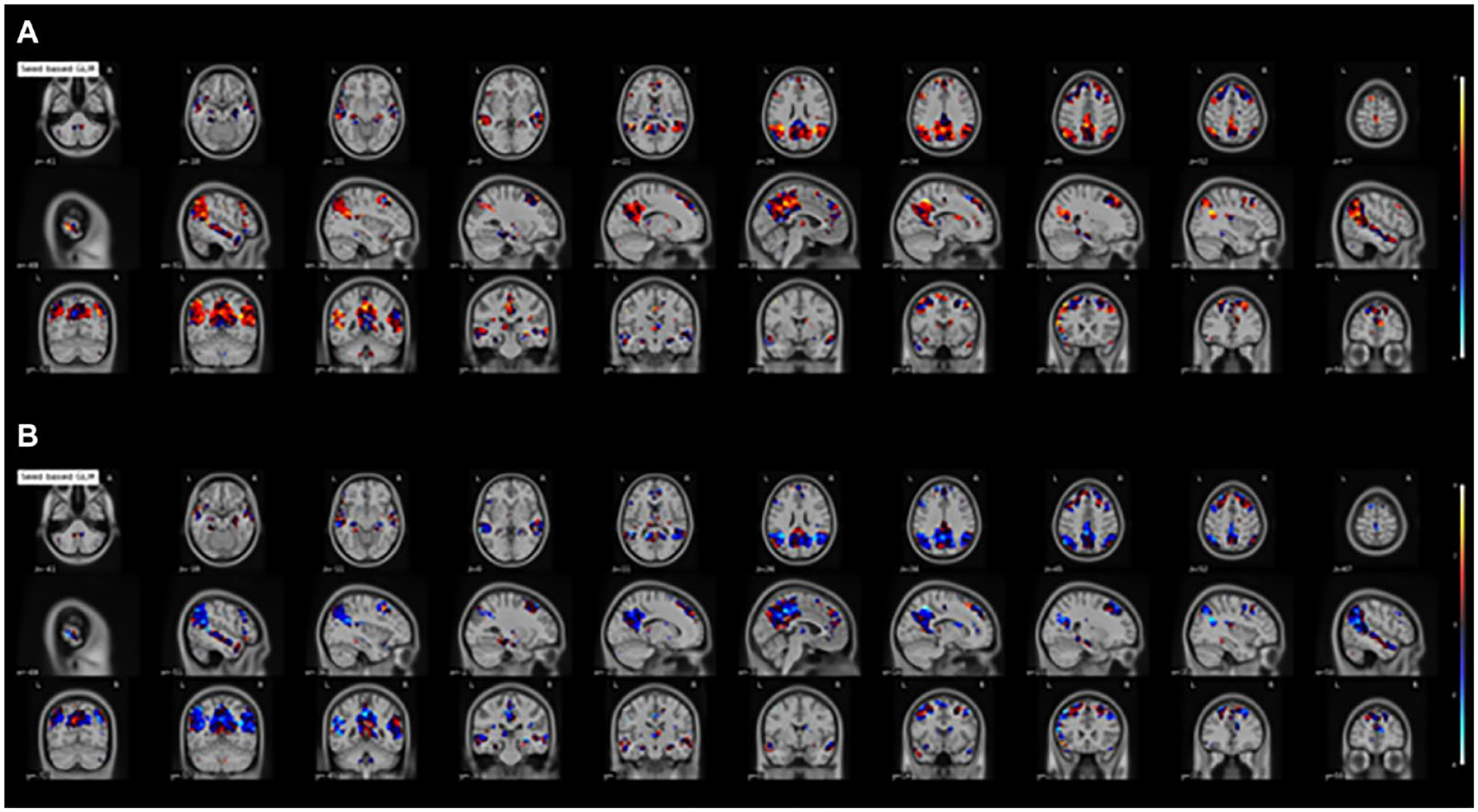
Group ICA results for the analysis (A) pre-op and (B) post-op.
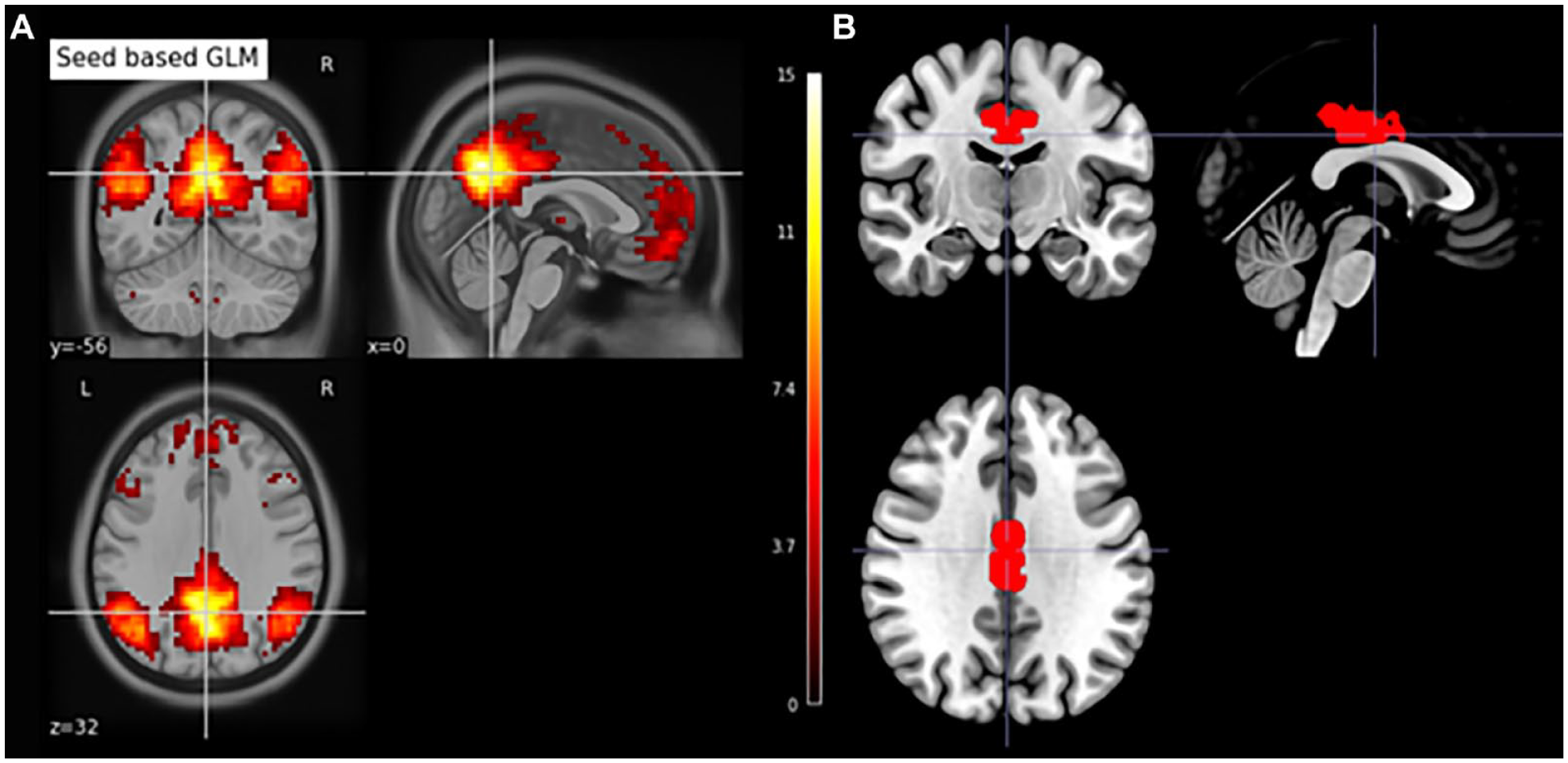
(A) Default state network extracted after group independent component analysis, (B) Local mean of posterior cingulate cortex (PCC) of participants after matching with standard anatomical template MNI152.
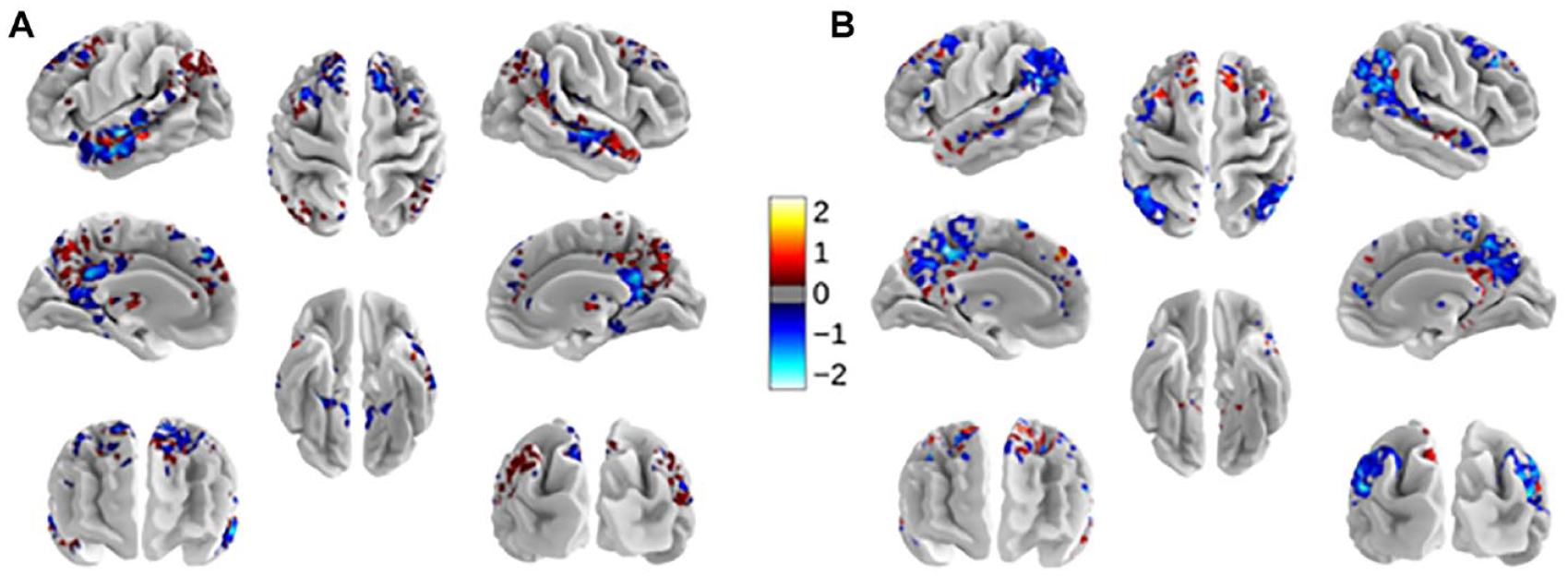
T statistic for each participant based on the corrected P-Value A) The significance level of the standard score statistic in the phase of the pre-test difference from the post-test B) The significance level of the standard score statistic in the phase of the post-test difference from the pre-test
Functional Connectivity Analysis
An analysis of functional connectivity (FC) was performed by choosing the posterior cingulate cortex region as a seed to compare the variance between the pre-test and post-test groups. Considering that the posterior cingulate cortex has a direct relationship with other areas of the default mode network and plays the role of a hub node, it was chosen as a seed. In addition, to compare individuals in the pre-test and post-test, we used the Low-Frequency Fluctuation Amplitude (ALFF) method. According to ALFF, high-frequency fluctuations are defined as the total power of frequencies between 0.01- 0.1 Hz, which in turn defines the power of low-frequency fluctuations. According to previous studies (Yang et al., 2007), we chose the frequency range between 0.01-0.08 Hz for ALFF analysis. We omitted to report the results of these two methods because they were not statistically significant.
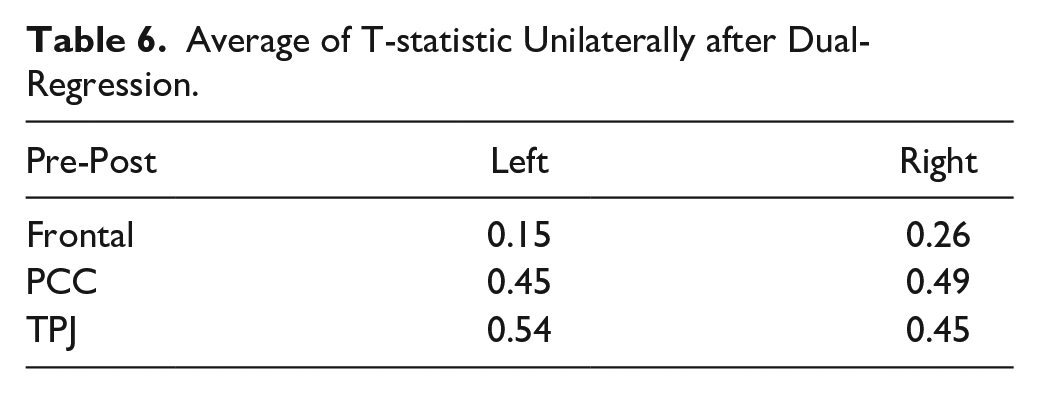
To evaluate the asymmetry of the default mode network areas between the two hemispheres of the brain, the dual-regression model and one-sided t-statistics were used for each participant. First, we di-vided the DMN separately into three components: Frontal, PCC, and TPJ in each hemisphere. Then, we calculated the activity difference between the pre-test and post-test phases. Based on the obtained outputs, the average t statistic was reported for the voxels of each of the Frontal, PCC, and TPJ regions in each hemisphere. The results show that there is a considerable difference between the two hemi-spheres in the frontal lobe and TPJ, while no considerable difference was observed in the PCC (Table 6).
Average of T-statistic Unilaterally after Dual-Regression.
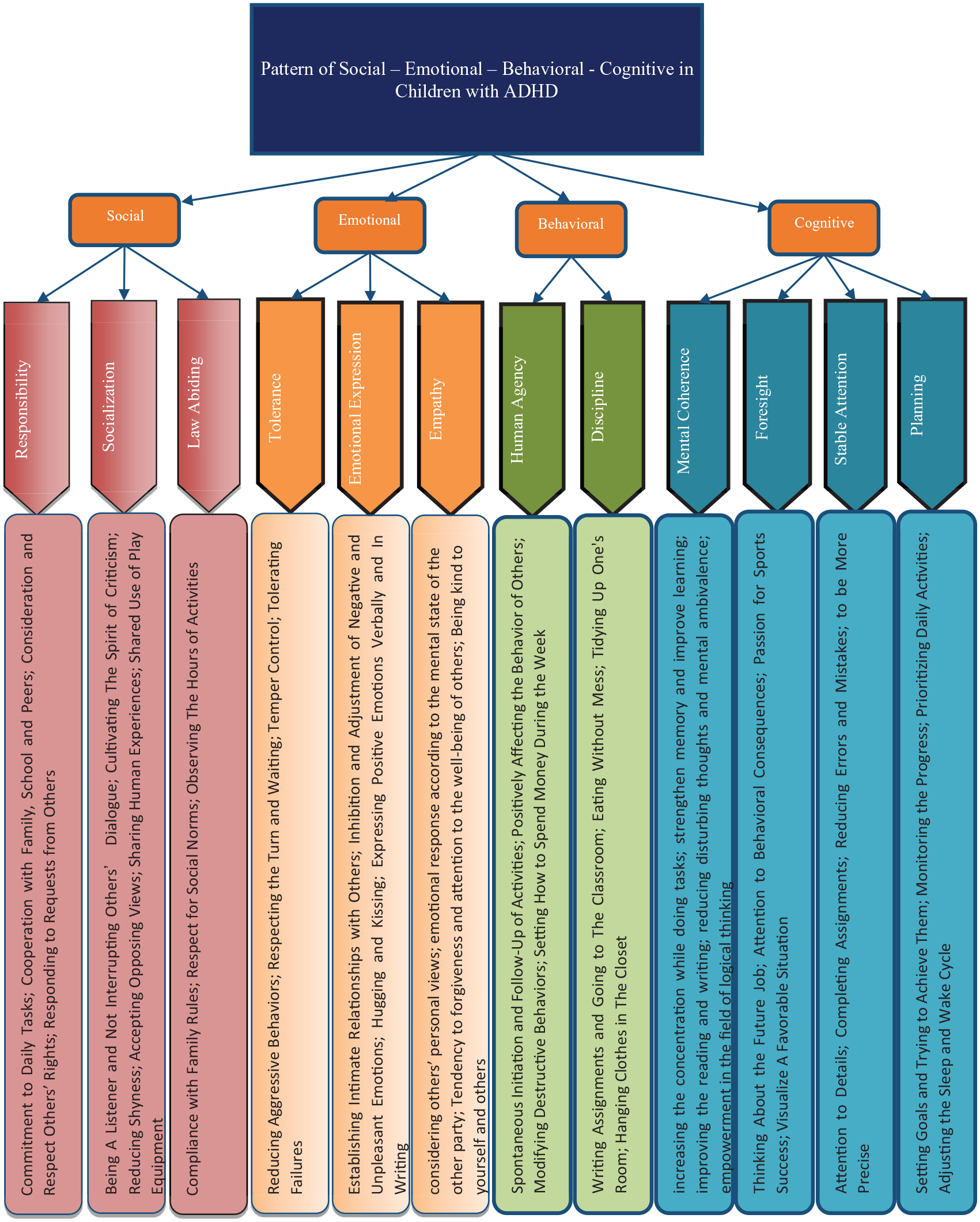
Qualitative Pattern of Psychological Responses of Children with ADHD to “Meta-Thinking Educational Program based on Brain-Mental Simulation.”
Discussion
Attention deficit hyperactivity disorder (ADHD) is characterized by significant functional impairments at initiate from preschool age and extends to adulthood (American Psychiatric Association, 2013; Barkley, 2016). The new findings show that cognitive deficits are the main core of ADHD, which is the focus of attention for many researchers (Fay-Stammbach et al., 2014). Theoretical models of ADHD explain that individuals with this disorder have a fundamental deficit in executive functioning that contributes to inefficient recall, planning, and anticipatory behaviors (Barkley, 2015). Recently, a meta-analysis study has shown that children with ADHD, in addition to deficits related to executive functions, significantly have basic problems in the field of emotion regulation, including the ability to recognize and understand emotions, reactivity to events emotional, and emotional regulation strategies (Graziano & Garcia, 2016; Landis et al., 2021). Research shows that ADHD leads to defects in executive control of behavior and, therefore, directly affects academic achievement, family coherence, and individual social relations (Barkley, 2006; Lavigne & Romero, 2010; Pérez, 2009; Servera, 2005). Hartmann et al.’s (2012) results showed that the impulsivity rate in children with ADHD is higher than in normal children. In this way, children with ADHD take action without considering its possible consequences, and they cannot inhibit their reaction and prefer the immediate reward to the delayed outcome. People with ADHD suffer from more abnormal (resting) neural signals due to sudden and intermittent activation of the DMN, making it more difficult for them to maintain the integrity of their default state. Additionally, differences in BOLD signal changes across scans support the intermittent nature of abnormal DMN activation in ADHD (Gao et al., 2019). In general, people with ADHD have more diverse neural signals in their brains at rest, which indicates that their default state is unstable (Hong & Hwang, 2022).In the quantitative section, the research findings showed that a “meta-thinking educational program based on brain-mental simulation” had a positive effect on executive functions, emotion regulation, and compulsivity of children with ADHD. In other words, implementing the meta-thinking educational program improved the executive functions, emotion regulation, and compulsivity control of the experiment group in the post-test compared pre-test and, in comparison, the control group(p < .001). The fMRI findings imply that this educational program could suppress the brain’s DMN-related regions and strengthen their cognitive control network’s performance in a reverse manner. Pre-test and post-test images of the subjects showed the most significant changes in activation in the prefrontal and limbic cortex after receiving the meta-thinking training program. Figure (3) shows that children with ADHD have decreased activation in DMN in some brain areas, especially the middle prefrontal cortex and posterior cingulate cortex. During the training sessions, the cognitive skills of the participating children have been challenged based on meta-thinking patterns and simulation methods, and their cognitive skills have improved and improved after achieving continuous success during these challenges. So that all the children have been able to easily stop and control their destructive behavior in different life situations after finishing the sessions, shift their attention from one task to another task and do not leave any activity half done, perform their tasks spontaneously and apply take logical and dialectic thinking patterns in a combined way in order to advance their goals. Also, they were able to achieve the necessary self-awareness and pay attention to positive and constructive thoughts to improve their life levels, be kind to themselves and gain more self-confidence, have appropriate emotional control for different situations and active participation and have awareness in various social activities. Previous studies on the effectiveness of existing psychological treatments for people with ADHD show that it not only relieves ADHD symptoms, but also improves other psychological outcomes such as depression, anxiety, self-esteem, and quality of life (Fullen et al., 2020; Nimmo-Smith et al., 2020). Findings of Landis et al. (2021) show that fundamental deficits in executive function and emotion regulation are differentially related to symptoms of ADHD. In addition, various evidences show that people with ADHD suffer from severe problems in the areas of social cognition, while social cognition plays a major role in people’s socialization and social relationships (Morellini et al., 2022). Also, the results of Carroll et al (2023) research show that cognitive group therapy based on acceptance and regulation skills can be an efficient and effective treatment for people with ADHD in order to experience emotional regulation problems and self-improvement. Consistent with these results, studies showed that cognitive educations increase the activation of neural structures related to this disorder so that the dopamine receivers volume in prefrontal and parietal regions is increased (Hoekzema et al., 2010; McNab et al., 2009). The Results of Aivazy et al.’s (2018) study show that computer-assisted cognitive intervention improves executive functions in children with ADHD. Kamarzarin et al. (2019) showed that cognitive rehabilitation intervention was effective in enhancing the selective attention and executive functions of students with ADHD and it can use this method to improve the cognitive operations in students with ADHD. The results of Van De van de Ven et al. (2016) show that computerized cognitive education can improve the executive functions in children with ADHD. The results of Sánchez et al. (2019) showed that after implementing the “meta-thinking educational program based on brain-mental simulation,” despite significantly reduction of triple main symptoms of the disorder, the scores related to emotion regulation and face recognition improved too. They noted that in this group, it can improve the emotion regulation by using effective and social intervention programs. The research of Yuan et al (2022) showed that CBT in patients with psychiatric disorders is associated with a significant decrease in activity in ECN, MPFC, ACC and Precuneus, and this decrease of activity can improve cognition and regulate activities. In addition, the findings of La Buissonniere-Ariza et al. (2021) and Vuper et al. (2021) show that CBT improves cognitive function by affecting internal connectivity and interaction between brain networks. The research results of Fonzo et al. (2014) and Yoshimura et al. (2014) show that cognitive-behavioral therapy by acting on the medial prefrontal cortex and the left anterior cingulate has positive effects on the emotional processing of individuals.
In the qualitative section, findings show that children with ADHD had similar and sometimes different psychological reactions to “meta-thinking educational program based on brain-mental simulation.” One of the main themes in children with ADHD that affected and improved after passing the “meta-thinking educational program based on brain-mental simulation” sessions is the cognitive concept. According to parents, their children, after receiving the meta-thinking educational program, became more effective in the fields of planning, stable attention, foresight, and mental coherence; so that they maintain their attention and concentration from the moment they start the assignments to their completion, they monitor their goal setting and progress process, motivate themselves by foresight and imagination of the desired future, they are looking for to implement a purposeful effort. They never forcefully spend their time delusional and daydreaming. According to Kahneman (2011), it can say that children with ADHD moved from “system 1” thinking to “system 2” and “system 3” thinking, which are based on reflective thinking and re-thinking, and they found the missing link in their thinking. By relying on meta-thinking, they have been able to understand how humans can transform their surrounding environment. Based on performed research, the imagery exercises, along with mental simulations as a cognitive education, can improve the quality of mental images and subsequent imaginations. Although integrating these two methods in the treatment process is time-consuming and prolonged, higher-quality imagery can effectively change the behavior (Conroy & Hagger, 2018). By using mental images, people look at an event from a new perspective different from their conventional and traditional perspectives. Therefore, the process of comparing the images, reviewing and correcting them, and their combination helps people to make valuable images of their performance based on possible chains of their mental images without being forced directly experience the events and their outcomes (Mahoney, 1993).
The behavioral concept is the other main theme that affected and improved after passing the “meta-thinking educational program based on brain-mental simulation” sessions. In line with what parents stated, after receiving the meta-thinking educational program, their children had the desired progress regarding ordering daily behaviors and activating their human agency. By rewriting the mental images and practicing the simulated behaviors, children have been able to give a new order to their behaviors so that they spontaneously have been performed the planned activities and influenced the people around them by adjusting their destructive behaviors. In fact, they have moved from dependency and intellectual-behavioral disturbance to self-sufficiency and success-based coherence. These children achieved a more complete and better understanding of reality by nurturing the meta-thinking in themselves and realizing where they are in it. They realized that their surrounding world is constantly changing and evolving, and the awareness about this issue made them consider a new reality in their minds and take the initiative to change and transform their behavior and personality so that their attitude becomes aligned with the surrounding environment. Based on performed studies, dysfunction in the frontal lobes can lead to various defects such as distraction and degeneracy, social irresponsibility, impulsivity, disinhibition, and inability to initiate (Chudasama & Robbins, 2006).
Given that children with ADHD express elimination errors, commit more than normal children, and have slower reactions, this information processing deficit reflects their distraction, impulsivity, impaired consciousness, and defect in their movement inhibition (Barkley, 1997). The defect in response inhibition is indicated by impulsive behaviors such as responding before understanding the task, offering the reaction before access to all information, missing attention by irrelevant stimuli, or giving unfavorable answers (Eddy et al., 2019; Riding & Douglas, 1993; Romero-Ayuso et al., 2020; Schachar et al., 2010; Wright et al., 2014). Impulsive behavior can be influenced by different mechanisms, such as the ability to pay attention, process, store, and manipulate information, plan and evaluate different options, and capacity to transform thoughts into actions. Also, the presence of specific personality characteristics, such as being extroverted (Chico, 2000; Eysenck & Eysenck, 1985), being risk-oriented or risk-averse, is a component that strongly influences decision-making. Recent studies about behavior showed that mental imagery clarity is not a static attribute. Instead, it includes dynamic moment-to-moment changes in the person (Bergmann et al., 2016; Pearson, 2014; Pearson et al., 2011); and these changes are predicted by a network of the whole brain’s activity that includes some overlap with understanding in the visual system (Dijkstra et al., 2017). Research findings imply that people with clear and vivid mental imagery report more sensory details in making the future events and previous occurred events; also, their re-experience rate of events is more natural and higher than people with weak mental imagery (Galton, 1880). Based on this, Hunt and Fenton (2007) stated that rewriting images successfully treated psychological disorders to some extent.
The third theme that influenced and improved in children with ADHD after passing the “meta-thinking educational program based on brain-mental simulation” is the emotional concept. According to parents, after passing these sessions, their children achieved enormous success in the field of empathizing with others, expressing positive and negative feelings, and tolerance in difficult and frustrating conditions. By experiencing positive and negative feelings in a processual and consequential manner, children can regulate their emotions effectively, give logical and controlled responses to people around them, and establish friendly relationships with others. Using the meta-thinking styles, they could subtly experience their conflicting feelings and achieve a stable and lasting calmness via reviewing and compiling them. The meta-thinking educational sessions helped these children reorganize their feelings to a new level and as tools to avoid logical and intuitive thinking limitations. The findings of other researchers show that emotional dysfunction is known as one of the main features of ADHD in children (Barkley, 2010). Studies show a higher rate of emotional instability (Skirrow et al., 2009), severe reactions to emotional stimuli (Jensen & Rosén, 2004), and lack of inhibition of negative emotional reactions (Crundwell, 2005) in children with ADHD than normal children. Based on performed research, mental imagery plays a significant role in much psychological pathology, and they provided surprising findings for us that visual thinking is more exciting than verbal thinking (Holmes & Mathews, 2010). Imagery activates some regions of the brain selectively, which are d in processing the sen information in actual conditions or contributing to similar actions and reactions (Kim et al., 2007).
Imagine future events and also a review of past emotional events activates the amygdala (Cabeza & St Jacques, 2007; Sharot et al., 2007). Imaging the emotional stimulus events can be used to predict the person’s reaction concerning such events in the s in future and in decision-making about the approach to or avoiding them. Totally it can conclude that imagery activates many brain systems that contribute to equivalent forms of understanding. When imagery has emotional content, the brain systems involved in emotional information processing almost engage, like when these events are remembered or understood (Holmes & Mathews, 2010). When imaging future events, the frontal regions are activated earlier and more than when a person remembers past events (Okuda et al., 2003), which is thought to be due to a greater need for top-down control during the imaging of future events. In addition, imaging the events of the distant future activates the frontal regions more than events of the near future (D’Argembeau et al., 2008). Schacter et al. (2007) argued that information in the memory could be used to simulate future events. Also, based on the effect of imagery perspective, it has been suggested that the observer’s perspective selection can be used as a method to reduce the distress caused by sudden and uninvited imagery (Kenny & Bryant, 2007; McIsaac & Eich, 2004).
The social concept is the fourth and last main theme that is influenced and improved in children with ADHD after passing the “meta-thinking educational program based on brain-mental simulation” sessions. According to parents’ explanations, after receiving the meta-thinking education sessions, their children have undergone significant changes in the fields of obeying the family and society rules, nurturing criticism and understanding the opposite viewpoints, sharing the personal experiences, and respecting others rights. In fact, by using reflective thinking, they could explore their personal perception of their identity and place in a social environment. Meta-thinking styles taught them that, as human beings, they are never isolated and independent. However, they are always a part of a larger whole called society, and this society has a particular structure. They correctly understood that to be with society people, they should go out of a static state and should change from moment to moment. In other words, these children came to think that the only thing stable and static in this world is change, and they should never be afraid to change themselves and their environment. While accepting the intertwining of human life, they strengthened their social relationships. They made a balance between communication and independence so that neither independence becomes a victim of communication nor communication becomes a victim of independence. Evidence show that imaginations are more likely than verbal representations to result from provoking and remembering an actual event (Hyman & Pentland, 1996). Imaging the outcome of a possible event increases this belief in our mind that the same outcome will happen in the future (Carroll, 1978), and imaging one’s own future behavior increases the chance of confirming the occurrence of that behavior in the future (Gregory et al., 1982; Koehler, 1991; Libby et al., 2007). The mental imagination (particularly from in observer’s perspective) can affect a person’s future behavior. While appropriate imagery can increase the behavior, inappropriate imagery or revising in mental imagination can inhibit a behavior (Carroll, 1978; Gregory et al., 1982; Pham & Taylor, 1999a).
Often, people evaluate future or past actions via mental simulation. For example, in mental controlling, they use imagery or other representation methods to reach an ultimate decision about what needs to be done (Taylor et al., 1998). Mental simulation of future positive outcomes (such as fantasizing about personal success) typically is related to a happy mental state, and mental simulation of future negative outcomes is related to an unhappy mental state (Sanna, 2000). By influencing mental representations of future events, mental simulation can have considerable evidentiary value (Kahneman & Tversky, 1982; MacInnis & Price, 1987; Risen & Gilovich, 2008). Simulating a successful outcome increases self-confidence because it serves as proof means that the outcome will actually occur. By increasing the expectation of success, simulations can increase motivation and make the simulated behavior more likely to occur. Imagining a successful interaction with community members makes people feel less anxious and feel more relaxed in such interactions; thus, their willingness to interact with community members increases (Stathi & Crisp, 2008; Turner et al., 2007). Therefore, simulations influence expectations about the future because,like real experiences, they are understood as evidence of how and why events will actually happen (Kappes & Morewedge, 2016).
Conclusion
In general, this research could offer a proper educational pattern for the neuropsychological treatment of children with ADHD. This educational program pays special attention to their cognitive, emotional, behavioral, and social areas, and the content of its sessions is compiled accordingly. The results of the analysis of the findings showed that this educational approach was effective in improving the executive functions, emotion regulation, and impulsivity of children with ADHD.
Ethics Statement
This study was performed in accordance with recommendations and guidelines approved by the Ethics Committee of Tehran University and the National Brain Mapping Laboratory and with informed written consent from children and their parents. All participants gave written informed consent according to the Declaration of Helsinki.
Limitations
One of the limitations of the present research is the coverage of children with the age range of 7 to 12 years in Tehran, and other age groups and children of other regions did not include. Therefore, caution should be taken when generalizing the results to children with ADHD in other cities and countries with different cultures. Another limitation of the present research was the shortage of fMRI devices in the country and the long wait to receive an appointment for imaging the brain function of participants, so it was not possible to use functional imaging for the control group, and we performed the functional imaging only for the experimental group in pre and post-test steps.
Footnotes
Acknowledgements
We would like to thank all the participants for contributing to this research.
Declaration of Conflicting Interests
The author(s) declared no potential conflicts of interest with respect to the research, authorship, and/or publication of this article.
Funding
The author(s) received no financial support for the research, authorship, and/or publication of this article.
