



Abstract
Cisgender women face significant HIV risks in the United States yet retention in prevention research is challenging. The same factors that increase HIV vulnerability also create barriers to research participation. This qualitative study explored multilevel barriers and facilitators to retaining cisgender women with increased HIV prevention needs in research using the social ecological model (SEM). Semi-structured interviews were conducted from August 2023 to February 2024 with 114 participants across three groups: HIV-negative cisgender women with increased HIV prevention needs (n = 34), cisgender women living with HIV (n = 40), and HIV prevention/treatment stakeholders (n = 40). Participants were recruited nationally through convenience sampling via social media and organizations. Directed content analysis was used to identify retention factors across individual, environmental, intervention, and structural levels. Barriers included substance use affecting contact maintenance, concerns about study time commitments, frustrations with unclear study procedures, poor staff rapport, safety concerns around intimate partner violence, historical research mistrust, and systemic vulnerabilities like housing instability. Facilitators included creating affirming environments that fostered purpose, flexible scheduling with incremental compensation, clear study expectations and health education/support, authentic staff relationships, discrete communication methods, transparent study procedures and approaches, virtual visit options, and availability of multiple contact methods. Findings corroborated a key paradox: those most vulnerable to HIV acquisition may be least likely to complete longitudinal studies due to structural barriers. Successful retention requires flexible approaches that address barriers at all SEM levels. These findings provide strategies for researchers to improve retention among cisgender women with increased HIV prevention needs, strengthening research representativeness and effectiveness.
Keywords
Introduction
In 2022, cisgender women (hereafter, “women”) accounted for 18% of new HIV diagnoses in the United States, with Black and African American women bearing a disproportionate burden (50%) compared with White (24%) and Hispanic women (20%).1,2 These disparities are particularly stark in the US South, where Black women constitute 67% of women living with HIV. 3 While overall HIV incidence has declined, women continue to face significant barriers to HIV prevention, care, and treatment, including poverty, substance use, intimate partner violence, medical mistrust, stigma, and structural barriers like discrimination and systemic racism.4–12 Given these disparities, greater inclusion of women in HIV research is essential to understand the unique factors associated with women’s exposure to HIV and other sexually transmitted infections (STIs) in the United States and to inform prevention and treatment efforts. Accordingly, successfully recruiting women into HIV prevention studies and sustaining their participation is critical.
However, recruiting and retaining women vulnerable to HIV in prevention studies is challenging as many of the same factors that increase their vulnerability to HIV (e.g., housing instability, substance use, and low resource access) make consistent study engagement difficult. These populations are underrepresented in public health research as they may require unique retention approaches that are not readily used in conventional recruitment and retention efforts.13,14 Many of the challenges women face in initiating and continuing HIV prevention treatment (e.g., pre-exposure prophylaxis or PrEP) mirror these multi-level barriers to study retention (e.g., low self-efficacy, medical mistrust, stigma, health care inaccessibility).15–17 Successful pilot interventions to increase PrEP initiation among women include multi-component approaches that are tailored and culturally responsive, including motivational interviewing to increase self-efficacy and clinic-level PrEP counseling and education.18,19 Thus, successfully retaining women experiencing systemic inequities in health care and resource access may similarly require comprehensive, socioecological approaches that integrate perspectives and strategies across individual, interpersonal, community, institutional, and structural levels.8,11,13,14 No single retention strategy alone is sufficient to address the complex barriers to sustained research participation. 13 Developing and implementing tailored retention strategies are essential to ensuring that HIV prevention research remains representative and effective in addressing the needs of women affected by HIV.
Bronfenbrenner’s social ecological model (SEM) provides a robust framework for understanding the multi-level factors that influence research retention. 20 The SEM highlights the interplay between individual and structural factors that influence health behaviors while considering the interdependence between levels. This model has been adapted and extensively employed within public health research and practice, particularly in understanding and addressing health disparities, as it offers a comprehensive approach to identifying and targeting multi-level determinants of health.21–23 Using an adapted SEM, these levels of influence are defined broadly as: (1) individual factors (i.e., intrapersonal); (2) environmental factors (i.e., interpersonal and community factors); (3) intervention factors (i.e., institutional); and (4) structural factors (i.e., policy)22,24 (see Fig. 1).

Adapted Social Ecological Model. Adapted from: Bronfenbrenner U. Toward an experimental ecology of human development. Am Psychol. 1977;32 (7):513–31.
In the context of our qualitative study, guided by an adapted SEM, individual factors encompass knowledge, attitudes, and beliefs about research participation. Environmental factors include interpersonal processes (i.e., family, peers, and social networks) and community contexts (i.e., cultural norms, values, and collective beliefs). Intervention factors include the protocols and aspects of the intervention itself (i.e., delivery, components). We also considered “policy” or structural factors that affect research participation, which include broader societal patterns and systemic inequities that shape access to resources. 24
This qualitative study explored the barriers and facilitators to retaining a diverse national sample of women at higher risk for HIV seroconversion in a 2-year longitudinal cohort study. 25 We identified challenges and potential solutions at each SEM level for retaining women in HIV/STI research in the long term, providing actionable strategies for researchers to support participants and increase study retention among vulnerable populations. Findings are informed by women at high risk of HIV seroconversion, women living with HIV (WLWH), and stakeholders working in HIV prevention and treatment.
Methods
This study presents a qualitative analysis of semi-structured interviews exploring the perspectives of women and stakeholders on recruiting and retaining a diverse national sample of US women at higher risk for HIV seroconversion in a longitudinal cohort study. This qualitative analysis was conducted as part of the AWARE epidemiological study; details of the AWARE study’s protocol have been previously reported. 25 Interviews took place from August 2023 to February 2024, concurrent with the enrollment of the primary AWARE cohort from August 2023 to March 2025. This study is reported in accordance with the Consolidated Criteria for Reporting Qualitative Research (COREQ) guidelines. 26
Study sample and recruitment
Participants were recruited from across the United States through convenience sampling, utilizing advertisements on social media, direct outreach in clinical settings and community-based organizations, as well as professional networks and email listservs. Interviews were conducted with three diverse groups: Group 1, women at higher risk for HIV seroconversion; Group 2, WLWH, and Group 3, stakeholders in HIV prevention and treatment. Eligibility screening was conducted through REDCap and confirmed by phone. All participants provided informed, documented consent before the interviews.
Eligibility requirements for Group 1 participants included: 1) at least 14 years old; 2) assigned female at birth; 3) identify as female; 4) understand and read English or Spanish; 5) live within the United States and its territories; 6) HIV-negative; and 7) self-reported unprotected vaginal or anal sex with a male in the past 6 months. In addition, participants had to meet one or more of the following criteria in the past 6 months (except for interpersonal violence (IPV) or sexual assault, which could have occurred in the past year, or incarceration within the past 5 years) to be eligible for participation: 1) injection or noninjection drug use (heroin, cocaine, crack cocaine, methamphetamine, or prescription drugs excluding those prescribed by a licensed provider); 2) alcohol dependency or binge drinking; 3) self-reported history of STIs including gonorrhea, chlamydia, or syphilis; 4) exchange of sex for commodities, like drugs, money, or shelter; or 5) male sexual partner with reported history of injection or noninjection drug use, alcohol dependency, or binge drinking, STIs, or HIV diagnosis; or 6) IPV or sexual assault; 7) incarceration of partner or self (i.e., jail or prison ≥24 h within the past 5 years).
Eligibility requirements for Group 2 participants included: 1) at least 14 years old; 2) assigned female at birth; 3) identify as female; 4) understand and read English or Spanish; 5) live within the United States and its territories; and 6) diagnosed with HIV on or after January 1, 2000.
Eligibility requirements for Group 3 participants included: 1) at least 18 years old; 2) understand and read English or Spanish; 3) live within the United States and its territories; and 4) identify as a stakeholder in the field of HIV prevention and treatment. Participants had to be actively engaged in HIV prevention and treatment services for women through professional employment or volunteer positions. This engagement included individuals serving as advocates, advisory board members, or other key roles supporting women who are either living with HIV or vulnerable to HIV infection.
Data collection and preparation
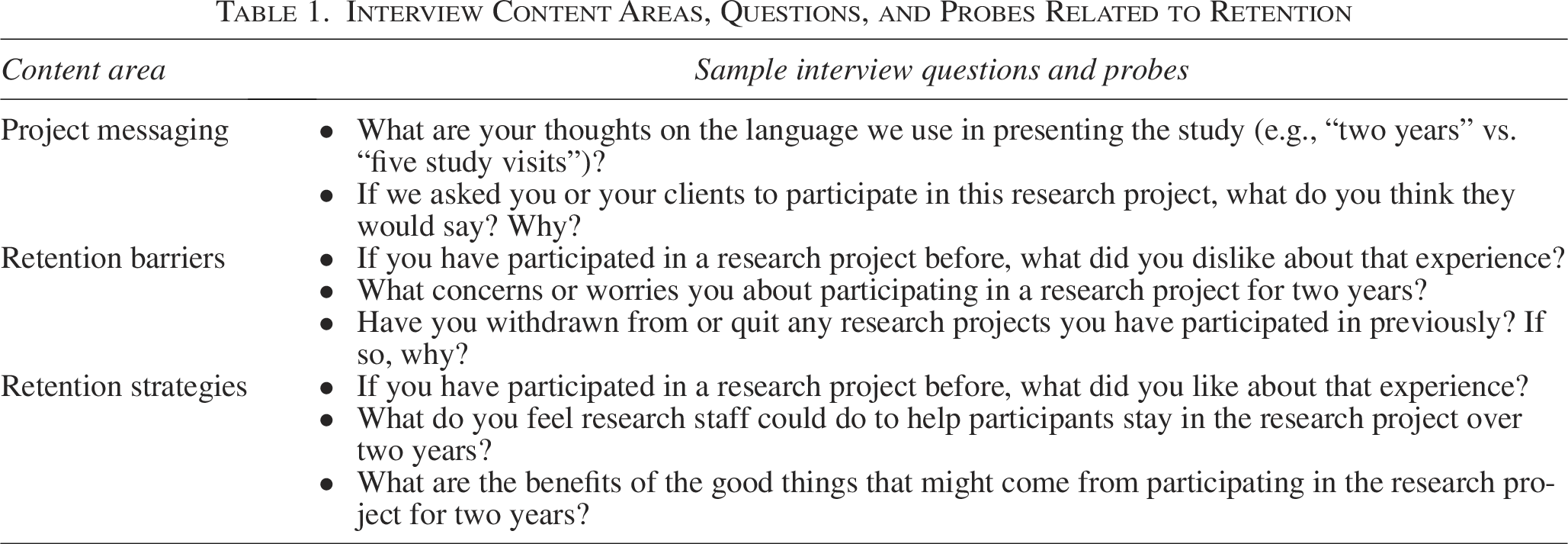
Semi-structured interviews were conducted via Zoom and lasted about 60 min. Interviews followed a structured discussion guide, which was reviewed by a community advisory board. Questions and probes related to retention within the interview guide are included in Table 1. Member checks were also conducted at the end of each interview. In addition, participants completed a demographic survey collecting data on age, gender identity, race, ethnicity, educational attainment, economic status, and health care coverage. Participants received a $50 digital Amazon gift card for their participation.
Interview Content Areas, Questions, and Probes Related to Retention
All interviews were recorded and transcribed by a professional transcription service. Data were managed using Dedoose, a cloud-based qualitative analysis platform.
Analysis
Guided by the SEM, we conducted a directed content analysis of the interview data from the three participant groups.27–30 After reviewing transcripts from each participant group, a codebook was developed, which was iteratively reviewed and refined throughout the coding process. Authors were divided into three coding teams, each assigned to data from one of the three participant groups (women at higher risk for HIV, WLWH, or stakeholders). A coding lead was assigned to each group to review code applications, ensure consistency, and resolve discrepancies. The lead coders met regularly throughout the coding process to discuss code applications and maintain consistency across participant groups.
For this study, we focused on a subset of data that was initially coded as “retention” to further explore the barriers and facilitators to cohort retention. Two authors conducted directed content analysis based on predefined domains from the SEM, which include the individual, interpersonal, community, institutional, and structural levels. New codes were developed inductively. The codes were grouped into categories and subcategories by identifying patterns and relationships within the data. 31 Weekly discussions were held to achieve consensus on applying codes and developing categories.
AI assistance
Claude (Anthropic, accessed June 2025) was used to assist with article editing for clarity and organization. Specific prompts included requests for feedback on article structure and suggestions for improving the clarity of complex concepts. The corresponding author reviewed all AI-generated suggestions and takes full responsibility for the final content and accuracy.
Results
Demographics
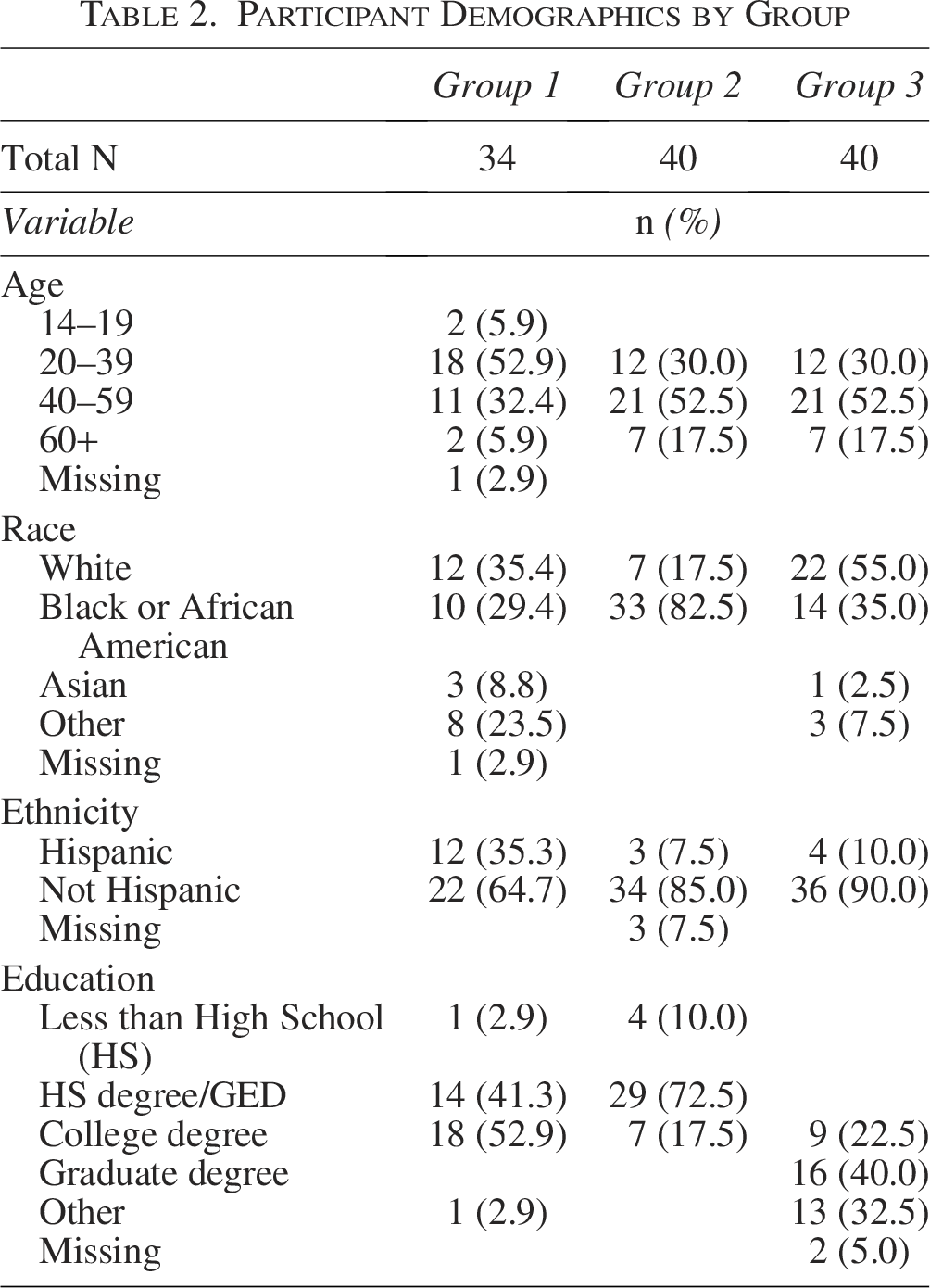
A total of 114 participants completed an interview [Group 1 (n = 34); Group 2 (n = 40); Group 3 (n = 40)]. From the resultant interview transcripts, 512 excerpts were coded as “retention” and further coded into the adapted SEM levels See Table 2 for a summary of participant demographic characteristics by group.
Participant Demographics by Group
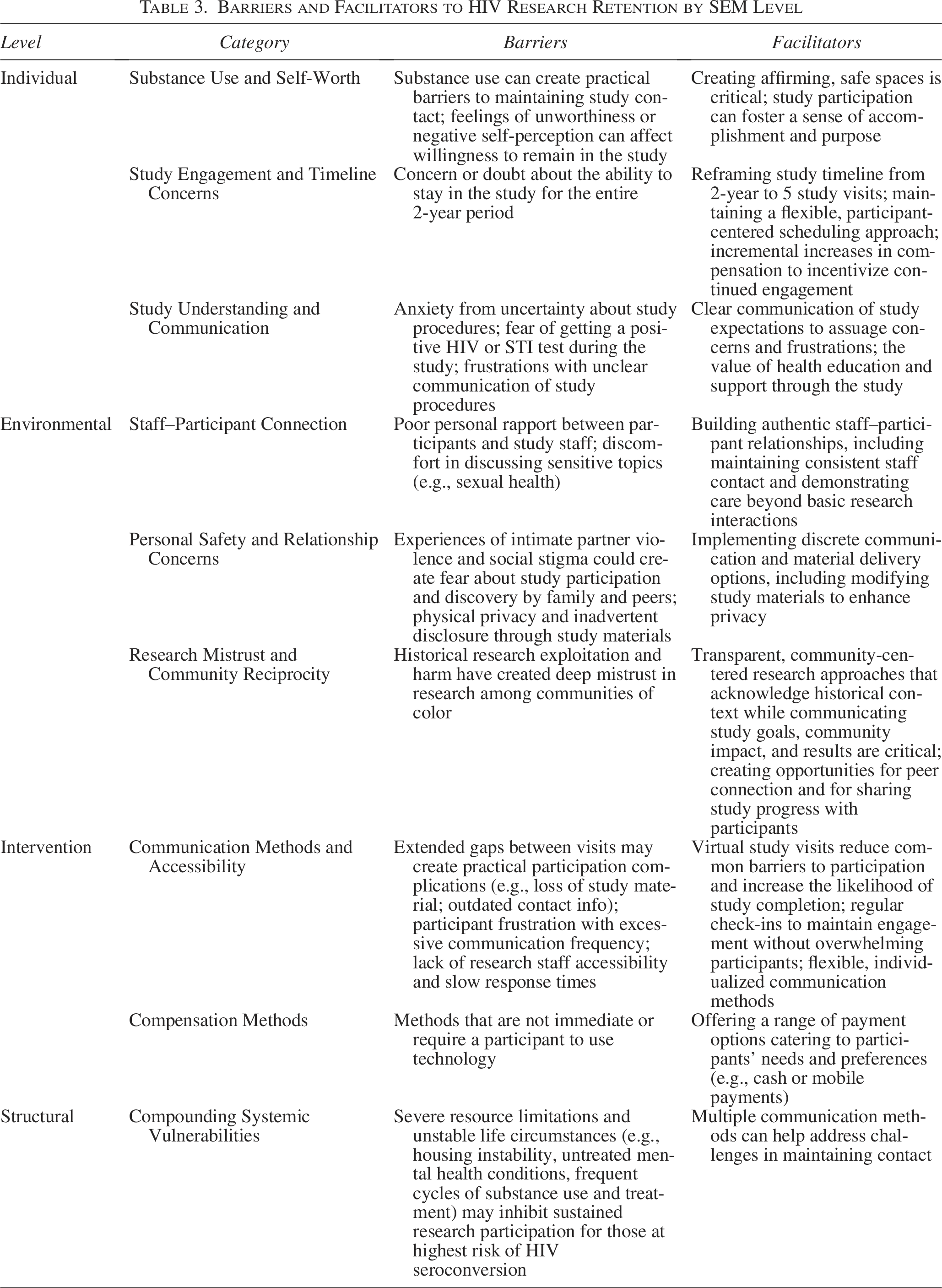
We identified key barriers and facilitators to retention, organizing them into four SEM levels: (1) individual level, (2) environmental level, (3) intervention level, and (4) structural level. Each level was further divided into categories, with participant quotes illustrating barriers and facilitators for each category to support our interpretations (see Table 3 for an overview of categories by SEM level). Participant names were replaced with interview identification numbers (intv#) to protect confidentiality.
Barriers and Facilitators to HIV Research Retention by SEM Level
Individual level
Individual-level barriers to cohort retention encompass the immediate, personal factors directly influencing a participant’s ability to remain engaged in longitudinal studies (i.e., intrapersonal). Barriers at the individual level could include personal constraints such as limited time availability or physical or mental health challenges, and facilitators that support retention could include strong personal motivation to participate and clear comprehension of the personal benefits of participation. These individual-level factors represent the most immediate and directly influential elements affecting a participant’s continued study engagement. The three categories include Substance Use and Self-Worth, Study Engagement and Timeline Concerns, and Study Understanding and Communication.
Substance use and Self-Worth
Barriers
Several participants described how substance use could create practical barriers to retention by disrupting participants’ ability to maintain contact and manage basic study requirements.
“…if women in drugs or alcohol, that could be a issue, because…like when you’re in that type of situation—and drugs do take up your life, and alcohol does. And you can lose your phone or lose contact with somebody.” (intv46, woman living with HIV)
Feelings of unworthiness and negative self-perception could also manifest as reluctance to engage in long-term positive activities or as fear of judgment during face-to-face interactions, ultimately affecting women’s willingness to remain in the study.
“Vulnerable women, who are in a vulnerable state, are unaccustomed to doing anything long-term but bad stuff. And, when there is that self-loathing, even though this will be good for a woman, she may feel undeserving. ‘That girl don’t want to hear what my old ass got to say. No way, and I look a mess anyway. I think I had this on the last time the girl interviewed me’. Those are some of the things, those inside voices, those negative voices, that’s going to be something to deal with.” (intv35, community stakeholder)
Facilitators
Participants emphasized the importance of establishing an environment where they could feel genuinely welcomed and valued while being mindful of potential stigma and past negative experiences.
As one stakeholder explained, “These women are going to have to be affirmed regularly and made to feel welcomed, but not condescended to, because they’ll pick it up real quick, and it won’t go away.” (intv35, community stakeholder).
Further, fostering a sense of purpose in addition to creating a safe space emerged as a facilitator for cohort study retention.
“It gave a little more meaning and purpose to my life. Because, you know, there was accountability and activities and certain things I had to accomplish. So, I felt like I was part of something…I’m contributing to society” (intv24, woman with increased need for HIV prevention).
Study engagement and timeline concerns
Barriers
Many participants consistently highlighted how life circumstances could dramatically change during the study period, affecting their ability to participate consistently.
“I guess for two years…right now, I’m living by myself, but there’s a possibility that in two years, I wouldn’t be…I might have more worries about getting a test kit sent to my house or having privacy to do this sort of thing. Right now, in my life, it’s very doable in a way that a couple of years ago, it might not have been. And I don’t know how it would be in the future.” (intv41, woman with increased need for HIV prevention)
HIV/STI prevention stakeholders noted that their clients often struggle to plan their lives beyond the immediate future, making a two-year commitment feel especially daunting.
“I think…because their lives are sometimes like a rollercoaster and not really streamlined, sometimes they can’t see past next week. So, to say what my life is going to be like in two years is very hard, really for anybody…” (intv9, community stakeholder)
Facilitators
Participants emphasized the importance of study timeline framing—communicating to potential participants that the study is not an overwhelming time commitment despite the two-year duration—and maintaining a flexible, participant-centered approach to support retention.
“I think the fact that it’s two years would probably be a little off-putting to clients at first, but knowing that they are going to be receiving increased incentives will probably help think it is worth it to do the full two years. Or, knowing it’s two years, but only having to do something every three to six months, not continuous, just every few months will help.” (intv16, community stakeholder).
In addition, flexible scheduling options emerged as an important facilitator to retention, specifically the need to accommodate participants’ work and life commitments. One participant highlighted this need, stating, “Flexibility of timing is great with stuff like this, especially if it can go beyond the normal 9:00–5:00, even 8:00–6:00. That is going to be much more likely to make me able to participate” (intv42, woman with increased need for HIV prevention).
Participants recognized the value of increasing compensation incrementally to incentivize continued engagement.
“I think staggering the incentives helps. Because you know when you do the next part, you’re going to get some more money” (intv24, woman with increased need for HIV prevention)
Study understanding and communication
Barriers
Participants described that uncertainty about study procedures may create anxiety and feelings of vulnerability among participants, particularly around medical procedures and understanding the rationale for the study.
“I feel like my fear going into that first [study visit] was that I wasn’t going to understand why I was being studied, which feels a little bit vulnerable and out of control.” (intv42, woman with increased need for HIV prevention)
These concerns may be further intensified by fears about receiving a positive HIV or STI test result during the study.
“I think the only thing that would be the drawback is if one time they came for the six months [study visit], and they found out, you know, that they were positive…” (intv22, woman with increased need for HIV prevention)
Participants also described frustrations with unclear communication of study procedures, including study requirements, study duration, visit frequency, and compensation timelines.
“The thing I don’t like about it…some of the tasks that we do…are certainly tedious, and there is no forewarning…They should have went into detail with me on this so that I would be mentally prepared to pay attention to this…another thing in the past was miscommunication…on little things like compensation for one. I had one company that it took like four months to get the payment…it kind of made me mad, because I’m like, ‘You said three weeks. We’re four months in.’… what if I was counting on it, you know? What if I needed that compensation sooner?” (intv23, woman with increased need for HIV prevention)
Facilitators
Clear communication of study expectations and health education benefits emerged as key facilitators for retention. Participants emphasized the value of upfront, detailed information about study procedures, “Setting the expectations upfront, like giving a clear picture of what is supposed to be happening. For the whole timeframe, perhaps a syllabus of sorts…” (intv9, woman with increased need for HIV prevention).
Apart from procedural clarity, one participant articulated the importance of HIV education and support within the study to allay health concerns, stating, “Education. Because here’s the thing: A person might start this study being HIV-negative and not even know that this illness lies dormant for a very long time…But I’m in the [AWARE] study. Those people can help me” (intv44, woman living with HIV).
Environmental level
At the environmental level, participants engage in direct, face-to-face interactions that may influence their participation in the study (i.e., interpersonal). These interactions occur within immediate settings between the participant and others in their environment. In research contexts, this level encompasses the quality and nature of relationships between study staff and participants, as well as their immediate social environment, which can either support or hinder sustained participation. Further, the environmental level also encompasses the broader cultural patterns and shared beliefs that shape how groups interact with and perceive research institutions (i.e., community). This level covers historical community experiences, cultural norms surrounding health and research participation, and collective narratives that influence trust and engagement with scientific studies. The three categories include Staff-Participant Connection, Privacy, Safety, and Relationship Concerns, and Research Mistrust and Community Reciprocity.
Staff–Participant connection
Barriers
Study staff attitudes and engagement styles significantly impact study retention, as participants are susceptible to feeling rushed, dismissed, or treated with excessive caution during interactions.
“[My clients] also complained about study staff being…overly cautious with our patients. Don’t want to touch them…Lysol and everything…You’ve had times where the staff of the other studies did not engage with the participant. Didn’t ask anything, just, ‘I am doing my survey questions; I am not asking anything else; I am not going to get into any conversations.’” (intv27, community stakeholder)
Poor rapport and discomfort in discussing sensitive topics like sexual health emerged as significant barriers, especially among populations who may already feel stigmatized or overlooked.
“…Comfortability is going to really determine how much a person is going to open up to you…If they don’t feel comfortable, they don’t have that rapport, they’re uneasy and stuff like that, then that…might mean that they end up dropping out, and that’s not what you want.” (intv47, woman with increased need for HIV prevention)
Facilitators
Participants stressed that maintaining consistent staff contact helps build and sustain meaningful rapport, suggesting that if initial relationship-building efforts are unsuccessful, participants should have opportunities to connect with different staff members.
“…staying connected with them, and whoever starts the research follows them through because now they built a rapport. I think if they felt like an initial interview there wasn’t no rapport built, then maybe they may want someone else to keep following up with them so they can find somebody that they’re comfortable.” (intv47, woman with increased need for HIV prevention).
This emphasis on authentic relationships extended beyond basic research interactions, with participants articulating the need for staff who demonstrate genuine care rather than focusing solely on recruitment metrics.
“Look for people who are in these positions…that actually care about the women and not care about making a number happen…That’s my biggest thing: facilitate community. Try to form a bond with women…a genuine bond, and maybe some progress may happen” (intv37, woman with increased need for HIV prevention).
Privacy, safety, and relationship concerns
Barriers
Participants noted safety risks that could prevent continued study participation, specifically around intimate partner violence and fear of study participation discovery by family members. The quotes emphasize how research participation could expose participants to potential harm if their involvement becomes known to those who might react violently or negatively, creating a significant barrier to retention.
“…there could be a danger if they’re in a violent relationship and the man found out she was doing this. He might get angry.” (intv24, woman with increased need for HIV prevention)
Other participants expressed concern about the physical privacy of study materials, fearing inadvertent disclosure through the appearance of the package or mail handling.
“…when I was reading the [consent] form, I had some hesitations on that stage [i.e., test kit delivery] because, right now, I am living at my workplace…I was like, ‘I don’t know who’s going to sort the mail. And I don’t know if they would happen to know what’s in this package.’ And there wasn’t…some sort of specific disclosure in the [consent] form that said, ‘The package will not look weird. It will not seem medical.’” (intv41, woman with increased need for HIV prevention)
Facilitators
Implementing discrete communication methods emerged as a facilitator for addressing personal safety and privacy concerns to support retention.
“…always make sure you guys ask them what’s the safest way to communicate with them. They might also not want their husbands to know they’re in the study…they might just not want the person that they’re with to know they’re in the study” (intv24, community stakeholder).
Participants suggested specific modifications to study materials to enhance privacy:
“…the only thing that if I could change…is just having it have a less detailed ‘who is it’ from thing. So, if it didn’t say [study name] or just said [university name], in general, I would have felt like anyone could see it, and it wouldn’t matter.” (intv41, woman with increased need for HIV prevention)
Research mistrust and community reciprocity
Barriers
Participants highlighted how communities, particularly communities of color, often express strong resistance to research participation due to historical exploitation and harm, with direct references to the Tuskegee Syphilis Study’s lasting impact across generations. Participants describe feeling “dehumanized” or “treated like a pawn” and express frustration about their information being collected without meaningful community benefit, with some outright refusing to participate when hearing the word research.
“I’ve gotten feedback from folks who were interested in participating in studies before…you know, [they ask] ‘what is this for?’…’Why do they want my information?’…because the community, especially anyone who has an STI, has been harmed oftentimes. And then…of course, anyone who is a part of a marginalized community, people of color, Black people in particular, you know, Tuskegee…truly that has impacted generations of folks who are absolutely are not going to be another one of your numbers and part of your data that then contributes to the harm that’s been caused to my community.” (intv10, community stakeholder)
The excerpts represent deep mistrust stemming from past exploitation, with participants questioning researchers’ motives and expressing concerns about their data being used in ways that could further harm their communities.
Facilitators
Participants emphasized the importance of a transparent, community-centered research approach, acknowledging historical context while communicating study goals, potential community impact, and results. This approach validates community experiences and concerns while demonstrating how current research practices differ from harmful historical practices. In addition, sharing study progress and creating opportunities for peer connection emerged as powerful facilitators for sustained engagement.
As one participant explained, establishing trust requires, “…really coming at it to value their experience, their vulnerability, to share they’re…participating in something that could potentially have a positive impact for women across the US and really emphasizing that and less of, ‘you’re a subject matter’” (intv2, community stakeholder).
Clear communication about study goals and leadership was also identified as crucial, with one participant noting, “I think very clearly showing…that ‘why’ of what you’re hoping to achieve, who is behind this, making sure that’s clear on any of your marketing…that will help, too” (intv10, community stakeholder).
Regular updates about the study’s progress and sharing results also helped participants feel valued and impactful. One participant described receiving study results: “…the other day, I got a letter…from a study that I had done. And they were…thanking me for my participation, and that these were the results of me being a part of it. And it made me feel like, ‘Wow. Oh, whoa. Wow.’ It made me feel like I made a difference” (intv44, woman living with HIV).
Participants also emphasized how group sharing could create supportive networks while helping participants feel more connected to the research process and its outcomes.
“Getting to know other women, and share, and feel like they do. That can help them get out of that slump that they’re in. They can learn from them” (intv21, woman living with HIV).
Intervention level
The intervention level (i.e., institutional) encompasses organized practices outside immediate settings, including service delivery systems and organizational structures that directly affect individual experiences. In research participation and retention, this level can capture the operational aspects of study implementation, such as communication methods, study format, and delivery. Understanding barriers and facilitators at this level is crucial as it represents modifiable aspects of study implementation that can significantly impact retention through study policies, practices, and procedures. The two categories include Communication Methods and Accessibility and Compensation Methods.
Communication methods and accessibility
Barriers
Extended gaps between visits may create practical complications for participants, including lost study materials, forgotten participation, and outdated contact information.
“…Six months in between is a long time. People forget… they move. They lose their phone number. They forget they’re even doing a survey…the length of time in between visits, they could lose the swab. They could lose the blood work…” (intv21, woman living with HIV)
Some participants expressed frustration with excessive communication frequency, drawing parallels to overwhelming email subscriptions and medical appointment reminders, and indicating a balance is needed in participant engagement.
“One thing I can’t stand about my doctor’s appointments these days is the over confirmations…It seems like it’s non-stop…I want communication but not too much.” (intv9, woman with increased need for HIV prevention)
Other participants highlighted issues with the lack of accessibility to research staff and staff response times.
“I just didn’t like when it was hard to get ahold of the staff, or like when something was confusing, and it wasn’t explained correctly, or it takes forever to get ahold of somebody to answer questions…” (intv3, woman with increased need for HIV prevention).
Facilitators
Remote participation options emerged as a facilitator for study retention, with participants emphasizing how virtual study visits could reduce barriers to participation and increase the likelihood of study completion.
“The fact that it’s online…I mean, that is what makes me really feel I’ll stay for the full time” (intv35, woman with increased need for HIV prevention)
The timing and frequency of communication were also important, with participants encouraging regular check-ins to maintain engagement without overwhelming participants: “I think once every three months, at the three-month mark in between appointments. And then, a one-week reminder before, and a one-day reminder before a visit” (intv35, woman with increased need for HIV prevention).
Some participants recommended flexible approaches and individualizing reminder schedules.
“I think in the initial intake of people, I think that would be something that I would ask them: ‘What are your contact preferences? Do you want us to contact you when it’s a couple of days in advance?…working with people on their own level is a way that you would get people to stay in this study for longer.” (intv33, woman living with HIV).
“I would say try reaching out to them in different ways, like try a text; try a call; try email, instead of doing one over and over again” (intv34, woman with increased need for HIV prevention).
Compensation methods
Barriers
Compensation methods that are not immediate or require a participant to use technology may significantly impact study retention.
Some participants expressed a preference for immediate cash payments over Amazon gift cards or similar.
“…I have another study I do for Amazon cards. I told [my clients] about it. There was one for $75 on Cash App for a two-hour drug and alcohol meeting, and most of them went to the drug and alcohol meeting for two hours versus the hour conversation for Amazon…the cash goes right to your Cash App like five minutes later…” (intv23, woman living with HIV)
In addition, technological barriers could create accessibility issues for some participants, potentially affecting their willingness to continue participation.
“…Cash App and Venmo are like gods. People are constantly Cash Apping each other, constantly Venmoing each other because it’s a credit card. If you send someone a digital card, they might not be able to go to the corner market, but if you Cash App $50 to their Cash App card, they can automatically go to that supermarket…It’s definitely a big deal, especially for someone who doesn’t have money in hand. They’re going to be like, ‘You’re going to email a what in a week? No.’” (intv24, community stakeholder)
Facilitators
To address these concerns and facilitate accessible compensation, participants recommended offering a range of payment options that cater to participants’ diverse needs and preferences, such as cash or mobile payments.
Participants suggested, “Cash is always king” (intv33, community stakeholder), or “Make it where it’s Venmo, Cash app, Zelle, because not everybody has Cash app, not everybody has Zelle, not everybody has Venmo” (intv24, community stakeholder).
Structural level
The structural level reflects broad societal patterns and contexts that influence all other social-ecological levels. This level comprises resource access, economic systems, and institutional patterns that create opportunities and constraints for individuals’ engagement in health care, specifically in HIV research. Understanding these broader societal forces is crucial for recognizing how systemic inequities and patterns of resource distribution may affect sustained research participation. The category includes Compounding Systemic Vulnerabilities.
Compounding systemic vulnerabilities
Barriers
Many participants highlighted the intersecting structural barriers that complicate participant retention in research studies, particularly among populations who, as one participant put it, “have significant structural and social vulnerabilities” (intv40, community stakeholder).
Several participants described a critical paradox in HIV prevention research: those at highest risk are often the most difficult to retain in longitudinal studies due to severe resource limitations and unstable life circumstances (e.g., housing instability, untreated mental health conditions, frequently experiencing cycles of substance use and treatment, and legal/documentation challenges that can lead to incarceration).
“…the majority of people that have HIV or have contracted STD, they’re homeless, and they bounce around from place to place where they’re not really in a stable situation…like the home they give you today, it’s not going to be their home in six months.” (intv18, woman living with HIV)
“…there is a lot of intersectionality of mental health issues and homelessness. Even with people living with HIV, there are a lot of barriers and other things in place that are stopping people from accessing and staying connected to care…” (intv8, community stakeholder)
The excerpts suggest that studies requiring long-term retention may inadvertently select for more stable, lower-risk populations, “vanilla group[s]” (intv19, community stakeholder), potentially missing crucial data from those most vulnerable to HIV acquisition who lack even basic resources, like stable addresses for receiving study materials.
“…I lose a ton of people…And those are the highest-risk folks…I think that to get somebody to retain them for the two years, it’s going to be…like a more vanilla group of people that have access to that. And they stay consistent. And they’re in the same place almost. They’re not putting themselves at risk.” (intv19, community stakeholder)
Facilitators
Data suggest that multiple communication methods can help address challenges in maintaining contact with participants experiencing unstable housing or limited phone access.
As one stakeholder explained, “…people don’t retain the same address, the same phone number, but they mainly retain some of the same things, like their digital footprint on social media and things like that. So, I think just being aware that there may be less stability and having like multiple thoughtful ways of reaching out to them” (intv40, community stakeholder).
Many HIV service providers and advocates echoed that point, “…if there’s an opportunity to get a second phone number or somebody else that you could contact in the event that you can’t reach them, because that’s a big one” (intv9, community stakeholder).
These facilitators indicate that while structural barriers present significant challenges to retention, strategic approaches to participant contact and communication may help mitigate some of the impacts of housing instability and changing contact information.
Discussion
This qualitative analysis identified complex, multilevel factors affecting the retention of women in HIV prevention research among three diverse groups of 114 participants. The SEM provided a practical framework for understanding how these barriers interact to influence study retention and for organizing potential solutions. At the individual and environmental levels, the 2-year study duration, unclear understanding of the research procedures, and potential loss of confidentiality presented psychological and practical barriers for participants, particularly for those facing unstable life circumstances and substance use issues. Authentic relationships with study staff who demonstrated genuine care and affirmation emerged as the most critical retention facilitator, along with clearly stated study expectations, compensation, and health education and support. Environmental-level findings also highlighted how historical research exploitation continues to impact trust in research, emphasizing the need for transparent communication about research aims and benefits. Regular updates on study progress and results, as well as opportunities for peer support and connection, could increase participants’ feelings of connection to and ownership of the research process.
Intervention-level practices around communication and compensation methods emerged as modifiable factors that could significantly impact retention when tailored to individual needs and circumstances. Specifically, offering virtual visit options, regular reminders, and flexible payment methods may increase retention. Systemic inequities in resource access, touched on at each SEM level, were the primary structural-level barriers identified by participants. Though these inequities are not readily addressable within an HIV cohort study, participants reiterated the importance of flexibility, particularly around communication methods, to increase retention throughout the study.
Our findings align with previous retention research, demonstrating that barrier reduction strategies significantly improve cohort study retention. In a recent meta-analysis of 143 longitudinal studies over a 10-year period, authors found that employing barrier reduction strategies was independently associated with higher retention, with these studies retaining 10% more of their sample than studies using other strategies (b = 0.17; 95% CI [0.03 to 0.31]; p = 0.02). 32 Similar to our findings, a qualitative review of participant retention practices in high-retention clinical studies described the importance of study reminders, an emphasis on study benefits, and flexible contact and scheduling strategies to maintain participants over time, specifically tailoring and adapting strategies to participants. 33
In another systematic review of longitudinal study retention strategies specifically for socioeconomically disadvantaged groups, authors emphasized that researchers must take a long-term view regarding studies focusing on disadvantaged groups, as the community relationships and formative research required to support and maintain these participants require time. Further, strategies to retain socially vulnerable participants may be resource-intensive, requiring creative adaptations to recruitment or data collection efforts to meet participants’ needs. Both of these implications underscore the need for a comprehensive, multifaceted approach to studying retention among vulnerable populations. 14 These findings corroborate our use of the SEM to conduct formative research analyzing barriers and facilitators to retention specific to our study population.
Our findings corroborated a critical paradox in HIV prevention research: those at highest risk for HIV seroconversion may be least likely to complete longitudinal studies. Housing instability and substance use cycles create significant retention challenges that may bias study samples toward more stable populations, potentially missing crucial data from those most vulnerable to HIV. This finding raises important questions about how to better design longitudinal HIV prevention research to capture and retain those at highest risk while maintaining scientific rigor. Flexible communication approaches and multiple contact methods may help mitigate some impacts of structural instability; however, these results suggest that successful retention requires not only addressing practical barriers but also implementing participant-centered approaches that account for intersecting vulnerabilities.
Our study employed convenience sampling to recruit participants and focused exclusively on the United States, which may limit the generalizability of results. We addressed these limitations through an increased sample size with diverse participant perspectives from several groups affected by HIV. However, the full range of experiences from each group may not be fully captured by our data, as there are differences between groups in age and race.
Group 1 (women with increased HIV prevention needs) was markedly younger on average than Groups 2 (women living with HIV) and 3 (stakeholders in HIV prevention and treatment). The majority of Groups 2 and 3 were over 40 years old, while Group 1 was primarily under 40 years old. Literature indicates that younger people living with HIV have higher levels of internalized HIV stigma (i.e., adaptation and application of the negative beliefs about HIV to the self), which reduces retention in health care and may have negatively influenced participation in our research study.34,35 Thus, insights on retention among younger women living with HIV may not be fully represented in our analysis, potentially influencing the themes identified in our qualitative analysis.
Women in Group 2 were predominantly Black or African American, compared with Groups 1 and 3, who mainly identified as White or Other. Though the demographics of Group 2 mirror the disproportionate burden of HIV prevalence among Black and African American women in the United States, we lacked similar representation of Black and African American women in Group 1. This underrepresentation of Black women with increased HIV prevention needs within the study could reflect hesitancy to engage in HIV research due to well-documented experiences of medical mistrust and health care discrimination among communities of color.36–38 This limitation in representation within this group means that our data may lack related perspectives on HIV prevention research retention.
In addition, although transgender women experience disproportionately high HIV incidence, our study’s focus was on factors affecting HIV study retention among cisgender women, which means our data do not represent the full spectrum of women who face HIV risks and our retention strategies may not be comprehensive for all populations vulnerable to HIV. 39
A key contribution of this study is identifying the specific retention barriers and possible facilitators directly from women themselves, including those most vulnerable to HIV seroconversion, with the intent to apply findings to the main cohort study. Notably, researchers will employ these SEM-based facilitators for study design (including in protocol development and staff training), focusing on community-building participatory approaches that build trust with participants throughout the 2-year study.
Authors’ Contributions
V.W.M.: Formal analysis, investigation (i.e., data collection), writing—original draft, visualization (i.e., Fig. and table creation). J.C.: Formal analysis, investigation (i.e., data collection), writing—review and editing, supervision (i.e., oversight of qualitative coding). A.L.H.: Formal analysis, writing—review and editing, resources (provided institutional access to qualitative data coding software). C.O.: Writing—review and editing. M.C.K.: Conceptualization of study, methodology (i.e., development of study design), funding acquisition. R.S.: Conceptualization of study, methodology (i.e., development of study design), project administration, writing—review and editing, funding acquisition. A.K.J.: Conceptualization of study, methodology (i.e., development of study design), writing—review and editing, supervision (i.e., oversight of qualitative coding), project administration, funding acquisition.
Footnotes
Acknowledgments
We acknowledge Randi B. Singer, PhD, CNM, from the University of Illinois Chicago, for her significant contribution as a coding lead during the analysis of this study’s qualitative data.
Author Disclosure Statement
No competing financial interests exist.
Funding Information
This work was supported by the National Institute of Allergy and Infectious Diseases of the National Institutes of Health under the award R01AI172469. The content is solely the authors’ responsibility and does not necessarily represent the official views of the National Institutes of Health.
Ethics Approval
This study was performed following the principles of the Declaration of Helsinki. The study was approved by the Institutional Review Board at Columbia University (IRBAAU2650), Lurie Children’s Hospital of Chicago (IRB23-5921), and the University of Alabama at Birmingham (IRB-300010515), which were approved via an IRB reliance agreement with Columbia University.
Consent to Participate
Informed consent was obtained from all individual participants included in the study.