



Abstract
This study complements current research on quality of life for individuals with autism and cognitive impairments, by focusing less on objective measures (e.g., employment status, educational attainment, living arrangements) and more on subjective measures such as satisfaction levels. Twenty-three structured interviews were conducted with parents, and qualitative analysis of emergent themes is provided. In spite of limited independence on the part of young adults with autism spectrum disorders and cognitive impairments in terms of both home and community life, satisfaction levels were high across all domains and most parents ranked their children’s overall quality of life as “excellent” or “good.”
A growing body of literature focuses on quality of life measures for adults with autism spectrum disorders (ASD). Although there is general agreement that quality of life is a multidimensional construct comprising both objective aspects (e.g., employment rates, education levels, living arrangements) and subjective aspects (e.g., satisfaction levels; Burgess, Steven, & Gutstein, 2007; Cummins, 2005; Schalock, 2000; White-Koning et al., 2005), the vast majority of existing studies—while remarkably consistent in assessing outcomes for this population—rely exclusively on objective measures.
These studies, all based on reviews of clinical records and/or surveys, indicate that outcomes for adults with ASD tend to be poor (Billstedt, Gillberg, & Gillberg, 2005; Cederlund, Hagberg, Billstedt, Gillberg, & Gillberg, 2008; Gillberg & Steffenberg, 1987; Howlin, Goode, Hutton, & Rutter, 2004; Howlin, Mawhood, & Rutter, 2000; Lotter, 1978). According to these studies, most individuals with ASD are unemployed or underemployed, and those with paid jobs rarely earn enough money to support themselves financially (Ballaban-Gil, Rapin, Tuchman, & Shinnar, 1996; Eaves & Ho, 2008; Howlin et al., 2004; Howlin et al., 2000; Kobayashi, Murata, & Yashinaga, 1992). Depending on the study, rates of employment range from 27% to 56% (Eaves & Ho, 2008; Kobayashi et al., 1992), with most jobs being supported, sheltered and/or on a volunteer basis. Few individuals with ASD leave high school with regular diplomas, and even fewer access postsecondary educational opportunities or earn college degrees (Cederlund et al., 2008; Eaves & Ho, 2008; Howlin et al., 2004; Kobayashi et al., 1992). Individuals with ASD rarely live independently, with approximately 56% living with their families and between 22% and 35% living in group homes or other supported living arrangements (Ballaban-Gil et al., 1996; Eaves & Ho, 2008; Farley, McMahon, et al., 2009; Howlin & Goode, 1998; Howlin et al., 2000; Kobayashi et al., 1992; Seltzer, Shattuck, Abbeduto, & Greenberg, 2004). In terms of social relationships, outcome studies indicate that most individuals with ASD live relatively circumscribed lives with few if any friendships and/or acquaintances with whom to share activities (Eaves & Ho, 2008; Howlin et al., 2004; Howlin et al., 2000). Exceptions to this are almost exclusively individuals with average to above average intelligence quotients (IQ), though IQ is not always a predictor of independent functioning in adult life, and outcomes for members of this subgroup are remarkably variable given their cognitive abilities (Billstedt et al., 2005; Farley et al., 2009; Howlin et al., 2004; Marriage, Wolverton, & Marriage, 2009; Szatmari, Bartolucci, Bremner, Bond, & Rich, 1989).
While these studies paint a bleak picture of outcomes for adults with ASD, especially those with lower IQs, almost all equate quality of outcome with degree of independence. Furthermore, success is defined almost exclusively in terms of conventionally recognized measures such as employment, marriage, and college education—or what Seltzer and colleagues (2004) refer to as “social role attainment indicators” (e.g., Billstedt et al., 2005; Cederlund et al., 2008; Eaves & Ho, 2008; Farley et al., 2009; Gillberg & Steffenburg, 1987; Howlin et al., 2004; Marriage et al., 2009). Although these studies provide critical information about the trajectory of autism over the course of the life cycle, and about the persistent challenges faced by adults with ASD, some have argued that an alternative view of outcome is necessary to provide a more comprehensive understanding of quality of life for this population (Ruble & Dalrymple, 1996). Independence across domains is no doubt an important quality of life indicator, but indicators such as satisfaction with one’s life are also critical. To date, very few studies have attempted to rectify this imbalance within the literature between objective and subjective points of view.
Two notable exceptions to this include the following: A recent study by Saldana and colleagues attempted to integrate objective and subjective quality of life measures for individuals with ASD residing in Spain, including satisfaction levels across multiple domains (Saldana et al., 2009). As expected, outcomes on objective quality of life measures were extremely poor. Unfortunately, outcomes on subjective quality of life measures were deemed inconclusive, due to the fact that only a third of the 74 families included in the study felt comfortable assessing individuals with ASDs’ satisfaction levels across the majority of domains. The second study by Billstedt and colleagues sought to measure quality of life for adults with ASD and cognitive impairment, also using a combination of objective and subjective measures (Billstedt, Gillberg, & Gillberg, 2011). Findings again indicated that objective outcomes were poor (i.e., individuals with ASD’s levels of independence across domains remained low), but quality of life—as measured by how well they liked their current living arrangements—was high. Although this study only measured subjective quality of life in terms of a single domain, findings highlight the discrepancy that can exist between how researchers assess quality of life, and how individuals with ASDs and/or intimate family members evaluate quality of life. Billstedt stressed the need for future research that addressed subjective quality of life across multiple domains/environments.
A common feature of existing quality of life studies—for individuals with ASD as well as for others—is the use of global quality of life scales for calculating composite scores and/or scores for individual subscales (e.g., the Comprehensive Quality of Life Questionnaire [COMQOL] referenced in Saldana et al., 2009; the Inventory in Residential Environment [IQVMR] referenced in Gerber, Baud, Giroud, & Carminati, 2008; and the Quality of Life with Profound Multiple Disabilities [QOL-PMD] referenced in Petry, Maes, & Vlaskamp, 2009). Within the field of ASD, researchers have relied on almost identical global scales to assess whether participants’ overall quality of life is “excellent,” “good,” “fair,” “not very good,” or “poor” (e.g., Billstedt et al., 2005; Cederlund et al., 2008; Eaves & Ho, 2008; Farley et al., 2009; Howlin et al., 2004). Although use of a common tool has allowed for comparability across studies—an important consideration in tracking changes over time or differences across contexts—these quantitative measures are by nature reductive, and limited in their ability to provide details about what adults with ASD’s lives actually look like, how adults with ASDs feel about their lives, and why.
One possible way to address this limitation is to draw yet another distinction—this one borrowed from the field of ethnography—between “etic” perspective (or the researcher’s/outsider’s perspective) and “emic” perspective (or the participant’s/insider’s perspective). These two perspectives should be viewed as complementary rather than mutually exclusive (although much research emphasizes the former at the expense of the latter), with the etic approach providing a broad brush, population-based description of the objective features of the lives of a particular group’s members, and the emic approach focusing on a smaller, oftentimes nonrepresentative sample from within the population to present a more nuanced/layered description of how individual members of a group and/or their families assess their lives from their own points of view (Krefting, 1989).
The strength of an emic approach relies heavily upon qualitative details as opposed to descriptive statistics. Although several articles have recently stressed the importance of including an emic perspective within the field of special education research (e.g., Jenaro et al., 2005; Krefting, 1989; Schalock, 2004), we are only aware of one study that has examined quality of life issues among individuals with ASD using this approach, and it focused not on adults with ASD, but on school children (Brewin, Renwick, & Schormans, 2008). A second study by Eaves and Ho (2008), while relying primarily on a global outcomes scale to assess quality of life for adults with ASD, incorporated a more qualitative approach by including two open-ended questions for parents about the unmet needs of their adult children and the factors that had been most helpful/unhelpful in raising them. Both of these studies—which included thematic analyses of parent responses—provide important models for how emic/qualitative data can enhance our understanding of quality of life issues for individuals with ASD.
A primary reason for the lack of subjective and/or emic perspectives in quality of life literature for this population has to do with the significant challenge involved in gathering reliable satisfaction data from individuals with ASD whose disabilities include both cognitive and language impairments, as well as difficulties understanding and describing their feelings. Many researchers have recognized this challenge and have stressed the importance of finding a way of working around it (Gerber et al., 2008; Plimley, 2007; Saldana et al., 2009). Most commonly, proxies in the form of family members or paid caregivers are asked to complete surveys “from the point of view” of individuals with disabilities (e.g., Billstedt et al., 2011; Gerber et al., 2008; Petry et al., 2009; Saldana et al., 2009). Although there is always some risk that proxy respondents cannot accurately represent the viewpoints of individuals with disabilities—especially those with limited communication abilities—studies indicate that there is generally strong agreement between self and proxy reports of quality of life in people with a variety of intellectual/mental impairments, especially when proxies are family members (Arit et al., 2008; Bastiaansen, Koot, Ferdinand, & Verhulst, 2004; McPhail, Seller, & Haines, 2008; Schmidt et al., 2010; Simeoni, Schmidt, Muehlan, Debansason, & Bullinger, 2007). When differences have been found, family proxies have tended to rate quality of life slightly lower than individuals with disabilities themselves (Andresen, Vahle, & Lollar, 2001), whereas paid caregivers have tended to rate quality of life slightly higher (Plimley, 2007; Rapley, Ridgway, & Beyer, 1997). Although it is tempting to side-step this issue of reliability by avoiding a subjective or emic approach entirely when studying adults with ASD and cognitive impairments, Stancliffe (1999) warned that by refusing to use proxy responses for this and other vulnerable populations, we run the risk of further disenfranchising these groups when it comes to measuring their subjective quality of life.
Finally, existing research on quality of life for adults with ASD is limited by the fact that most recent studies have focused on outcomes for adults with Asperger syndrome or high functioning autism as opposed to individuals with both ASD and cognitive impairments (Engstrom, Ekstrom, & Emilsson, 2003; Farley et al., 2009; Howlin, 2000; Szatmari et al., 1989; Tantam, 1991; Venter, Lord, & Schopler, 1992), most are based on heterogeneous population samples in terms of age range, and most describe populations who were originally diagnosed in the 1950s or 1960s when education programs and services, as well as public levels of autism awareness, were vastly different from what they are today.
The goal of the present study is to complement existing population-based—or etic—studies of quality of life for individuals with ASD, by taking an emic approach to data collection/analysis. Participants included the parents of a small, relatively homogeneous sample of young adults diagnosed in the 1980s and 1990s with ASD and cognitive impairments. Participating parents served as proxies for their children by participating in structured interviews designed to answer the following questions about their children’s lives:
What do the lives of young adults with ASD and cognitive impairments look like in terms of employment, postsecondary education, living arrangements, and social and community life?
How satisfied are these young adults with their lives in terms of each of these four domains and why?
What are the most critical challenges these young adults currently face?
How do parents rate these young adults’ overall quality of life and why?
Are there any significant differences in satisfaction levels among young adult subgroups (e.g., are individuals living at home and/or competitively employed more likely to be satisfied with these aspects of their lives)?
Method
Participants
Participants were selected via a nonprobability, convenience sampling procedure. Transition coordinators from a single, segregated, nonpublic school serving students aged 5 to 21 years with ASD and cognitive impairments identified 36 sets of parents who met inclusion criteria (i.e., parents of school alumni with diagnoses of both ASD and cognitive impairments who were between the ages of 18 and 28 years at the time of the study). Eligible parents were invited to serve as proxy respondents on behalf of their young adult children. The decision to use parents as proxies was based on the fact that alumni’s educational records indicated that the majority would not have been able to respond reliably on their own behalf due to significant mental and/or language impairments. Twenty-three parents (or 64% of those eligible) participated in the study. Reasons for the remaining eligible parents not participating included lack of current contact information, inability to schedule interviews during the period when the study was active, and failure to respond. To avoid any confusion, parents are henceforth referred to as either “participants” or “parents,” and their young adult children are referred to as either “young adult children of participants” or “young adults.”
Participating parents included 22 mothers and 1 father. Twenty parents resided in Maryland, 2 in the District of Columbia, and 1 in Virginia. No additional demographic details were gathered for parents, as the focus of this study was primarily on the experiences of their young adult children with ASD and cognitive impairments.
The 23 young adult children of participants ranged from 19 to 27 years of age. Eighteen were male and 6 female. Educational records for all 23 young adults documented diagnosis of ASD based on DSM criteria similar to the current Diagnostic and Statistical Manual of Mental Disorders (5th ed.; DSM-5; American Psychiatric Association [APA], 2013; APA, 1980, 1987). All attended one of three high school and/or post–high school programs housed in a single, segregated, nonpublic school in Maryland serving students with ASD and cognitive impairments; all exited their programs between 2004 and 2010, and all received certificates of completion rather than diplomas at the end of their programs. Each also received a variety of specialized services for students with ASD throughout their educational careers, including speech and language therapy, occupational therapy, behavior supports and/or social skills training.
To determine levels of cognitive functioning, reviews of the young adults’ educational files were conducted. IQ scores were unavailable or incomplete for several, in most cases because they had been deemed “untestable” due to behavioral complications related to their disabilities. In response to the challenge of securing precise and reliable IQ scores for this population, we followed the lead of Billstedt and colleagues (2005) and based on a review of education records (including IQ scores when available) used the broad categories of borderline intellectual functioning (IQ between 70 and 84), mild cognitive impairment (IQ between 50 and 69), moderate cognitive impairment (IQ between 35 and 49), and severe cognitive impairment (IQ between 20 and 34) to describe the young adults’ intellectual functioning. One was identified as having borderline intellectual functioning, 5 as having mild cognitive impairment, 12 as having mild to moderate cognitive impairment, and 5 as having moderate cognitive impairment.
Study Design and Instrumentation
This study was a mixed-methods descriptive study. Although design of the study was predominantly based on the collection of qualitative data, some quantitative measures were also included. A 19-item structured interview protocol was developed that asked questions about the young adult children of participants’ experiences within the following four domains: employment, postsecondary education, living arrangements, and social and community life. Within each domain, multiple-choice questions were first asked to gather demographic details. For example, in the section on employment, questions were asked about employment status and number of hours worked per week. Likert-type scales were then used to assess young adults’ satisfaction levels within each of these domains, ranging from very satisfied to very dissatisfied (with an option for not sure if parents were uncomfortable or felt unqualified to assess their children’s satisfaction levels). Finally, open-ended questions were used to elicit more nuanced details about reasons for satisfaction and/or dissatisfaction within each domain (e.g., “Can you please say a little more about why your son is very satisfied with his current employment situation?”). In addition to asking parents about each of the four domains listed above, Likert-type scales were used and open-ended questions asked about overall quality of life, and the most significant challenges faced by young adults with ASD and cognitive impairments.
All interviews were conducted by the first author, a professional researcher with extensive experience conducting interviews. Participating parents were given the option of being interviewed face-to-face or over the phone. All 23 interviews took place by phone, and ranged from 1 to 2 hr in length. Interviews were transcribed verbatim at the time of the interview.
Data Analysis
The first author used MS Excel to conduct descriptive statistical analyses of all quantitative data and used findings to determine the degree to which the young adult children of participants resembled and/or differed from larger, population-based samples of individuals with ASD and cognitive impairment.
Analysis of qualitative data took place in two phases, based on a modified version of the grounded theory approach developed by Strauss and Corbin (1990). First, authors used Weft QDA (Qualitative Data Analysis) 1.0.1. (a software program designed to manage qualitative data) to organize responses question by question (Fenton, 2006). Both members of the research team independently read responses to open-ended questions, and identified and labeled any statement pertaining to (a) satisfaction or dissatisfaction with current employment situations, postsecondary education, living arrangements, and social and community life; (b) key challenges faced; and (c) overall quality of life. The team then met to compare and consolidate findings and to develop a preliminary coding structure or list of emergent themes. Any differences of opinion were resolved by consensus (i.e., returning to the data themselves and reevaluating what the data were “saying” until both authors agreed on all themes). During the second phase of analysis, Weft QDA was again used to refine the coding structure and recode all interview transcripts accordingly. The first author took primary responsibility for the second phase of analysis, and the second author provided ongoing feedback as well as confirmation of coding accuracy. Major themes were identified as those mentioned by eight or more parents and minor themes were those mentioned by between three and seven parents. It is important to note, however, that this distinction should not imply that minor themes are necessarily less important than major themes—merely that fewer parents spontaneously mentioned these themes in response to open-ended questions.
Using MS Excel, t tests were also conducted to determine whether there were any significant differences among young adult subgroups in terms of the following: (a) employment satisfaction levels based on whether young adults were competitively employed, volunteering with support of a job coach, or unemployed; (b) satisfaction with living arrangements based on whether young adults were living at home or in supported living; and (c) satisfaction with social and community life based on whether or not young adults had regular access to structured/unstructured social interactions.
Findings
Employment
A total of 22 young adult children of participants were employed in a volunteer and/or paid capacity, and 1 was unemployed (see Table 1). The young adults worked in a wide range of employment situations, although they were significantly more likely to have volunteer positions than paid positions. None were competitively employed without support from a job coach; 6 were competitively employed with support from a job coach; 1 was employed in a sheltered workshop; and 15 were employed in a volunteer capacity with support from a job coach. Most worked significantly less than full-time (or 40 hr per week) in paid and/or volunteer positions.
Demographic Details Related to Young Adults’ Employment, Postsecondary Education, Living Arrangements, and Social and Community Life.
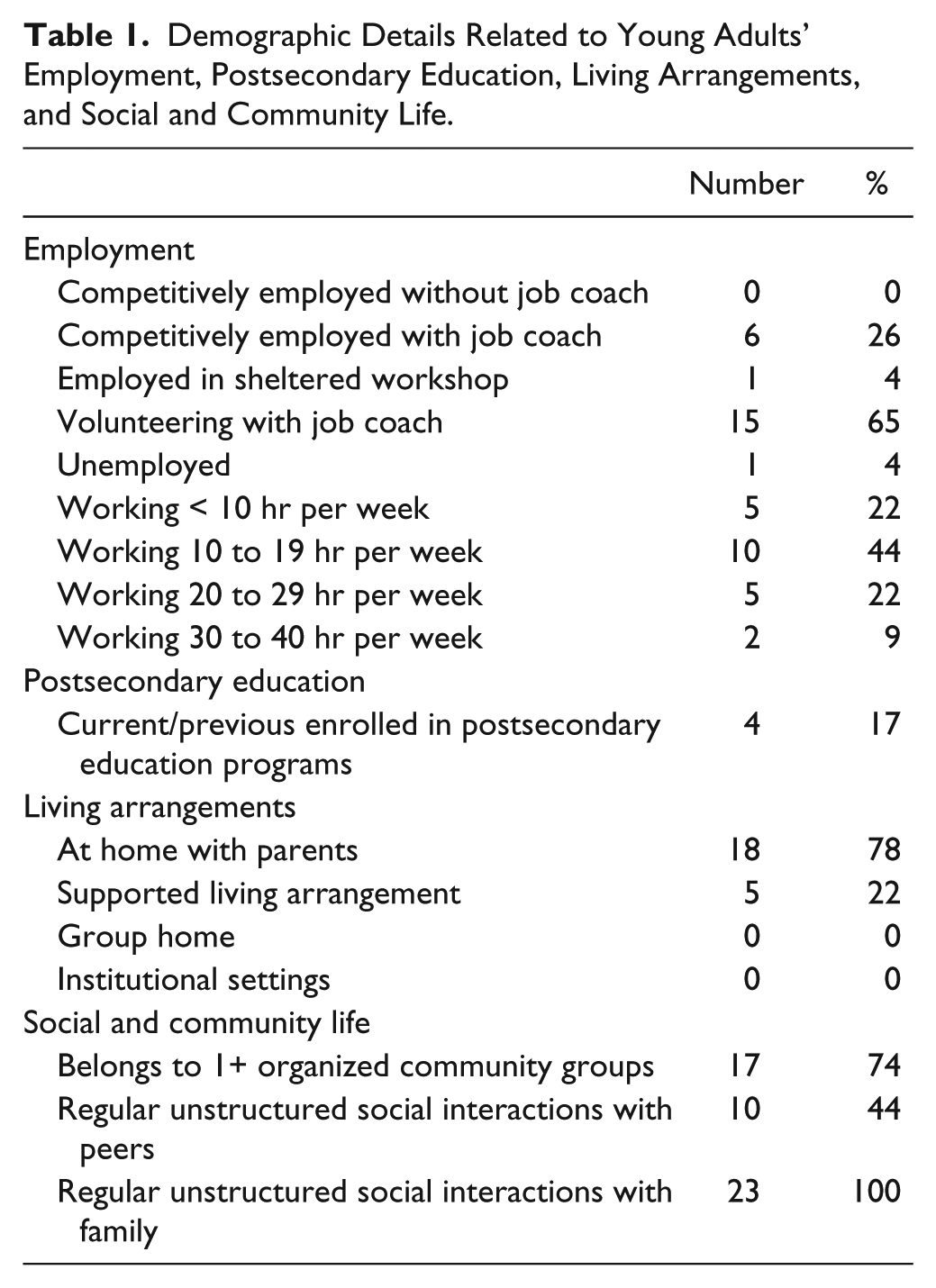
Most of the young adults appeared to be satisfied with their current employment situations (see Table 2). As reported by their parents, 87% of the young adults were either “very satisfied” (n = 15) or “somewhat satisfied” (n = 5). The remainder was either “very dissatisfied” (n = 2) or parents were “not sure” (n = 1).
Parents’ Perceptions of Young Adults’ Satisfaction Levels and Overall Quality of Life.

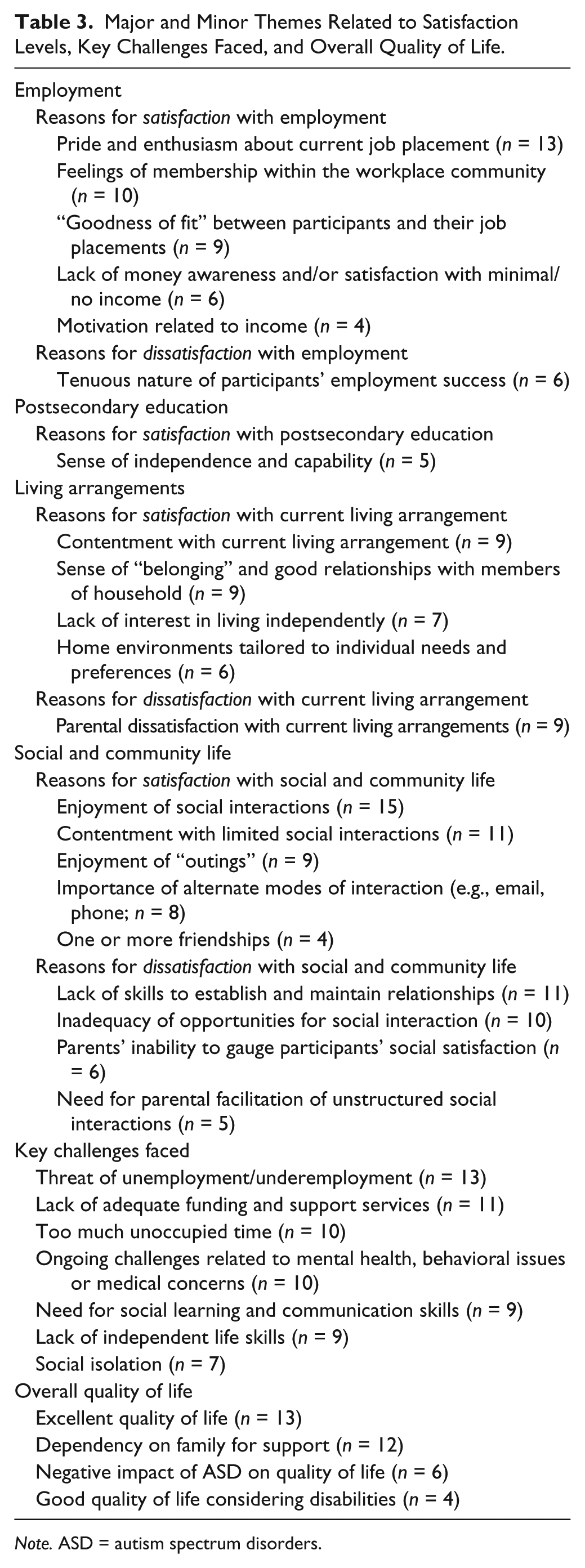
Parents were asked to elaborate on their responses, and in terms of satisfaction, three major and two minor themes emerged related to the young adults’ current employment situations (see Table 3). Parents most commonly described indicators of the young adults’ pride in and enthusiasm about their current job placements, making comments such as “He really enjoys [his job] and talks about what he does” and “He loves to go to work and smiles a lot.” A second major theme was the young adults’ feelings of membership within the workplace community. Parents stressed the young adults’ sense of belonging, and made comments such as “Truthfully, she cares less about what she is dong, but likes going and being part of the community.” In several cases, parents described colleagues giving the young adults thank you cards, gifts, or recognition plaques and throwing them birthday parties. A third major theme was the goodness of fit between the young adults and their job placements, and parents frequently commented on the importance for individuals with ASD of jobs with steady, predictable routines.
Major and Minor Themes Related to Satisfaction Levels, Key Challenges Faced, and Overall Quality of Life.
Note. ASD = autism spectrum disorders.
The two minor themes relating to satisfaction were the young adults’ limited money awareness and/or lack of concern about being paid, and parents made comments such as “He has no clue about money” and “Money is not as critical as belonging.” Related to this, but coming from a significantly different point of view, several parents stressed the importance of income as a motivating factor for the young adults, with one parent commenting that her daughter “gets a paycheck and feels like a millionaire.”
In terms of dissatisfaction, one minor theme emerged in terms of the young adults’ current employment situations. Parents often expressed concern about the tenuous nature of their children’s employment success, describing their difficulties navigating workplace social situations, behavior problems and occasional physical aggression, unwillingness to cooperate, and outbursts of frustration when routines were unexpectedly broken. In the words of one parent, “He’s overly sensitive to friendly joking,” and in the words of another, “His behavior screws things up.”
Postsecondary Education
Four of the 23 young adult children of participants included in this study were currently enrolled or had previously been enrolled in postsecondary education programs of some kind. All attended programs specifically designed to meet the needs of young adults with disabilities. These programs ranged from individual courses at local community colleges addressing functional academic skills, to semester and year-long programs—either community- or campus-based—providing training in job readiness skills and/or supported workplace internships.
Of the young adults who were currently enrolled or had previously been enrolled in postsecondary education programs of some kind, parents reported that all four were “very satisfied” with their experiences (see Table 2). Parents were asked to elaborate on their responses, and one minor theme emerged in terms of the young adults’ satisfaction with their postsecondary education experiences (see Table 3). Parents stressed that their children’s experiences resulted in their feeling more independent and capable, making comments such as “He liked being independent and walking around campus.” No themes emerged related to the young adults’ dissatisfaction.
Living Arrangements
The majority of the young adults lived at home with one or both parents (n = 18), and the remainder (n = 5) was in supported living arrangements (see Table 1). Of those in supported living, all had one or more housemates, most lived in apartments or condominiums, and all had either paid staff or parent volunteers providing on-site support (which ranged from nights only to round-the-clock care). None lived in group homes or institutional settings.
As reported by parents, 96% of the young adults were either “very satisfied” (n = 17) or “somewhat satisfied” (n = 5) with their current living arrangements, and only 1 (4%) was “somewhat dissatisfied” (see Table 2).
Parents were asked to elaborate on their responses in terms of satisfaction/dissatisfaction, and in terms of satisfaction, two major and two minor themes emerged (see Table 3). Parents most commonly described the young adults’ high levels of contentment with their current living arrangements, making comments such as “He’s happy as a clam.” A second major theme was their sense of belonging and good relationships with members of their households, and parents made comments such as “He’s attached to all of us” and “He feels that he belongs.”
In terms of minor themes, parents noted the young adults’ lack of interest in living independently, illustrated by comments such as “He is not looking to move.” Another minor theme mentioned by several parents was the variety of ways in which the young adults’ home environments had been tailored to their individual needs and preferences, including the provision of amenities such as computers and video games, installation of locks on doors to prevent wandering, limits placed on ambient noise, accommodation of food allergies or aversions, and maintenance of highly structured household routines.
In terms of dissatisfaction, one major theme emerged, and it pertained to the parents’ dissatisfaction rather than the young adults’ dissatisfaction with their living at home. For example, one parent commented, “He wants to stay at home forever . . . is overly satisfied” and “She’s gotten more and more difficult to handle . . . and the family is exhausted.”
Social and Community Life
Seventy-five percent of the young adults belonged to one or more organized community groups (n = 17; see Table 1). Most commonly, they took part in organized sports groups for individuals with disabilities, such as Special Olympics programs. Social clubs, either religious or secular, were also popular, offering regular get-togethers, dances, pizza parties, and community outings for individuals with disabilities. Other than Best Buddies types of programs (which pair young adults with disabilities with nondisabled “buddies”), few engaged regularly in organized community groups that integrated individuals both with and without disabilities.
The young adults were less likely to engage in regular unstructured social interactions with peers (n = 10). These interactions took a variety of forms, including dinners and outings with friends, movies, and other informal get-togethers. The remaining 13 young adults did not have opportunities for regular unstructured social interactions with peers. All engaged regularly in unstructured social interactions with family members, however. Several parents also noted that the young adults had opportunities for unstructured social interaction with respite providers and other paid staff.
Parents reported that almost three quarters of the young adults were either “very satisfied” (n = 10) or “somewhat satisfied” (n = 7) with their social and community life. Parents reported that a few of the young adults were either “somewhat dissatisfied” (n = 1) or “very dissatisfied” (n = 1), and a significant minority of parents were “not sure” (n = 4; see Table 2).
Parents were asked to elaborate on their responses in terms of satisfaction/dissatisfaction, with their social and community lives (see Table 3). In terms of satisfaction, the following four major themes emerged: Parents most commonly described the young adults’ enjoyment of the opportunities available to them for social interaction. They used descriptors such as “very social,” “friendly,” “outgoing,” and “appreciative.” Several parents noted that the young adults liked to be part of a social group even if they did not interact much with other group members, and one parent noted that her son had just recently begun to “come out socially” and seek relationships with peers. A second major theme seemed to indicate, however, that another subgroup of the young adults was more interested in outings or activities—in and of themselves—than in any social aspects related to the outings, and parents made comments such as “If she had her way, she’d be in a car going somewhere” and “[He] likes to be on the go.” A third major theme was the young adults’ contentment with minimal social interaction, and parents made the following types of comments: “Left to his own devices, he’d be happy alone” and “He doesn’t seem to want what we would interpret as a social life.” A final major theme was the importance of alternative modes of interaction, and many parents described routine phone calls and email correspondence between the young adults and their peers or family members. In the words of one parent, talking on the phone provided her son with “some way to get a sense of community.”
The one minor theme related to satisfaction was the young adults having at least one friendship that involved getting together outside of structured activities or talking on the phone. In the words of a parent, “One friend she sees occasionally, and she has another friend who calls her.”
In terms of dissatisfaction, two major and two minor themes emerged. In terms of major themes, parents most commonly described the young adults’ lack of skills necessary for establishing and maintaining relationships. For example, parents noted their young adult children’s lack of ability to initiate, discomfort in social situations, and “obliviousness to social interaction.” A second major theme was the inadequacy of opportunities for social interaction. Parents described the young adults’ “loneliness” and their expressed wishes for friendship and/or more structured opportunities for social interactions with other young adults. One parent commented on the painfully transient nature of their children’s relationships with paid staff, “People come into her life intensely and then disappear.” Parents also made comments such as “He doesn’t really have any friends.”
A minor theme was parents’ inability to gauge their young adult children’s satisfaction levels in the realm of social interactions. Parents frequently noted that they were often unsure of their young adult children’s social needs and found it hard to believe that they could be satisfied with so little social connectedness or intimacy as conventionally defined. In the words on one, “He probably doesn’t have enough [social interaction]—it’s hard to know.” A second minor theme was the need for parents to facilitate their young adult children’s unstructured social activities by planning, coordinating, and occasionally supervising interactions with peers. For example, one parent noted that her son interacts socially, but “not independently of us.”
Key Challenges
Parents were asked to identify what they perceived to be the most significant challenges faced by their young adult children, and six major and one minor theme emerged (see Table 3). In terms of major themes, parents most commonly mentioned the threat of unemployment/underemployment. Parents expressed concerns about job security, and also expressed dissatisfaction with the menial nature of many of the young adults’ jobs. One parent commented, “He must be frustrated on some level by being underutilized” and another worried that her son was “stagnating” in his job. The second most common theme was lack of adequate funding and support services for adults with ASD. Some parents described financial hardship relating to the loss of the Maryland Autism Waiver when young adults’ education entitlements came to an end. Some complained of the challenge of finding day programs and professional support staff well-versed in strategies for working with adults with ASD. Still others expressed anxiety regarding the challenge of securing quality residential placements for their adult children, making comments such as “The big challenge is the residential piece—a big, scary, looming issue.” A third major theme was too much unoccupied time, and parents made comments such as “He needs to be doing something productive for most of the day every day . . . sitting home would be the worst,” “Her biggest enemy is boredom,” and “She’s a thinking person—I don’t want her to be just sitting . . . I want her challenged.” Another major theme was ongoing challenges related to the young adults’ mental health, behavioral issues and/or medical needs. In the words of one parent, “He is not always happy, and often lives in his own head in a troubling way.” Another remarked, “Her outbursts are not as frequent, and usually not as severe, [but] very scary.” Other parents described the young adults’ challenges related to seizures, digestive disorders, anxiety, and depression. A fifth major theme was the young adults’ need for improved social learning and communication skills. In the words of one parent, “He would love to have a girlfriend but has no clue how to get one.” The last major theme was challenges the young adults faced in terms of independent life skills, with parents expressing wishes for their young adult children to be more self-reliant. One parent commented, “I would like him to live fairly independently and would like him to navigate the world without danger.” Others described the young adults’ limited skill sets when it came to cooking meals, grooming, and other basic life skills.
The one minor theme reflected parents’ concerns related to the young adults’ social isolation. For example, “[Developing] a community independent of his family will be important in the long run” and “Socialization is not something he cares a lot about but something he needs.”
Overall Quality of Life
Seventy-nine percent of parents reported that the overall quality of life for their young adult children was either “excellent” (n = 10) or “good” (n = 8), and the remainder reported that overall quality of life was either “not very good” (n = 3) or that they were “not sure” (n = 2). None ranked the young adults’ quality of life as “poor” (see Table 2). Parents were asked to elaborate on their responses and two major and two minor themes emerged (see Table 3). The most common theme was the young adults’ excellent quality of life. Parents made the following types of remarks: “Her life is an ideal thing: a mix of recreation, art, and work”; “He’s got it pretty good: a nice house in a nice neighborhood, healthy, no major worries, gets to do things he likes and generally seems pretty happy”; and “Great quality of life—he’s very happy in his own skin and doesn’t see himself as particularly different.” A second major theme, however, was how much their young adult children’s good quality of life depended on high levels of family support and involvement. Parents detailed their often instrumental roles in finding jobs for their grown children, identifying respite care staff, and facilitating social activities. Comments included “Finding quality activities falls on us” and “He’s very demanding and takes all of our time.” One parent also noted that “community independent of family will be important in the long run—we can’t always be his anchor.”
In terms of minor themes, several parents stressed the limitations imposed by ASD on their young adult children’s quality of life, commenting, for example, that “She has autism, so to some extent she still struggles with her disability.” Coming at this from a different angle, however, several parents also commented that given the young adults’ disabilities, their current quality of life was remarkably good. For example, parents noted that quality of life was “as good as it possibly can be, given how disabled she is,” and “He has a really good life within his own limitations.”
Differences in Satisfaction Levels Among Young Adult Subgroups
Analysis of differences in satisfaction levels among young adult subgroups resulted in several minor findings. None of these findings proved statistically significant, however, as the “n” was too small for several subgroups.
In terms of employment, satisfaction levels were compared for subgroups of those young adults who were competitively employed, those who volunteered with the support of a job coach, and those were unemployed. Four out of five of the young adults who were competitively employed were reported to be “very satisfied,” and one was reported to be “very dissatisfied.” Significantly, this individual happened to be the only one of the five who worked less than 10 hr per week, and at a job he did not like. All 15 of the young adults who volunteered with the support of a job coach were either “very” or “somewhat satisfied.” The one young adult who was unemployed was also reported to be “very dissatisfied.”
In terms of living arrangements, satisfaction levels were compared for subgroups of those young adults who lived at home and those who were in supported living. Seventeen of the 18 young adults living at home were reported to be either “very” or “somewhat satisfied.” The only young adult reported to be “somewhat dissatisfied” exhibited serious behavioral issues at home. All five of the young adults in supported living arrangements were reported to be either “very” or “somewhat satisfied.”
Regarding social and community life, satisfaction levels were compared for subgroups of adults having regular structured and/or unstructured opportunities for interaction with peers. No consistent patterns emerged linking satisfaction levels with opportunities for interaction. However, the four parents who were “not sure” of their young adult children’s satisfaction levels also reported that none engaged in regular unstructured social interactions with peers.
Discussion
The following section discusses key findings from this study related to the outcomes and quality of life for young adults with ASD and cognitive impairments, provides possible explanations for findings that diverge from those of past studies, and discusses limitations of the current study as well as implications for future research.
Although the number of young adult children of participants included in this sample was small and not intended to be representative of the population as a whole, objective features of these young adults’ lives were in many ways similar to those of the young adults included in larger scale studies: All were dependent on job coaches for workplace success, only a few had participated in postsecondary education programs (with none pursuing traditional college degrees), none lived independently, and few interacted with peers outside of structured activities and/or parent-facilitated get-togethers. The lives of the young adults described in this study did, however, differ from those in earlier studies in a few significant ways: Employment rates were much higher, even though most jobs were volunteer jobs, and most of the young adults still resided at home with their parents as opposed to living in group homes or more institutional environments. The cause of these differences was not clear, although differences were likely related to the fact that most of the young adults were younger than those in earlier studies, had access to state-of-the-art K–12 support services for students with ASD and cognitive impairments, and/or lived in homes with parents who were actively engaged in advocating for high quality adult services.
One of the most significant findings of this study were the high levels of the young adults’ satisfaction reported by parents in terms of employment, postsecondary education, living arrangements, and social and community life. For each of these domains, and especially postsecondary education and living arrangements, the vast majority of young adults were either “very satisfied” or “somewhat satisfied.” Given that previous studies rated outcomes for this population as almost universally “poor,” these findings suggest that subjective quality of life has more to do with the young adults’ own sense of personal achievement, taking into consideration their unique profiles of ability/disability, than with how success is defined by society at large using “social role attainment indicators” (Seltzer et al., 2004) that would most likely never be within their reach. This does not mean, however, that social role attainment indicators are not important to these young adults’ sense of self. To the contrary, parents indicated that their children’s feelings of contentment and self-esteem were closely linked to their employment status and/or accomplishments in the realm of postsecondary education; sense of community and belonging within the contexts of work and home; and opportunities to interact regularly with peers, family members, and/or support staff. The young adults’ high levels of satisfaction suggest that individuals with ASD and cognitive impairments feel proud of themselves and their achievements, and are able to evaluate quality of life on their own terms.
Perhaps unsurprisingly, in terms of all four domains examined as part of this study, the young adults were reported to have the lowest levels of satisfaction with their social lives. When asked to elaborate on their perceptions of the young adults’ reasons for their satisfaction/dissatisfaction, parents reported that their children seemed to be split between those who took visible pleasure in interacting with others, and those who appeared to lack social motivation or desire for more and closer relationships. A few parents were unsure of what their young adult children wanted from their social lives, and felt unqualified to describe their sons and daughters’ social satisfaction levels. These findings suggest that individuals with ASD, as with neurotypical individuals, may vary considerably in terms of their need/desire for social interaction. They also point to the challenge of using proxies to assess something as personal as satisfaction with one’s social and community life.
Another major theme relating to the young adults’ satisfaction/dissatisfaction was the importance of a sense of membership or “belonging.” Interestingly, regardless of whether the young adults were characterized by their parents as passive in their social interactions or more outgoing in nature, the importance of feeling a part of their work communities, day program communities, and residential/home communities seemed almost universal. Where the young adults differed was the degree to which they sought out and maintained social interactions within these contexts.
Parents identified a number of critical challenges that their young adult children with ASD and cognitive impairments face. Overall, the most common theme was the lack of adequate opportunities for meaningful activity—including lack of enough and/or sufficiently challenging work, lack of available structured leisure activities, and lack of time to “hang out” in a more unstructured way with peers. Furthermore, several parents commented on the fact that the responsibility for scheduling and otherwise facilitating daily enrichment activities for young adults with ASD fell primarily on their shoulders, and that maintaining a good quality of life was dependent in no small part upon their ongoing efforts to secure jobs, provide transportation to and from work and medical appointments, and aggressively advocate for their children’s welfare. Related to the challenge of keeping the young adults occupied was the lack of funding and support services for this population—a theme that came up again and again when talking about employment and housing.
Perhaps the most striking finding of this study was that subjective assessments of the young adults’ overall quality of life were so much more positive than quality of life assessments reported in earlier studies based on objective measures. Whereas earlier studies reported that quality of life for 50% to 75% of adults with ASD was “poor,” parents included in this study reported that quality of life for the vast majority of their young adult children was either “excellent” (44%) or “good” (35%). None rated the young adults’ quality of life as “poor.” This disparity suggests that researchers and parents may approach quality of life assessment for adults with ASD and cognitive disabilities from vastly different perspectives. While researchers are most concerned with how well adults with ASD’s lives approximate the lives of their typically developing peers, parents may be more concerned with how well their adult children are able to realize their full potential, given the constraints of their disabilities.
Results should be interpreted with caution given the small sample size, and the fact that all the young adults included in this study came from three programs located within a single, segregated, nonpublic school in suburban Maryland for students with ASD and cognitive impairments. As mentioned earlier, outcomes for this particular group of young adults are likely not representative of the population at large. For example, parents’ of these young adults may have had different and/or lower expectations for their children than parents whose children were educated in more integrated school settings. Parents participating in this study may therefore have been more likely to report high levels of satisfaction with their children’s postschool lives. The small “n” for several subgroups also meant that meaningful analysis of differences in satisfaction levels among young adult subgroups was not possible. Limitations of this study further included the subjective nature of Likert-type, satisfaction-level assessments, and the fact that assessments of satisfaction and overall quality of life were made by parents rather than the young adults themselves. Although it would not have been possible to gather reliable data directly from most of the young adults described in this study, the fact that parents assessed quality of life on their behalf introduces the possibility of evaluator bias. For example, parents of young adults still living at home would likely be predisposed to believe that their children were “satisfied” rather than “dissatisfied” with their current living arrangements. Furthermore, parents occasionally noted that they did not feel comfortable gauging their young adult children’s satisfaction levels—an important reminder that this study, while seeking to assess quality of life for young adults with ASD and cognitive impairments, is necessarily based on secondhand report.
The results of this study suggest that to present a more complete picture of quality of life for adults with ASD and cognitive impairments, future outcomes research related to this population should include subjective/emic as well as objective/etic measures. Furthermore, a larger scale study that incorporates qualitative data would help determine whether the themes that emerged during our analysis are in fact representative of the population at large, or differ in significant ways. Future qualitative research based on a larger sample would also help clarify differences in satisfaction levels among young adult subgroups, answering questions such as whether subjective quality of life is related to factors such as employment status, living arrangements, and regular opportunities for structured and/or unstructured social interactions with peers.
In conclusion, the disparity between past studies that describe overall outcomes for most adults with ASD as “poor” and this study’s description of most of the young adult children of participants’ overall quality of life as “excellent/good” suggests that outcomes—to some degree—are in the eye of the beholder. The qualitative component of this study also sheds light on how satisfaction levels of young adults with ASD and cognitive impairment are assessed by parents, identifying key features related to employment, postsecondary education, living arrangements and social life that contribute to higher and/or lower levels of perceived satisfaction. These findings complement existing studies based on more objective quality of life measures, and help us better understand how young adults with ASD and cognitive impairment and their families evaluate quality of life on their own terms. These findings also affirm that parents believe their young adult children are capable of finding both meaning and fulfillment in life, in spite of their disabilities.
Footnotes
Acknowledgements
The authors wish to thank the 24 families who participated in telephone interviews without whom this study would not have been possible.
Authors’ Note
This article was written by employees of Ivymount School and Programs, and data collection/analysis/write-up/editing of the article was completed during paid work hours, but the article was not commissioned/required by the employer. The Ivymount School serves students ages 3 through 21 with ASD and/or mild to severe cognitive impairments.
Declaration of Conflicting Interests
The author(s) declared no potential conflicts of interest with respect to the research, authorship, and/or publication of this article.
Funding
The author(s) disclosed receipt of the following financial support for the research, authorship, and/or publication of this article: This study was paid for by The Ivymount School, a not-for-profit, nonpublic, certified special education school in Rockville, Maryland, as part of its ongoing program evaluation efforts.