




Abstract
There has been a slight increase in the number of studies focused on the strategies used to introduce content-based instruction to students with moderate/severe disability. However, interventions for students with significant intellectual disability (ID) are lacking adapted materials to make instruction available in all major academic areas including social studies. This multiple baseline study examined the effects of adapted videos for improving factual comprehension of non-fiction clips by four high school students with significant ID. Video adaptations included picture/word-based closed captions and interactive video searching for answers. According to the visual analyses, students performed better with adapted and interactive video clips. Furthermore, social validity interviews revealed that all students enjoyed the adapted and interactive videos and found them beneficial. Limitations and directions for future research in the area of adapted and interactive video instruction are discussed.
Keywords
For many years, students with moderate/severe intellectual disability (ID) were denied content-based academic instruction. The underlying philosophy was that this population could not benefit from such instruction (Agran & Wehmeyer, 1999). The education of students with significant disabilities has progressed through the following stages: (a) the developmental model with the focus on mental age, (b) the emphasis on the age-appropriate functional curriculum, (c) the continuum model addressing the placement of students in the least restrictive environments, (d) social integration focusing on social benefits to the students with disabilities, and (e) content inclusion of students with severe disabilities into general education curriculum (Browder et al., 2004; Dymond & Orelove, 2001; Scruggs & Mastropieri, 1996). Thus, before reaching the content inclusion stage, there was a presumption that students with disabilities may be unable to learn and retained factual information (Downing, 2010). However, in their meta-analysis, Browder, Wakeman, Spooner, Ahlgrim-Delzell, and Algozzine (2006) concluded that students with significant cognitive disabilities could be successful in learning, although research base on such skills as comprehension is very limited.
By the late 1990s, fewer than 10% of investigations examined the effectiveness of various interventions focusing on cognitive-academic skills of students with significant disabilities across content areas, including pre-academic tasks (e.g., color/shape discrimination) or traditional academic skills in reading, mathematics, spelling, and writing (Nietupski, Hamre-Nietupski, Curtin, & Shrikanth, 1997). Nietupski et al.’s (1997) review has been recently updated to explore recent research on content instruction for students with moderate and severe disabilities (Shurr & Bouck, 2013). The updated review still reported a very low percentage (19% of the published curricular research in the area of moderate and significant disabilities) of data-driven studies focused on academic content. Studies in the cognitive-academic domain have focused on general academic standards across all subject areas, pre-academic skills, or specific general curriculum content related skills. Similarly, Knight, Smith, Spooner, and Browder (2012) conducted a literature review and revealed 18 studies that focused on how specific practices (e.g., task analysis, discrete responses, and time delay) were used for academic instruction of students with severe developmental disabilities. This review included articles published between 2003 and 2010 for literacy and between 2005 and 2010 for science and mathematics that met quality indicator criteria for single-subject research (Horner et al., 2005). In turn, Hudson, Browder, and Wood (2013) found only 17 single-subject studies published between 1975 and 2012 that met quality indicator criteria and focused on providing academic instruction to students with moderate and severe IDs specifically in the general education context. While the reviews were different in nature, they identified such strategies as an embedded instruction trials using constant time delay, system of least prompts, and task analysis instruction as promising for introducing literacy, math, and science content to students with moderate and severe ID in various settings (Hudson, Browder, & Wood, 2013; Spooner, Knight, Browder, Jimenez, & DiBiase, 2011; Spooner, Knight, Browder, & Smith, 2012). In addition, the Self-Determined Learning Model of Instruction (SDLMI) appeared to increase the performance of students with moderate to severe disabilities in physical science, geography, and life science classes (Agran, Cavin, Wehmeyer, & Palmer, 2006).
The existing research on teaching academic content to students with moderate/severe ID is focused primarily on literacy and math (Browder et al., 2006; Browder, Spooner, Ahlgrim-Delzell, Wakeman, & Harris, 2008; Hudson, Browder, & Wood, 2013). Even when linked to the functional, daily living skills, studies on science are somewhat limited (Courtade, Spooner, & Browder, 2007; Spooner et al., 2011). Such strategies as systematic instruction and graphic organizers have been used to improve scientific vocabulary and comprehension for students with autism and ID (Jimenez, Browder, Spooner, & DiBiase, 2012; Knight, Spooner, Browder, Smith, & Wood, 2013; Smith, Spooner, Jimenez, & Browder, 2013). In turn, research on social studies is even less represented in the existing literature (Spooner et al., 2012). Only a handful of researchers investigated the use of such strategies as graphic organizers (Zakas, Browder, Ahlgrim-Delzell, & Heafner, 2013), systematic instruction (Schenning, Knight, & Spooner, 2013), time delay and prompting (Collins, Evans, Creech-Galloway, Karl, & Miller, 2007; McDonnell et al., 2006), and computer-assisted explicit instruction (McKissick, Spooner, Wood, & Diegelmann, 2013) to improve social studies skills (e.g., vocabulary, sight word recognition, map-reading skills) to students with significant ID and autism.
Today, inclusion of students with disabilities into content-based general education is no longer a preference. It is mandated by policy, particularly the No Child Left Behind Act (NCLB; 2001) and the Individuals With Disabilities Education Improvement Act (IDEIA; 2004). More research is needed to facilitate these requirements and support students with disabilities in accessing academic content through materials typically used in general classrooms (Agran et al., 2006; Hardman & Dawson, 2008; McKissick et al., 2013; Smith, Spooner, & Wood, 2013; Wehmeyer, Lance, & Bashinski, 2002; Wehmeyer, Smith, & Davies, 2005). For example, technology provides the means for the age-appropriate activity-based instruction that has been historically shown to be more effective than textbook-based instruction (Mastropieri et al., 1998; Scruggs, 2012).
From the early development of television and video technology, educators have been fascinated with the opportunities provided to students with various abilities and needs (Guldager, 1972). For a long time, different formats of video instruction have been used for teaching appropriate social behaviors (Kroeger, Schultz, & Newsom, 2007; Plavnick, Sam, Hume, & Odom, 2013), receptive and expressive language (Mechling & Hunnicutt, 2011), and functional and daily living skills (Ayres & Cihak, 2010; Hammond, Whatley, Ayres, & Gast, 2010). Although limited, video-based instruction has also been integrated in teaching younger students with developmental disabilities sight word recognition (Lee & Vail, 2005), reading fluency and spelling (Hitchcock, Prater, & Dowrick, 2004; Kagohara, Sigafoos, Achmadi, O’Reilly, & Lancioni, 2012; Kinney, Vedora, & Stromer, 2003), reading grocery store signs and other community-based words (Mechling, Pridgen, & Cronin, 2005), and functional math skills (Burton, Anderson, Prater, & Dyches, 2013).
The world of video-based instruction is multifaceted. Previous research targeting individuals with significant ID has focused on both linear video modeling, when the users watch the model and perform a simple or multi-component task (Mechling, Ayres, Purrazzella, & Purrazzella, 2014; Sancho, Sidener, Reeve, & Sidener, 2010), and interactive videos, when the user interacts with the video screen and receives feedback from the video-based program. Those few studies that integrated an interactive video with students with ID suggested its effectiveness (Ayres & Cihak, 2010; Ayres & Langone, 2002; Ayres, Langone, Boone, & Norman, 2006; Mechling, 2004; Mechling, Gast, & Langone, 2002; Mechling & Ortega-Hurndon, 2007). Ayres and Langone (2002) as well as Ayres and colleagues (2006) explored the use of video simulation embedded into an interactive multimedia program to provide community-based instruction for middle school students with ID. Specifically, they focused on using “dollar purchasing strategy” and paying for uneven dollar amounts, respectively. In another study, young people with moderate ID were taught to perform a multi-step job tasks using computer-based video program (Mechling & Ortega-Hurndon, 2007). The summary of existing research on video-based instruction for individuals with ID, although very limited, suggests that increased interactivity of computer-based materials results in improved performances in purchasing and banking skills (Cihak, Alberto, Taber-Doughty, & Gama, 2006). Undoubtedly, video format is vivid and interesting (Lee & Vail, 2005). Learners need little effort to incorporate information presented in dynamic, moving cues into mental models (Bellini & Akullian, 2007). Video involves moving graphic representations and provides rich sources of information that facilitate comprehension and longer retention of even the most complex contexts (Boone, Higgins, & Williams, 1997; Shukla-Mehta, Miller, & Callahan, 2010).
Some learners succeed in processing visual information, whereas others benefit more from sound or text. To further support learners with various abilities, interactive videos in this study were enhanced with captions. While closed captioning was found to be effective for teaching young children, adults, English language learners, and students with learning disabilities (LD; Neuman & Koskinen, 1992; Nugent, 1983), it was unclear whether embedded text reinforced video presentation for preschoolers with autism (Reagon, Higbee, & Endicott, 2007). It is even more uncertain how closed captioning, especially if adapted to meet students’ needs (e.g., with added picture symbols), may affect the video comprehension of high school students with ID. Picture symbols are traditionally used to make literacy content accessible for students with lower reading levels including those with significant ID (Detheridge & Detheridge, 2002; Hudson, Browder, & Wakeman, 2013; Jones, Long, & Finlay, 2007; Slater, 2002).
Purpose and Research Questions
Thus, the purpose of the current study was to determine the effects of videos adapted with picture/word-based captions and interactive video searching on comprehension of the non-fiction academic content by high school students with significant ID. Interactive video searching feature follows the principles of anchored instruction (AI; Cognition and Technology Group at Vanderbilt, 1993a, 1993b). Designed around video-based anchors, AI requires learners to generate and solve realistic problems, presented in the authentic video narrative format. When the character faces a complex dilemma, students are encouraged to generate sub-problems and then solve them by searching for all necessary information embedded and hyperlinked in the video (Bottge, Rueda, LaRoque, Serlin, & Kwon, 2007). Just like in AI, interactive video searching in this study directed students to the segments of the video containing the correct answer as described later in text. The specific research questions included the following:
Method
This research study used a multiple baseline across participants design to evaluate a functional relation between the introduction of adapted and interactive video clips and increase in the number of correctly answered factual comprehension questions. Single case methods have been recognized as appropriate and valuable for identifying evidence-based practices in special education research (Horner et al., 2005; Odom et al., 2005). In fact, students with moderate/severe ID have very unique characteristics, which make the usefulness of large-scale assessments questionable. Thus, a multiple baseline, one of the most rigorous single-subject research designs, was chosen (Gast, 2010). Staggered across four participants, multiple baseline design allows an opportunity to evaluate an effect at four different points in time (Kratochwill et al., 2010). Experimental control was established when the performance of each participant improved only when the adapted and interactive videos were used, while the performance of those using regular videos remained on the same baseline level (McReynolds & Kearns, 1983).
Participants and Setting
The participants for this research study were recruited from the special education center that serves students with ID within a suburban public school system in the Mid-Atlantic. This center serves students with significant disabilities and multiple disabilities ages 5 to 22, providing them with classroom and community-based education in a self-contained setting. Ensuring small student–teacher ratios (8:1 + 2 assistants), the center maximizes instructional classroom time and supports students who have not responded to interventions at their base school. Assistive technology (AT) is widely used within the center (65% of all students receive AT support). Students were chosen to participate in the study based on the following criteria: (a) males or females between the ages of 15 and 21, who are identified as having an ID; (b) students participating in academic instruction in language arts, science, and social studies; and (c) students who provided assent and parent consent to participate in the study. Furthermore, participants’ prerequisite skills for participation in the study included (a) visual ability to view video images and adaptations; (b) auditory ability to hear cues, commands, and follow verbal directions in the video; and (c) motor ability to select buttons/hyperlinks in the program, complete the comprehension quiz, and search the video for information using a standard mouse. Only those students who agreed to participate were included.
Four male students with significant ID participated in the study. All students participated in the alternate assessment program addressing the alternative standards of learning. The alternative educational program was aligned with general curriculum in core content areas. All participants required high level of prompting and supports to complete educational activities (e.g., learning functional vocabulary related to work and safety). They used picture symbols throughout the curriculum and were provided with materials on reduced reading levels. All students had Individualized Education Programs with similar goals in reading, math, life skills, and adapted physical education (PE; e.g., “A student will use picture/word cards to select or identify a job on 4 of 5 opportunities.”; “A student will number or follow a sequence of tasks on 4 of 5 opportunities.”). Unfortunately, the information about the participants’ intellectual abilities was either unavailable or outdated. Scores for the students’ basic skills performance measured by the Brigance Diagnostic Inventory within 1 to 2 years of the study were reported. Students’ individual demographic information is presented in Table 1.
Demographic Data on Participants.
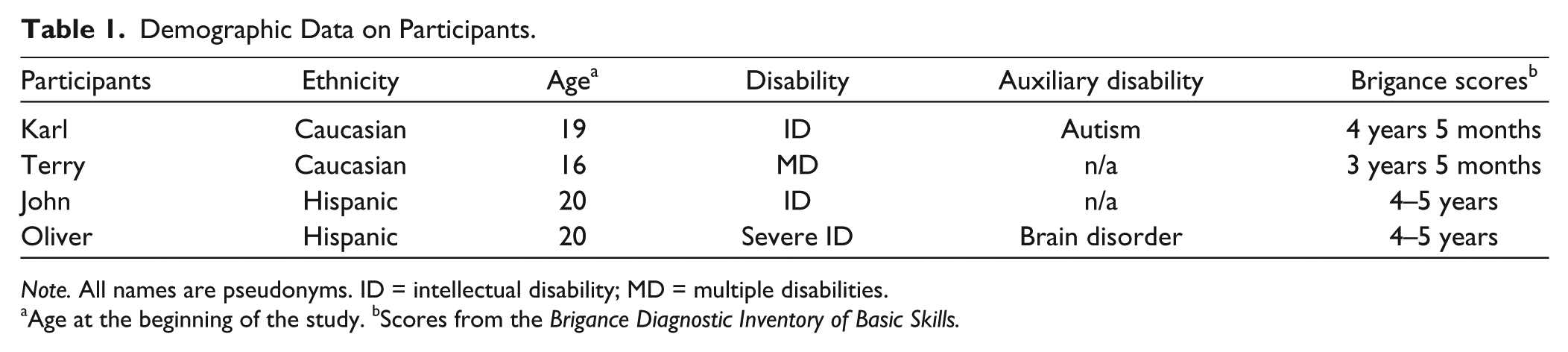
Note. All names are pseudonyms. ID = intellectual disability; MD = multiple disabilities.
Age at the beginning of the study. bScores from the Brigance Diagnostic Inventory of Basic Skills.
Terry
Terry was 16 years old and had a diagnosis of multiple disabilities. He was a verbal student who enjoyed interacting with adults. Terry used a wheelchair to move around. He required minimal assistance to complete most activities. Terry was familiar with picture symbols and had experience with News-2-You newspaper based on SymbolStix picture symbol system. He liked working on the computer and at times used computer-based augmentative and alternative communication (AAC) devices.
John
John, a 20-year-old student with ID, was in his last year of schooling. He was a verbal student who really enjoyed interacting with adults and peers. He was difficult to understand to the unfamiliar listener but continued to get his point across by repeating himself verbally. John could move around independently. He required only minimal assistance with any fine motor task and required constant reminders to stay focused on his task. John had experience using various AT tools, including picture symbols and computer programs, and regularly used AAC devices.
Oliver
Oliver was a 20-year-old student with significant ID. Oliver was verbal with his primary language being Spanish. He was difficult to understand even to the fluent Spanish speaker. Oliver could move around independently. He had a degenerative brain disorder that had resulted in a great decline in skills over the years. Since arriving at the center, he had remained functioning on the same level of cognition. As a result of his disability, Oliver required high levels of prompting and supports to access the adapted curriculum. Oliver’s familiarity with AT included his used of picture symbols, various computer programs, and AAC.
Karl
Karl was a 19-year-old young adult with autism and ID. He was a verbal student but very rarely initiated conversation with adults and peers. Karl could move around independently. He was able to complete most tasks independently with demonstration but lacked motivation to complete non-preferred activities. He could match, sort, and identify common colors, letters, shapes, and the numbers 1 to 10. Karl had experience using different types of AT, including picture symbols from Boardmaker and computer programs, and at times used AAC devices depending on the activity.
The study was conducted in a students’ classroom. It was a large room divided into two sections: one for students’ group work and one for students’ individual work with the teacher and assistants. During their social studies unit study, students were seated in the group work area in a row facing the board. Two laptops were placed on the desks located on the side of the group work area by the windows. Students took turns sitting at the computer watching video clips with the teacher or teacher assistant in close proximity. The room’s lighting was adjusted to enhance the images on the screen. Students used earphones to prevent others from being exposed to video content.
Dependent Variables
The dependent variable examined included the number of factual questions answered correctly. The example of the factual question was, “What transportation invention changed America’s lifestyle?” representing content presented in the video clip. Each question was accompanied by three multiple-choice short answers (answers to the question above included (a) bikes, (b) electricity, and (c) cars). The language from the video was changed in making the questions (e.g., voice changed, vocabulary changed, summary of information used) to make sure that participants did not simply repeat the answer. Testing materials were created based on the content presented in the video by the expert in academic instruction for students with ID. Then, the first author and the teacher reviewed all questions and answer choices to ensure their comparability and appropriateness for participants’ ability levels, as well as their alignment with the video content. As all the participants were relying on the use of picture symbols, questions and answer choices were presented with a picture symbol accompanying each word. The accuracy data on six factual questions were collected within the video program and later graphed manually for analysis. As the focus of this study was to evaluate the videos adapted with multiple features (picture/word-based captions and interactive video searching together) rather than separate components, each correct answer was scored as 1 regardless of whether it was provided before or after the video searching.
Intervention
Video adaptations and the research procedures used in this study were previously tested (Evmenova & Behrmann, 2014; Evmenova, Behrmann, Mastropieri, Baker, & Graff, 2011). Across all phases, the primary independent variables in this research study consisted of original and adapted short video clips. Non-fiction academic video clips for this study were compiled from the web-based Discovery Education Streaming library. Videos were selected by the teacher to support the transportation unit and were aligned with the standards of learning in social studies. Specifically, the following standards in the “United States History: 1865 to the Present” were addressed:
USII.2: The student will explain relationships among natural resources, transportation, and industrial development after 1865; USII.6: The student will explain how developments in transportation (including the use of the automobile changed American life and standard of living.
The Discovery Education Streaming service offers videos aligned with state standards. The Discover Education’s curriculum team with expertise in various subject areas including social studies ensures that each video not only is appropriate for the learning expectations, but is also age appropriate. Thus, videos aligned with the aforementioned standards and providing relevant quality content on the high school level (9–12 grade level) were chosen. Longer videos titled “Greatest Inventions With Bill Nye: Transportation Video,” “Extreme Engineering: Subways in America,” and “Careers for the 21st Century: Transportation Occupations” were segmented into 15 short clips, so that a different clip could be used during each baseline and treatment sessions. Those videos listed above had permissions to be edited, so they were chunked into 3.5- to 5-min-long clips. Video clips were then randomly assigned to each of 15 observational sessions. Clips in baseline condition were presented as is, followed by the six-question quiz presented on the computer screen. Clips were enhanced with adaptations described below during the treatment phase.
ACTIV 1
0. Grounded in previous research (Evmenova et al., 2011), an innovative Adapted Captioning Through Interactive Video (ACTIV 1.0; see Figure 1) program was developed. It enabled teachers to easily enhance videos with various adapted and interactive features (e.g., picture/word-based captions, highlighted text captions, interactive video searching, adding a visual cue to the video screen, etc.). Adaptations tested in this study included picture/word captions as well as abilities to search the video for answers.
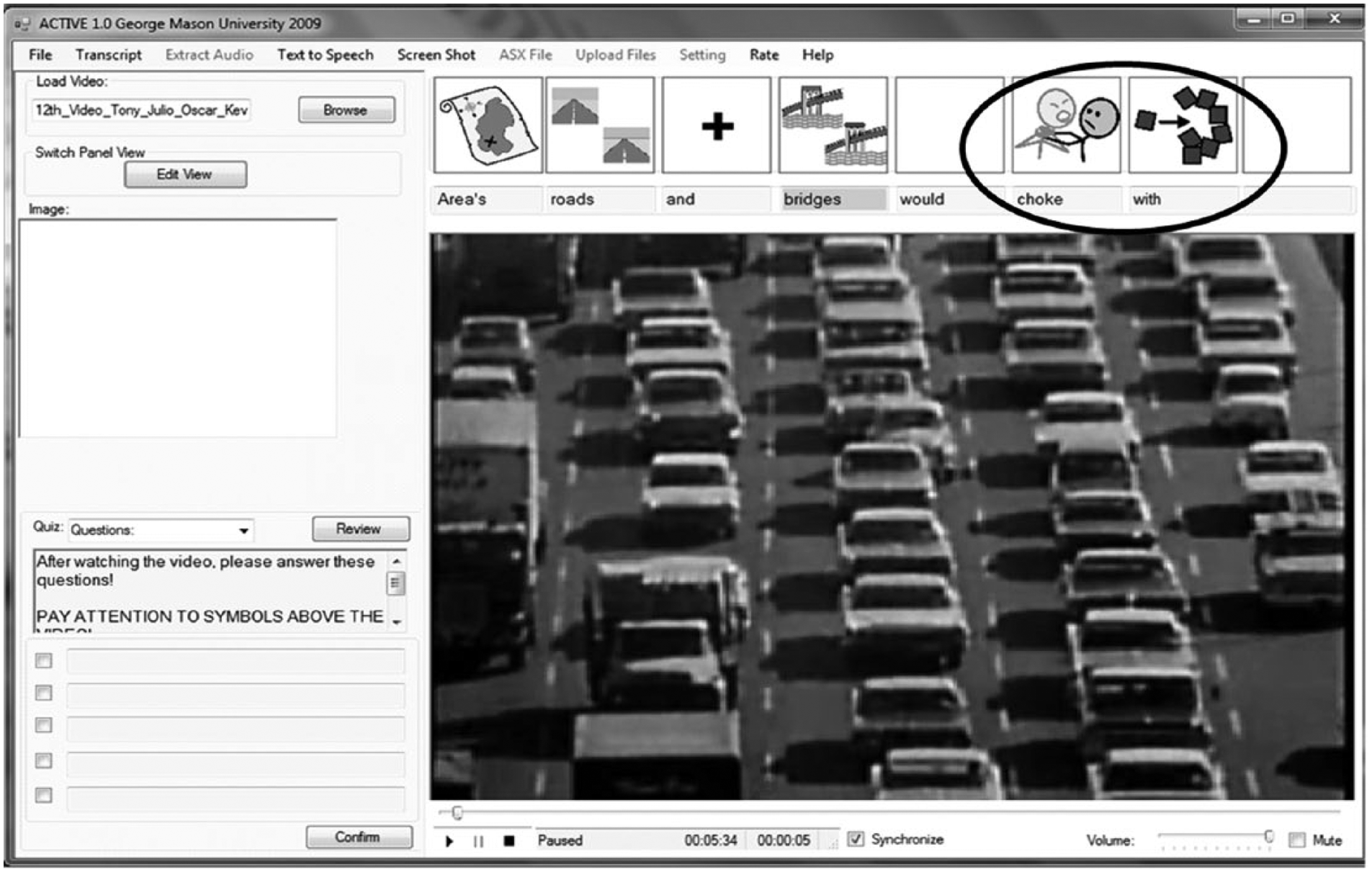
Video adapted in ACTIV 1.0 with picture/word-based captioning.
Picture/word captions
After an existing video clip was uploaded into ACTIV 1.0, the program automatically created a transcript of the video (using speech-to-text mechanisms) with time stamps added to each word. Thus, captions corresponding verbatim to the narration were placed at the top of the video screen presenting eight words per line in black size-18 Time New Roman font. Then, after selecting a desired adaptation, a picture symbol from Symbolstix system was automatically added to each word in captions.
Interactive video searching
After viewing the video, a multiple-choice quiz appeared on the computer screen. In the treatment condition, the researchers created the interactive quiz within ACTIV 1.0, so that each question was tagged and hyperlinked to the segment in the video (15–20 s long). By clicking the Review button with a mouse, the participants were taken back to the segment in the video that contained the answer to the target question. Thus, the elements of AI were incorporated into the adapted and interactive video clips (Bottge et al., 2007). The interactive feature in the current study included being able to go back and forth in the video using the hyperlinks.
Procedures
First, students received training introducing them to the ACTIV program. Specifically, students were taught to (a) click Play button to view the video, (b) view a quiz, (c) choose comprehension questions from a drop-down menu, (d) make an answer choice, (e) click Confirm button to ensure the answer was correct, and (f) click Review button to watch the segment when prompted after the incorrect response. After students were trained in small groups (two participants at a time), they were asked to view regular videos followed by factual comprehension questions in the baseline condition. Then, the effectiveness of videos adapted with picture/word captions and interactive search feature was explored in the treatment phase.
Baseline
During each baseline session, students watched regular videos individually followed by the comprehension questions. Quizzes were built into ACTIV 1.0 and appeared on the computer screen. Questions and answer choices were read out loud. Each word in the question and the answer choices was accompanied by a SymbolStix picture symbol. Students had to select one of the answer choices. Regardless of whether the answer was correct or incorrect, the students were prompted to move forward to the next question. Throughout the session, students were prompted by the teacher and/or assistant to watch the video (“Let’s watch the video.”) and answer six questions to the best of their ability according to the baseline script (e.g., “Listen to Question 1,” “Here are the choices for Question 1,” “Pick your answer,” “Just try your best,” “Click Confirm button,” and “Select Question 2”). The detailed script can be requested from the authors.
Treatment
The order of actions in the treatment phases was as follows: (a) Students viewed videos adapted with picture/word captions; (b) after the video, they answered six comprehension questions presented on the computer screen; (c) after each incorrect response, they were prompted to search the video for answers by clicking Review button on the screen with a mouse (there was no prompting to search the video if the answer was correct); (d) after activating the Review button and watching a video segment featuring the correct information, students were asked to answer comprehension question once again; and (e) regardless of whether the updated answer was correct or incorrect, the students were prompted to move forward to the next question. Thus, students used the video search feature only when they provided the wrong answer. The pop-up window indicated that the answer was incorrect and invited users to review the video. The teacher and/or assistant read the statement in the pop-up window aloud to the student (“Oops. Try again. Would you like to review the video?”) Students were invited to review the video but could choose not to do it. The teacher and/or an assistant were observing the students to guide them throughout the treatment procedures according to the script (can be requested from the authors).
Interobserver Agreement, Fidelity of Treatment, and Social Validity
ACTIV 1.0 software automatically collects all the data including students’ responses and various mouse clicks. Thus, it is possible to see on the report how students interacted with the program (e.g., how many times answered the question; whether they searched the video for answers or not, etc.) These permanent products/online reports were used to calculate the interobserver agreement. Following the training on operational definitions, the independent observer scored the data from 33% of randomly selected reports. The agreement coefficient was calculated using the total agreement formula: S / L × 100%, where S is a smaller total and L is a larger total of response occurrences (Kennedy, 2005) and was averaged at 99% (99%–100% range).
A trained independent observer also compared teacher’s, assistants’, and students’ actions to the intervention scripts to establish the procedural reliability across all baseline and treatment phases (Wolery, 1994). Procedural reliability was derived by dividing the number of observed behaviors by the number of planned behaviors multiplied by 100 (Kennedy, 2005) and was determined at 100%. In addition, the consistency of the video content and adaptations across the participants was maintained.
At the end of the study, semi-structured interviews were conducted with all the participants. Students were asked by their teacher to share their opinions about using regular videos and adapted videos for learning academic content. Their attitudes toward regular and adapted videos were obtained. Students who were non-verbal or who had hard time conversing with unfamiliar people used their AAC devices. Thus, qualitative data provided information about the social acceptance of intervention.
Results
The effectiveness of picture/word captions and interactive video features on comprehension of non-fiction content by students with ID was determined through visual analysis of data and percents of non-overlapping data (PND; Scruggs, Mastropieri, & Casto, 1987). Factual comprehension improved for all the students after they viewed adapted videos and searched the clip for answers in response to immediate feedback provided by the ACTIV 1.0 program when the correct/incorrect answer was chosen. As can be seen in Figure 2, both consistent changes in mean lines and trend slopes and magnitudes were evident from the visual inspection of data between the baseline and students’ responses in treatment (M = 1.8, SD = 0.4 in baseline; M = 3.9, SD = 0.6 in treatment). Overall PND for all students was 88% indicating high effectiveness of intervention.
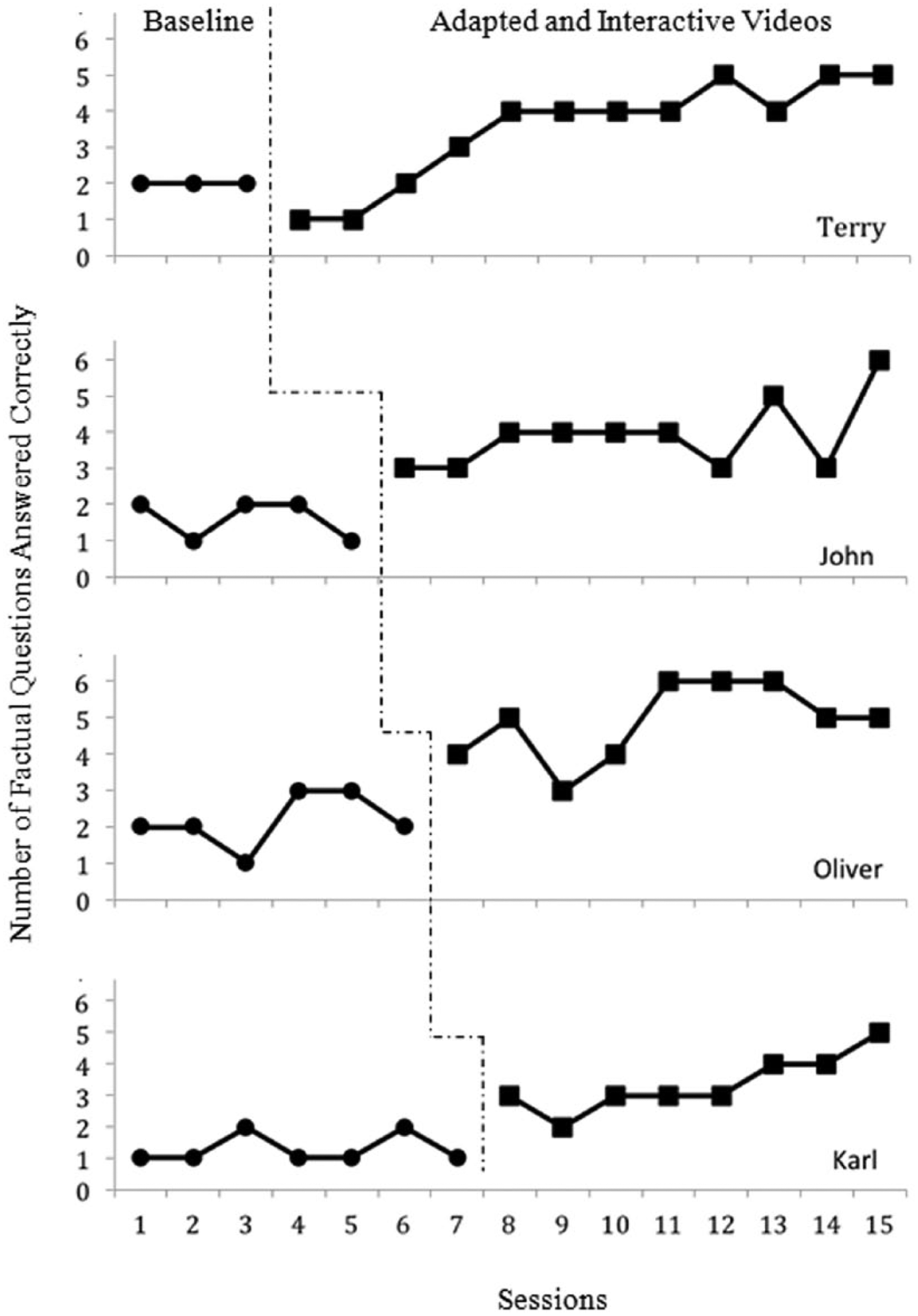
Accuracy of responses to factual comprehension questions after watching regular videos in baseline and adapted/interactive videos in treatment by high school students with intellectual disability.
Terry
Terry exhibited an increase from M = 2 (SD = 0) correct responses after watching regular videos in baseline to M = 3.5 (SD = 1.4) correct responses after watching adapted and interactive videos in treatment. His baseline data were characterized by a flat trend, whereas treatment data showed an upward trend. There was no immediacy of change when adapted and interactive videos were introduced. In fact, Terry answered even fewer questions in the first two data points of the treatment phase as compared with baseline. However, the upward trend started in Session 6. There was not a lot of variability in Terry’s baseline and treatment data when compared with the trend line. However, because of the first two data points in the treatment phase, the PND was determined to be 75%, indicating moderate effectiveness of intervention. Overall, Terry’s performance in the treatment phase was consistently higher than in baseline.
John
John showed an increase from M = 1.6 (SD = 0.5) correct responses after watching regular videos in baseline to M = 3.9 (SD = 1) correct responses after watching adapted and interactive videos in treatment. His baseline demonstrated flat trend, whereas there was a slightly increasing trend in the treatment data. There was an immediacy of change when adapted and interactive videos were introduced. John’s data in baseline had limited variability, which was also true for the beginning of treatment. However, the last four data points in the treatment phase were characterized by high variability. Despite that variability, the PND was determined to be 100%, indicating high effectiveness of intervention. Overall, Terry’s performance in the treatment phase was consistently higher than in baseline.
Oliver
Oliver exhibited an increase from M = 2.2 (SD = 0.8) correct responses after watching regular videos in baseline to M = 4.9 (SD = 1) correct responses after watching adapted and interactive videos in treatment. Both his baseline and treatment data were characterized by a slightly upward trend. There was an immediacy of change when adapted and interactive videos were introduced. However, both Oliver’s baseline and treatment data were also characterized by high variability of data. Despite that variability, the PND was determined to be 89%, indicating high effectiveness of intervention. Overall, Terry’s performance in the treatment phase was higher than in baseline.
Karl
Karl demonstrated an increase from M = 1.3 (SD = 0.5) correct responses after watching regular videos in baseline to M = 3.4 (SD = 0.9) correct responses after watching adapted and interactive videos in treatment. His baseline data exhibited a flat trend, whereas treatment data showed an upward trend. There was an immediacy of change when adapted and interactive videos were introduced. Karl’s data in both baseline and treatment had limited variability as compared with the trend line. The PND was determined to be 87.5%, indicating high effectiveness of intervention. Overall, Karl’s performance in the treatment phase was consistently higher than in baseline.
Although it was not the purpose of this study to investigate the difference between students’ responses before and after using the interactive video searching features, the frequencies of video searching in the treatment condition were observed. On average, all participants resorted to the video searching feature to review the segments containing the correct answers for M = 1.85 (SD = 0.17) questions across all adapted and interactive video clips. Specifically, Terry reviewed M = 2 (SD = 0.85) questions, John reviewed M = 1.5 (SD = 0.71) questions, Oliver reviewed M = 1.78 (SD = 1.09) questions, and Karl reviewed 2.13 (SD = 0.99) questions across all video clips.
Social Validity Findings
All participants reported that they enjoyed watching the adapted videos with picture symbols above the words. Students mentioned that they tried to look at the picture symbols as often as possible. All participants enjoyed using the Review button. They felt the Review button really helped them to answer the questions. In addition, the teacher and teacher assistants reported that students were getting more and more comfortable with the adaptations throughout the study, which can also be seen in the upward trend in treatment phases for all four participants.
Discussion
The purpose of this study was to determine the effects of videos adapted with picture/word-based captions and interactive video searching on comprehension of the non-fiction academic content by high school students with significant ID. The results demonstrated that adapted and interactive videos can be used as an effective intervention (PND averaged across participants 89%) for providing access to academic content for students with ID. There has recently been a discussion in the literature about the appropriateness of the data overlap methods for synthesizing single-subject data (Wolery, Busick, Reichow, & Barton, 2010). The concern has been about the possible disagreements between a reliable visual analysis and PND as well as other data overlap methods in detecting the change between two conditions. Indeed, it is important to remember that PND should not be calculated if data demonstrate (a) orthogonal slope changes, (b) inappropriate baseline trends, (c) floor or ceiling effects, or (d) unusual or complex cases (Scruggs et al., 1987). None of these instances were observed in the current data. While some have argued that PND does not provide an estimate of the magnitude of effects (Wolery et al., 2010), it was not intended to be the exact measure of treatment magnitude but rather to make meaningful conclusions about data in the current study (Scruggs & Mastropieri, 2013).
Moderate levels of variability characterized students’ performance in this study. In addition, while three out of four students showed immediate increases in their video comprehension following the introduction of intervention, Terry’s performance did not improve until after Session 6. It is possible that the variability in data may be attributed to the fact that various video clips on different topics were presented in different sessions. Participants may have been more interested and/or familiar with the information presented in various clips. It may be important to assess students’ prior knowledge of the topic in each video. The focus of this study was to evaluate the effects of videos adapted with both picture/word-based captions and interactive video searching on comprehension of the social studies content by high school students with significant ID. However, it was observed that students had resorted to the video searching feature on average M = 1.85 (SD=0.17) out of 6 times across the videos. It is possible to suggest that their comprehension has improved even without the video searching feature as compared with their baseline levels. The differentiated effect of each component of adapted and interactive videos needs to be further investigated. In addition, while students could choose to search the video for answers, they were not forced to do it. It may be beneficial to reinforce the use of the search feature as a requirement after every incorrect answer.
Not only students with significant ID were able to answer more factual comprehension questions after watching and interacting with adapted videos, but, as was noted in the interviews, they also really enjoyed working with those adaptations. Thus, positive trends in this study suggest that adapted non-fiction video clips have a potential to provide access to general curriculum academic activities for students with ID by addressing their abilities and needs. At the same time, the results of this study only suggest that adapted and interactive videos created better access to academic-based content. It is unknown whether students actually retained the information. Although further investigations are needed to determine whether these adaptations can be used to teach the content, our video-based intervention can be used to ensure access to the age-appropriate content in various subject areas including social studies.
It is important to note that in the current study the adaptations were added to the original videos with the original narration. While previous research has demonstrated the effectiveness of videos adapted with alternative narration characterized by the lower readability level (Evmenova & Behrmann, 2014; Evmenova et al., 2011), it was important to research the improvements in comprehension when using clips with the original narration. Thus, high school students with significant ID were engaged with the age-appropriate video clips that can be easily integrated into the curriculum in high school general education classroom (Browder et al., 2007).
For many years, students with significant ID were denied content-based academic instruction (Agran & Wehmeyer, 1999; Browder et al., 2007). The existing reviews exploring existing research on science and social studies instruction for students with significant cognitive disabilities has advocated for the development of new interventions for teaching content inquiry to the target population (Courtade et al., 2007; Spooner et al., 2011). While systematic instruction, prompting, and feedback remain identified research-based practices for introducing academic content to students with ID, adapted videos may provide additional supports for accessing various subject areas though materials typically used in general classroom (Agran et al., 2006; Hardman & Dawson, 2008). Adapted videos can also be used to introduce the social studies content in various educational settings. Interacting with adapted videos can be one of the alternatives in a variety of learning activities recommended for making the social studies content explicit (Beyer, 2008).
Indeed, video has been explored as the means to teaching history, math, science, and social studies concepts and principles to students with various disabilities. For example, Gersten, Baker, Smith-Johnson, Dimino, and Peterson (2006) used a documentary to teach the history content for students with and without LD. The use of video that was divided into 4- to 10-min segments supplemented by inserted questions about each segment and interactive activities resulted in significantly higher performance on content measures as compared with the textbook condition. So, the video and interactive activities were used not only to provide access to social studies instruction in the general education classrooms but also to ensure that students actually learn the important information. While videos can be a great alternative to textbook reading in science and social studies curriculum (Mastropieri et al., 1998), adapted videos enhanced with picture symbols and interactive searching can make the academic content even more comprehensible and accessible for students with significant ID. The improvements in factual comprehension by students with ID reported in the present study replicate and extend the findings of previous studies where videos were used with this population for academic instruction (Burton et al., 2013; Kagohara et al., 2012; Kinney et al., 2003; Lee & Vail, 2005). Current findings also extend research on the use of video instruction in various content areas by students with mild disabilities, such as LD (Cihak & Bowlin, 2009).
Overall, the current study adds to a very limited body of research on introducing social studies content to students with significant ID (Collins et al., 2007; McDonnell et al., 2006; McKissick et al., 2013; Schenning et al., 2013; Spooner et al., 2012; Zakas et al., 2013). While both academic instruction and teaching of functional skills are important for students with severe disabilities (Ayres, Lowery, Douglas, & Sievers, 2011; Courtade, Spooner, Browder, & Jimenez, 2012), the use of adapted and interactive videos may be expanded from introducing social studies content like in the current investigation to teaching independence on daily routines, social skills, and communication skills. Additional studies may warrant the use of adapted video to teach daily living and employment skills, thus investigating the usefulness of the adapted and interactive video method even further. Given the need for better employment results for individuals with ID (Simonsen & Neubert, 2013), it is important to continue to explore the tools that can be used in both the academic and meaningful functional/employment curricula for these students.
Limitations and Future Research
The aforementioned findings should be interpreted with caution taking into consideration the following limitations. The complex nature of video intervention does not allow conclusions about the unique contribution of picture/word captions and interactive video searching of the video. Further research should focus on componential analysis. Following the upward trends in the treatment phases for all the participants, it may be beneficial to extend a study to investigate possible further improvements of students’ performance. Future studies may also explore whether the intensive supports such as interactive video searching can be faded out over time while still maintaining comprehension levels. Thus, it is possible to suggest that with more exposure to the adapted videos, students will be able to understand and learn the academic content from the video with the support of captions only, without the need to search the video for answers. While it was not the focus of the current investigation, future research needs to explore how dependent students might be on the video searching feature for producing the correct answers. This would allow understanding how much content students learn and remember from the video (e.g., by being able to answer questions without using the search feature) and how much content they need to review multiple times (e.g., by using the search feature) before answering the questions. Also, the relatively high levels in baseline phases could have been explained by guessing the right answer out of three choices on the multiple-choice comprehension test. Future research should explore alternative measures of the video comprehension.
Based on the results of this study, it is possible to suggest that adapted and interactive videos offer an alternative way to access age-appropriate materials. However, measuring the maintenance or retention of the content from the videos by the participants could potentially demonstrate an additional value of the adapted and interactive videos as the instructional strategy. Using the comparison between baseline data revealing students’ prior knowledge of the content presented in the video and the delayed maintenance phase would demonstrate whether students with significant ID can learn social studies content from adapted and interactive video clips, rather than be able to simply recall the information from the clip. It would also be beneficial if the skill learned from the videos can be generalized to a new situation (e.g., to make inferences about content) and/or new materials (e.g., different content areas). Finally, this study was conducted in a self-contained setting for students with significant ID with a low teacher–student ratio. Therefore, the interventions should be explored in alternative settings, such as an inclusive classroom in a public school.
Footnotes
Declaration of Conflicting Interests
The author(s) declared no potential conflicts of interest with respect to the research, authorship, and/or publication of this article.
Funding
The author(s) disclosed receipt of the following financial support for the research, authorship, and/or publication of this article: This research was produced under the U.S. Department of Education, Office of Special Education Programs No. H327A080013. The views expressed herein do not necessarily represent the positions or policies of the Department of Education. No official endorsement by the U.S. Department of Education of any product, commodity, service, or enterprise mentioned in this publication is intended or should be inferred.