



Abstract
In software development, cost estimation remains a significant challenge. Despite numerous research efforts, identifying an optimal technique applicable to all situations has proven difficult. The increasing adoption of agile development methods has further complicated accurate cost estimation. Recently, the application of optimization techniques, particularly metaheuristic optimization algorithms, has increased to enhance estimation accuracy and performance. However, there is a lack of systematic literature reviews exploring these optimization techniques in software cost estimation (SCE). This study aims to fill this gap by employing a systematic literature review (SLR) method to select, filter, and analyze relevant literature from 2019 to 2024. The review included 41 journal articles and 11 conference proceedings to evaluate the current development status of optimization methodologies in SCE. The study identified 20 key optimization algorithms with the top 6 most commonly used: Particle Swarm Optimization (PSO), Differential Evolution (DE), Genetic Algorithm (GA), Gray Wolf Optimization (GWO), Whale Optimization Algorithm (WOA), and Bat algorithm (BA). Their key contributions are parameter tuning, feature analysis, and model optimization. While optimization techniques hold promise, their application in cost estimation must carefully consider these challenges, such as premature convergence, sensitivity to initial parameters, etc. Findings also reveal significant limitations for Agile Software Cost Estimation (ASCE), such as the less applicability of traditional cost estimation techniques, lack of cost drivers for agile, more reliance on expertise and experience, and few public datasets. This research provides valuable insights for further exploration of optimization techniques in SCE.
Keywords
Introduction
Software cost estimation is a pivotal component in software engineering. It is the cornerstone for software development projects to achieve project goals under resources, time, and quality constraints. Improving cost estimation accuracy continues to be a significant challenge for project managers, as it is impacted by various factors such as project planning, budgeting, resource allocation, risks, and constraints. Over the years, numerous methods have been developed for SCE, generally divided into algorithmic and non-algorithmic approaches. Algorithmic methods employ mathematical models, such as Putnam’s framework and the Constructive Cost Model (COCOMO), which require substantial data and vary in mathematical complexity. Non-algorithmic algorithms rely on expert knowledge, including case-based reasoning (CBR), analogy, regression, expert judgment, etc. Jadhav et al. 1 used an automated text mining framework to analyze software development effort and cost estimation techniques over the past 50 years. The results show that, the most popular estimation techniques include fuzzy logic, artificial neural network (ANN), regression, analogy, COCOMO, optimization, use case point, function point, machine learning, COCOMO II, clustering, and CBR-based approaches. Ch Anwar ul Hassan et al. 2 advocated the use of more effective nature-inspired methods for cost estimation, and experimentally showed that metaheuristic algorithms perform well in handling optimization problems and obtaining accurate estimates. Vikram Singh et al. 3 highlighted risk assessment and mitigation strategies are also crucial for improving the reliability of cost estimates. Identifying potential risks and targeted mitigation measures can improve the accuracy and stability of estimates. Overall, research in SCE has traditionally focused on developing and refining various models to enhance estimation accuracy.
Since the birth of the Agile Manifesto, Agile methods have brought higher development speed, more flexibility and effectiveness to software companies. A case-based empirical study 4 confirmed the importance of agile in software development and these above factors prompted more organizations to switch from traditional methods to agile practices. The application of agile has also brought great challenges to the estimation of development cost. A survey conducted by Ahmed Shams et al. 5 showed that traditional estimation techniques were not suitable for agile practices and the appropriate and the research of scientific estimation techniques for agile is becoming increasingly urgent. A comparative analysis of effort estimation in agile and non-agile software projects found, traditional cost estimation techniques focus primarily on activity-based costing and user perspectives and often fall short in Agile Project Management 6 . Fernandez-Diego et al. 7 studied 73 papers and the results emphasized accuracy remains a major challenge in agile effort and cost estimation. One reason is that the uncertainty of requirements increases the complexity of estimation. Saeed et al. 8 proposed in an empirical study that agile-based estimation models were still in the early stages of development and needed further improvement in order to be applied in practice. Therefore, it is necessary to analyze and discuss the cost estimation techniques applied to agile development.
Over the past thirty years, software engineering has extensively explored search problems using various swarm intelligence algorithms. An increasing academic focus has recently been on employing optimization algorithms to address cost estimation challenges. Shoran et al. 9 suggest that integrating advanced technologies such as metaheuristic algorithms, machine learning approaches, deep learning techniques, and hybrid models can significantly advance SCE. Rankovic et al. 10 highlighted a shift in cost estimation practices towards diverse ML techniques and hybrid methodologies that blend parametric and non-parametric models. Mohamedyusf et al. 11 noted that metaheuristic algorithms are computationally simple yet powerful, capable of identifying optimal solutions under challenging conditions without restrictive assumptions about the search space. This suggests that metaheuristic algorithms are becoming central to SCE, making it crucial to study and analyze the development trend of optimization techniques in this field, identify application challenges, and explore solutions.
This research examines the current state of optimization methodologies in SCE through a systematic literature review (SLR) from 2019 to August 2024. It aims to identify the most widely used optimization algorithms in SCE and provide valuable insights into how optimization techniques can be effectively applied in software development. At the same time, this study also pays attention to the application status of optimization algorithms in agile cost estimation.
The content of this paper is organized as follows: Section 2 details the methodology and approach used for the systematic literature review. Section 3 overviews the data analysis results and provides a report. Finally, Section 4 discusses the conclusions and recommendations for future research.
Methodology
Kitchenham, Dyba, and Jørgensen 12 proposed the concept of evidence-based software engineering (EBSE), advocating for the use of systematic literature reviews (SLRs) as a methodological approach to achieve unbiased aggregation of empirical findings. Contract to expert reviews that rely on occasional literature selection, SLRs employ a methodologically rigorous process to review research outcomes. Beyond aggregating existing evidence on a specific research question, SLRs also facilitate the creation of evidence-based guidelines for practitioners. 13 Therefore, this study follows the SLR guidelines set forth by Kitchenham 13 to gather, evaluate, and analyze optimization techniques used in SCE over the last six years, from 2019 to August 2024. This approach ensures a comprehensive and structured review of relevant literature, providing a detailed understanding of the current trends and developments in the field.
Research issue
This study addresses the following research issues through a comprehensive literature review.
What are the prevalent optimization algorithms utilized within the SCE domain? What specific challenges within SCE are typically addressed by applying optimization algorithms? How have optimization algorithms been employed in ASCE over the past six years? Which estimation algorithms are commonly combined with optimization algorithms in practice?
This investigation will provide a detailed understanding of the current trends and developments in applying optimization techniques in SCE.
Inclusion and exclusion criteria.
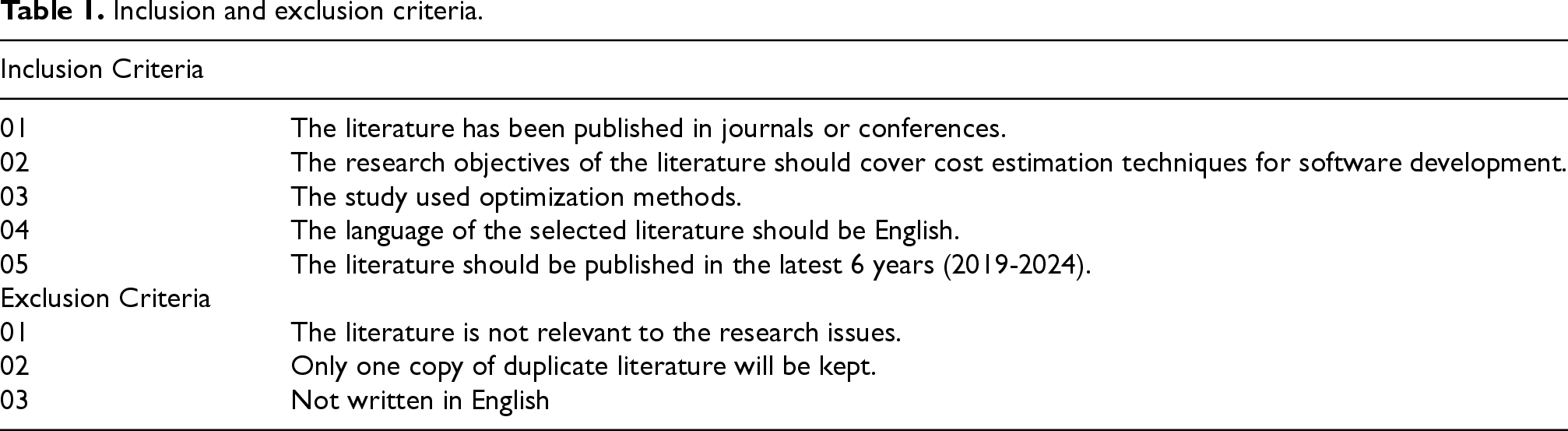
Specific inclusion and exclusion criteria were employed to identify the necessary and appropriate literature sources following Kitchenham 13 guidelines and detailed in Table 1.
Data gathering
Four data sources were employed in the study: IEEE Xplore Digital Library (IEEE), Web of Science(WOS), Google Scholar, and Scopus, as shown in Table 2. These sources were selected for literature selection and gathering because they are widely used in SCE.
The data sources selected.

The data sources selected.
The following formulated search strings were utilized when searching these sources: (“Software cost estimation” and “Optimization algorithm”) or (“Software cost estimation” and “Optimization technique”) or (“Software cost estimation” and “Optimization model”) or (“Software cost prediction” and “Optimization algorithm”) or (“Software cost prediction” and “Optimization technique”) or (“Software cost prediction” and “Optimization model”) or (“Software cost evaluation” and “Optimization algorithm”) or (“Software cost evaluation” and “Optimization technique”) or (“Software cost evaluation” and “Optimization model”) or (“Software cost estimation parameter” and “Optimization algorithm”) or (“Software cost estimation parameter” and “Optimization technique”) or (“Software cost estimation parameter” and “Optimization model”).
The study utilized a tollgate approach to filter the selected literature through the data screening procedure, as illustrated in Figure 1. Tollgate approach is a structured project management and quality control method. The core of tollgate approach is to divide the entire project or process into multiple stages, and set a “checkpoint” (Tollgate) at the end of each stage. 14 Through strict inspection, it is verified whether the goals of the current stage have been achieved and whether the conditions for entering the next stage have been met. This study applied this method to ensure a standardized process for screening data and the quality and consistency of results.
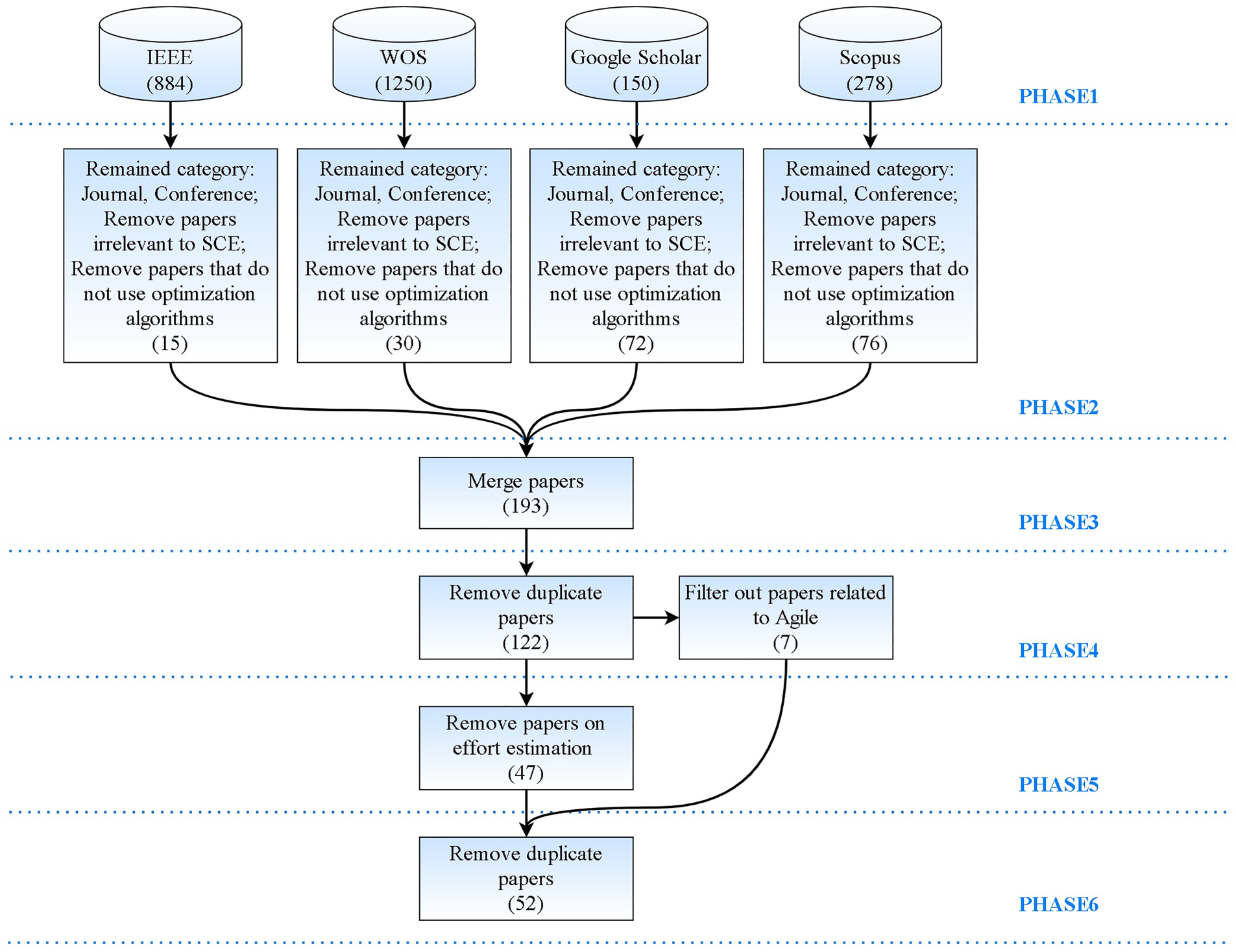
Data screening procedure.
This procedure comprises six phases. In phase 1, the search string was used to search for literature from four data sources. 884 articles were collected from the IEEE database, 1,250 from the WOS, 150 from Google Scholar, and 278 from the Scopus. In phase 2, papers searched from the four data sources were individually processed using a three-step screening method. In the first step, only journal and conference papers were retained based on their category. In the second step, papers unrelated to SCE topics were excluded. Finally, papers not employing optimization algorithms were removed. This process ensured that the remaining literature was both relevant to the research objectives and of high quality. The remaining were 15(IEEE), 30(WOS), 72(Google Scholar), and 76(Scopus). In phase 3, the four data were merged to obtain 193 papers. Accounting for articles indexed in multiple data sources, the phase 4 checked for duplicates and retaining only one unique version of each paper. This process resulted in a final dataset of 122 articles. Among these, 7 articles related to agile software development, including effort and cost estimations. Since effort estimation and cost estimation are distinct sub-fields, the literature focused on effort estimation from the 122 was removed in stage 5 to ensure the accuracy of the screening. This left 47 relevant articles, but only 2 of them were related to agile, which was not enough to answer RQ 3. Therefore, the 47 articles were combined with the 7 articles related to Agile screened in the fourth stage, and after deleting duplicates, 52 articles were finally obtained.
4 of the 52 remaining articles are literature reviews, with a proportion of 7.69%, while the other 48 focus on cost estimation techniques, with a proportion of 92.31%, as shown in Figure 2. This indicates that the research focus of this field is on specific technical practices and there are relatively few summary discussions in the literature.
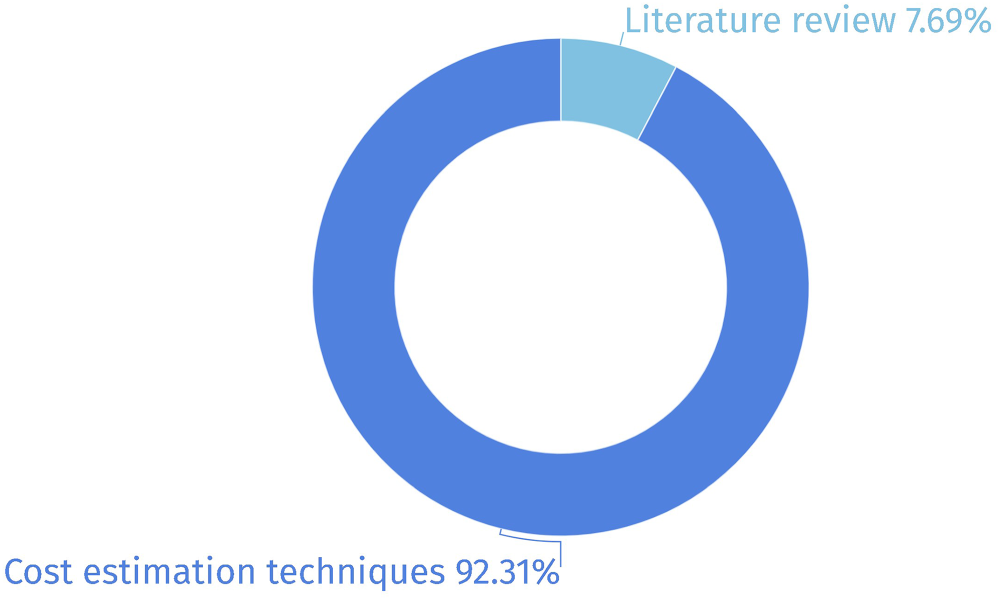
Distribution of studies (article category).
11 articles are conference papers, representing 21.15% of the total, while the other 41 are journal papers, representing 78.85%, as shown in Figure 3. This suggests that research in this field tends to be published in high-quality journals.
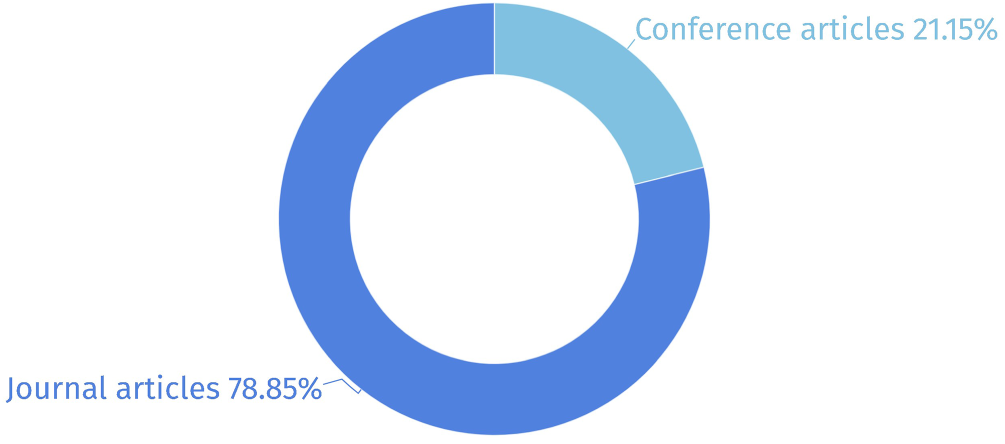
Distribution of studies (publishment category).
Figure 4 illustrates that the selected literature’s distribution over the past six years (2019 to 2024) varies. Each year from 2019, 2020, and 2023 has about 7 studies. The number of studies in 2021 and 2022 is significantly higher. But studies focusing on agile development consistently average about 2 articles per year, with 3 studies in 2022, above the average, and no studies in 2023 and 2024. From the overall trend, by 2022, the research on metaheuristic algorithms in the SCE field has shown an overall upward trend, and has maintained a high level of attention in the past two years. However, the attention paid to optimization technology in agile has declined in the past two years, and it is needed to further analyze the reasons.
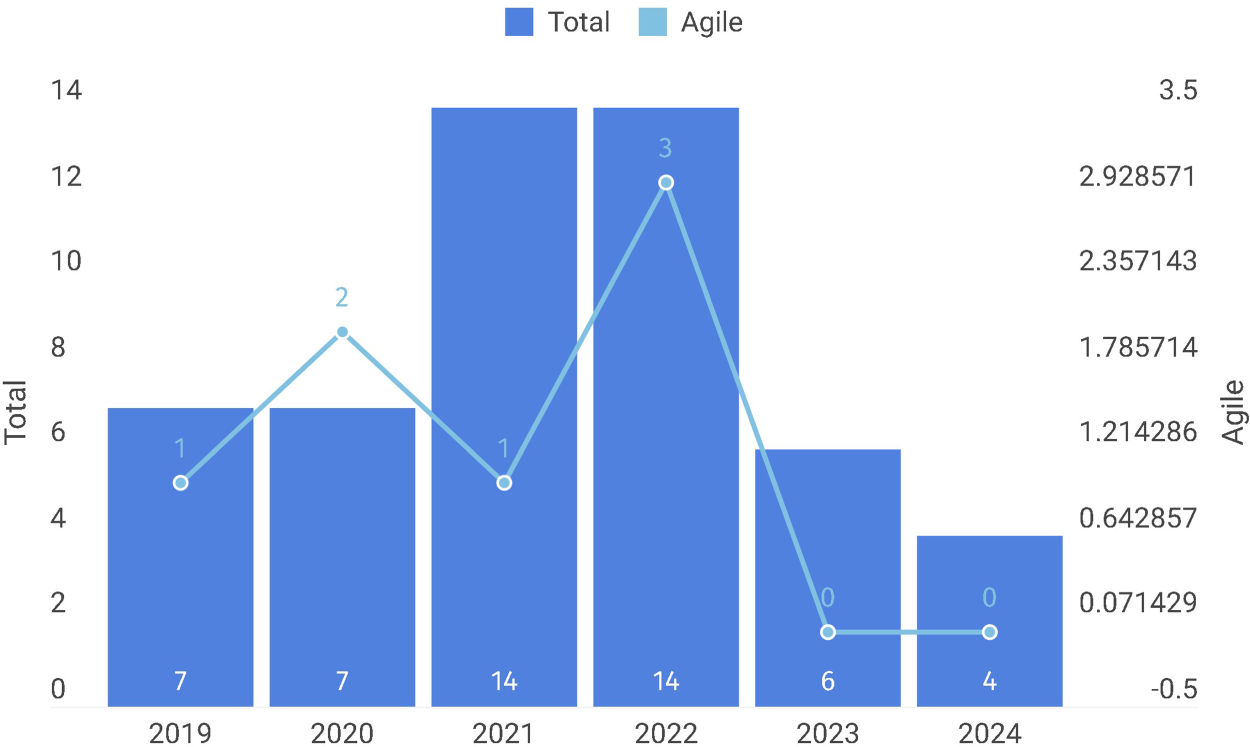
Distribution of selected studies (year-wise).
The basic information of the selected literature has been analyzed above. Based on the research issues, the following chapter will conduct data analysis and a discussion of the results.
The optimization technique includes three primary categories: exact, heuristic, and metaheuristic optimization algorithms. Exact optimization algorithms can find the global optimal solution to the problem. Heuristic optimization algorithms are designed for specific problems and offer practical solutions for complex or large-scale issues, though they do not ensure a globally optimal solution. Metaheuristic optimization algorithms, operating at a more abstract level, oversee the exploration process of heuristic algorithms and can be customized to address a broad spectrum of problems. Metaheuristic optimization algorithms are divided into three main categories: biology-based, physics-based, and other natural phenomena-inspired approaches, as shown in Figure 5. Biology-based optimization algorithms are especially noteworthy, inspired by natural evolutionary mechanisms and biological processes. Within this category, there are two primary subtypes: swarm-based algorithms and evolution-based algorithms. These algorithms are particularly effective for feature weighting and selection tasks. 15 Overall, metaheuristic algorithms developed best in optimization technology and have become one of the research hotspots.
Metaheuristic optimization algorithms have demonstrated strong performance in solving optimization problems across various domains due to their unique characteristics, such as a large search space and randomized selection techniques. 16 Cost estimation problems inherently involve finding the optimal solution within predefined scope and time constraints. It is influenced by various factors, including scale, requirement complexity, team skill levels, etc., which often exhibit nonlinear relationships. These complexities make it challenging to develop a single, logical, and universally applicable estimation model, resulting in difficulties achieving high accuracy. 17 Consequently, researchers in recent years have increasingly utilized metaheuristic algorithms to address the challenges of SCE.
This study identifies 20 primary optimization techniques employed for SCE, as shown in Table 3. The top six most commonly used optimization algorithms are Particle Swarm Optimization (PSO), Differential Evolution (DE), Genetic Algorithm (GA), Gray Wolf Optimization (GWO), Whale Optimization Algorithm (WOA), and Bat algorithm (BA). Among them, PSO is the most frequently used technique with 11 instances, followed by the DE algorithm with 7 uses and GA with 5 uses. This suggests these are currently the most popular optimization methods in SCE.
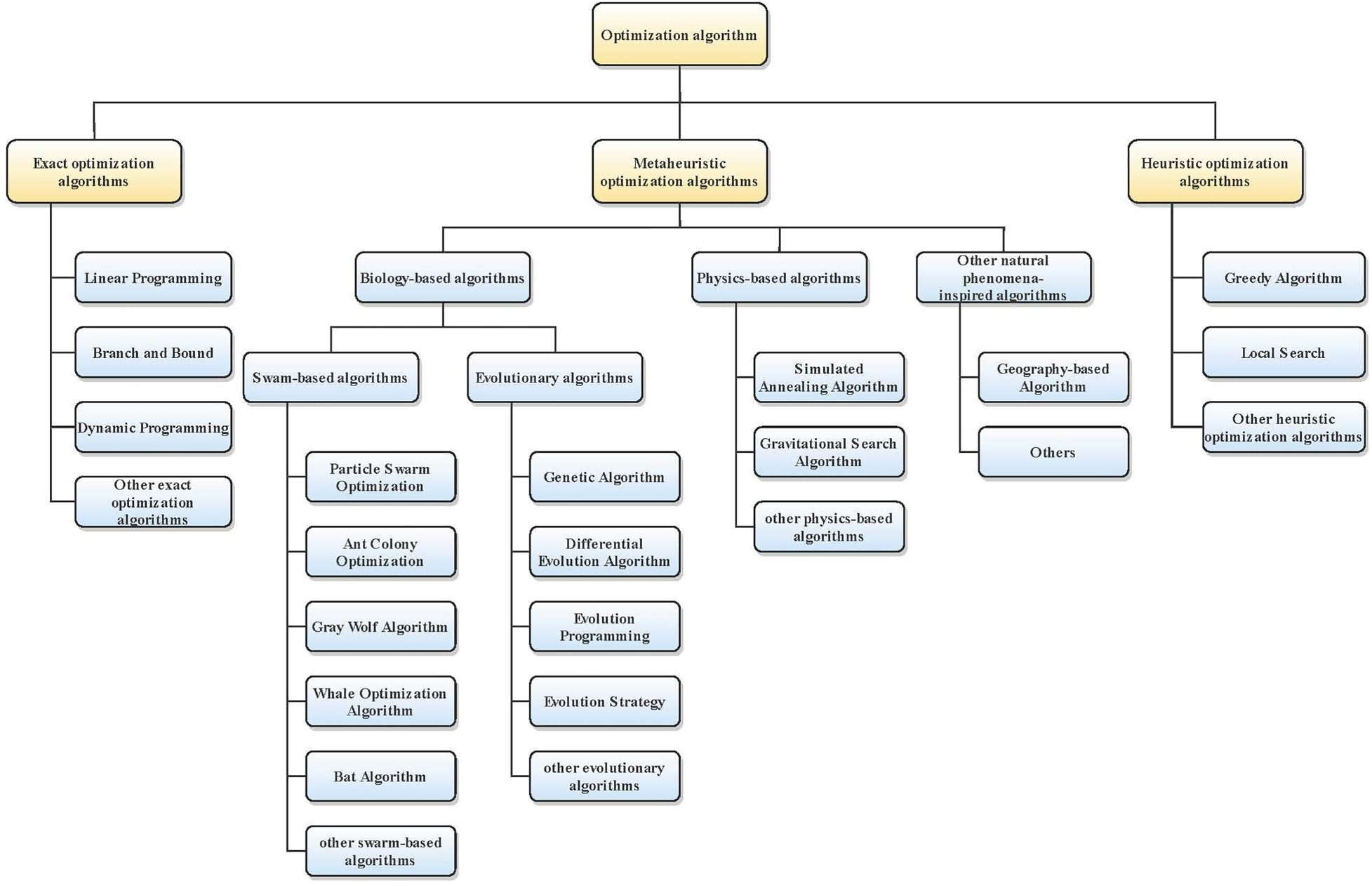
The category of optimization algorithms.
Optimization techniques used for sce.
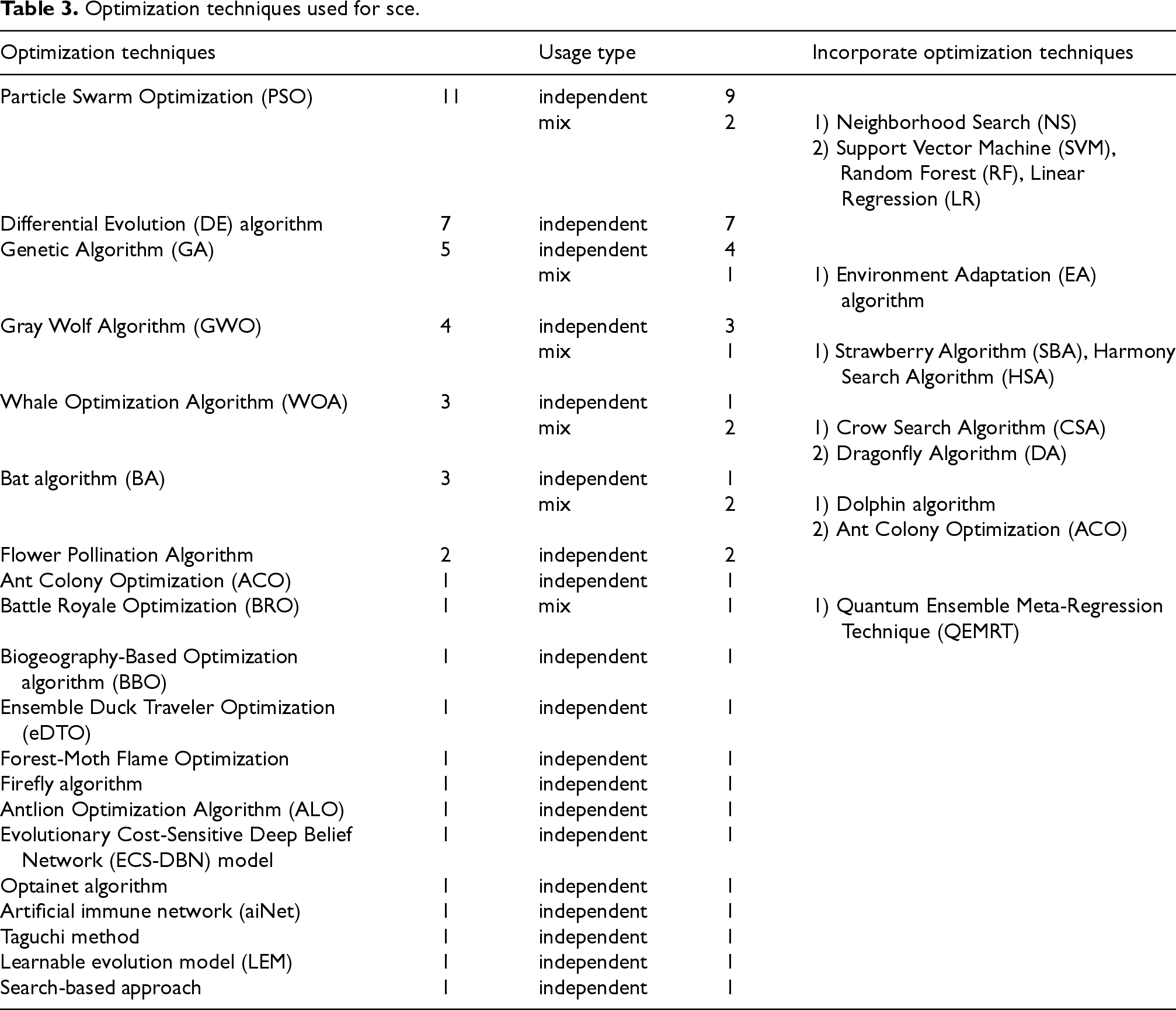
The research results show that 39 studies use only one independent optimization algorithm, while 9 studies (18.75%) use a combination of multiple optimization algorithms. This indicates that independent usage is more common. Several algorithms are combined with other techniques, demonstrating a trend toward hybrid models. For example, PSO combines Neighborhood Search (NS) and machine learning methods like Support Vector Machine (SVM) and Random Forest.
Many listed algorithms are inspired by natural phenomena or animal behaviours, such as PSO, GWO, BA, WOA, ACO, etc. Some techniques, like the artificial immune network (aiNet), suggest an integration of optimization with machine learning approaches for SCE.
This section examines the six most commonly used optimization algorithms identified in the study – PSO, DE, GA, GWO, WOA, and BA – and analyzes their contributions when applied to SCE.
Particle swarm optimization
PSO is a global optimization algorithm grounded in swarm intelligence, initially introduced by Eberhart and Kennedy. 18 PSO draws inspiration from artificial life studies, treating individuals in the group as particles in the search space. Each particle traverses the solution space at a defined velocity, progressively aligning itself with its personal historical optimum and the historical optimum of its neighbouring particles to refine potential solutions. 19 PSO employs the principles of “population” and “evolution” to facilitate the search for optimal solutions by capitalizing on the interactions within a group of particles.
The simplicity of PSO is derived from its solid biosocial foundation and the minimal number of required parameters, which contribute to its straightforward implementation. It is highly effective for global searches in nonlinear and multimodal problems and is gaining widespread attention in scientific research and engineering practice.
In this study, PSO is frequently used with other cost estimation techniques. Its primary functions include parameter tuning,20–23 enhancing particle diversity, 24 feature influence analysis, 25 and improving search capability and convergence rate,26,27 among others. Additionally, Venkataiah et al. 24 introduced a chaotic linear increasing inertia weight and diversity-enhanced PSO algorithm to optimize model accuracy. PSO is well-suited for continuous optimization problems and it efficiently identifies the global optimal solution within a multi-dimensional solution space. 28 Especially, it excels in handling cost estimation for complex projects, enabling rapid optimization of cost estimation model parameters and improving estimation accuracy. 29 This is an important reason why PSO is widely used in the field of SCE.
Numerous studies have focused on optimizing and improving PSO to enhance accuracy. The results show that half of the 10 papers use enhanced and combined methods to improve PSO. As shown in Table 4, there are two main approaches to these improvements. The first approach involves enhancing the PSO algorithm itself, leading to variants such as Improved PSO (IPSO), 27 Hybrid PSO (HPSO), and Diversity Enhanced PSO (DPSO). 19 The second approach integrates PSO with other models, such as Chaotic Linear Increasing Inertia Weight, 24 Neighborhood Search (NS), and SVM 21
Applications of PSO in SCE.
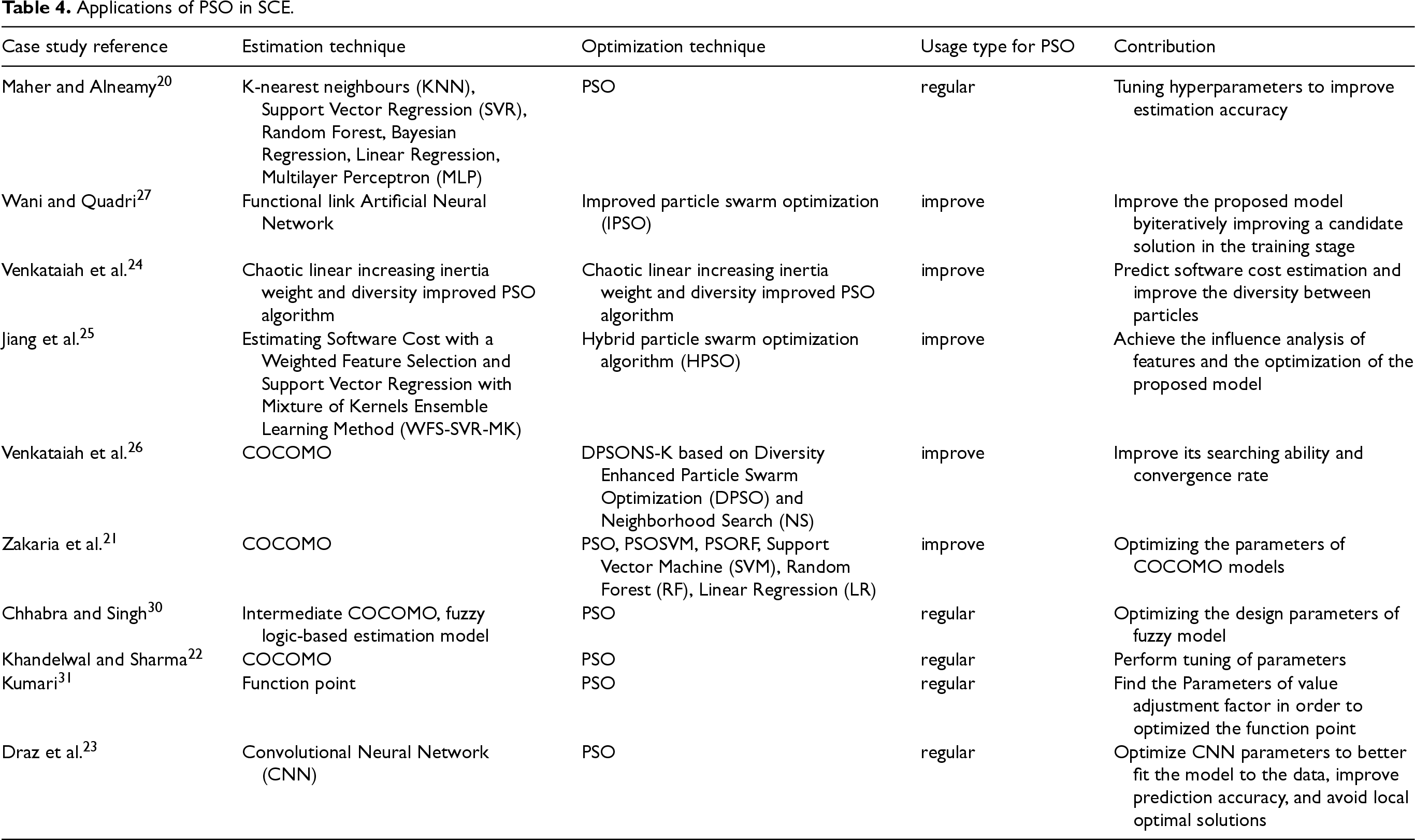
Applications of PSO in SCE.
Rainer Storn and Kenneth Price 32 proposed the Differential Evolution (DE) algorithm, inspired by evolutionary principles, to address the Chebyshev polynomial problem. The DE algorithm begins by creating a population of potential solutions, 33 derived by combining current solutions in the population using a basic formula. The algorithm then identifies the optimal solution. DE is similar to genetic algorithms in that it uses mutation and crossover techniques on current solutions within the population. DE is an evolutionary algorithm that relies on iterative group processes and performs random searches within continuous space using actual number encoding. 34 Its notable features include a straightforward design and effective operational efficiency. As shown in Table 5, DE has been frequently used for feature weighting, 35 enhancing diversity and convergence speed,36–38 and adjusting parameters.39,40 The DE algorithm is commonly combined with cost estimation techniques, with COCOMO being the most prevalent. Shailendra Pratap Singha et al. 36 developed a novel multi-objective differential evolution (MODE) which effectively enhances diversification and accelerates the convergence velocity of the optimal Pareto front, demonstrating notable performance compared to recent multi-objective DE optimization methods. DE is ideal for solving multi-dimensional nonlinear problems, especially in estimating costs for large-scale software projects. 36 Through mutation and selection operations, DE optimizes cost estimation under multi-objective constraints, improving the robustness of the model. The results show that most studies have improved DE by enhancing and combining, resulting in the development of a variety of techniques, including multi-objective DE, enhance-based DE, and HABDE, among others.
Applications of DE in SCE.
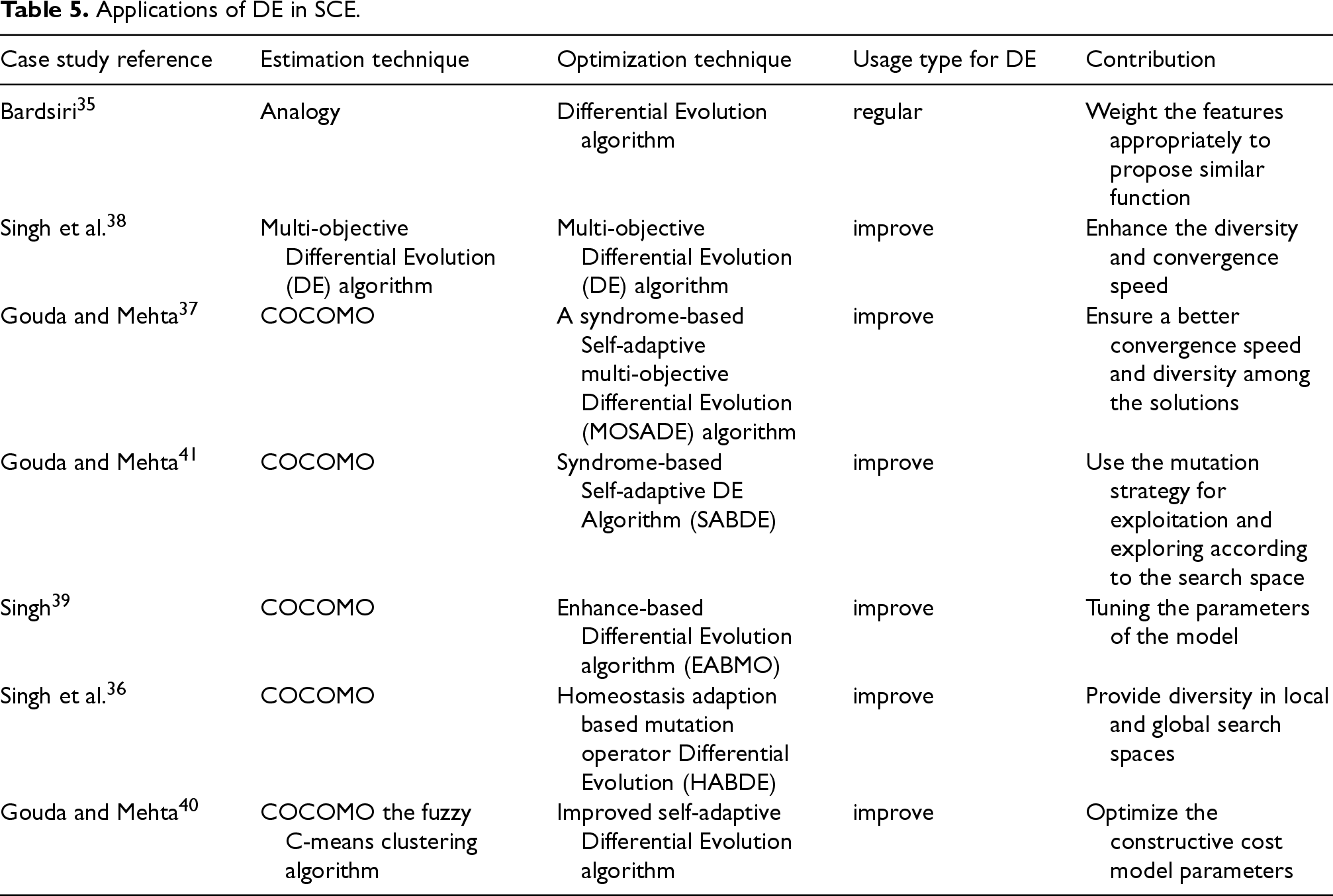
Applications of DE in SCE.
Genetic Algorithm (GA) was developed by Holland in 1970, and it is a robust and versatile optimization method based on Darwinian evolution principles, particularly natural selection and survival of the fittest. 32 GA represented problem parameters as chromosomes composed of genes and iteratively search for optimal or near-optimal solutions by simulating biological processes like selection, crossover, recombination, and mutation. Natural variation introduced randomness, enabling exploration of new solution spaces and avoiding local optima, while genetic inheritance propagates advantageous traits, guiding the search toward optimal regions. 42 These mechanisms balance exploration and exploitation, allowing GA to traverse a broader solution space effectively. GA is particularly suitable for large-scale, multidimensional, and nonlinear problems that are difficult to solve with traditional methods. GA can even be applied to systems that lack human knowledge and experience. However, due to its reliance on random search and sensitivity to parameter settings, GA is prone to problems such as slow convergence, easy to fall into local optimality, and unable to guarantee global convergence. They also require high computational complexity. 43 As shown in Table 6, GA frequently employed to adjust parameters and enhance the features of estimation models. Various studies have integrated GA with COCOMO43–45 and COCOMO II 46 models to adjust or optimize parameters, addressing non-convergence issues and improving estimation accuracy. Amrita Sharma and Neha Chaudhary 47 contrasted agile and traditional software development methodologies utilizing neural networks (NN) and GA. And only 1 of the 5 papers improved GA by combining it with EA algorithm. The findings suggest that GA’s performance is notably enhanced when integrated with additional algorithms. Based on its powerful global search capability and special advantages for nonlinear and multi-objective optimization problems, 43 GA plays an important role in adjusting key parameters in cost estimation models, thereby improving the adaptability and performance of estimation models.
Applications of GA in SCE.
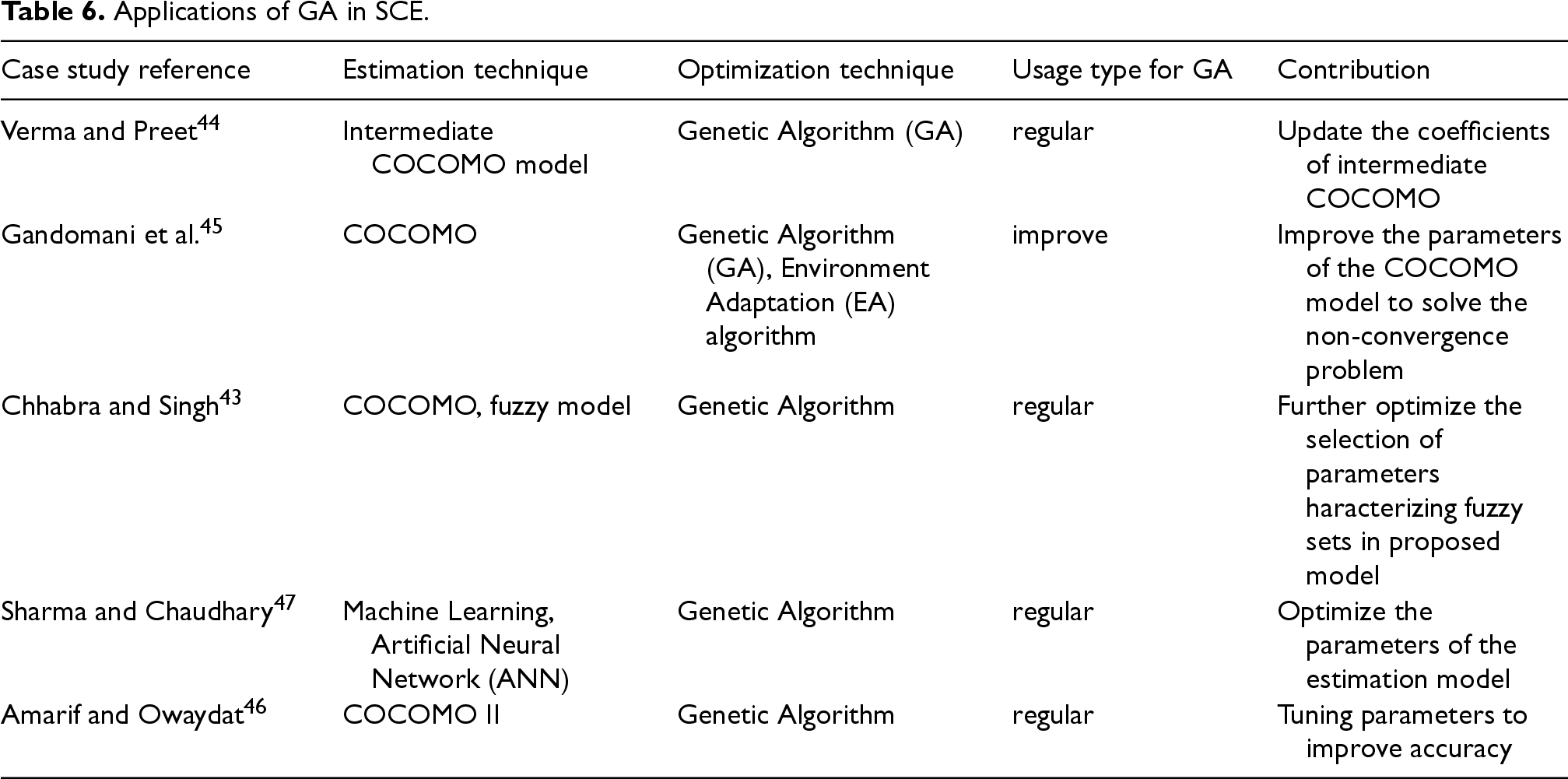
Applications of GA in SCE.
GWO, proposed by Seyedali Mirjalili et al., 48 is a bio-inspired algorithm modelled after gray wolves’ social architecture and trapping patterns. This algorithm emulates the hierarchical social structure and cooperative hunting behaviours of gray wolves, categorizing solutions into Alpha, Beta, Delta, and Omega roles to balance exploration and exploitation. The higher-level Alpha, Beta, Delta wolves focus on finding the best solution, while the lower-level Omega wolves increase diversity to ensure that the algorithm does not converge prematurely. 49 It mimics the wolves’ strategies of encircling, tracking, and attacking prey to refine solutions, dynamically adjusting search behaviour for effective global optimization. This hierarchical structure helps strike a balance between global and local search, improving the efficiency of the algorithm. 50
The GWO algorithm’s advantages include ease of execution, fast convergence to solutions, and minimal parameter requirements, 51 contributing to its widespread use across various fields. However, GWO is prone to premature convergence to local optima and can struggle with large-scale or high-dimensional data. In complex optimization problems, dynamic parameter adjustment, hybridization with other algorithms, and population diversification can improve the balance between exploration and exploitation, reducing the risk of premature convergence to local optima in GWO. 50
As shown in Table 7, GWO is frequently employed to optimize the parameters of estimation models to improve accuracy. Numerous studies have utilized GWO to enhance the performance and precision of COCOMO2,52,53 and Analogy-Based Estimation. 54 2 of the 4 studies improved the performance of GWO by combining it with other optimization techniques. GWO’s simplicity and convergence characteristics make it suitable for multi-objective cost estimation problems. By simulating the hunting behaviour of wolves, GWO optimizes parameter configurations, striking a balance between estimation accuracy and search efficiency in complex projects.
Applications of GWO in SCE.
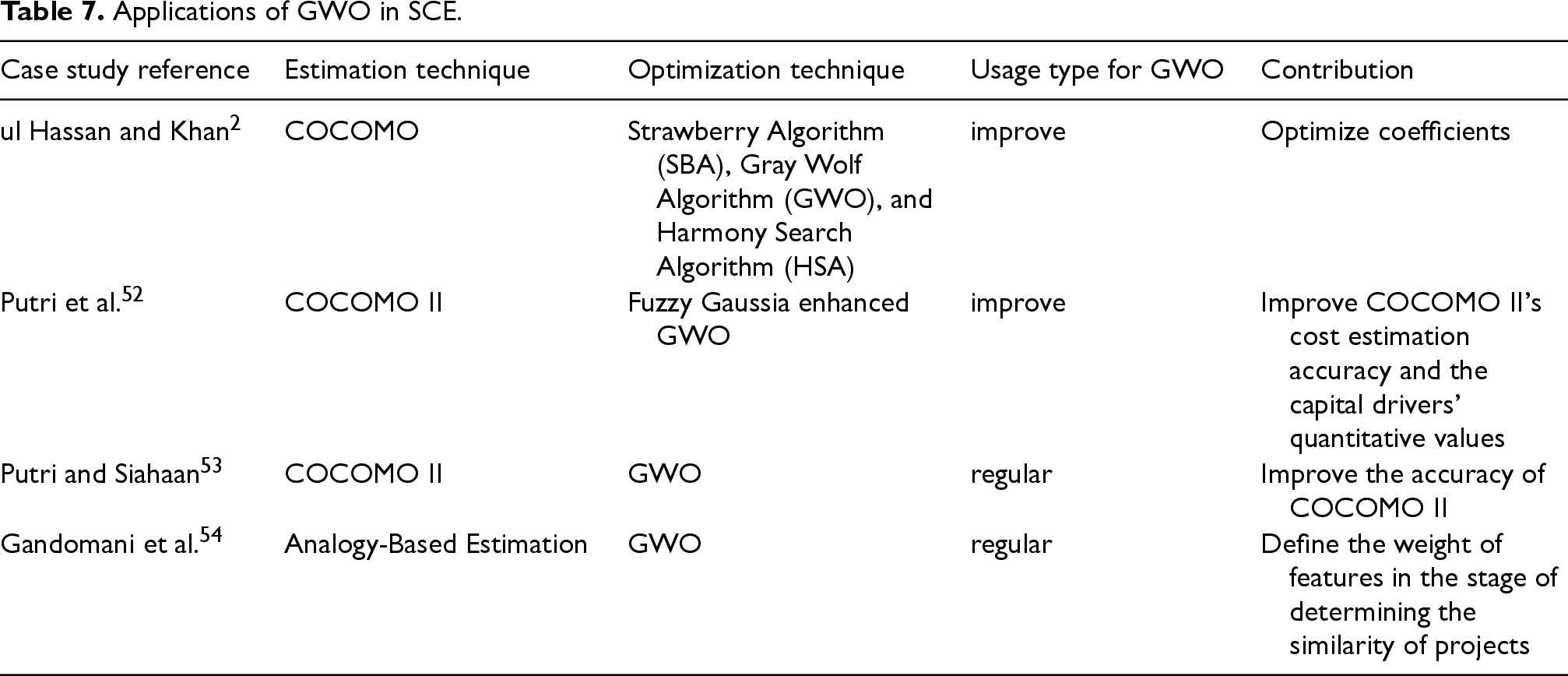
Applications of GWO in SCE.
Yang invented the BA, a biology-based optimization method inspired by bats’echolocation behaviour. 55 BA was built on three core principles of echolocation ranging, frequency and loudness modulation, and pulse firing rate control, which were inspired by the echolocation capabilities of small bats. This algorithm simulated the behaviour of approximately 996 species of bats, each of which exhibits unique echolocation abilities, emitting high-intensity ultrasonic pulses and using the reflected echoes to navigate and locate prey. These enable BA to efficiently explore the solution space and improve search accuracy, which has been adapted into an optimization method for engineering problems.
BA has shown effectiveness in various optimization scenarios. It is characterized by its simplicity, stability, and flexibility. This is because BA simulates bats’ ultrasonic echolocation behaviour to locate prey. It adjusts frequency, loudness, and pulse emission rates to control search range and accuracy. 56 By combining local and global search strategies, it enhances robustness and optimization capability. This algorithm is also simple in structure and easily extendable. However, BA’s performance can be sensitive to parameter settings and may face challenges balancing exploration and exploitation. 57 As illustrated in Table 8, BA has been used to determine optimal initial weights 58 and to optimize parameters in cost estimation models.59,60 It is frequently integrated with COCOMO II and other estimation models to improve optimization performance. Ch Anwarul Hassan 58 proposed a method that combines Ant Colony Optimization (ACO), Bat Algorithm (BAT), and Hybrid Ant Colony Optimization with Bat Algorithm (HACO-BA) with COCOMO, demonstrating that HACO-BA outperformed other methods. A novel approach combining biology-based algorithms with Deep Neural Networks (DNN) was also introduced to verify the performance of HACO-BA. Experimental results showed that the estimation model combining HACO-BA with DNN performed better than NN in terms of execution time and accuracy, 58 while NN requires more time in trainning to achieve similar estimation accuracy. Moreover, all 3 papers improved the performance of BA by combining it with other techniques. BA optimizes multi-objective cost estimation problems by simulating the echolocation behaviour of bats, improving the efficiency of parameter optimization. Its combination of local and global search capabilities ensures high performance in scenarios requiring precise estimation. 61
Applications of BA in SCE.
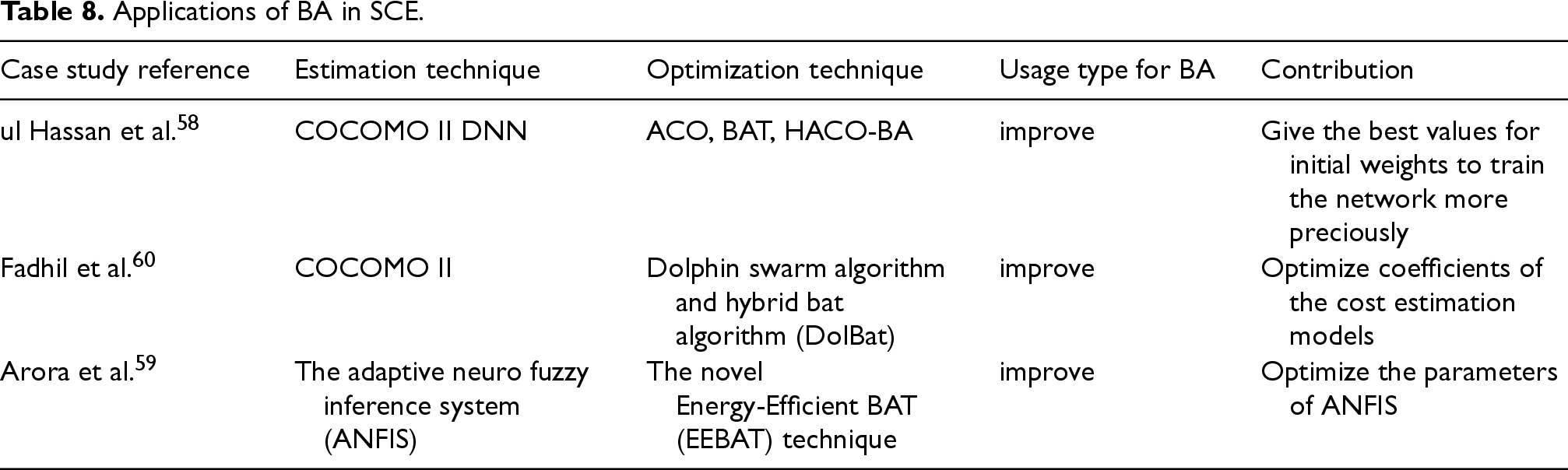
Applications of BA in SCE.
The Whale Optimization Algorithm (WOA) also belongs to the swam-based optimization algorithms. It was developed by Seyedali Mirjalili in 2016 and inspired by the hunting patterns of humpback whales, particularly the feeding mechanism of the bubble net. 62 This strategy is a unique method whales use to hunt fish by creating spiral-shaped bubbles around their prey.63,64 WOA is usually introduced to solve complex optimization problems. It is growing and gradually being applied to scenarios in various industries to solve global optimization problems.
As shown in Table 9, WOA is usually used to adjust parameters such as regression coefficients, 65 weights, 66 and network parameters 67 to optimize them and improve the models’ prediction ability. According to the analysis results, the optimization technologies used in combination with WOA include the Kernel Logistics Regression model, Linear Regression model, Radial basis function neural network (RBFN), functional link artificial neural network (FLANN), and Multilayer Perceptron (MLP). The WOA were usually improved by combining with WOA include the Crow Search algorithm (CSA) and Dragonfly Algorithm (DA). WOA enhances the predictive capabilities of cost estimation models by simulating the predatory behaviour of whales to optimize key variables. Its strong ability to avoid local optima makes it well-suited for handling project data with high uncertainty and complexity. 68
Applications of WOA in SCE.
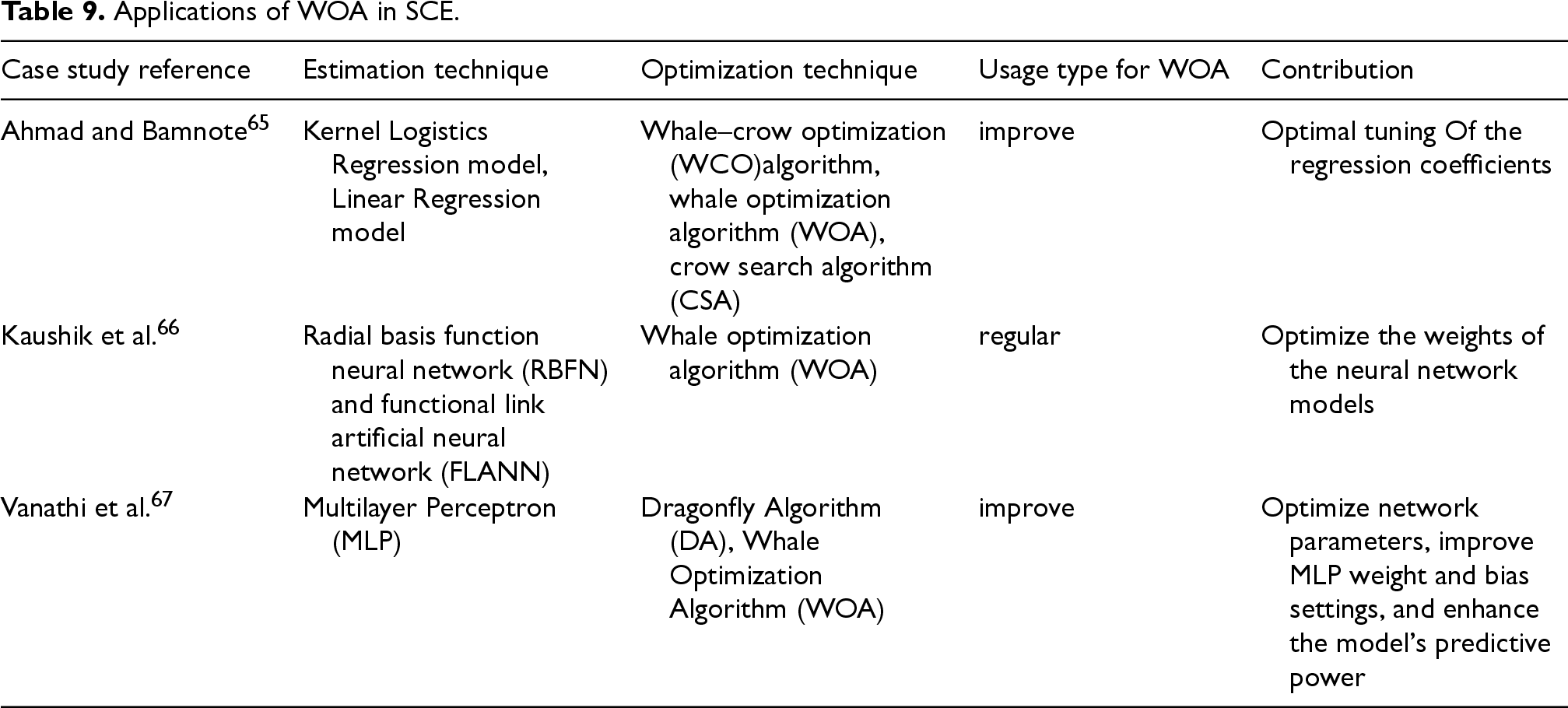
Applications of WOA in SCE.
This analysis reveals that each of these algorithms–PSO, DE, GA, GWO, BA, and WOA–has unique strengths and applications in SCE. PSO excels in global searches and is often combined with other techniques for parameter tuning and feature analysis. DE is noted for its simplicity and efficiency, and it is frequently used for feature weighting and enhancing diversity. GA has robust optimization capabilities and is commonly employed for parameter adjustment and model feature enhancement. GWO, inspired by wolf behaviour, offers rapid convergence but can struggle with large-scale data. BA shows promise in determining optimal weights and parameters. WOA is increasingly applied to optimize various model parameters. Additionally, DE and GA perform well for multi-dimensional and nonlinear estimation problems. PSO and WOA are suitable for optimizing complex projects requiring continuous refinement. GWO and BA are more effective for cases with simpler parameter settings. Choosing the right optimization technique should considering characteristics of the algorithms, project complexity and data size. While each algorithm presents specific advantages, they face challenges such as premature convergence or sensitivity to parameter settings. Hence combining multiple optimization algorithms is a recommended approach to enhance their performance. Existing studies have shown that, integrating these algorithms with traditional cost estimation models like COCOMO has shown significant improvements in accuracy and performance, highlighting the potential of hybrid approaches in addressing the complexities of cost estimation problems.
The evolution of optimization techniques in ASCE remains limited. The literature review reveals that only 7 articles have explored optimization methods in this field over the past six years. These articles primarily focus on biology-based approaches, including artificial immune networks (aiNet), Whale Optimization Algorithm (WOA), forest-moth flame optimization, Genetic Algorithm (GA), Bat Algorithm, Antlion Optimization (ALO), and the Evolutionary Cost-Sensitive Deep Belief Network (ECS-DBN), as shown in Table 10. Despite this variety, the scope of optimization research in ASCE is still relatively narrow.
Applications of optimization techniques in ASCE.
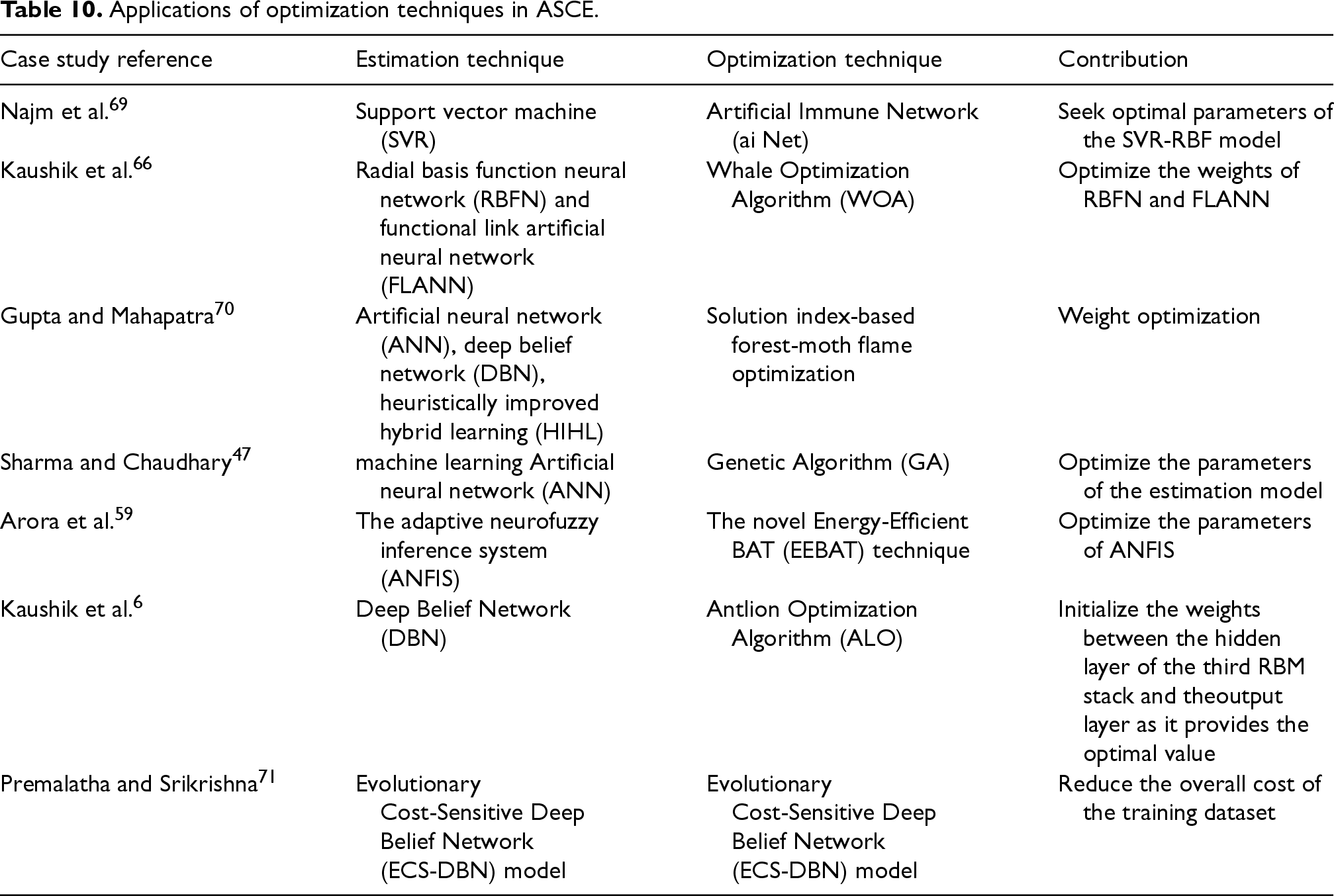
Applications of optimization techniques in ASCE.
Analysis of these 7 articles reveals that 3 focus on optimizing parameters,47,59,69 3 aim to optimize model weights,6,66,70 and 1 article addresses reducing the overall cost of the training dataset, 71 as shown in Table 10. Overall, these optimization techniques consistently aim to enhance the precision and efficiency of cost estimation methods for Agile.
This demonstrates a trend towards leveraging advanced computational methods to address the complexities and uncertainties inherent in ASCE. Applying nature-inspired optimization algorithms and neural network-based approaches suggests that researchers are exploring sophisticated, adaptive methods to capture the nuances of Agile project dynamics. This integration of machine learning and optimization techniques represents a promising direction for improving the precision and reliability of cost estimation in Agile.
Many studies have explored integrating cost estimation methods with optimization techniques to enhance accuracy. The results indicate that the most frequently used cost estimation models include COCOMO, COCOMO II, Artificial Neural Networks (ANN), Regression, Fuzzy Logic-based estimation model, Support Vector Regression (SVR), and Analogy, as depicted in Figure 6. COCOMO is the most commonly referenced, followed by COCOMO II. Combining various estimation models with optimization algorithms is standard practice, as it improves the precision and effectiveness of cost estimation models.
The cost estimation techniques combined with optimization algorithms.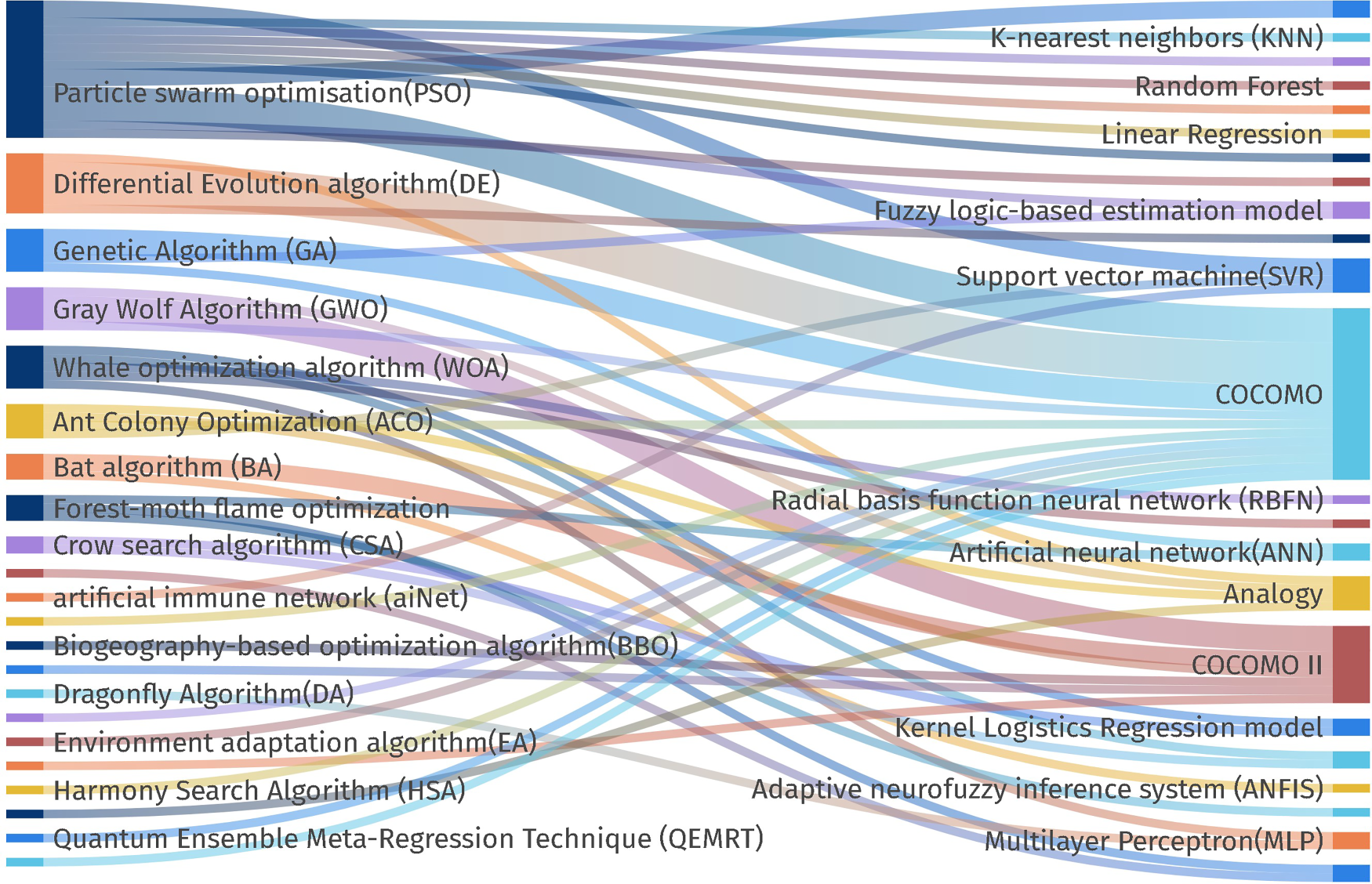
This comprehensive analysis of 52 papers on SCE reveals a significant trend toward integrating optimization algorithms with traditional cost estimation models. In the past few years, the research on the application of metaheuristic algorithms in the field of SCE has shown a steady upward trend, and the research focus has been on high-quality technical practices published in journals, with fewer literature review studies. The study identifies 20 primary optimization techniques, with PSO, DE, GA, GWO, BA, and WOA emerging as the most frequently used. These biology-based algorithms are often combined with established models like COCOMO and COCOMO II to enhance accuracy and performance. The research shows a preference for using single optimization algorithms (81.25% of studies), though there’s a growing trend towards hybrid models that combine multiple techniques. Each primary algorithm offers unique strengths in parameter tuning, feature analysis, and model optimization. However, they also face challenges such as premature convergence or sensitivity to initial parameters. The application of optimization techniques in ASCE is still in its early stages, with only 7 relevant articles identified in the past 6 years and a rare integration of different optimization techniques. Especially in the last two years, the number of studies on the application of metaheuristic algorithms to ASCE has decreased. Existing studies primarily focus on biology and neural network-based approaches and aim to optimize parameters, weights, or overall model performance. The main reasons for this phenomenon include: 1) Most existing cost estimation techniques are predominantly tailored to traditional development methods, which require well-defined requirements and early planning. However, Agile emphasizes iterative and progressive planning and estimation. 72 Due to the characteristics of Agile methods, ASCE faces significant challenges, including variability in project requirements, the dynamic nature of agile methodologies, and the complexity of integrating metaheuristic algorithms with existing estimation models. 2) There is also a lack of research on cost drivers specific to agile software development, 8 with additional cost drivers for agile projects often not considered. These features further complicate accurate cost estimation. 3) ASCE research is more conceptual than model-driven. 66 Standard agile estimation methods, such as Expert Opinion, Analogy and Disaggregation, Planning Poker, and Use Case Points, heavily rely on the development team’s expertise and experience. 4) Research into ASCE is progressing more slowly than that into non-agile development. Kaushik et al. 6 attribute this to the limited availability of publicly accessible agile project data, contrasting with the more abundant non-agile data.
Recommendations for future research
Based on the above research, future research should address the gaps identified, explore new optimization techniques, and improve the cost estimation accuracy. 1) The trend toward combining multiple biology-based optimization algorithms with cost estimation models will likely continue. Future research may focus on creating more sophisticated hybrid models that leverage the strengths of various techniques while mitigating their individual weaknesses. 2) With the increasing complexity of hybrid models, future research may also focus on improving the precision and interpretability of optimized assessment models. 3) Machine learning will likely become increasingly significant in SCE with the growing use of neural network-based approaches. Future work may explore deep learning techniques and their integration with optimization algorithms for more accurate and adaptive estimation models. 4) Given the currently limited research in optimization techniques for ASCE, efforts must increase to develop and refine optimization algorithms tailored to Agile projects. This study thoroughly analyzes 20 optimization methods in SCE, details their applications, and highlights the critical optimization methods and their contributions. It also underscores the need for further research into optimization methods for ASCE, particularly biology-based algorithms and machine learning techniques, to refine and enhance the precision of ASCE models. This study provides an essential reference for the applications and advancement of optimization technology in the field of SCE. It also lays the foundation for future in-depth research.
Footnotes
Funding
The author(s) disclosed receipt of the following financial support for the research, authorship, and/or publication of this article: This research was supported by the Fundamental Research Grant Scheme (FRGS): FRGS/1/2022/ICT01/UKM/02/1, Ministry of Higher Education (MoHE), Malaysia.
Conflicting interests
The author(s) declared no potential conflicts of interest with respect to the research, authorship, and/or publication of this article.
