




Abstract
Pregnancy-associated Intimate Partner Homicides (PAIPHs) are murders of pregnant women by a former or current intimate partner. This study uses aggregated public data from 2000 to 2019 to examine 33 Florida Pregnancy-associated Intimate Partner Homicides and a comparison group of 33 Nonpregnant Intimate Partner Homicides (NIPHs). Findings show that unwanted pregnancies or relationships, avoidance of prosecution, doubts concerning the unborn child’s paternity, infidelity accusations, and the victim’s drug use are risk factors for Florida’s Pregnancy-associated Intimate Partner Homicides. Moreover, findings suggest a need for Maternal Intimate Partner Violence programs, policies, and interventions targeted toward pregnant women and their intimate partners.
Keywords
Introduction
The most dangerous place for a woman is at home with her intimate partner.
According to the National Coalition Against Domestic Violence (NCADV, 2020, p. 1), “domestic violence is the willful intimidation, physical assault, battery, sexual assault, and/or other abusive behavior as part of a systematic pattern of power and control perpetrated by one intimate partner against another. It includes physical violence, sexual violence, threats, economic, and emotional/psychological abuse.”
Domestic violence (DV) exists in every community and affects people regardless of age, gender, gender identity, disability, socioeconomic status, race, ethnicity, sexual orientation, nationality, or religion. Ten million Americans, which averages out to 20 people each minute, are physically victimized by an intimate partner every year, and many more suffer from emotional, psychological, and economic abuse (NCADV, p. 1). Twenty-five percent of women and just over 14% of men have been victims of severe physical abuse such as strangling, beating, or burning, in their lifetime (NCADV, 2020, p. 1). Almost 21% of high school women and 43% of college women report violent or abusive behavior on the part of a dating partner (Teen, Campus & Dating Violence, p. 1). Important for the current study, one in six women are estimated to be abused for the first-time during pregnancy (The American College of Obstetricians and Gynecologists (ACOG)) with between 6% and 22% of pregnant women experiencing intimate partner violence (IPV) (Gunter, 2007). The consequences of the physical violence indicate that about 20% of women compared to only 5% of men require medical care. 1
Among murder victims in the U.S., over 50% and perhaps as high as 68.3% (Klein & Klein, 2020, p. 8) of women killed suffered their death at the hands of their intimate partner compared to just 7.7% of men who were killed by an intimate partner (Ertl et al., 2019; NCADV, 2020, p. 2). As a result, homicide is one of the leading causes of death for women in the U.S. and the leading cause of maternal mortality (Gunter, 2007). Young Black women, ages 15 to 24, have the highest incidence of homicide for women, usually perpetrated by an intimate partner. Young White women, ages 15 to 24 have the second highest incidence of homicide, also usually perpetrated by an intimate partner (Gunter, 2007).
Briefly stated, compared to other studies of intimate partner homicide, very few have focused on the murder of pregnant women by intimate partners despite some researchers’ claim, for example, Horon and Cheng (2001), that it is the number one cause of death for pregnant women. As the first study to explore pregnancy-associated homicide in Florida, as well as to include selected perpetrator motives, the current research expands our knowledge related to women and homicide by (1) examining the incidence of homicide victimization among 66 Florida women within the context of intimate partner relationships between 2000 and 2019; (2) comparing the 33 women killed while pregnant matched for race and age with 33 women murdered by intimate partners but who were not pregnant, and (3) providing perpetrator and locational contexts.
Literature Review
Intimate partner violence and homicide is a social problem in need of more research to address potential preventative measures. Much of the existing literature on domestic violence has shared the incidence of various types of abuse, examined the effects of physical and psychological abuse on victims, and explores the cycle that abuse is argued to follow (Walker, 1984). In that regard, 37.9% of women and 29.3% of men living in Florida are victims of dating violence, intimate partner sexual abuse, and/or stalking at some time during their lives (NCADV, 2020). According to the same report, 105,298 calls were made to the police about domestic violence incidents during 2019, and despite these calls made to police and shelters with space to serve over 3,000 adults and children, 221 Floridians were killed in domestic violence incidents during 2019 (NCADV, 2020).
IPV and IPH Characteristics among Pregnant and Non-pregnant Women
When the effects are examined among pregnant women, it becomes apparent that there are demographic differences among the victims, as well as the types of psychological and/or physical violence that victims experience, and specific times when pregnant women are most at risk for violence.
Demographics
Victims of Pregnancy-associated Intimate Partner Violence (IPV) are usually young. The highest incidence of IPV occurs among teens ages 15 to 19 (Gunter, 2007; Matud, 2007), however, the risk was two times greater for IPH among pregnant and postpartum women aged 10 to 29 in Illinois (Koch et al., 2016) and Louisiana (Wallace et al., 2020) compared to nonpregnant women. A 2005 CDC study of postpartum mothers found that if the young woman was 19 years-old or younger she was three times more likely to be a homicide victim compared to all postpartum women.
IPH victims are most likely single, either unmarried or never married (Morrison et al., 2020), and undereducated (Wallace et al., 2016). Their partner was physically abusive or had shown indications of becoming physically abusive prior to the pregnancy, for example, emotional abuse or controlling behavior (Bohn et al., 2004; Floridahealth.gov, 2018a; Rodrigues et al., 2008; Samankasikorn et al., 2019; Stewart & Cecutti, 1993). Most of the literature also suggests that Black women are more likely to experience IPV during pregnancy compared to White women (Floridahealth.gov, 2018a; Koch et al., 2016; McFarlane et al., 2002; Palladino et al., 2012; Wallace et al., 2016). Conversely, McFarlane et al. (1992) found equivalent rates of sexual and physical violence for Black and White women and higher rates of frequent, severe abuse among White women. Samankasikorn et al. (2019) suggest that Black and Hispanic women experience approximately the same rate of pregnancy violence; a difference that may be explained by the 27 years between the McFarlane et al. (1992) and the Samankasikorn et al. (2019) studies.
Adding to the demographic detail, Morrison et al. (2020) found that pregnant IPH victims were significantly likely to be at least 5 years younger than the non-pregnant IPH victims. Gunter (2007) points out that women with disabilities and women who are economically-disadvantaged are also at greater risk of being abused, which also puts them at greater risk for IPH. According to Cheng and Horon (2010), pregnant women are also more likely to be killed by their intimate partner during the first 3 months of pregnancy.
To summarize, compared to the general population of pregnant women in the U.S., young, Black, undereducated, disabled, low income, pregnant women are at the greatest chance of being killed by their intimate partner.
Type of Violence
Whether the abuse is physical, sexual, or psychological, it can cause a pregnant woman to experience stress or bodily injuries, which increases the risk of miscarriage (Alhusen et al., 2015; Block, 2000; Gelles, 1975, 1988; Morland et al., 2008; Walker, 1987). Some abusers also intentionally target the woman’s abdomen, which inevitably puts her as well as her unborn child at risk (Bacchus et al., 2006; Block, 2000; Campbell et al., 1995; Gelles, 1975, 1988; Helton et al., 1987; Jasinski, 2001; McFarlane et al., 1992; Rodrigues et al., 2008; Samankasikorn et al., 2019; Stewart & Cecutti, 1993; Walker, 1984).
Other risk factors associated with an increased risk of homicide are violence during pregnancy (Campbell et al., 2003; Decker et al., 2004; Martin et al., 2007; McFarlane et al., 2002), and the presence of a gun in the home (Block, 2000), which increases the risk that a woman will be killed by up to nine-fold if she threatens to leave (Campbell et al., 2003).
Time at Greatest Risk
Some studies suggest that Pregnancy-associated Intimate Partner Violence (PAIPV) starts or increases during pregnancy (Martin et al., 2004; McFarlane et al., 2002; Walker, 1984), while others posit that pregnancy is a “protected” status when women experience little to no violence (Decker et al., 2004; Jasinski, 2001). Decker et al. (2004) speculate that abusers may not feel the need to use violence as a control tactic because the victim’s pregnancy status ties her to him. Conversely, other studies suggest that violence before pregnancy is the best predictor of violence during pregnancy (Helton et al., 1987; Martin, 2001; Stewart & Cecutti, 1993). For example, a 1987 study by Helton et al. found that 87.5% of women abused before pregnancy were abused during and after pregnancy as well. Additionally, Martin et al.’s (2004) observation of an increase in psychological and sexual abuse but a decline in physical assaults among the pregnant women they studied.
Whether pregnant or not, risk of violence increases for women if children are present from an earlier relationship. Theoretically, the children remind the male partner that he is not the only man she has had in her life.
The perpetrators use of alcohol and/or other drugs may also increase the chance of IPV and IPH. It is not that these substances cause the perpetrator to act, but he may use them as an excuse for abusing or killing his intimate partner (Bancroft, 2002).
Victims who experience extreme violence whether during pregnancy or at other times tend to leave or attempt to leave their intimate partner. Leaving, however, puts them at an even greater risk of murder (Decker et al., 2004). In part the increase in her vulnerability is because her guard is down. Her routine has changed. She no longer hears the tone of his voice or the way he enters the house and she can no longer see the look on his face. When she lived with him, she could serve as her own self guardian. Once she no longer sees or hears him, she cannot guard against his violence should he come stalking.
Several studies report that the number one cause of death for pregnant and nonpregnant women is homicide, and that the most frequent person to commit her murder is her romantic partner (Wallace et al., 2020).
The IPV & IPH Experiences of Florida’s Pregnant Women
Pregnant women, especially those women with a history of heart conditions, for example, may die as a result of pregnancy-related conditions. Pregnant women may also die for reasons unrelated to their pregnancy (Floridahealth.gov, 2018b). Recent reports from Florida’s Pregnancy-associated Mortality Review (PAMR) list homicide as the third leading cause of non-pregnancy-related deaths (NPRDs), for pregnant women in Florida.
Despite the impact of violence on some pregnant women, there is little empirical research addressing Florida’s Pregnancy-associated Intimate Partner Homicides. The current study, therefore, adds significantly to the data related to the murder of pregnant women in Florida and their experiences with abusive men prior to their demise compared to a matched set of women who were also killed by their intimate partner but who were not pregnant at the time. Using a variety of secondary data sources described below, we address the victim-perpetrator characteristics of Florida’s Pregnancy-associated Intimate Partner Homicides (PAIPHs), the primary motives of Florida’s Pregnancy-associated Intimate Partner Homicides, and the differences, if any, between male-perpetrated Pregnancy-associated Intimate Partner Homicides and male-perpetrated Nonpregnant Intimate Partner Homicides (NIPHs).
According to Florida’s 2018 Pregnancy Risk Assessment Monitoring System (PRAMS) data, most women experiencing pregnancy violence were under 25, single, and on Medicaid. Women with higher household incomes or educational attainment experienced less pregnancy violence (Floridahealth.gov, 2018a). Women with household incomes of <$15,000 experienced more pregnancy violence than the combined total of women with incomes over $15,000 suggesting that women at the most serious levels of poverty also experience a great deal of pregnancy violence (Floridahealth.gov, 2018a).
Furthermore, Floridahealth.gov (2018a) data show that “unintended pregnancies” were highest among Non-Hispanic Blacks (61%), followed by Hispanics (38.3%) and Non-Hispanic Whites (37.1%). The rate of unintended pregnancies was somewhat equal across the board for household income, educational attainment, Medicaid status, and marital status. However, age had an impact on “unintended pregnancies.” Women under 19 experienced the highest number of unintended pregnancies.
Limitations of the PRAMS data include the exclusion of nonphysical violence, such as economic and psychological abuse that may impact pregnant women (Martin et al., 2004) and narrow race/ethnicity categories that leave out groups, for example, Asians and American Indians, and ethnicities. Another limitation is the exclusion of women who did not have a live birth. Since abuse during pregnancy can cause miscarriages or stillbirths (Alhusen et al, 2015; Block, 2000; Gelles, 1975; Morland et al., 2008; Walker, 1987), pregnancy outcomes should be inclusive.
The IPV & IPH Experiences of Florida’s Nonpregnant Women
Websdale’s (1999) study of 314 Florida domestic homicides utilized aggregated data from police agencies, prosecutors, judges, defense attorneys, media reports, Uniform Crime Reports, medical examiners, court records, Domestic Violence coalitions, and Domestic Violence shelters. He found that males perpetrated 67 of the 78 (86%) of the Intimate Partner Homicides (IPH) involving a female victim in a single killing (Websdale, 1999, pp. 78–81). Also, his statistics indicated an equivalent number of White and Black victims; however, after factoring in Florida’s racial makeup and population size, Black women were overrepresented among those at a higher risk of victimization. Additionally, most victims were single, and contrary to Daly and Wilson’s (2008) theoretical expectation that men are more likely to kill non-biological children who do not carry his genes rather than his biological children who are expected to carry his genes on to the next generation, male perpetrators killed biological children just as often as nonbiological children.
Perpetrator Characteristics and Motives
Websdale (1999) found that 50.7% (34) of the 67 male perpetrators exhibited obsessive possessiveness (p. 81) defined as an abnormal degree of suspicion that leads to behaviors like stalking, suicide ideation if she leaves him, or dangerous preoccupation with the relationship (Websdale, 1999, pp. 99–101). Perpetrators also exhibited extreme jealousy (p. 81), which stemmed from the victim’s single or multiple actions, real or perceived, that the perpetrator viewed as betrayal, rejection, or a threat to himself, socially or emotionally.
Before the incident, 47.8% of the 67 (32) perpetrators threatened to kill the victim, 50.7% (34) had police contact, 43.3% (29) had a criminal history, and 41.8% (28) consumed drugs or alcohol (Websdale, 1999, p. 81). The use of intoxicants, he asserts, may be part of the perpetrator’s lifestyle, which is more likely to include domestic violence and that taken as a whole, increases the partner’s risk not only for physical violence but physical violence that results in homicide (Websdale, 1999, p. 102). Websdale (1999) asserts that restraining orders, law enforcement, or criminal intervention did not deter some perpetrators, and some perpetrators informed someone other than the victim of their desire or intent to kill her.
As for victims, before the incident, 86.6% (58) experienced battering, while only 28.6% (19) sought restraining orders (Websdale, 1999, p. 81). The considerably low number of restraining orders indicates that victims of domestic violence do not regularly file restraining orders. In fact, King (2019) found that victims who do not report their abuse to law enforcement or file a restraining order are significantly more likely to be killed.
Additionally, Websdale (1999) found that estranged, divorced, or separated victims, as well as victims who threatened or were in the process of leaving, were more likely to be killed by their intimate partner. Therefore, actual or threatened separation from the perpetrator is a risk factor or motive for Florida’s NIPHs (Websdale, 1999). Of note, Websdale (1999) did not find significant personality disorders or mental illness within the perpetrator sample.
Methodology
Our qualitative analysis uses aggregates of secondary data; media reports, court records, medical examiner reports, family interviews, witness statements, interrogations, police reports, social media, video content, confessions, injunctions, and 911 audios to better understand how these intimate relationships ended with the woman’s death.
As themes emerged from the media reports, additional searches were performed to collect data from social media, online databases, and public records, including the respective clerk of court, police departments, Florida Department of Law Enforcement, Facebook, Legacy.com, Twitter, Instagram, and YouTube. These data compliment and expand our ability to further explain the circumstances of the women’s homicides. All known male perpetrators and their intimate partners, who they killed with intent or malice from 2000 to 2019 in Florida are included in this study.
Sampling
As noted in the literature review, there is a lack of research on Florida’s pregnancy-associated intimate partner homicides (PAIPH). Therefore, an exploratory, descriptive analysis of this phenomenon will provide insightful information on which future studies can build with the goal of ultimately reducing the number of intimate partner homicides. Florida has a combination of characteristics that make it an excellent place to explore pregnancy-associated intimate partner homicides, including the availability of public records, its feticide law, and its racially diverse population (U.S. Census Bureau, 2020).
To accomplish data collection, Google, Internet Explorer, Edge, and Yahoo were used to search for PAIPH cases purposively and exhaustively. The searches were conducted using the following keyword phrases; pregnant woman killed in Florida, pregnant woman murdered in Florida, pregnant woman killed by husband in Florida, and pregnant woman killed by boyfriend in Florida. To avoid county-level bias, another search was performed using the name of all 67 Florida counties until all were searched. Data for 33 PAIPH homicides resulted from these processes.
Then, utilizing the same collection method, a quota sample of 33 NIPH cases were found with the following keyword phrases; woman killed in Florida, woman murdered in Florida, woman killed by husband in Florida, and woman killed by boyfriend in Florida. Again, a search was performed by entering the names of all 67 counties one-by-one until every county was searched.
While searching, NIPH cases were categorized using the age and race of the victim and perpetrator. After an extensive search, the NIPH (289) and PAIPH cases were paired based on the victims’ and perpetrators’ age and race. Despite having a collection of 289 NIPH cases and performing a second search, an exact match for the PAIPH case was not found. Therefore, NIPH cases were chosen based on their proximity to the characteristics of the PAIPH cases. Subsequently, the paired groups were identical in “race” but slightly different in age. The mean age for PAIPH victims was 25.3, NIPH victims 25.4, PAIPH perpetrators 28.9, and NIPH perpetrators, 29.8.
Finally, identifiable information such as the victim-perpetrator name, age, location, and “race” were extracted from the media reports to obtain additional data, for example, court records, medical examiner reports, family interviews, witness statements, interrogations, police reports, social media, video content, confessions, injunctions, and 911 audios. Data not found in online public record searches or other online databases were requested from the appropriate agency or government entity in charge of the records. In some cases, multiple media reports substituted for unobtainable government and agency data. When there were discrepancies, the official data source or the most “knowledgeable,” or most frequently reported finding was used. For example, the medical examiner’s report on the gestational age of the fetus overruled media reports.
Coding and Analysis
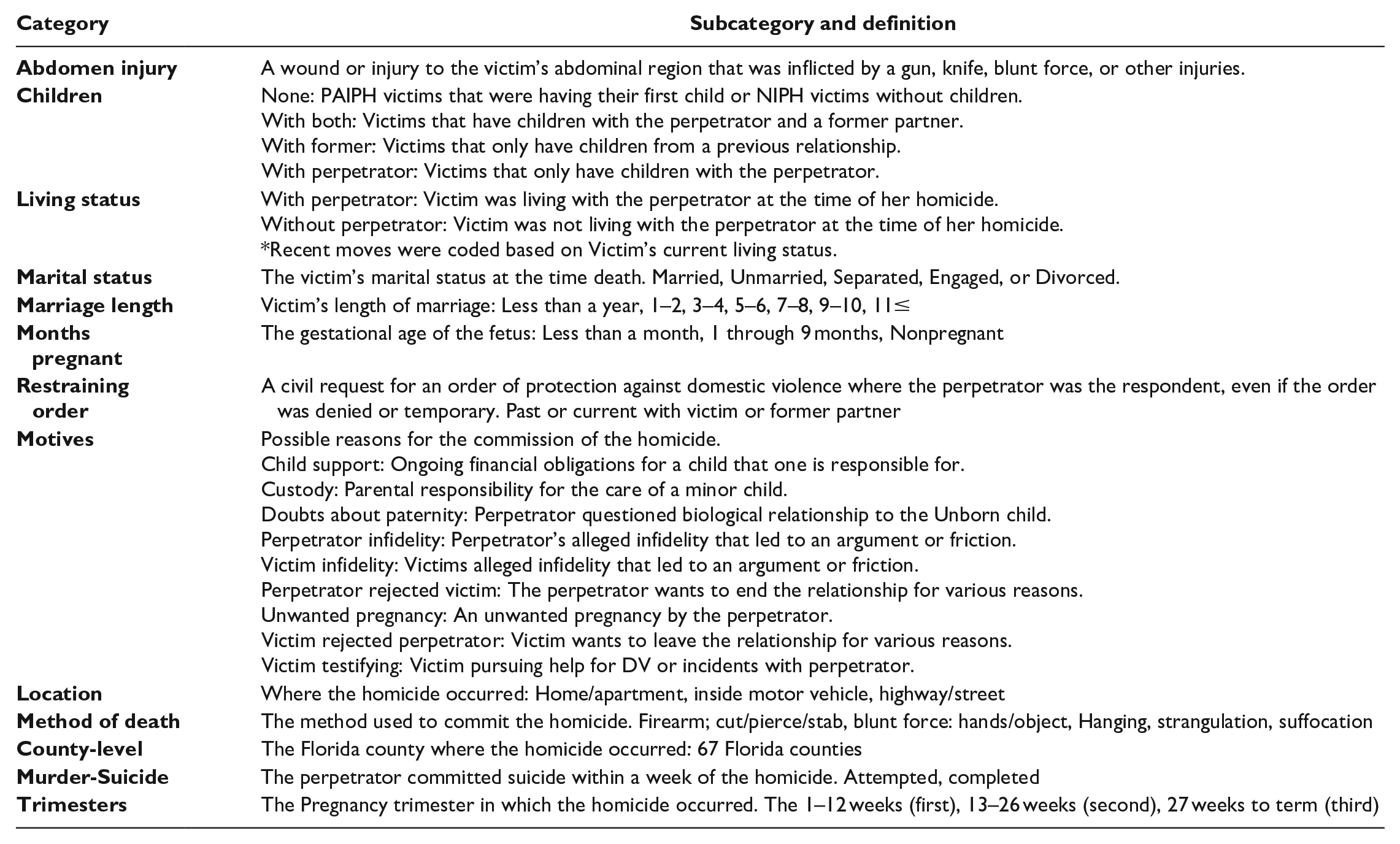
A Google Forms questionnaire was constructed to measure the variables contained in this study. Google Forms uses a questionnaire or quiz that automatically inputs the data into a linked spreadsheet, Google Sheets (Choi et al., 2018; Newman et al., 2020). Google Forms also allows for the attachment of case documents such as pictures, news articles, police reports, and court records (Table 1, shows the operational definitions for variables used in this study).
Description of the Data Sources Used to Collect Data on the Pregnancy-Related and Non-Pregnancy-Related Cases in Alphabetical Order.

The initial questions include demographics such as age and race, as well as questions derived from literature. Emerging themes guided subsequent questions, and the Google Form was password-protected to prevent unauthorized access. While reviewing and analyzing the aggregated secondary data, findings were entered into the questionnaires and stored in Evernote. As themes emerged, each case was revisited and analyzed to fill in newly discovered information and to recheck for accuracy.
Google Sheets built-in “Explore” feature, as well as SPSS, were used to descriptively analyze the questionnaire responses and make comparisons between PAIPHs and NIPHs. Google Sheets “Explore” feature automatically provides charts and graphs; however, users can also query the data to obtain additional charts or graphs.
Results
In this section, we report results for the sample of pregnant women (PAIPH) killed by intimate partners compared with the matched sample of women who were not pregnant (NIPH) but were also killed by their intimate partner.
Descriptive Analyses
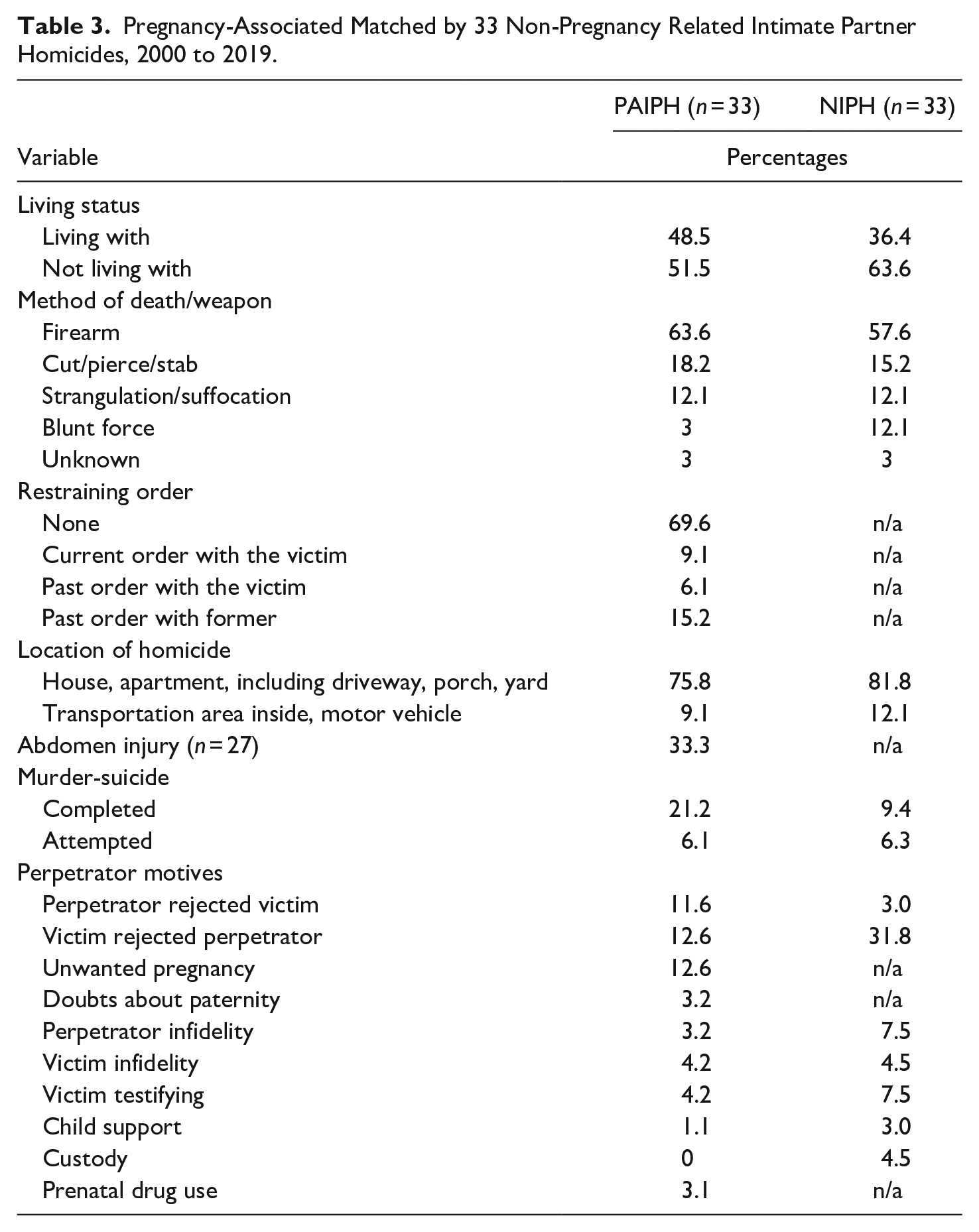
The sampling method resulted in 33 Florida PAIPH cases that were matched with 33 Florida NIPH cases spanning from 2000 to 2019. Table 3 shows the mean age for PAIPH victims (25.33), NIPH victims (25.42), PAIPH perpetrators (28.87), and NIPH perpetrators (29.78). Although Blacks comprise just 16.9% of Florida’s population, 60.6% of the PAIPH and NIPH victims in the sample were Black; a percentage double that of Whites (30.3%), who make up 54.1%, and 10 times that of Hispanics (6.1%), who constitute 25.6% of the total population. Similarly, in both samples, Black perpetrators (75.8%) comprised a larger percentage than did White (l2.1%) or Hispanic perpetrators (12.1%) by six-fold.
Pregnancy
As presented in Table 3, 39.4% of the PAIPH victims were in the first trimester of pregnancy, 30.3% (second), 24.2% (third), and 6.1% were unknown. The average gestational age for PAIPH victims was 4.67 months, and the perpetrators knew of the victim’s pregnancy status. Some victims, however, were killed shortly after their pregnancy announcement, and others were killed right before their due date. Overall, victimization occurred in all three trimesters, with slightly more victimizations in the first and second trimesters.
Marital Status
As shown in Table 2, most PAIPH and NIPH victims were not married. Of the 33 PAIPH victims, only seven (21.21%) were married, and 85.7% of those marriages occurred within a year of the homicide. None of the NIPH victims were married, but two (6.1%) were engaged to be married. A two-tailed independent samples t-test was conducted to examine whether the mean for “married” was significantly different between the PAIPH victims and NIPH victims. The result of the two-tailed independent samples t-test was significant based on an alpha value of .05, t(64) = −2.94, p = .005, indicating that the mean of “married” was significantly different between the PAIPH victims and NIPH victims with pregnant women significantly more likely to be married at the time they were killed.
Descriptive Statistics for Pregnant and Nonpregnant Victims and Their Intimate Partner Perpetrators, 2000 to 2019.

Pregnancy-Associated Matched by 33 Non-Pregnancy Related Intimate Partner Homicides, 2000 to 2019.
Children
As illustrated in Table 2, some PAIPH victims were expecting their first child (39.4%) and some NIPH victims had no children (30.3%). “Children with perpetrator” defines victims that only have children with the perpetrator, PAIPH (9.1%), and NIPH (18.2%). “Children with former” defines victims who only have children from a previous relationship; PAIPHs (39.4%) and NIPHs (24.2%). “Children with both” defines victims who have children with both the perpetrator and a former partner(s); PAIPHs (12.1%) and NIPHs (27.3%). After combining categories based on the presence of former children or lack thereof, there was not a substantial difference in having or not having former children in the home. However, PAIPH victims with at least one child with the perpetrator had lower rates of homicide victimization. Moreover, in PAIPHs (50%) and NIPHs (55.6%), the perpetrator did not harm nonbiological children present during the homicide. A two-tailed independent samples t-test was conducted to examine whether the mean of “children with perpetrator” was significantly different between PAIPH victims and NIPH victims. The result of the two-tailed independent samples t-test was significant based on an alpha value of 0.05, t (64) = 2.13, p = .037, indicating that the mean for “children with perpetrator” was significantly different between PAIPH and NIPH victims with the NIPH victims significantly more likely to have children with the perpetrator than the PAIPH victims (see Table 3).
Living Status
In Table 3, 48.5% of PAIPH victims were “living with the perpetrator,” whereas fewer of the NIPH victims, 36.4% lived with the perpetrator. Recall that the NIPH homicide victims are more likely to have children with the perpetrator. The presence of children, however, is related to NIPH victims being less likely to live with their killer.
Method of Death/Weapon Choice
As shown in Table 3, perpetrators first choice of weapons to kill their intimate partner was a firearm. Firearms were used in 63.6% of PAIPHs and 57.6% of NIPHs, followed by knives or other sharp instruments that were used to cut, pierce, or stab PAIPHs (8.2%) and NIPHs (15.2%). Both groups experienced an equivalent number of strangulations/suffocations (12.1%), but a higher percentage of NIPH victims (12.1%) died from blunt force. In one-third of the PAIPH cases where the information was available (N = 27), an “abdomen wound injury” was inflicted by a firearm, sharp object, or blunt force. In one case, the perpetrator shot a pregnant victim, who was 8-months along, in her head and abdomen because he did not want to be a father.
Restraining Orders
Most PAIPH victims (69.6%) did not file a restraining order (RO) against the perpetrator. Only 9.1% had a current order, and 6.1% had a past order. Some PAIPH perpetrators (15.2%) were respondents in past “restraining orders,” filed by a former partner. Comparable restraining order data for NIPHs were not available, therefore, this field is labeled as missing data.
Location of Homicide
Most PAIPHs (75.8%) and NIPHs (81.8%) occurred at a residence, including apartments, their driveway, porch, yard, or other areas considered as part of or near a residence. Residences were followed by “inside of a motor vehicle,” PAIPHs (9.1%), NIPHs (12.1%).
Murder-suicide
Some PAIPH perpetrators (21.2%) and NIPH perpetrators (9.4%) committed murder-suicide. Also, some PAIPH perpetrators (6.1%) and NIPH perpetrators (6.3%) attempted to commit suicide. Thus, PAIPH perpetrators are twice as likely to commit murder-suicide than NIPH perpetrators. Cases where the perpetrator threatened to commit suicide to avoid imprisonment, were not counted as completed or attempted.
Motives
The reasons that perpetrators gave for killing their intimate partner are summarized in Table 3, however, we find that their words best tell the stories. Evert explains that he no longer wants to be involved with his pregnant girlfriend. 2
We talked and we, you know, we had sex . . . And I told her . . . you can spend the night. . . . But this is probably, you know, ain’t gonna happen no more. We’re not gonna be intimate like this anymore. We didn’t have to argue, we didn’t have to fight. She knew that my wife was coming. I was just trying to talk some sense into her to tell her, you know, it’s messed up that, because I don’t want to be with you, why do you want to ruin my life.
Conversely, “victim rejected perpetrator” is defined as a PAIPH victim (12.6%) or NIPH victim (32.8%) that has left or has threatened to leave the relationship. The results suggest that PAIPH victims are more likely to be rejected by their killer, and NIPH victims are more likely to be killed for leaving or threatening to leave their perpetrator. In the following cases, the victims were trying to end the relationship with the perpetrator. The following is part of the conversation a detective had with Mike after he killed his intimate partner for trying to leave the relationship.
What got you that mad, okay? And frustrated that you had to go after her with a machete.
She wasn’t feeling me.
What did she say to upset you to the point where you pulled a gun out?
You know, she say: Oh, what you going to do? I’m like: Baby, I’m just—I want to talk to you. And then she, like, open the back door. She tried to—run, to go down, and even though she’s pregnant. And then I don’t—she—go down. I said: Hey, stop. Stop. And she don’t stop. She say: I don’t need you. I don’t—I don’t—I don’t know who you are. I don’t care. Something like that. And then I just go do that, you know.
Detective: You just go do that? That’s when you shot her?
Yeah. I don’t know when—when I was—do that. My granddaddy upstairs, my sister, my family upstairs, everybody crying, everybody.
Some of the intimate partner homicides occurred because the perpetrator did not want to have a child. This situation defined 12.6% of the pregnant women’s experience. In most cases, the perpetrator attempted to persuade the PAIPH victim to abort the fetus, but she refused his request. The following dialog from a police interrogation involving, Rod, a PAIPH perpetrator who murdered his 8-month pregnant “girlfriend” by shooting her in the head and stomach.
Let me ask you a question. How did you feel about having a kid?
At first, I was like, man, I cannot have no kid, man. Then a couple weeks later I was like alright, you might as well just accept
That does bother you, that your baby’s now not alive?
Like, in a way, it’s a sigh of relief.
In another case, the perpetrators internet history contained searches for abortion clinics and how to speed up human decomposition. During a televised interview, he stated:
I wanted her to do what’s best for her because she already had a child. . . . I never said, “I want you to have an abortion.” It was just a discussion we had.
The following text from Troy, a PAIPH perpetrator who impregnated a minor, illustrates another unwanted pregnancy case. Troy pleaded with her to get an abortion by sending the following message.
“U have ur hole life for this,” he texted her, according to court records. “Don’t do this to me.” “Theres nothin to consider. This will show how much u love me (because) I’m tellin u . . . if u only think about u in this (we’ll) never be the same.”
Of course, some perpetrators had “Doubts about paternity” defined as his biological relationship to the fetus. Some PAIPH perpetrators (3.2%) were upset about the prospect of being the father or distraught about the prospect of not being the father.
On the other hand, “Perpetrator infidelity” occurred in 3.2% of their relationships with PAIPH victims and 7.5% of the relationships with NIPH victims, which in turn an argument or friction. Conversely, “Victim infidelity” occurred among 4.5% of the PAIPH and NIPH victims which led to an argument or friction. As a result of his infidelity, non-pregnant women were more likely to be killed due to their perpetrator’s infidelity.
Other cases that ended in the death of the victim and given by the perpetrator as a reason for killing her involve “Victim testifying:” that is, pursuing help from others regarding incidents relating to the perpetrator. The PAIPH victim (4.2%) or NIPH victim (7.5%) sought help by pursuing an injunction, had been granted a temporary injunction, had called the police, or had threatened to call the police. The following interrogation quotations are from, Vic, a PAIPH perpetrator who killed his intimate partner while she was on the phone with a victim’s advocate discussing a restraining order:
Yes, I was told to stay away from her.
Who told you that?
When an officer had told me to stay away from her.
Officers told you that? When was that?
That wasn’t too long ago.
No? Why did she get a restraining order against you?
Because she had told me to (indiscernible), she would get a restraining order against me.
And she told you, she was going to get a restraining order against you? When did she tell you that?
Not too long ago. I can’t exactly say, but not too long.
In another PAIPH case, the police were in search of the perpetrator for battering the victim. However, before police could apprehend him, Manny spotted them outside of his workplace and fled to kill the victim.
I could not believe that my child’s mother had—I could not—I did not think and could not believe that my child’s mother would call the police on me, because I didn’t do anything.
That’s because she beat herself up; right?
Yes.
So you rode an hour back?
I don’t know how long it took exactly, because she had called me and explained to me what happened. It’s her parents that made her call the police.
Another excuse given by perpetrators for killing their intimate pregnant partner was the expectation for parental “Child support:” the ongoing financial obligation to help with expenses of raising a child. PAIPH perpetrators (1.1%) and NIPH perpetrators (3%) complained about child support, or the victim threatened to put them on child support. Where the child may reside and be cared for, that is potential “Custody” was not offered as a motive for the PAIPHs, but it did influence the decision to kill the victim in 4.5% of the NIPH cases.
Drug Use
Some PAIPH perpetrators (3.1%) complained or expressed frustration about the PAIPH victim’s drug use. The following text was sent to a victim who had moved out of the residence with the perpetrator. Stu asserted that: Whatever you want for your kids that walks this earth want the same things for the life that goes in you. Would you want your kids right now smoking weed or doing any drug or drink? All I’m saying is want the same for the life that goes in you and stop being selfish thinking of self when clearly at this time your living for someone else that can’t choose but lives off your choices.
County and City-level Locations
This exploratory county and city-level analysis provide some insights into where and by whom PAIPHs occur in Florida. As presented in Table 4, most of the PAIPHs occurred in Broward (15.2%), Palm Beach (15.2%), and Orange (12.1%) counties, whereas most NIPHs occurred in Duval (18.2%), followed by Broward, Miami-Dade, Hillsborough, and Volusia County all recording (9.1%).
Descriptive Statistics for City and County-level Pregnancy and Non-pregnancy-related Intimate Partner Homicides, 2000 to 2019.

All of the Duval County NIPHs shown in Table 4 occurred in Jacksonville, Florida (18.2%), along with one PAIPH. Similarly, all of the Orange county PAIPH cases (12.1%) occurred in Orlando, Florida. Therefore, an examination of PAIPH cases may be best studied at the city-level.
Moreover, in our examination of the county- and city-level data, we found that Blacks are overrepresented among the PAIPHs and NIPHs. For example, Duval county comprises 29.3% Blacks, 54% Whites, and 8% Hispanics. Broward County’s racial makeup is Blacks (27.4%), Whites (38%), and Hispanics (28.35%). Palm Beach County’s racial makeup is Blacks (18%), Whites (56%), and Hispanics (21.32%).
Also, at the city-level, Jacksonville is comprised of 59.7% Whites, 30.7% Blacks, and 4.5% Asians, and Orlando’s population consists of 61% Whites, 26.4% Blacks, and 3.8% Asians.
Discussion
The data collected and analyzed for this study provide more current detail related to PAIPHs and NIPHs than is currently available elsewhere. Thus, our findings related to Florida’s pregnancy-associated intimate partner homicides, PAIPHs, and differences, if any, between PAIPHs and NIPHs offer a more complete picture of the victims and perpetrators, and are therefore, better suited to influence social policy on issues concerning prevention strategies than are less detailed datasets.
Victim-perpetrator Characteristics
A study on pregnancy violence will garner a higher percentage of women in the reproductive age, defined by the World Health Organization (WHO, 2005) as women aged 15 to 49. Thus, victim age findings may not be as significant as they appear. However, a troubling finding is that victims and perpetrators are more likely to be Black. Even though Blacks only account for 16.9% of Florida’s population. Still, our findings align with non-lethal pregnancy violence literature that suggests that victims are usually young and Black (Floridahealth.gov, 2018a; McFarlane et al., 2002).
Other victim findings include the average gestational age of 4.67 months, the victim’s risk of femicide throughout pregnancy, and the intentional targeting of the abdominal region of some PAIPH victims with a gun, knife, or blunt force. The results show that women at any stage of gestation, including those close to term, were at risk of homicide and that perpetrators were privy to the victim’s pregnancy status. Also, given that the average gestational age was 4.67 months, some victims were showing physical signs of their pregnancy status. Although victims were at risk of homicide throughout pregnancy, a slight increase of about 9% occurred in the first trimester. This is comparable to Cheng and Horon (2010), who found that homicides were more likely to occur during the first 3 months of pregnancy.
As noted, studies report that abusive perpetrators intentionally target a pregnant victims abdomen putting her and the fetus at risk (Bacchus et al., 2006; Campbell et al., 1995; Gelles, 1975; Helton et al., 1987; Jasinski, 2001; McFarlane et al., 1992; Rodrigues et al., 2008; Samankasikorn et al., 2019; Stewart & Cecutti, 1993; Walker, 1984). This study adds to the existing body of literature by showing that the intentional targeting of the abdomen also occurs when the abuser kills the victim.
This also appears to be the first study to examine murder-suicide in PAIPHs. The results suggest that PAIPH perpetrators are more likely than NIPH perpetrators to commit murder-suicide. Some PAIPH perpetrators committed murder-suicide right after the act, others fled, then committed suicide days later, and a few threatened to commit suicide but ended up deciding against it. Some perpetrators had a history of suicide ideation, while others committed suicide to avoid capture or punishment. A possible explanation for the increased likelihood of murder-suicides in PAIPHs is the increased guilt some may feel following the killing of a “pregnant” woman; in some cases, she was not only pregnant, but she was the woman he claimed to love. Most people also have an aversion to hurting children. Perpetrators who have this aversion might view the unborn fetus as their child and take their own life because of what they have done.
Also, in agreement with Websdale (1999), but in opposition to Daly and Wilson (2008), we found that PAIPH and NIPH perpetrators were just as likely to kill biological children as non-biological children. In some cases, the perpetrator fled the scene leaving the child alone with the deceased victim.
Moreover, this study found that the presence of children from a former relationship increased the homicide risk for NIPH victims (Campbell et al., 2003), as well as PAIPH victims, but only slightly. This study also found that PAIPH victims with at least one child with the perpetrator had a decreased risk of victimization; however, in stark contrast having one child with the perpetrator was not as great of a protective factor for NIPH victims. Perhaps, women are better protected when currently pregnant and have at least one biological child with the perpetrator. Although more research is needed in this area, this study adds to the body of literature because we examined children in cohabiting and non-cohabiting PAIPHs.
Primary Perpetrator Motives
Compared to NIPH victims, PAIPH victims were more likely to be killed because of an unwanted relationship by the perpetrator. The perpetrators were no longer interested in the relationship, were currently involved in another relationship, or wanted to pursue another relationship. In PAIPH cases, the victim’s pregnancy status ties her to him, and the perpetrator knows that he will be partially responsible for the unborn child’s care. Conversely, men in relationships with non-pregnant women can disconnect from them without further obligations or expectations unless they have a child in common. Furthermore, some perpetrators perceived the unborn child and the unwanted relationship as something that would destroy or end their current relationship with another woman.
Akin to existing literature, both groups were at risk of being murdered for leaving or threatening to leave the perpetrator (Campbell et al., 2003; Decker et al., 2004; Websdale, 1999); however, NIPH victims were more likely to be killed for this reason. Some perpetrators exhibited “obsessive possessiveness” (Dobash et al., 2007; Websdale, 1999). Theoretically, when an abuser loses control over the victim and fails to regain control perpetrators may become enraged. For example, some perpetrators killed the victim immediately after the rejection, and others killed in the moment of rejection. On the other hand, some perpetrators were not obsessed with maintaining the relationship; however, they were adamant about controlling the victim’s bodily autonomy, for example, reproductive rights and decision making. Moreover, perpetrators in each group blamed the victim for the homicide; even if they admitted to the act, they claimed that it was justified because of perceived wrongs.
Furthermore, motives such as “unwanted pregnancy” and “doubts about paternity” suggest that pregnant women have homicide risk factors that NIPH victims do not have. In unwanted pregnancy cases, more often than not, the victim was asked to get an abortion. When she refused to have an abortion, the perpetrator used murder in place of an abortion. Also, there is a possible link between this study’s findings of Black women having a higher homicide risk due to an unwanted pregnancy by the perpetrator and the PRAMS, 2018 report that Non-Hispanic Black victims are more likely to have an unintended pregnancy. Although the unintended pregnancies reported are self-reported by the victim, the perpetrator might have viewed it as unintended as well, and subsequently unwanted. Conversely, the perpetrator may view the pregnancy as her way to control him or, from her point of view, a way to ensure a continued relationship with him.
Similar to other studies, victims were unlikely to have filed a restraining order (King, 2019; Vittes & Sorenson, 2008; Websdale, 1999), and some perpetrators, including Vic whose words were quoted earlier, indicated that they were not deterred by the restraining orders that were filed (Websdale, 1999). As noted, research has found protective orders to be effective (Holt et al., 2002; Kothari et al., 2012). Therefore, to accurately assess victim efforts to obtain a restraining order, this study included all restraining order requests, whether denied or granted. In doing so, we found that some victims filed for a restraining order but were denied. In hindsight, their perception of impending danger was valid—this points to a need to revisit the criteria for granting and denying restraining orders. Furthermore, the inclusion of restraining order requests from former partners of the perpetrator provided insight into the perpetrator’s past behaviors.
Conclusions
Some perpetrators kill victims simply because of their pregnancy status or more bluntly stated, some men kill women and blame them for “getting pregnant,” but until more studies examine the motives for the perpetrator’s behavior linked to his intimate partner, we will come up with at most only half of the story.
In addition, Florida’s exclusion of PAIPHs from the PAMR, comprehensive reports make it even more difficult to explore this phenomenon and potentially find ways to decrease the rate of perpetration. Therefore, PAIPHs should be comprehensively included in Florida’s Pregnancy-associated Mortality Review (PAMR) reports.
Besides these improvements to the PAMR reports, Government agencies at the local, state, and federal level must improve pregnancy status reporting and collection efforts. Simply adding pregnancy status to police reports, injunctions, and other documents concerning victims would aid research that could then be used to develop relevant policies. Moreover, restraining orders should be promoted to at-risk victims to increase usage, and the criterion used to grant or deny restraining order requests need to be evaluated. Most importantly, collaborative efforts among all agencies, including health officials that have contact with pregnant victims during prenatal care, is imperative. For instance, one victim was killed shortly after a prenatal checkup. Thus, physicians and their ability to engage with pregnant victims periodically throughout pregnancy could assist with the identification of women who need protection and prevention efforts.
As for perpetrators of intimate partner violence, prevention efforts should include healthy relationship education and conflict resolution skills for dealing with unwanted pregnancies or relationships, custody, child support, and other stressors. Most current interventions for the latter focus on victims and helping them cope or deal with unwanted pregnancies, relationship stressors, and financial difficulties; thus, there is a need for perpetrator interventions and assistance. For example, victims experiencing an unwanted pregnancy can have an abortion, but perpetrators experiencing this issue, understandably, do not have that right. They need to take steps prior to sexual intercourse to reduce the chances of causing a pregnancy.
Some perpetrators were obtaining money by illegal means, and many were convicted felons. The previous offenses that led to the felony status varied. Being a convicted felon normally leads to a lack of employment or minimum wage jobs, and subsequently, crime often results to acquire income. Therefore, assisting convicted felons in obtaining a legal job or with training to increase employability could help. This is especially true in Central Florida, which is the number one destination for men, who have completed their term in prison and are given a bus ticket to somewhere in Florida. Moreover, reducing a convicted felon’s access to firearms, the leading method of death for PAIPHs, could decrease perpetration. Of course, anyone who has a history of intimate partner violence needs to have firearms removed from the home (Webster et al., 2020).
Fundamentally, at the root of this phenomenon, there are social as well as economic issues at work. Similar to other acts of intimate partner violence, there are elements of control involved with murder of their intimate partner chosen as their ultimate and final act of control.
Limitations and Strengths
News sources often under or over report certain victims due to race, age, socioeconomic status, or geographical area. Therefore, the use of news sources as a starting point to gather PAIPH and NIPH cases may have limited our data. However, as noted, like the current study, others have also found that Black women are more likely to be victims of intimate partner violence and homicide (Floridahealth.gov, 2018a; McFarlane et al., 2002; Wallace et al., 2020; Websdale, 1999).
Another limitation is that public record searches were only conducted in known cities, counties, and states within the U.S. where the perpetrator or victim currently resides or previously resided. Therefore, court records such as injunctions in unknown locations might have been missed. Moreover, this study did not collect victim and perpetrator characteristics such as income, employment, and educational attainment, which is valuable background information for policy implications.
However, the study has numerous strengths. The ability to perform a content analysis on multiple sources of secondary data to determine perpetrator motives and other information not readily available from government data or other data like Florida’s Pregnancy-associated Mortality Review is certainly a strength. The current study also contains more race categories than Florida’s Supplemental Homicide Reports, and Pregnancy-associated Homicides (PAHs) committed by strangers compared to those committed by family from PAIPHs are separate, which helps establish the perpetrator’s intent. Most importantly, this study’s findings add to the existing body of literature on PAIPHs and NIPHs, which are under-researched in the state of Florida and elsewhere.
To summarize, this is the first study to focus on Florida’s pregnant victims of intimate partner homicide that compares them to a matched sample of non-pregnant IPH victims, and explores some of the motives perpetrators gave for killing their pregnant lover.
Future Research
Future research needs to examine the difference between men who kill to deal with unwanted pregnancies and men who kill their intimate partner for other reasons, as well as between men who abuse and kill and those who do not. Are there differences in education, religion, criminal history, or economic status? These are important questions. Even though we found child support and financial issues as motivating factors for some cases, broader research with a comparison group is needed. Extensive research on male attitudes and perceptions concerning women, unwanted pregnancy, abortion, paternity, child support, and custody are vital. We need to know if men who murder their intimate partner have characteristics in common beyond those included in this study.
Future research should also determine the typical length of single, cohabiting, and marital relationships and expand our knowledge of young, pregnant, women’s experiences prior to the pregnancy and involvement with the men who murdered them.
Finally, as is called for in the recent report compiled by Arnold Ventures (2021), data and access to detailed datasets need to be modernized so that researchers, policy makers, and criminal justice system employees have the information needed to tell the whole story and on which they base decisions. Datasets like the one developed for this study that link perpetrators and victims and that would also include the perpetrators’ and victims’ backgrounds need to be developed and the analyses extended to other states, regions within the U.S., and the nation.
Footnotes
Appendix A
|
|
|
|---|---|
|
|
A wound or injury to the victim’s abdominal region that was inflicted by a gun, knife, blunt force, or other injuries. |
|
|
None: PAIPH victims that were having their first child or NIPH victims without children. With both: Victims that have children with the perpetrator and a former partner. With former: Victims that only have children from a previous relationship. With perpetrator: Victims that only have children with the perpetrator. |
|
|
With perpetrator: Victim was living with the perpetrator at the time of her homicide. Without perpetrator: Victim was not living with the perpetrator at the time of her homicide. *Recent moves were coded based on Victim’s current living status. |
|
|
The victim’s marital status at the time death. Married, Unmarried, Separated, Engaged, or Divorced. |
|
|
Victim’s length of marriage: Less than a year, 1–2, 3–4, 5–6, 7–8, 9–10, 11≤ |
|
|
The gestational age of the fetus: Less than a month, 1 through 9 months, Nonpregnant |
|
|
A civil request for an order of protection against domestic violence where the perpetrator was the respondent, even if the order was denied or temporary. Past or current with victim or former partner |
|
|
Possible reasons for the commission of the homicide. Child support: Ongoing financial obligations for a child that one is responsible for. Custody: Parental responsibility for the care of a minor child. Doubts about paternity: Perpetrator questioned biological relationship to the Unborn child. Perpetrator infidelity: Perpetrator’s alleged infidelity that led to an argument or friction. Victim infidelity: Victims alleged infidelity that led to an argument or friction. Perpetrator rejected victim: The perpetrator wants to end the relationship for various reasons. Unwanted pregnancy: An unwanted pregnancy by the perpetrator. Victim rejected perpetrator: Victim wants to leave the relationship for various reasons. Victim testifying: Victim pursuing help for DV or incidents with perpetrator. |
|
|
Where the homicide occurred: Home/apartment, inside motor vehicle, highway/street |
|
|
The method used to commit the homicide. Firearm; cut/pierce/stab, blunt force: hands/object, Hanging, strangulation, suffocation |
|
|
The Florida county where the homicide occurred: 67 Florida counties |
|
|
The perpetrator committed suicide within a week of the homicide. Attempted, completed |
|
|
The Pregnancy trimester in which the homicide occurred. The 1–12 weeks (first), 13–26 weeks (second), 27 weeks to term (third) |
Appendix B
Acronyms

| Acronym | Acronym description |
|---|---|
| DVFRT | Domestic violence fatality review team |
| DV | Domestic violence |
| FDLE | Florida Department of Law Enforcement |
| SHR | Supplemental homicide report |
| UCR | Uniform crime report |
| IPH | Intimate partner homicide |
| IPV | Intimate partner violence |
| IP | Intimate partner |
| MMRC | Maternal Mortality Review Committee |
| NVDRS | National violent death reporting system |
| NPRD | Not pregnancy-related death |
| NIPH | Nonpregnant intimate partner homicide |
| PRAMS | Pregnancy risk assessment monitoring system |
| PAH | Pregnancy-associate homicide |
| PAIPH | Pregnancy-associated intimate partner homicide |
| PAIPV | Pregnancy-associated intimate partner violence |
| PAMR | Pregnancy-associated mortality review |
| UVVA | Unborn Victims of Violence Act |
Declaration of Conflicting Interests
The author(s) declared no potential conflicts of interest with respect to the research, authorship, and/or publication of this article.
Funding
The author(s) received no financial support for the research, authorship, and/or publication of this article.
