



Abstract
Alcohol use among adolescents is a concern in the Netherlands because of its high prevalence and risks. To discourage adolescents from drinking alcohol, a televised entertainment-education (E-E) intervention was developed. This study investigated responses of adolescents on perceived realism and enjoyment of the E-E intervention, as well as its impact on alcohol drinking behavior. Viewers perceived the E-E narratives to be credible and enjoyable but did not relate to the characters in the narratives. However, exposure to the E-E intervention predicted desired changes in alcohol drinking behavior, intentions to decrease alcohol use, and perceived normative pressure, especially in less educated viewers. These findings demonstrate that E-E is a promising strategy to target adolescent alcohol use. Future research will focus on the individual processes and story elements that account for the positive results.
The use of alcohol by adolescents is a growing concern in the Netherlands. Compared with other European adolescents, Dutch adolescents are heavy drinkers (Hibell et al., 2004). Furthermore, Dutch adolescents start drinking at a young age (Monshouwer et al., 2008). This is a concern as it has been suggested that alcohol may have damaging effects on adolescent brain development (e.g., Squeglia, Spadoni, Infante, Myers, & Tapert, 2009) with negative effects on learning and memory (e.g., Tapert, Granholm, Leedy, & Brown, 2002) and may have other adverse effects on physical and mental health (Van Laar, Cruts, Verdurmen, Van Ooyen-Houben, & Meijer, 2008).
To prevent the risks of excessive alcohol use, Dutch adolescents are encouraged to postpone, reduce, or stop drinking alcohol. Because the mass media play an important role in shaping the public perception of health issues (LaVail, Anker, Reinhart, & Feeley, 2010), public service announcements (PSAs) are regularly broadcast as (a component of) health promoting campaigns from the Netherlands Government Information Service. These PSAs employ merely logic, reason, and arguments to persuade and motivate people to adopt behavioral changes—an approach that is, according to Hinyard and Kreuter (2007), the dominant paradigm in health communication to date. Recently, the Dutch Government Information Service found that Dutch adolescents perceive PSAs as less personally relevant than adults (Van Den Berg et al., 2010), and therefore, PSAs may not be the most effective strategy for this priority group. Because adolescents have a desire for independence and individuality along with a rejection of authority (Grandpre, Alvaro, Burgoon, Miller, & Hall, 2003), overtly persuasive campaigns targeted at adolescents run the risk of being ineffective (Wakefield, Loken, & Hornik, 2010), or even of having unfavorable or opposite “boomerang” effects due to resistance against explicit messages (Grandpre et al., 2003; Hornik, Jacobsohn, Orwin, Piesse, & Kalton, 2008).
An implicit, nonovertly persuasive communication strategy such as Entertainment-Education (E-E) is a more effective approach to persuade adolescents not to drink excessively because of the resistance-reducing potential of this strategy (Slater & Rouner, 2002). E-E is considered a promising and innovative strategy (Guttman, Gesser-Edelsburg, & Israelashvili, 2008) for incorporating health and other educational messages into entertainment media with the goal of positively influencing awareness, knowledge, attitudes, and/or behaviors (Henry J. Kaiser Family Foundation, 2004). Studies have found that messages embedded in entertainment television programs can influence viewers’ awareness and attitudes about the issues they cover (Moyer-Gusé, 2008). E-E almost necessarily involves the use of narratives (Singhal & Rogers, 2004). Narratives are “representations of connected events and characters that have an identifiable structure, are bounded in space and time, and contain implicit or explicit messages about the topics being addressed” (Kreuter et al., 2007, p. 222). Narratives are believed to influence recipients’ beliefs and attitudes about the real world (Dal Cin, Zanna, Fong, Knowles, & Linn, 2004; De Graaf, 2010). Indeed, E-E narratives have shown effects on determinants (e.g., social norms, attitudes) and behaviors in health-related domains such as teen pregnancy (Moyer-Gusé & Nabi, 2010), domestic violence (Singhal & Rogers, 2004), and breast cancer (Hether, Huang, Beck, Murphy, & Valente, 2008).
In the scientific literature, results of televised E-E interventions aimed at adolescents (and the prevention of alcohol use) and their impact are scarcely described. Lalonde and colleagues have reported about their process and impact evaluation of La Esperanza del Valle (Hope of the Valley) (Lalonde & Rabinowitz, 1997). This U.S. project that included a radio novela, storybook novela, and a six-episode television novela had a positive impact on attitudes and intentions to decrease alcohol use and corroborated the utility of the E-E intervention.
Although the broadcast was not specifically intended as an E-E intervention, Collins, Elliott, Berry, Kanouse, and Hunter (2003) investigated the effects on adolescents of a storyline in Friends containing condom-efficacy messages. Of the viewers, 65% recalled the depiction of condom failure resulting in pregnancy and 10% talked to an adult about condom efficacy as a result of the show.
In Clueless, a comedy show about and for high school students, one episode called Model Smoker was designed to deliver an antismoking message. This episode strengthened adolescents’ injunctive norm about smoking being objectionable, and it lowered nonsmokers’ intent to smoke (Pechmann, 2006).
These examples illustrate that, internationally, E-E is adopted regularly as a communication strategy to target adolescents or young adults and has shown its potential to change behavior and behavioral determinants. In the Netherlands also, a number of televised E-E efforts aimed specifically at adolescents have aired in the last decade. However, effects of these efforts have not been found, mainly because of limitations in study designs. In 2002, a storyline about safe sex and the use of condoms was incorporated in a popular series for adolescents called Costa! (Bouman, 2004). A pretest/posttest study with control group showed that this storyline had no impact on the intended outcomes, such as self-efficacy, knowledge, or intentions to use condoms (Van Empelen & Kok, 2002). The absence of significant effects may be explained by the relatively few dialogues about safe sex in Costa! (M. P. A. Bouman, personal communication, March 8, 2012).
Find Out, a documentary-like 24-episode television program made by and for adolescents was broadcast in 2006 on music channel The Box. Find Out aimed to provide insight into the personal and societal consequences of adolescents’ choices regarding sexual behavior, drugs, and alcohol use (Bouman & Draaisma, 2006). A posttest study found that viewers of Find Out had more knowledge on the covered subjects, but no differences were found in behaviors, information seeking, and communication concerning sex, drugs, and alcohol as compared with a control group (Eijling, Goebbels, & Vries, 2006). Whether Find Out changed these outcomes could not be detected, because no pretest measurement was included.
SOUND, a nine-episode web-based soap series was part of the campaign Sound Effects developed by the Dutch Center for Media & Health in 2008 aiming to prevent hearing damage among adolescents and adults who regularly attend musical events such as concerts, festivals, and discotheques (Bouman & Hollemans, 2009). The campaign aimed to stimulate using earplugs and standing at a safe distance from speakers (Bouman & Jurg, 2006). All campaign components together showed a desired change in cognitions and behavior regarding wearing earplugs (Van Empelen, 2009). Because of the study design, it could not be determined conclusively whether these effects were attributable to the E-E soap series.
In this study, we are interested in whether a newly developed Dutch E-E intervention is an effective communication strategy for adolescents in the context of alcohol use. More specifically, we want to study the underlying processes and impact of the E-E intervention on outcome expectancies, intentions to decrease alcohol use, norms, and alcohol drinking behavior.
Besides having impact, E-E narratives should be entertaining by definition. Viewers who enjoy watching the E-E narratives will be more inclined to recommend peers to watch the E-E narratives as well. Furthermore, entertained viewers will be more motivated to watch more episodes of E-E narratives (Green, Brock, & Kaufman, 2004). Therefore, enjoyable narratives increase the chances of future exposure of viewers and their peers to these (or similar) E-E narratives. Therefore, in this study, we want to investigate whether viewers enjoyed watching the E-E intervention and to study processes that are associated with enjoyment. Although enjoyment is suggested to be a mechanism in the persuasiveness of E-E narratives as well, enjoyment has not yet been well integrated in theories on mass media effects (Nabi & Krcmar, 2004). It is beyond the scope of this study to investigate the role of enjoyment in the persuasiveness of narratives.
Whether a narrative has impact and is enjoyable may depend on whether the narratives are considered realistic (Busselle & Bilandzic, 2008). Viewers may judge the narrative’s realism on different criteria: external realism and internal realism (Busselle & Bilandzic, 2008). In evaluating external realism, viewers compare a narrative with their own lives on several dimensions. Two of the dimensions of external realism are identity and utility. The first dimension (identity) relates to the extent to which one can integrate characters or events into one’s own life or how much one is involved with characters or portrayals (Busselle & Greenberg, 2000). The second dimension (utility) relates to the extent to which information or events within the narratives are useful to the viewer in real life (Busselle & Greenberg, 2000). A viewer may, for example, have learned from how characters struggle and deal with tough issues and may use these lessons in real life. The second type of perceived realism, internal or narrative realism, shows an overlap with Hall’s concept of narrative consistency (Hall, 2003) and Fisher’s concept of narrative probability (Fisher, 1987) and refers to the internal consistency and plausibility of the narrative (Busselle & Bilandzic, 2008) with the narrative leaving nothing unexplained (Hall, 2003).
Negative thoughts about, for example, realism inhibit a viewer from becoming involved in the narrative (e.g., Busselle & Bilandzic, 2008; Green & Brock, 2000; Slater & Rouner, 2002). When negative thoughts about the realism of E-E narratives are absent, viewers can be swept up in the narrative. They focus all their cognitive resources on following the narrative and emotionally engage with the narrative’s characters, resulting in their enjoying this experience and its persuasive effects.
To summarize, alcohol use among adolescents is a concern in the Netherlands. E-E is hypothesized to be an effective and low resistance–inducing health communication strategy. Impact and enjoyment of E-E narratives may be achieved when viewers have few negative cognitions about perceived realism. Therefore, the E-E narrative should be perceived as realistic, that is, external realism (i.e., identity and utility) and narrative (internal) realism should be perceived as high.
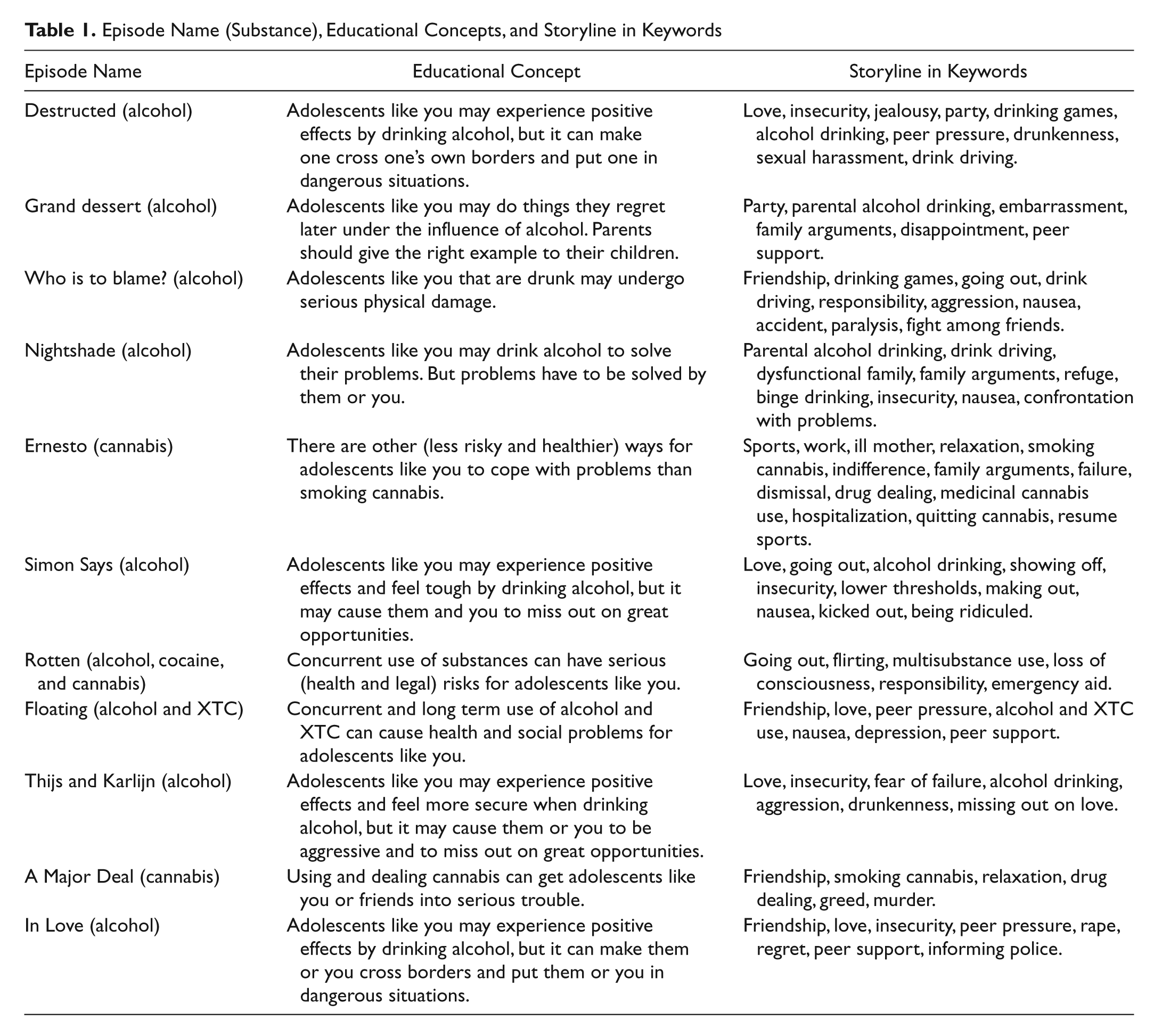
Following the E-E strategy, the Dutch Trimbos Institute1 initiated the development of an intervention in 2007 to prevent adolescent substance use. The E-E intervention was designed in collaboration with a public broadcasting company (VPRO) and a television producing company (IDTV). The Dutch Ministry of Health, Welfare, and Sport commissioned the development of the E-E intervention. The E-E intervention Roes (High in English) consisted of 11 case stories (25 minutes each) portraying the ultimately negative experiences and outcomes of adolescent protagonist(s) using alcohol and/or other drugs. The stories are summarized in Table 1. The E-E intervention was designed to favorably influence outcome expectancies (i.e., beliefs about the consequences of substance use, e.g., as being damaging to health), intentions, and behavior concerning the use of substances. Less educated adolescents (high school students receiving preparatory middle-level applied education) were the priority group for this intervention because heavy alcohol use is more prevalent in this group (Monshouwer et al., 2008).
Episode Name (Substance), Educational Concepts, and Storyline in Keywords
The purpose of this study is to determine whether E-E is a successful strategy for high school students and what processes may be involved. We aim to test three hypotheses (Figure 1).
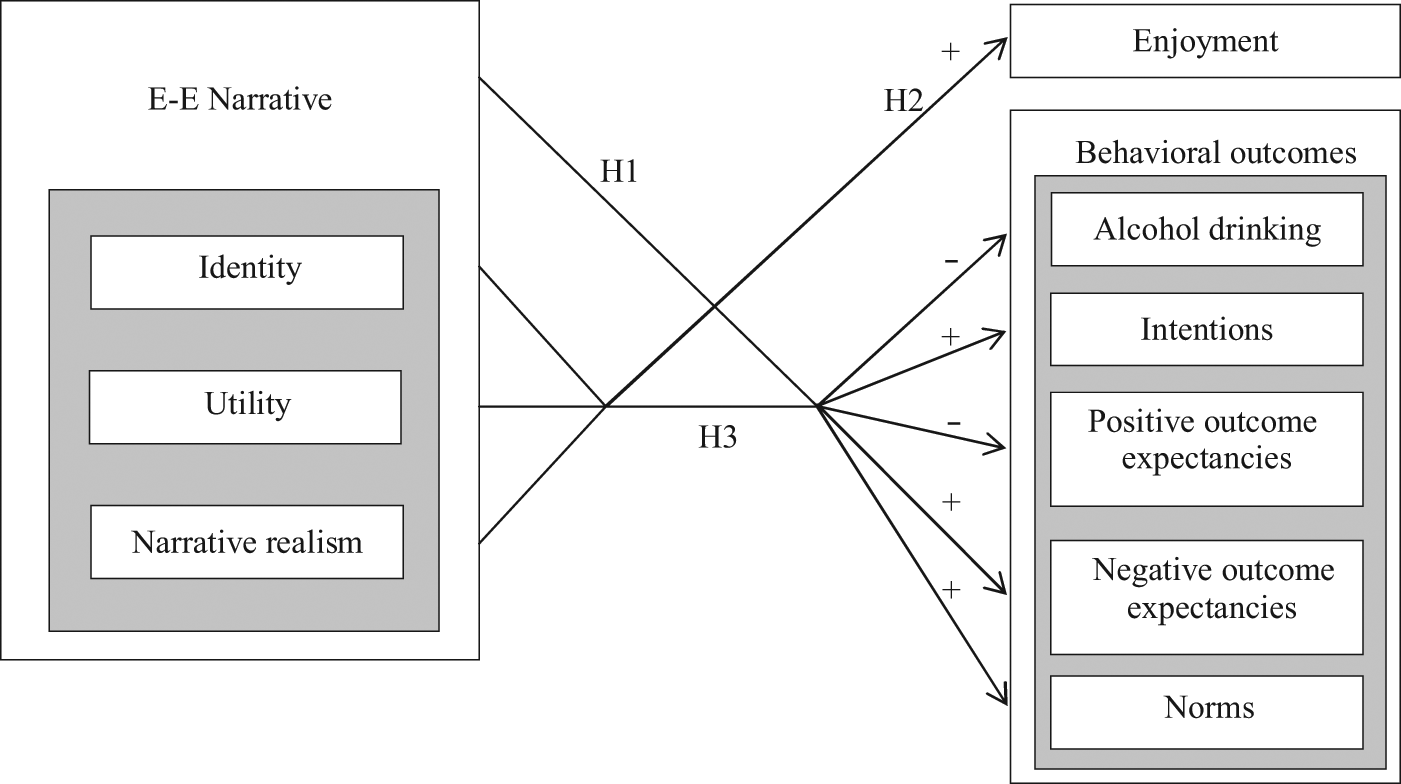
Graphic representation of the hypotheses under study
Hypothesis 1: Viewing Roes will be associated with the following short- and long-term changes in (determinants of) alcohol drinking behavior:
Hypothesis 1a: Decreased alcohol drinking behavior
Hypothesis 1b: Increased intentions to decrease alcohol use
Hypothesis 1c: Decreased positive outcome expectancies regarding alcohol use
Hypothesis 1d: Increased negative outcome expectancies regarding alcohol use
Hypothesis 1e: Increased norms that do not favor alcohol drinking
Hypothesis 2: Enjoyment of Roes will be positively associated with the following:
Hypothesis 2a: Viewers’ evaluations of identity
Hypothesis 2b: Viewers’ evaluations of utility
Hypothesis 2c: Viewers’ evaluations of narrative realism
Hypothesis 3: Changes in (determinants of) alcohol drinking behavior among Roes viewers (as described in H1a to H1e) will be positively associated with the following:
Hypothesis 3a: Viewers’ evaluations of identity
Hypothesis 3b: Viewers’ evaluations of utility
Hypothesis 3c: Viewers’ evaluations of narrative realism
Additionally, as the Roes narratives were especially developed to influence less educated adolescents, we had two research questions:
Research Question 1: Will education level affect the short- and long-term impact of the Roes narratives?
Research Question 2: Will the education level of viewers affect evaluations of perceived realism and enjoyment?
Method
Overview of the Study and Procedure
A nonexperimental pretest posttest follow-up design with comparison group was used for this study. Adolescents were recruited for this study by Qrius, an organization investigating Dutch children and young adults (www.qrius.nl). The adolescents who were invited to participate were on this organization’s existing research panels. Qrius was responsible for the survey administration and data collection. To increase survey responses, participants received gift points for completing each survey, with extra points for completing all surveys.
After adolescents signed up to participate in the study, they were asked to complete an online survey before Roes was broadcast (pretest, February 2008) to collect demographic information (e.g., age, gender, educational level) and to assess baseline measures on alcohol-related outcome expectancies, intentions, norms, and behaviors. After the broadcasting of nine episodes of Roes, the alcohol-related measures were assessed again with an online survey (posttest, May 2008) and again 1 year later (follow-up, April 2009). Five online surveys were administered between pre- and posttest to assess the perceived realism and enjoyment of five episodes. Participants received these surveys per e-mail directly after each episode was broadcast, with a link to the episode on the Internet for postponed viewing. The intervention and comparison group were formed by self-selection. Participants who reported posttest that they had seen five or more episodes and completed the surveys after the five episodes were considered the intervention group (viewers). Participants who reported that they had seen one episode or less and did not complete any of the five surveys between pre- and posttest were considered the comparison group (nonviewers).
The surveys were developed by Wageningen University in collaboration with the Trimbos Institute.
The Intervention
Roes can be characterized as an E-E coproduction of single-story episodes. The Trimbos Institute and public broadcasting organization VPRO jointly designed, produced, and broadcast the series to positively influence adolescent substance use. This partnership between a health organization and a broadcasting organization is the typical partnership arrangement for an E-E coproduction as compared to, for example, E-E inscript participation, in which a health organization pays for a social issue to be incorporated in the script of an existing entertainment program (Bouman, 2002). Roes consisted of 11 single-story episodes. Each episode was a small movie in itself with its own storyline, characters, settings, themes, and “look and feel.” The episodes shared the same introduction portraying Roes and a theme song (played at the beginning and end) to inform viewers that the different episodes were part of the series.
Of the 11 episodes, 7 were about alcohol and focused on the risks of nausea, crossing personal borders, black-outs, traffic accidents, unsafe situations, and sexual harassment. Cannabis use and the risks of having social, motivational, or vocational problems; the suppression of worries; and legal problems were dealt with in two episodes. The use of XTC combined with cocaine with risks of nausea and social problems was covered in one episode, and another episode was about multisubstance use (alcohol, cocaine, cannabis). Central narrative themes throughout the episodes were friendship, love, insecurity, peer pressure to use substances, and drinking games. One episode (Simon Says) can be described as more light-hearted and humorous. The other episodes can be labeled as serious drama or compelling stories.
Roes was broadcast on national television from February to June 2008 at intervals varying from 1 to 3 weeks, always on Tuesdays at prime time (from 9:00 to 9:25 p.m.).
In the study period, nine episodes of Roes were broadcast. Perceived realism and enjoyment were assessed for five episodes. Three of these episodes were about alcohol (Destructed, Who is to blame? Simon Says), one about cannabis (Ernesto), and one about alcohol, cocaine, and cannabis (Rotten).
Alcohol Behavior Measures
Frequency of alcohol use
We asked participants how frequently they had drunk alcohol in the previous month. Response options were as follows: 1 = never used it, 2 = have used it (once) but not this month, 3 = 1 to 2 times, 4 = 3 to 10 times, 5 = more than 10 times.
Quantity of alcohol consumed
To measure the quantity of alcohol that participants drink per drinking occasion, they were asked, “On the days that you do drink, how many standard glasses (beer from a beer glass, wine from a wine glass, etc.) do you drink on average?”
Intention to decrease alcohol use
The following two items were used to assess intentions to decrease alcohol use: “During the last weeks I have thought about drinking less alcohol” and “Sometimes I think about drinking less alcohol in the coming year” (Cronbach’s α before broadcasting = .81, after broadcasting = .86). Viewers responded to these statements (as well as to all other statements in this study) on a 7-point scale ranging from I strongly disagree to I strongly agree.
Positive outcome expectancies
The following three items were used to assess positive outcome expectancies concerning alcohol drinking: “By drinking I feel like I can accomplish more,” “Thinking about alcohol gives me a positive feeling,” and “Drinking a lot is cool” (Cronbach’s α before broadcasting = .81, after broadcasting = .79).
Negative outcome expectancies
The two items used to assess negative outcome expectancies concerning alcohol drinking were: “Drinking a lot is not safe” and “Drinking a lot is unhealthy” (Cronbach’s α before broadcasting = .69, after broadcasting = .70).
Norms
We measured perceived normative pressure by asking participants to respond to the statement, “Most of my friends think drinking a lot is not typical.” Furthermore, we asked participants to estimate the percentage of the adolescents in their social environment who they thought had been drunk the month before. These items served as measures for injunctive and descriptive norms concerning alcohol drinking.
Realism and Enjoyment Measures
Identity
We presented a scale with the following three statements (items): “I can recognize myself in (one of the) characters,” “I recognize the situations that (one of) the character(s) is/are in,” and “I feel connected with (one of the) characters.” Over all five episodes, a composite evaluation score was constructed and included each of the five evaluations of realism. Cronbach’s αs on identity at episode level were between .70 and .84, at overall level, .86.
Utility
On a four-item scale, utility was assessed by the following statements: “I will communicate (or have been communicating) with others about this episode,” “This episode made me elaborate on alcohol/substance use,” “I will search (or have been searching) for information about effects and risks of alcohol/substance use,” and “I have picked up some insights that I can use in my everyday life” (Cronbach’s αs at episode level were between .71 and .80, at overall level, .92).
Narrative realism
Narrative realism was assessed on a three-item scale with the items “I find the behavior of the character(s) credible” and “I find this episode credible” and “realistic” (Cronbach’s αs at episode level between .79 and .88, at overall level, .91).
Enjoyment
Enjoyment was assessed on a four-item scale with the items “I found this episode “annoying” (reversely coded), “fun,” and “captivating.” Additionally, viewers gave a general evaluation of the episode expressed on a scale between 1 and 10 (responses were transformed to fit a 7-point scale; Cronbach’s αs at episode level between .77 and .84, at overall level, .83).
Statistical Analyses
The analyses consisted first of descriptive and comparative statistics to describe the sample and to determine whether viewers and nonviewers were comparable on demographic and alcohol-related variables (chi-square and t tests). Then we determined perceived realism and enjoyment per episode and over all episodes. Differences in mean scores on perceived realism and enjoyment per episode were investigated with repeated ANOVA measures.
To test Hypothesis 1, gain scores were calculated on the alcohol behavior measures. This means that, for each participant, each score on the measures at pretest was subtracted from the corresponding posttest score (gain score representing change between pre- and posttest) and from the score at the follow-up measurement (gain score representing change between pretest and follow-up measurement). To examine the extent to which viewing status (being a viewer or nonviewer) predicted changes in alcohol drinking behavior, we regressed each gain score on viewing status. To investigate whether changes are affected by education level (Research Question 1), education level and the interaction education level and viewing status were added as predictor variables.
To test Hypothesis 2, a linear forced entry regression analysis with overall enjoyment as dependent variable and the three overall realism measures as predictors was conducted. To investigate whether enjoyment is affected by education level (Research Question 2), education level was added to the model as a predictor. Similar regression analyses were performed with overall realism measures as dependent variables.
To test Hypothesis 3, multiple linear forced entry regression analyses were conducted with the gain scores per alcohol behavior measure as dependent variable and the overall perceived realism and enjoyment variables as predictors.
Results
Study Sample Characteristics
A total of 451 adolescents completed the surveys at both pre- and posttest. Participants who (a) were statistically identified as outliers, (b) reported posttest and/or on the follow-up measurement that they never had a drink but reported on a previous measurement that they had, (c) completed some but not all the viewer panel surveys, or (d) did not participate on the viewers’ panel but reported posttest that they had seen more than one episode were excluded from the analyses (N = 169). Thus, 282 participants were included in the analyses to detect changes in the alcohol behavior measures from pre- to posttest, of whom 196 were considered viewers and 86 nonviewers. Of the 282 participants who completed the pre- and posttest, 219 adolescents also completed the follow-up survey. Of those, 87 were considered viewers and 37 nonviewers (N = 124).
Viewers and nonviewers participating at pre-/posttest measurements (PP group, N = 282) and at pre-/posttest/ follow-up measurements (PPF group, N = 124) did not differ significantly from one another at pretest on the demographic and alcohol behavior measures. This indicates that, at pretest, viewers and nonviewers from within the PP group and the PPF group were comparable on these variables. Characteristics at pretest of the PP group and PPF group are provided in Table 2.
Pretest Data on Alcohol Behavior Measures of the Study Sample Participating at Pre- and Posttest and at Pretest, Posttest, and Follow-up. Changes in Alcohol Behavior Measures From Pre- to Posttest and From Pretest to the Follow-Up Measurement in Viewers and Nonviewers

Note. PP group = Pre-/posttest measurements; PPF group = pre-/posttest/follow-up measurements.
Sample sizes deviate from sample sizes reported in columns. Participants who reported not drinking alcohol at pretest are excluded. Sample size of the PP group N = 242, n viewers = 167, n nonviewers = 75. Sample size of the PPF group N = 102, n viewers = 71, n nonviewers = 31.
Change in this variable is significantly predicted by viewing status.
A 7-point scale was used.
Males represented 47% of the PP group and 41% of the PPF group. Adolescents who indicated at pretest that they were following (preparatory) middle-level applied education were categorized as less educated, whereas adolescents following higher general secondary or preuniversity education were considered more highly educated. Education level was low for 43% of the PP group and 36% of the PPF group. The mean age of participants in both the PP group and the PPF group was 16. Ninety-seven percent of PP group participants and 94% of PPF group participants were born in the Netherlands. As can be seen in Table 2, at pretest, most participants of both the PP group and the PPF group reported drinking once or twice per month (27% and 28%, respectively). PP and PPF group participants reported drinking about four alcoholic consumptions per occasion.
Impact on Behavior
In Hypothesis 1, we predicted that E-E narratives have positive short- and long-term impacts on alcohol drinking behavior and determinants. With Research Question 1, we wanted to investigate whether the short- and long-term impacts of the Roes narratives were affected by the education level of the viewers.
Alcohol drinking behavior (Hypothesis 1a)
Table 3 presents the results of the regression analyses in which the first model tests whether viewing status explains changes in the quantity of alcohol consumed from pre- to posttest and from pretest to the follow-up measurement. In the second model, education level and the interaction term viewing status and education level are added to answer Research Question 1. Model 1 including viewing status as predictor was not able to predict changes in the quantity of alcohol consumed from pre- to posttest, Model 1, F(1, 240) = .81, p = .37. Model 2 was significant, F(3, 238) = 4.35, p < .01, and shows that viewing status is a significant predictor of changes from pre- to posttest in the quantity of alcohol consumed (β = −.27, p < .05) as well as education level (β = −.40, p < .01) and the interaction term viewing status by education level (β = .31, p < .05). As shown in Table 2 and Figure 2, nonviewers increased, whereas viewers slightly decreased, their number of alcoholic consumptions per occasion from pre- to posttest. Furthermore, as shown in Figure 2, all less educated participants increased their consumption, but less educated viewers increased their alcohol consumption less (increase of 0.21 consumptions) than nonviewers (increase of 1.6 consumptions). The independent variables did not predict changes from the pretest to the follow-up measurement or changes concerning the frequency of alcohol consumption.
Regression Analyses of Changes in Quantity of Alcohol Consumed on Viewing Status and Education Level
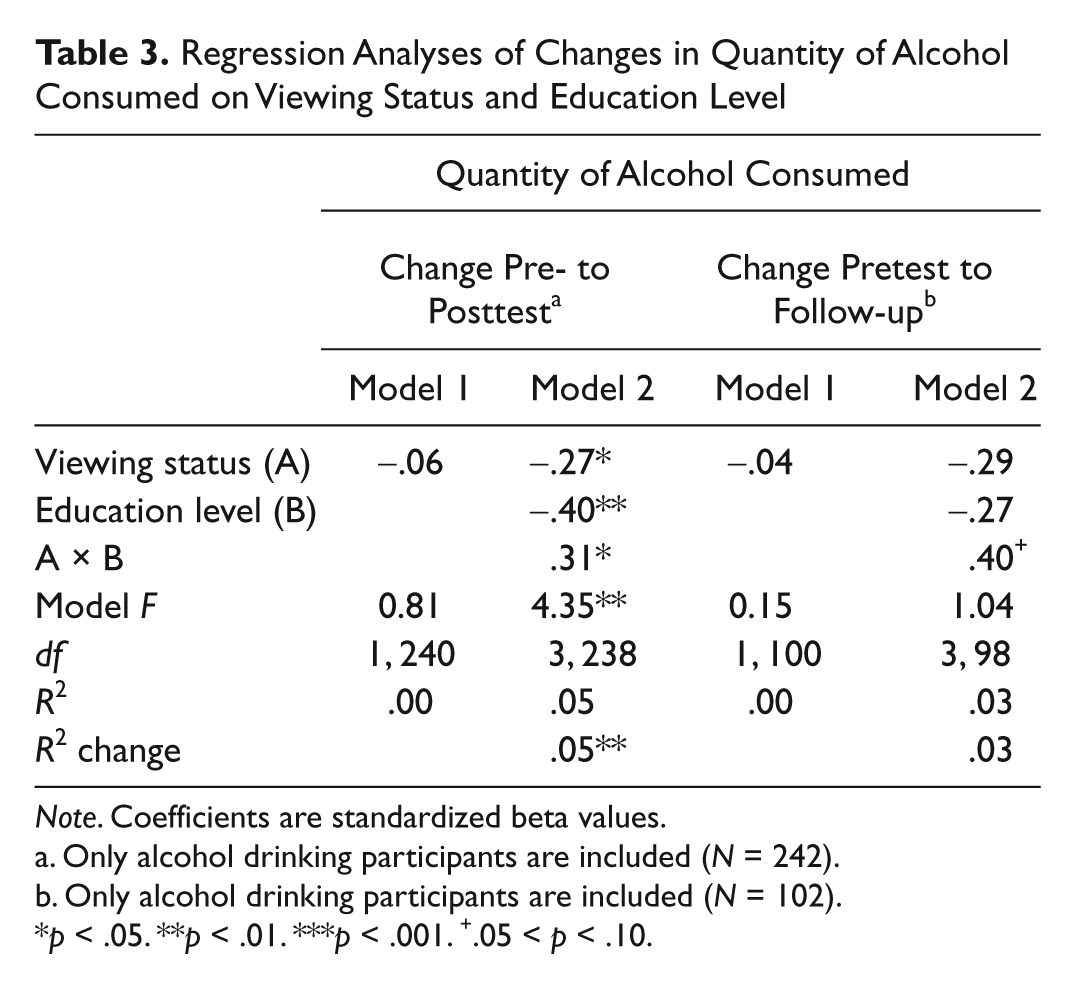
Note. Coefficients are standardized beta values.
Only alcohol drinking participants are included (N = 242).
Only alcohol drinking participants are included (N = 102).
p < .05. **p < .01. ***p < .001. +.05 < p < .10.
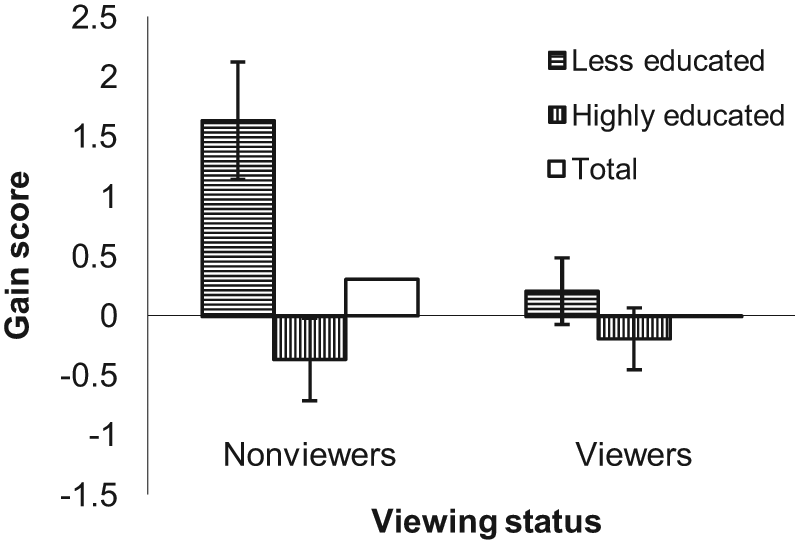
Changes from pre- to posttest on number of alcoholic consumptions per occasion by viewing status and education level
Intentions to decrease alcohol use (Hypothesis 1b)
As shown in Table 4, viewing status significantly predicts changes in intentions to decrease alcohol use from pre- to posttest (Model 1, β = .19, p < .01). As illustrated in Figure 3, viewers increased their intentions whereas nonviewers decreased their intentions to decrease alcohol use. In Model 2, changes in intentions to decrease alcohol use are significantly predicted by viewing status (β = .40, p < .001) and the interaction term viewing status and education (β = −.37, p < .01). Less educated viewers showed an increase of 0.47 in intentions whereas their nonviewing peers showed a decrease in intentions of 1.1 from pre- to posttest (Figure 3). Change in intentions to decrease alcohol use between pretest and follow-up is significantly predicted by viewing status (β = .52, p < .01), education level (β = .38, p < .05), and the interaction term viewing status and education (β = −.61, p < .01).
Regression Analyses of Changes in Intentions on Viewing Status and Education Level
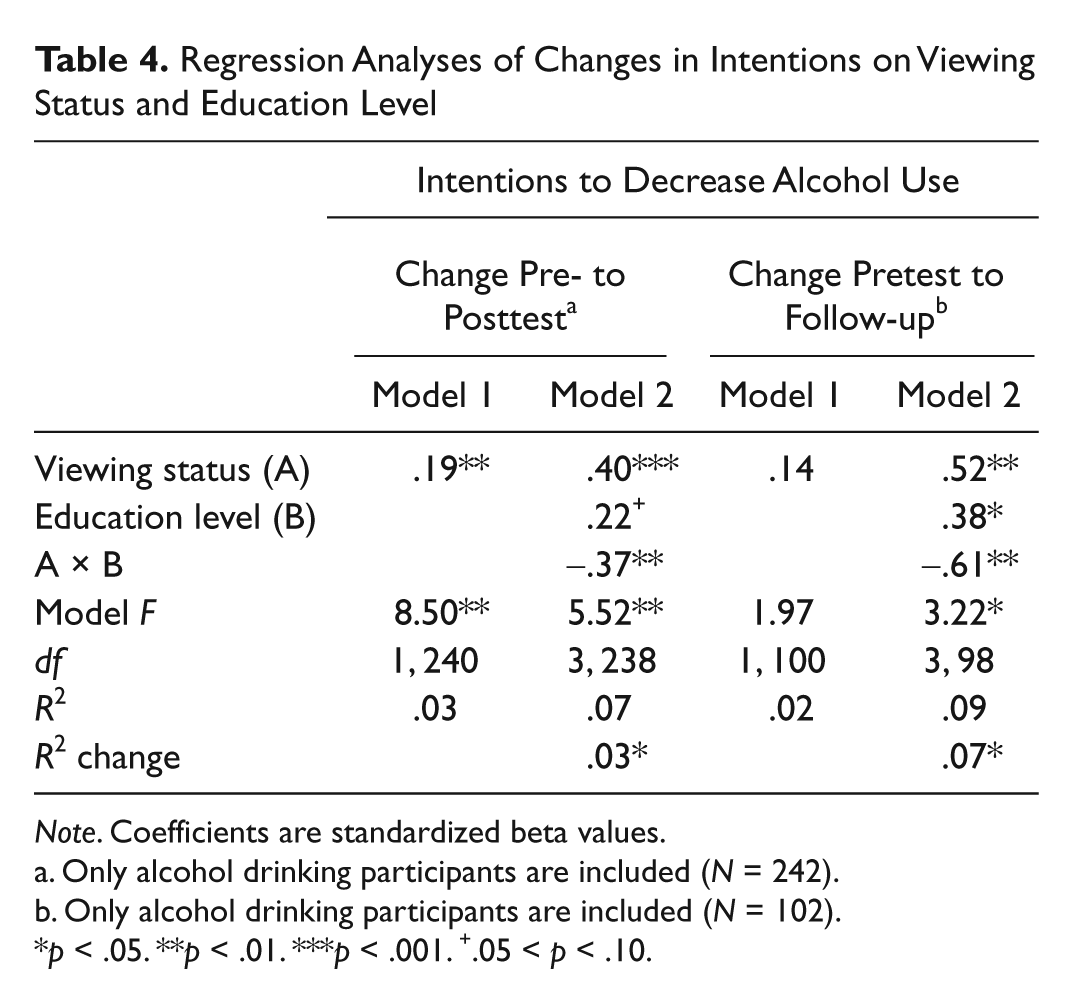
Note. Coefficients are standardized beta values.
Only alcohol drinking participants are included (N = 242).
Only alcohol drinking participants are included (N = 102).
p < .05. **p < .01. ***p < .001. +.05 < p < .10.

Changes from pre- to posttest on intentions to decrease alcohol use by viewing status and education level
Positive outcome expectancies (Hypothesis 1c)
The models with viewing status, education level, or an interaction of these variables as predictors were not able to predict changes in positive outcome expectancies from pre- to posttest or from pretest to the follow-up measurement.
Negative outcome expectancies (Hypothesis 1d)
The models with viewing status, education level, or an interaction of these variables as predictors were not able to predict changes in negative outcome expectancies from pre- to posttest or from pretest to the follow-up measurement.
Norms (Hypothesis 1e)
Change in perceived normative pressure between pre- and posttest (Model 2), as shown in Table 5, is significantly predicted by viewing status (β = .27, p < .01) and the interaction term viewing status and education level (β = −.33, p < .05). The results indicate an increase in normative pressure among viewers and a decrease among nonviewers. As can be seen in Figure 4, less educated viewers show an increase of .49 whereas normative pressure has decreased by .81 among less educated nonviewers. The predictor variables do not predict changes in perceived normative pressure from pretest to the follow-up measurement.
Regression Analyses of Changes in Perceived Normative Pressure on Viewing Status and Education Level

Note. Coefficients are standardized beta values.
p < .05. **p < .01. ***p < .001. +.05 < p < .10.

Changes from pre- to posttest on perceived normative pressure by viewing status and education level
None of the models with viewing status, education level, or an interaction of these variables as predictors was able to predict changes in descriptive norms from pre- to posttest. The model with viewing status, education level, and the interaction term viewing status and education level as predictor variables (Model 2) reached significance at changes in descriptive norms from pretest to the follow-up measurement, F(3, 120) = 2.90, p < .05. However, none of the predictors’ beta coefficients was significant.
Perceived Realism and Enjoyment
Hypothesis 2 predicted that higher evaluations of identity (Hypothesis 2a), utility (Hypothesis 2b), and narrative realism (Hypothesis 2c) would be associated with greater enjoyment of viewing the Roes narratives. Table 6 displays viewers’ evaluations of realism and enjoyment of the individual episodes (on a 7-point scale) and of the five episodes together (thus with a composite evaluation score per variable ranging from 5 to 35). The mean composite evaluation score on identity was 14.7 (SD = 4.6), on utility 16.2 (SD = 4.9), on narrative realism 25.0 (SD = 4.2), and on enjoyment 25.3 (SD = 3.9).
Viewers’ Evaluations of the Five E-E Episodes
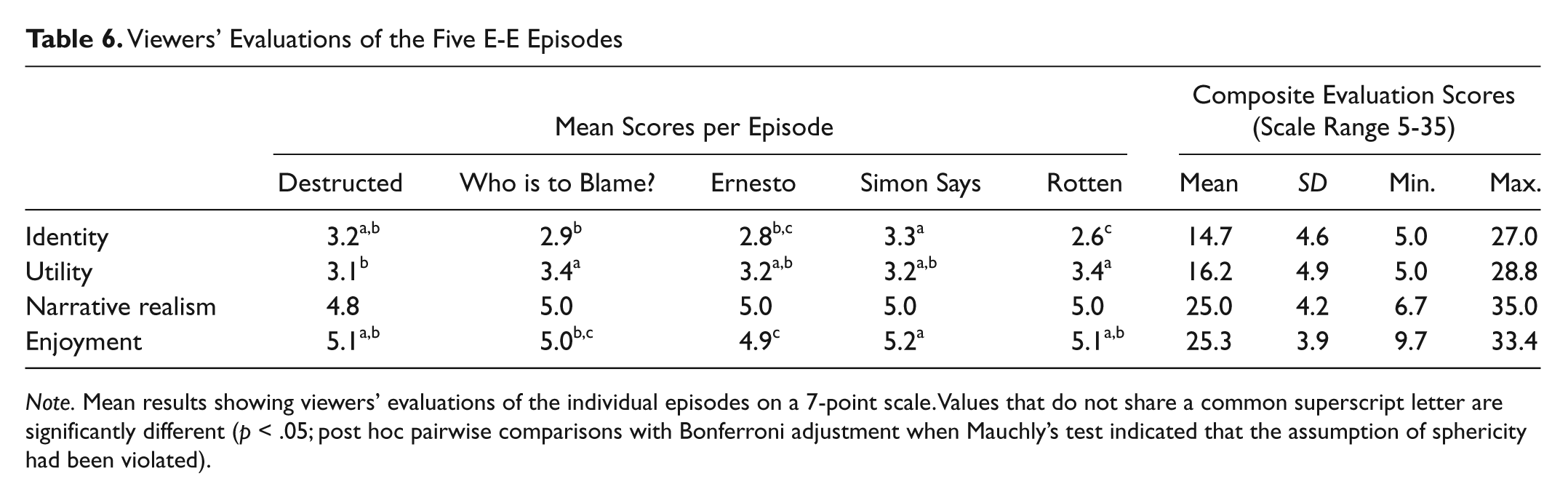
Note. Mean results showing viewers’ evaluations of the individual episodes on a 7-point scale. Values that do not share a common superscript letter are significantly different (p < .05; post hoc pairwise comparisons with Bonferroni adjustment when Mauchly’s test indicated that the assumption of sphericity had been violated).
The results of the entry regression analyses with overall enjoyment as dependent variable and the three realism concepts as predictors are displayed in Table 7. Identity, utility, and narrative realism explained 54% of variance within the enjoyment variable. More specifically, utility and narrative realism were significant predictors of enjoyment, with narrative realism as the strongest predictor.
Regression Analyses of Enjoyment on Identity, Utility, Narrative Realism, and Education Level
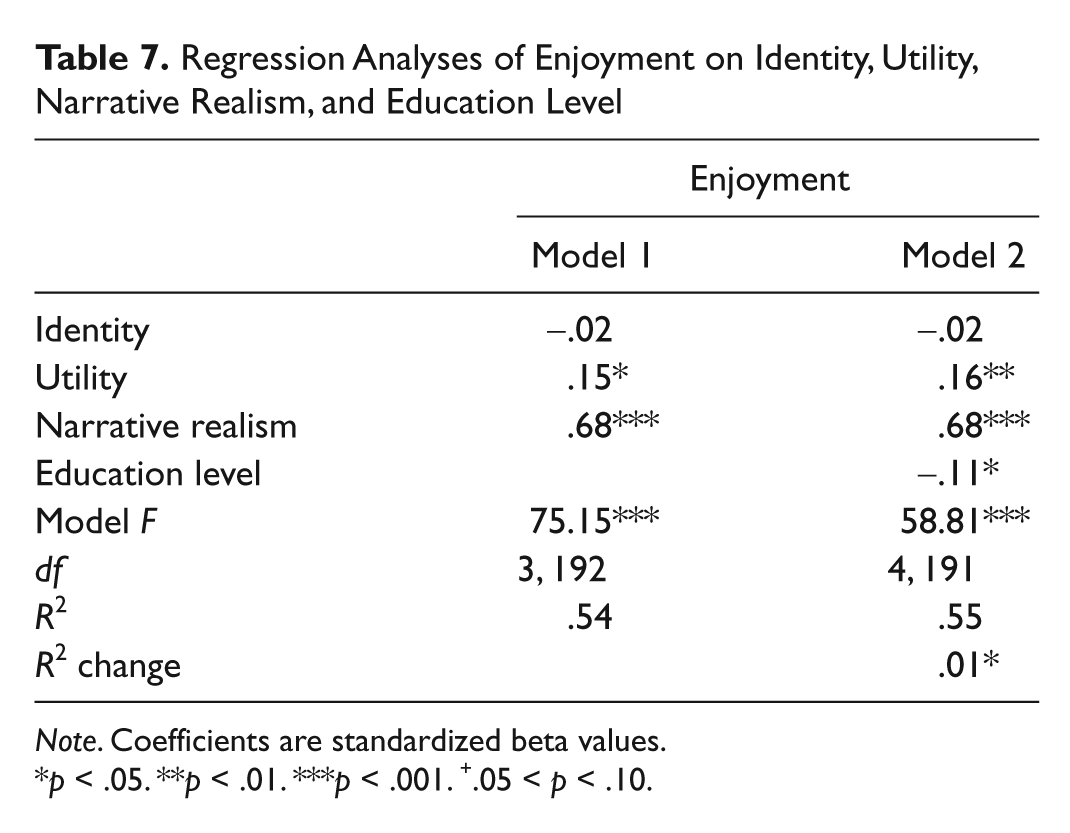
Note. Coefficients are standardized beta values.
p < .05. **p < .01. ***p < .001. +.05 < p < .10.
With Research Question 2, we wanted to investigate whether the education level of viewers affected evaluations of perceived realism and enjoyment. A lower education level predicts higher enjoyment of the narratives significantly (Model 2, Table 7). Regression analyses showed that education level did not affect identity, utility, and narrative realism evaluations.
Influence of Perceived Realism on Behavioral Impact
Hypothesis 3 predicted that Roes has larger positive short- and long-term impacts on the alcohol drinking behavior, intentions, outcome expectancies, and norms of viewers who evaluate identity, utility, and narrative realism more highly. Perceived identity, utility, and narrative realism were entered into a regression model as possible predictors of changes in the alcohol behavior measures. The results indicated that none of these variables predicted changes from pretest to posttest (N = 196) and from pretest to the follow-up measurement (N = 87) in alcohol behavior measures.
Discussion
With this study, we investigated whether an 11-episode televised drama series was a successful E-E intervention to target adolescents’ alcohol use. We assessed whether the narratives had an impact on alcohol drinking behavior and whether viewers perceived the narratives as realistic and enjoyable.
In Hypothesis 1, we predicted that the E-E narratives should have positive short- and long-term impacts on alcohol drinking behavior and determinants. Hypotheses 1a and partly 1e were confirmed with regard to the short-term impact and Hypothesis 1b was confirmed. Viewing the E-E narratives significantly predicted desired short-term changes in the number of alcoholic drinks consumed per occasion, intentions to decrease alcohol use, and perceived normative pressure. Although positive and negative outcome expectancies and descriptive norms proved to have changed in the desired direction as predicted by Hypotheses 1c, 1d, and 1e, viewing the E-E narratives did not predict these changes. One year after the broadcasting period, we detected a significant impact of the E-E narratives on intentions and not on the other alcohol behavior measures. We also investigated whether the education level of viewers affected the impact of the E-E narratives. The results showed that especially among less educated adolescents the E-E narratives had a significant short-term impact on alcohol drinking behavior (number of drinks per occasion), intentions to decrease alcohol use, and perceived normative pressure.
On the basis of these results, we can conclude that the E-E narratives had a significant, positive short-term impact on (determinants of) alcohol drinking behavior, especially among less educated adolescents. These results support earlier statements and findings that E-E can have an impact on health-related determinants and behaviors (Hether et al., 2008; Moyer-Gusé & Nabi, 2010; Singhal & Rogers, 2004).
Adolescents thought narrative realism was high, indicating that they perceived the stories and characters as plausible and credible. However, viewers did not consciously use, or intend to use, elements of the story in their own lives (low utility) and did not perceive many similarities between themselves and the characters or their situations; neither did they perceive any involvement with the characters (low identity). Hypotheses 2b and 2c were confirmed; utility and narrative realism predicted whether viewers enjoyed watching the E-E narratives. Hypothesis 2a was not confirmed: Identity did not predict enjoyment. We also investigated whether the E-E narratives were perceived as more realistic and enjoyable by less educated adolescents, as they were a priority group for the E-E narratives. The results showed that a lower education predicted higher enjoyment of the E-E narratives but did not predict higher perceived realism.
With these results, we add knowledge about how different types and dimensions of perceived realism of narratives relate to enjoyment of (E-E) narratives. The results imply that, for an E-E narrative to be enjoyable, narrative realism and utility should be high. This is in line with the recommendations in narrative persuasion that, within its fictional context, a narrative should be coherent and logical (Busselle & Bilandzic, 2008), and the events should be considered useful to the receiver (Busselle & Greenberg, 2000). Our results suggest that identity has no impact on the enjoyment of the narrative. Indeed, for enjoyment purposes, people may be motivated to accept, at least temporarily, a fictional world (Green & Brock, 2000) and enjoy not being focused on the self (Green, Brock, & Kaufman, 2004). Additionally, the results of a study conducted by Green and Brock (2000) show that fictional stories indeed are capable of affecting receivers’ real-world beliefs. Therefore, fictional E-E stories that are relatively unrelated to receivers’ own experiences may be enjoyable and effective as long as the story itself is logical, coherent, and plausible and the story elements are considered as useful. Enjoyment of the E-E narratives could thus have been higher if utility had been higher.
Unfortunately, our results do not provide insights into what story elements or characteristics were perceived by the adolescents as useful/not useful and why these elements were perceived in that manner. These insights would have been useful for the development of future enjoyable E-E narratives. Thus, future research should focus on the individual processes and story elements that account for positive or negative evaluations of dimensions of perceived realism.
In contrast to our expectations, the impact on behavior of the E-E intervention was not predicted by the extent to which viewers perceived the narratives as realistic (Hypothesis 3). We present two possible explanations. First, nine episodes were broadcast between pre- and posttest, but evaluations on realism were assessed for five episodes. The four episodes that were not included may have been responsible for the impact on behavior. Second, other reception processes not measured in this study could be responsible for the impact of this E-E intervention. Although we assessed involvement with characters and enjoyment of the story, we did not assess emotional involvement in the storyline. As mentioned in the introduction, the feeling of being swept up in a narrative (transportation), for example, is considered an underlying mechanism in narrative persuasion (Appel & Richter, 2010; Dal Cin et al., 2004; Moyer-Gusé, 2008; Murphy, Frank, Moran, & Patnoe-Woodley, 2011; Slater & Rouner, 2002). According to the Extended Elaboration Likelihood Model, transportation in a narrative should reduce counterarguing, because, while being transported, viewers are not motivated to produce counterarguments (Slater & Rouner, 2002); this would increase persuasion. Because the psychological mechanisms behind E-E or narrative persuasion are not yet well understood (Dal Cin et al., 2004; De Graaf, 2010; Green & Brock, 2002; Murphy et al., 2011), it would be interesting to investigate in futures studies whether transportation in an E-E narrative explains adolescent behavioral change by reducing resistance processes (such as counterarguing).
This study has some limitations. Participants were not randomly assigned to the viewers or nonviewers group so we should be cautious about extrapolating the results to the general population of adolescents. Although viewers and nonviewers at pretest did not differ significantly in gender, age, education level, and alcohol drinking behavior and determinants, participants were nonviewers and viewers by self-selection (they chose to watch or not to watch the E-E narratives). Because the strength of the cognitions, such as outcome expectancies and intentions to decrease alcohol drinking, was not assessed, viewers may have watched Roes because of stronger negative outcome expectancies or stronger intentions to change their alcohol drinking behavior than nonviewers. These expectancies and intentions among viewers may have led Roes to have a larger impact on intentions and alcohol drinking behavior than it would have had on adolescents with weaker expectancies or intentions because of a higher readiness to change. Viewers may be more accepting of E-E narratives, and this could have influenced the impact of the narratives. We suggest that future studies with a similar research design include measures on, and control for, the strength of expectancies and intentions to further evidence that an observed impact can be ascribed to the intervention. Nonetheless, this study still shows that, once viewers are motivated to watch the E-E narratives and are stimulated to elaborate on them, there is an impact on health-related determinants and behavior.
Were the effects of the E-E narratives worth the investment? Although we found that viewing the E-E narratives predicted short-term changes in the number of alcoholic drinks consumed per occasion, in intentions to decrease alcohol use, and in perceived normative pressure, the amount of variance that was explained by our models was not large (3% to 7%). On the basis of these percentages, one might conclude that the effect size of the E-E narratives was modest. However, the E-E narratives reached thousands of viewers. As Noar (2006) suggests, a mass media intervention like these E-E narratives with a moderate effect size could have a substantial impact on public health, because of the large audience that is reached. Additionally, the E-E narratives are still available and sold on DVD, mostly to addiction care centers or organizations working with adolescents (e.g., youth care) to be shown in schools or in groups. The reactions of these organizations suggest that they consider the E-E narratives to be a valuable complement to their traditional prevention programs. Unfortunately, there are no studies investigating how many groups of adolescents have been exposed to the E-E narratives via the DVD and whether this exposure has had an impact on intentions or behavior. We do know that adolescents nowadays continue to be exposed to the E-E narratives, and on the basis of this study, this exposure might be expected to have a positive impact on intentions and behavior. We thus conclude that, although the effect size in the study sample may be small, the effects of these E-E narratives (may) have been worth the investment.
Implications for Practice
With our study, we add knowledge about the possible effects of E-E on adolescent alcohol use that may be of use to health organizations that develop and implement interventions aimed at adolescents’ substance use. In the literature, televised E-E interventions aimed at adolescents (and the prevention of alcohol use) and their results are rarely described. To our knowledge, only Lalonde and colleagues have reported their impact evaluation of an E-E intervention aimed at adolescent alcohol use (Lalonde & Rabinowitz, 1997). Their results and our study show that the E-E strategy may be worth considering when health organizations are in the process of identifying an effective preventive strategy targeted at less educated adolescents and substance use. Although the study showed a positive impact of the E-E intervention on alcohol drinking behavior, most of the impact (except on intentions to decrease alcohol use) was no longer present after 1 year. This is a common problem of health campaigns. Pervasive marketing for competing products or with opposing messages, the power of social norms, and the drive of addiction frequently mean that positive campaign outcomes are not sustained (Wakefield et al., 2010). Adolescents probably are exposed to other media portraying (mostly positively) alcohol drinking behavior in movies, soaps, and music videos. This exposure to alcohol depictions has been shown to increase alcohol drinking (for an overview, see Dal Cin et al., 2009). One broadcasting period of the E-E intervention may not have been sufficient to result in sustained effects within a media environment that stimulates alcohol drinking behavior. It may therefore be necessary to expose adolescents more frequently to an E-E intervention that targets adolescents’ alcohol use, for example, by implementing the intervention in school-based projects.
Footnotes
Acknowledgements
We would like to thank the anonymous reviewers for their helpful comments and suggestions for this article.
Declaration of Conflicting Interests
The authors declared no potential conflicts of interest with respect to the research, authorship, and/or publication of this article.
Funding
The authors disclosed receipt of the following financial support for the research, authorship, and/or publication of this article:
This work was supported by the Dutch Ministry of Health, Welfare, and Sport (Grant Number 310615).