




Abstract
Globally, there has been a shift in the causes of illness and death from infectious diseases to noncommunicable diseases. This changing pattern has been attributed to the effects of an (ongoing) epidemiologic transition. Although researchers have applied epidemiologic transition theory to questions of global health, there have been relatively few studies exploring its relevance especially in the context of emerging allergic disorders in sub-Saharan Africa (SSA). In this article, we address the growing burden of noncommunicable diseases in sub-Saharan Africa through the lens of epidemiologic transition theory. After a brief review of the literature on the evolution of the epidemiologic transition with a particular emphasis on sub-Saharan Africa, we discuss existing frameworks designed to help inform our understanding of changing health trends in the developing world. We subsequently propose a framework that privileges “place” as a key construct informing our understanding. In so doing, we use the example of allergic disease, one of the fastest growing chronic conditions in most parts of the world.
The epidemiologic transition describes a steady decline in mortality, fertility, and changing trends in cause-specific mortality (Omran, 1971). Evidence for a global epidemiologic transition is often associated with the worldwide increase in life expectancy (United Nations, Department of Economic and Social Affairs, Population Division, 2012). Along with increased longevity, we have seen a global shift from infectious diseases to noncommunicable diseases (NCDs) as the primary cause of mortality and morbidity (World Health Organization [WHO], 2009). This is in part a result of improving national incomes, integration into the global market, urbanization, and lifestyle changes (Stuckler, 2008).
The epidemiologic transition literature is useful for exploring and characterizing global health trends, though not without both theoretical and methodological challenges (e.g., Santosa, Wall, Fottrell, Högberg, & Byass, 2014). While usefully employed to explain historical patterns of health changes in European and North American contexts, with few exceptions there is a dearth of literature reflecting how the transition has affected sub-Saharan Africa (SSA; Defo, 2014a) despite evidence of changing burdens of disease. For example, type 2 diabetes now accounts for over 90% of diabetes in SSA (Hall, Thomsen, Henriksen, & Lohse, 2011). In South Africa, cardiovascular diseases have increased by 65% in adults aged 65 years and older while deaths from malignant neoplasms have more than doubled (Tollman et al., 2008). The increasing burden of NCDs in SSA calls for targeted public health interventions. Unpacking place-based influences (e.g., sociocultural and politicoeconomic) on population health can provide insights into the nature of changing health risks and help identify gaps for policy actions that address both the waning current burden of infectious disease and anticipate future health needs from NCDs.
Current studies on the epidemiologic transition in low- and middle-income (LMI) settings are often based on the aggregation of national characteristics to the global scale (Byass, de Savigny, & Lopez, 2014), which masks our understanding of the complex and diverse ways in which space and place matter for population well-being. This invariably put constraints on the ability to explore nuances at the local level, where people live, work, and play (Macintyre, Ellaway, & Cummins, 2002). As progress is sustained in reducing infectious disease cases and economic growth and urbanization in SSA become spatially dispersed and diverse, the experience of health and risk factors for disease will also vary and invariably be place-sensitive (Poland, Lehoux, Holmes, & Andrews, 2005). Consequently, this article argues for a “place-based” exploration of the dimensions of settings to aid understanding of disparities in health and the experience of health in places.
This article addresses the growing burden of NCDs in SSA through the lens of epidemiologic transition theory. In so doing, literature on the evolution of the epidemiologic transition with a particular emphasis on SSA is reviewed and examined to help us understand and analyze changing health trends in LMI countries. We next review “new” emerging health risks related to allergic disorders in SSA within the broader context of chronic disease. Following this, we propose a framework that allows for conceptualizing “place” as a concept to inform our understanding and to address changing health patterns in SSA. This framework is illustrated using the example of allergic disease, one of the fastest growing NCDs in many if not most parts of the world (Du Toit et al., 2015; Pawankar, Canonica, Holgate, & Lockey, 2011).
The Epidemiologic Transition
Past and contemporary reflections on the epidemiologic transition have raised some critical conceptual and methodological issues (e.g., Caldwell, 1992; Frenk, Bobadilla, Sepúlveda, & Cervantes, 1989; Harper & Armelagos, 2010; McKeown, 2009; Zuckerman, 2014; Zuckerman, Harper, Barrett, & Armelagos, 2014) leading to alternative theorizations (e.g., Caldwell, 1992; Defo, 2014a, 2014b; Frenk et al., 1989) that highlight the role of multiple factors and the complexity of changing health and disease patterns across the human life course.
Explicit in existing empirical studies has been the overreliance on quantitative research designs with little or no discussion of the use of qualitative methodologies. While recognizing that in the research process the question determines the method (Elliott, 1999), the scarcity of a critical reflection on qualitative approaches can largely be situated in the implicit theoretical foundations of the epidemio-logic transition. Conceptually, because of its attention to relationships between mortality, morbidity, disability, birth rates, and life expectancy, it evokes a biomedical perspective of health. In this sense, past and current practices have seen the widespread application of multivaried statistical tools that seek to, for example, identify risk factors influencing health and model changing trends of health and disease over time. While such techniques may demonstrate empirical evidence for associations, they nonetheless often obscure explanations and reasons for the impact of place on health—“the local context of health, disease and social process” (Kearns, 1993, p. 139). To gain contextual knowledge as Kearns (1994,) has argued is to relax “conventional (positivist) scientific rigor and the adoption of methods which are no less rigorous and scientific, but ones that grant subjectivity and ultimately involves the researcher and researched [italics added] in the research process” (p. 113).
Attention to the role of “place” enriches our understanding of how, why, and to what extent characteristics of the local social and physical environment shape disease prevalence and incidences (Dunn & Cummins, 2007) as well as the embodied experiences and meanings of health that bridge interest in understanding how compositional and contextual factors influence health and disease. A place-based perspective demands a need to recognize transition trends characterized by variances in population groups, pace, timing, patterns of change, and meanings of health and disease, particularly given the intricate sociocultural, economic, and environmental contexts in which health unfolds in countries. Given discussions of a rapid ongoing epidemiologic transition in developing regions, particularly the diverse paths that the transition can take, a “place-based” perspective provides an entry point that can enrich our understanding of the heterogeneity of the epidemiologic transition particularly in contexts such as SSA.
Changing Health and Disease in Sub-Saharan Africa
While there is a general belief that societies in Western Europe and North America have successfully completed their epidemiologic transition from diseases of infection to NCDs, in SSA, research suggests a distinct trajectory characterized by heterogeneity in the region’s healthscapes (National Research Council, 2012). A detailed review of country-specific shifts in disease and heterogeneity is beyond the scope of the current article, though some illustrations have been provided. The evidence in SSA, however, suggests that despite a context of persistent and high burden of infectious and childhood diseases, chronic NCDs and injuries are increasingly becoming critical health issues (e.g., WHO, 2009). For example, findings from the Global Burden of Disease 2010 study indicate that infectious diseases, childhood illnesses, and maternal-related deaths were responsible for close to 70% of the burden of disease in most countries in the region (WHO, 2012). This notwithstanding, progress has also been made in reducing age-specific mortality trends (e.g., the child mortality rate has declined by 65% since 1970; Defo, 2014a; Institute for Health Metrics and Evaluation [IHME] & Human Development Network, The World Bank [HDN-WB], 2013).
At the same time, populations in SSA along with those in Asia and Latin America are dealing with the rise of chronic NCDs and injuries. Diabetes and depression are estimated to have risen by 88% and 61% respectively between 1990 and 2010 in SSA. NCDs-related disability-adjusted life years were estimated at 25% in 2010, a rise of about 20% from 1990 (IHME & HDN-WB, 2013). Similarly, countries like Ghana have seen a significant rise in NCDs-related disability-adjusted life years—ischemic heart disease, 130%; diabetes, 110%; and stroke, 100% (IHME & HDN-WB, 2013). Furthermore, emerging NCDs disproportionately affect vulnerable groups such as women, and the poor living in urban slums (Miszkurka et al., 2012; van der Vijver, Oti, Agyemang, Gomez, & Kyobutungi, 2013).
Given increased life expectancy, shifting lifestyle practices, poverty, rapid urbanization, and globalization, it is projected that by 2030, chronic disease will become the leading triggers of death in SSA (Marquez & Farrington, 2013). While traditional NCDs (e.g., cancer, cardiovascular disease, diabetes) receive the most attention, allergic disease (e.g., asthma, rhinitis, eczema, food allergy) is largely unacknowledged as a significant health problem especially in SSA. This is due in part to limited health infrastructures to diagnose allergies and the relatively high-priority focus on the burden of infectious disease (Mbugi & Chilongola, 2010; Obeng, Hartgers, Boakye, &Yazdanbakhsh, 2008). A preliminary search in PubMed (1990-2014) suggests a concentration of studies on asthma in countries such as South Africa, Nigeria, and Ethiopia (see Appendix 1). Large-scale multicenter epidemiologic studies such as the International Study of Asthma and Allergies in Childhood (ISAAC) Phase III study in 16 African countries provide some insights into the state of allergies in Africa. ISAAC found a relatively high prevalence of symptoms of asthma, rhinitis, and eczema with centers in countries such as South Africa (Cape Town, 20.3%; Polokwane, 18.0%) and Congo (Brazzaville, 19.9%), showing rates comparable to those in Western societies (Ait-Khaled et al., 2007). In South Africa, a time trend study reported significant increases in wheeze, a marker of asthma (from 16% to 27.7%); allergic rhinitis (from 29.1% to 41.5%); and eczema (from 9.6% to 16.7%) between 1995 and 2002 (Zar, Ehrlich, Workman, & Weinberg, 2007). Similar studies in Ghana demonstrate an increase in prevalence of exercise-induced bronchospasm—a marker of asthma—and of allergic sensitization from 3.1% to 5.2% and 7.6% to 13.6% over a decade, respectively (Addo-Yobo et al., 2007). Falade, Olawuyi, Osinusi, and Onadeko (2004) also show growing atopic conditions among children in Ibadan Nigeria, with the cumulative prevalence of reported symptoms of wheezing, rhinitis, and eczema estimated at 7.2%, 11.3%, and 10.1%, respectively. These studies highlight a socio-economic and rural–urban gradient in the risk of developing allergic disease.
Concerns have also been raised about “new” atopic conditions such as food allergy, which has lagged behind asthma and eczema even in developed countries until recently (Prescott & Allen, 2011). Our preliminary search (Appendix 1) shows a dearth of studies in particular on rhinitis and food allergy in SSA. With respect to food allergy, an emerging body of evidence (Boye, 2012; Kung, Steenhoff, & Gray, 2012; Prescott et al., 2013) using a range of diagnostic techniques points toward a “burgeoning reality” of food allergy. In South Africa, one study estimated the overall prevalence of sensitization to food allergens—egg white (3.3%), milk (2%), peanut (1%), and potato (1%)—as measured by a positive skin prick test at 5% (Levin, Muloiwa, & Motala, 2011). Similarly, Obeng et al. (2011) reported prevalence of adverse reactions to food at 11%, with 5% showing a positive skin prick test reaction mainly to peanut (2%) and pineapples (2%) in Ghanaian schoolchildren. Recently, an audit review of allergic sensitization profiles of patients in Zimbabwe found high levels of sensitization to potato (16%) and peanut (15%; Sibanda, 2013). More recently, Gray et al. (2014) found that, 40% of children had at least one IgE-mediated food allergy to egg, peanut, tree nut, cow milk, and fish in a high-risk population in South Africa. In Western societies, food allergy has become an important heath issue. For example, national studies indicate that approximately 7.5% of the overall population in Canada (Soller et al., 2012) and 8% of children in the United States (Gupta et al., 2011) self-report food allergy.
These extant studies challenge the popular view that SSA may be “protected” from allergic disease, highlighting the need to enhance our understanding of changing biological, environmental, and socioeconomic dynamics shaping allergic disease. In developed countries where the epidemiologic transition appears “complete,” allergic disease is on a substantial upward trajectory (Zuckerman et al., 2014), paralleling NCDs. Given the trajectory of the epidemiologic transition in SSA, will we see the same situation in the near future? We propose a framework for exploring allergic disorders that privileges “place” as a key construct in our understanding.
Toward a “Place-Based” Framework for Understanding Allergic Disease
Space and place represent enduring lenses for understanding health, particularly within health geography. Traditionally, studies explicating the role of “space” and “place” on health have been characterized by spatial and locational analyses (employing mostly statistical techniques) that conceptualize “space” as a container of things and or as attributes of phenomenon (Kearns & Moon, 2002). From this perspective, space is seen as the platform on which health-related activities are manifest and consequently is treated as independent from the social phenomenon it embodies. Similarly, “place” has typically been explored in terms of location (as implied in different scales such as community or neighborhood) by exploring its social and/or physical attributes (Kearns & Moon, 2002). Consequently, studies primarily dealt with, for example, modeling and mapping the spatial determinants of disease, distribution and diffusion of diseases, as well as accessibility and utilization of health services (Andrews, 2002). In the context of allergic disease, studies have generally explored spatio-temporal patterns of allergic disease (e.g., Asher et al., 2006, examined worldwide trends in asthma, rhinitis, and eczema prevalence). Similar studies have also investigated allergy-specific national disparities in prevalence such as asthma (Obaseki, Awoniyi, Awopeju, & Erhabor, 2014), eczema (Hogewoning et al., 2012), and food allergies (Soller et al., 2015). In addition, studies have also examined risk factors for allergies, focusing on socioeconomic index of areas, geographic remoteness, and childhood food allergy and anaphylaxis in space (Mullins, Clark, & Camargo, 2010).
While important, these studies restrict our understanding of space and place as “the canvas on which events happen while the nature of the locality and its role in restructuring health status and health-related behaviors and by extension allergic disease [italics added] is neglected” (Jones & Moon, 1993, p. 515). In this sense, the intricacies of “place” go beyond just emphasizing where a location (e.g., physical settings) is, to encapsulating how sets of situated social dynamics (Poland et al., 2005) involve iterate and interactive relations between “experience of both literal place and people’s perceived “place-in-the-world” mediates health and well-being (Kearns & Moon, 2002, p. 610). For example, Fenton, Elliott, and Clarke (2013) explored space, place, and the health experience of Canadian food allergic children and showed how the school environment mediates interactions through the construction of bodily constraints and emotions of allergic children as they move through “spaces of risk”—for example, class room, cafeteria—searching and discerning known and unknown safe havens. Thus our understanding of changes in health and disease ought to be deeply embedded in the mutually linked notions of composition (type of people in places) and context (constructing places; Cummins, Curtis, Diez-Roux, & Macintyre, 2007; Macintyre et al., 2002).
As processes such as economic growth, globalization, and urbanization trigger changes in patterns of health and disease, it is essential we understand how these shape and are being shaped by social processes and their spatial outcomes (e.g., distribution of allergies). While attention to macro-level changes may set the context for health policy, it is also essential to explore micro-level practices shaping health behaviors. Allergic disorders are only recently gaining attention, and in the context of SSA, very few studies have explored this burden. In addition, the available research focuses on place and health through the lens of spatial and locational analyses, using quantitative methodologies (e.g., Gray et al., 2014; Obeng et al., 2011) that do not inculcate in-depth explorations of sociocultural dimensions and how these shape allergic disorders in SSA.
We propose a framework that seeks to account for both macro-level and local production of health and by extension allergies with the key levels of influences being micro/individual context, area-level influences, sociocultural environment, and macro-structural context (Figure 1). In this framework, “place” is not just the “physical setting” shaping allergic disease but also a “set of ‘situated’ social dynamics” that is “multidimensional, contestable, and embedded [italic added] with different meanings to different social and professional groups” (Poland et al., 2005, p. 172) within which allergies can become embodied. This iterative framework views allergic disease as influencing and being influenced by the micro-level, area level, sociocultural, and macro-level contexts. For example, individuals who may have a genetic disposition (individual level) who also are exposed to environmental triggers (area level) may be more vulnerable to developing allergies.
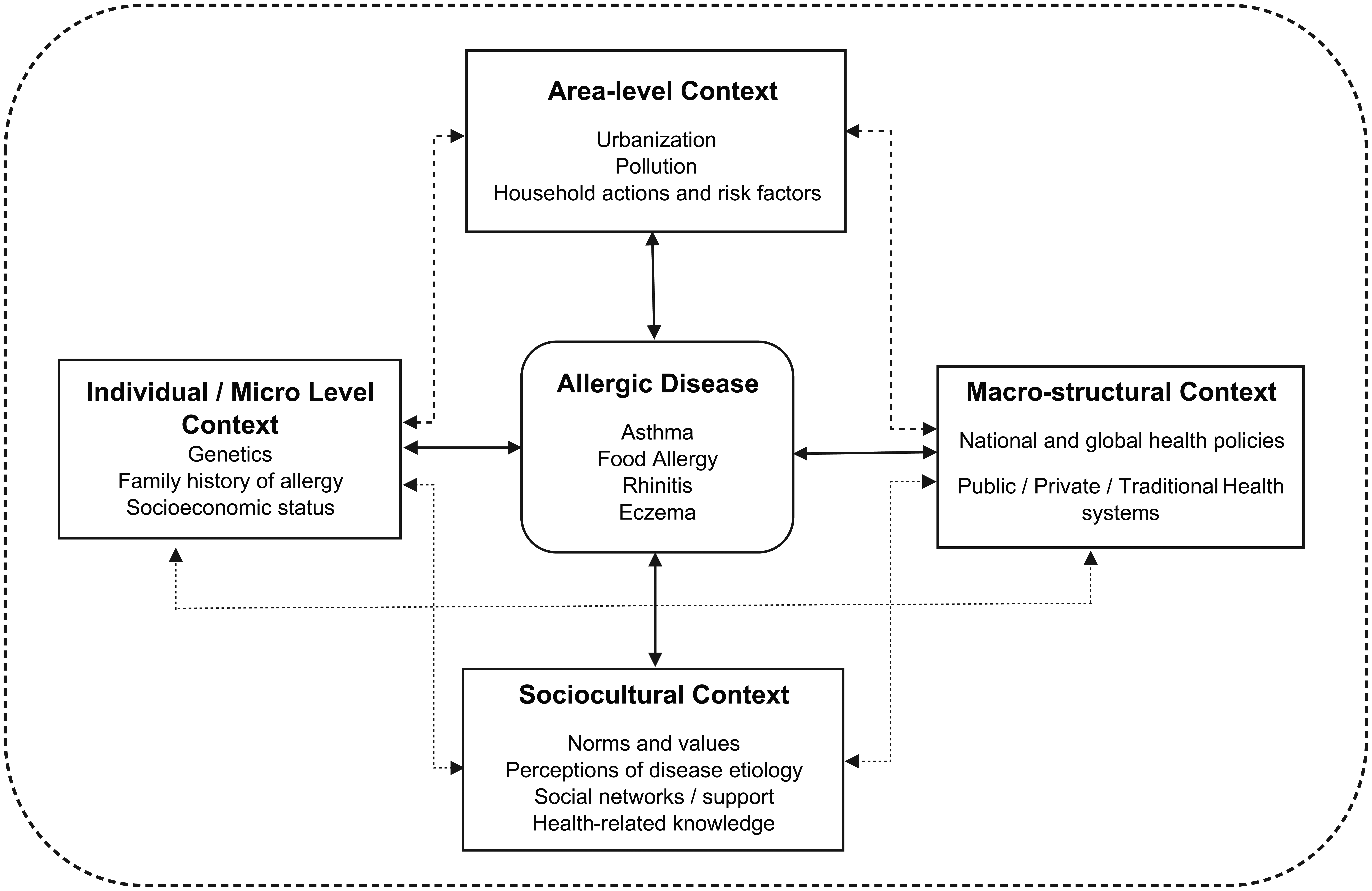
A “place-based” framework for understanding allergic disease.
Individual/Micro Context
At the individual level, family history (indirect measure of genetic risk) of allergy is an important pathway to allergic disease notwithstanding environmental risks factors (Wang, 2005). Twin studies, for example, show associations of genetic influence on dermatitis, asthma, and allergic rhinitis (Tan, Ellis, Saffery, & Allen, 2012) while heritability has been found to account for variance in peanut allergy (Sicherer et al., 2000).
Allergic disease risks are also associated with some measures of socioeconomic status (SES) in places although there are variations by allergic phenotype. Studies have found that exposure to low-income environments from birth is associated with the risk of developing persistent asthma (Kozyrskyj, Kendall, Jacoby, Sly & Zubrick, 2010). Similarly, Almqvist, Pershagen and Wickman (2005) note that risk of asthma, rhinitis, and sensitization to food allergens in children decreases with increasing SES particularly if both parents have higher level white-collar employments. On the other hand, higher SES factors (e.g., income, formal education) are surrogate risk indicators for self-reported food allergy, allergic sensitization, and anaphylaxis development (Ben-Shoshan et al., 2012; Mullins et al., 2010).
Area-Level Contexts
Where you live is associated with allergic disease especially for populations moving from traditional/rural to modern/urban societies (Obeng et al., 2011). Exposure to urban living environment, for example, pollution, household exposure to allergens, and Westernized lifestyles (e.g., modern housing, better hygiene, sanitation, and dietary changes) have been identified as risk markers for allergic disease (Robinson et al., 2011). There are, however, intra-urban variations in specific allergic disease risks. For example, while prevalence of allergic sensitization and allergic rhino-conjunctivitis increased with increasing urbanization, the same effects have not been observed in relation to asthma (Viinanen et al., 2005). In rural areas in SSA, van Gemert, van der Molen, Jones, and Chavannes (2011) found that, asthma is less predominant in comparison to urban communities. Beyond the rural–urban gradient, household and community characteristics and presence or absence of health services can shape health behavior and by extension allergy disease risk, knowledge, and diagnosis.
Sociocultural Context
Chronic disease conditions are embedded in the norms and beliefs of societies. Using qualitative techniques, Lu, Elliott, and Clarke (2014) illustrate that knowledge about and perceptions of food allergy vary between migrants and their host populations. They also point out the lack of a defined name for food allergy in migrant places of origin. Thus, the concept of allergies differs across geographic areas and population groups. In addition, poor health-related knowledge of allergies may hamper early diagnosis, which may partly be an outcome of a lack of access and quality of health services. In such cases, direct and indirect bodily experience of allergies may be an important mechanism shaping health-seeking action and choice of therapeutic treatments. Given food allergies are newly emerging health risks, understanding how existing norms and disease etiology affect diagnosis and treatment-seeking behavior is essential to our understanding.
The Macro-Structural Context
Though allergic disease occurs at the individual level, a lack of attention to the macro-level interwoven socio-political and economic processes can mask underlying influences that lead to health inequalities (Krieger, 2011). Decisions related to the allocation of resources, type of health care, and disease priority are influenced by multiple stakeholders at various spatial scales. For instance, until recently, global and national health policy emphasized the prevention of infectious diseases in developing countries. Implicit in such prioritization is the perception that chronic disease (e.g., diabetes, asthma, and allergies) exists only in affluent Western societies. Thus, a focus on macro determinants such as issues of power, financial resources, policy, as well as the agency of multiple stakeholders can expand the pathways to understand how decisions about health are made and their implications for allergic disorders in LMI countries (Bousquet, Ndiaye, Ait-Khaled, Annesi-Maesano, & Vignola, 2003).
Discussion and Conclusions
Chronic diseases are projected to be an increasingly significant health burden in LMI countries as progress is sustained in tackling infectious diseases (Stuckler, 2008). In this article, we addressed NCDs through the lens of epidemiologic transition theory. The article emphasizes that notwithstanding its challenges, it is still a useful structural framework for understanding changing health and disease patterns. We have also pointed out that existing frameworks for analyzing changing epidemiologic patterns in SSA and elsewhere must pay attention to how the specificity of “place” becomes pathways through which chronic diseases such as allergic disorders become embodied in populations. Engagement with “place effects” demands thinking about possibilities of multiple epidemiologic transitions at and across various analytic scales—for example, regional, national, and socioeconomic groups—if we are to comprehend differing health trends in SSA.
As we are unable to provide an in-depth country-specific synthesis of the epidemiologic transition over time, this article may not be generalizable across countries vis-à-vis the pace and stages of the epidemiologic transition. However, the broad trends described are generally consistent with the changes occurring in most countries in SSA. Furthermore, given that allergic disorders such as food allergy is “newly” emerging, we only make reference to published studies for countries in the subregion for which data were available.
Questions remain regarding the prevalence of allergic disease in SSA. Furthermore, little is known about its etiology, its social constructions, as well as the mechanisms through which policies might mediate allergic disease risk. As a way to address data gaps, we suggest that validated questions about allergic disorders could be incorporated into existing health and national population-based surveys (e.g., Census, the Demographic and Health Surveys, Multiple-Indicator Cluster Surveys, Living Standards Surveys) to help provide evidence for policy planning. Beyond building the evidence base, “place”- focused research implies multiple perspectives in research design, policy formulation, and policy implementation. Thus, we follow Elliott (2011) to suggest that research and practice need a transdisciplinary approach to understand the epidemiology of allergic diseases in SSA. Much can be gained from best practices in developed countries employing transdisciplinary teams of researchers to understand biological risks factors and immunological pathways as well as social dimensions related to allergies (Ben-Shoshan et al., 2012; Minaker, Elliott, & Clarke, 2014). At the very least, the few extant studies provide signposts for anticipating future added health burdens from allergic diseases in SSA. As a starting point, health policy ought to take a balanced approach reflective of the current burden of infectious disease as well as of future health needs from NCDs, and allergic disorders more specifically. Currently, only South Africa has prepared eczema and rhinitis guidelines (Green et al., 2012; Sinclair, Aboobaker, Jordaan, Modi, & Todd, 2008). It is important that health policy makers begin to adopt more proactive steps to incorporate allergic disorders as part of their broader agenda for NCD prevention. Furthermore, training health professionals to recognize allergic disorders can provide an effective entry point to reach populations at risk. Given that allergic disorders primarily affect children, this can be integrated into maternal and child health programs.
Footnotes
Appendix
Studies of Allergic Disorders in Anglophone-Speaking Countries in Sub-Saharan Africa, 1990 to 2014.

| Country | Asthma | Eczema | Rhinitis | Food allergy |
|---|---|---|---|---|
| Bostwana | X | X | X | X |
| Cameroon | Mugusi et al., 2004; Ait-Khaled et al., 2007 a ; Kengne et al., 2008 | Ait-Khaled et al., 2007; Bissek et al., 2012 | Ait-Khaled et al., 2007 | X |
| Eriteria | X | X | X | X |
| Ethiopia | Zemedkun et al., 2014; Belyhun et al., 2010; Denboba et al., 2008; Ait-Khaled et al., 2007; Venn et al., 2005; Davey et al., 2005; Dagoye et al., 2004; Hailu et al., 2003; Dagoye et al., 2003; Venn et al., 2001; Scrivener et al., 2001; Selassie et al., 2000; Melaku & Berhane, 1999; Yemaneberhan et al., 199; Seyoum & Amaro, 1992; Silverman, 2003 | Morrone, 2014; Gimbel & Legesse, 2012; Amberbir et al., 2011; Bilcha et al., 2010; Belyhun et al., 2010; Bilcha et al., 2009; Accorsi et al., 2009; Ait-Khaled et al., 2007 a ; Haileamlak, Dagoye, et al., 2005; Haileamlak, Lewis, 2005; Hailu et al., 2003; Shibeshi, 2000 | Ait-Khaled et al., 2007 | X |
| Gambia | Walraven et al., 2001; Weber et al., 1999 | X | X | X |
| Ghana | Obeng et al., 2014; Stevens et al., 2011; Addo-Yobo et al., 2007, 2001, 1997, Hesse, 1995 | Hogewoning et al., 2012, 2010 | X | Amoah et al., 2013; Obeng et al., 2011 |
| Kenya | Ait-Khaled et al., 2007 a ; Perzanowski et al., 2002; Ng’ang’a et al., 1998; Odhiambo et al., 1998; Ng’ang’a et al., 1997; Odhiambo et al., 1994; Odhiambo & Chwala, 1992; De Souza, 1992 a ; Gathua & Aluoch, 1990 | Ait-Khaled et al., 2007; Esamai et al., 2002 a ; Esamai & Anabwani, 1996; De Souza, 1992 | Ait-Khaled et al., 2007; Esamai et al., 2002; De Souza, 1992 | De Souza, 1994 |
| Lesotho | X | X | X | X |
| Liberia | X | X | X | X |
| Malawi | X | X | X | X |
| Namibia | X | X | X | X |
| Nigeria | Ayuk et al., 2014; Desalu et al., 2013; Thacher et al., 2013; Adeyeye et al., 2013; Oviawe & Osarogiagbon, 2013; Adetoun Mustapha et al., 2013; Oluwole et al., 2013; Onazi et al., 2012; Desalu et al., 2012; Fawibe et al., 2011; Ige et al., 2011; Desalu et al., 2011; Oni et al., 2011; Desalu, Oluboyo, et al., 2009 a ; Desalu, Salami, et al., 2009; Falade et al., 2009 a ; Adeyeye & Onadeko, 2008; Aguwa et al., 2007; Erhabor et al., 2006; Erhabor & Mosaku, 2004; Erhabor, 2003; Anetor et al., 2003; Oladipo et al., 2003; Erhabor et al., 2002; Ayres et al., 1999; Gbadero et al., 1995; Onadeko et al., 1994; Famodu et al., 1994; Fagbule & Ekanem, 1994, Erhabor et al., 1993 | Falade et al., 2009; Ayanlowo & Olumide; 2007; Nnoruka, 2005, 2004; Ogunbiyi et al., 2003 | Desalu, Oluboyo, et al., 2009; Falade et al., 2009; Aguwa et al., 2007; Takwoingi et al. 2003; Nwawolo & Olusesi, 2001, Ibekwe et al., 1990 | Onyemelukwe, 2011 |
| Rwanda | Musafiri et al., 2011 | Hogewoning et al., 2012 | 0 | 0 |
| Seychelles | X | X | X | X |
| Sierra Leone | X | X | X | X |
| South Africa | Shirinde et al., 2014; Abbott et al., 2013; van der Walt et al., 2013; Singh et al., 2013; Levin et al., 2011; Carroll et al., 2012; Mash et al., 2009; Calvert & Burney, 2010; Greenblatt et al., 2010; Maluleke & Worku, 2009; White et al., 2009; Jeebhay et al., 2009; Green et al., 2008; Wichmann et al., 2009, 2007; Ait-Khaled et al., 2007; van der Merwe et al., 2006; Mashalane et al., 2006; Ehrlich et al., 2005; Poyser et al., 2002; de Klerk et al., 2002; Macintyre et al., 2001; Zar & Weinberg, 2001; Zar et al., 2001; Esterhuizen, Hnizdo, & Rees, 2001; Esterhuizen, Hnizdo, Rees, Lalloo, et al., 2001; Ehrlich, Jordaan, et al., 2001; Green et al., 2001; Hnizdo et al., 2001; Buck et al., 2001; Jones et al., 2000; Nriagu et al., 1999; Ehrilich et al., 1998; Kirkby & Ker, 1998; Bheekie et al., 1998; Green & Luyt, 1997; Moosa & Henley, 1997; Ehrlich et al., 1996; Cowie & Mabena, 1996; Ehrlich et al., 1995; Luyt et al., 1995; Ehrlich & Weinberg, 1994; Ehrlich & Bourne, 1994; Roux et al.,1993; Terblanche & Stewart, 1990 | Levin et al., 2011 a ; Wichmann et al. 2009 a , 2008, 2007; Zar et al., 2007; Ait-Khaled et al., 2007 a ; Mercer et al., 2004 a ; Hartshorne, 2003; Jessop et al., 2002 | Potter et al., 2013; Seedat et al., 2010; Wichmann et al., 2009; Zar et al., 2007 a ; Green et al., 2007; Ait-Khaled et al., 2007; Mercer et al., 2004, 2002 | Levin et al., 2011; Hooper et al., 2008; Nieuwenhuizen et al., 2006; Frank et al., 1999; Zinn et al., 1997 |
| Swaziland | X | X | X | X |
| Uganda | Nantanda, Tumwine, Ndeezi, & Ostergaard, 2013; Nantanda, Ostergaard, Ndeezi, & Tumwine, 2013; Kirenga & Okot-Nwang, 2012; Mpairwe et al., 2008 a | Mpairwe et al., 2008; Mpairwe et al., 2011 | X | X |
| Tanzania | Berntsen, 2011; Goebbels et al., 2010; Berntsen et al., 2009; Justin-Temu et al. 2008 a ; Mugusi et al., 2004; Sunyer et al. 2001; Sunyer et al. 2000 | Komba & Mgonda, 2010; Satimia et al., 1998; Justin-Temu et al., 2008 | X | X |
| Zambia | X | X | X | X |
| Zimbabwe | Sibanda, 2003; Kambarami et al., 1999a | Sibanda, 2013; Kambarami et al., 1999 | Kambarami et al., 1999 | Sibanda, 2013 |
Note. X = No results found.
Studies involve more than one type of allergy.
1. Asthma
Ait-Khaled, N., Odhiambo, J., Pearce, N., Adjoh, K. S., Maesano, I. A., Benhabyles, B., . . . Zar, H. J. (2007). Prevalence of symptoms of asthma, rhinitis and eczema in 13- to 14-year-old children in Africa: The International Study of Asthma and Allergies in Childhood Phase III. Allergy, 62, 247-258.
Bissek, A.-C., Tabah, E. N., Kouotou, E., Sini, V., Yepnjio, F. N., Nditanchou, R., . . . Muna, W. F. T. (2012). The spectrum of skin diseases in a rural setting in Cameroon (sub-Saharan Africa). BMC Dermatology, 12, 7. doi:10.1186/1471-5945-12-7
Kengne, A. P., Sobngwi, E., Fezeu, L. L., Awah, P. K., Dongmo, S., & Mbanya, J. C. (2008). Nurse-led care for asthma at primary level in rural sub-Saharan Africa: The experience of Bafut in Cameroon. Journal of Asthma, 45, 437-443. doi:10.1080/02770900802032933
Mugusi, F., Edwards, R., Hayes, L., Unwin, N., Mbanya, J. C., Whiting, D., . . . Rashid, S. (2004). Prevalence of wheeze and self-reported asthma and asthma care in an urban and rural area of Tanzania and Cameroon. Tropical Doctor, 34, 209-214.
1. Asthma
Ait-Khaled, N., Odhiambo, J., Pearce, N., Adjoh, K. S., Maesano, I. A., Benhabyles, B., . . . Zar, H. J. (2007). Prevalence of symptoms of asthma, rhinitis and eczema in 13- to 14-year-old children in Africa: The International Study of Asthma and Allergies in Childhood Phase III. Allergy, 62, 247-258.
Belyhun, Y., Amberbir, A., Medhin, G., Erko, B., Hanlon, C., Venn, A., . . . Davey, G. (2010). Prevalence and risk factors of wheeze and eczema in 1-year old children: The Butajira birth cohort, Ethiopia. Clinical & Experimental Allergy, 40, 619-626. doi:10.1111/j.1365-2222.2010.03479.x
Dagoye, D., Bekele, Z., Woldemichael, K., Nida, H., Yimam, M., Hall, A., . . . Lewis, S. A. (2003). Wheezing, allergy, and parasite infection in children in urban and rural Ethiopia. American Journal of Respiratory and Critical Care Medicine, 167, 1369-1373.
Dagoye, D., Bekele, Z., Woldemichael, K., Nida, H., Yimam, M., Venn, A. J., . . . Hubbard, R. (2004). Domestic risk factors for wheeze in urban and rural Ethiopian children. QJM, 97, 489-498.
Davey, G., Venn, A., Belete, H., Berhane, Y., & Britton, J. (2005). Wheeze, allergic sensitization and geohelminth infection in Butajira, Ethiopia. Clinical & Experimental Allergy, 35, 301-307.
Denboba, W., Venn, A., Britton, J., & Davey, G. (2008). Repeatability and validity of IUATLD Respiratory Questionnaire responses as a measure of asthma in an Ethiopian population. East African Medical Journal, 85, 582-588.
Hailu, S., Tessema, T, & Silverman, M (2003). Prevalence of symptoms of asthma and allergies in schoolchildren in Gondar town and its vicinity, northwest Ethiopia. Pediatric Pulmonology, 35, 427-432.
Melaku, K., & Berhane, Y. (1999). Prevalence of wheeze and asthma-related symptoms among school children in Addis Ababa, Ethiopia. Ethiopian Medical Journal, 37, 247-254.
Scrivener, S., Yemaneberhan, H., Zebenigus, M., Tilahun, D., Girma, S., Ali, S., . . . Britton, J. (2001). Independent effects of intestinal parasite infection and domestic allergen exposure on risk of wheeze in Ethiopia: A nested case-control study. Lancet, 358, 1493-1499.
Selassie, F. G., Stevens, R. H., Cullinan, P., Pritchard, D., Jones, M., Harris, J., . . . Taylor, A. J. (2000). Total and specific IgE (house dust mite and intestinal helminths) in asthmatics and controls from Gondar, Ethiopia. Clinical & Experimental Allergy, 30, 356-358.
Silverman, M. (2003). Prevalence of symptoms of asthma and allergies in school children in Gondar town and its vicinity, northwest Ethiopia. Pediatric Pulmonology, 35, 427-432.
Seyoum, B., & Amaro, J. C. (1992). Bronchial asthma in Jima: A prospective analysis of 204 patients. Ethiopian Medical Journal, 30, 225-232.
Venn, A. J., Yemaneberhan, H., Bekele, Z., Lewis, S. A., Parry, E., & Britton, J. (2001). Increased risk of allergy associated with the use of kerosene fuel in the home. American Journal of Respiratory and Critical Care Medicine, 164, 1660-1664.
Venn, A., Yemaneberhan, H., Lewis, S., Parry, E., & Britton, J. (2005). Proximity of the home to roads and the risk of wheeze in an Ethiopian population. Occupational and Environmental Medicine, 62, 376-380.
Yemaneberhan, H., Bekele, Z., Venn, A., Lewis, S., Parry, E., & Britton, J. (1997). Prevalence of wheeze and asthma and relation to atopy in urban and rural Ethiopia. Lancet, 350, 85-90.
Zemedkun, K., Woldemichael, K., & Tefera, G. (2014). Assessing control of asthma in Jush, Jimma, South West Ethiopia. Ethiopian Journal of Health Sciences, 24(1), 49-58.
2. Eczema
Accorsi, S., Barnabas, G. A., Farese, P., Padovese, V., Terranova, M., Racalbuto, V., & Morrone, A. (2009). Skin disorders and disease profile of poverty: Analysis of medical records in Tigray, northern Ethiopia, 2005-2007. Transactions of the Royal Society of Tropical Medicine and Hygiene, 103, 469-475. doi:10.1016/j.trstmh.2008.11.028
Amberbir, A., Medhin, G., Erku, W., Alem, A., Simms, R., Robinson, K., . . . Davey, G. (2011). Effects of Helicobacter pylori, geohelminth infection and selected commensal bacteria on the risk of allergic disease and sensitization in 3-year-old Ethiopian children. Clinical & Experimental Allergy, 41, 1422-1430. doi:10.1111/j.1365-2222.2011.03831.x
Bilcha, K. D., Ayele, A., Shibeshi, D., & Lovell, C. (2010). Patch testing and contact allergens in Ethiopia: Results of 514 contact dermatitis patients using the European baseline series. Contact Dermatitis, 63, 140-145. doi:10.1111/j.1600-0536.2010.01740.x
Bilcha, K. D., Shibeshi, D., Grangsjo, A., & Hiletework, M. (2009). Patch test reaction on Ethiopian subjects with eczema. International Journal of Dermatology, 48, 979-983. doi:10.1111/j.1365-4632.2009.04070.x
Gimbel, D. C., & Legesse, T. B. (2013). Dermatopathology practice in Ethiopia. Archives of Pathology & Laboratory Medicine, 137, 798-804. doi:10.5858/arpa.2012-0041-RA
Haileamlak, A., Dagoye, D., Williams, H., Venn, A. J., Hubbard, R., Britton, J., & Lewis, S. A. (2005). Early life risk factors for atopic dermatitis in Ethiopian children. Journal of Allergy and Clinical Immunology, 115, 370-376.
Haileamlak, A., Lewis, S. A., Britton, J., Venn, A. J., Woldemariam, D., Hubbard, R., & Williams, H. C. (2005). Validation of the International Study of Asthma and Allergies in Children (ISAAC) and U.K. criteria for atopic eczema in Ethiopian children. British Journal of Dermatology, 152, 735-741.
Morrone, A., Bordignon, V., Barnabas, G. A., Dassoni, F., Latini, O., Padovese, V., . . . Cristaudo, A. (2014). Clinical-epidemiological features of contact dermatitis in rural and urban communities in northern Ethiopia: Correlation with environmental or occupational exposure. International Journal of Dermatology, 53, 975-980. doi:10.1111/j.1365-4632.2012.05777.x
Shibeshi, D. (2000). Pattern of skin disease at the Ethio-Swedish pediatric hospital, Addis Ababa, Ethiopia. Pediatric Dermatology, 17, 357-359.
1. Asthma
Walraven, G. E., Nyan, O. A., Van Der Sande, M. A., Banya, W. A., Ceesay, S. M., & Milligan, P. J., & McAdam, K. P. (2001). Asthma, smoking and chronic cough in rural and urban adult communities in THE Gambia. Clinical & Experimental Allergy, 31, 1679-1685.
Weber, M. W., Milligan, P., Giadom, B., Pate, M. A., Kwara, A., Sadiq, A. D., . . . Mulholland, K. (1999). Respiratory illness after severe respiratory syncytial virus disease in infancy in the Gambia. Journal of Pediatrics, 135, 683-688.
1. Asthma
Addo-Yobo, E. O., Custovic, A., Taggart, S. C., Asafo-Agyei, A. P., & Woodcock, A. (1997). Exercise induced bronchospasm in Ghana: Differences in prevalence between urban and rural schoolchildren. Thorax, 52, 161-165.
Addo-Yobo, E. O., Custovic, A., Taggart, S. C., Craven, M., Bonnie, B., & Woodcock, A. (2001). Risk factors for asthma in urban Ghana. Journal of Allergy and Clinical Immunology, 108, 363-368.
Addo-Yobo, E. O., Woodcock, A., Allotey, A., Baffoe-Bonnie, B., Strachan, D., & Custovic, A. (2007). Exercise-induced bronchospasm and atopy in Ghana: Two surveys ten years apart. PLoS Medicine, 4(2), e70.
Hesse, I. F. (1995). Knowledge of asthma and its management in newly qualified doctors in Accra, Ghana. Respiratory Medicine, 89(1), 35-39.
Obeng, B. B., Amoah, A. S., Larbi, I. A., de Souza, D. K., Uh, H. W., Fernández-Rivas, M., . . . Hartgers, F. C. (2014). Schistosome infection is negatively associated with mite atopy, but not wheeze and asthma in Ghanaian schoolchildren. Clinical & Experimental Allergy, 44, 965-975. doi:10.1111/cea.12307
Stevens, W., Addo-Yobo, E., Roper, J., Woodcock, A., James, H., Platts-Mills, T., & Custovic, A. (2011). Differences in both prevalence and titre of specific immunoglobulin E among children with asthma in affluent and poor communities within a large town in Ghana. Clinical & Experimental Allergy, 41, 1587-1594. doi:10.1111/j.1365-2222.2011.03832.x
2. Eczema
Hogewoning, A. A., Bouwes Bavinck, J. N., Amoah, A. S., Boakye, D. A., Yazdanbakhsh, M., Kremsner, P. G., . . . Lavrijsen, A. P. (2012). Point and period prevalences of eczema in rural and urban schoolchildren in Ghana, Gabon and Rwanda. Journal of the European Academy of Dermatology and Venereology, 26, 488-494. doi:10.1111/j.1468-3083.2011.04106.x
Hogewoning, A. A., Larbi, I. A., Addo, H. A., Amoah, A. S., Boakye, D., Hartgers, F., . . . Lavrijsen, A. P. (2010). Allergic characteristics of urban schoolchildren with atopic eczema in Ghana. Journal of the European Academy of Dermatology and Venereology, 24, 1406-1412. doi:10.1111/j.1468-3083.2010.03655.x
3. Food Allergy
Amoah, A. S., Obeng, B. B., Larbi, I. A., Versteeg, S. A., Aryeetey, Y., Akkerdaas, J., . . . Yazdanbakhsh, M. (2013). Peanut-specific IgE antibodies in asymptomatic Ghanaian children possibly caused by carbohydrate determinant cross reactivity. Journal of Allergy and Clinical Immunology, 132, 639-647. doi:10.1016/j.jaci.2013.04.023
Obeng, B. B., Amoah, A. S., Larbi, I. A., Yazdanbakhsh, M., van Ree, R., Boakye, D. A., & Hartgers, F. C. (2011). Food allergy in Ghanaian schoolchildren: Data on sensitization and reported food allergy. International Archives of Allergy and Immunology, 155, 63-73. doi:10.1159/000318704
1. Asthma
Ait-Khaled, N., Odhiambo, J., Pearce, N., Adjoh, K. S., Maesano, I. A., Benhabyles, B., . . . Zar, H. J. (2007). Prevalence of symptoms of asthma, rhinitis and eczema in 13- to 14-year-old children in Africa: The International Study of Asthma and Allergies in Childhood Phase III. Allergy, 62, 247-258.
De Souza, M. (1992). Allergic conditions in a general practice in Nairobi: A pilot study. East African Medical Journal, 69, 700-702.
Gathua, S. N., & Aluoch, J. A. (1990). The efficacy and safety of a controlled release formulation of salbutamol in the management of patients with asthma in Nairobi, Kenya. East African Medical Journal, 67, 850-855.
Ng’ang’a, L. W., Odhiambo, J. A., Mungai, M. W., Gicheha, C. M., Nderitu, P., Maingi, B., . . . Becklake, M. R. (1998). Prevalence of exercise induced bronchospasm in Kenyan school children: An urban-rural comparison. Thorax, 53, 919-926.
Ng’ang’a, L. W., Odhiambo, J. A., Omwega, M. J., Gicheha, C. M., Becklake, M. R., Menzies, R., . . . Macklem, P. T. (1997). Exercise-induced bronchospasm: A pilot survey in Nairobi school children. East African Medical Journal, 74, 694-698.
Odhiambo, J. A., & Chwala, R. D. (1992). Arterial blood gases and acid-base status of adult patients presenting with acute severe asthma at Kenyatta National Hospital, Nairobi. East African Medical Journal, 69, 319-322.
Odhiambo, J. A., Ng’ang’a, L. W., & Gikonyo, B. M. (1997). Efficacy and safety of inhaled salmeterol (serevent) as maintenance therapy for asthma in Nairobi. East African Medical Journal, 71, 88-92.
Odhiambo, J. A., Ng’ang’a, L. W., Mungai, M. W., Gicheha, C. M., Nyamwaya, J. K., Karimi, F., . . . Becklake, M. R. (1998). Urban-rural differences in questionnaire-derived markers of asthma in Kenyan school children. European Respiratory Journal, 12, 1105-1112.
Perzanowski, M. S., Ng’ang’a, L. W., Carter, M. C., Odhiambo, J., Ngari, P., Vaughan, J. W., . . . Platts-Mills, T. A. (2002). Atopy, asthma, and antibodies to ascaris among rural and urban children in Kenya. Journal of Pediatrics, 140, 582-588.
2. Eczema
Esamai, F., & Anabwani, G. M. (1996). Prevalence of asthma, allergic rhinitis and dermatitis in primary school children in Uasin Gishu district, Kenya. East African Medical Journal, 73, 474-478.
Esamai, F., Ayaya, S., & Nyandiko, W. (2002). Prevalence of asthma, allergic rhinitis and dermatitis in primary school children in Uasin Gishu district, Kenya. East African Medical Journal, 79, 514-518.
3. Food Allergy
De Souza, M. (1994). Allergies and skin testing: A Nairobi experience. East African Medical Journal, 71, 473-475.
1. Asthma
Adetoun Mustapha, B., Briggs, D. J., & Hansell, A. L. (2013). Prevalence of asthma and respiratory symptoms in children in a low socio-economic status area of Nigeria. International Journal of Tuberculosis and Lung Disease, 17, 982-988. doi:10.5588/ijtld.12.0434
Adeyeye, O. O., Ogunleye, O. O., Onadeko, B. O., Bamisile, R. T., Brodie-Mends, A., & Ekrikpo, U. (2013). Body mass index and asthma severity in a population of Nigerian asthmatics. African Journal of Medicine and Medical Sciences, 42, 33-38.
Adeyeye, O. O., & Onadeko, B. O. (2008). Understanding medication and use of drug delivery device by asthmatic in Lagos. West African Journal of Medicine, 27, 155-159.
Aguwa, E. N., Okeke, T. A., & Asuzu, M. C. (2007). The prevalence of occupational asthma and rhinitis among woodworkers in south-eastern Nigeria. Tanzania Health Research Bulletin, 9(1), 52-55.
Anetor, J. I., Ajose, O. A., Ige, O., Oyeleye, A. O., & Ojo, P. O. (2003). Antioxidant status of adult Nigerian asthmatics: Implications for prognosis. Nutrition & Health, 17, 221-229.
Ayres, J. G., Okpapi, J., & Ifere, O. A. (1999). Possible increased risk of hospital admission for asthma in women in Zaria, northern Nigeria. Transactions of the Royal Society of Tropical Medicine and Hygiene, 93, 598-599.
Ayuk, A. C., Oguonu, T., Ikefuna, A. N., & Ibe, B. C. (2014). Asthma control and quality of life in school-age children in Enugu south east, Nigeria. Nigerian Postgraduate Medical Journal, 21, 160-164.
Desalu, O. O., Fawibe, A. E., & Salami, A. K. (2012). Assessment of the level of asthma control among adult patients in two tertiary care centers in Nigeria. Journal of Asthma, 49, 765-772. doi:10.3109/02770903.2012.690478
Desalu, O. O., Oluboyo, P. O., & Salami, A. K. (2009). The prevalence of bronchial asthma among adults in Ilorin, Nigeria. African Journal of Medicine and Medical Sciences, 38, 149-154.
Desalu, O. O., Onyedum, C. C., Adeoti, A. O., Ozoh, O. B., Fadare, J. O., Salawu, F., K., . . . Adewole, O. O. (2013). Unmet needs in asthma treatment in a resource limited setting, findings from the survey of adult asthma patients and their physicians in Nigeria. Pan African Medical Journal, 16, 20. doi:10.11604/pamj.2013.16.20.2798
Desalu, O. O., Onyedum, C. C., Iseh, K. R., Salawu, F. K., & Salami, A. K. (2011). Asthma in Nigeria: Are the facilities and resources available to support internationally endorsed standards of care? Health Policy, 99, 250-254. doi:10.1016/j.healthpol.2010.10.006
Desalu, O. O., Salami, A. K., Iseh, K. R., & Oluboyo, P. O. J. (2009). Prevalence of self-reported allergic rhinitis and its relationship with asthma among adult Nigerians. Journal of Investigational Allergology and Clinical Immunology, 19, 474-480.
Erhabor, G. E., Agbroko, S. O., Bamigboye, P., & Awopeju, O. F. (2006). Prevalence of asthma symptoms among university students 15 to 35 years of age in Obafemi Awolowo University, Ile-Ife, Osun State. Journal of Asthma, 43, 161-164.
Erhabor, G. E., Aghanwa, H. S., & Ndububa, D. (2003). Patients attitude towards asthma in Ile Ife. Nigerian Journal of Medicine, 12, 206-210.
Erhabor, G. E., Awotedu, A. A., & Balogun, M. O. (1993). Exercise induced bronchoconstriction in Nigerian asthmatics. African Journal of Medicine and Medical Sciences, 22(2), 33-37.
Erhabor, G. E., Kuteyi, F., & Obembe, F. (2002). Asthma: The psychosocial impact among a sample of south western Nigerians. Journal of the National Medical Association, 94, 987-993.
Erhabor, G. E., & Mosaku, S. K. (2004). The association of anxiety with asthma among a sample of asthmatics in Ile-Ife Osun State Nigeria. Journal of Asthma, 41, 695-700.
Falade, A. G., Ige, O. M., Yusuf, B. O., Onadeko, M. O., & Onadeko, B. O. (2009). Trends in the prevalence and severity of symptoms of asthma, allergic rhinoconjunctivitis, and atopic eczema. Journal of the National Medical Association, 101, 414-418.
Fagbule, D., & Ekanem, E. E. (1994). Some environmental risk factors for childhood asthma: A case-control study. Annals of Tropical Paediatrics, 14(1), 15-19.
Famodu, A. A., Oviawe, O., & Falodun, O. (1994). Haemorrheological changes in asthmatic Nigerian children. Haematologia, 26, 117-119.
Fawibe, A. E., Joseph, K. J., Olaosebikan, O. F., Salami, A. K., Oluboyo, P. O., & Desalu, O. O. (2011). General practitioner reported follow-up visits among asthma patients in North Central Nigeria. Annals of African Medicine, 10, 209-213. doi:10.4103/1596-3519.84703
Gbadero, D. A., Johnson, A. W., Aderele, W. I., & Olaleye, O. D. (1995). Microbial inciters of acute asthma in urban Nigerian children. Thorax, 50, 739-745.
Ige, O. M., Arinola, O. G., Oluwole, O., Falade, A. G., Falusi, A. G., Aderemi, T., . . . Olopade, C. O. (2011). Atopy is associated with asthma in adults living in rural and urban southwestern Nigeria. Journal of Asthma, 48, 894-900. doi:10.3109/02770903.2011.608458
Oladipo, O. O., Chukwu, C. C., Ajala, M. O., Adewole, T. A., & Afonja, O. A. (2003). Plasma magnesium in adult asthmatics at the Lagos University Teaching Hospital, Nigeria. East African Medical Journal, 80, 488-491.
Oluwole, O., Arinola, O. G., Falade, G. A., Ige, M. O., Falusi, G. A., Aderemi, T., . . . Olopade, C. O. (2013). Allergy sensitization and asthma among 13-14 year old school children in Nigeria. African Health Sciences, 13, 144-153. doi:10.4314/ahs.v13i1.20
Onadeko, B. O., Bamidele, E. O., Ekweani, C. N., & Erabor, G. E. (1994). An open multi centre study to assess the efficacy of inhaled salmeterol in bronchial asthma in Nigeria. African Journal of Medicine and Medical Sciences, 23, 301-305.
Onazi, S. O., Orogade, A. A., & Yakubu, A. M. (2012). Exercise-induced bronchospasm among school children in Gusau, Nigeria. West African Journal of Medicine, 31(2), 76-80.
Oni, A. O., Erhabor, G. E., & Egbagbe, E. E. (2010). The prevalence, management and burden of asthma: A Nigerian study. Iranian Journal of Allergy, Asthma, and Immunology, 9(1), 35-41. doi:10.09.01/ijaai.3541
Oviawe, O., & Osarogiagbon, W. O. (2013). Trend in asthma severity in steroid naïve asthmatic children in Benin city, Nigeria. Nigerian Journal of Clinical Practice, 16, 371-374. doi:10.4103/1113077.113466
Thacher, J. D., Emmelin, A., Madaki, A. J., & Thacher, T. D. (2013). Biomass fuel use and the risk of asthma in Nigerian children. Respiratory Medicine, 107, 1845-1851. doi:10.1016/j.rmed.2013.09.009
2. Eczema
Ayanlowo, O., & Olumide, Y. (2007). Routine patch testing in a dermatology clinic of a teaching hospital in Nigeria. Nigerian Quarterly Journal of Hospital Medicine, 17, 160-164.
Nnoruka, E. N. (2004). Current epidemiology of atopic dermatitis in south-eastern Nigeria. International Society of Dermatology, 43, 739-744.
Nnoruka, E. N. (2005). Skin diseases in south-east Nigeria: A current perspective. International Journal of Dermatology, 44, 29-33.
Ogunbiyi, A. O., Daramola, O. O., & Alese, O. O. (2004). Prevalence of skin diseases in Ibadan, Nigeria. International Journal of Dermatology, 43(1), 31-36.
3. Rhinitis
Ibekwe, A. O., Okafor, B. C., & Okafor, G. O. (1990). Immediate skin sensitivity test reactivity in Nigerians with allergic rhinitis. East African Medical Journal, 67(1), 13-16.
Nwawolo, C. C., & Olusesi, A. D. (2001). Controlled clinical study of the efficacy of loratadine in Nigerian patients with allergic rhinitis. Nigeria Journal of Postgraduate Medicine, 8, 127-132.
Takwoingi, Y., Akang, E., Nwaorgu, G., & Nwawolo, C. (2003). Comparing nasal secretion eosinophil count with skin sensitivity test in allergic rhinitis in Ibadan, Nigeria. Acta Oto-Laryngologica, 123, 1070-1074.
4. Food allergy
Onyemelukwe, G. C. (2011). RAST-specific IgE to egg and milk in Nigerian asthmatic patients. African Journal of Medicine and Medical Sciences, 40(1), 51-57.
1. Asthma
Musafiri, S., van Meerbeeck, J., Musango, L., Brusselle, G., Joos, G., Seminega, B., & Rutayisire, C. (2011). Prevalence of atopy, asthma and COPD in an urban and a rural area of an African country. Respiratory Medicine, 105, 1596-1605. doi:10.1016/j.rmed.2011.06.013
2. Eczema
Hogewoning, A. A., Bouwes Bavinck, J. N., Amoah, A. S., Boakye, D. A., Yazdanbakhsh, M., Kremsner, P. G., . . . Lavrijsen, A. P. (2012). Point and period prevalences of eczema in rural and urban schoolchildren in Ghana, Gabon and Rwanda. Journal of the European Academy of Dermatology and Venereology, 26, 488-494. doi:10.1111/j.1468-3083.2011.04106.x
1. Asthma
Abbott, S., Els, C., Boonzaaier, L., Becker, P., & Green, R. J. (2013). A case for revising the strength of the relationship between childhood asthma and atopy in the developing world. South African Medical Journal, 103, 485-488. doi:10.7196/samj.6788
Ait-Khaled, N., Odhiambo, J., Pearce, N., Adjoh, K. S., Maesano, I. A., Benhabyles, B., . . . Zar, H. J. (2007). Prevalence of symptoms of asthma, rhinitis and eczema in 13- to 14-year old children in Africa, the International Study of Asthma and Allergies in Childhood Phase III. Allergy, 62, 247-258.
Bheekie, A., Syce, J. A., & Weinberg, E. G. (1998). An assessment of asthmatic patients at four Western Cape community pharmacies. South African Medical Journal, 88, 262-266.
Buck, R. G., Miles, A. J., & Ehrlich, R. I. (2000). Possible occupational asthma among adults presenting with acute asthma. South African Medical Journal, 90, 884-888.
Calvert, J., & Burney, P. (2010). Ascaris, atopy, and exercise-induced bronchoconstriction in rural and urban South African children. Journal of Allergy and Clinical Immunology, 125, 100-105. doi:10.1016/j.jaci.2009.09.010
Carroll, W. D., Wildhaber, J., & Brand, P. L. (2012). Parent misperception of control in childhood/adolescent asthma: The room to breathe survey. European Respiratory Journal, 39(1), 90-96. doi:10.1183/09031936.00048911
Cowie, R. L., & Mabena, S. K. (1996). Asthma in goldminers. South African Medical Journal, 86, 804-807.
de Klerk, A., van Schalkwyk, E., Williams, Z., Lee, W., & Bardin, P. (2002). Risk factors for near-fatal asthma: A case-control study in a Western Cape teaching hospital. South African Medical Journal, 92, 140-144.
Ehrlich, R. I., & Bourne, D. E. (1994). Asthma deaths among coloured and white South Africans, 1962 to 1988. Respiratory Medicine, 88, 195-202.
Ehrlich, R., & Weinberg, E. G. (1994). Increase in hospital admissions for acute childhood asthma in Cape Town, 1978-1990. South African Medical Journal, 84, 263-266.
Ehrlich, R. I., Du Toit, D., Jordaan, E., Volmink, J. A., Weinberg, E. G., & Zwarenstein, M. (1995). Prevalence and reliability of asthma symptoms in primary school children in Cape Town. International Journal of Epidemiology, 24, 1138-1145.
Ehrlich, R. I., Du Toit, D., Jordaan, E., Zwarenstein, M., Potter, P., Volmink, J. A., & Weinberg, E. (1996). Risk factors for childhood asthma and wheezing: Importance of maternal and household smoking. American Journal of Respiratory and Critical Care Medicine, 154(3 Pt 1), 681-688.
Ehrlich, R., Jordaan, E., Du Toit, D., Potter, P., Volmink, J., Zwarenstein, M., & Weinberg, E. (2001). Household smoking and bronchial hyperresponsiveness in children with asthma. Journal of Asthma, 38, 239-251.
Ehrlich, R. I., Jordaan, E, Du Toit, D., Volmink, J. A., Weinberg, E., & Zwarenstein, M. (1998). Underrecognition and undertreatment of asthma in Cape Town primary school children. South African Medical Journal, 88, 986-994.
Ehrlich, R. I., White, N., Norman, R., Laubscher, R., Steyn, K., Lombard, C., & Bradshaw, D. (2005). Wheeze, asthma diagnosis and medication use: A national adult survey in a developing country. Thorax, 60, 895-901.
Esterhuizen, T. M., Hnizdo, E., & Rees, D. (2001). Occurrence and causes of occupational asthma in South Africa: Results from SORDSA’s Occupational Asthma Registry, 1997-1999. South African Medical Journal, 91, 509-513.
Esterhuizen, T. M., Hnizdo, E., Rees, D., Lalloo, U. G., Kielkowski, D., van Schalkwyk, E. M., . . . Curtis, T. (2001). Occupational respiratory diseases in South Africa–results from SORDSA, 1997-1999. South African Medical Journal, 91, 502-508.
Greenblatt, M., Galpin, J. S., Hill, C., Feldman, C., & Green, R. J. (2010). Comparison of doctor and patient assessments of asthma control. Respiratory Medicine, 104, 356-361. doi:10.1016/j.rmed.2009.10.010
Green, R., Davis, G., & Price, D. (2008). Perceptions, impact and management of asthma in South Africa: A patient questionnaire study. Primary Care Respiratory Journal, 17, 212-216. doi:10.3132/pcrj.2008.00027
Green, R. J., Greenblatt, M. M., Plit, M., Jones, S., & Adam, B. (2001). Asthma management and perceptions in rural South Africa. Annals of Allergy, Asthma & Immunology, 86, 343-347.
Green, R., & Luyt, D. (1997). Clinical characteristics of childhood asthmatics in Johannesburg. South African Medical Journal, 87, 878-882.
Hnizdo, E., Esterhuizen, T. M., Rees, D., & Lalloo, U. G. (2001). Occupational asthma as identified by the Surveillance of Work-related and Occupational Respiratory Diseases programme in South Africa. Clinical & Experimental Allergy, 31(1), 32-39.
Jeebhay, M. F., Robins, T. G., Miller, M. E., Bateman, E., Smuts, M., Baatjies, R., & Lopata, A. L. (2008). Occupational allergy and asthma among salt water fish processing workers. American Journal of Industrial Medicine, 51, 899-910. doi:10.1002/ajim.20635
Jones, S. L., Weinberg, M., Ehrlich, R. I., & Roberts, K. (2000). Knowledge, attitu\des, and practices of parents of asthmatic children in Cape Town. Journal of Asthma, 37, 519-528.
Kirkby, R. E., & Ker, J. A. (1998). Exercise-induced asthma in a group of South African schoolchildren during physical education classes. South African Medical Journal, 88, 136-138.
Levin, M. E., Muloiwa, R., & Motala, C. (2011). Associations between asthma and bronchial hyper-responsiveness with allergy and atopy phenotypes in urban black South African teenagers. South African Medical Journal, 101, 472-476.
Luyt, D. K., Davis, G., Dance, M., Simmank, K., & Patel, D. (1995). Clinical characteristics of black asthmatic children. South African Medical Journal, 85, 999-1001.
MacIntyre, U. E., de Villiers, F. P., & Owange-Iraka, J. W. (2001). Increase in childhood asthma admissions in an urbanising population. South African Medical Journal, 91, 667-672.
Maluleke, K. R., & Worku, Z. (2009). Environmental determinants of asthma among school children aged 13-14 in and around Polokwane, Limpopo Province, South Africa. International Journal of Environmental Research and Public Health, 6, 2354-2374. doi:10.3390/ijerph6092354
Mash, B, Rhode, H., Pather, M, Ainslie, G., Irusen, E., Bheekie, A., & Mayers, P. (2009). Quality of asthma care: Western Cape province, South Africa. South African Medical Journal, 99, 892-896.
Mashalane, M. B., Stewart, A., Feldman, C., Becker, P., & de Charmoy, S. (2006). Prevalence of exercise-induced bronchospasm in Thokoza schoolchildren. South African Medical Journal, 96(1), 67-70.
Moosa, S. E., & Henley, L. D. (1997). An evaluation of parental knowledge of childhood asthma in a family practice setting. South African Medical Journal, 87(1), 42-45.
Nriagu, J., Robins, T., Gary, L., Liggans, G., Davila, R., Supuwood, K, . . . Naidoo, R. (1999). Prevalence of asthma and respiratory symptoms in south-central Durban, South Africa. European Journal of Epidemiology, 15, 747-755.
Poyser, M. A., Nelson, H., Ehrlich, R. I., Bateman, E. D., Parnell, S., Puterman, A., & Weinberg, E. (2002). Socioeconomic deprivation and asthma prevalence and severity in young adolescents. European Respiratory Journal, 19, 892-898.
Roux, P., Smit, M., & Weinberg, E. G. (1993). Seasonal and recurrent intensive care unit admissions for acute severe asthma in children. South African Medical Journal, 83, 177-179.
Shirinde, J., Wichmann, J., & Voyi, K. (2014). Association between wheeze and selected air pollution sources in an air pollution priority area in South Africa: A cross-sectional study. Environmental Health, 13, 32. doi:10.1186/1476-069X-13 32
Singh, T., Bello, B., & Jeebhay, M. F. (2013). Risk factors associated with asthma phenotypes in dental healthcare workers. American Journal of Industrial Medicine, 56(1), 90-99. doi:10.1002/ajim.22041
Terblanche, E., & Stewart, R. I. (1990). The prevalence of exercise-induced bronchoconstriction in Cape Town schoolchildren. South African Medical Journal, 78, 744-747.
van der Merwe, L., de Klerk, A., Kidd, M., Bardin, P. G., & van Schalkwyk, E. M. (2006). Case control study of severe life threatening asthma (SLTA) in a developing community. Thorax, 61, 756-760.
van der Walt, A., Singh, T., Baatjies, R., Lopata, A. L., & Jeebhay, M. F. (2013). Work-related allergic respiratory disease and asthma in spice mill workers is associated with inhalant chili pepper and garlic exposures. Occupational and Environmental Medicine, 70, 446-452. doi:10.1136/oemed-2012-101163.
White, N., teWaterNaude, J., van der Walt, A., Ravenscroft, G., Roberts, W., & Ehrlich, R. (2009). Meteorologically estimated exposure but not distance predicts asthma symptoms in schoolchildren in the environs of a petrochemical refinery: A cross-sectional study. Environmental Health, 8, 45. doi:10.1186/1476-069X-8-45.
Wichmann, J., Wolvaardt, J. E., Maritz, C., & Voyi, K. V. (2007). Household conditions, eczema symptoms and rhinitis symptoms: Relationship with wheeze and severe wheeze in adolescents living in the Polokwane area, South Africa. Journal of Asthma, 44, 659-666.
Wichmann, J, Wolvaardt, J. E., Maritz, C., & Voyi, K. V. (2009). Household conditions, eczema symptoms and rhinitis symptoms: Relationship with wheeze and severe wheeze in children living in the Polokwane area, South Africa. Maternal and Child Health Journal, 13, 107-118. doi:10.1007/s10995-007-0309-x
Zar, H. J., Ehrlich, R. I., Workman, L., & Weinberg, E. G. (2007). The changing prevalence of asthma, allergic rhinitis and atopic eczema in African adolescents from 1995 to 2002. Pediatric Allergy and Immunology, 18, 560-565.
Zar, H. J., Stickells, D., Toerien, A., Wilson, D., Klein, M., & Bateman, E. D. (2001). Changes in fatal and near-fatal asthma in an urban area of South Africa from 1980-1997. European Respiratory Journal, 18(1), 33-37.
Zar, H. J., & Weinberg, E. G. (2001). Treatment of acute asthma: A metered dose inhaler with spacer is an optimal delivery system. South African Medical Journal, 91, 653-655.
2. Eczema
Hartshorne, S. T. (2003). Dermatological disorders in Johannesburg, South Africa. Clinical and Experimental Dermatology, 28, 661-665.
Jessop, S., McKenzie, R., Milne, J., Rapp, S., & Sobey, G. (2002). Pattern of admissions to a tertiary dermatology unit in South Africa. International Journal of Dermatology, 41, 568-570.
Mercer, M. J., Joubert, G., Ehrlich, R. I., Nelson, H., Poyser, M. A., Puterman, A., & Weinberg, E. G. (2004). Socioeconomic status and prevalence of allergic rhinitis and atopic eczema symptoms in young adolescents. Pediatric Allergy and Immunology, 15, 234-241.
Wichmann, J., Wolvaardt, J. E., Maritz, C., & Voyi, K. V. (2007). Household conditions, eczema symptoms and rhinitis symptoms: Relationship with wheeze and severe wheeze in adolescents living in the Polokwane area, South Africa. Journal of Asthma, 44, 659-666.
Wichmann, J., Wolvaardt, J. E., Maritz, C., & Voyi, K. V. (2008). Association between children’s household living conditions and eczema in the Polokwane area, South Africa. Health & Place, 14, 323-35.
Wichmann, J., Wolvaardt, J. E., Maritz, C., & Voyi, K. V. (2009). Household conditions, eczema symptoms and rhinitis symptoms: Relationship with wheeze and severe wheeze in children living in the Polokwane area, South Africa. Maternal and Child Health Journal, 13, 107-118. doi:10.1007/s10995-007-0309-x
3. Rhinitis
Ait-Khaled, N., Odhiambo, J., Pearce, N., Adjoh, K. S., Maesano, I. A., Benhabyles, B., . . . Zar, H. J. (2007). Prevalence of symptoms of asthma, rhinitis and eczema in 13- to 14-year old children in Africa, the International Study of Asthma and Allergies in Childhood Phase III. Allergy, 62, 247-258.
Green, R. J., Davis, G., & Price, D. (2007). Concerns of patients with allergic rhinitis, the Allergic Rhinitis Care Programme in South Africa. Primary Care Respiratory Journal, 16, 299-303.
Mercer, M. J., Joubert, G., Ehrlich, R. I., Nelson, H., Poyser, M. A., Puterman, A., & Weinberg, E. G. (2004). Socioeconomic status and prevalence of allergic rhinitis and atopic eczema symptoms in young adolescents. Pediatric Allergy and Immunology, 15, 234-241.
Mercer, M. J., van der Linde, G. P., & Joubert, G. (2002). Rhinitis (allergic and non allergic) in an atopic pediatric referral population in the grasslands of inland South Africa. Annals Allergy, Asthma & Immunology, 89, 503-512.
Potter, P., Maspero, J. F., Vermeulen, J., Barkai, L., Németh, I., Baillieau, R. A., . . . Nieto, A. (2013). Rupatadine oral solution in children with persistent allergic rhinitis: A randomized, double-blind, placebo-controlled study. Pediatric Allergy and Immunology, 24, 144-150. doi:10.1111/pai.12036
Seedat, R. Y., Claassen, J., Claassen, A. J., & Joubert, G. (2010). Mite and cockroach sensitisation in patients with allergic rhinitis in the Free State. South African Medical Journal, 100, 160-163.
Wichmann, J., Wolvaardt, J. E., Maritz, C., & Voyi, K. V. (2009). Household conditions, eczema symptoms and rhinitis symptoms: Relationship with wheeze and severe wheeze in children living in the Polokwane area, South Africa. Maternal and Child Health Journal, 13, 107-118. doi:10.1007/s10995-007-0309-x
Zar, H. J., Ehrlich, R. I., Workman, L., & Weinberg, E. G. (2007). The changing prevalence of asthma, allergic rhinitis and atopic eczema in African adolescents from 1995 to 2002. Pediatric Allergy and Immunology, 18, 560-565.
4. Food allergy
Frank, L., Marian, A., Visser, M., Weinberg, E., & Potter, P. C. (1999). Exposure to peanuts in utero and in infancy and the development of sensitization to peanut allergens in young children. Pediatric Allergy and Immunology, 10(1), 27-32.
Hooper, R., Calvert, J., Thompson, R. L., Deetlefs, M. E., & Burney, P. (2008). Urban/rural differences in diet and atopy in South Africa. Allergy, 63, 425-431. doi:10.1111/j.1398-9995.2008.01627.x
Levin, M. E., Muloiwa, R., & Motala, C. (2011). Associations between asthma and bronchial hyper-responsiveness with allergy and atopy phenotypes in urban black South African teenagers. South African Medical Journal, 101, 472-476.
Nieuwenhuizen, N., Lopata, A. L., Jeebhay, M. F., Herbert, D. R., Robins, T. G., & Brombacher, F. (2006). Exposure to the fish parasite Anisakis causes allergic airway hyperreactivity and dermatitis. Journal of Allergy and Clinical Immunology, 117, 1098-1105.
Zinn, C., Lopata, A., Visser, M., & Potter, P. C. (1997). The spectrum of allergy to South African bony fish (Teleosti). Evaluation by double-blind, placebo-controlled challenge. South African Medical Journal, 87, 146-152.
1. Asthma
Kirenga, J. B., & Okot-Nwang, M. (2012). The proportion of asthma and patterns of asthma medications prescriptions among adult patients in the chest, accident and emergency units of a tertiary health care facility in Uganda. African Health Sciences, 12(1), 48-53.
Nantanda, R., Ostergaard, M. S., Ndeezi, G., & Tumwine, J. K. (2013). Factors associated with asthma among under-fives in Mulago hospital, Kampala Uganda: A cross sectional study. BMC Pediatrics, 11, 141. doi:10.1186/1471-2431-13-141
Nantanda, R., Tumwine, J. K., Ndeezi, G., & Ostergaard, M. S. (2013). Asthma and pneumonia among children less than five years with acute respiratory symptoms in Mulago Hospital, Uganda: Evidence of under-diagnosis of asthma. PLoS One, 8(11), e81562. doi:10.1371/journal.pone.0081562
2. Eczema
Mpairwe, H., Muhangi, L., Ndibazza, J., Tumusiime, J., Muwanga, M., Rodrigues, L. C., & Elliott, A. M. (2008). Skin prick test reactivity to common allergens among women in Entebbe, Uganda. Transactions of the Royal Society of Tropical Medicine and Hygiene, 102, 367-373. doi:10.1016/j.trstmh.2008.01.017
Mpairwe, H., Webb, E. L., Muhangi, L., Ndibazza, J., Akishule, D., Nampijja, M., . . . Elliott, A. M. (2011). Anthelminthic treatment during pregnancy is associated with increased risk of infantile eczema: Randomised-controlled trial results. Pediatric Allergy and Immunology, 22, 305-312. doi:10.1111/j.1399-3038.2010.01122.x
1. Asthma
Berntsen, S. (2011). Physical activity and aerobic fitness in childhood: Associated with asthma? Clinical Respiratory Journal, 5(1), 59. doi:10.1111/j.1752 699X.2010.00197.x
Berntsen, S., Lødrup Carlsen, K. C., Hageberg, R., Aandstad, A., Mowinckel, P., Anderssen, S. A., & Carlsen, K. H. (2009). Asthma symptoms in rural living Tanzanian children: Prevalence and the relation to aerobic fitness and body fat. Allergy, 64, 1166-1171. doi:10.1111/j.1398-9995.2009.01979.x
Goebbels, K., Gieseler, U., Schöffl, V., & Küpper, T. (2010). Cough and dyspnoea of an asthmatic patient at Mt. Kilimanjaro: A difficult differential diagnosis. Travel Medicine and Infectious Disease, 8(1), 22-8. doi:10.1016/j.tmaid.2009.11.001
Justin-Temu, M., Risha, P., Abla, O., & Massawe, A (2008). Incidence. knowledge and health seeking behaviour for perceived allergies at household level: a case study in Ilala district Dares Salaam Tanzania. East African Journal of Public Health, 5: 90-93.
Mugusi, F., Edwards, R., Hayes, L., Unwin, N., Mbanya, J. C., Whiting, D., . . . Rashid, S. (2004). Prevalence of wheeze and self-reported asthma and asthma care in an urban and rural area of Tanzania and Cameroon. Tropical Doctor, 34, 209-214.
Sunyer, J., Mendendez, C., Ventura, P. J., Aponte, J. J., Schellenberg, D., Kahigwa, E., . . . Alonso, P. L. (2001). Prenatal risk factors of wheezing at the age of four years in Tanzania. Thorax, 56, 290-295.
Sunyer, J., Torregrosa, J., Anto, J. M., Menendez, C., Acosta, C., Schellenberg, D., . . . Kahigwa, E. (2000). The association between atopy and asthma in a semirural area of Tanzania (East Africa). Allergy, 55, 762-766.
2. Eczema
Komba, E. V., & Mgonda, Y. M. (2010). The spectrum of dermatological disorders among primary school children in Dares Salaam. BMC Public Health, 10, 765. doi:10.1186/1471-2458-10-765
Satimia, F. T., McBride, S. R., & Leppard, B. (1998). Prevalence of skin disease in rural Tanzania and factors influencing the choice of health care, modern or traditional. Archives of Dermatology, 134, 1363-1366.
1. Asthma
Kambarami, R. A., Marechera, F., Sibanda, E. N., & Chitiyo, M. E. (1999). Aero-allergen sensitisation patterns amongst atopic Zimbabwean children. Central African Journal of Medicine, 45, 144-147.
Sibanda, E. N. (2003). Inhalant allergies in Zimbabwe: A common problem. International Archives of Allergy and Immunology, 130(1), 2-9.
2. Food allergy
Sibanda, E. (2013). Increasing trend of sensitisation to food and inhalant allergen sources in Zimbabwe. Current Allergy & Clinical Immunology, 26, 214-219.
Declaration of Conflicting Interests
The authors declared no potential conflicts of interest with respect to the research, authorship, and/or publication of this article.
Funding
The authors received no financial support for the research, authorship, and/or publication of this article.
Supplement Issue Note
This article is part of a Health Education & Behavior supplement, “Noncommunicable Diseases in Africa and the Global South,” which was supported by SAGE Publishing, with additional support from the National Heart, Lung, and Blood Institute Contract No. HHSN268201500073P. The entire supplemental issue is available open access for one year at  .
.