



Abstract
Aim. Assisting women with a history of gestational diabetes mellitus (GDM) to adopt healthy lifestyles is a priority for diabetes prevention. The aim of this study was to develop and evaluate measures that can be used to assess the efficacy of behavior change interventions in this group. Method. Measures of psychosocial influences on physical activity and diet were derived from formative research and examination of established instruments. Item reduction by principal components analysis was undertaken following telephone survey administration to 160 women with recent GDM, and the internal reliability and construct validity of the derived scales were assessed. Test–retest reliability was assessed in another sample of 97 women. Results. Scales with acceptable internal reliability were developed for physical activity outcome expectancies (α = .82), perceived barriers (α = .75), encouragement (α = .76) and self-efficacy (α = .82), weight control attitudes (α = .90), and diabetes-related fear (α = .70). Construct validity in relation to physical activity participation was found for the encouragement and self-efficacy scales. The weight control attitudes scale showed construct validity in relation to fruit and vegetable intake. The test–retest reliability of most scales was moderate to good (weighted κ = 0.55-0.69). Conclusion. Reliable and valid measures relevant to the psychosocial needs of women with GDM have been developed with a multiethnic population. These will assist future evidence generation, particularly in relation to the adoption of physical activity, which has been a challenging area of lifestyle intervention to date.
The development of strategies to motivate and enable healthy behaviors is of vital importance for stemming the growing burden of disease due to type 2 diabetes mellitus (T2DM). Because of this, behavioral science has a valuable role to play in building the knowledge base concerning the determinants of the recommended actions for T2DM management and prevention. Psychosocial influences make a particularly important contribution to behavior change (Delamater et al., 2001; Gonder-Frederick, Cox, & Ritterband, 2002), with evidence showing that interventions that modify these can achieve improvements in physical activity (Kahn et al., 2002) and dietary intake (Ammerman, Lindquist, Lohr, & Hersey, 2002).
In the arena of diabetes prevention and control, a priority population group is women who first develop glucose intolerance during pregnancy, known as gestational diabetes mellitus (GDM). In 2013, it was estimated that globally 14% of women with live births had GDM (International Diabetes Federation, 2013), and numerous studies have reported that women with this medical history have a markedly elevated risk of developing T2DM later in life (Cheung & Byth, 2003; Kim, Newton, & Knopp, 2002). There is a significant public health opportunity to reduce the prevalence and costs of T2DM by identifying women with a history of GDM and facilitating lifestyle changes (Bentley-Lewis, Levkoff, Stuebe, & Seely, 2008; Marseille et al., 2013), and a growing number of studies are testing the efficacy of strategies to improve physical activity, dietary intake, and body weight among this risk group (Cheung, Smith, van der Ploeg, Cinnadaio, & Bauman, 2011; Ferrara et al., 2011; Hu et al., 2012; Kim, Draska, Hess, Wilson, & Richardson, 2012; Ratner, 2007; Reinhardt, van der Ploeg, Grzegrzulka, & Timperley, 2012).
The design of effective strategies to prevent T2DM among women with a history of GDM, as for other high-risk groups, will require an understanding of the determinants of their health behaviors (Kaiser & Razurel, 2013). To date, formative research undertaken with this group has identified factors such as time constraints, child care demands, stress, low levels of motivation, and lack of knowledge as barriers to physical activity and healthy eating (Downs & Ulbrecht, 2006; Hjelm, Berntorp, Frid, Åberg, & Apelqvist, 2008; Kieffer, Sinco, & Kim, 2006; Kim, McEwen, Kieffer, Herman, & Piette, 2008). Cross-sectional studies have found that self-efficacy and social support are correlates and possible facilitators of these behaviors (Kim et al., 2008; Smith, Cheung, Bauman, Zehle, & McLean, 2005; Zehle et al., 2008). This research provides helpful directions for health promotion programming, but falls short of what is required to generate models of behavioral mediators among women with a history of GDM that can be tested and refined (Peyrot, 2001). More rigorous definition and measurement of psychosocial determinants is required for knowledge building (Anderson, Funnell, & Hernandez, 2005) and for the evaluation of interventions (Brown, Hume, & Chin, 2009; Nigg, Allegrante, & Ory, 2002).
The predominant focus of measurement research in diabetes has been the determinants of self-management behaviors by people with T2DM, with psychometric properties being reported for measures of knowledge, attitudes, support, psychological distress, barriers, self-efficacy, and empowerment (Caro-Bautista, Martín-Santos, & Morales-Asencio, 2014; Colagiuri & Eigenmann, 2009). Very little attention has been given to developing robust measures of the determinants of prevention behaviors. Studies that have evaluated measures of behavioral beliefs, normative beliefs, and control beliefs related to physical activity (Blue, Marrero, & Black, 2008) and healthful eating (Blue & Marrero, 2006) among adults at risk of type 2 diabetes provide the leading examples of this research so far. These measures were based on formative research with adults who self-identified as at risk of type 2 diabetes (up to age 71 years), and while reported to have good reliability and construct validity, they did not address the needs and circumstances of younger women with parenting responsibilities who have recently been diagnosed with GDM. The aim of the study reported here was to investigate the psychometric properties of measures that could be used to strengthen diabetes prevention research among women with a history of GDM, focusing on the determinants of physical activity and healthful eating.
Method
Study Design
A two-stage study was conducted, with the first stage using a cross-sectional analytic design to assess the internal reliability and construct validity of the measures of behavioral determinants. The second stage involved repeated administrations of the survey measures to determine their test–retest reliability.
Study Participants
Study participants were recruited from the databases of Diabetes in Pregnancy clinics conducted at Westmead, Nepean, Blacktown, and Auburn hospitals in western Sydney, Australia. Women who had a pregnancy during which they were diagnosed with GDM within the preceding 6 to 36 months were eligible, while those who had developed T2DM since their GDM pregnancy, or were pregnant at the time of recruitment, were excluded. In Stage 1 of the study, only English-speaking women were recruited, and in Stage 2, those who spoke English, Arabic, Cantonese, or Mandarin were included. Arabic- and Chinese-speaking women comprise two of the largest language groups seen in diabetes in pregnancy clinics in western Sydney. A total of 689 women were invited to participate in the study: 496 in Stage 1 and 193 in Stage 2. None of those in Stage 1 participated in Stage 2. Ethical approval for the study was obtained from the Sydney West Area Health Service Human Research Ethics Committee.
Measures
Measures were developed using data collected from preliminary semistructured interviews with 57 women with recent GDM from English-, Arabic-, and Chinese-speaking backgrounds (Razee et al., 2010), and a review of items used previously to measure social and cognitive influences on physical activity, including outcome expectations (Resnick & Jenkins, 2000), barriers (Sallis et al., 1989), self-efficacy (Marcus, Selby, Niaura, & Rossi, 1992), and social support (Biddle, Goudas, & Page, 1994). While the selection of measures was guided by formative research, their relationship with physical activity and dietary behaviors is explained by several prominent theories of health behavior, namely, social cognitive theory for self-efficacy, outcome expectations, and perceived barriers (Bandura, 1998); social network theory for social support (Heaney & Israel, 2002); theory of reasoned action for weight loss attitudes (Godin, 1993); and protection motivation theory, for the perceived risk and impact of diabetes (Wurtele & Maddux, 1987). An extensive list of draft items were assessed for face and content validity by the authors, with a consensus approach used to exclude items.
Twelve items were chosen to measure physical activity outcome expectations. These required respondents to indicate on the 5-point Likert-type scale their level of agreement that the following were benefits of physical activity: improved mood, enjoyment, reduced risk of diabetes, ability to control weight, improved self-esteem, physical fitness, meeting new people, lower stress, better general health, greater energy, more time for self, and being a positive role model for children.
Fourteen items were chosen to measure barriers to physical activity, with respondents asked to report how often on a 5-point scale (never to very often) the selected factors prevented them from undertaking activity. These were lack of motivation, lack of time, insufficient energy, not having an activity partner, poor weather, poor health, lack of convenient locations for activity, being overweight, work demands, family demands, lack of money, not having child care assistance, putting the needs of others first, and not having family nearby to give assistance.
Self-efficacy for physical activity was measured by 10 items. Respondents were required to indicate their level of confidence on a 4-point scale (very confident to not confident) to undertake physical activity when experiencing the following situations: tiredness, not having time, poor weather, feeling stressed, managing the care of a young child, having other demands on time, extensive housework duties, feeling alone, feeling lazy, and feeling depressed.
The measures of social support for physical activity comprised nine items. Respondents were asked to report how often on a 5-point scale (never to very often) they received the following types of support: being accompanied by family or friends, assistance with child care, assistance with household chores, encouragement from friends, encouragement from partner, encouragement from others in the family, encouragement from health care professionals, encouragement from complementary health providers, and encouragement to keep up activity from family or friends.
Weight loss attitudes were measured by asking respondents to indicate their level of agreement on a 5-point Likert-type scale with 10 items reflecting their appraisal of the value of weight loss. These items addressed optimism, attractiveness, self-respect, pride of family members, being able to eat preferred foods, self-consciousness, respect of others, wearing preferred clothes, accomplishing more, and feeling that they ought to lose weight.
The measures of diabetes-related fear addressed perceived impact (five items) and risk (four items), with respondents asked to indicate their level of agreement on a 5-point Likert-type scale with statements about the disease. Those addressing impact were perception of harm, fear of the disease, worry about impacts on the child, worry about impacts on personal health, and having a significant impact on their life. Statements related to risk concerned level of risk of the disease, the effect of family history, potential to reduce risk by personal action, and the potential to prevent diabetes through medications.
In order to assess the construct validity of the psychosocial measures, respondents were asked to self-report their physical activity and dietary behaviors. Physical activity was measured by the Active Australia Survey, which has established concurrent validity with accelerometer recordings (Timperio, Salmon, Bull, & Rosenberg, 2002). This widely used instrument measures the frequency and duration of walking and moderate- and vigorous-intensity leisure time physical activity. Short food frequency questions (Marks, Webb, Rutishauser, & Riley, 2001) were used to measure fruit, vegetable, and high-fat food intake.
Procedures
In the first stage of the study, trained interviewers administered the survey by telephone in English, which generally took 30 to 40 minutes. In Stage 2, a revised instrument based on the Stage 1 evaluation was used in repeated telephone interviews, with a 4-week interval between administrations. This survey was translated from English into both Arabic and traditional Chinese, then back translated to English, by independent accredited translators. Three trained native-speaking interviewers administered the survey to English-, Arabic-, and Chinese- (Mandarin or Cantonese) speaking women in their preferred language. Each of these interviews lasted approximately 20 minutes.
Statistical Analysis
Initial descriptive analysis of the data collected in Stage 1 examined the distribution of responses to each item, to identify those with ceiling effects (i.e., 90% to 100% agreement with the statements). Interitem correlation matrices were examined, and principal components analysis (PCA) was undertaken to identify items that formed measurement scales of the constructs. Scree plots were examined, with the breaking point in the plot line used to determine the number of factors to retain, and minimum item loadings of 0.40 were set to determine the structure of each factor. The internal reliability of the derived scales was assessed using Cronbach’s alpha.
Multivariable regression modeling was undertaken using the Stage 1 data to assess the construct validity of the psychosocial determinants scales. The relationship between the physical activity determinants scales and total self-reported minutes of physical activity was examined. Modeling of the weight loss attitudes and diabetes beliefs scales examined the relationships between these variables and minutes of total physical activity, daily serves of fruit and vegetables, and daily serves of high-fat foods (high-fat meats, deep-fried chips, fast-food meals, confectionary, crisps, and sweet biscuits). Before multivariable linear regression modeling, Box-Cox transformations were performed to normalize the distributions of the psychosocial and behavior variables. For multivariable logistic regression the psychosocial variables were recoded into tertiles (low, moderate, high), and the behavior measures were recoded as dichotomous variables; physical activity was categorized as ≥150 minutes per week, or less; fruit and vegetable intake as ≥5 serves per day, or less; and high-fat food intake as ≥1 serve per day, or less. The covariates included in all multivariable models were age (≤30 years, 31-35 years, or >35 years), number of children (1, 2, or 3 or more), body mass index (≤25 kg/m2, 25.1-30 kg/m2, or >30 kg/m2), educational attainment (up to school year 10, completed high school or vocational college, or university level), and language spoken at home (English or other).
The data collected in Stage 2 were used to assess the test–retest agreement of the psychosocial determinants scales derived from Stage 1. Spearman’s rank order correlation coefficient (ρ) was used to assess agreement on the ordinal scale score and weighted kappa (κ) was used to assess agreement in classification of respondents into the low, moderate, and high tertiles of each scale. All analyses were performed using IBM SPSS Statistics Version 20.0.0.
Results
There were 160 women recruited in Stage 1 (response rate 32%) and 97 women in Stage 2 (response rate 50%). As shown in Table 1, the samples were similar in age, parity, educational attainment, and self-reported body mass index. In the Stage 2 sample, 54% of women were English-speaking, 28% spoke Arabic, and 18% spoke Mandarin or Cantonese. Of the 97 women recruited for Stage 2, four could not be contacted for the retest measurement.
Characteristics of Women With Past Gestational Diabetes Mellitus in Stages 1 and 2 of the Study.
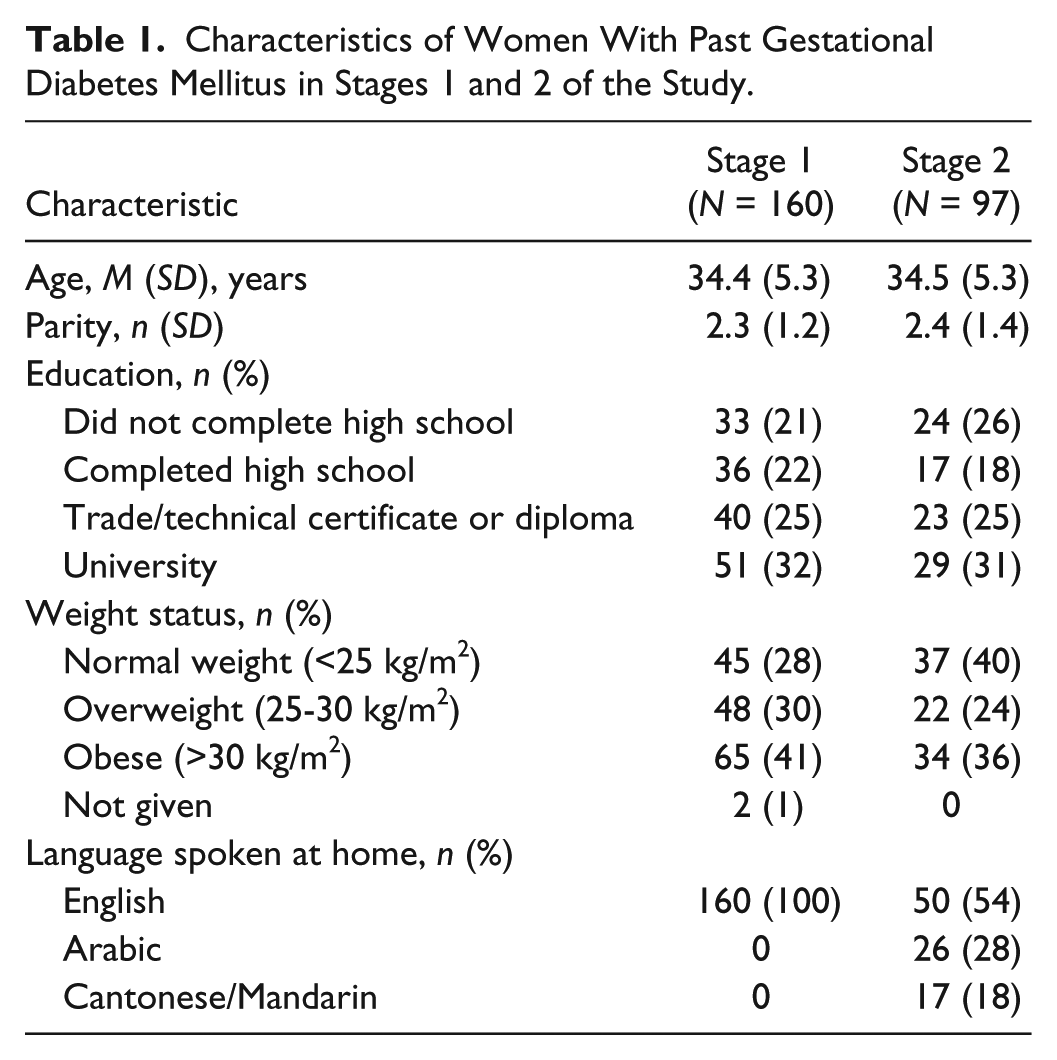
Table 2 shows that there were six scales that met the minimal internal reliability threshold of Cronbach’s α ≥.70. The PCA identified six items for physical activity outcome expectancies with loadings ≥0.40, six concerning barriers to physical activity, four for encouragement to undertake physical activity, nine for physical activity self-efficacy, nine for weight loss attitudes, and four for diabetes-related fear. The items excluded from each scale as a result of PCA are listed below Table 2. It was notable that the outcome expectancies scale was heavily skewed with almost 90% of respondents achieving a score that indicated agreement on all items. Because of the likely ceiling effects, this scale was not included in the construct validity or retest reliability analysis.
Internal and Retest Reliability of Psychosocial Scales Related to Physical Activity, Weight Loss, and Diabetes.

Note. GDM = gestational diabetes mellitus.
Excluded items: improved mood, enjoyment, meeting new people, lower stress, more time for self, being positive role model for children. bExcluded items: lack of motivation, insufficient energy, not having activity partner, poor weather, poor health, lack of convenient locations, being overweight, lack of money. cExcluded items: accompanied by family or friends, assistance with child care, assistance with household chores, encouragement from health care professionals, encouragement from complementary health providers. dExcluded item: poor weather. eExcluded item: able to eat preferred foods. fExcluded items: perception of harm, level of risk of disease, effect of family history, can reduce risk by personal action, can prevent diabetes by medications. gAgreement for classification into low, moderate, or high tertiles on scales.
Retest reliability analysis with the Stage 2 sample found significant agreement in responses to each of the five scales. Table 2 shows that Spearman’s ρ ranged from 0.62 for physical activity self-efficacy to 0.91 for weight loss attitudes. The weighted κ showed that the tertile classification of respondent self-efficacy had fair reliability; the classification of barriers to physical activity and diabetes-related fear scale had moderate reliability; and the reliability of the tertile classifications on the encouragement to be active and weight loss attitudes scales was good.
In the construct validity analysis, the barriers to physical activity score were not related to minutes of total physical activity, and it was only those in the moderate barriers category who were less likely than those in the low category to undertake the recommended amount of 150 minutes/week of moderate or vigorous activity (Table 3). The encouragement for physical activity scale also did not have a linear relationship with minutes of total activity; however, women in the high tertile on this scale were more likely than those in the low tertile to meet the physical activity recommendations (adjusted odds ratio [AOR] = 3.51, p < .01). The self-efficacy scale showed a significant association with both the linear and categorical measures of physical activity. Compared with respondents in the low tertile of self-efficacy, those in the moderate (AOR = 2.71, p < .05) and high tertiles (AOR = 7.84, p < .01) were more likely to report the recommended amount of physical activity.
Construct Validity of Physical Activity, Weight Loss, and Diabetes Scales in Relation to Physical Activity Participation and Dietary Intake.
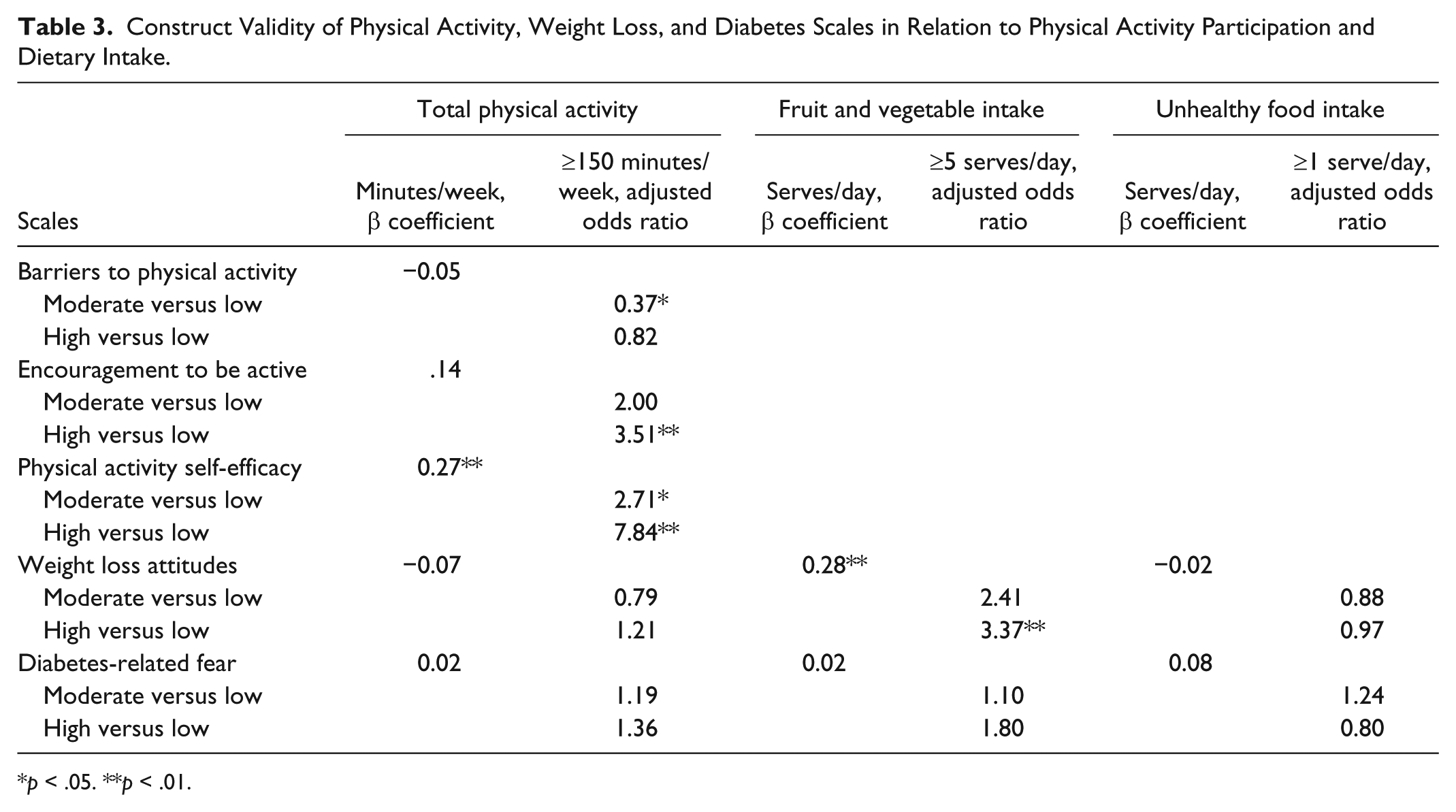
p < .05. **p < .01.
Responses on the weight loss attitudes and diabetes-related fear scales did not show associations with physical activity participation. Weight loss attitudes were positively related to the number of serves of fruit and vegetable consumed each day, with those in the highest tertile more likely than those in the lowest tertile (AOR = 3.37, p < .01) to report consuming five or more serves of fruit and vegetables per day. However, the weight loss attitudes scale was not associated with the number of serves of unhealthy food consumed. The diabetes-related fear scale did not show an association with the dietary measures.
Discussion
In order to strengthen the evidence base for diabetes prevention there is a need to develop measures of the determinants of health behaviors that can be applied to the evaluation of interventions. The present study is the first to systematically develop measures that have direct relevance to the needs and psychosocial characteristics of women with a history of GDM. The measures developed are of particular value for research and evaluation concerned with physical activity participation, which has so far proved to be a challenging area of intervention among this priority group (Cheung et al., 2011; Ferrara et al., 2011; Kim et al., 2012; McIntyre, Peacock, Miller, Koh, & Marshall, 2012).
Interventions to promote health behaviors among women with a history of GDM need to take into account the unique barriers to change that these women face (Lipscombe et al., 2014). The measures of barriers to physical activity developed in this study addressed factors identified as important in previous studies and added items for the perceived obligation to put the needs of others first and not having family members nearby who can offer assistance, that have been found to be important issues in formative research among women with a history of GDM (Razee et al., 2010). The physical activity barriers scale had good internal and retest reliability but did not show a consistent relationship with time spent in physical activity. This suggests that while it may be useful to evaluate progress in problem solving following counseling and support for physical activity adoption, it does not appear to be suitable as a predictor of the adoption of behavior changes.
Social support has been reported to be positively associated with levels of physical activity undertaken by women with a history of GDM (Koh, Miller, Marshall, Brown, & McIntyre, 2010; Smith et al., 2005) and by women generally (Eyler et al., 2002). In this study, principal components analysis of nine items concerned with social support for physical activity found that only those related to emotional encouragement had acceptable scale properties. These items also showed construct validity, demonstrating their value for intervention research. Further research is warranted to better understand the influence that other dimensions of social support may have on the lifestyle behaviors of women with a history of GDM, including instrumental, informational, and appraisal support (Heaney & Israel, 2002).
The self-efficacy measure addressed confidence about physical activity when dealing with household demands (parenting, domestic chores, other pressures at home) and psychological distress (stress, loneliness, depression), with the nine-item scale having very good internal reliability. These items directly address influences on physical activity reported by women with a history of GDM, building on generic self-efficacy measures developed previously (Marcus et al., 1992; Resnick & Jenkins, 2000; Sallis et al., 1989) and on other self-efficacy measures used in diabetes research that have concentrated on disease self-management (Rapley, Passmore, & Phillips, 2003). The clear construct validity of the scale, consistent with previous reports that self-efficacy is strongly related to physical activity participation for women with a history of GDM (Kim et al., 2008; Koh et al., 2010; Smith et al., 2005), indicates that this scale will be a useful tool in intervention research with this priority group.
The physical activity outcome expectancies scale primarily included items concerning the health benefits of activity. While the scale had good internal reliability, there was a strong positive skew in its distribution. Other researchers have observed such a positive bias in physical activity benefits measures (Carlson et al., 2012), reflecting widely held beliefs about value of exercise. This highlights that such scales are prone to ceiling effects.
The attitudes to weight loss scale had strong internal and retest reliability, and this measure showed construct validity in relation to fruit and vegetable intake. The scale did not, however, show the expected negative association with frequency of unhealthy food consumption. This may have been because the measure of unhealthy eating, which was based on frequency of consumption of selected food types, was not a sufficiently sensitive measure of dietary fat intake. The attitudes to weight loss scale also showed no relationship with physical activity, which is consistent with previous findings that even though women with a history of GDM are concerned about weight control they place greater importance on dietary intake than physical activity in relation to their health status (Graco, Garrard, & Jasper, 2009).
The measure of diabetes-related fear was developed because women with a previous diagnosis of GDM may be motivated by a higher level of personal susceptibility to future diabetes. While the measure had acceptable internal and retest reliability, it did not have an independent association with physical activity or dietary intake. Interestingly, a study undertaken in the United States (Kim et al., 2007) with a predominantly White and socioeconomically advantaged sample of women with a history of GDM found similar cross-sectional associations between diabetes fear and preventive behaviors. That study did, however, find that fear was associated with a greater likelihood of forming plans to modify behaviors, suggesting that awareness and concern about future diabetes play a role in the formation of behavioral intentions.
Strengths of this study were that measures were developed with a socially and ethnically diverse sample of women, and the retest reliability of the measurement scales was tested in English, Arabic, and Chinese languages. A limitation was that the first stage of psychometric testing of the factor structure, internal reliability, and construct validity of the measures could be conducted in English only. A further limitation was that self-reports, rather than objective measures of physical activity and dietary behaviors, were used to assess the construct validity of the scales.
Currently the measurement instruments that have been developed for the planning and evaluation of diabetes prevention strategies are generic in nature. This study has identified scales that produce valid and reliable scores for measuring emotional support and self-efficacy for physical activity and attitudes to weight loss that will be useful in future theory testing and investigation of the mediators of health behaviors among women with a history of GDM. In addition, the scales developed to measure barriers to physical activity and diabetes-related fear showed sufficient retest reliability to indicate that the may be used as measures of the impact of diabetes education interventions for this priority group. Given that these scales primarily address determinants of physical activity participation among women with a history of GDM, there is scope for research for the development and testing of measures concerned with the determinants of dietary behaviors in this group.
Footnotes
Declaration of Conflicting Interests
The authors declared no potential conflicts of interest with respect to the research, authorship, and/or publication of this article.
Funding
The authors disclosed receipt of the following financial support for the research, authorship, and/or publication of this article: This study was supported by a Type 2 Diabetes Prevention Research Partnership grant from the New South Wales Government Department of Health and the Sax Institute.