




Abstract
When a pandemic outbreak occurs, it seems logical that related scientific production should increase substantially; however, it is important to recognize its interdisciplinary usefulness to find a solution to the problem. The main aim of this research is to analyse the main keywords of the scientific research about COVID-19, by subject area. To discover the influence of certain terms and their transferability, synergies, and future trends, a cluster analysis of the keywords was performed. The results show that Health Sciences dominate the publications with 88.23% of the total volume. As expected, the largest volume of research was dedicated to medical aspects of the disease, like experimental treatments, its physiopathology, or its respiratory syndrome. However, other fields, like Social Sciences (6.07%), Technology (2.68%), Physical Sciences (1.95%), and Arts and Humanities (1.08%), also played an important role in research on COVID-19.
COVID-19 was first reported in December 2019 in Wuhan, the capital of Hubei province, China (Riou & Althaus, 2020). The swift transmission of COVID-19 is a global threat that has hindered our ability to contain its spread or the damages it causes (Khairat et al., 2020).
It is not the first time that the world has been called upon to face a pandemic outbreak. Multiple epidemic outbreaks have occurred in recent years (Bhagavathula et al., 2020). In 2002, SARS, with approximately 800 deaths; in 2009, H1N1, with 151,700 to 575,400 deaths estimated by the U.S. Centers for Disease Control and Prevention (Dawood et al., 2012); in 2012, Middle East Respiratory Syndrome coronavirus, MERS-CoV, with 860 deaths (Q. Li et al., 2020); and in 2014, the Ebola virus, with 28,637 deaths.
When a pandemic outbreak occurs, it seems logical that related scientific production increases substantially. For example, the year of the SARS outbreak, 1,271 related articles were published. Likewise, in 2009, 1,198 articles were published related to H1N1. In 2012, 828 articles related to MERS-CoV and in 2014, 889 articles related to the Ebola virus were also published. However, in the case of the COVID-19 epidemic, this increase has been explosive. As COVID-19 spreads rapidly, the research community has been extremely active in publishing novel articles (DE Felice & Polimeni, 2020). As a result, in just 5 months from the onset of the disease, 5,823 articles have been published, far more than in any of the previous pandemics.
There are many factors that may have contributed to this explosive development in the scientific literature related to the pandemic. Among them are the speed of expansion of the disease, its high rate of mortality, and the fear it has generated among the world’s population, which has seen how their daily lives have been altered as never before.
It must also be appreciated that this epidemic has occurred at a time when the planet is more connected than ever, thanks to information and communication technologies, especially the internet. The internet has been, for years, the world’s largest source of health information (F. Li et al., 2015) and is an essential source for both professionals and patients, almost anywhere on Earth (Osei Asibey et al., 2017).
It must also be borne in mind that social factors are important in epidemics and should always be understood within the ecological context (Oksanen et al., 2020). At the time of the outbreak of the COVID-19 pandemic, various social problems such as the fight against inequality or climate change were very relevant issues and were the focus of the news media in many countries. The spread of the disease burst in and interrupted this social awareness. This scenario is also reflected in the scientific production related to COVID-19, probably the largest and most rapidly produced in the history of recent pandemics.
Consequently, it is important to recognize the interdisciplinary usefulness of subject areas such as medical science, social science, engineering, and economics for finding solutions to the problem. A comprehensive knowledge is crucial for the development of an adequate approach that could be deployed quickly and operated with ease (DE Felice & Polimeni, 2020).
In this scenario, bibliometric analyses of the COVID-19 landscape are essential, as they can improve clinicians’ understanding of the large and growing body of evidence on the topic. Bibliometric analysis is a statistical evaluation of scientific publications and represents an effective method to measure and quantitatively describe their influence in clinical practice over time (Aria & Cuccurullo, 2017).
There have not been many comprehensive bibliometric analyses of publications related to COVID-19. As a consequence, there is an urgent need to study and analyze this information to derive the best benefit for the human population (DE Felice & Polimeni, 2020).
The main aim of this research is to analyze the principal keywords used in the scientific publications related to COVID-19 by subject area. Furthermore, we also seek to discover the similarities and differences in the research on COVID-19 from different disciplines such as health and social sciences, and to know the main lines of work and possible synergies of research.
Methodology
For a better understanding of the development and trends of research related to COVID-19 in the different subject areas, a cluster analysis of the keywords has been carried out. Thus, the influence of certain terms and their transferability, synergies, and future trends has been studied (Bansard et al., 2007; Bryman, 2016; Hou et al., 2018).
The citation analysis (Garfield, 1972), traditionally used in bibliometric methodology research to find out the most influential authors or journals, has been not included (Epstein, 2005; MacRoberts & MacRoberts, 2018) since it is not appropriated for achieving the main objective of the study.
The steps followed in the study of keywords (Guler et al., 2016; Ferenhof & Fernandes, 2018) have been (1) definition of the keywords, (2) selection of the database, (3) adjustment and fine-tuning of search criteria, (4) export of results, and (5) cluster analysis of results.
The keywords selected, as most representative for this research, were “Covid” and “Covid-19” to cover both English-language literature and literature published in other languages.
The database chosen for this research has been the Web of Science (WoS; https://clarivate.com/webofsciencegroup/solutions/web-of-science/) Core Collection due to its importance in bibliometric analysis (Archambault et al., 2009; Gorraiz & Schloegl, 2008). This database is also the most commonly used in scientific evaluation research. The results of the initial keyword search show 5,823 documents (more than 1,000 per month).
No date or document type restriction was applied. All types of documents were selected in order to attain as much information as possible. All documents until May 31, 2020, were considered. It is worth noting that there were two documents that were completed in March and April 2020; however, due to editorial convenience, they were published in 2020 itself.
WoS distinguishes between Author Keywords and KeyWords Plus. While Author keywords include only the words selected by authors, there are some types of documents that do not include them (letters, editorials, etc.). In contrast, the data in KeyWords Plus are words or phrases that frequently appear in the titles of an article’s references but do not appear in the title of the article itself. Based on a special algorithm that is unique to Clarivate Analytics databases, KeyWords Plus enhances the power of cited-reference searching by searching across disciplines for all the articles that have cited references in common (Garfield & Sher, 1993). For this research both types of keywords were used.
Although there are different ways of grouping the subject areas, in this study, the WoS classification was used. This classification identifies five major groups (Arts and Humanities, Physical Sciences, Technology, Social Sciences, and Health Sciences) and includes 153 subgroups. The data from the different subcategories were exported.
The cluster analysis has been performed using the Vosviewer tool (Waltman et al., 2010). The normalization has been carried out in the same way as in the LinLog layout technique and the modularity clustering technique (Newman, 2004; Noack, 2007) for the active maps.
Findings
For the interpretation of results, we have followed the structure indicated in the Methodology section, with reference to the subject areas used by the WoS database.
At first glance, as expected, it can be seen that Health Sciences is the subject area that clearly dominates the publications related to COVID-19 with 88.23% of the total volume, followed by Social Sciences (6.07%). Weighing much less are Technology (2.68%), Physical Sciences (1.95%), and Arts and Humanities (1.08%).
For the analysis of the results, this research will focus on and analyze each of the different subject areas. In this way, we will be able to have a clear image of what is happening in each field, in relation to the publications related to COVID-19, thus identifying the main streams of research.
Health Sciences
Health Sciences is the most relevant subject area in terms of volume of publications on COVID-19. The 5,153 documents included in this field represent 88.23% of the total. There are different medical disciplines that provide considerable research on COVID-19. The most important ones are General Internal Medicine (1,023 publications); Public, Environmental, and Occupational Health (415 publications); and Surgery (385) and Infectious diseases (262). Other medical specialties with numerous publications are Neurosciences and Neurology (227 publications); Radiology, Nuclear Medicine, and Medical Imaging (221 publications); Cardiovascular System and Cardiology (189 publications), and Oncology (184 publications). It is worth noting that every medical specialty considered in the analysis had at least two publications. That is the case with specialties like Physiology (9 publications), Legal Medicine (3 publications), and Anatomy and Morphology (2 publications).
The analysis shows that eight clusters can be identified in Health Sciences (Figure 1). The first cluster (red color) is focused on the most current commented topics, mainly related to experimental treatments, with keywords like chloroquine, hydroxychloroquine, or lopinavir/ritonavir, but also linked to physiopathology, with keywords like cytokine storm, ARDS, inflammation, inhibition, or pathogenesis. This cluster highlights aspects related to the treatment or the physiopathology of the disease that have been very controversial, with different research defending opposite positions, and hence it seems logical that they appear grouped in the wider cluster of this subject area, with the highest number of publications.
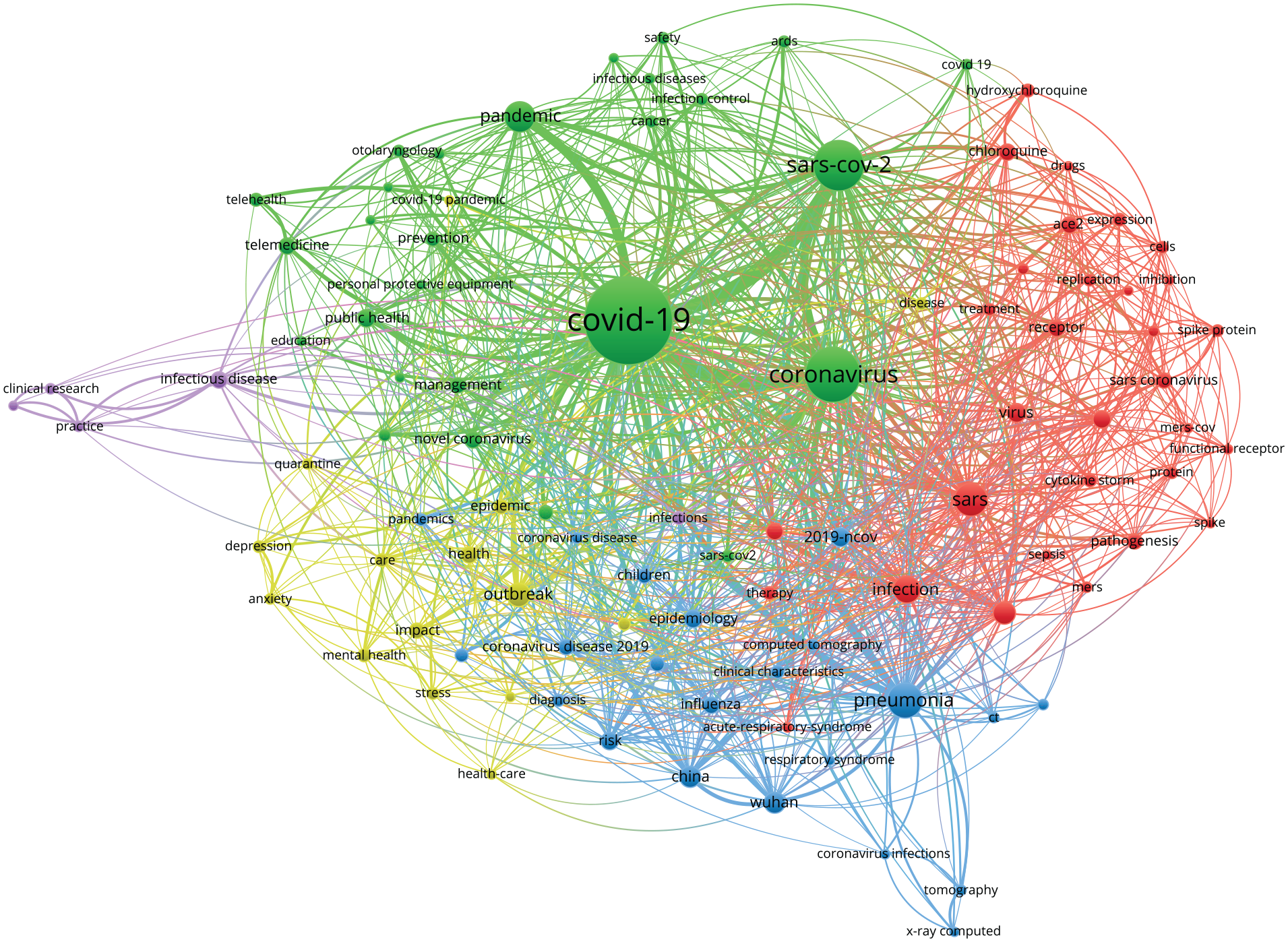
Keyword clusters in the Health Sciences subject area.
The second cluster (green color) is focused on two related aspects: the public health problem of the disease, with keywords like diagnosis, education, epidemiology, or infection control; and the severe medical problems related to the disease (critical care, management, mortality, or severe acute respiratory syndrome coronavirus). The third cluster (blue color) shows that psychological and mental health aspects are also important in this field, grouping keywords like anxiety, care, depression, impact, or mental health. Two of the keywords shown in this cluster, children and quarantine, are clearly related to this concern, as these two issues have generated considerable psychological stress among both the general population and health professionals during the weeks that the present research was being carried out and evaluated.
The fourth and sixth clusters (light green and light blue, respectively) are focused on the respiratory syndrome, with keywords like acute respiratory syndrome, clinical characteristics, computed tomography or CT, in Cluster 4; and pneumonia, respiratory syndrome, tomography and x-ray computed, in Cluster 6. The fifth cluster (purple) is focused on the infectious feature of the disease, with keywords like infection and infectious agents: viral, infections, infectious disease, or public health. The seventh cluster (in orange) is focused on outcomes and risk situations like cancer or pregnancy. Finally, the eight cluster (brown color) is related to the second and third ones (green and blue), as it is linked to the pandemic nature of the disease.
Social Sciences
Social Sciences is the second most relevant subject area in terms of volume of publications on COVID-19. The 355 documents included in this field represent 6.07% of the total, only (largely) surpassed by Health Sciences. Given the great diversity of topics included in Social Sciences, there are many disciplines that provide research on COVID-19, with Psychology standing out as being the most significant with 133 publications. A second group of disciplines showing high interest in this topic is made up of Biomedical Social Sciences (56), Education and Educational Research (54), Sociology (42), and Other Topics on Social Sciences (38). With fewer, though significant, number of publications are Business and Economics (16) and Public Administration (10). These publications represent a total of 993 keywords, presenting a high rate of co-occurrence.
Seven clusters can be identified (Figure 2), with strong links between them. The first cluster (red color) is highly focused on mental health aspects, highlighting the anxiety and fear that COVID-19 generates. Thus, the most frequently repeated terms are anxiety, crisis, depression, disability, and fear. Furthermore, these are connected to the search for information, with terms such as “information” and “social media,” showing special interest in: policy, prevalence, and school. The second cluster (green color) shows a clear concern for children, students, and risk. The most prominent terms, in addition to those already mentioned, are autism, trust, uncertainty, values, impact, perception, and governance. The third cluster (dark blue color) deals with the origin of the epidemic in China, in addition to the mental health concerns derived from the quarantine, with terms such as stigma and stress. Topics like outbreak, prevention, and responses complete this cluster. Cluster 4 (lime green) focuses on crisis standards of care, allocation of scarce resources, emergency preparedness and public health emergency, and intervention models. In addition, it includes aspects related to mortality, problems around public health ethics, and the novel coronavirus SARS-CoV-2. Cluster 5 (purple) is linked to remote working, with topics such as telehealth and telemedicine, which are mainly applied to information and knowledge about eating disorders, health care, and infection. Education and medical education are the core themes of Cluster 6 (light blue color), which include topics such as online education, risk management, and technology. Finally, Cluster 7 (orange color) addresses issues that have gained strength from the global epidemic caused by COVID-19, such as climate change and conspiracy theories, mainly located in the United States.
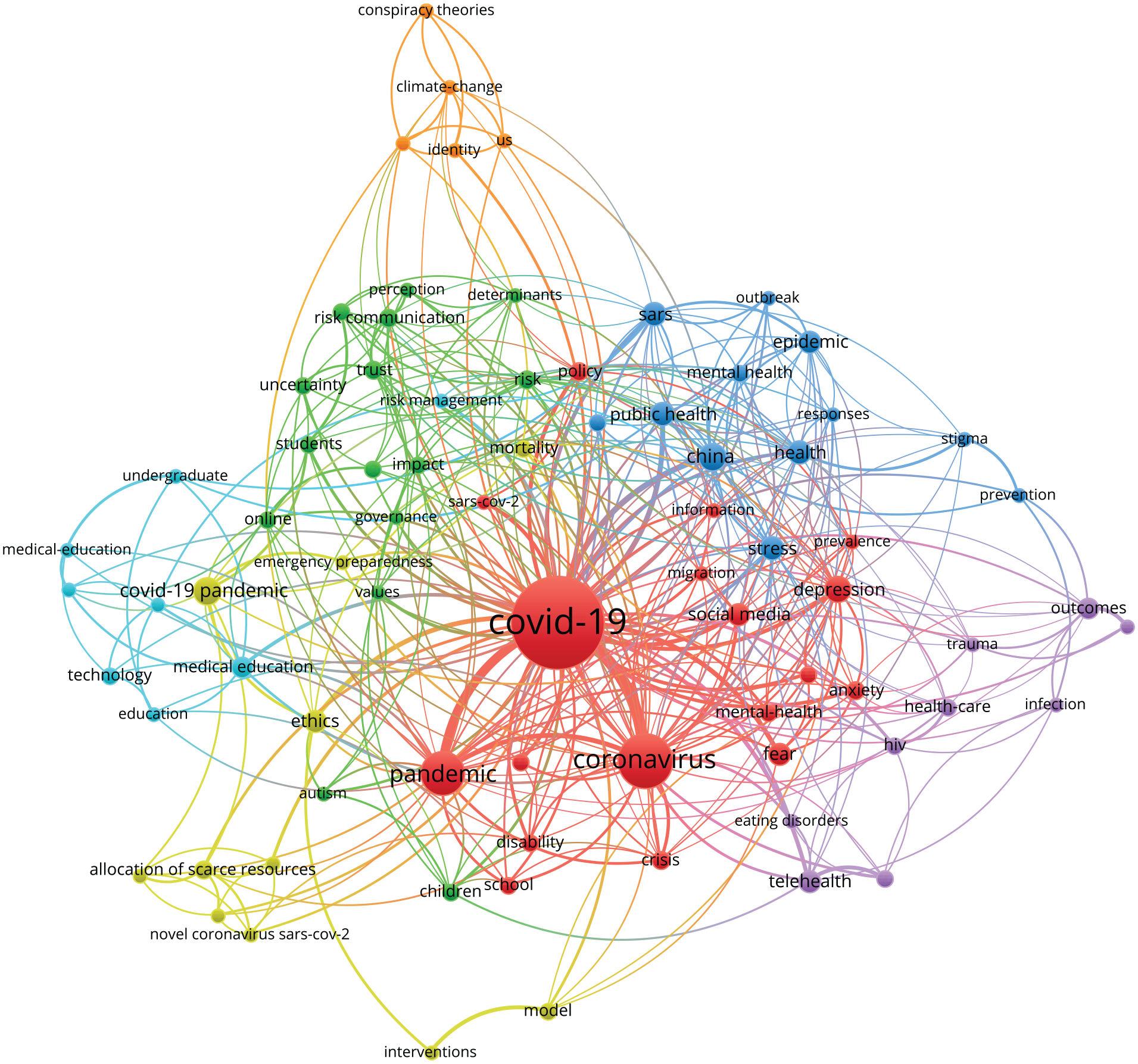
Keyword clusters in the Social Sciences subject area.
Technology
In the field of Technology there are a total of 157 publications, 2.68% of the total. The main topic is Engineering (91), although there are other disciplines of interest: Materials Science (25), Other topics on Science and Technology (20), and Computer Science (17). A total of 507 keywords are identified, with a high rate of co-occurrence.
In this subject area six clusters are identified (Figure 3). The central cluster is very broad, although the central theme is health information, including topics such as social media and credibility about public health, pandemics, COVID-19, SARS-CoV-2, SEIR model (Susceptible-Exposed-Infectious-Recovered), pregnancy, surveillance, and ultrasound. Another relevant cluster is focused on simulations and disruptive models and mitigation of the pandemic, considering aspects such as network, impact, mortality, performance, resilience, or viability. The other clusters address various topics such as cells (infection, in vivo, generation, and transplantation), prediction systems (algorithm, of-care diagnostics, PCR—polymerase chain reaction, mediated isothermal amplification, or sequences), actions to mitigate the impact of COVID-19 (inactivation, personal protective equipment, release), and a cluster focused on China and Wuhan City, epicenter of the pandemic (including topics such as coronavirus disease 2019, extracorporeal membrane oxygen, or pneumonia).
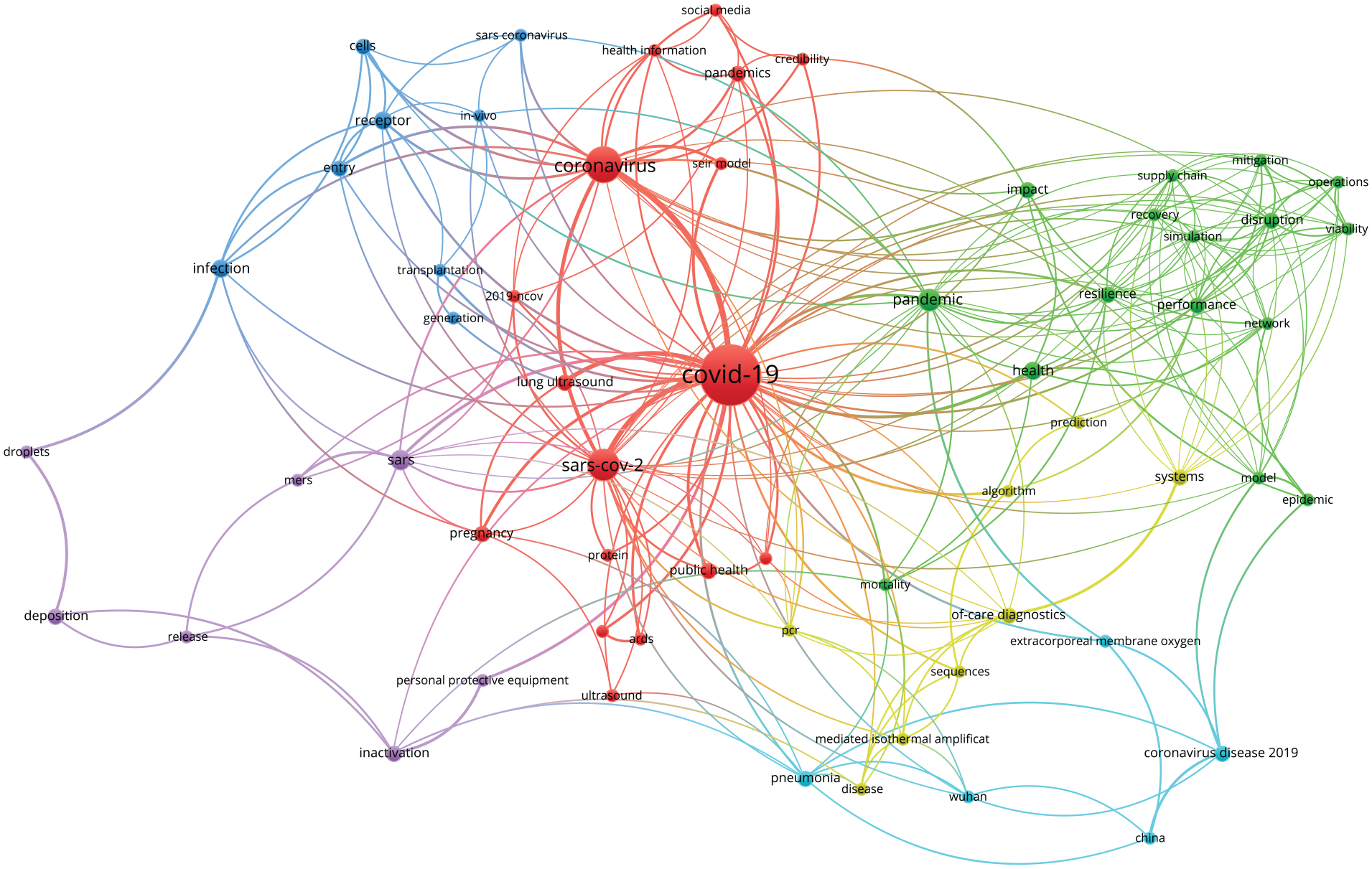
Keyword clusters in the Technology subject area.
Physical Sciences
There are 114 documents framed in Physical Sciences, which represent 1.95% of the total publications on COVID-19. Among all the topics covered, there is one that stands out above the rest: Chemistry (92). Other relevant topics in this field are Mathematics (18) and Physics (14). In this subject area a high number of keywords can be identified (291), although only 33 of them appear more than once.
Five clusters can be identified in this discipline (Figure 4). The most relevant cluster is the one that deals with clinical trials focused on coronaviruses, COVID-19, and 2019-nCoV (2019 novel coronavirus), or Severe Acute Respiratory Syndrome Coronavirus 2 (SARS-CoV-2). Another important cluster mainly deals with coronavirus diagnosis and care measures (with topics such as biological evaluation, of-care diagnostics, inhibitors, docking, drug Discovery, or 3CL protease). The other clusters focus on the evolution of the virus and viral spike (with related problems, such as respiratory syndrome coronavirus, epidemic, influenza, and the study of the effect of droplets and proteins), virus transmission (topics such as 2nd viral-coefficient, receptor-binding domain, to-human transmission, crystal-structure, nonbonded interaction, stabilized rare tautomers), and novel coronavirus and basic reproduction number.
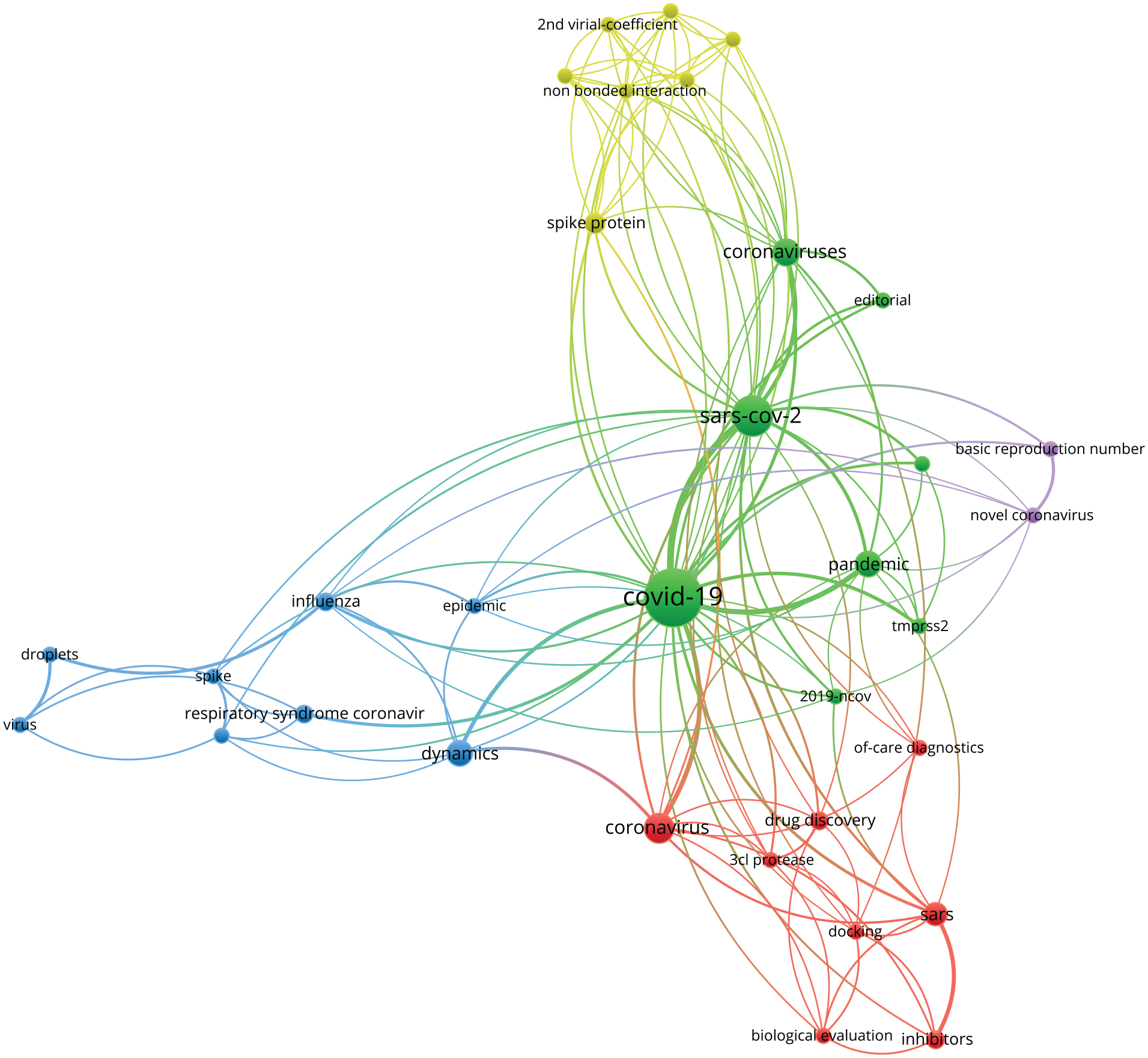
Keyword clusters in the Physical Sciences subject area.
Arts and Humanities
In total, there are 63 documents related to COVID-19 within this subject area, representing only 1.08% of the total volume. With reference to the number of publications, the main topics covered are the following: History ans Philosophy of Science (38), Religion (10), and Architecture (7). Indeed, the interest of the authors of these areas in COVID-19 is highly diversified (91 keywords), since very different topics are covered and only seven keywords are repeated. Numerous terms can be found (93) but with very low repetition frequency.
Eight clusters are identified (Figure 5), clearly differentiated from each other, to the point that some of them are not even interconnected with the others. The most important cluster is related to pandemics, disaster, and food policy and planning, giving an important role to evidence-based medicine. The other clusters are focused on various topics, such as labor market (including topics such as gender, women, domestic workers, migration), banking (cashless economy, demonetization, digitalization, risk, or trust), topics related to past pandemics (plague, late-medieval, story, or famine), attendance and protection (associated with immune function, older adults, supplementation, or vitamin-D), sharing new activities in a digital world (digital network, digital support, zoom.us, playing music together, group improvisation, or online improvisation), anxiety related problems (with terms like self-care, care, existential, religion, life, or end), with spirituality and clergy appearing as central themes.
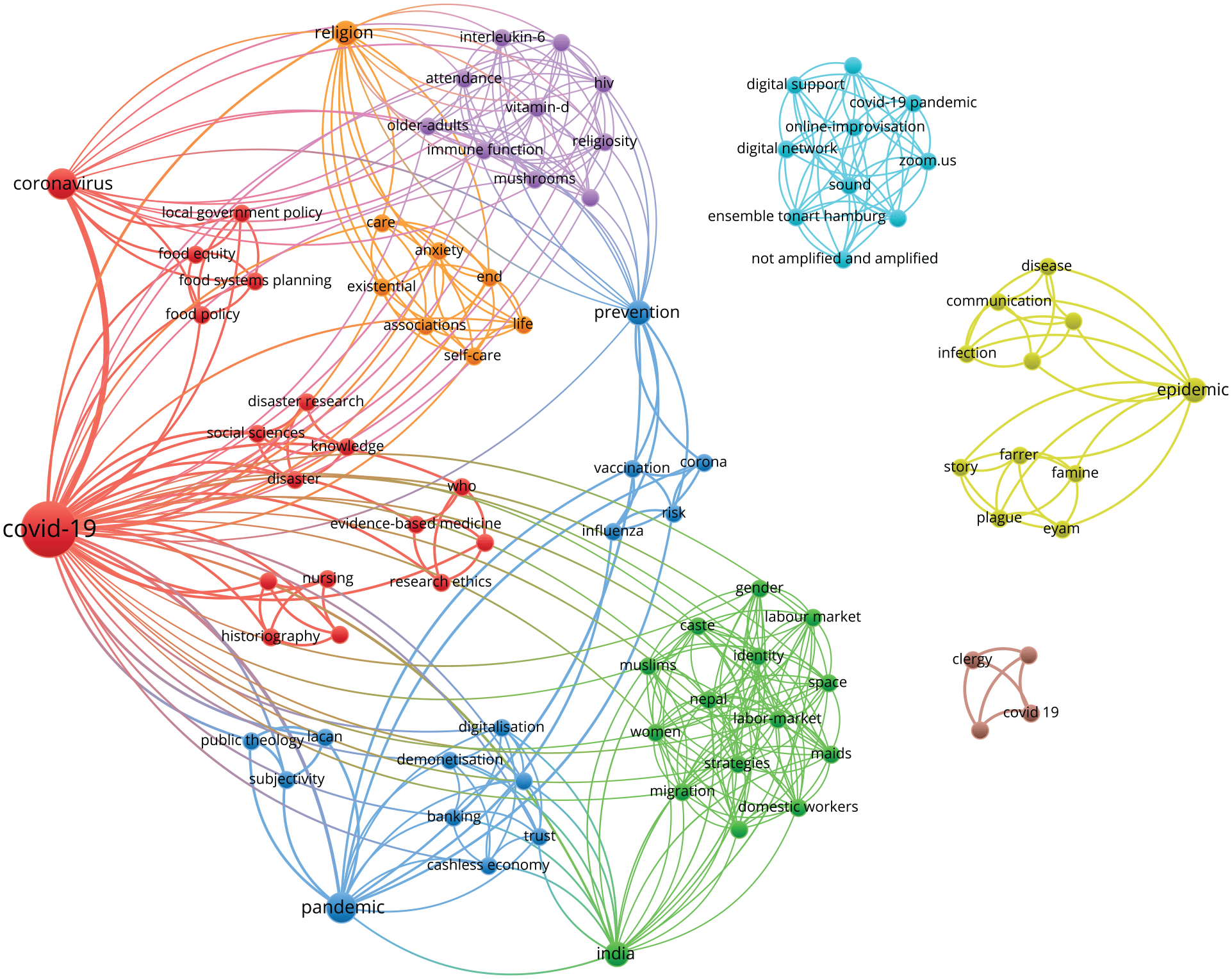
Keyword clusters in the Arts and Humanities subject area.
Conclusions
COVID-19 was first reported in December 2019 in Wuhan (China) and in just a few months has become a trending topic worldwide, also occupying a prominent place in academia. In just the first 5 months of 2020, more than 5,000 scientific documents have been published, with open-access publications gaining special significance (88.42%). In addition, many publishers have been involved in COVID-19 research in different subject areas.
The emergence of COVID-19 has had a great impact, not only among clinical professionals, which is where, as expected, it has the most relevance (88.23%), but also in other areas, mainly in Social Sciences (6.07%), Technology, Physical Sciences, and Arts and Humanities. The interaction between different fields (e.g., medical science, social science, business and economics, engineering) is necessary to solve holistic problems, as evidenced by the number of interdisciplinary works.
Within the subject area of Health Sciences, the field with the greatest interest in COVID-19 has been General Internal Medicine (1,023 publications), which represents 19.85% of the publications in this area and 17.56% of the total publications on COVID- 19 in all scientific disciplines. It seems logical that the bulk of the research is related to the most controversial aspects of the disease such as experimental treatments or its physiopathology, with different studies defending opposite positions. Nevertheless, other aspects and keywords found in other clusters, like psychological, mental health, or children, suggest that COVID-19 is not only a medical problem but also a wider one. In relation to this, it is important to highlight that the keyword “quarantine” appeared in the mental health aspects cluster. In the future, new research will show if this action was useful to control the outbreak or if it was counterproductive, affecting the mental health of the population.
The Social Sciences also play an important role in research on COVID-19, by including fields such as Psychology, Biomedical Social Sciences, and Education. Many of the problems that have caught the attention of academia are related to the growing concerns of people all around the world, which has led in some cases to situations of crisis, anxiety, depression, and fear. In fact, during the first months of 2020, there was also a significant increase in information searches on the internet and in social media by citizens. Education has been another relevant topic for society and the academic world, given the existing uncertainty and the imposed need for possible changes in traditional models, focusing on the development (in some cases, almost immediately) of training models and online communication (e.g., zoom.us appears as a featured term), and even increased interest in telemedicine. To all of the above, we must also take into account the works focused on more spiritual aspects, where religion, the existential, and values are important topics. Related to other social problems, there are some studies interested in the consequences (in this case, seemingly positive) of COVID-19 on climate change and others looking for possible conspiracy theories.
It seems evident that the opportunities for research on COVID-19 are still very high, since at the same time that the indicated topics will continue to be analyzed, new streams of research appear, where, once the virus is better understood, new and effective measures against COVID-19 will be sought in addition to possible solutions to the economic crisis derived from the pandemic, the rethinking of certain social values, and the incursion and consequences of 2019-nCOV.
Footnotes
Declaration of Conflicting Interests
The authors declared no potential conflicts of interest with respect to the research, authorship, and/or publication of this article.
Funding
The authors received no financial support for the research, authorship, and/or publication of this article.
