



Abstract

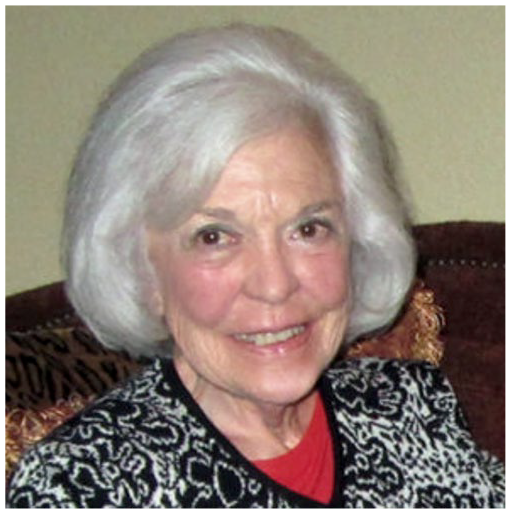
Carol Ann (Neisess) D’Onofrio was a beloved and respected professor emerita at the University of California (UC) Berkeley School of Public Health, who dedicated her career to cancer prevention, quality-of-life issues, and improving the lives of under-resourced communities.
An early alumna of the School’s health education program, which she later chaired, and an early teaching assistant in the required Public Health Administration course, Carol’s career on the faculty at UC Berkeley spanned more than 30 years. She earned numerous awards, including the School’s Alumna of the Year Award in 2009, the Distinguished Fellow Award of the national Society for Public Health Education, and the Heroes in Healthcare Lifetime Achievement Award given jointly by Alta Bates Summit Medical Center and the Alta Bates Summit Foundation. In 2018, she was named one of the 75 most outstanding alumna over the School of Public Health’s 75-year history and was present for the ceremony honoring these heroes.
Born February 24, 1936, in Conrad, Montana, Carol grew up in Enterprise, Oregon, and attended high school in Walla Walla, Washington. With degrees in both English and education from the University of Washington, Carol graduated magna cum laude and was voted her university’s most outstanding woman. She then worked with the under-resourced in Chile as a Rotary Fellow, and subsequently, in East Los Angeles, through the Los Angeles Department of Public Health, before coming to UC Berkeley for her MPH in 1960. She subsequently worked with the California Department of Public Health, where she published a monograph “Reaching our Hard-to-Reach,” which soon became a classic for community health educators and others hoping to improve health and health care access in communities of color and other disenfranchised populations. Carol was indeed one of the pioneers in “reaching” under-resourced populations through community health education, with a special accent on vulnerable youth, people of color, people with disabilities, the poor, and those in need of hospice care.
Following her work with the state health department, Carol returned to UC Berkeley’s School of Public Health, where she earned her DrPH in 1973 and soon thereafter joined the faculty as an assistant professor of community health education. Carol was particularly committed to preventing tobacco and alcohol abuse, promoting breast and cervical cancer screening, and the delivery of health services to cancer patients and the elderly. But she was also years ahead of her time in studying and publishing on the then-common practice among grade school textbook authors of featuring sugary sweets as rewards for good behavior. She and co-author Rosalind Singer then made the case to school textbook publishers for eliminating such anti-health messaging geared at young children.
Carol was Principal Investigator (PI) or Co-PI on numerous grants, primarily in the area of cancer prevention. From 1985 to 1990, she led the nation’s first randomized controlled trial to prevent youth from both smoking and chewing tobacco—a study that involved youth in 4-H clubs from 38 California counties. For 20 years, she also worked on a series of studies on young women with breast cancer led by her colleague, Professor Joan Bloom. And in 1995, when a comment by a woman with cerebral palsy diagnosed with a 2-cm breast tumor led to recognition that women with disabilities were ignored in national, state, and local breast screening initiatives, Carol and five other women founded Breast Health Access for Women with Disabilities (BHAWD), a program that became a national model and changed this situation. In addition to her research as a UC Berkeley faculty member, Carol was an adjunct research scientist at the Northern California Cancer Center.
Carol was also a dedicated, lively, and gifted teacher. She was director of the School of Public Health’s Health Education Program for many years during the 1960s to 1980s and her courses in areas from theories of health and social behavior to program planning and evaluation received high ratings. She helped decades of students sharpen their critical thinking and develop other skills needed for their own professional practice. She also was an inspiring mentor to both master’s and doctoral students, offering lengthy interpersonal counseling in the days before email, handwriting copious notes on their papers and dissertation chapters, nominating them for awards, and taking great pride in their accomplishments.
In addition to her work in the School of Public Health, Carol provided considerable service to UC Berkeley’s Academic Senate. She served with the Center of Educational Partnerships (CEP) from 1975 to 1978 and 1979 to 1981, and concurrently during her second term, on the Committee on the Status of Women and Ethnic Minorities (SWEM). From 1986 to 1988, she served both as Division Vice Chair and with the Committee for Academic Planning and Resources (CAPRA), and from 2003 to 2006, worked with Rules and Elections.
Carol’s service in health education, public health and medical care was also deeply impressive. She was an early President of the national Society for Public Health Education (SOPHE) and served on the American Public Health Association’s Program Development Board and Governing Council. She served on numerous review panels for the National Institutes of Health and on the Board of Scientific Counselors for the National Cancer Institute’s Division of Cancer Prevention and Control. In this context, she had the privilege of reviewing the concept for the National Black Leadership Initiative, voting to approve it, and subsequently participating in the crafting, review, and funding of the Hispanic Leadership and Appalachian Leadership initiatives. In this way, she became thoroughly familiar with the early history of Community Networks to Reduce Cancer Health Disparities. Locally, Carol served on the Alta Bates Board of Trustees from 1989, and subsequently on the Alta Bates Summit Board of Trustee, where she served two terms as Board Chair. She also served on the boards of the medical center’s Ethnic Health Institute and the Alta Bates Summit Foundation.
Carol was an extremely active retiree at UC Berkeley, where she co-led the UC Berkeley Retiree Center until shortly before her death on April 14, 2020 at age 84, after a long struggle with cancer. The Retiree Center indeed inaugurated the Carol N. D’Onofrio Learning in Retirement Lecture Series in 2022, in which several of her colleagues at the School were featured presenters.
Carol left behind her two children, Lisa and Michael, their spouses, and her four grandchildren. She is deeply missed by her family and friends, as well as the legions of colleagues and former students at Berkeley and beyond, who remember her endless curiosity, vivacious personality, and skills as a researcher, teacher, and mentor. Indeed, 2 years before her passing, Carol reflected on her career and noted that one of her greatest joys in teaching and mentoring was watching her students have an “Ah ha” moment, when their faces lit up as a new concept or theory suddenly made perfect sense. Countless students, colleagues, and under-resourced communities have benefited from her many gifts and the genuine interest she took in all who knew her.
