



Abstract
In the field of artificial intelligence-based fitness apps, the effective integration of behavior change techniques (BCTs) is critical for promoting physical activity and improving health outcomes. However, the specific BCTs employed by apps and their impact on user engagement and behavior change are not explored sufficiently. This study investigates the Freeletics fitness app through a mixed-methods approach to evaluate the use of BCTs. In the quantitative analysis, fifteen unique BCTs were identified based on the Behavior Change Technique Taxonomy (V1). In the qualitative analysis, user reviews (n=400) were examined to understand perspectives on the app’s effectiveness in promoting behavior change. Goal setting, action planning, self-monitoring of behavior, and social support were among the most prevalent BCTs identified in the Freeletics app, and their effectiveness in enhancing user engagement and promoting behavior change was also highlighted by user reviews. Among the areas of improvement identified in the study were the need for simplifying personalization options and addressing user concerns regarding the specificity of feedback. The study underscores the importance of integrating BCTs effectively within AI-based fitness apps to drive user engagement and facilitate behavior change. It contributes valuable insights into the design and implementation of BCTs in fitness apps and offers recommendations for developers, emphasizing the significance of goal setting, feedback mechanisms, self-monitoring, and social support. By understanding the impact of specific BCTs on user behavior and addressing user concerns, developers can create more effective fitness apps, ultimately promoting healthier lifestyles and positive behavior change.
Keywords
In recent years, fitness apps have risen exponentially, revolutionizing the way individuals engage in physical activity and manage health. The proliferation of smartphones and growing awareness of the significance of regular exercise and healthy living have contributed to the widespread adoption of fitness apps (Huang & Zhou, 2018). The apps have effectively catered to diverse users, ranging from fitness enthusiasts and athletes to beginners seeking guidance and motivation (Aidman et al., 2022; Molina & Myrick, 2021).
The widespread adoption of fitness apps has been attributed to their ability to harness technology, offering innovative features and functionalities (Conroy et al., 2014). Such features empower users to set goals, track progress, and receive real-time feedback, fostering motivation and accountability (Muntaner-Mas et al., 2019). The convenience, flexibility, and personalized nature of fitness apps appeal to individuals seeking accessible solutions to stay active and lead healthier lives (Zheng, 2021). Furthermore, many fitness apps incorporate gamification techniques, challenges, rewards, and social support systems to enhance user engagement and adherence (Sardi et al., 2017).
A noteworthy distinction exists between traditional fitness apps and the newer generation of artificial intelligence (AI)-based fitness apps. This distinction lies in AI’s enhanced capabilities and personalized experiences offered in fitness apps. Traditional fitness apps typically provide features such as personalized workout plans, activity tracking, nutrition guidance, and social support (Bert et al., 2014; James & Harville, 2017). However, AI-based fitness apps leverage sophisticated algorithms to provide tailored recommendations, adaptive training programs, and intelligent coaching based on real-time user data and performance (A. M. Lee et al., 2019; Mokmin, 2020). The personalization feature allows them to respond to individual needs, preferences, and progress dynamically, thereby bolstering user engagement, motivation, and the likelihood of sustainable behavioral shifts (Farrokhi et al., 2021). By delivering dynamic and responsive workout plans, real-time nutrition guidance, and data-driven feedback, these apps create an environment conducive to continuous progress (Zhao et al., 2016).
Several studies have explored fitness apps’ effectiveness and impact on user engagement and physical activity outcomes. A study by Mokmin and Jamiat (2021) focused on developing a virtual fitness trainer app called TRAINIME, which applied motor learning theory to engage and motivate students in fitness activities. Their findings indicated that students exhibited enhanced motivation and engagement in fitness activities after using the app. Similarly, Herrmann and Kim (2017) examined mobile fitness app usage over 5 months, revealing that users’ attitudes and perceived difficulties influenced the apps’ effectiveness. Furthermore, A. M. Lee and colleagues (2019) conducted a comprehensive scoping review to assess the efficacy and effectiveness of mobile health technologies, including fitness apps, in facilitating physical activity among adolescents. While they identified potential positive outcomes, they also highlighted the need for consistency in outcome measures and study designs to determine the true impact of these interventions. Finally, a study by Harrington and colleagues (2018) emphasized the value of experience-based co-design in developing health and fitness apps for older adults, demonstrating that continued use and prior experience with app technologies can lead to more robust feedback and more effective design strategies. These studies shed light on the multifaceted nature of fitness apps’ effectiveness, underscoring the role of app design, user engagement, and alignment with behavior change theories in influencing their impact on physical activity behavior.
Among AI-based fitness apps, the Freeletics app stands out as a prominent example that integrates AI and advanced algorithms. The effectiveness of Freeletics has garnered significant attention through both empirical research and user perspectives. Numerous studies have sought to understand the factors contributing to its success and impact on physical activity behavior. Schneider and colleagues (2016) conducted a mixed-method theory-driven analysis of the Freeletics mobile fitness coach, employing psychological theories such as the theory of planned behavior to dissect its persuasive system design systematically. Their investigation revealed that attitude, subjective norm, and perceived control were pivotal building blocks influencing user motivation. Through quantitative analysis and user group identification, they uncovered the significant impact of perceived capacity on user motivation. Similarly, Franze and colleagues (2015) delved into the psychological underpinnings of Freeletics, aligning it with motivation theory and behavior change principles. Their survey of Freeletics users highlighted the incorporation of psychological mechanisms crucial for fostering physical activity engagement and behavior change. Shiddiq and colleagues (2019) conducted a phenomenological study investigating the benefits and motives associated with Freeletics sports activities in Yogyakarta. The results indicated the community’s various motives, including maintaining a healthy body, achieving an ideal physique, and experiencing recreation and happiness. The combination of empirical analysis and user insights underscores the multifaceted effectiveness of the Freeletics app in promoting physical activity and health-related behaviors.
Behavior change techniques (BCTs) are crucial in promoting sustainable behavior change and improving health outcomes (Michie et al., 2020). These techniques encompass strategies and interventions targeting psychological, social, and environmental factors to facilitate adopting and maintaining health-promoting behaviors. BCTs are particularly relevant in fitness apps as they influence users’ engagement, adherence, and long-term success. By incorporating evidence-based BCTs, fitness apps can promote positive behavior change, enhance user experiences, and improve outcomes such as physical activity levels, exercise adherence, and overall well-being (Direito et al., 2014, 2018). Understanding and identifying the BCTs employed in fitness apps are crucial steps toward optimizing app design, enhancing user experiences, and maximizing the effectiveness of interventions. By gaining insight into the BCTs utilized, developers and researchers can tailor interventions to specific user groups, refine app features, and inform evidence-based strategies for promoting physical activity and behavior change. In the present study, the Behavior Change Technique Taxonomy (V1) was utilized as a structured framework for systematically identifying, categorizing, and analyzing the BCTs employed within the Freeletics app (Michie et al., 2013).
Previous research has explored BCTs used in fitness apps (Conroy et al., 2014; Middelweerd et al., 2014) and the features that users prefer and find effective in encouraging the adoption and sustained use of fitness apps (Belmon et al., 2015; H. E. Lee & Cho, 2017). However, a need for further exploration persists, particularly with respect to AI-based fitness apps. The emergence of AI-based fitness apps, with their advanced capabilities and personalized features, calls for a comprehensive understanding of the BCTs they employ and their effectiveness in driving positive behavior change. A detailed analysis of BCTs in AI-based fitness apps could contribute to a more nuanced understanding of how these techniques promote physical activity and sustainable behavior change.
The primary objective of this study is to identify the BCTs employed within the Freeletics app and examine user perceptions in regard to the promotion of user engagement and facilitation of behavior change. Quantitative and qualitative analyses are conducted to evaluate the prevalence and impact of specific BCTs on user behavior and their experiences with the app. In addition, the study aims to identify areas for improvement and provide recommendations for the design and implementation of BCTs in similar fitness interventions and technologies.
Method
Research Design
A mixed-methods approach that encompasses both quantitative and qualitative methodologies was employed (Creswell, 2013). The quantitative phase involved the identification of BCTs regarding the textual, visual, and interactive elements of the AI-based fitness app and the quantification of their frequencies. The qualitative phase entailed collecting and examining user reviews and comments to explore the users’ perspectives. The mixed-methods approach was well-suited to this research study as it enabled a comprehensive exploration of the prevalence of BCTs within the Freeletics app through quantitative analysis and a nuanced understanding of user perspectives through qualitative analysis. This dual approach not only quantifies the presence of BCTs but also delves into the question of how these techniques are perceived and responded to by users.
Rationale for App Selection
The rationale for the selection of the Freeletics fitness app for this research was driven by a combination of factors aiming to establish a comprehensive understanding of BCTs. The selection process was carefully considered from various aspects to ensure the app’s appropriateness for the study objectives.
Personal Experience and Interest
The researcher’s initial encounter with the Freeletics app was motivated by personal experience and interest. The researcher is an active user of fitness apps and is interested in behavior change strategies. Freeletics was chosen due to its reputation and perceived effectiveness in promoting behavior change.
In-Depth Familiarity
Prior to the study, the researcher was actively engaged with the Freeletics app for 3 years, which was sufficient time to foster a thorough understanding of the program’s features and functions.
Exploration of AI-Based Behavior Change
Freeletics was selected as the focus of the study due to its AI-based approach to behavior change. The app’s combination of goal setting, progress tracking, interactive features, and personalized recommendations provided an opportunity to explore the integration of diverse BCTs within an AI-based platform.
Data Collection
Quantitative Data
The quantitative data collection process was conducted in June 2023. No updates or modifications were installed during the data collection phase, ensuring the stability and consistency of the app’s features and functionalities throughout the analytical process.
First, full access to the Freeletics app was obtained, and its various components were thoroughly examined. Notes, screenshots, and screen recordings regarding the BCTs were taken based on the components of the app. This approach provided valuable data for the analysis of the employed BCTs and their integration.
A multi-component approach was employed to comprehensively identify the BCTs used in the app. The following data sources were explored:
Textual Components: Textual content includes descriptions, prompts, notifications, user instructions, and other text-based information. The specific BCTs conveyed through written communication and messaging within the app were identified by examining these elements.
Visual Components: The user interface design, layout, icons, visuals, and graphic elements used in the app were examined. This analysis involved the identification of visual cues and features that may influence behavior change, such as progress-tracking visuals or personalized recommendations presented through visual representations.
Interactive Components: The interactive features and functionalities of the app that promote behavior change were analyzed. These included features related to goal setting, progress tracking, feedback mechanisms, social support, personalized recommendations, reminders, and other interactive elements.
Behavior Change Techniques Taxonomy
The Behavior Change Technique Taxonomy (V1; Michie et al., 2013) was used to identify the BCTs employed within the app. The taxonomy provides a comprehensive and validated classification system for behavior change interventions. It was developed to enhance the understanding and reporting of behavior change interventions across different disciplines, such as psychology, public health, and medicine. The BCT Taxonomy consists of 93 BCTs, each with a unique code and label. These techniques are organized into 16 overarching categories, representing broader behavior change groups.
Qualitative Data
The qualitative data was collected in August 2023. To gain comprehensive insights into user engagement and user perceptions about the BCTs, a qualitative analysis was conducted on a diverse selection of user reviews (n=400). These reviews were drawn equally from all available categories on the digital distribution platform (Apple Store), including “Most helpful” (rated as helpful by most other users), “Most favorable” (have the highest star ratings), “Most critical” (have the lowest star ratings), and “Most recent” (newest reviews that have been submitted). This ensured a comprehensive portrayal of user perspectives.
A randomized approach was employed to select 100 user reviews from each category to ensure a well-rounded assessment. This strategy was implemented to capture a broad spectrum of user perspectives and avoid potential selection bias.
Data Analysis
Quantitative Analysis
A quantitative analysis was conducted to identify the BCTs employed. This involved categorizing and coding the BCTs based on the Behavior Change Technique Taxonomy (V1; Michie et al., 2013). Descriptive statistics were employed to summarize the prevalence and distribution of specific BCTs across different textual, visual, and interactive app components. The rationale for analyzing textual, visual, and interactive components was to thoroughly examine how BCTs were utilized in the Freeletics app. This approach enables a comprehensive exploration, offers a clear understanding of each component’s role, organizes the analysis effectively, and facilitates personalized recommendations for improving behavior change strategies within the app.
Furthermore, the investigation went beyond looking at solitary BCTs and explored combinations of BCTs. During this procedure, instances were discovered where numerous BCTs were used concurrently. This in-depth evaluation of single and combined BCTs provided valuable insights into the app’s dynamic interplay of approaches.
To assess the reliability of the coding process for identifying BCTs within the Freeletics app, an intracoder reliability test was conducted. This test involved a single coder independently reviewing and recoding a subset of the app components to ensure consistency and accuracy in identifying BCTs. The test resulted in an intracoder reliability rate of 96% agreement between the initial and recoding efforts with a 2-month interval, indicating strong consistency in identifying and categorizing BCTs within the app (Creswell, 2014). The inconsistency between the initial and final coding was resolved after reviewing.
Following this, a comprehensive codebook detailing the criteria and definitions used for identifying and categorizing BCTs was prepared. This codebook is a resource to enhance the transparency and replicability of the coding process (see Supplemental Appendices 1 & 2).
Qualitative Analysis
The qualitative analysis in the present study is guided by the constructivist paradigmatic viewpoint, which draws on interpretive theories. According to this paradigmatic attitude, individuals make meaning of their experiences through interpretation and interaction with their social and cultural environments (Denzin & Lincoln, 2011). Within the constructivist paradigmatic perspective, an interpretive method was used to examine how users make sense of their experiences with the Freeletics app and the BCTs employed.
As part of the qualitative research offered in the study, the user reviews gathered from the digital distribution platform were thoroughly evaluated. When examining the user reviews, a strict coding technique was used. The evaluations were carefully reviewed to detect recurring patterns, feelings, user perspectives, and comments about BCTs.
During the first coding phase, open coding was used, which meant that each review was thoroughly analyzed to identify relevant units of text relating to the app’s features, functionalities, and BCTs employed. Following that, the units were allocated descriptive codes that successfully represented the core of the information.
The recurring patterns, sentiments, and attitudes about the app’s features, functionalities, and BCTs were recorded throughout the thematic analysis. To gain an understanding of how users perceived and interacted with the identified BCTs, the BCTs within the Freeletics app were organized and categorized under initial themes. These initial themes were then examined for further evaluation and refinement. This iterative approach included comparing coded units within and between reviews, guaranteeing theme assignment correctness and consistency. Braun and Clarke (2006) emphasize the need for an iterative approach to theme creation. This repeated method allowed the revision of developing themes against the original dataset, increasing the credibility and rigor of the analysis. Later, a comprehensive codebook detailing the themes, codes, and examples was prepared (see Supplemental Appendix 3).
User Perceptions Regarding the Behavior Change Techniques
User comments and reviews were coded according to explicit mentions or implicit indications of BCTs in the Freeletics app. For instance, if a user’s comment referred to setting and tracking goals within the app, it was coded under the relevant BCT category based on the taxonomy.
Thematic analysis of qualitative data was then performed based on the BCT taxonomy (Michie et al., 2013), which allowed for the systematic linking of user reviews to specific BCTs, providing a structured framework for understanding the user perspective within the context of these BCTs. The quotations of users provided in the results section exhibit these BCTs and demonstrate the impact of each strategy.
Ethical Considerations
While there is no direct connection with human participants in the present study, ethical issues about user-generated data are critical. This study adhered to ethical guidelines and standards to ensure the responsible handling of user-generated data. Proper data storage, user privacy, and confidentiality were maintained throughout the research process in line with ethical principles and regulations.
Results
Quantitative Analysis
The quantitative findings were organized based on the frequency and distribution of BCTs and their combinations employed.
Frequency and Distribution of Behavior Change Techniques
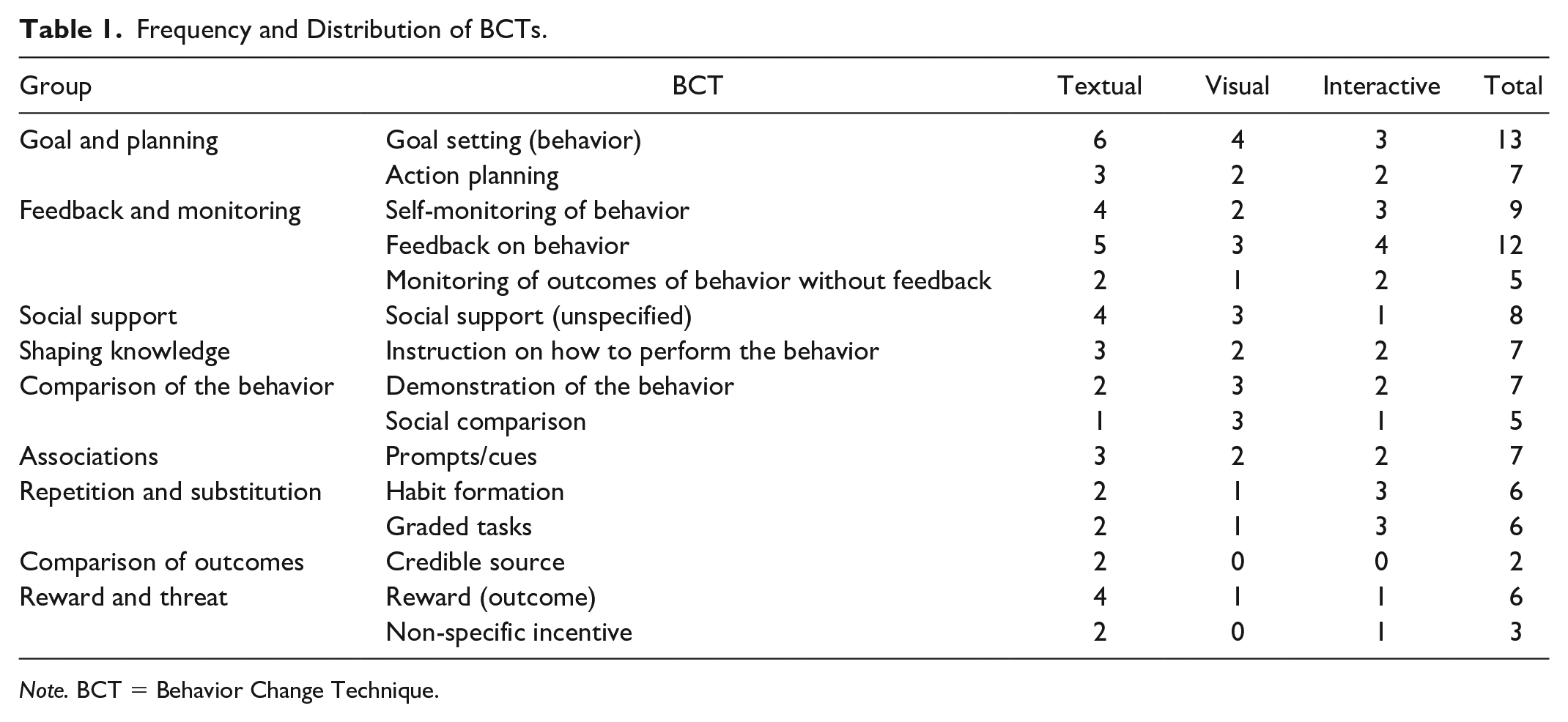
Nine of the 16 overarching categories representing broader behavior change groups determined by the BCT Taxonomy emerged in the analysis. Based on the Behavior Change Technique Taxonomy (V1), fifteen unique BCTs were identified (see Table 1).
Frequency and Distribution of BCTs.
Note. BCT = Behavior Change Technique.
The most common BCTs observed were goal setting, action planning, self-monitoring of behavior, and social support.
Combinations of Behavior Change Techniques
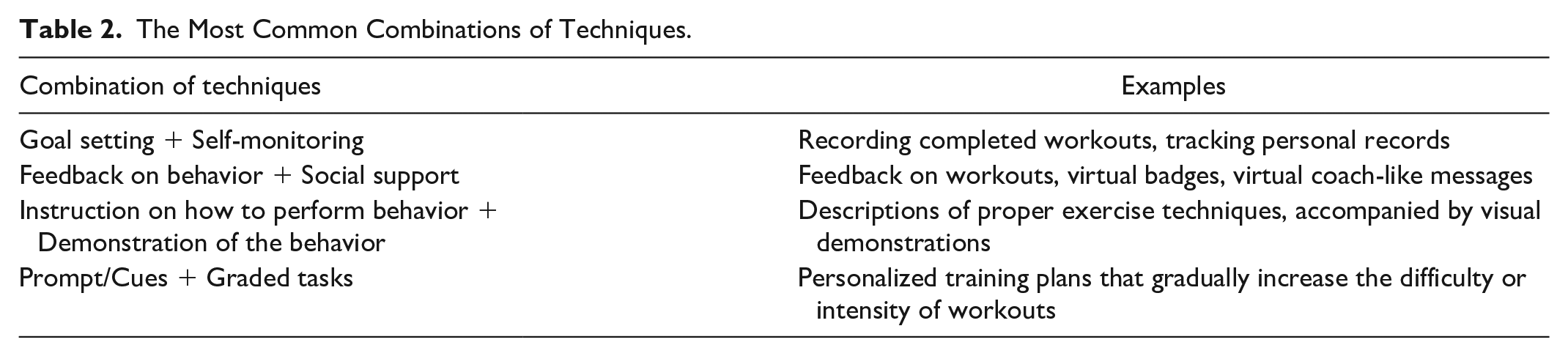
The analysis revealed that the app utilized various combinations of BCTs. Goal setting and self-monitoring emerged as the most common combined BCTs, signifying the app’s effectiveness in setting specific fitness goals and tracking progress through self-monitoring features, such as recording completed workouts, monitoring performance metrics, or tracking personal records. The combined BCTs feedback on behavior and social support allow the users to receive feedback on their workouts and achievements through visual cues, virtual badges, or virtual coach-like messages. In addition, the app fosters social support and community engagement, allowing users to connect with other Freeletics members, share their progress, and participate in challenges. The combined BCTs instruction on how to perform the behavior and demonstration of the behavior provide content and guidance on proper exercise technique, accompanied by visual demonstrations, videos, or animations that showcase the correct execution of exercises. Via the combined BCTs prompts/cues and graded tasks, the app provides instructions or reminders to engage in workouts or complete exercises. In addition, the app offers personalized training plans with graded tasks that gradually increase the difficulty or intensity of workouts over time (see Table 2).
The Most Common Combinations of Techniques.
Qualitative Analysis
Several positive and negative themes emerged from the qualitative analysis of user reviews of the Freeletics app.
Positive Themes
Feedback and Progress Tracking
The app’s immediate feedback on the workout performance feature received positive comments in reviews. Users complimented the app’s ability to go above and beyond traditional workout approaches, replicating the individualized coaching of a live personal trainer. In addition, the ability to thoroughly track progress emerged as an effective tool for engagement.
Getting feedback for every exercise is like having a personal trainer in my pocket. It keeps me on track and motivated to improve.
Personalization and Adaptability
The app’s ability to create customized training routines based on individual characteristics also received positive comments. Users appreciated the app’s capacity to react to variables such as location, available equipment, and even degree of injury.
I love how the app personalizes workouts to my specific circumstances. It’s like having a workout plan designed just for me.
Flexibility
The app’s flexibility was another positive factor, especially for consumers with limited time. The ability to work out on one’s terms, at one’s own pace, and in a place of choice was described as flexibility.
Being able to work out whenever and wherever I want has made maintaining a fitness routine so much easier.
Positive Community and Support
The app’s extensive community environment and easy access to help resources were constantly commended. The supporting social networks were acknowledged by users as a source of encouragement and engagement.
The Freeletics community’s sense of connection keeps me motivated and accountable. It’s as if we’re all on the same road.
Cost-Effectiveness
Despite being a paid service, the app’s financial value received widespread comments. Many users considered the cost a good investment, citing the app’s efficiency and enjoyment value.
I was hesitant about the cost at first, but the results I’ve achieved and the satisfaction I get from using the app make every penny worth it.
Diverse Exercise Options
Appreciation flowed for the app’s comprehensive repertoire of exercises that offers users diverse options.
The variety of exercises is fantastic. I can mix things up and never get bored while working toward my fitness goals.
Negative Themes
Limitations in Feedback Specificity
Some users noted a lack of precision in the feedback supplied. Some complained that the feedback was insufficiently detailed to modify their training routines successfully.
While feedback is beneficial, I sometimes wish it provided more specific instructions on how to improve my form and technique.
Overwhelming Personalization Options
While the personalization feature was appreciated, some users found the number of options overwhelming.
I appreciate the personalization options, but there are so many settings that it’s a bit overwhelming to figure out what’s best for me.
Concerns About Impact
Among the positive reviews, several voices expressed concern about the transformational potential of the app. Some users questioned the app’s capacity to offer speedy and significant impact, suggesting a potential discrepancy between users’ expectations and the app’s outcomes.
While the app is fantastic, I’m not sure if it can deliver the major improvements I’m hoping for in such a short period.
Challenges With Self-Motivation and Consistency
Despite the app’s convenience, some users admitted experiencing difficulty maintaining consistency due to intrinsic motivation issues. Some people found it challenging to stick to an exercise plan without external responsibility or encouragement.
It’s difficult to stay motivated when you’re working out alone. I wish there were more ways to hold myself accountable and motivate me.
Overload and Lack of Structure in the Community
While the community element was widely welcomed, a few users found the community forums somewhat overpowering. They reported difficulties navigating discussions and locating essential material, indicating a need for more structure and assistance.
The community is great, but it can be a little chaotic at times, and I find it difficult to find the information I need amidst all the discussions.
Cost Barriers
A minority of users thought that the app’s price was prohibitively expensive. Some users explored less costly options, indicating a need for more explicit communication about the app’s financial value.
While I like the app, I think the price is a little high. I’ve discovered comparable resources at a cheaper cost elsewhere.
Desire for More Exercise Journey Options
While the app’s exercise repertoire was generally well-received, some users desired even more variation, particularly for specialty exercise journeys catering to particular interests.
I like the journeys, but I’d like to see more one-of-a-kind options that cater to different interests and goals.
User Perceptions Regarding the Behavior Change Techniques
Goal Setting
Goal setting emerges as a critical BCT employed by the Freeletics app, as indicated by the quantitative and qualitative findings. Users are asked to set specific fitness goals during onboarding, which marks the start of their fitness journey.
The act of setting my fitness goals right from the start made me feel committed and resolute in my pursuit.
Feedback on Behavior
The Freeletics app’s incorporation of individualized progress reports, success badges, and real-time feedback has yielded concrete reinforcement that meets users’ expectations. This reinforcement-based approach has successfully harnessed users’ intrinsic motivation, creating an encouraging and enjoyable atmosphere that enhances their dedication to exercise.
The powerful psychological influence of timely positive reinforcement on user engagement and commitment is highlighted in the following comment: Receiving immediate feedback on my exercise performance is truly motivating, almost like having a dedicated virtual trainer by my side, cheering me on.
Self-Monitoring of Behavior
The Freeletics app effectively incorporates the self-monitoring of behavior BCT, motivating users to diligently document their physical activity and improvement.
A user mentions the effectiveness of self-monitoring in developing accountability, motivation, and a greater understanding of personal growth: Watching my journey unfold over time fuels my determination to push myself further. It acts as a continual reminder of my accomplishments.
Social Support
The integration of virtual communities, intriguing challenges, and leaderboards in the Freeletics app has successfully fostered social support, leading to the cultivation of responsibility, healthy competition, and a sense of camaraderie among its users.
One user views the app’s deliberate use of social support as a catalyst for developing long-term motivation and adherence: The community aspect here is incredible. The contacts I’ve made with other people, who share common goals, keep me involved and driven.
Adaptive Coaching
The dynamic recalibration of workout intensity based on user success in the Freeletics app is possible with adaptive coaching. While it is not explicitly stated in user feedback, the constantly favorable user reactions to personalization and custom-tailored experiences demonstrate the effectiveness of this strategy.
The app’s ability to adapt to my evolving fitness level is truly appreciated. It keeps me challenged without overwhelming me, which keeps me committed.
Action Planning
The Freeletics app effectively implements action planning, as evidenced by the existence of interactive goal-setting tools. This strategy connects strongly with users’ empowerment to define and adjust their fitness goals. Users are able to utilize action planning to transform their intentions into actual measures, creating a systematic approach to accomplishing their objectives.
A well-structured training journey empowers me to stay dedicated to my fitness regimen, ensuring I’m consistently on track.
Prompts/Cues
Through proactive alerts and timely reminders based on user behavior, the Freeletics app strategically employs the prompts/cues BCT. While not expressly mentioned in user feedback, the impact of these prompts is significant, acting as a mild nudge that rekindles users’ motivation and reaffirms their dedication to their fitness path.
One user viewpoint emphasizes the small yet powerful significance of prompts and signals in maintaining users’ interest and adherence: Receiving gentle nudges when I’ve lapsed into inactivity is a powerful motivator, prodding me back into my fitness routine.
Graded Tasks
The general user appreciation of the graded activities incorporated into the interactive fitness programs demonstrates the success of this BCT. The progressive increase in workout intensity addresses users’ desire for incremental challenges. This technique adapts to the changing capacities of users, ensuring that the workout experience stays exciting and motivational.
A user emphasizes the app’s user focus, in which graded assignments easily connect with users’ quest for continual development: The step-by-step increase in difficulty maintains my engagement and enthusiasm, spurring me to conquer new heights.
Instruction on How to Perform the Behavior and Demonstration of Behavior
The Freeletics app’s supply of clear workout instructions complemented by visual examples satisfies user feedback on optimal exercise technique and assistance.
The visual tutorials act as a reassuring guide, ensuring I execute exercises correctly: It’s like having a personal coach show you the correct road.
Discussion
This study provides important insights into the effectiveness of BCTs in the Freeletics app. The quantitative findings revealed noteworthy BCTs and their distribution across different components of the app. In addition, the qualitative analysis revealed both positive and negative user opinions, providing perceptions about the app’s effect on behavior change. The present discussion examines and interprets these findings in the context of behavior modification strategies and technology-driven fitness platforms.
Integration of BCTs for Effective Behavior Change
The synergy between quantitative data and user perceptions about Freeletics highlights certain BCTs in boosting user engagement and enabling behavior change. As a core BCT in AI-based fitness apps, goal setting takes center stage in the analyses. The importance of goal-setting components, such as individualized training targets and progress monitoring, has frequently been highlighted in various studies (Benitez et al., 2022; Bleck et al., 2023). The user reviews of the Freeletics app constantly reinforce the value of goal setting, which is compatible with recognized psychological theories (Deci & Ryan, 2000; Locke & Latham, 2002).
AI-based fitness applications commonly incorporate feedback systems powered by complex algorithms (Venkatachalam & Ray, 2022). User reviews analyzed in the present study underline these characteristics, following the principles of positive reinforcement, according to which instant feedback reinforces desired behaviors (Skinner, 1965). The quantitative and qualitative data also highlight the promise of AI-based feedback systems in sustaining user engagement and cultivating long-term habits.
Self-monitoring is frequently identified as a common BCT in fitness apps, generally appearing in activity tracking and progress diaries (Bracken & Waite, 2020). User reviews analyzed in the present study frequently confirm the effectiveness of self-monitoring in promoting accountability and motivation, connecting with existing behavior change theories (Butryn et al., 2020). Users’ positive feedback highlights the critical importance of AI-based self-monitoring tools in encouraging long-term engagement and building a better awareness of individual progress.
AI-based social support mechanisms, from virtual fitness communities to coaching, are used in a variety of AI-based fitness apps (Reading et al., 2019). User reviews of the Freeletics app highlight the sense of companionship and motivation these elements promote. This is consistent with research demonstrating the positive influence of social support on fitness activities (Belcher et al., 2021; Herbert et al., 2020). Freeletics users’ reports of a sense of companionship and inspiration highlight the potential of AI-driven social support in boosting adherence and allowing long-term behavior change.
Users of the Freeletics app are enthusiastic about adaptive and personalized coaching experiences, aligning with the results of previous studies (Beleigoli et al., 2020; Monteiro-Guerra et al., 2019). The app’s ability to personalize exercises to specific fitness levels and goals is frequently mentioned in the comments. These findings are consistent with the principles of behavior change treatments that emphasize the need for customization (Riley et al., 2019). Freeletics users’ positive comments demonstrate the usefulness of AI-based adaptive coaching in offering personalized and challenging experiences.
Prevalence and Absence of Behavior Change Techniques
Goal setting, feedback mechanisms, self-monitoring, social support, adaptive coaching, and other BCTs in the app indicate a systematic approach to improving user engagement and behavior change. However, certain BCTs, such as comparison of outcomes and non-specific incentive from the BCT Taxonomy (V1), were absent in the analysis.
Several variables might explain the predominance of certain BCTs employed in the Freeletics app. The app’s emphasis on personalized and goal-oriented fitness journeys is consistent with the focus on goal setting and self-monitoring. Users can use these strategies to track their progress and attain tailored goals (Deci & Ryan, 2000). Users frequently use fitness apps to help them achieve specific objectives, such as weight loss or muscle building, and the presence of these BCTs satisfies these motivations.
On the contrary, the lack of some BCTs, such as comparison of outcomes, may reflect the app’s emphasis on promoting a pleasant and supportive community rather than generating a competitive setting. According to research, social comparison can occasionally result in unpleasant feelings or demotivation, which may contradict the app’s purpose of stimulating users (Festinger, 1954).
Furthermore, the app’s objectives and BCT selection may be influenced by its intended audience. The user-centric design is likely to favor strategies appealing to the app’s targeted users, such as those looking for adaptive and personalized fitness experiences. Techniques that need more detailed tracking or involve external comparisons may not be compatible with the app’s objectives.
The absence of specific BCTs in the design of the Freeletics app seems to represent a purposeful decision to comply with user preferences, create a happy and encouraging atmosphere, and cater to customized fitness journeys. This judicious usage of BCTs demonstrates the app’s dedication to providing users with a personalized and successful fitness experience.
Addressing User Concerns and Challenges
The qualitative study of user reviews revealed numerous significant problems and challenges that must be addressed in the app’s design and operation. Some users were frustrated with the abundance of customization choices, highlighting the necessity for more precise instructions or default settings. User satisfaction could be improved by offering more explicit assistance during onboarding and streamlining the first setup procedure.
Furthermore, users raised concerns about the app’s capacity to provide immediate radical effects. These concerns highlight the significance of controlling user expectations and establishing realistic goals. An effective way to overcome this issue would be to offer users information regarding feasible results and timescales for achieving their objectives.
The challenges associated with self-motivation and consistency must also be addressed. The app might benefit from adopting intrinsic motivation-boosting measures such as gamification and habit-building approaches (Saboia et al., 2018). These tactics can assist users in remaining interested and committed over time.
The app’s community aspect elicited both favorable and negative criticism. While many users praised the forums for their sense of community, others found them overpowering. To address this issue, the structure, navigation, and information retrieval methods of the community feature might be improved to lead to higher user satisfaction and a more pleasant experience.
Users’ cost-related worries point to the necessity for better communication about the app’s benefits. Transparency regarding the app’s unique features, intended benefits, and value might help consumers justify the payment. This information should be easily available to potential customers to alleviate concerns about the app’s price structure.
Recommendations for Implementing BCTs Within Fitness Apps
To enhance user commitment, developers should focus on a simple and personalized goal-setting method during onboarding. Employing a simple strategy would assist users in developing specific, measurable, achievable, relevant, and time-bound objectives (SMART) (Bovend’Eerdt et al., 2009). Assistance and examples should be offered to aid users in formulating meaningful objectives that follow their aspirations. This assistance could also include a progress-tracking tool that allows users to monitor progress toward their goals, thus increasing their commitment and motivation (Bandura, 1997; Locke & Latham, 2002).
A feedback mechanism should be built to offer users rapid and helpful feedback on their workout performance. Users might benefit from clear graphics such as charts and graphs to better follow their progress. Incorporating rewards, virtual badges, or brief celebratory messages should be provided when users meet goals to provide positive reinforcement (Zimmerman et al., 2022). To solve specialized concerns, feedback should include proposals for change, such as links to tutorials or demonstration videos.
Developers may improve self-monitoring of behavior by providing users with numerous methods for recording their actions, such as completed exercises, nutritional intake, and physical measures. This approach aligns with the findings of Goldstein and colleagues (2017), who highlighted that greater self-monitoring has been linked to more success in health behavior change. To promote accountability, users should be reminded to register their activity frequently. Tools that allow users to reflect on their achievements, set aside time for self-assessment, and create new goals should be explored. Visual representations of users’ journeys should be included to showcase their achievements and encourage continued engagement (Traboco et al., 2022).
To foster a sense of community, easily accessible and user-friendly forums or discussion boards should be provided where users may connect, exchange experiences, and trade tips. Hystad and Carpiano’s (2012) research emphasized the robust link between community belonging and the adoption of healthier behaviors, emphasizing the potential importance of this connection in strategies to promote behavior change. User involvement could be encouraged through friendly rivalry and reciprocal encouragement through challenges, group activities, and leaderboards. Furthermore, virtual coaching elements that provide personalized encouragement or support should be explored. Users who consistently achieve their goals should be given opportunities to motivate others and maintain an excellent social atmosphere.
Adaptive coaching may be enhanced by continually improving algorithms that vary workout intensity based on user performance data. The seamless absorption of these modifications should be prioritized to lead to a gradual change that pushes users without overwhelming them (Haug et al., 2009; Konrad et al., 2015). Alternatives for users to offer input on the appropriateness of the changes should be included, giving them a sense of ownership over their fitness path. User preferences and progress should be carefully incorporated into AI to better customize recommendations and alterations.
Users should be given a clear path for their fitness journey and simple action planning tools. They should be able to define and alter short- and long-term objectives using user interfaces. Elements that allow bigger goals to be broken down into more miniature stages should be added, providing customers with a sense of achievement at each milestone. Following recent research on behavior change, it is crucial to recognize that setting an objective alone is often insufficient for actual behavior change (Bailey, 2019). Therefore, regular reminders and progress updates relating to their action goals should be provided to increase user participation and reinforce their commitment and sense of direction.
Intrinsic motivation difficulties may be solved by including gamification elements like points, badges, and challenges, which tap into users’ natural desire for success and mastery (Bogost, 2011; Deterding, 2012). Features that encourage the construction of training routines and the gradual development of healthy habits over time should be introduced. Allowing users to compare their progress to others may leverage the power of social comparison, promoting a sense of healthy competition and ongoing advancement.
Concerns about too many customization options can be resolved using guided customization approaches that progressively introduce users to the available options. Those who are unsure where to begin can be given default alternatives, allowing them to personalize their experience at their own pace (Zhu et al., 2021). Tooltips, instructional videos, or in-app lectures can help users grasp the implications of their customization choices, ensuring that personalization enriches rather than restricts their experience.
Applicability to Similar Contexts
While the study focused specifically on the Freeletics app, the fundamental ideas of effective BCT implementation will likely apply to a more extensive range of fitness applications and behavior change interventions. The emphasis on goal setting, timely feedback, self-monitoring, and social support aligns with behavioral theories (Ajzen, 1991; Prochaska & DiClemente, 1983). This means that developers of similar fitness apps may be inspired by Freeletics’ successful adoption of these ideas.
Furthermore, adaptive coaching may be applied to various fitness settings. Recognizing individual differences and modifying interventions is essential to behavior change interventions (Beleigoli et al., 2020; Mokmin, 2020; Monteiro-Guerra et al., 2019). Similarly, fitness apps might investigate ways to dynamically adapt experiences to changing user skills and needs.
Implications for Future Interventions and Technologies
The study’s findings have implications for future behavior modification treatments and fitness technology. The use of a mix of BCTs, such as goal setting, feedback systems, self-monitoring, and social support, can help to improve intervention efficacy. Dynamic personalization and adaptive coaching might be highlighted as essential tools for boosting user engagement and adherence.
App developers may address user issues by focusing on user-centered design, streamlining personalization choices, managing expectations, and enhancing community structure. Incorporating components that boost intrinsic motivation, such as gamification and habit-building tactics, might help with consistency and self-motivation issues.
Limitations
Several methodological restrictions of the study must be considered. As those who submit reviews may not represent the whole user community, relying on publicly available assessments may introduce sampling bias. Furthermore, the lack of demographic data on app users limits our understanding of potential changes in experience based on user demographics. Including demographic information collected from surveys or user profiles may provide a more complete picture. Moreover, the results might be limited to the Freeletics app and irrelevant to other fitness platforms. Finally, relying on user ratings and app features without directly observing user behavior may induce bias. Longitudinal research on user involvement and behavior change may be conducted in the future.
Conclusion
To sum up, the BCTs included in the Freeletics app enhance the platform’s potential to drive user engagement and behavior change. The effective use of BCTs, such as goal setting, feedback systems, self-monitoring, and social support, is congruent with established behavior change theories. Addressing user concerns and using the study’s findings can assist in shaping the design of future interventions, encouraging healthier lifestyles and positive outcomes.
Supplemental Material
sj-docx-1-heb-10.1177_10901981231213586 – Supplemental material for Identifying Behavior Change Techniques in an Artificial Intelligence-Based Fitness App: A Content Analysis
Supplemental material, sj-docx-1-heb-10.1177_10901981231213586 for Identifying Behavior Change Techniques in an Artificial Intelligence-Based Fitness App: A Content Analysis by Hakan Kuru in Health Education & Behavior
Supplemental Material
sj-docx-2-heb-10.1177_10901981231213586 – Supplemental material for Identifying Behavior Change Techniques in an Artificial Intelligence-Based Fitness App: A Content Analysis
Supplemental material, sj-docx-2-heb-10.1177_10901981231213586 for Identifying Behavior Change Techniques in an Artificial Intelligence-Based Fitness App: A Content Analysis by Hakan Kuru in Health Education & Behavior
Supplemental Material
sj-docx-3-heb-10.1177_10901981231213586 – Supplemental material for Identifying Behavior Change Techniques in an Artificial Intelligence-Based Fitness App: A Content Analysis
Supplemental material, sj-docx-3-heb-10.1177_10901981231213586 for Identifying Behavior Change Techniques in an Artificial Intelligence-Based Fitness App: A Content Analysis by Hakan Kuru in Health Education & Behavior
Footnotes
Author Contribution
The author confirms sole responsibility for the following: study conception and design, data collection, analysis and interpretation of the results, and manuscript preparation.
Declaration of Conflicting Interests
The author(s) declared no potential conflicts of interest with respect to the research, authorship, and/or publication of this article.
Funding
The author(s) received no financial support for the research, authorship, and/or publication of this article.

Supplemental Material
Supplemental material for this article is available online.
References
Supplementary Material
Please find the following supplemental material available below.
For Open Access articles published under a Creative Commons License, all supplemental material carries the same license as the article it is associated with.
For non-Open Access articles published, all supplemental material carries a non-exclusive license, and permission requests for re-use of supplemental material or any part of supplemental material shall be sent directly to the copyright owner as specified in the copyright notice associated with the article.
