



Abstract
Sketching, as one of the core design skills, requires emphasis and cultivation in higher education. However, the advancement of AI and digital tools, along with individual and social issues, has led to ‘sketch inhibition’ - students’ reluctance to use sketches, hindering the acquisition of core design skills. This study develops a comprehensive model to enhance understanding of sketching's role in design processes. We integrate existing sketch taxonomies, which provide validated frameworks for classifying sketching behaviors, with the Uncertainty-Driven Action (UDA) model, selected for its unique capability to link internal cognition with external behavior through uncertainty perception. Following systems theory, we employed multiple complementary methods: literature analysis established theoretical foundations, prototype development created initial frameworks, scenario analysis tested theoretical predictions, natural observation of 21 design students validated real-world applications, and quantitative analysis examined uncertainty management patterns.
Introduction
The rapid advancement of AI and digital tools has sparked crucial discussions about the role and cultivation of fundamental design skills. While AI systems demonstrate impressive capabilities in generating visual content, this technological evolution raises important questions about how core design competencies should be developed and supported in contemporary education. This research argues that rather than being displaced by AI, foundational skills like sketching require systematic theoretical frameworks that can effectively bridge traditional practices with emerging technologies.
Sketching, as a fundamental design skill, serves multiple crucial cognitive and communicative functions in the design process. Beyond its role in visualizing ideas (M. Yang, 2009; Eris et al., 2014), sketching represents an irreplaceable tool for design cognition and creative problem-solving. While its significance has been widely acknowledged across design disciplines (Schembri et al., 2015; Dinar et al., 2015), traditional design education often lacks systematic approaches for cultivating these core competencies, particularly during critical early stages of product development (De Vere, 2016).
Among foundational design skills, sketching occupies a unique position as it represents an essential activity that is “impossible to separate” from the design process (Alcaide-Marzal et al., 2013). Although sketching provides an efficient and accessible tool for design tasks (Plimmer & Apperley, 2005), its potential extends far beyond basic visualization. It serves as a critical medium for creative thinking and problem-solving (Leblanc, 2015), though many designers fail to fully utilize its cognitive potential. This limited understanding of sketching's complete role represents a significant challenge in design education and practice.
Therefore, this study explores the mitigation of sketch inhibition (SI), a potential factor that adversely affects the cultivation of core design skills, with the aim of increasing the likelihood of successfully fostering these skills in higher education.
The focus on design sketch is not only because it is one of the core design skills but also because, as a discipline-specific method in design, it plays a crucial role in design education and practice, permeating almost all design disciplines. Research on sketching in design encompasses diverse theoretical perspectives, including cognition (Tovey, 1989; Schön & Wiggins, 1992), creativity (Min et al., 2018; Verstijnen et al., 1998), reflective practice (Schön & Wiggins, 1992; Bilda & Demirkan, 2003), visual thinking and communication (Vistisen, 2015), human-computer interaction (Buxton, 2007), and digital technologies (Johnson et al., 2007). However, the integration of these perspectives into a cohesive framework that can effectively support design education remains a significant challenge.
The growing challenge of sketch inhibition (SI) has emerged as a significant barrier to developing core design competencies in higher education. Research by Booth et al. (2016) and theoretical developments by Thurlow (2019) have identified SI as a multifaceted phenomenon encompassing individual, social, and technological dimensions. Of particular concern is intellectual inhibition - a cognitive barrier stemming from limited understanding of sketching's role in design thinking. This cognitive dimension becomes especially critical as advancing AI-based tools encourage an over-reliance on digital solutions during early ideation phases, potentially undermining the development of fundamental design abilities and widening the gap between educational practices and industry requirements (M. Yang et al., 2005; Kiernan & Ledwith, 2014).
Taxonomies and structured frameworks play vital roles in educational contexts by enabling students to construct meaningful connections between concepts (Medin et al., 2000). Learning supported by comprehensive theoretical frameworks typically enhances novice designers’ efficiency and understanding (Nievelstein et al., 2013). This study recognizes the pedagogical value of well-structured taxonomies and models, particularly their potential for addressing intellectual aspects of sketch inhibition by providing clear conceptual frameworks for understanding sketching's role in design processes.
While existing research has made important contributions to improving teaching methods for sketching (Booth et al., 2016; Altenburger et al., 2022), significant gaps remain in validating theoretical frameworks through empirical evidence. Current approaches to sketch taxonomy development often face several limitations:
Existing taxonomies frequently lack comprehensiveness across design domains (Goel, 1995; Pei et al., 2011; Eckert et al., 2012), with single-criterion frameworks often providing insufficient precision for practical application (Yang & Cham, 2006). Design students frequently struggle to distinguish between artistic and design-oriented sketching approaches, highlighting inadequacies in theoretical foundations for teaching sketching methodologies. The integration of sketching within broader design process models remains limited, resulting in disconnects between internal cognitive processes and external behavioral manifestations (Goel, 1995; Visser, 2006).
These limitations contribute to a broader challenge: the absence of comprehensive models that effectively describe sketching activities throughout the design process appears to encourage more intuitive, less structured approaches among students. Therefore, this research aims to develop and validate an integrated model that captures the complexity of sketching activities while providing practical frameworks for supporting design education.
Although our previous research established a preliminary model, it did not sufficiently address the relationship between the model and the management and improvement of sketch inhibition. Furthermore, the validation methods were limited to a single qualitative approach, lacking verification of both the legitimacy and adaptability of the UDA model as the foundational framework for this comprehensive model of sketching activities. Additionally, there was insufficient validation of the model's capability to reflect the overall declining trend of uncertainty in design processes (despite potential local increases), as well as the potential correlation between uncertainty as the driving force in the UDA model and key symptoms of sketch inhibition. Such validation would not only verify the feasibility of the UDA model but also provide preliminary evidence of the comprehensive model's effectiveness in managing and ameliorating specific symptoms of sketch inhibition. Therefore, this research serves as an extension and reinforcement of our preliminary work, aiming to further validate the feasibility and accuracy of the proposed model through more rigorous empirical methods.
The development of effective support strategies for sketch inhibition requires careful integration of theoretical frameworks with empirical validation. Previous research has primarily focused on developing taxonomies and models (Simon, 1996), but systematic examination of how these frameworks perform in actual design practice remains limited. This gap between theoretical development and practical validation becomes particularly evident in design education contexts, where the effectiveness of conceptual models in supporting core skill development often lacks rigorous empirical support.
Moreover, while researchers have explored the role of uncertainty in design processes (Cash & Kreye, 2017), the relationship between uncertainty management and sketch inhibition has not been thoroughly investigated through systematic observation. This represents a significant opportunity to examine how theoretical frameworks can support design practice through empirical validation methods.
Therefore, this study pursues three interconnected objectives:
To develop a comprehensive model capturing the complexity of sketching activities throughout the design process To validate this model through systematic empirical methods, including both controlled scenarios and natural observations To establish practical frameworks for supporting design education and addressing sketch inhibition
This integrated approach aims to bridge the gap between theoretical understanding and practical application, potentially providing more effective tools for supporting core design skill development. The model's development would not only assist in establishing structured approaches to sketching activities but also enable researchers and practitioners to gain deeper insights into sketching's role in design processes, serving as both a theoretical foundation and practical framework for various design methods and support tools.
Research Objectives and Methodology
This research adopts a comprehensive approach that spans multiple design disciplines where sketching plays an integral role in process development. Rather than focusing on specific domains like interaction design or user experience design, this study examines sketching as a fundamental representational behavior across design fields.
Theoretical Foundation and Research Scope
Research by Ferguson (1994) and Kranakis (1994) has demonstrated that despite variations in expression forms, the underlying conceptual development processes share fundamental similarities across design disciplines. While different fields may employ distinct terminology, the basic understanding of design behavior remains consistent (Crismond & Adams, 2012). This insight supports our adoption of a discipline-agnostic approach, focusing on sketching as a universal representational behavior rather than a domain-specific technique.
Research Questions and Objectives
To lay a theoretical foundation for understanding the use and role of design sketches, thereby contributing to the alleviation of SI, this paper systematically explores and attempts to answer the following five research questions:
How can we systematically evaluate and integrate existing literature on sketching taxonomies and design models to establish a robust theoretical foundation? What are the key components required for developing a comprehensive prototype of sketching activity model, and how can they be effectively integrated? How can multiple validation methods, including scenario analysis and natural observation, be combined to verify the model's theoretical soundness and practical applicability? What patterns emerge in designers’ natural sketching behaviors and how do they relate to uncertainty management and sketch inhibition? How can empirical findings inform the development of practical strategies for supporting design education and managing sketch inhibition?
Mixed Methods Research Design
This study employs a systematic mixed-methodology approach anchored in systems theory. Our research design integrates four complementary methods:
Literature review and prototype development for theoretical foundation Scenario analysis for systematic framework testing Natural observation of actual design practices Quantitative analysis of uncertainty management
This methodological approach differs from previous studies by emphasizing empirical validation through natural observation, allowing us to examine how theoretical frameworks perform in authentic design contexts. The integration of controlled scenario analysis with naturalistic observation provides complementary perspectives on framework effectiveness. These methods are used cyclically to provide close integration and timely mutual confirmation (Figure 1).

The 4-step structure of research design.
The research methods were systematically implemented following Systems Theory principles, with each method contributing distinct yet complementary evidence for model validation:
Literature Review: Data was obtained from major academic databases including Google Scholar, Research Gate, ACM Library, Wiley, Science Direct, and others. This comprehensive review process not only established theoretical foundations but also maintained continuous dialogue with subsequent development phases. When gaps or uncertainties emerged in later stages, targeted supplementary reviews were conducted to ensure theoretical robustness. Interactive Prototyping: Based on the literature analysis and theoretical integration, we developed iterative prototypes of the comprehensive sketching activity model through a systematic process of:
Initial prototype development based on UDA model framework Integration of generic sketch taxonomy components Iterative refinement through internal validation cycles Preparation of testable model versions for empirical validation Scenario Analysis: Through systematic simulation and analysis of design activities in controlled scenarios, we validated the model's theoretical predictions across different design stages. Specifically, we selected a representative design task - ‘smartphone solution with DSLR camera functionality’ - and analyzed designers’ potential behavioral strategies and decision-making processes during investigation, exploration, explanation, and persuasion stages. Natural Observation: To validate the model's effectiveness in actual practice, we systematically observed and recorded the natural behaviors of 21 design students completing automobile design tasks. This naturalistic observation:
Was conducted in a controlled yet authentic design environment Focused on spontaneous sketching behaviors without intervention Captured real-time decision-making processes Documented Loop formation and transformation patterns Provided ecological validation of theoretical predictions Employed standardized measurement protocols Gathered both behavioral and self-report data Applied rigorous statistical analysis methods Provided quantitative support for model effectiveness
This iterative prototyping process served as a crucial bridge between theoretical development and practical validation, ensuring the model's structural integrity before empirical testing.”
This research adopts a comprehensive validation strategy that combines scenario analysis, natural observation, and quantitative verification. Scenario analysis enables systematic examination of theoretical predictions through simulated design tasks (Amer et al., 2013), providing a controlled environment to test the model's explanatory power. While scenario analysis offers systematic validation, its controlled nature may not fully capture the complexity of real design practices (Zorriassatine et al., 2003). Therefore, we complement this approach with natural observation to examine how the model performs in authentic design contexts.
The natural observation method documents designers’ spontaneous behaviors without intervention, allowing us to validate the model's applicability in real practice while maintaining ecological validity. This method builds upon established approaches in design research, focusing particularly on how designers naturally organize and adjust their sketching activities. By observing actual design practices, we can identify behavior patterns and cognitive characteristics that might not be apparent in controlled scenarios.
Additionally, quantitative analysis provides statistical validation of the model's effectiveness in managing uncertainty and supporting design activities. This multi-method approach ensures comprehensive validation while maintaining methodological rigor (Shammout et al., 2013). Integrating these complementary methods allows us to examine the model's performance from different perspectives, providing a more complete understanding of its practical utility and theoretical validity.
Lecture review of sketch taxonomies
A critical examination of existing literature reveals significant limitations in current sketch classification systems, particularly in their ability to comprehensively describe the design process and capture the multifaceted nature of sketching activities.
Overview of existing sketch taxonomies
Design processes can be understood as an “evolution of different kinds of representations” (Goel, 1995). Existing research has approached sketch classification through various lenses:
Form-based classifications (Tovey, 1989) Intention-oriented categorizations (Olofsson & Siolen, 2005) Functional taxonomies (Ferguson, 1994; Van Der Lugt, 2005) Complexity-based frameworks (McGown et al., 1998)
These classification systems emerge from diverse design traditions, including architecture (Fraser & Henmi, 1993), industrial design (Pei, 2010), and engineering design (McGown et al., 1998), with most focusing on early to mid-stage design processes.
While Pei's work made significant strides in developing comprehensive taxonomies to enhance designer-engineer communication during product development (Pei, 2010), recent research by Thurlow highlights that many undergraduate students still struggle to understand their creative processes (Thurlow et al., 2018). This gap suggests current frameworks may not effectively support learning and practice.
The limitations of existing approaches become apparent in their singular focus, which often fails to serve designers’ practical needs effectively (Pei et al., 2011). The absence of a unified taxonomy that can describe different sketch types throughout the design process represents a significant research gap. This study proposes that integrating single-criteria classifications into a comprehensive system could provide a more robust theoretical foundation for understanding sketching activities across different design contexts.
Considering sketching's inherent characteristics of speed and roughness, our analysis focuses primarily on early and mid-stage design processes, including investigation, definition, conceptualization, and development phases. Through systematic review, we identified and analyzed 16 distinct sketch taxonomies based on their classification criteria and disciplinary origins.
The systematic selection of sketch taxonomies followed rigorous inclusion criteria:
The classification system must explicitly address sketching activities or sketch types The framework should originate from or demonstrate applicability within design disciplines The classification criteria must be clearly defined and documented
Classifications that were overly specific to particular design domains or lacked comprehensive criteria were excluded from analysis. Table 1 presents a comprehensive overview of the selected taxonomies, organized by their classification approaches and disciplinary origins.
Overview of Existing Sketch Taxonomies According to Various Criteria and Design Disciplines.

Framework Analysis and Parameter Integration
Our analysis of sketching activities reveals the necessity of considering both cognitive mechanisms and behavioral manifestations in design processes. Drawing on Osiurak and Badets’ (2016) dual perspective of tool use behavior, and supported by Buxbaum's (2017) neuroscience findings, the framework we propose, as illustrated in Figure 2, demonstrates how sketching behavior integrates two fundamental types of representations during the design process.
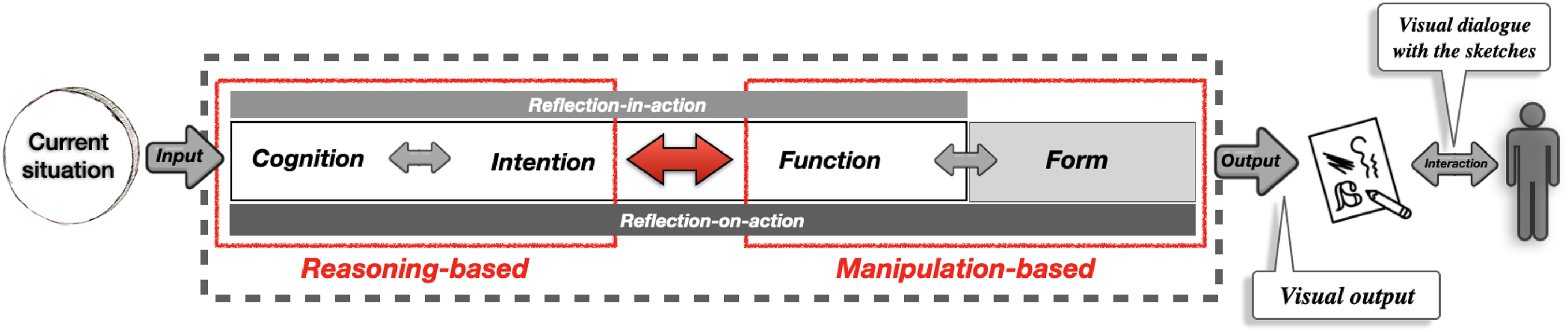
The proposed behavior mechanism unit of sketching activity under the generic sketch taxonomy. (Source: author).
Manipulation representation, which reflects the physical properties and operational aspects of tool use, addresses the practical aspects of sketching activities, manifested through the function and form parameters of sketches. This representation directly supports the execution of sketching operations and their visual manifestation. Simultaneously, reasoning representation focuses on the purposive and causal relationships in sketching, expressed through cognitive approach and intention parameters, which guide designers in selecting and utilizing appropriate sketching strategies. Buxbaum's research particularly supports this dual representation view, identifying distinct neural bases for manipulation and reasoning processes in the brain, with dynamic interaction between these representations during tool use.
These representations work in concert with two complementary reflection processes within the behavioral mechanism unit shown in Figure 2. Reflection-in-action enables designers to make real-time adjustments to their cognitive approach, intention, and functional choices while maintaining predetermined complexity levels. This immediate reflection allows designers to respond dynamically to emerging design situations. In contrast, reflection-on-action involves comprehensive evaluation of all four parameters - cognitive approach, intention, function, and complexity - after sketching activities are completed. This retrospective reflection is particularly crucial for evaluating complexity and determining requirements for subsequent iterations.
The behavioral mechanism unit depicted in Figure 2 demonstrates how these components integrate to support the design process. Through this framework, designers can establish comprehensive cognition of their current situation and effectively transform mental images into appropriate visual forms. The dynamic interaction between representations and reflection processes, as captured in the model, helps ensure that sketching activities maintain their effectiveness while serving both cognitive and communicative functions in the design process.
Design Process Model Selection and Integration
The systematic description of sketching activities within the design process requires a theoretical framework that can effectively integrate cognitive processes with their external manifestations. This section examines existing design process models to identify a suitable framework for understanding and describing discrete sketching activities.
Analysis of Existing Design Process Models
The evolution of design process models reveals various approaches to understanding design activities. The Double Diamond model, developed by the British Design Council and grounded in the work of Bánáthy (1996) and Cross (2000), effectively illustrates the interplay between divergent and expansive thinking and convergent, focused problem-solving. While this model successfully captures the rhythmic nature of design thinking, it does not fully address the relationship between designers’ perceptions and their external actions.
Design Thinking models, originating from Rowe's (1987) foundational work, have evolved through contributions from design, psychology, and educational research. Contemporary DT frameworks typically encompass four to seven stages, reflecting the dynamic and iterative nature of design cognition (Plattner et al., 2010; Clune & Lockrey, 2014; Goodspeed et al., 2016). Although these models emphasize collaboration and feedback, they often underrepresent the crucial link between internal cognitive processes and external expression methods.
The C-K theory (Hatchuel et al., 2004) offers valuable insights through its exploration of dynamic interactions between concept and knowledge spaces. While this framework illuminates the iterative nature of design thinking, it leaves the specific mechanisms of cognitive processing and externalization somewhat ambiguous, creating challenges for practical implementation. Similarly, Gero and Kannengiesser's model (2004) conceptualizes design as recursive interactions among external, interpreted, and intended spheres. However, it provides limited guidance on operationalizing these interactions, particularly in translating cognitive processes into tangible design outputs.
The Uncertainty Driven Action (UDA) Model: A Framework for Design Activities
Among existing frameworks, the UDA model (Cash & Kreye, 2017) distinguishes itself through its unique approach to linking internal cognition with external behavior. This model employs uncertainty perception (UP) as a dynamic connector between designers’ internal cognitive processes and their external actions, providing a comprehensive framework for analyzing design activities and their progression (Figure 3).
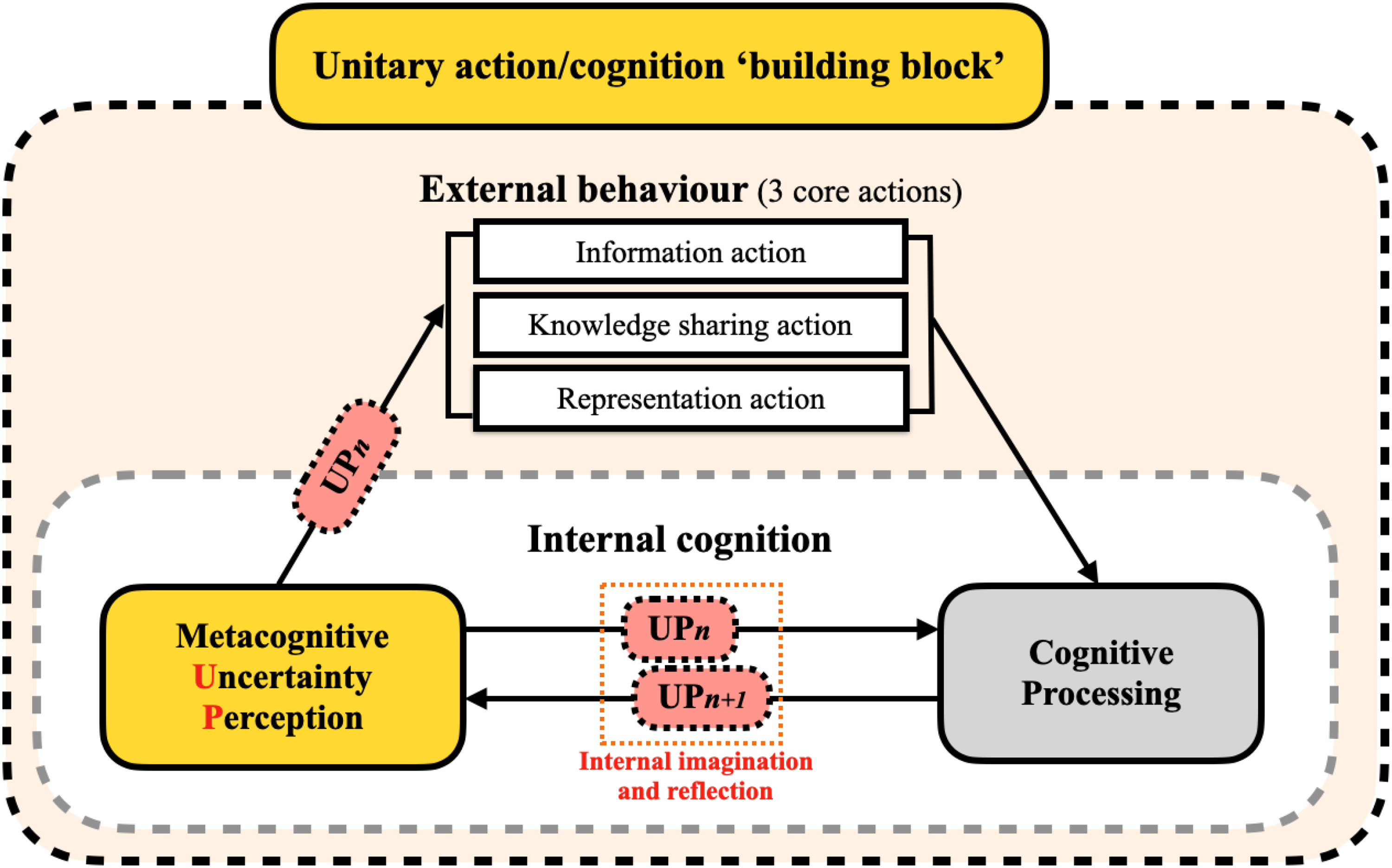
The UDA model links internal uncertainty perception and cognition with external information, knowledge-sharing, and representation actions. (Source: Author modified from Cash & Kreye, 2017).
The UDA model comprises three core types of design actions, each playing a distinct role in managing uncertainty throughout the design process:
Information action
Information action encompasses the systematic handling and transformation of data segments into actionable knowledge (Court, 1997). This process serves as a critical mechanism for reducing uncertainty in design decision-making (Wilson, 1999). Information actions include collecting, recording, reviewing, and archiving data - activities that collectively support the investigation of materials and definition of design problems. These activities form the foundation for understanding design contexts and requirements.
Knowledge-sharing action
Knowledge sharing represents the collaborative dimension of design work, manifesting primarily through team communication and interaction. These actions facilitate the development of shared understanding and consensus around design concepts and solutions (Cash & Maier, 2016). Through knowledge sharing, individual designers develop new uncertainty perception states, particularly as they work to establish common ground on concepts and engage in persuasive communication about design solutions.
Representation action
Representation actions, which include sketching and prototyping, involve the externalization of information and its integration with internal reflective processes. These activities prove essential for enhancing team understanding and supporting design iterations (Evans, 2008). Working in concert with concept-knowledge interactions, representation actions serve as vital channels for updating uncertainty perceptions around design artifacts, highlighting their crucial role in driving design progression.
The Role of Uncertainty Perception
Within the UDA model, uncertainty perception functions as a metacognitive bridge linking these core design actions. It influences decision-making processes and action sequences while underpinning the cognitive foundations of information processing, knowledge sharing, and representation activities (Christensen & Ball, 2017). This continuous evolution of uncertainty perception guides the design process by connecting understanding, knowledge, perception, and activity progression in a dynamic framework.
Development of a Generic Sketch Taxonomy for Design Process Analysis
Building on our analysis of existing taxonomies and classification systems, this section proposes an integrated framework for understanding sketching activities throughout the design process. Our approach focuses on selecting and combining the more comprehensive and theoretically robust classification parameters to create a unified taxonomic system.
Selection of Core Classification Parameters
The systematic review identified four key parameters that demonstrate both theoretical significance and practical applicability (see Table 2). First, Goel's taxonomy makes a unique contribution through its cognitive approach, distinguishing between lateral and vertical transformations in design thinking. This classification captures the essential nature of design progression, where lateral transformations represent movements between different design alternatives at the same abstraction level, while vertical transformations indicate development toward more detailed iterations of the same idea.
The Four Sketch Taxonomies Selected Constitute the Generic Sketch Taxonomy.

Olofsson and Sjolen's (2005) intention-based classification provides a second crucial parameter, organizing sketching activities into four progressive stages that align with the natural evolution of design projects. This framework extends beyond simple cognitive classifications to encompass both early investigative work and later stages focused on explanation and persuasion (Bedny & Karwowski, 2004).
The third parameter emerges from our analysis of functional classifications in design practice. Through careful examination of Ferguson's (1994) thinking and talking sketches alongside Pei's (2010) personal and shared sketches, we identified a more nuanced understanding of sketching functions. This analysis revealed that personal sketches can transcend individual use to support collaborative thinking when designers engage with and modify others’ work. Given its more comprehensive sub-classifications and broader applicability, we adopt Pei's framework as our functional parameter.
For the fourth parameter, complexity, we selected McGown's five-level classification system (McGown et al., 1998). This framework offers advantages over discipline-specific taxonomies by providing a versatile method for evaluating sketch development across all design stages. Its universal applicability makes it more suitable than specialized classifications from architecture (De Menezes, 2005) or intention-based systems from industrial and engineering fields (Tovey, 1989; Yang, 2008).
The generic sketch taxonomy is composed of four parameters
The effective integration of these four parameters requires careful consideration of their interrelationships and practical application in design processes. Table 3 presents our integrated framework, demonstrating how these parameters complement and reinforce each other across different stages of the design process. This integration extends beyond simple combination, requiring thoughtful harmonization of scales and careful refinement of definitions to create a cohesive classification system.
Detailed Description of the Harmonization and Integration of the Four Parameters Constituting the Generic Sketch Taxonomy. (“Intention” is Considered as the Main Parameter, While the Other Three Parameters “cognitive approach”, “function”, “complexity” are Considered as Secondary Parameters).

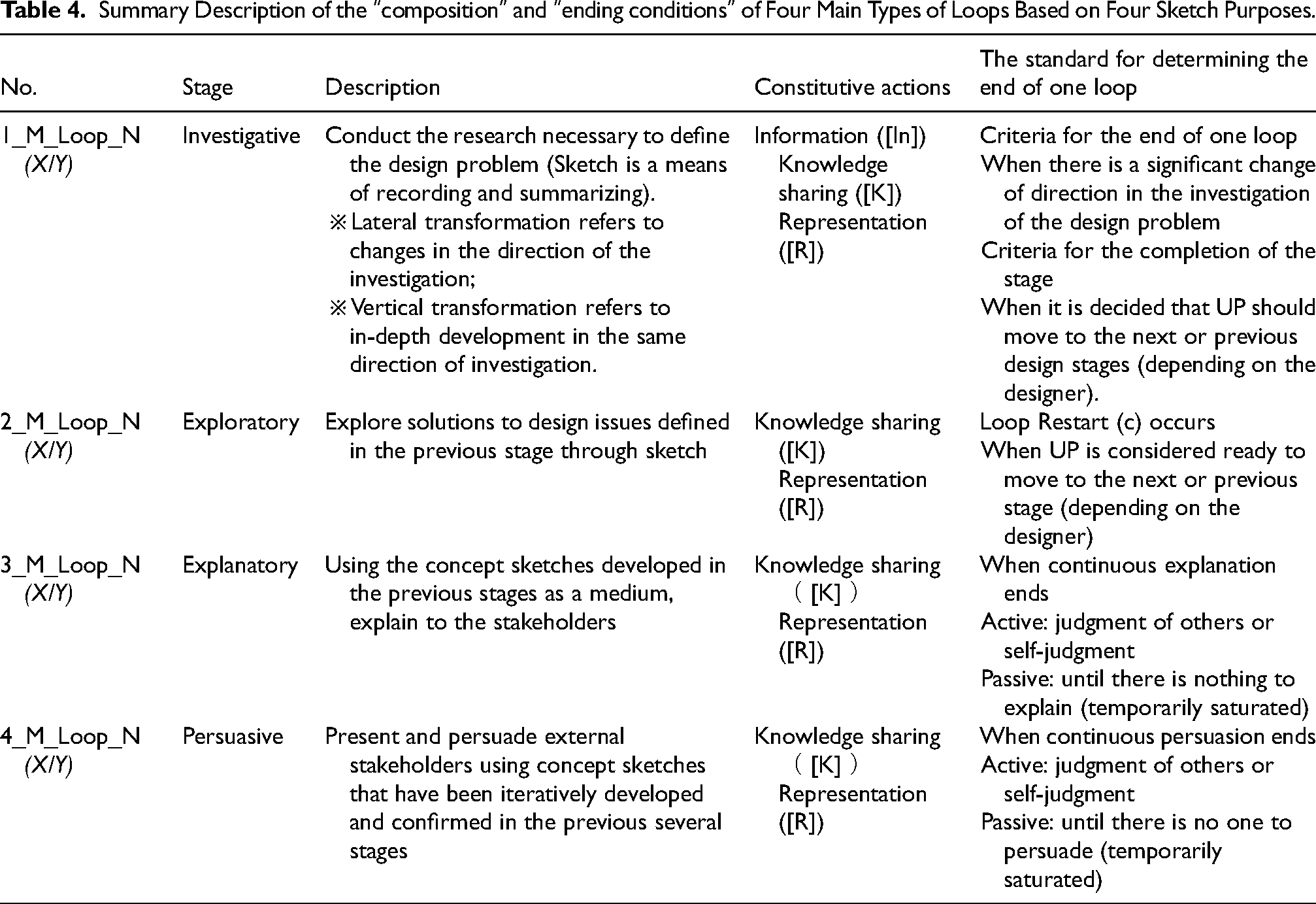
As shown in Table 4, the framework organizes sketching activities around intention as the primary parameter, with cognitive approach, function, and complexity serving as complementary dimensions. This structure reflects the natural progression of design activities through investigation, exploration, explanation, and persuasion stages. Within each stage, the framework considers how different parameters interact and evolve:
Investigation Stage: During this initial phase, sketches primarily serve to record and summarize data collection efforts. The cognitive transformations typically alternate between lateral explorations of different information sources and vertical deepening of specific insights. Both personal and shared sketching functions play important roles, though complexity tends to remain at lower levels (typically levels 1 and 2) to facilitate rapid documentation. Exploration Stage: As designers move into concept development, sketching activities become more diverse and dynamic. The framework accommodates both lateral transformations between different design alternatives and vertical developments of promising concepts. Sketch complexity naturally increases (ranging from levels 1 through 4) as ideas become more refined, while both personal and shared functions support the iterative development process. Explanation Stage: When focus shifts to communicating design concepts, the framework captures the predominance of shared sketching functions and higher complexity levels (typically 2 through 4). The cognitive approach emphasizes clarity and comprehension, with both lateral and vertical transformations supporting effective communication of design ideas. Persuasion Stage: In the final stage, sketches serve to convince stakeholders of design solutions. The framework reflects the increased emphasis on visual refinement through higher complexity levels (3 through 5) while maintaining the primarily shared functional aspect of sketching activities.
Summary Description of the “composition” and “ending conditions” of Four Main Types of Loops Based on Four Sketch Purposes.
Integration of Generic Taxonomy with UDA Model: Prototype Development
The development of an integrated sketching activity model requires careful consideration of both theoretical foundations and practical applications. This section presents our systematic approach to prototype development and validation, focusing on the integration of the generic sketch taxonomy with the UDA model's core framework.
Validation Framework and Criteria
The evaluation of our integrated model prototype centers on three fundamental criteria, each selected to ensure comprehensive assessment of both theoretical validity and practical utility. Feasibility, as our first criterion, examines whether the model provides a logically sound and practically applicable framework for analyzing sketching activities in real design contexts. This assessment includes evaluating the model's ability to capture different types of sketching behaviors while maintaining operational simplicity. Integrity, our second criterion, focuses on the coherence and consistency of model components, ensuring they work together harmoniously without internal contradictions or logical gaps. This includes examining how different parameters interact and support each other across various design stages. Accuracy, the third criterion, evaluates how precisely the model captures and explains actual sketching behaviors in design processes, including its ability to account for both typical and edge cases in design practice.
These criteria were carefully selected to provide a comprehensive evaluation framework that addresses both theoretical soundness and practical applicability. The focus on these three dimensions ensures that the resulting model not only maintains theoretical rigor but also offers practical value for understanding and supporting design activities. Furthermore, this validation framework allows us to systematically identify areas for refinement and improvement during the prototype development process.
Integration with Reflection Framework
A crucial aspect of our prototype development involves the systematic incorporation of reflection processes into the UDA framework. As illustrated in Figure 4, our integration combines the ‘reflection in/on action’ framework with the generic sketch taxonomy, creating a dynamic system that supports both immediate and retrospective design thinking. This integration builds upon Schön's (1983) foundational work on reflection in design processes, acknowledging that effective design requires both immediate response to emerging situations and thoughtful consideration of completed actions.
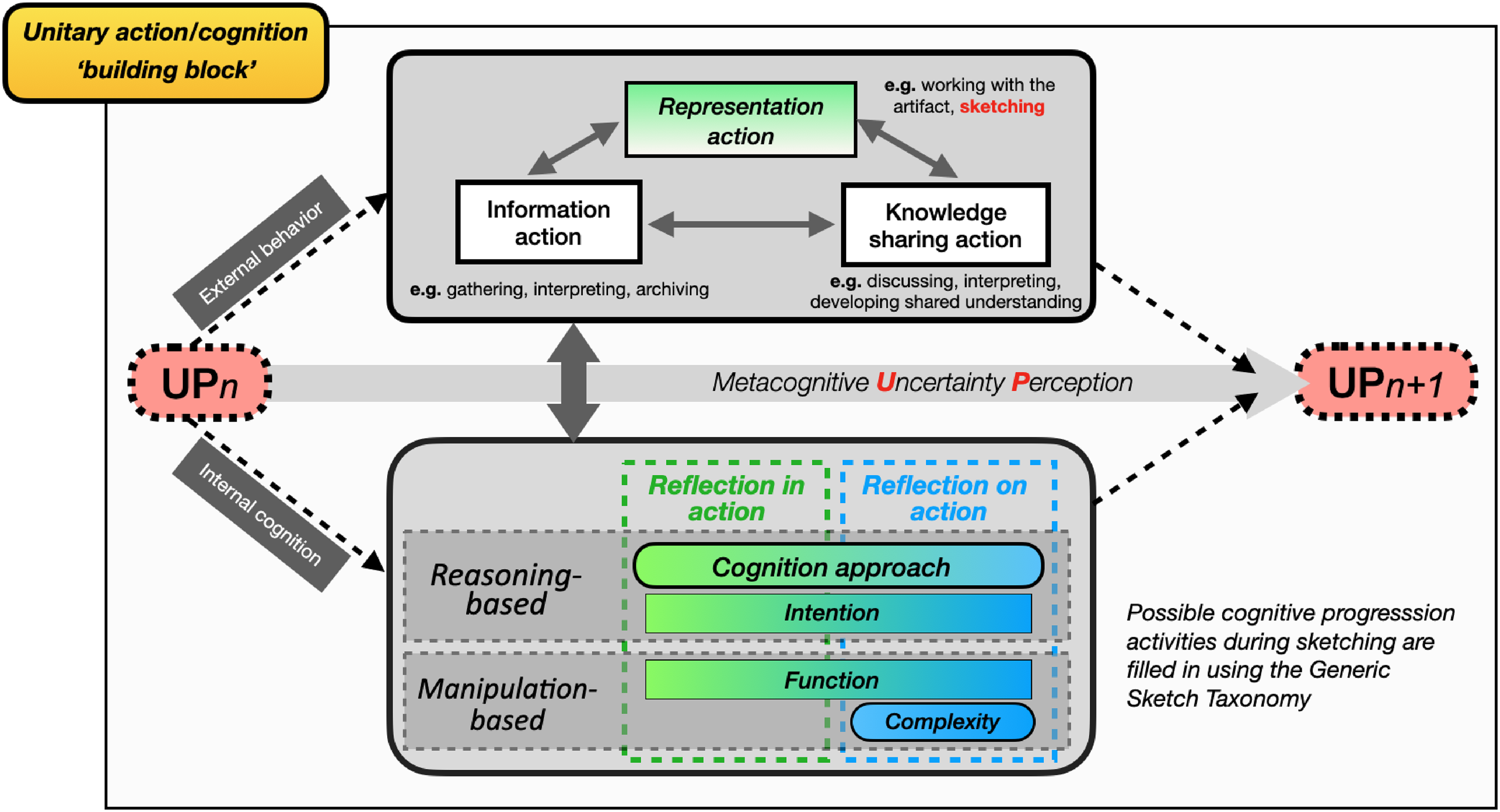
The visualization prototype integrates the ‘reflection in action/on action’ framework with the generic sketch taxonomy into the UDA model (i.e., the prototype of the sketching activity model).
The model facilitates reflection-in-action by enabling designers to continuously evaluate and adjust their sketching approaches during the design process. This immediate reflection occurs across multiple dimensions, including cognitive transformations, intentional adjustments, and functional adaptations. Simultaneously, the model supports reflection-on-action through structured frameworks for post-completion analysis and learning. This dual-reflection capability enables designers to not only respond effectively to immediate design challenges but also develop deeper understanding through systematic review of their design processes.
Structural Integration with UDA Model
The integration of our generic sketch taxonomy with the UDA model represents a significant advancement in understanding sketching activities within the broader design process. This integration, as visualized in Figure 5, provides a comprehensive framework that bridges theoretical classification systems with practical design behaviors. The lower portion of Figure 5 illustrates the four-stage visualization of our generic sketch taxonomy, demonstrating how sketching activities, while discrete in nature, maintain coherent progression throughout the design process. The upper portion shows how these stages integrate with UDA unit combinations, revealing the dynamic relationships between different design activities.
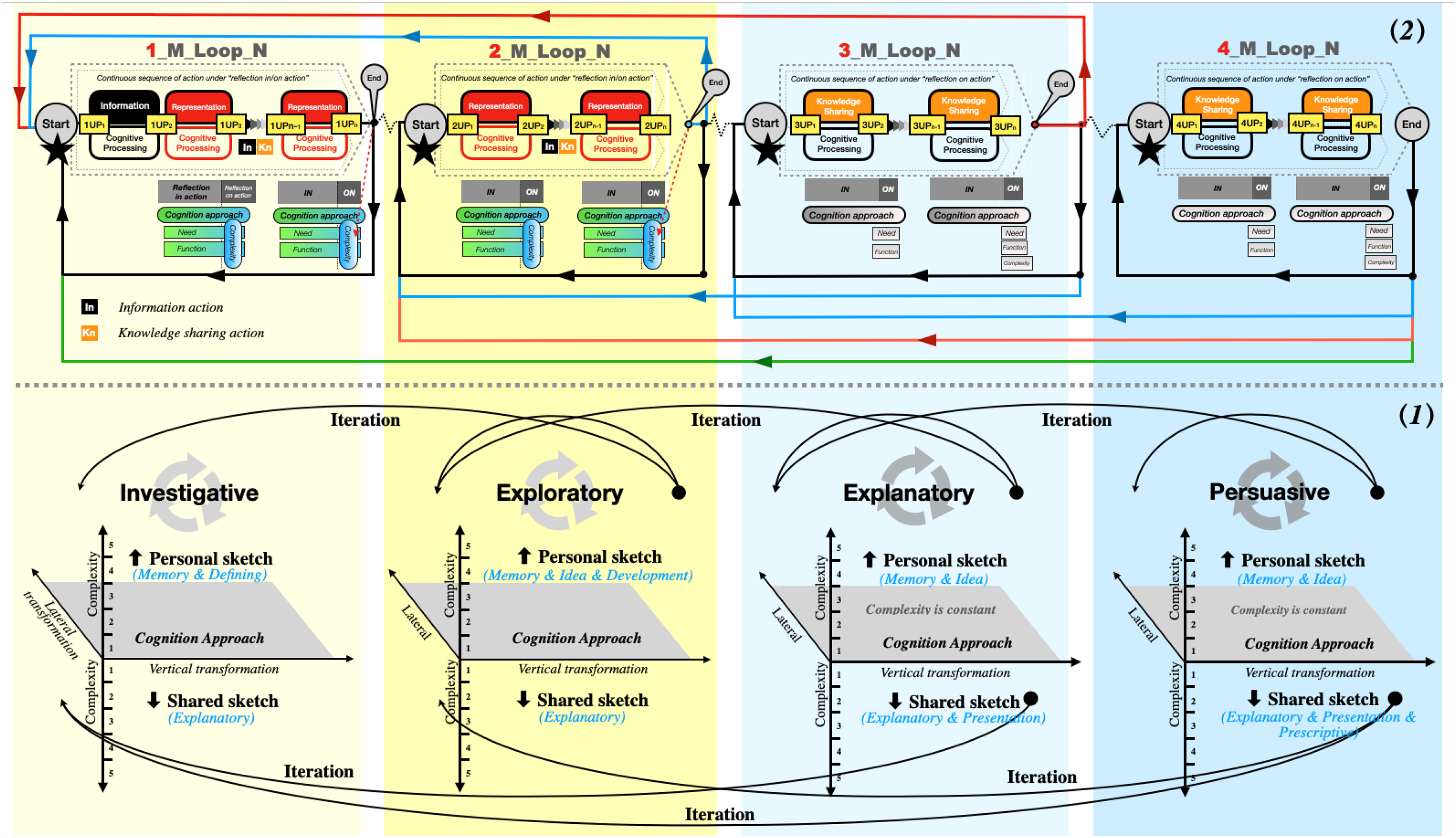
Visual prototype of Combination of UDA units for specific sketch purposes: Loop integrated with generic sketch taxonomy. (the arrows refer to the developmental and iterative relationships between the different sketch intentions) 1) The visualized prototype of the generic sketch taxonomy consisting of 4 intentions corresponding to the presentation UDA unit within the Loop in (2). 2) A visual prototype of Loop consisting of 3 types of UDA units for 4 different sketch intentions.
The model's structure demonstrates how sketching activities evolve through four distinct intentions: investigation, exploration, explanation, and persuasion. Each of these stages involves unique combinations of UDA core actions, creating what we term “loop combinations.” These combinations reflect the iterative nature of design thinking, where designers repeatedly cycle through different types of activities to address emerging challenges and opportunities. The formation of these loops is not random but follows specific criteria determined by the current design stage and uncertainty perception level.
The iterative progression between the four sketching intentions can be understood as distinct loop combinations, each constituted by specific arrangements of the three UDA core actions. Due to the dynamic nature of sketching in the design process, certain intentions may involve more frequent and fluid shifts between different UDA core actions than others. This variation in loop dynamics reflects the different cognitive and practical demands of each design stage. For example, exploration stages often exhibit more frequent shifts between representation and knowledge sharing actions as designers test and refine their ideas, while explanation stages might show more stable patterns focused on knowledge sharing.
Furthermore, the model captures the complex relationships between different stages of the design process. When iteration of the design object becomes necessary, changes in sketching intentions may occur, allowing designers to move from later stages back to earlier ones, facilitating iterative progression. This flexibility is crucial for accommodating the non-linear nature of real design processes while maintaining structural coherence in our understanding of sketching activities.
The visualization provided in Figure 5 also demonstrates how different UDA core actions combine across various stages. The arrows connecting different elements represent both the progression within each stage and the potential transitions between stages. This representation helps us understand how designers naturally move between different types of sketching activities while maintaining focus on their overall design objectives. The model's ability to capture these dynamic relationships while preserving analytical clarity makes it particularly valuable for both research and practical applications.
Moreover, the integration framework accounts for the varying complexity levels and functional requirements across different design stages. Early investigative sketches might emphasize rapid iteration and simple representations, while later persuasive sketches require higher levels of refinement and detail. The model accommodates these changing requirements while maintaining conceptual consistency, allowing us to track how sketching activities evolve and adapt throughout the design process.
Experimental Validation Through Multiple Methods
This study employs a systematic validation approach combining scenario analysis and natural observation methods, complemented by quantitative measures. This multi-method strategy aims to examine both the theoretical soundness and practical applicability of the comprehensive sketching activity model.
Analytical Framework Development
The study defines the progression of UPs within the UDA unit under the consistent directions of investigation, exploration, or explanation as a finite loop. The condition for concluding a loop at any stage is defined by a significant transformation in the design direction of the object (i.e., a ‘restart’). The number of uninterrupted Loops within the same stage is denoted by an integer ‘M’ (M ≥ 0).
Within the same loop, several vertical or lateral transformations related to the object, or its design direction occur to progress UPs. Each UP update represents the execution of a UDA unit, with the number of these executions designated as an integer ‘N’ (N ≥ 0). Thus, ‘M_Loop_N’ represents a specific point within a sketching stage.
To enhance the precision of the expression for different stages, we extended it by introducing the integer ‘K’ at the beginning, representing the four stages (1 ≤ K ≤ 4; 1: investigative; 2: exploratory; 3: explanatory; 4: persuasive). Once the design activity begins, sketching activities alternate repeatedly among the four stages. ‘X’ denotes the current number of times the intention of the same stage is being experienced (X ≥ 0, X ≤ Y), while the integer ‘Y’ indicates the total number of iterations experienced in a particular stage (Y ≥ 0), incremented when moving to other stages or concluding the design activity in the current stage. The overall expression can be represented as ‘K_M_Loop_N (X/Y)’.
The study defines the progression of uncertainty perceptions (UPs) within design activities through a systematic notational system. We propose the expression ‘
The integer ‘K’ (where 1 ≤ K ≤ 4) denotes one of four fundamental stages:
K = 1: Investigation stage K = 2: Exploration stage K = 3: Explanation stage K = 4: Persuasion stage
Within each stage, ‘M’ represents the sequential number of continuous Loops occurring without time interruption (M ≥ 0). A Loop concludes when there is a significant transformation in the design direction, termed a ‘restart’. The integer ‘N’ (N ≥ 0) indicates the number of UDA unit executions within the current Loop, with each execution representing an update to uncertainty perception.
To enhance precision in tracking design progression, we introduce two additional parameters: ‘X’ and ‘Y’. ‘X’ denotes the current number of times the intention of the same stage is being experienced (X ≥ 0, X ≤ Y), while ‘Y’ indicates the total number of iterations experienced in a particular stage (Y ≥ 0). Y increments when moving to other stages or concluding the design activity in the current stage.
For example, the expression ‘ Stage 2 (Exploration phase) Third continuous Loop in this stage Fourth UDA unit execution in the current Loop Second experience of this stage out of an expected total of five iterations
Table 4 presents a comprehensive summary of how these components function across the four stages of the design process. It details the constituent UDA elements, operational modes of loops, and specific criteria for loop termination in each stage. This structured approach ensures consistent application of the model across different design contexts while maintaining flexibility for individual variation.
Loop Formation and Operation
The composition and characteristics of Loops vary across different stages, reflecting the unique requirements and challenges of each phase of the design process. In the investigation stage, Loops typically combine information gathering with initial representation attempts. During exploration, Loops often exhibit more complex patterns of iteration between representation and knowledge sharing. Explanation and persuasion stages show more focused patterns centered on knowledge sharing activities.
This dynamic framework allows us to track both the micro-level progression of individual sketching activities and the macro-level evolution of design thinking. Figure 6 illustrates how these components work together in the investigative stage, demonstrating three possible cognitive transformations:
Lateral transformation (a): maintaining current direction Vertical transformation (b): deepening current exploration Restart transformation (c): initiating new investigation directions
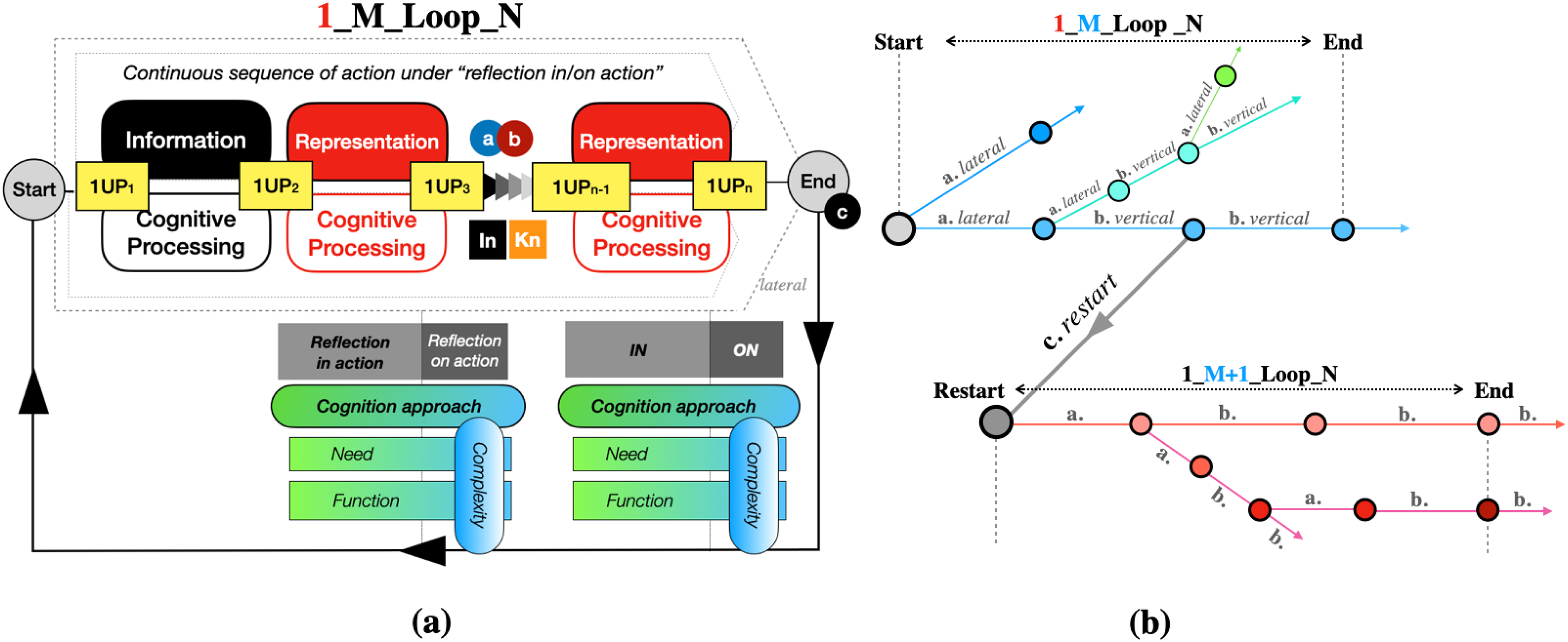
The integrated sketching activity model for the investigative stage, composed of UDA units and the generic sketch taxonomy embedded with the reflection in action/on action framework. (a) A loop in the investigative stage represented by the progression of the model through the combination of UDA units. (b) A tree diagram illustrating the three possible options when UDA units are updated and generate a new UP.
Comprehensive Stage-based Scenario Analysis
This section presents a systematic scenario analysis across all four stages of our integrated model. Each stage involves different combinations of information action, knowledge sharing action, representation action, and corresponding cognitive processing, aligned with Goel's cognitive approach classifications. Beyond the basic lateral (a) and vertical (b) transformations, we also consider iterative cognitive transformations during significant directional changes, using loops as fundamental units for iteration. When designers determine a need to change their current investigation or exploration direction, a ‘restart’ mechanism (c) triggers, initiating a new loop.
Investigation Stage Analysis
For our scenario analysis, we selected a challenging design task: “ Smartphone brand and model analysis Basic camera parameters evaluation Camera selling points investigation
As illustrated in Figure 6, multiple UDA units combine to progress the investigation activity through these parameters. Figure 6(a) provides a detailed visualization of how the integrated model advances through investigation stage activities, with each UDA unit incorporating reflection frameworks and parameter classifications. Figure 6(b) presents a simplified tree diagram showing how the three forms of cognitive transformation (a, b, c) manifest in the design process.
Table 5 provides a detailed breakdown of the investigation stage simulation steps. The analysis reveals a complex interweaving of information action and representation action. Each step in the sequence contributes to uncertainty perception progression, though quantifying this iterative cross-process presents challenges. We observe these activities through combinations like “A and B,” “C and D,” and “E and F,” where information gathering and visual representation continuously inform each other.
Simulated Scenario Analysis Steps and Detailed Description in the Investigative Stage (Consistent with ‘1_1_Loop_N’).

This interrelationship is evidenced in Figures 7 and 8, which show the actual sketches produced during the investigation stage. Figure 7 presents level 1 complexity sketches documenting initial market research data, while Figure 8 demonstrates how more detailed investigations utilized multiple complexity levels (1, 2) to capture and analyze specific design parameters.
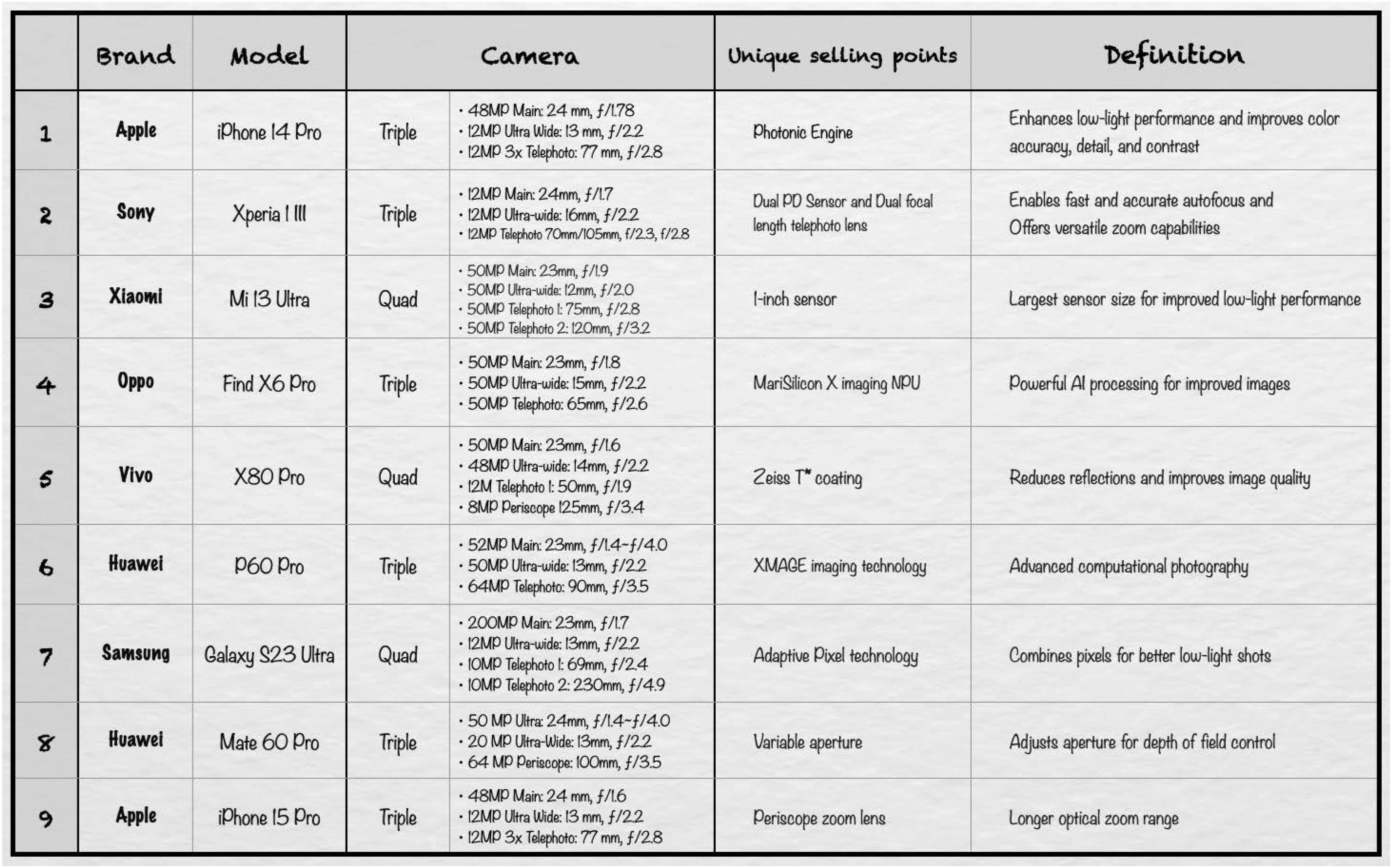
Level 1 sketch samples obtained from the design investigation task, involving the intertwined iterative process of ‘information action’ and ‘sketching’ in A and B, as outlined in the simulated scenario of Table 6.
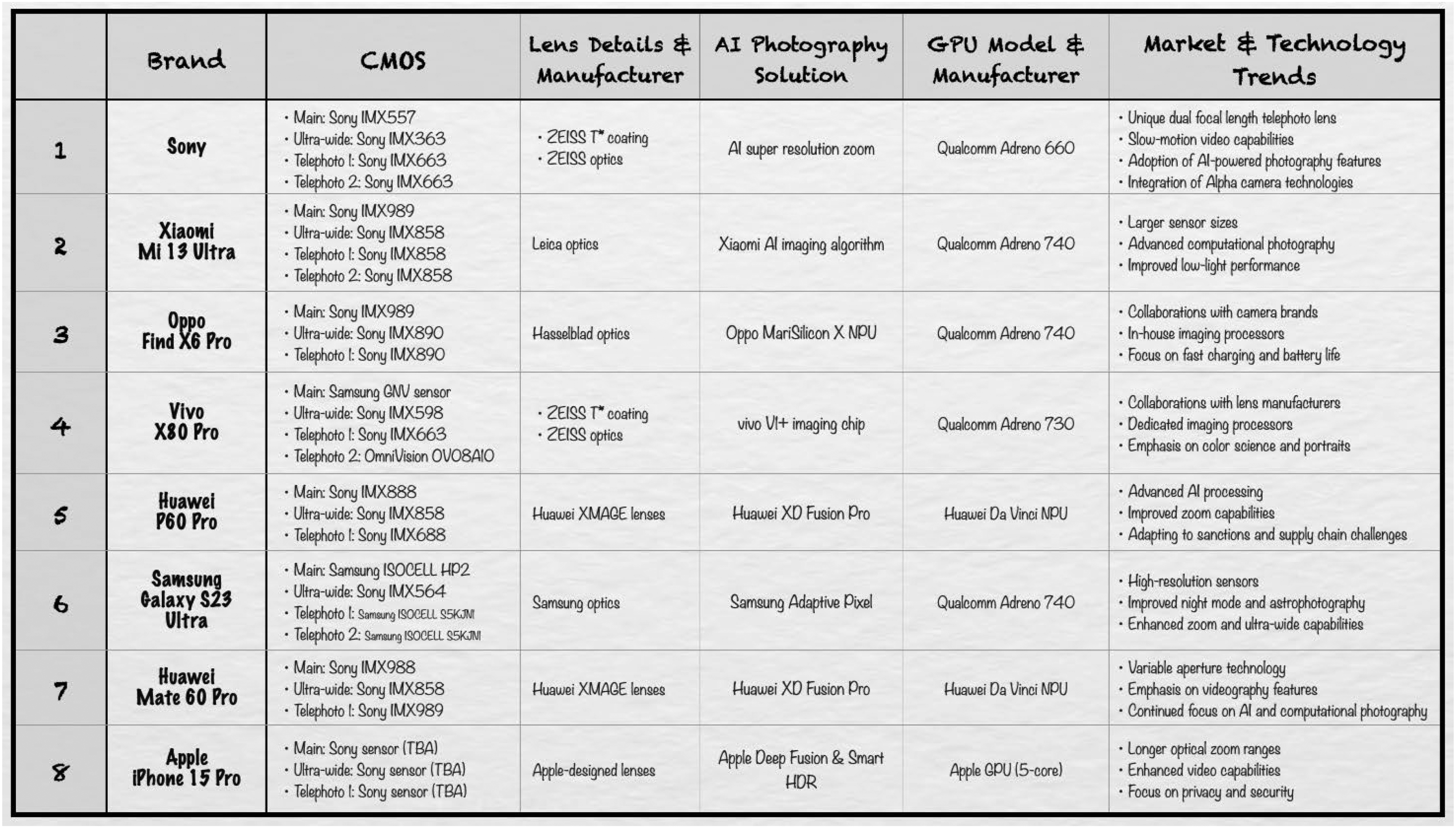
Level 1 sketch samples obtained from the design investigation task, involving the intertwined iterative process of ‘information action’ and ‘sketching’ in C and D, as outlined in the simulated scenario of Table 6.
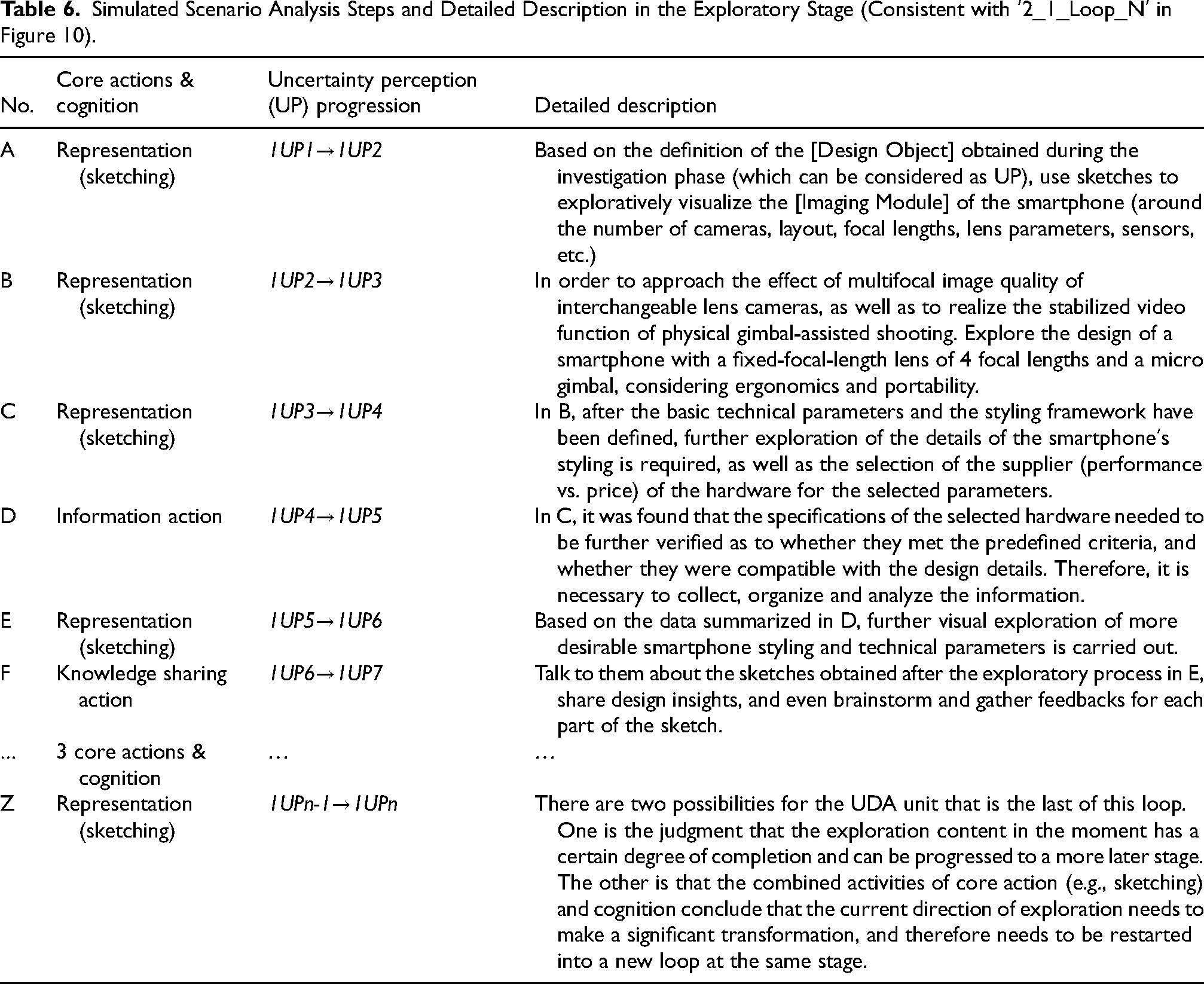
Simulated Scenario Analysis Steps and Detailed Description in the Exploratory Stage (Consistent with ‘2_1_Loop_N’ in Figure 10).
Exploration Stage Analysis
The exploration stage represents a crucial transition in the design process, where designers utilize the UPs obtained from investigation loops to engage in active design development. Unlike the investigation stage's focus on data gathering, this stage prioritizes sketching as a primary form of representation action, emphasizing creative development and solution generation.
The analysis reveals that exploration activities concentrate on three interconnected aspects of design development:
Camera module design development, including technical specifications, physical configuration, and integration considerations Basic and unique feature exploration, focusing on both fundamental functionality and distinctive capabilities Overall design detail refinement, addressing both aesthetic and practical considerations
Figure 9 provides a comprehensive visualization of how sketches facilitate this exploration process through systematic combinations of UDA units. The progression through steps A to F, as detailed in Table 6, demonstrates an evolving approach to design development. This progression begins with initial concept exploration (Steps A and B), moves through technical verification and refinement (Steps C and D), and culminates in detailed design development and collaborative evaluation (Steps E and F).
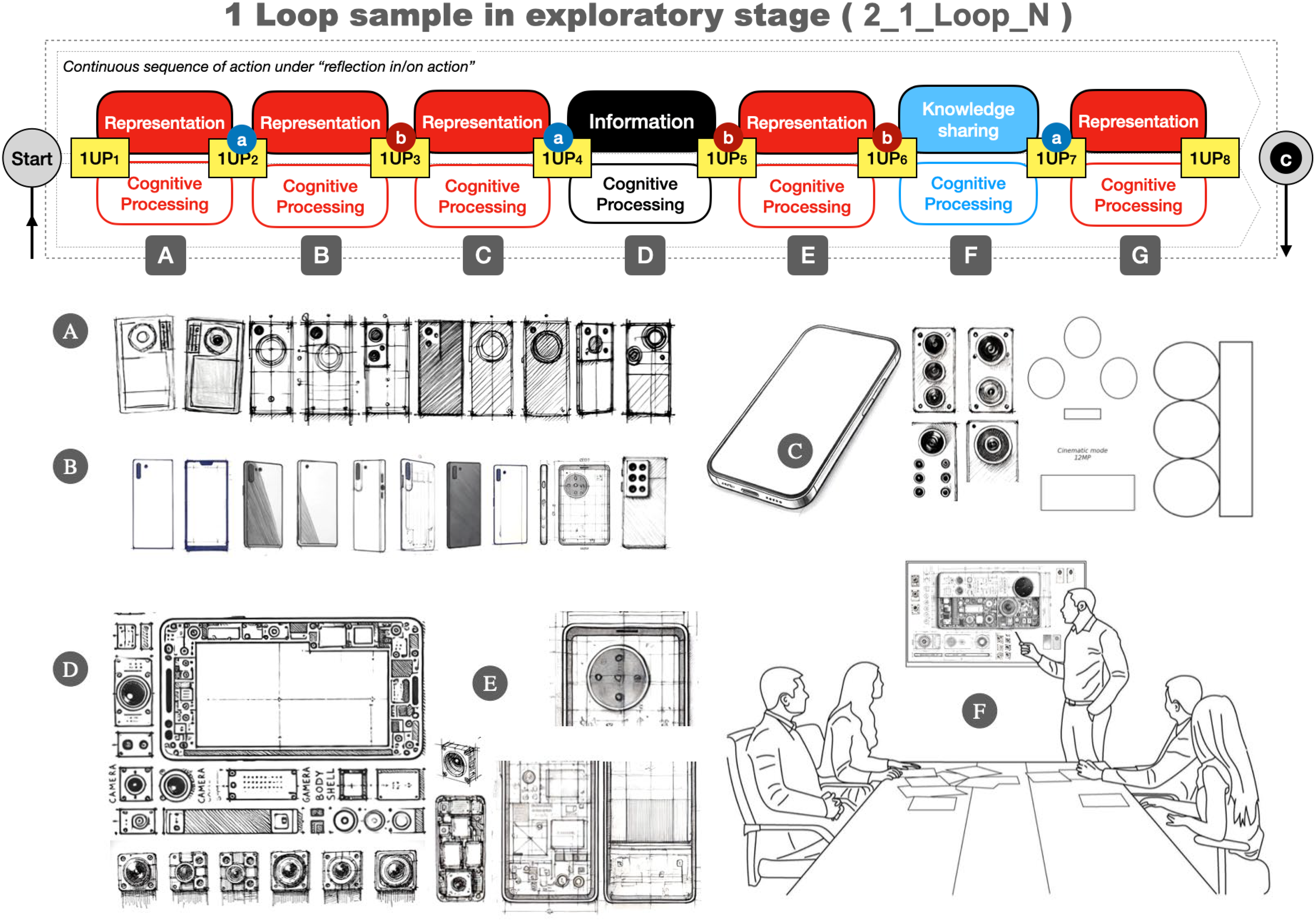
One loop sample and corresponding sketches with level 2, 3, and 4 in the exploratory stage. (a: lateral transformation; b: vertical transformation; c: restart transformation).
A critical distinction from the investigation stage emerges in the nature of sketching activities. While both stages involve cycles of information and representation actions, their fundamental purposes differ significantly. Investigation stage sketches primarily serve to record and organize collected data, whereas exploration stage sketches actively generate, develop, and refine design solutions. This shift is reflected in the increasing complexity and sophistication of sketches, progressing from quick conceptual explorations to more detailed design propositions.
Figure 9 further illustrates this evolution through actual sketch examples, showing how designers move from initial rough concepts to more refined proposals. The sketches demonstrate both lateral transformations (exploring different design alternatives) and vertical transformations (developing specific concepts in greater detail). This dual approach to transformation allows designers to maintain both breadth and depth in their exploration process.
Explanation Stage Analysis
The explanation stage introduces a significant shift in sketching purpose, focusing on communicating design solutions to stakeholders. During this stage, designers present the latest UPs - visualized exploration solutions - to gather diverse feedback and evaluate potential iterations or further development needs.
This stage primarily involves knowledge sharing actions, though sporadic information and representation actions may occur during the explanation process. A key characteristic of this stage is that loop conclusion criteria differ from previous stages. Rather than being determined solely by significant transformations (c: restart), loops may conclude when substantial deficiencies in explanation content are identified through feedback or accumulated UPs.
Figure 10 demonstrates how the explanation process unfolds, showing the progression from step A in Figure 10 through various stages of refinement and modification based on stakeholder feedback. The sketches in this stage typically maintain higher complexity levels (2 through 3) to ensure clear communication of design intent while retaining enough flexibility for potential modifications.
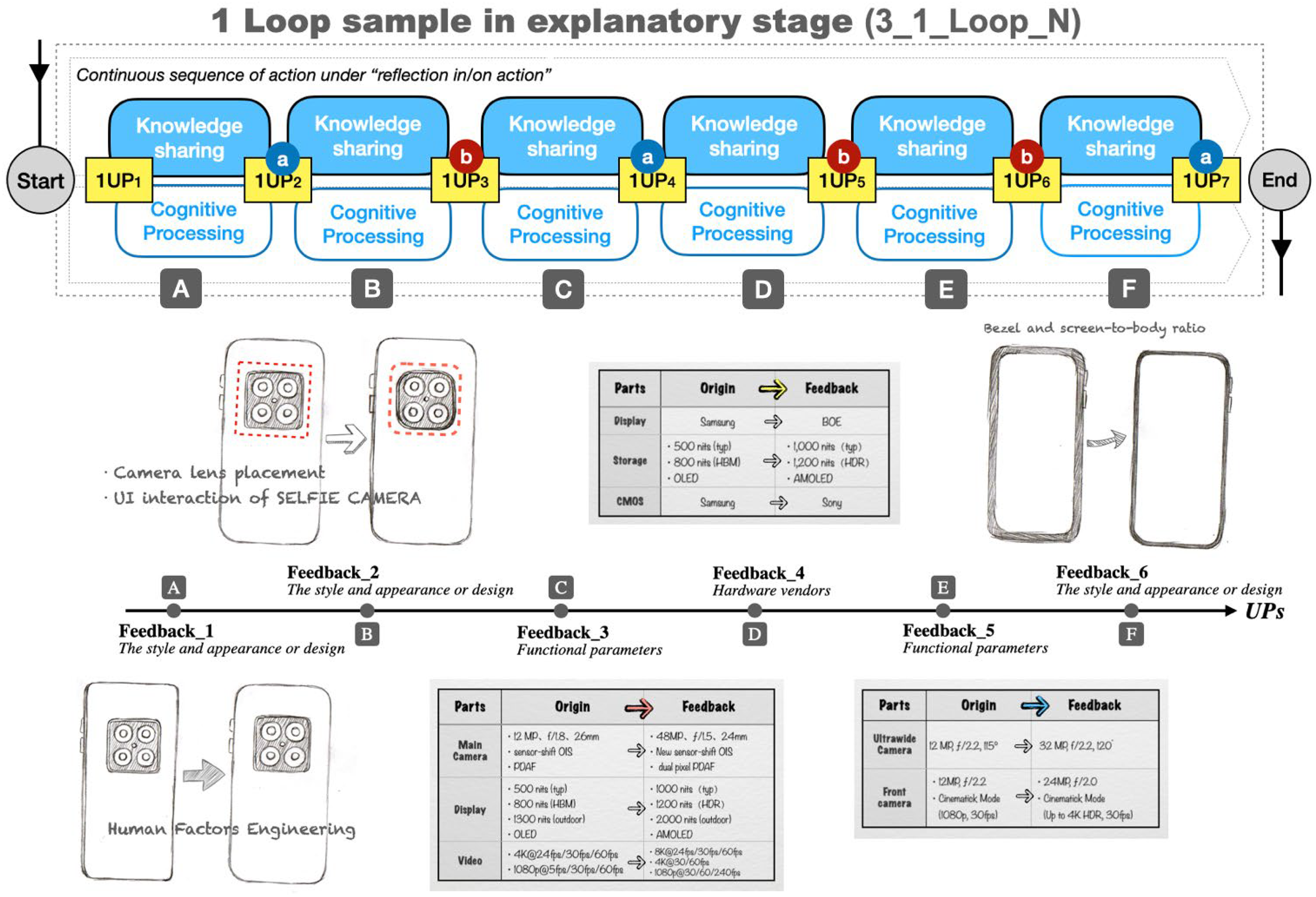
One loop sample and corresponding sketches with level 1, 2, and 3 in the explanatory stage. (a: lateral transformation; b: vertical transformation).
Persuasion Stage Analysis
The persuasion stage represents the culmination of multiple iterative cycles of investigation, exploration, and explanation. At this point, the design solution has undergone sufficient refinement and validation to warrant presentation to broader stakeholder groups for implementation consideration.
This stage mirrors the explanation stage's emphasis on knowledge sharing actions but typically demands higher fidelity representations. Sketches at this stage often reach complexity levels 3 through 5, reflecting the need for more polished and convincing presentations. The feedback received during this stage tends to focus more on market and implementation considerations rather than conceptual development.
While the basic progression of UDA units follows patterns similar to the explanation stage, the persuasion stage's sketches must achieve a delicate balance between presenting finished concepts and maintaining enough flexibility to accommodate potential final adjustments based on stakeholder input.
Natural Observation Study Design
Building on the scenario analysis findings, we conducted systematic observations of designers’ natural sketching behaviors. This empirical validation phase utilized the experimental setup and participant data collection process illustrated in Figure 11, which shows the controlled, yet authentic design environment established for observation.
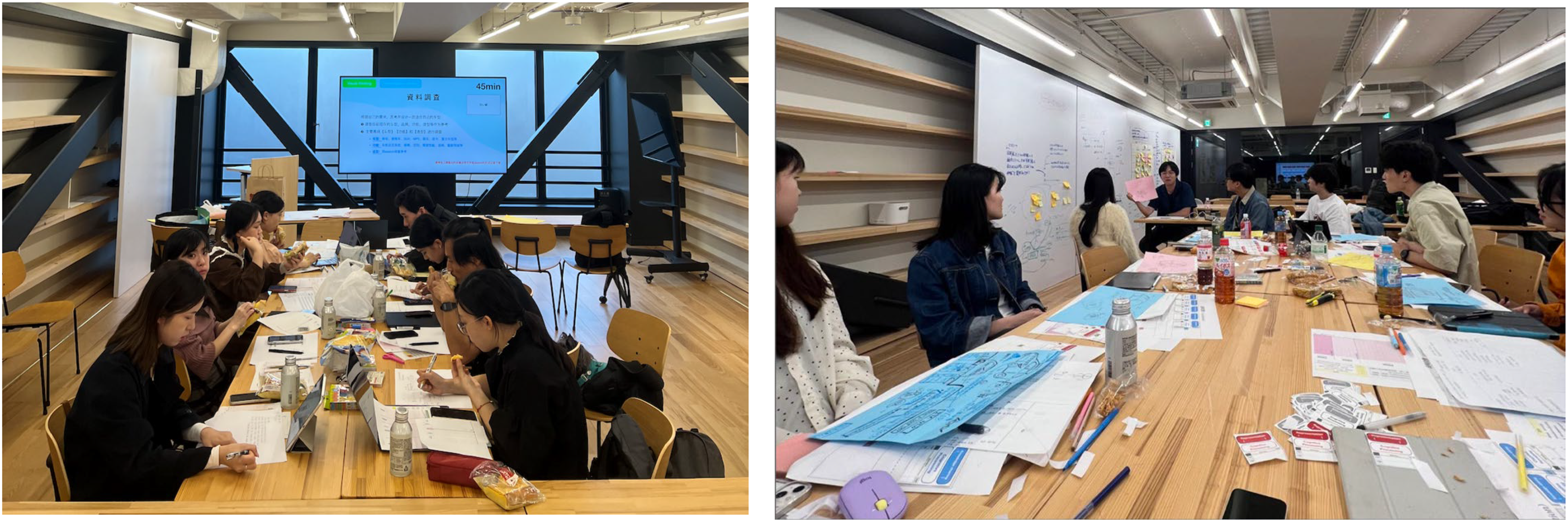
Experimental environment setup and participants’ working states. (Left: personal work during the investigation stage; Right: team presentation during the persuasion stage).
Research Setting and Participants
The natural observation study was conducted at Musashino Art University's Ichigaya Campus, Room 504. Twenty-one design students (aged 20-30) participated in the study. All participants were currently enrolled in design-related programs and possessed basic design skills. The observation environment was carefully controlled to ensure standardized conditions while maintaining ecological validity:
Individual workstations with adequate space Standardized lighting conditions Temperature-controlled environment Complete set of design materials provided
Task Structure and Protocol
The experimental protocol was carefully structured to capture authentic design behaviors while maintaining standardized conditions. The five-hour design task was divided into four distinct stages, each with specific objectives and documentation requirements. During the investigation stage, participants were tasked with conducting market research, analyzing existing vehicle types and functions, and documenting their findings using appropriate sketching methods. This stage was intentionally structured to allow participants to establish their own research priorities while maintaining consistent time constraints.
The creative exploration stage focused on concept development and visual expression of design ideas. Participants were encouraged to explore multiple design directions while documenting their thought processes through sketching. This stage was particularly crucial for observing how designers naturally transition between different levels of sketch complexity as they develop their concepts.
In the concept explanation stage, participants engaged in small group discussions organized in rotational format. Each participant had multiple opportunities to present their design concepts (5 minutes presentation, 5 minutes Q&A), followed by collection of peer feedback. This structured interaction provided valuable data on how designers adapt their sketching approaches when communicating with others.
The final persuasion stage required participants to present their refined solutions to the entire group, with standardized presentation time (3 minutes per person) and formal evaluation procedures. This stage was designed to observe how designers naturally elevate their sketch complexity when focusing on persuasive communication.
Data Collection Methods
A comprehensive data collection strategy was implemented to capture both behavioral patterns and cognitive processes. The cornerstone of our observation protocol was a systematic behavior recording system utilizing 5-minute intervals. This time-stamped documentation allowed us to track the natural progression of sketching activities while minimizing interference with the design process. Participants were provided with standardized recording templates that facilitated consistent documentation without imposing artificial constraints on their design process.
Uncertainty perception was measured using a carefully designed 10-level rating scale, where 1 represented minimal uncertainty and 10 indicated maximum uncertainty. This scale was supplemented with specific subcategories examining different aspects of uncertainty (technological, market, process, and organizational). Participants completed these ratings at critical transition points in their design process, providing granular data on how uncertainty perception evolves during design activities.
Stage-specific questionnaires were administered at the conclusion of each design phase. These instruments were designed to capture both quantitative metrics and qualitative insights about participants’ design strategies and decision-making processes. The investigation stage questionnaire focused on information gathering approaches, while the exploration stage assessment examined concept development strategies. Explanation stage surveys captured communication effectiveness, and persuasion stage evaluations measured the perceived impact of different presentation approaches.
Sketch complexity analysis was conducted using a standardized evaluation framework (5 levels of complexity proposed by Goel), examining multiple dimensions, including detail level, annotation usage, and visual communication techniques. This analysis was performed on all sketches produced during the experiment, with particular attention to transitions between complexity levels. The evaluation criteria were based on established taxonomies while incorporating specific metrics relevant to uncertainty management and design progression.
Analysis Framework
The analysis of natural observation data was structured to systematically validate the model's theoretical predictions while capturing emergent behavioral patterns. As illustrated in Figure KK1, the experimental environment was carefully designed to enable detailed observation while maintaining ecological validity. Each participant's workspace was equipped with standardized materials and recording tools, ensuring consistent data collection across all sessions.
Our analysis framework incorporated both qualitative observations and quantitative measurements. Table 7 presents the comprehensive distribution statistics of sketch levels across different design stages, revealing clear patterns in how designers naturally progress through varying levels of complexity. This progression was particularly evident in the transition from investigation (100% Level 1 usage) to exploration stages (95% Level 2 adoption), demonstrating the natural evolution of sketching behavior as design requirements change.
Usage Distribution Statistics of Sketch Levels Across Stages.

Uncertainty perception data, detailed in Table 8, showed significant correlations with sketching behavior across different design stages. The temporal analysis of these correlations revealed peak relationships during the exploration stage
Correlation Analysis of Uncertainty and Anxiety at Each Time Point.

These empirical findings provide strong validation for our comprehensive sketching activity model while revealing nuanced patterns in how designers naturally structure their sketching activities. The observed progression in sketch complexity aligns with the model's theoretical predictions while offering new insights into the dynamic relationship between uncertainty management and sketching behavior in authentic design contexts.
Further analysis at the individual level revealed important nuances in how designers manage uncertainty through sketching (see Table 9). Among the 21 participants, five demonstrated statistically significant correlations between their uncertainty and anxiety levels (p < 0.05). Notably, participant P16 exhibited the strongest correlation (r = 0.992, p < 0.01), showing nearly perfect synchronization between uncertainty reduction and anxiety decrease. Their uncertainty levels systematically declined from 10 to 3 as they progressed through design stages, with corresponding changes in sketching behavior.
Correlation Analysis of Individual Uncertainty and Anxiety.

Note: p < 0.05, p < 0.01.
This individual-level analysis revealed three distinct patterns in uncertainty management:
Highly synchronized group (|r| > 0.9, nine participants): Demonstrated strong consistency between uncertainty changes and sketching behavior Moderately synchronized group (0.6 < |r| < 0.9, seven participants): Showed clear but less rigid patterns Weakly correlated group (|r| < 0.6, five participants): Exhibited more variable relationships between uncertainty and sketching behavior
These findings suggest that while the relationship between uncertainty management and sketching behavior is robust at the group level, individual designers may employ different strategies for managing uncertainty through sketching. This variation in individual approaches has important implications for developing targeted support strategies in design education.
Discussion and Theoretical Implications
The empirical validation of our comprehensive sketching activity model through multiple complementary methods has revealed important insights about how designers naturally employ sketching to manage uncertainty in the design process. The integration of scenario analysis with natural observation data provides a more complete understanding of sketching behavior than either method could achieve alone.
Our findings demonstrate that designers exhibit consistent patterns in their progression through different levels of sketch complexity, with this progression closely tied to uncertainty management strategies. The strong correlation between uncertainty levels and sketching behavior (F = 47.26, p < 0.001, η²p = 0.703) suggests that sketching serves as a crucial tool for managing design uncertainty. This relationship appears particularly significant during the exploration stage, where the correlation reaches its peak (r = 0.792, p = 0.0052), indicating that this may be a critical period for addressing sketch inhibition symptoms.
The natural observation data revealed that designers intuitively adjust their sketching approaches to match the cognitive demands of different design stages. This finding validates our theoretical framework while providing new insights into how sketching activities can be effectively supported in design education. The consistent patterns in sketch complexity progression, as shown in Table 8, suggest that designers naturally align their sketching strategies with stage-specific requirements.
Discussion
This study's systematic investigation of sketching activities in design has yielded significant insights through multiple complementary research approaches. Our findings both validate theoretical frameworks and reveal important patterns in how designers naturally employ sketching to manage uncertainty and support design thinking.
Addressing our first research question, our systematic literature review revealed both the richness and fragmentation of existing research on sketching in design. While previous studies have made valuable contributions to understanding specific aspects of sketching behavior, the integration of these perspectives into a cohesive framework has remained a significant challenge. Our analysis identified key theoretical components that could be effectively combined to create a more comprehensive understanding of sketching activities.
Regarding the second research question, the development of our prototype model demonstrated the importance of careful integration of multiple theoretical perspectives. The combination of the UDA model's uncertainty management framework with established sketching taxonomies provided a robust foundation for understanding how designers structure their sketching activities. This integration process revealed important synergies between different theoretical approaches while highlighting areas requiring further development.
The third research question focused on validation methodology. Our multi-method approach, combining scenario analysis with natural observation, proved particularly effective in examining both theoretical predictions and actual design practices. The scenario analysis provided systematic validation of theoretical frameworks, while natural observation revealed nuanced patterns in how designers actually employ sketching in practice. This complementary approach enabled us to identify both consistent patterns and individual variations in sketching behavior.
Concerning the fourth research question, our observational data revealed significant correlations between uncertainty perception and sketching behavior. The peak correlation during exploration stages suggests critical periods for uncertainty management through sketching activities. These findings provide important insights into how designers naturally adapt their sketching strategies to manage uncertainty and overcome inhibition.
Finally, addressing our fifth research question, the empirical findings suggest several promising directions for supporting design education and managing sketch inhibition. The observed patterns in sketch complexity progression across design stages provide a foundation for developing structured support strategies, while the identified relationships between uncertainty management and sketching behavior offer new approaches for addressing sketch inhibition.
Research Limitations and Critical Reflections
The limitations of this study warrant careful consideration for both interpreting current findings and planning future research. First, while our sample size of 21 participants provided sufficient data for statistical analysis, the relatively homogeneous background of participants (all design students aged 20-30) limits the generalizability of our findings. The specific educational context and skill levels of participants may have influenced their sketching behaviors and uncertainty management strategies in ways that might not apply to more experienced designers or those from different design disciplines.
The time constraints of our experimental tasks (5-hour sessions) represent another significant limitation. While this duration allowed for systematic observation of complete design cycles, it may not fully capture the complexity of longer-term design projects where sketching strategies might evolve differently. Additionally, the structured nature of our observation protocol, while necessary for systematic data collection, may have influenced participants’ natural behaviors despite our efforts to maintain ecological validity.
The presence of observers and recording equipment, though necessary for data collection, potentially introduced observer effects that could have influenced participants’ sketching behaviors. While we implemented measures to minimize these effects, such as maintaining consistent distance and using unobtrusive recording methods, the impact of observation on participant behavior cannot be completely eliminated.
Furthermore, our focus on automotive design tasks, while providing a consistent context for comparison, may limit the applicability of our findings to other design domains. Different design disciplines may involve unique sketching requirements and uncertainty management strategies that our current framework does not fully address.
Conclusion and Future Directions
This research makes several significant contributions to our understanding of sketching in design through its systematic integration of theoretical development and empirical validation. By combining multiple complementary research methods, we have developed and validated a comprehensive framework for understanding how designers naturally employ sketching to manage uncertainty and support design thinking.
Theoretical Contributions
The systematic review and integration of existing literature has helped bridge previously fragmented perspectives on sketching in design. Our theoretical framework successfully combines insights from multiple domains, including cognition, uncertainty management, and design process models, providing a more complete understanding of sketching activities. This integration addresses a significant gap in design research by establishing clear connections between uncertainty management, sketching behavior, and sketch inhibition.
Empirical Validation and Insights
The multi-method validation approach has provided robust empirical evidence for how designers naturally structure their sketching activities. The combination of scenario analysis with natural observation revealed both consistent patterns and individual variations in sketching behavior, offering insights that would not have been apparent through single-method approaches. The strong correlations between uncertainty perception and sketching behavior suggest promising directions for addressing sketch inhibition through targeted support strategies.
Practical Implications
Our findings have significant implications for design education and practice. The validated framework provides a foundation for developing more effective teaching strategies and support tools, particularly in addressing sketch inhibition symptoms. Understanding the relationship between uncertainty management and sketching behavior offers new approaches for supporting core design skill development while acknowledging the challenges posed by emerging technologies.
Future Research Directions
Several promising directions for future research emerge from this study:
Future research should examine how sketching strategies evolve over longer time periods, particularly tracking the development of expertise and the long-term effectiveness of different support strategies. Extending this research across different design disciplines would help validate the framework's generalizability while identifying discipline-specific adaptations that might be necessary. Development and testing of targeted educational interventions based on our empirical findings, particularly focusing on uncertainty management strategies during critical design phases. Investigation of how digital tools can be effectively integrated with traditional sketching practices while maintaining the essential benefits of sketching for uncertainty management. More detailed examination of how individual differences in uncertainty perception and management affect sketching strategies and sketch inhibition symptoms.
Final Reflections
As design education continues to evolve in response to technological changes, understanding the fundamental relationships between uncertainty management, sketching behavior, and design thinking becomes increasingly crucial. This research provides both theoretical frameworks and empirical evidence to support the development of more effective approaches to design education and practice. While acknowledging the limitations of our current study, the findings offer valuable insights and directions for future research in supporting core design skills development in contemporary practice.
The integration of multiple theoretical perspectives with robust empirical validation represents a significant step forward in understanding sketching activities in design. As we continue to face new challenges in design education and practice, this comprehensive framework provides a foundation for developing more effective approaches to supporting designers’ core skills while addressing the evolving needs of contemporary design practice.
Footnotes
Acknowledgments
The authors thank all participants in this study.