




Abstract
As a normative and ubiquitous nuisance in the service industry, customer mistreatment has received extensive attention for its profound impacts on front-line employees’ (FLEs) lagged reactions. Drawing upon the Conservation of Resources theory, our results of multilevel path analysis reveal that FLEs encountering daily customer mistreatment experience poor nightly sleep quality, which in turn drives them away from next-day customer-oriented prosocial behavior. These predictions are further contingent upon the levels of service rule commitment, defined as FLEs’ commitment to organizational service rules. In Study 2 and Study 3, we replicate the findings of Study 1 and expand the range of outcomes to cast FLEs’ turnover intention as another consequence triggered by customer mistreatment on the previous day. Furthermore, we incorporate optimal rule control and empathetic leadership into our analyses to propose the three-way interactions. The results unpack that the aggravating effect of high service rule commitment on the relationship between customer mistreatment and nightly sleep quality is buffered when rule control is optimal or when empathetic leadership is high. Taken together, our findings uncover the spillover-depleting effects of daily customer mistreatment and how the strength of such process is bound by personal and contextual factors.
Keywords
In the service-based economy context, customer service, which is closely related to customer satisfaction (Simillidou et al. 2020) and loyalty (Wang et al. 2015), is of great significance in the service industry, where front-line employees (FLEs) and customers engage in multiple interactions (Aslan and Kozak 2012). As captured by the very nature of the service industry—“always appease and please customers” (Baker and Kim 2021)—rights and power are unequally distributed between customers and FLEs, leading to the frequent emergence of customer mistreatment (Kern and Grandey 2009).
Customer mistreatment, which refers to the unfair and low-quality treatment of FLEs by customers (Wang et al. 2011), has been found to be distinct from other established variables in the Customer from Hell literature (Yang, Lu, and Huang 2020). In comparison to customer aggression, for example, customer mistreatment has broader and more diverse connotations (Goussinsky 2011). Customer incivility is also similar to, but conceptually different from, customer mistreatment, which underscores the vaguer intent and lower intensity to indirectly harm targets (Hershcovis 2011). Previous research illustrated that customer aggression and customer incivility represent two forms of customer mistreatment, producing similar effects but having ramifications for different strengths (Sommovigo et al. 2020). The similarities and differences among these constructs are summarized in Supplemental Materials 3 in Web Appendix To reflect the context for our study where FLEs are stuck in a wide variety of harmful acts, we dig into customer mistreatment, a comprehensive and extensive scope, as opposed to other narrower constructs.
As a prevalent phenomenon and an intractable challenge for service managers (Kern and Grandey 2009), customer mistreatment has afflicted almost 82% of FLEs (Harris and Reynolds 2003). Broadly deemed a workplace stressor (Park and Kim 2019), customer mistreatment is highly harmful and threatening to individuals’ resources on a daily basis (Yang, Lu, and Huang 2020). According to the Conservation of Resources (COR) theory, both potential and actual resource loss can lead to the escalation of tension (Mackey, Perrewe, and McAllister 2016). The resultant tension and resource impairment reduce FLEs’ ability to control or alter occurring mental states (Sonnentag and Binnewies 2013), leading to negative physiological activation (Park and Kim 2020).
Indeed, when FLEs are subjected to customer mistreatment, the prolonged harmful effects can extend to the personal life domain (Wang et al. 2013). Sleep quality has been demonstrated to be a daily resource-restorative process (Schilpzand, Houston, and Cho 2017). Therefore, given its important role in the non-work domain, sleep quality attracts significant attention from scholars. On days when FLEs miss out on full rejuvenation the previous night, which enables their brains to recover, the subsequent insufficiency of resources reduces FLEs’ tendency to go beyond normal job requirements (Chen, Zhu, and Zhou 2015) and take initiative (Judge et al. 2007) the next day, which finally results in the emergence of customer-oriented prosocial behavior (COPB) being suppressed.
However, the negative manifestation caused by customer mistreatment during a certain day is not always uniform in all scenarios. In service settings, service rules specified by organizations to satisfy customers are commonplace, such as requiring service with a smile (Wang et al. 2013). Such “script of required behaviors” serves as a standard for FLEs to express and maintain appropriate actions and emotions (Baker and Magnini 2016), even if customers violate interaction norms (Liu, Chen, and Liu 2020). When confronted with daily customer mistreatment, FLEs with higher service rule commitment (SRC) are more likely to maintain their actions in accordance with rules (Wang et al. 2011), which compounds the deleterious effects of customer mistreatment.
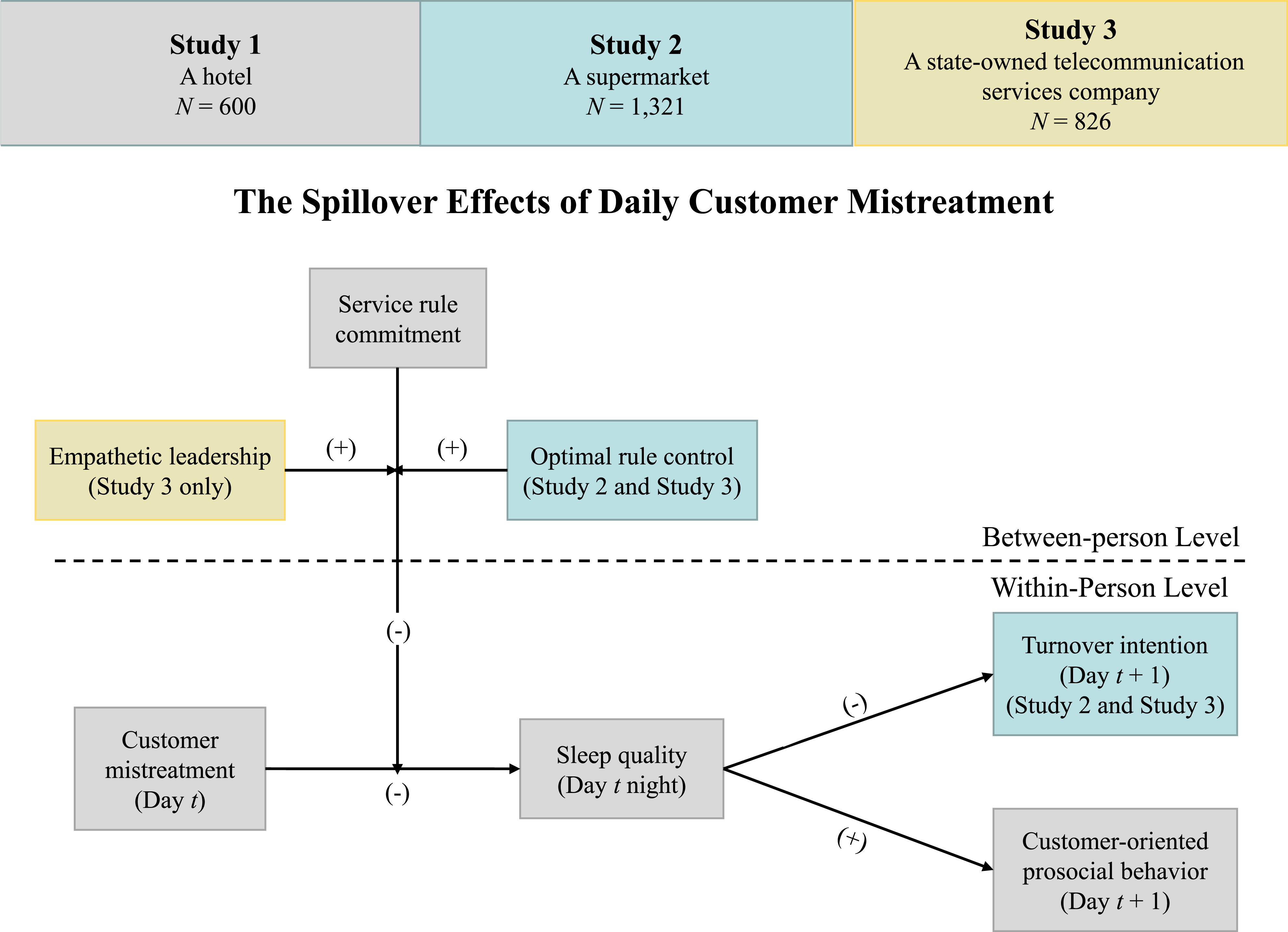
In the current study, we attempt to make three significant theoretical contributions. First, we identify sleep quality as a crucial resource-restorative process to explicate how daily customer mistreatment in the workplace poses a threat to FLEs’ COPB the next day. Second, we examine SRC as a key boundary condition, explicitly revealing why FLEs with more intentions to abide by service rules are more difficult to escape from adverse psychological states activated by customer mistreatment. Third, we also contribute to the knowledge about sleep quality by casting customer mistreatment as a key but until now ignored antecedent. We believe our research is poised to offer insights into coping with customer mistreatment for service organizations. Figure 1 depicts our theoretical model. Theoretical model of the current study. Note. Day t – 1’s sleep quality, Day t’s COPB, Day t’s turnover intention, Day t’s sleep quantity, Day t’s anxiety, and Day t’s state affect are control variables at the between-person level, general self-efficacy is the control variable at the between-person level.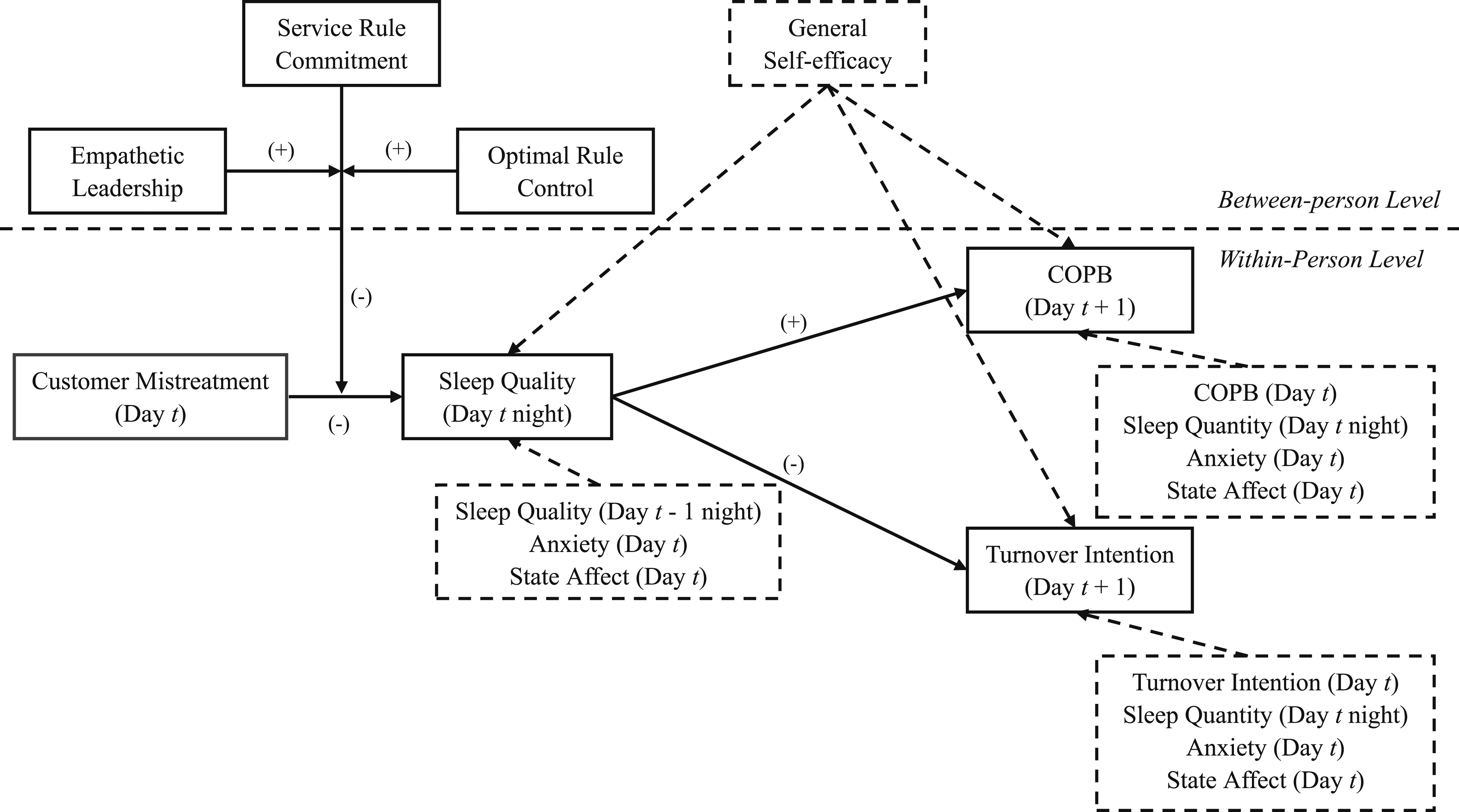
Literature Review and Hypotheses
Previous Empirical Research on Customer Mistreatment
The key details of the pertinent empirical research on customer mistreatment are summarized in Supplemental Material 1 in Web Appendix. Extrapolating from these earlier findings, investigations into the psychology-based mechanisms (e.g., negative mood and rumination; Song et al. 2017) are dominant explanations accounting for how customer mistreatment matters in its downstream consequences. However, attention should be shifted away from generalized psychological responses to focus on ignored physical health. The potent reasons lie in the fact that physical health presents not only a complementary lens to FLEs’ welfare, but is also a necessity for positive functioning in the workplace. Following the call of the National Institutes of Health for greater exploration of the impact of job-related stressors on sleep quality (Knudsen, Ducharme, and Roman 2007), it is imperative to examine whether sleep quality, an important proxy of health, channels the detrimental effects of customer mistreatment to FLEs’ next-day behaviors.
Customer Mistreatment, Sleep Quality, and COPB
Customer mistreatment can manifest in two types, namely, aggressive mistreatment and demanding mistreatment (Zhan, Wang, and Shi 2013). Aggressive mistreatment is instigated when FLEs are treated in interpersonally offensive manners (Zhan, Wang, and Shi 2013). For example, they typically suffer verbal abuse and disrespectful behavior. Such aggression violates standards of interpersonal norms (Garcia et al. 2018) and derogates FLEs’ status and dignity (Skarlicki, van Jaarsveld, and Walker 2008), which can leave them perceiving a greater sense of tension (e.g., inferior, uncomfortable, and self-doubt; Davidson, Zisook, and Giller 1989). The other type is demanding mistreatment, such as making unreasonable demands (Wang et al. 2011), urging service progress, and bargaining. These job-related demands drive FLEs to continuously consume resources to cope with additional requirements (Nauman, Malik, and Jalil 2019; Wang et al. 2011). Logically, then, when returning home with tension and resource impairment, FLEs would be prone to persistently ponder on unpleasant and tiring work-related matters that occurred during the day (Sonnentag and Binnewies 2013). This can cause sleep-related problems by prolonging negative physiological activation during the sleep stage (Brosschot, Gerin, and Thayer 2006), such as disordering endocrine activities as well as slowing down cortisol and cardiovascular recovery (Brosschot, Verkuil, and Thayer 2010). Thus, daily customer mistreatment undermines FLEs’ sleep quality at night, which captures one’s sleep sufficiency by evaluating the ease of falling asleep, maintaining sleep, and experiencing restorative sleep (Harvey et al. 2008).
Daily customer mistreatment is negatively related to daily sleep quality.
Good-quality sleep enables FLEs to be fully reinvigorated as it stabilizes the cerebral metabolic rate and ensures adequate energy supply to the prefrontal cortex (Schilpzand, Houston, and Cho 2017). This notion provides strong support for the link between good-quality sleep and FLEs’ next-day positive states (Williamson, et al. 2019), which has been observed to motivate prosocial behaviors (George 1991). In fact, previous research has shown that FLEs with positive states, such as positive moods, are likely to recall pleasant information and experience, stimulating them to engage in prosocial and altruistic actions (Brief and Motowidlo 1986). Hence, these FLEs are prone to display more spontaneity and initiative to take better care of customers’ requests, which contributes to COPB. On the other hand, impaired sleep undermines brain function, including attention, divergent thinking (Harrison and Horne 1999), and coping capacity (Liu et al. 2017). Along this line, poor sleep quality makes FLEs present the psychological experience of exhaustion (Diestel, Rivkin, and Schmidt 2015) and are more vulnerable to distractions (Kuhnel, Bledow, and Feuerhahn 2016). Thus, FLEs are difficult to satisfy customers’ changing demands (Diestel, Rivkin, and Schmidt 2015) and go beyond normal job requirements, all of which are indicators of COPB (Chen, Zhu, and Zhou 2015). In addition, given poor-quality sleep hampers the adequate replenishment of depleted resources, it follows that resource depletion tends to persist and perpetuate itself until the next workday (Williamson, et al. 2019). Based on the COR theory, resource-depleting individuals are motivated to conserve remaining resources to refrain from additional resource loss (Hobfoll 2001). Accordingly, instead of taking on such additional work, these overwhelmed FLEs may intentionally withdraw their COPB to prevent expending resources. Taken together, we expect a positive association between FLEs’ nightly sleep quality and their next-day COPB.
Daily sleep quality is positively related to next-day COPB.
As noted above, we consider FLEs’ sleep quality as a bridge between daily customer mistreatment and next-day COPB. Consistent with COR theory, when FLEs encounter customer mistreatment, they are likely to experience resource consumption and tension, which can spill over to the home domain and contribute to sleep problems. Since sleep of inferior quality impedes the halting of resource depletion and rebuilding of internal energy (Sonnentag and Guerts 2009), their COPB might be discouraged.
In our current study, we kept our eye on the process of Day t’s customer mistreatment—Day t’s sleep quality at night—Day t + 1’s COPB. Two justifications demonstrate that Day t’s sleep quality is a necessary explanatory process. First, a plethora of literature has generally suggested that daily customer mistreatment showed a lagged effect (e.g., Song et al. 2017; Yue, Wang, and Groth 2016). In a single event, FLEs’ reactions to customer mistreatment may be short-lived, but frequent mistreatment episodes in a given workday may lead to accumulated effects at the end of work or subsequent morning (e.g., Park and Kim 2019; Wang et al. 2013). Second, according to COR theory, COPB may be more prone to be suppressed when resources are sufficiently depleted. In agreement with Yue, Wang, and Groth’s (2016) argument, occasional episodes of mistreatment may not deplete resources to the extent that a withdrawal of altruistic actions to conserve resources becomes likely. Hobfoll (2001) proposed that initial resource losses yield more resource losses in the future. The resource losses due to customer mistreatment can be further intensified during poor-quality sleep at night, leading to a new round of resource losses. Therefore, the loss spirals drive FLEs to withhold COPB on Day t + 1 to conserve remaining resources.
Daily sleep quality mediates the relationship between daily customer mistreatment and their COPB the next day.
The Moderating Role of SRC
Service rule commitment captures “the degree to which an employee accepts the service goals assigned by the organization and intends to exert effort toward consistently conforming to these rules under difficult situations” (Wang et al. 2013, p. 992). This differs from related concepts such as employee-company identification and internalization. The distinctions arise because: (a) SRC is directed at FLEs’ compliance with organizational norms, while the other two constructs respectively highlight person-organization congruence in attributes and values (Delobbe and Vandenberghe 2000; Gupta 2015), and (b) SRC is examined in service settings rather than general organizational contexts.
On days when receiving customer mistreatment, FLEs who report higher SRC are more inclined to exert effort toward consistently displaying organizationally desired emotions and behaviors (Wang et al. 2011; Wang et al. 2013). As FLEs are more likely to immediately detect a gap between their emotional displays and display rules (Diefendorff and Gosserand 2003), they make an effort to modify their emotions in an attempt to match their organization’s expectations (Gosserand and Diefendorff 2005); for example, they have to treat customers in a professional, friendly, and positive manner (Wang et al. 2011). In a similar vein, when being more bound by organization norms, FLEs with higher SRC devote greater effort to fully meet customers’ unreasonable requests (Gosserand and Diefendorff 2005; Wright and Hobfoll 2004). Indeed, both suppressing actual emotions and satisfying excessive demands would bring heightened tension to FLEs (Chen, Wang, and Shih 2021), amplifying the damaging impact of customer mistreatment on sleep quality.
Conversely, FLEs with lower SRC may tend to abandon what the organization mandates under difficult conditions. Such approach allows them to unwind in a timely fashion from the accumulated tension induced by customers’ interpersonal offenses and decreases their endeavors to reconcile customers’ irrational demands (Hobfoll 2002; Xu, Loi, and Lam 2015). Hence, harms from customer mistreatment may be less threatening towards FLEs with lower SRC, alleviating the adverse impact on nightly sleep quality.
SRC moderates the relationship between daily customer mistreatment and daily sleep quality, such that the negative relationship is stronger when SRC is higher.
Taken together, the above considerations constitute a form of moderated mediation. Specifically, FLEs with higher SRC are more likely to suffer restrictions from organization norms, which worsens the damaging effect on sleep quality caused by customer mistreatment, and thus demotivates them from engaging in COPB. In contrast, lower SRC enables FLEs to deviate from rules to relieve themselves, hindering the emergence of poor-quality sleep and thus alleviating their reluctance to engage in next-day COPB.
SRC moderates the indirect relationship between daily customer mistreatment and next-day COPB through daily sleep quality, such that the indirect relationship is stronger when SRC is higher.
Study 1
Method
Participants and Procedures
Participants were full-time FLEs from a large hotel located in China. Prior to data collection, we explained the purpose and benefits of the research to the hotel managers. As a token of appreciation for participation, we provided a consultation report for the hotel. After obtaining strong support, we applied a time-lagged experience sampling methodology to collect data across two phases through a general paper-and-pencil survey and two daily paper-and-pencil surveys over a period of 10 consecutive workdays (Monday to Friday). We guaranteed that participants’ data would be kept confidential and their responses used only for research purposes. All procedures complied with the American Psychological Association ethics code and were approved by the first author’s business school.
In the first phase, we sent the survey invitations to all FLEs. A total of 126 participants voluntarily took part in the survey, of whom 103 completed questions about SRC and demographics. Two weeks after the first phase of data collection, these participants were asked to report their sleep quality the previous night at the beginning of the workday (daily morning survey, around 8:00 a.m.), and then report their customer mistreatment and COPB at the end of the workday (daily afternoon survey, around 4:50 p.m.). After screening out missing responses and unmatched lagged data, our final sample included 600 matched daily surveys (72.8% response rate) from 83 FLEs (65.9% response rate). Among them, 71.1% were women and their average age was 28.30 years (SD = 5.45).
Measures
We translated the measures from English to Chinese following Brislin’s (1980) translation-back translation procedure. Unless otherwise indicated, all measures used a five-point Likert scale, ranging from “1” (strongly disagree) to “5” (strongly agree), and full items in all studies are presented in Supplemental Material 2 in Web Appendix.
Daily Customer Mistreatment (Day t)
We assessed daily customer mistreatment (α = 0.95) using an eight-item scale adapted from Wang et al.’s (2011) 18-item scale. The original measure was specifically developed to fit call center service situations. Yue, Wang, and Groth (2016) dropped and revised some of the initial items because they were not appropriate for generic service settings. Prior research has verified the scale captures daily customer mistreatment in the Chinese context and showed desirable construct validity and reliability (e.g., Yang, Lu, and Huang 2020).
Daily Sleep Quality (Day t at night)
We assessed daily sleep quality (α = 0.80) using Schilpzand, Houston, and Cho’s (2017) three-item scale. This scale was modified based on Scott and Judge’s (2006) adapted four-item scale and originated from Jenkins et al.’s (1988) work. Then, Schilpzand, Houston, and Cho (2017) delete one item, that is, “woke up after your usual amount of sleep feeling tired and worn out,” which was initially added to facilitate the discriminatory power of an instrument of sleep complaints.
Daily COPB (Day t + 1)
We assessed daily COPB (α = 0.79) using a five-item scale developed by Pelled, Cummings, and Kizilos (2000).
Service Rule Commitment
We assessed SRC (α = 0.90) using Wang et al.’s (2011) five-item scale, which was adapted from Gosserand and Diefendorff’s (2005) work measuring employees’ commitment to display rules and originally stemmed from the goal commitment scale developed by Hollenbeck, Williams, and Klein (1989).
Control Variables
We controlled for previous-day sleep quality (α = 0.80) to model the change in sleep quality level as a result of customer mistreatment. Also, to model change in COPB level as predicted by Day t’s sleep quality at night, we included previous-day COPB (α = 0.79) as a within-person control variable. Furthermore, considering that state affect brings distinct energy levels (Mullins et al. 2014) that may interfere with FLEs’ sleep and COPB, we ruled out within-person positive (e.g., “happy,” “enthusiastic,” “energetic”; α = 0.82) and negative affect (e.g., “distressed,” “upset,” “angry”; α = 0.77) in the model by using Watson et al.’s (1988) short adapted three-item scale. Finally, we included general self-efficacy as a between-person level control variable to partial out its interference on sleep quality (Park et al. 2020) and COPB (Chen, Zhu, and Zhou 2015), and measured it by applying an eight-item scale (α = 0.95) from Jones (1986). Analyses with and without these control variables yielded virtually identical results.
Analytical Strategy
Since days nested within individuals, we employed multilevel path analysis with Mplus 8.0 (Muthen and Muthen 1998–2017) to test our hypotheses. Prior to hypotheses testing, day-level predictors were person-mean centered, whereas person-level predictors were grand-mean centered (Hofmann et al. 2000). To evaluate our indirect effect (mediation) and conditional indirect effect (moderating mediation), we utilized a bootstrapping-based approach via Monte Carlo simulation using the R program with 20,000 replications to calculate 95% bias-corrected confidence intervals (CI).
Results and Discussion
We first followed the recommendations by Dalal et al. (2009) to conduct a variance partitioning analysis in null models to examine whether there is a meaningful variance in our daily variables. Results demonstrated that a significant proportion of variance existed at the within-person level in all daily variables (i.e., 40.80%–71.20% within-person variance), providing support for the use of multilevel modeling.
We conducted a multilevel CFA to assess the fit of the measurement model that included within-person current-day positive affect, negative affect, customer mistreatment, sleep quality, and COPB as well as between-person general self-efficacy and SRC. Results indicated that the multilevel seven-factor measurement model provided a good fit for the data (χ2 (263) = 467.40, CFI = 0.97, TLI = 0.96, RMSEA = 0.04, SRMR (within) = 0.04, SRMR (between) = 0.05). All factor loadings were significant and the factor loadings ranged from 0.76 to 1.22. We then compared the seven-factor model with all the other six-factor alternative models. The results revealed that this seven-factor model fit the data significantly better than 10 six-factor alternative models in which any two of the five within-person factors were combined (346.35 ≤ Δχ2s (Δdf = 4) ≤ 558.01, ps < 0.01), and also fit the data significantly better than the six-factor model in which the two between-person factors were combined (Δχ2 (Δdf = 1) = 191.47, p <.01). These results provided support for the discriminant validity of our measurement model.
Descriptive Statistics, Correlations, and Reliabilities (Study 1).

Note. Between-person correlations are reported below the diagonal (N = 83). Within-person variables are averaged across days to form the between-person variables. Within-person correlations are reported above the diagonal (N = 600). Coefficient alpha estimates of reliability are displayed on the diagonal in parentheses. For within-person variables, their reliabilities were the mean alphas across days of observation. M = Mean; SD = Standard deviation. t ‒ 1 = previous day; t = current day; t + 1 = next day.
*p < .05, **p < .01.
As predicted, SRC was negatively related to the within-person random slope of customer mistreatment on Day t with sleep quality at Day t night (γ = −0.61, p <.01). In support of Hypothesis 4 and as shown in Figure 2, simple slope analysis revealed that Day t’s customer mistreatment was negatively related to sleep quality at Day t night when SRC was high (simple slope = −0.79, p <.01), but the relationship was not significant when it was low (simple slope = −0.06, n.s.). Last, to test moderated mediation, we found that the indirect effect of Day t’s customer mistreatment on Day t + 1’s COPB via sleep quality at Day t night was significant when SRC was high (estimate = −0.19, bias-corrected 95% CI = [-0.27, −0.12]), but such effect was not significant when it was low (estimate = −0.01, bias-corrected 95% CI = [-0.07, 0.05]). The difference in the two conditional indirect effects was significant (estimate = −0.18, bias-corrected 95% CI = [-0.30, −0.09]), supporting Hypothesis 5. Cross-level moderating effect of service rule commitment on the relationship between Day t’s customer mistreatment with Day t night’s sleep quality (Study 1).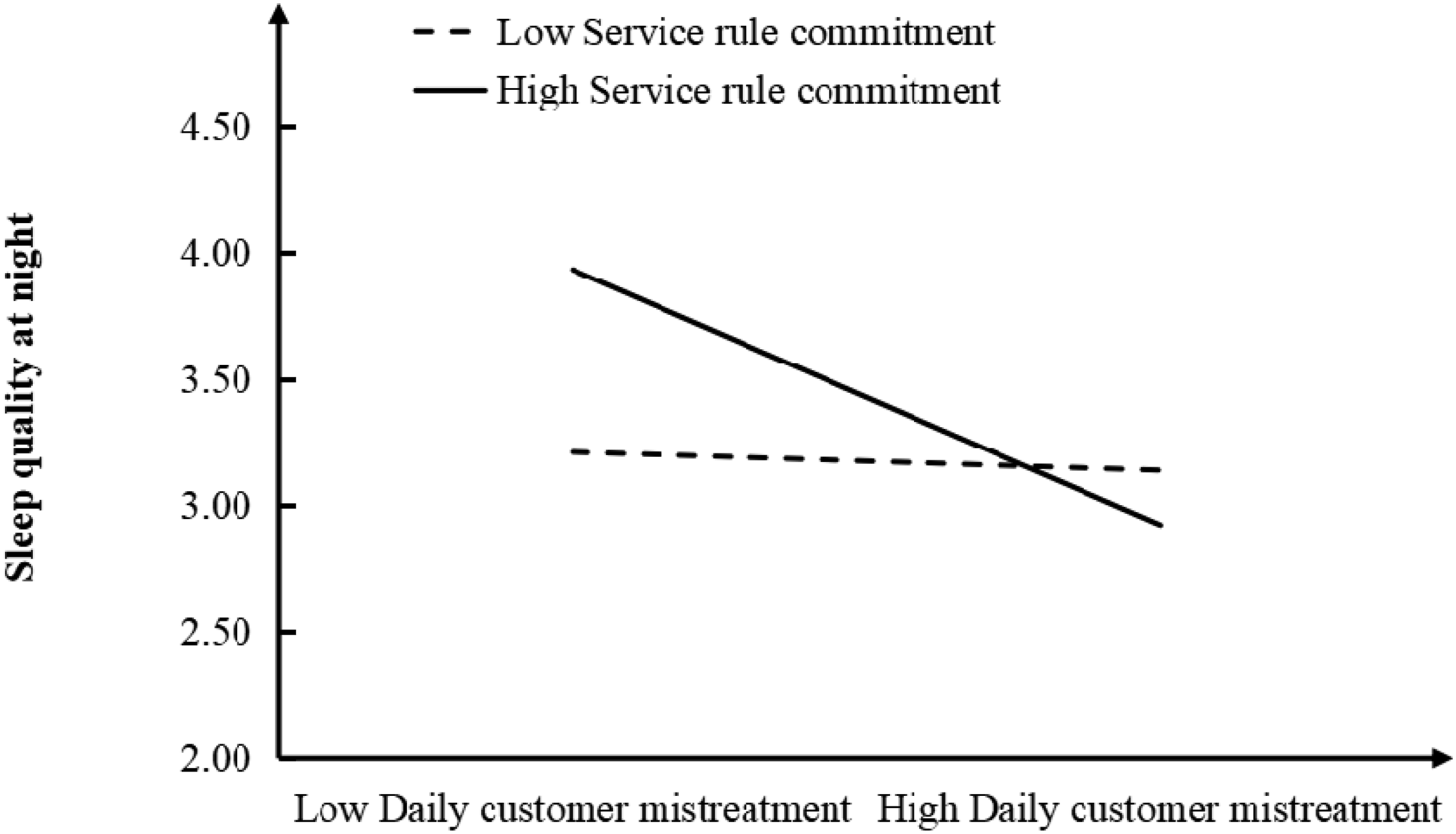
In Study 1, we found that customer mistreatment on a given day disrupts FLEs’ sleep quality at night, which compromises their COPB the next day. These predictions depend on FLEs’ SRC, such that the damaging effects become more pronounced as SRC increases. However, it should be noted that Study 1 also has major limitations that open up a window for Study 2. Specifically, first, we demonstrated that daily customer mistreatment suppressed FLEs’ positive actions (i.e., COPB). An important next step is to expand the range of outcomes to incorporate negative aspects of FLEs’ reactions. Second, up to this point, our arguments examined the moderating role of SRC, which is a dispositional characteristic that captures FLEs’ commitment toward service rules. However, committing to rigid or flexible service rules may also trigger a substantial variation. As such, the following question arises as to whether the nature of rules, an often-neglected yet highly influential situational factor, can serve as another moderator jointly with SRC.
Study 2
Overview
Building on the findings of Study 1, Study 2 expands the model. First, we propose daily turnover intention as an important consequence besides COPB influenced by daily customer mistreatment. Second, we position optimal rule control (ORC) as a contextual factor as a joint moderating effect of ORC with SRC.
Applications for Turnover Intention
High turnover rate is a critical and persistent challenge that service managers must battle in the service industry (Bani-Melhem, Quratulain, and Al-Hawari 2019). An important prerequisite of actual turnover deserving particular attention is turnover intention, defined as a conscious and deliberate willfulness to leave the organization (Park et al. 2020). On a given day when FLEs experience a night with poor sleep quality, they also have passive emotions and attitudes (Scott and Judge 2006). Since FLEs are dissatisfied or unhappy in their jobs, turnover intention arises as a consequence (Park et al. 2020). Moreover, inadequate resources induced by poor-quality sleep make FLEs adopt dysfunctional reactions to avoid future resource loss (Hobfoll 2001). Following this logic, by generating intentions to seek alternative job opportunities and producing withdrawal cognitions, these FLEs believe they can detach themselves and move away from troublesome work situations and thus conserve their resources (Vui-Yee and Yen-Hwa 2020). Thus, we expect a negative link between FLEs’ sleep quality and their next-day turnover intention. Given Hypotheses 1 and 6, we further propose nightly sleep quality as an intermediate process that explains FLEs’ next-day turnover intention induced by customer mistreatment.
Daily sleep quality is negatively related to next-day turnover intention.
Daily sleep quality mediates the relationship between daily customer mistreatment and turnover intention the next day.
Hypotheses 4 and 7 sketch a form of moderated mediation. In detail, FLEs with higher SRC are more vulnerable to daily customer mistreatment. The brunt of amplified harm increases FLEs’ turnover intention to avoid future resource depletion. In contrast, FLEs with lower SRC obtain the release of tension by deviating from rules. Thus, harms from customer mistreatment on next-day turnover intention via sleep quality were buffered.
SRC moderates the indirect relationship between daily customer mistreatment and next-day turnover intention through daily sleep quality, such that the indirect relationship is stronger when SRC is higher.
Joint Effects of SRC and ORC
To fully understand the moderating effect of SRC, optimal rule control is a contextual contingency factor that denotes the degree to which organizational rules are spoken of as flexible, reasonable, and not too fastidious (DeHart-Davis 2009). FLEs committing to optimally controlling rules are given just enough discretion (DeHart-Davis 2009) to deal with daily mistreatment from customers. Adhering to service rules that are less draconian and pedantic, FLEs may not have to accommodate every unreasonable request and tolerate endless interpersonal attacks from their customers. On the contrary, overstrict service rules necessitate constraint and impose excessive control, ending up inhibiting the flexibility of FLEs during their service interactions with mistreating customers (Ng and Dastmalchian 2009). Commitment to such excessively controlling rules traps FLEs in states of greater tension and resource consumption. Thus, we propose that ORC attenuates the interactive relationship of daily customer mistreatment and SRC with FLEs’ nightly sleep quality.
The moderating effect of SRC on the relationship between daily customer mistreatment and daily sleep quality is determined by ORC. At high levels of SRC, daily customer mistreatment has a weaker relationship with daily sleep quality in the presence of service rules that are optimally (versus excessively) controlling.
Method
Participants and Procedures
We invited full-time FLEs working for a large supermarket in China to participate in our research, and used a similar recruitment strategy as in Study 1. It is worth noting that ORC was assessed in the first phase, and a total of 263 interested participants voluntarily completed the general survey. Turnover intention was reported at the end of the workday (daily afternoon survey, around 4:50 p.m.) in the second phase. In addition, to reduce potential concerns regarding common method biases, we asked coworkers to assess FLEs’ COPB. Each FLE was rated by a different coworker who worked interdependently and interacted frequently with him or her in the same team. After screening out missing responses and unmatched lagged data, our final sample included 1321 matched daily surveys (62.8% response rate) from 182 FLEs (69.2% response rate). Among them, 73.6% were women and their average age was 34.71 years (SD = 7.23).
Measures and Analysis
For consistency, we used the same scales from Study 1 for Day t’s customer mistreatment (α = 0.95), Day t’s sleep quality (α = 0.88), Day t + 1’s COPB (α = 0.96), and SRC (α = 0.95). In addition, we assessed Day t + 1’s turnover intention (α = 0.94) using a four-item scale from Shi, Gordon, and Tang (2021). This scale was adapted from Colarelli (1984) to fit with the daily service context. Moreover, we assessed ORC (α = 0.93) using a three-item scale from Dehart-Davis (2009).
Consistent with Study 1, we controlled for previous-day sleep quality (α = 0.87), previous-day COPB (α = 0.96), previous-day turnover intention (α = 0.93), current-day positive affect (α = 0.93), current-day negative affect (α = 0.91), and general self-efficacy (α = 0.92). To rigorously test the hypotheses, we added several relevant control variables. First, because adequate sleep hours efficiently aid in the recovery process (Park and Kim 2019), it is imperative to rule out the effects of sleep quantity on next-day COPB and turnover intention. We utilized a single item to assess sleep hours (Buysse et al. 1989): “How many hours of actual sleep did you get last night?” Second, we controlled for daily anxiety using Tan et al.’s (2020) two-item scale (α = 0.90) because it predicted sleep problems (Wagner, Barnes, and Scott 2014) and influenced workplace behaviors (Tan et al. 2020). Rerunning our analyses without these controls did not alter the significance level of our results.
Results and Discussion
Similar to Study 1, all daily variables had substantial within-person variability (i.e., 39.61%–61.80% within-person variance), indicating the suitability of multilevel modeling. Also, we conducted a multilevel CFA to assess the fit of the measurement model. The results revealed that the multilevel ten-factor measurement model fit the data well (χ2 (430) = 635.71, CFI = 0.99, TLI = 0.99, RMSEA = 0.02, SRMR (within) = 0.02, SRMR (between) = 0.04). All factor loadings were significant and ranged from 0.76 to 1.18. This model fits the data significantly better than 21 nine-factor alternative models in which any two of the seven within-person factors were combined (1036.04 ≤ Δχ2s (Δdf = 6) ≤ 6105.53, ps < 0.01), and also better than three nine-factor alternative models in which any two of the three between-person factors were combined (345.94 ≤ Δχ2s (Δdf = 2) ≤ 704.67, ps < 0.01), supporting the discriminant validity of our measurement model.
Descriptive Statistics, Correlations, and Reliabilities (Study 2).
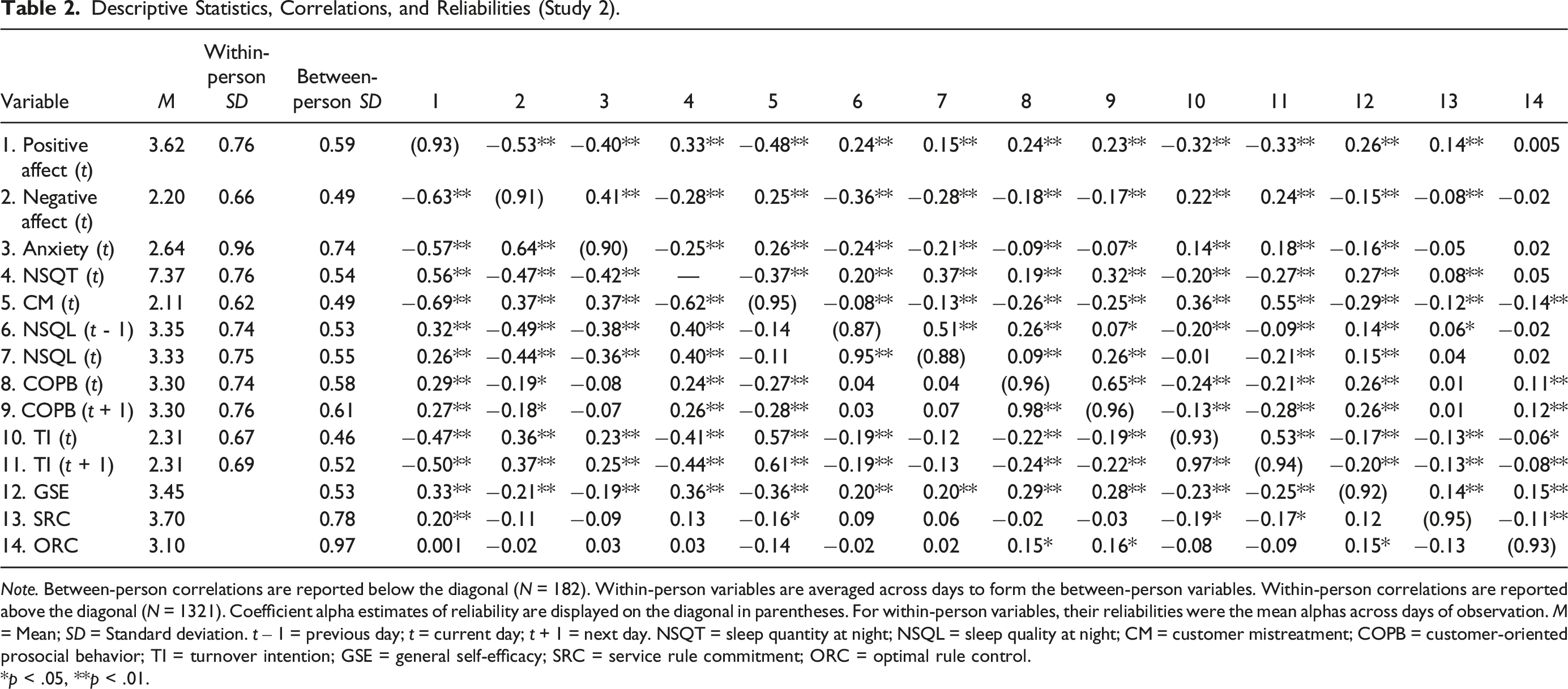
Note. Between-person correlations are reported below the diagonal (N = 182). Within-person variables are averaged across days to form the between-person variables. Within-person correlations are reported above the diagonal (N = 1321). Coefficient alpha estimates of reliability are displayed on the diagonal in parentheses. For within-person variables, their reliabilities were the mean alphas across days of observation. M = Mean; SD = Standard deviation. t ‒ 1 = previous day; t = current day; t + 1 = next day. NSQT = sleep quantity at night; NSQL = sleep quality at night; CM = customer mistreatment; COPB = customer-oriented prosocial behavior; TI = turnover intention; GSE = general self-efficacy; SRC = service rule commitment; ORC = optimal rule control.
*p < .05, **p < .01.
Results of Multilevel Path Analysis (Study 1 and Study 2).
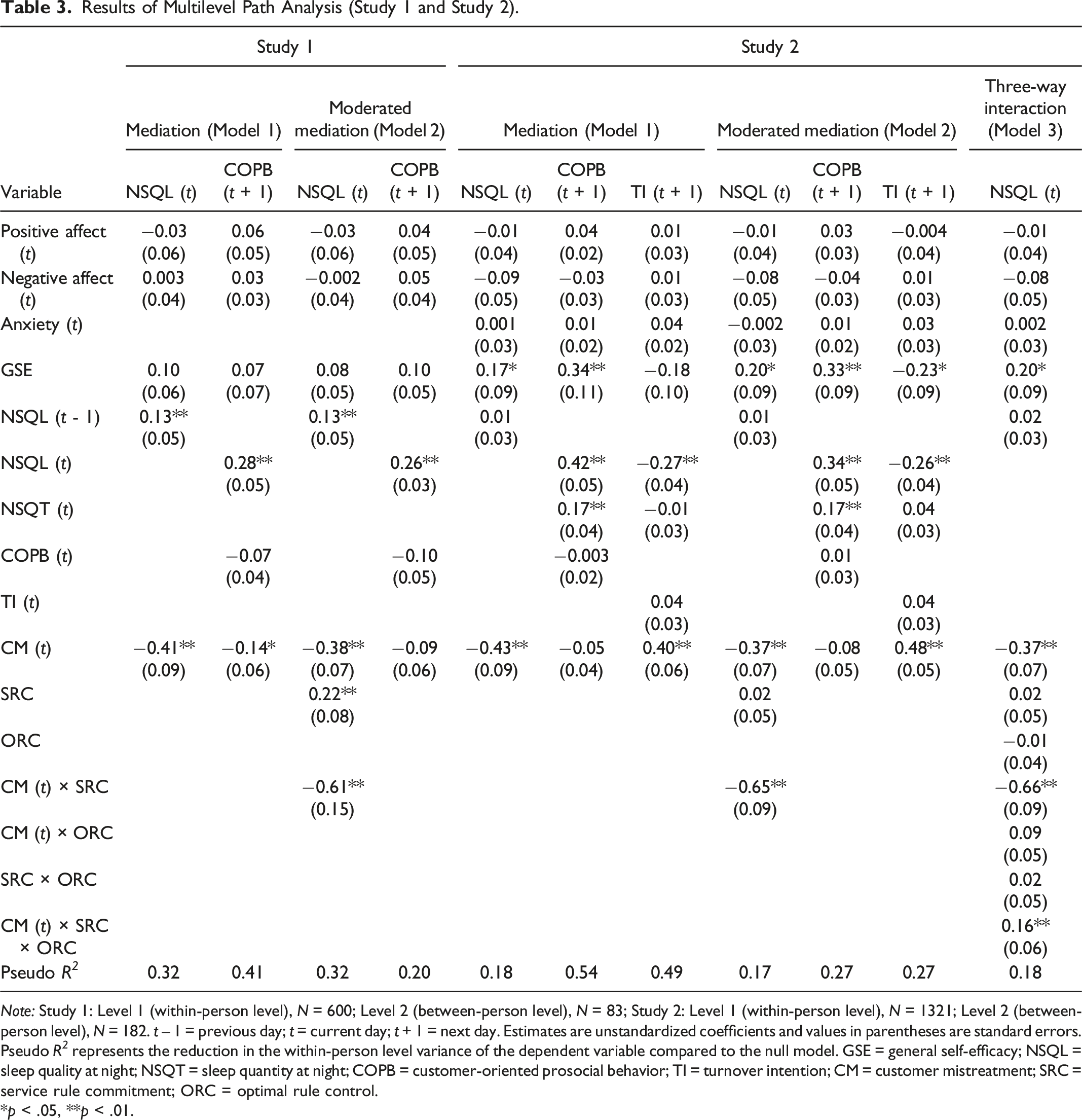
Note: Study 1: Level 1 (within-person level), N = 600; Level 2 (between-person level), N = 83; Study 2: Level 1 (within-person level), N = 1321; Level 2 (between-person level), N = 182. t ‒ 1 = previous day; t = current day; t + 1 = next day. Estimates are unstandardized coefficients and values in parentheses are standard errors. Pseudo R 2 represents the reduction in the within-person level variance of the dependent variable compared to the null model. GSE = general self-efficacy; NSQL = sleep quality at night; NSQT = sleep quantity at night; COPB = customer-oriented prosocial behavior; TI = turnover intention; CM = customer mistreatment; SRC = service rule commitment; ORC = optimal rule control.
*p < .05, **p < .01.
In support of Hypothesis 4, SRC was negatively related to the within-person random slope of Day t’s customer mistreatment with Day t’s sleep quality (γ = −0.65, p <.01). As shown in Figure 3, simple slope analysis revealed that Day t’s customer mistreatment was negatively related to Day t’s sleep quality when SRC was high (simple slope = −0.88, p <.01), but the relationship was not significant when it was low (simple slope = 0.14, n.s.). Cross-level moderating effect of service rule commitment on the relationship between Day t’s customer mistreatment with Day t night’s sleep quality (Study 2).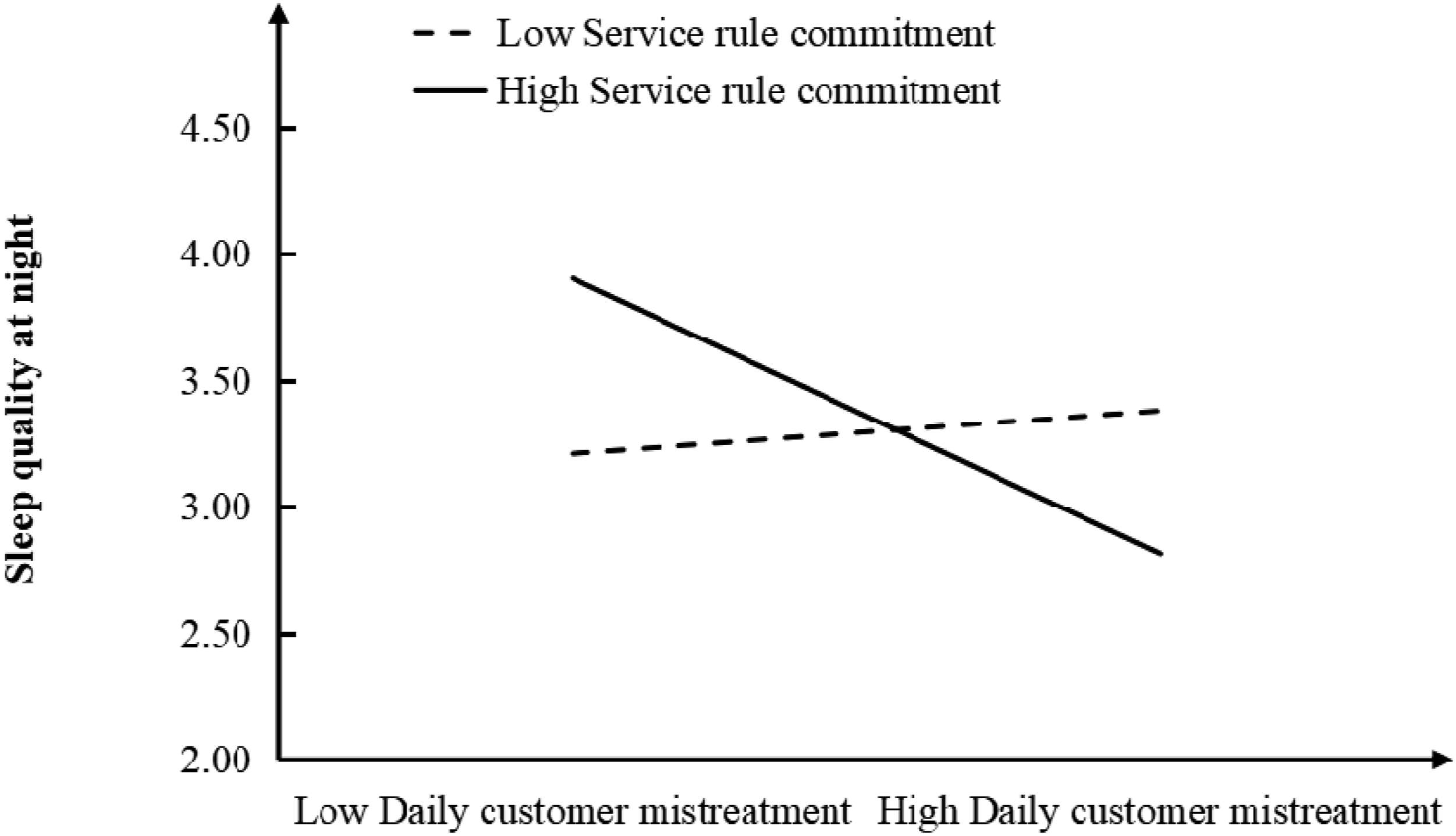
To test moderated mediation, we found that the indirect effects of Day t’s customer mistreatment on Day t + 1’s COPB (estimate = −0.29, bias-corrected 95% CI = [-0.42, −0.18]) and turnover intention (estimate = 0.22, bias-corrected 95% CI = [0.13, 0.34]) via Day t’s sleep quality were significant when SRC was high, but were not significant when it was low (estimate = 0.05, bias-corrected 95% CI = [-0.002, 0.10] for COPB; estimate = −0.03, bias-corrected 95% CI = [-0.07, 0.001] for turnover intention). The differences for Day t + 1’s COPB (estimate = −0.34, bias-corrected 95% CI = [-0.49, −0.21]) and turnover intention (estimate = 0.26, bias-corrected 95% CI = [0.15, 0.38]) were both significant, supporting Hypotheses 5 and 8.
Finally, to demonstrate the form of the three-way interaction, we created four combinations of SRC and ORC (i.e., high SRC and high ORC; high SRC and low ORC; low SRC and high ORC; low SRC and low ORC), and plotted 1 Day t’s customer mistreatment—Day t night’s sleep quality slope for each group. The results indicated that the three-way interaction term for employee Day t’s customer mistreatment, SRC, and ORC was a significant predictor of Day t’s sleep quality (γ = 0.16, p <.01). As shown in Figure 4, at high levels of SRC, Day t’s customer mistreatment had a weaker relationship with Day t’s sleep quality among service rules that are optimally (Group 1) rather than excessively controlling (Group 2). Slope difference tests revealed that Group 1 was significantly different from Group 2 (t = 2.97, p <.01). Thus, Hypothesis 9 was supported. Three-way interaction plot of service rule commitment, optimal rule control, and Day t’s customer mistreatment predicting Day t night’s sleep quality (Study 2).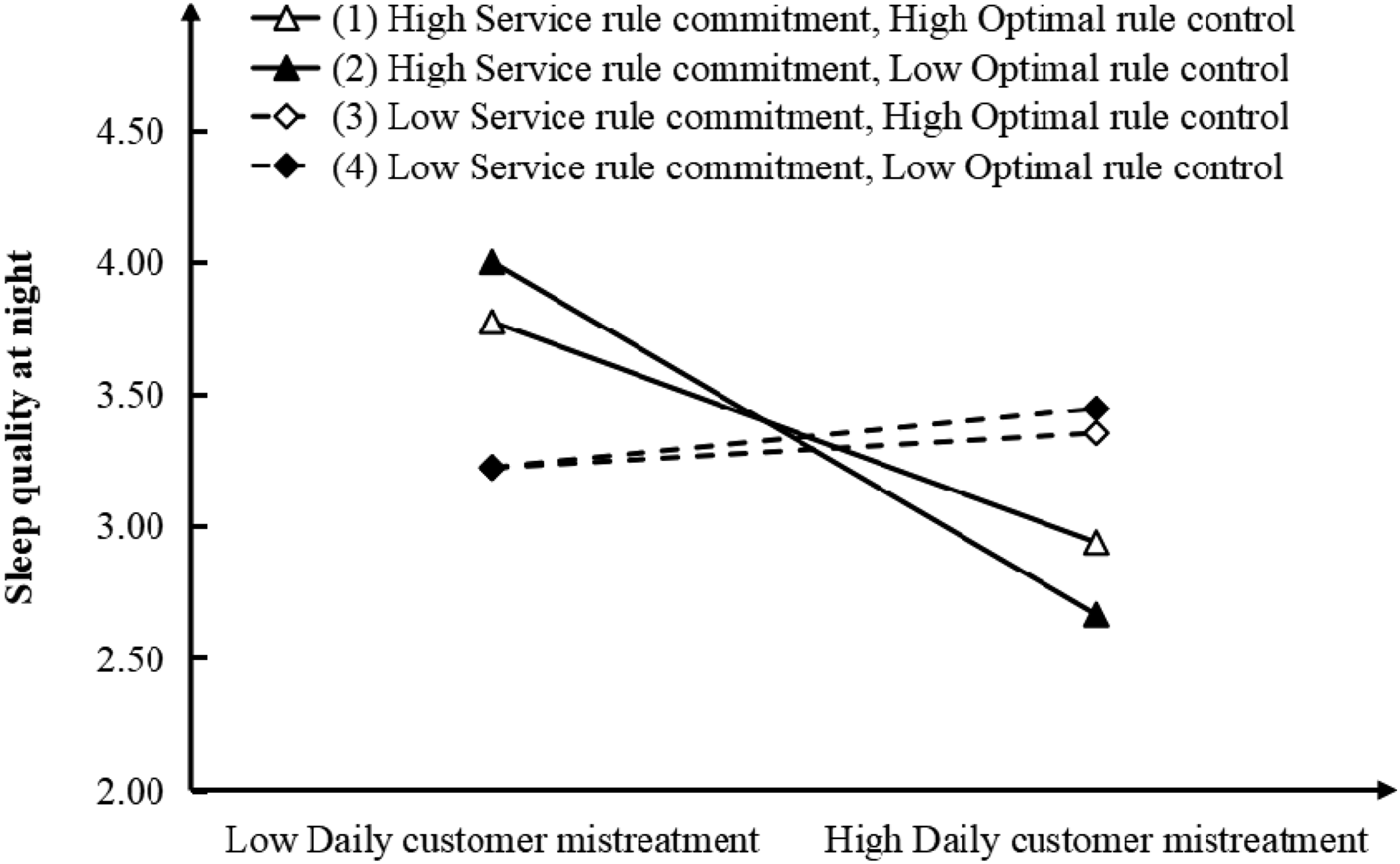
Thus far, we revealed that the damaging effects of daily customer mistreatment can persist to the next day to suppress COPB and feed turnover intention via nightly sleep quality, and demonstrated the joint moderation effect of SRC and ORC. However, FLEs do not exist in a social vacuum in their organizational lives, but interact frequently with their supervisors. Thus, in Study 3, we explore the moderating role of empathetic leadership.
Study 3
Overview
Grounded in the findings of both Study 1 and Study 2, Study 3 expands the model by incorporating empathetic leadership as a contextual factor to hypothesize a joint moderating effect of empathetic leadership with SRC.
Joint Effects of SRC and Empathetic Leadership
Considering supervisor treatment plays a vital role in influencing employees’ behavioral reactions (Kock et al. 2019), supervisory characteristics may be particularly relevant constructs in this regard. Accordingly, we shift our attention to empathetic leadership, one such leadership style that indicates the extent to which “a leader understands a follower’s work situation, invests in emotional understanding, and provides emotional security for the follower” (Kock et al. 2019, p. 217). When FLEs with high SRC devote overadditive resources to cope with daily customer mistreatment, empathetic supervisors are prone to show concern about their feelings and express support for their needs and wants (Bani-Melhem et al. 2021), which are particularly helpful in alleviating FLEs’ tension and resource consumption. This thus counteracts the aggravating effect of SRC on the negative association between customer mistreatment and nightly sleep quality. In contrast, when FLEs with high SRC experience daily customer mistreatment, supervisors without empathy are less likely to put themselves in FLEs’ shoes (Kock et al. 2019) and their lack of understanding and support brings more tension to FLEs (Wibowo and Paramita 2022). Thus, we propose that empathetic leadership may attenuate the interactive relationship between daily customer mistreatment and SRC with FLEs’ nightly sleep quality.
The moderating effect of SRC on the relationship between daily customer mistreatment and daily sleep quality is determined by empathetic leadership. At high levels of SRC, daily customer mistreatment has a weaker relationship with daily sleep quality when empathetic leadership is higher.
Method
Participants and Procedures
We invited full-time FLEs working for a state-owned telecommunication services company in China to participate in our research, and used a similar recruitment strategy as in both Study 1 and Study 2. A total of 162 interested participants voluntarily completed the general survey. After screening out missing responses and unmatched lagged data, our final sample included 826 matched daily surveys (63.7% response rate) from 125 FLEs (77.2% response rate). 62.4% were women and their average age was 32.94 years (SD = 7.08).
Measures and Analysis
For consistency, we used the same scales from both Study 1 and Study 2 for Day t’s customer mistreatment (α = 0.93), Day t’s sleep quality (α = 0.87), Day t + 1’s COPB (α = 0.96), Day t + 1’s turnover intention (α = 0.94), SRC (α = 0.96), and ORC (α = 0.86). In addition, we assessed empathetic leadership (α = 0.95) using Kock et al.’s (2019) five-item scale, which is adapted from the empathetic part of the motivating language scale.
Consistent with both Study 1 and Study 2, we controlled for previous-day sleep quality (α = 0.89), previous-day COPB (α = 0.95), previous-day turnover intention (α = 0.94), current-day positive affect (α = 0.95), current-day negative affect (α = 0.94), general self-efficacy (α = 0.96), daily sleep quantity, and daily anxiety (α = 0.93). Removing all of these control variables did not change the results or our substantive conclusions.
Results and Discussion
Similar to both Study 1 and Study 2, all daily variables had substantial within-person variability (i.e., 38.51%–74.49% within-person variance), indicating the suitability of multilevel modeling. Also, we conducted a multilevel CFA to assess the fit of the measurement model. The results revealed that the multilevel 11-factor measurement model fit the data well (χ2 (512) = 880.97, CFI = 0.98, TLI = 0.98, RMSEA = 0.03, SRMR (within) = 0.03, SRMR (between) = 0.04). All factor loadings were significant and the factor loadings ranged from 0.84 to 1.13. This model fits the data better than 21 ten-factor alternative models in which any two of the seven within-person factors were combined (841.65 ≤ Δχ2s (Δdf = 6) ≤ 3516.99, ps < 0.01), and also better than six ten-factor alternative models in which any two of the four between-person factors were combined (143.56 ≤ Δχ2s (Δdf = 3) ≤ 572.58, ps < 0.01), supporting the discriminant validity of our measurement model.
Descriptive Statistics, Correlations, and Reliabilities (Study 3).

Note. Between-person correlations are reported below the diagonal (N = 125). Within-person variables are averaged across days to form the between-person variables. Within-person correlations are reported above the diagonal (N = 826). Coefficient alpha estimates of reliability are displayed on the diagonal in parentheses. For within-person variables, their reliabilities were the mean alphas across days of observation. M = Mean; SD = Standard deviation. t ‒ 1 = previous day; t = current day; t + 1 = next day. NSQT = sleep quantity at night; NSQL = sleep quality at night; CM = customer mistreatment; COPB = customer-oriented prosocial behavior; TI = turnover intention; GSE = general self-efficacy; SRC = service rule commitment; ORC = optimal rule control; EL = empathetic leadership.
*p < .05, **p < .01.
Results of Multilevel Path Analysis (Study 3).

Note. Level 1 (within-person level), N = 826; Level 2 (between-person level), N = 125. t ‒ 1 = previous day; t = current day; t + 1 = next day. Estimates are unstandardized coefficients and values in parentheses are standard errors. Pseudo R 2 represents the reduction in the within-person level variance of the dependent variable compared to the null model. GSE = general self-efficacy; NSQL = sleep quality at night; NSQT = sleep quantity at night; COPB = customer-oriented prosocial behavior; TI = turnover intention; CM = customer mistreatment; SRC = service rule commitment; ORC = optimal rule control; EL = empathetic leadership.
*p < .05, **p < .01, ***p < .001.
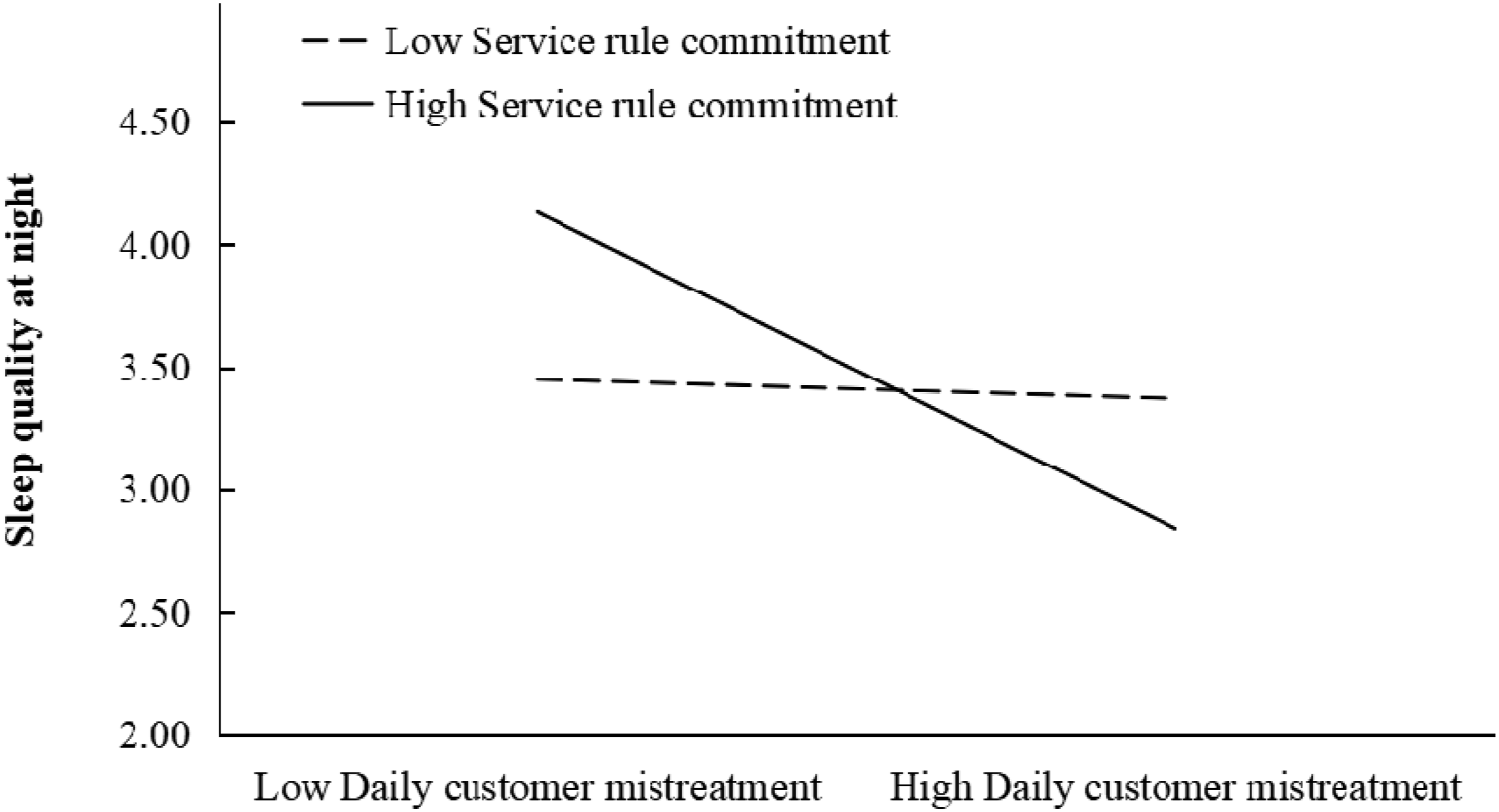
Cross-level moderating effect of service rule commitment on the relationship between Day t’s customer mistreatment with Day t night’s sleep quality (Study 3).
Consistent with Hypotheses 5 and 8, we found that the indirect effects of Day t’s customer mistreatment on Day t + 1’s COPB (estimate = −0.71, bias-corrected 95% CI = [-0.83, −0.57]) and turnover intention (estimate = 0.69, bias-corrected 95% CI = [0.54, 0.82]) via Day t’s sleep quality were significant when SRC was high, but were not significant when it was low (estimate = −0.02, bias-corrected 95% CI = [-0.10, 0.04] for COPB; estimate = 0.02, bias-corrected 95% CI = [-0.04, 0.10] for turnover intention). The differences for Day t + 1’s COPB (estimate = −0.68, bias-corrected 95% CI = [-0.82, −0.52]) and turnover intention (estimate = 0.66, bias-corrected 95% CI = [0.49, 0.81]) were both significant.
Finally, similar to Study 2, we demonstrated the form of the three-way interactions by creating four combinations of SRC and ORC, as well as four combinations of SRC and empathetic leadership. The results indicated that the three-way interaction terms for Day t’s customer mistreatment, SRC, and ORC (γ = 0.25, p <.01), as well as for Day t’s customer mistreatment, SRC, and empathetic leadership (γ = 0.19, p <.01) were two significant predictors of Day t night’s sleep quality. As shown in Figure 6, at high levels of SRC, Day t’s customer mistreatment had a weaker relationship with Day t night’s sleep quality among service rules that are optimally (Group 1) rather than excessively controlling (Group 2). Slope difference tests revealed that Group 1 was significantly different from Group 2 (t = 2.49, p <.05). As shown in Figure 7, at high levels of SRC, Day t’s customer mistreatment had a weaker relationship with Day t night’s sleep quality among high empathetic leadership (Group 1) rather than low empathetic leadership (Group 2). Slope difference tests showed that Group 1 was significantly different from Group 2 (t = 4.68, p <.01). Moreover, as shown in model 5 in Table 5, simultaneously running both interactions within the same model didn’t alter our substantive conclusions. Thus, Hypotheses 9 and 10 were supported. Meanwhile, empathetic leadership was positively related to the within-person random slope of Day t’s customer mistreatment with Day t’s sleep quality (γ = 0.29, p <.01), uncovering that empathetic leadership can also be considered as a traditional buffer. Three-way interaction plot of service rule commitment, optimal rule control, and Day t’s customer mistreatment predicting Day t night’s sleep quality (Study 3). Three-way interaction plot of service rule commitment, empathetic leadership, and Day t’s customer mistreatment predicting Day t night’s sleep quality (Study 3).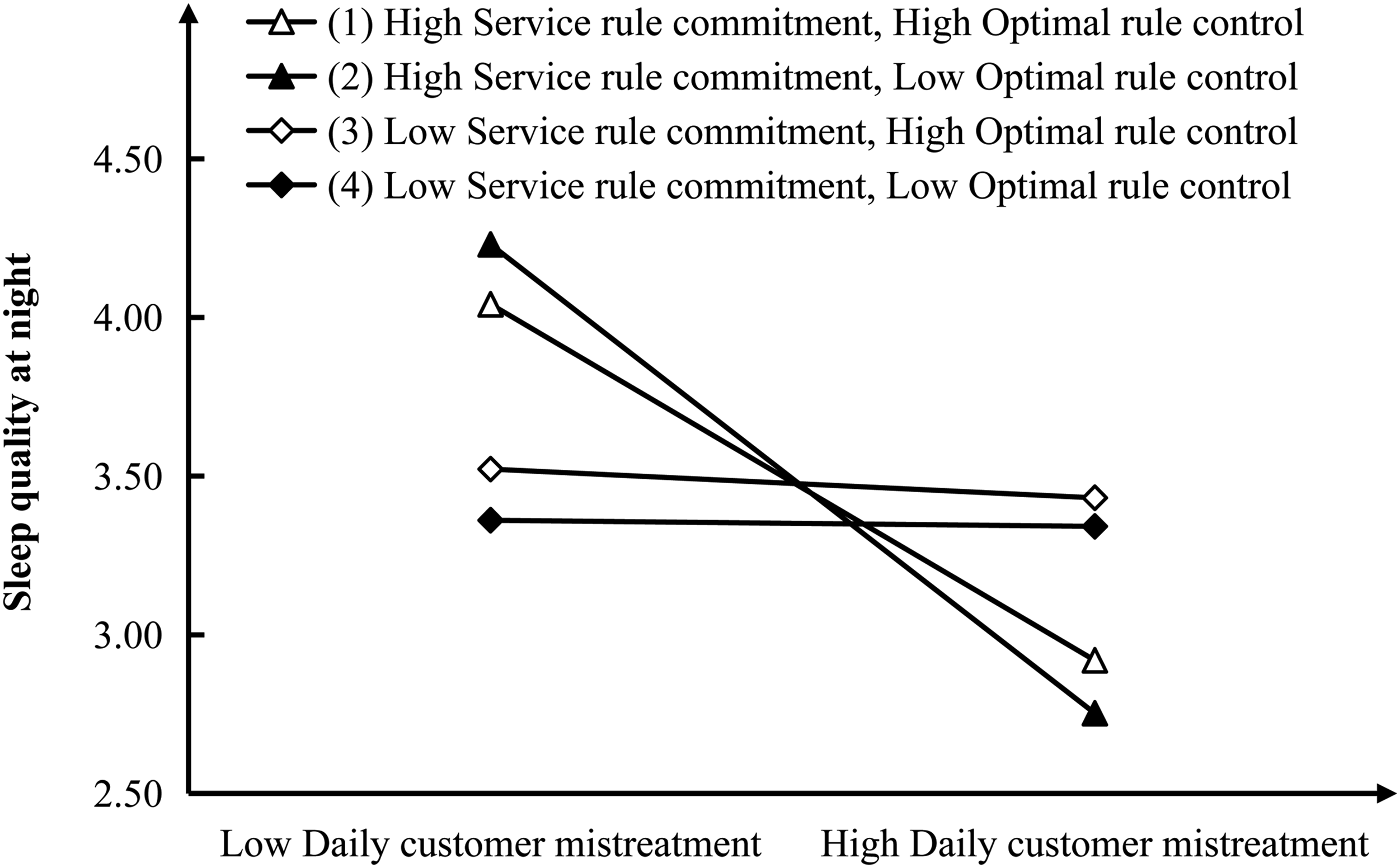
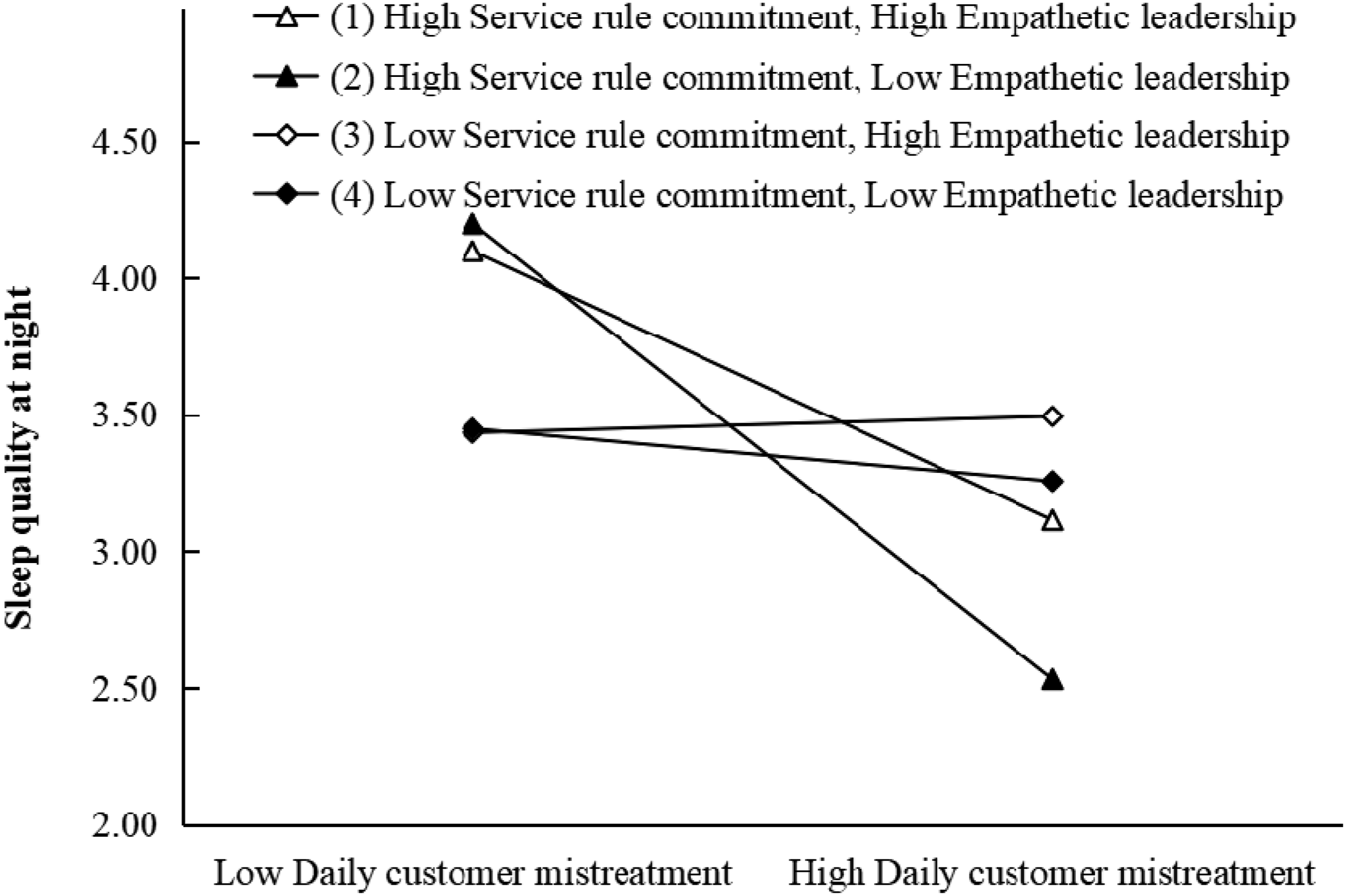
Study 3 fully corroborated and extended the findings of both Study 1 and Study 2. Furthermore, we unveiled empathetic leadership’s crucial role in safeguarding FLEs with high SRC against the detrimental effects of daily customer mistreatment.
General Discussion
Theoretical Implications
This study contributes to the existing literature in multiple ways. First, we cast nightly sleep quality as a novel explanatory mechanism to explain why customer mistreatment on a given day harms FLEs’ COPB and triggers their turnover intention the following day. Our findings identify a key channel, the negative spillover process, through which FLEs’ unfavorable feelings of customer mistreatment spill over to the home arena and thus harm their sleep quality. This work complements a substantial body of studies linking customer mistreatment to spillover effects, extending the range of spillover consequences of employees’ work-related experiences. Moreover, we bring novel insight into sleep quality, which is a crucial but overlooked linking point between customer mistreatment FLEs encountered during a certain day and their next-day reactions. Across our three studies, by demonstrating the process of how daily customer mistreatment leads to the suppression of FLEs’ customer-directed performance through nightly sleep quality, we take a further step to address the concern that “prior work has mainly focused on service employees’ self-focused reactions to customer mistreatment without considering how these reactions spill over to other customer encounters” (Garcia et al. 2018, p. 210). Overall, our work represents an active effort to advance the understanding of customer mistreatment.
Second, our study creates a fertile breeding ground for the customer mistreatment literature by extending a complex contingency model to explore SRC in conjunction with ORC and empathetic leadership, respectively. Although scholars have begun to stress the pivotal role of FLEs’ SRC in shaping appraisals of customer mistreatment (e.g., Wang et al. 2013), there has been no effort to examine the critical qualifying effects of rule characteristics and leadership styles with it. This omission is problematic, since the effects of rule characteristics and leadership styles on FLEs have been construed as alternately conducive and pernicious (DeHart-Davis, Davis, and Mohr 2014). Accordingly, turning to an examination of the three-way interactive effects of daily customer mistreatment, SRC on daily sleep quality with ORC and empathetic leadership, respectively, we are able to tease out which combination of contextual and individual factors can pose the greatest threat and which can diminish the harm. We found that high SRC coupled with excessive rule control resulted in a more profound aggravation of the customer mistreatment—sleep quality relationship, and such effect would be alleviated when rule control is optimal. Meanwhile, empathetic leadership can also act as a protective factor that counteracts the exacerbation effect of SRC on the negative association between customer mistreatment and nightly sleep quality. Collectively, we provide an in-depth insight into the importance of exploring joint effects of individual and contextual moderators in customer mistreatment research.
Third, we contribute to the knowledge of sleep by uncovering what factors matter in the occurrence of poor sleep quality, and how such pernicious experiences inflict harm on subsequent behaviors at work. By demonstrating daily customer mistreatment as a disincentive that disrupts nightly sleep quality, we address the past call to “continue examining the relationships between workplace stressors and sleep-related problems” (Knudsen, Ducharme, and Roman 2007, p. 2005). Furthermore, our study offers additional evidence for FLEs’ unique behaviors toward customers after a bad night’s sleep, addressing the concern that “few studies have examined the relevance of sleep quality for organizational behavior” (Kuhnel, Bledow, and Feuerhahn 2016, p. 995), while the majority of research has underscored the relevance of sleep for self-state beyond the work domain (e.g., fatigue, unhealthy eating, and self-recovery; Liu et al. 2017).
Practical Implications
As revealed by our results, FLEs’ daily poor sleep quality caused by customer mistreatment goes disproportionately far in spoiling their next-day COPB and increasing their turnover intention. Thus, management attention should be directed towards instituting employee assistance programs aimed at counteracting the significant damage caused by daily customer mistreatment. It would be wise for employee assistance programs to prioritize the appointment of well-trained service managers to step in and solve problems when FLEs are falling prey to customer mistreatment (Yue, Wang, and Groth 2016). After that, such program would offer strategic solutions for them to exit a situation of tension and resource loss by advocating appropriate respite. An important next step is to provide opportunities for FLEs to “cleanse” their minds to cut off the spillover effects of customer mistreatment, such as setting daily transition rituals at the end of the working day and encouraging non-work-related tasks. These daily practices can help FLEs recover from stressful work experiences and decrease the intrusion of customer mistreatment into their sleep quality.
Furthermore, we found that SRC exacerbated the effects of daily customer mistreatment. The results substantiate the notion that SRC is not always beneficial and favorable, but rather harmful when FLEs are exposed to hostile and vexatious customers. It is worth noting that our perspective does not impugn the beneficial role of SRC but locates it inside reconsideration under a specific situation. We emphasize that organizations should be weary of blindly enforcing high SRC and the pervasive “customer is god” philosophy during service interactions. Organizations should improve a multi-dimensional staff appraisal system, avoiding the adoption of a single indicator of SRC to evaluate FLEs’ performance. For instance, FLEs can be evaluated along subjective and objective dimensions. In detail, an appraisal from a subjective dimension can be operationalized with indicators such as willingness to provide courteous service, provision of the necessary information, and degree of personal attention. Meanwhile, in terms of the objective dimension, FLEs can be measured by indicators such as the number of customers received, frequency of hotline complaints, and amount of customer mistreatment encountered.
In closing, we found that ORC and empathetic leadership mitigated daily customer mistreatment’s negative effects exacerbated by SRC. Accordingly, our results speak to the importance of designing and implementing service rules in ways that ensure the right level of control. In this light, we encourage organizations to critically analyze the levels of control exerted by service rules, and involve customer service representatives in the process of designing and optimizing these rules. Additionally, previous research has demonstrated that FLEs who understand the purposes of service rules can avoid blind and meaningless compliance (Kaufmann, Borry, and Dehart-Davis 2022). Hence, rather than presenting rules with a rigid script of required behaviors, we recommend service managers hold briefing sessions to communicate rule purposes clearly to FLEs. This will grant flexibility to FLEs when they follow the rules. Moreover, another crucial point is that organizations should arrange training programs to help supervisors become empathetic, especially in contexts where customer mistreatment is prevalent. This can be accomplished by guiding supervisors to recognize FLEs’ experiences and heed their voices. Moreover, organizations can provide communication boards, informal meetings, and grievance systems, which give FLEs outlets to voice mistreatment and express their feelings. With a better awareness of FLEs’ voices, an empathetic supervisor can provide the right supportive strategies.
Limitations and Future Research Directions
This research should be considered in light of its limitations, which in turn point to promising directions for future research. The generalizability of the current findings may be limited by the use of a culture-specific Chinese sample. Compared with individualistic value in North American (e.g., Canada) that implies a type of direct, active, and target-specific reaction, the collectivism of East Asian societies (e.g., China) drives employees to adopt indirect, passive, and target-general strategies when being embroiled in customer mistreatment (Shao and Skarlicki 2014). As such, the current model we depicted on the effects of customer mistreatment may be more prominent than what would be observed in Western cultures. To address this potential issue in the future, it is necessary to replicate the relationships between customer mistreatment and its subsequent harms using samples from different cultural contexts. Besides, we note that our current study focuses on overall customer mistreatment. Furthermore, scholars should take steps to explore a differentiation into customer mistreatment with distinct aggressiveness severity (e.g., customer incivility and customer aggression) using a set of experimental studies. Doing this will refine the understanding of overall customer mistreatment.
In conclusion, our study clarifies how daily customer mistreatment transcends the workplace to harm FLEs’ nightly sleep quality, which then affects their next-day COPB and turnover intention. Also, we highlight the importance of SRC, ORC, and empathetic leadership that shape FLEs’ degree of reactivity to such stressful experience. These findings represent novel insight to extend the literature on customer mistreatment.
Supplemental Material
Supplemental Material - A Lagged Experience Sampling Methodology Study on Spillover Effects of Customer Mistreatment
Supplemental Material for A Lagged Experience Sampling Methodology Study on Spillover Effects of Customer Mistreatment by Fu Yang, Zihan Zhou, and Xiaoyu Huang in Journal of Service Research
Supplemental Material
Supplemental Material - A Lagged Experience Sampling Methodology Study on Spillover Effects of Customer Mistreatment
Supplemental Material for A Lagged Experience Sampling Methodology Study on Spillover Effects of Customer Mistreatment by Fu Yang, Zihan Zhou, and Xiaoyu Huang in Journal of Service Research
Footnotes
Author Contributions
Fu Yang: idea development, research framework; conceptualization; data curation; methodology; formal analysis; review and editing. Zihan Zhou: conceptualization; original draft writing; review and editing. Xiaoyu Huang: review and editing.
Declaration of Conflicting Interests
The author(s) declared no potential conflicts of interest with respect to the research, authorship, and/or publication of this article.
Funding
The author(s) disclosed receipt of the following financial support for the research, authorship, and/or publication of this article: This research was supported by National Natural Science Foundation of China (Grant/Award Number: 72271203) awarded to Fu Yang, and Fundamental Research Funds for the Central Universities (Grant/Award Number: 220310004005040538) awarded to Zihan Zhou.

Supplemental Material
Supplemental material for this article is available online.
Author Biographies
References
Supplementary Material
Please find the following supplemental material available below.
For Open Access articles published under a Creative Commons License, all supplemental material carries the same license as the article it is associated with.
For non-Open Access articles published, all supplemental material carries a non-exclusive license, and permission requests for re-use of supplemental material or any part of supplemental material shall be sent directly to the copyright owner as specified in the copyright notice associated with the article.
