




Abstract

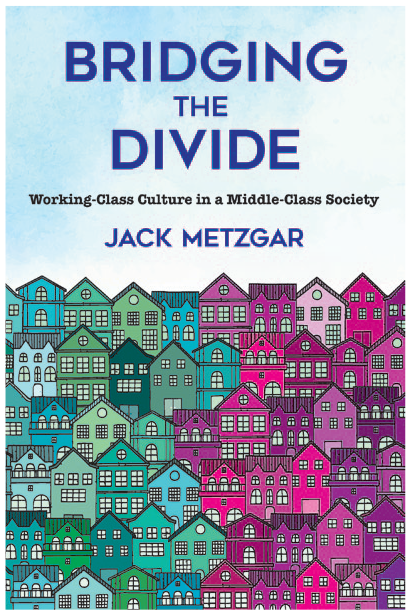
In Bridging the Divide: Working-Class Culture in a Middle-Class Society, Jack Metzgar articulates a powerful and affirmative account of working-class culture in the twentieth and twenty-first centuries. He does this while offering a remedy for the fracturing of the American polity: for Metzgar, working-class and professional middle-class Americans have a great deal to learn from each other, and it is through the harmonization of their interests and their different values and ways of living that a better society can be born. In his own words, the book is a sustained “argument” for working-class culture. Metzgar’s account of class collaboration is steeped in his experience of growing up during “les trentes glorieuses,” a term used by the French to describe thirty years of economic expansion after World War II. In France, and in the United States, this period saw vast improvements in the lives and working conditions of the working class. Strong unions and protectionist economic policies created a period of cultural and economic stability for the industrial working classes. Metzgar is buoyed by that pre-austerity time, when economic policy-making did represent working-class interests in both countries. While social democratic policies were often more grounded in fear of the Soviet Union and of working-class discontent than in a vision of a more just society, the effects of pro-worker post-World War II government programs created the blue-collar world that nurtured Metzgar and his wife. While he refuses the term “memoir” to describe what he has written, the book and its arguments for working-class culture are deeply imbued with his experiences during an extraordinary period of successful industrial-working-class struggle for better wages and better working conditions.
Metzgar argues that it is in the interests of the professional middle classes to accept working-class values. It is true that competitiveness, alienation, and status anxiety saturate the world of the professional classes. The emptiness at the heart of worship of achievement and ambition has rendered them particularly deluded and isolated. Metzgar proposes that the working-class values that he and his wife inherited from their working-class families and communities can heal the political and psychological fracturing that define the contemporary moment: the professional classes see the working class as culturally backward; the working class views the professional classes as opportunistic and inauthentic. As the class divide grows, liberal and conservative politicians use fear of the other to motivate their constituents to vote. Metzgar sees the divide as one that has cleaved America into two halves. I think the divide is asymmetrical, with the professional middle classes in control of greater capital. Metzgar rejects the culture war polarization offered by liberals and conservatives by providing a thorough analysis of the economic and material conditions of post-World War II prosperity and does not fail to remind us that, despite the racism of the period, African-Americans benefited from the significant transfer of wealth from capital to labor, a transfer that working-class movements fought for and secured during this exceptional period.
Metzgar wants the professional classes to join the working class in fighting for a better world for everyone. To get to that better world, or to return to it, Metzgar proposes that the white- and the blue-collar classes must work together to produce political and economic policies that would benefit the majority rather than the minority of Americans. If the professional middle classes accepted working-class values, it would be better off psychologically, in Metzgar’s view. They would, according to Metzgar, renounce their status anxiety, be more rooted to place and more committed to the values of belonging than the values of ambition that animate their everyday lives. In my opinion, however, the winner-take-all system of American capitalism has made such a rational view inimical to classes at war with each other. The professional middle classes work for oligarchs and capitalists. They are responsible for depressing working-class wages: they despoil public goods for private profit. It is not just the Republicans who are doing the bidding of capital. Democratic President Bill Clinton signed the North American Free Trade Agreement and undermined welfare, two government policies that have left generations of working-class and working-poor Americans in ever more desperate straits. In fact, during Clinton’s presidency, the peace dividend that we should have enjoyed after the fall of the Soviet Union never materialized.
Despite my deep disagreement with Metzgar’s argument that the class divide can somehow be healed without economic and social upheaval, it is delightful to read the work of a leftist as serious and thoughtful as Metzgar. Furthermore, he makes an eloquent argument for the value of mediocrity, of being ordinary, of remaining one of many in a stable, settled place, in a working-class community, the kind that has been decimated by five decades of de-industrialization and austerity. In the idyllic working class of Metzgar’s childhood, authenticity was seen as rooted in manual labor and honorable back-breaking work. In Studs Terkel’s Working: People Talk about What They Do All Day and How They Feel about What They Do, we find echoes of working-class suspicion of white-collar paper pushers and their “phony” world. Authenticity, solidarity, love of place and craft are values that color Metzgar’s working-class world. He occupied an uneasy place between white- and blue-collar worlds: he was ambivalent about his natural ability to get good grades when he was in high school and did poorly in school just to retain his sense of “belonging.” After a few failed attempts at academic achievement in college and graduate school, he earned a PhD and eventually a professorship at Roosevelt University in Chicago. In his own life, he has reconciled social mobility and working-class authenticity and advocacy; and he believes in the possibility of harmonization of the two class cultures.
On a theoretical level, Metzgar’s book leaves me with more questions than it answers. The book deals with class, but does not mention capitalism. For him, class contradiction does not have to lead to class struggle, much less class war. He is a deeply committed American leftist, but he is no Marxist. He is, however, determined to offer a way out of the political and social fracturing that characterizes our times; it was the early twentieth-century labor militancy that produced genial conditions for the American industrial classes and the high value put on productive labor. Post-war redistributive policies were shaped by fear of a revival of worker discontent, the power of the strike, and the challenge to capitalism posed by the Soviet Union, both at home and abroad. The optimism about reconciliation that permeates this book may seem alien to those of us who came of age in a darker time for working-class people, when American capitalism was more cruel and the American Empire was more desperate to maintain U.S. supremacy. Metzgar reminds us, however, that political and economic struggles can yield positive results for the majority of working Americans when they see their interests allied against finance and corporate capitalism.
In his first book, Striking Steel, Metzgar proposes being and belonging as core to the world of American steelworkers. In Bridging the Divide, he argues that it is on the basis of these values, as opposed to the values of the anxious upper-middle classes, that a real progressive economic program in American politics can be built. I believe that the interests of the white-collar middle classes are in contradiction to those of the working class. Metzgar does not. He believes healing class conflict will heal America. He derives controversial but common sense insights from his own life experiences for activists and scholars alike. Against the false generosity of “professional big thinkers” who want to use educational opportunity as a great equalizer, Metzgar argues for the point of view of the worker rather than the professional activist or reformer.
What they [the working class] most need is not our [professional middle-class] cultural capital but rather steady work, much more income and increasing amounts of free time for what you will. Second, they have their own cultural capital and, though open to and often hungry for education, they have a strong tendency to resent and resist the kinds of cultural capital we are trying to sell them.
In a period when the devastation of deindustrialization on the American working class has only intensified, “settled living” has become harder to achieve for people with unstable incomes and families beset by the crisis in opioid and fentanyl addiction. Metzgar urges us to remain hopeful about restoring a world of working-class prosperity. Without such a restoration, he argues, the political fracturing of American democracy seems increasingly irremediable. There is a general consensus that American democracy is in trouble. Corporations buy politicians. Popular suspicion about government leads to full-blown conspiracy theories. A crisis of democratic legitimacy might be what pushes liberals in the professional middle classes to establish solidarity with the classes below it. A recent study by the Pew Research Center found that the number of adults in the middle-income stratum—with a median annual income of $91,000—has decreased significantly in the past five decades, with increases in the number of lower- and upper-income earners. 1 Even more significant, the share of aggregate U.S. income for middle-income earners has dropped from 62 percent to 42 percent between 1970 and 2020. There are more rewards for embracing the values of the professional middle classes as the distance between them and the working class grows. The conditions created during the thirty glorious years after World War II, when large segments of the working class gained entry to the middle class, gave rise to thinkers and writers like Metzgar, whose own trajectory of social mobility marks his fundamentally optimistic worldview. To remedy stagflation and the declining rate of profit, American economic policy after the 1970s promoted blue-collar downsizing, the evisceration of the social safety net, and the financialization of the U.S. economy as a whole. The decades of austerity, offshoring of American jobs, and financial malfeasance and corporate consolidation that have followed the post-war period of economic redistribution have produced a professional middle class that is both more cruel and more anxious. In a world beset by economic, political, and environmental uncertainty, it is difficult to imagine that the professional classes would find it desirable to embrace the working-class values of which Metzgar is rightly so proud.
