




Abstract

Ms. Sandler surveyed her class of 14 energetic preschoolers working at the small centers and then looked up at the clock. She shivered with anxiety as she thought of the upcoming transition from small group centers to large group. She did not look forward to the chaos and unruliness that she anticipated after she rang the bell to signal the end of center time. This was typically the most difficult time of the day for her.
Preschool children encounter numerous transitions moving from one activity or context to another as they participate in the daily routines of their preschool classrooms. Although many children easily adapt to frequent changes, for some it may elicit the display of behavioral challenges, particularly if transitions are not planned carefully (Algers, 1984; Olive, 2004). Classroom transition times are challenging for most teachers and may be particularly difficult for new or beginning teachers. Challenging behaviors that may occur during transitions, and that may be avoided through careful transition planning, include (a) refusal to stop the current activity, (b) refusal to move to the next activity, (c) disturbing or distracting peers, (d) disruptive behavior to escape a difficult or nonpreferred activity, (e) impatience to move and not wait for one’s turn, and (f) problems entering and engaging in a new activity. Thus, children who struggle with transitions may exhibit challenging behaviors that may isolate them from their physical and social environment and interfere with learning of new skills.
The purpose of this article is to provide tools for preschool professionals to plan for transitions between daily routines, identify challenging transitions during the day, and offer strategies to support transitions in classrooms to prevent challenging behaviors from occurring due to frequent changes. Specifically, we answer three questions early childhood educators frequently ask: (a) Why should I worry about transitions? (b) What tools can I use to plan effective transitions? and (c) What specific support and strategies can I use to facilitate transitions between daily routines? We define classroom transition as a teacher initiated movement from one ongoing classroom activity to another resulting in a change in the activity during a daily routine. Classroom transitions may occur individually or in groups.
Why Should I Worry About Classroom Transitions?
Common transitions that have been observed within the daily routine of preschool classrooms include (a) arrival from home to school, (b) small group to large group activity, (c) large group to small group activity, (d) indoor to outdoor and vice versa, (e) class activity to snack time/mealtime and vice versa, and (f) departure from school to home. Research indicates that children in preschool classrooms may experience as many as 15 to 20 transitions between activities each day and spend 20% to 35% of their time in transitioning from one activity to another (Olive, 2004; Sainato, 1990). Thus, in a typical 5 hour preschool classroom, children may spend an hour or more transitioning between activities. Oftentimes, transitions are considered downtimes when children “just” move between activities without any additional educational purpose, but it need not be so. Organizing classroom environments to facilitate transition can lead to (a) minimizing nonproductive time for children, (b) providing more instructional time, (c) reducing challenging behaviors, and (d) promoting children’s independence (Ostrosky, Jung, & Hemmeter, 2003).
“Oftentimes, transitions are considered downtimes when children “just” move between activities without any additional educational purpose, but it need not be so.”
What Tools Can I Use to Plan Effective Transitions?
Transitions between daily classroom activities are a necessary part of preschool routines and occur throughout the day. However, when planning the daily routine, teachers often do not plan for transition times. Research has suggested that transition times should be carefully planned and roles and responsibilities should be assigned not only for children but also for all adults in the classroom (Olive, 2004). Planning and clarifying roles and responsibilities of teachers, paraprofessionals, and volunteers during transition facilitates optimum learning and interaction and reduces the waiting time for preschool children, thus, reducing challenging behaviors (Olive, 2004; Ostrosky et al., 2003; Rosenkoetter & Fowler, 1986).
The following sections describe two tools that preschool professionals can use to plan for transitions between daily routines and identify and address potentially challenging transitions. Use of the tools involves a nine-step planning process that requires all adults in the classroom to work together as a team. Initially, more frequent planning meetings are suggested. Once all adults and children in the classroom are familiar with the routine and do not encounter frequent challenges during the transition times, fewer planning meetings specifically to plan for classroom transitions may be necessary. If possible, and found necessary, parents may be included in the planning for specific children who may display challenging behaviors during transitions. Parents may help identify the function of the child’s challenging behavior or “triggers” that alter their child’s behaviors during transitions. A function-based approach, such as the use of a functional behavior assessment, may become necessary to understand the function of the challenging behavior for some children and to therefore, provide appropriate intervention. For additional information and resources on functional behavioral assessment procedures for young children, see Fox and Duda (2004).
Transition Review Worksheet (TRW): Planning for Transitions
The TRW will help (a) teachers appraise their daily schedules and plan for transition times keeping in mind the time needed for each transition and the specific child expectations, (b) clearly delineate the roles and responsibilities of the teachers and other adults during classroom transitions, and (c) identify the areas of concern during transition between activities. Figure 1 provides an example of the TRW as it might be completed by Ms. Sandler and her team, from the opening vignette, for their morning preschool class. The steps used by Ms. Sandler and her colleagues for completing the TRW are illustrated below.
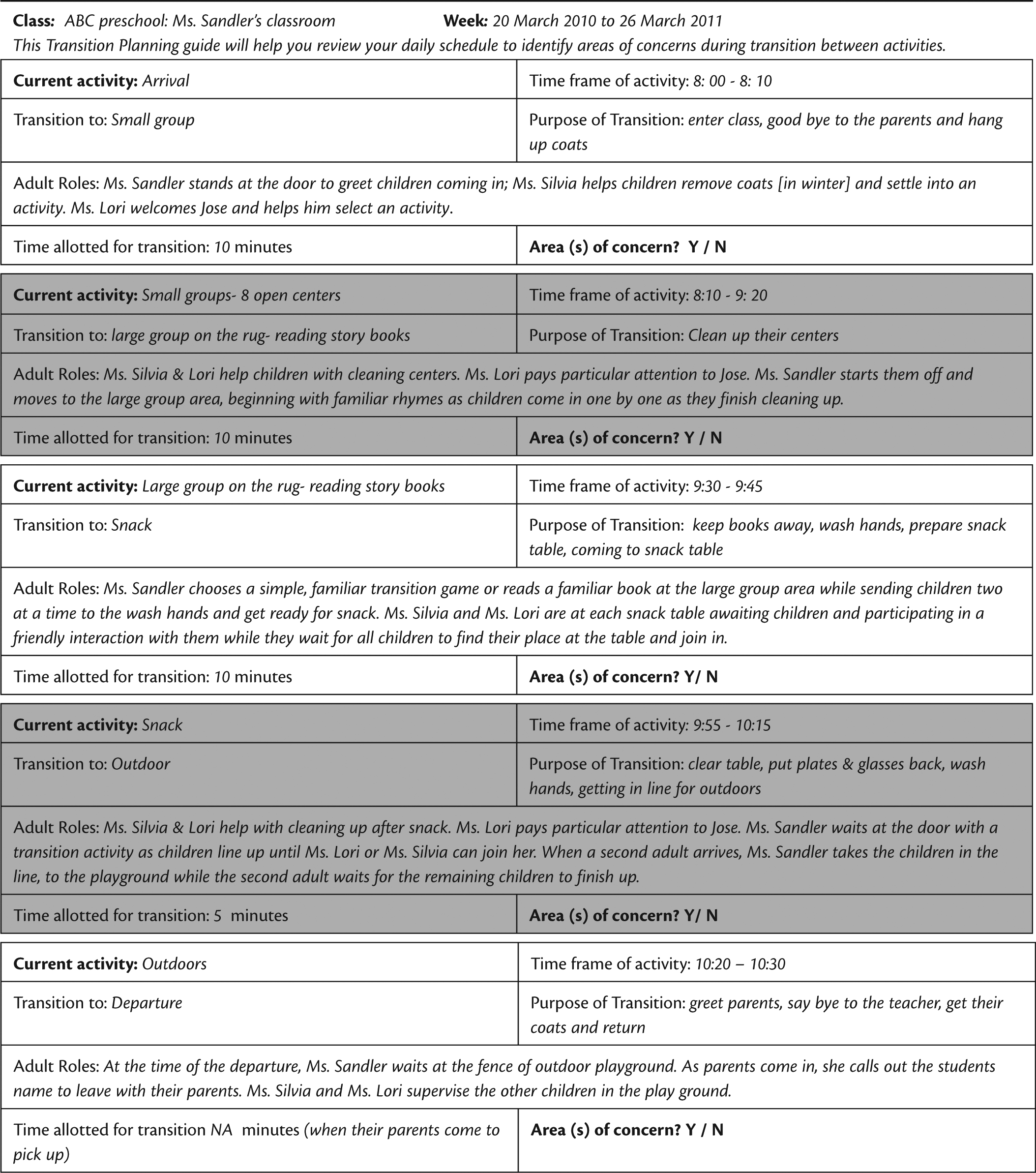
An example of transition planning guide: Transition review worksheet
“When the session leader at the training spoke about planning for transition, a spark of understanding seemed to go off in Ms. Sandler’s head—she had never really “planned” for transition times. She asked herself, “Could this be why it was so challenging to move from one activity to another?”
Step 1: Establish your team
Ms. Sandler recently attended training on classroom management and was eager to implement some of the strategies in her own classroom. When the session leader at the training spoke about planning for transition, a spark of understanding seemed to go off in Ms. Sandler’s head—she had never really “planned” for transition times. She asked herself, “Could this be why it was so challenging to move from one activity to another?” She decided to discuss this further during the next planning meeting on Friday with the other adults in the classroom. Her team included the paraprofessional Ms. Silvia, who worked with her all day, and the paraprofessional Ms. Lori, who worked with Jose in the morning session. She also requested her administrator, Ms. Barnes, to join in the planning meeting to provide objective feedback and suggestions.
Step 2: Examine your schedule
At the planning meeting, Ms. Sandler brought her daily schedule with her for the team to review. The team was mostly happy with the way the day was planned currently. However, they proposed some changes in the schedule with the intent to (a) maximize learning times and minimize waiting times during transitions and (b) offer a balance of quiet times and active times to ease transitions (Sandall et al., 2008). Specifically, the team reorganized the schedule to plan for fewer transitions. For example, they moved the outdoor time to the end of the day before departure. Parents could now pick up their children from the playground, thus, eliminating one transition back to the class from outdoors.
Ms. Sandler then shared the TRW she had received at the training and explained its purpose to the team. Based on the daily schedule, the team completed the items “Current activity” and the “Transition to” sections in the worksheet (see Figure 1). In addition, they completed “Time frame of the activity” and “Time allotted” section based on their experience of the typical time that children took to move between activities. Finally, they completed the item “Purpose of the transition” to clarify what actually needed to occur for the transition to be considered completed.
At this time, the team also assessed the classroom environment and materials to ensure that it provided for optimum movement between activities and encouraged independence among children to best prepare them for kindergarten. They identified materials in the classroom that needed to be rearranged to allow for easy movement between activities and allow children to make independent transitions within the classroom.
Step 3: Establish adult roles
Next, the team moved to a discussion of how each adult could best facilitate the transition while ensuring efficient use of personnel. Some considerations they addressed when deciding “who will do what” during transitions included (a) specific professional roles of the adults as assigned by the administrator, (b) strengths of the adults, (c) needs of the children, and (d) the purpose and requirements of the transition. Figure 1 illustrates how in some instances adults in this team transition while at other times roles are shifted depending on the context.
Step 4: Identify if there are any challenges to the particular transition
Based on their experiences, the team then identified if the particular transitions posed concerns and circled “Y” on the worksheet if it did. To record a Y or N, the team considers a number of factors including the following: (a) Does the transition require more time than it should? (b) On a regular basis are there children who delay, wander, or engage in other behaviors that disrupt the transition? (c) Are there individual children who routinely have significant challenges with completing the transition? and (d) Do the adults find themselves frequently providing children directives and correcting behaviors?
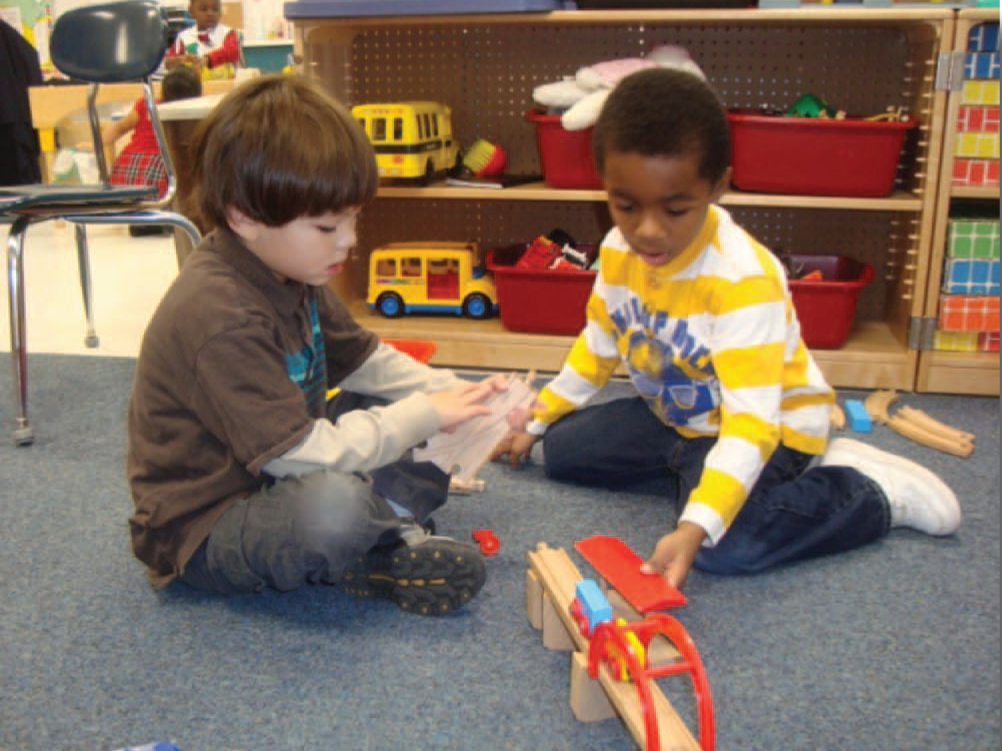
Transition Implementation Worksheet: Planning for Challenging Transitions
Figure 2 provides an example of a Transition Implementation Worksheet (TIW) that Ms. Sandler and team completed to plan for transitions that they considered challenging. Completion of this worksheet by the team is the next step and based on the responses on the TRW. That is, once the areas of concerns have been noted on the TRW, teachers can identify and evaluate strategies to address these areas of concerns and provide supports as necessary. Below we illustrate the further steps Ms. Sandler and her colleagues followed to complete the TIW (Figure 2) based on the transition concerns identified on their completed TRW (Figure 1).
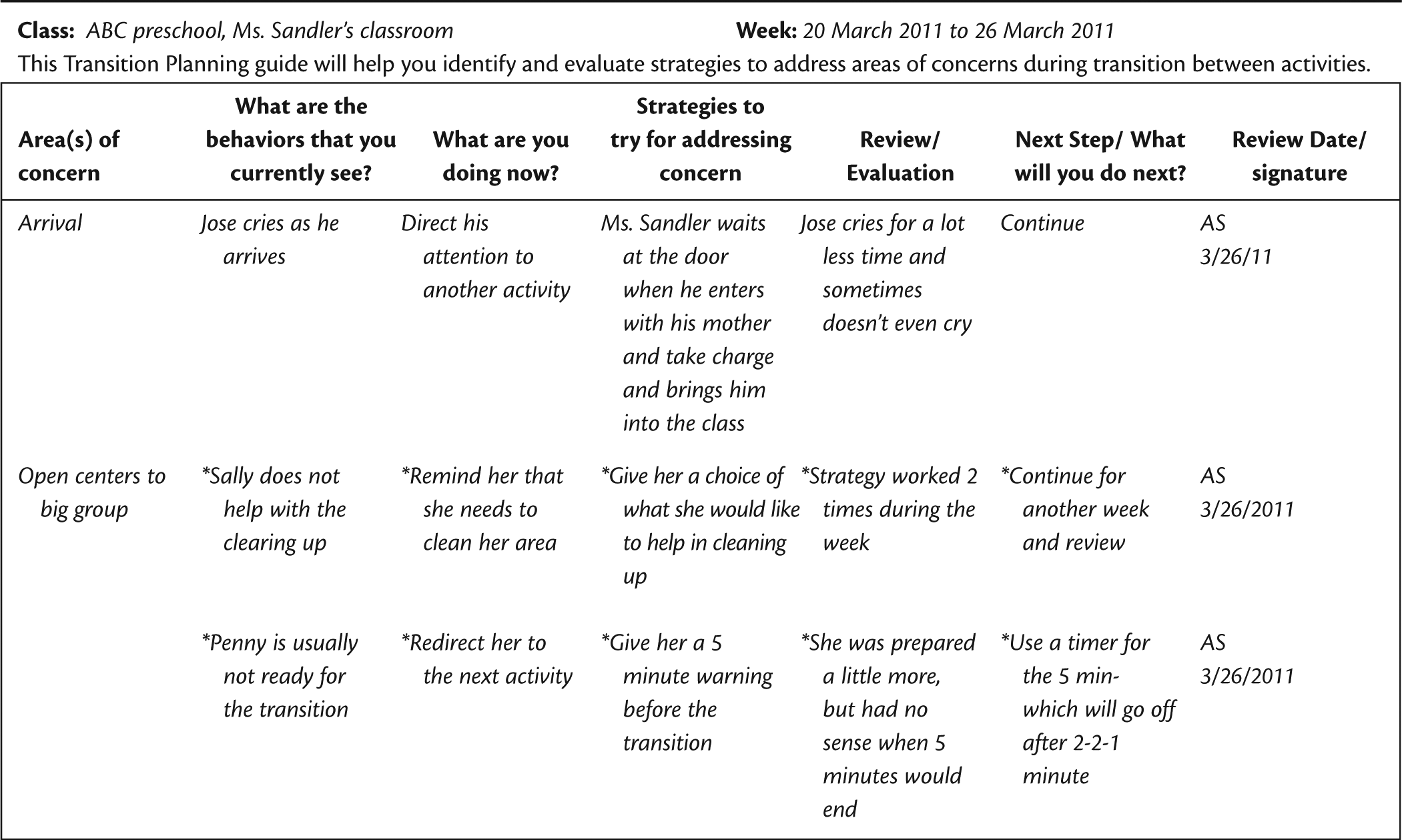
An example of transition planning guide: Transition implementation worksheet
Step 5: Identify the particular children who have difficulty with the transition
Ms. Sandler and her team revisited the transitions that were circled as areas of concern with a “Y” on their TRW to identify the specific concern(s) they had during that transition. For example, Ms. Lori mentioned that Jose, the young boy who had recently been diagnosed with autism, entered the room crying and continued to cry most of the morning causing distraction to others. This resulted in his inability to participate actively in and learn to his full potential from the classroom activities. Her careful observations and discussion with family members suggested that being “thrown” into the classroom full of children bothered him. The team also identified Penny and Sally as needing specific supports during classroom transitions (see Figure 2).
Step 6: Identify the supports and strategies
Once the specific concerns and children who exhibited specific challenges during transitions were identified, Ms. Sandler reviewed with her team some supports and strategies which she had learned about during her recent training. Ms. Barnes, the administrator, shared the handout Practical Strategies for Teachers (Center on Social and Emotional Foundations for Early Learning [CSEFEL], n.d.) with the team (this handout is available for free at http://csefel.vanderbilt.edu/resources/pdf/practical_strategies.pdf). As noted in the example in Figure 2, they identified the specific accommodations that would be made for Jose, Sally, and Penny.
Step 7: Establish the adult roles for implementation
The team then identified the specific roles each adult in the classroom would play during interventions and how they would distribute responsibilities for implementation of supports and strategies and monitoring progress during the daily routine.
Step 8: Implement identified intervention
The team decided to implement the agreed-on supports and strategies for one week and then revisit and revise or modify the plan as needed.
Step 9: Monitor progress
The team acknowledged the importance of monitoring outcomes. Each adult took upon the role of collecting data using four tally sheets clipped to the wall near the teacher’s desk. The adults decided to put a hash mark for each time a challenging behavior occurred during a transition for one of the three specific children (i.e., Jose, Penny, and Sally). In addition, they used another clipboard with blank paper for any additional ideas, thoughts, or any new challenging behavior they observed during transitions. The team decided to also revisit the progress monitoring process in a week to review the children’s progress, and to assess the feasibility and usefulness of the process.
What Specific Supports and Strategies Can I Use to Facilitate Classroom Transitions?
In this section, suggestions for supports and strategies that may be used to address challenging transitions are provided. The framework for discussing these supports and strategies has been adapted from Building Blocks for Teaching Preschoolers With Special Needs (Sandall et al., 2008). When planning for inclusion and active participation of children with disabilities in preschool classrooms, Sandall and colleagues (2008) suggest eight categories of support (i.e., environmental support, material adaptations, special equipment, use of children’s preferences, simplification of the activity, adult support, peer support, and invisible support). Six of these categories (i.e., environment supports, material adaptations, using child preferences, adult support, peer support, invisible support) most relevant to classroom transitions are delineated below and forms the framework for organizing the suggested strategies. Many of the suggested strategies come from the literature addressing social-emotional development and citations are provided as the strategy is described. In addition, some of the strategies come from direct interviews and observations of nine preschool teachers by the first author (Banerjee, 2004)
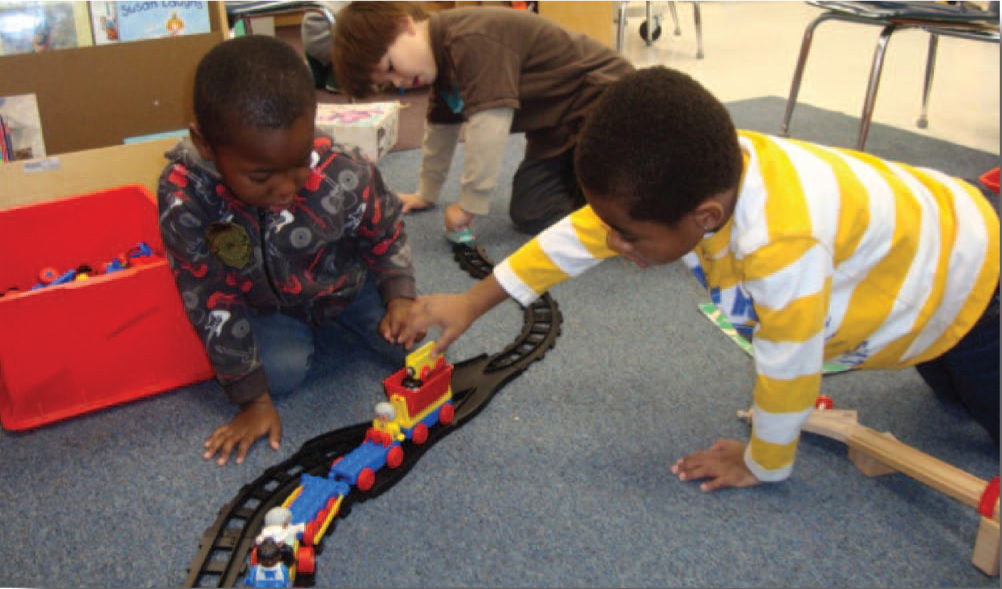
Environmental Supports
Accommodations and modifications under environmental support include “altering physical, social, or temporal environment to promote participation, engagement, and learning” among children (Sandall et al., 2008, p. 54). These supports may include (a) reducing waiting times between activities that children may encounter, (b) having quiet activities before the boisterous activities and considering the impact these will have on the transition, (c) allowing children to move freely between activities but providing a structure for closure, (d) keeping task expectations small, and (e) reducing transition where all children have to do things together. For example, to transition from classroom activities to mealtime, Ms. Sandler provides staggered transitions for children in her classroom. While Ms. Sandler reads a familiar, previously read, book with the group, Ms. Silvia sets the table. With a close eye on the line at the serving table, Ms. Sandler allows children, two at a time, to get up from the reading group, walk to the serving table, serve their meals under supervision from Ms. Silvia, and walk to the meal table. After all children have been served, Ms. Sandler opens up the quiet reading area for children as they finish their meals. Children are familiar with this recurring routine and understand the behavioral expectation.
Material Adaptation
Recommendations to support successful transitions include “modifying materials so that children can participate as independently as possible” (Sandall et al., 2008, p. 54). For example, Ms. Sandler (a) has all materials or equipment in the optimal position where children can reach them easily without adult help; (b) prepares color-coded individual markers (e.g., with clothes pins, bracelets) to designate group or location of toys and other learning materials such as pens, markers, and so on; (c) uses visual schedules to highlight and prepare for transitions and visits the schedule everyday with the children; and (d) labels with words and pictures to identify areas and functions of areas and to designate where things belong (both classroom materials and/or children’s belongings). All these strategies help students in gaining independence (Schmit, Alper, Raschke, & Ryndak, 2000). Furthermore, Ms. Sandler developed an individual laminated schedule for Jose to provide him with concrete, visual cues of the schedule and activities and upcoming transitions (Ostrosky, Jung, Hemmeter, & Thomas, 2003). She spends the first couple of weeks of a new academic year teaching the routines, gradually sharing information about the materials and classroom layout with the children, and reminding them when necessary. As far as possible, the schedules and routines are predictable and consistent to help children feel secure and comfortable (Alter & Conroy, 2006).
Using Child Preferences
If a child is unable to take advantage of the opportunities, the teacher may identify and integrate the child’s preferences during transition (Dunlap & Liso, 2004; Sandall et al., 2008). For example, Jose has trouble at arrival, typically one of the more difficult transitions for the younger children. Ms. Sandler allows Jose to hold his favorite toy, or choose a favorite activity on arrival, or walk in with Ms. Silvia, his favorite adult in the classroom. For a child experiencing trouble cleaning up, Ms. Sandler gives a choice between two objects or areas to be cleaned. When teachers provide choices to a child, the child can feel in control and is less likely to ignore or give “no” for an answer. The situation sets the child up for success (Dunlap & Liso, 2004).
Adult Support
A very common support observed in classrooms includes adult support, whereby an adult intervenes to support children’s learning and participation (Sandall et al., 2008). As previously noted, during classroom transitions, it is important to plan for roles and responsibilities assigned to each adult in the classroom to facilitate optimum levels of children’s interactions with activities. Teachers may assign adults who will assist children with less mobility to accomplish the transitions around classrooms. It may be necessary to use verbal and nonverbal cues to initiate transitions and prepare children for the next activity. Teachers must use specific praise statements for appropriate behavior by children during transition activity. Specific praise statements are likely to increase children’s on-task behaviors and decrease problem behaviors (Fullerton, Conroy, & Correa, 2009). For example, Ms. Sandler gives a verbal cue to her class to prepare them for transition at least 5 min in advance. She also assigns a specific adult in her classroom to support communication for Amanda who uses a voice-output device to communicate with adults and peers. Furthermore, when children demonstrate positive behaviors during transitions, she and her team are practicing providing specific praise statements to children, such as “Danny, you did an awesome job putting away the green blocks!”

Peer Support
Teachers may employ peers to help children learn important objectives during transitions (Brown, Odom, & Conroy, 2001; Sandall et al., 2008). One such example is the use of transition “buddies.” This involves pairing a child with a disability or delay with a child (children) without disabilities during classroom transitions to model appropriate social and adaptive responses. This encourages more social exchanges and is useful in promoting independence during classroom transition. For example, Ms. Sandler uses a wagon to transfer younger children or children who are slow walkers, from indoor to outdoor activities and vice versa. Sometimes she allows other children to take turn pushing the wagon with the adult. Furthermore, Ms. Sandler chooses “peer buddies” to help adults get ready for the snack, thus giving opportunities for peers to learn important social communication skills from each other. Similarly, she also maintains a class rule for two peer buddies to walk outdoors holding hands. She is careful in how she pairs the peer buddies by taking into consideration their social-emotional and cognitive developmental levels. She tries not to make this a chore but rather a fun activity that children will want to participate in. She also strives to ensure that there is, as close as possible, an equitable “give and take” between the children.
Invisible Support
As the name suggests, invisible support is a strategic support provided to children that is less obvious to an observer (Sandall et al., 2008). In the above example, when selecting peer buddies, Ms. Sandler is careful not to pair two children who may not get along well or may have similar behavioral challenges. Other strategies Ms. Sandler includes in her daily classroom management repertoire is strategically placing Danny, who gets easily distracted, near her or another adult during outdoor transitions so that she can physically prompt him to participate when necessary. Similarly, she places two children, who tend to be boisterous and distractible when they are together, as far away from each other as possible during the cleanup time. All three strategies mentioned above are so subtle that they cannot be discerned by a lay observer. Ms. Sandler and her team know the children and their environment extremely well and thus are able to purposefully arrange the environment and provide these “invisible” supports.
Summary
Thus, a number of carefully planned strategies may help children’s effective transitions between classroom activities and consequently reduce or prevent challenging behaviors. Children come with varied levels of exposure to materials and environment. Therefore, when planning for transition activities, it is also important to ensure that these strategies are appropriate for children from linguistically, socially, economically, and culturally diverse backgrounds. Individualization and flexibility is the key. Furthermore, direct and targeted observation during classroom routine to collect data and monitor progress is critical to determine if specific interventions, supports, and strategies are successful and to identify when additional or more intensive interventions may become necessary or when supports and strategies can be gradually faded out. In Table 1, we provide additional resources and readings to support early educators’ efforts to promote smooth and effective classroom transitions. Now let us return one final time to our opening vignette.
Additional Resources
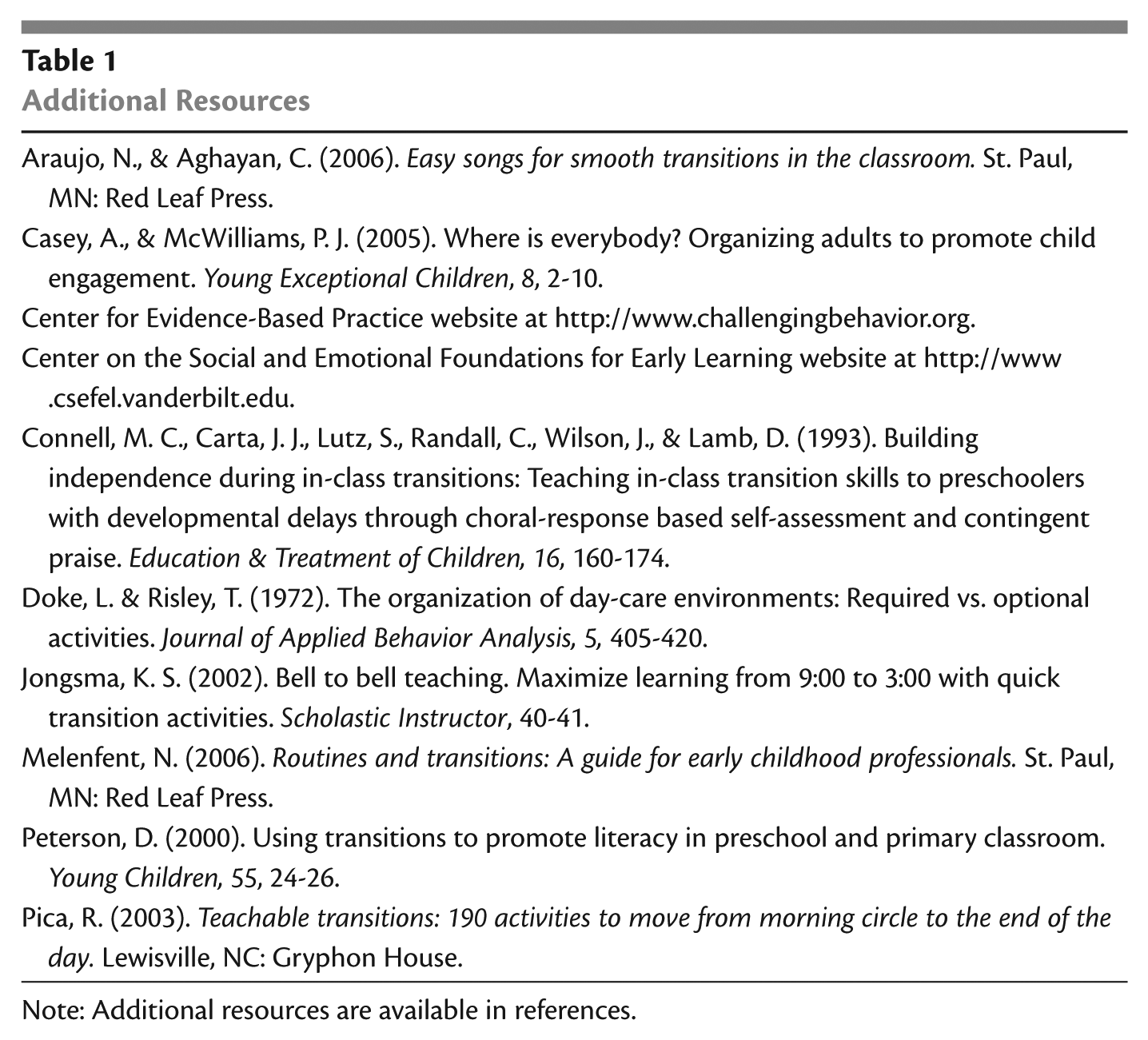
Note: Additional resources are available in references.
“Therefore, when planning for transition activities, it is also important to ensure that these strategies are appropriate for children from linguistically, socially, economically, and culturally diverse backgrounds. Individualization and flexibility is the key.” By the end of the school year, 14 preschoolers are busy working at their learning centers scattered through the classroom. Some are making magical bubbles at the water table, some are preparing to fill their carts at the grocery store, some are struggling to complete their wobbling block castle, and some children are at the writing center busily writing an invitation to their parents for open house. Ms. Sandler looks at the time and calls out, “Five more minutes to finish what you are working on.” She then quietly walks to Tyler, who is busy painting at the easel, and says close to his ears, “Tyler, five more minutes to finish your painting.” Just as Ms. Sandler is about to get back to her activity, she realizes that the children at the dramatics center are too busy with their pretend grocery store and may not have heard her warning, so she turns around and walks to the children at the dramatics play center and repeats the message softly, but close so that they will hear—“You have five minutes to finish shopping before the next activity.” Three minutes pass by and Ms. Sandler announces, “Two more minutes for cleanup.” She makes sure that everyone in the room has heard the warning. After 2 min, she begins the song to the tune of “Jingle Bells,” “Tidy up, Tidy up, put your things away.” The children are familiar with this routine and join her in chorus, while beginning to clean up their centers.