




Abstract

Five-year-old Delon was disruptive during circle time in his preschool classroom. He had no diagnosis that would account for his behavior and did not seem to have trouble with communication or other skills. His teacher, Ms Beth, described his behavior as shouting, making noises, and talking to or touching nearby children. At times, the challenging behavior escalated to kicking and hitting peers and adults, and throwing items. She had tried a number of strategies (e.g., note home to parents, loss of preferred activities, removal from the activity, closer supervision, reprimands, and redirection) to decrease Delon’s disruptions, but all had failed. Ms. Beth was ready to talk to the program director about referring him to be tested for special education services.
There are a large number of children in early childhood settings with challenging behaviors (Brauner & Stephens, 2006). Because of the unique features of early childhood classrooms (i.e., developmentally appropriate practice and less structured environment), teachers routinely modify the social and physical environment (i.e., classroom arrangement, imbedding skills training within activities/routines) to support children with mild to moderate challenges (Dunlap et al., 2006). Despite their modifications and adaptations, teachers continue to describe challenging behaviors as a major job frustration (Friedman, 2000). In addition, student problem behaviors have been found to negatively affect teachers’ job satisfaction (Landers, Alter, & Servillio, 2008) and cause teacher burnout (Hastings & Bham, 2003).
Gilliam (2005) found that prekindergarten programs with no access to behavioral services were approximately two times more likely to expel young children with challenging behavior than school-based programs with access to behavioral consultants. Yet despite their access to behavioral consultants, the school-based prekindergarten programs were still three times more likely to expel young children from their classroom settings compared with expulsion rates of students with behavior problems in K-12th grades (Gilliam, 2005). The frequency of expulsion is disconcerting because it signals that programs are unprepared and unable to successfully ameliorate the needs of young children with challenging behavior. As problem behavior persists, children are at an increased risk for peer rejection (Dunlap et al., 2006) and school failure as compared with typically developing peers (Raver & Knitzer, 2002). Without intervention, severe challenging behaviors could lead to delinquency (Webster-Stratton & Taylor, 2001) and school dropout (U.S. Department of Education, 2006).
Functional behavioral assessment (FBA) and function-based interventions have been recognized as effective practices for identifying and treating problem behavior in early childhood environments (Division for Early Childhood, 2007; Dunlap et al., 2006; Umbreit, Ferro, Liaupsin, & Lane, 2007). FBA and function-based interventions address challenging behavior in classroom settings and help teachers meet the goal of keeping young children in their classrooms and least restrictive environments. Furthermore, the Individuals With Disabilities Education Improvement Act (IDEA, 2004) requires schools to conduct an FBA and implement a function-based intervention if the educational placement of a child with a disability is going to change due to a violation of school behavior codes (i.e., expulsion).
Function-based interventions are unique in that they are used to address the function of a challenging behavior (i.e., why the challenging behavior occurs) instead of addressing the form of the challenging behavior (i.e., what the challenging behavior looks like). For example, if a teacher used the same intervention for Kim’s hitting as she did for Tony’s hitting, she would be addressing the form of the behavior (hitting). To develop a function-based intervention, an FBA is conducted to identify why the behavior occurs. For example, both children are hitting but Kim hits to escape a nonpreferred task and Tony hits to obtain his favorite toy. With this added information, interventions can be developed for each child that address their individual needs.
A literature review conducted by Wood, Blair, and Ferro (2009) found 35 research studies published between 1990 and 2007 that used a variety of FBA strategies and intervention elements with young children. However, none of the studies provided a clear explanation of how to use FBA data to design effective function-based intervention. Since 2007, a small number of studies (i.e., Blair, Umbreit, Dunlap, & Jung, 2009; Nahgahgwon, Umbreit, Liaupsin, & Turton, 2010; Wood, Ferro, Umbreit, & Liaupsin, 2011) have more fully described the process they used to complete an FBA and develop an individualized intervention using a Decision Model created by Umbreit and colleagues (2007). In spite of the improved explanation, these studies were primarily focused on the efficacy of the model rather than a delineation of the steps for using the model. So on one hand, FBA is identified as an effective method for addressing challenging behavior. On the other hand, the research literature has not fully described the procedures in a way that teachers can correctly or effectively use them.
The purpose of this article is to provide examples and a step-by-step description of an effective and practical approach for conducting an FBA and developing function-based interventions using the Decision Model developed by Umbreit and colleagues. The Decision Model (Figure 1) systematically guides practitioners through a process in which they collect FBA data and identify why the challenging behavior occurs (Step 1), ask and answer key questions that lead to the selection of an intervention method (Step 2), and develop intervention strategies that correspond to the FBA data and method selected (Step 3).
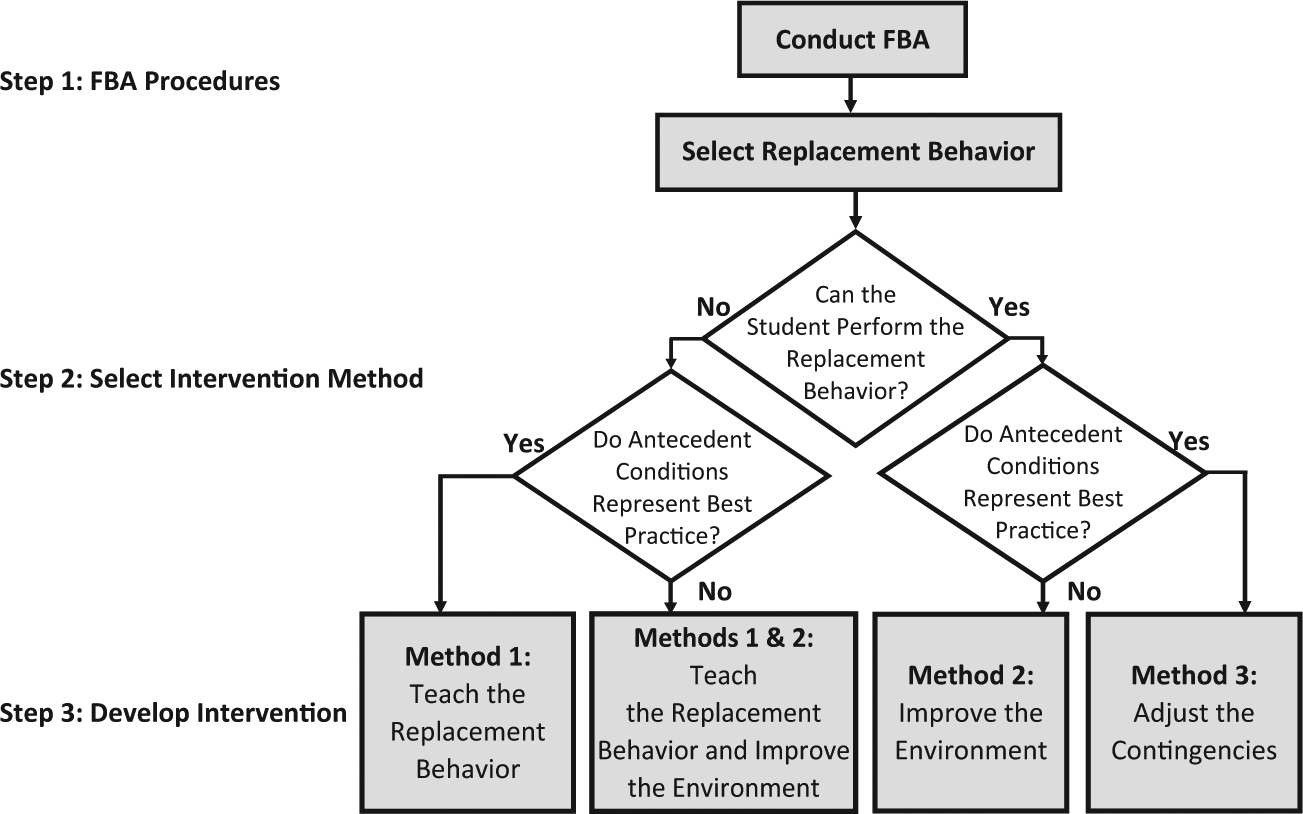
The Decision Model
Function-Based Intervention Development (Step 1)
Intervention development starts with an FBA (Figure 2). FBAs are conducted to assess why a behavior occurs and to identify those conditions that continue to support the child’s behavior, in spite of efforts to change it. The assessment identifies the behavior of concern (referred to as the target behavior), the conditions that precede the behavior (antecedents), and the consequences that maintain the behavior and increase the likelihood that it will continue to occur (O’Neill et al., 1997).

Step 1: FBA procedures conducted by Ms. Beth
FBA procedures conducted with young children typically include a variety of direct (e.g., observations) and indirect (e.g., interviews, record reviews, surveys, checklists, and rating scales) measures. The system presented in this article uses teacher, staff, and parent interviews and direct observations. These tools and procedures provide enough information to make decisions not only about the function of the behavior (i.e., why the behavior continues to occur) but also about the conditions (e.g., the classroom setup, routines, instructions, preferred activities, friends) that support the behavior, and that may require change when it is time to develop the intervention. Checklists and behavior scales can supplement this information but are not sufficient without more detailed information gathered from interviews and observations (Bambara & Kern, 2005).
Interviews
Interviews are conducted to get the adult’s perspective about the behaviors of concern. Researchers at the Technical Assistance Center on Social Emotional Intervention for Young Children (TACSEI) created an adapted version of the Functional Assessment Interview Form (O’Neill et al., 1997) to address the unique characteristics of an early childhood environment. The interview form can be found at the TACSEI website (www.challengingbehavior.org). Approximately, 40 items are organized into eight sections that provide information about possible triggers (antecedents) of the problem behavior (e.g., Do challenging behaviors occur when Delon is presented with a difficult task or when given a task demand?), consequences that maintain the behavior (e.g., Does Delon avoid the task or receive attention when he engages in the challenging behavior?), and ecological events that could affect the behavior (e.g., Is he on medication; having trouble sleeping at night?). There are questions that address when the behavior is most likely and least likely to occur, efficacy of the challenging behavior (e.g., physical effort, amount of delay between occurrence of challenging behavior and consequence), and possible behavior function (e.g., to gain access to something, to avoid something). In addition, two sections of the interview form address the child’s skill levels in play and communication (e.g., physical gestures, verbal communication).
Conducting at least two interviews (e.g., teacher and parent/guardian) is recommended (Umbreit et al., 2007). In all cases, conduct an interview with the child’s teacher and any other adults who are typically present when the target behavior occurs (e.g., paraprofessionals, assistant teachers, therapists). If the lead teacher is conducting the FBA, he or she should go through the interview himself or herself. It may give him or her a different perspective on what is happening or an interview question may stimulate new ideas. Parents should be invited to participate in the process beginning with the interview and asked for their feedback during intervention development. Family members can provide information that identifies possible problems the child is having at home that can affect classroom behavior (e.g., not sleeping, illness) and/or may have insight into the behavior, an environmental factor, or consequence that is invaluable.
As Ms. Beth completed the interview form, it became clear to her that, although it felt like it was continuous, Delon’s challenging behavior was not occurring throughout the day. When she thought about her typical day with Delon, challenging behavior occurred during circle time and was usually prompted by the group of boys he sat next to. In addition, a question (e.g., What does the child obtain/avoid?) made her realize Delon was obtaining her attention and avoiding circle time when he kicked and hit peers.
Delon’s mother’s interview validated many of Ms. Beth’s responses on the form. For example, Delon was not taking any medication and was getting regular sleep. Delon’s mother was also seeing similar challenging behaviors (e.g., kicking and hitting) when he wanted her attention or when he wanted to avoid a nonpreferred task.
Identify the Behaviors
An important outcome of the interview is the creation of clear and precise definitions of the target and replacement behaviors. The target behavior is the challenging behavior “targeted” for intervention. Replacement behaviors are appropriate behaviors that will “replace” the inappropriate behavior. For example, Delon kicks and hits as a way of obtaining Ms. Beth’s attention. Instead, Ms. Beth could teach Delon to raise his hand and ask for help as a more appropriate way to gain her attention.
Behavior definitions are needed to identify the behavior that has been targeted for intervention and provide a clear method of determining when the behavior has changed. In addition, if working as part of a behavior support team, clear behavior definitions ensure that all involved (e.g., teachers, parents) agree on the target behavior.
Behavior definitions should be written in observable and measurable terms (e.g., What does the behavior look like?). It is important to be very specific. Even a word that seems clear can be vague. For example, “Delon is disruptive” may seem self-explanatory but disruptive can mean something different depending on the child and the situation. An imprecise description or definition can also result in differing views about whether the target behavior has occurred and, therefore, lead to differences in perception of intervention success or failure. Please refer to Hojnoski, Gischlar, and Missall (2009) for more details on how to operationally define target behaviors.
Prior to conducting the interview, Ms. Beth described Delon as disruptive. Knowing she needed to be more specific, Ms. Beth thought about what Delon’s disruption would look like to someone who was observing her classroom. Using observable and measurable terms, Ms. Beth defined Delon’s disruptive behavior as shouting at adults and other children, making noises, and talking to and touching children sitting near him. If she did not intervene, Delon’s behavior escalated to hitting, kicking, and throwing items. She also noted these behaviors were more likely to occur during circle time.
The behavior that will replace the target behavior is also defined. Why should a replacement behavior be identified? This is done because the child is obtaining or escaping something when the target behavior occurs. For example, when Delon hits and kicks, he receives teacher attention. The replacement behavior is a way for the child to obtain (e.g., gain access to a toy, teacher attention) or avoid (e.g., avoid a nonpreferred task), in an acceptable manner, what they have gotten or avoided with the target behavior. It is something the teacher will want the child to do: not “sit quietly,” but look at the teacher when he or she is talking. The replacement behavior is stated positively. For example, instead of “stop running to the snack table,” the teacher would give the child something “to do,” such as “walk to the snack table.” In many cases, the replacement behavior will not be identified until all interviews and observations have been completed. Selection of the replacement behavior should be kept in mind until the teacher and others working with the child know exactly what he or she wants the child to do.
Instead of kicking, hitting, and making noises, Ms. Beth wanted Delon to follow directions, sit in circle, and participate in circle activities. Ms. Beth called these behaviors collectively “on-task.”
Direct Observations
At the beginning of this section, interviews are identified as an indirect measure. They are indirect and subjective because they rely on recollection. Direct observation is a way to obtain objective information about the behavior and environment. The teacher or another observer (paraprofessionals, assistant teachers, therapists, etc.) can complete the direct observations. Easy access to other adults and demands of the classroom may prompt the use of another observer. The description provided below gives details about how teachers can complete direct observations with the help of a paraprofessional or other school personnel.
After completing interviews, the child should be observed within the natural environment (e.g., classroom, playground) and during usual classroom routines and activities (transitions, circle time, etc.). Typically, observations are completed during the time the teacher has pinpointed as the most problematic. However, if the teacher cannot pinpoint when the target behavior occurs (e.g., she says it occurs during all activities), observations should be conducted for an extended sample of the child’s day until it is clear when the target behaviors occur and when they do not. Moreover, it is helpful to observe the child when he or she performs well because it will give clues about what to do during challenging periods. For example, appropriate behavior may always occur during one-on-one interactions when the child is receiving a lot of adult attention for appropriate behavior. Or, appropriate behaviors may occur more often during times the child has a choice of activities and access to preferred activities.
During observations, if the teacher is providing instruction and/or interacting with the child, another observer should record what occurred immediately before the behavior (antecedent), the behavior that occurred (behavior), and what occurred immediately after the behavior (consequence). ABC (antecedent, behavior, consequence) observations (Bijou, Peterson, & Ault, 1968) provide the needed format for direct and continuous measurement and a structured way to identify the conditions under which the target behaviors occur (Table 1). Observations should continue until a clear ABC pattern emerges. A pattern will be clear when the observer can almost predict when the behavior will occur and what will occur after the behavior. If occurrences of the target behavior and consequences for the behavior are variable and there is no clear pattern, continue to collect ABC data.
Delon’s Direct Observation Data Completed by Ms. Kim (Paraprofessional in the Classroom) During First Observation (Antecedents, Behaviors, and Consequences)
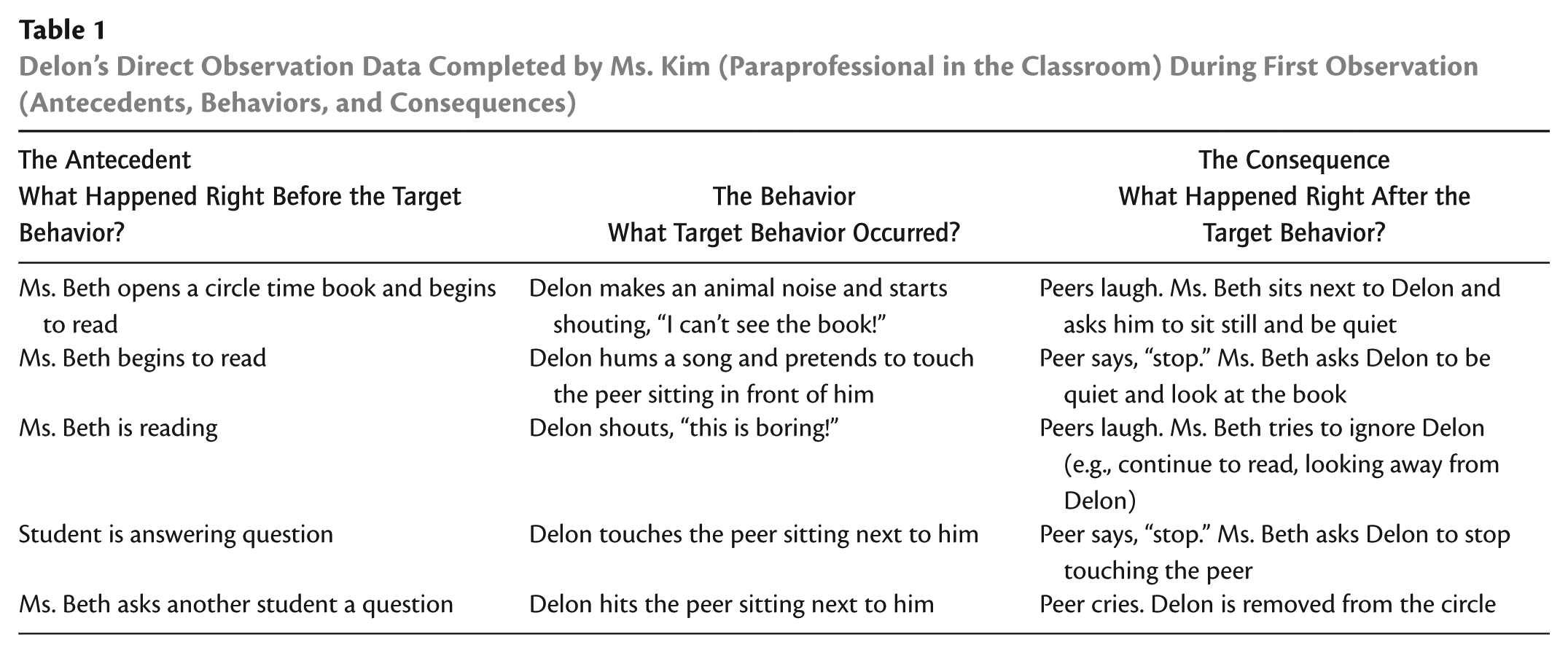
During the direct observations, Ms. Beth engaged in her typical classroom activities/routines. Using the ABC form (Table 1), Ms. Kim (paraprofessional in Ms. Beth’s classroom) recorded what came before and after Delon’s challenging behavior. The patterns of Delon’s disruptive behaviors became clear after four 15-min observations during circle time, centers, and snack. The target behavior only occurred during circle time activities. In addition, Delon received peer and teachers attention when he engaged in the target behavior and was removed from circle time.
Identify the Function
After completing the interviews and observations, the resulting data are analyzed to determine the hypothesized function of the target behavior. The Function Matrix (Umbreit et al., 2007) is a simple device that is intended to help organize the FBA information so that the function can be determined. It consists of a grid with three columns and two rows (Figure 3). The first column lists potential sources of reinforcement (i.e., attention, tangible/activity, and sensory). The second and third columns list possible functions of behavior (i.e., positive reinforcement [the person obtains something] and negative reinforcement [the person avoids or escapes something]).
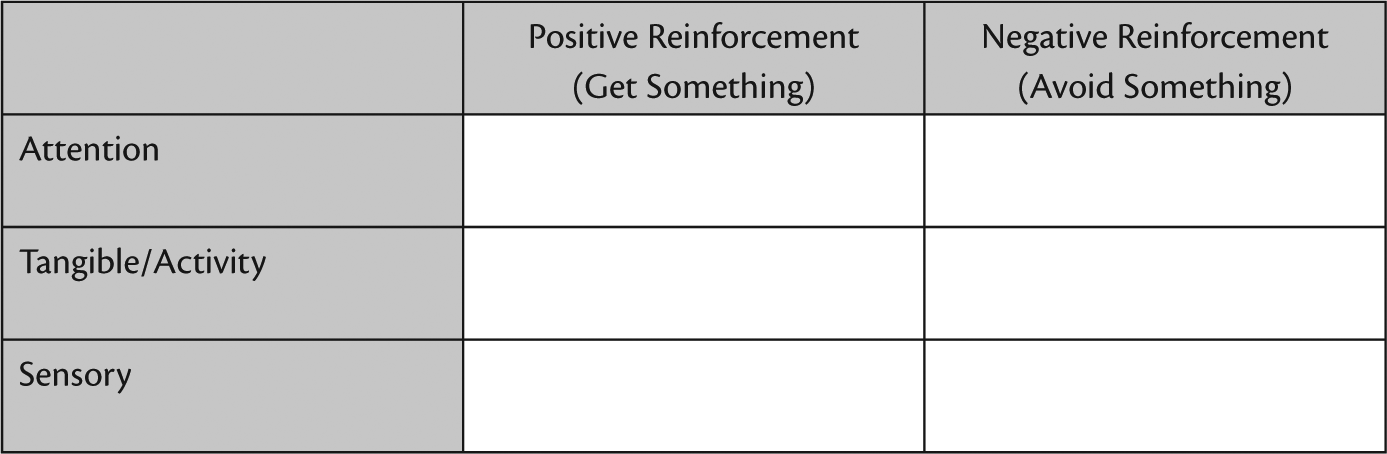
Function Matrix
Data from the interviews and ABC direct observations are recorded in the cell of the Matrix with the corresponding function. For example, when completing the interview form, Ms. Beth indicated that Delon’s peers laugh at him when he makes noises in circle (Delon obtains peer attention). Using the Function Matrix, Ms. Beth would record the statement from the interview into the positive reinforcement/attention matrix cell (Figure 4). If data from a direct observations reveal that peers laugh at Delon and Ms. Beth moves closer and talks to him (Delon obtains teacher and peer attention), Ms. Beth would record that observation in the same cell, which is positive reinforcement/attention. Each interview comment and observation is analyzed and recorded in this manner. Once the information is entered into the Matrix, a function or multiple functions will be revealed. Cells that are filled with information from the FBA are likely functions. Empty cells indicate what the function is not.
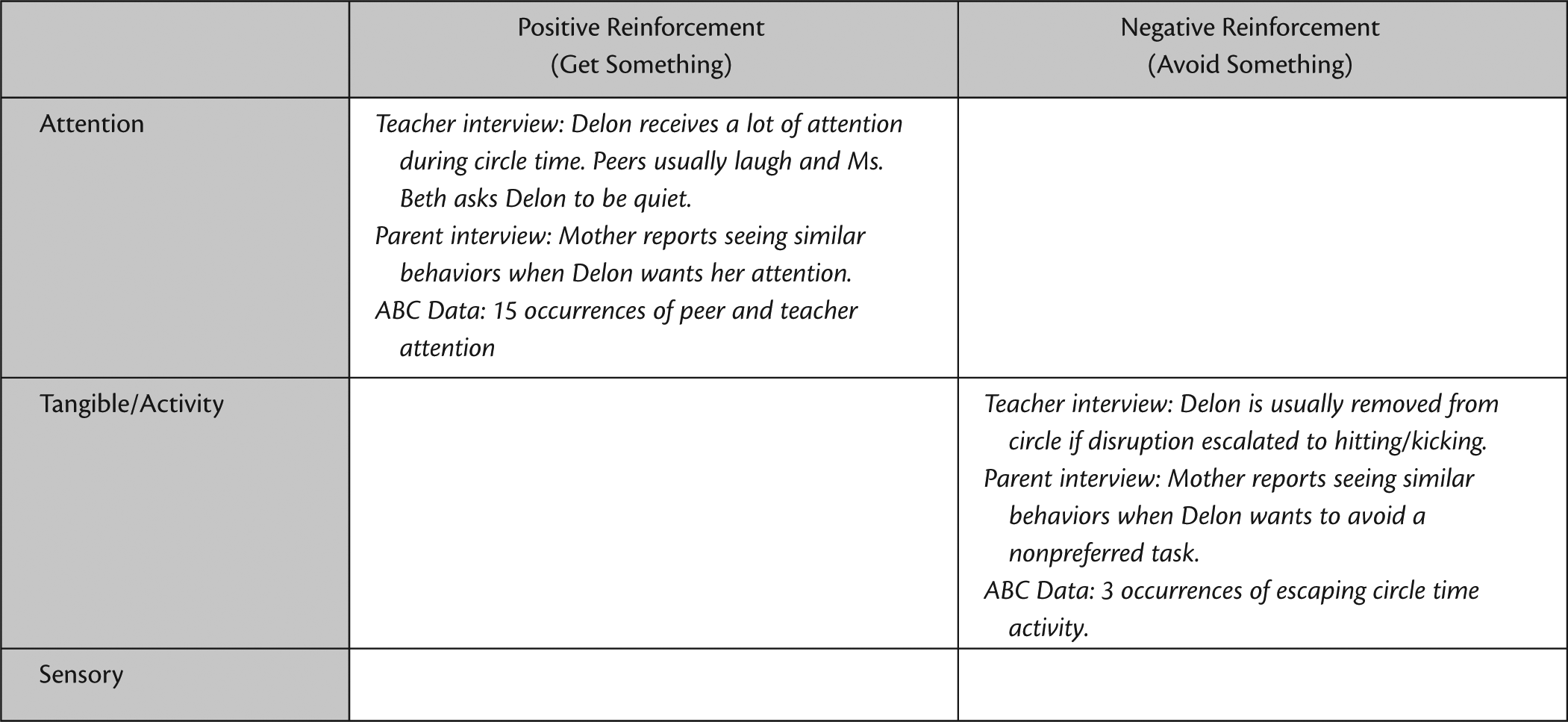
Delon’s Function Matrix
Delon’s assessment information placed a majority of ABC data and the interviews in the access to attention and the escape from activity cells (Figure 4). From this information, Ms. Beth was able to write a hypothesis statement. The hypothesis statement should include (a) when the target behaviors occur, (b) what behaviors occur, and (c) the function of the target behavior (Kern, 2005; O’Neill et al., 1997).
Hypothesis statement: Delon engages in disruptive behavior (shouts, makes noise, touches peers, hits/kicks) during circle time activities to obtain access to teacher/peer attention and to escape from circle time activities.
Function-Based Intervention Development
Function-Based Intervention Decision Model
Ms. Beth has already completed the first steps of the Decision Model by defining the target and replacement behaviors, conducting the FBA, and identifying the function(s) of the target behavior. The next step is to use the Decision Model to decide the intervention method and strategies that are most appropriate to use based on the information compiled during the FBA.
When the FBA is completed and the behavior function(s) is identified, there are three intervention templates to choose from (Method 1, Method 2, and Method 3). All the intervention methods described in Umbreit et al. (2007) include three key elements: (a) adjusting antecedents, (b) reinforcing the replacement behavior, and (c) withholding reinforcement from the target behavior (an extinction procedure). Each method differs in the type of adjustments made to antecedent and consequent variables.
Before an intervention method(s) can be identified, there are two questions that need to be answered in the Decision Model. Can the student perform the replacement behavior? Do antecedent conditions represent effective practice for the student? The first question addresses whether the child has a skill deficit or if the child has the skill but is not using it consistently. The next question addresses adult behavior and the classroom environment.
If the child cannot perform the replacement behavior, the teacher will Teach the Replacement Behavior (Method 1). If the child can perform the replacement behavior but antecedent conditions do not represent effective practice, the teacher will Improve the Environment (Method 2). Methods 1 and 2 are used, if the answer to both questions is No. If the child can perform the replacement behavior and the environment represents effective practice, the teacher will Adjust the Contingencies by making sure that the replacement behavior is reinforced and the target behavior is not (Method 3).
Using the data collected during the FBA, Ms. Beth answered the two Decision Model questions.
Decision Model Question 1
Can Delon perform the replacement behavior? (Figure 5). All the parts of the replacement behavior that were identified and defined at the beginning of the FBA must be included when assessing if the child can perform the replacement behavior. For example, based on the replacement behavior selected for Delon (i.e., On-task: follow directions, sit in circle, and participate in circle activities), Ms. Beth asked, Can Delon sit for the length of the circle? Does he know how to obtain teacher attention in an appropriate manner? (e.g., raise his hand). Does he understand the directions she gives him? Does he follow directions at other times? Does he know what behavior is expected in the classroom and during circle time? The Replacement Behavior Worksheet (Figure 6) is included to help assist in the assessment of replacement skills.
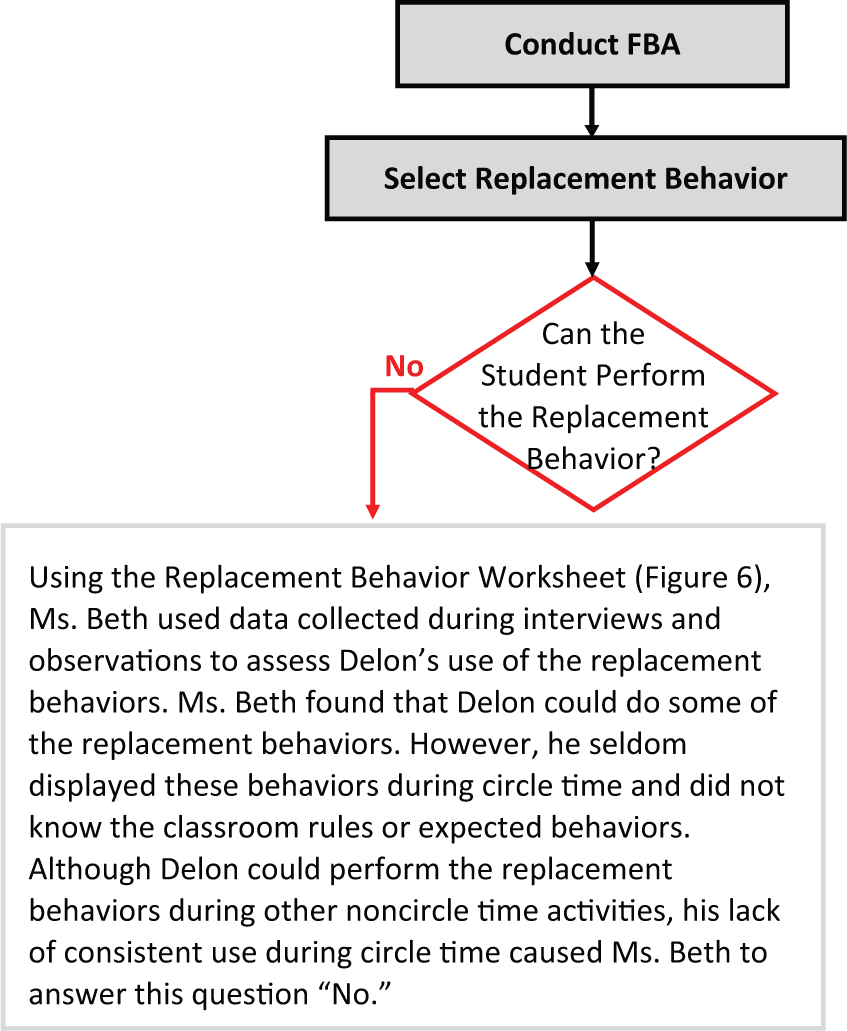
Step 2: First question of Delon’s Decision Model
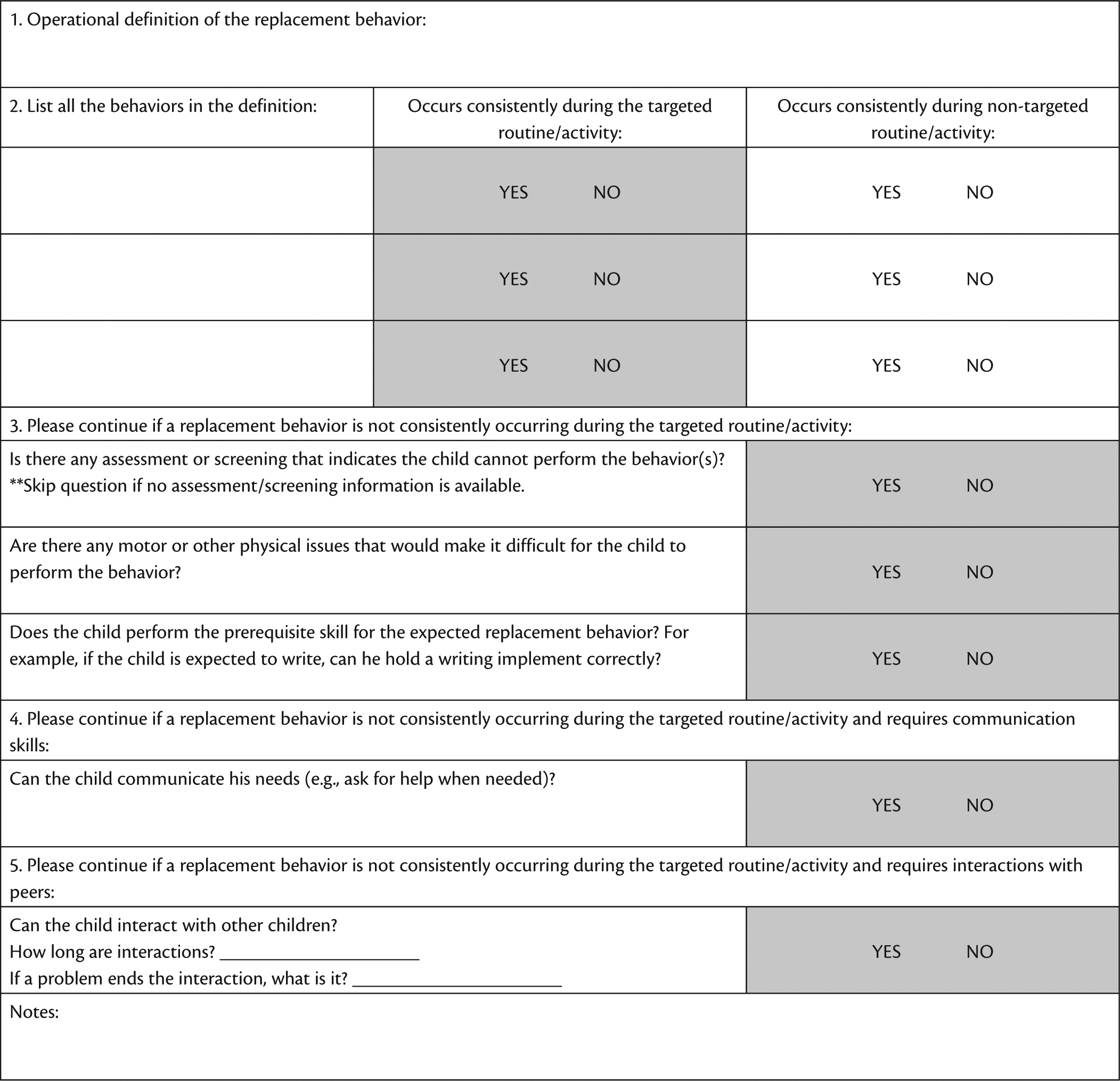
Replacement Behavior Worksheet
Ms. Beth used data collected during interviews and observations to complete the Replacement Behavior Worksheet (Figure 6). Ms. Beth found that Delon could do some of the replacement behaviors. He usually followed directions during preferred activities and had been observed to sit for 20 min (the length of the circle) at other times during the day. However, he seldom displayed these behaviors during circle time and did not know the classroom rules or expected behaviors. Although Delon could perform the replacement behaviors during other noncircle time activities, his lack of consistent use during circle time caused Ms. Beth to answer Question 1, “No.”
Decision Model Question 2
Do antecedent conditions represent “best or effective” practice? (Figure 7). In other words, are the classroom environment, behavior management strategies, and instruction level appropriate for young children in the particular classroom? This question is asked as part of the Decision Model because antecedent strategies (e.g., classroom rules/expectations, effective instruction, classroom arrangement) used in the classroom may not represent effective practice (e.g., transition routines unclear and not consistent; instruction too complicated, not age appropriate) and may be contributing to the child’s challenging behaviors (Kern & Clemens, 2007).
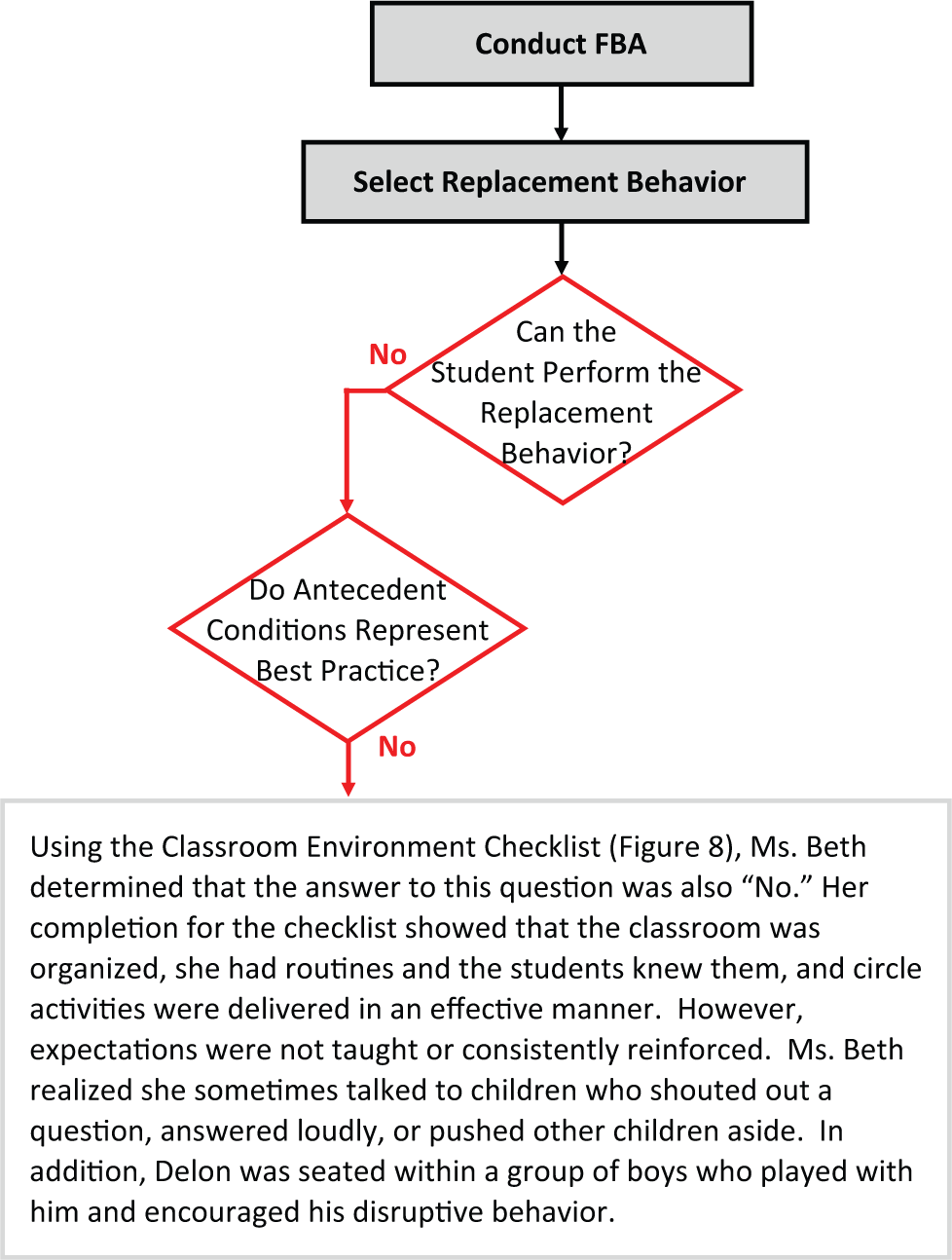
Step 2 (continued): Second question of Delon’s Decision Model
Due to the complexity of this question, the Assessing the Classroom Environment Checklist (Figure 8) is provided to help prompt teachers and school personnel to assess their use of effective practice as it relates to classroom structure, daily procedures and routines, classroom rules, and effective instruction. The teacher, other school personnel, and/or a behavioral team can complete the checklist. The checklist is designed so that any relevant items that are marked not present or partially present alert the teacher that the environment does not represent effective practice. To improve effective practice, these items would be added to the intervention strategies as part of Method 2: Improve the Environment. For example, if the teacher identifies transitions as partially in place, this would be an area of concern, especially if the child is having difficulty with transitions. Partially in place transition procedures are not effective practice and should be addressed during intervention development.

Checklist for assessing the classroom environment (early childhood)
Using the Classroom Environment Checklist, Ms. Beth determined that the answer to this question was also “No.” The checklist showed that the classroom was organized, she had routines and the students knew them, and circle activities were delivered in an effective manner. However, expectations were not taught or consistently reinforced. Ms. Beth realized she sometimes talked to children who shouted out a question, answered loudly, or pushed other children aside. In addition, Delon was seated within a group of boys who played with him and encouraged his disruptive behavior. Because the answer to both Decision Model questions was “No,” Intervention Methods 1 and 2 were selected for Delon.
Behavior Change Plan
The deficits identified when Ms. Beth asked the two Decision Model questions were directly addressed with the intervention strategies. Using Methods 1 and 2 templates (Figure 9), Ms. Beth identified appropriate changes that would improve Delon’s behavior without disrupting the classroom routines or taking too much of her time. The following intervention elements were identified:
Teach the replacement behavior (Method 1)
Delon and the other children in the classroom were taught the rules because Ms. Beth determined that Delon did not know the rules and did not follow them.
Change the environment (Method 2)
To help the children learn and remember the rules, pictures and words defining classroom expectations were posted. Delon was also assigned a seat near other friends who could serve as peer models during circle time. In addition to being an effective management technique, it also eliminated the attention Delon received from other children—one function of his behavior.
Reinforce the replacement behavior (Methods 1 and 2)
Delon’s on-task behavior was reinforced. For example, because teacher attention was what Delon wanted, Ms. Beth used descriptive praise (e.g., “Delon, you are listening to me and following directions”) and allowed him to answer each time Delon raised his hand.
No longer reinforce the target behavior (Methods 1 and 2)
If Delon was disruptive, Ms. Beth ignored the behavior while praising other students’ appropriate behavior (e.g., “Matt’s legs are crisscross and he’s ready”). Other children were also advised to ignore Delon if he talked to them during circle time. It also helped that he had been moved away from his disruptive friends. If necessary, Delon was quickly and briefly redirected if disruption occurred to minimize attention. Delon was no longer allowed to escape circle time activities and had to remain until the end of the session.
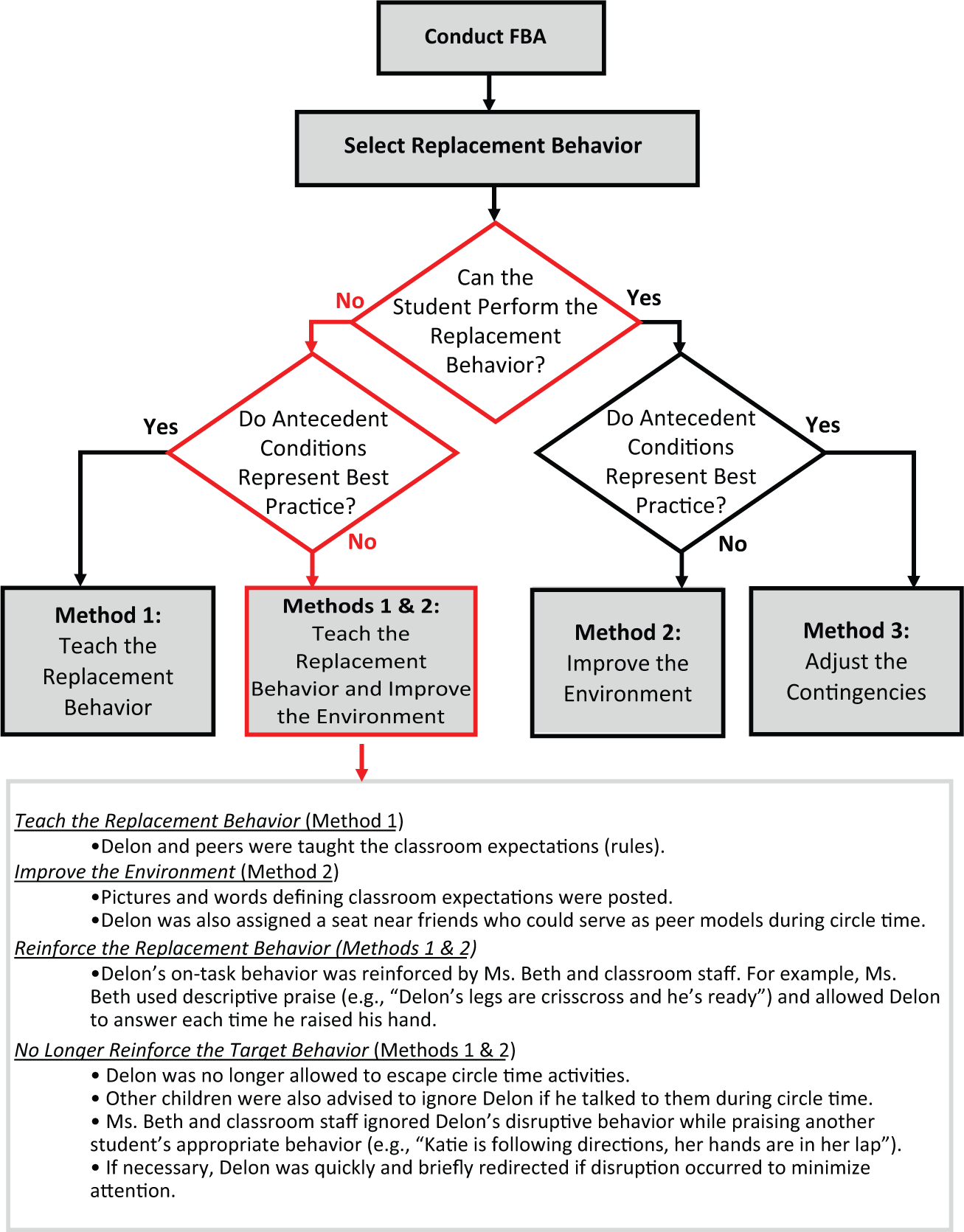
Step 3: Delon’s intervention method identified and developed using the Decision Model
Other Considerations
In summary, the procedures described in this article provide a systematic approach for connecting data collected during the FBA to intervention components. FBA and the use of the Decision Model (Umbreit et al., 2007) are effective procedures for identifying the function of target behaviors and developing function-based interventions.
Using the procedures described in this article, Ms. Beth developed an intervention that targeted the functions of Delon’s disruptive behaviors (e.g., access to attention and escape from circle time activities) and provided Delon with a replacement skill and the environmental adjustments needed to support appropriate participation during circle time activities. Ms. Beth was ready to implement; however, there were a few more questions to address following intervention development.
Data recording
Prior to intervention implementation, there are three more questions that need to be answered (references to articles published in Young Exceptional Children that describe strategies to address these three questions are provided below). First, what data recording method is going to be used (Please refer to Hojnoski et al., 2009, for a description of data collection methods)? This is important so that the teacher has the information needed to show that the intervention is, or is not, effective. Ms. Beth may know that Delon is participating during circle for longer periods of time, but how much longer? Is the intervention partially effective? Data provides a clear picture of the effectiveness not only for the teacher but also for parents and administrators.
Social validity and intervention integrity
Second, is the intervention acceptable to the teacher and parents (Please refer to Turan & Meadan, 2011, for a description of social validity assessments)? Third, how will the implementation of intervention elements be monitored (Please refer to Luze & Peterson, 2004, for a description of assessing intervention integrity)? Social validity and intervention integrity are important to the overall effectiveness of the intervention and are typically overlooked (Gresham, 2009). Because Ms. Beth developed the intervention, it would be assumed that she finds the intervention acceptable. If the intervention is not accepted by the teacher and/or parents, there is a good possibility the intervention will not be implemented or maintained beyond initial implementation (Lane & Beebe-Frankenberger, 2004). In addition, without a procedure to monitor intervention implementation, there is no way to be sure the intervention is being implemented as planned. This information will alert the teacher (and/or behavior team) if more training is needed or if the intervention needs to be adjusted.
There are many steps to the assessment process (FBA) and intervention development. However, the benefits are many: increased time teaching rather than trying to decrease problem behavior, fewer collateral problems such as other children becoming disruptive or emotionally upset, and more efficient use of teacher assistants. Through the use of the methods described in this article, teachers can further support young children with challenging behavior and promote positive behavior change in their classrooms.
Footnotes
Authors’ Note
You may reach Brenna K. Wood by e-mail at