



Abstract

Jennifer sat on a couch in the living room of Mohamed and Fatuma’s apartment. Mohamed and Fatuma were Somali refugees; Mohamed worked as a medical coder and Fatuma stayed home with their three children: Noor (2 months), Abdullahi (18 months), and Zahra (4 years). Jennifer, a speech-language pathologist (SLP) working as an early intervention (EI) provider in Minnesota, was on her first visit with Abdullahi and his family. Abdullahi was recently referred by his pediatrician due to concerns of late talking and later qualified by the district assessment team for EI services under the disability category of developmental delay in the areas of communication, social-emotional, adaptive, and cognitive development. His Individualized Family Service Plan (IFSP) outcomes targeted his family’s priorities of increased communication throughout his day, play with his sister, and participation during mealtimes.
Jennifer used this first visit to understand the strengths, priorities, and concerns of the family and Abdullahi, and explained again what EI services would look like. She asked open-ended questions to gather meaningful information and focused on what Mohamed and Fatuma saw as Abdullahi’s strengths and needs. Prior to the visit, Jennifer had met with Ahmed, the Somali bilingual program assistant, to support his interpretation services during the visit. Jennifer also took time to observe Abdullahi and shared that intervention would fit into the daily routines of their family. Jennifer sat next to Ahmed, and pulled out Abdullahi’s IFSP from her bag. “I understand you are concerned because Abdullahi is not speaking yet,” Jennifer said. Jennifer paused so Ahmed could interpret what was said. Mohamed and Fatuma agreed that communication was a concern as Abdullahi did not say any words yet, and they reminded Jennifer they were also concerned with Abdullahi’s eating habits. They shared that while Abdullahi played very well independently, he did not interact with his sister, Zahra, and would get upset when she tried to play with him. As Jennifer observed Abdullahi, she noticed he was making atypical, repetitive sounds and his sounds were rarely directed to his family. He also did very little referencing of anyone in the room, but he would run over for big squeezes from Fatuma. The assessment team shared with Jennifer that they saw some characteristics of autism but did not approach the subject with Ahdullahi’s family because he was so young.
“. . . Early identification of autism . . . allows families more time to process the diagnosis and find the best supports for their unique child.”
Language Discussing Autism and Identity

Talking about autism with a family can feel overwhelming, but can be broken down into a three-step process illustrated in Figure 1: first gather information while building trust with the family, prepare to have conversations about autism, and finally to have these critical conversations as a means of building consensus with the child’s family. The outlined steps embed many of the Division for Early Childhood’s (DEC, 2014) Recommended Practices ([RPs]; see Table 2) and are supported by the research literature. Before transitioning to conversations about autism, providers need to consider why these early conversations are critical, particularly regarding the views of families (especially families from diverse cultural and linguistic backgrounds) and the importance of early autism identification to best support the child.

Talking About Autism With Families
DEC Recommended Practices and Autism Identification

Note. DEC = Division for Early Childhood of the Council for Exceptional Children.
Autism and Families’ Experiences
When asked to share perspectives on early autism intervention, “ Parents consistently mentioned a desire for earlier identification to ensure the earliest possible access to intervention” (Stahmer et al., 2011, p. 13). A Somali mother in Canada expressed that she knew that her son wasn’t developing like her other children had at the age of three. The mother had expressed concerns to her pediatrician who put off her concerns, and her son’s diagnosis was delayed until he was six (Kediye et al., 2009). In the mother’s words: “Imagine what a waste of precious time” (p. 217). Some Somali parents of children on the autism spectrum living in the United Kingdom also indicated that earlier autism intervention would have been helpful for their children, but discussed important barriers that could get in the way of getting a diagnosis, including lack of familiarity with professional roles to family, community members discouraging them from seeking a diagnosis, and even the fact that the Somali language does not have a word for autism (Fox et al., 2017). Somali parents voiced the need to promote the awareness of autism and other developmental disabilities within Somali communities, suggesting that these families need help in understanding autism (Hussein et al., 2019).
Somali communities are not alone in this: Latinx and Black Americans have less exposure to information about early autism characteristics and have more experiences of stigma and guilt than white non-Latinx Americans (Gordillo et al., 2020; Rivera-Figueroa et al., 2022). When over 300 Part C EI providers from across 18 states were asked about their comfort level regarding autism conversations, close to a third of providers expressed discomfort in bringing up the topic of autism when parents had not first introduced concerns (Wiegand et al., 2023). While over 80% of respondents agreed to feeling confident discussing early signs of autism with families, the percentage of respondents who endorsed confidence dropped approximately 20% when the families came from a cultural background different than their own.
The Importance of Early Autism Identification
Autism can be hard to see in very young children; even in older children there is a lot of variability in how autism presents (Wozniak et al., 2017). The average age of autism diagnosis in the United States is over 4 years of age (Maenner et al., 2021). Children of color are, on average, identified on the autism spectrum later than white non-Latinx children (Angell et al., 2018), and Latinx children are less likely to receive a diagnosis (Maenner et al., 2021). This late age of diagnosis can lead to children missing out on intervention to support their communication and development during the time period when it is most beneficial—before the age of three. Being enrolled in a parent-implemented intervention before the age of 3 years has been shown to predict better outcomes for young adults on the autism spectrum (Kim et al., 2018). Matching a young child on the autism spectrum with supports specifically designed for their needs as early as possible will help them be more successful. Compared to other early diagnoses like developmental or language delays, an autism diagnosis is more stable over time and very rarely changes when identified around 14 months (Pierce et al., 2019).
Some children on the autism spectrum do receive EI services, but without a diagnosis or categorization of autism. Many of these children are classified under the special education category of developmental delay, or DD, but this category is not intended to be used when a child may meet eligibility for the educational disability category of autism. In the DEC concept paper which introduced and outlined the use of the DD category, it is explicitly described that,
the early identification of young children with sensory impairments or autism spectrum disorders is essential for referral to effective assessment and services that will improve the likelihood of positive social and educational outcomes. Therefore the use of a [DD] category does not preclude the use of appropriate disability categories (e.g., multiple disabilities, visually impaired, deaf-blind, deaf, or autism spectrum disorders). (McCormick et al., 2009, pp. 2–3)
If a toddler is demonstrating signs of autism, it is important to engage in a conversation with the family to initiate the process of best supporting the child and family. The following steps outline the process of preparing to share and engaging in conversation with the family about autism in early intervention.
Step 1: Gather Information While Building Trust
The first step is to gather information while simultaneously building a relationship with the family on a solid foundation of trust (DEC RP A2). Developing a trusting relationship with families is an essential part of EI, as indicated in the DEC (2014) RPs, the DEC Early Intervention/Early Childhood Special Education Standards (Council for Exceptional Children & DEC, 2020), and the Early Childhood Personnel Center’s (ECPC) Cross Disciplinary Competencies (Bruder et al., 2019) and an essential part of sharing information about autism (Abbott et al., 2013; Nissenbaum et al., 2002). EI providers can begin to build trust by establishing a reciprocal relationship with a family. Devoting time to establish a relationship, collaboration, and responsiveness are important strategies in building these reciprocal relationships (Childress, 2021). Establishing a trusting relationship with Abdullahi’s parents is a critical precursor to bringing up autism with his family. Providers also build trust by being responsive and sensitive to the family’s cultural and linguistic backgrounds (DEC RP F1). Given that Abdullahi’s family and Jennifer do not share a common culture, it is especially important for Jennifer to use culturally responsive practices for building trust (see Bradshaw, 2013 for more on culturally responsive EI).
In her first visit with Mohamed and Fatuma, Jennifer was responsive to the family by discussing their concerns and priorities within Abdullahi’s IFSP. Jennifer also built her relationship across several sessions by asking open-ended questions about his strengths and needs to gather information. For example, Jennifer asked Mohamed and Fatuma, “What are some words you use to describe Abdullahi?” Jennifer collaborated with Ahmed to be more culturally and linguistically responsive in her home visits. The emerging relationship between Jennifer and the family allows her the opportunity to observe Abdullahi during sessions in his familiar environment within everyday activities, and she can now build upon that relationship to move toward a shared consensus with his family on the early signs of autism ([DEC RP F1], Dow et al., 2020).
While some children on the autism spectrum can present more clearly, other children show more subtle or inconsistent signs of autism (Wozniak et al., 2017). It is important to gather information about the child and also have a solid understanding of autism. The provider can then align information about the child and characteristics of autism. Screening tools are one important strategy for gathering information to help families toward the process of an autism evaluation, including broadband screeners like the Infant Toddler Checklist (Wetherby et al., 2008), the Ages and Stages Questionnaire, 3rd Edition (Hardy et al., 2015), or the Infant-Toddler Social and Emotional Assessment (ITSEA; Carter et al., 2003). Screening tools can be used informally as long as modifications are noted and standard scores not used. One way to modify the use of a screener is to ask questions from the screener across a session or multiple sessions. This allows a more naturalistic interaction rather than a clinical interview.
Observations and familiarity with autism signs is one of the best clinical tools we have available. For example, the ASD video glossary (https://www.autismnavigator.com; see Table 5) is a free resource that providers can use to practice observing early signs of autism. As the provider is observing the child, they can keep track of autism characteristics and determine: Are there signs of both social communication differences and repetitive behaviors? Does the child demonstrate characteristics of autism across activities? How is participation impacted across routines and everyday activities? What supports help the child?
After a month of starting visits with the family, Jennifer had developed a strong foundation of trust with the family. She also felt strongly that Abdullahi was demonstrating characteristics of autism. Jennifer observed that Abdullahi was beginning to say a few words, but his words were limited to numbers or were repeated from others. His mother was happy to hear words but was hoping that Abdullahi would say “hooyo,” the Somali word for mama. Abdullahi also enjoyed lining up cars but would become very upset if Zahra used even one car, which was frustrating for his parents. Even though Jennifer gained confidence in her home observations, she felt conflicted about what to do next. She feared that if she brought up autism they may stop services. She was also concerned with the cultural implications. Jennifer had heard from other providers how some Somali families were resistant to that label. Part of Jennifer wondered if she should keep her observations to herself, meet Abdullahi’s needs, and address the concerns of the family without bringing up the word “autism.”
Step 2: Preparing for Conversations About Autism
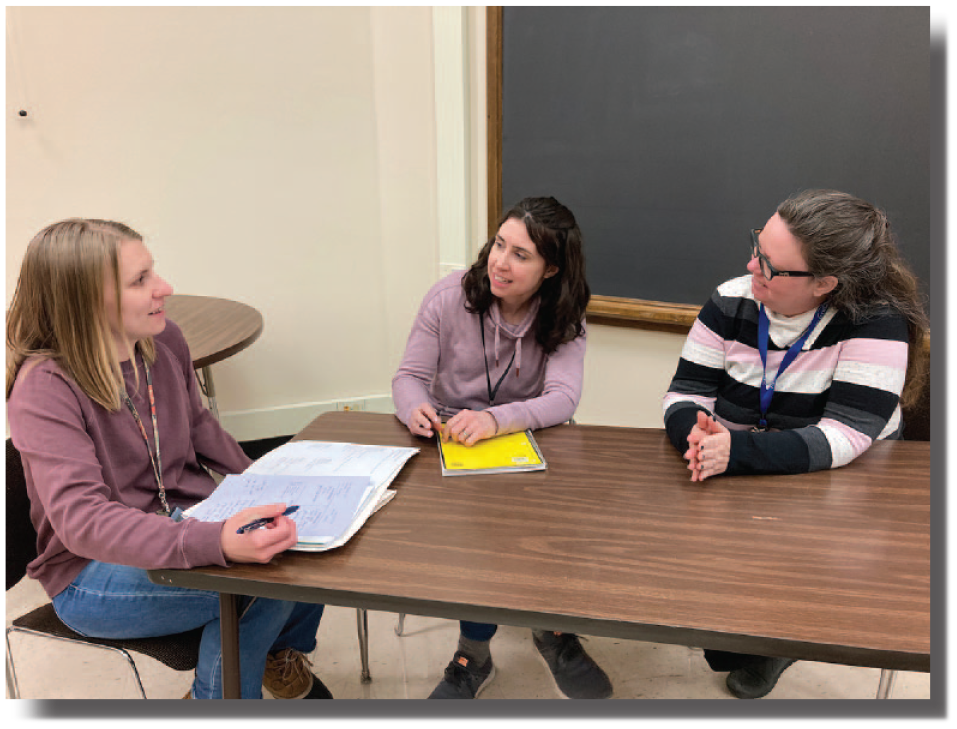
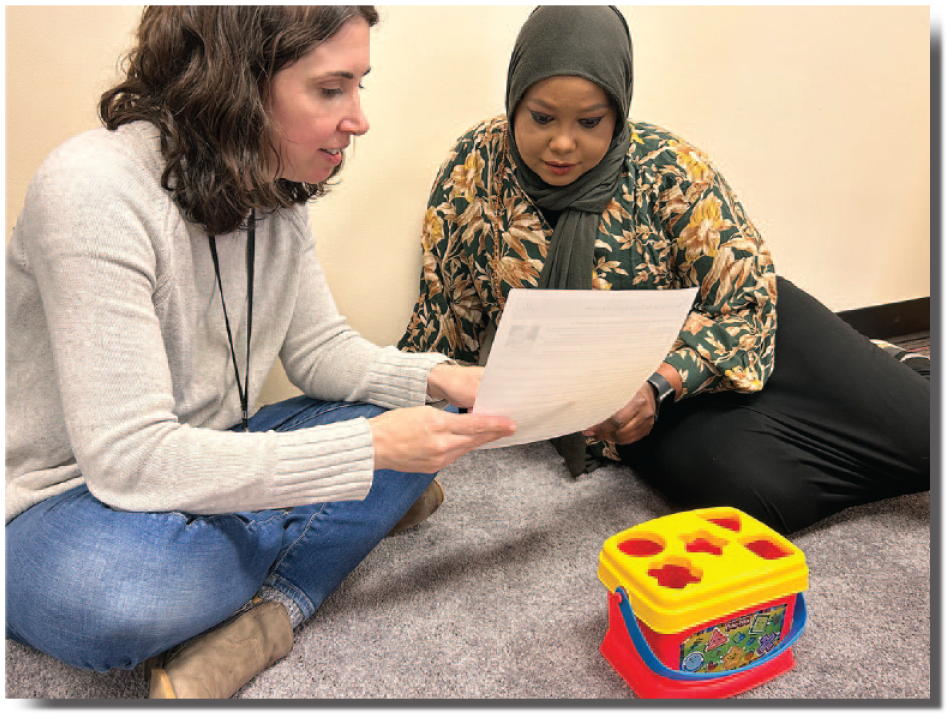
The second step is to prepare for conversations about autism with the family (U.S. Department of Health and Human Services et al., 2020). During this step, the provider works toward establishing a shared understanding between the family and the professional team of the strengths, challenges, areas for support, and/or priorities for the child. To prepare for the conversation, the provider can list out the characteristics of autism that are seen by both herself and the family. It is important for the list to include areas of strengths, as there are many strengths related to autism and including on strengths continues fostering a trusting relationship. Another tool for preparing for a conversation with a family is through collaborating with team members. Jennifer can share her observations with providers in other disciplines to gather their expertise on autism and social communication development (DEC RP TC2). Her team can also help coach her on effective ways to discuss autism with Abdullahi’s family. Jennifer also reflects on her own preparedness and possible hesitations about discussing autism and consults with an interpreter and/or cultural liaison (U.S. Department of Health and Human Services et al., 2020). It is important to review any technical language and possible cultural implications with an interpreter. The Early Intervention Training Program at the University of Illinois (EITP, n.d.) has numerous resources related to working with interpreters in EI. Taking the family’s priorities regarding communication, eating, and sibling interactions, Jennifer can then provide her professional insights on the possible impact autism is playing on Abdullahi’s development to allow his family the opportunity to make informed decisions (DEC RPs F1 & F2). Jennifer can also identify resources/handouts for the family, as providing information in multiple formats can improve a family’s experience as they receive information about autism (Nissenbaum et al., 2002). By providing resources and handouts to the family, the family can focus on resources grounded in evidence and tailored to early childhood development.
“Part of the process of developing a trusting relationship with families is understanding potential barriers that may lie ahead but still adhering to best practices.”
Jennifer’s EI program utilized a primary service provider model and therefore Jennifer met regularly with her team, which consisted of Jennifer (the SLP), an occupational therapist (OT), a physical therapist, and an EI teacher. During their next team meeting, Jennifer discussed her observations of Abdullahi with her team, who agreed Jennifer should initiate a conversation about autism with Abdullahi’s family. Jennifer shared her concerns about broaching the topic with Abdullahi’s family. Brooke, the OT, emphasized the importance of prepping the interpreter prior to the conversation to prevent misunderstandings or breakdowns in interpretation. Jennifer shared that she felt ready to bring autism up, as she had spent her home visits with Abdullahi building trust and rapport with his family.
Part of the process of developing a trusting relationship with families is understanding potential barriers that may lie ahead but still adhering to best practices. Though there are increased disability related concerns linked with stigma within communities of color (Fox et al., 2017; Gordillo et al., 2020; Rivera-Figueroa et al., 2022), it is important for providers like Jennifer to share their professional perspectives as they team with families so that they can access timely evaluations and appropriate interventions. Many times professionals and families come from different racial, ethnic, and cultural backgrounds as there is a critical need for more diversity in the EI workforce; in Jennifer’s profession of speech-language pathology, 91.4% of providers surveyed in 2021 identified as white (American Speech-Language-Hearing Association, 2022). When working with families from cultural and linguistic backgrounds different from the provider, interpreters can improve family and provider communication and collaboration (Acar & Blasco, 2018) and can be an important pathway for bridging the conversation about autism. Table 3 outlines considerations for incorporating interpreters into these critical conversations.
Using an Interpreter for Conversations About Autism

Following her team meeting, Jennifer began prepping for her next visit with Abdullahi. She first gathered resources she could bring for Abdullahi’s family. Because Somali is primarily an oral language, Jennifer decided to provide the resources in English, but planned to have Ahmed read the resources during the meeting. Next, Jennifer called Ahmed and let him know what the next visit with Abdullahi’s family was going to entail. Jennifer asked Ahmed if he had any questions about autism. Ahmed asked what caused autism and relayed that he had heard other Somali families say that autism is caused by vaccines. Jennifer was prepared for this assertion, as Somali families have been targeted by anti-vaccination activists (Dyer, 2017) and believe more often than non-Somali families that autism can be caused by the MMR vaccination (Wolff & Madlon-Kay, 2014). She knew that every family is unique and that she shouldn’t make assumptions about what views a family may have, but also recognized the importance of being aware of conversations that may be happening in the local community, in this case the Somali-American diaspora. Jennifer explained there isn’t a clear cause of autism, but it is a mix of genetics and environment that results in differences in the brain. She asserted there is nothing Fatuma and Mohamed did or did not do to cause autism, and told Ahmed they would emphasize that if the family asked. Jennifer emailed Ahmed the autism resources, including autism support groups for Somali families, so he was prepared to talk about them at the upcoming visit.
Step 3: Building Consensus Through Conversations
The final step for the provider is to share professional knowledge with the family and allow the family to share their expertise about their child (DEC RP F2). Partnering with families is another cornerstone of high-quality EI services and is shown to improve a family’s experience receiving information about autism (Moh & Magiati, 2012). Through these conversations a shared consensus can be built and decisions made, such as to pursue an autism diagnosis. Consensus is the goal, but information gathering and mutual sharing continue on through this final step and beyond (DEC RP TC2). Providers do not need to reach a level of certainty regarding autism before discussing it with a family. While it is important to gather sufficient information and establish a trusting relationship, extending this phase—perhaps to wait until the characteristics of autism are more clear—may come at the cost of ongoing consensus for intervention targets, supports, and strategies.
Resources in hand, Jennifer met Ahmed in the lobby of Abdullahi’s family’s apartment and walked toward the elevator, then ascended to the ninth floor. As they entered the apartment, Jennifer began her visit like any other, greeting and checking in with the family; asking how their week went. Last week Jennifer and the family worked on sibling play by setting up predictable routines for the two children to play with cars. When she asked how it went, Mohamed reported Abdullahi still got upset when Zahra touched the cars. Jennifer decided this was a nice way into the conversation. She asked, “I wonder why Abdullahi gets upset when Zahra tries to play with his cars. Are there other things you notice that upset Abdullahi?” Mohamed and Fatuma listed some other things that made Abdullahi upset such as changes to their routines or when others try to play with Abdullahi. Jennifer made sure to include strengths in this conversation as well. “Fatuma, you always know how to calm Abdullahi, and you know when he needs a big squeeze.” Jennifer continued on, “I have also noticed the same things about Abdullahi and how hard it is to let others play with toys he really likes, and how it is difficult for Zahra to enter into his play. Abdullahi has some words, but I know how important it is to you, Fatuma, that Abdullahi say ‘hooyo’ and use other family names. Abdullahi is such a smart boy. He knows all his colors, and even arranges his cars in the order of the rainbow. That is really amazing. I also hear your concerns, and I want to let you know I have noticed some of the same things.”
Guidance for Family Conversations
EI providers in Jennifer’s position can use the prompts suggested in Table 4 to get a conversation about autism started. These conversations are about unique children, thus what specifically is said should always be individualized—as well as thoughtful and caring. See Table 5 for more resources that can be used when planning for autism conversations.
Strategies for Initiating Family-Centered Conversations

Resources for Autism Conversations

Source. Adapted from Child Mind Institute (2023).
Jennifer continued, “What I am seeing on our visits, and what you all have shared with me seem to be characteristics consistent with autism. What do you know about or what have you heard about autism?” Mohamed said they had heard of autism, and they had a friend whose son was recently diagnosed. Jennifer asked Fatuma and Mohamed if they would like more information about what causes autism. Fatuma and Mohamed nodded. Jennifer started by letting them know that nothing someone does as a parent can cause autism. “Autism is marked by differences in the brain, and the cause of those differences is a combination of genetics and environment beyond our control. There are scientists working hard to understand autism, but there is no clear gene or environmental factor that causes autism. I have a couple handouts with some information about autism. Would you like me to go over it with you today?” Mohamed and Fatuma agreed they did. After reviewing the handouts, Jennifer said, “To me, autism means learning differently. Children on the autism spectrum have many strengths and areas of need, just like any child. Autism is different in each child, but we tend to see children on the autism spectrum need support communicating and using their communication socially, and also need support with flexibility and sensory needs. There is nothing wrong with autism, and there is a lot to celebrate. A potential label of autism would just mean learning more about how Abdullahi learns, including his strengths, and the areas where we can support him and your family.” Acknowledging she had provided the family with a lot of information, Jennifer asked if they would like to think through everything they heard and continue the discussion next week. Fatuma nodded gratefully. “Please call me with any questions that come up this week. I am always here to support your family.”
Jennifer, Mohamed, and Fatuma continued the conversation about autism over their next few visits. The family texted Ahmed some questions, and he and Jennifer found time to team and respond to Mohamed and Fatuma. Mohamed and Fatuma also reached out to Abdullahi’s pediatrician for her impressions about Abdullahi’s development and to learn more about what an evaluation would entail. After listening to Mohamed and Fatuma’s concerns and updates on Abdullahi’s development from his last well-child check, his pediatrician felt a referral for an autism evaluation was appropriate. After thoughtful consideration, Mohamed and Fatuma agreed that pursuing an autism evaluation was the right decision for Abdullahi and their family.
Conclusion
Jennifer continued to build a trusting relationship with the family by helping them prepare for Abdullahi’s evaluation. She also integrated evidence-based strategies for children on the spectrum into her visits with Abdullahi’s family. The wait to receive a medical diagnosis of autism can be very long, with some families in the United States waiting an average of 2 years from screening to diagnosis (Chen et al., 2023). Given this delay, it is imperative for Part C providers to share strategies that work for children on the spectrum to empower families and assist in improving IFSP outcomes while families wait for an official diagnosis.
Six months following the referral, Jennifer sat in Mohamed and Fatuma’s living room during Abdullahi’s EI visit. Jennifer checked in with Mohamed and Fatuma about Abdullahi’s autism evaluation scheduled for the following week. They reported they were nervous but hopeful about what they would learn. Jennifer assured them that regardless of the results, Abdullahi would still be the same child they love. To help prepare for evaluation, Jennifer asked Abdullahi’s parents about his strengths and what has been working to support Abdullahi. Fatuma shared that she loves that her son is able to create patterns and is an amazing builder. She laughed and said, “he might be an architect one day.” Fatuma shared that they’ve been trying the strategy Jennifer taught them, which is to have their daughter, Zahra, stack side-by-side Abdullahi. This has given the children opportunities to play together. Mohamed nods as Fatuma shares, and adds that Abdullahi has really benefited from picture cues and warnings. “He doesn’t get upset when we leave the playground if I show him a timer on my phone.” Mohamed also shared, “My son is smart, he knows things. I want him to be able to tell me more.”
Many providers report struggling to engage in conversations about autism with families (Stone et al., 2021; Wiegand et al., 2023), especially when families are from a cultural or linguistic background different from the provider. Creating a trusting and reciprocal relationship with families is critical in EI and can aid in sharing information about autism. With Abdullahi’s family, Jennifer gathered information, prepared to discuss autism, and shared her observations to build consensus. Jennifer worked closely with an interpreter to relay information to the family in a culturally affirming and respectful manner. Providing information to Abdullahi’s family along with support and resources can help empower them to make informed decisions for their son.
