



Abstract
Background:
The Surgical Infection Society (SIS) published evidence-based guidelines for prevention and management of pediatric intra-abdominal infection (IAI). Here we present updated guidelines on the basis of a systematic review of current literature.
Methods:
The writing group included members of SIS’ Therapeutics and Guidelines Committee, other SIS members with content or guideline expertise, and a professional medical librarian. A systematic literature review using PubMed®/MEDLINE, the Cochrane Library, Embase, and Web of ScienceTM was performed from January 2016 to October 2024. Keyword descriptors combined “surgical site infections” or “intra-abdominal infections” in pediatric patients limited to randomized controlled trials, systematic reviews, or meta-analyses. Additional relevant publications identified during literature review were included. Publications were evaluated using the Grading of Recommendations, Assessment, Development, and Evaluations (GRADE) system. The strength of each recommendation was rated strong (1) or weak (2). Quality of the evidence was rated high (A), moderate (B), or weak (C). Final recommendations were developed by an iterative review process. All writing group members voted to accept each recommendation included in the final article.
Results:
This updated SIS guideline contains evidence-based recommendations for prevention and management of IAI in children. Recommendations include selection of preferred antimicrobial agents; timing and route of administration; duration of therapy; treatment of specific pathogens; treatment of specific intra-abdominal disease processes; implementation of hospital-based infection control and prevention tactics; and implementation of hospital-based antimicrobial stewardship programs.
Summary:
Herein are the most current recommendations for prevention and treatment of IAI in pediatric patients.
Intra-abdominal infection (IAI) causes substantial morbidity and mortality.1–4 As a heterogenous condition under the influence of multiple patient-specific factors with variable etiologies and severity, successful treatment of IAI requires systems-based approaches by teams consisting of surgeons, critical care and infectious diseases physicians and pharmacists, diagnostic and interventional radiologists, nurses, and advanced practice providers. The Surgical Infection Society (SIS) was founded in 1981 upon a core mission to “educate healthcare providers and the public about infection in surgical patients, and promote research in the understanding, prevention, and management of surgical infections.” The SIS first produced clinical guidelines for prevention and management of IAI in 1992, 5 with subsequent updates in 2002,6,7 2010,8,9 2017, 10 and most recently 2024. 11 The 2010 and 2017 guidelines addressed care specific to pediatric patients. Considering increasing prevalence and virulence of multi-drug-resistant (MDR) microorganisms12,13 and development of novel antimicrobial agents to treat abdominal pathogens, we undertook a thorough review and revision of prior guidelines to maintain their clinical relevance and applicability.
SIS’ Therapeutics and Guidelines Committee commenced work on this project in 2024. Initially, we introduced several important distinctions between these guidelines and previous iterations. First, the sole focus herein is pediatric (age ≤18) patients, as an updated SIS guideline for adult populations was published recently. 11 Second, to strengthen recommendations with higher quality evidence, we limited our literature search to randomized controlled trials (RCTs), systematic reviews, or meta-analyses. Third, we did not create preformed questions or topics. Rather, this iteration incorporates a broad-based search of PubMed®/MEDLINE (National Library of Medicine, Bethesda, MD), the Cochrane Library (The Cochrane Collaboration, London, UK), Embase (Elsevier, Amsterdam, The Netherlands), and Web of ScienceTM (Clarivate, Melbourne, Australia). Fourth, we intend for this update to supplement, but not replace, previous guideline versions. As such, some recommendations incorporate new and previously published and reviewed literature. We also include strong recommendations from the previous 2017 guideline, as some topics were absent from current literature. Finally, we utilized Covidence software for literature reviews, data management, and quality assessments (Covidence Ltd., Melbourne, Australia). 14
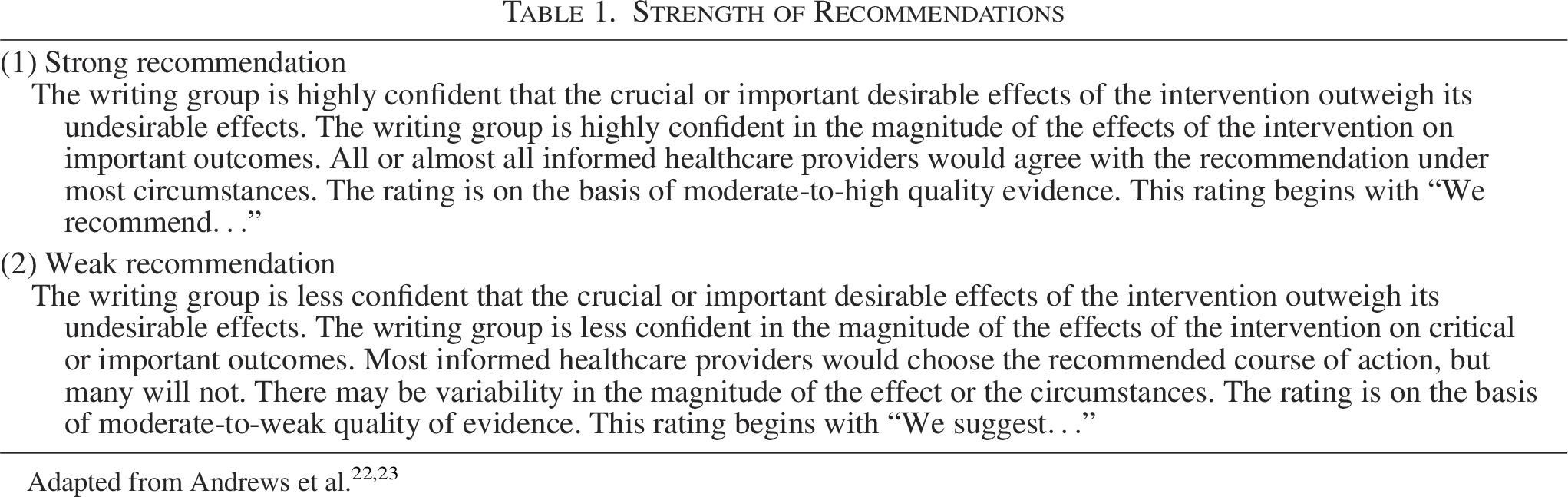
We based our final recommendations on the Grading of Recommendations, Assessment, Development, and Evaluations (GRADE) system.11–13 The strength of each recommendation is rated strong (1) or weak (2),14,15 and evidence quality is rated high (A), moderate (B), or weak (C). 15 Consistent with previous SIS publications, we utilized an iterative review process to achieve final consensus for each recommendation. Apart from the study librarian, all authors voted to accept each recommendation included in the final article. Our primary goal for this guideline is to facilitate evidence-based clinical management decisions for pediatric patients with IAI. Consistent with other SIS guidelines, individual recommendations are not intended to supersede the primary care team’s clinical expertise or judgment. Strong recommendations on the basis of high-quality evidence may not apply to all patient populations or clinical settings.
There are important similarities between the scope of this work and the 2024 SIS guidelines for adult populations. 11 First, “IAI” refers to complicated IAI (affecting normally sterile peritoneum, mesentery, another organ, retroperitoneum, or abdominal wall) unless otherwise indicated.8,9 Recommendations for prevention or management of uncomplicated IAI (confined to a solitary hollow viscus) are classified specifically by disease, such as acute appendicitis.8,9 Second, we exclude from consideration certain disease processes, including primary bacterial peritonitis, peritoneal dialysis catheter-related peritonitis, abdominal organ transplantation-associated peritonitis, and infections primarily of the genitourinary tract. Third, we exclude diagnostic methods for IAI, including laboratory testing and radiologic imaging. Fourth, although focusing mostly on pharmacologic therapies, we incorporate new recommendations on infection control and prevention and tactics to improve antimicrobial stewardship.
Aligned with the adult-based guidelines, 11 recommendations for pediatric patients emphasize risk stratification on the basis of illness and infection severity, IAI microbiology, and the probability of harboring resistant pathogens. 16 This includes patients treated in hospitals and other healthcare settings, who are at increased risk for potentially resistant healthcare-associated intra-abdominal infections.17,18 These individuals are also at risk for a greater variety of invasive pathogens, including staphylococci, enterococci, and Candida spp.17,19 Because antimicrobial resistance (AMR) is increasing within community-acquired IAI (CA-IAI), 19 especially outside North America, recommendations referring specifically to “higher-risk” include any patients likely to harbor resistant or atypical pathogens. In addition to the specific treatment setting, higher-risk patients may meet criteria for sepsis or septic shock; register Acute Physiology and Chronic Health Evaluation-II scores ≥10 points; suffer delayed or inadequate initial source control; develop IAI post-operatively; manifest diffuse peritonitis; or have multiple medical comorbidities, including advanced age, malignant disease, hypoalbuminemia, or cardiovascular, hepatic, or renal dysfunction. 10
Patients and Methods
In 2024, we formed a writing group composed of current members of the SIS Therapeutics and Guidelines Committee, other SIS members with content or guideline-writing expertise, and a professional librarian with experience in systematic review development. We performed an initial systematic review using PubMed/MEDLINE, the Cochrane Library, Embase, and Web of Science. Search dates were January 2016 until September 2024. Keyword descriptors combined “surgical site infections (SSIs)” or “intra-abdominal infections” in pediatric patients limited to RCTs, systematic reviews, and meta-analyses. We limited the studies to English language and human studies and excluded literature reviews, retrospective studies, case reports/series, conference proceedings, and conference abstracts (see Supplementary Data S1. for the search tactic). We also included relevant publications identified during literature review. The search identified 1,190 articles representing 1,009 unique studies after de-duplication. Citations were entered into Covidence (www.covidence.org). Seven reviewers used a two-step screening methodology. Conflicts were resolved by a third author. Eight hundred and seventy-eight abstracts were considered irrelevant after title and abstract screening. Seventy-four studies underwent full-text review by two authors; 41 were then deemed irrelevant. A total of 33 studies were included, extracted for data, and reviewed for quality (Fig. 1). Our review followed the Preferred Reporting Items for Systematic reviews and Meta-Analyses guideline. 21

PRISMA Flow Diagram. 20 PRISMA = Preferred Reporting Items for Systematic reviews and Meta-Analyses.
We evaluated the evidence using the GRADE system.15,20 The strength of each recommendation was graded strong (1) or weak (2) (Table 1).22,23 Strong recommendations begin with the phrase “We recommend…,” whereas weak recommendations begin with “We suggest…” 22 Quality of the evidence was graded high (A), moderate (B), or weak (C) (Table 2). 15 For updates to recommendations from previous IAI guidelines, we applied GRADE both to current and prior evidence. We utilized an iterative process to achieve consensus on final guideline recommendations. All writing group members voted to accept each recommendation.
Strength of Recommendations
Quality Of Evidence

Results
Antimicrobial therapy
Beta-Lactamase inhibitor combinations
Ceftolozane–tazobactam
–We recommend ceftolozane–tazobactam plus metronidazole for empiric therapy (Grade 1-B).
–We suggest reserving ceftolozane–tazobactam for higher-risk patients, including those with resistant Pseudomonas aeruginosa infections (Grade 2-C).
This updated recommendation is on the basis of a phase 2 multi-center, multi-country RCT, including 94 participants (<18 y) with IAI treated with ceftolozane–tazobactam plus metronidazole versus meropenem. 24 The primary objective was to assess safety and tolerability of intra-venous (IV) ceftolozane–tazobactam plus metronidazole. Secondary end points were clinical cure at end of treatment (EOT) and test of cure (TOC) visits. The modified intent-to-treat (mITT) population included 91 subjects (ceftolozane–tazobactam plus metronidazole, n = 70; meropenem, n = 21). The most common diagnosis was complicated appendicitis (>90%). The most common pathogen was Escherichia coli (>60%). There were no differences in adverse events (AEs), drug-related AEs, or serious AEs between groups. No study drug discontinuations occurred because of drug-related AEs. All serious AEs were resolved, and none was drug related. There were no substantial differences in rates of clinical cure at EOT or TOC. However, the study was not powered to detect between-group differences for secondary end points. Of note, more than 10% of study participants had infections with extended-spectrum β-lactamase–producing Enterobacterales.
Ceftazidime–avibactam
–We recommend ceftazidime–avibactam plus metronidazole for empiric therapy (Grade 1-B).
–We suggest reserving ceftazidime–avibactam for higher-risk patients because of its broader-spectrum antimicrobial activity (Grade 2-C).
This updated recommendation is on the basis of a phase 2 single-blind, multi-center RCT, including 83 hospitalized children (≥3 mo to <18 y) with IAI treated with ceftazidime–avibactam plus metronidazole (n = 61) versus meropenem (n = 22). 25 Subjects were enrolled pre-operatively or within 24 h of surgery. The primary objective was to evaluate safety and tolerability of ceftazidime–avibactam plus metronidazole versus meropenem. Safety and tolerability data included assessment of AEs, vital signs, physical examination, laboratory parameters, including creatinine clearance, and electrocardiograms. Secondary end points included evaluation of clinical and microbiologic outcomes to provide a descriptive estimate of efficacy. Assessments included clinical and microbiologic response at each study visit. Baseline characteristics were similar between groups. There were substantially more males in the ceftazidime–avibactam plus metronidazole group and substantially more females in the meropenem group. More than 90% of subjects had appendicitis. The most frequently isolated pathogens were E. coli, Streptococcus anginosus, P. aeruginosa, and Bacteroides fragilis. More than 75% of subjects had polymicrobial infections. In the safety analysis, AEs occurred in 52.5% and 59.1% of subjects in the ceftazidime–avibactam plus metronidazole and meropenem groups, respectively. Serious AEs occurred in 8.2% and 4.5% of subjects, respectively. No patient discontinued therapy because of AEs. Favorable clinical and microbiologic responses were observed in more than 90% of subjects in both groups. Of note, the study was not powered for inferential statistical comparisons between groups.
Fluoroquinolones
Moxifloxacin
–We recommend against moxifloxacin for empiric therapy (Grade 1-B).
This updated recommendation is on the basis of one multi-center double-blind, double-placebo, phase 3 RCT totaling 451 patients (ages 3 mo to 17 y) treated with IV/oral moxifloxacin (n = 301) versus IV ertapenem followed by oral amoxicillin–clavulanic acid (comparator) (n = 150). 26 Total treatment duration was 5–14 days, including a minimum 3 days IV administration. Eligible patients had single or multiple intra-abdominal abscesses (IAAs) or macroscopic intestinal perforation with localized or diffuse peritonitis confirmed surgically or supported radiologically. All patients underwent an initial surgical or interventional radiology procedure with or without post-operative abdominal drainage. The primary outcome was safety in the overall population during the entire study period, including follow-up, with end points of overall AEs and specifically cardiac and musculoskeletal AEs. Secondary end points included clinical and bacteriologic responses determined at TOC. Analysis of safety and efficacy data was descriptive; no formal statistical testing was performed. More than 90% of participants were 6–17 years old. The most frequent diagnoses were localized or diffuse peritonitis. Most (95%) patients underwent appendectomy. The overall incidence of AEs for moxifloxacin was 58.1% versus 54.7% for comparator. Most AEs were mild or moderate. Drug-related AEs occurred in 14.3% in the moxifloxacin group versus 6.7% in the comparator. The incidence of serious AEs was 4.0% for moxifloxacin versus 2.0% for ertapenem followed by amoxicillin–clavulanic acid. No drug-related serious AEs occurred. No deaths were reported. More patients in the moxifloxacin group (5.3%) discontinued treatment because of AEs versus comparator (1.3%). In the mITT population, bacteriologic success and clinical cure at TOC were achieved in 84.6% of patients receiving moxifloxacin versus 95.5% of subjects receiving comparator. Clinical failure occurred in 15.4% of subjects receiving moxifloxacin versus 4.5% of subjects receiving comparator. Of note, the authors noted that clinical cure and bacteriologic success rates with moxifloxacin appeared comparable with reports of adult patients with IAI. Moreover, efficacy data for IV ertapenem followed by amoxicillin–clavulanic acid in children are limited.
Carbapenems
Ertapenem
–We recommend ertapenem for empiric therapy (Grade 1-A).
This updated recommendation is on the basis of 1 meta-analysis, including 15 studies (8 RCTs, 1 observational comparative study, 6 before/after studies), totaling 2,528 patients (ages 3 mo to 18 y) with bacterial infections who received ertapenem or ertapenem combinations without limitations on dosage, frequency, or treatment duration. 27 The primary outcome was treatment success, defined as the proportion of patients who completed treatment with evidence of success on the basis of results from the original studies. Secondary outcomes were length of stay, mortality, incidence of serious drug-related clinical or laboratory AEs, and study withdrawals because of AEs. The most common diagnoses were perforated appendicitis (n = 1,053), IAI (n = 566), community-acquired pneumonia (n = 281), and skin/soft tissue infection (n = 140). Overall, ertapenem demonstrated similar treatment success to β-lactam antibiotic agents. For secondary outcomes, the meta-analysis did not show differences between ertapenem and β-lactam comparators. By subgroup analysis, site of bacterial infection did not impact efficacy and safety comparisons between ertapenem and β-lactam antibiotic agents. Of note, five studies did not include patients with IAI. Six RCTs were rated as having moderate risk of bias (non-blinded outcome assessment, high attrition rate, selective reporting), and two RCTs were rated as having high risk of bias because of non-blinding (participants and personnel) and potential conflicts of interest (commercial funding).
Infant populations
Metronidazole
–We recommend metronidazole as the anti-anaerobic agent in combination regimens for empiric therapy (Grade 1-B).
This updated recommendation is on the basis of one partially randomized, open-label, multi-center study totaling 55 infant patients (≥34 wks gestation at birth and <121 d post-natal age) treated with metronidazole combination therapies (gentamicin, piperacillin–tazobactam, ampicillin, vancomycin) for IAI. 28 Metronidazole was dosed per protocol (15 mg/kg minimum loading dose and 7.5 mg/kg maintenance dose every 6–8 h based upon gestational age). The treatment phase included a maximum of 10 days. The primary outcome was prevalence of AEs and safety events, including death, gastrointestinal surgery, and intestinal stricture or perforation. Secondary outcomes were time to first full enteral feeding, incidence of feeding intolerance, and overall therapeutic success (survivorship, negative blood cultures, and clinical cure score >4 [Score for Neonatal Acute Physiology II]). Descriptive statistics were reported for continuous data, whereas counts and percentages were utilized for categoric data. Median gestational and post-natal ages were 36 weeks and 7 days, respectively. Most infants were male (51%) and Caucasian (64%). The most common cause of IAI was necrotizing enterocolitis (NEC, 46%). For AEs and safety events, 33% of subjects had feeding intolerance, 18% required surgery, 13% required intestinal anastomosis, and 2% had intestinal perforation. Thirty-five AEs were reported in 18 infants, of which 94% were mild or moderate. Only one AE (candidal rash) was determined to be possibly related to metronidazole. Overall therapeutic success was achieved in 96% of infants. Ninety-eight percent were alive, and 98% had a clinical cure score >4. Although not powered to discern efficacy, the study demonstrated lower mortality, decreased need for surgery, and decreased intestinal perforation and stricture rates with metronidazole use compared with previous reports in the literature.
Premature infants
–We recommend ampicillin, gentamicin, and metronidazole combination therapy for empiric treatment (Grade 1-B).
–We recommend ampicillin, gentamicin, and clindamycin combination therapy for empiric treatment (Grade 1-B).
–We recommend piperacillin–tazobactam and gentamicin combination therapy for empiric treatment (Grade 1-B).
This updated recommendation is on the basis of one open-label, multi-site RCT totaling 180 premature infants (≤33 wks gestational age at birth and post-natal age <121 d) treated for IAI resulting from NEC of Grade II or higher, intestinal pneumatosis or portal venous gas, spontaneous intestinal perforation, IAA, neonatal appendicitis, pneumoperitoneum, secondary peritonitis, or perforation associated with Hirschsprung disease, meconium ileus, intestinal obstruction, gastroschisis, or omphalocele. 29 Subjects were randomized within 48 hours of IAI diagnosis. Additional gram-positive antimicrobial therapy was permitted. The primary outcome was mortality within 30 days of study drug completion. Secondary outcomes included AEs, outcomes of special interest (gastrointestinal surgery, NEC progression, strictures or perforation, positive blood cultures, short bowel syndrome, seizures, intra-ventricular hemorrhage, or death), and therapeutic success (survival, negative cultures, and clinical cure score >4) 30 days after study drug completion. NEC was the most common diagnosis (59%), and 46% of subjects had a history of intestinal perforation or pneumoperitoneum. Seventy-five percent of subjects received empiric therapy within the 48 hours before enrollment. Additional gram-positive coverage was administered to 74% of patients. Overall, 35% of patients completed the 90-day post-treatment safety evaluation. Fifty-three percent of subjects experienced at least one AE. The most common AEs were thrombocytopenia, cholestatic jaundice, and anemia. Nineteen percent of subjects experienced at least one serious AE, whereas 64% experienced an outcome of special interest. There were no differences in safety outcomes among different antibiotic regimens. Overall, therapeutic success occurred in 82% of patients, with no differences between groups. Of note, the study may be underpowered because the actual mortality rate was lower than anticipated. Because of enrollment difficulties, a protocol amendment allowed infants with IAI who were already receiving study drug per routine clinical care to be included.
Anti-enterococcal therapy
–We suggest against empiric therapy targeting Enterococcus spp. in lower-risk patients with CA-IAI (Grade 2-B).
This new recommendation is on the basis of one systematic review and meta-analysis, including 23 RCTs and 13 observational studies, but only 2 studies with pediatric patients. 30 The review and meta-analysis evaluated whether empiric anti-enterococcal antibiotic coverage for patients with IAI improves treatment success or reduces AEs or mortality. The authors found that anti-enterococcal regimes provide no improvement in treatment success compared with control regimens. There were similar mortality rates and AEs in both groups.
One pediatric report was a multi-center, open-label, parallel-group RCT of 402 patients aged 2–12 years who were hospitalized for severe IAI assigned randomly to receive piperacillin–tazobactam or cefotaxime plus metronidazole. 31 Most subjects had complicated or “advanced” appendicitis. The primary efficacy end point was clinical response (cure or failure) in the efficacy-evaluable population at EOT and at follow-up. Cure rate was 93.5% in both groups at EOT. At follow-up, cure rate was 90.0% for the piperacillin–tazobactam group and 91.0% for the cefotaxime plus metronidazole group. Interestingly, length of stay was substantially shorter for patients receiving piperacillin–tazobactam. Of note, among patients with identified Enterococcus spp. at baseline, clinical cure rates were 91.7% (11/12) for piperacillin–tazobactam and 83.3% (10/12) for cefotaxime plus metronidazole.
The second pediatric study was a RCT of 70 patients aged 0–14 years admitted consecutively because of suspected IAI that required surgery who were assigned randomly to receive piperacillin–tazobactam or cefotaxime plus metronidazole. 32 Most subjects had gangrenous or perforated appendicitis (>77%). The primary end point was clinical response (cure or failure) at EOT and at 2–4-week follow-up. Clinical cure was observed in 100%. Of note, only three positive peritoneal fluid cultures for Enterococcus spp. were identified.
Acute appendicitis
Complicated appendicitis
–We recommend piperacillin–tazobactam for post-operative therapy of perforated appendicitis (Grade 1-B).
This new recommendation is on the basis of one unblinded, multi-center RCT of 162 patients (≤18 y) with perforated appendicitis undergoing laparoscopic appendectomy and treated post-operatively with piperacillin–tazobactam (n = 82) versus ceftriaxone plus metronidazole (n = 80).
33
Perforated appendicitis was defined as a visible abdominal fecalith or transmural defect in the appendix and required intra-operative photographic documentation. Patients were randomized to the post-operative regimen after intra-operative confirmation of perforation and enrolled before administration of the first post-operative dose. Post-operative management was guided by an institutional protocol that included guidelines for resuscitation, fluid management, and dietary advancement. All patients received IV antibiotic agents until they were tolerating a regular diet and afebrile for >24 hours. Patients with leukocytosis on day of discharge were prescribed additional days of oral antibiotic agents, not to exceed seven days of therapy in total (IV plus oral). The primary outcome was post-operative IAA. Clinical suspicion for IAA prompted imaging beyond post-operative day seven. Upon IAA diagnosis, drainage and the antibiotic regimen were dictated by the treating surgeon. Secondary outcomes were length of stay, antibiotic complications, incisional complications, emergency department (ED) visits, and re-admissions. There were no differences in age, weight, or duration of presenting symptoms between groups. Compared with the ceftriaxone plus metronidazole group, patients who received piperacillin–tazobactam had substantially lower rates of IAAs and post-operative computed tomography (CT) imaging and substantially fewer ED visits. Multi-variable logistic regression found that use of ceftriaxone plus metronidazole (vs. piperacillin–tazobactam) was the most significant predictor for development of IAA. There were no differences in length of stay, duration of IV antibiotic treatment, discharge of oral antibiotic treatment, or antibiotic-related complications. Of note, routine intra-operative peritoneal fluid cultures were not obtained.
–We recommend ertapenem for post-operative therapy of perforated appendicitis (Grade 1-A).
This updated recommendation is on the basis of one open-label, single-center RCT totaling 80 patients (ages 5–17 y) with perforated appendicitis and diffuse peritonitis undergoing laparoscopic appendectomy and treated with IV gentamicin plus metronidazole versus ertapenem. The primary outcomes were post-operative complications (SSI, bleeding, intestinal obstruction, ileus, IAA), time to afebrility, antibiotic treatment failure, and duration of hospitalization. Secondary outcomes included causative micro-organisms and time to starting enteral feeding. There were no differences in age, gender, body mass index (BMI), fever, white blood cell count, C-reactive protein concentration, duration of symptoms, or clinical findings (abdominal guarding) between groups. There was no difference in the incidence of post-operative complications between groups. Post-operative complications (IAA or SSI) occurred only in the gentamicin plus metronidazole group. Time to afebrility and hospital length of stay were substantially shorter in the ertapenem group. There was no difference in treatment failure between groups. Time to starting enteral feeding was similar between groups. There were no differences in bacterial species isolated from intra-operative abdominal fluid aspirates between groups. The most common isolate in both groups was E. coli. One MDR Proteus sp. was isolated from the gentamicin plus metronidazole group.
–We recommend transitioning from IV to oral antibiotics to complete therapy for perforated appendicitis after adequate source control (Grade 1-A).
This new recommendation is on the basis of one multi-center RCT of 82 patients (ages 4–17 y) with perforated appendicitis who underwent laparoscopic or open appendectomy and were treated with a 10 days course (including home) of antibiotic therapy with IV ertapenem (n = 44) or in-hospital IV ertapenem with transition to oral amoxicillin–clavulanic acid (n = 38) upon discharge. 34 Perforation was defined as an identifiable transmural defect of the appendix or surrounding evidence, such as a fecalith. Intra-operative grading of the degree of contamination was performed by the surgeon on the basis of standardized definitions. Enrollment occurred within 48 hours of surgery. Patients with a previous drainage procedure for IAA or fluid collection related to appendicitis were excluded. The primary outcome was development of post-operative IAA. Evaluation for post-operative IAA (by CT) was on the basis of clinical suspicion of the surgeon. Patients with IAA underwent percutaneous drainage if feasible and received an additional 14 days of ertapenem. Secondary outcomes included length of stay, SSI, re-admission within 30 days of surgery, and monetary charges. There were no differences in gender, comorbidities, or perforation grade between groups. The IV ertapenem group was significantly older (mean, 12.3 y vs. 10.1 y) with greater BMI (20.9 vs. 17.9 kg/m2). Mean follow-up was 21.6 days. There were no differences in post-operative IAA rate, length of stay, or re-admission rate between groups. Hospital and outpatient charges were substantially greater in the ertapenem group. Of note, the study was terminated at an interim analysis because of ofofof the substantially greater cost between groups and a repeat power analysis that incorporated the low observed post-operative IAA rate.
This new recommendation is also on the basis of one systematic review and meta-analysis that included 3 RCTs and 2 retrospective observational studies totaling 580 patients with perforated appendicitis. All patients underwent appendectomy and received sequential IV/oral (n = 274) or IV antibiotic agents (n = 306).
35
IV regimens included: Ampicillin, gentamicin, and clindamycin; ampicillin and gentamicin; ceftriaxone and metronidazole; piperacillin–tazobactam; and ertapenem. Oral antibiotic regimens included amoxicillin–clavulanic acid or trimethoprim–sulfamethoxazole plus metronidazole. Perforation was defined as an identifiable transmural defect in the appendix or surrounding evidence such as a fecalith. The primary outcome was post-operative IAA. Secondary outcomes included SSI and re-admission. Eligible studies had to record at least one of these outcomes. Four studies reported on post-operative abscess. Three studies reported on SSI. Two studies reported on re-admission. The Newcastle–Ottawa Scale and Jadad score were used to evaluate cohort quality and the randomized, controlled portions, respectively. A fixed or random-effect model was applied according to the I2 value. Pooled estimates showed that compared with IV therapy, sequential IV/oral antibiotic therapy did not increase the risk of post-operative IAA, SSI, or re-admission. Of note, antibiotic regimens varied among studies, as did the timing of conversion from IV to oral therapy.
–We recommend shorter courses (≤7 days) of post-operative antibiotics (Grade 1-A).
This updated recommendation is on the basis of one systematic review and meta-analysis that includes 261 studies, of which 106 involved pediatric patients. Twenty-six studies were RCTs, and 235 were observational. 36 The key question examined was whether pediatric patients who undergo appendectomy for complicated appendicitis should receive short- versus long-term post-operative antibiotic agents (on the basis of author criteria). Eight studies met inclusion criteria, including two RCTs and six observational studies. Short-term antibiotic duration ranged from 1 to 7 days, whereas long-term ranged from 4 to 21 days. All eight studies reported on IAA formation comparing short- (n = 82) versus long-term (n = 386) post-operative antibiotic agents. There were no substantial differences between groups. Two studies reported on incidence of Clostridioides difficile infections, with no substantial differences between groups. Three studies examined need for drain placement. There were no substantial differences between short- (n = 477) versus long-term (n = 533) antibiotic agents. Five studies reported on hospital length of stay, with no substantial differences between groups. One study reported on need for a new antibiotic course following short- versus long-term post-operative antibiotic agents. There was no substantial difference between groups. One RCT reported substantially lower re-admission rates for short- (n = 350) versus long-term (n = 336) post-operative antibiotic agents. Four cohort studies also reported re-admission rates, but did not show substantial differences between groups. One RCT reported re-operation rates at any time point following short- (n = 350) versus long-term (n = 336) post-operative antibiotic agents. There was no substantial difference between treatment groups. One cohort study showed no re-operations for either short- or long-term antibiotic courses. Overall, four studies were identified to be at high risk of bias, three were at low risk of bias, and one had unclear risk. Randomization and blinding were common weaknesses among RCTs. Selection bias was cited most often for cohort studies.
Infection control and prevention
–We recommend implementation of proactive nursing infection control and prevention tactics (Grade 1-B).
This new recommendation is on the basis of 1 single-center RCT of 100 pediatric patients who underwent elective open abdominal surgery. 37 Exclusion criteria included severe cardiac, hepatic, or renal dysfunction; emergency or laparoscopic surgery; pre-existing soft tissue infection at the surgical site; immunologic disorders; and cognitive impairment or psychiatric conditions. The proactive experimental cohort received multiple targeted interventions: Psychologic support and counseling aimed to reduce surgical stress; enhanced pre-operative preparation, including an advanced antiseptic regimen (povidone–iodine bath) 48 hours before surgery with attention to preventing accidental skin injuries from sharp objects during skin preparation; rigorous infection control protocols (specialized training to augment aseptic technique, institution of a quality assurance mechanism to monitor compliance); surgical environmental optimization, including strict humidity and temperature maintenance; stringent surgical instrument sterilization; and intra-operative care measures to mitigate bacterial skin colonization and thermoregulate the surgical site. Primary outcomes included surgical incision healing grade (A: optimal with no AEs, B: suboptimal with erythema or fluid accumulation, C: purulent incisions requiring drainage). Surgical site infections were confirmed by bacterial culture within 30 days of surgery; patient satisfaction scores; and hospital length of stay. Both groups demonstrated similar baseline demographics and surgical parameters. Eight patients developed SSIs, and 12 bacterial isolates were identified. The most prevalent bacterial isolates were E. coli (41.7%), followed by P. aeruginosa, Enterococcus spp., Staphylococcus aureus, and Klebsiella pneumoniae. Compared with control group, the proactive group had substantially improved wound healing outcomes, decreased complications, and decreased SSIs. The proactive group had substantially greater patient satisfaction scores. Of note, compliance with antibiotic regimens was not controlled for, and analyses did not account for different surgical procedures or specific patient populations, including immunocompromised individuals.
Antimicrobial stewardship
–We recommend implementation of empiric antimicrobial therapy protocols to improve antimicrobial stewardship (Grade 1-B).
This new recommendation is on the basis of one prospective, single-site, quality improvement study totaling 232 infants admitted to a neonatal intensive care unit (NICU) when starting antibiotic agents for late-onset sepsis (LOS) (>72 h after birth). Exclusion criteria included hospital re-admission after initial discharge or antibiotic administration for a perioperative indication. The study aim was to achieve ≥75% compliance with the hospital LOS bundle (documented reason for LOS evaluation, use of recommended initial antibiotic agents, consideration of performing the recommended LOS evaluation, appropriate antibiotic de-escalation). The main outcome measure was compliance with all four elements of the LOS bundle. Secondary outcomes included determination if the primary team followed the core antimicrobial stewardship program (ASP) team’s recommendations. Additional measures included appropriate initial antibiotic dosing, documentation for incomplete LOS evaluations and treatment of culture-negative sepsis, determination if recommended cultures were obtained within suggested times, duration of antibiotic agents for culture-positive infections, presence of antibiotic mismatch, and redundant antibiotic usage. Balancing measures were length of NICU stay and antibiotic utilization rate. The most common reasons for LOS evaluation were increased respiratory support, abdominal distension, and temperature instability. Overall, LOS bundle compliance increased substantially from 44% to 87%. Compliance with individual LOS bundle components also increased substantially, except for appropriate de-escalation rate (86% to 100%, p = 0.154). The primary team increasingly followed ASP team recommendations over time (38% vs. 67%, p = 0.003). Documentation of reasons for LOS evaluation improved substantially, as did reductions of antibiotic mismatch. There were no substantial changes in redundant antibiotic usage or antibiotic utilization rate. There was no substantial change in length of stay. Of note, the true incidence of IAI was unclear. However, the most common indications for culture-negative treatment were clinical pneumonia (35%) and NEC (32%).
This new recommendation is also on the basis of one pre–post quality assurance study of two hospitals serving patients (aged 5–18 y) with complicated appendicitis. 38 A comprehensive clinical practice guideline (CPG) was implemented for all children with complicated appendicitis at a quaternary care children’s hospital system. The CPG covers antibiotic selection and duration, pain management, and discharge criteria. Patients were identified with complicated appendicitis on the basis of a published surgeon-reported categorization schema. A detailed compliance audit occurred over 22 months after CPG implementation spanning 60 consecutive complicated appendicitis patients. Outcomes were compared with for 48 months before and 28 months after CPG implementation. Outcomes collected included LOS, post-operative returns to the system, re-admissions, central venous catheter (CVC), and antibiotic selection. Audit outcomes also included antibiotic durations, post-operative ambulation, and home prescriptions. Overall, 1,366 children were identified pre-CPG implementation and 1,004 children post-implementation. Following CPG adoption, post-operative returns to the system decreased substantially, as did CVC use. Initial antibiotic selection also improved substantially. There were no differences in mean LOS or re-admissions between cohorts. The CPG audit revealed that only 15% of patients demonstrated full compliance. Compliance increased from 7% to 23% when comparing the first 30 to the last 30 patients. Only 49% of patients received antibiotic durations per CPG recommendations. Audit feedback did not improve antibiotic duration compliance and early post-operative ambulation rates.
Prior guideline recommendations
Our current literature search did not reveal evidence to support or refute several previous guideline recommendations. Considering that this update is intended to supplement previous versions, the working group voted to extend prior (2017) strong (Class 1), high-to-moderate quality (Level A or B) recommendations to the current document (Table 3).
Non-Updated Prior Guideline Recommendations
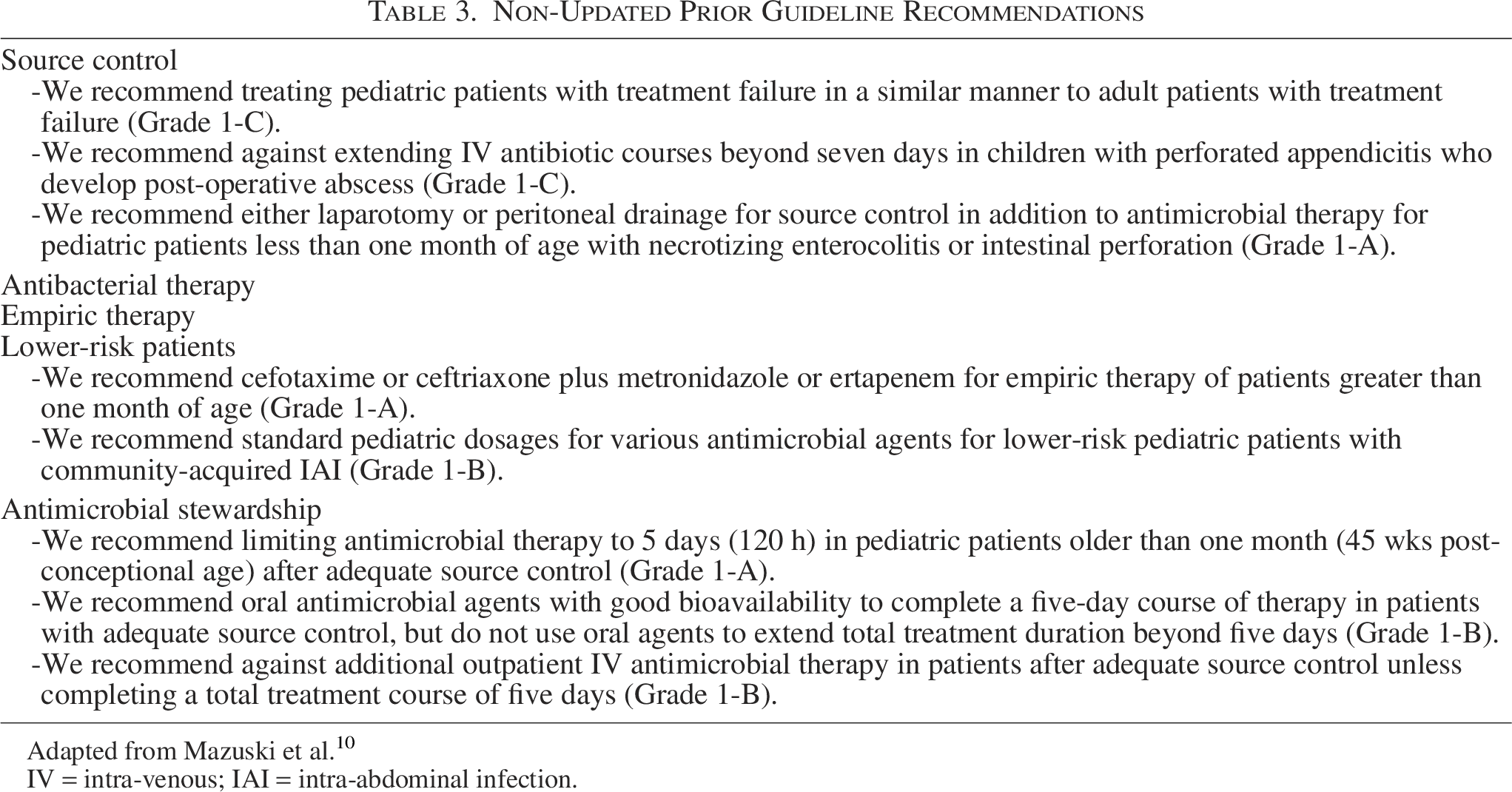
Adapted from Mazuski et al. 10
IV = intra-venous; IAI = intra-abdominal infection.
Discussion
The SIS provides healthcare providers with comprehensive, up-to-date, clinically relevant guidelines for prevention and treatment of surgical infections. The present IAI guidelines include recommendations for care of pediatric patients on the basis of a systematic literature review, with ratings of content and quality by the SIS Therapeutics and Guidelines Committee and additional members with content or writing expertise pertaining to surgical infectious diseases. This iteration updates or validates prior recommendations and introduces new recommendations on the basis of current literature. We intend for these evidence-based recommendations to facilitate clinical decision-making by healthcare providers managing pediatric patients with IAI.
Previous guidelines called for additional study into management of IAI, including evaluation of new types or classes of anti-infective agents to counter increasing AMR, identification of optimal antibiotic regimens that maximize efficacy and minimize harm, continued reductions in duration of antimicrobial therapy, and aggressive improvement of antimicrobial stewardship. 10 In this study, we address several of these recommendations. For example, there are new or updated recommendations on optimal antibiotic regimens for management of IAI, including mono- and combination therapies, but specifically avoiding moxifloxacin for empiric therapy. There are new recommendations on shortening durations of antibiotic therapy, specifically following adequate source control for perforated appendicitis. There are updated recommendations for ceftazidime–avibactam and ceftolozane–tazobactam, which are still reserved for treatment of MDR pathogens. Finally, there are new recommendations for implementing infection control and prevention protocols to improve antimicrobial stewardship.
Following core principles of antimicrobial stewardship, this latest update provides recommendations to utilize sequential IV/oral antibiotic regimens versus strictly IV regimens for treatment of perforated appendicitis and to incorporate monotherapy regimens when available. In accordance with guidance for adult populations, we recommend against empiric therapy targeting Enterococcus spp. in pediatric patients, except for premature infants. Finally, we recommend implementing infection control and prevention tactics and CPGs, along with periodic audits, to ensure compliance, to improve individual and hospital-based antimicrobial stewardship.
Interestingly, our literature review revealed one study demonstrating substantially lower rates of IAA, post-operative imaging, and ED visits in patients treated with piperacillin–tazobactam versus ceftriaxone plus metronidazole following laparoscopic appendectomy for perforated appendicitis. 33 Indeed, administration of ceftriaxone plus metronidazole versus piperacillin–tazobactam was the most significant predictor for development of IAA. There were no differences in duration of IV antibiotic treatment, discharge of oral antibiotic treatment, or antibiotic-related complications. As noted by the study authors, ceftriaxone plus metronidazole is inadequate coverage for P. aeruginosa, a frequent isolate in peritoneal fluid cultures of children with perforated appendicitis. 33 Thus, the improved anti-pseudomonal coverage afforded by piperacillin–tazobactam may have contributed to better outcomes. Unfortunately, routine intra-operative peritoneal fluid cultures were not obtained in the study. Additional studies are necessary to confirm these findings, especially considering that increased usage of piperacillin–tazobactam may promote AMR.
Although we provide important management updates, questions remain for specific patient populations and clinical scenarios. There are no recent studies evaluating antimicrobial management of uncomplicated appendicitis. To align with the 2024 SIS IAI guidelines for adult populations, we excluded studies comparing appendectomy versus antibiotic agents alone for treatment of pediatric uncomplicated appendicitis. The Therapeutics and Guidelines Committee of SIS plans to address this important clinical question in future work. Additional studies of pediatric IAI not caused by appendicitis are needed as well. As identified previously, tools for predicting treatment failure remain elusive. 10 Aside from infant populations, the literature remains scant regarding the most efficacious antibiotic dosing. Moreover, there are few high-quality prospective studies, including critically ill pediatric patients. Newly introduced antimicrobial agents are seldom available immediately for pediatric use, especially safer alternatives to aminoglycoside-based regimens to treat MDR pathogens. Finally, although the pre-ponderance of complicated appendicitis cases in the pediatric literature improves homogeneity, it limits applicability of study findings to other abdominal disease processes. For example, current guidelines for adult patients with cIAI stemming from appendicitis versus other diseases offer divergent recommendations for duration of therapy. 13 Although further studies may reconcile these differences, therapies for specific abdominal etiologies may require more nuanced approaches.
In summary, herein we provide the most current recommendations from the SIS on prevention and management of IAI in pediatric patients. These recommendations are a continuation and refinement of previous work from the SIS and its membership. Important advances have occurred, particularly in the realm of shortening antibiotic courses and developing systems-based initiatives to enhance infection control, infection prevention, and antimicrobial stewardship, but clinical questions remain. Perhaps most challenging is the planning, execution, and funding of larger scale RCTs with sufficient statistical power to address unanswered questions regarding optimal dose, timing, and choice of antibiotic agents for pediatric patients with IAI, especially when not caused by appendicitis. Along with the unwavering commitment and dedication of healthcare providers, achieving these research objectives will help ensure the highest level of care for future pediatric patients.
Authors’ Contributions
J.M.H., J.D.F., and P.S.B.: Conception and design. All Authors: Data analysis. All Authors: Data interpretation. J.M.H., J.D.F., and P.S.B.: Drafting the article. All Authors: Critically revising the article. All Authors: Final approval.
Footnotes
Author Disclosure Statement
J.D.F.—PI for investigator-initiated clinical trial sponsored by Varian and Pacira; PI for industry-initiated clinical trial sponsored by Eclipse Regenesis; Consultant—Costa Surgical. The other authors declare no financial interests.
Funding Information
No funding was received for this article.
Supplemental Material
Supplemental Material
References
Supplementary Material
Please find the following supplemental material available below.
For Open Access articles published under a Creative Commons License, all supplemental material carries the same license as the article it is associated with.
For non-Open Access articles published, all supplemental material carries a non-exclusive license, and permission requests for re-use of supplemental material or any part of supplemental material shall be sent directly to the copyright owner as specified in the copyright notice associated with the article.
