




Abstract

To the Editor:
Syphilitic granuloma is a rare reaction in the second stage of syphilis. 1 Herein, We report a case of leg syphilitic granuloma.
A 58-year-old female came for medical consultation because of the presence of painful lumps on both of her lower legs. During the physical examination, soft lumps could be felt on both lower legs. She has no history of promiscuous behavior. Laboratory tests showed no abnormalities. The magnetic resonance imaging of the legs indicated multiple abnormal signal shadows within the muscle layers of both lower legs (Fig. 1). It was considered as a neoplastic lesion before the operation. The patient then underwent a surgical procedure. The mass was eventually completely resected. Post-operative histopathological examination indicated proliferation of epithelioid cells and multi-nucleated cells (Fig. 2), the specific antibody test for syphilis was positive. The diagnosis was syphilitic granuloma. After the operation, the patient then received two weeks of intramuscular penicillin treatment. After discharge, the patient was followed up in the outpatient department, and no abnormalities have been found so far.
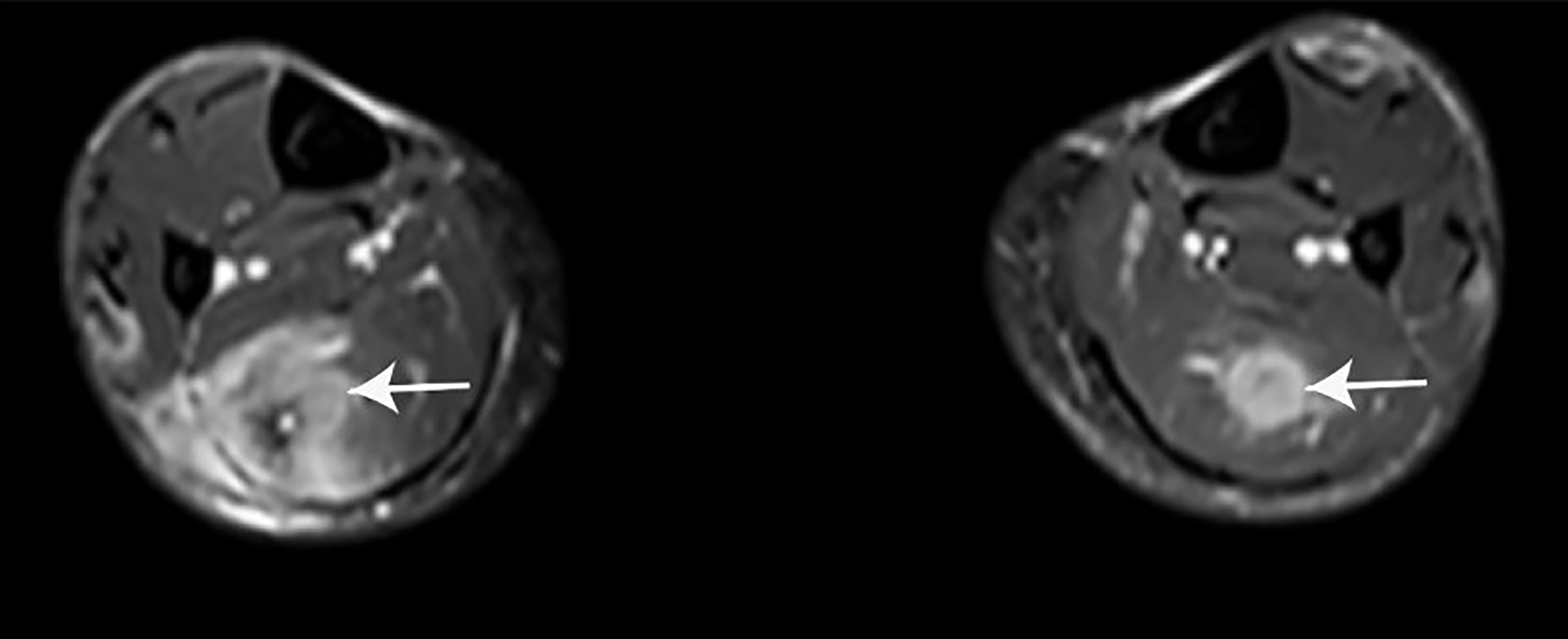
The magnetic resonance imaging of the legs indicated multiple abnormal signal shadows within the muscle layers of both lower legs.
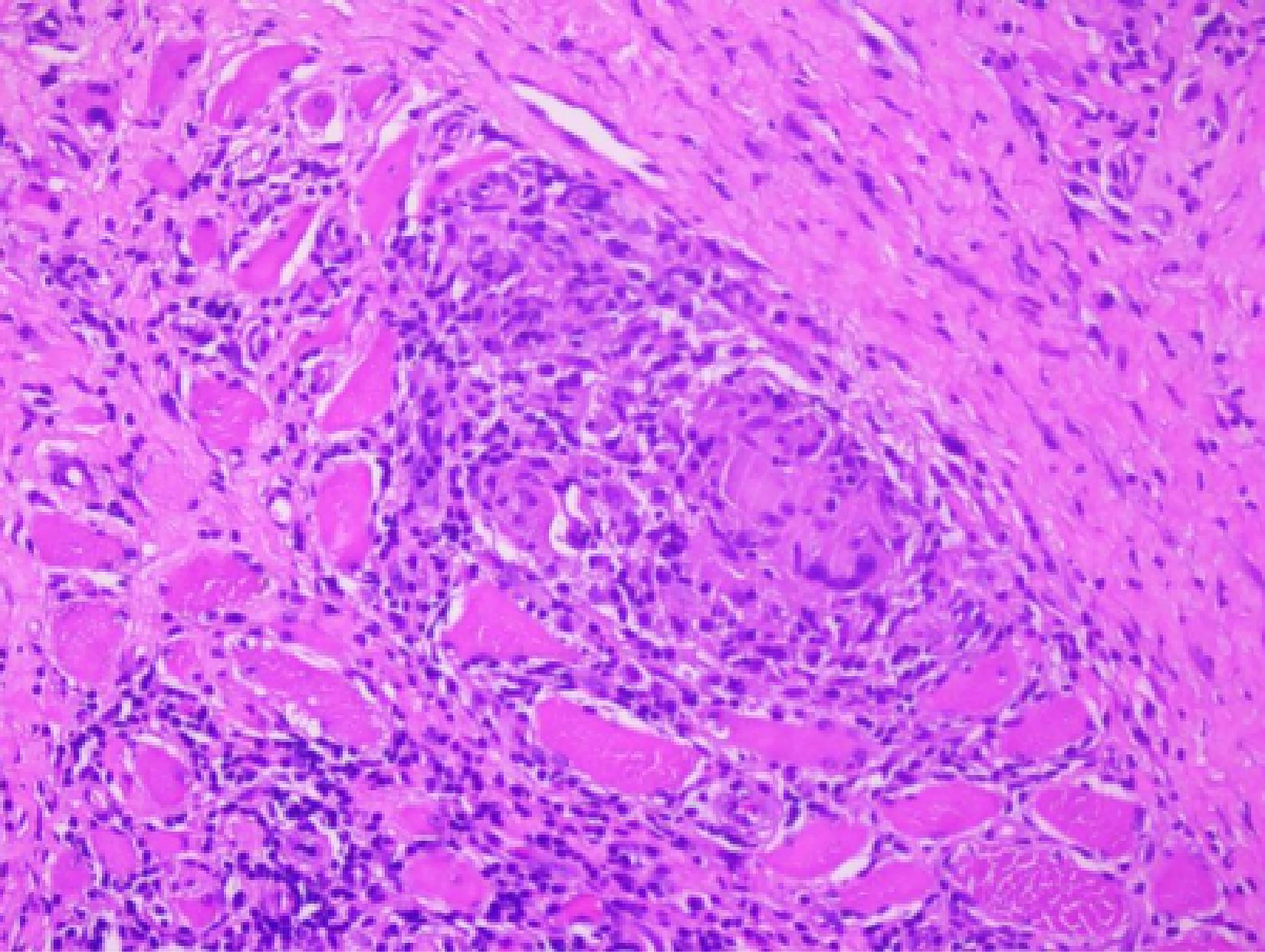
Post-operative histopathological examination indicated proliferation of epithelioid cells and multi-nucleated cells.
Syphilitic granuloma is a chronic granulomatous inflammation caused by Treponema pallidum. 2 This disease has a latent onset. Its clinical and imaging manifestations are similar to those of neoplastic lesions, making the differential diagnosis difficult and prone to misdiagnosis. Clinicians should enhance their understanding of this disease. Detailed history collection and syphilis laboratory tests are helpful for diagnosing the disease. Once the diagnosis is confirmed, adequate and full-course penicillin treatment should be administered.
Footnotes
Ethics Approval and Consent to Participate
Informed consent from patients was obtained for this study, and their anonymous information will be published in this article.
Author Disclosure Statement
No competing financial interests exist.
Funding Information
No funding was received for this article.