




Abstract
This study investigates the impact of the 2008 Beijing Olympic Games on China’s destination brand perception—in terms of destination image and personality—held by American leisure travelers. The results show that although American travelers’ collective perception of China as a travel destination did not change substantially before and after the Games, various subgroups within this population appeared to have different levels of susceptibility to perception change during this process. Furthermore, the study confirmed that event media could influence respondents’ destination perceptions. The findings emphasize the importance of media in image development, and market segmentation in international destination marketing. The results also illustrate the challenge of changing a destination’s brand perception, particularly in long-haul source markets.
Keywords
Introduction
This study investigates the impact of the 2008 Beijing Olympic Games on China’s travel brand in terms of destination image and personality. From August 8 to August 24, 2008, China hosted the 29th Summer Olympic Games, mainly in Beijing. More than 11,000 athletes from 204 countries participated in this “truly exceptional Games” (in the words of Jacques Rogge, president of the International Olympic Committee; Anet, 2008). With more than 4.7 billion television viewers—approximately 70% of the world’s population—the Beijing Games set the record as the most viewed Olympic Games ever (Nielsen, 2008).
Starting from Beijing’s first bid for the 2000 Olympic Games, China was determined to use this mega-event to promote its new national image as a fast-developing, open country boasting rich culture, history, and friendly people (Beijing Organizing Committee for the Olympic Games, 2003; Meng & Li, 2011; Xu, 2006). Long before the 2008 Games, Western observers already asserted that “The Games will be the most comprehensive [and nicely packaged] up-close look at China in half a century, and history will judge the event as the vehicle for demystifying the world’s image of the country” (Ritchard, 2004). It is still too early to judge the event’s historic role in transforming China’s country image or national identity. Nevertheless, this study, based on surveys of American leisure travelers before and after the Games, attempts to shed some light on the immediate impact of the Beijing Olympics on China’s national tourism brand. This also responds to Pike’s (2010) call for more studies tracking a destination’s brand performance over time.
Literature Review
Destination Image and Personality as Key Components of Destination Brand Perception
Tourism scholars’ understanding of destination brand has evolved over the past four decades (Li, Pan, Zhang, & Smith, 2009). Crompton (1979, p. 18) defined destination image as “the sum of beliefs, ideas and impressions that a person has of a destination,” which has since been widely used. Crompton’s original idea of destination image mainly focused on people’s cognition about a place, hence termed cognitive image. A group of researchers later made a powerful case for another type of image, “affective image,” reflecting one’s emotion or feeling toward the destination (Baloglu & Brinberg, 1997; Echtner & Ritchie, 1991; Walmsley & Young, 1998). According to some researchers, the two (cognitive and affective) dimensions jointly form a “global impression about an object or destination,” that is, the overall image (Baloglu & McCleary, 1999, p. 870). Yet another group of researchers (Dann, 1996; Gartner, 1996; Pike & Ryan, 2004) contended that image possesses a third behavioral dimension (i.e., visit intention) called “conative image.”
The multidimensional conceptualization of destination image seemed to have already captured the full scope of how tourists perceive a destination until the notion of “destination branding” drew serious attention recently. Some researchers started exploring the transition from destination image formation to branding (Tasci, Gartner, & Cavusgil, 2007). Cai (2002, p. 721) argued that “existing approaches to studying image are cocooned within a limited domain and have yet to be extended to the realm of destination branding in contemporary marketing terms.” Although to some researchers (Ekinci, 2003; Hosany, Ekinci, & Uysal, 2006) image is a more encompassing concept than brand (e.g., “destination branding represents the emotional component of the destination image,” Ekinci, 2003, p. 22), most researchers would probably agree that brand is a broader construct than image (Tasci & Kozak, 2006).
In the general marketing literature, Keller (2003) suggests that people’s knowledge about a brand includes diverse aspects such as brand awareness, attributes, benefits, images, thoughts, feelings, attitudes, and experiences. Among these, image is a core component of brand (Cai, 2002; Keller, 1993; Tasci et al., 2007). Practitioners seem to echo this idea as well. For instance, Blain, Levy, and Ritchie’s (2005, p. 336) survey among destination marketing organization executives revealed that “a recognized, well-differentiated, and consistent destination image is central to the success of destination branding.”
Under the umbrella idea of branding, another concept recently stimulating much discussion is “destination personality” (Ekinci & Hosany, 2006; Hosany et al., 2006; Murphy, Moscardo, & Benckendorff, 2007). Originating from the notion of brand personality in general marketing literature (Aaker, 1997), destination personality is defined as “the set of human characteristics associated with a destination” (Ekinci & Hosany, 2006, p. 127). Some evidence has shown that destination personality plays a critical role in differentiating destination perceptions (Murphy, Moscardo, & Benckendorff, 2007) and is associated with other key constructs such as travel motivation, tourist self-image, and visit intention (Murphy, Benckendorff, & Moscardo, 2007a, 2007b).
Research has shown that destination image and personality are two separate but highly related constructs (Hosany, Ekinci, & Uysal, 2007; Hosany et al., 2006). Of the two, image is the more encapsulating one, whereas personality seems to either belong (Patterson, 1999) or relate to (Hosany et al., 2006) the affective aspect of image. Ekinci (2003) asserted that destination personality is “the human side of the brand image” and “brings the destination image alive” (pp. 22-23).
Together, destination image and personality represent two of the key components of tourists’ perception of the destination brand. Some authors even argue that tourists’ overall perception/evaluation of a destination comprises three dimensions: cognitive image, affective image, and destination personality (Hosany et al., 2007). Thus, in this study the authors decided to evaluate China’s brand perception in terms of destination image and personality.
Most studies have indicated that changing a destination’s overall perception is not easy (Fakeye & Crompton, 1991; Gartner, 1986; Li & Vogelsong, 2006), and very likely to be a “difficult, costly, and time-consuming” process (Fakeye & Crompton, 1991, p. 10). Many destinations, hence, resort to hosting mega-events such as the Olympics as a quick and potent solution to enhancing their brand (Getz, 1999).
The Impact of Olympics on Destination Brand Perception
The Summer Olympic Games is one of the most important and high-profile mega-events in today’s world—some even call it the “epitome of mega-events” (Faulkner et al., 2000, p. 232). It has been documented that Olympic Games host destinations traditionally “achieved average tourism growth rates that exceeded the global rate by 2.3 percent in the four years leading up to the Games and 2.2 percent in the four years following the Games” (Kurt Janson Ltd., 2007, p. 3). The increased tourism revenue, improved infrastructure, and extensive international media attention aside, projecting a healthy, positive image is probably one of the most important benefits host countries seek to realize through staging the Olympic Games (Ritchie & Smith, 1991; Teigland, 1999). As Pyo, Cook, & Howell (1988) suggested, “above all, the Olympic Games should be recognized as an investment for the future and an image-building event. . . .” (p. 144). Considering the huge amount of resources invested in the Beijing Olympic Games and tremendous media attention obtained, one may expect that this event would substantially improve China’s national brand.
The impact of events on destination brand perception has received growing attention from both tourism and sports marketing researchers (Kaplanidou, 2007; S. S. Kim & Morrison, 2005; Lee, Lee, & Lee, 2005; Lee, Taylor, Lee, & Lee, 2005; Li & Vogelsong, 2006; Ritchie, 1984; Ritchie & Smith, 1991; Xing & Chalip, 2006). However, empirical examination of the destination brand change before and after an event remains scarce (Kaplanidou, 2007). Almost all these studies focus on destination image only. For instance, Ritchie and Smith (1991) conducted a 5-year study on the impact of the 1988 Calgary Olympic Winter Games on the international awareness and image of the host city. Their findings showed that hosting mega-events might lead to remarkable yet short-lived improvement on destination awareness. However, Mossberg (1997, 1999) examined the impact of World Championships in Athletics on on-site foreign nonattendees’ image of Goteborg, Sweden, and found no change between these individuals’ pre- and postevent images. Mossberg (1999) suspected that the result would have been different if event participants were involved or targeted in the survey. Indeed, S. S. Kim and Morrison’s (2005) study among international attendees of the 2002 World Cup showed that their postevent image was more positive than their pre-event one.
The foregoing review shows that, although the image-enhancement effect of hosting events has been well documented, such effect may vary across different events and populations. Somehow surprisingly, systematic investigation into the effect of summer Olympic Games on a host country’s travel brand is still rare. Also, how specific changes occur in different image components remains largely unknown in these studies. To the authors’ knowledge, no study has examined how tourist events influence other components of the destination brand, such as destination personality. In light of the research development on destination branding, the authors believe that both destination personality and image are key concepts for examination to obtain a more holistic understanding of a mega-event’s impact on a host destination’s brand.
Furthermore, to most nonattendees in the source market, the impact of Olympic Games on their destination brand perception tends to be moderated by the Olympic media exposure. Research has found that mass media coverage could affect, even manipulate, people’s international images (Mercille, 2005; Smith, 1973). Thus, a related issue is the specific impact of Olympic media exposure on people’s overall perception and attitudes toward the host destination. In other words, do people who follow the Olympic Games through the media have significantly more positive attitudes toward the host destination than those who do not? This question is important because both the host destination and the International Olympic Committee rely on televised images of the Olympic Games to reach audiences worldwide and ultimately enhance the host destination image (Kaplanidou & Karadakis, 2010). Evidence from a study by Chalip, Green, and Hill (2003) suggests a positive influence of event media exposure on certain components of destination image and viewers’ intention to visit the host destination. Similarly, Hede (2005) found positive attitudes toward Greece as a tourism destination among Australian viewers of the televised 2004 Athens Olympic Games. Getz and Fairley’s (2003) case studies also illustrated the importance of events-related media exposure on inducing new demand for travel to host destinations. Thus, one may reason that followers of Olympic Games media coverage are likely to have more positive attitudes toward the host destination image than those who do not.
Purpose of the Study and Research Questions
The above literature review suggests a need for systematic investigation on the impact of the Olympic Games on destination brand perception. Notably, the subjects of most existing studies are on-site tourists who visit the destination during or after the event. Empirical studies targeting source market (i.e., potential tourists) are rare (see Ritchie & Smith, 1991, and Gibson, Qi, & Zhang, 2008, for two notable exceptions), although arguably a host destination is more interested in the whole source market than just tourists. Furthermore, no study has examined the change of perceived destination personality before and after a mega-event, even though it is a critical part of destination brand perception. Thus, the present article will examine changes, if any, in China’s destination brand perception before and after the 2008 Olympic Games. Accordingly, the study’s research questions (RQs) are the following:
RQ1: Did the Beijing Olympic Games influence China’s destination brand image (in terms of its cognitive, affective, and conative dimensions)? RQ2: Did the Beijing Olympic Games influence China’s perceived destination personality? RQ3: Did those who followed the Beijing Olympic Games via the media differ in their view of the Beijing Olympics’ influence on China as a travel destination from those who did not?
Specifically, this study targeted American leisure travelers. The United States was chosen because it is currently China’s largest long-haul source market (Policy and Legal Department, 2008). Therefore, understanding American travelers’ perceptions of China is of empirical importance for Chinese destination marketing organizations. In addition, because of obvious sociocultural, language, and ideological differences, long-haul markets are generally harder to target and promote to (Weaver & Lawton, 2006). Thus, findings from the present study may contribute to the destination marketing literature by documenting perceptual differences tourists hold toward long-haul destinations.
Method
This project involved two-wave online panel surveys among American leisure travelers. For the purpose of this study, the surveys specifically targeted active American adult leisure travelers (i.e., American adults, aged 18 years or older, who have taken at least one leisure vacation in the past 12 months). Survey invitations were sent to a nationally representative group maintained by an online research company. The outgoing surveys were demographically balanced to represent the American travel population as reported by the Travel Industry Association (TIA, 2007). Key measures for population balancing included (a) region—the continental United States was divided into four regions—West, Midwest, South, and Northeast (U.S. Census Bureau, n.d.); (b) age; (c) household income; and (d) gender. The survey included questions about respondents’ international travel experiences and preferences (activity, destination, etc.), their destination image of China and its Asian competitors, their perceived constraints and motivation to travel to China, and demographic profiles.
The first wave was conducted during May and early June 2008, before the Beijing Games (which started on August 8, 2008). Immediately after the Beijing Olympics, the research team repeated the survey in September 2008. In the latter, several questions were added regarding respondents’ “Olympic experiences” (e.g., whether they went to Beijing for the Games or not, how many hours they spent every day watching Olympic-related programs, etc.). When sending out survey invitations, researchers monitored respondents’ demographic characteristics (particularly gender, age, and household income) to ensure that Wave 2 respondents were demographically similar to those in Wave 1, and represented general American leisure travelers.
Key Measures
Cognitive, affective, and conative images of China were measured using existing scales. Specifically, cognitive image was measured using a scale of 19 items adapted from previous studies (Baloglu & McCleary, 1999; Bigne, Sánchez, & Sánchez, 2001; Gallarza, Saura, & Garcia, 2002; Go & Zhang, 1997; Li & Vogelsong, 2006; Ngamsom, 2001), with a “don’t know” option offered (Pike, 2007). Affective image was measured by five pairs of semantic differential scales including gloomy–exciting, unpleasant–pleasant, sleepy–arousing, distressing–relaxing, and not enjoyable–enjoyable (Baloglu & Brinberg, 1997; Park, 2006). Following Pike and Ryan (2004), conative image was measured with one item asking respondents’ likelihood to visit the destination in the next 5 years from “very unlikely” to “very likely.” All these were measured on five-item scales. For the Wave 2 survey, the authors asked the respondents to self-report their image change. This was a measure beyond pure comparison of cognitive, affective, and conative image perceptions that would offer a basis for triangulation of information. Specifically, the respondents provided their responses on a 5-point scale from “much worse” to “much better” to the question, “Do you think Beijing Olympics changes your impression of Mainland China?” (Li et al., 2009; Li & Vogelsong, 2006).
Destination personality was measured using Ekinci and Hosany’s (2006) 11-item scale. Respondents were asked to evaluate how well the words/phrases describe Mainland China in their minds, from “1” (Does not describe Mainland China at all) to “5” (Describes Mainland China extremely well). A “don’t know” option was available, and such responses were not included in the analysis.
In this study, “change” was treated as a dichotomous variable, that is, before/after perceptions. This is because respondents’ brand perception changes were operationalized as a comparison between respondents’ perceived destination image and personality before and after the 2008 Games. Wave 2 respondents provided their view of the Beijing Olympics’ impact on China as a travel destination by indicating their level of agreement with four statements (Ritchie & Lyons, 1990; e.g., “In my mind, Mainland China will become a major tourism destination as a result of the Beijing Olympic Games.”). Respondents who did not attend the Olympic Games in Beijing were asked about their media exposure to the Games, starting from a question on whether they were aware of any media coverage (TV, Internet, newspaper, etc.) of the Beijing Olympic Games. If yes, they were asked to specify their amount of Olympic media consumption each day during the Games, from “1” (Less than 0.5 hours/day, on average) to “7” (More than 3 hours/day, on average).
Considering that respondents’ past travel experiences (Andersen, Prentice, & Watanabe, 2000) and interest in the event and the host destination (N.-S. Kim & Chalip, 2004) may interact with their overall destination brand perception, the authors also decided to control for the effects of these two variables. Past travel experience was measured with one item via the number of countries/regions to which respondents had ever traveled. As for their destination interest level, a list of Asian countries/areas was shown and respondents were asked to select the one they were most interested in visiting. Based on their selection, the researchers created a new variable that grouped the respondents into (a) people interested in traveling to the Greater China Area, which includes Macao, Hong Kong, and Mainland China; (b) people interested in visiting Asian countries other than China; and (c) those who were not interested in traveling to Asian countries at all. Finally, respondents’ demographic and tripographic information were also collected.
Multivariate analysis of variance and covariance (MANOVA, MANCOVA) and several other tests were used to explore the research questions of the study. Given the two different samples used in the study, researchers conducted a series of cross tabulations and t tests to examine whether the two samples differed in terms of demographics and the dependent variables of the study. Details of these procedures appear in the next section.
Results
Sample Selection and Description
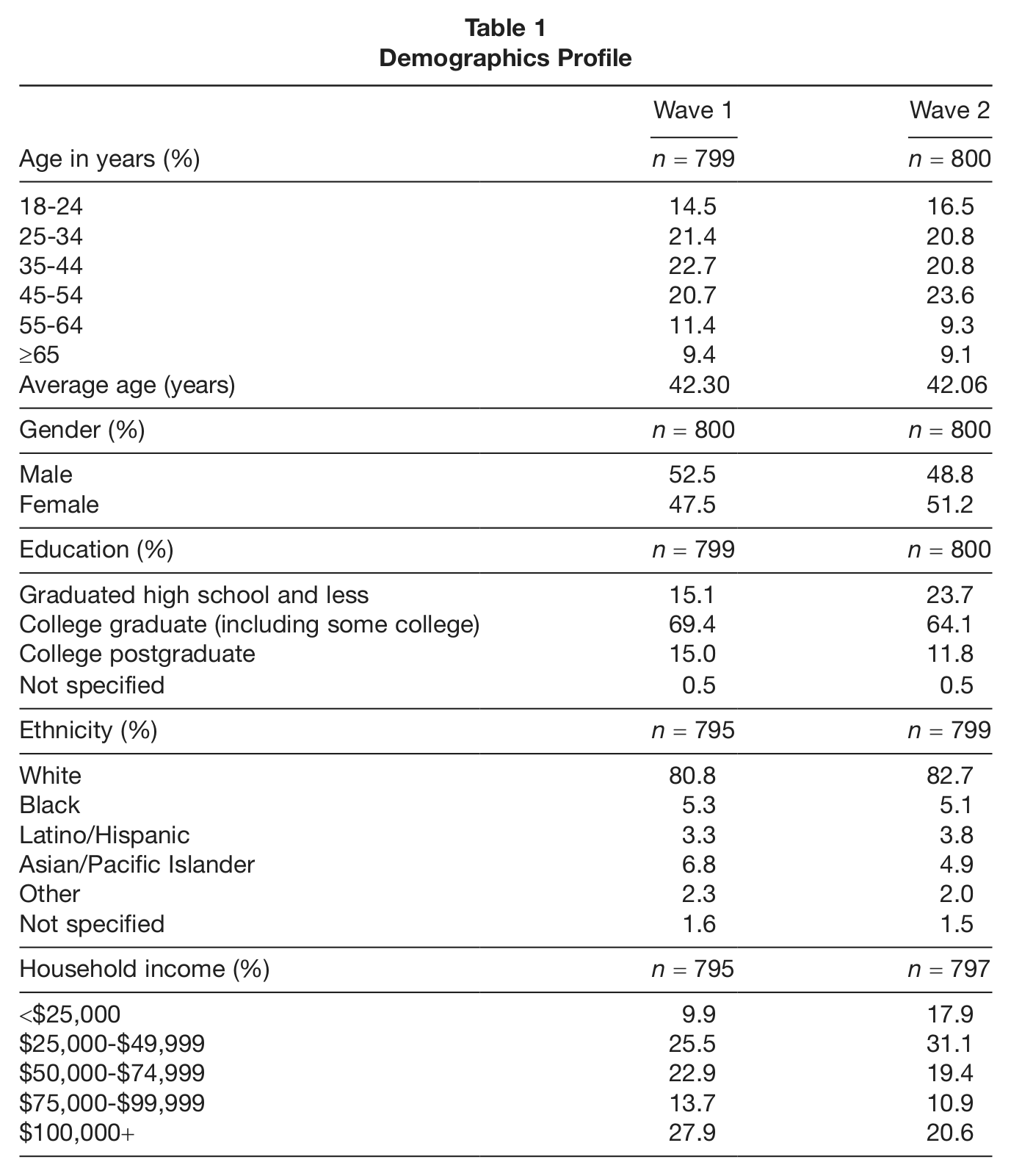
Due to logistical reasons, the sample size (n = 3,366) achieved from the Wave 1 survey was nearly three times that of Wave 2 (n = 1,265), which is likely to violate the homoskedasticity assumption in subsequent comparative analyses (Hair, Black, Babin, Anderson, & Tatham, 2002). Hence, the authors randomly selected 800 cases from Wave 1 and Wave 2 samples, respectively, via the “select cases” function of SPSS. Table 1 presents the demographic information of the randomly selected subsamples from each wave.
Demographics Profile
Destination Image Change (RQ1)
To proceed with the testing of RQ1, which aimed to examine whether respondents’ destination image perceptions differed before and after the event, the following steps were taken: (a) t tests were conducted for differences in cognitive and affective image items between the two samples, then validation of the factor structure was tested in each sample; (b) samples were compared on their demographics to test for differences in the dependent variables and to control for such differences; and (c) a MANCOVA model was estimated to answer RQ1.
Data Preparation
To begin, the authors deemed it necessary to use information reduction techniques on cognitive and affective images, both of which were measured with multi-item scales.
Cognitive image
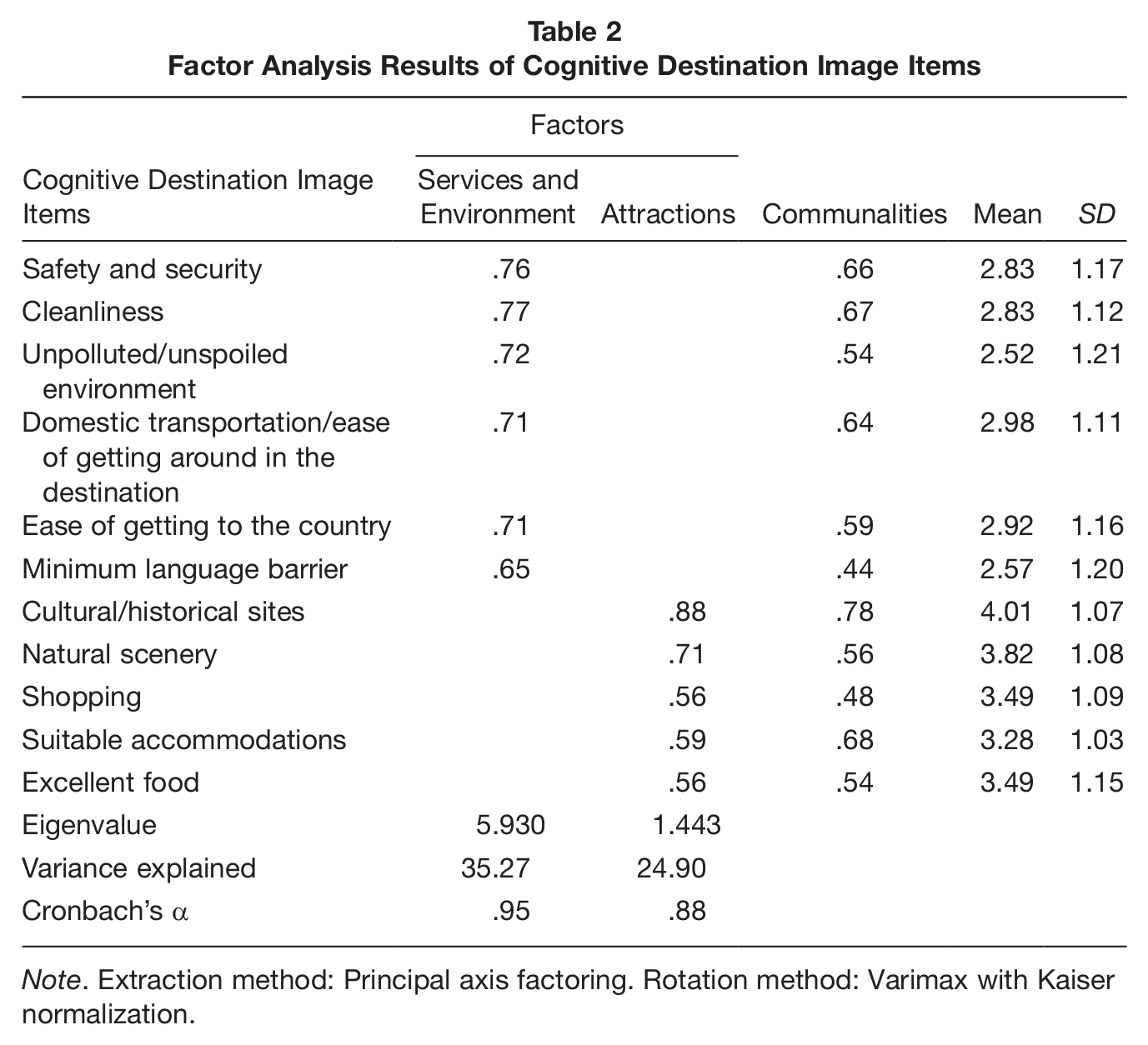
First, a t test was conducted to check for differences between Wave 1 and Wave 2 samples on all 19 cognitive destination image items. No differences were detected at p < .05, therefore all respondents from both samples were included in a factor analysis using principal axis factoring with varimax rotation. On examination of the factor loadings for each sample, researchers dropped eight items that cross-loaded on both factors from further analysis. Factor analysis was repeated with the above criteria and revealed two factors. The structure of these two factors was also tested and confirmed with each of the samples separately as a validation step. The two factors labeled “services and environment” and “attractions” explained 60.17% of the variance. The factor “services and environment” included six items (Cronbach’s α = .95) and the factor “attractions” included five items (α = .88; see Table 2). The mean of these two factors was estimated and a new variable for each factor was created for inclusion in the MANCOVA model to test RQ1. A correlation test showed the two cognitive destination image factors to be significantly correlated (r = .63, p < .01).
Factor Analysis Results of Cognitive Destination Image Items
Note. Extraction method: Principal axis factoring. Rotation method: Varimax with Kaiser normalization.
Affective image
A t test was conducted to identify differences between Wave 1 and Wave 2 samples on all five affective destination image items. No differences were detected at p < .05, and all respondents from both samples were therefore included in the factor analysis described next. The five affective image items were factor-analyzed with the same criteria as above. These items were analyzed for each sample separately to verify their structure, and no different structure was identified between the two samples. Thus, the researchers conducted the analysis for all respondents. This analysis yielded one factor that explained 75% of the variance (eigenvalue = 3.98, Cronbach’s α = .93). A new variable was created by estimating the mean of the five affective destination image items.
Subsample Comparison on Demographics
To test whether the samples of two waves were demographically similar, several cross tabulations and t tests across the following demographic variables were estimated: gender, ethnicity, income, education, and age. No significant differences were found in terms of gender, ethnicity, and age. However, differences were found between the two samples in terms of income (χ2 = 36.286, p < .001) and education levels (χ2 = 19.650, p < .001). In terms of income, differences of more than 5% in frequency distribution were observed (see Table 1) in the two lower and one upper income brackets with the Wave 2 sample seemingly less affluent overall. In terms of education, the differences between Wave 1 and Wave 2 samples were in the high school and college categories. To test and control the impact of income and education, two MANOVAs were conducted to identify any impact of income and education on the three RQ1 dependent variables: cognitive, affective, and conative destination image. The multivariate results showed an insignificant multivariate effect of income (Pillai’s trace = .02, p = .07) and a significant effect of education (Pillai’s trace = .03, p < .001). On examination of the univariate results for education, differences were found in the cognitive destination image variable “services and environment,” Feducation(2, 956) = 4.841, p < .001, but not in the other variables. Given the high correlation between the factor “services and environment” and the second cognitive image factor “attractions,” another MANOVA was estimated for the impact of education on dependent variables, with “services and environment” excluded from the model. This time, the multivariate results showed no overall significant multivariate impact of education (Pillai’s trace = .007, p = .24) on the dependent variables. In light of these results, no demographics were included in the next step of model estimation, and only the “attractions” factor was included in subsequent analysis.
MANCOVA Test
The final step was a MANCOVA test on the three destination image dimensions. As indicated, the dependent variables included one cognitive, affective, and conative destination image variable. The first independent variable of the study was labeled “change” to reflect the before-and-after evaluation of destination images in the two samples. The variable was a fixed factor given that the responses in the questions came from proxy samples and not the same respondents. The second independent variable of the study labeled “interest” was a fixed factor consisting of three groups: (a) those respondents most interested in visiting the Greater China Area (n = 185, 11.6%), (b) those interested in visiting other Asian countries (n = 1,039, 64.9%), and (c) those respondents not interested in visiting the Asian continent altogether (n = 376, 23.5%). A covariate of past travel experience was also inserted in the model to control for any influences of past travel experiences on overall destination image perceptions.
For this model, all assumptions for MANCOVA were met except for the Box test of equality of covariance matrices. Given that the Box test did not assume equal covariance among matrices when it should and that there were unequal cell sizes, Pillai’s trace F-test statistic was used to examine the main effects because of the test’s robustness to such assumption violations (Tabachnick & Fidell, 2007). The multivariate results of the MANCOVA model revealed no differences in destination image perceptions before and after the Olympic Games (Pillai’s trace = .004, p = .26). However, researchers found significant differences between groups of different interest levels to travel to Asian countries (Pillai’s trace = .17, p < .01), as well as a significant impact of the covariate of past experience (Pillai’s trace = .01, p < .01). These results mean that the Olympic Games had no overall impact on American travelers’ cognitive, affective, and conative images of China, albeit those with higher interest in visiting China had more favorable images than those interested in other Asian countries. In addition, the results also indicate that past experiences affect destination image perceptions. Table 3 presents the F values for the multivariate and univariate results of the MANCOVA model.
F Values for Multivariate and Univariate Analyses of Variance for Cognitive, Affective, and Conative Destination Image Before and After the Beijing Olympic Games and Among Various Interest Groups

Note. Multivariate F ratios are reported on the table and were generated from Pillai’s statistic. The values for the univariate results are F ratios.
Multivariate df: 3, 1095.
Univariate df: 1, 1097.
p ≤ .05. **p < .001.
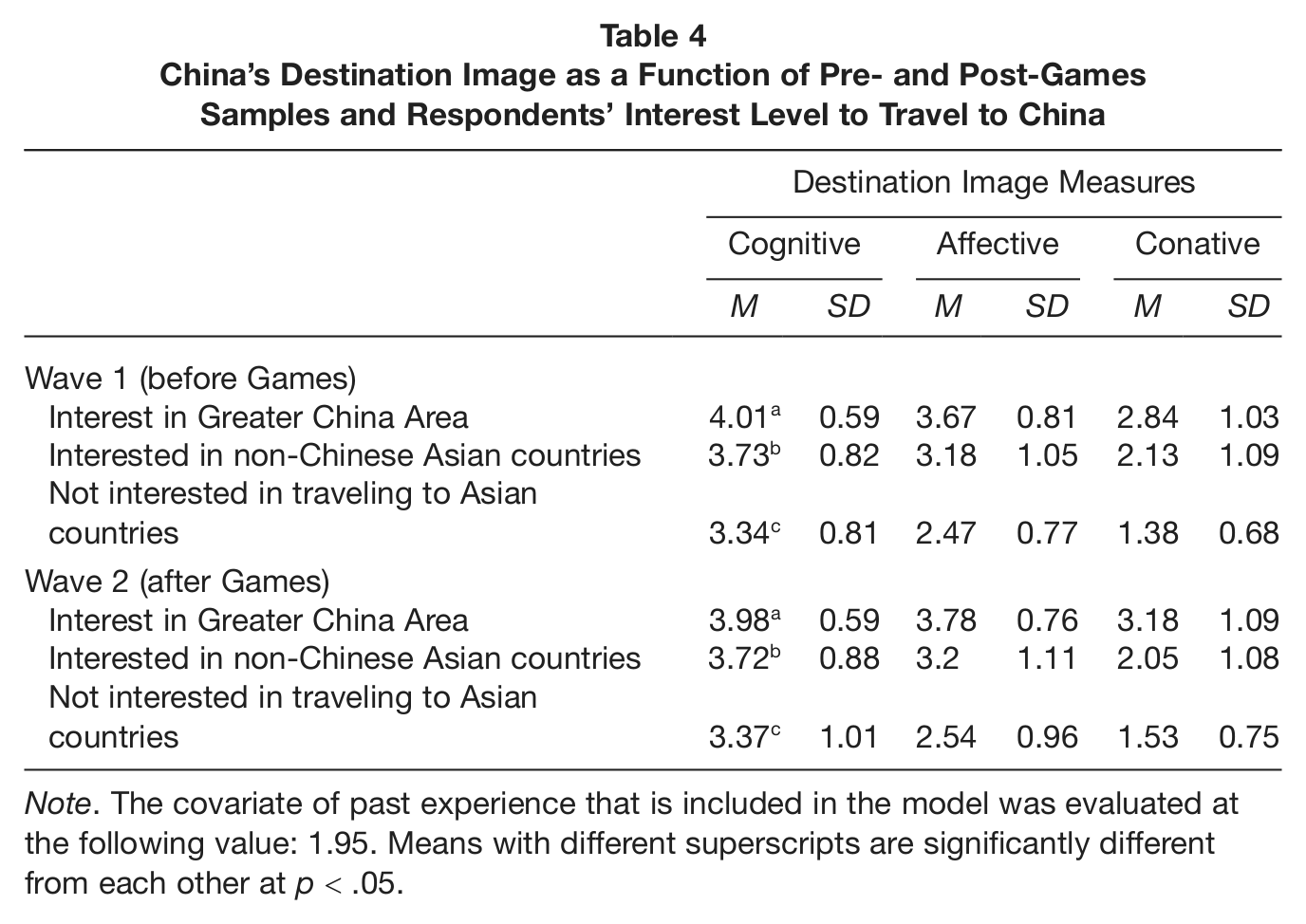
Given the significant differences between interest groups on multivariate level, the univariate results were further examined. Significant differences were found in all cognitive, affective, and conative image scores for all three groups: those having interest to travel in the Greater China Area, those with interest to travel in other Asian countries, and those not interested in traveling in Asia altogether. More specifically, those interested in visiting the Greater China Area had consistently higher image ratings than the group interested in visiting non-Chinese Asian countries, and both groups rated China’s image higher than the group not interested in visiting Asia at all. Pairwise comparison results supported the significant differences at p < .01 for all group means (i.e., all interest groups were significantly different from each other; see Table 4).
China’s Destination Image as a Function of Pre- and Post-Games Samples and Respondents’ Interest Level to Travel to China
Note. The covariate of past experience that is included in the model was evaluated at the following value: 1.95. Means with different superscripts are significantly different from each other at p < .05.
Destination Personality Changes (RQ2)
RQ2 examined respondents’ perception of China’s destination personality affected by the Beijing Games. The authors went through a similar process as outlined in the “Destination Image Change (RQ1)” section. The following section will highlight the different parts to avoid redundancy.
First, to prepare the variable “destination personality” for further analysis, a t test was conducted to identify differences between Wave 1 and Wave 2 samples on all 11 destination personality items. No differences were detected at p < .05, and all respondents from both samples were thus included in the factor analysis described next. Given that the literature has suggested destination personality as consisting of three dimensions (Ekinci & Hosany, 2006), the authors first ran a confirmatory factor analysis to test if the three-dimensional structure did hold. Using EQS 6.1, the fit indicators normed fit index (NFI) = .92, nonnormed fit index (NNFI) = .90, standardized root mean square residual (SRMR) = .06 were acceptable whereas root mean square error of approximation (RMSEA) = .10 bordered on being unacceptable. However, the discriminant validity of the three factors could not be established because correlations between them ranged from .89 to .99 and the average variance explained by the factors was less than their squared correlations (Fornell & Larcker, 1981). In other words, they might be measuring the same construct.
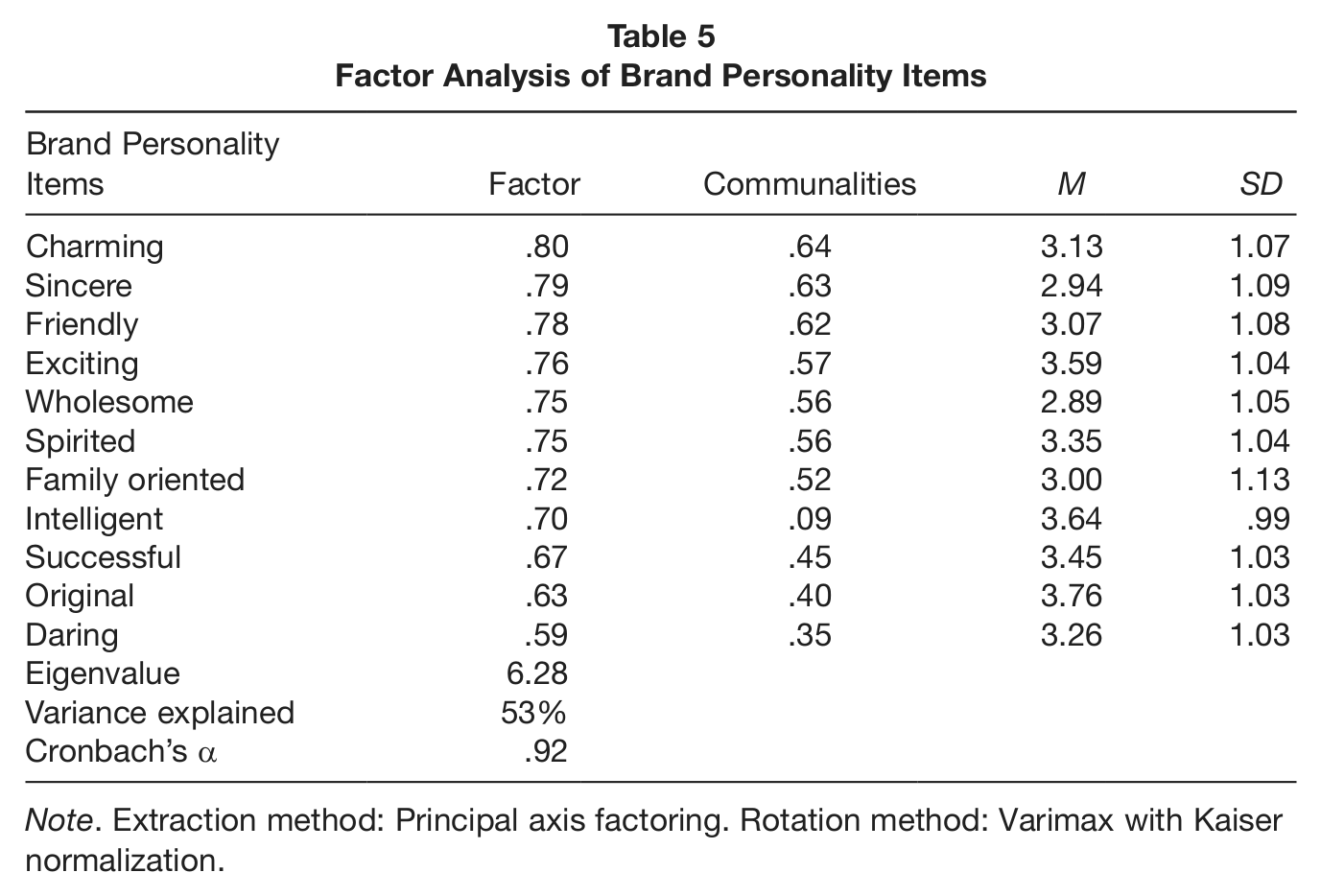
To verify this, an exploratory factor analysis was then employed using principal axis factoring and varimax rotation, which revealed a one-factor solution. This unidimensionality held for both samples when tested separately. The factor explained 53% of the variance and its eigenvalue was 6.28. Its reliability coefficient was high (Cronbach’s α = .92). The detailed results are presented in Table 5. One new variable was computed by estimating the mean from the items composing the destination personality factor.
Factor Analysis of Brand Personality Items
Note. Extraction method: Principal axis factoring. Rotation method: Varimax with Kaiser normalization.
Analysis of covariance (ANCOVA) was conducted to test RQ2. The dependent variable of the model was the destination personality factor, whereas the independent variables of the model were the same as in RQ1. The ANCOVA assumption for homogeneity of variance was not met for the interest group factor (Levene’s test < .05). Therefore, the Games–Howell post hoc test was used for this variable, which does not use the homogeneity of variance assumption to evaluate group differences. The significant value for the Games–Howell test (p < .001) supported the initial ANCOVA results, which indicated significant differences between the interest groups. The univariate results of the ANCOVA model revealed no differences on destination personality perceptions before and after the Olympic Games, F(1, 1124) =1.77, p = .18, which means that the event did not create significant difference in destination personality perceptions. Significant results were found between interest groups, F(2, 1124) = 18.70, p < .001, but not on the covariate of past experience, F(1, 1124) = 1.90, p = .15 (see Table 6). This shows respondents’ interest in a destination could influence their perceived destination personality. Pairwise comparisons supported the significant differences between the interest groups at p < .01. As shown in Table 7, the group interested in traveling to the Greater China Area had significantly higher ratings of destination personality than the other two groups.
F Values for Univariate ANOVA for the Destination Personality Factor Before and After the Beijing Olympic Games and Among Various Interest Groups of U.S. Leisure Tourists
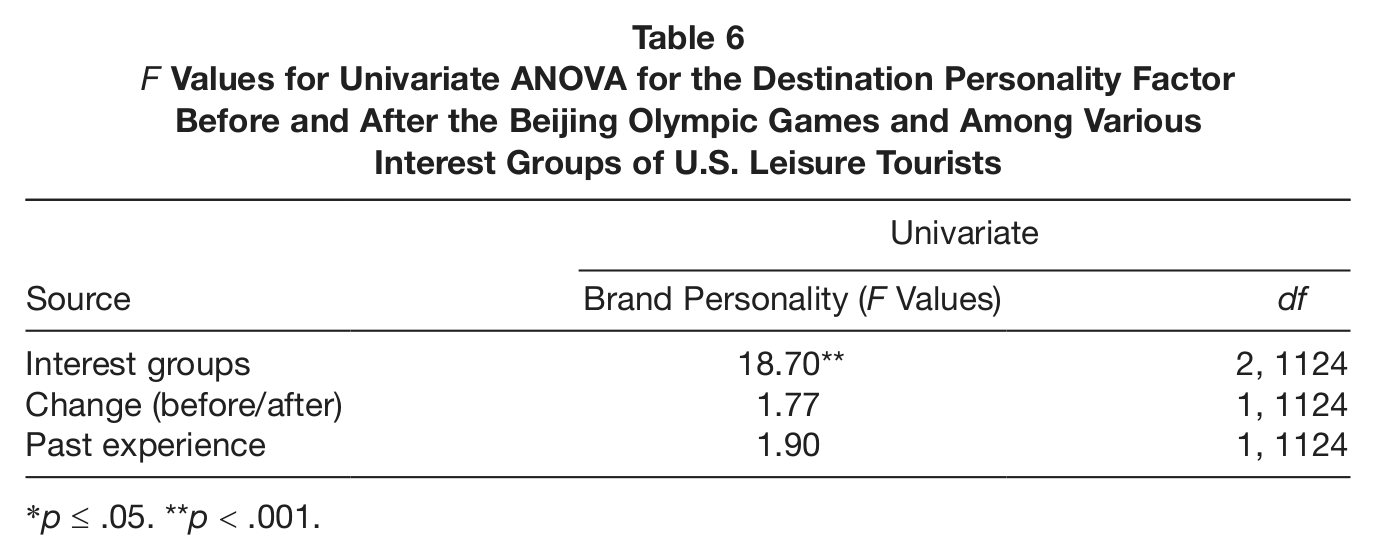
p ≤ .05. **p < .001.
China’s Destination Personality as a Function of Pre- and Post-Games Samples and Respondents’ Interest Level to Travel to China
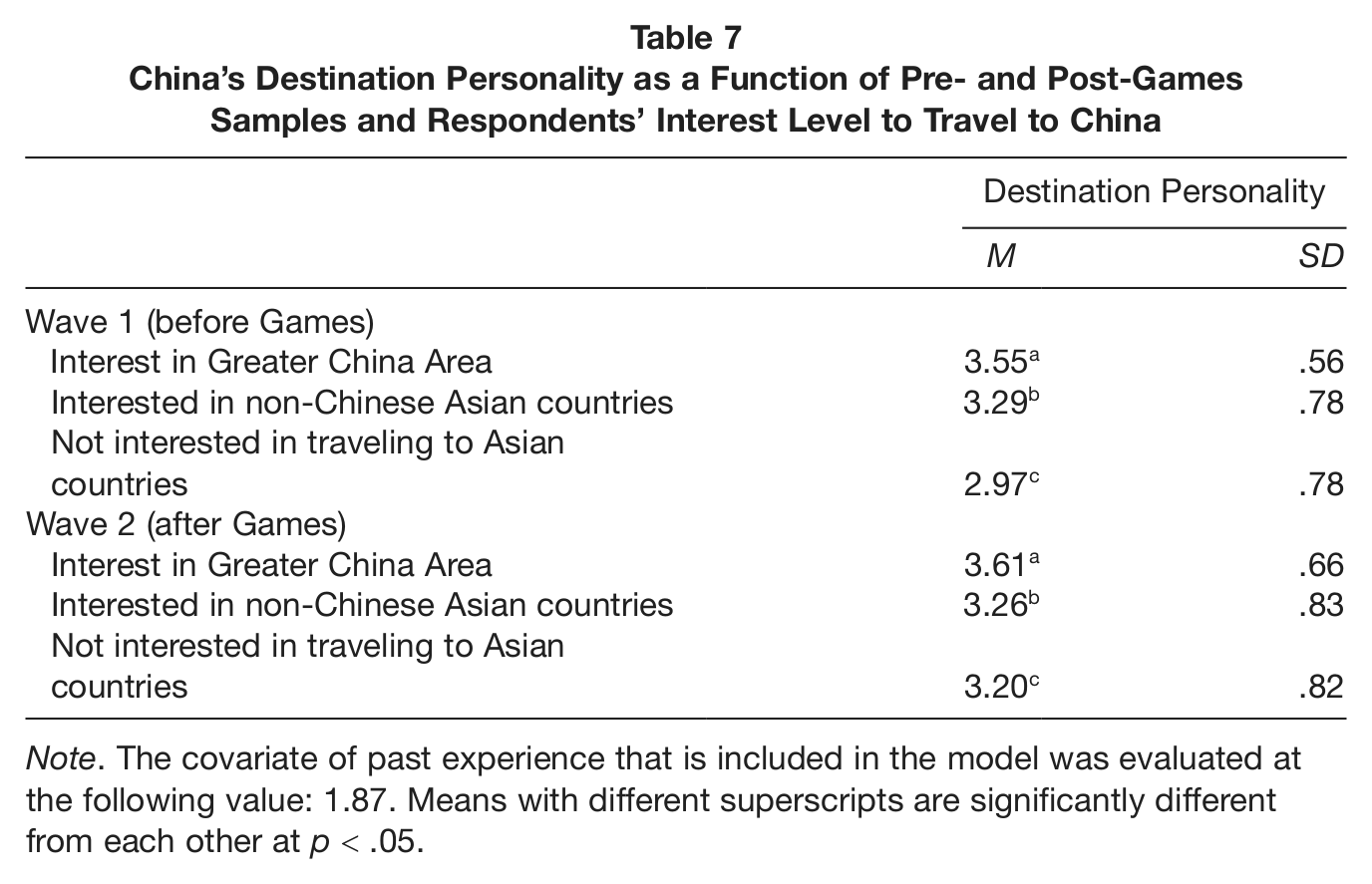
Note. The covariate of past experience that is included in the model was evaluated at the following value: 1.87. Means with different superscripts are significantly different from each other at p < .05.
Olympic Media Exposure and Attitudes Toward Host Destination (RQ3)
With regard to RQ3 about Olympic media exposure influencing overall attitudes toward the host country, MANCOVA was estimated among Wave 2 respondents because these questions pertained only to this sample. The dependent variables were four statements concerning respondents’ view of Beijing Olympics’ impact on China as a travel destination and the variable on respondents’ self-reported image change. The independent variable was one that classified the respondents into two groups: those who followed the Olympics media coverage and those who did not. The covariate in the model was the same as that in the previous MANCOVA model to control for any influence of previous travel experience on intentions. Analysis of variance (ANOVA) was then used to identify where the differences were among respondents who followed the Olympic media coverage. This procedure is discussed in detail after the MANCOVA results.
All assumptions for MANCOVA were met except for the Box test of equality of covariance matrices. Similarly as in RQ1, Pillai’s trace test was used (Tabachnick & Fidell, 2007) to examine the independent-variable effects, which is robust against such violations. The multivariate results from the MANCOVA model revealed a significant main effect of media exposure (Pillai’s trace = .026, p < .01), as well as a significant effect of the covariate of past travel experience (Pillai’s trace = .015, p < .05). On examination of the univariate results, researchers found significant differences between the two groups only in the following dependent variable: “In my mind, Mainland China will become a major tourism destination as a result of the Beijing Olympics” (p < .01). Specifically, the group that followed the Olympic Games through media coverage gave a significantly higher mean score on the variable than the group who did not. Table 8 presents the results for all the variables in the MANCOVA model.
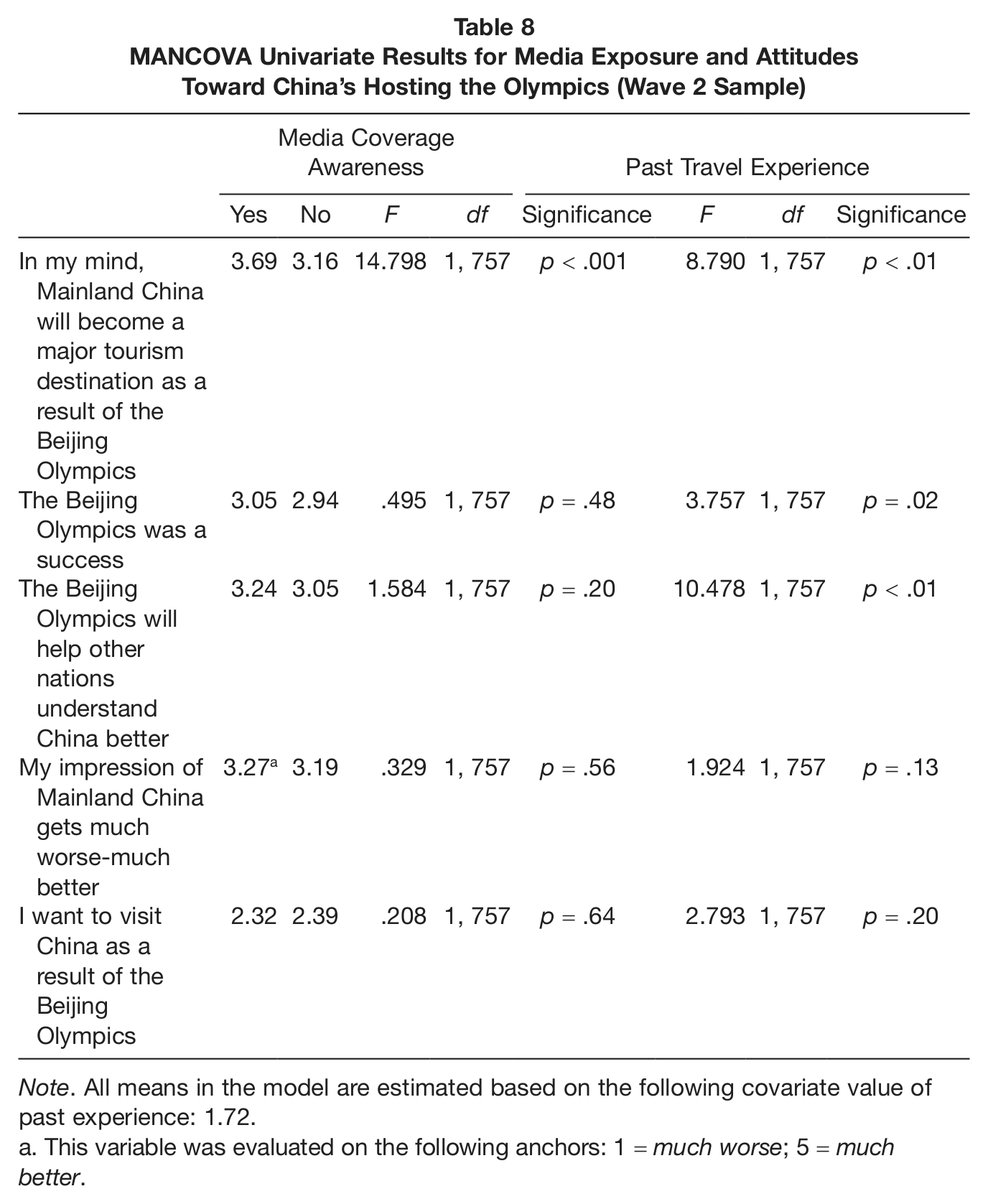
Note. All means in the model are estimated based on the following covariate value of past experience: 1.72.
This variable was evaluated on the following anchors: 1 = much worse; 5 = much better.
One-way ANOVA was estimated to detect differences among respondents who reported different levels of media consumption on the variable, “In my mind Mainland China will become a major tourism destination as a result of the Beijing Olympics.” The ANOVA results (Table 9) revealed overall significant differences among the seven different levels of media consumption groups, FBrown Forsyth(6, 606.823) = 13.324, p < .001. Post hoc comparisons using Dunnett’s T3 tests (because of unequal group variances detected from Levene’s test) revealed differences between the groups that watched less than 0.5 hours per day and between 0.5 and one hour per day compared with the rest of the groups that indicated that they watched more. In other words, heavier Olympic media consumers tended to have more positive impression of China as a tourism destination.
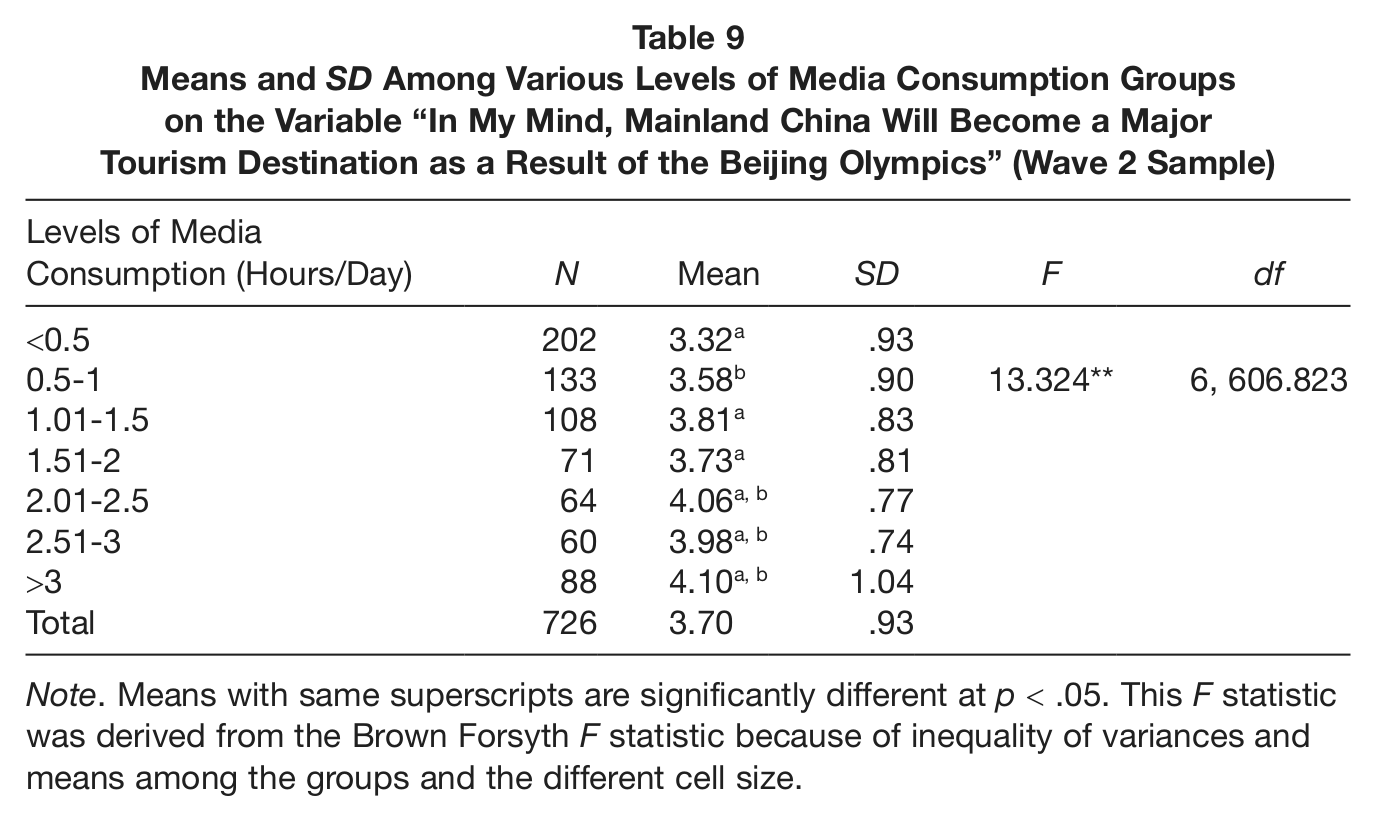
Note. Means with same superscripts are significantly different at p < .05. This F statistic was derived from the Brown Forsyth F statistic because of inequality of variances and means among the groups and the different cell size.
Respondents of different levels of media consumption did not significantly differ in the following variables: intention to visit China, perception of the success of the Beijing Olympic Games, and self-reported impression change of China. The covariate of past travel experience was significant for the following variables: “In my mind, Mainland China will become a major tourism destination as a result of the Beijing Olympics” (p < .01); “The Beijing Olympic Games were a success” (p < .05); and “The Beijing Olympics will help other nations understand China better” (p < .05). Thus, the more experienced travelers did have a more positive perception of the impact of the Beijing Olympic Games on China.
Discussion and Implications
The study revealed that American travelers’ collective perception of China as a travel destination, in terms of destination image and personality, did not change substantially from before to after the 2008 Beijing Olympic Games. Differences in destination brand perceptions, however, were evident among respondents with different interest levels to travel to Asia. Furthermore, respondents who spent more time following the Olympic Games through the media tended to have more positive impression about China as a tourism destination. Also, the research revealed that individuals’ past travel experiences affected their image change. The contribution of the study lies in the systematic examination of a destination brand through the lenses of destination image and destination personality, and the insights gained on a mega-event’s impact on the host country’s travel brand from a source market perspective.
Research concerning the effect of mega-events on destination image has been conducted for years. Most researchers believe that a well-organized event should improve the host destination’s brand, at least for a short period of time (Jago, Chalip, Brown, Mules, & Ali, 2003). However, previous studies supporting such claims were either conducted on-site (S. S. Kim & Morrison, 2005; Lee, Lee, et al., 2005), or focused on destination awareness (Ritchie & Smith, 1991), an antecedent of destination image (Milman & Pizam, 1995). Meanwhile, some studies have suggested that the impact of mega-events on nonattendees’ destination image could be limited (Lee, Taylor, et al., 2005; Mossberg, 1997, 1999). The present study is consistent with the latter studies and shows that the 2008 Beijing Olympic Games had limited impact on American leisure travelers’ collective perceptions of China. These results imply that when destinations and source markets are far apart in terms of both geographic and cultural distances, stereotypes of distant countries may deeply penetrate the minds of source-market residents. Consequently, improving a destination brand could be a challenge. According to an international survey conducted before the Beijing Games, the United States was among the most negative countries about hosting 2008 Olympic Games in China (Pew Research Center, 2008). In light of this and the two countries’ substantial differences in many sociocultural dimensions, it is understandable that one event, albeit a large one, may not easily change deeply held stereotypes.
From a branding perspective, the nonsignificant findings might also stem from the divergence between China’s traditional brand identity and the new brand value the country attempted to project during the Beijing Olympic Games. In the past, China was generally viewed as a cultural and historic destination, whereas the Beijing Olympic Games promoted the country’s new image as an open, friendly country boasting fast development and modernity. In other words, instead of enhancing its existing brand perception, China attempted to use the event to alter part of its core brand value (Zhang & Zhao, 2009). Zhang and Zhao’s largely qualitative study concluded that the 2008 Games had only limited impacts on Beijing’s city brand because of a disconnect between projected and perceived image. It is postulated that the transformation of brand identity could incur some temporary confusion, at least during the transition period. This transformation could have limited the Beijing Olympics’ impact on China’s destination brand.
Despite the nonsignificant findings on overall destination brand perception, interesting patterns did emerge when researchers took a closer look at the direction of change among subgroups. Most noticeably and consistently, the two groups who were either interested in the destination (i.e., interested in visiting the Greater China Area) or uninterested in the region at all (i.e., not interested in visiting Asia) both showed positive improvement in their destination brand perceptions. Wave 2 ratings on almost all constructs were higher than those of Wave 1 (Figure 1). Most interestingly, such changes seemed more substantial among the uninterested group. However, the negative perception change among the largest group, that is, the group interested in visiting Asian countries other than China (nearly 65% of the sample), seemed to have offset any positive change experienced by the other two groups. These findings imply that interest in destinations could be a useful commonsense segmentation criterion for destination marketers (Dolničar, 2004). Future studies are warranted to identify particular market segments that are more likely to change their perceptions as a result of a mega-event.

Pre- and Post-Games Changes Experienced on Each Destination Perception Construct
Not surprisingly, this study found that consumers’ event media exposure affected their perception of the host destination. People who followed Olympic media coverage tended to have a more positive attitude toward China than those who did not, and a higher amount of Olympic media consumption seemed to lead to a more favorable view about China. This result is also consistent with a survey which found “Americans’ early skepticism” about holding the Olympic Games in China actually waned during the event, particularly among those who followed the Games (Pew Research Center, 2008). This illustrates the critical role media play in the formation of destination brand perception. Although one event may not necessarily change destination brand perceptions overnight, making potential travelers aware of the event could be a necessary step toward this objective.
Past research has shown that travelers’ previous travel history or “travel horizon” could play an important role in their tripographic behavior (Oppermann, 1998). The influential role of past travel experience is supported in this study, and the results suggest the need to control for such a variable when groups of respondents are compared on destination brand–related variables.
Today, destination marketers and event organizers must develop a full understanding of an event’s tangible (e.g., tourism revenue) and intangible (e.g., a polished destination brand) benefits before making a bid or deciding the event’s scale and budget. This understanding could be even more critical for developing countries that have been increasingly using event hosting to achieve more international visibility (e.g., China with the Beijing Olympics and Shanghai World Expo, and South Africa and Brazil with the World Cup) despite their limited resources and experiences. Findings from the present study suggest host countries should have a sober understanding of the challenges involved in improving destination brands and take full advantage of media coverage. From a strategic standpoint, the authors recommend that the host country’s destination marketing organizations should identify and target specific segments based on their tripographic profiles and travel experiences. For the rest, increasing awareness level, rather than raising brand perception, could be a more meaningful objective.
This study certainly has its limitations. Studying only one event and one source market limits the generalization of the present findings. Presumably, had the authors replicated the present study in other, closer source markets, such as Japan and Australia, different findings could have emerged. Thus, future research may replicate the current study design and examine the impacts of other mega-events and markets.
The present study only focused on destination image and personality as two key constructs of brand perceptions. Research on other brand-related factors—for example, destination awareness, familiarity, value, and loyalty—may provide complementary information for destinations to gain a more comprehensive understanding of their brand. When examining the destination brand perceptions, the authors controlled important factors such as demographics, destination interests, and past experiences. Future studies may also consider controlling other personal and stimulus factors such as respondents’ personality and information sources (Baloglu & McCleary, 1999).
Conclusion
In summary, this study showed that although American travelers’ collective perception of China as a travel destination did not change substantially before and after the 2008 Beijing Olympic Games, various subgroups within this population appeared to have different levels of susceptibility to perception change during this process. Furthermore, it confirmed that media exposure could significantly influence respondents’ destination perceptions.
As a concluding thought, there recently has occurred a line of research questioning the benefits of hosting mega-events (European Tour Operator Association, 2006, 2008; Owen, 2005; Porter, 1999; Spilling, 1998). Unlike those studies, the present authors remain optimistic about the positive impacts of hosting mega-events on destination brands. Nevertheless, this study suggests such positive impacts will only be achieved via carefully crafted marketing strategies, particularly strategic targeting of traveler segments. As Zhang and Zhao (2009) suggested, destination branding is a long and complicated process, and “the branding opportunities provided by an international mega-event constituted an important but only fractional part of the entire process” (p. 253).
Footnotes
Authors’ Note
An earlier draft of this article was presented at the Third International Conference on Destination Branding and Marketing, Macao, People’s Republic of China, 2009.