



Abstract
This study examines customers’ willingness to pay more for green practices in restaurants using hypothetical scenarios. The objective of this study is to investigate the characteristics of consumers with a higher willingness to pay more and examine the relationship between consumers’ perceptions of green brand image and their willingness to pay more for a restaurant’s green practices. A total of 334 responses showed that more than two-thirds of restaurant customers would be willing to pay extra money for green restaurant practices. Age, previous experience, involvement, and self-perception were found to be significant in accessing consumers’ willingness to pay more for green practices in restaurants. In addition, the results showed that customers with a strong likelihood to pay more for green practices had higher perceptions of green brand image than those who were less likely to pay extra.
Consumers are becoming more sophisticated about how they interpret marketing and brand messages that feature sustainability (Wong, 2010). To satisfy the emerging needs of contemporary green consumers, entrepreneurs from various fields have sought to change their corporate structures and alter their existing products/services to be more eco-friendly (Chan, 2011; D’Souza & Taghian, 2005; Ottman, 1992). The restaurant industry is not exempt from this growing trend. Restaurant operators adopt green practices to gain competitive advantage by creating a distinctive image that can differentiate them from competitors. For instance, a sustainable restaurant menu (i.e., organic and locally grown produce, meat, and fish) can be featured as essential element to create a recognizable brand image (King, 2012). According to a survey by Retail Systems Research (Plautz, 2010), 66% of restaurateurs responded that brand identity was a “very important” reason for adopting environmentally sound practices, followed by ethical obligations (63%), reducing their carbon footprint (50%), and cost reduction (47%). In addition, 58% of respondents replied that green initiatives were a strategic initiative in their restaurant, whereas only 6% said they were not being considered (Plautz, 2010). However, although many firms are taking advantage of sustainability, greenwashing, where consumers are mislead regarding the environmental practices of a company or the environmental benefits of a product or service, is a problematic issue (Parguel, Benoit-Moreau, & Larceneux, 2011). Nonetheless, building a sustainable competitive edge through truly going green is seen as desirable in the restaurant industry (Chou, Chen, & Wang, 2012; Mills & Rudd, 2009; Schubert, Kandampully, Solnet, & Kralj, 2010).
Given these customer shifts toward environmental responsibility, a better understanding of this segment would provide a crucial competitive advantage to an organization (Barber, 2012; DiPietro, Cao, & Partlow, 2013; Miao & Wei, 2013). With a focus on sustainability, business operators can attract more loyal and well-heeled customers who are willing to pay more for products and services that align with their own perceptions and practices. Furthermore, given the growing cultural shift toward health and wellness, the future of green restaurants will, to a large extent, rely on consumer demand and their willingness to pay more for environmentally friendly practices.
Despite the importance of consumers’ perceptions of restaurant brands with an emphasis on green initiatives, most green studies in hospitality marketing research mainly targeted the hotel/lodging industry while overlooking its significance to the core competency of restaurants (Line & Runyan, 2012). Although customers care about restaurants protecting the environment, whether or not they are willing to pay more to offset any additional costs associated with green practices remains unclear. Although the general relationship between green business practices and premium prices has been studied (Dutta, Umashankar, Choi, & Parsa, 2008; Hu, Parsa, & Self, 2010; Kang, Stein, Heo, & Lee, 2012), identifying which consumers are willing to pay more for environmentally friendly restaurants has rarely been discussed. For example, are restaurant patrons intrigued by environmentally friendly restaurants? Would customers be willing to pay more to dine at “green” restaurants? If so, how much money would they be willing to spend? Unlike previous studies on the link between firms’ green practices and willingness to pay more, the focus of this study is to identify the crucial characteristics of customers who are highly willing to pay more for restaurant green practices in comparison to those customers who are not willing to do so. In addition, understanding what causes individuals to pay more for green restaurants could provide more useful information to restaurateurs. To fill this research gap, the specific objectives of this study are to (a) understand the demographic characteristics of consumers who are highly willing to pay more for green restaurant practices, (b) examine personal characteristics (i.e., previous experience, green restaurant involvement, and self-perception of health and environment) influencing consumers’ willingness to pay more for green restaurant practices, and (c) examine whether consumer perceptions of green practices have a positive effect on the perceived green image of a restaurant. These findings will enable restaurant managers pursuing green practices to target the right customers—truly green and profitable consumers.
Related Literature and Hypotheses
Green Restaurants
Green restaurants refer to “new or renovated structures designed, constructed, operated, and demolished in an environmentally friendly and energy-efficient manner” (Lorenzini, 1994, p. 119). As consumers began to understand how their consumption behaviors affect the environment, the concept of green restaurants emerged. Since 1990, the Green Restaurant Association (GRA), a U.S.-based nonprofit organization, has encouraged restaurants to adopt environmental policies and provided convenient and cost-effective ways for restaurants to become more environmentally responsible (Business & the Environment, 2008). These practices cover the following dimensions: water efficiency, waste reduction and recycling, sustainable furnishings and building materials, sustainable food, and reducing energy, waste, chemicals, and pollution. Furthermore, the GRA encourages restaurants to embrace environmental policies and train their employees on green guidelines. Providing food in a sustainable way is particularly important for restaurants to ensure that when consumers eat out they can still help protect the environment (Business & the Environment, 2008; Chou et al., 2012). A recent study suggested that the type of restaurant should be considered when restaurants seek to engage in green practices (Namkung & Jang, 2013). In upscale restaurants, green practices focused on food (e.g., healthy, locally grown, or organic ingredients on the menu) are effective in improving a green image. On the other hand, for casual dining restaurants, restaurant managers should pay attention to green practices with environmental aspects (e.g., to-go containers with compostable materials or installing motion sensors in the bathrooms) to establish a restaurant’s green image.
Green Practices and Willingness to Pay More
Green practices in the hospitality and tourism industry can be traced back to 1987, when the concept of sustainability was first mentioned and began to gain momentum in the sector (Ernst & Young, 2008). The term green can be defined as “actions that reduce the impact on the environment, such as eco-purchasing or recycling” (Wolfe & Shanklin, 2001, p. 209). As such, green consumer refers to those who are interested in environmental issues and their purchase behaviors are largely affected by environmental concerns and other environmental factors (Soonthonsmai, 2007; Tilikidou, 2007). Tajfel and Turner’s (1979) social identity theory has been applied as a theoretical foundation to examine consumers’ attitudes and behaviors toward green practices (Brow, Ham, & Hughes, 2010; Schubert, 2008). According to social identity theory (Tajfel &Turner, 1979), people create their self-concept by their connections with social entities. Consistent with predictions derived from social identity theory, a customer’s strong congruence with a company that engages in intensive green initiatives is expected to lead to strong behavioral intentions and a willingness to pay a premium for green initiatives (Brown & Dacin, 1997).
The increased attention focused on green management has stimulated interest in research regarding the relationship between green initiatives and customers’ willingness to purchase and pay more for environmentally friendly products/services (Kang et al., 2012; Laroche, Bergeron, & Barbaro-Forleo, 2001; Manaktola & Jauhari, 2007). Willingness to pay (WTP) refers to the maximum amount of money a customer is willing to spend for a product or service (Cameron & James, 1987; Krishna, 1991). In marketing literature, WTP has been understood as a measure of the value that a person assigns to any kind of product or usage experience in monetary terms (Homburg, Koschate, & Hoyer, 2005; Rao & Bergen, 1992). Price premiums, defined as excessive prices paid over and above the fair price that are justified by the true value of the product (Miao & Mattila, 2007; Rao & Bergen, 1992), could be indicators of consumer willingness to pay (Vlosky, Ozanne, & Fontenot, 1999). Furthermore, WTP has been viewed as crucial in generating favorable behaviors (Zeithaml, Berry, & Parasuraman, 1996). Behavioral intentions have been understood as a surrogate for actual behavior (Fishbein & Ajzen, 1975) and used as a proxy measure of an actual behavior in the hospitality industry (Dutta et al., 2008; Kang et al., 2012).
Some empirical evidence in the area of hospitality and tourism supports the positive relationship between green practices and customers’ willingness to pay (Green Lodging News, 2008; TripAdvisor, 2010). For example, Deloitte (2008) found that 38% of business tourists were informed about the eco-friendliness of the hotel, and 28% would be willing to pay 10% more for a green hotel. According to a survey by TripAdvisor (2010), 34% of the participants were willing to pay more for an environmentally friendly hotel. Twenty-five percent were willing to pay a premium of 5% to 10%, whereas 12% were willing to pay a premium of 10% to 20% (TripAdvisor, 2010). More recently, Kang et al. (2012) investigated the relationship between the level of U.S. hotel guests’ environmental concerns and their willingness to pay a premium for green hotel practices. Appling social identify theory and means-end theory, they found that U.S. hotel guests with a higher degree of environmental concern declared a higher willingness to pay premiums for hotels’ green initiatives.
In the restaurant industry context, Dutta et al. (2008) considered differences in culture and economic conditions in the United States and India. They (Dutta et al., 2008) found that consumers in the United States have a higher degree of involvement in environmentally and socially responsible restaurant practices, which have the most significant effect on consumers’ willingness to pay an extra 10% or higher for green practices. In contrast, consumers in India had a higher degree of involvement with health and visibility than consumers in the United States, which is the major driver of their willingness to pay an extra 10% or higher for green practices. Furthermore, Hu et al. (2010) revealed that Taiwan consumers’ knowledge of sustainable restaurant practices and environmental concerns were important determinants of their intentions to patronize green restaurants. They found that a majority of respondents (53.7%) were willing to pay 2% to 6% more to patronize a green restaurant, and 33.1% were willing to pay between 8% and 12% more. Just 5.1% were willing to pay 14% to 20% more to patronize a green restaurant, whereas only 8.1% were not willing to pay anything more. Green management in the restaurant industry now plays a critical role in marketing and operational planning.
Green Practices and Green Brand Image
Building and managing a strong brand has become a crucial task for restaurant owners and brand managers. A brand requires a unique, favorable image to convey a strong sense of branding (Keller, 1993), which implies that a positive image is essential to brand power (Govers, 2003). Image also strongly influences a consumer’s decision-making process and behavior by offering mental shortcuts for processing purchase data (Kotler & Gertner, 2002). Accordingly, many restaurants are undertaking corporate restructuring programs that reflect branding orientation rather than product orientation (Muller, 1998). Siguaw, Mattila, and Austin (1999) asserted that the primary goal of restaurant brand managers is to develop a clearly defined brand personality that distinguishes one brand from another.
The implementation of sustainability initiatives has been understood as a business strategy for gaining competitive advantage, including attractiveness to customers, elevating a brand’s green image, and increasing price premiums (Bansal & Roth, 2000; Graci & Dodds, 2008). Grant (2008, p. 25) defined a green brand as “one that offers a significant eco-advantage over the incumbents and which hence appeals to those who are willing to make green a high priority.” Hartmann and Ibáñez (2006) suggested that a green brand consists of a set of benefits (e.g., the perceived health advantages of organic food or an improved environment). Strengthening a potential consumer’s perceptions of the individual benefits from going green is crucial to green markets because it strengthens and multiplies the emotional value of green brands (Hartmann & Ibáñez, 2006). A green brand image incorporates green practices into a corporate brand to create a set of perceptions regarding the brand in a consumer’s mind that are linked to environmental commitments and environmental concerns (Chen, 2009).
Recognizing the significance of company image and corporate reputation as one of the most intangible yet priceless assets, empirical evidence supports a positive relationship between green practices and green brand image. Penny (2007) found that 65% of respondents believe that good green management can contribute to a hotel’s image and competitiveness. Thus, green management has come to be directly associated with corporate image. In the hotel industry, Han, Hsu, and Lee (2009) found that customers who have a positive image of green hotels are willing to stay at a green hotel, recommend it, and pay more. Lee, Hsu, Han, and Kim (2010) found that a green hotel’s overall image can contribute to more favorable behavioral intentions including word-of-mouth, willingness to pay a premium, and revisit intention.
In the restaurant context, the adoption of an environmentally friendly management approach helps build a good corporate image (Jeong & Jang, 2010; Tan & Yeap, 2012). Generally, green restaurant practices involve the use biodegradable products, actively saving energy and natural resources, purchasing energy saving equipment, reducing and recycling waste, and engaging in environmental protection programs (Schubert, 2008). As Plautz (2010) asserted, as implementing green restaurant practices becomes increasingly important to customers, restaurants want to be regarded as market leaders in sustainability. Furthermore, customers tend to choose brands they trust and derive a sense of entitlement from practices associated with environmental sustainability (Plautz, 2010).
Demographic and Psychographic Characteristics and Willingness to Pay More
A customer’s willingness to pay for green practices in restaurants may vary depending on his/her demographic and psychographic information (Amendah & Park, 2008). Relevant literature reveals the importance of demographic characteristics in understanding a consumer’s environmental consumption behaviors (Roberts, 1996; Roberts & Bacon, 1997; Schwartz &Miller, 1991). First, age has been found to be significantly correlated with environmental behaviors (Roberts, 1996; Roberts & Bacon, 1997; Schwartz & Miller, 1991). Although the findings of studies in ecology and green marketing are inconsistent, earlier researchers found that age is significantly correlated with environmental behaviors and eco-friendly intention formation (Anderson & Cunningham, 1972; Hu et al., 2010; Roberts, 1996, Van Liere & Dunlap, 1981). Some researchers found that age and green purchases are significantly negatively associated with green behaviors (e.g., Van Liere & Dunlap, 1981; Zimmer, Stafford, & Stafford, 1994). For instance, customers who make green purchasing decisions are more likely to be younger because they have better information processing capacities and tend to search for new and alternative information (Evanschitzky & Wunderlich, 2006; Gilly & Zeithaml, 1985). In addition, distinct gender differences have led researchers to suggest that women tend to be more ecologically conscious than men (Banerjee & McKeage, 1994; McIntyre, Meloche, & Lewis, 1993). Females more carefully consider the impact of their actions on others (Dietz, Kalof, & Stern, 2002; Gronhoj & Olander, 2007) and show a greater preference for information and communication (Lehto, Leary, & Lee, 2001). Moreover, income and education levels have been investigated to understand consumers’ environmental behaviors (Newell & Green, 1997; Roberts, 1996; Roberts & Bacon, 1997). Consumers with higher levels of income and education can bear the marginal increase in costs associated with supporting green initiatives. Furthermore, they tend to be more ecologically conscious and actively engaged in forming eco-friendly purchasing behaviors (Roberts, 1996). Although the impact of consumers’ demographic characteristics on environmentally conscious behaviors are inconsistent (Roberts, 1996), the significant influence of demographic information is clear. Overall, previous studies have portrayed the typical green consumer as more likely be younger (pre-middle aged), female, educated, and have an above-average socioeconomic status (Han, Hsu, Lee, & Sheu, 2011; Ottman, 1992).
The preceding discussion suggests that consumers’ demographic characteristics influence their willingness to pay more for green practices in restaurants. This leads to the following hypotheses:
Hypothesis 1a: Age influences consumers’ willingness to pay more for green practices in restaurants.
Hypothesis 1b: Gender influences consumers’ willingness to pay more for green practices in restaurants.
Hypothesis 1c: Income influences consumers’ willingness to pay more for green practices in restaurants.
Hypothesis 1d: Education influences consumers’ willingness to pay more for green practices in restaurants.
Despite these varying results, most researchers agree that psychographic variables are more predictive of environmental consciousness and green consumer behavior than demographic variables (Roberts, 1996; Schlegelmilch, Bohlen, & Diamantopoulos, 1996). The literature highlights the important role of the existence of previous experience in understanding consumer behaviors (Buhalis, 1999; Han et al., 2011). The intangibility of hospitality services makes it difficult for customers to predict what the service will be like before they actually purchase it (Back, 2005). Accordingly, the effect of previous experience on behavioral intentions can be more influential for intangible services than for tangible products (Han et al., 2011). Previous studies support the notion that past experience significantly influences customers’ behavioral intentions regarding products of an intangible nature (Lam & Hsu, 2006; Lee & Back, 2007). Thus, restaurant customers tend to rely heavily on their own past experience with a specific restaurant service when deciding to eat out. An individual’s positive or negative experience may affect his or her intentions to revisit a restaurant or pay more in the future. The existence of previous experience provides opportunities for restaurant customers to experience various green restaurant practices. Conversely, customers without a previous experience at a green restaurant may not even know what a green restaurant is. This leads to the following hypothesis:
Hypothesis 2a: The existence of previous experience influences consumers’ willingness to pay more for green practices in restaurants.
The significant role of involvement in environmental purchasing has also been identified in the extant literature (Amendah & Park, 2008; Michaelidou & Dibb, 2006). In consumer behavior studies, involvement refers to “the degree of psychological connection between an individual and the stimulus object” (Michaelidou & Dibb, 2006, p. 443). Involvement represents an individual’s interest in a specific object and leads them to search for and pay attention to information related to a product (Richins & Bloch, 1986). Involvement is a crucial indicator that allows destination marketers to understand tourists’ destination attitudes as well as predict behavioral intentions (Chen, King, & Funk, 2013). In the foodservice context, level of involvement is a differentiating factor in determining dining behaviors and building effective communication and product mix strategies (Beldona, Moreo, & Mundhra, 2010). In the eco-friendly restaurant industry, a consumer’s involvement in making sustainable food choices when eating out can significantly influence their dining behaviors. Involvement with eco-friendly products and services guides a consumer’s consumption patterns and protects the environment (Amendah & Park, 2008). This leads to the following hypothesis:
Hypothesis 2b: Involvement influences consumers’ willingness to pay more for green practices in restaurants.
Self-perception is another personal characteristic that has received considerable research attention. A person’s sense of self-identification has been proven to be significantly related to his or her attitudes, which ultimately affects buying behaviors (Cook, Kerr, & Moore, 2002; Sparks &Shepherd, 1992; Whitmarsh & O’Neill, 2010). As well as concern for the environment, the values associated with dining at green restaurants are also health related. Health consciousness is defined as one’s perception of how health conscious he or she is. A consumer’s degree of health consciousness likely varies among individuals and affects consumption behaviors in the restaurant industry (Yuksel & Yuksel, 2002). Health consciousness has been shown to be one of the most important restaurant selection factors (Chen, 2007; Mills & Thomas, 2008; Wilkins & Hillers, 1994). Health-related values are individualistic values (Schwartz & Bilsky, 1987, 1990), whereas environmental or green values reflect the collectivist domain (Tarkiainen & Sundqvist, 2009). Specially, individuals with high health consciousness might pay greater attention to their food when they eat out because they are more likely to engage in healthy preventative behaviors (Jang, Kim, & Bonn, 2010). Tarkiainen and Sundqvist (2009) indicated that people who see themselves as health conscious are more likely to buy organic brands than those who do not perceive themselves as health conscious. Thus, when a consumer perceives himself or herself as health conscious, the consumer’s attitude toward green restaurants with a healthy food focus, such as serving locally grown, organic, or sustainably produced foods, is more likely to be positive. Highly environmentally conscious individuals are more likely to consider environmental issues when they dine at green restaurants than those who do not perceive themselves as environmentally conscious. Since dining at a green restaurant could be considered to reflect deeper environment-related self-perceptions, the more a consumer perceives himself/herself as environmentally conscious, the more positive his/her attitudes and behaviors will be toward green restaurants with an environmental focus, such as energy reduction or recycling. Therefore, consumers decide whether to dine at green restaurants based on various psychographic aspects. This leads to the following hypothesis:
Hypothesis 2c: Self-perception influences consumers’ willingness to pay more for green practices in restaurants.
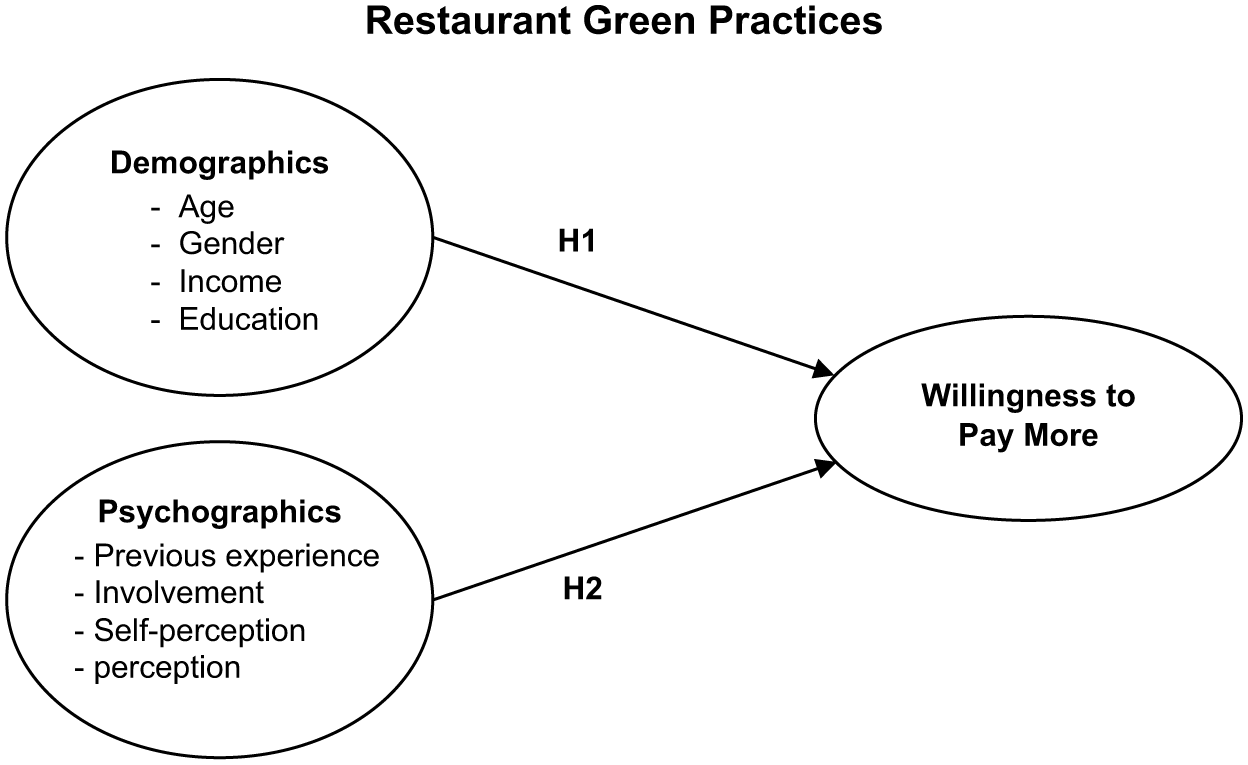
Conceptual Framework
Method
Study Design and Procedures
For data collection, we hired a major online marketing research firm in the United States to recruit survey participants. The company sent out an online survey invitation to their panel members nationwide. Through the web-based survey, 334 usable responses were collected and used for analysis.
Web-based surveys are considered to be an effective way of collecting data quickly with minimal cost (Greenlaw & Brown-Welty, 2009; Kim, 2001; Schonlau, Fricker, & Elliott, 2002). As technology has improved, increasing numbers of researchers have employed web-based surveys in the hospitality industry (Han et al., 2009; Han & Kim, 2010; Kim & Ok, 2009; Namkung & Jang, 2010). A screening question was asked to eliminate respondents who had not dined out within the last month of the survey. Qualified persons who were willing to participate in the survey were provided with the purpose of the study and the definition of a green restaurant.
Green restaurants in this study are defined as food establishments that engage in green environmental practices, such as energy efficiency, recycling, or sustainable and organic products (GRA, 2013; Namkung & Jang, 2013). First, participants were asked to rate their green restaurant involvement, self-perception of health consciousness, self-perception of green consumerism, and willingness to pay more for green restaurant practices. In the second phase of the survey, they were asked to recall a green restaurant and imagine they are visiting it as they read a hypothetical scenario depicting green practices at the restaurant. The scenario manipulated the type of green practice: (a) food-focused green practices (Type A) or (b) environmentally focused green practices (Type B). Scenario C was used as a reference and the restaurant engaged in no green practices (see Table 1). Respondents were then asked to answer questions regarding their perceptions of green brand image and behavioral intentions toward the restaurant. As suggested by previous studies (Namkung & Jang, 2013; Noone, Kimes, Mattila, & Wirtz, 2007), the effects of green practices were measured in three types of restaurant settings: upscale casual (e.g., PF Chang’s, Houstons, J. Alexander), casual (e.g., Applebee’s, Chili’s), and quick service restaurants (e.g., McDonald’s, Taco Bell, KFC).
Sample Scenarios
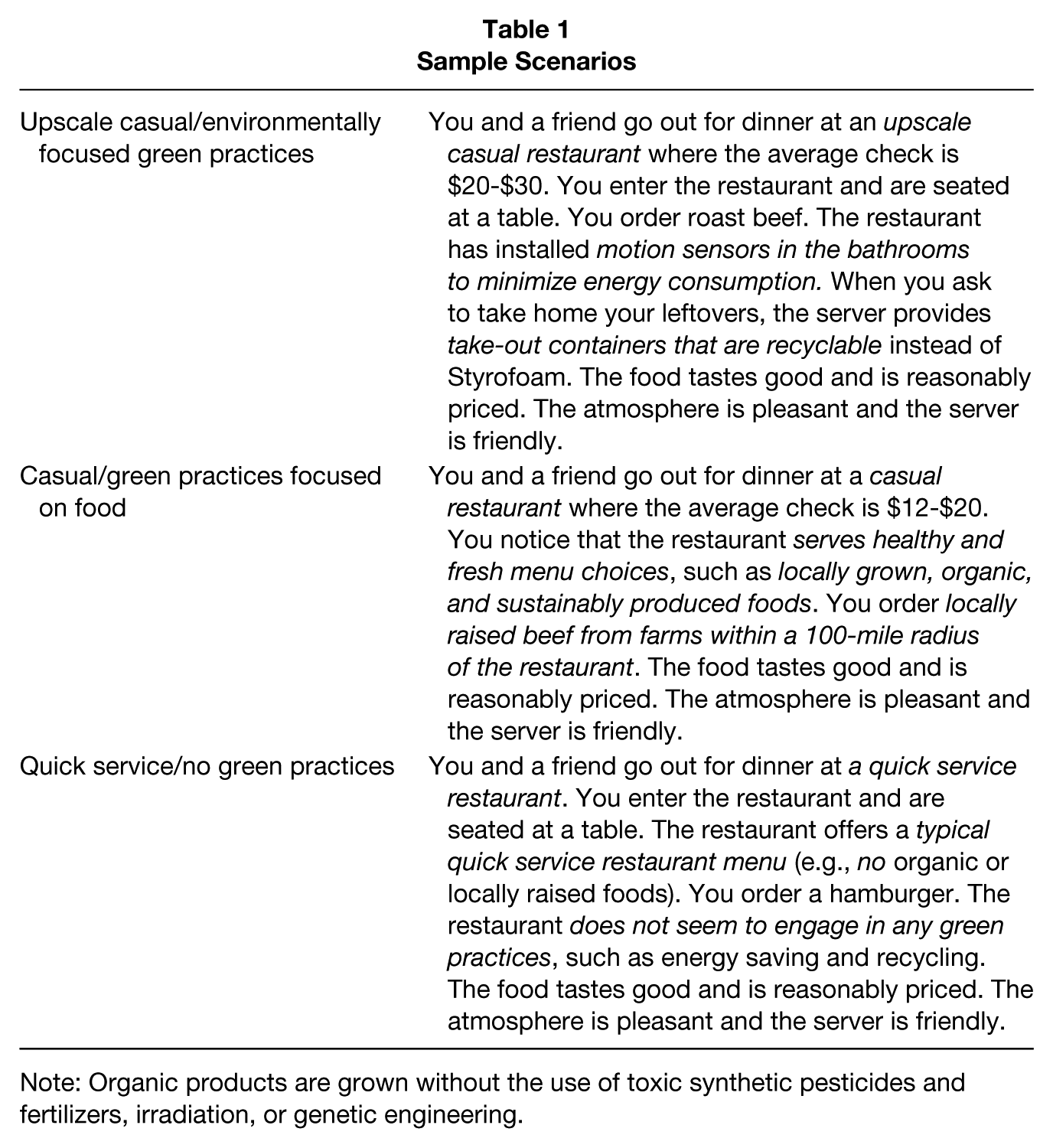
Note: Organic products are grown without the use of toxic synthetic pesticides and fertilizers, irradiation, or genetic engineering.
Study Instrument
This study adopted previously validated items and the wordings were slightly modified to fit the study setting. Participants’ perceptions regarding the relevance of eating out at green restaurants were measured using a 7-point scale ranging from 1 = strongly disagree to 7 = strongly agree (Mittal, 1995; Tarkiainen & Sundqvist, 2009). Examples of items include “choosing a good green restaurant is very important to me,” “talking about what I ate or am going to eat at green restaurants is something I like to do,” and “I am interested in dining out at green restaurants.” Participants’ self-perceptions of how health conscious they were measured on a 7-point scale (1 = strongly disagree to 7 = strongly agree). Examples of items include “I choose food carefully to ensure good health” and “I think of myself as a health conscious consumer” (Squires, Juric, & Cornwell, 2001; Tarkiainen & Sundqvist, 2009). Perceptions of themselves as a green consumer were measured on a 7-point scale (1 = strongly disagree to 7 = strongly agree) and included such items as “I always buy products that are friendly to the environment” and “I think of myself as an environmentally friendly consumer” (Cook et al., 2002; Sparks & Shepherd, 1992; Tarkiainen & Sundqvist, 2009; Whitmarsh & O’Neill, 2010).
Consistent with a previous study (Hu et al., 2010), willingness to pay more for green practices in restaurants was measured using one item (“How much more are you willing to pay for green practices at the restaurant?”). Perceptions of green brand image toward the restaurant after reading the scenario were measured using a 7-point scale, including “this restaurant is successful in terms of its environmental performance” and “this restaurant’s environmental concerns are well established” (Chen, 2009). To ensure the conceptual clarity of the measurement items, this study checked psychometric properties (see the appendix). The level of internal consistency in each construct (involvement, health consciousness, green consumerism, and green brand image) was acceptable, with Cronbach’s alpha ranging from .91 to .97 (Nunnally, 1978). All the composite reliabilities of the constructs were over the cutoff value of .70, ensuring adequate internal consistency of multiple items for each construct (Hair, Anderson, Tatham, & Black, 1998). Convergent validity was satisfied because each indicator’s factor loading was significant and AVE of all constructs exceeded the minimum criterion of .5 (Fornell & Larcker, 1981), ranging from .71 to .88. The AVEs were greater than the squared correlations between any pair of constructs, suggesting discriminant validity (Fornell & Larcker, 1981).
Results
Characteristics of the Highly Willing to Pay More Group
A total of 334 consumers participated in this study (see Table 2). Of the respondents, 52% (n = 173) were male and 48% (n = 161) were female. This study divided samples into three groups based on the participants’ willingness to pay more for restaurant green practices in order to thoroughly understand the characteristics of the highly willing to pay more group. This group included those participants who were willing to pay higher than 10% more (high WTPM). Those who rated their degree of willingness to pay more as greater than 1% but below 10% were included in the moderate willingness to pay more group (moderate WTPM). The low willingness to pay more group included those who were not willing to pay more. The results revealed that 68.3% (n = 228) of the participants are willing to pay more for green restaurant practices, whereas 31.7% (n = 106) of the respondents are not willing to pay extra money for environmentally friendly restaurant practices. A total of 41.9% (n = 140) of the respondents were willing to pay up to 10% more, whereas 26.3% (n = 88) were willing to pay more than 10% extra for restaurant green practices.
Respondents’ Demographic Information (N = 334)
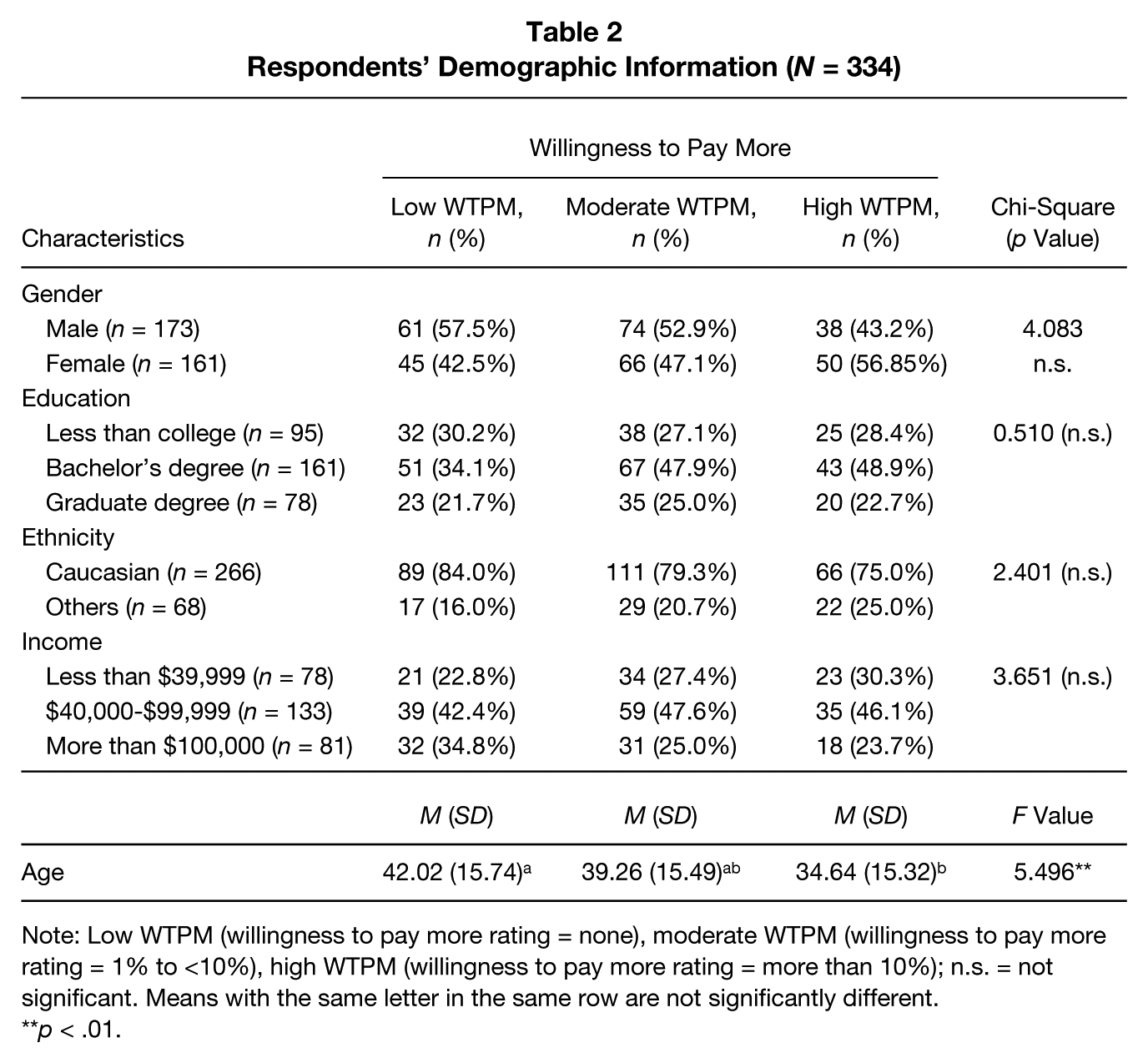
Note: Low WTPM (willingness to pay more rating = none), moderate WTPM (willingness to pay more rating = 1% to <10%), high WTPM (willingness to pay more rating = more than 10%); n.s. = not significant. Means with the same letter in the same row are not significantly different.
p < .01.
Hypotheses 1 and 2 were tested. A significant difference among groups was found only in terms of age (F = 5.496, p < .01), indicating that the high WTPM group is the youngest (34.64 ± 15.32 years), followed by the moderate WTPM group (39.26 ± 15.49 years) and the low WTPM group (42.02 ± 15.74 years). Thus, Hypothesis 1a was supported. No significant differences among groups were observed in terms of gender, income, or education. Therefore, Hypotheses 1b, 1c, and 1d were not supported.
To thoroughly understand the characteristics of the higher willingness to pay more group, chi-square tests were employed to examine the relationship between the degree of willingness to pay more to dine at a green restaurant and previous green restaurant experience (Table 3). Considering participants’ previous green restaurant experiences, different patterns were detected with a chi-square value of 12.560 (p < .01). Those who had visited a green restaurant were more willing to pay extra money to dine at green restaurants than those who had not. Thus, Hypothesis 2a regarding the relationship between the existence of previous experience and a consumer’s willingness to pay more for green practices in restaurants was supported. About 80% of patrons with previous green restaurant experience answered that they would be willing to pay more to dine at green restaurants, whereas approximately 40% of diners who had not dined at green restaurants said they would not be willing to pay extra to eat at a green restaurant.
Respondents’ Willingness to Pay More and Previous Green Restaurant Experience (N = 334)
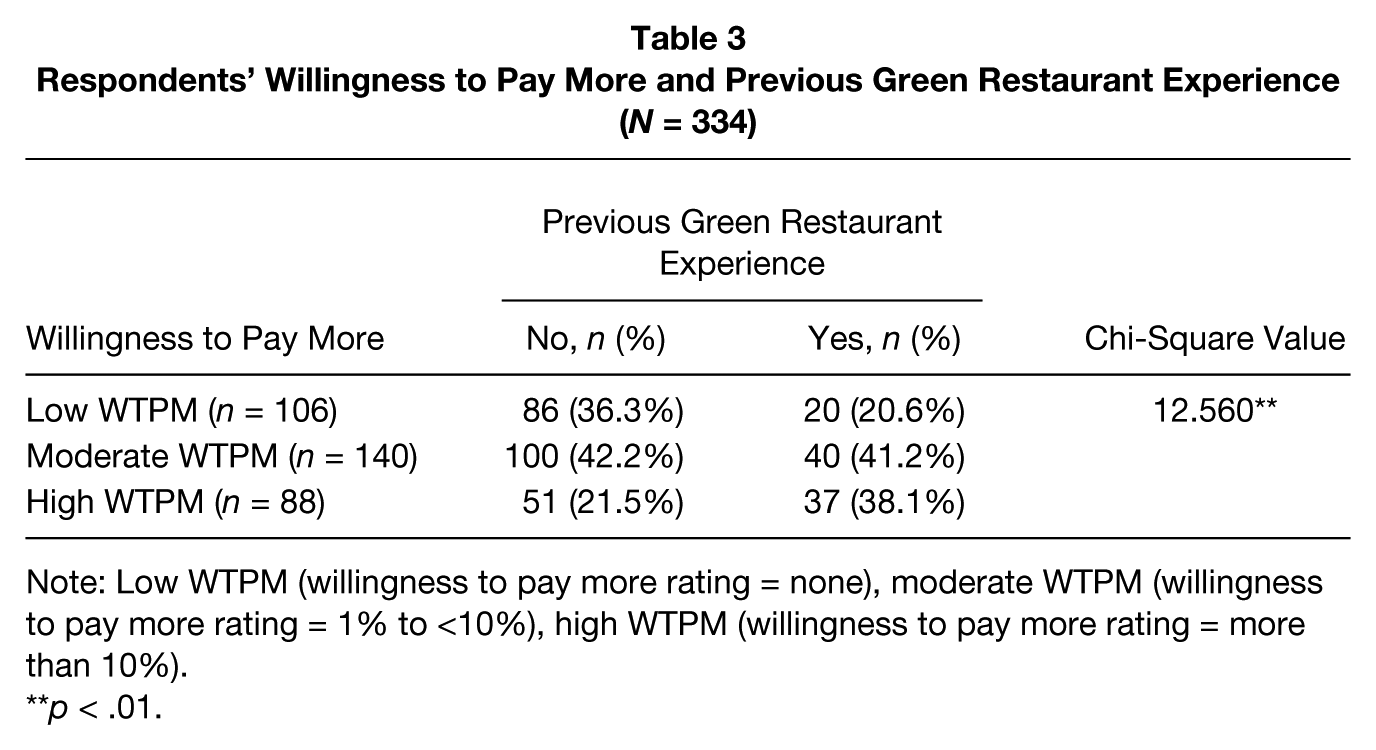
Note: Low WTPM (willingness to pay more rating = none), moderate WTPM (willingness to pay more rating = 1% to <10%), high WTPM (willingness to pay more rating = more than 10%).
p < .01.
To demonstrate the group differences in terms of consumers’ green restaurant involvement, self-perceptions of health consciousness, and self-perceptions of green consumerism, ANOVAs were conducted to examine the mean differences among the three groups (see Table 4, Figure 2). A one-way ANOVA and post hoc Duncan’s tests showed that the mean values of green restaurant involvement in the high WTPM group (4.41 ± 1.3) were highest. As expected, the moderate WTPM group (3.52 ± 52) showed higher green restaurant involvement than the low WTPM group (2.54 ± 1.26). Thus, Hypothesis 2b regarding the relationship between involvement and a consumer’s willingness to pay more to dine at green restaurants was supported (F = 52.491, p < .001). In terms of self-perceptions of health consciousness (F = 7.019, p < .01), the high WTPM group (5.34 ± 1.15) was significantly higher than the moderate WTPM group (4.86 ± 1.23) and the low WTPM group (4.63 ± 1.60). As expected, the high WTPM group’s self-perceptions of green consumerism were highest (5.07 ± 1.20), followed by the moderate WTPM group (4.33 ± 1.21) and the low WTPM group (3.43 ± 1.44) (F = 39.848, p < .001). Therefore, Hypothesis 2c stating the association between self-perception and a consumer’s willingness to pay more was also supported. Overall, the participants in this study showed they were willing to pay more to dine at green restaurants if they perceived themselves as more involved with green restaurants, more health consciousness, or as being a green consumer.
Green Restaurant Involvement, Self-Perceptions of Health Consciousness, and Self-Perceptions of Green Consumerism: Low WTPM Versus Moderate WTPM Versus High WTPM
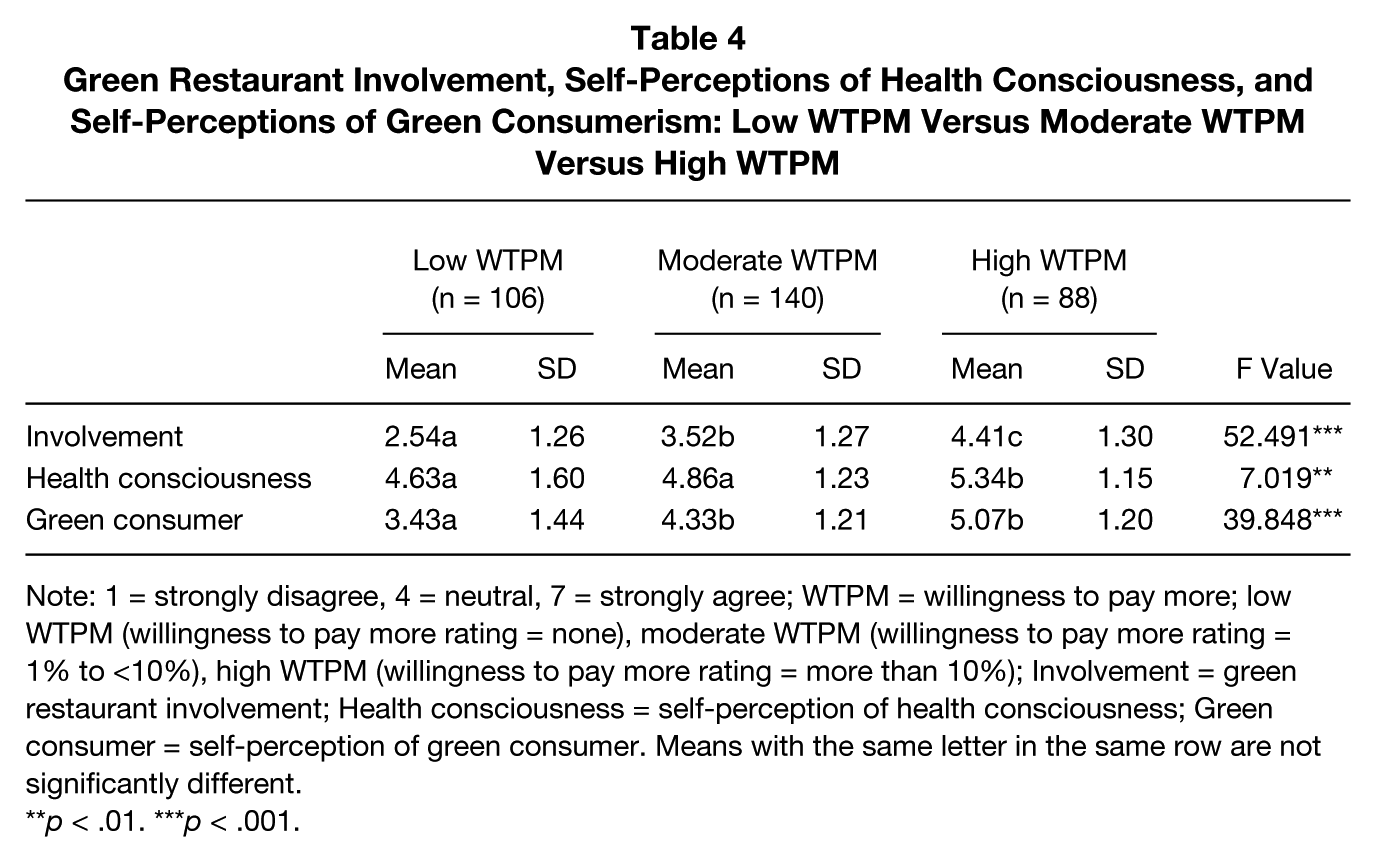
Note: 1 = strongly disagree, 4 = neutral, 7 = strongly agree; WTPM = willingness to pay more; low WTPM (willingness to pay more rating = none), moderate WTPM (willingness to pay more rating = 1% to <10%), high WTPM (willingness to pay more rating = more than 10%); Involvement = green restaurant involvement; Health consciousness = self-perception of health consciousness; Green consumer = self-perception of green consumer. Means with the same letter in the same row are not significantly different.
p < .01. ***p < .001.
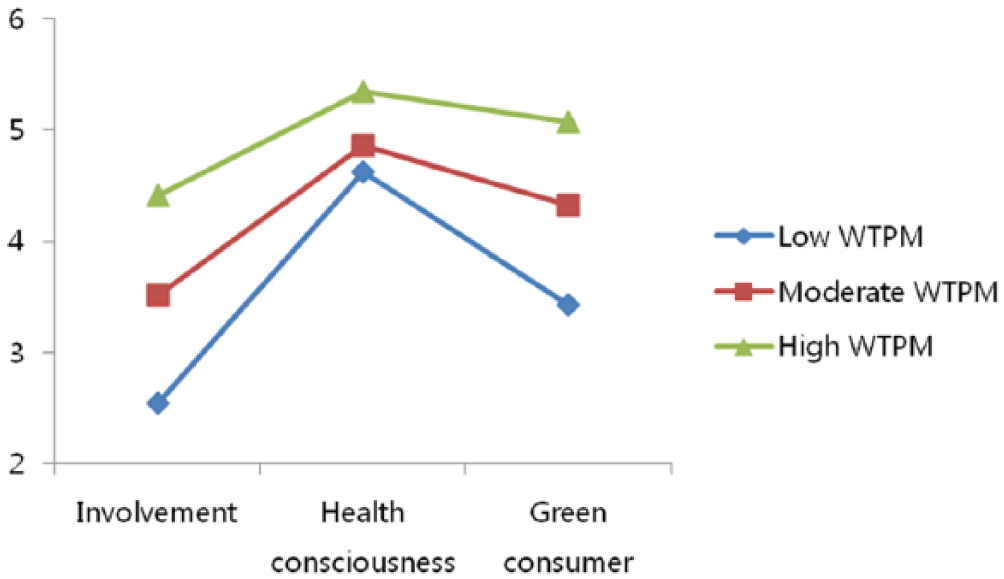
Green Restaurant Involvement, Self-Perceptions of Health Consciousness, and Self-Perceptions of Green Consumerism: Low WTPM Versus Moderate WTPM Versus High WTPM
Green Brand Image and Willingness to Pay More
To examine the effects of consumers’ perceptions of green brand image on their willingness to pay more in three types of restaurants (quick service, casual dining, and upscale casual dining), we conducted one-way ANOVA and post hoc Duncan’s tests (see Table 5). Overall, perceived green image was significantly higher for customers with a strong likelihood of paying more for green practices (5.07 ± 1.26) than those who have moderate (4.62 ± 1.27) or less (3.97 ± 1.57) likelihood of paying extra money, regardless of the restaurant type. The results indicated that increasing the green image of a restaurant positively affected consumers’ willingness to pay more for green practices. As expected, the participants’ perceptions of green image derived from green practices in restaurants rose as the restaurant segment improved from quick service to upscale casual restaurant (see Figure 3).
Green Brand Image and WTPM Grouping by Restaurant Segments
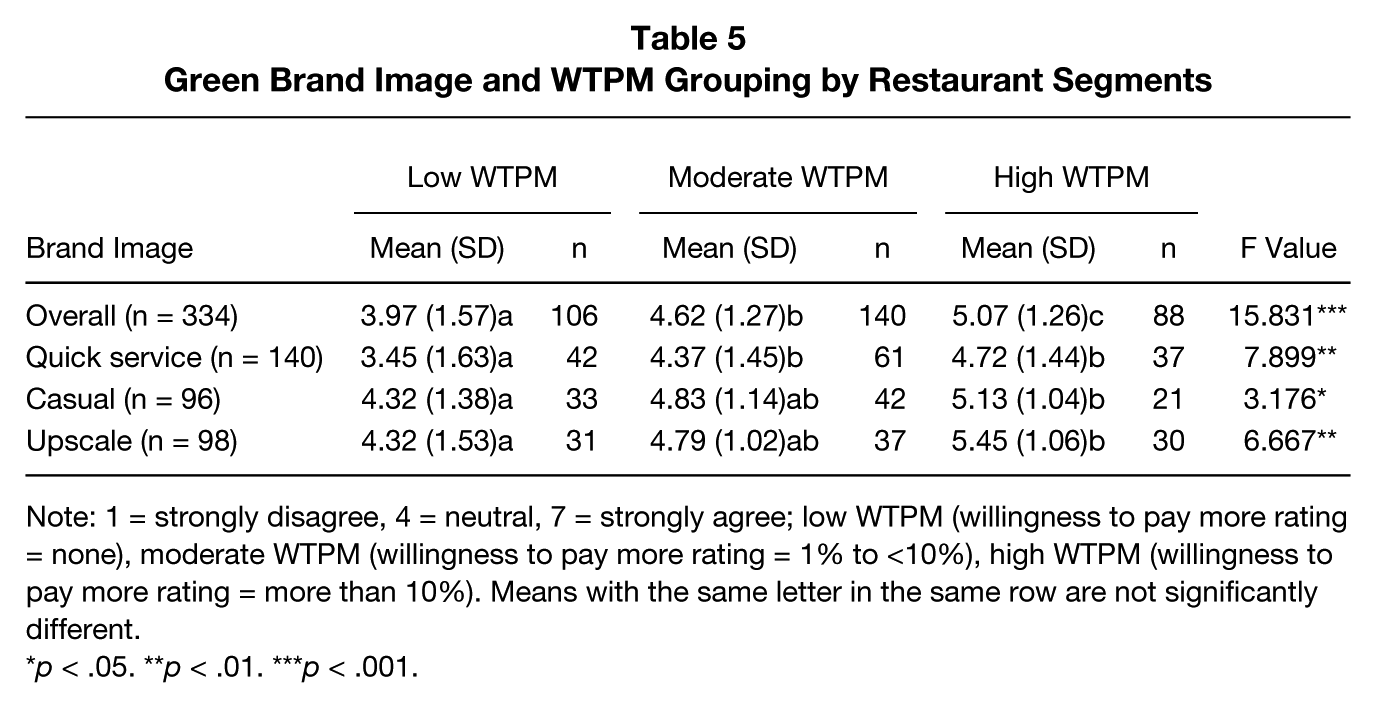
Note: 1 = strongly disagree, 4 = neutral, 7 = strongly agree; low WTPM (willingness to pay more rating = none), moderate WTPM (willingness to pay more rating = 1% to <10%), high WTPM (willingness to pay more rating = more than 10%). Means with the same letter in the same row are not significantly different.
p < .05. **p < .01. ***p < .001.
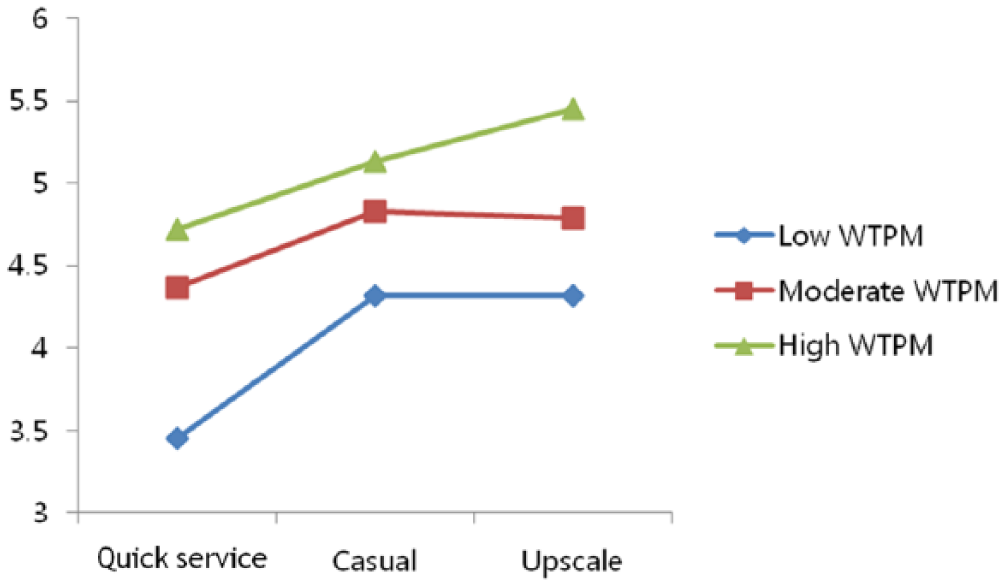
Green Brand Image and WTPM Grouping by Restaurant Segments
Core Green Group Versus Non–Core Green Group
Subsequently, this study created two subgroups (core green group and non–core green group) to understand the characteristics of consumers with a higher willingness to pay more whose perceived image of green restaurants was also high as compared with those who showed a low willingness to pay more and perceived the brand image of restaurant green practices as low. After excluding samples who rated the perceived brand image of the green restaurants as neutral (4 the 7-point scale), this study split the sample into a “core green group” who rated their willingness to pay at more than 10% and their perception of green brand image as 5 or higher (5, 6, or 7). The “non–core green group” included those who rated their willingness to pay more as none and their perception of green brand image as 3 or lower (1, 2, or 3).
Table 6 shows the demographic profile of the respondents in each group. A significant difference among groups was found only for age, indicating that the core green group (34.31 ± 14.59 years) is younger than the non–core group (42.80 ± 15.99 years). Although the difference is not significant (p value = .102), women tended to be more willing to pay more and have a higher perception of the green brand image of the restaurant than men. No significant differences among groups were observed in terms of education, ethnicity, or income.
Respondents’ Demographic Information: Core Green Group Versus Non–Core Green Group
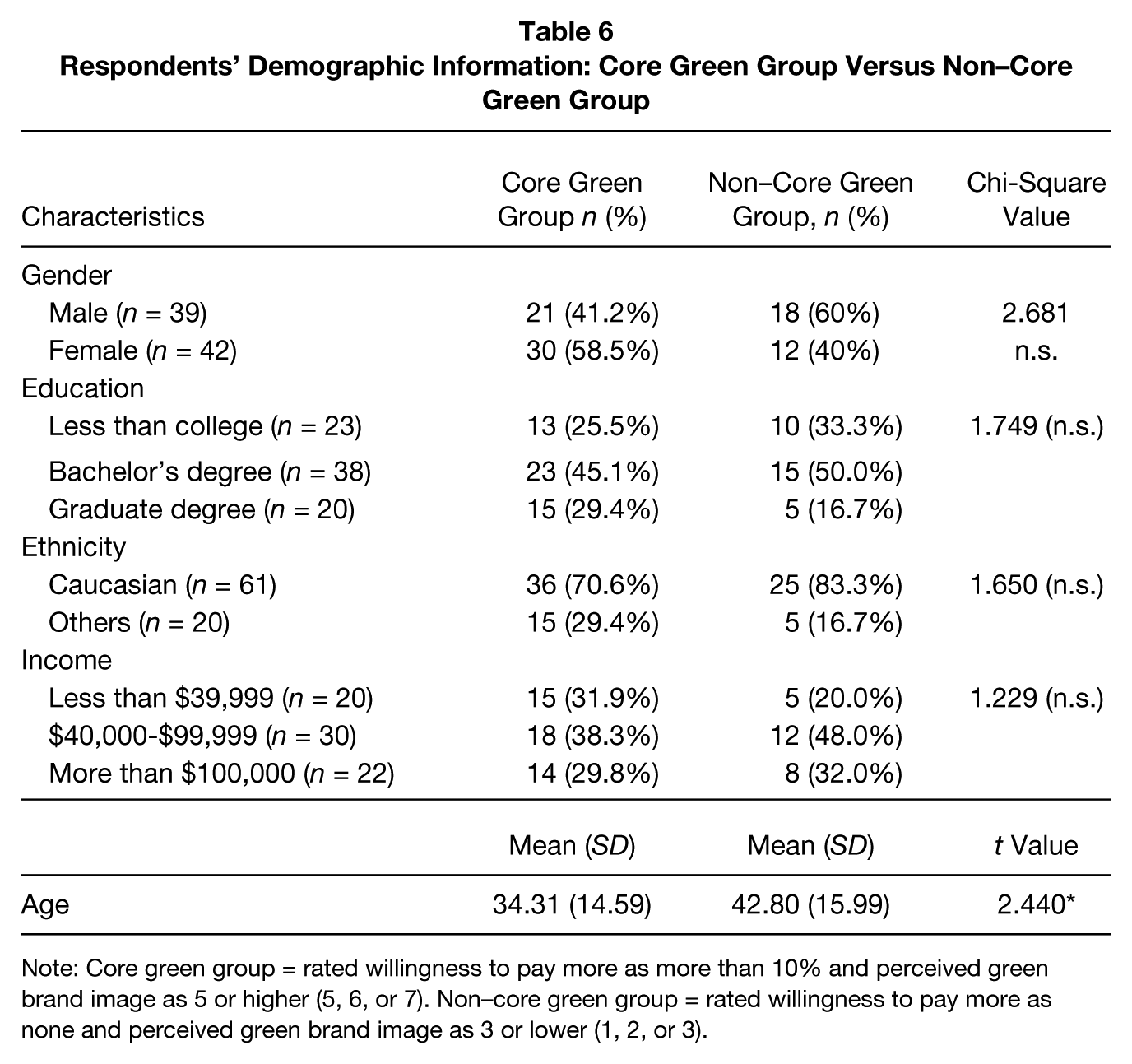
Note: Core green group = rated willingness to pay more as more than 10% and perceived green brand image as 5 or higher (5, 6, or 7). Non–core green group = rated willingness to pay more as none and perceived green brand image as 3 or lower (1, 2, or 3).
To further understand group differences in terms of previous green restaurant experiences, chi-square tests were employed. As shown in Table 7, chi-square tests indicated that a large proportion of restaurant customers who had visited green restaurants were included in the core green group (82.1%), whereas only 17.9% of them were included in the non–core green group (p < .01). In other words, previous green restaurant experience led to a higher willingness to pay more for green restaurants and a higher perception of the performance of green restaurants.
Respondents’ Previous Green Restaurant Experiences: Core Green Group Versus Non–Core Green Group (N = 81)
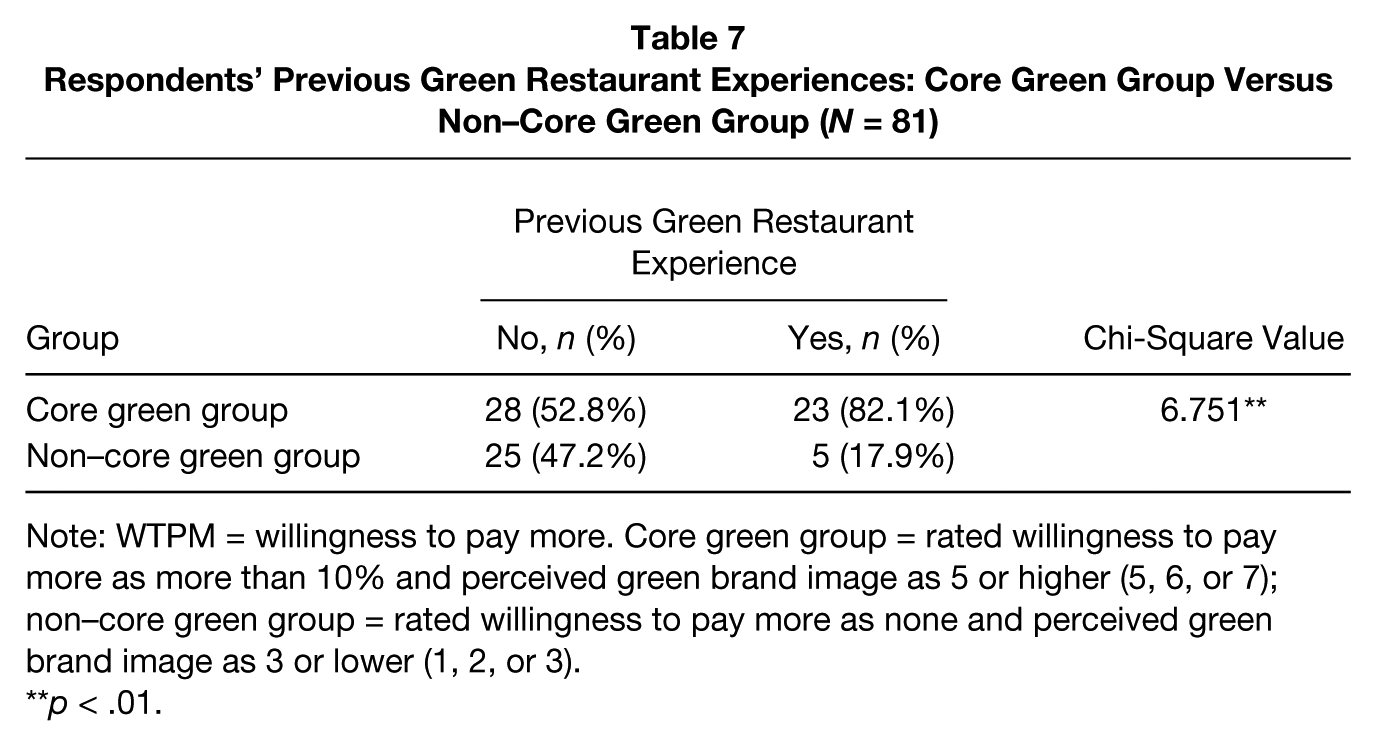
Note: WTPM = willingness to pay more. Core green group = rated willingness to pay more as more than 10% and perceived green brand image as 5 or higher (5, 6, or 7); non–core green group = rated willingness to pay more as none and perceived green brand image as 3 or lower (1, 2, or 3).
p < .01.
To further demonstrate the group differences in terms of consumers’ green restaurant involvement, self-perceptions of health consciousness, and self-perceptions of green consumerism, ANOVAs were conducted to see the mean differences between the two groups (see Table 8). A one-way ANOVA and post hoc Duncan’s tests showed that the mean values of green restaurant involvement in the core green group (4.74 ± 1.23) were significantly higher than the non–core green group (1.87 ± 0.97). In terms of self-perception of health consciousness, the core green group (5.56 ± 1.10) was significantly higher than the non–core green group (3.88 ± 1.79). As expected, the core green group’s self-perceptions of green consumerism were higher (5.40 ± 1.08) than the non–core green group (2.47 ± 1.25). The results showed that the core green group tends to perceive green restaurant involvement, self-perceptions of health consciousness, and self-perceptions of green consumerism as more important than the non–core green group (see Figure 4).
Green Restaurant Involvement, Self-Perceptions of Health Consciousness, and Self-Perceptions of Green Consumerism: Core Green Group Versus Non–Core Green Group
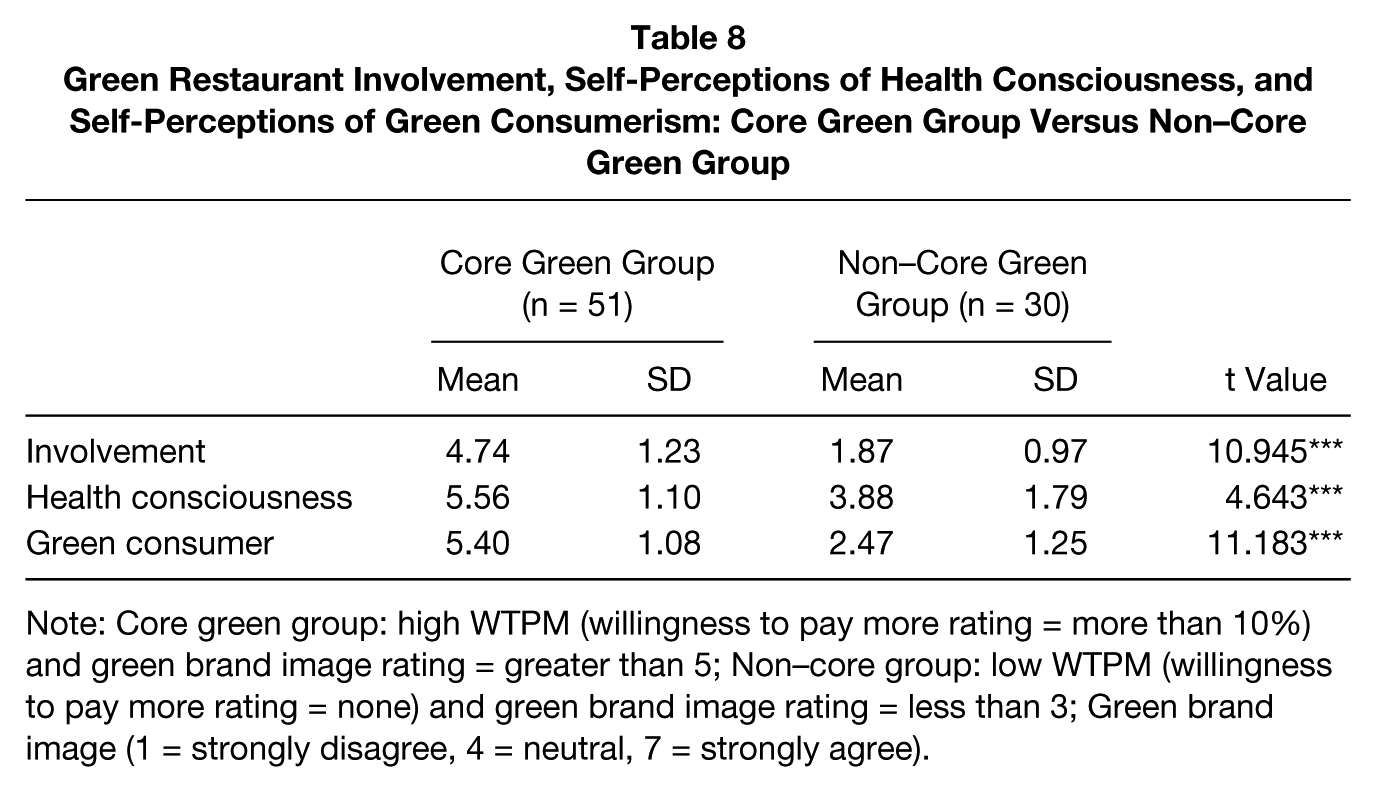
Note: Core green group: high WTPM (willingness to pay more rating = more than 10%) and green brand image rating = greater than 5; Non–core group: low WTPM (willingness to pay more rating = none) and green brand image rating = less than 3; Green brand image (1 = strongly disagree, 4 = neutral, 7 = strongly agree).
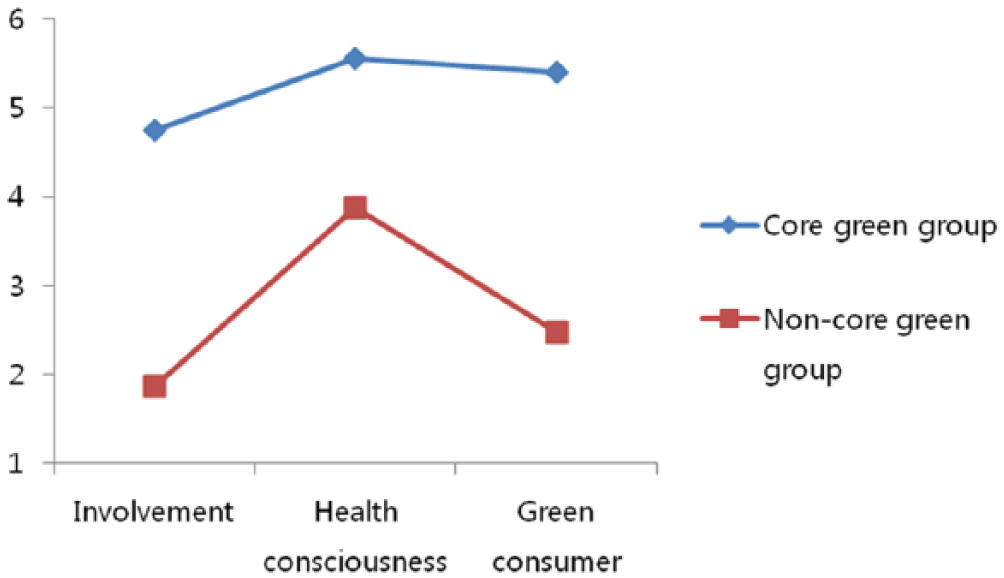
Green Restaurant Involvement, Self-Perceptions of Health Consciousness, and Self-Perceptions of Green Consumerism: Core Green Group Versus Non–Core Green Group
Discussion and Conclusions
By applying a hypothetical scenario describing green restaurants practices, this study sought to provide a practical explanation of consumers’ willingness to pay more for green restaurant practices and the characteristics of customers who have a high willingness to pay more. The results of this study indicated that more than two thirds of restaurant customers (68.3%) showed an intention to pay extra money for green restaurant practices. In addition, approximately a fourth of respondents (26.3%) would be willing to pay more than 10% to dine at green restaurants. These results are inconsistent with a previous study, which reported that just 7.6% of the respondents would pay more than 12% extra to dine at a green restaurant (Hu et al., 2010). Based on group differences tests to understand the characteristics of the higher willingness to pay more group, the current study revealed that, with the exception of age, restaurant customers’ willingness to pay more did not significantly differ across gender, level of education, or level of household income. One of the possible reasons for such unexpected results is the differences in consumer behaviors between dining at green restaurants and other green services and products. One specific environmentally conscious act does not necessarily transmit directly into other eco-friendly purchasing behaviors (Laroche et al., 2001; Picket, Grove, & Kangun, 1993).
By taking sustainability as a core competency, this study examined how consumer perceptions of the green brand image of a restaurant affected his or her willingness to pay more for green restaurant practices. The findings revealed that perceived green image was higher in customers with a strong likelihood to pay more for green practices than those who were less likely to pay extra money. The results verified that the effects of restaurant green practices on consumers’ perceptions of green image differ based on their level of willingness to pay more. The results are in line with previous research findings that demonstrated a positive relationship between consumers’ perceptions of green image and their willingness to pay a premium (Han et al., 2009; Lee et al., 2010). In addition, our results indicated that particularly for upscale restaurants, green initiatives may be more effective in elevating a brand’s green image and, ultimately, consumers’ willingness to pay more. Thus, restaurateurs focusing on environmental efforts need to leverage themselves to obtain a positive position in the niche market and gain a greener corporate image (Lewis, 1990; Tan & Yeap, 2012).
Furthermore, incorporating willingness to pay more into green brand image, the core green group was younger and had previous green restaurant experience. Furthermore, they scored significantly higher on green restaurant involvement, self-perceptions of health consciousness, and self-perceptions of green consumerism than the non–core green group. From a demographic and psychographic standpoint, restaurant marketers can effectively pinpoint prime target segments, prioritize communication strategies toward them, improve restaurant patrons’ perceptions of green image, and eventually foster favorable future behaviors. In addition, there appears to be an opportunity for restaurant practitioners to develop different appeals in order to convert some of the non–core green group into restaurant patrons who have more sustainable and responsible consumption behaviors.
The study’s finding of a negative relationship between age and willingness to pay more for green restaurant practices is consistent with the findings of previous research (Van Liere & Dunlap, 1981; Zimmer et al., 1994). However, the insignificant relationship between gender and willingness to pay more contradicts the results of earlier studies (e.g., Banerjee & McKeage, 1994; Gronhoj & Olander, 2007), which demonstrated that females are more likely to make green purchasing decisions than males. Although the gender differences were not significant in this study, the p value of .130 suggested the possibility that customers who are willing to pay more for environmentally friendly products/services are more likely to be female because they have better information processing capabilities and tend to search for new and alternate information (Lehto et al., 2001). Therefore, restaurant managers should recognize that younger consumers (early 30s) and women are more knowledgeable and sensitive to a restaurant’s green practices than men and older consumers. To attract more female customers, green restaurant marketers should provide learning opportunities for this group of customers by delivering a variety of information about their green programs and eco-friendly activities. Also, clearly stated communication endeavors should pay more attention to those who are less sensitive to a restaurant’s green performance.
Moreover, the higher a consumer’s previous green restaurant experiences, green restaurant involvement, and self-perceptions of health consciousness and green consumerism are, the more likely they are to be willing to pay extra money for green practices in restaurants. The findings support previous studies that demonstrated the significant role of these variables in explaining customers’ environmentally friendly intentions (Han et al., 2011; Jang et al., 2010 Tarkiainen & Sundqvist, 2009). Overall, the results posited that demographic characteristics such as gender, education, and income are less influential than psychographic variables (e.g., previous experience with a green restaurant, green restaurant involvement, and self-perception) in explaining restaurant customers’ willingness to pay for green practices (Han et al., 2011).
Besides managerial implications, this study provides theoretical implications as well. First, this study identifies personal characteristics that could distinguish customers with a high willingness to pay more from customers with moderate or low willingness to pay more in order to understand the effects of green restaurant practices. By embracing significant variables such as involvement and previous experience, this empirical evidence could enrich understanding of the attitudinal and behavioral decision-making factors connected with adopting green practices in the restaurant industry. Second, this study demonstrates the effects of self-perception in determining consumers’ willingness to pay more to dine at green restaurants. The findings can also be extended to research on social identification in the restaurant field. For example, how does the level of customer-brand identification influence the way customers evaluate the adoption of new practices (i.e., green initiatives)? Are customers with a strong association more likely to stay loyal to the brand? Thus, additional research is needed to more deeply examine the role of level of congruency between consumers and green restaurants in shaping customers’ higher willingness to pay for green practices.
Despite its contributions and managerial implications, several limitations of this study need to be addressed. First, this study was conducted in the United States, where sustainability consciousness among consumers continues to grow (Hartman Group, 2010). Thus, caution should be used in generalizing the findings to other geographic locations. Future research should investigate the differences in willingness to pay more for green restaurant practices among customers in various countries that are at different levels of green practices. Second, this study used scenarios and relied on self-reported answers to measure consumers’ willingness to pay more for green restaurant practices. Thus, it is probable that those with an interest in sustainability are more likely to respond. In addition, it is difficult for respondents to have a realistic sense of what green restaurant practices are. Despite the close relationship between behavioral intentions and actual behavior, gaps may exist between consumers’ willingness to pay more and actual purchase behaviors at a green restaurant. Although this study provides some important initial insight into consumer behaviors in green restaurants, it may be useful to investigate green restaurant customers’ behaviors in an actual green restaurant setting. In addition, this study involves general restaurant customers in the United States through a survey system available via a marketing research company. Therefore, price points provided in the scenario may not be appropriate for certain areas (i.e., major metropolitan cities).
Furthermore, given the findings that younger consumers (early 30s) and women tend to have a higher willingness to pay more for green practices than others, how they respond to restaurants’ eco-friendly advertisements and how effective various types of marketing messages are will advance our understanding of consumer behaviors in the restaurant industry.