



Abstract
This research uses the expectation, motivation, and attitude (EMA) model, originally developed for tourists/consumers, to provide a better understanding of what guides the actions of entrepreneurs. These entrepreneurs have not been a focus in the hospitality literature therefore their desire to start the business, expectations about the business, and resulting attitudes are not fully understood. The study uses bed and breakfast entrepreneurs as the population and finds that motivation is a mediator of the relationship between expectations and attitudes. Additionally, using the model in this new setting, with a new population supports the model as providing the underlying relationships at work when the population investigated is expending resources for a desired outcome. The EMA model should continue to be used in future research.
Travel motivation has been investigated using many models and methods, including push-pull motivation (Dann, 1981), Plog’s (1974) psychographic model, escape-seeking (Dunn Ross & Iso-Ahola, 1991), and others. Recently Hsu, Cai, and Li (2010) used an expectation, motivation, and attitude (EMA) model to assess travel motivation. They found that expectation had a direct effect on motivation, and motivation had a direct effect on attitude.
The EMA model has only been used on one particular population to date, tourists. While this model is new, at its core it measures relationships present when two conditions are met. These two conditions are (1) one is expending resources for (2) a desired outcome. These conditions exist in numerous other populations that have yet to be studied. For this study, these conditions are met. Although the EMA model was supported in the consumerism/tourism literature, its application to entrepreneurship is unique. Therefore, this model was selected and applied to bed and breakfast entrepreneurs, so that we can learn more about the model itself and the relationships present between expectations, motivations, and attitudes for the population being studied.
The purpose of this research is to use the EMA model (Hsu et al., 2010) to study entrepreneurial motivations and to further assess the model within the tourism industry. In carrying out the purpose of the research, this study expands existing literature in the following ways: (1) supports the model as proposed by Hsu et al. (2010), (2) expands the use of the model into other scenarios in tourism, and (3) provides specific information regarding entrepreneurs’ expectations, motivation, and attitudes.
Literature Review
Entrepreneurial Motivation
Motivation has been seen as a catalyst that moves people toward goals (Hoyer & MacInnis, 1997). Without this motivation or catalyst, a business will neither begin nor succeed (Robertson, Collins, Medeira, & Slater, 2003). Motivation for engaging in an entrepreneurial venture has been studied in many ways, including the work of Amit and Muller (1995) where the focus of the study was a “push” “pull” perspective. The authors noted that entrepreneurial motivation can predict success, specifically in terms of income. More specifically “pull” entrepreneurs, or those who are pulled to a new venture by potential success and opportunity are found to have significantly higher incomes than “push” entrepreneurs, or those who are pushed out of their current position due to circumstances not related to entrepreneurial desire (Amit & Muller, 1995).
Some entrepreneurial motivation research has focused on social motives of entrepreneurs (Decker, Calo, & Weer, 2012), and spirituality as a motivator (Kauanui, Thomas, Rubens, & Sherman, 2010). Results of these studies found that while entrepreneurs are fond of interacting with others, they are not dependent on these interactions, whereas a successful revenue stream has represented power and respect (Decker et al., 2012). Often these entrepreneurs have separated work from family and find personal successes through work-related achievements (Kasser, 2002). Other entrepreneurs connected joy at work with spirituality as entrepreneurs can use their abilities to support the community while escaping the traditional corporate hierarchy (Kauanui et al., 2010). Kauanui, Thomas, Sherman, Waters, and Gilea (2008) found that entrepreneurs focused on material success are not as likely to experience joy in their work, whereas entrepreneurs focused on meaningful work are more likely to experience joy in their work.
Entrepreneurial literature has focused on the motivations of entrepreneurs; however, it has garnered little attention in the tourism literature, revealing a gap in the literature (Getz & Carlsen, 2000). This gap is interesting considering the importance tourism entrepreneurs represent to their communities. For example, Koh and Hatten (2002) focused on the tourism entrepreneur in their study and noted their value in a community; through their entrepreneurial venture they further the community’s economic and social well-being by creating jobs and tax revenues, while invigorating other sectors of the community’s economy. Ultimately the authors stated that tourism development is the result of the tourism entrepreneur. This key element in tourism development needs to be better understood so that entrepreneurial ventures in tourism may continue to develop and receive necessary support from community-based stakeholders.
Szivas (2001) reported three motivations for entering the tourism industry as an entrepreneur, establishing one’s own business, the belief that the tourism industry is pleasant and appropriate, and that the tourism industry provides an opportunity for an enhanced standard of living. Getz and Petersen (2005) also focused on motives for entrepreneurship in the tourism industry, specifically with two entrepreneurial orientations, growth/profit and lifestyle/autonomy, as defined by motives for startup, the future, and attitudes. Lifestyle entrepreneurs made up the majority of the sample and were motivated by self-employment and control. The lifestyle entrepreneur, has been described as risk adverse, interested in being their own boss (J. Katz, 1995), concerned with familial security (Getz & Petersen, 2005), wanting enhancement to their current lifestyle, and being located (currently or moving) in a rural setting (Getz & Carlsen, 2000). In contrast, the growth/profit entrepreneurs were described as the minority of small business owners in the hospitality industry and motivated by growth while being open to risk (Getz & Petersen, 2005; Li, Miao, Zhao, & Lehto, 2013). This study used the EMA model to provide more information about the motivations of tourism entrepreneurs.
EMA Model
The EMA model provided the relationship that underlies how actions are guided, those actions specific to expending resources for a desired outcome. While the actual attitudes, expectations, and motivations change from one specific population and setting to another, the relationship that the EMA proposes should not. The underlying relationship will provide us with a better understanding of how entrepreneurial actions are guided. Hsu et al. (2010) provided an extensive literature review in the development of their EMA model. The following section borrowed from their review so as to provide the theoretical foundation for the EMA model and this study. The existing literature on the EMA model is extremely sparse, therefore two studies (Hsu et al., 2010; Wong, Cheung, & Wan, 2013) were used below to show previous research using the model and subsequent findings.
Expectation and Motivation
Relying on the expectancy model (Vroom, 1964) and including Heckhausen’s (1989) addition of two conditions: (1) anticipation of attaining desired goal state, an expectation, and (2) the goal state must be desired, creating inherent value to serve as a motive; Hsu et al. (2010) also employed Feather’s (1990) proposition that motivation is dependent on expectation. Hsu et al. (2010) stated that one’s motivation is a function of his or her expectation that they can be successful at the task and gain value from the completed task, therefore motivation can be directly affected by one’s expectation of completing the task at hand.
The EMA model proposed that expectation was positively related to motivation. In assessing the model, Hsu et al. (2010) found that expectation was significantly related to three of their four tourist motivation factors: relaxation, novelty, and shopping. Additional work by Wong et al. (2013) reported that expectations were significantly related to tourists’ motivation for learning new knowledge, but not significantly related to excitement, relaxation, friends and family, and shopping. Both studies supported a significant relationship between expectation and some tourist motivations, more specifically relaxation, novelty, shopping, and learning new knowledge.
Attitude and Motivation
Katz (1960) reported that attitude change and formation was affected by motivation, while Hollander (1971) stated that attitudes clarify expectations and needs while directing action. Fishbein and Ajzen’s theory of planned behavior (1975) suggested that motivation precedes attitude and may therefore influence attitude. Using this as the foundation, the EMA model placed attitude as a function of motivation.
The EMA model proposed that motivation was positively related to attitude. In assessing the model, Hsu et al. (2010) reported that attitude was significantly related to three of their four tourist motivation factors: relaxation, novelty, and shopping. Additional work by Wong et al. (2013) reported that attitude specifically directed toward visiting a destination was significantly related to four motivation factors of tourists: knowledge, excitement, relaxation, and shopping.
Expectation and Attitude
Continuing to rely on the work of Fishbein and Ajzen (1975), Hsu et al. (2010) stated that attitude was supported as a function of the belief regarding an object. The authors also relied on service quality and customer satisfaction literature to further support the proposed relationship of expectation and attitude. Customer satisfaction affected customer attitude whereby satisfaction was seen as the result of the comparison between the expected service encounter and the actual service encounter received; therefore, expectation can determine attitude (Hsu et al., 2010). As noted previously, expectations guide an entrepreneur’s actions (Cassar, 2010; Gimeno, Folta, Cooper, & Woo, 1997), influencing what decisions are made. These decisions then affect actual outcomes, the response to those outcomes, and attitudes about those outcomes. The result is an entrepreneur’s expectation becomes a determinant of an entrepreneur’s attitude about the venture.
The EMA model proposed that expectation was positively related to attitude. In assessing the model, Hsu et al. (2010) reported that expectation had a direct effect on attitude. Conversely, additional work by Wong et al. (2013) reported that there was no significant relationship between expectation and attitude.
Mediation
Baron and Kenny (1986) stated that mediators provide the mechanism for external events to create internal importance. In assessing the model, Hsu et al. (2010) reported that mediation of expectations and attitudes by motivation was partially supported, specifically with respect to relaxation and shopping; however, mediation of expectations and attitudes by motivation was not supported in additional studies (Wong et al., 2013).
As entrepreneurs are expending resources in order to gain a desired outcome, the EMA model was appropriately applied to study if entrepreneurial expectations, motivations, and attitudes followed the proposed underlying relationships outlined in the model. Therefore, the following hypotheses (null and alternative) were developed for this study:
Method
Sample
Within the tourism industry a unique group of entrepreneurs exists, bed and breakfast (B&B) entrepreneurs. According to the Professional Association of Innkeepers International (PAII; 2014), there is a great need to better understand the diversity and challenges faced by B&B industry (www.paii.org). Contributing to these challenges is the lack of spatial boundaries as 79% of innkeepers live on site, sharing their dwelling with guests. This contributes to a lack of work–life balance (Li et al., 2013).
Additionally, the B&B is a 24/7 operation, with a multitude of tasks that range from preparing breakfast, changing sheets, website development, and maintenance. Because of the 24/7 nature of the B&B most innkeepers do not have the opportunity to recover from work demands, affecting overall well-being (Fritz, Yankelevich, Zarubin, & Barger, 2010). They hold many roles, all of which require a different skill set. Because of these complexities, a better understanding of the relationship between expectation, motivation, and attitude for B&B entrepreneurs is needed; therefore, this was the population selected for the study.
Data Collection
An electronic survey comprising existing scales and new scales was used. A list of 826 property e-mails was generated representing the six major regions of the United States, including the Northeast, Southeast, Southwest, Western, Midwest, and Central regions. Properties were identified through a database where property information was collected.
An introductory e-mail was sent to the B&B’s e-mail address that detailed the purpose of the research, time needed to complete the survey, and how to access the survey in January 2015. One week later a second e-mail containing the hyperlink to the survey was distributed. A final e-mail was sent reminding recipients of the close date (March 2015) for the survey and asking those who had not participated to do so.
Surveys were sent to 826 inns; 52 opted out, removing their e-mail from the list leaving 774 potential respondents. A total of 102 responses were deemed complete and therefore created a response rate of 13%. Jeong (2004) reported that a 3% to 8% response rate is considered typical for online surveys. Therefore, the 13% response rate for this survey was greater than the typical response rate of 3% to 8% and was deemed acceptable. On opening the survey, respondents were asked if they were the owner/entrepreneur. Only if the respondent marked yes were they permitted to answer the rest of the survey.
Measurement Instrument
This cross-sectional study used an electronic self-report measure. The measure included four sections: expectations, motivations, attitudes, and demographics. Expectations were developed from the literature. Morrison and Thomas’s (1999) study identified core aspects of tourism entrepreneurship. This study used these core aspects as expectations for tourism entrepreneurs. These aspects were modified slightly for readability, audience, and clarity. Motivations for creating an entrepreneurial venture were assessed using the previous work of Getz and Petersen (2005) and the slightly modified scale used by Crawford and Naar (2016).
Attitudes for this study were generated using previous data collected via interviews (23 B&B entrepreneurs) and focus groups (with 29 potential future entrepreneurs). These previous data were gathered through questions focused not only on all aspects of the entrepreneurial venture but also specifically asked about the attitudes of the entrepreneur for their specific B&B venture. Therefore, the attitudes used should be appropriate as they were generated by current B&B entrepreneurs and those considering entrepreneurship in the near future. The 52 participants were not included in the sample for this study; their responses were used to generate the attitudes included on the measurement instrument used in the study. These qualitative data were then analyzed for common attitudes and a list was generated. The initial list of attitudes included 11 identified by B&B entrepreneurs and 12 identified by future entrepreneurs. The list was then given to a panel of four experts (including survey development professionals and entrepreneurs) to review. Changes were made based on their feedback. A total of 8 attitudes were dropped as they were deemed repetitive (i.e., invigorated/exhausted and stimulated/tired) or not representing an attitude. A final list of 15 attitudes was used in this study.
Analyses
Demographic items included in the survey were used to better understand the sample. Some of the demographic items on the electronic survey included gender, education, and length of ownership. When assessing convergent and discriminant validity, Raubenheimer’s (2004) strategy was used. Initially items that significantly loaded on more than one factor were removed while simultaneously removing items that did not load significantly on any factor. This is done until there are no remaining items that significantly cross-loaded or did not load, ensuring that discriminant and convergent validity is upheld.
Mediation was assessed via a nonparametric resampling procedure called bootstrapping (Hayes, 2013; Preacher & Hayes, 2004). Although R. M. Baron and Kenny (1986) provided a method for assessing mediation, the bootstrapping method, a formal assessment of the significance of an indirect effect, offered benefits that include addressing mediation more directly than multiple regression analyses. Multiple regression analyses were more likely to product Type I and Type II error and generate lower statistical power (Preacher & Hayes, 2004). Additionally, this study not only had a small sample size but also proposed a simple mediation model. For these reasons, the bootstrapping method was deemed more appropriate than structural equation modeling. The bootstrap framework has been applied to small samples sizes, 20 or more, as noted by Efron and Tibshirani (1993). Recent studies supported bootstrapping as a powerful and valid method for assessing direct and indirect variable effects (Hayes, 2009; Meslec & Graff, 2015). All coefficients produced via the bootstrapping method are unstandardized weights.
Results
Demographics
The sample included 102 B&B entrepreneurs. Approximately 81% of the respondents were 51 years or older with 9% of the sample representing those 70+ years of age. Interestingly, no one in the sample was between the ages of 18 and 30 years. Females made up the majority of the sample at 59%. The sample is a highly educated group with 32% of respondents holding a bachelor’s degree and 28% holding a master’s degree. Operating the inn individually or with a partner was closely split with 46% of the sample operating individually and 54% operating with a partner. Finally, 82% of the sample lives on site and 79% are married.
Additional demographic questions focused on average daily rate, occupancy percentage, tenure at the enterprise, and number of rooms. The range of average daily rate was from $42 to $300 and the mean was $176.23 for the sample. When asked about annual occupancy percentage the range was from 5% to 85% and the mean was 43% for the sample. Respondents were also asked how long they had owned the B&B. The range was from 1 year to 29 years and the mean was 11.4 years for the sample. Finally, the range for number of rooms in the B&B was 2 to 30 rooms while the mean was 7.3 rooms for the sample. Table 1 provides the demographic and socioeconomic characteristics of the survey respondents.
Sample Demographics and Socioeconomic Characteristics
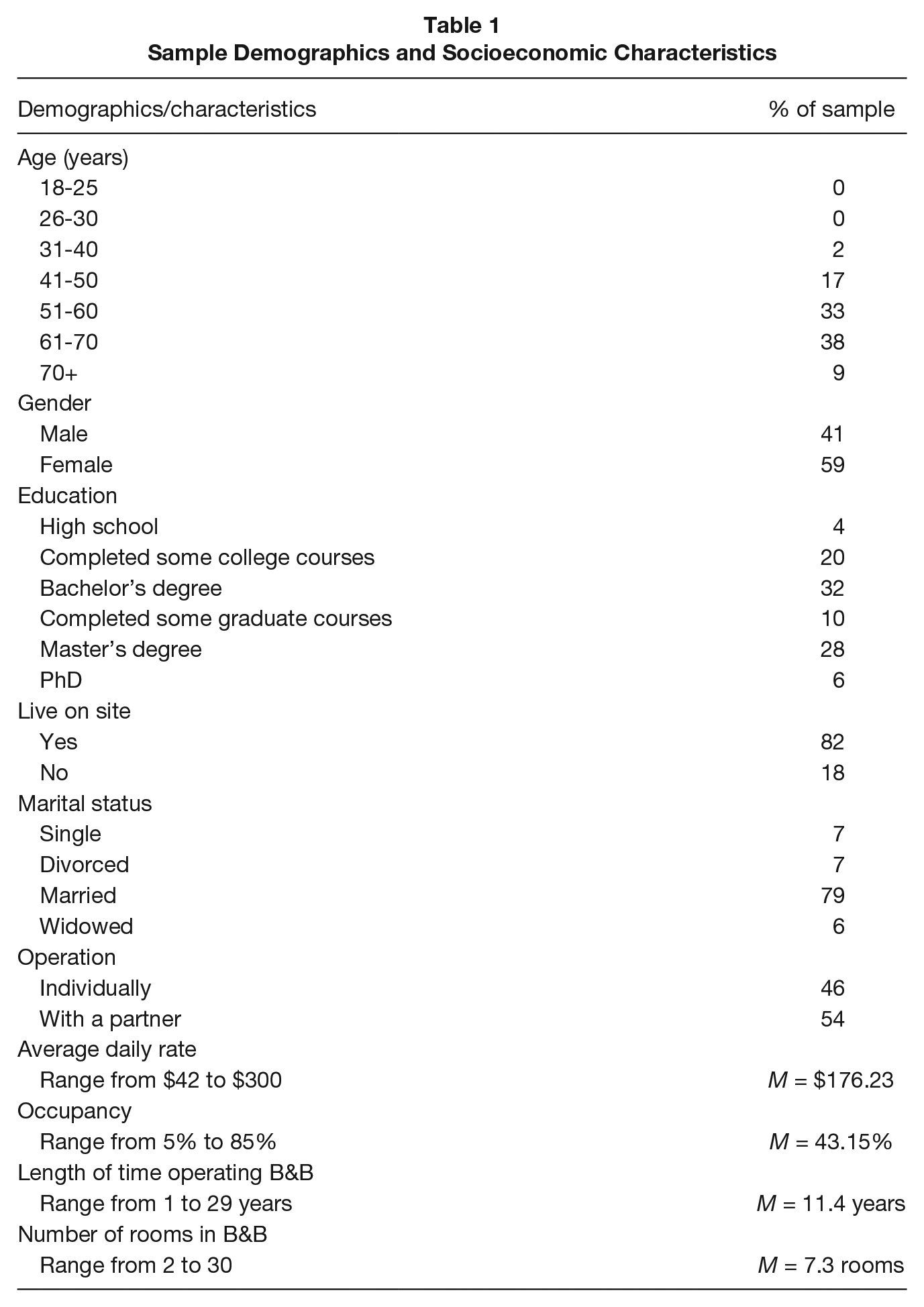
The sample for this study was deemed representative of the population through a comparative analysis of key demographic characteristics of this sample to that provided by PAII’s (2014) industry study. PAII described 77% of inn owners as working in a partnership compared to this study where only 54% of the sample owns/manages the inn in a partnership. There were many more individual owners in this survey than described by PAII as representative of the population. However, PAII reported that 79% of owners live on premises compared to 82% in this study. Additionally, PAII reported that 72% of inn owners are in a relationship compared to 79% of this sample that are married. Inn performance of this sample was comparable to the data provided by PAII. PAII reported an occupancy percentage of 43.7% compared to 43% for this study, an average daily rate of $150 compared with $176 for this study, and finally, the average number of rooms of 6 compared with 7.3 for this study. While this sample had more individual owners than compared to the industry, in all other measures the sample for this study was comparable to the industry as reported by PAII (2014). Therefore, the sample of this study was representative of the population, providing support that the results are generalizable.
Attitudes, Expectations, Motivations
Attitudes were measured on a 5-point scale, and participants were asked to move a slider closer to the word they felt best described their attitude. Table 2 provides the means and standard deviations for each pair of attitudes.
Means and Standard Deviations (Attitudes)

Expectations were measured on a 5-point Likert-type scale with anchors at 1 = strongly disagree and 5 = strongly agree. Means and standard deviations of the expectations for the entrepreneurial venture are included in Table 3.
Means and Standard Deviations (Expectations)

Motivation was measured on a 5-point Likert-type scale with anchors at 1 = strongly disagree and 5 = strongly agree. Means and standard deviations of the motivations are included in Table 4.
Means and Standard Deviations (Motivation)
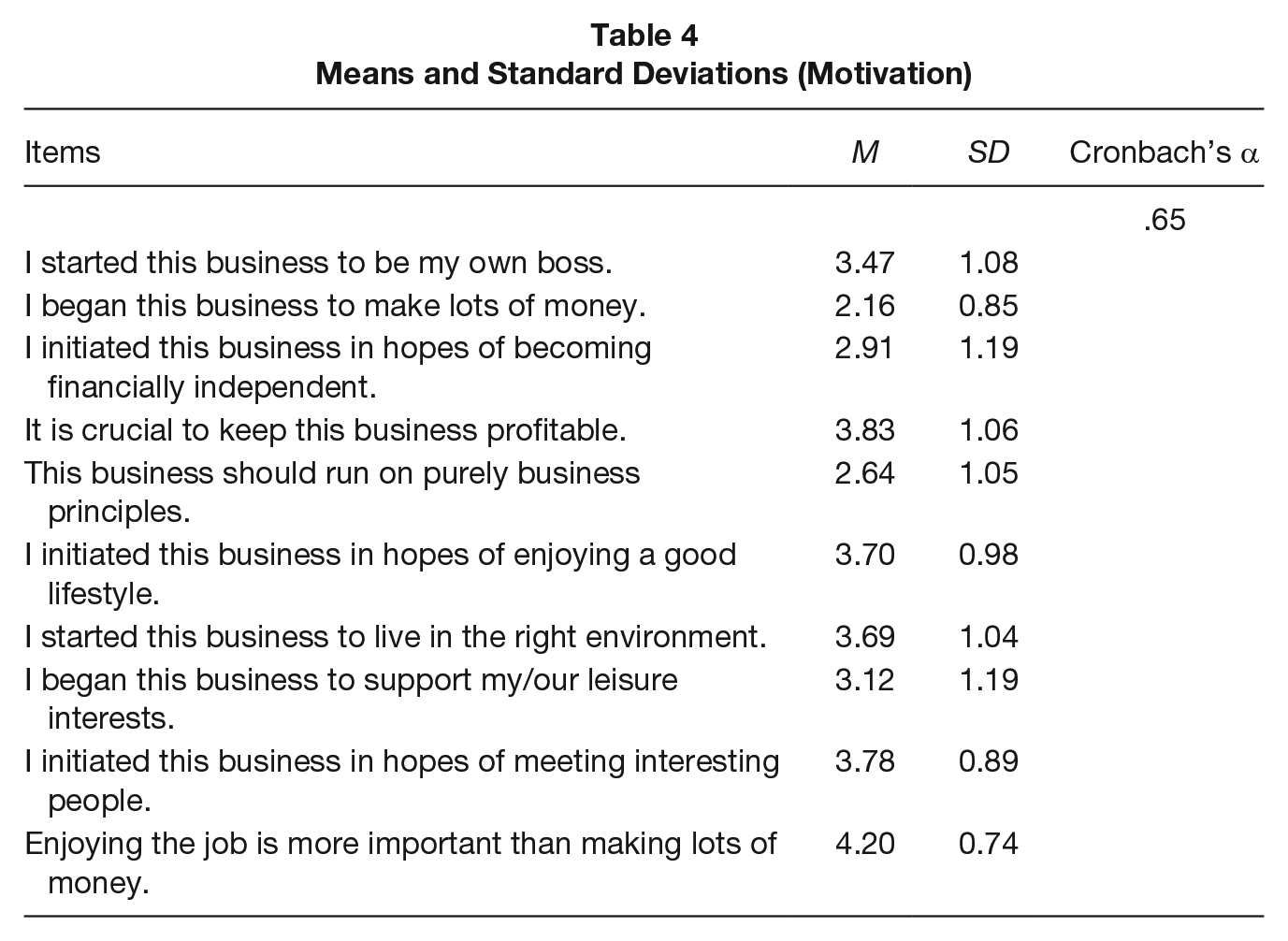
The measures employed in this study addressed specific entrepreneurial expectations, motivations, and attitudes vastly different than those used in previous EMA studies. The only preexisting scale was the motivation scale. This study was therefore exploratory in nature due to the unique scales and use of the EMA model.
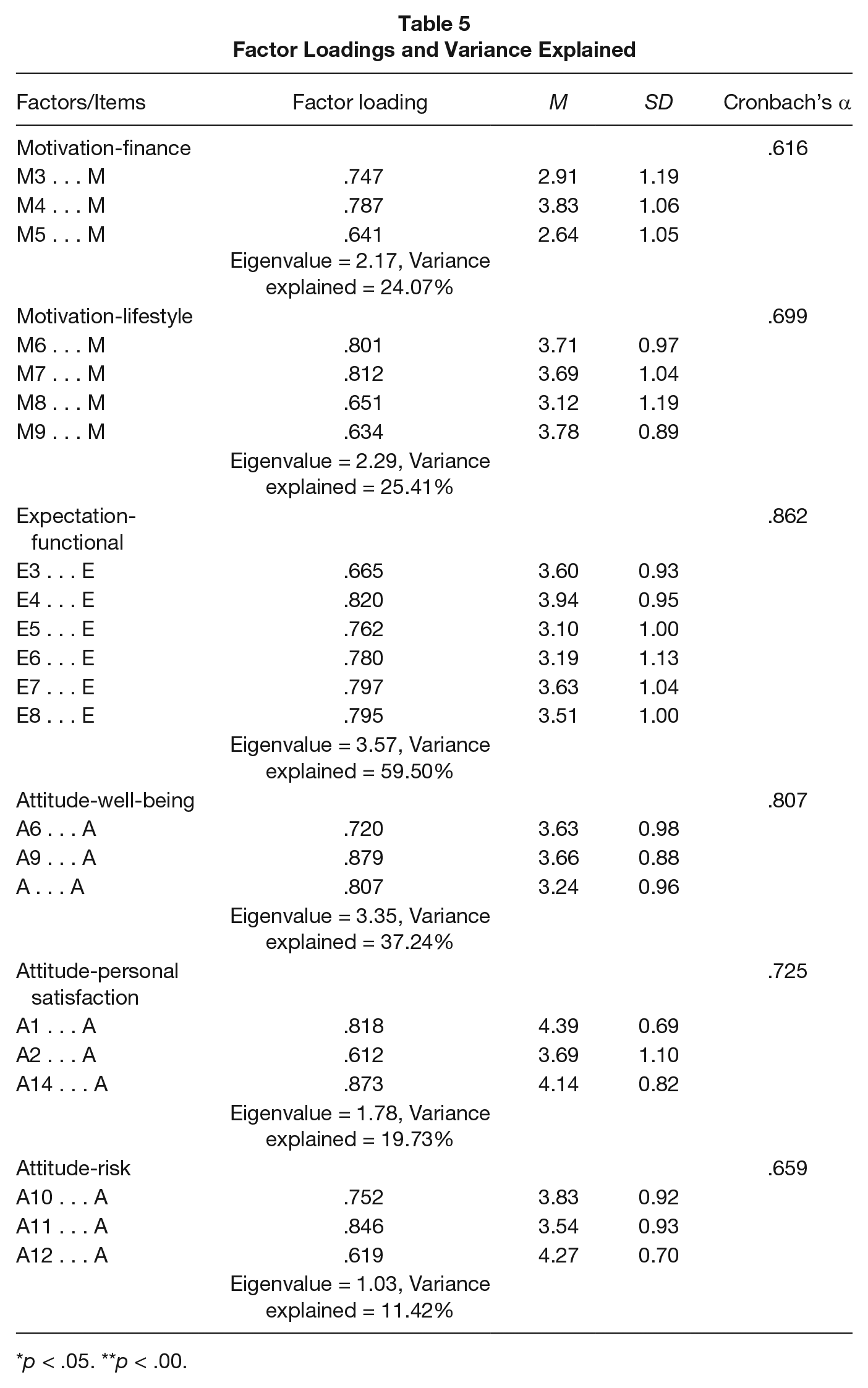
Using Raubenheimer’s strategy, an exploratory factor analysis, using principal component analysis with varimax rotation, was conducted. Items with low factor loadings, high cross loadings, and/or low communalities (<.40) were removed (Hair, Anderson, Tatham, & Black, 1998). Items were removed one by one until no other alterations were needed (Wille, 1996). For the motivation scale, data were assessed as factorable via the Kaiser–Meyer–Olkin (KMO) test of .676 and Bartlett’s test of sphericity, 219.38, p < .000. Motivation Item 1 was cross-loaded and therefore removed. A final three factor structure was generated; financial motivation, lifestyle motivation, and important work, explaining approximately 63% of the variance. For the expectations subscale, the data were assessed as factorable via the KMO test of .844 and Bartlett’s test of sphericity, 331.27, p < .000. Expectation Items 1 and 2 were removed. A final one factor structure was generated: expectation, explaining approximately 60% of the variance.
For the attitudes subscale, the data were assessed as factorable via the KMO test of .786 and Bartlett’s test of sphericity, 545.47, p < .000. Items 3, 4, 5, 7, 8, and 13 were removed due to low loadings or cross-loading. A final three factor structure was generated: well-being attitudes, personal satisfaction attitudes, and risk attitudes, explaining approximately 67% of the variance.
Next, reliability of each factor was assessed. The third factor of motivation produced an alpha of .455; therefore, this factor was not retained for the mediation analyses. Through the exploratory factor analysis and reliability analysis the constructs were deemed reliable and valid, therefore analyses to assess the hypotheses were started. See Table 5 for factors, loadings, and reliabilities.
Factor Loadings and Variance Explained
p < .05. **p < .00.
EMA Model
To test the four null hypotheses, a mediation model with entrepreneurial expectation as the independent variable, motivation as the mediator, and attitude as the dependent variable was used. More specifically the two factors of motivation, lifestyle and finance, and the three factors of attitudes, well-being, personal satisfaction, and risk, were assessed. Null Hypotheses 1, 2, and 3 were not supported, they were rejected. Therefore, the alternative hypotheses were accepted, supporting significant relationships between expectation and motivation (lifestyle and financial), motivation and attitude (only for financial motivations and personal satisfaction attitudes), and expectation and attitude (personal satisfaction and risk attitudes). For the last hypothesis, the indirect effect was only found to be significant for financial motivations as related to personal satisfaction attitudes with a coefficient = 0.03 and confidence interval [CI]: [0.012, 0.067]. The mediator accounted for one quarter of the total effect, PM = 0.247. Therefore, Null Hypothesis 4 was rejected and Alternative Hypothesis 4 was accepted, in other words motivation as a mediator of the relationship between expectations and attitudes, the EMA model, was supported for this study.
It is important to note that while the model met all requirements for mediation according to R. M. Baron and Kenny (1986), it is arguable that the independent variable to dependent variable total effect criteria is no longer considered necessary (Hayes, 2009; Preacher & Hayes, 2004). All coefficients for the three analyses are illustrated in Figures 1-3.

Results from the bootstrapping analysis for well-being attitudes
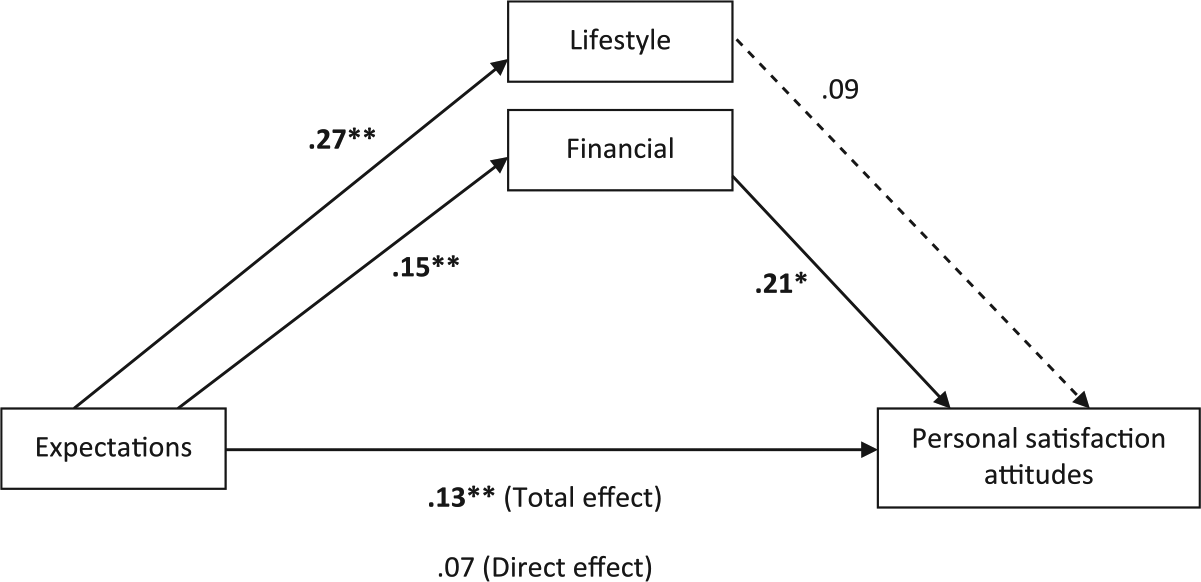
Results from the bootstrapping analysis for personal satisfaction attitudes

Results from the bootstrapping analysis for risk attitudes
Discussion
Underpinned by the expectancy model (Vroom, 1964) and the theory of planned behavior (Fishbein & Ajzen, 1975), this study used the EMA model, focused on B&B entrepreneurs. The purpose of this study was to use the EMA model to study entrepreneurial motivations of tourism entrepreneurs and, second, to further assess the model within the tourism industry. This study supported motivation as a mediator of the relationship between expectations and attitudes for B&B entrepreneurs. Additionally, findings supported multiple relationships for B&B entrepreneurs between expectations, motivations, and attitudes.
Initially, the findings provided further support for the EMA model proposed by Hsu et al. (2010), extending the current literature. Literature has provided inconsistent findings of the EMA model, including Wong et al. (2013) study focused on tourist motivation that did not support the EMA model, whereas Matheson, Rimmer and Tinsley’s (2014) study of visitor motivation in unorthodox events, and Nyaupane, Paris, and Teye’s (2011) study related to travel abroad both provided support for relationships proposed in the model. The underlying relationships between expectations, motivations, and attitudes were assessed using a different setting and population than previous studies.
Hsu et al. (2010) supported a significant EMA model. Expectations to motivation was supported, attitude to motivation was supported, and direct effect of expectation to attitude was supported; however, mediation of motivation was only partially supported, specifically for relaxation and shopping motives. Wong et al. (2013) study using the EMA model partially supported the model, expectations to motivation was supported, attitude to motivation was supported; however, there was a nonsignificant direct effect of expectation to attitude, therefore, mediation was not supported. This study supported the EMA model, expectations were significantly related to motivations (both lifestyle and financial); however, well-being and risk attitudes were not supported as sharing a relationship with motivation (neither lifestyle nor financial) but personal satisfaction attitudes were significantly related to financial motivations. Mediation was also supported in this study for financial motivations.
This study and the original study by Hsu et al. (2010) both supported the EMA model, providing support for the underlying relationships proposed when participants are expending resources for a desired outcome. Resources can include time, money, effort, and so on. Outcomes can include success, experience, knowledge, sensation, and so on. Resources and outcomes are specific to the population studied as are their specific expectations, motivations, and attitudes. This study concluded that when one expends resources, he or she has a vested interest in the outcome, bringing his or her reasons for pursuing the outcome, also known as motivations, to the decision-making process. Through further development of the EMA model researchers will be able to better understand this underlying relationship, and they can use this relationship to help control expectations or impact outcome attitudes.
Second, this study employed the EMA model in a different tourism-related focus, showing that the model is applicable in other settings. While the model was initially used for travel motivation, in this study it was used for B&B entrepreneurial motivation, providing a better understanding of the formation of motivation and its consequences. The EMA model provided the underlying relationship structure for one who is expending resources to reach a desired outcome. The B&B entrepreneur was found to expend resources for a desired outcome; the expectations of the desired outcome for the entrepreneur affected how he or she felt about the outcome of the venture. Use of this model in other settings should be considered for future research.
Furthermore, expectations of the entrepreneurial venture were shown to directly affect an entrepreneur’s motivation. This impact acknowledges that the scenario the entrepreneur created in his or her mind about how the B&B will run, including the daily operations of running an inn, decisions that will have to be made, and strategy for marketing, development, and exiting the business; all affected why one engaged in the entrepreneurial venture. The financial motivation factor was also supported as having a direct impact on the entrepreneur’s personal satisfaction attitudes about the venture. In other words, how satisfied, rewarded, and autonomous an entrepreneur feels about the venture was affected by his or her motivation to be financially independent and profitable. When financial independence is achieved, the B&B entrepreneur will begin to shift focus to other areas of the venture that bring about autonomy and satisfaction while focusing on many of the lifestyle motivators, such as developing relationships.
Finally, the study supported mediation; the expectations of the entrepreneur affect his or her attitudes through motivation for starting the venture. Participants in the study expected that they would learn and explore, formulate strategies, develop and maintain networks, and realize their ambitions. These expectations lead to their motivation for starting the business, from wanting to live in the right environment to meeting interesting people, and being one’s own boss.
More specifically financial motivation was found to mediate the relationship between expectations and personal satisfaction attitudes, describing how external factors transition to taking on internal importance (R. M. Baron & Kenny, 1986). As Hsu et al. (2010) noted, this relationship between expectation, motivation, and attitude calls into question how these expectations are being developed. As Cassar (2010) noted, entrepreneurs have overly optimistic expectations when starting a venture. They have an inside look at the business and this impacts their heightened sense of optimism. Using an outside perspective, one that isn’t controlled by the entrepreneur, can be helpful in creating more realistic expectations (Cassar, 2010). More specifically, with B&B entrepreneurs, most are couples who live onsite and this proximity creates a situation where having access to an outside perspective could be very helpful not only in controlling expectations but also in seeing the bigger picture. Moreover, because of the nature of the job, B&B owners/operators can find it difficult to focus on the big picture behind the distraction of the daily operations. This suggests that creating the ability to step back to see the business as a whole is valuable for the owners as that practice offers useful perspective for the entrepreneur.
Implications
As noted by Naude (2013), entrepreneurship can be a catalyst for development as it is not only about business success but also well-being. By focusing on entrepreneurs this study was better able to understand factors that affect their expectations and predict their attitudes toward the venture. As tourism entrepreneurs are considered the catalyst for tourism development (Koh & Hatten, 2002), it is essential to provide educational and networking opportunities as well as resources for them that accurately highlight the work they will encounter, and thereby create realistic expectations for the venture, which in turn affects their attitudes. Siemens (2015) emphasized the importance of tourism entrepreneurs and the need to provide resources and opportunities for them not only to support the individual entrepreneur but also development of the local economy and community as a whole. According to the findings of this study resources should focus on managing expectations for new entrepreneurs and supporting financial motivations in order to have the greatest impact on the resultant attitudes. As attitudes about the venture represent a response, working to encourage positive responses from entrepreneurs not only about the venture but also about the entrepreneurial process in general is one way to continue to build strong entrepreneurial communities. One implication of this study is that enhancing communities with entrepreneurial education and resources helps build stronger entrepreneurial efforts in the community, helping the community to thrive.
In addition to developing tools and resources for tourism entrepreneurs, it is important to better understand the motivations of these entrepreneurs. An entrepreneur’s work can be connected to his or her sense of self, his or her own feelings of purpose and meaning (Cardon, Wincent, Singh, & Drnovsek, 2009). This connection represents the importance of the entrepreneur’s work not only personally but also in the community. Entrepreneurial motives provide important revelations about the individuals, their connection to the enterprise, and their resulting attitudes but only, according to the findings from this study, when those motives are financially based.
It may be helpful for entrepreneurs to realize how expectations of owning the establishment impacts how they feel about the business. Educational opportunities should focus on encouraging B&B entrepreneurs to investigate their own motivations and expectations. Using professional organizational channels to incorporate motivation and expectations into educational content may help entrepreneurs to better understand how their decision-making can be affected by these factors. Incorporating motivation for starting the business as a key discussion area and encouraging self-reflection could have a meaningful impact for the entrepreneur. One example of where this self-reflection can be incorporated is the PAII introduction to inn keeping course for future entrepreneurs.
Future Research and Limitations
This study had limitations, including expectations and potential for confounding variables. Expectations were developed for this research from the work of Morrison and Thomas (1999) as they developed the key elements of entrepreneurship in tourism, future research should use tourism entrepreneurs to develop a comprehensive list of expectations that can be assessed empirically. This study used self-report measures, only providing a single source from which data were collected, not accounting for likely confounding variables. Many entrepreneurs could have had outside situations that affected their decision to own/manage a B&B and this was not accounted for in the study. Future research could use a mixed methods approach, beginning with qualitative interviews. This would allow for rich data where confounding variables could be identified. The second phase of this research could use quantitative methods that control for confounding variables to provide stronger, more generalizable findings. Although the study gathered B&B entrepreneurs from all regions within the United States, the small sample size could affect generalizability of the findings. Future research could employ a stratified sample to increase generalizability and accommodate between groups analyses focused on potential differences not investigated in this study. Future research should also investigate any differences found in the relationship between expectations, motivations, and attitudes based on demographic factors, such as gender and/or age. Other populations that meet the two conditions of (1) expending resources for (2) a desired outcome should be assessed with the EMA model. These populations may include volunteers, politicians, patients, and/or students. Each population must have its own specific expectations, motivations, and attitudes defined as they are unique to each group. However, the underlying relationships proposed by the EMA should still exist.