



Abstract
This study examines how the type of dining companion, type of cause-related marketing (CRM) program, and power influence restaurant consumers’ prosocial behavior and loyalty intentions. A 2 × 2 × 2 experiment was conducted with relationship type, CRM type, and power state as independent variables. The results indicate that, among those with high social power, intent to donate and repurchase intentions depend on whether they are dining out with a romantic partner or a business partner. Moreover, in front of a romantic (vs. business) partner, powerful individuals respond more positively to a CRM message signaling warmth (vs. competence). Such a difference is not observed among those with relatively less social power. Theoretical and managerial implications are discussed.
In an effort to enhance their philanthropic image, businesses often adopt corporate social responsibility (CSR) platforms that involve customer participation (Hanks, Line, & Mattila, 2016). The purpose of such programs is to promote business performance and advance the cause of the not-for profit partner organization (Guerreiro, Rita, & Trigueiros, 2016). Because customers use their knowledge of a company’s CSR programs as a basis for cognitive and affective evaluations of the organization (Bhattacharya, Rao, & Glynn, 1995; Wattanakamolchai, Singal, & Murrmann, 2016), effective CSR campaigns can result in increased loyalty, higher revenues, and positive word-of-mouth (Du, Bhattacharya, & Sen, 2010; Liu, Wong, Rongwei, & Tseng, 2014). One type of CSR program is known as cause-related marketing (CRM), in which a company solicits donations from customers on behalf of a charitable cause. As such, it is important to understand ways in which customers respond to and engage with CSR programs, and particularly with CRM programs, in restaurants.
In the past, much research in this stream has been conducted that demonstrates the importance of fit between the organization’s image and the sponsored cause. However, there are many variables that can influence donation behavior at the program level, at the social level, and at the individual level. For example, at the program level, CRM offerings can either be based on warmth or on competence (Gao & Mattila, 2014). Likewise, donation behavior can depend on one’s social relationships with his or her dining partner. Finally, donation behavior can depend on individually varying personality traits such as self-perceptions of power (Mattila & Hanks, 2012). The purpose of the current study is to understand how the aforementioned issues at the social level (romantic partner vs. business partner), the program level (warmth vs. competence), and the individual level (high power state vs. low power state) interact to influence (1) the decision to participate in a CRM initiative and (2) intention to return to the restaurant sponsoring the initiative.
While previous research has investigated each of these variables individually, this study examines the interactive effect of all three variables on outcomes for the charity as well as for the restaurant. These interactions are proposed to take place within the context of power theory, which proposes that “having or lacking power respectively foster(s) agentic and communal orientations that have a transformative impact on perception, cognition, and behavior” (Rucker, Galinsky, & Dubois, 2012, p. 352). Research in this stream suggests that because power makes the self more focal and valuable, individuals in high power states tend to focus more on themselves, while those in low power states shift attention and value to others (Rucker, Dubois, & Galinsky, 2010). However, in considering the relationship between program level solicitation and power in restaurant donation behavior, it is important not to forget the importance of social interaction, as recent research has shown that different types of relationships trigger different self-presentation concerns (Hu, Parsa, & Self, 2011; Wan & Wyer, 2015). Accordingly, this research proposes that the effect of the relationship with one’s dining companion on behavior is moderated by the type of CRM program as well as by the individual’s state of power.
Literature Review
Cause-Related Marketing
Companies often use CSR programs as an important part of their marketing strategy (Hanks et al., 2016; K. Y. Kim & Cho, 2014; Sen & Bhattacharya, 2001). The purpose of such initiatives is to demonstrate to stakeholders, including customers, potential customers, employees, and shareholders, that the corporation cares about social causes and is itself a good citizen. Engaging in CSR programs is an opportunity for the company to demonstrate to customers that it shares their values and understands what is important to them (McGehee, Wattanakamolchai, Perdue, & Onat Calvert, 2009).
Customers use their knowledge of a company’s CSR programs as a basis for cognitive and affective evaluations of the organization (Bhattacharya et al., 1995; Wattanakamolchai et al., 2016). This means that an effectively marketed CSR program can enhance the company’s reputation and value in the marketplace, leading to positive perceptions about the corporation on the part of the customer (Lii & Lee, 2012). As the customer engages with the company’s CSR programs, positive attitudes toward the company are formed, which can subsequently result in increased loyalty, higher revenues, and positive word of mouth (Du et al., 2010; Liu et al., 2014). Thus, the creation of a well-communicated, effective, and engaging CSR program is often of paramount importance to the long-term success of a company.
Corporate social responsibility initiatives come in many forms, such as employee volunteerism, environmental stewardship, and fair trade practices (Hanks et al., 2016; Mattila & Hanks, 2013). The present study is particularly interested in a type of CSR campaign known as cause-related marketing or CRM, wherein the company selects a philanthropic cause or charity and involves the customer in the effort to support the charity. Such campaigns serve multiple purposes. First, the target charity receives valuable financial assistance and public exposure. Second, the campaign creates a positive image for the company in the eyes of the customer. Third, the direct involvement of the customers in the CRM initiative can create a sense of partnership and investment in the company on the part of the customer.
This involvement by the customer is a key element of CRM. If the customer does not participate in the program, does not spend enough to meet the threshold, or refuses to participate in the designated activity, the campaign will not be successful. Additionally, it is important to note that in a CRM campaign, if the customer does not participate, the charity will not benefit and the firm will not generate the intended goodwill on the part of the consumer.
The technical structure of CRM programs is variable. In some cases, the company donates a percentage of each sale to the charity, agrees to donate a particular amount if a spending threshold is met by customers, makes an in-kind donation to the cause, or matches some or all the donations made by customers. In other cases, the company simply makes the customer aware of the opportunity to donate to a cause and collects customer donations on behalf of the charity. The present research is concerned with examining consumer responses in this last scenario. Such promotions are particularly popular with restaurants and cafes, especially when there is a good fit in mission between the restaurant and the charitable cause (Barone, Norman, & Miyazaki, 2007). For example, Arby’s, Denny’s, and Corner Bakery collect donations on behalf of No Kid Hungry (Share Our Strength, 2014), and the Asian fast-food restaurant Panda Express collected donations for victims of a typhoon that devastated Southeast Asia in 2013 (DeVilla, 2013). Likewise, Arby’s champions the Share Our Strength program, which has raised a total of $77 million for youth-related causes over the past 30 years (Waters, 2017), and Jersey Mike’s restaurants have raised $4 million dollars for various charities in 2016 with its Month of Giving campaign (Waters, 2017). Starbucks has raised $12 million dollars over the past 7 years for the RED campaign to fight AIDS (Five Times, 2017). White Castle has partnered with customers to raise $3 million over the past 6 years to raise awareness for autism issues (Five Times, 2017). The Cheesecake factory raises money to support Feeding America, and since 1984, the Dairy Queen chain has raised more than $120 million dollars for the Children’s Miracle Network (At Gala, 2017). In all these examples, the initiatives engage the customer as a partner with the company in helping others.
Customer engagement in CRM campaigns is dependent on many factors, one of which is the relationship between the customer and his or her dining companions. In the next section, we look at self-presentation theory as a framework to better understand how the nature of the relationship between dining companions can influence both the intent to donate to a CSR initiative and the intent to return to the restaurant.
Self-Presentation Motives
Self-presentation can be described as behavior that is intended to communicate information about oneself to others (Baumeister, 1982). The motivation to present to others in a particular way is dependent on the situation and the nature of the relationship to the other individuals in the milieu. The evaluative impressions formed by others about a person often influences how the individual is treated, and for this reason, people are often motivated to match their self-presentation to the preferences of others (Baumeister, 1982; Line, Hanks, & Kim, 2018).
Such audience-pleasing behavior is context dependent and varies greatly depending on who the others are to the focal actor. The general idea behind this flexible self-presentation is that the individual presents himself in such a way as to influence or manipulate his audience in order to gain benefits of some sort or to influence the outcome (D. Kim & Jang, 2017). However, the motivations to do so are widely varied. For example, a person may be motivated to create a good impression in front of a person in whom they are romantically or sexually interested (Wan & Wyer, 2015). In this case, his objective is to get the romantic target to respond and engage, thereby opening the door to a sexual encounter or relationship. An individual may also wish to impress business associates or prospective clients. In such an example, the focal person is creating an impression with the goal of gaining leverage, obtaining a promotion, or closing a sale.
Hu et al. (2011) conducted a study in a restaurant context and found that self-presentation motives were significant determinants of behavior and that consumers were more likely to pay for the meal using alternative currency such as frequent-dining points when dining with a friend or alone than when dining with their boss. Their results highlight the importance of the type of dining companion on self-presentation motives on restaurant customer behavior. Using a similar agreement, we suggest that the desire to manage self-presentation due to the nature of the relationship with one’s companions can influence the type of persuasion message that is most effective when making a donation appeal. In the following section, we develop this proposition through a review of the literature on two kinds of donation appeals used in CRM campaigns—those signaling warmth versus those signaling competence.
Warmth Versus Competence
The notion of warmth captures traits such as being caring, helpful, and kind. In the consumer behavior literature, emotional warmth has been demonstrated as a significant driver of satisfaction, loyalty, and retention in a variety of contexts (Rust & Zahorik, 1993). Judgments regarding warmth are formed quickly and automatically and have been shown to be particularly important in the formation of attitudes in the services context (Cuddy, Glick, & Beninger, 2011; Stauss, 2002). Perceived warmth has also been shown to be positively and significantly linked to the overall perceived quality of a service organization (Parasuraman, Zeithaml, & Berry, 1988).
While warmth is generally characterized in the social psychology literature as an interpersonal characteristic between individuals, the concept of warmth can extend to a corporate entity as well (Aaker, Vohs, & Mogilner, 2010; Bolton & Mattila, 2015). However, the idea of warmth in the context of CSR has only recently begun to receive attention. For example, Aaker et al. (2010) found that nonprofits are perceived as being warmer than for-profit organizations (as nonprofits exist to assist those in need), while Du et al. (2010) found that feelings of warmth toward a firm’s CSR campaign inspired a sense of trustworthiness and empathy toward the company. Bolton and Mattila (2015) found that CSR enhances customer satisfaction and loyalty intentions in communal relationships via consumer inferences of a company’s warmth.
Judgments about competence, on the other hand, encompass perceptions of intelligence, effectiveness, skill level, ability, confidence, and competitiveness (Grandey, Fisk, Mattila, Jansen, & Sideman, 2005). While consumer judgments about warmth are instantaneous and automatic, perceptions of competence require deeper consideration and an assessment of skills and capabilities (Cuddy et al., 2011; Gao & Mattila, 2014). People form judgments about the competence of others based on a number of data points over time, and perceptions of others’ competence tends to be relatively stable (Fiske, Cuddy, & Glick, 2007).
The perception of competence is closely tied to social status, such that higher status entities are perceived as more competent and, conversely, competent entities are perceived as having higher social status (Brambilla, Sacchi, Castellini, & Riva, 2010). Thus, competence in others inspires approach behavior—when a person is judged as competent, the evaluator is likely to engage in some way, by affiliating or associating with that individual (Cuddy, Fiske, & Glick, 2008). This same idea holds true at the organizational level. When a customer perceives a company as displaying signs of effectiveness, ability, confidence, and competitiveness, he perceives this company to be competent (Grandey et al., 2005). From a consumer behavior perspective, perceptions of competence have been shown to have a significant impact on such outcomes as relationship stability, trust, and response to service failures (Wirtz & Mattila, 2004). Aaker, Garbinsky, and Vohs (2012) also found that perceptions of competence in a company can lead to emotional and attitudinal outcomes, such as admiration for the brand, and behavioral outcomes such as increased intent to purchase.
Perceptions of warmth or competence can be created through advertising and marketing messaging for any type of entity, including people, corporations, or in this case, charitable giving campaigns. Some charitable causes designate beneficiaries that signal competence (e.g., Starbucks provides employees with college benefits). On the other hand, others have benefits or recipients of the philanthropy that signal warmth (e.g., Ann Taylor donates to St. Jude Children’s Hospital). When responding to donation requests for charitable organizations signaling either warmth or competence, it is proposed that the evaluation of such programs is moderated by the individual’s personal perception of power. In other words, it is expected that the type of donation request will interact with the level of the potential donor’s power to influence his or her decision making.
Social Power
Social power can be defined as control over valued resources in a social setting (Keltner, Gruenfeld, & Anderson, 2003; Thibaut & Kelley, 1959; see also Magee & Galinsky, 2008 for a more detailed discussion). As power is a social construct, it necessarily involves comparisons. That is, some people have more power than others. This power is derived from control over resources that society has deemed valuable: money, water, food, land, or any of a vast number of other resources (see French & Raven, 1959).
Accordingly, people with a high level of power have the ability to influence others and control outcomes by providing or withholding these resources (De Dreu & Van Kleef, 2004; Galinsky, Gruenfeld, & Magee, 2003; Keltner et al., 2003). It is important to note that this sense of power is socially derived. That is, in order for one party to have power, all parties must agree that the controlled resources have value. When viewed from this perspective, all parties are constantly engaged in a shifting power dynamic in which each party tries to gain access to a greater share of resources in order to improve life outcomes. The quest for (and possession of) power has been studied extensively and has been demonstrated to have a wide array of consequences related to human behavior (Galinsky et al., 2003; Wu, Mattila, Wang, & Hanks, 2016), perspective taking (Galinsky, Magee, Inesi, & Gruenfeld, 2006), and construal level (Smith & Trope, 2006).
Power states have also been demonstrated to affect the ways in which people relate to other social entities (Rucker et al., 2012). An individual’s level of power and place in the social hierarchy is closely related to whether he possesses an agentic or communal orientation toward others. States of high power foster an agentic orientation to others in which the individual’s primary focus is on himself, whereas low power states foster a more communal, interdependent orientation.
The notion of agentic versus communal orientations was introduced by Bakan (1966) and describes an approach to or way of thinking about social interaction when making behavioral decisions. An agentic orientation toward others is characterized by “self-protection, self-assertion, and self-expansion” (Bakan, 1966, pp. 14-15). People with agentic orientations tend to take more risks (Anderson & Galinsky, 2006; S. Kim & McGill, 2011), behave more dominantly, and avoid submissive positions (Wiggins, 1991). People who have high levels of power tend to act with an agentic orientation, because they are not dependent on others and can act in their own self-interest in order to achieve goals or obtain positive outcomes.
Conversely, a communal orientation indicates a sensitivity to others and participation in a social group. People with a communal orientation tend to consider others in their decision making and think of themselves in relation to these social others. People who are low in power are much more dependent on others for resources, forcing them to act with a communal orientation and to consider these others when making behavioral decisions and plans in order to achieve their goals (Rucker et al., 2012; Zhang, 2015).
Hypothesis Development
The contribution of this article lies in the examination of the joint effect of three elements that are inherently present in any CRM campaign conducted in a restaurant setting. First, we look at the relationship between the focal customer and the dining companion. Second, we examine the type of CRM message employed, and last, we consider the consumer’s level of self-perceived power. While each of these elements is individually important (and have been previously studied), this is the first article to consider the effects of all three simultaneously, which is a significant contribution considering that all three elements will be present in any dining-based CRM situation.
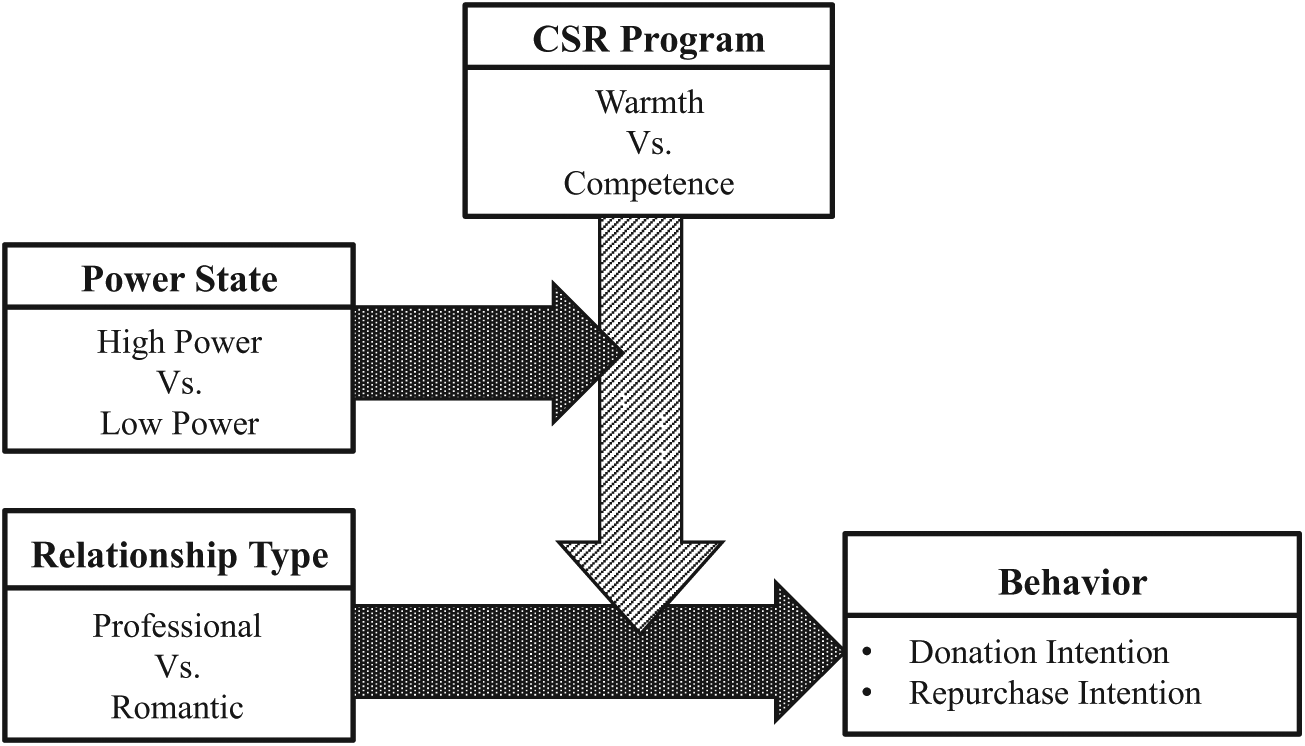
Based on the preceding discussions, we expect that relationship type will have a direct and significant impact on intent to donate and intent to return to the restaurant and that this relationship will be moderated by the type of CRM campaign and the level of power. Specifically, we propose that powerful people (who are self-interested, self-focused, and used to acting in an agentic manner to manipulate and influence outcomes for their own benefit) will behave in a way that leverages the concept of self-presentation to their advantage. In other words, it is expected that powerful people will respond differently to donation solicitation requests signaling warmth or competence depending on the partner with whom they are dining in order to gain social advantages with that person. On the other hand, less powerful people are not expected to do so, as they are less attuned to such power plays and self-interested behavior. Therefore, a three-way interaction between type of dining companion, donation program type, and level of self-perceived power is hypothesized (see Figure 1). Specifically, the alternative hypotheses for these relationships are specified as follows:
The corresponding null statements of these hypotheses are as follows:
Conceptual Framework
Method
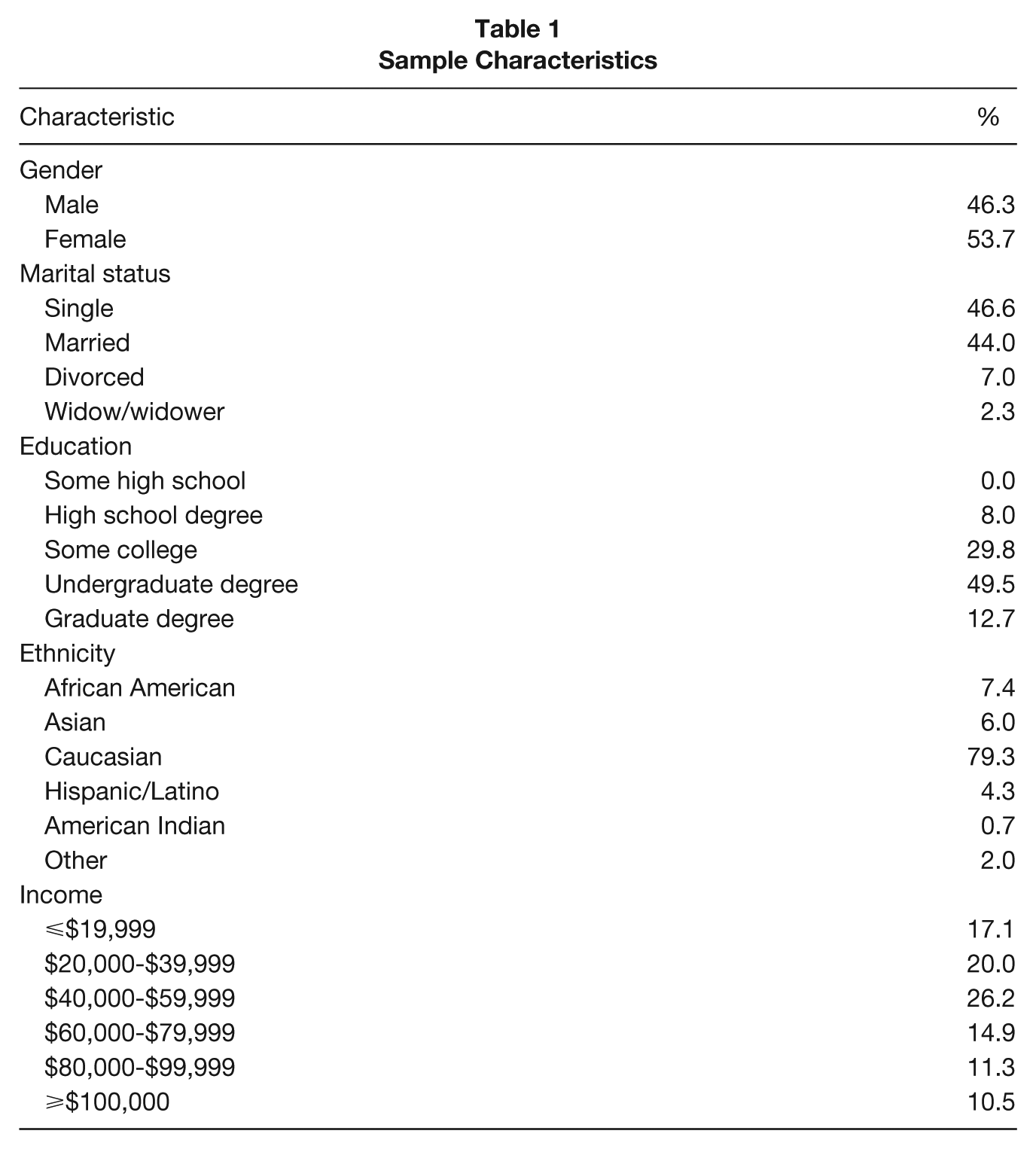
To test the hypotheses, a two (relationship type: business vs. romantic) × two (CRM type: competence vs. warmth) × two (power state: high vs. low) design was employed with power being measured and relationship type and CRM type being manipulated. A total of 300 participants recruited from Amazon Mechanical Turk completed the survey. The average age of the participants was 36.91 years (SD = 11.99). About 46.3% of the participants were male; 79.3% of them were Caucasian; and a majority had a college degree (49.5%). Details of participants’ demographic information are provided in Table 1.
Sample Characteristics
To manipulate relationship type, participants in the condition of romantic relationship read the following scenario: “You are out to dinner at a casual sit-down restaurant with a romantic partner. You will be picking up the check tonight.” In the professional relationship condition, participants read a slightly different scenario: “You are out to dinner at a casual sit-down restaurant with a business associate. You will be picking up the check tonight.”
Next, to manipulate type of CRM, participants in the warmth condition were told that when the server brought the bill, he said, “This restaurant is participating in a donation program to help stamp out childhood cancer. The donations will go to a prominent children’s hospital to help fund research and treatments for children with cancer.” In the competence condition, participants were told, “This restaurant is participating in a donation program to fund college scholarships for students that have a financial need. The donations will help high school students with the cost of attending college.”
Participants’ power state was measured via seven items adapted from Anderson, John, and Keltner (2012) on a scale ranging from 1 = strongly disagree to 7 = strongly agree (e.g., “In my relationships with others, I can get others to do what I want”; α = .88). Customers’ intent to donate was measured via two items—“I would donate money to this cause” and “I would support the restaurant in this charity by donating money today” (r = 0.93, p < .01). Likewise, two items were used to measure repurchase intention—“Please indicate how likely it is that you would choose this restaurant for a future dining experience” and “Please indicate how likely it is that you would return to this restaurant” (r = 0.88, p < .01).
Results
First, a manipulation check of relationship type and CRM type was conducted. The results showed that participants in the condition of romantic partner responded with a higher level of agreement to the statement “I’m dining with a romantic partner” as compared to the ones in the condition of professional relationship (MRomantic = 6.39, MBusiness = 1.68, t = 35.27, p < .001). In addition, participants were asked to indicate to what extent they believe “this restaurant is extremely incompetent/extremely competent, and extremely incapable/extremely capable” to measure perceived competence. In order to measure perceived warmth, participants were asked to indicate to what extent they believe “this restaurant is extremely cold/extremely warm, and extremely unfriendly/extremely friendly” (Gao & Mattila, 2014). Results indicated that participants in the competence condition responded more positively toward the first two items compared to the ones in the warmth condition (MWarmth = 4.49, MCompetence = 5.49, t = −6.12, p < .001). On the other hand, participants in the warmth condition responded more positively toward the last two items as opposed to the ones in the competence condition (MWarmth = 5.34, MCompetence = 4.58, t = 4.29, p < .001).
Second, Hayes’s (2013) PROCESS procedure (Model 3) was followed with the recommended bias-corrected bootstrapping technique to test the interaction effect of power, relationship type, and CSR type on customers’ intent to donate. The model was specified in accordance with the framework put forth in Figure 1. The results suggested that the hypothesized three-way interaction was significant with respect to participants’ intent to donate (β = 1.62, t = 3.80, p < .001).
Furthermore, the interaction effect of power and CRM type in the conditions of relationship type (romantic vs. business, respectively) was considered. In the condition of business partner, PROCESS procedure (Model 1) was conducted. The results showed that the interaction of power and CRM type significantly affected intent to donate (β = −0.66, t = −2.29, p < .05). The conditional effect of CRM type (warmth = 1, competence = 0) on intent to donate was calculated at two values of power: low (1 SD below the M = 3.64), and high (1 SD above the M = 5.76). The results showed that effect of CRM type was significant among participants with high power (β = −0.88, t = −2.08, p < .05) but not significant among the ones with a low level of power (β = 0.53, t = 1.20, p = .23; see Figure 2).
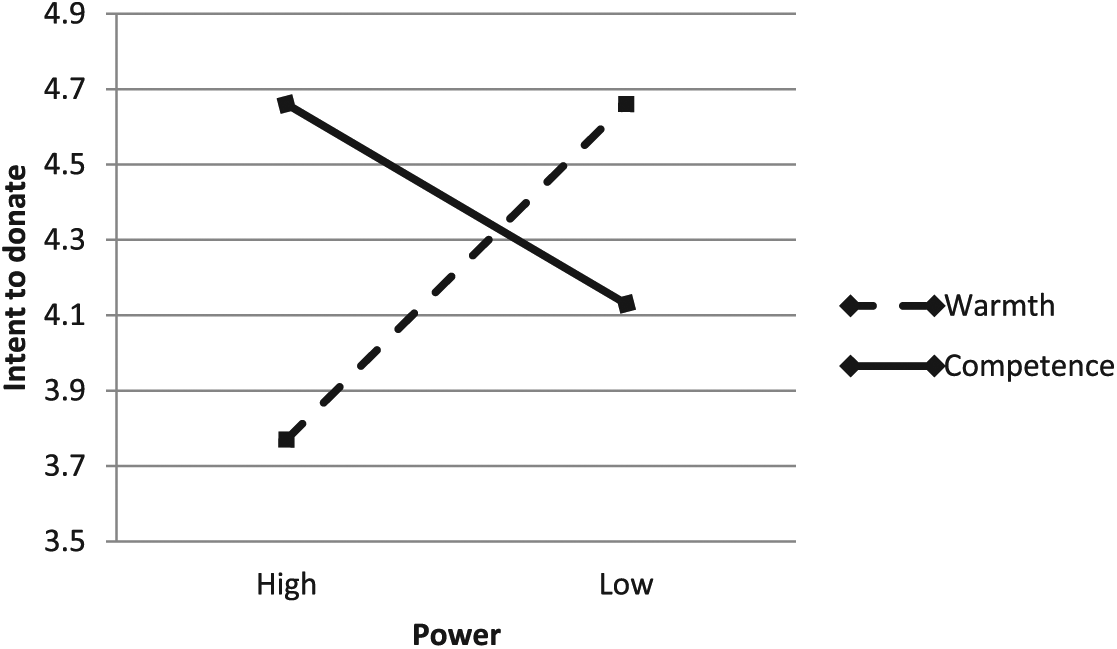
The Interaction Effect of Power and Corporate Social Responsibility (CSR) Type on Intent to Donate in the Business Condition
In the condition of romantic partner, the interaction of power and CRM type significantly affected intent to donate as well (β = 0.96, t = 3.06, p < .01). Again, the conditional effect of CRM type on intent to donate was calculated at different levels of power: low (1 SD below the M = 3.73) and high (1 SD above the M = 5.70). The results showed that effect of CRM type was significant among participants with high power (β = 1.20, t = −2.76, p < .01), but not significant among the ones with a low level of power (β = −0.69, t = −1.57, p = .12) (see Figure 3).
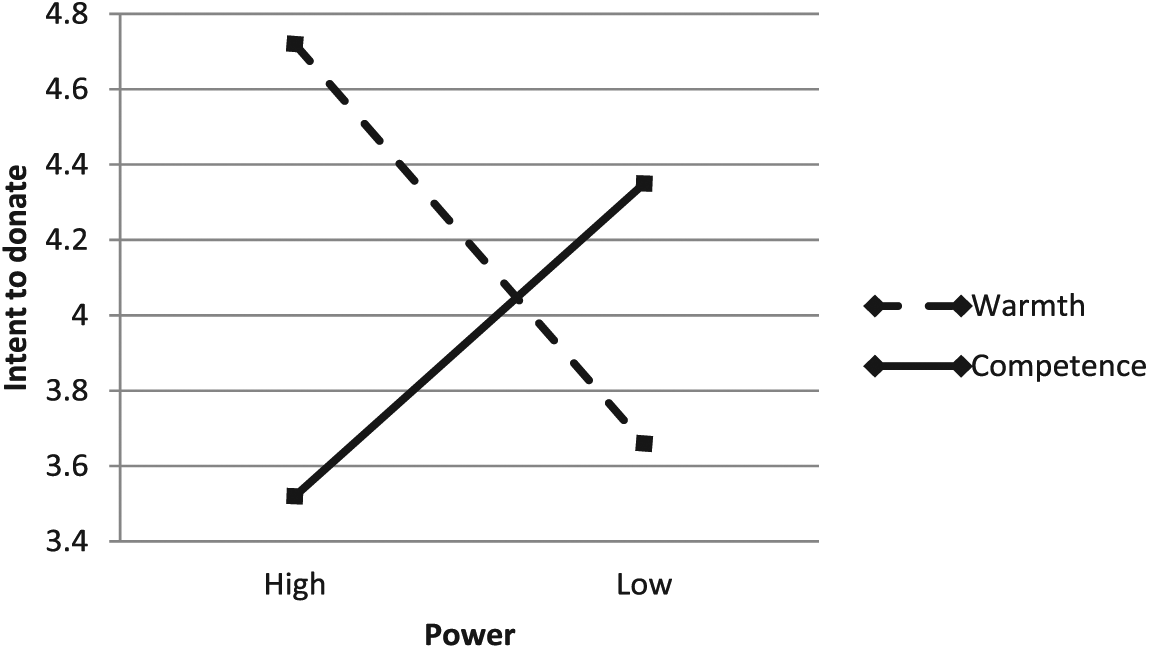
The Interaction Effect of Power and Corporate Social Responsibility (CSR) Type on Intent to Donate in the Romantic Condition
Finally, the effect of power, relationship type, and CRM type on consumers’ repurchase intention was examined. The results indicated that the three-way interaction significantly affected repurchase intention (β = 0.97, t = 2.89, p < .01). Additionally, in the condition of business partner, the interaction effect of power and CRM type significantly affected repurchase intention (β = −0.47, t = −2.13, p < .05). The conditional effect of CRM type on repurchase intention was significant among participants with high power (β = −0.78, t = −2.42, p < .05), but not significant among the ones with a low level of power (β = 0.21, t = 0.64, p = .53) (see Figure 4).
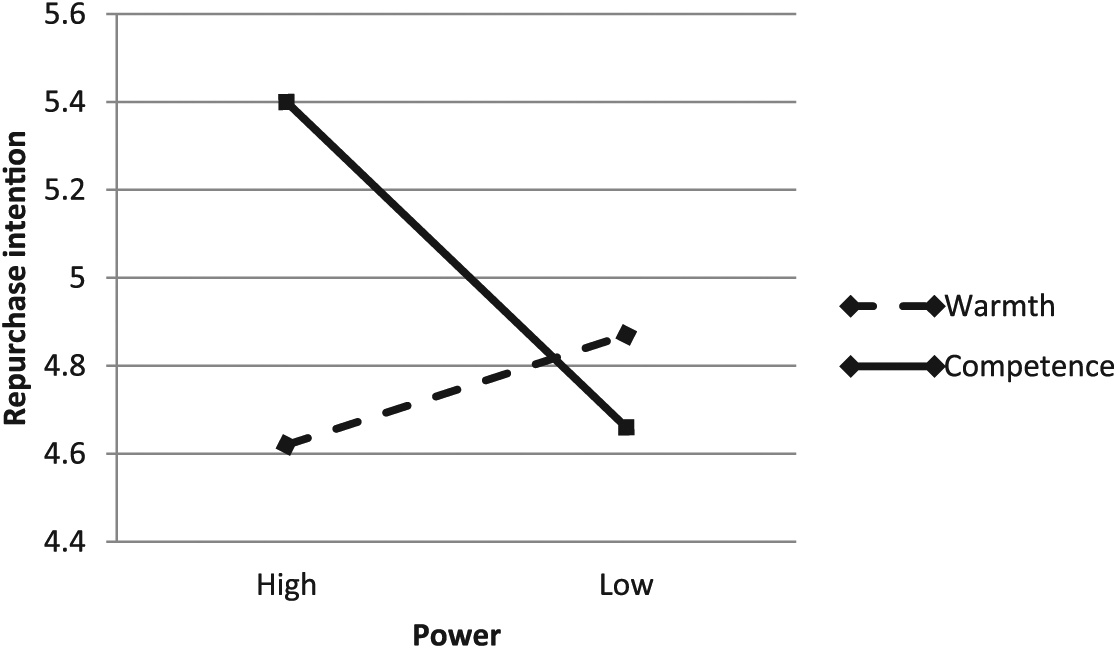
The Interaction Effect of Power and Corporate Social Responsibility (CSR) Type on Repurchase Intention in the Business Condition
In the condition of romantic partner, the interaction of power and CRM type significantly affected repurchase intention (β = 0.50, t = 1.98, p < .05). The conditional effect of CRM type on repurchase intention was significant among participants with high power (β = 0.91, t = 2.61, p < .05), but not significant among the ones with a low level of power (β = −0.07, t = −0.21, p = .84; see Figure 5). Therefore, based on the results, H1A and H2A were accepted while the null hypotheses were rejected.
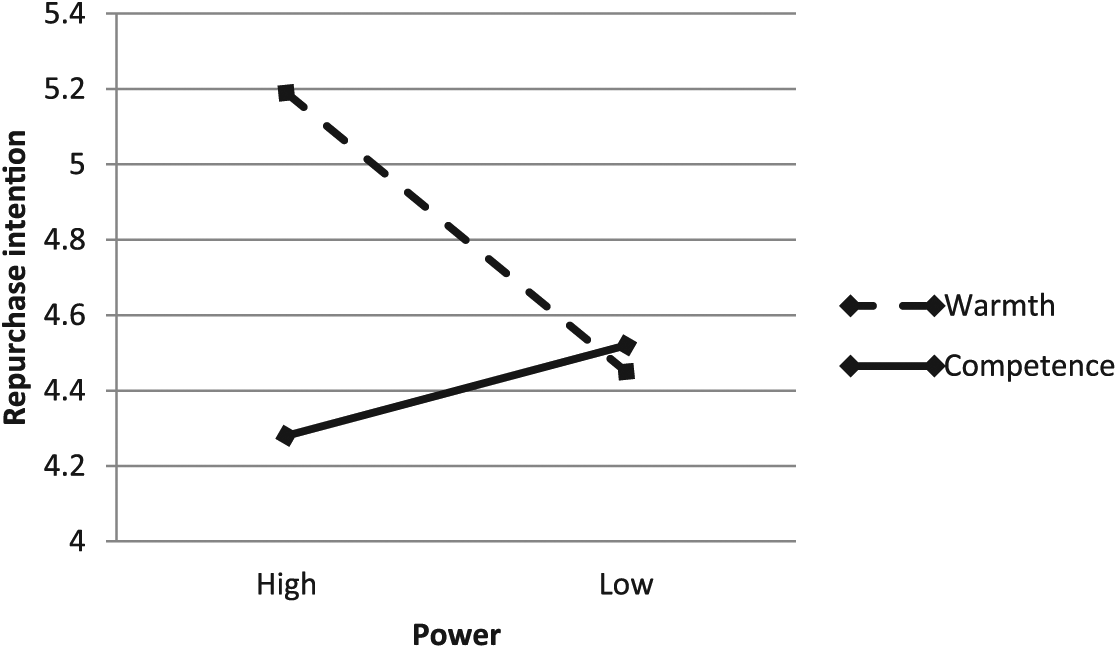
The Interaction Effect of Power and Corporate Social Responsibility (CSR) Type on Repurchase Intention in the Romantic Condition
Discussion
The purpose of this study was to understand how the relationship with a dining companion (romantic partner vs. business partner), the type of CRM program (warmth vs. competence), and the power state of the customer (high power state vs. low power state) interact to influence (1) the decision to participate in a CRM initiative and (2) intention to return to the restaurant sponsoring the initiative. It was predicted that powerful people would behave in a way that leverages the concept of self-presentation to their advantage (Goffman, 2006; Leary & Kowalski, 1990). In other words, it was expected that powerful people would respond differently to donation solicitation requests signaling warmth or competence depending on the partner with whom they are dining (Baumeister, 1982). On the other hand, less powerful people were not expected to do so, as they are less attuned to such power plays and self-interested behavior.
Based on these predictions, a three-way interaction between type of dining companion, donation program type, and power state was hypothesized. The results of the empirical tests supported these predictions. Specifically, powerful people changed their response to the donation solicitation depending on the partner with whom they were dining. These people were more likely to give to a cause that signaled warmth, such as a children’s cancer hospital, when they were dining with a romantic partner. This was presumably in an effort to enhance their self-presentation and match their actions to the desires of the other person in the relationship, as qualities like warmth are desirable and valuable in such relationships. On the other hand, powerful individuals were more likely to donate to college scholarship funds, a cause signaling competence, when dining with a business partner, a person who would be likely to value such characteristics as competence.
Additionally, this positive donation action toward the charity spilled over into the customer’s perception of the company, making him more likely to return when the CRM campaign afforded him an opportunity to engage in positive and advantageous self-presentation in front of important others. Less powerful people, however, showed no such differences. Thus, it appears that less powerful people are more attuned to the charitable, altruistic aspects of the donation campaign, rather than seeing the donation behavior as an opportunity for self-advancement, and therefore do not feel compelled to change their altruistic behavior based on self-presentation motives.
The results of this study represent a significant theoretical contribution in that while each of the three variables has been studied in isolation and in various combinations in previous research, this is the first article (to our knowledge) to examine the joint effect relationship type, message type, and power on outcomes for both the charity and the restaurant. As all three of these elements will inherently be present in any such CRM initiative, this represents a step forward in the understanding of how and why consumers respond to CRM campaigns while dining out.
Theoretical Implications
While most research on CRM focuses on individual customer’s evaluations and perceptions, previous studies have shown that the presence of other customers can affect the behavior of the focal customer. For example, Griskevicius, Tybur, and Van den Bergh, (2010) found that activating status motives increases a person’s tendency to choose prosocial green products over luxurious nongreen products. However, such an effect was only observed when the purchase is public and observable (vs. private and nonobservable). Similarly, Hu et al. (2011) found that the presence of others triggered self-presentation motives and affected the way the focal customer paid for the meal. The present research adds to this stream by examining the role of other people on the focal customer’s behavior and how this relationship is moderated by the type of CRM program and the power state of the customer.
Specifically, the present research extends this line of research by focusing on fellow consumers with whom the focal customer shares a deeper relationship. Although many hospitality consumption experiences are shared with fellow customers, research examining the impact of fellow consumers’ presence on donation behavior is scant in the hospitality literature (Wu, Gao, & Mattila, 2017). One exception would be the study conducted by Wu et al. (2017), in which they found that when the act of donating is unobservable (vs. observable) and the donation appeal highlights self-benefits (vs. other-benefits), the presence of fellow consumers drives individuals to exhibit a higher (vs. lower) level of donation intention. The present research extends their study by considering the specific type of relationship between the fellow customer and the focal customer (i.e., business partner vs. romantic partner).
Additionally, this research examines the type of CRM message (warmth vs. competence) and its interaction effect with relationship type. Prior research has shown that people judge others on the dimensions of warmth and competence (Cuddy et al., 2008; Gao & Mattila, 2014). In this study, it is proposed that CRM messages signaling either warmth or competence can be used by focal customers to help achieve the image they want to create in front of fellow customers. Moreover, the current research contributes to the literature by considering the moderating effect of power on the interaction between relationship type and CRM message. The results show that the aforementioned relationship can only be observed among people feeling powerful (vs. less powerful). Such a finding is consistent with Rucker et al.’s (2012) research on power. Based on their proposed agentic orientation of high power states, individuals are more likely to focus on, and attach greater value to, items that are self-expressive or cater to their personal needs and goals, which in this case, is their motive for self-presentation.
Last but not the least, prior research has showed that for-profit organizations can benefit from associating with not-for-profit organizations (Aaker et al., 2010). When communicating their association with not-for-profit organizations, for-profit organizations transfer the warmth and admiration from the not for profit to themselves (e.g., Dawkins, 2005; Perks, Farache, Shukla, & Berry, 2013). The present study showed consistent results that restaurants can indeed benefit from their association with not-for-profit organizations as customers exhibited a higher level of intent to return to the restaurant.
Managerial Implications
Prior research in the domain of CRM has demonstrated that as a customer engages with the company’s CSR programs, he or she forms positive attitudes about the firm, which can subsequently result in higher levels of loyalty, increases in revenues, and positive comments about the company (Du et al., 2010; Liu et al., 2014). This highlights the importance of customer participation in company-sponsored CSR initiatives, as customer participation can translate into higher revenues for the restaurant. Thus, it is important that restaurants understand how and when the various components of a CRM campaign interact with customer characteristics and situations to influence consumer engagement. The findings of the present study demonstrate that the participants’ perceptions about the warmth or competence of the charity affected not only the donation behavior but also the intent to repatronize the restaurant. This underscores the vital importance of customer participation in such initiatives, as participation leads to stronger loyalty in a segment that is fractured and competitive. Additionally, the findings suggest that understanding the interaction between the customer’s state of power, his or her dining companions, and the nature of the CRM initiative can all lead to downstream loyalty behaviors.
To this end, it is useful to note that a customer’s perceived power and his (likely) type of dining companion are both factors that, while not able to be manipulated, are generally able to be predicted in many restaurants. For example, a restaurant that does a heavy lunchtime business near Wall Street is likely to be filled with powerful customers who are dining during the day with business companions. In this case, the restaurant should select charitable partners whose images convey a strong sense of competence, to garner the highest rate of participation. On the other hand, a small Italian restaurant, known as a favorite place for weekend dates and anniversary dinners, may wish to partner with charities whose causes convey warmth, as people dining with romantic partners are more likely to participate in such campaigns and subsequently more likely to exhibit greater loyalty.
Second, for restaurants that have a more varied mix of customers and are therefore not able to accurately predict the power states or dining partners of their guests, the results can be useful in raising awareness of the importance that altruistic donors place on warmth and competence. These restaurants may want to “cover their bases” by creating and presenting donation solicitation collateral and marketing material that features both characteristics. An advertisement for a college scholarship, for example, which is a cause that signals competence, could feature college-age friends, smiling and having fun together, to also convey warmth. An advertisement for a children’s cancer hospital, on the other hand, generally a cause that signals warmth, should highlight recent research being conducted to beat cancer, thereby appealing to those with whom competence resonates more strongly.
The results also have implications for the charities themselves in the finding that while the charity may not have control over the who, when, and where of a donation solicitation, they do have control over the image of their charity. For charities whose mission is inherently imbued with a competence message (e.g., research, building projects, education), there may be an advantage to targeting powerful people in corporate settings, rather than trying to appeal to all donors. For example, partnering with the corporate headquarters of a bank or a financial institution would disseminate the message to largely powerful people in a primarily business-oriented environment, thereby increasing the chances that their program-level messaging would be an advantage.
Limitations and Future Research
While this study makes an important contribution, there are several limitations of the research that should be addressed. First, it should be noted that while CRM is quite common (especially in the restaurant industry), it is not the only form of CSR in which hospitality organizations engage. Accordingly, the present research cannot account for the effects of warmth and competence on customer perceptions of other forms of corporate philanthropy. Because CRM platforms are not the only type of CSR that vary in terms of warmth and competence, it will be important for future research to consider the effect of this dichotomy on other types of corporate philanthropy initiatives.
Similarly, not all CRM programs are implemented in the same way. The present research is concerned with CRM programs that simply offer the customer a chance to donate to a specified cause. However, there are other types of CRM initiatives that involve company matching donations or percentage-based donations according to total money spent. Given the wide variety of CRM initiatives, future research should continue to study the effects of the cause, the social context, and the individual in technical CRM implementations outside of the donation-based implementation considered herein.
Additionally, it should be noted that this study was a quasi-experiment conducted using hypothetical scenarios. While this method is appropriate for testing theory and examining relationships among variables, the lack of realism poses some limitations. Future research could replicate this study using actual restaurant customers to enhance realism and corroborate the results.
Finally, it is important to acknowledge that this research was conducted in the United States and is thus subject to Western cultural biases concerning both power states and attitudes toward charitable giving. Given the difference in individualism versus collectivism that characterizes Western versus Eastern cultures, it is quite possible that the results of this study would be different if it were replicated in Asia.
Conclusion
In an effort to enhance their philanthropic image, businesses often adopt CRM campaigns that involve customer participation. In this study, we examined the joint effect of three elements that are inherently present in any CRM campaign conducted in a restaurant setting: (1) the relationship between the focal customer and the dining companion, (2) the type of CRM message employed, and (C) the consumer’s level of self-perceived power. We used a 2 × 2 × 2 experimental design to test this joint effect, and a three-way interaction was identified. The results indicated that, among those with high social power, intent to donate and intent to repurchase depend on whether they are dining out with a romantic partner or a business partner. Moreover, in front of a romantic (vs. business) partner, powerful individuals respond more positively to a CRM message signaling warmth (vs. competence). Such a difference is not observed among those with relatively less social power. These findings extend the CRM research by examining the role of other people on the focal customer’s behavior and how this relationship is moderated by the type of CRM program and the power state of the customer, and more specifically, by focusing on fellow consumers with whom the focal customer shares a deeper relationship. Managerially, the results of this study suggest that understanding the interaction between the customer’s state of power, his or her dining companions, and the nature of the CRM initiative can all lead to downstream loyalty behaviors.