




Abstract
The most important service hotels provide to their overnight guests is a good environment for sleeping. Business and holiday travelers have different perceptions of what makes a good sleep environment, and these perceptions are associated with satisfaction levels and return intentions. We develop and test a research model for guest satisfaction by drawing on trait activation theory. The model examines, simultaneously, the interactions between three sleep management practices and two types of travelers. Using both qualitative and quantitative methods, we find that traveler type moderates the relationship between the three sleep management practices—bed amenities, room design, and room environment—and guest satisfaction, which ultimately influences guest return intentions. The results indicate that offering the appropriate sleep environment for different types of travelers enhances their satisfaction levels and intentions to return. Theoretical and practical implications are discussed.
The core element of accommodation services, whether for a luxury or budget hotel, is a place to sleep. Traveling for holiday or business purposes and staying in a new hotel can influence guests’ sleep quality and upset their routines. To ensure guest satisfaction and intention to return, managers must identify a proper hotel environment that maximizes sleep quality. Business travelers need a good night’s sleep to ensure their best work performance, and holiday travelers need sleep to enjoy their holiday. Good quality sleep is essential for our health; the benefits range from improving alertness and emotion to preventing diabetes and reducing the likelihood of insomnia, stroke, and heart disease (National Sleep Foundation, 2015; Rantala & Valtonen, 2014). However, the World Health Organization (2013) states that more than 40% of people suffer from varying degrees of sleep problems. Research also supports the fact that people are usually not able to sleep well in a new environment and this phenomenon is called first-night effect (Erlacher et al., 2011; Lorenzo & Barbanoj, 2002). This first-night effect can apply to hotels, and many tourists almost expect that their first night in a hotel will be less than restful due to jet lag, sleeping in a different bed, rooms that are too hot or too cold, noise from the street or neighbors, light from the corridor, and so forth. Therefore, tourists are usually sensitive to their new environment where small changes can affect their sleep quality.
Although studies have pointed out that internal and psychological factors (e.g., stress, worry, personal problems, and financial concerns) are difficult to control from the hotelier’s perspective, the effect of these factors can be reduced by managing the external factors properly. Accordingly, in this study, we focus on external factors to examine how environmental conditions in hotels influence guests’ sleep quality. Given the importance of sleep to travelers, there is surprisingly little research on hotels’ sleep management strategies, in particular from the tourist’s perspective. In a similar vein, there is little research on how sleep management strategies relate to guest satisfaction and intention to return or revisit. Guest satisfaction and return intentions are significant issues in the global hospitality industry (Jones & Suh, 2000; M. Kim, Vogt, & Knutson, 2015; Pappu & Quester, 2006) and are likely to become even more important as the growing tourism industry adapts to the demands of changing and competitive markets. As a result, hotels have invested a lot of money in identifying sleep management strategies that ensure their guests get a good night’s sleep. For example, a comfortable mattress and bedding in a cool, dark, quiet room; warm milk and pumpkinseed cookies at bedtime; or electronic-free rooms are possible environmental conditions to assist sleep. But do these sleep management strategies work, especially for tourists? Do the sleep strategies influence guest satisfaction and return intentions? To the best of our knowledge, this is the first study to ask these questions. Thus, the first objective of this study is to identify which hotel management strategies maximize guests’ sleep quality. We then examine how these sleep strategies influence guests’ satisfaction and their return intentions.
Existing studies in the hospitality or tourism field have focused on determining which hotel attributes contribute to hotel selection for guests, or which tourism elements drive tourists to destinations. However, few studies have focused on how the type of traveler (business or holiday) influences the relationship between sleep management strategies and customer outcomes. This is a rich, and yet, underdeveloped area for hotel and tourism professionals. According to activation theory (Tett & Guterman, 2000), organizational factors (i.e., sleep management practices) interact with the characteristics of individuals (i.e., business or holiday travelers) to influence the individuals’ outcomes (i.e., guest satisfaction). Accordingly, we suggest that business and holiday travelers have different responses to sleep strategies. In other words, guest satisfaction depends on the interaction between traveler type (business and holiday) and sleep management practices. Hence, the second objective of this study is to examine how traveler type influences the relationship between sleep management strategies and guest satisfaction.
We argue in this study that a proper sleep environment is not directly related to sleep quality, but it works as an activator that activates business and holiday travelers’ sleep quality and their satisfaction levels. In the following sections, we briefly review how each sleep management practice influences guest satisfaction. We also use trait activation theory to examine how traveler type influences the link between sleep management practices and guest satisfaction.
Literature Review
Sleep is important for health, and good quality sleep is positively associated with workers’ performance and students’ academic outcomes and negatively associated with accidents and organizational costs of production (National Sleep Foundation, 2015; Rosekind et al., 2010; Fung & Hon, 2019). How much sleep does a person need every day? Many successful business leaders claim to need only a few hours of sleep each night. However, research conducted by the U.S. National Sleep Foundation (2015) indicates that adults should have between 7 and 9 hours of sleep each night, and that children need between 9 and 11 hours. Sleep quality is assessed through a comprehensive evaluation of the sleep process and results and considers both quality and quantity (Buysse, Reynolds, Monk, Berman, & Kupfer, 1989; Lyne, Quinlivan, & Byrne, 2011; Sleep Council, 2016). Sleep quantity does not refer to the length of time a person sleeps but to the quality of sleep. In other words, it is a subjective feeling about the experience of sleep based on the evaluation results of a person’s sleep condition.
All hoteliers want to provide a good environment to enhance guests’ sleep quality (Roberts & Shea, 2017; Fung & Hon, 2019). It is not necessary for hotels to promise a positive sleep quality for their guests but it is important for them to provide an optimal environment for the guests to manage their sleep. Valtonen and Veijola (2011) have discussed the problems of contemporary sleep practices provided by the hotel industry. The problematic contemporary sleep practices mentioned include noise, room temperature, smell, lighting, and so on. For noise problems, many hotels concentrate on the quality of sleep amenities but they seldom control the morning chatter of housekeepers or clatter of hotel guests. For example, in some budget hotels, the housekeepers talk loudly in the corridors and sometimes they even turn on the radio and make noise when they are cleaning the room next door, the sound of guests’ high heels clip-clopping in the corridor and the room above can be heard, in addition, the smell of tobacco smoke from the air conditioning unit infusing the air in other rooms, and overly cold or warm rooms may also affect sleep quality. Therefore, we suggest that hotel design and environment are crucial to subtly managing tourist sleep arrangements.
Trait Activation Theory and Sleep Management Strategies
Tett and Guterman’s (2000) activation theory highlights the importance of situational cues (i.e., sleep management practices) that activate the effects of individual characteristics (i.e., traveler type) on individual outcomes (i.e., satisfaction level). These situational factors can either assist individuals or constrain them from performing certain behaviors (Tett & Burnett, 2003). Individuals must consider multiple aspects of situations or environments simultaneously to understand their role in activating personal-related factors (Cooil, Keiningham, Aksoy, & Hsu, 2007; Tett & Burnett, 2003). Consistent with our argument, Zhou and Oldham (2001) found that a single situation-relevant cue may not be sufficient to foster individual outcomes. Thus, it is necessary to consider a number of situation-relevant factors combined with individual characteristics to understand the effects of situational cues on guest satisfaction and return intentions.
Numerous hospitality studies have investigated which hotel attributes, including perceived value, cleanliness, location, rooms, and service, affect tourists’ destination preferences (Lockyer, 2005; Rhee & Yang, 2014; Zeithaml, 1988). However, a sleep environment and its relationship with sleep quality have been underresearched. Hotel guests often consider multiple aspects of situations or environments to understand their role in activating personal perceptions (Cooil et al., 2007; Tett & Burnett, 2003) on sleep quality. In this study, we propose three types of strategic environmental factors (e.g., room design, room environment, and bed amenities) and two types of traveler (e.g., business and holiday travelers) in actualizing guests’ perceptions to experience satisfaction and return intentions.
Sleep Management Strategies Activate Sleep Quality and Guest Satisfaction
Recognizing the importance of a good night’s sleep to tourists and the potential of a proper sleep environment to enhance guest satisfaction and return intentions, hotels have incorporated various design features and developed sleep management strategies aimed at helping guests get a good night’s sleep. We propose that the most essential sleep management strategies are bed amenities, room design, and room environment (Clow, Garretson, & O’Bryan, 1995; Hargreaves, 2015; McCleary, Weaver, & Lan, 1994). In this study, bed amenity refers to the diversity and choice of pillows, mattresses, and quilts offered to guests. Room design refers to the color tone, home-like interior design, quietness, curtains, and lighting design. Room environment includes temperature and humidity settings and supplementary (eyeshades, bath salts/oil) and caring (warm milk or Horlicks) services offered to guests.
First, comfortable and clean bed amenities are essential for all hotels. To address a customer’s need for choice and to increase service quality, hotels may offer different types of pillows (high or low), mattresses (firm or soft), or quilts (duvet or cotton) and ensure the stability of the beds. Providing these choices should increase guest satisfaction. Second, room design is important, as many tourists may spend a long time in their hotel rooms. Warm colors and a home-like design in a clean and quiet room may provide tourists with a more friendly and home-like atmosphere than an impersonal or cold design. Suitable lighting is important for working, and a blackout curtain may help them sleep at night. Last, a clean and controllable room environment allows guests to adjust the temperature and humidity levels according to their personal needs. Supplementary services (eyeshades, earplugs, bath salts/oil) and caring services (warm milk or Horlicks) can also help guests have a good sleep. We speculate that all three sleep management practices are positively related to guest satisfaction.
Guest Satisfaction and Return Intentions
Guest satisfaction and return intentions are significant issues in the global hospitality industry (Jones & Suh, 2000; Pappu & Quester, 2006) and are likely to become even more important as the growing tourism industry adapts to the demands of changing and competitive markets. Guest satisfaction reflects the extent to which a hotel’s services evoke favorable feelings and experiences in the guests (Oliver, 1993, 1997; Rust & Oliver, 1994). Research has indicated that happy and satisfied guests are less price sensitive, less affected by competitors’ attacks, and more likely to revisit and be loyal to the firm than unhappy and dissatisfied guests (Choi & Chu, 2001; Dimitriades, 2006). Hence, guest satisfaction is essential to business success and a determinant of long-term survival (Assaf & Magnini, 2012; T. Kim, Kim, & Kim, 2009; Mason, Tideswell, & Roberts, 2006). Research has shown that higher guest satisfaction is positively related to guest return and repeat purchase behavior and is thus linked to increased market share and organizational profits (Choi & Chu, 2001; Cronin, Brady, & Hult, 2000; Ekinci, Dawes, & Massey, 2008). Higher guest satisfaction is likely to enhance guests’ return intentions, which benefits not only the hotel but also the destination’s tourism industry (Song, Li, van der Veen, & Chen, 2011). Hence, we make the following hypotheses:
Effects of Traveler Type on Sleep Management Strategies and Guest Satisfaction
It is obvious that each organization has a set of management practices and procedures (i.e., sleep management strategies) based on its core values (i.e., guest satisfaction). These management tasks and procedures are purposefully implemented by firms to maintain service quality or satisfy the needs of their guests; however, customers’ different experiences and perceptions affect their responses to a given situation (i.e., sleep management practices). Consistent with trait activation theory (Tett & Guterman, 2000), in this study, we propose that the three sleep management practices interact with traveler type to affect guest satisfaction. There are two main types of travelers: holiday and business travelers. We examine how the interaction between sleep management practices and traveler type predicts guest satisfaction and return intentions (Cooil et al., 2007).
Room Design
The design of hotel rooms can improve the sleep quality of guests, regardless of whether they are travelling for holiday or business and thus should be important for guest satisfaction. Leisure or holiday travelers with family members, such as children or aging parents, may be more interested in a clean and quiet room with warm colors and a home-like design. Room design is also important for business travelers, as after a long trip a warm and home-like design may make them feel at home, resulting in higher guest satisfaction. Well-designed reading lights and blackout curtains combat the intense work environment they confront every day. Previous research has indicated that the most important attributes of hotel and destination selection are cleanliness and location for business travelers and security, service, and value (room rates) for holiday travelers (Callan, 1998; Clow, Garretson, & Kurtz, 1994; Cobanoglu, et al., 2018; McCleary, Weaver, & Hutchinson, 1993; Yavas & Babakus, 2003; Zaman, Botti, & Thanh, 2016). Thus, we speculate that the reason for traveling moderates the relationship between sleep management practices and guest satisfaction as follows:
Room Environment
Room environment, which includes features such as temperature and humidity settings, smell and cleanliness, and supplementary sleep services (bath oils/salt, warm milk), affects guest satisfaction. For holiday travelers, easy-to-use in-room facilities (phone, control panel system) help improve sleep quality by allowing guests to adjust the control systems and functions to create a personal environment appropriate for sleep. For business travelers, the in-room facilities and mobile devices can connect domestic clients for meetings or appointments, which is convenient and saves on costs (Buhalis & Law, 2008; Clemes, Gan, & Ren, 2011). These user-friendly facilities are also becoming important for communication between staff, guests, and external parties. Furthermore, other equipment such as smoke abatement equipment and temperature and humidity controls also influence the sleep quality of both holiday and business travelers. After a long day of work or leisure, supplementary services such as eyeshades, earplugs, and bath salts/oil and caring services such as warm milk may help guests have a good night’s sleep. These all-inclusive facilities ultimately increase guest satisfaction. On the basis of these arguments, we make the following hypotheses:
Bed Amenities
The quality and variety of bed amenities are important for guests who spend time in hotel beds. Diversity is an indicator of service quality and is associated with loyalty, customer satisfaction, and return intentions (Hargreaves, 2015; Nam, Ekinci, & Whyatt, 2011). A diverse bed amenity kit supports guests’ needs for choice and desire for change, which are positively related to guest satisfaction. This may be more important for business travelers than for holiday travelers. Business travelers travel frequently and spend much of their time in hotels. Bed amenities are important to these travelers, as a good night’s sleep can improve alertness and emotions and reduce the likelihood of stroke and heart disease (Bonnet & Arand, 2003; Bradley et al., 2005). In contrast, not getting enough sleep can cause a myriad of mental and physical problems including premature aging, increased irritability, reduced alertness, and poor concentration (Bonnet & Arand, 2003; Bradley et al., 2005). Therefore, having comfortable bed amenities is likely to encourage business travelers to return to a hotel, as business travelers are more likely than leisure travelers to stick with hotels that meet their sleep criteria. For leisure travelers, the opportunity to select a personal style of bed amenity also assists with their sleep quality and satisfaction level. Various sleep design features such as firmer pillows or mattresses or softer quilts improve sleep and hence lead to higher guest satisfaction. On the basis of these arguments, we make the following hypotheses:
Method
Sample and Procedures
We used both qualitative and quantitative methods in this study. The study was conducted in a five-star hotel in Hong Kong. The hotel has over 260 guest rooms and three restaurants. In the first phase, focus group interviews were used to investigate the hotel’s current sleep management strategy and its effectiveness. Based on our literature review, there is no validated instrument available to measure sleep management strategies, especially in the hospitality context. Hence, focus group interviews were conducted to discover the sleep management items used. We invited hotel managers and frontline managerial staff who were responsible for hotel sleep management practices to join our interviews. They were asked to share their current sleep management practices in the hotel and the research team took audio recordings during the interviews that were then converted to manuscripts. The manuscripts were then translated from Chinese to English. In this article, summative content analysis is used. The key words (e.g., room temperature, noise . . . etc.) are derived from the focus group interviews, a list of sleep management practice items were initially identified and subsequently used for the quantitative part (survey design) of this study. Specifically, we conducted three focus group interviews with eight managerial staff members, including four executive managers who were involved in sleep management development at the hotel, two laundry managers from the laundry department, and two floor managers from the housekeeping department. These eight staff members had complete knowledge of the sleep management practices in the hotel and fully understood the importance of a good night’s sleep. Each focus group interview took around 30 to 60 minutes. Based on the focus group interviews, we identified three aspects of sleep management with 18 attributes, which were used to develop measurement items for the subsequent questionnaire.
In the second phase, a self-administered questionnaire based on interview results was developed for data collection. The research team collected data from hotel guests directly. With the permission of the hotel general manager, we distributed questionnaires to hotel guests when they entered one of the restaurants for breakfast in the morning; participation in the study was voluntary. The guests returned the questionnaires to the research team members who were waiting outside the restaurant. We collected 217 questionnaires, 15 of which were deleted as they had too many missing items. The final sample consisted of 202 international tourists, 42% of the sample were from Asia (e.g., China, Taiwan, Korea, Japan, and Singapore), 38% were from Europe (e.g., Britain, Switzerland, Belgium, Norway, and Germany), and 20% were from North America and the Middle East. About 51% of the participants were male. The age distribution was 29.6% younger than 30 years, 33% between 31 and 40 years, and the remainder older than 40 years. More than half of the tourists (53.8%) had a college diploma/master’s degree or higher, and most were married (64%). In terms of occupation, 43.8% worked in business-related industries; 23.1% worked in engineering, medicine, or media; and the rest worked in education. Holiday travelers (66%) outnumbered business travelers (34%); 36% stayed less than two nights in the hotel, 42% stayed between three and four nights, and the remainder (22%) stayed more than four nights.
Measures
The hotel guests were asked to answer questions on guest satisfaction, return intentions, and sleep management practices, including bed amenities, room design, and room environment. Except for the demographic information, a 5-point Likert-type scale was used for all of the measures, with 1 representing strongly disagree and 5 representing strongly agree.
Dimensions of Sleep Management Practices
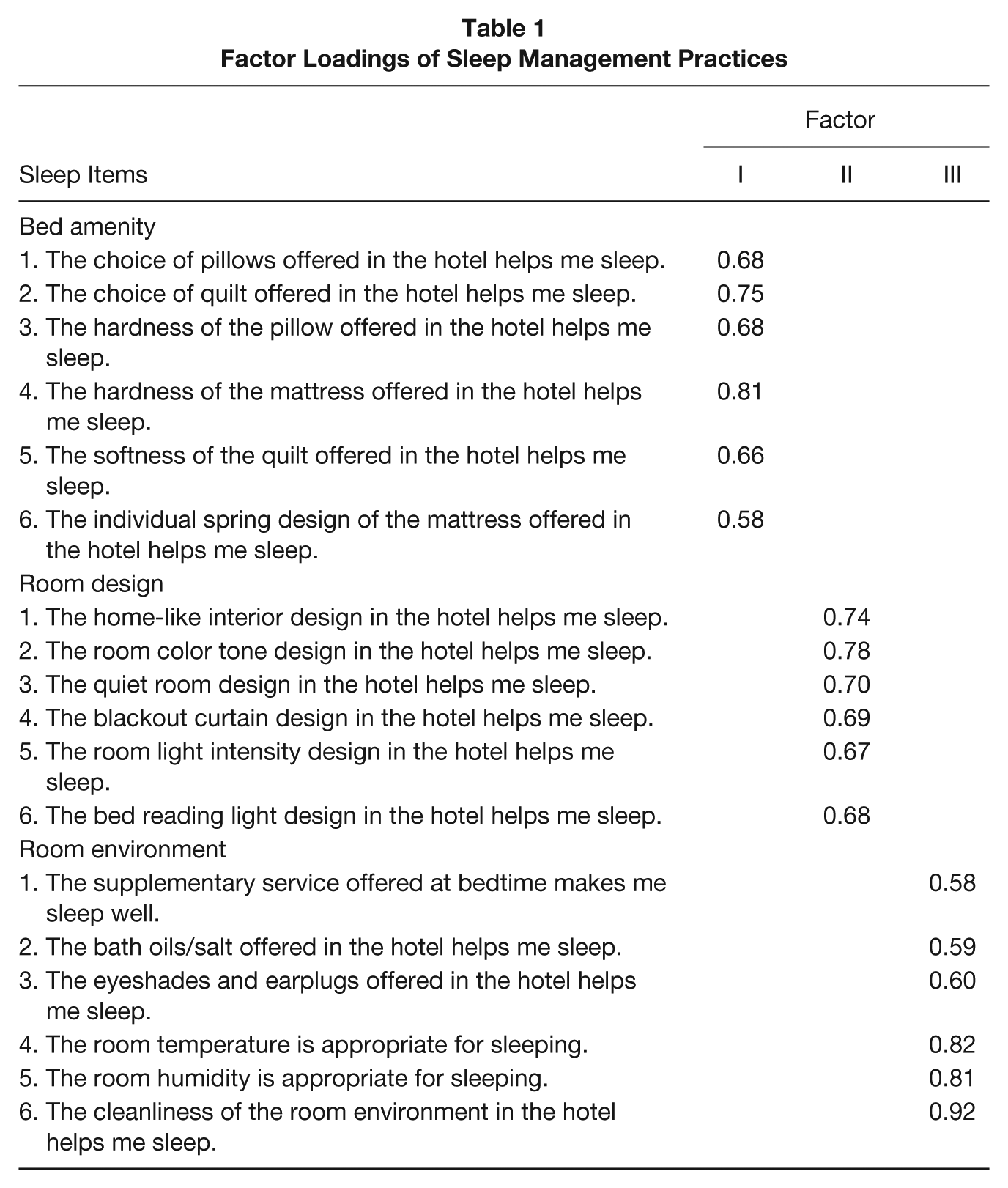
Based on the focus group interviews with the eight hotel managers, we identified 18 sleep management strategies, which we categorized into three dimensions (1) bed amenities (six items, e.g., “The choice of pillows offered in the hotel helps me sleep”); (2) room design (six items, e.g., “The home-like interior design helps me sleep”); and (3) room environment (six items, e.g., “The room temperature is appropriate for sleeping”). Table 1 presents all 18 sleep management attributes. As those management attributes were developed in this study via focus interviews with hotel managers and employees, to ensure the validity of these attributes, exploratory factor analysis of the 18 items was conducted using varimax rotation and factor loading with an eigenvalue larger than 1. As shown in Table 1, the factor loading confirmed the existence of three distinct factors. The factor loadings ranged from .58 to .92, and the three factors collectively accounted for 62% of the variance. The coefficient alpha for bed amenities was .80, for room design it was .76, and for room environment it was .82.
Factor Loadings of Sleep Management Practices
Guest Satisfaction
We assessed guest satisfaction using a three-item scale adapted from a study by Cronin et al. (2000). The three items were “My choice to stay in this hotel is a wise one,” ”I think that I did the right thing when I stayed in this hotel,” and “This hotel environment is exactly what I need.” The coefficient alpha for this scale was .89.
Return Intention
We measured guest return intentions using three items adapted from the study by Cronin et al. (2000). The three items were “I will choose this hotel again for my next stay in Hong Kong,” “I will recommend this hotel to my friends,” and “If I had to do it over again, I would choose to stay in this hotel.” The coefficient alpha for this scale was .94.
Control Variables
To reduce the influence of known confounding effects (Hon, 2013; Hon & Lu, 2013), we controlled for several background variables such as age, gender (male, female), educational level (bachelor’s degree or above, below bachelor’s degree), tourists’ nationality (Asia, Europe, America, and Middle East), and number of nights stayed in the hotel (3 nights or less, more than 3 nights). We also controlled for the personal sleep quality disturbances component proposed by Buysse et al. (1989). Medical and psychiatric researchers (Karacan, Thornby, & Williams, 1983; Lugaresi et al., 1983; Mellinger, Balter, & Uhlehuth, 1985) have demonstrated that sleep quality can be affected by personal issues such as difficulty falling asleep, breathing uncomfortably, waking up often in the middle of the night or early morning, feeling too cold or too hot, and difficulty maintaining sleep.
Before analyzing the data, we conducted confirmatory factor analysis to assess the discriminant validity of the items comprising the three sleep management dimensions, guest satisfaction, and return intentions. The results showed a good fit for the five-factor model, where all of the items loaded on their intended constructs (χ2 = 587.88, degrees of freedom [df] = 98, p < .01; comparative fit index [CFI] = .92; Tucker–Lewis Index [TLI] = .92, root mean square error of approximation [RMSEA] = .07). In analysis, all 18 items for the sleep management measure were constrained to load on the second-order construct. All of the factor loadings were significant at the .05 level. We then computed a two-factor model that combined the items for guest satisfaction and return intention, as these two variables had the highest correlation (r = .66, p < .01). This two-factor model yielded a poorer fit for these data (χ2 = 1021.61, df = 131, p < .01; CFI = .57; TLI = .52, RMSEA = .12). Finally, a one-factor model—in which all of the items were constrained to load on a single factor—yielded a poor fit (χ2 = 4174.25, df = 136, p < .01; CFI = .42; TLI = .49, RMSEA = .16). The hypothesized five-factor model was a better fit than either the two-factor model (Δχ2 = 433.73, Δdf = 33, p < .01) or the one-factor model (Δχ2 = 3586.37, Δdf = 38, p < .01).
Results
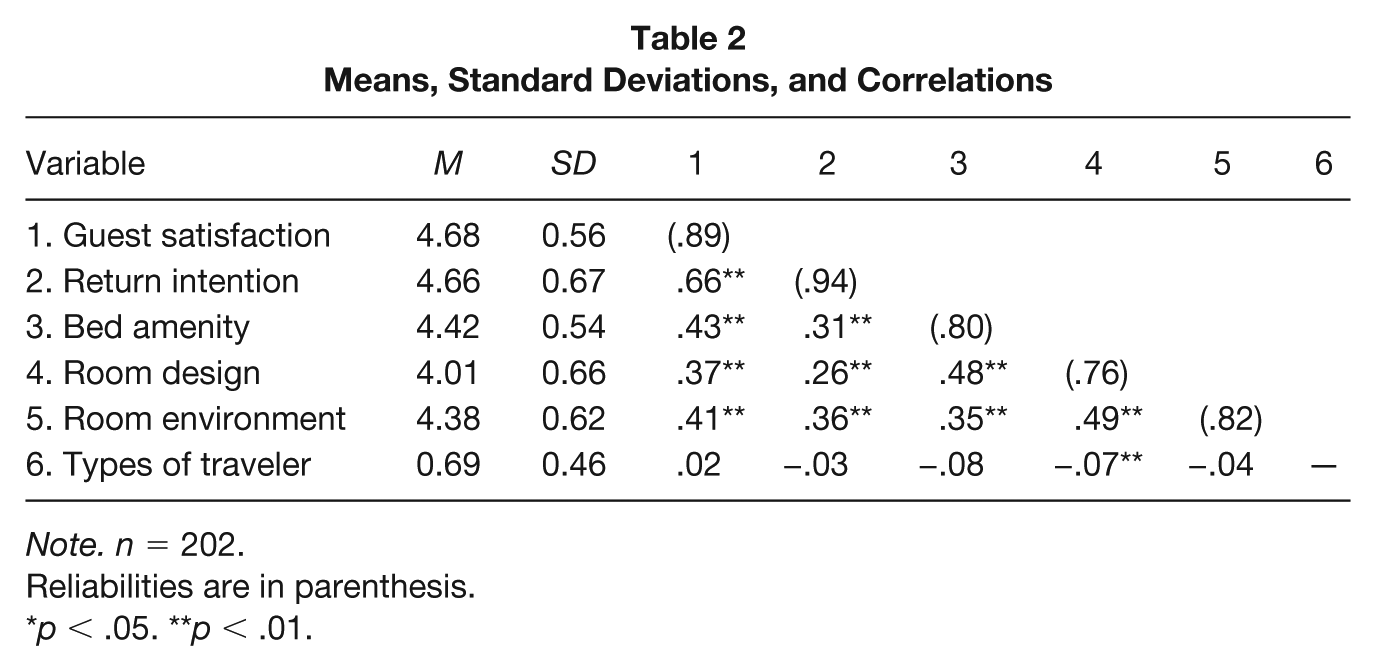
Table 2 presents the means, standard deviations, and correlations of all the variables. As expected, guest satisfaction is significantly correlated with bed amenities (r = .43, p < .01), room design (r = .37, p < .01), room environment (r = .41, p < .01), and return intentions (r = .66, p < .01). The significant correlations reported in Table 2 provide preliminary support for the hypothesized direct relationships (Hypotheses 1-2). To investigate the interacting effects of the three sleep management strategies and traveler type on guest satisfaction and the identified direct relationships, a complex hierarchical regression analysis (Aiken & West, 1991) was used to test the effect of each variable on guest satisfaction and return intentions after controlling for demographic variables.
Means, Standard Deviations, and Correlations
Note. n = 202.
Reliabilities are in parenthesis.
p < .05. **p < .01.
Testing the Direct Relationships
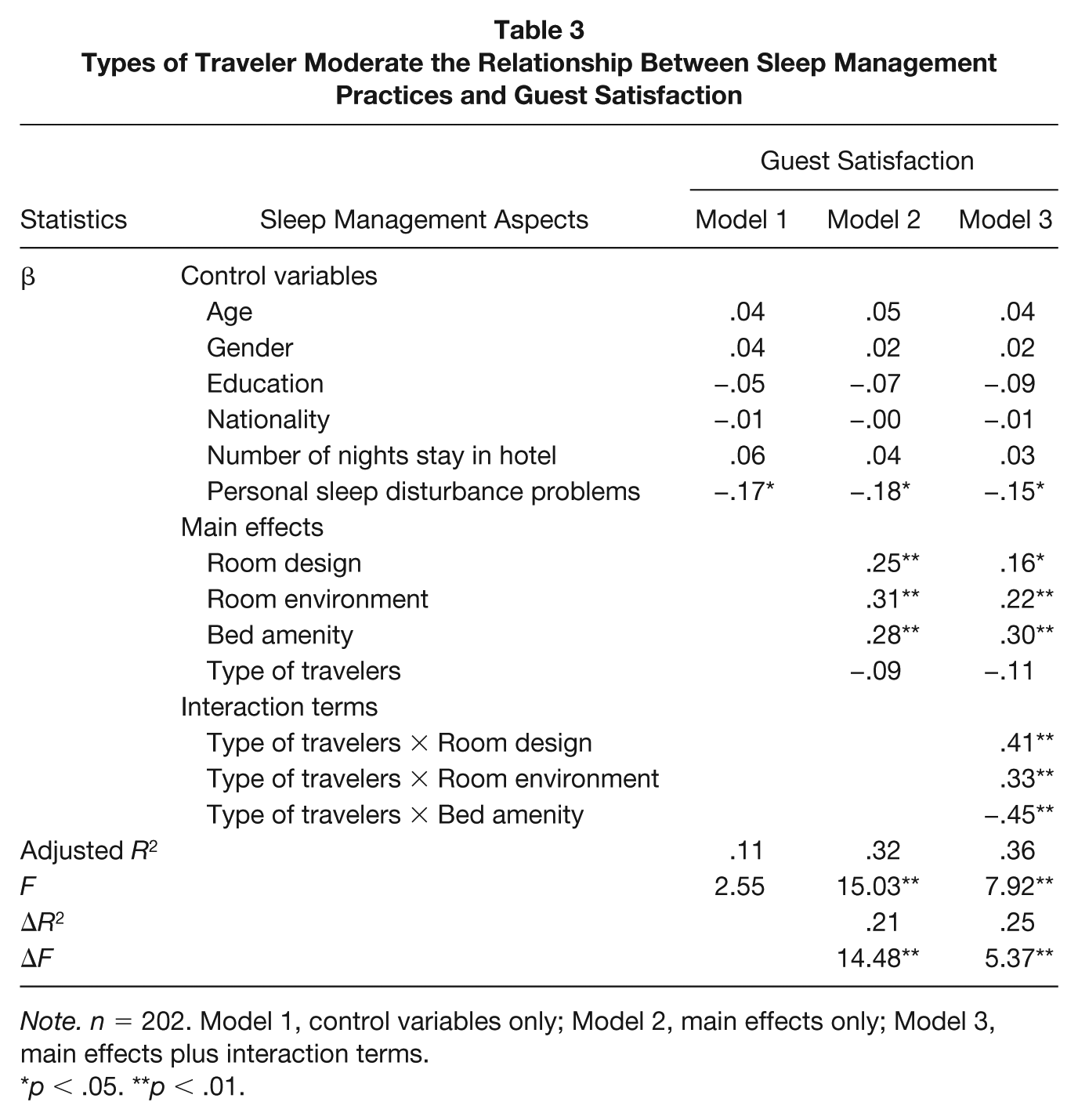
Hypothesis 1a predicts that a variety of comfortable bed amenities are positively related to guest satisfaction. The results in Table 3 (Model 2: β = .14, p < .05) show that bed amenities are positively related to guest satisfaction. Therefore, the Null Hypothesis 10 was rejected and Hypothesis 1a is supported. Hypothesis 2a predicts that a warm and home-like room design is positively related to guest satisfaction. The results reported in Table 3 (Model 2: β = .27, p < .001) show that room design is significantly and positively related to guest satisfaction, supporting Hypothesis 2a. The Null Hypothesis 20was, therefore, rejected. Hypothesis 3a predicts that a clean and comfortable room environment is positively related to guest satisfaction. The results reported in Table 3 show that room environment is significantly and positively related to guest satisfaction (Model 2: β = .22, p < .01). Hypothesis 3a is thus supported. As a result, the Null Hypothesis 30was rejected. Last, Hypothesis 4a predicts that guest satisfaction is positively related to return intentions. As reported in Table 2, guest satisfaction is significantly and positively related to return intentions (r = .66, p < .01), supporting Hypothesis 4a. The Null Hypothesis 40was, therefore, rejected.
Types of Traveler Moderate the Relationship Between Sleep Management Practices and Guest Satisfaction
Note. n = 202. Model 1, control variables only; Model 2, main effects only; Model 3, main effects plus interaction terms.
p < .05. **p < .01.
Hypotheses 5a to 7a predict that traveler type moderates the relationships between the three dimensions of sleep management and guest satisfaction. The variables were entered into the hierarchical regression equation in the following steps (Aiken & West, 1991): first, the control variables; second, the three aspects of sleep management (bed amenities, room design, and room environment) and two traveler types (holiday and business); and third, the interaction terms (i.e., traveler type × bed amenities or traveler type × room design or traveler type × room environment). These independent and moderating variables were standardized first before combining them in the interaction terms.
Testing the Interaction Effects of Sleep Strategies and Types of Traveler
Hypothesis 5a predicts that traveler type moderates the relationship between bed amenities and guest satisfaction such that both business and holiday travelers experience higher guest satisfaction when a hotel offers a variety of comfortable bed amenities. The results demonstrate that the interaction between bed amenities with traveler type (Table 3, Model 3) adds a significant increment of explained variance for guest satisfaction (ΔR2 = .25, F = 7.92, p < .01). The interaction term of bed amenities and traveler type is negatively significant for guest satisfaction (β = .45, p < .01). Bed amenities are positively related to guest satisfaction (Model 2, β = .28, p < .01). Thus, Hypothesis 5a is supported. The Null Hypothesis 50 is, therefore, rejected. To specifically identify how traveler type influences the direct relationship, Figure 1 graphically plots the significant interaction effects of Hypothesis 5a. The figure reveals that although guest satisfaction is higher for both holiday and business travelers, business travelers have a higher satisfaction level than holiday travelers.

The Role of Traveler Types on the Relationship Between Bed Amenity and Guest Satisfaction
Hypothesis 6a predicts that traveler type moderates the relationship between room design and guest satisfaction such that both business and holiday travelers experience higher guest satisfaction when a hotel room is warm and home-like. The results demonstrate that the interaction between room design with traveler type (Table 3, Model 3) adds a significant increment of explained variance for guest satisfaction (ΔR2 = .25, F = 7.92, p < .01). The interaction term of room design and traveler type is positively significant for guest satisfaction (β = .41, p < .01). Room design is positively related to guest satisfaction (Model 2, β = .25, p < .01), supporting Hypothesis 6a. As a result, the Null Hypothesis 60 is rejected. Figure 2 graphically plots the significant interaction effects of Hypothesis 6a. The figure reveals that although guest satisfaction is higher for both traveler types, holiday travelers have a higher satisfaction level than business travelers.
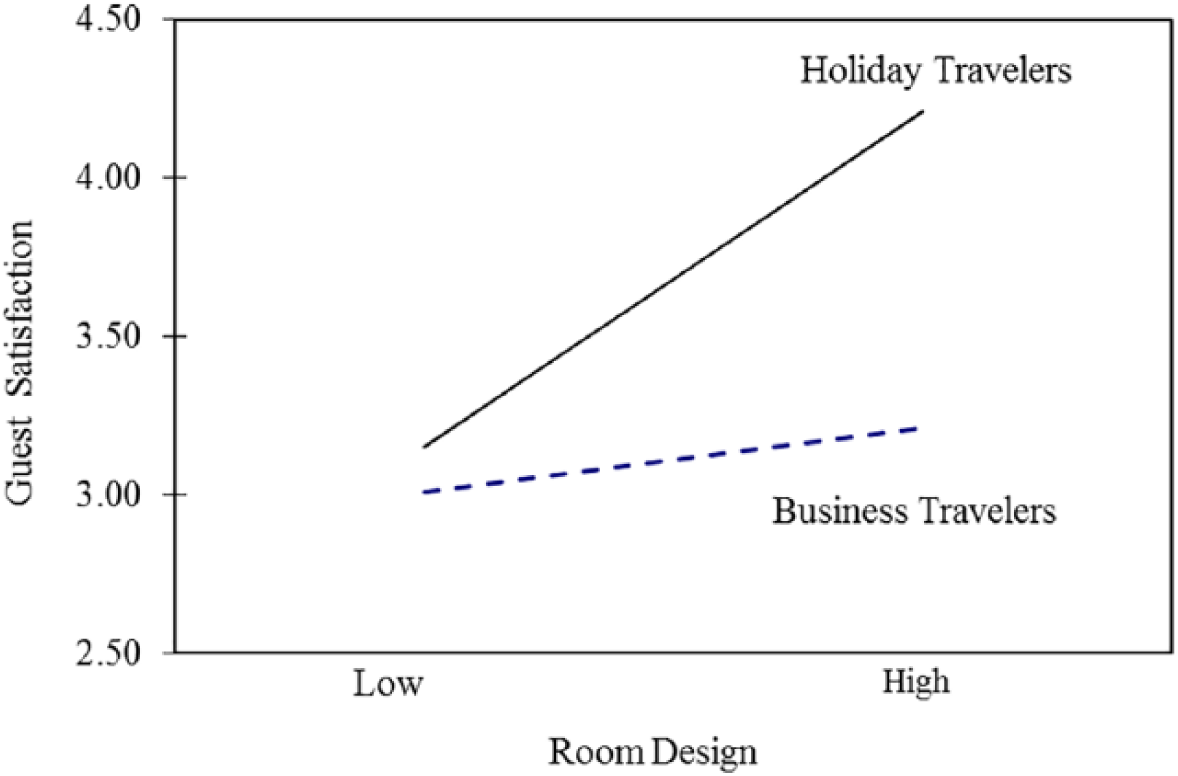
The Role of Traveler Types on the Relationship Between Room Design and Guest Satisfaction
Last, Hypothesis 7a predicts that traveler type moderates the relationship between room environment and guest satisfaction such that both business and holiday travelers experience higher guest satisfaction when the hotel room environment is caring and user-friendly. The results demonstrate that the interaction between room environment and traveler type (Table 3, Model 3) adds a significant increment of explained variance for guest satisfaction (ΔR2 = .33, F = 7.92, p < .01). The interaction term of room environment and traveler type is positively significant for guest satisfaction (β = .16, p < .05). Room design is positively related to guest satisfaction (Model 2, β = .31, p < .01), supporting Hypothesis 7a. The Null Hypothesis 70 is, thus, rejected. Figure 3, which graphically plots the significant interaction effects of Hypothesis 7a, reveals that although guest satisfaction is higher for both traveler types, holiday travelers have a higher satisfaction level than business travelers.
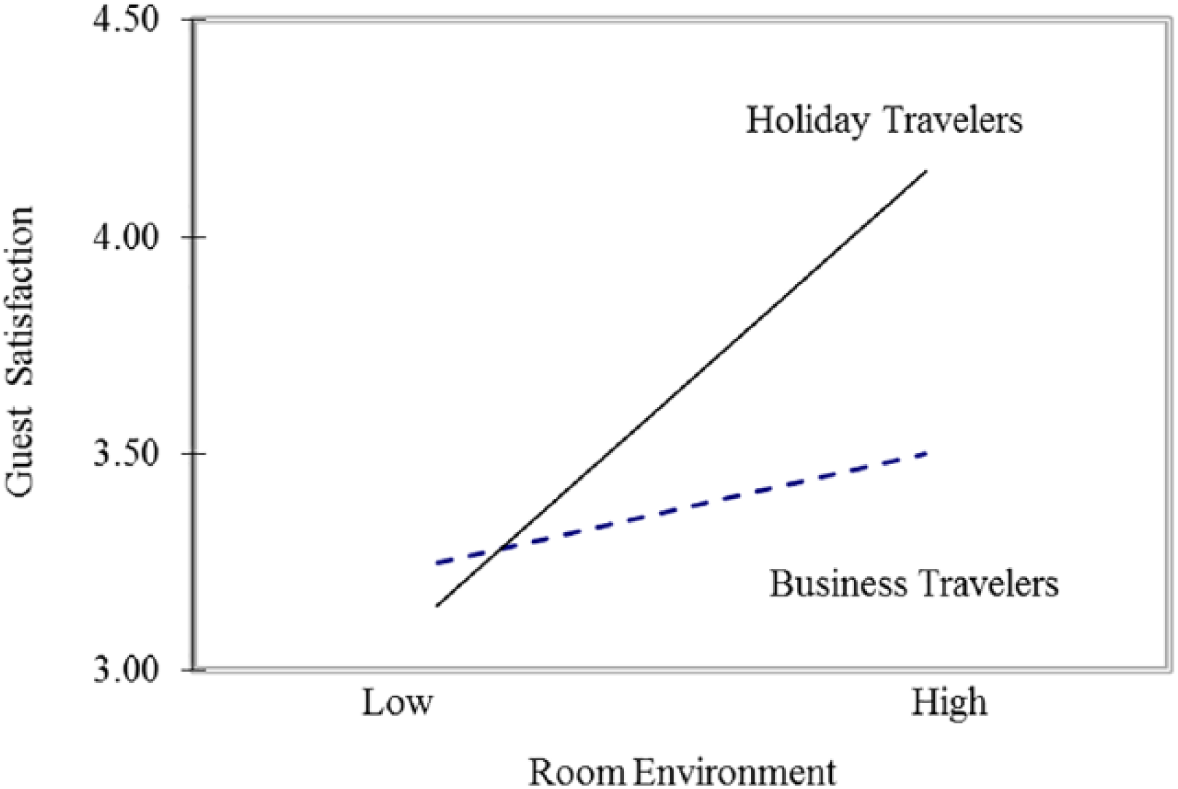
The Role of Traveler Types on the Relationship Between Room Environment and Guest Satisfaction
Discussion
Theoretical Implications
Hotels provide not only quality services to their guests but also a place to have a good night’s sleep. Although hotels have put many resources into creating a quality sleep environment, their effectiveness is variable. In this study, we examined how three sleep management practices influenced guests’ satisfaction and ultimately affected their return intentions. Moreover, we argued that business and holiday travelers react differently to the environment and may have different perceptions toward the sleep management practices implemented by the hotel. Therefore, guest satisfaction is influenced by traveler type and sleep management practices simultaneously.
As expected, this study finds that both business and holiday travelers perceive having a variety of comfortable bed amenities as important for a good night’s sleep and that this practice is associated with guest satisfaction. A warm, home-like room and heavy curtains also create a good sleep environment. Other features of the room environment, such as supplementary services (bath oils/salt) and temperature or humidity controls, should be user-friendly so that guests can create an appropriate sleep environment. These features relate positively to guests’ satisfaction. Thus, considering more trait-relevant sleep management strategies can provide a better understanding of the effects of these environmental factors on trait activation in guests’ satisfaction, which in turn influences their intention to return.
Consistent with trait activation theory, perhaps the most interesting finding of this study is how the interaction between traveler type and sleep management practices simultaneously affects guest satisfaction. Previous studies have found that business travelers emphasize cleanliness and convenience of location, and that holiday travelers focus more on security, pricing, and service quality when determining which hotel they should stay in (Clow et al., 1994; Cobanoglu et al., 2018; McCleary et al., 1993; Yavas & Babakus, 2003; Zaman, Botti, & Thanh, 2016). Consistent with these findings, we found that guest satisfaction was higher for holiday travelers than for business travelers and that this tendency was significantly stronger when hotels provided a room with warm and home-like interior design (Figure 2). Similarly, in terms of room environment, we found that the level of guest satisfaction was higher for holiday travelers than for business travelers and that this tendency was significantly stronger when the hotel room was clean and the room environment was user-friendly and provided guests with a comfortable place to sleep (Figure 3). Although bed amenities were important for both types of travelers, we found that guest satisfaction was higher for business travelers than for holiday travelers and that this tendency was stronger when a hotel offered a variety of comfortable bed amenities (Figure 1).
Our results support activation theory (Tett & Guterman, 2000) indicating that these three aspects of sleep management practices serve as important conditions for shaping business and holiday travelers’ experiences of a good night’s sleep in a hotel and guest satisfaction outcomes. In addition to employee outcomes, this study also proves that activation theory can apply to consumer outcomes. To help their guests have a good sleep, hotels establish a sleep management program that reflects their core values. Although tourists do not create their own sleep environment, their individual perceptions and experiences affect their responses to a given sleep situation. The findings of the study show that the three sleep management practices are essential activators in sleep management. It also explains why hotel guests give different feedback on their sleep quality under the same hotel room environment conditions. We believe this theory could be useful for understanding the effects of other sleep programs, service environments, international brand management, human resources, and social media marketing in the hotel and tourism industry.
Managerial Implications
Hotels can put in place a series of sleep practices in hotel rooms that may help build good sleep hygiene to improve the sleep quality of their guests (Fung & Hon, 2019; Valtonen & Veijola, 2011). Examples of sleep hygiene include a regular sleep–wake schedule, avoiding naps, caffeine, nicotine, and alcohol 4 to 6 hours before bed, avoiding heavy meals and heavy exercise before sleep, and eliminating bedroom clocks (Rantala & Valtonen, 2014; Valtonen & Veijola, 2011). These sleep practices probably help guests have a good night’s sleep, and this can benefit a hotel by increasing guest satisfaction, which is associated with revisits, loyalty, repeated purchases, and favorable publicity via word of mouth, brand image, and increased market share (Bandyopadhyay & Martell, 2007; Rodriguez del Bosque & San Martin, 2008; Yoon & Uysal, 2005).
To provide overnight guests with a place to have a good night’s sleep is the core mission of hotels and one of the vital indicators of service quality. To respond to this need, managers should pay attention to the sleep management practices that our study indicates are associated with comfortable bed amenities, homely room design, and a caring room environment. Managers can offer various types of bed amenities including soft or firm mattresses, high, middle, or low pillows, cotton or duvet quilts, or individual spring-design mattresses for business travelers to satisfy their need for more choice. In terms of room design and room environment, holiday travelers are more interested in warm colors and home-like designs, room cleanliness, and control over room temperature and humidity. Control panels in hotel rooms should also be easy to adjust and use. In response to these needs, hotels could incorporate different design features and develop sleep management strategies aimed at creating a good sleep environment. Suggestions include providing specially designed and premium bedding, thick walls and sound-proof room design, aromatherapy, and quiet zone floors for guests. Hotels could also consult sleep specialists and provide training to the hotel staff so they can recommend strategies for quality sleep.
In addition to the general sleep environment conditions, we are aware that some tourists encounter personal sleep quality disturbance issues such as jet lag, difficulty in falling asleep, difficulty in maintaining sleep, or easily waking up in the middle of the night. For such cases, we suggest that some soft classical music be played from speakers. Managers may also need to learn how to help guests with these sleep problems. Well-trained sleep specialists who know how to enhance sleep quality could be employed to provide training to frontline staff as sleep consultants and offer suggestions to guests with personal sleep quality problems. Furthermore, some supplementary or caring services like warm milk, Horlicks, or hot chocolate may also help improve guests’ sleep quality. Most important, our study suggests that hospitality managers could be most effective in activating guests’ sleep quality and fostering guests’ satisfaction and return intentions by focusing on sleep management practices in their hotels.
Limitations and Directions for Future Research
This study has several limitations that should be addressed in future research. First, this cross-sectional study raises the issue of causality. A longitudinal design would be preferable to a cross-sectional design, as it would allow researchers to trace the causal direction and reciprocal relationships and the effect of sleep management practices over time instead of assessing it at one point in time (Hon, Bloom, & Crant, 2014). Second, all of the measures were rated by hotel guests; however, it is reasonable to use self-rating as guests’ satisfaction with sleep management practices could not be observed or rated by other parties. Thus, our findings are considerably more convincing than if the data came from hotel staff or managers’ evaluations of tourists’ internal perceptions and intentions. Accordingly, concerns about response bias and self-generated validity are mitigated in the present study. However, future studies may include additional objective measures of sleep management practices.
Third, we only tested the traveler type as a moderating effect on the relationship between sleep management practices and guest satisfaction. Future studies may include other traveler characteristics, such as extrovert/introvert travelers and individual travelers/travelers with a bed partner or roommate, which also influence sleep quality. We similarly controlled for travelers’ internal and personal sleep-related disturbances so that these potential confounding effects would not affect our measures of guest satisfaction on sleep management conditions. Our measures of the 18 sleep management strategies were based on the perceptions of executive managers via the focus group interviews; their experiences may not have adequately identified the components of the sleep environment situation, and future research could improve and further validate these measurements.
Finally, the study did not include cultural habits of travelers. The examples of behavioral habits like whether the guests have a regular sleep–wake schedule, a habit of napping during the day, or eating heavy meals and exercising heavily before sleep (e.g., Brick et al., 2010; Eidlitz-Markus et al., 2012; Ringdahl et al., 2004). All these habits will affect the quality of sleep. In addition, our data were collected in Hong Kong, from a single hotel and so we cannot address the generalizability issue. Although our theorizing is not tied to any specific organizational or cultural context, future study should replicate the current findings at different hotels and in different regions or countries.
Concluding Summary
The current tourism and hospitality research mainly focuses on room rates, service personnel, brand image, or location to examine tourists’ destination preferences (Lockyer, 2005; Rhee & Yang, 2014). However, a good sleep environment and its effectiveness seem to be overlooked. This is important, as both marketing research (Caruana & Malta, 2002; Cooil et al., 2007; Ekinci et al., 2008; M. Kim et al., 2015; Zeithaml, Berry, & Parasuraman, 1996) and hospitality professionals (Bigne, Sanchez, & Sanchez, 2001; Boo, Busser, & Baloglu, 2009) frequently highlight the challenges managers face as they strive to improve guests’ satisfaction and foster their return intentions. Our study suggests that hospitality managers who are striving to improve service quality and enhance customer satisfaction should pay attention to the features of a good sleep environment such as bed amenities, room design, and room environment, as these features are highly prized by both business and holiday travelers. With this information, managers can foster higher levels of guest satisfaction and return intentions among their guests.
Footnotes
Authors’ Note:
The work described in this article was fully supported by a grant from the Hong Kong Polytechnic University (Project No. 4-ZZFG).
