



Abstract
This study explored the relationships among sport tourists’ team identification, sport nostalgia, and revisit intention. In addressing the research goal, survey data were collected from 487 sport tourists to professional baseball games in South Korea, which were then analyzed using structural equation modeling. Results revealed that team identification positively affected sport nostalgia, and sport nostalgia had a positive effect on revisit intention. Further analysis showed team identification had an indirect influence on revisit intention, suggesting full mediation by sport nostalgia. This study provides greater insights into how sport tourists’ team identification contributes to sport nostalgia and how the two constructs collectively influence revisit intention. The findings can be used in developing more effective marketing strategies in sport tourism.
Introduction
Over the past few decades, sport tourism has developed into a phenomenon of serious academic and practical importance (Malchrowicz-Mosko & Munsters, 2018). According to World Travel Market (2011), large-scale sporting events are now popular tourist attractions for those seeking active and lived experiences either as competing athletes or event attendees, as well as for those looking for passive sport-related activities such as visiting historic sport venues or museums (Malchrowicz-Mosko & Munsters, 2018). Consequentially, sport tourism is viewed as one of the most lucrative markets in tourism (Smith & Stevenson, 2009). It is estimated that from 15% to 30% of tourism earnings globally are associated with sport-related travel, and the numbers are expected to increase (Vehmas, 2010).
Responding to such economic significance of sport tourism, scholars in the fields of sport and tourism have tried to better understand the factors that contribute to individuals’ participation in sporting events and sport tourism. Revisit intention, as to many other forms of tourism, is essential to sport tourism, especially to one that is centered around sporting events (Chalip & McGuirty, 2004). Studies have noted that repeat visitors tend to stay longer at a site, spread positive word-of-mouth, and spend more money (Oppermann, 2000). Revisit intention not only represents visitors’ loyalty (Li et al., 2010) but also helps predict their future behavior (Pratminingsih et al., 2014). Given that events and destinations often have to compete for the same groups of sport tourists, understanding and promoting revisit intention is of great practical importance.
Among many determinants of revisit intention, team identification, or psychological attachment to a sport team (Wann, 2006a), has drawn much scholarly attention. High team identification can enhance sporting event spectatorship (Fisher, 1998) and team merchandise sales (Kwon & Armstrong, 2002). Especially for sport tourists, their team identification is already implied in their behaviors of traveling to support their favorite teams (Gibson et al., 2003), visit iconic sites (Ramshaw & Gammon, 2005), and connect with others with similar intentions (Fairley, 2003). Since traveling for such experiences requires greater time and money than engaging in other sport-related experiences (Cho, Joo, & Chi, 2019), sport tourists are likely to possess significant team identification. However, identifying with a team is not the only concept that can explain individuals’ intention to revisit a particular sporting event.
Sport tourists’ positive feelings toward their sport-related past, or sport nostalgia in short, is another determinant of their revisit intention to sporting events (Cho et al., 2014). Nostalgia has been viewed as a powerful predictor of individuals’ behavioral intentions in contexts involving leisure activities (Cho, 2020; Cho, Pyun, & Lim, 2019; Cho, Pyun, & Wang, 2019), fine-dining services (Hwang & Hyun, 2013), and consumer goods (Muehling & Pascal, 2011). With respect to sport tourism, Fairley (2003) and Fairley et al. (2018) furnished qualitative evidence for the positive changes that sport nostalgia brings to travel decision. However, despite its importance, little consideration has been given among researchers as to how sport nostalgia can be quantified or is related to other concepts such as team identification.
Although they have never been considered in tandem to explain sport tourists’ revisit intention to a sporting event, research thus far suggests that team identification and sport nostalgia are intimately related concepts. For instance, Y. Chang et al. (2018) claimed that the positive impact that team identification has on revisit intention can be mediated by an emotional state. Given that sport nostalgia is also an emotional state (Stern, 1992), it can serve as a mediator in Y. Chang et al.’s (2018) conceptual framework. Furthermore, individuals with high team identification are more likely to engage in various team-related activities to strengthen their collective identity as fans (Lock et al., 2012), and it is through such sport-related experiences that sport nostalgia is engendered and intensified (Cho, Joo, & Chi, 2019). Given this, it can be assumed that sport tourists’ team identification and sport nostalgia collectively influence their revisit intention to a sporting event. As such, this study explored the relationships among team identification, sport nostalgia, and revisit intention. In addressing the goal, survey data were collected from South Korean sport tourists to professional baseball games, which were then analyzed using structural equation modeling (SEM).
Literature Review
Team Identification
Team identification refers to the degree to which individuals develop an emotional affection or psychological connection toward a particular sport team and view the team’s performances as self-relevant (Wann, 2006b). The emergence and influence of team identification can aptly be understood via social categorization (Turner & Oakes, 1986) and social identity (Tajfel, 1982) theories. According to these theories, individuals identify themselves with a group that they think is relevant, and this categorization as a member of such a group is important in forging a social identity (Turner & Oakes, 1986). Considered in tandem, these attributes promote in-group cohesion and out-group distinction (Tajfel, 1982). This line of thought (also known as the social identity approach) underscores the importance of group membership to individuals’ thoughts, feelings, and behaviors. Thus, team identification evolves when a great similarity exists between individuals and the sport team they support, which in turn contribute to individuals’ social identity.
Team identification can develop from psychological, environmental, or team-related factors (Wann, 2006a). Psychological factors concern individuals’ desire to be a part of a distinctive group; in this case, a sport team (Wann, 2006a). Environmental causes—such as relationships with family (Funk & James, 2001) and peers (Crawford, 2003), fan-to-player contact (Kagan, 1958), and out-group salience (i.e., rivalry; Luellen & Wann, 2010)—can contribute to the selection of a team with which to identify. Finally, team-related factors pertain to team’s performance (Sutton et al., 1997), history, rituals (Underwood et al., 2001), reputation, and players (Greenwood, 2001). These findings suggest that team identification is a multidimensional concept that cannot be attributed to a single cause. Rather, it is logical to understand team identification as a product of various psychological, environmental, and team-related factors, not to mention other concepts (e.g., sport nostalgia) that contribute to revisit intention.
Sport Nostalgia
Nostalgia is an emotional state where individuals experience positive feelings by recollecting a familiar object or experience that they had in the past (Stern, 1992). Thus, sport nostalgia, as discussed in this study, is such feelings specific to the sport-related past. Oftentimes, the past that intrigues nostalgia is not an accurate illustration of what actually happened, and instead, it can be more of a romanticized and sanitized recollection (Davis, 1979). Furthermore, individuals may be nostalgic toward the past because of their negative feelings about the present. In other words, individuals who feel more dissatisfied with their present status or condition are more likely to long for their glamorized past (Cho, 2014). Thus, how individuals remember or view their past or present is essential in understanding their nostalgia.
Sport nostalgia, in particular, is a multifaceted concept that exists at the nexus of sport, tourism, and any social experiences related to both (Fairley & Gammon, 2005). Sport nostalgia is especially integral when understanding sport tourism. Gibson (1998) first defined nostalgia sport tourism as visiting iconic sport-related sites (e.g., halls of fame, stadia) related to the past. Fairley (2003) later claimed that nostalgic sport tourists are not only attracted to historical and symbolic sport-related sites but they also cherish positive social experiences with others in past sporting occasions. Sport fans, in particular, strongly identify themselves with others who support the same sport or team, and this makes them more enthusiastic about collective experiences they enjoyed in the past (Fairley, 2003). As such, social elements are significant to sport nostalgia.
Revisit Intention
Revisit intention represents how much individuals are keen to visit the site or the destination that they previously visited (Cole & Scott, 2004). Having previous visitors return to the destination costs less money and effort than enticing new visitors (Chi, 2012; Um et al., 2006), and each repeat visitor can bring additional spending and positive word-of-mouth to the destination (Marinkovic et al., 2014). This is also true for sporting events. Economic success of a sporting event is highly dependent on its ability to keep sport tourists returning for future events or retain them in the area when the event is over (Chalip & McGuirty, 2004). For these reasons, revisit intention is particularly important to sport tourism research and a widely examined type of behavioral intention along with the intention to recommend.
In previous research, revisit intention has usually served as an outcome variable that is dependent on other predicting variables. Most often, travel satisfaction is an essential and direct antecedent to revisit intention. A common finding is that dissatisfied visitors are less likely to return to the destination (e.g., Guntoro & Hui, 2013). Interestingly, Um et al. (2006) found that perceived attractiveness of a destination was the most influential predictor of revisit intention, which outperformed overall satisfaction. Other predictors of revisit intention also include destination image (Stylos et al., 2016), travel motivation (Leong et al., 2015), or perceived value (L. Chang et al., 2014; Um et al., 2006). Specifically, in a sport tourism context, attitude about event participation was also found to be a significant mediator between the relationship involving event satisfaction or destination image and revisit intention (Kaplanidou & Gibson, 2010).
Conceptual Framework and Research Hypotheses
Conceptual Framework
Research hypotheses for this study were framed in accordance with the appraisal theory of emotion (Lazarus, 1991, 2001). This theory illustrates the relationship among cognition, affection, and behavior. More specifically, at the core of the model is the view that cognition precedes emotion in forging behavior. When external stimuli are noticed, individuals engage in a cognitive appraisal process (Dalgleish & Power, 1999). This is then ensued by an affective process that generates or avoids subsequent thoughts and provides feedback on expected outcomes of potential behavioral responses (Pachankis, 2007). Also, according to Stryker and Burke (2000), individuals’ identity affects their emotional responses which then influence their behavior.
In the context of this study, sport tourists’ team identification, sport nostalgia, and revisit intention respectively correspond to the cognitive, affective, and behavioral components of the theory. That is, when sport tourists are exposed to external stimuli at sporting events, their team identification dictates what the stimuli mean to them and how they should behave. Such meanings and reactions (shaped by team identification) are then reviewed by sport nostalgia which parallels the affective component of the theory. Any behavioral responses, which in this study is revisit intention, are then understood as an outcome of both cognitive (i.e., team identification) and affective (i.e., sport nostalgia) processes. A visual illustration of the relationships between team identification, sport nostalgia, and revisit intention is provided in Figure 1.
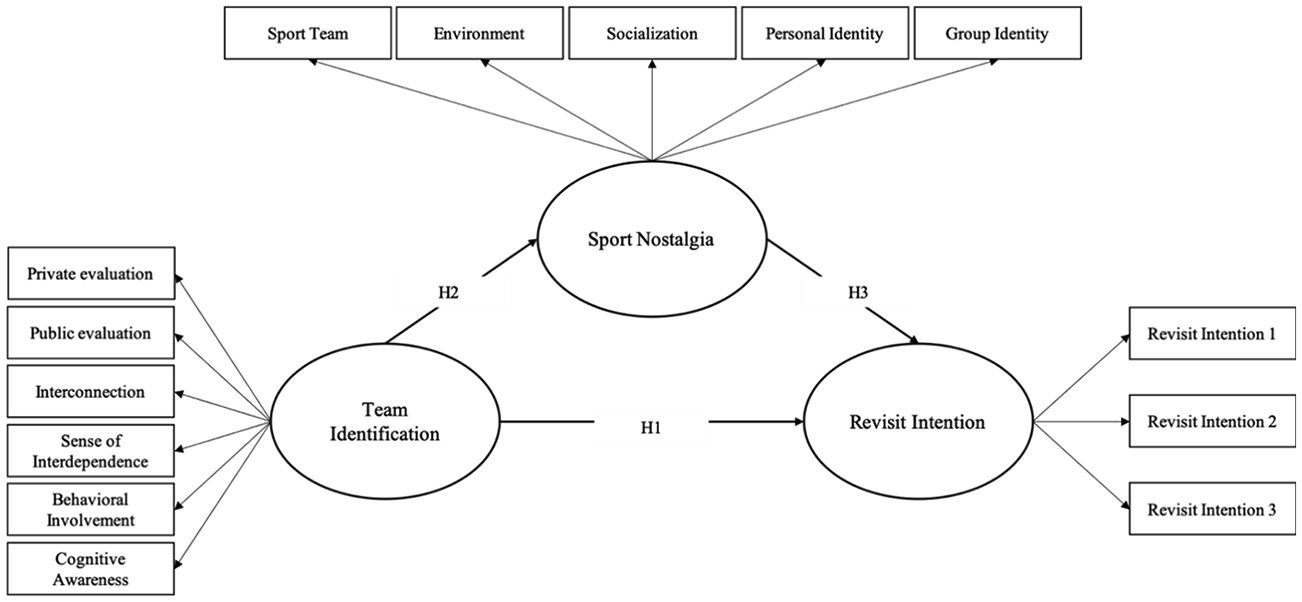
Hypothesized Model
Research Hypotheses
The intimate relationship between team identification and behavioral intention has been widely recognized by scholars and practitioners in the fields of sport and tourism. Marketers and organizers of sporting events acknowledge the importance of team identification in forming long-lasting relationships with sport fans and turning them into active sport consumers (Gray & Wert-Gray, 2012). For instance, college football fans with high team identification are more likely to be enthusiastic spectators of college football and generous consumers of team-related products (Gibson et al., 2003; Wann, 2006a). In Kwon et al.’s (2007) study, team identification indirectly affected the intention to buy team merchandise. Particularly relevant to this study are findings related to sporting event attendance and spectatorship. Individuals with high team attachment are more likely to enjoy the games onsite or on media (Matsuoka et al., 2003; Rocha & Fleury, 2017). This positive relationship is not affected even if individuals have witnessed previous losses of their team (Sutton et al., 1997). Thus, the following relationship between team identification and revisit intention was put forth.
As illustrated above, individuals with strong team identification are likely to be more active participants of sporting events or other related activities. Sporting events provide individuals with various stimuli that function as ingredients for sport nostalgia (Cho et al., 2014); thus, individuals with greater team identification are likely to have a greater wealth of positive memories on which sport nostalgia can develop. In fact, Cho, Joo, and Chi (2019) identified a significant influence of past experience on sport nostalgia. Furthermore, of the various stimuli that sporting events offer to participants, those related to group identity or socializing experiences are especially salient to sport nostalgia (Fairley, 2003). Given the close relationship between collective experiences and team identification, it is also possible to draw a similar positive connection between team identification and sport nostalgia. That is, individuals who identify strongly with a team may try to strengthen (or reaffirm) their team-related identity by participating in team rituals and traditions, and doing so are likely to bring a positive impact on their sport nostalgia. Based on this, this study posited:
When individuals are subject to nostalgic feelings, they tend to behave in such ways that soothe their yearning for the past (Cho et al., 2020; Cho, Joo, Moore, & Norman, 2019; Cho, Khoo, & Lee, 2019; Schindler & Holbrook, 2003). In heritage tourism settings, Ali (2015) and Chen and Chen (2010) found that tourists can be nostalgic toward past tourism experiences which they consider satisfactory and worthwhile, and this longing for the past tourism experiences can enhance their revisit intention. In another study by Phau et al. (2016), personal nostalgia served as a major determinant of travel attitude and intention. Similarly, for sport tourists, revisiting sporting events that embody positive memories of the past can be a way of resolving nostalgic desire. For instance, Fairley (2003) found that a nostalgic recollection of past group experiences had a considerable effect on sport fans’ intention to return to the same event. Consistent with this, Gammon and Ramshaw (2005) suggested the likelihood of visiting iconic sport-related attractions depended on the trigger of nostalgia among sport tourists. As such, this study hypothesized the following relationships.
Finally, putting Hypothesis 2 and Hypothesis 3 together, this study put forth the last research hypothesis below. Individuals with high team identification tend to equate team’s glory with their personal success (Wann, 2006a, 2006b) and become more inclined to participate in team-related activities (Neale & Funk, 2006). Such extended experiences related to the sport or the team serve as fertile ground for sport nostalgia (Cho, Joo, & Chi, 2019). That is, the greater the team identification individuals have, the greater the team-related experiences they accumulate, and the stronger the sport nostalgia they have. Eventually, this encourages individuals to attend additional sporting events to resolve their nostalgic desire.
Method
Study Site and Data Collection
To test the research hypotheses, survey data were collected at Jamsil Baseball Stadium in South Korea. The data collection employed a convenient sampling technique where sport tourists to professional baseball games were invited to complete the survey onsite. Specifically, three research assistants approached potential respondents inside and outside the stadium and asked them for their participation. Once they agreed to participate, the research assistants briefly explained the purpose of this study and provided them with a survey instrument. From this, 487 completed questionnaires from six professional baseball games held at Jamsil Baseball Stadium were collected, with a total response rate of 85.3%.
Survey Instrument
For the purpose of this study, the researchers focused specifically on sport tourists’ team identification, sport nostalgia, and revisit intention related to professional baseball games. First, to measure team identification, Heere and James’ (2007) scale was used. The scale has 21 items across six dimensions of private evaluation (four items), public evaluation (three items), interconnection of self (five items), sense of interdependence (three items), behavioral involvement (three items), and cognitive awareness (three items). Sport nostalgia was captured using the Nostalgia Scale for Sport Tourism (NSST) with 29 items (Cho et al., 2017). Within the NSST, there are five dimensions each representing sport nostalgia related to memories of sport team (five items), environment (four items), socialization (five items), personal identity (seven items), and group identity (nine items). Last, three items from Carroll (2009) were employed to measure sport tourists’ revisit intentions. All the constructs were measured using multiple item scales presented in a 7-point Likert-type format.
Data Analysis
Before analyzing the data, any responses provided by non-sport tourists as well as those with multivariate outliers were excluded. Also, missing values were treated with the expectation-maximization algorithm. Once the data were cleaned and prepared, confirmatory factor analysis (CFA) was conducted to identify the best-fitting measurement model to the data and to ensure its reliability and validity. Finally, this study conducted SEM to test the hypothesized relationships. Given that the team identification scale (Heere & James, 2007) and the NSST (Cho et al., 2017) have multidimensional structures with large numbers of items, this study employed item parceling when running SEM. Item parceling is a convenient method used to understand the relationship between constructs (Little et al., 2002) when a scale with many items was used (Matsunaga, 2008). Both CFA and SEM of the data analysis were conducted using EQS 6.3.
Results
Sample Overview
Of the 487 responses collected, 13 were discarded as their postal codes indicated that they were from Jamsil residents. After inspecting z scores and Mahalanobis distance, this study further dropped 36 responses that contained significant multivariate outliers. Consequentially, 438 responses were ready for CFA and SEM.
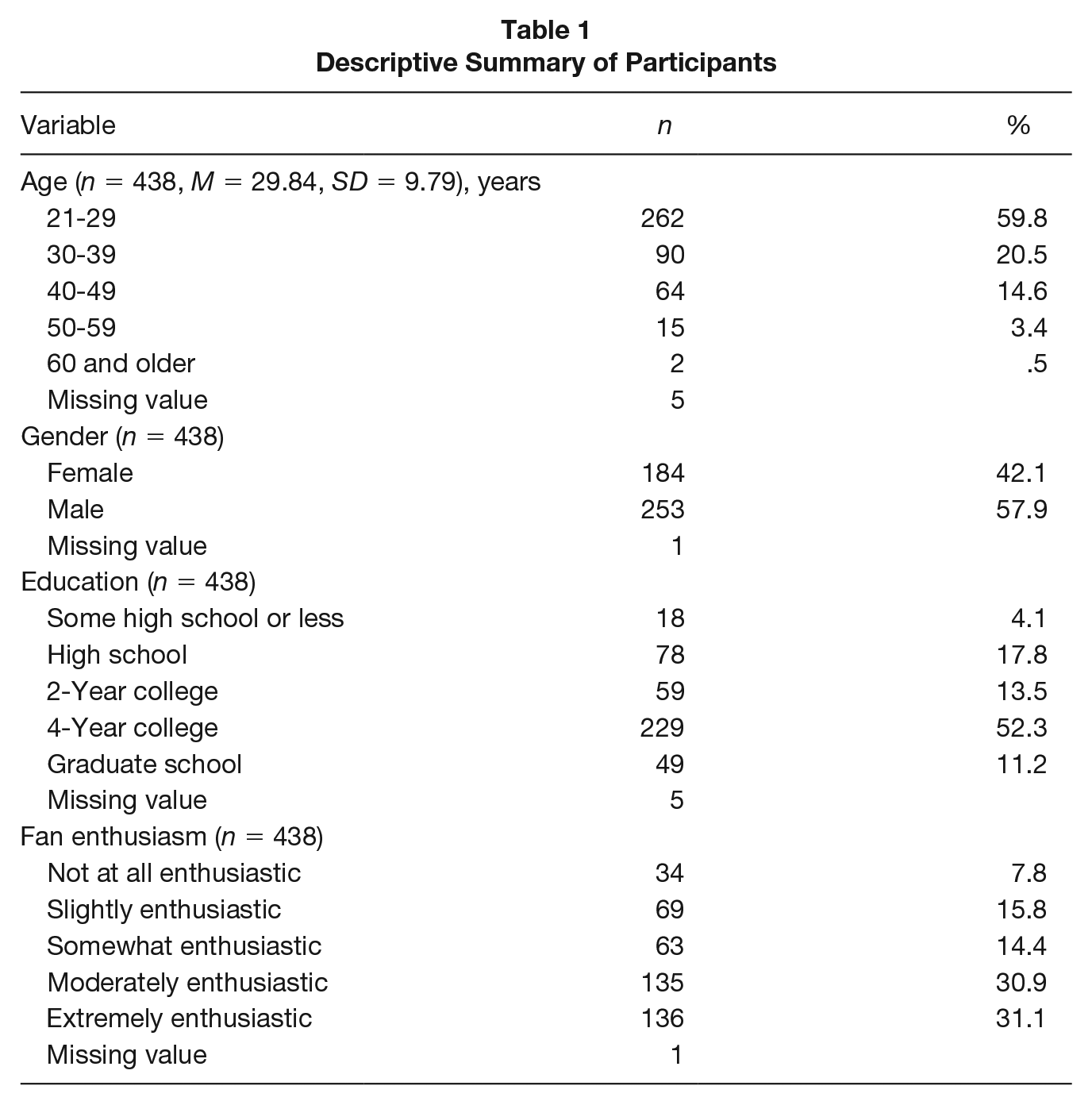
Table 1 below presents a snapshot of the sample’s demographic and baseball-related information. In terms of age, those between 18 and 29 years (59.8%) made up the majority, with the average being at the top of this range (M = 29.84 years). More than half of the sample was men (57.9%). Similar to this, a little more than half (52.3%) of the sample had completed or were in pursuit of a 4-year university degree. Respondents rated themselves as moderately enthusiastic fans of professional baseball games with an average score of 3.6 on a 5-point Likert-type scale (1 = not at all and 5 = extremely). On average, each respondent had followed professional baseball games for 10.20 years (SD = 8.63) and attended 24.76 games (SD = 40.024) onsite over the last 3 years.
Descriptive Summary of Participants
Measurement Model
Prior to validating the research hypotheses, CFA was undertaken to identify the best-fitting measurement model to the data. A Mardia’s standardized coefficient of 160.22 indicated that the data were nonnormally distributed. To address the nonnormality, Satorra and Bentler’s (S-B’s; 1994) method and robust standard errors (Bentler & Dijkstra, 1985) were used when analyzing the data (Byrne, 2006). CFA results suggested that the initial measurement model fit nicely to the data: S-B χ2(df) = 2217.626(1311), comparative fit index = .941, nonnormed fit index = .935, root mean square error of approximation = .042 (90% confidence interval [.039, .045]), and standardized root mean residual = .045.
The next step was assuring the internal consistency, the convergent validity, and the discriminant validity of the measurement model. First, Rho α coefficients for factors ranged from .839 (behavioral involvement) to .973 (group identity) which were well above Hair et al.’s (2010) criteria (Table 2). The convergent validity was assured by solid average variance extracted (AVE) for all the factors considered. The smallest AVE was .640 for behavioral involvement, but that also well exceeded the .50 cutoff set by Hair et al. (2010). Finally, following Fornell and Larcker (1981), the discriminant validity was confirmed by comparing interconstruct correlations with the square root of AVEs of each construct (Table 3).
Factor Loading (λ), Rho, and AVE of the Measurement Model
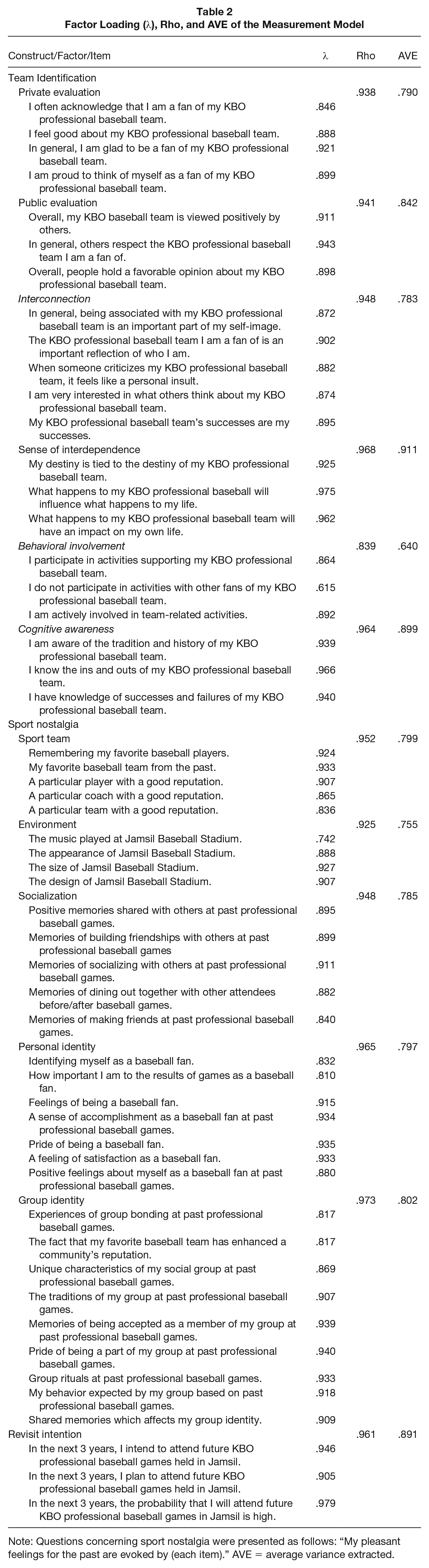
Note: Questions concerning sport nostalgia were presented as follows: “My pleasant feelings for the past are evoked by (each item).” AVE = average variance extracted.
Correlations Among All Factors
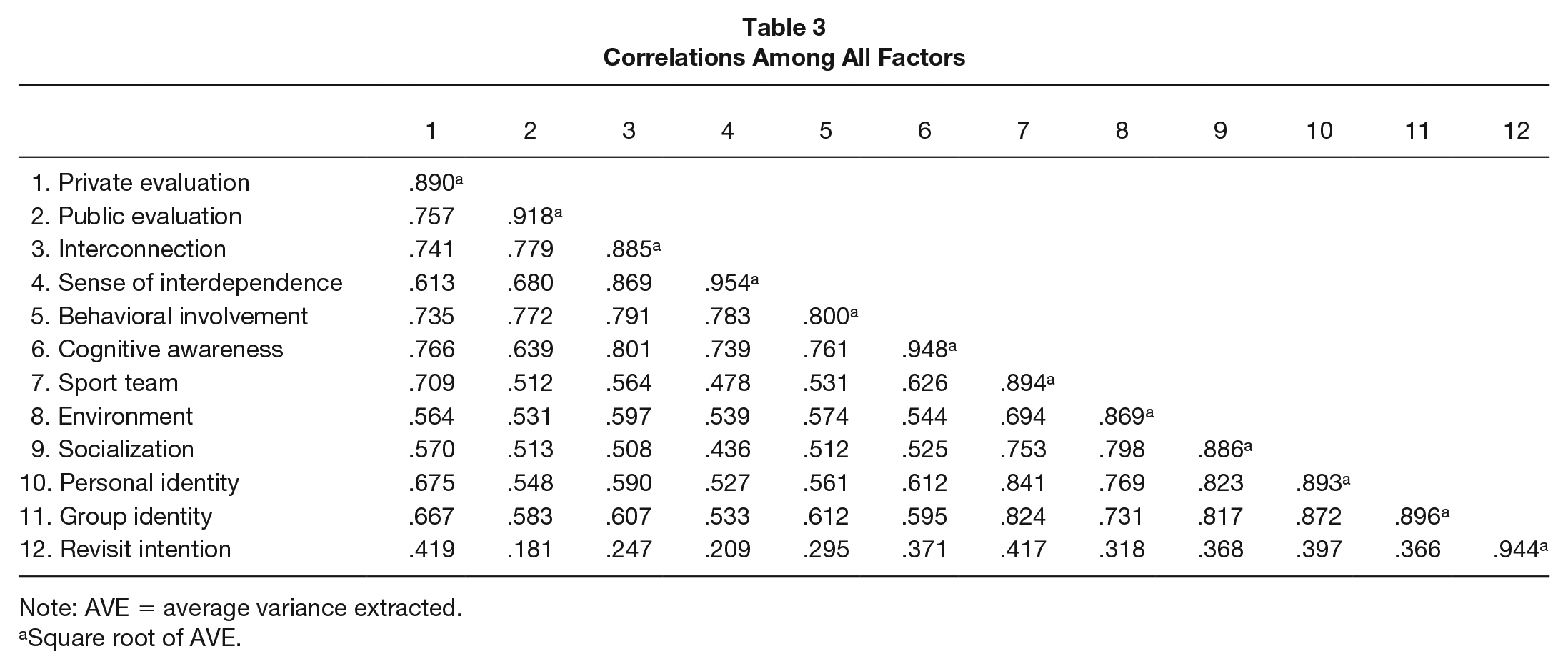
Note: AVE = average variance extracted.
Square root of AVE.
Structural Model
Using SEM, this study examined the research hypotheses concerning sport tourists’ team identification, sport nostalgia, and revisit intention. The structural model provided solid fit indices: S-B χ2( df ) = 230.982(72), comparative fit index = .956, nonnormed fit index = .944, root mean square error of approximation = .071 (90% confidence interval [.061, .082]), and standardized root mean residual = .051.
To validate the research hypotheses, this study examined z statistics (Figure 2). First, team identification had a positive effect on revisit intention. The unstandardized coefficient for the path from team identification to revisit intention was significant (β = .317, z = 2.97, p < .01), thus rejecting Hypothesis 10. Team identification also exerted a positive influence on sport nostalgia as well (β = .709, z = 13.70, p < .001; Hypothesis 20 rejected). Sport nostalgia in turn made a positive and significant impact on revisit intention (β = .357, z = 5.11, p < .001; Hypothesis 30 rejected).
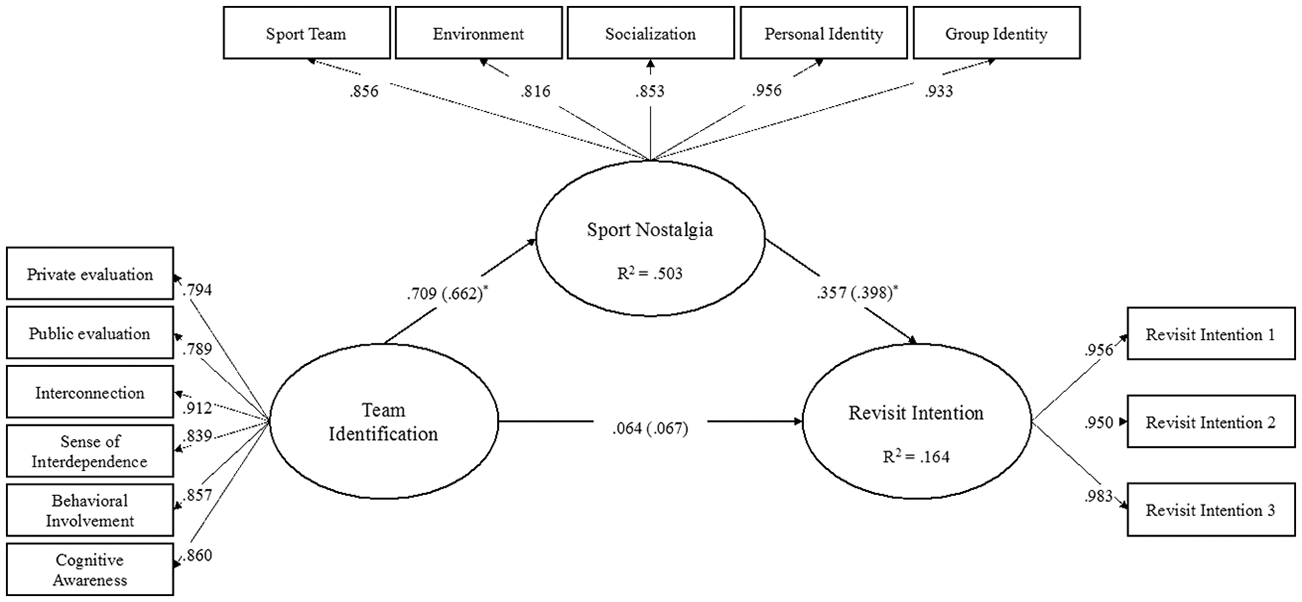
Standardized and Unstandardized Coefficients From the Structural Model
When mediation was considered, the indirect effect that team identification had on revisit intention was significant (β = .253, z = 4.73, p < .001; Hypothesis 40 rejected), but the direct path from team identification to revisit intention was not (β = .064, z = .996, p > .05). Together, these outcomes implied that sport nostalgia fully mediated the impact that team identification had on revisit intention (Table 4).
Results of Regression and Mediation Analyses in the Structural Model
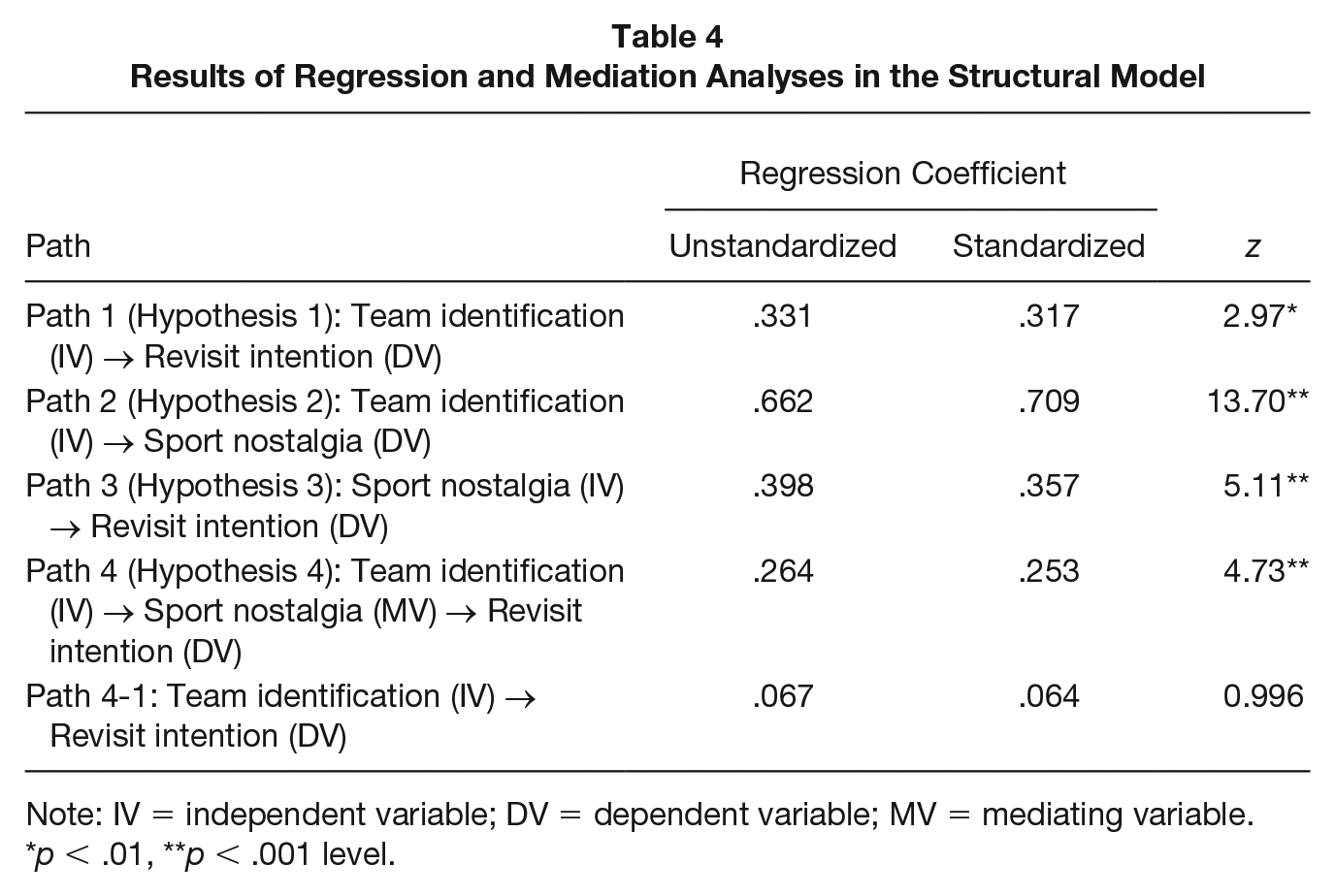
Note: IV = independent variable; DV = dependent variable; MV = mediating variable.
p < .01; **p < .001 level.
Discussion
As there has been an increasing number of sporting events and sport destinations competing against one another to ensure their share in the sport tourism market, understanding what contributes to sport tourists’ revisit intention has become a matter of great practical importance. Although team identification and sport nostalgia are often recognized as effective predictors of sport fans’ behavioral intention, their relationship with each other or their collective influence on revisit intention has hardly been discussed by scholars in the fields of sport and tourism. As such, the goal of this study was to examine the relationships between team identification, sport nostalgia, and revisit intention among sport tourists.
To begin with, the results confirmed positive relationships between team identification and revisit intention (i.e., Hypothesis 10) and between sport nostalgia and revisit intention (i.e., Hypothesis 30). The findings are consistent with previous studies connecting team identification and revisit intention (Kwon et al., 2007; Matsuoka et al., 2003; Rocha & Fleury, 2017) as well as research linking nostalgia to revisit intention (Ali, 2015; Chen & Chen, 2010; Phau et al., 2016). Examining the path coefficients, sport nostalgia (β = .357) was a better predictor of revisit intention among sport tourists than team identification (β = .317). As for the path from team identification to revisit intention, the size of path coefficient in this study is comparable to what others have reported with respect to the team identification-behavioral intention link (e.g., 0.364 from Kwon et al., 2007 or .342 from Matsuoka et al., 2003). Rocha and Fleury (2017) provided a substantially higher value (.537) for the path between team identification and attendance intention, but they considered a negative mediator (i.e., constraint) which was not the case in Kwon et al.’s (2007), Matsuoka et al.’s (2003), or this study. Unlike team identification, there is no previous research that can be referenced for sport nostalgia. Still, the tourism literature has reported much weaker ties between nostalgia and visit intention. For instance, .181 and .179 were what Ali (2015) and Phau et al. (2016) found in heritage tourism settings. As such, the relationship between sport nostalgia and revisit intention seems much more robust than what have been observed in other tourism settings, and this may allude to the ardent characteristics of sport tourists.
The second hypothesis pertained to whether team identification would significantly explain sport nostalgia; the second null hypothesis was rejected, revealing a significant and positive relationship between the constructs (β = .709). In fact, 50.3% of the variance in sport nostalgia was accounted for team identification alone, which is a substantially high value when there is only one predictor. Such a finding is in keeping with what Fairley (2003) found and Cho et al. (2014) purported in the context of sport tourism. That is, sport tourists are often those who identify strongly with their favorite sports or teams (Fairley, 2003), and by engaging in sport tourism, they are exposed to a wide range of stimuli which in turn promote their sport nostalgia (Cho et al., 2014). The behavior of traveling to follow their favorite team or sport already implies that the sport tourists have a certain degree of team identification whether it is rooted in their own experiences of the team or the influence that their close people have on them.
Finally, for team identification to bring any meaningful change to revisit intention, it first has to influence sport nostalgia which then passes the impact on to revisit intention. In other words, when the three constructs were considered simultaneously, they functioned in a sequential manner. The findings not only confirm that team identification contributes to sport nostalgia but also suggest best-fitting behavioral outcomes. Furthermore, the results validated Lazarus’ (1991, 2001) and Stryker and Burke’s (2000) theories. The major assumption of the theories is that emotion reviews cognitive outcomes (i.e., potential responses to the external stimuli) and validates the one that makes the most sense, so it can lead to actual behavior. Given the full mediation that took place, it can be said the revisit intention was validated by sport nostalgia, among many potential responses that team identification suggested.
Implications
First, this study delineated the relationship between team identification and sport nostalgia. Despite their prominence in shaping sport tourists’ preferences and cultivating active sport consumers, little has been known how the two constructs are related to one another, and the findings of this study fill the void in the sport and tourism literature. Especially, team identification is one of the unique characteristics of sport tourists that is not observed in other tourist groups and can be essential to understanding sport nostalgia and its resultant outcomes. This is already clearly reflected in the high path coefficient (β = .709) and R2 value (.503) found in this study.
Also, this study explicated the concept of team identification and its influence in examining sport tourism. Although the idea of team identification has been present in the literature concerning sport tourism (e.g., Gibson et al., 2003, Fairley, 2003), it was mostly discussed from the qualitative research perspective and was neither measured nor tested. Still the fanatic nature of sport tourists makes the concept particularly relevant to understanding sport tourists’ perceptions and behaviors as shown in this study. In addition, the findings of this study suggest similar possibilities for other tourist groups. That is, there may be a concept equivalent to team identification that is applicable to heritage tourism or event tourism. As such, the findings of this study underscore the importance of making continuous efforts to embrace and introduce newer concepts from neighboring fields and disciplines.
Finally, the findings of this study speak for the psychological properties and empirical utility of the NSST. This study furnished additional evidence for scale’s validity and reliability in a relatively novel context (i.e., baseball tourists outside the United States). Furthermore, this study made an empirical use of the NSST by applying the scale in predicting revisit intention. Such a gradual expansion to new contexts and inclusion of new variables is the path that other scales also followed. For instance, the Emotional Solidarity Scale (Woosnam & Norman, 2010) has been constantly tested in newer contexts (e.g., Joo et al., 2019; Woosnam et al., 2015) to enhance its psychometric properties and empirical utility.
For practitioners, the findings of this study underscore the importance of promoting sport nostalgia to bring sport tourists back to the same sporting events. Although team identification has been proven highly influential in encouraging sport-related consumption, sport nostalgia plays a more pivotal role when it comes to the issue of turning sport fans into sport tourists. No matter how high someone’s team identification might be, the individual is less likely to return if he or she has weak sport nostalgia. Then, the key task would be to provide sport tourists with meaningful and pleasant experiences from which sport nostalgia can grow. Even after sport tourists complete their initial visit, sport or tourism marketers may try to glamorize the experiences or memories by sending out recollective messages. Yet, at the same time, practitioners should not disregard the importance of team identification as it is a significant contributor to sport nostalgia. After all, more highly identified sport tourists are also more likely to be nostalgic.
Study Limitations and Research Suggestions
A number of limitations should be acknowledged that can help inform future research opportunities. Though the sample was adequately sized, it was arrived at using a convenience strategy. Had a more random approach been undertaken to secure the sample, a greater likelihood of representative KBO baseball teams’ fans may have resulted. Also, this study employed a quantitative approach. Hence, future studies should consider employing a qualitative approach so to deepen the understanding of the relationships tested in this study and capture the feelings and opinions that are not easily captured by numbers. Another drawback of this study was that the majority (80.3%) of the sample was in their 20s or 30s. Although such a demographic is consistent with what is often reported in similar contexts, future research should invest more effort in targeting other age groups (e.g., those in their 40s or older). Although team identification and sport nostalgia are critical antecedents of revisit intention, additional cognitive measures (e.g., satisfaction with the team and venue and destination image per Kaplanidou & Gibson, 2010) and actual emotional experiences or responses (Prayag et al., 2017) may contribute to a greater degree of variance in revisit intention. This study also did not consider potential factors related to perceived performance. For instance, future research could include perceptions of how well the team has performed (e.g., individual and team statistics) in the recent past (e.g., time horizons of last year, 5 years ago, and 10 years ago) as well as perceptions of team marketing effectiveness. Each of these constructs may help explain a further degree of revisit intention among sport tourists. Finally, it should be noted that cultural factors may play a role in how sport tourists think and behave. Certain countries are more inclined toward a specific sport which is often central to their culture (e.g., football in the United States). As such, the relationship between team identification, sport nostalgia, and revisit intention is likely to deviate from one sport to another and from one culture and another. Future research should take into consideration such cultural aspects by collecting data from diverse countries and different sports, such as cricket and basketball.
Conclusion
In the field of tourism, sport nostalgia has not been much studied, and this is the first research that examined the relationship between sport nostalgia and team identification among sport tourists. This study selected the three constructs grounded on the appraisal theory of emotion (Lazarus, 1991, 2001) and explained cognition-emotion-behavior linkages in the context of tourism. This study identified the role of sport nostalgia and provided evidence for its importance in understanding sport tourists’ future behavior. Specifically, this study found that the level of sport tourists’ team identification shaped the meanings placed on sporting events and stimulated affective and behavioral reactions to the sport events. Finally, the behavioral response (i.e., revisit intention) was found as the outcome of both cognitive (i.e., team identification) and affective (i.e., sport nostalgia) processes. However, the influence of team identification on revisit intention was fully mediated by sport nostalgia. The results suggest how the cognitive component and affective component needed to be present and work in tandem to generate the desired behavioral outcome, revisit intention among sport tourists. Moreover, the findings contribute to reconceptualizing the existing conceptual model of nostalgia (Cho et al., 2014) as team identification is an integral factor to sport consumer behavior (Wann, 2006a). Based on the findings, future research should consider measuring sport nostalgia with other constructs for a deeper and comprehensive understanding of sport tourists’ decision-making and behavior processes.
Footnotes
Authors’ Note:
The researchers acknowledge that this study was not funded by any organization.
