




Abstract
Chinese outbound tourist shopping is a prominent phenomenon in many destinations, but the mechanisms behind it have rarely been addressed. This study draws upon social practice theory to examine why shopping dominates the tourist experience of Chinese travelers in Australia. Thirty-two semistructured interviews were conducted to identify key social and consumption practices that lead to the dominance of Chinese outbound tourist shopping. The study argues that the shopping practices of Chinese tourists result from a combination of Chinese consumerism and guanxi maintenance under the condition of outbound travel. This study contributes to a holistic understanding of Chinese outbound tourist shopping by revealing how it is embedded in broader consumption practices in China.
Introduction
Shopping is a crucial part of tourism. It is one of the most common activities that tourists engage in during their travel (Timothy, 2014). In some cases, shopping functions as a factor affecting tourist destination choice (Moscardo, 2004); in others, it is the primary reason for travel (Choi et al., 2016). As such, examining tourist shopping motivations, behaviors, and experiences has become the focus of most of the existing shopping research in the tourism context (Jin et al., 2017). From the destination perspective, shopping can be used as a strategy for place branding (Sharma et al., 2018). Not surprisingly, the U.N. World Tourism Organization (2014) has recommended shopping be incorporated into tourism policy initiatives and promotion campaigns.
The prevalence of Chinese outbound tourist shopping (COTS) has also been widely recognized. Japanese media, for example, coined a new term bakugai—which translates as “explosive buying”—to describe the shopping sprees of Chinese tourists in Tokyo (Ryall, 2015). According to Tourism Research Australia (2017), “Chinese visitors love going shopping. Almost 1 million visitors went shopping for pleasure, spending AUD1.1 billion on items to take home” (p. 01). However, a review of previous research on COTS shows that academic attention has primarily focused on Hong Kong, Macao, and Taiwan, leaving COTS in Western countries poorly understood. A further examination of the available studies also reveals that, similar to tourist shopping research in general (see Jin et al., 2017), quantitative methods have dominated investigations of Chinese tourists’ shopping motivations, perceptions, and satisfactions. In this way, previous studies are to a large degree confined to addressing “what” and “how” questions related to COTS. It can be argued that there exists little, if any, tourism research that examines in depth “why” shopping dominates the tourist experience of Chinese travelers.
The present study aims to fill these research gaps by unraveling the mechanisms behind Chinese tourist shopping in Australia from a social practice perspective. Social practice theory (SPT; Reckwitz, 2002; Schatzki, 1996; Shove et al., 2012) is used as the theoretical foundation for this study. More specifically, the study is based on the “zooming out” metaphor employed by Nicolini (2012) to answer the research question: Why are the shopping practices of Chinese tourists dominant in their travel to Australia? It is expected that key practices leading to the dominance of Chinese tourist shopping would be identified. This study advances the knowledge of COTS by putting forward an explanatory framework for its mechanisms and thus provides guidelines for destinations and retail businesses to develop policies tailored to the Chinese market.
SPT and Its Applications in Tourism Research
SPT is a new theoretical perspective in the sociology of consumption that promises an alternative to models of both individual choice and cultural expressivism (Warde, 2015). SPT is not a unified theory (see, Nicolini, 2012), but a collection of accounts about the workings of social life that center on social practices. Reckwitz (2002) defined social practice as a routinized type of behaviour which consists of several elements, interconnected to each other: forms of bodily activities, forms of mental activities, “things” and their use, a background knowledge in the form of understanding, know-how, states of emotion and motivational knowledge. (p. 249)
These elements were later conceptualized by Shove et al. (2012) as materials, competences, and meanings. Based on the extensive work of Schatzki (1996), Reckwitz (2002), Warde (2005), and Shove et al. (2012), it can be seen that practice theorists treat social practices as the basic units of analysis, whereas individuals are decentralized as carriers of the practices. SPT situates the social in practices, which is fundamentally different to both individualistic and holistic views. SPT in this way offers a middle path to reinterpret the relationship between agency and structure. The dynamic processes of social change thus need to be understood through social practices, including the range of elements in circulation, the careers and trajectories of practices, and the connections between practices (Shove et al., 2012).
Nicolini (2012) used a zooming metaphor to illustrate how to examine social practices: zooming in on the accomplishments of practices, and then zooming out of practices to the wider social picture. The first focus is on how to capture and convey the elements that constitute practices, the trajectories of practices, and how practices are performed. Empirical studies in this vein often build on a social practice framework to obtain detailed insights into the practice under scrutiny, such as co-shopping of parents and children (Keller & Ruus, 2014). As the primary focus is on practices per se, these investigations challenge the (over)emphasis on individual attitudes and behaviors dominant in the psychological and marketing approaches. The “zooming out” focuses on uncovering the connections between practices and understanding how practices are connected to, and embedded in, extensive networks of practices. One case in point is Gram-Hanssen’s (2011) study where relationships between three practices (indoor climate regulation, standby consumption, and computer use) were analyzed for understanding household energy consumption. As Nicolini (2012) put it, all practices involve a variety of relationships and associations that extend in both space and time, and form an intricate texture of dependencies and references. To understand the relationships that exist in time and space among practices is of particular relevance for unraveling institutional changes in contemporary societies (Lamers et al., 2017).
SPT has been adopted in tourism research in two strands. First, SPT has been employed to (re)theorize tourism in general (de Souza Bispo, 2016; Lamers et al., 2017). de Souza Bispo (2016) attempted to rethink tourism ontology from a practice perspective by introducing the notion of “tourism as practice.” However, despite the rejection of dualisms (e.g., home and away) in tourism knowledge, de Souza Bispo (2016) presented the notion of “tourism as practice” in a fragmented manner without providing a relevant analytical framework. Further, a mixed group of theoretical approaches, such as mobility and performativity, was subsumed under the umbrella of SPT leaving the relevance of SPT for tourism research neither concise nor clear. In contrast, Lamers et al. (2017) offered a more comprehensive review of SPT, its core concepts and propositions, and used expedition cruising as an example to illustrate the implications of SPT for tourism research. It was argued that theorizing tourism via SPT could deepen our understanding of conventional tourist behaviors, and could also provide a more sophisticated starting point for tourism management and governance (Lamers et al., 2017).
Second, SPT has been applied to a rising number of empirical studies in tourism (James et al., 2018). These applications do not follow a single template, with different tourism researchers having utilized SPT in context-specific ways. Some researchers have shed new light on established tourism topics from a social practice perspective. Iaquinto (2015), for example, used the notion of everyday practices to discern how sustainability is (not) performed by backpackers. It was found that backpackers perform a range of practices in regards to economic, social, and environmental sustainability without intention and, compared with home, backpacking provides opportunities for the performance of more sustainable practices (Iaquinto, 2015). Some neglected areas, such as sleep in tourism (Rantala & Valtonen, 2014) and the forest (Rantala, 2010) as tourism environments, have also been added into the domain of tourism research under the auspices of SPT. As argued by Rantala and Valtonen (2014) in the analysis of tourist sleeping practices, the emphasis of SPT on embodied and routine social doings helps broaden the scope of analysis in tourism inquiry. In general, it is suggested that SPT could offer a fresh way of understanding touristic phenomena that is distinct from, and often alternative to, traditional approaches.
Despite the rise of applications of SPT in tourism research, a further examination of these applications reveals room for improvement. Most of the existing empirical studies only employed the notion of social practice, without much reference to the analytical frameworks contained in SPT. For instance, the scheme developed by Shove et al. (2012) and utilized to examine the constitution of a wide range of social practices, has rarely been used in tourism investigations. In other words, tourism researchers have not zoomed in close enough to analyze the elements that consist of the practices under consideration. It can also be argued that, to a large extent, the empirical studies tend to identify and describe the features of tourism practices. These applications can enrich our understanding of the existence of specific practices, but cannot provide much information on why the practices exist as the way they are. More research thus needs to be conducted by following the “zooming out” movement (Nicolini, 2012) to examine the mechanisms behind tourism practices in broader practice networks. The present study attempts to achieve this by locating Chinese tourist shopping practices within consumption practices in China.
Consumption Practices in China
China (referring to the People’s Republic of China) has transformed from an ascetic to a consumer society since its establishment in 1949 (Wang, 2009a). Under the leadership of Mao Zedong, the state controlled nearly all aspects of what people consumed in order to concentrate efforts on developing heavy industry (Wang, 2009b). The consumption patterns of Chinese people at that time were largely molded by egalitarianism, frugality and antibourgeoisie lifestyles, with these ideologies being considered as necessary in the course of socialist construction (Zhang, 2017). After launching the reform and opening-up policy in 1978, China underwent a consumer revolution (Davis, 2000). Consumerism was no longer contrary to the dominant political ideology (Zhao & Belk, 2008), and was viewed as an engine for both economic growth and social stability (Yu, 2014). Especially after the 2008 financial crisis, the stimulation of consumption was used by the Chinese government as a main approach to boost domestic demand. The World Economic Forum (2018) predicts that China will transition to a consumption-driven development model, and will continue to be the largest contributor to the growth of global consumption.
Shopping, as a key form of consumption, embodies China as a consumer society. According to Smith (2017), China is the most active market across the globe for shopping mall development. Spending time in shopping malls, which combine shopping, dining, and entertainment experiences, has become a significant type of leisure in China (Yu, 2014). In the words of Ritzer (2010), these malls function as “cathedrals of consumption” that enchant and entice Chinese people to consume for salvation. Besides the brick-and-mortar spaces of consumption, e-commerce websites have been popular online spaces where Chinese people release their shopping enthusiasm. In 2018, Alibaba, one of the biggest Chinese e-commerce companies, sold USD30.8 billion worth of merchandise during the 24-hour Double Eleven shopping festival, which is 20% higher than that in 2017 (Lavin, 2018). In accordance with Baudrillard (1998), exuberant celebrations of consumption indicate that the “drive to buy” has been liberated in China.
Chinese people, especially urban Chinese, have adopted materialist behaviors similar to their Western counterparts. For instance, China leads in global luxury consumption, generating significant demand for brands in every segment (Horton, 2016). As Zhu et al. (2016) pointed out, the modernization of China began in the mid-19th century with an increased desire to learn about the Western advanced goods and technologies. Western commodities are commonly perceived by Chinese people as prestigious and modern (Hulme, 2014). Ownership of these commodities represents desired tastes and lifestyles (Podoshen et al., 2011). The rampancy of counterfeit and substandard products in China, as the contaminated baby formula exposed in 2008, has also triggered a nationwide crisis of trust (Hanser, 2010). Chinese customers hold skeptical attitudes toward domestically made commodities, whereas they show admiration for, and trust in, the versions produced in developed countries.
Consumption practices in China cannot, however, be divorced from traditional Chinese culture and values. It has been found that brand meanings in China are socially constructed among important others, rather than created at the individual level (Eckhardt & Bengtsson, 2015). Similarly, Zhan and He (2012) found that Chinese middle-class consumers perceive luxury brands as highly valuable possessions and pursue these brands primarily to conform to the social expectations of reference groups. Further, it cannot be taken for granted that Chinese people consume brands just for themselves. To a large extent Chinese society is guanxi (relationship) based, where interactions between people, in either business activities or personal lives, are commonly conducted in the form of renqing (asking for and returning favors) achieved through gifts (Yang, 1994). Accordingly, it is not uncommon to see that in China the socially recognized brands are purchased as gifts to build or maintain guanxi rather than for identity display.
Overall, consumerism has become a new ideology in China influenced by its political system (Eckhardt, 2016). The consumer revolution in China is not just a replication of the Western consumer culture (Davis, 2000), but the outcome of rapid transformations in Chinese economic, social, and technological structures (Yu, 2014). As Zhang (2017) stated, Chinese consumers choose certain values from their cultural repertoire—which contains both Western and traditional Chinese values—to legitimize their consumption practices. COTS, as a noticeable practice, reflects this new consumer culture and is embedded in the sociocultural contexts in contemporary China. Inspired by the “zooming out” movement proposed by Nicolini (2012), the present study locates COTS in the extensive networks of consumption practices in China to examine why the shopping practices of Chinese tourists are dominant in their travel to Australia. More specifically, this study aims to
identify the major social and consumption practices that affect the shopping practices of Chinese tourists
reveal how the identified practices contribute to the dominance of Chinese tourist shopping practices
Method
This study takes a qualitative approach to gather an in-depth understanding of Chinese tourist shopping practices in Australia. Semistructured interviewing was considered suitable as the data collection method as it allows researchers to ask open-ended questions with the flexibility to explore particular response further (Bryman, 2016). Thematic analysis was then employed to analyze the collected interview data in order to identify themes within them (Braun & Clarke, 2006). The processes of data collection and analysis are presented in detail as follows.
Data Collection
The semistructured interviews were conducted by the first author who is from China. He employed a purposive sampling method (Bryman, 2016) to select participants with three criteria. The first criterion was about where to sample. According to Tourism Australia (2017), the major provinces and municipalities of residence of Chinese visitors to Australia include Shanghai, Beijing, Guangdong, Jiangsu, Zhejiang, and Shandong. These places were considered as priority regions from which to recruit participants. Second, Chinese citizens who have traveled to Australia at any time since January 2015 were treated as the target group. This inclusion criterion was used to get up-to-date information on Chinese tourist shopping practices. Moreover, when sampling, maximum variation was utilized as a principle to ensure the heterogeneity in the participants. For example, demographic characteristics, such as age and gender, and mode of travel (independent travel or group tour) were used to make sure the participants covered a mix of Chinese tourists.
The sampling process started by using social networks to look for participants who met the three criteria. Specifically, the first author introduced this study to his friends via WeChat (the most popular social networking app in China) and asked them to recommend potential participants. Then the recommended people were contacted by the author through WeChat with an electronic version of information sheet being provided. After confirming their willingness to be involved in this study, the author discussed with the participants when and how (e.g., face-to-face, phone call) to carry out interviews. The author traveled to five cities in China—Beijing, Shanghai, Hangzhou (the capital city of Zhejiang province), Jinan (the capital city of Shandong province) and Xi’an (the capital city of Shaanxi province)—for data collection. If the participants were from these cities, the interviews were mostly conducted face to face. Meanwhile, phone interviews were arranged for the participants from other locations such as Guangzhou (the capital city of Guangdong province). In all cases, informed consent was obtained prior to the start of the interviews.
Each semistructured interview consisted of two main parts. In the first part, general information on participants’ travel to Australia, such as the time and purpose of their travel, was collected to establish rapport with them. The second part began by asking the participants more detailed questions focusing on their shopping practices in Australia. For example, the participants were requested to provide examples of the products they bought and to tell the researcher why they bought these products and for whom. Also, photo-elicitation was employed as a supplementary method to ground the researcher’s interview questions and to stimulate the participants to remember products that they purchased but might otherwise have forgotten (Bryman, 2016). The photos used in this study included images of products that Chinese tourists favor in Australia, such as lanolin cream and fish oil, and images that show the great volume of products they purchase (Jin et al., 2020).
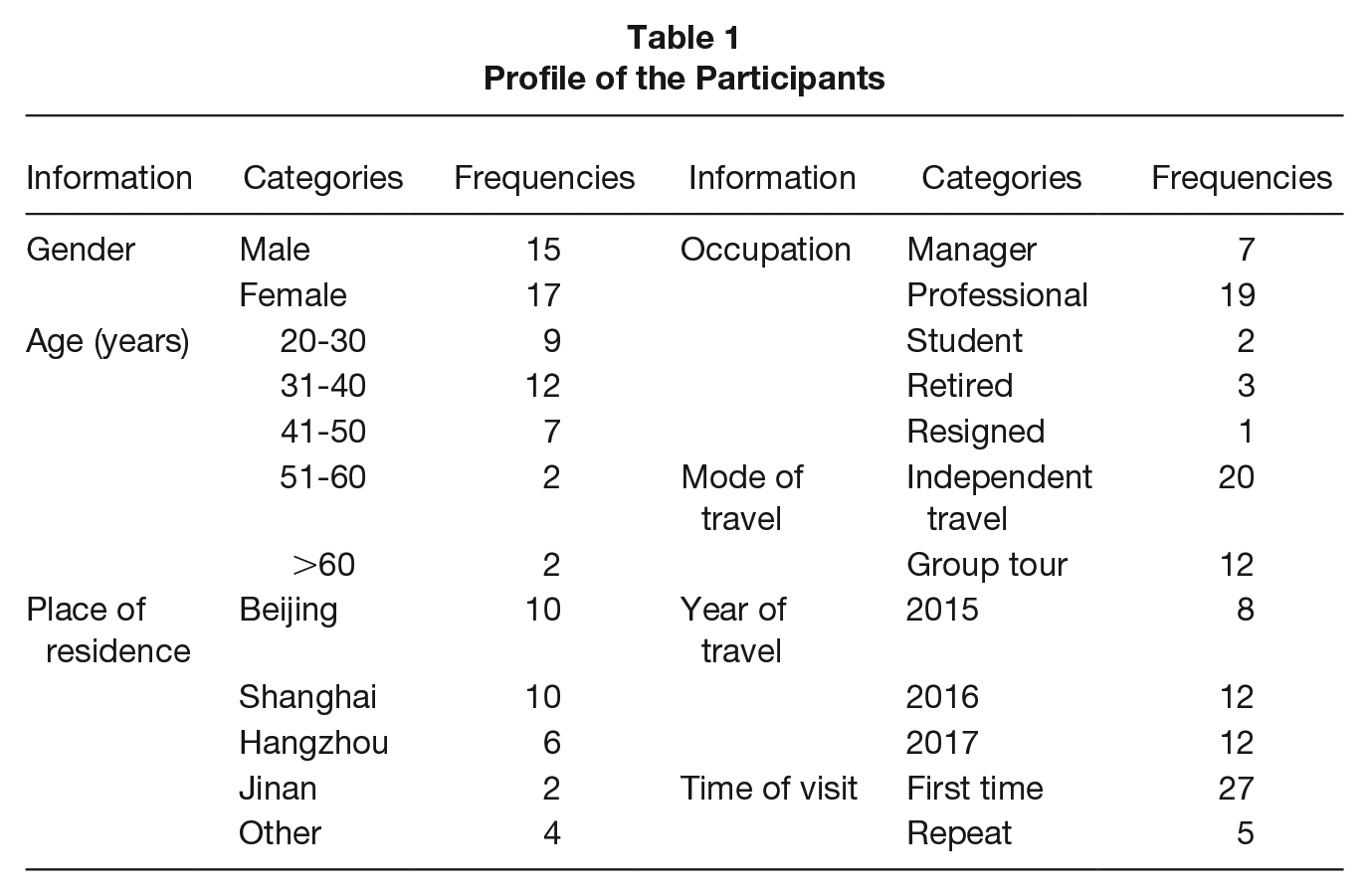
A total of 32 semistructured interviews were conducted during a 22-day field trip in China in May 2017. These interviews lasted from 35 minutes to 1 hour and 10 minutes with an average length of 49 minutes. The profile of participants, who were coded from I-01 to I-32, is presented in Table 1. As can be seen, the sample covers a heterogeneous group of Chinese tourists with respect to both demographic characteristics (gender, age, occupation, and geographic location) and travel type (mode of travel and time of visit). It should be noted that the sample size in this study was not set in advance. The researcher continued interviews until he found that no new information was generated. It was therefore concluded that data saturation (Bryman, 2016) had been reached with the 32 interviews and further data collection was not needed.
Profile of the Participants
Data Analysis
The data analysis in this study was conducted by following Braun and Clarke’s (2006) guide to performing thematic analysis. First, the interview data were transcribed verbatim into written form and the first author familiarized himself with the data by repeatedly reading the transcripts and noting down initial ideas. Then, the data were imported into, and coded in, NVivo 11. In this phase, the author used the coding stripes in NVivo to check the areas of text that had been coded and the codes applied to them. After identifying and collating codes, the author started to sort them into different levels of themes. The codes were organized in a hierarchical manner in NVivo. A thematic map was also used to visually present the relationships between the codes and themes. Then the candidate themes were reviewed and refined based on two criteria—internal homogeneity and external heterogeneity (Patton, 2002). Finally, a complete thematic map was generated with accompanying data extracts demonstrating relevant themes.
It should be noted that despite the phases described above, the data analysis in this study was a recursive rather than linear process. To enhance the reliability of coding, the first author checked the codes back and forth by testing them against other passages in the same text or against other texts. Regular meetings with other authors were also conducted to discuss the hierarchy of codes to ensure that it reflects the meanings evident in the data. In addition, all the interview transcripts were originally written in Chinese. Whenever quoted, the contents were first translated from Chinese to English by the first author and then back translated by a translator fluent in both Chinese and English (Chen & Boore, 2010). The English version of quotes was reached by agreement between the researcher and the translator.
Findings
The thematic analysis of responses identified three key practices that affect the shopping practices of Chinese tourists in Australia: Chinese consumerism, guanxi maintenance, and outbound travel. Chinese consumerism can be defined as a way of life in which Chinese tourists are preoccupied with the desire to consume. Guanxi maintenance comprises the activities in which Chinese tourists engage to maintain or consolidate social relationships. Outbound travel here refers to the travel of Chinese people outside Mainland China. How these practices lead to the dominance of Chinese tourist shopping practices in Australia is discussed in detail next.
Chinese Consumerism: Western Brands and High Quality
This study found that the participants bought a large variety of utilitarian products for themselves, including clothing, accessories, health-care products, cosmetics, and food and drinks. Chinese consumerism is primarily reflected in the description of the purchase and use of these products. Two key features of Chinese consumerism can be identified through the interviews. The first one is the desire for Western brands. For example, when I-32 talked about handbags, she said, I use MK [Michal Kors]. Can I afford to buy brands like LV [Louis Vuitton], Gucci and Prada? Yes, I can. But I think it is not necessary [to buy them], because your salary, that is, your income, is there. It actually does not match them, but match brands such as MK and Coach.
Later, I-32 further stressed, What is the purpose to use brands? You want to match your identity. [You use brands] not to raise your identity, at least to match your identity and income. However, there are not these kinds of domestic brands that can either raise or match your identity. There indeed are not!
Like I-32, most of the participants referred to Western brands to express their social affiliation and identity. They rarely associated themselves with domestic brands, but could list, and comment on, different levels of Western brands without much hesitation, and describe which level matches them. It can be argued that this group of Chinese people is accustomed to using Western brands, or even luxury brands, and these brands are integrated into their daily life. Their consumption practices are heavily influenced by Western aesthetics and values, with Western brands generally being perceived as advanced, reliable, and prestigious. At the same time, they attach great importance to possessing these brands to signify their identity, taste, and quality of life.
The second feature of Chinese consumerism is the pursuit of high-quality products. High quality is a fundamental reason why the participants purchased Australian products, especially food, drinks, and health-care products. Products in Australia are commonly associated with safety, authenticity, and trustworthiness. On the contrary, the participants described the counterparts made in China as low quality, unsafe, and untrustworthy. For instance, I-16 perceived the fish oil capsules he bought in Australia as “good,” “authentic,” “pure natural,” and “reliable.” He had never used Chinese-produced fish oil capsules and explained, I think maybe they are fake. Maybe they are not safe. I think the raw materials that are used to make them could have been polluted. The fish oil capsules must be made of fish oil. I think the fish could be polluted, artificially reared or injected with hormones. So [I] do not trust them.
To a large extent I-16’s suspicion and distrust of Chinese-made fish oil capsules is caused by series of food safety incidents that occurred in China over the last two decades. One of the worst incidents is the 2008 Chinese milk scandal, which was frequently mentioned by the participants to express their concern over the quality of Chinese-made food. Some participants even treated this scandal as the beginning of their distrust of products made in China in general. As Yan (2012) argued, food safety problems have not only triggered a nationwide panic about the quality of Chinese-made food but also led to a wider social trust crisis in China. Meanwhile, severe environmental pollution in China further aggravates the insecurity that the participants felt in consuming Chinese-made products. As explained by I-28, “You constantly see and hear about such poor air quality and such poor water quality. How could you be confident to trust the products that are made in such an environment?”
It can be argued that there exists a tension between the participants’ demand for consumerism and the relevant supply in China. Participants desire Western brands but if available, these brands are much more expensive in China compared with other places around the world. At the same time, some products made in China do not meet the needs of participants for high quality. Accordingly, the consumption of the participants to some extent is restricted in China, even though they have strong purchasing power. This tension can be reduced when the participants shop while traveling in Australia. Both the Western brands and perceived high-quality products in Australia that the participants demand are much cheaper than in China. Under these circumstances, the focus of the participants is less on how much a product costs, but more on how much they would save if they purchase the product in Australia instead of China. “To shop is to save” becomes the logic of their actions. This is why the participants commonly said that they would have lost if they did not shop while traveling. Australia, as their travel destination, functions as a new consumption space where the participants’ demand for consumerism can be satisfied or further stimulated.
Guanxi Maintenance: Gift Buying and Request Shopping
The participants not only purchased products for themselves as discussed above but also shopped for others at home. The latter can be further divided into two types of shopping practices: gift buying and request shopping. Gift buying means that the participants voluntarily bought products at their own expense as gifts for others, whereas request shopping connotes that the participants acted as shopping agents to purchase specific products at the request of others who paid the participants the cost of the purchases. Despite this difference, both shopping practices were carried out as a way of guanxi maintenance.
The participants generally provided a long list of people for whom they bought gifts. The recipients of gifts include family, friends, colleagues, classmates, and so on. Compared with Western tourists (see Wilkins, 2011), it can be argued that the participants bought gifts for a much wider range of people at home. Also, the family here incorporates both nuclear family members and other extended family members. For example, besides his wife and daughter, I-20 bought gifts for his parents, parents-in-law, his brother, sister-in-law, and also several cousins. All these family members, together with close friends and colleagues, constitute the core of I-20’s guanxi networks. He described, “I spend around three to five thousand RMB on big/little gifts every time I travel abroad. Inevitable! Just on gifts!” Given the long list of gift recipients, it is understandable why I-20 spends such an amount of money on gift buying while traveling abroad. As Mok and Defranco (2000) stated, Chinese people are collectivistic with a predominant emphasis on social relationships. Although the participants were temporarily away when traveling in Australia, they perceived themselves as part of guanxi networks. Bringing back gifts serves as the passport for re-entering social groups after having been away (Pearce et al., 2013). It is arguably an unwritten social convention in Chinese society that people who travel abroad purchase gifts for significant others at home. If the participants do not do so, it would be deemed as inappropriate or unacceptable. For instance, I-28, who traveled to Australia with three colleagues, commented, I went to Australia leaving my husband and daughter behind. If I only enjoyed the scenery and took photos, but did not buy anything back home, you would not think that is acceptable. For me, these products I bought [gifts for family and friends] are equally important as the scenery I saw.
Meanwhile, the participants purchased a wide range of products as gifts, including health-care products, food and drinks, cosmetics, clothing and accessories, souvenirs, and so forth. It can be noted that souvenirs comprise only a small part of the gifts purchased, with most of them belonging to utilitarian product categories. This is very different from Western tourists who typically only purchase souvenirs as gifts (see Kim & Littrell, 2001). More specifically, the participants mainly used two criteria—importance and appropriateness—to decide which products they would purchase for whom. Importance is a measure of the degree to which a gift recipient is important to the participants in their guanxi networks. The importance here is based not just on blood ties (e.g., family members) but also on social (e.g., friends) and occupational (e.g., work colleagues) relations. Appropriateness is used to decide whether a product is appropriate for the gift recipient. I-21 bought Penfolds wine for his father-in-law and lanolin cream/papaw ointment for his friends and colleagues explaining, He [I-21’s father-in-law] likes drinking. I bought two bottles that are relatively good. Such good wine may not be available at home. Even if there are good wines [at home], they are not as tasty as these [Penfolds wines]. Just let him have a taste. The prices of these [lanolin cream and papaw ointment] are good. They are specialties and well known. I think, in Australia, things like papaw ointment are particularly appropriate gifts for friends and colleagues.
Like I-21, most of the participants selected gifts for immediate family members based on what the family members like or need. The gifts that the participants gave to general friends and colleagues, however, are chosen with consideration of multiple factors such as price, utility, and Australian characteristics. In general, gift price is a clear manifestation of how important a recipient is to the participants in guanxi networks and a chief consideration in deciding whether the gift is appropriate for the recipient. The more important the guanxi between gift recipients and the participants is, the greater amount of money participants would like to spend on gift buying.
Compared with gift recipients, a smaller group of people at home requested the participants to shop for specific products. These people mainly include extended family members, friends, and colleagues. Again, in comparison with the gifts stated above, the requesters only asked the participants to purchase Western brands and utilitarian products, including health-care products, food and drinks, cosmetics, and clothing and accessories. These products are either not available in China or much more expensive in China as compared with Australia. The requesters thus could save money and get the products they want by asking the participants for a favor. Further, the requesters trust the authenticity of the products purchased in Australia, which is a big concern if they buy the same products in China. As exemplified by I-02, who was requested to buy A2 baby formula for her former teacher: There are more counterfeit products at home [compared to abroad]. It was said before that some people recycled the baby formula tins and then made counterfeit baby formula in Foshan [a city in China]. So many mums at home say, “The baby formula you bring back for me from abroad is authentic.”
From the perspective of participants, their responses to the requests largely depend on the importance of guanxi and the size and weight of the target products. If a requester is within the social circle of close friends and colleagues and the target products are small and light, the participants were happy to grant the favor. The request is deemed as normal and as a chance to maintain or even enhance friendship. The participants grant a favor to the requester on this occasion, and similarly, may ask for a favor from the requester on other occasions. However, it is unlikely that the participants would refuse directly, even if a requester is outside the social circle of important guanxi or the target products are too large or heavy. To refuse the requester means that the participants break guanxi. This action is not sensible because guanxi functions as a cornerstone of Chinese society (Gold et al., 2002). As illuminated by I-27, Guanxi is involved in everything in China. You do not want to freely break any guanxi. This is why you would not refuse with ease if someone requests you to buy things. Even if you think these things are too many for you to carry, you would negotiate [with the requesters] whether you could buy less. But you would not directly refuse to buy. Because you do not want to break guanxi, even though it is not important guanxi.
It can be claimed that outbound travel has become a social occasion where the participants shop to maintain or even extend guanxi either by way of gift buying or request shopping. According to Tourism Australia (2018), there were 1.36 million Chinese visitors coming to Australia in 2017. It should be noted that these people only make up a small fraction of the total population in China, given its large population base. That is to say, the participants in this study are very likely to get access to various products, which are new to and/or meet the demands of many significant others at home who have not traveled to Australia. Furthermore, with limited baggage allowance, the products that the participants brought back from long-haul destinations like Australia count regardless of their actual monetary worth. These factors largely add the value of these products as the material carriers of guanxi maintenance. As Gold et al. (2002) maintained, the notion of reciprocal obligation and indebtedness is central to the system of guanxi in China. Whenever a gift or favor is accepted, there is the obligation to reciprocate (Yang, 1994). The participants are gift givers or grant favors on this occasion. Similarly, they receive gifts or ask for favors on other occasions. Outbound travel as a social occasion is integrated into the participants’ guanxi maintenance in daily life.
The Interplay Between Chinese Consumerism and Guanxi Maintenance
Chinese consumerism and guanxi maintenance not only contribute to the prevalence of the participants’ shopping practices separately but also interact with each other. The interplay between them is primarily reflected in two aspects. First, Chinese consumerism provides a direction for product selection in guanxi maintenance. Chinese consumerism is not confined to the participants, but is generally shared by their guanxi networks. For example, I-28 bought a Hugo Boss belt and a Lacoste shirt for her husband as gifts because her husband likes these brands and is used to wearing these brands. Furthermore, I-28 could get these brands at much cheaper prices in Australia in comparison with China, which makes it worth her while to bring them back home as gifts. This logic is also applicable to the gift purchase for I-28’s other immediate family members. During the interview, I-28 showed the researcher a photo on her phone, which vividly depicts the sizes of different clothes for her husband, daughter, and parents (Figure 1). Once seeing desired brands, she used this photo as well as a measuring tape to select the suitable sizes of clothes for her family. Although these brands per se are not necessarily connected to Australia, the recipients’ desire for them and their attractive prices in Australia make them appropriate gifts for beloved ones at home in I-28’s case.
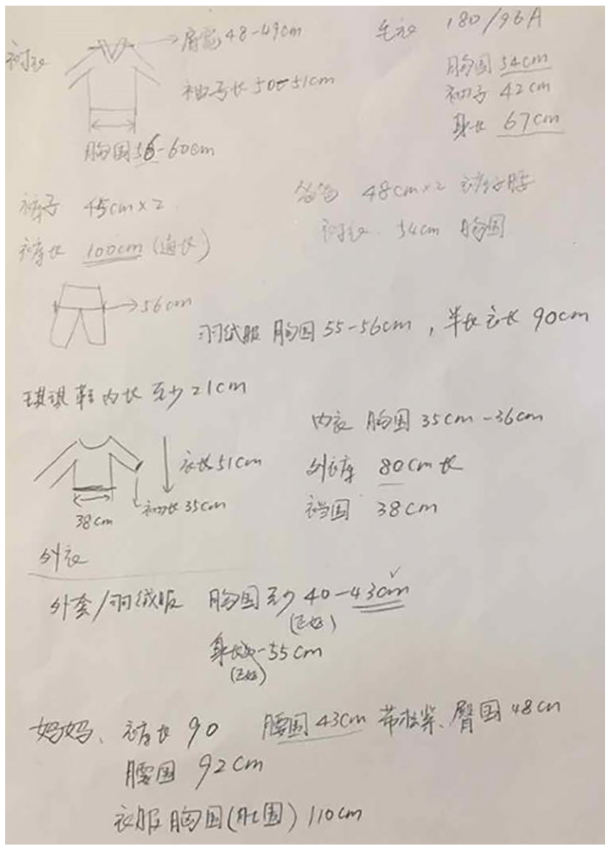
A Photo on I-28’s Phone Used for Selecting Clothes for Family Members
Second, guanxi maintenance can further stimulate the participants’ demand for consumerism. I-04, for instance, bought Blackmores vitamin E cream and clarified, One of my college classmates sent me a photo [of it] before I went [to Australia]. She told me, “It is said that this product is very popular in Australia.” I responded, “Really? I would have a look then”. As a result, I bought many tubes. Three for myself and five for her.
In this case, I-04 was originally requested to purchase the cream for her classmate. This request became an information source from which I-04 learnt about a new product that was not on her shopping list. The purchase of the cream for herself is derived from the task to buy it on behalf of her classmate. Given its tension with relevant supply in China, the participants’ demand for consumerism becomes very active when traveling in Australia. Guanxi maintenance, either gift buying or shopping on requests, presents an additional chance to know more products, which are likely to meet the participants’ demand. In a sense, the interest of the participants to purchase some products is not directly created by marketing communications from businesses, but is stimulated by the need to maintain guanxi as a social convention in Chinese society.
Outbound Travel: A Golden Opportunity for Shopping
Outbound travel, for most Chinese tourists, remains an activity with low frequency. According to a study conducted by China Tourism Academy (2017), 52.5% of the surveyed tourists reported that it was their first time to travel abroad (including Hong Kong, Macau, and Taiwan). It can be expected that the frequency of Chinese tourists to the same long-haul destinations such as Australia could be much lower. As I-29 commented, “I am not like people who do business in Australia; they often travel there. I guess, if there is no special reason, I would not travel there in the following five or even ten years.” The low-frequency nature of travel to Australia encourages the participants to take full advantage of the trip for shopping. It is noticeable that their purchase of some products was not only to meet current needs but also for future use. For instance, I-13 bought Clarins cosmetics and explained, I have got used to this brand. I buy [Clarins cosmetics] anyway. Even if I do not travel abroad, I would buy them at home when they are on sale on May Day or National Day. But I happened to be abroad, so I stocked up on the cosmetics for the whole year. Plus, they were cheaper [in Australia than in China].
It can be said that outbound travel to Australia functions as a golden opportunity for the participants to shop. Australia as a consumption space meets their requirements for high-quality Western brands with lower prices in comparison to China. The participants make the most of their travel as an opportunity to shop, although shopping is rarely seen as a major purpose of it (cf. Choi et al., 2016). Australia as a long-haul destination is not a place where the participants are able to travel whenever they wish. Rather, their travel to Australia involves preparation, planning, and coordination beforehand, in both life and work. The participants commonly reported that they shopped for more than what they needed at the point of purchase. As exemplified by I-13, the participants’ shopping practices to some extent are future-oriented. Since they would want Western brands after returning to China, the participants chose in advance to purchase those products at a lower price while traveling in Australia. In other words, given the low frequency of outbound travel to Australia, the participants incorporated the notion of forward planning into their shopping practices in the destination.
Meanwhile, the destination image of Australia in terms of shopping affects the participants’ product selection behind the prevalence of their shopping practices. As a whole, Australia is perceived by the participants as a destination that provides a reliable shopping environment. For example, There are no fakes in Australia. So we, from psychological aspect, can shop with peace of mind. Say, if you find an item you bought is fake, the seller would face heavy fines or something like that. The regulation in Australia is stricter [than that in China]. (I-24)
When shopping in Australia, they do not worry about whether their target products are fake or substandard. This positive image lays the foundation for the participants to engage in shopping practices. More specifically, Australia is frequently perceived as a representation of high-quality health-care products, wool-related products, and milk powder/baby formula. These products are synonymous with Australian specialties and are commonly purchased by the participants for both self-use and guanxi maintenance.
A typical example is lanolin cream. Lanolin cream is described by the participants as characteristically Australian, cheap, small (easy to carry), and suitable for everyone. This product is repeatedly seen as one of the must-buys in Australia and is also widely circulated in the participants’ guanxi networks as gifts. As I-25 mentioned, “All those who travelled to Australia gave lanolin cream as gifts after they came back. Anyway, I had received two before I travelled there.” The must-buys in Australia like lanolin cream can be construed as part of a “circle of representation” (Jenkins, 2003, p. 305), through which the destination image of Australia regarding shopping is (re)produced. These products, though different from conventional souvenirs, are captured as compelling evidence of the participants’ travel to Australia. The purchase of these particular products by participants was influenced by the products circulating among people in their guanxi networks who had traveled to Australia, and, in turn, affects the product selection of others who would visit Australia.
Discussion
The present study, inspired by SPT (Reckwitz, 2002; Schatzki, 1996; Shove et al., 2012), aims to reveal why the shopping practices of Chinese tourists are dominant in their travel to Australia. It argues that Chinese tourist shopping practices result from a combination of Chinese consumerism and guanxi maintenance under the condition of outbound travel (Figure 2). Outbound travel is a conditional practice, because the shopping practices of Chinese tourists exist only if their outbound travel occurs. As an activity with low frequency, Chinese outbound travel also functions as a golden opportunity for shopping, which is closely related to Chinese consumerism and guanxi maintenance.
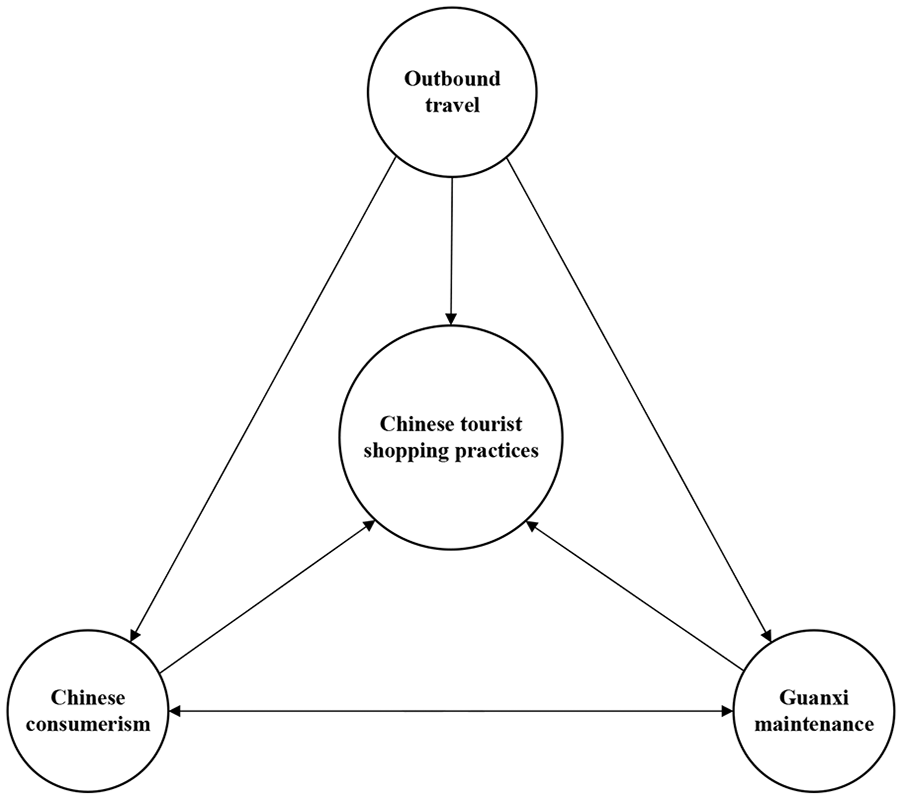
The Mechanisms Behind Chinese Tourist Shopping Practices
Chinese consumerism is shaped by global consumer culture and the modernization of China and can be construed as a modern practice featuring desire for Western brands and pursuit of high quality. Nevertheless, Chinese tourists’ demand for consumerism is not matched by relevant supply in China, because Western brands and/or high-quality products are either much more expensive or not available in China in comparison to other countries. Outbound travel provides Chinese tourists new consumption spaces where their demand for consumerism can be met and further stimulated.
Meanwhile, Chinese tourists shop not only for themselves but also for maintaining guanxi through gift buying and request shopping. Guanxi maintenance is a traditional and group-oriented practice in Chinese society. Although outbound travel means temporary absence from guanxi networks at home, the emphasis of Chinese tourists on guanxi maintenance continues. The products that are brought back by Chinese tourists, either as gifts or as per requests, function as material carriers of guanxi maintenance. Outbound travel becomes a social occasion that is integrated into Chinese tourists’ guanxi maintenance in daily life. Chinese consumerism provides a direction for product selection in guanxi maintenance, and interactively, guanxi maintenance can arouse Chinese tourists’ demand for consumerism. Furthermore, the low frequency of outbound travel, especially to long-haul destinations like Australia, makes Chinese tourists shop not only to meet their current needs but also for future use. The destination of outbound travel couples with particular products that circulate among Chinese tourists constituting a circle of representation.
Theoretical Implications
This study advances the knowledge of COTS by unraveling its mechanisms from a social practice perspective. Although researchers have gained insights into COTS (Jin et al., 2020), most of the existing research can be described as “descriptive marketing studies” (Zhu et al., 2016, p. 293). These studies provided recommendations to destinations on how to attract the attention of Chinese outbound tourists to shop, but did not explain why shopping dominates their travel experiences. The present study puts forward an explanatory framework for understanding the mechanisms of COTS by locating it within the broader consumption landscape in China. Further, the study did so through a “zooming out” approach to SPT to elaborate the key social and consumption practices that contribute to the dominance of Chinese tourist shopping practices. It enriches the applications of SPT in tourism research, getting beyond describing the features of tourism practices to explaining why the practices exist as the way they are.
This study also helps to rethink the relationship between tourism and shopping. Tourists from Western societies predominantly purchase products, in particular souvenirs, which are not functional but are connected to the destinations where they travel (Zhu et al., 2016). Their shopping practices are carried out in search of products that can serve as evidence and/or reminder of their travel experience, and thus, are largely irrelevant to daily shopping at home. Nevertheless, the shopping practices of Chinese outbound tourists are significantly different from those of Western tourists. Chinese outbound tourists shop for a wide variety of utilitarian products, which do not necessarily have a regional connection. Their shopping practices in the destinations are influenced by daily shopping, and may well affect future shopping at home. Also, although outbound travel generally means temporary absence from the home-based social relations, these relations clearly exert influence on the shopping practices of Chinese outbound tourists. Outbound travel to a certain extent liberates the shopping enthusiasm of Chinese people but shopping during their travel is far more than an individual matter.
Practical Implications
The findings of this study have implications for shopping-related tourism management of Chinese tourists at least to Australia. First, it is suggested that retail businesses be clear about the Chinese consumer culture. COTS is embedded in, and should be understood through, the broader consumption landscape in China. Chinese tourist purchases of utilitarian products in Australia, such as baby formula, are largely attributed to product quality problems in China. This means that Australian products with greater information on the production processes and quality assurance can be attractive to Chinese customers. Meanwhile, it should not be taken for granted that Chinese tourists primarily shop for themselves. The guanxi networks of Chinese tourists at home need to be considered when introducing or promoting products to them. This may contribute to not only improving Chinese tourist shopping satisfaction but also increasing product sales.
It is also recommended that retail businesses provide options for Chinese tourists to conduct posttravel purchase. The findings of this study indicate that the shopping practices of Chinese tourists would to some degree affect their future shopping preferences at home. Given the prominence of purchasing utilitarian products as gifts and on request, it can be seen that the demand for these products is not limited to Chinese tourists but is also shared by their guanxi networks at home. Further, there are a number of barriers that could discourage Chinese tourists from (more) onsite purchasing such as time constraints and limited baggage allowance. Options, such as online ordering in China or setting up Chinese shopping websites, have the potential to increase Chinese tourists’ consumption after their travel and to promote the products for retail businesses to more Chinese customers.
Limitations and Directions for Future Research
The present study has certain limitations. As Warde (2016) puts it, “A principal effect of any theory is to emphasise some features of the world at the expenses of others” (p. 18). It should be kept in mind that the explanation provided in this study is neither exclusive nor all-inclusive. It highlights how the identified practices lead to the dominance of shopping practices in Chinese outbound travel, but exclude other possible factors, for example, at the individual and institutional levels. Also, the sample in this study might to some extent be biased, as the participants were recruited through social networks. It is possible that some social and consumption practices, which contribute to the dominance of Chinese tourist shopping practices, may not be identified. More research, therefore, needs to be conducted to examine and extend the findings of this study.
Notably, request shopping is a common practice among Chinese tourists but has rarely been examined in the existing tourist shopping research. The existence of this practice manifests the importance of guanxi and reflects how guanxi works in Chinese society (Gold et al., 2002; Yang, 1994). The current study only provides a brief picture of this practice, with further attention being needed to investigate it in more depth and detail. It is also noticeable that, in addition to shopping while traveling abroad, Chinese customers carry out other practices, such as online shopping, to get access to overseas products. While researchers have reported that Chinese customers’ shopping practices in outbound travel are interwoven with those at home (e.g., Jin et al., 2020), it is unclear how the former influences the latter and vice versa. The relationships between COTS and other shopping practices merit more research attention. Last but not least, the outbreak of COVID-19 has posed an unprecedented challenge to the global tourism industry. This pandemic has suspended Chinese outbound tourism, and is expected to affect the interests and preferences of Chinese outbound travelers in the future. It is worthwhile to examine how COTS will evolve as Chinese outbound tourism recovers.
Conclusion
COTS is a prominent phenomenon in many destinations worldwide, but the mechanisms behind it have rarely been addressed. The present study unravels the mechanisms behind Chinese tourist shopping in Australia from a social practice perspective. It identifies Chinese consumerism, guanxi maintenance, and outbound travel as three key social and consumption practices that affect COTS, and concludes that the dominance of Chinese tourist shopping practices results from a combination of Chinese consumerism and guanxi maintenance under the condition of outbound travel. This study enriches the applications of SPT in tourism research by revealing how COTS as a social practice is embedded in broader consumption practices in China.
Footnotes
Acknowledgements
The authors would like to thank Dr. Tingzhen Chen, from the College of Business, Law and Governance at James Cook University, for doing back-translations.
This work was supported by the Fundamental Research Funds for the Central Universities (Grant: 19wkpy83).
