




Abstract
This study examines the effect of organizational virtuousness on employees’ engagement and organizational citizenship behavior in a deluxe hotel. It also verifies the moderating role of a positive personality at the individual level and the perception of organizational support at the organizational level in this causal relationship. The sample consists of 353 employees of a deluxe hotel in South Korea. The finding showed that managers can increase employees’ engagement without fail by improving their perception of organizational virtuousness. Employees’ engagement can increase organizational citizenship behavior, and the perception of organizational virtuousness can be linked to better organizational citizenship behavior, as it increases engagement. In addition, the more employees have proactive personality or favorable perception of organizational support, the more the effect of organizational virtuousness on work engagement increased. This result demonstrates the fact that improving employees’ perception of organizational virtuousness is a way of increasing employees’ work engagement and organizational citizenship behavior from managers’ perspective.
Keywords
Introduction
As researchers have found a positive association between an organization’s unvirtuous behaviors and negative performance (De Cremer & Vandekerckhove, 2017), organizational virtuousness and ethical issues in business environments have become increasingly significant (Singh et al., 2018). Organizations must start renewing and redirecting their energy toward paying closer attention to the psychological aspect of business (Rego et al., 2010). However, over the past few decades, researchers have mainly focused on employees’ negative phenomena, such as stress, depression, and anxiety (Altinoz et al., 2016; Mohamed, 2015). Ugwu (2012) emphasized that a field of psychology is needed, a field that focuses on not the negative but the positive aspects of human behaviors. This new field of psychology, or positive psychology, has proven that positive psychological components, such as happiness or organizational virtuousness, could yield positive organizational outcomes, including an increase in employees’ satisfaction (Anglin et al., 2018; Avey et al., 2010; Cameron et al., 2004; Luthans et al., 2007; Luthans & Youssef-Morgan, 2017). In addition, organizational virtuousness gives employees confidence and increases the likelihood they may pursue individual and social benefits (Bolino et al., 2002; Lilius et al., 2008). Several published research papers have argued that organizational virtuousness plays a critical role even in urgent situations, such as corporate restructuring (Bright et al., 2006; Rego et al., 2010). The business environments of deluxe hotels are markedly intense—characteristically unpredictable, complicated, and competitive. Such competitive environments require top-class manpower to work with effectiveness (Milliman et al., 2018), because a competitive advantage can be produced by organizational members (Haldorai et al., 2019). It is therefore even significant to create a positive and ethical organizational culture to retain competent members within an organization. Nevertheless, few practitioners and scholars have studied the virtuousness of hotels, and consequently virtuousness and performance resulting from virtuousness in hotel organizations have rarely been examined in individuals and in organizations in terms of theory or experience. Individuals tend to behave according to their perception of an organization (Bakker & Demerouti, 2007), and the emotional boost coming from the perception of organizational virtuousness spreads throughout an organization, creating a positive influence. When people observe someone doing them a favor, they develop affection and interest in the person who performed the action. Similarly, members in an organization participate in a good deed together and support other people’s experiences when they observe organizational virtuousness. By increasing the opportunity to use one’s strengths and positive sentiments, organizational virtuousness becomes a culture that creates a foothold for collaborating with others and growing together.
Therefore, the purpose of this study is as follows: (a) to verify the influence of organizational virtuousness on work engagement, (b) to examine the influence of work engagement on organizational citizenship behavior, (c) to suggest the mediating effect of work engagement on organizational virtuousness and organizational citizenship behavior, (d) to investigate the moderating effect of a proactive personality at the individual level and the perception of organizational support at the organizational level in this causal relationship.
Literature Review and Conceptual Model
Organizational Virtuousness in the Hospitality Sector
Organizational culture refers to an ongoing quality of the internal environments experienced by organizational members that significantly influence their behaviors (Schneider, 1980). An organization is an organism with unique characteristics, which is different from a group described by an atmosphere or culture. The perception of members on organizational culture within an organization is closely related to their satisfaction. Few studies have coped with virtuousness in the hospitality sector, but Hur et al. (2017), likely the only researchers to study crew members, reported that the perception of organizational virtuousness had a positive association with task crafting. While not strictly dealing with organizational virtuousness, Fu et al. (2014) reported that, because the reputation perceived by hotel employees increased their organizational citizenship behaviors, hotel managers should take care of hotels’ fame or reputation and their care could induce positive behaviors among the employees. Zoghbi-Manrique-de-Lara and Guerra-Baez (2016) reported that hotel employees under ethical cultures had a more ethical perception of the pain of their peers and conveyed sympathy, emphasizing the ethical roles of sympathy in the hospitality industry. Jung et al. (2010) reported that the perception of ethical values in organizations in the hospitality industry also increased the perception of personal organization fit, addressing the necessity of an ethical business environment in the industry. According to Nicolaides (2016), the right determination of organizational members based on an organization’s ethical culture was essential to ensure the superiority of service quality. Dhar (2016) reported that the ethical leadership of managers could increase the autonomy and innovative behaviors of hotel employees. Gukiina et al. (2018) reported that organizational virtuousness could increase the organizational citizenship behaviors of hotel employees.
Research Development and Hypotheses
Organizational virtuousness, work engagement, organizational citizenship behavior, proactive personality, and organizational support. Organizational virtuousness indicates that an organization has superior characteristics (Bright et al., 2006). It can be defined as individual and collective behaviors or processes with which virtues are able to be expanded and continued within an organization as an ability to stimulate members’ positive expressions (Cameron et al., 2004). Organizational virtuousness like allows an organization to avoid wrong behaviors, provides happiness and confidence for its members, and thus increases opportunities for the members to seek higher level personal and social benefits (Singh et al., 2018); it can lead also lead members to engage in behaviors transcending their self-centered interest (Peterson & Seligman, 2004). Cameron et al. (2004) suggested that the following five variables can measure organizational virtuousness: (a) optimism, which means employees’ belief they can succeed when facing a critical challenge; (b) trust, which includes the principles of courtesy, consideration, and respect, where the organization, leader, and members depend on each other; (c) compassion, which means people’s interest in each other, where actions of sympathy and interest are common; (d) integrity, or the prevalence of honesty, trust, and honor throughout the organization; and (e) forgiveness, which refers to the atmosphere in which honest mistakes are forgiven and regarded as a learning opportunity.
Work engagement can be defined as a mental state associated with achievements that organizational members make when they dedicate themselves to their jobs with passion (Schaufeli et al., 2002). High work engagement is one of the positive states of hotel employees (Tsaur et al., 2019), one that is contrary to burnout (Kim et al., 2009). Hotel employees with high work engagement are happier and spend more time on their jobs (Jung & Yoon, 2016).
Organizational citizenship behavior is defined as arbitrary personal behavior that is not directly or explicitly recognized by an official reward system but enhances the effective function of the organization in general (Organ, 1997). In particular, organizational citizenship behaviors increase social capital and improve organizational functions (Bolino et al., 2002; Rego & Cunha, 2008) and are described as positive behaviors for certain individuals or organizations (Williams & Anderson, 1991).
A proactive personality is related to entrepreneurship, indicating individuals’ active attempts to change their environment (Zampetakis, 2008). Thus, a proactive personality is helpful in dissolving oppression in a relevant situation, identifying favorable opportunities, and influencing the environment by acting first to induce significant changes (Bateman & Crant, 1993). Employees with this personality trait can offer a wide variety of benefits to an organization because they are more likely to succeed in their workplaces, to have positivity toward achievements and confidence, and to pursue better ways of doing their jobs (Crant, 2000; N. Li et al., 2010; Thomas et al., 2010).
The perception of organizational support is defined as feelings of employees on the extents to which their organizations value their contributions and care for their well-being (Eisenberger et al., 1986). Employees can increase their perception of organizational support from praise and recognition, through which they realize their duties to their organizations and help them in achieving their goals (Shi & Gordon, 2019). Organizational support perceived as an organizational resource thus enables organizational members to produce positive feelings based on support from their peers and superintendents and confirmation of on their capabilities.
The following research model was constructed for this study using the factors defined above. Figure 1 shows that, in this study, organizational virtuousness acted as the independent variable, work engagement served as mediating variables, proactive personality and organizational support used as moderating variables, and organizational citizenship behavior acted as the dependent variables. This study investigated the effects of organizational virtuousness on work engagement (Hypothesis 1a) and organizational citizenship behavior (Hypothesis 3a). It then examined the effects of employees’ work engagement on innovative behavior (Hypothesis 2a). It was assumed that the effect of organizational virtuousness on work engagement would be moderated by proactive personality (Hypothesis 4a) and organizational support (Hypothesis 5a).
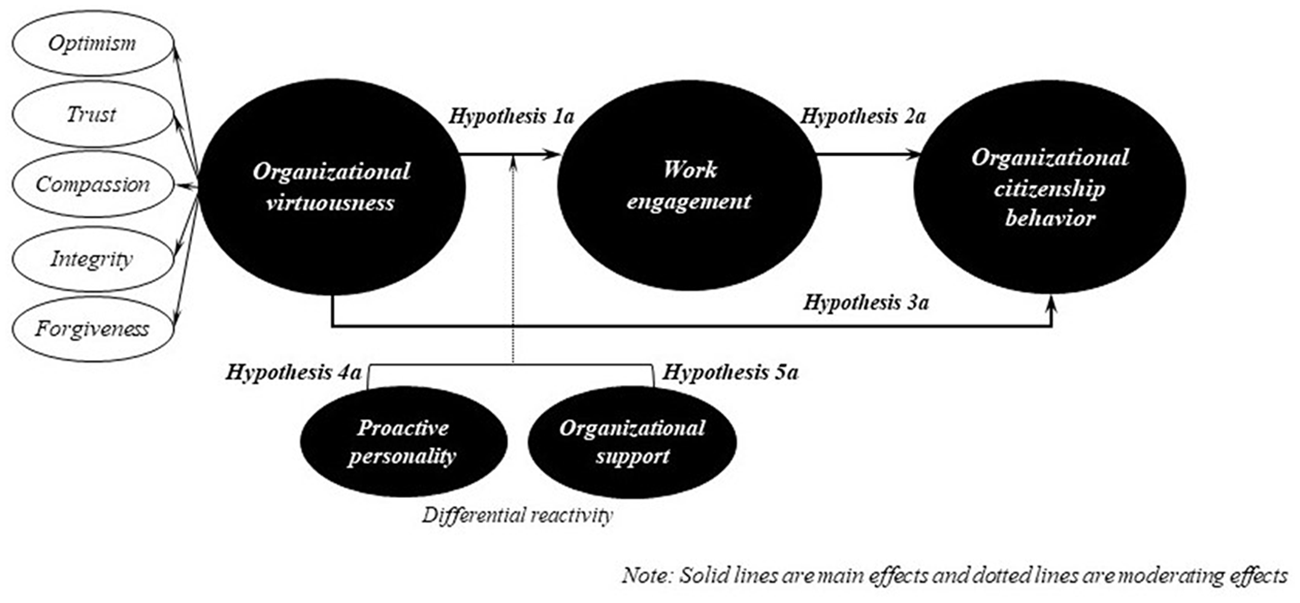
Research Model
Relationship between organizational virtuousness and work engagement. Few studies have dealt with organizational virtuousness and work engagement. As for research on organizational virtuousness and employees’ engagement, Wright and Goodstein (2007) argued that organizational virtuousness not only indirectly affects employees’ work participation through happiness but is also directly related to engagement. According to Ugwu (2012), employees’ work engagement can be predicted by members’ positive perception of organizational virtuousness, and noteworthy positive performance can be achieved when they perceive the good-willed behaviors of their organizations. Ziapour et al. (2015) argued that forgiveness, trust, and compassion among organizational virtuousness positively affect employees’ engagement. Adnan and Emel (2017) argued that employees’ work engagement significantly increases when they highly perceive the virtuousness their organization displays. Hur et al. (2017) reported that employees’ engagement increased more than any other psychological factors when they perceive organizational virtuousness, which makes them participate more actively in the organization. According to K. Gupta and Misra (2018), an increase in employees’ perception of virtuousness in an organizational context can serve as a predictor of their positive task commitment. Singh et al. (2018) reported that organizational virtuousness increased employees’ engagement from of the perspective of positive psychology and argued that increasing the perception of organizational virtuousness is a critical policy for developing human resources aimed at higher engagement. Similarly, Yener et al. (2012) reported that the perception of a certain corporation as being ethical and moral is important for its customers as well as employees. Members tend to participate in and contribute to their organization more actively when they perceive their organization is ethical (Mitonga-Monga & Cilliers, 2015). Previous studies, as rare as they are, have proven that employees’ perception of organizational virtuousness is closely related to their work engagement. To determine whether employees’ perception of organizational virtuousness is one of the strongest predictors of employees’ engagement, the following research hypothesis is proposed:
Relationship between work engagement and organizational citizenship behavior. All previous studies that have investigated the relationship between work engagement and organizational citizenship behavior have confirmed a positive relationship between the two variables. In particular, those who participate in their organization with work engagement perform altruistic acts for others as a means to keep themselves enthusiastic, thereby creating more successful social interactions (Farid et al., 2019; Zhang et al., 2017). Rurkkhum and Bartlett (2012) argued that employees’ engagement is the strongest predicator of organizational citizenship behavior. Runhaar et al. (2013) argued that the commitment to an organization’s goal actively induces employees’ organizational citizenship behavior. Mathumbu and Dodd (2013) argued that employees who are engaged in their organization and work are more likely to engage in organizational citizenship behavior. Abed and Elewa (2016) noted that when employees’ engagement improves, organizational citizenship behavior also increases voluntary action. Ginsburg et al. (2016) reported that increasing employees’ engagement, such as commitment, is closely related to organizational citizenship behavior. As people tend to repay benefits they have received from other people (Cropanzano & Mitchell, 2005), those with a strong work commitment and engagement are more likely to conduct beneficial actions that can help others (Babcock-Roberson & Strickland, 2010). Therefore, based on the existing empirical evidence and building on previous studies (Chunghtai & Buckley, 2009), we propose that employees’ engagement enhances their organizational citizenship behavior. This leads to the following hypothesis:
Rego et al. (2010) argued that the perception of organizational virtuousness not only has a direct impact on organizational citizenship behavior but also has an indirect impact on it through the mediating role of affective well-being. They argued that simply recognizing organizational virtuousness can create affection and attraction toward an organization, through which good behaviors, such as courtesy and altruism toward peers and an organization, are induced. When employees positively perceive their organization’s virtuousness, they can enhance psychological relationships with their organization to respond to extra-role behaviors (Coyle-Shapiro, 2002) and are likely grateful for working for it to repay it with behaviors that benefit their coworkers and organization (Eisenberger et al., 2001). This return is likely to make them feel that they are performing significant work and engage in more normative behaviors by having an attachment to the organization as a mission rather than for themselves as a job (Gavin & Mason, 2004). Many other studies, although not those related to virtuousness, reported that positive images perceived by members of their organizations increased their voluntary behaviors and loyalty to help maintain and strengthen the reputation of the organizations (Dhir & Shukla, 2019; Dutton et al., 1994; Men, 2012). Based on the significant results of previous studies regarding organizational virtuousness and engagement (Hypothesis 1) and those regarding engagement and organizational citizenship behavior (Hypothesis 2), we assumed that work engagement will mediate the relationship between organizational virtuousness and organizational citizenship behavior. We assess the mediating role of work engagement in the effect of organizational virtuousness on organizational citizenship behavior. Therefore, the following hypothesis is posited:
Moderating Roles of Proactive Personality and Organizational Support
In the literature concerning organizational virtuousness and employees’ behavior, no studies to date have investigated the moderating role of a proactive personality and organizational support. Some of the studies that have examined the role of a proactive personality and organizational support can be summarized as follows. The theoretical ground for the relationship between a proactive personality and a successful career originates from interaction psychology, which suggests the interaction between the environment and an individual’s personality (Endler & Magnusson, 1977). Kong and Li (2018) argued that proactive employees can acquire more positive results than passive workers through work engagement. N. Li et al. (2010) argued that a proactive personality determines organizational citizenship behavior and induces the formation of high-quality interaction with bosses or organizations. A proactive personality induces proactive behavior, which causes individuals to more actively create resources and participate in their work. As a result, a proactive personality is closely related to engagement (Cooper-Thomas et al., 2014). Bakker et al. (2012) argued that a positive personality plays an important role when predicting work engagement and in-role behavior and that people with a positive personality more actively control and participate in the work environment than those with a passive personality. Jixia et al. (2011) argued that employees with a proactive personality engage in actions that are helpful to the organization using social capital and that they have low turnover intention. Tai and Mai (2016) also reported that a positive personality serves as an important premise of innovative and creative capability, regardless of organizational types. L. Li and Mao (2014) and Wang et al. (2017) argued that proactive personality plays an important role in predicting work engagement, as people with a proactive personality will actively search for work resources that are additionally required, which further stimulates their work participation. According to McCormick et al. (2019), employees with a positive personality tend to perform positive behaviors that are helpful to their organizations because they are likely to actively attempt to control their situations, particularly being more active when their organizations have an innovative and flexible atmosphere. It can be assumed, therefore, that the more proactive employees’ personalities are, the higher their work engagement increase through the perception of organizational virtuousness.
The premise of a social exchange relationship is a belief that people will receive corresponding rewards when they do someone a favor. Similarly, when employees perceive organizational support, they think they are obliged to return it to the organization, which makes them committed to and engaged in the organization (Dai & Qin, 2016). Hence, perceived organizational support provides employees with emotional support and positive pride (Lee & Peccei, 2007) and improves work participation from all employees (Zacher & Winter, 2011). Applying the principle of reciprocity, employees with a high perception of organizational support have a positive work attitude and believe they have a duty to respond to their organization with helpful organizational behavior (Murthy, 2017). Koh (2012) reported that employees’ level of work participation directly affects organizational performance and that organizational support, recognized as one of the affecting factors, serves as a significant preceding factor. According to Al-Omar et al. (2019), when employees perceive that their organizations support them with lavishness, they increase their participation and commitment in their organizations. Furthermore, a higher perception of organizational support increases the likelihood of positive organizational behavior (Demir, 2015; V. Gupta et al., 2017). Chiang and Hsieh (2012) reported that the perception of organizational support significantly increases employees’ extra-role behaviors. This suggests that organizational support is a type of perception in which members think they can always be supported by their organizations whenever they need it in their works or lives, and that such support can contribute to increased cooperation, positive performance, and interactions between members (Aselage & Eisenberger, 2003). Summarizing these results, this study proposes the hypothesis that a more proactive individual personality and a higher perception of organizational support increases organizational virtuousness’s effect on work engagement.
Research Methodology
Instrument Development
The questionnaire consisted of six parts. The first part requested the employees to rate their perception of organizational virtuousness. The 15 items were rated on a 7-point scale in response to the question “How much do you agree or disagree with these statements?” (1 = strongly disagree, 7 = strongly agree). The questionnaire examined five dimensions of organizational virtuousness (Cameron et al., 2004; Rego et al., 2010): optimism (three items), trust (three items), compassion (three items), integrity (three items), and forgiveness (three items). The second and third parts asked about the employees’ work engagement and organizational citizenship behavior. Work engagement was measured with five items using a seven-point scale based on those developed by Schaufeli et al. (2002). Respondents’ organizational citizenship behavior was measured by five items using a 7-point scale developed by Williams and Anderson (1991) and Podsakoff and MacKenzie (1994). The fourth and fifth parts contained moderators regarding employees’ proactive personality and organizational supports. Proactive personality was measured with five items using a 7-point scale based on those developed by Bateman and Crant (1993) and Wang et al. (2017). Employees’ perception of organizational support was measured by five items using a 7-point scale developed by Eisenberger et al. (1986) and Eisenberger and Rhoades (2002). The last part contained questions about the employees’ demographic profile (e.g., gender, age, education) and job-related profile (e.g., job tenure, position). These variables were used as control variables. The questionnaire items for this study were prepared as follows. The researcher, a Korea native in both language and culture, translated the questionnaire that was originally written by Brislin (1980) and Adler (1983) in English into Korean using the reverse-translation method. The reverse-translation procedure was as follows: (a) one author translated all the survey items into Korean, (b) two scholars and two employees checked for expression errors that may have occurred during the process of translation by reading the translated copy and correcting ambiguous expressions, (c) another author translated the Korean-converted sentences back to English and checked whether the conceptual meaning differed from the original item.
Sample and Data Collection
The sample consisted of food and beverage employees who were employed in deluxe hotels in Seoul, Republic of Korea, in 2017. The reason the sample was restricted to employees in the food and beverage business is that they are most closely related to organizational performance, as they conduct service by contacting customers on the front line. The researchers explained the goal and method of the survey in detail to employees working at 20 deluxe hotels located in Seoul and at 10 deluxe hotels that agreed to participate in the survey, which included the Grand Hilton, the Lotte, the Marriott, the Sheraton, the Hyatt, the Conrad, the Shilla, the Plaza, the Westin Chosun, and the InterContinental. To distribute the extracted samples evenly among the hotels, 50 questionnaires were distributed to each of the 10 hotels. The respondents directly wrote answers to the questionnaire distributed by the researcher. Employees who worked at the hotel for more than 6 months were selected for the survey. The research purpose was explained to the participants, and they were told their responses would remain anonymous. Because it was not possible to receive approval from all employees, the participants included were only those who voluntarily participated in the survey. Regarding nonprobability sampling methods, this survey followed the convenience sampling method. Participants were informed that the data would be used solely for this research and would remain confidential. To incentivize participation, those who completed the questionnaire were given a five-dollar gift certificate.
A total of 500 questionnaires were distributed, among which 451 copies were retrieved. After excluding disqualified and incomplete responses, 353 copies were used in the final analysis (70.6%). The employees were 47.3% male and 52.7% female. Most of the participants were either younger than 29 (46.5%) or between 30 and 39 years old (39.7%); most had a community college degree (46.4%) or a university degree (41.1%), while 62.8% had been with a deluxe hotel for less than 3 years. Their job positions were back of house (42.7%) and front of house (47.3%).
Data Analysis
Because a self-report questionnaire was used in this study, the common method bias (CMB) was checked first, using Harman’s single-factor test as a stronger determinant to investigate the CMB error (Podsakoff et al., 2003). Harman’s test mainly checks whether most of the variance is explained by a single general factor, and it has been used in many studies related to the hospitality industry (Min et al., 2016). The test results indicated the explanatory power of one factor (35.8%) does not occupy more than half the total explanatory power (83.6%). In the analysis results, no factor among the measured values occupied the majority of the common variance (i.e., >50%), implying that there was no serious bias. The full collinearity test using the partial least square (PLS) also confirmed that all variance inflation factors were below 3.0 (Kock, 2015). Therefore, the CMB is not a serious problem in this model. Also, the intraclass correlation coefficient, ICC (1), was used to examine the degree of variability in the individual level that was attributed to being part of an organization, and ICC (2) calculated the reliability of organization means. Two ICCs were calculated (McGraw & Wong, 1996); the ICC (1) value is 0.548 (F = 15.421, p < .001), and the ICC (2) value is 0.854. These results indicated that aggregating our data regarding individual evaluations about the organizational virtuousness climate provided to the organization level was appropriate.
Due to the consistency of this study's prediction-oriented purpose, Smart PLS version 3 (Ringle et al., 2015) was used for analysis. PLS structural equation modeling (PLS-SEM) can simultaneously model the relationship between multiple independent constructs and dependent constructs. PLS-SEM was determined to be appropriate because of the large number of latent variables in the model. It is a causal modeling approach for maximizing the explained variance in PLS-SEM dependent latent structures (Hair et al., 2011), offering a higher level of predictive power than the traditional covariance-based SEM (CB-SEM; Hair, Hollingsworth, et al., 2017). It is also a method specialized in second-order factor analyses, an analysis applied in this study (Wetzels et al., 2009). The analysis included a two-phase approach: the exogenous model was tested first, followed by the endogenous model (i.e., the structural relationship between latent variables; Chin, 2010). Since this study is exploratory and focuses on theoretical development, the PLS can be more appropriate, relatively. The PLS also fits better because this model possesses both a reflective construct and a formative construct, coinciding with the researcher’s revision-oriented goal. The first-order construct was reflective, and the second-order construct was formative. Hence, the measurement indicator approach was chosen to evaluate this model. Using this approach, the second-order construct was composed by including all factors. The measurement indicator approach simultaneously estimated all latent variables while estimating the first-order and second-order constructs separately (Becker et al., 2012; Haldorai et al., 2020). The repeated indicators method was used to test the second-order formative factors (Chin et al., 2003).
Results
Measurement Model
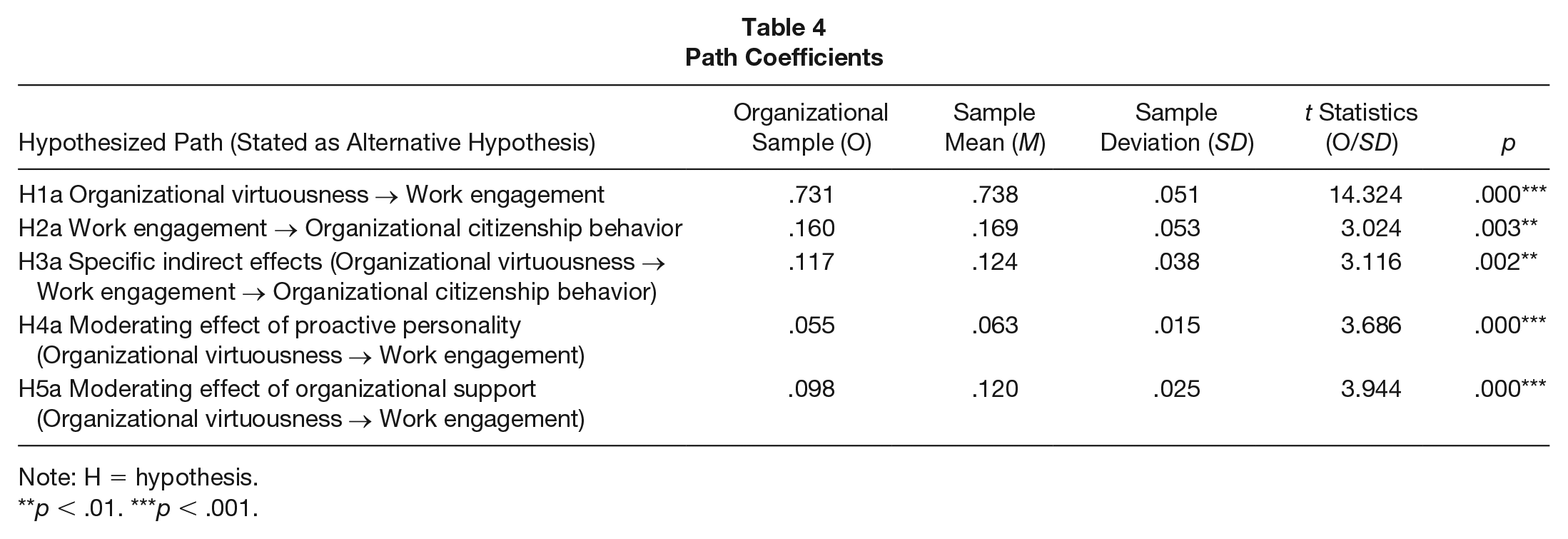
The first step in evaluating the research model was to test internal consistency reliability, convergent validity, and discriminant validity (see Table 1; Hair et al., 2011). The indicators’ outer loading was 0.7 or higher (Koo & Lee, 2011), and the composite reliability (CR) was 0.9 or higher. The Cronbach α was calculated to be .9 or higher, a value that confirmed internal consistency (Nunnally, 1978). Henseler et al. (2009) stated that the CR is more proper for the PLS-SEM, and the CR in our study was much higher than the conventional cutoff value of 0.7. The average variance extracted, for evaluating convergent validity, was 0.8 or higher, except for organizational virtuousness which was drawn as a second-order factor. When the discriminant validity was investigated by examining the Fornell–Larcker criterion index (see Table 2), the square root of average variance extracted from each construct showed stronger correlation than other constructs (Fornell & Larcker, 1981). The fitness of prediction of construct was examined by Q2; the fitness of prediction was relatively good as work engagement was 0.578 and organizational citizenship behavior was 0.591. Table 3 shows the results of the formative second-order constructs. Collinearity was tested to evaluate the formative second-order constructs by setting the threshold of the variance inflation factor value to be less than 5. The results confirmed there were no problems. To evaluate the significance of the formative weight, a 5,000 bootstrap sampling procedure was used. The weight of the indicator was proven to exceed the recommended value of 0.1 (Andreev et al., 2009). Path coefficients are shown in Table 4.
Construct Reliability and Validity
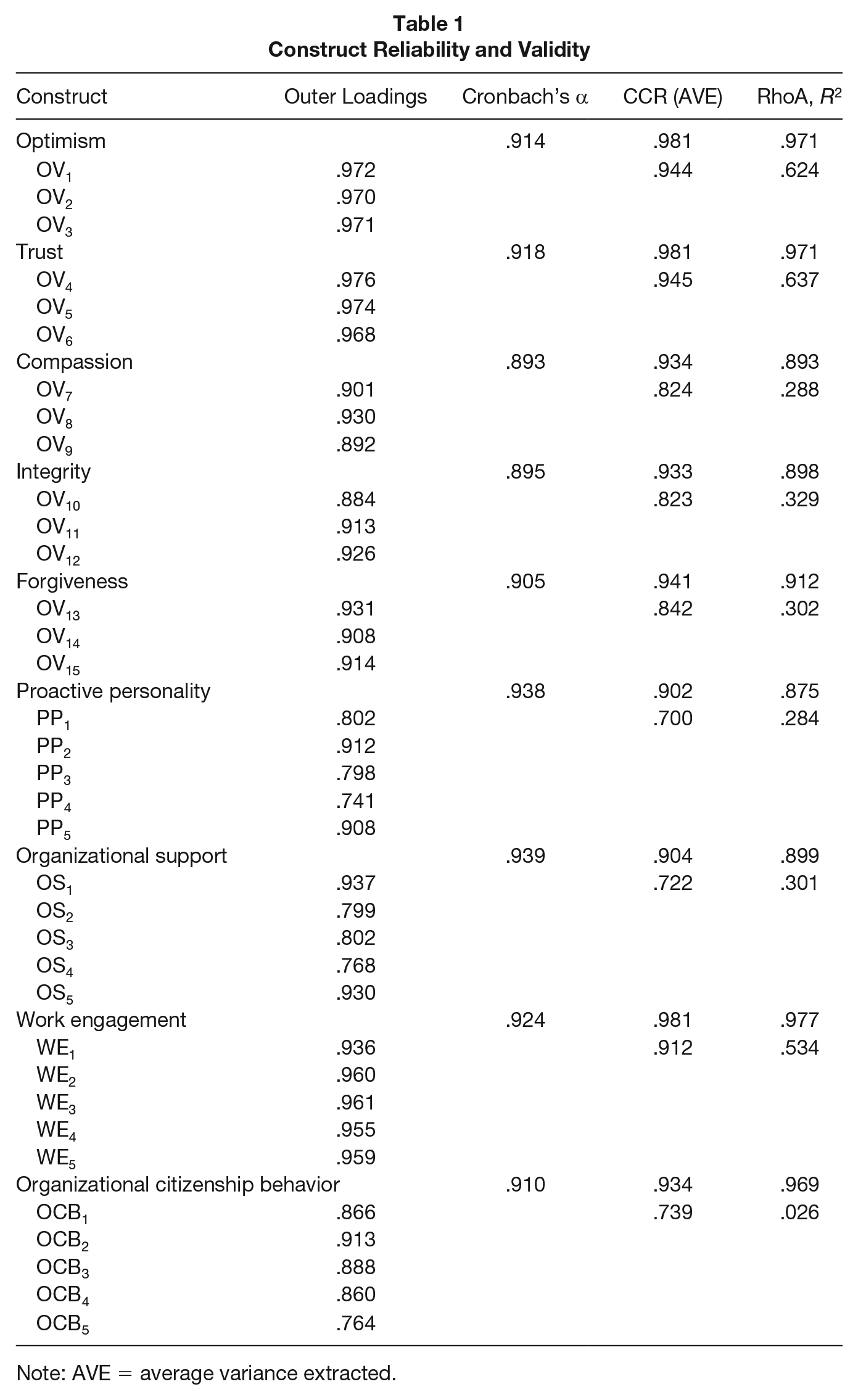
Note: AVE = average variance extracted.
Discriminant Validity by Fornell–Larcker Criterion Index
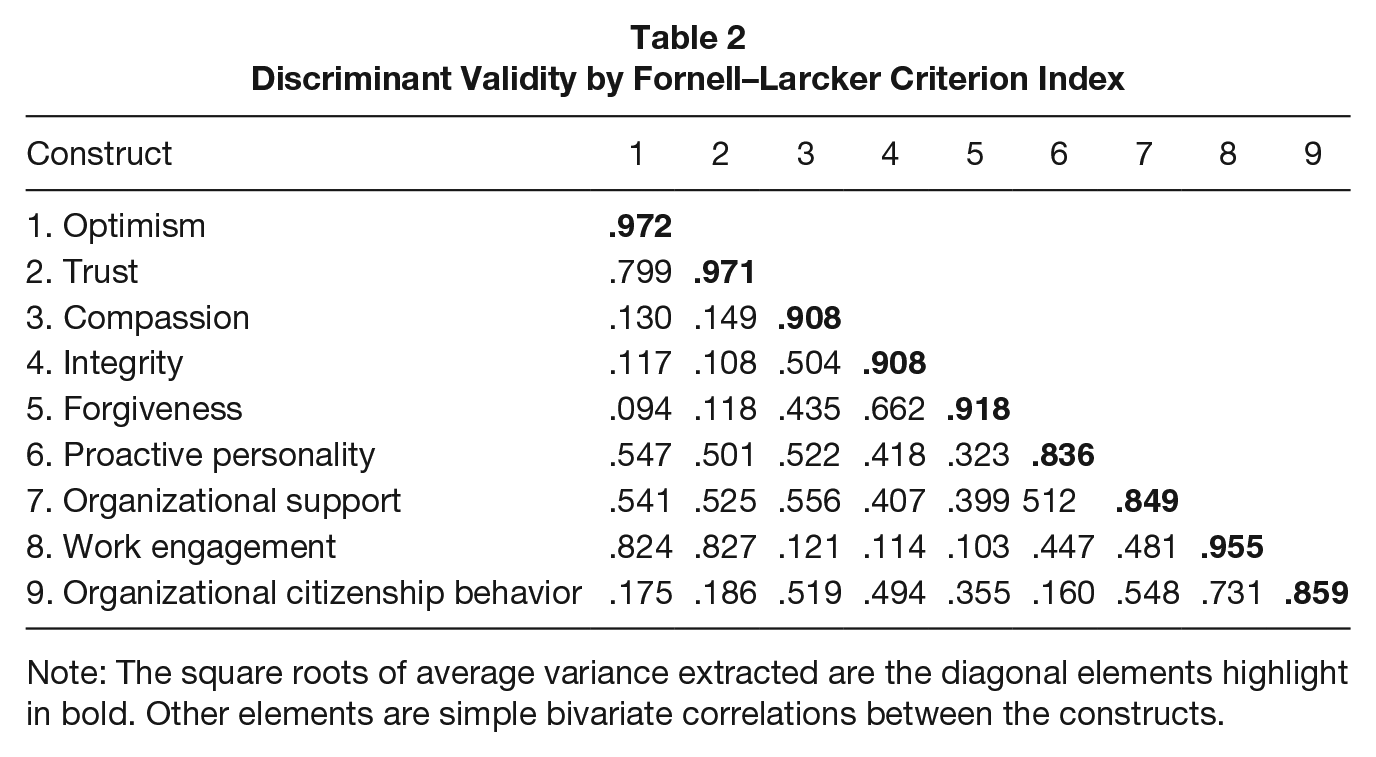
Note: The square roots of average variance extracted are the diagonal elements highlight in bold. Other elements are simple bivariate correlations between the constructs.
Results for Second-Order Formative Construct
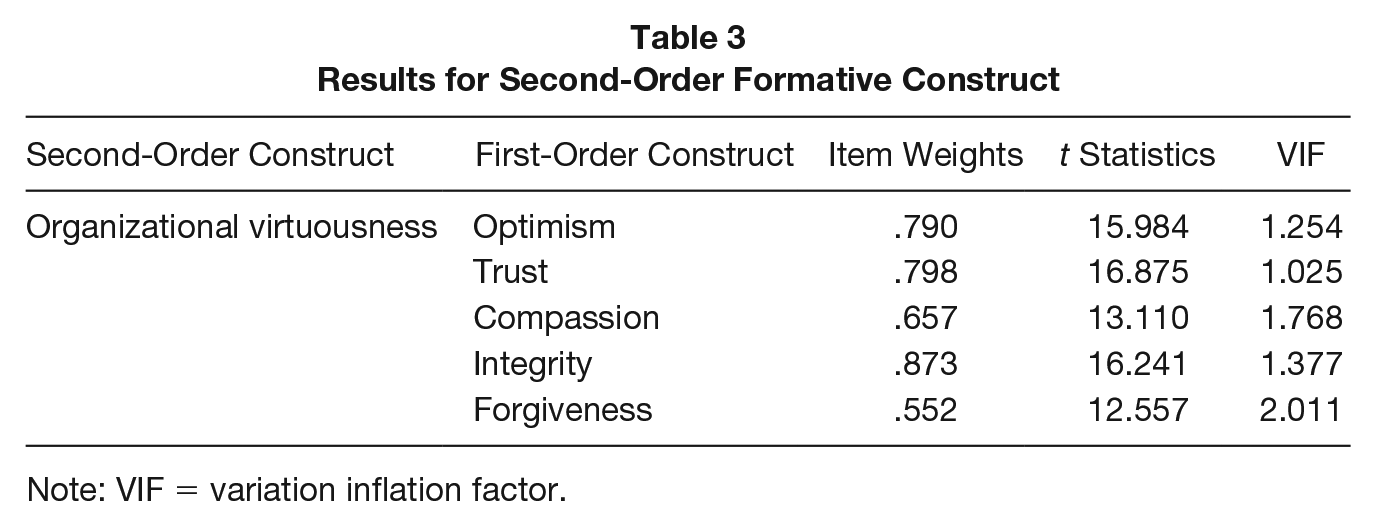
Note: VIF = variation inflation factor.
Path Coefficients
Note: H = hypothesis.
p < .01. ***p < .001.
PLS-SEM
Because the evaluation of the measurement model provided sufficient supports for reliability and effectiveness, the hypothesized relationship between the research model’s constructs was tested by examining the structural model (Hair et al., 2011). The hypotheses were tested by PLS-SEM. Table 3 shows the analysis results. Following the recommendation of Henseler et al. (2012), the structural model suggested in our study was evaluated by several measurements. This model explained 53.4% of the variance in work engagement and 32.6% of the variance in organizational citizenship behavior. Cohen’s f2 for the significant path of the internal model was greater than 0.02 in all cases, indicating a very satisfactory effect of the endogenous latent construct.
The five hypotheses of this study were all supported by the PLS-SEM. Hypothesis 1a, which hypothesized a positive relationship between organizational virtuousness and work engagement, was supported (β = .731; t = 14.424; p < .001). In addition, the employees’ meaning of work affected organizational citizenship behavior (β = .160; t = 3.024; p < .01), which supported Hypothesis 2a. Given these results, the null Hypotheses 10 and 20 were rejected. The specific indirect effects were conducted to test the mediating effect of work engagement on organizational virtuousness and organizational citizenship behavior. The indirect effects of organizational virtuousness → work engagement → organizational citizenship behavior (β = .117; t = 3.116; p < .01), were significant. Hence, Hypothesis 3a was accepted, and the null Hypothesis 30 was rejected.
To verify the moderating effect, the moderating variables of personal personality and organizational support were used. Given that the variables were continuous, we used the Orthogonalizing approach proposed by Henseler and Chin (2010) for verification. When the Orthogonalizing approach was applied, the indicators obtained through residual centering were used. Hypothesis 4a predicted that proactive personality moderates the positive relationship between organizational virtuousness and work engagement, and the results of the analysis showed that proactive personality played a positive moderating role in the positive relationship between organizational virtuousness and work engagement (β = .055; t = 3.686; p < .001). Hypothesis 40 was rejected, and the null Hypothesis 4a was accepted. Hypothesis 5a predicted that perception of organizational support moderates the positive relationship between organizational virtuousness and work engagement, and the results of the analysis showed that the positive relationship between organizational virtuousness and work engagement increased when employees perceived that they received support from their organizations (β = .098; t = 3.944; p < .001). Hence, Hypothesis 5a was accepted.
Discussion
The findings indicated that the effects of employees’ perception of organizational virtuousness positively affected work engagement. These findings support previous work (Hur et al., 2017; Wright & Goodstein, 2007; Ziapour et al., 2015). Second, the influence of work engagement on organizational citizenship behavior was significant. This finding supports earlier work (Abed & Elewa, 2016; Babcock-Roberson & Strickland, 2010; Rurkkhum & Bartlett, 2012). Third, organizational virtuousness becomes a significant factor that improves employees’ organizational citizenship behavior through the mediating role of work engagement, which often ignites altruism toward peers or bosses to ultimately increase organizational citizenship behavior. Fourth, the effect of employees’ perception of organizational virtuousness on work engagement was relatively strong when the perception of organizational support was high and the employees’ proactive personality was high.
Theoretical Implications
Through the systematic examination of the organizational virtuousness perceived by hotel employees and the organic causal relationship between work engagement and organizational citizenship behavior, this study presented a theoretical basis for research on the organizational virtuousness of deluxe hotels. Currently, there is a paucity of literature on the organic causal relationship among organizational virtuousness, work engagement, and organizational citizenship behavior. This study adds value to the existing literature with an exploration of the relevant relationship. Despite several studies on organizational virtuousness targeting ordinary employees, virtually none have exclusively investigated hotel employees. With an empirical study investigating the impact of organizational virtuousness, this study extended the subject of the existing literature to hotel employees. This study showed that organizational virtuousness increases employees’ work engagement and that the engagement further increases the employees’ organizational citizenship behavior. Furthermore, the findings on the influence of organizational virtuousness demonstrated the positive impact of organizational virtuousness in actual organizations. The results are expected to become the basis for future organizational virtuousness research and contribute to expanding the research subject from organizational performance and benefit to the positive impact on employees.
Practical Implications
From a practical perspective, an empirical analysis was conducted on the positive effect of organizational virtuousness on organizational members, which demonstrates to companies that virtuous behavior can play an important role in organizations’ performance, as it enhances employees’ work engagement and organizational citizenship behavior as extra-role behavior. In particular, evidence showed that employees with a positive perception of their organizations’ virtuousness had higher work engagement and performed more organizational citizenship behaviors. The findings of this study can help members in an organization see each other with personal subjectivity, rather than impersonal objectivity through the exchange of virtuous actions inside the organization (Cawley et al., 2000). According to Peterson and Seligman (2004), virtuous actions contain elements of a respectful relationship within the values-in-action classification system, which is a classification of positive traits in people, including love, forgiveness, and humanity. Organization members who experience virtuous actions will treat each other more respectively (Baumeister & Exline, 1999). Through organization’s virtuous actions outside the organization, such as social responsibility activities or volunteer works, customers and organization members can develop respectful relationships. Such members can develop an attitude for treating customers as respected subjects who are the targets of affection and care, rather than perceiving them with materialistic objectivity. This kind of attitude is believed to be particularly significant to hotel employees, whose most important duty is customer service. Hence, a practical implication of this study is that virtuous deeds inside and outside of an organization can induce attitudinal changes that can cause members to treat each other respectively. This result confirms the fact that improving employees’ perception of organizational virtuousness is a way of increasing employees’ work engagement and organizational citizenship behavior from managers’ perspective. This can allow hotel managers to understand that organizational virtuousness can be linked to better performance and ultimately benefit the corporation. Hotel managers in this context need to recognize that organizational virtuousness is not only necessary for improving external business performance but also significant as an institutional factor to enhance the individual work engagement of employees and that virtuousness can consequently increase their organizational citizenship behaviors. In addition, the results may suggest that hotel managers should pay attention to how employees perceive their organizations, prepare clarified orientations for organizations to be upright and honest, and create a culture in which honest mistakes can be consistently made up for. Another implication of this study is that the CEO of an organization must perceive the importance of organizational virtuousness and participate in relevant actions. Because there is an enormous ripple effect that occurs from a company having an unethical image, executives should actively provide support to improve organizational virtuousness. A CEO expressing determination to practice organizational virtuousness can also help all members of the organization recognize organizational virtuousness and follow the example. An atmosphere in which organizational virtuousness is harmonized should be created and established. Organizations should continue to practice virtues by remembering that demonstrating more emotional and physical virtues in diverse forms will improve organizational members’ behavior and psychological formation. Because employees’ proactive personality can increase the positive effectiveness of organizational virtuousness, in addition, it may be necessary to establish a variety of educational programs for encouraging positive personality trait of employees at the organizational level.
Limitations and Future Research
Although this study produced many significant findings, several limitations must be discussed. First, because the samples are Korean employees, the results have limited generalizability. Since the sample was chosen based on the managers’ intention to participate in the study, the managers’ attitude for encouraging participation could have partially affected the results. Second, CMB error could have occurred because this study’s independent variables, mediating variables, and dependent variables were simultaneously collected from identical sources. Pretests confirmed the CMB error is negligible. However, it will be necessary to collect independent variables and dependent variables at different time points to reduce the respondents’ tendency of searching for similarity in the questions and maintaining consistency. Third, the ripple effect of organizational virtuousness in deluxe hotels was empirically investigated by focusing on the inducement of employees’ positive behavior. Future studies will have to consider more specific performance variables for the purpose of searching for ways to reduce employees’ negative behavior, such as turnover intention or antiproductive action. Considering the dynamism of the hospitality industry, the research framework should be expanded to cover all consumers, suppliers, and stakeholders to promote organizational virtuousness as a fundamental tool that can improve organizational performance.
Conclusion
This study examined the organizational virtuousness perceived by employees in deluxe hotels in South Korea and investigated the effect of the perception of organizational virtuousness on employees’ responses. A higher perception of organizational virtuousness increases employees’ work engagement, which implies that the attitude and mind-set regarding an organization’s positive virtue has a significant impact on employees’ engagement. Also, employees who are engaged in and committed to their work are likely to engage in organizational citizenship behavior voluntarily. The finding verified that the perception of organizational virtuousness can predict organizational citizenship behavior through the mediating role of work engagement. This finding presents managers in the field with a potential route for inducing committed work from employees. This may suggest that positive personality of employees as a personal trait and perception of organizational support as an organizational trait can have a positive effect on increase in work engagement due to organizational virtuousness.
