



Abstract
The tourism literature has increasingly recognized the significance of various stakeholders on how a region should attempt to apply the principles of sustainable development. Based on stakeholder theory, the article aims to investigate how the business model in tourism that is used in Italy’s Langhe region is aligned to the promotion of a “sustained, inclusive and sustainable economic growth, full and productive employment and decent work,” in accordance to the United Nations General Assembly 2030 agenda for sustainable development. The research employed a single case study approach, drawing on 36 semistructured interviews with key stakeholders in the region, and the findings show that a variety of stakeholders play an important role toward the sustainable development of the region. The various stakeholders were categorized as either internal or external, followed by the identification of definitive stakeholders. The article concludes with the managerial and theoretical implications of the findings and reports several future research directions.
Keywords
Introduction
Tourism, as one of the largest sectors of the global economy, is considered a significant tool for developing global sustainability (Lee & Jan, 2019; R. Nepal et al., 2019) and can affect various sustainability dimensions, such as reducing poverty and unemployment, as well as providing local businesses opportunities to sell their products (Lee & Jan, 2019). This is possible thanks to a deep knowledge of the regions’ potentialities, along with the different management modalities of local business networks (Del Vecchio et al., 2018). Concordantly, in September 2000, the United Nations (UN) created the Millennium Development Goals to “eradicate extreme poverty and world hunger, achieve universal primary education, ensure environmental sustainability and develop a global partnership for development” (UNWTO, 2017, p. 26). Based on this, they marked 2017 as the International Year for Sustainable Tourism for Development, making it timely to reconsider tourism’s impacts and to support policies for making tourism an important contributor to the UN’s Sustainable Development Goals (SDGs; R. Nepal et al., 2019). In response, on September 25, 2015, the UN General Assembly approved the 17 distinct SDGs, which urged the tourism sector to address several priority areas on sustainability development, including employment and environmental issues, sustainable production and consumption, and climate change, among others (R. Nepal et al., 2019; UNWTO, 2017).
Specific to SDG 8, the promotion of a “sustained, inclusive and sustainable economic growth, full and productive employment and decent work” (UNWTO, 2017, p. 22), the proper understanding of the interrelationships between tourism, the underlying economy and economic drivers of a specific destination. However, empirical studies demonstrating even some of these linkages are limited in the tourism literature (Shakouri et al., 2017).
To fill this research gap, our study, which is based on relevant and popular theories from Freeman (1984), Mitchell et al. (1997), and Bunn et al. (2002) will identify the stakeholders involved in developing a sustainable tourism destination in the Langhe region—which could be consider a niche tourism destination (Cillo, Rialti, et al., 2019)—will examine the stakeholders’ perceptions about this destination and how they have developed the “Langhe brand” (Shams, 2016; Tasci et al., 2007), and will investigate how these stakeholders contribute toward the development of SDG 8, by investigating the role they play toward the development of a sustainable tourism destination (Langhe region).
The relationship between sustainability and tourism is so relevant. Indeed, discussion about sustainable tourism has increased since the dawn of the 21st century (e.g., Hughes et al., 2015; R. Nepal et al., 2019). However, there has been strong criticism on the topic recently regarding its practicalities, given the expanding global economy’s increasing demands for material resources (R. Nepal et al., 2019; S. K. Nepal et al., 2015). Other scholars (i.e., Ophuls, 2011) argue that sustainability is impossible to achieve, because humanity currently undergoes a period of excessive materialism and consumption despite ecological scarcity and irreplaceable biological and geological resources.
The originality of the article is linked to the identification of several roles played by a large variety of stakeholders, both internal and external ones, in a context characterized by an interrelationship between tourism and economic drivers of a specific destination. This is true also considering that the stakeholders involved are relevant in developing effective sustainable tourism policies, sharing gastronomical (food and beverage) and cultural knowledge around the Langhe territory (Kivela & Crotts, 2006; Metaxiotis & Ergazakis, 2008), along with a higher destination image of this region (Kivela & Crotts, 2006; Tasci et al., 2007). As a matter of fact, the image of a destination could be very effective in growing domestic and international competition in term of product beliefs and tourism satisfaction (De Nisco et al., 2017). In addition, the originality is evident in theoretical terms, as the implementation of relevant studies (such as Bunn et al., 2002; Freeman, 1984; Mitchell et al., 1997) permits to better classifying all the stakeholders involved in a certain territory, focalizing their singular role as actors in the context of analysis. The rest of the article is organized as follows. The next section provides a critical review of extant literature and highlights knowledge management literature, along with the stakeholder theory and its link to sustainable development in the tourism sector. The study then presents the qualitative case study methodology applied for the primary research and the results of this research. Last, the work discusses the findings and highlights its main conclusions and provides future research directions.
Theoretical Background
Knowledge Management
Definition and main characterizations
Nowadays, knowledge is considered by academicals literature as an important aspect in companies and organizations, because it can manage efficiently and effectively competitive advantages (Wiig, 1997). Thus, this so precious asset lets companies achieving huge advantages toward competitors (Gorman, 2002).
Recent literature has identified knowledge as one of the most critical successful factors for a company (Del Giudice & Maggioni, 2014; Della Peruta et al., 2014; Idrees et al., 2018; Mol & Birkinshaw, 2009; Santoro, Bresciani, et al., 2018), managing, creating, organizing, and transferring abilities to the market and making the company more competitive and attractive (Carayannis et al., 2017; Ferreira et al., 2018) both in term of performance and competitiveness toward other businesses (Papa et al., 2018; Vrontis et al., 2017).
In this term, the knowledge-based perspective (Grant, 1996) is essential and strategical to explain the importance of companies’ resources.
As a matter of fact, in Grant’s approach, two assumptions were distinguished: (a) the knowledge is an individual activity, where “all learning takes place inside individual human heads” (Simon, 1981, p. 25) and (b) the primary role of companies is the application of existing knowledge to the production of goods and services. This could be reached in two ways: (a) by learning of external members or (b) by ingesting new members who have soft skills that the company has not previously had.
So, the reader could easily understand how knowledge could be classified into two macro-categories in literature: (a) internal knowledge, which defines all the aspects and skills inside the company and (b) external knowledge, the ones to whom the company could learn or ingest new abilities (Fernhaber et al., 2009).
In particular, external knowledge could be characterized by two aspects: (a) tacit and (b) explicit knowledge. Scholars refer to explicit knowledge, when it is possible to codify and articulate information, creating easily communications between individuals and organizations (Grant & Baden-Fuller, 2004; Simao & Franco, 2018).
Whereas, tacit knowledge is deeply rooted in experience, skills, and know-how. Here, transfer between individuals and organizations is difficult in term of formally communication (Grant & Baden-Fuller, 2004; Polanyi, 1966). As a matter of fact, tacit knowledge is more valuable and more likely to lead to a sustainable competitive advantage over time because it is more difficult for competitors to imitate (Bierly et al., 2009).
In this term, due to the digitalization process, companies are always more interesting in introducing incremental and radical innovations into their business (Schumpeter, 1934), adopting a collaborative and open approach (Chesbrough, 2006). This approach consists in integrating a new model, called the open innovation model (Santoro, Bertoldi, et al., 2018; Scuotto et al., 2017), whose aim is to generate value thanks to the combination of internal and external skills (Lichtenthaler, 2016), managing all the critical aspects creating by acquiring and exploiting external knowledge into the business (Bierly et al., 2009). The higher benefits obtained by companies in introducing this innovative model consists in two main aspects, which are the improvement of companies’ performance in the business and the reduction of fixed and variable costs associated to the fact of running a business (West & Bogers, 2014).
Applying this open innovation model, companies have to go over two approaches, which are the so called (a) external knowledge transfer (EKT) and the (b) external knowledge application (EKA; Bierly et al., 2009; Zahra & George, 2002).
EKT: In this first approach, knowledge is transfer from an external source inside the company, expanding the company’s knowledge base (Nonaka & Takeuchi, 1995). In this term, the acquisition of external knowledge provides the company’s access to new ideas, designing new products and technologies (Rosenkopf & Nerkar, 2001), and influencing the company’s ability to earn profits (Spender & Grant, 1996).
EKA: This second approach refers to the aim of generating new capacity thanks to the introduction of an external knowledge (exploitation) or reinforcing existing capacity (exploitation; March, 1991). This approach is very costly for companies, riskier and slower than the EKT one. For this reason, companies with limited budgets cannot effort this approach, being more likely to follow less risky exploitative innovations (Bierly et al., 2009).
Knowledge sharing in tourism
Tourism has a significant role in the economies of developed countries and also in developing countries. In fact, it has been recognized as an important development strategy against poverty, economic growth, biodiversity, and conservation (Hawkins et al., 2012).
The tourism industry is characterized by a relationship between different stakeholders, which compete and collaborate simultaneously (Bollinger & Smith, 2001; Metaxiotis & Ergazakis, 2008; Scott & Laws, 2006), such as tourists, organizations, companies, and so on.
Thanks to synergic collaborations, stakeholders could facilitate the external transfer on knowledge embodied in a specific destination, making a greater contribution in knowledge creation process (Metaxiotis & Ergazakis, 2008).
Thanks to this cooperation between different stakeholders and their engagement (Santoro, Bertoldi, et al., 2018), sharing knowledge in the tourism sector is particularly important in term of leading generation on a more sustainable tourism, implementing new policies and strategies, and optimizing the sustainable growth of tourism in the developing countries around the world (Hawkins et al., 2012; Metaxiotis & Ergazakis, 2008).
In particular, literature stated tourists often have a prior knowledge around a destination, which is able to change their behavior of travelling (Johnson & Russo, 1984; Rao & Sieben, 1992) and decision making (Bettman & Park, 1980).
First of all, this type of knowledge depends from the (a) tourists’ familiarity with the destination, that means the tourists have sufficient information in their memory about a environment, that they do not need to look for additional information and make a decision on the basis of inside information (Brucks, 1985).
Second, (b) tourists’ expertise with the travel, which could be described as all those experiences related to the touristic visit (Alba & Hutchinson, 1987). As a matter of fact, experienced tourists have prior knowledge about the attributes of various alternatives and consequently do not need to acquire information from external sources (Brucks, 1985).
All these characterizations create a positive influence in tourists’ decision-making process, enhancing engagement with the destination and trust in the touristic services (Pantano et al., 2011).
Sustainable Development in Tourism
Globalization has created a shift in perception in which time and space seem compressed in everyday life (Davis, 2008; Ritzer & Dean, 2019). For this reason, the relationship between sustainable development and tourism has been perceived as complex (Saarinen, 2006). In this term, concern over the natural and social environment has generated a research debate on tourism-environment relationship from the early 1970s (Young, 1973).
Although the Awareness-Agenda-Action process theoretically leads toward more socially and environmentally responsible tourism, In the coming years, much work will have to be done on the concept expressed by scholars of a more responsible tourism (Juvan & Dolnicar, 2016; Mihalic, 2016; Weaver & Jin, 2016).
On the one hand, technology has shaped the boundaries of tourism and has made the sector more attractive and engaging for visitors and users, thanks to tools such as mobile apps and touch screens. Technology gives customers more freedom to plan a visit (Szymanski et al., 2008; Waite et al., 2004; Yoon et al., 2012). On the other hand, the wine and food sectors produce great revenues and employ many people (De Salvo et al., 2017; Giacosa et al., 2017; Vrontis et al., 2016). Particularly in Italy, the consumers’ high perception of some regions’ product could increase the tourism phenomenon (Festa et al., 2015; Scorrano et al., 2018; Sidali et al., 2011; Sims, 2009), which has implications for regional brands (Bresciani & Ferraris, 2014), including their competitiveness and drivers (Vrontis & Thrassou, 2011) as well consumers’ engagement with the company (Tardivo et al., 2017).
Before showing how tourism could be sustainable, we need to define “sustainability.” The UN Brundtland Commission defines “sustainable” as “development that meets the needs of the present without compromising the ability of future generations to meet their own needs” (Brundtland, 1987), emphasizing both sustainability, as an important policy issue on tourism (Crittenden et al., 2011; Saarinen, 2006), and the implementation of the Kyoto Protocol, referring to ensuring future generations are not compromised by tourisms impact on the environment (Saarinen, 2003). For these two important aspects, much academic research has been produced (Evangelista et al., 2018).
As a matter of fact, Evangelista et al. (2018, p. 7) have investigated the main geographical areas where sustainability has been studied. Their results show a total of 48 articles from European countries, 14 articles from Asian countries, 5 articles from American countries, and 3 from the other continents. The concept of sustainability has been reinterpreted using the triple bottom line (TBL) model (Govindan et al., 2013) in which social, economic, and environmental aspects become the main pillars of the sustainable development concept (Evangelista et al., 2018; Kuhlman & Farrington, 2010; see Figure 1). In particular, the social pillar highlights that all members of society must have equal access to resources and opportunities (Bansal, 2005; Hart, 1995). The economic pillar focuses on extending an open and competitive market to promote a reasonable quality of life and a productive society (Holliday et al., 2002). Thus, in this manner, the creation and distribution of goods and services enhances the standard of living (Bansal, 2005). The environment pillar pays attention to maintaining ecological integrity and minimizing the human activities’ negative impacts on the environment (Bansal, 2005; Bowman & Ambrosini, 2000).
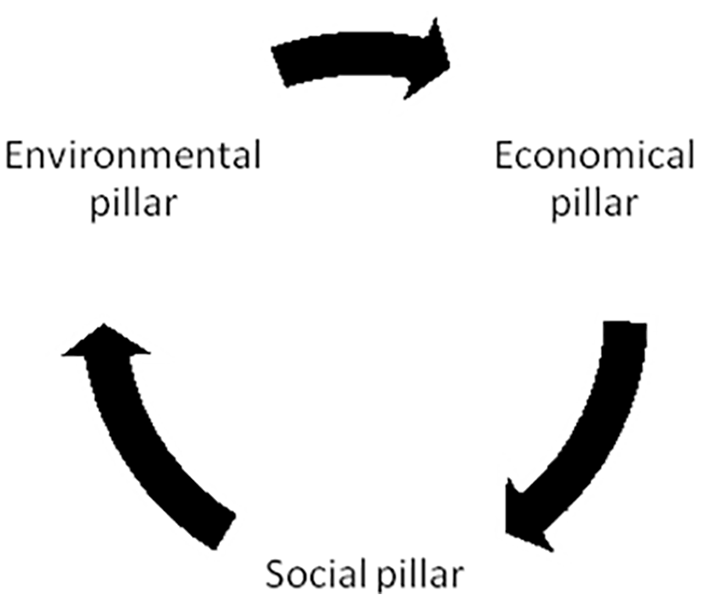
Relationship Between the Three Pillars
Nowadays, analyzing sustainability only in terms of economic prosperity is insufficient (Stylos & Vassiliadis, 2015). Environmental integrity and social equity are also essential (Bansal, 2005; Mihalic et al., 2012), as is the relationship between the two (Basu & Palazzo, 2008). Thus, this multidimensional view of sustainability, consisting of ecological (environmental), social (equity), and financial (economic) factors, is known as the TBL model (Savitz & Weber, 2006).
This sustainable development model is particularly interesting when applied to tourism. Some scholars (Butler, 1991; Lélé, 1991; Sharpley, 2000) have stated that there is no definition of “sustainable tourism” (Saarinen, 2006), and these academics refer to sustainable tourism as an ideology or a point of view rather than an operational definition (Clarke, 1997). Other researches prefer to involve the ethical aspects of the concept of sustainability, using the term “sustainable development in tourism” (Butler, 1991).
In the present study, we refer to “sustainable development in tourism” to embrace the ethical viewpoints referring to some of the SDGs of the Agenda 2030 (UNWTO, 2017).
Considering that tourism always has an impact (Saarinen, 2003), it is important to define the carrying capacity of people (Mathieson & Wall, 1982) in time and space and to refer to all the stakeholders involved in the analysis within the resourced-based view approach (RBV). According to RBV, firms could have a competitive advantage and superior performance if their resources are valuable, rare, inimitable, and nonsubstitutable (Barney, 1991; Nason & Wiklund, 2018). Nason and Wiklund (2018) have recently found that valuable resources and inimitable ones have a contradictory effect on the same performance outcome. Therefore, this study suggests that firms ought to develop their resource portfolios based on their desired performance, that is, to gain profitability or growth (Nason & Wiklund, 2018).
Since this aspect of sustainable development in tourism is underresearched (Cantino et al., 2019; Cortese et al., 2018; Del Giudice et al., 2017), we want to analyze the stakeholder’s role in sustainable development in tourism, according to the growth potential of the destination (Nason & Wiklund, 2018). Thus, the next section analyses stakeholder theory to understand who they are in tourism development, specifically referring to the Langhe case study.
A Stakeholder Theory Approach
Stakeholder interactions are important for many scholars’ works (Belyaeva & Kazakov, 2015; Buchholz & Rosenthal, 2005; Ferraris et al., 2018; Freeman, 1984, 2004; Ho et al., 2017; Nunkoo & Ramkissoon, 2016; Santoro, Bertoldi, et al., 2018; Sautter & Leisen, 1999; Shams, 2016) because these interactions show how they could influence or be influenced by companies (Sautter & Leisen, 1999). In fact, there is still no agreed definition of who a stakeholder is (Bryson, 1995), because it depends on the nature of the demands a stakeholder can make on an organization (Ackermann & Eden, 2011).
In our research, we referred to Freeman (1984), who is the first to define who a stakeholder is; Bunn et al. (2002), who more precisely define each stakeholder involved in an analysis; and Mitchell et al. (1997), who classify who are internal and external stakeholders (defined first by Freeman, 1984) by using the attributes of power, legitimacy, and urgency.
As the definition of stakeholders has a relevant role in this research, we therefore use Freeman’s (1984,) definition: a stakeholder is “any group or individual who can affect or is affected by the achievement of the organization’s objectives” (p. 46). On the other hand, Eden and Ackermann (1998) define stakeholders as “people or small groups with the power to respond to, negotiate with, and change the strategic future of the organization” (p. 117). The first definition focuses on the individual who could interact with the company, whereas the second is based on the power to influence a company’s actions. We referred to Freeman’s definition because it considers in the analysis all the individuals who could interact with the Langhe area. Specifically, we use the stakeholder causal scope theory to argue that “the influence of stakeholders’ perceptions about a company, industry or a destination” (Shams, 2016, p. 141) makes significant contributions to some of the 17 pillars of the UNWTO’s Agenda 2030.
To better define who the stakeholders involved in the analysis are, we also refer to Bunn et al. (2002), who developed a five-step process for defining the stakeholders. The first identifies the key sectors, the relevant stakeholders, and their roles in the community (McLean, 1997). The second describes the interested stakeholders’ main characteristics and creates different categories, such as companies, employees, providers, community, visitors, government agencies, and others (Halcro, 2008; McLean, 1997; Yeh & Lin, 2005). The third focuses on the classification of stakeholders. Bunn et al. (2002) refer to two different classifications suggested by the literature. The first one is made by Freeman (1984), who clarifies the dichotomous classification between internal and external stakeholders. In particular, external stakeholders 1 are any “individuals or groups outside a business or project, but who can affect or be affected by the business or project,” such as suppliers, customers, neighbors, nongovernmental organizations, public authorities, society, and governments. Internal stakeholders, however, are individuals working for the project and participating actively in the company’s business as employees, owners, board directors, managers and investors. 2 Providing service to the company, their power to affect decision, performance, profitability, and activities is high. Second, Bunn et al. (2002) make a second classification of stakeholders by referring to the possession of the three attributes Mitchell et al. (1997) described that are intrinsic in different degrees to a stakeholder: power, that is, “the ability to bring about the outcomes the stakeholder desires” (Bunn et al., 2002, p. 194); legitimacy, that is, “the perception that the actions of the stakeholder are desirable, proper, or appropriate within some socially constructed system of norms, values, beliefs and definition” (Suchman, 1995, p. 574); and, urgency, that is, “the extent to which the stakeholder’s attention to the multi-sector innovation is heightened” (Bunn et al., 2002, p. 195). Bunn et al. (2002) combine the attributes of power, legitimacy and urgency with stakeholders’ status (latent, expectant, and definitive stakeholders) to generate a new classification of seven typologies of stakeholders, as shown in Table 1.
Stakeholder Attributes—Seven Classifications Based on Three Attributed by Mitchell et al. (1997)

Source: Adapted from Bunn et al. (2002) and Mitchell et al. (1997).
The fourth step examines the dynamic relationships between the parties involved (Kourtit et al., 2014; McCabe et al., 2012) and understands how and when a stakeholder could acquire, lose, or exert influence through the above-described attributes (Bunn et al., 2002). In the last step, the generic stakeholder management strategies are analyzed to better understand the interactions between them (Bunn et al., 2002). Companies are defined according to characteristics such as the lack of leadership, the creation of alliances, the involvement of stakeholders in decisions, the increased use of technologies, the engagement in different educational activities for stakeholders, and their uptake of information (Bunn et al., 2002; Harrison & St. John, 1996; Savage et al., 1991).
After the application of these five steps, the firm assesses each strategy according to resource allocation and is careful to use time and money to influence deployment, considering its objectives and the cost-benefit effect of each stakeholder strategy (Bunn et al., 2002). This five-step process is summarized in Table 2.
Stakeholders’ Five-Step Process
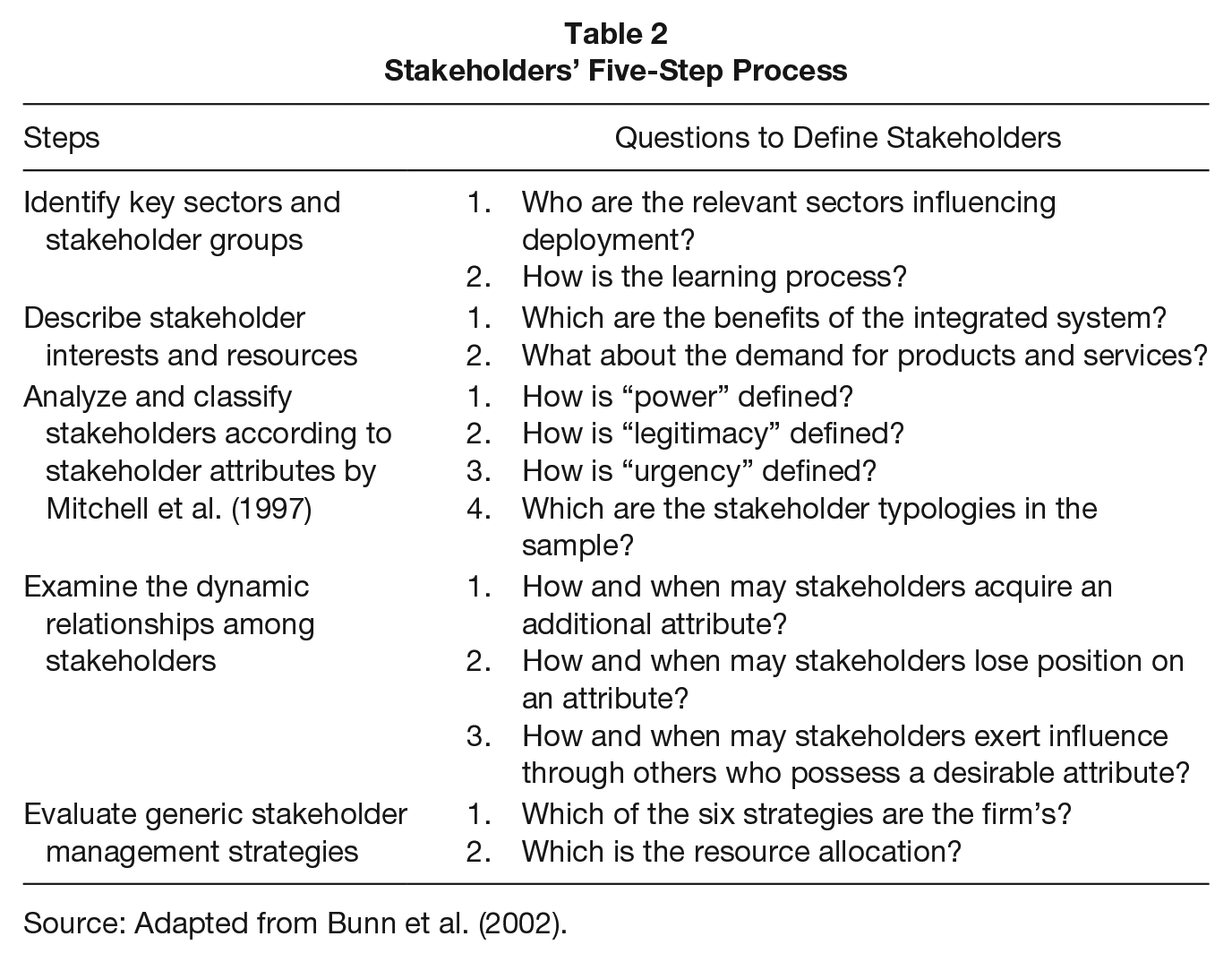
Source: Adapted from Bunn et al. (2002).
These five steps and the related questions discussed above make it possible to define how the stakeholders’ approach can overcome a company’s learning barriers (McCabe et al., 2012). After this theoretical background, the next part discusses this article’s methodology and how data of the Langhe region were collected.
Methodology
Several scholars (Komppula, 2014; Pernecky & Jamal, 2010; Riley & Love, 2000; Ryan, 2010) have highlighted the need for qualitative research in tourism studies. As the aim of this research is to enhance our understanding of the stakeholders involved and their role in promoting sustainability around the Langhe region, a qualitative approach was chosen as a research methodology, to go deeper in interviewers’ mind-set.
The present research aims to highlight two aspects: first of all, who are the stakeholders around the Langhe territory and what are their principal actions in the region, and, second, investigating how the Langhe’s business model in wine, food, and tourism sectors is aligned to the eighth pillar of the Agenda 2030. To accomplish this, we refer to three relevant studies (Bunn et al., 2002; Freeman, 1984; Mitchell et al., 1997), as illustrated above in the theoretical section.
Authors have chosen a single case study methodology after an accurate review of the literature, understanding a dialectical interrogation on different position on sustainability, knowledge sharing, and stakeholder theory. Thus, after this deep analysis, authors have decided to position this article in a “positive” problematization of their research aims, advancing knowledge on the three steam of literature aforementioned (Alvesson & Sandberg, 2011). Referring to the case-study methodology chosen, in 1981, Yin argued that this method was an appropriate approach to explain a research strategy, especially if connected to an experiment, a story, or a simulation. According to Yin (1981, 2009), this approach examines two main aspects: (a) the contemporaneity of the phenomenon and (b) going deeper into those not so obvious and clear boundaries. In addition, Dyer and Wilkins (1991) reinforced the importance of using the single case study as a tool capable of creating high-quality knowledge, even more accurately than multiple case study methodology.
Moreover, the authors deemed a single-case study was more appropriate for this research as it explores the complex dynamics of a phenomenon and applies different theories in a real-life context, avoiding a purely descriptive approach (McKeown, 2004), and they also seek an in-depth understanding of the Langhe region, meaning that the case is of high interest by itself, not only as a representative of similar cases (Komppula, 2014; Stake, 2013).
The single case study (the Langhe region) is relevant for the present research for many reasons (Stake, 2013). In particular, the case study is representative, as it permits the observation of how the food and beverage sector, along with the tourism one, changed the Langhe context and generated a sort of stakeholder’s system. Thus, it is a leading case study because of its awareness around the world due its richness in terms of wines, foods, natural resources, and its attitude to value several commons.
Different typologies of information sources have been used (Eisenhardt & Graebner, 2007). First, Langhe has been investigated as a possible tourism destination, thanks to primary and secondary data. Then, authors made a data triangulation through direct observations (Stake, 2013). In particular, the triangulation process required primary data (in-depth interviews with 18 experts in the fields) and secondary data (advertising and institutional materials and websites from the entities interviewed and other private and public entities belonging to the context).
Exploratory interview data was collected to enable examination of the issues at hand. Thirty-six semistructured interviews were conducted and transcribed. These interviews were conducted with 18 respondents who were somehow involved with the tourism sector of the Langhe region (Alvesson, 2003). Respondents have been selected in accordance to their role in the distinction of stakeholders based on Freeman (1984), Mitchell et al. (1997) and Bunn et al. (2002). In particular, internal and external stakeholders have been selected in our exploratory interviews, they permit to identify the stakeholder attributes by Mitchell et al. (1997; i.e., power, legitimacy, urgency) and they play a relevant role in the territory. More in depth, this study considers the views and opinions of informants from food companies, restaurants, agro-tourism, grocers, export companies, accommodation facilities (hotels and bed and breakfast), tourist companies (i.e., travel agencies, transport companies, tourist guides), providers of raw materials and services, regional tourism offices, cultural institutions (museums, libraries) and Langhe natives. The interviewees participated in local and regional activities and networks, and they came from every municipality in the region. The size of the companies ranged from 1 to some 50 employees, which corresponds to the size of the businesses in the region in general. An overview of the participants in this study is provided in Supplement Table 3 (available in the online supplement).
Purpose sampling was undertaken to achieve a Langhe-wide stakeholder representation. The authors approached specific stakeholders and informed them of the research’s purpose, and asked them to participate. Those who agreed were later interviewed face-to-face, in a place and time they suggested (e.g., their places of work). The information collection occurred between March 2017 and March 2018.
The interviews lasted approximately 2 hours each and were themed on understanding if and how various stakeholders contribute to Langhe’s development as a best practice in “sustained, inclusive and sustainable economic growth, full and productive employment and decent work” (UNWTO, 2017, p. 22). An interview protocol (see Appendix A in the online supplement, for details) was used for recording information and to assist in data collection.
Interviewers took notes before, during, and after the interviews to capture informants’ verbal and nonverbal comments. Each author then autonomously analyzed the interviews and the interviewers’ notes to reduce subjectivity of data interpretation. The respondents and the other triangulation data have been the object of association with each relevant component of the study authors referred (Bunn et al., 2002; Freeman, 1984; Mitchell et al., 1997) and they have been used for verifying the attitude of Langhe as a tourism destination system. These studies have been essential for the present conceptual analysis, which has been based on a case study narration thanks to the experts’ voices. In terms of secondary information, authors have used documentation from the involved companies and their websites, along with past interviews with their managers and owners from magazines and websites.
Finally, authors’ individual interpretations were compared, and any differences that occurred were solved through dialogue. Double-level codification, categorization, and contextualization were used to analyze the data collected (De Massis & Kotlar, 2014). Several researchers (e.g., Cassidy & Guilding, 2011; Lofland, 1974) state that although qualitative studies have a high degree of similarity regarding data collection and analysis strategies, how scholars report the findings is highly diverse. In the next section, we report the findings together with literature support, as well as advertising and institutional material gathered from the websites of the entities interviewed and from other private and public entities belonging to the regional context of interest.
Results And Discussion
The Context of Langhe
Italy is a world-renowned wine-producing country, and the Piedmont region of northwest Italy, where the Langhe territory is, is known for producing red wines (Galati, Crescimanno, Abbruzzo, et al., 2017; Schamel, 2009). In the past three decades, Langhe has received global attention for its wine, food, and tourism sectors, in which several categories of stakeholders emerged for the study.
Langhe produces fine red and white wines, including Barolo and Barbaresco, along with Barbera and Dolcetto, and other younger red and white varieties. Also, the regional food has emerged as a vital sector—“Typical food which exalt a strong culinary tradition” (a grocery entrepreneur). In particular, white truffle, agnolotti, egg pastas called “Tajarin,” egg or tomino cheese with truffle, fruits, and typical food products made with hazelnut, chocolate, and other local ingredients are internationally famous. Both wine and food sectors are important for Langhe’s employment and economic development.
As just stated in the literature section, gastronomy is an inextricably linked between the characterization of a destination and its external knowledge (Kivela & Crotts, 2006, 2009), because it lets the possibility to transfer both tacit and explicit knowledge on culture to the different stakeholders (Grant & Baden-Fuller, 2004; Metaxiotis & Ergazakis, 2008; Simao & Franco, 2018). Moreover, it is described by literature as one of the most important elements, able to affect the authenticity of a tourist destination (Testa et al., 2019).
Knowledge Sharing by Companies’ Stakeholders
According to Metaxiotis and Ergazakis’ (2008) study stakeholders could facilitate the external transfer on knowledge embodied in a specific destination, making a greater contribution in knowledge creation process.
Identifying and managing stakeholders is essential, especially if they can determine success or failure, contributing to long-term sustainability in a sector (Getz & Andersson, 2010).
In the Langhe area there are six different stakeholders, which contribute to create and share knowledge around gastronomy and cultural sectors: (a) local entrepreneurs, (b) family, (c) employees, (d) local growers, (e) local providers, and (f) community.
Each of these actors contribute significantly in identify, assimilate and exploit knowledge from the specific area of analysis to the environment (Ferreira et al., 2018).
There is a long tradition of entrepreneurs with a profound know-how in the region, along with a favorable climate and a richness of natural resources (Petruzzellis et al., 2017; Vrontis et al., 2016).
For three decades, many stakeholders have been involved in these two sectors. There are micro, small, and medium (SME) wine and food companies, along with large ones, characterized by relevant features rooted in the territory. Within this context, “a set of companies’ traditions, values and symbols emerged, and they would be favored by a good reputation of Langhe country of origin in the market” (an association member). Indeed, several famous companies (such as Gaja, Ceretto, Bruno Giacosa, Pio Cesare, & Vietti) export fine wines and food (such as Ferrero and Sebaste in chocolate, delicacies, and pralines) around the world, and the Langhe brand supported other SMEs not initially involved in exporting products. Therefore, “a sort of ‘Langhe factor’” emerged (an export manager), and Langhe brand awareness increased “all companies’ opportunities” (a tourist company member). Within this context, family represents a resource, as Langhe is characterized by a widespread food and wine family business phenomenon, which combines a uniqueness and generational traditions with the territory’s natural resources. As a matter of fact, Santoro, Bresciani, et al. (2018) argue that informal collaboration has a greater effect on innovation performance in companies, thanks to the external influence but also sustainable innovation (Cillo, Petruzzelli, et al., 2019). This distance between the actors fosters creativity in the company, along with an innovative impulse.
Another important stakeholder category includes the companies’ employees, who are mainly Langhe natives. Their relationship with their employers is frequently based on strong ties, as many families’ work with the same company for generations.
Their history is really impressive as they are loyal to the company. It is an interesting aspect: who has entered in the company in the ‘80s and ‘90s is working there until now and they are involved in the company’s activities. (a food entrepreneur)
The companies also generally encourage a participatory approach, “which impacts on our involvement in the company” (an employee). Employees have a relevant role, “as the product is particular to make, and handcrafted processes are essential” (a food entrepreneur). The calm working atmosphere encourages employees to socialize after work and frequently with the employer’s family members, sharing knowledge around all the cultural and environmental characteristics of this region. “I know all my employees and their families, and it favors a strong relationship between the company and my employment” (a wine entrepreneur). The companies create strong bonds with their employees, which has continued over generations and has helped prevent depopulation of the area, thus enhancing traditions.
The relationship between the companies and some local growers of produce such as hazelnuts, grapes, and other fruit is long lasting, and it has been essential during the companies’ life cycles. “Some of our providers are historical, because high quality is relevant and has to be recognized” (a food entrepreneur). Therefore, “providers represent frequently relevant stakeholders in wine and food sectors” (a raw materials provider). In addition, consulting companies operating in other fields favor the involvement of food and wine entities in their business model. With particular reference to technological services, “websites and apps let tourists become more informed” (a service provider) and conscious about what they want to visit, therefore increasing the potential of tourism.
Finally, the Langhe community represents a stakeholder that generally benefits from the richness the wine and agro-food businesses produce. “A history of misery, hunger and sterility caused an impoverishment of the territory, and men frequently moved to cities to work in the region’s factories” (an agro-tourism entrepreneur). The development of wine and agribusiness sectors generated new job opportunities for locals. Indeed, Langhe is characterized by micro family businesses based on agricultural activities. Frequently, companies typically employ locals for seasonal labor, such as farmers in winter, which prevents depopulation and promotes agricultural activities. “The community is also helped by a series of welfare services provided by the companies, such as kindergartens, schools, summer camps, social and affiliated health services and dedicated transportation to reach the factories” (a local).
Consequently, a unique alchemy between territory and stakeholders over generations has been created in the food and wine sectors, sharing knowledge on gastronomy value all over the world (Kivela & Crotts, 2006, 2009). “Our land. Our product. Our heritage” is the motto of one of Langhe’s most popular food companies, which has a strong relationship to the territory. It believes in the territory’s richness and the residents’ dedication and loyalty to it. Valorizing the territory because of its high-quality products is in line with the values and principles of Carlo Petrini’s Slow Food movement. The territory is a resource “in terms of raw materials, employees—thanks to their ability and dedication to work—and financial resources, thanks to a satisfactory relationship with regional banks” (a hotel entrepreneur).
Referring to residents, Woo et al. (2018) found that the influence of community residents’ perceptions of tourism has an impact on their quality of life. In particular, residents who work in the tourism sector have a stronger support in touristic activities (Chen, 2000; Nunkoo & Ramkissoon, 2016).
For 20 years, the wine and food sectors’ exports have helped the diffusion of Langhe’s brand around the world. “Once Langhe was recognized for Barolo and white truffles; now, it is known for hazelnuts, chocolate and food as well, and these products attract many tourists to Langhe” (an export manager). Consequently, “wine and food businesses generated a new, relevant economic driver for Langhe, which is tourism” (a tourist association member). Langhe received more than 330,000 tourists in 2018, which was an increase of 7.2% compared with 2017. Foreign tourists, especially American, Danish, and Swiss tourists, count for 70% of the total. Tourists visit all year, with a peak during the truffle fair in autumn.
Tourism is also helped by the territory’s castles, hilltop villages, farms, and churches, and there is a balance between landscapes and historical architecture. “Alba is also known as the city with a 100 medieval towers” (a cultural institution member) contrasting with modern buildings and beautiful villas set on the hills. In addition, folk festivals boost tourism. The Giostra delle Cento Torri and Podestà Investiture represent historical reconstructions of Alba’s history, along with the famous Donkey Palio, in which donkeys are raced after a historical parade of people in medieval costumes, are a few of the annual traditions which the city of Alba maintains. Popular music events (such as Collisioni and the Alba Jazz Festival) attract different generations every year. In particular, Langhe offers a combination of resources to admire and experience.
Tourism has been first focused on wine and gastronomy in respect of Langhe tradition, while a wide range of tourist attractions has been added, such as nature, arts and outdoors activities, and typical bed and breakfasts which also foster experiential tourism. (a member of a regional tourism office)
The hospitality and entertainment services, along with the food and wine sectors, contribute to destination branding. For instance, the famous Street Food in Langhe event celebrates local produce and products along with several tourist resources; tourists can taste typical products while walking around Alba streets and admiring cultural, natural, and architectural resources.
Tourists’ culture-based differences are an essential element for this territory, whose aim is to make tourists live an unforgettable experience (Mattila, 2000).
Because of the different resources and the people’s ability to exploit their richness, the territory of Langhe—along with Roero and Monferrato—was named a World Heritage Site by UNESCO in 2014: this acknowledgment helped food tourism. The wine, food, and tourism sectors support the promotion of products and brands and, in general, “the valorization of the common heritage and the territory development” (a tourism company member). The combination between the territory’s heritage and the attitude and dedication of entrepreneurs and their employees have made specific places of Langhe famous: the Castle of Grinzane Cavour and Barolo, the hills of Barbaresco wine, the viewpoint of La Morra, the city of Alba, and so on.
Knowledge Sharing in Tourism Sector
Tourism activities involved additional typologies of stakeholders to those identified for the wine and food sectors. Indeed, the wineries and food companies are involved in the tourism sector, because “tourists visit the Langhe also to eat and drink fine products and wines and they are frequently informed” (a tourism company member). Within this context, providers of raw materials and services are also relevant, as they permit companies to reach and maintain a high quality in their business models.
The first stakeholders we should mention are the
Tourist companies come second, and include hotels and bed and breakfasts, travel agencies, transport companies, tour guides, and others involved in guide book publishing, organizing workshops, and in promoting package tours. Bed and breakfasts have become a widespread phenomenon as “the territory represents a key factor generating benefits for the natives involved in bed and breakfast activities” (a bed and breakfast entrepreneur).
Then, private and public entities that work to promote the territory need to collaborate with the other stakeholders. In particular, private companies are involved in cultural and festival planning, as Langhe offers a variety of entertainment and traditional events. Several public entities also promote Langhe, such as the Alba White Truffle National Fair (Ente Fiera Nazionale del Tartufo Bianco d’Alba) which is a nonprofit organization, created in 2003 by the Alba municipality, Alba Traders Association (Associazione Commercianti Albesi) and Carousel of the Hundred Towers (Giostra delle Cento Torri). The tourist board for Alba Bra Langhe and Roero (Ente Turismo Alba Bra Langhe e Roero) is involved in the area’s government and is composed of 100 private and public companies rooted in the territory. Their main goal is the “valorization of wines, food products, culture, and heritage” (a member of a regional tourist office) through the organization of several events, such as Alba International White Truffle Fair in October and the Vinum National Fair in April.
Finally, residents in the territory, which perceived the direct impact on the community in different ways. The native ones are generally very proud of their land and they know its origins, traditions which are practiced by a large part of the Langhe territory. Indeed, the ones whose livelihood depends on tourism activities has a stronger support and reputation on touristic aspects and development, in contrast of ones are not engaged in the touristic process (Woo et al., 2018).
The above stakeholders interact and generate a tourism system for wines, food, culture, folklore, and natural resources, sharing cultural knowledge around this territory. For instance, every year the Alba White Truffle Fair promotes Alba and Langhe in the world through “a combination between cuisine, taste, wines, music, folklore and natural resources, in which top chefs, artists, designers, writers, famous showmen, singers and actors are involved” (a tourism company member). Therefore, “the Langhe phenomenon permitted an inclusive economic growth in which several activities are relevant” (a tourism company member).
In the past two decades, wine, food, and tourism businesses, local farmers and producers have transformed themselves into glocal sustainable entrepreneurs while maintaining their local traditions. “One of their major challenges is the reconciliation of production with sustainable management, protection, and development of lands and other natural resources, culture and traditions, local products, locals’ desires and needs, and, generally, the community” (a member of a regional tourism office). Therefore, the companies’ business models can embrace economic, social, and environmental goals. For instance, the economy has provided work opportunities for locals. “Also, young people and women are involved in the business, as national and European agricultural contributions fostered youth and female entrepreneurship” (a food entrepreneur).
Stakeholder Identification
This study investigates how the Langhe’s business model in wine, food, and tourism sectors is aligned to the eighth pillar—the promotion of a “sustained, inclusive and sustainable economic growth, full and productive employment and decent work” (UNWTO, 2017, p. 22). This goal highlights the need to preserve the uniqueness of a destination (Cortese et al., 2018), such as Langhe. It also promotes decent working conditions, traditional products and culture, and the protection of the territory’s resources (Cantino et al., 2019; Santoro et al., 2017; Sotiriadis, 2017; Vrontis et al., 2016). Within this context, the Langhe district has become a destination providing several typologies of products (such as wine and food) and services (accommodation facilities and other tourism services), which are targeted to different kinds of customers (Tardivo et al., 2017). The luxury target, for example, increases companies’ revenues with a high return on sales. Affordable business models also emerge, involving companies offering cheaper products and fewer services. Different targets also impact on stakeholders’ features and roles.
In this study, we referred to Freeman’s (1984) and Bunn et al.’s (2002) research to describe who the stakeholders around the Langhe district are. We identified several typologies of stakeholders: the wine and food sectors, starting 30 years ago; and the tourism sector, starting 20 years ago. In particular, the stakeholders are the micro, small, medium, and large food and wine companies; tourist companies; private and public entities linked to the territory’s promotion; employees; providers; community; and tourists. They are described in Supplement Table 4 (available in the online supplement).
Internal and External Stakeholders
Using Freeman’s (1984) definitions of stakeholders, we distinguished between internal and external stakeholders. Except for the typology of companies and their employees, it emerged that the stakeholders involved in this analysis are generally external because they are outside the tourism sector, although they are able to affect and influence it. Thus, both internal stakeholders (employees) and external ones (i.e., food and wine companies, tourist companies, private and public entities, providers, the community and tourists) could influence or be influenced. For this reason, after identifying their own stakeholders, the company should engage them, having an initial exploratory meeting to better understand their goals. They should try and speak the stakeholders’ language and to make complex processes simpler and clearer to understand. And finally, they should plan partnerships and collaborations with them (Webb, 2017).
Definitive Stakeholders
After identifying internal and external stakeholders, it is easier to apply the attributes identified by Mitchell et al. (1997) and look at their relationship with each other. The stakeholders whose attributes of power, legitimacy, and urgency are high are identified as “definitive stakeholders” (Bunn et al., 2002; Mitchell et al., 1997), which means that they can move the system toward recognition (legitimacy), influence (power), and sense of urgency. As a matter of fact, we stated before that “also young people and women are legitimately involved in the business [legitimacy], as national and European agricultural contributions fostered youth and female entrepreneurship” (an entrepreneur), which means both targets contribute in terms of their power to create outcomes and value, and there is an external perception that their actions are significant for society. Their ability to interact with different sectors is important, as stated by a member of a tourist association: Tourism first focused on wine and gastronomy in respect of Langhe tradition, while several tourist attractions, such as nature, arts and outdoors activities, have been integrated in the system [urgency], and typical bed and breakfasts which also enhance the experiential tourism [power].
The case study also highlights the strong connections between the stakeholders (Kourtit et al., 2014; McCabe et al., 2012) and shows how and when a stakeholder could acquire, lose, exert influence, or be influenced. Therefore, the Langhe context appears as a system (Festa et al., 2015) where a value chain involves several stakeholders, each having a unique role in the Langhe’s business model (e.g., they are manufacturing or service companies, providers, employees, regional tourism offices, community, tourists, and others).
Within this context, the relationship between stakeholders is effective and unique if they have a strong connection to the territory. Indeed, Langhe has an abundance of natural resources, culture, traditions, and biodiversity (Galati, Crescimanno, Tinervia, et al., 2017), which tourists appreciate. Therefore, Langhe’s tourism needs to be embedded in the territory to maintain its worldwide appeal (Cortese et al., 2018; Galati, Tinervia, et al., 2017).
Therefore, a sustainable approach is necessary, both to preserve the richness of the territory and to offer benefits and opportunities to different stakeholders. Consequently, Langhe’s population stays there, as happened 50 years ago, and new wealth is created for stakeholders.
Within this context, tourism has a large effect on the territory’s social, economic, and environmental aspects. In particular, applying the TBL model (Govindan et al., 2013), we see that Langhe’s tourism is an economic driver, especially for companies involved, which benefits the employees and the locals with the creation and distribution of goods and services (Bansal, 2005). In addition, tourism is a social driver, as all basic needs are highlighted and new opportunities for the community are generated. Last, tourism is an environmental driver, as it preserves the territory’s characteristics, traditions, and its ecological integrity, and tries to minimize negative effects of human activities on the environment (Bansal, 2005; Bowman & Ambrosini, 2000; Bresciani & Oliveira, 2007). The economic, social and environmental drivers represent the main pillars of the concept of sustainable development (Evangelista et al., 2018; Kuhlman & Farrington, 2010). Figure 2 shows the relationship between the three drivers analyzed in the Langhe region.
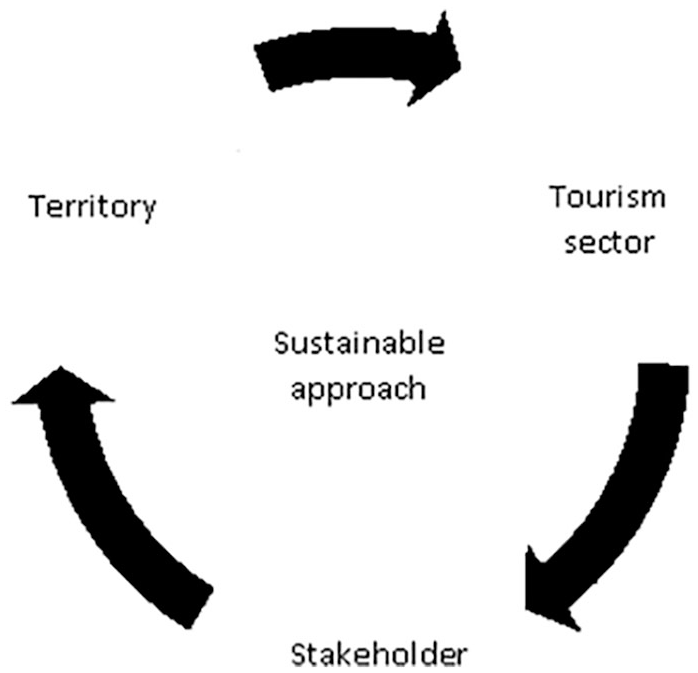
Relationship Between the Three Drivers of the Langhe Region
We believe the results show the elements the Langhe region has to promote sustainable, durable tourism (Cantino et al., 2016) also thanks to a sustainable innovation approach (Cillo, Petruzzelli, et al., 2019). Citizens and tourists of the Langhe play an important role in protecting the territory’s richness and uniqueness (Cantino et al., 2017). Therefore, the Langhe region can be characterized by “sustained, inclusive and sustainable economic growth, full and productive employment and decent work” (UNWTO, 2017, p. 22).
Conclusions, Implications, Limitations, and Future Research Directions
Conclusions
In decades of tourism research, a number of studies have outlined and defined principles of sustainable tourism (Dedeke, 2017; Honey, 2008; Wallace & Pierce, 1996). Yet the current study provides new extensions and explanations to the relevant literature. As a mechanism for developing sustainability through the tourism sector, this article represents one of the first efforts to introduce the stakeholder engagement theory in a real-world domain. Most important, this research begins to explain the complex role that stakeholders in the tourism sector play in sustainable development, with the example of the Langhe region.
The conclusions of this research are preliminary in nature because of the exploratory approach that the study has taken. This limited generalizability of the results is inherent in the case study methodology that aims to comprehend complex phenomena rather than to provide statistical measures of frequencies and correlations (Boiral, 2007; Eisenhardt, 1989). Therefore, the results of this study are contingent and specific, even if we believe that our findings could apply to other similar regions.
Theoretical and Practical Implications
Within this context, the Langhe case study has significant theoretical implications. First, this study creates a map of “definitive” stakeholders operating in a territory characterized by several economic drivers and having a high impact on sustainable actions in the territory. With this map, scholars can identify and build on stakeholders’ role in developing sustainability through tourism, focusing on the interrelationships between tourism, the underlying economy and economic drivers of a specific destination. Second, several relevant researches in the literature have been integrated, referring to a certain context characterized by different economic drivers and, consequently, stakeholders. In particular, the study of Mitchell et al. (1997) has been integrated to the Bunn et al. (2002) one, with a dichotomous classification between internal and external stakeholder (Freeman, 1984). Consequently, the dichotomous classification between internal and external stakeholders provides scholars an in-depth understanding of the relationship between the three attributes described (power, legitimacy, and urgency).
The practical implications of this study could be very interesting, as the context plays an important role in the world economy. Indeed, the World Travel and Tourism Council (2018) reports that in 2017, leisure travel spending captured 77.5% of global tourism, compared with 22.5% for business travel spending, which equals 10.2% of the global Gross Domestic Product. Several reasons could be identified. First, the findings of this study will interest various organizations that contribute toward developing sustainability in their regions. That is, businesses in sustainable regions have a competitive advantage over those in other tourism regions. Second, the range of interest according to our research focus is wide as the territory has several economic drivers (i.e., wine, food, and tourism). Therefore, the research covers one of the 17 SDGs underlined by the Agenda 2030 recommending best practices in implementing the goal, as the results highlight how the Langhe territory is creating a “sustained, inclusive and sustainable economic growth” (UNWTO, 2017, p. 22). In addition, preserving its uniqueness and sustainability could create value for both companies and natives in this territory and for tourist organizations that offer better services. Third, the dichotomous classification between internal and external stakeholders, as defined by Freeman (1984), allows companies and organizations to become more conscious about the nature (internal or external) of their stakeholders and more able to analyze the relationship between the attributes of power, legitimacy, and urgency. Last, the study’s findings provide directions to organizations on how to serve visitors well so they have excellent experiences during their visit. Indeed, if all stakeholders operating in this territory focus on the visitor, as shown by the interconnections between the economic, social, and environmental drivers of the Langhe territory, the importance to maintain this land becomes obvious. Thus, both citizens and local companies are encouraged to preserve this territory. In addition, authorities are also encouraged to introduce new technologies to facilitate interactions between stakeholders, such as visitors, public institutions, tourist organizations, and other companies (Nayebpour & Bokaei, 2018).
Limitations and Future Research Directions
Despite the aforementioned theoretical and managerial implications, this exploratory study is not without some limitations, which provide further research avenues on this topic. In particular, generalizability is limited because this study was conducted within only one region. A single case study could be reinforced by a comparison with another territory that has a similar wines and food sector, such as the Bordeaux region in France. Here, the similarities and differences between the two lands could be analyzed to track and compare how companies in each region implement their business strategies. Different national, organizational, or occupational cultures could engender different stakeholders with different roles and contributions toward sustainable development. Even though these constraints limit our understanding of the various stakeholders engaged toward this goal, our work begins to illuminate the role these stakeholders play. Then, some of the CEOs of the involved companies could be interviewed to understand their business and how they see their business in the future.
Because this case study was to develop its theory, future research could test, validate, and further expand our findings. For instance, it could be interesting to examine how the role and contribution of specific stakeholders change over time, whether new stakeholders enter the global sustainability landscape, or whether various contextual factors interact in the relationship between stakeholders’ role and sustainability.
In addition, in our review of current literature, we identified that there was no systematic overview of the literature to map extant research, as well as to provide the basis for future scholars on which to build. Thus, we urge scholars to focus on this task, taking the examples of other state-of-the-art reviews (e.g., Barreto, 2010; Christofi et al., 2017; Leonidou et al., 2018) and provide a systematic overview of the literature on stakeholder engagement and sustainability development in the tourism sector. Last, studies like ours would be relevant to other regions where tourism is an important contributor to the national economy, such as the Bordeaux region in France.
The last decade has seen a tremendous increase in the volume of research on tourism and sustainability development. Toward this direction, several global organizations have also turned their attention toward developing a sustainable “tomorrow” for future generations. Still the development of global sustainability has yet to reach its targets and provide a better world. We hope and believe that this study shall inspire the cross-fertilization of tourism research with sustainability and shall provide a theoretical basis for future research toward the advancement of this domain to a paradigmatic status with global and real-world implications.
Supplemental Material
sj-pdf-1-jht-10.1177_1096348020982353 – Supplemental material for Sustainable Development in Tourism: A Stakeholder Analysis of the Langhe Region
Supplemental material, sj-pdf-1-jht-10.1177_1096348020982353 for Sustainable Development in Tourism: A Stakeholder Analysis of the Langhe Region by Demetris Vrontis, Michael Christofi, Elisa Giacosa and Francesca Serravalle in Journal of Hospitality & Tourism Research
Footnotes

Supplemental Material
Supplemental material for this article is available online.
Notes
References
Supplementary Material
Please find the following supplemental material available below.
For Open Access articles published under a Creative Commons License, all supplemental material carries the same license as the article it is associated with.
For non-Open Access articles published, all supplemental material carries a non-exclusive license, and permission requests for re-use of supplemental material or any part of supplemental material shall be sent directly to the copyright owner as specified in the copyright notice associated with the article.
