



Abstract
Based on the theory of reasoned action, this study examines the factors that affect the revisit intention of Chinese golfers. It focuses on the mediating effects of place attachment on the golfers’ perception of golf-course employee attitudes and destination distinctiveness. To test the conceptual model, a survey of 494 Chinese golfers was conducted using factor analyses and structural equation modeling. The article further applied a bootstrapping method to test the mediating effects of place attachment. The results indicate that the revisit intention was influenced by the golfers’ perceptions of employee attitudes, destination distinctiveness, and place attachment. It was also found that place attachment mediated these relationships. Finally, the theoretical contributions and industrial implications were discussed.
Introduction
In the recent decades, golf has grown to be not only a popular sport but also a recreational tourism activity with a major economic impact. Golf tourism is a high value-added niche sector because most golfers with higher incomes spend more at destinations than mass tourists (Tassiopoulos & Haydam, 2008). Hainan Island is an international tourism island with golf courses that account for 10% of China’s total. However, diverse regulatory government policies (e.g., environmental policies) and the ongoing economic slump have jeopardized the financial state of many golf courses. In 2018, the number of golfers in Hainan decreased by 35%, and 61% of the golf clubs endured financial losses (Forward Group, 2018). The decreased demand has led to the closure of more than 10 golf courses from 2013 to 2019 on Hainan Island (The People’s Government of Hainan Province, 2019). In light of this situation, the Hainan International Golf Federation was established in 2019 to integrate golf resources, increase golf consumption, and encourage repeat golfers. How to attract and retain golf players and increase the number of repeat golfers has become a key problem for golf course managers and industrial practitioners in the rapidly changing market with growing competitive pressure.
Golfers might visit or revisit a golf destination for a variety of reasons (Correia et al., 2007; Hutchinson et al., 2010). Loyalty to the destination has been widely defined as a determinant of golfers’ future behavior (Akinci et al., 2015; Song et al., 2017). However, the role of golf-course employees and their attitudes to the golfers are becoming increasingly important for business success, but these aspects have not been fully examined in previous studies (García-Almeida et al., 2015). To address this deficiency, this study proposes a conceptual model based on the theory of reasoned action (TRA), in order to examine the influence of golfers’ perceptions of employee attitudes, place attachment, and destination distinctiveness on golfers’ revisit intentions. This research contributes to expanding theoretical development in the golf tourism literature and offers valuable insight for destination managers who wish to attract more repeat golfers and enjoy a competitive advantage.
Literature Review
Golf Tourism
Golf tourism is considered to be a high added-value international sector (S. S. Kim et al., 2005), as golf courses have attracted golf players from other places around the world (Gibson & Pennington-Gray, 2005). Many scholars have paid attention to golf tourism, especially to the golfers’ behavior. For example, Correia et al. (2007) examined golfers’ individual preferences and revisit intentions and found that their revisits were related to both destination attributes (e.g., climate) and golf course attributes (e.g., the quality and surrounding of the course). Akinci et al. (2015) also argued that golfers’ perceived value (i.e., emotional value, social value, functional price value, and service quality value) affects their revisit intentions, and they would return to the destination if it satisfies their individual preferences. Furthermore, Hutchinson et al. (2010) studied the impact of satisfaction on golfers’ behavioral intentions and found that their overall satisfaction significantly influenced their intentions to revisit the destination.
The characteristics of a destination might provide tourists with a sense of its distinctiveness and attractiveness, which would encourage revisits (Scheyvens & Momsen, 2008). In terms of marketing design, destination distinctiveness can satisfy the needs and expectations of tourists, resulting in a stronger visit and revisit intention (Deng et al., 2002). The TRA assumes that individuals are rational and are likely to use all existing information and assess all potential implications prior to making a decision about whether to participate or not in a specific behavior (Ajzen & Fishbein, 1980). The TRA has been the most frequently utilized theoretical framework to explain the relationship between attitudes and tourism behavior (Ribeiro et al., 2017). For example, Ryu and Han (2010) found that The TRA predicted the intention to try local cuisine, and that attitudes significantly affect behavioral intentions. However, these aspects are scattered among previous studies and have not been analyzed in the context of golf tourism. The integration of these aspects with the TRA in the present study is of importance when attempting to examine the complexity of perceived attitudes and behavioral intentions (Untaru et al., 2016).
The Theory of Reasoned Action
The TRA is a belief-based social cognitive theory that has become one of the most popular conceptual frameworks for behavioral research (Ajzen & Fishbein, 1980), and for predicting behavioral intentions and actual behavior in tourism research (Ryu & Han, 2010). The TRA posits that intention determines actual behavior: the more people intend to engage in a particular behavior, the more likely they are to engage in it. The TRA assumes that attitudes and subjective norms have a direct causal impact on behavior through the mediation of behavioral intention. Attitudes can be understood as a general degree of (un)favorableness to adopting a specific behavior (Koo & Lee, 2019), representing a summary evaluation of a psychological object that is captured in the attribute dimensions of good–bad, harmful–beneficial, pleasant–unpleasant, and likable–dislikable (Ajzen, 2015). Allameh et al. (2015) found that sport tourists’ perceived quality and perceived value influence their revisit intentions positively and their perceived value includes residents’ attitudes, accessibility, and other dimensions. According to the TRA, the more positive the attitudes and the stronger the subjective norms, the stronger the behavioral intentions, and the more likely the individual will actually perform the behavior (Ajzen, 2015). In sports tourism research, one of the most important behavioral intentions is revisit intention, which is the likelihood that a tourist will make repeat visits to a tourism destination (Baker & Crompton, 2000). Reparticipation and future exercise are the two most popular behavioral intentions (Hyun & Jordan, 2019). Ko and Stewart (2002) stated that, given the interaction between residents and tourists, residents should consider being welcoming hosts in order to ensure tourist satisfaction, which is linked to both perceived resident attitudes and destination revisits. By applying the TRA as a methodological framework to explore golfers’ perceptions of employee attitudes associated with revisit intentions, golf-course employee attitudes associated with revisit intentions, the following null and alternative hypotheses can be stated:
Proshansky et al. (1983) suggested that when individuals identify with a place, they are likely to feel a sense of attachment to that welcoming place. Sense of place and feeling welcomed are likely to encourage tourists to identify with a particular place (Goggin et al., 2017). Eusébio et al. (2018) studied the influence of host–tourist interactions and place attachment on residents’ attitudes toward tourism development and found that place attachment is positively affected by residents’ attitudes. Taylor et al. (1984) posited that residents’ perceptions of “place identity” and “place dependence” are influenced by their perception of the psychological and social experience of that place, and thus by their attitude. Accordingly, that place and thus by their attitude. Accordingly, the following null and alternative hypotheses can be proposed:
There are a number of studies that examine place attachment as a mediating variable (Hosany et al., 2017; Song et al., 2020). For example, George and George (2012) posited that place attachment is a mediator between past purchases and future purchase intention. Buta et al. (2013) found that attitudes have a positive impact on affective factors (i.e., connection to nature and place attachment). Therefore, the mediating role of place attachment between golfers’ perceptions of golf-course employee attitudes and their revisit intentions was proposed in the following null and alternative hypotheses:
Destination Distinctiveness
Distinctiveness is derived from the concepts of organizational identity (Deshpandé & Stayman,1994) and social identification (Mehra et al., 1998). Distinctiveness is a means of ensuring the prosperity of a tourism destination by emphasizing its differences and enhancing its qualities in order to make the place seem unique and special (Ginting et al., 2017). The identification of distinctive characteristics helps determine their core resources when developing promotional strategies (Lu, & Reardon, 2018; Tian et al., 2021). These characteristics include tangible physical elements such as geographical location (Campelo et al., 2013) and intangible elements such as the diversity and abundance of foods and culture (Lin et al., 2011). Anholt (2009) used “sense of place” to denote location distinctiveness, deriving the concept from a variety of factors considered to be the “DNA of a place”: (a) the place itself (e.g., its physical and cultural environment); (b) the products with which the place is associated; and (c) the local people. Destination distinctiveness includes three types of “special” factors: social, economic, and environmental (Devine-Wright, 2011). Truong et al. (2018) further argue that distinctiveness factors include landmarks, uniqueness, particular character, and the different perceptions of these factors.
A place is distinctive when visitors can easily differentiate it from other places, resulting in higher revisit intentions (Reardon et al., 2019; Wang & Xu, 2015; Zilberman et al., 2019). In golf tourism, the location of a golf course, its surrounding environment, and its unique resources play a key role in attracting golfers. Correia et al. (2007) found that the distinctiveness of a golf destination was highly associated with the probability that golfers would return for another visit. Hence, the following null and alternative hypotheses were formulated:
Drawing on the principle of distinctiveness, people living in a physically or culturally distinctive place are likely to exhibit higher place identification. A destination with special characteristics (e.g., natural resources) affects how tourists evaluate a destination and facilitates place attachment (Warzecha & Lime, 2001). These features generate unique experiences for tourists and lead to place attachment (J. H. Kim & Ritchie, 2012). The attractiveness of natural scenery, culture, and traditional buildings as the manifestations of the principle of destination distinctiveness enhance nature-based tourism and generate place identification (Ginting et al., 2017). Moore and Graefe (1994) found that destinations will enhance tourists’ place attachment if they can attract tourists by providing unique resources, distinctive culture, or quality entertainment. Gross and Brown (2008) also argued that the distinctive characteristics of a tourism destination can affect the intention to visit or revisit. Hence, the following null and alternative hypotheses were proposed:
Tourist destination selection begins with the evaluation of the attractiveness and distinctiveness of tourist destinations. With the strengthening of the overall image, tourists develop a sense of place attachment for a destination, and this then influences their tourism behavior and intentions (Qiong & Zhao, 2016). Truong et al. (2018) found that natural, human, infrastructure, and facility factors are the most distinctive attributes of the destination that can explain tourists’ satisfaction, behavioral intention, and behavior. Place attachment was found to exert a significant effect in mediating the relationship between destination attractiveness and environmentally responsible behavior for island tourism in Penghu, Taiwan (Cheng et al., 2013). Accordingly, the following null and alternative hypotheses were formulated:
Place Attachment
Place attachment originates from the local geography (Gu & Ryan, 2008). Environmental psychology scholars consider place attachment to be related to the positive emotional or psychological processes that people experience (Hosany et al., 2017), including place dependence and place identity (Williams et al., 1992). Place dependence refers to how a particular environment promotes certain behavior, and to how a place fulfills the functional expectations and needs of individuals (Moore & Graefe, 1994). Place identity refers to the emotional connection that individuals have with a place, a connection that develops through the process of self-regulation (Williams & Vaske, 2003).
In the field of golf tourism, Petrick and Backman (2002) examine how golfers are associated with particular golf courses due to the special scenery, and how place attachment affects how golfers choose golf courses and destinations. Smith et al. (2016) found that place attachment positively influences revisit intentions. A high degree of place attachment is likely to increase positive emotions. In an empirical study of Hainan Island, Song et al. (2017) found that place attachment mediated golf destination and had a positive impact on golfers’ behavioral intentions. Therefore, the following null and alternative hypotheses were proposed:
To present the relationships between golfers’ perceptions of employee attitudes, golf destination distinctiveness, place attachment, and revisit intentions, this research study has developed a conceptual framework in Figure 1.
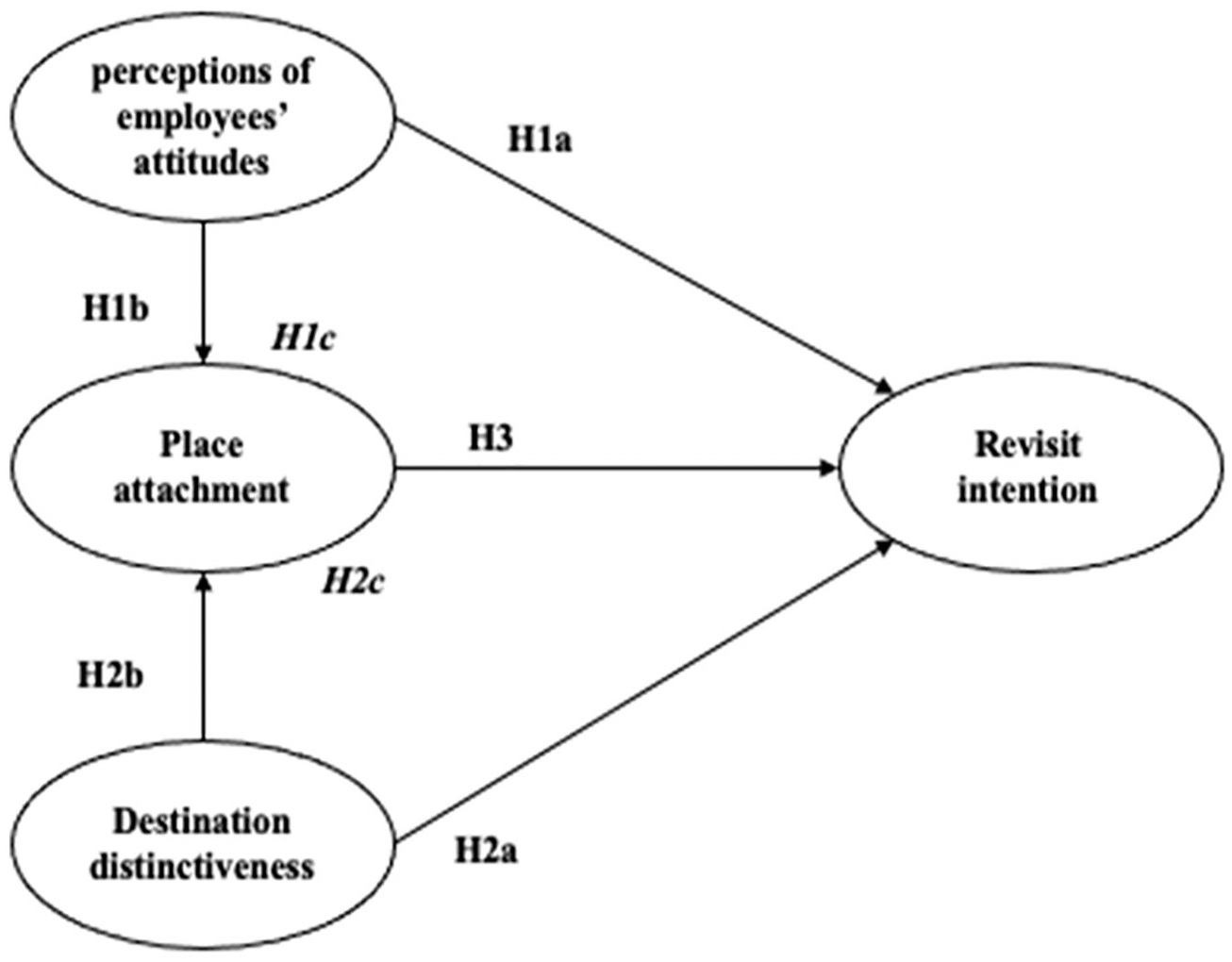
Proposed Conceptual Model
Methodology
Construction Measurement
The questionnaire included four sections: golfers’ perceptions of employee attitudes, destination distinctiveness, place attachment, and golfers’ revisit intentions. To avoid personal bias, a 5-point Likert-type scale was applied for all items (1 = strongly disagree, 2 = disagree, 3 = neither agree nor disagree, 4 = agree, and 5 = strongly agree).
Golfers’ perceptions of employee attitudes were measured using five items that asked the respondents to identify their perceptions of golf-course employee attitudes (Woosnam, 2012).
Measurement of place attachment was based on Williams et al. (1992), who identified place identity and place dependence as two components of the human-place bond. Place attachment was assessed using 10 items about attachment to Hainan Island.
This study used a combination of structured and unstructured techniques to differentiate various aspects of golfers’ perceptions of Hainan Island as a golf destination, including a comprehensive review of the previous golf literature, interviews with golf marketers, and searches of websites for Hainan Island. Based on Ginting et al. (2017) and Truong et al. (2018), this research adopted 14 items (four about natural resources; five about human resources; and five about infrastructures and facilities) in order to measure golf destination distinctiveness.
Revisit intention was measured using three items, and golfers were asked to indicate the extent to which they intended to visit Hainan Island to play golf again in the next 2 years (Song et al., 2017). This study also collected demographic data about the sample: gender, age, occupation, education, monthly income, frequency of playing golf, and golf experience.
Sampling
This study originally developed the questionnaire in Chinese. In order to ensure the content validity of the questions, two tourism scholars and three local golf-course managers were interviewed. All of them had decades of professional experience in golf tourism, and they provided insightful comments and revisions to make the questions clear and reasonable. Then, a pretest was conducted on Hainan Island with 100 respondents to evaluate the validity of the questionnaire. An exploratory factor analysis was applied to eliminate items with factor loadings below .40 and with loadings higher than .40 on more than one factor; the reliability coefficients for each construct exceeded the threshold of .70 (Hair et al., 2013). As a result of these procedures, some questions were revised to avoid confusion, and four survey questions about destination distinctiveness were dropped. The remaining 29 items explained 71.37% of the total variance and had a Kaiser–Meyer–Olin value of .966 and a Bartlett’s value of .951.
The destination of interest in this study was Hainan Island, where golf has been an important source of revenue for its 36 golf courses. Hainan Island is the southernmost province in China, with an average temperature of 82 °F (28 °C) in July and 64 °F (18 °C) in January, making Hainan Island one of the best choices in China for playing golf during the winter. The geographical location of Hainan Island in China is showed in Supplemental Figure S1 (available online). However, the seasonality of golf and low-price competition are important in the Hainan Island golf market. Regional economic development there is not prosperous; there are few large-scale enterprises and high-income households. The number of local people who play golf is often less than 2,000 per year, and 95% of the golf players come from other places. The samples in this research were golfers who were at least 18 years old and were currently playing golf on Hainan Island, China.
Data Collection
From September 1 to October 15, 2018, eight students from Hainan University assisted with data collection at Haikou airport and seven golf clubs on Hainan Island. For this study, they conducted face-to-face interviews with 550 golfers visiting Hainan Island. To maximize the quality of the survey, several qualification criteria were used. First, respondents had to be golfers. Second, any surveys completed in less than 3 minutes were eliminated. Third, each respondent answered the survey questions only once. After filtering, 517 completed questionnaires were valid (response rate of 94%).
Data Description
To avoid biased samples, 23 questionnaires with more than five missing values were dropped (Hair et al., 2013). Then, the remaining 494 questionnaires (response rate of 90%) were used for further modeling. The respondents came from different regions in China and stayed at least one night (>24 hours) on Hainan Island in order to play golf or participate in golf-related events. We summarized the demographic characteristics of the respondents in Supplemental Table S1 (available online): 66% were male, in line with the male-to-female ratio among Chinese golfers of 7:3; the majority of the respondents were aged 20 to 39 years (85.22%), and had college graduate education (58.70%); 75.71% had a medium income of $1001 to $3000 per month; 57.09% played golf two to three times per month; and 96.77% had golf experience in the previous 2 years.
Empirical Results
A three-step approach was applied to assess the conceptual model. First, confirmatory factor analysis (CFA) was used to examine the reliability and validity of the constructs. Second, structural equation modeling was adopted to test the seven hypotheses using the maximum likelihood estimation method. Third, bootstrapping was used to measure the mediating effects of place attachment on the relationships between golfers’ perceptions of employee attitudes, destination distinctiveness, and revisit intentions.
Measurement Model
To assess the internal consistency and reliability of the construct (i.e., golfers’ percetions of employee attitudes, place attachment, destination distinctiveness, and revisit intentions), this study computed factor loadings (>.70), Cronbach’s α (>.80), and construct reliability (>.70; Anderson & Gerbing, 1991). Table 1 shows that these values were all above their respective threshold values. CFA models require reliable fit indices: chi square/degrees of freedom (χ2/degrees of freedom [df]) < 3.0; root mean square error of approximation (RMSEA) < .08; goodness-of-fit index (GFI) > .90; incremental fit index (IFI) > .90; Tucker–Lewis Index (TLI) > .90; parsimony comparative fit index (PCFI) > .50; and parsimony normed fit index (PNFI) > .50 (Hair et al., 2013). The CFA measurement model showed acceptable model fit indices: χ2/df = 2.914, p < .05; RMSEA = .071; GFI = .903; IFI = .933; TLI = .926; PCFI = .937; PNFI = .926. These results indicate that the measurement model was reliable (Anderson & Gerbing, 1991).
CFA Results for Measurement Model
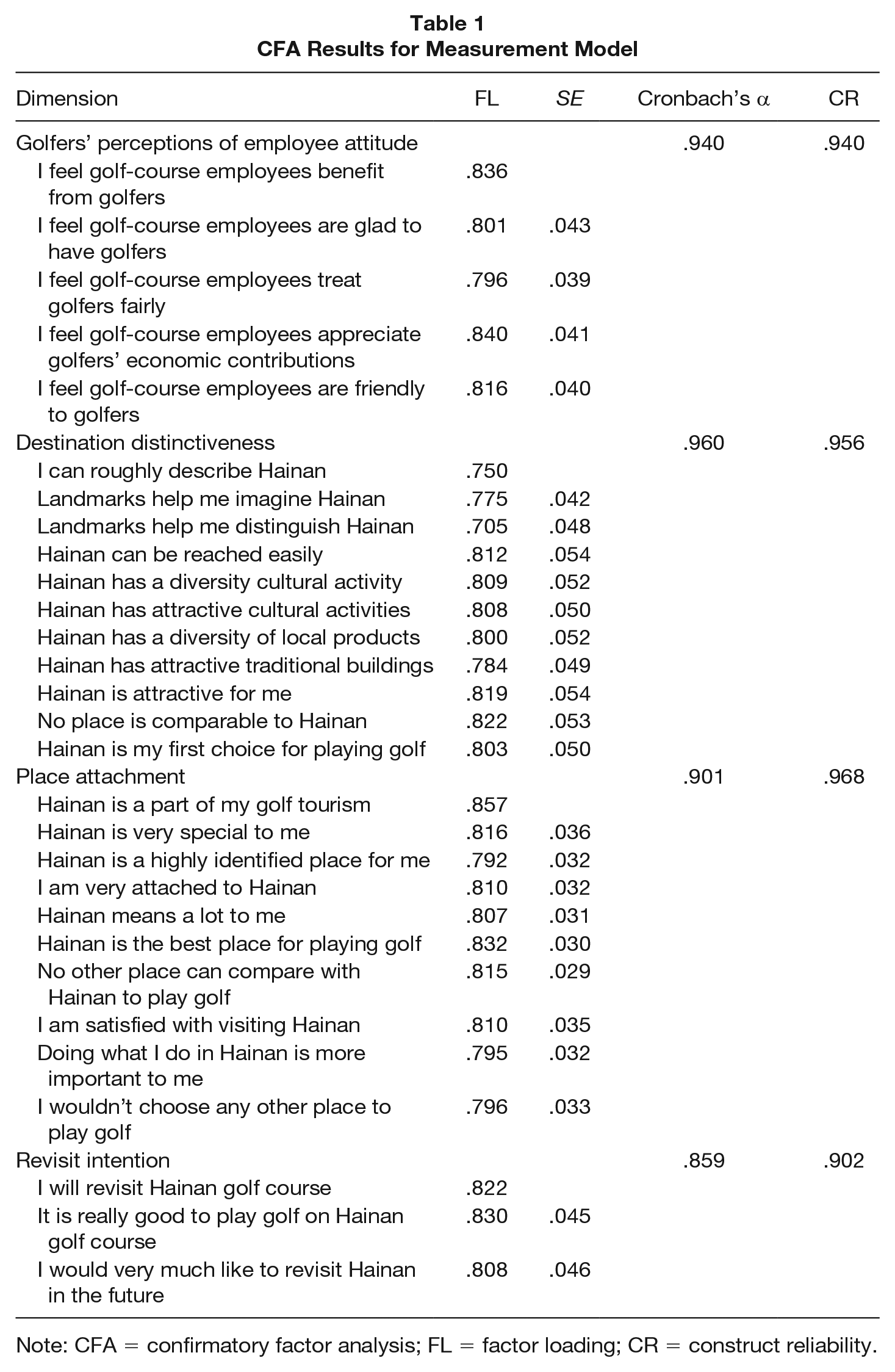
Note: CFA = confirmatory factor analysis; FL = factor loading; CR = construct reliability.
Discriminant validity, indicating the extent of dissimilarity between different constructs, can be examined using average variance extracted (AVE) estimates, which exceed the squared correlations (AVE > .50) of the interconstruct correlations (Hair et al., 2010). Table 2 shows that the AVE values of the latent constructs were more than the interconstruct correlations, indicating a good discriminant validity.
Discriminant Validity Matrix for the First-Order Measurement Model
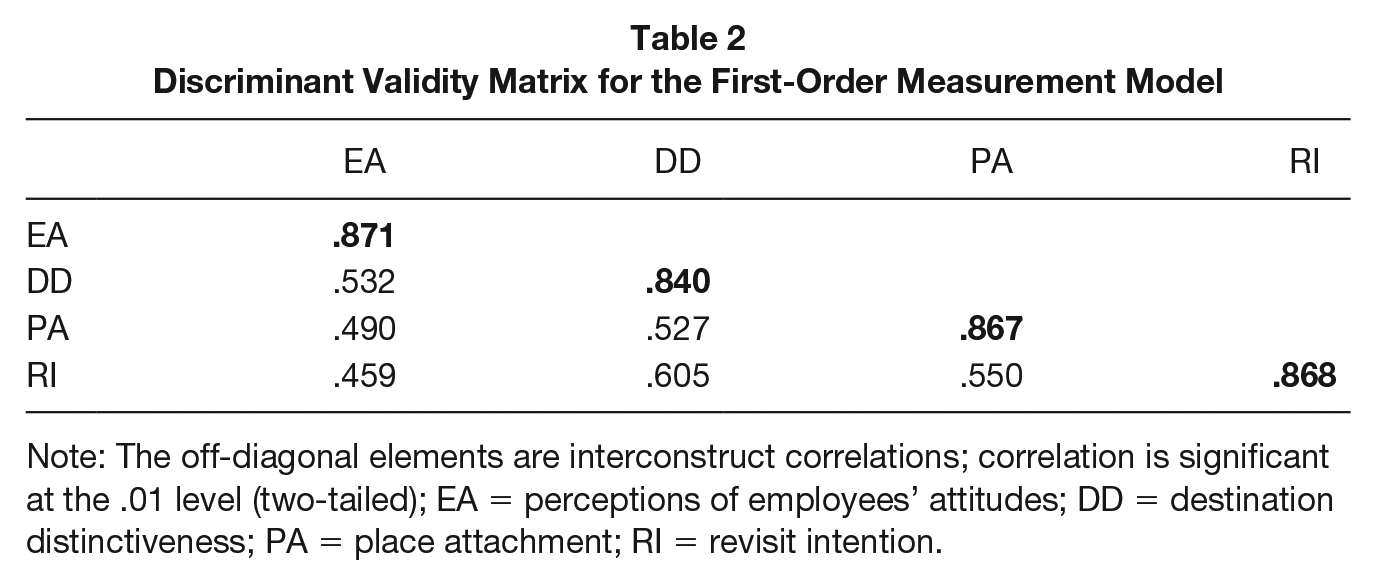
Note: The off-diagonal elements are interconstruct correlations; correlation is significant at the .01 level (two-tailed); EA = perceptions of employees’ attitudes; DD = destination distinctiveness; PA = place attachment; RI = revisit intention.
Structural Equation Model
Based on the CFA measurement model, structural equation modeling was used to test the seven hypotheses: the relationship between the golfers’ perceptions of employee attitudes and their revisit intentions (Hypothesis 1a) and place attachment (Hypothesis 1b); the relationship between destination distinctiveness and revisit intentions (Hypothesis 2a) and place attachment (Hypothesis 2b); the relationship between place attachment and revisit intentions (Hypothesis 3); the mediating effect of place attachment on the relationship between the golfers’ perceptions of employee attitudes and their revisit intentions (Hypothesis 1c); and the mediating effect of place attachment on the relationship between destination distinctiveness and revisit intentions (Hypothesis 2c). Table 3 shows that five of the hypotheses (i.e., Hypothesis 1a, Hypothesis 1b, Hypothesis 2a, Hypothesis 2b, and Hypothesis 3) were not rejected. The golfers’ perceptions of employee attitudes had a positive effect on their revisit intentions (Hypothesis 1a: β = .481; t value = 5.594; p < .001) and place attachment (Hypothesis 1b: β = .735; t value = 15.259; p < .001). So, the null Hypothesis 01a and Hypothesis 01b should be rejected. Destination distinctiveness had a positive effect on revisit intentions (Hypothesis 2a: β = .173; t value = 2.120; p = .032) and place attachment (Hypothesis 2b: β = .326; t value = 5.116; p < .001), and thus, Hypothesis 02a and Hypothesis 02b should be rejected. Place attachment strengthened revisit intentions (Hypothesis 3: β = .397; t value = 4.794; p < .001), so the null hypothesis H03 should be rejected, and, conversely, Hypothesis 3 can be accepted. In general, the model fit indices were satisfactory (χ2/df = 2.657; RMSEA = .058; GFI = .927; IFI = .949; TLI = .944; PCFI = .965; PNFI = .960), also indicating that the parameter estimates were stable.
Empirical Results for the Equation Structural Model
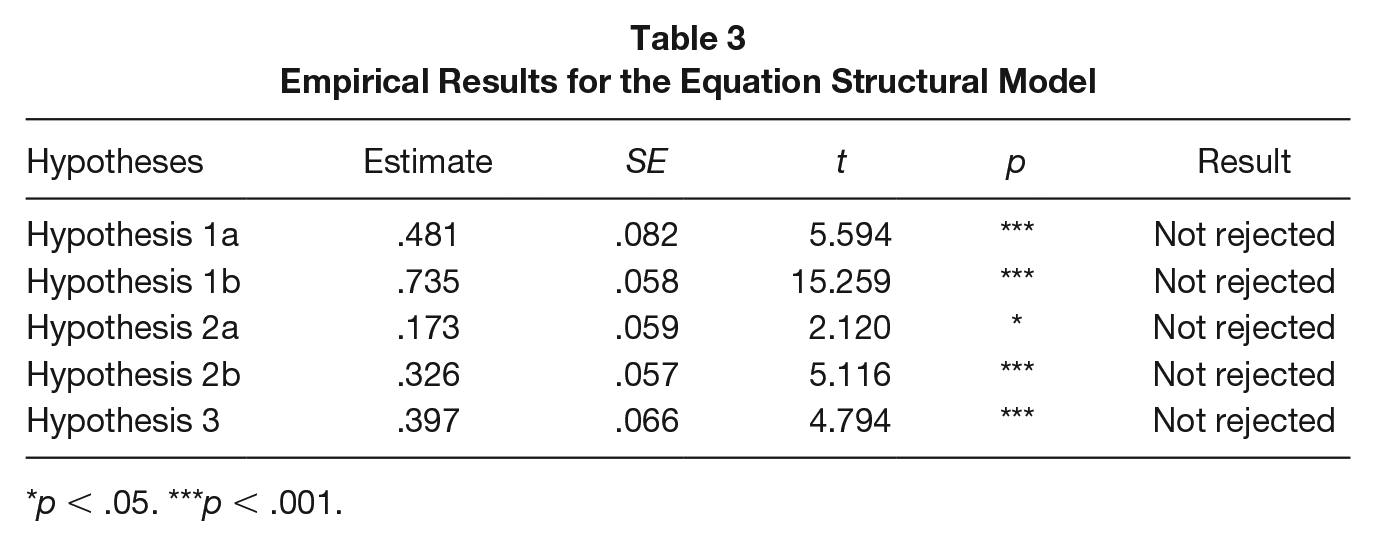
p < .05. ***p < .001.
Bootstrapping Approach
There are four primary methods to test mediating effects. First, the causal steps method is a series of tests of links in a causal chain; however, it does not provide a joint test, so it is not accurate for weak mediating effects (Baron & Kenny, 1986). Second, the difference in coefficients method compares the relationship between the dependent variable and the independent variable before and after adjustment for the mediation variable; but this method has some drawbacks such as specifying no relationship between the mediating variable and the dependent ones (MacKinnon et al., 2000). Third, the product of coefficients method mainly provides the estimates and the standard error of the mediation variable effect, but its sampling distribution does not follow the normal distribution, as is typically assumed (Elbakidze et al., 2011). Fourth, the bootstrap method is considered to be a powerful resampling approach for obtaining parameter estimates and confidence intervals when the variables are not assumed to be normally distributed (MacKinnon et al., 2007).
The bootstrapping approach was used to test the mediating effect of place attachment. This study estimated the corresponding 95% confidence intervals for the bootstrap, based on the estimates of the direct and indirect effects on 5,000 bootstrap samples (MacKinnon et al., 2007). Table 4 shows that the 95% confidence interval constructed by the bootstrapping method did not contain zero, indicating significant direct and indirect effects. The results suggest that place attachment mediates the relationship between the golfers’ perceptions of employee attitudes and their revisit intentions, and that between destination distinctiveness and revisit intentions. Thus, the null hypotheses Hypothesis 01c and Hypothesis 02c should be rejected, therefore accepting Hypothesis 1c and Hypothesis 2c, respectively.
Bootstrapping of the Mediating Effects of Place Attachment.
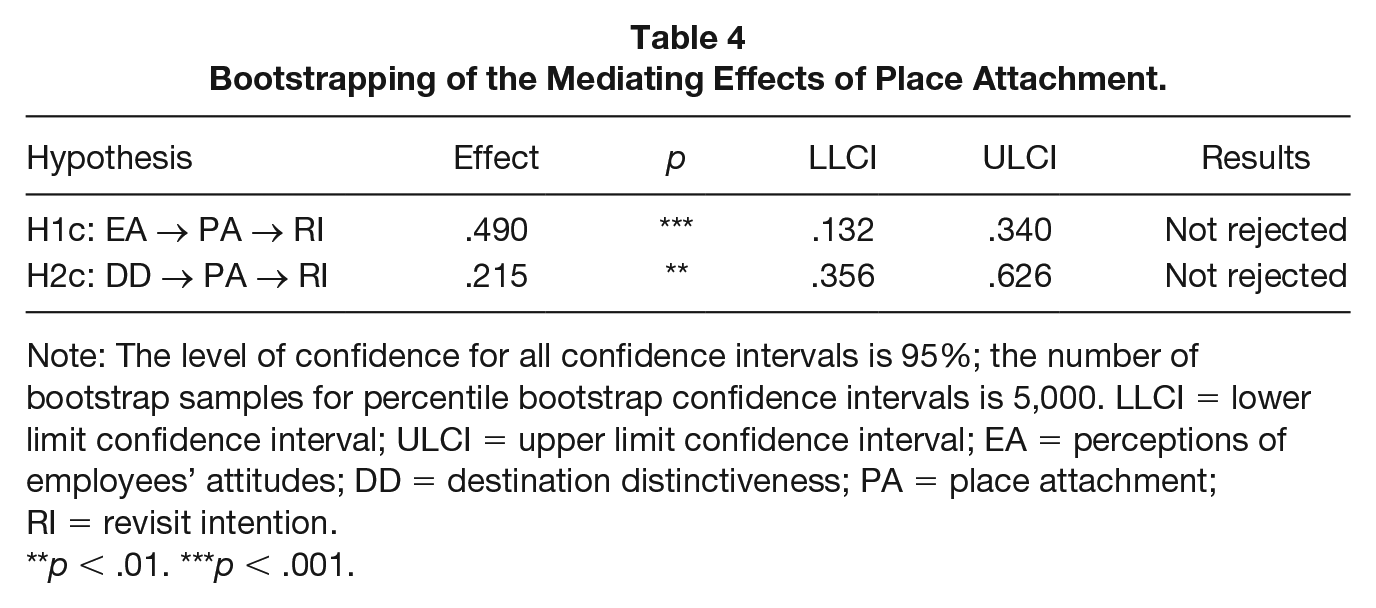
Note: The level of confidence for all confidence intervals is 95%; the number of bootstrap samples for percentile bootstrap confidence intervals is 5,000. LLCI = lower limit confidence interval; ULCI = upper limit confidence interval; EA = perceptions of employees’ attitudes; DD = destination distinctiveness; PA = place attachment; RI = revisit intention.
p < .01. ***p < .001.
Robustness Check
Robustness checks were further performed on the results using subsamples. Golfing is known to be expensive due to costly golf equipment (e.g., golf clubs, balls) and memberships (Petrick & Backman, 2002), causing golf players to incur large expenditures. Thus, their income level prevents many people from playing golf. In light of their various monthly incomes, respondents were divided into two groups: 279 respondents with a lower income (≤$2,000) and 215 with a higher income (≥$3,000). Table 5 shows that the results with two groups of subsamples were both robust.
Robustness Check
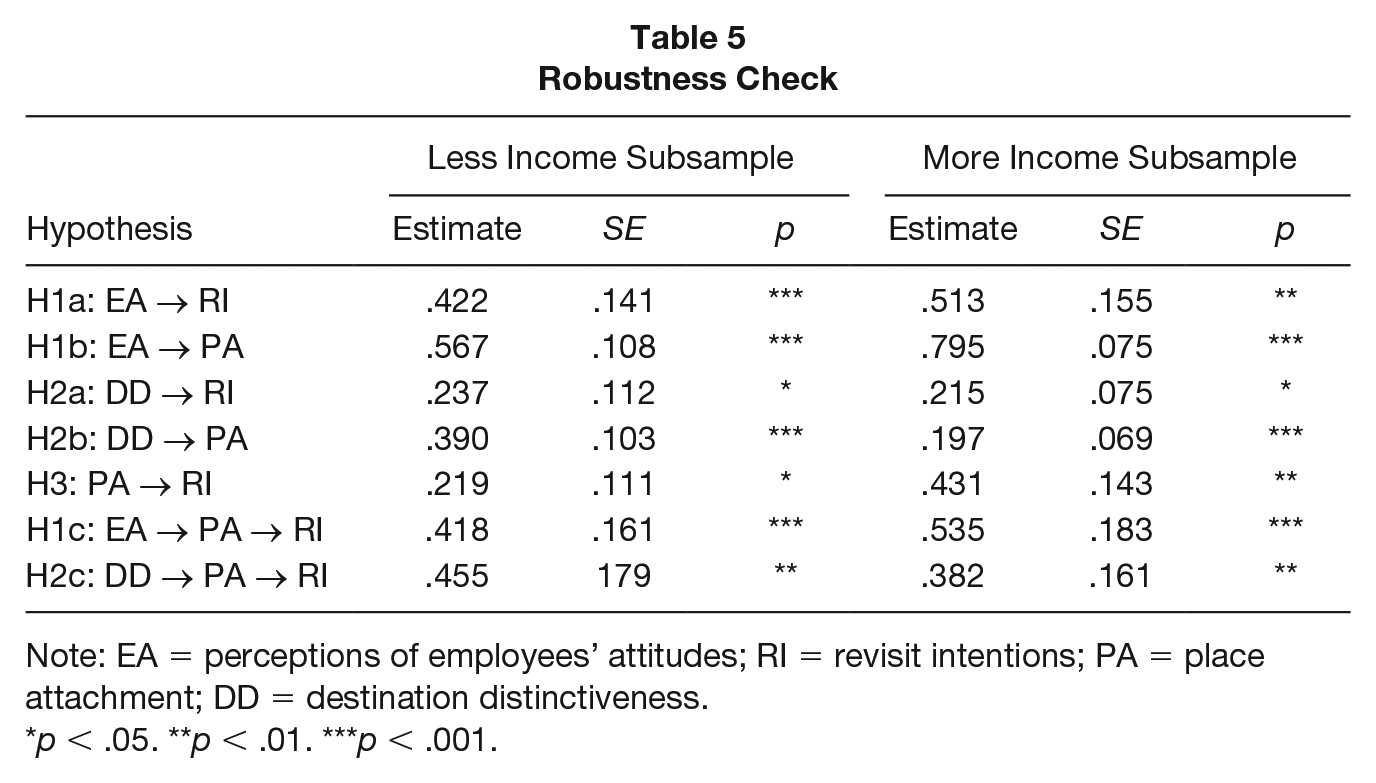
Note: EA = perceptions of employees’ attitudes; RI = revisit intentions; PA = place attachment; DD = destination distinctiveness.
p < .05. **p < .01. ***p < .001.
Discussion
The main purpose of this study was to examine the relationships between the golfers’ perceptions of employee attitudes, destination distinctiveness, and their revisit intentions, along with the mediating effect of place attachment. It was found that there is a positive relationship between golfers’ perceptions of employee attitudes and revisit intentions, indicating that a welcoming attitude from golf-course employees could lead to golfers’ revisits. These results are in line with the findings of Jorge and Monteiro (2011): A friendly attitude from golf-course employees was one of the main factors in the choice of golf destination. Also, the golfers’ perceptions of employee attitudes had a positive effect on place attachment, meaning that the enthusiasm and friendly attitudes of employees can stimulate golfers to identify with specific golf destinations. In other words, when employees can appreciate the benefits of golf tourism, they will positively support its development and have an enthusiastic attitude toward golfers, and this will ultimately lead to golfers’ place attachment (Song et al., 2017).
The destination distinctiveness and revisit intentions showed a positive relationship, indicating that attractive cultural activities, diversity of local products, a unique natural environment, high-quality golf courses, and other distinctive attributes can attract golfers’ revisit intentions. This result confirms that a unique destination and distinctive cultural events can motivate golfers’ revisits (Correia et al., 2007). This study found a positive relationship between destination distinctiveness and place attachment, indicating that a golf destination with special characteristics and attributes affects how golfers will evaluate the destination. Thus, destinations that possess distinctive resources can better attract and hold the interest of golfers, contributing to place identity and dependence (Gross & Brown, 2008; Gu & Ryan, 2008). This research also identified a positive relationship between place attachment and revisit intention, indicating that golfers’ place attachment could significantly strengthen their intentions to revisit the golf destination. It suggests that strong place attachment might stimulate revisit intentions (Hosany et al., 2017). These results are in line with previous findings that place attachment has a positive effect on revisit intentions for British and Russian tourists thereby reflecting the emotional bond formed between tourists and destinations (Stylos et al., 2017).
This study also found that place attachment mediates the relationships between golfers’ perceptions of employee attitudes, destination distinctiveness, and revisit intentions, indicating the TRA model’s applicability to golf tourism. It suggests that the independent variables (golfers’ perceptions of employee attitudes and destination distinctiveness) influence an intervening variable (place attachment), which in turn predicts the dependent variable (revisit intention). A positive perceived attitude could attract golfers who already have place attachment in the destination they would like to revisit. Thus, golfers’ perceptions of employees’ attitudes might influence golfers’ revisit intentions via place attachment (Song et al., 2017). Meanwhile, the more distinctive a destination is, the more likely it is to attract golfers to revisit, especially those who are attached to the place, and may choose to revisit it because of their affection for the destination (Ginting et al., 2017). In terms of golf tourism, there are very few studies on the mediating effects of place attachment on golfers’ perceptions of employee attitudes, destination distinctiveness, and revisit intentions, so the findings in this study have filled a gap in golf research.
Implications
Theoretical Contributions
This study contributes to an overall conceptual understanding of the importance of using golfers’ perceptions of employee attitudes, destination distinctiveness, and place attachment in destination management from the perspective of the TRA (Ajzen & Fishbein, 1980). The results show that place attachment and destination distinctiveness can not only influence golfers’ intentions to revisit a destination but also that a model based on the TRA can be used to assist in explaining why golfers will revisit that particular destination. These findings validated the conceptual model of golfers’ revisit intentions by adding golfers’ perceptions of employee attitudes, destination distinctiveness, and place attachment. In particular, this model has identified which traits would, taken together, most effectively test the golfers’ perceptions of employee attitudes, destination distinctiveness, and place attachment, thereby revealing how golf destinations might differentiate themselves. For example, the friendly service attitudes of golf-course employees, high-quality golf courses, and a beautiful natural environment could all increase golfers’ place attachment or revisit intentions. This research sheds new insights into Chinese golfers’ revisit intentions, especially concerning the mediating role of place attachment, which fills a research gap in golf management.
This study has also further developed the relationships between attitudes and revisit intention. The findings have enriched and extended the TRA in golf tourism research. This theory allows people to evaluate individual attitudes regarding specific behavior (Ajzen & Fishbein, 1980), and further predict behavioral intentions (Manfredo, 1992). Although the TRA could predict some behavior, individual attitudes toward behavior and other related-factors may also play a critical role in the golfers’ decision-making process. From the perspective of the TRA, this study has provided general measures to identify the golfers’ perceptions of employee attitudes (e.g., golf-course employees are glad to have golf tourists), destination attributes (e.g., cultural activities), and the individual preferences of golf tourists (e.g., emotional connections). These results are generally in line with the study on the characteristics of golf courses in Portugal (Correia et al., 2007) and on individual preferences and the perceived value of golf courses in Turkey (Akinci et al., 2015). Thus, the empirical findings based on Hainan Island in China in this study could shed some light on golf tourists’ travel planning regarding their selection of a specific destination and thereby further extend the golf tourism literature.
Implications for the Industry
With the growth of competition between golf destinations in recent decades, golf-course managers and policy makers need to attract potential golfers and encourage repeat visitors. This study has constructed a golfers’ revisit intention model and the empirical findings could help provide golf industrial practitioners and government policy makers with new knowledge, which could strengthen Hainan Island as a golf destination.
The golfers’ perceptions of employee attitudes were found to be antecedent to place attachment and golfers’ revisit intentions, because golfers’ intentions to revisit a destination are highly dependent on their perceptions of employee attitudes and place attachment. Thus, it is likely that, the employee attitudes could be one of the critical factors and if positive, provide a competitive advantage. That is, golf courses should encourage their employees to be friendly and hospitable to the golfers in order to improve the golfers’ positive place attachment and revisit intentions. Golf-course managers may also strengthen Hainan Island’s identity and dependence so as to build the golfers’ emotional connections with Hainan Island. For example, a variety of tourism events and cooperation with travel agencies in various countries and regions could be utilized to promote the hospitality of golf courses on Hainan Island.
Destination distinctiveness was also found to be antecedent to place attachment and revisit intentions. When the destination is distinctive, tourists can more easily distinguish it from other destinations, which leads to a higher revisit intention. As the only international destination for golf tourism in China, Hainan Island needs to take some effective measures in order to improve its destination distinctiveness and hence develop a deep place attachment, resulting in higher revisit intentions. For instance, golf destinations could organize more online tourism promotions through social media to attract the golfers’ interest. Meanwhile, golf-course managers on Hainan Island may also consider creating some unique events (e.g., the Hainan Women’s Golf Open), in order to enhance its distinctiveness. Meanwhile, the golf courses there should also improve their own distinctiveness in terms of the design of the golf courses, the quality of the greens and fairway, and the provision of services.
Limitations and Future Studies
Despite its various contributions, this study has some limitations that open pathways to future research. In golf tourism, it is likely that tourists’ social norms affect their behavioral intentions (Song et al., 2017). These norms could measure the impacts of the social environment on individual behavior, and perceived behavioral controls can further explain individuals’ belief in their ability and future behavior (Du et al., 2015, 2016, 2017). This study has considered golfers’ characteristics (e.g., golf-playing frequency and experience) but not their motivations. In order to further explain golfers’ intentions and behavior, it is believed that their motivations deserve more examination in future research and might also be mediating factors (Correia et al., 2007).
Given the number of constraints for golfers to travel to Hainan Island, such as time, money, and weather, going to Hainan for a golf trip is determined not only by volitional control but also by behavioral control. Thus, future research could measure how golfers’ revisit intentions can convert into actual revisit behavior. It is worth noting that golfers are special sports tourists, and their psychological characteristics (e.g., motivations and preferences) might also be examined in future studies to provide knowledge. Researchers could make extensive modifications (e.g., by adding the motivation factor) of the TRA to improve the travel prediction of this theory. These attempts would enhance the understanding of golfers’ travel behavior and add new knowledge to the TRA.
Concluding Summary
The main conclusions of this study are that golfers’ perceptions of employee attitudes positively influences golfers’ place attachment and revisit intention; destination distinctiveness positively influences golfers’ place attachment and revisit intention; and place attachment has mediating effects on these relationships. These conclusions have theoretical contributions and industrial application guidance for golf tourism. For example, these conclusions could not only help scholars to understand conceptually the importance and necessity of golfers’ perceptions of employee attitudes, destination distinctiveness, and place attachment in golf destination management but also help to provide golf practitioners and government policy makers with new skills and perspectives for their decision making.
Supplemental Material
sj-pdf-1-jht-10.1177_10963480211016027 – Supplemental material for Modeling Golfers’ Revisit Intention: An Application of the Theory of Reasoned Action
Supplemental material, sj-pdf-1-jht-10.1177_10963480211016027 for Modeling Golfers’ Revisit Intention: An Application of the Theory of Reasoned Action by Hui-min Song, Jamie M. Chen and Ting-ting Zeng in Journal of Hospitality & Tourism Research
Footnotes
Acknowledgements
We would like to thank them for their contributions to this study.
This study was funded by the National Social Science Fund Youth Project of China (Grant No. 20CTY013). The funders had a role in the data collection of the article.

References
Supplementary Material
Please find the following supplemental material available below.
For Open Access articles published under a Creative Commons License, all supplemental material carries the same license as the article it is associated with.
For non-Open Access articles published, all supplemental material carries a non-exclusive license, and permission requests for re-use of supplemental material or any part of supplemental material shall be sent directly to the copyright owner as specified in the copyright notice associated with the article.
