




Abstract
Ethnocentrism is anticipated to have a growing impact on international hospitality brands, but current understandings of its effects is limited. Using the traditional, unidimensional conceptualization of ethnocentrism, prior hospitality research concluded that ethnocentrism drives people to favor domestic over foreign brands. This study proposes a model wherein ethnocentrism’s emotional and cognitive dimensions influence perceptions of international brands through separate direct and indirect mechanisms, which vary between the brand’s domestic and foreign markets. The model was assessed using multigroup analysis of perceptions of Starbucks in two samples of 186 and 235 consumers from the United States and Italy, respectively. The findings highlight that ethnocentrism’s emotional and cognitive dimensions have positive and negative effects, respectively, on brand image in the domestic market (United States) and vice versa in a foreign market (Italy). In the foreign market, ethnocentrism influences brand image only indirectly. The study concludes with implications for brand managers.
Highlights
Ethnocentrism influences customer perceptions of international hospitality brands.
Ethnocentrism’s emotional and rational elements have opposite effects on brand image.
Effects vary between the international brand’s domestic and foreign markets.
In foreign markets ethnocentrism impacts brand image indirectly via brand quality.
Introduction
With globalization, hotel, restaurant, and coffee chains have increasingly relied on international brands to gain credibility and success across markets (Han et al., 2021). International brands with strong customer-based brand equity across countries perform strongly in retail industries where service experience cannot be evaluated in advance (Bolton et al., 2021). However, the recent slowing down of globalization, known as “slowbalization” (Slowbalisation, 2019; Steenkamp, 2019), has stimulated debate regarding how international tourism and hospitality brands could be challenged by growing customer interest in local brands to support local economies (Zenker & Kock, 2020). In this scenario, ethnocentrism (i.e., a judgment bias favoring local brands over foreign brands; Sharma, 2015) may play a key role in influencing customer attitudes and behaviors toward international hospitality brands (Kock et al., 2020). Understanding the mechanism through which ethnocentrism impacts international hospitality customer-based brand equity by influencing domestic and foreign customers’ brand perceptions is paramount for hospitality firms when developing international branding strategies. However, current knowledge on this issue is limited.
The literature suggests that examining the effects of ethnocentrism may improve understanding of customer attitudes and behaviors (Bruwer & Cohen, 2019), concluding that consumers with a high level of ethnocentrism prefer domestic over foreign service providers (Oh & Hsu, 2014; Woo et al., 2019). However, the literature has not provided detailed insight into how ethnocentrism influences perceptions of international hospitality brands or developed a simple, unidimensional conceptualization of ethnocentrism (Carpenter et al., 2013; Zarkada-Fraser & Fraser, 2002). International business studies have demonstrated that ethnocentrism comprises both emotional and rational dimensions (Acharya & Elliott, 2003), and have shown how this distinction enables a deeper understanding of situations in which emotional and cognitive responses may conflict (Siamagka & Balabanis, 2015). For example, consumers may be emotionally motivated not to purchase services from foreign brands while simultaneously being rationally willing to purchase them because of their perceived quality.
The present study posited that distinguishing between emotional and rational dimensions of ethnocentrism is fundamental for appreciating customer perceptions of international hospitality brands. Specifically, it developed a model to explain how these dimensions of ethnocentrism influence perceptions of global hospitality brands, particularly for brand quality and brand image, which constitute the two equity dimensions of global brands (Bolton et al., 2021). The hypothesized model presents different effects of ethnocentrism’s emotional and rational dimensions, respectively labeled affective reaction and cognitive bias (Sharma, 2015). Specifically, the model suggests that the emotional tendency to prefer local brands leads to affective reactions having a positive impact on brand perceptions in the domestic market and a negative impact in foreign markets (He & Wang, 2015). In contrast, a cognitive bias is hypothesized to influence brand perceptions in both domestic and foreign markets positively. This argument is based on the nature of service encounters, through which quality emerges (Grönroos, 2001). Hence, when consumers apply cognitive efforts for all brands, including international brands, the perceived brand localness prevails over perceived brand globalness, because the service is provided by local personnel who guarantee the outcome quality (Sichtmann et al., 2019; Wang et al., 2020). Moreover, ethnocentrism is hypothesized to act as either a summary or halo construct in domestic and foreign markets, respectively (Batra et al., 2000; Han, 1989), thus influencing brand image both directly and indirectly in the domestic market but only indirectly in foreign markets.
Theoretical Background and Research Model
Brand Equity, Brand Quality, and Brand Image
From the consumer perspective, a brand has positive brand equity if customers react more favorably to its marketing strategy than they would to the same marketing strategy attributed to an unbranded version of the same product or service (Keller, 1993). International brands show stronger brand equity than local brands, which is largely related to the high perceived quality evoked by international brands (Dimofte et al., 2008). More precisely, the equity of global brands encompasses two components: holistic brand quality and brand image resulting from brand associations (Bolton et al., 2021). The first, holistic brand quality (or simply brand quality), refers to customer perceptions of the overall quality of the brand and its differentiation in the market (Aaker, 1992). For service providers, it includes both the overall quality of a firm and its services (Pappu & Quester, 2006). Perceived brand quality reflects consumer evaluations of a brand’s overall excellence (Gil et al., 2007; Zeithaml, 1988) and provides purchase motivation (Aaker, 1991). Brand quality directly impacts brand image (Tingchi Liu et al., 2014). Brand image is defined as the “perceptions about a brand as reflected by the brand associations held in consumer memory” (Keller, 1993, p. 3). Valuable brand equity positively affects revenue and profits and strengthens a firm’s competitive advantage (Aaker, 1991). Therefore, understanding how to establish strong brand equity is essential for marketing managers (Keller, 1993).
Brand equity has an even stronger role in the service industry than in manufacturing industries because it helps customers to visualize the intangible value of the service offered (Berry, 2000). Moreover, this context is people-centric (Manoharan et al., 2021), meaning that service providers play a powerful role in building brand equity by shaping whether customer service experiences are positive or negative (Berry, 2000). For the hospitality industry in particular, previous research has shown that positive brand equity can enhance customer experience and, in turn, customer loyalty (Nuseir, 2022). Hence, for hospitality firms (Hyun, 2009), and coffee chains specifically (Chang, 2021; Kang & Namkung, 2018; Kim et al., 2021), brand quality and image are key determinants of overall success. Therefore, understanding the process through which perceptions of brand quality and image emerge is paramount for international brands. In particular, this study addressed the various effects of ethnocentrism.
Ethnocentrism
The concept of consumer ethnocentrism was introduced in the 1980s to assess the appropriateness of buying foreign goods. Shimp and Sharma (1987, p. 280) stated that “from the perspective of ethnocentric consumers, purchasing imported products is wrong because, in their minds, it hurts the domestic economy, causes loss of jobs, and is plainly unpatriotic.” They developed a unidimensional conceptualization and operationalization of consumer ethnocentrism, proposing the Consumer Ethnocentric Tendency Scale or CETSCALE, which was used extensively in the following decades (Bizumic, 2019). By using this scale, previous researchers found ethnocentric consumers inclined to prefer domestic brands; however, the magnitude of this effect varies across product categories (Balabanis & Diamantopoulos, 2004).
Recently, more detailed conceptualizations and operationalizations of consumer ethnocentrism have been suggested. In particular, Sharma (2015) developed a new conceptualization of ethnocentrism based on the distinction between its affective and cognitive dimensions (labeled affective reaction and cognitive bias, respectively). In the present study, we adopted Sharma’s (2015) conceptualization, which is consistent with previous literature that found a clear distinction between ethnocentrism’s emotional and rational aspects in the original CETSCALE (Acharya & Elliott, 2003).
Drawing on these concepts, the research model (Figure 1) hypothesizes the various mechanisms through which ethnocentrism’s affective and cognitive components influence the image of international brands in both domestic and new foreign markets. To explain the detailed mechanisms through which ethnocentrism affects brand image and the role of brand quality, the model encompasses both direct and indirect relationships of ethnocentrism.
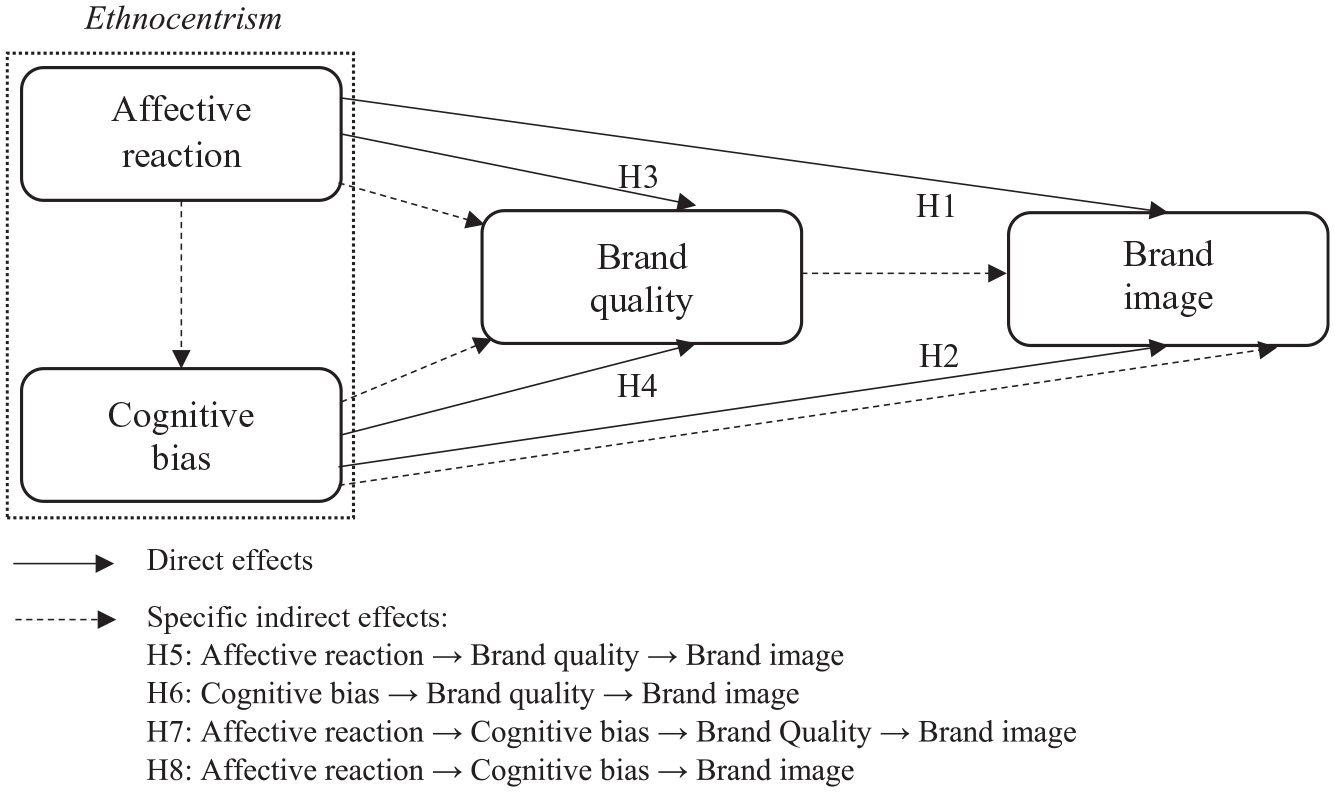
The Research Model.
Direct Effects of Ethnocentrism on Brand Image
Ethnocentrism causes biases in favor of domestic brands and against foreign brands (Mandler et al., 2021; Shankarmahesh, 2006). Hence, in the present study, we developed specific arguments about the direct effects of ethnocentrism by distinguishing between domestic and foreign brands. Specifically, we posited that for domestic brands, ethnocentrism works as a summary construct (Han, 1989), meaning that it can directly influence the brand image. In contrast, consistent with the halo construct, initially consumers do not have the required information to elaborate the image of foreign brands directly, and ethnocentrism can only influence brand image indirectly by influencing quality perceptions (Han, 1989; Nielsen & Spence, 1997). Supporting these arguments, previous research found that ethnocentrism has significant direct effects on the image perceptions of domestic brands, but not of foreign brands (Sun et al., 2021). Hence, we hypothesize that ethnocentrism’s affective and cognitive components have direct effects on domestic brand image, but no direct effects on foreign brand image. Specifically, the higher a consumer’s level of attachment to and pride in domestic brands (i.e., affective reaction), the better their perceptions of domestic brands’ images (Sharma, 2015). Similarly, the higher a consumer’s perceptions that local producers have stronger skills and work attitudes (i.e., cognitive bias), the better their perceptions of domestic brands’ images (Sharma, 2015). Therefore, we hypothesize:
H1: The direct effect of affective reaction on brand image is positive and significant only for domestic brands.
H2: The direct effect of cognitive bias on brand image is positive and significant only for domestic brands.
Direct Effects of Ethnocentrism on Brand Quality
Ethnocentrism directly influences perceived quality, specifically enhancing the perceived quality of domestic brands while lowering the perceived quality of foreign brands through emotional mechanisms (Acharya & Elliott, 2003; Huddleston et al., 2001; Ma et al., 2020; Shoham & Gavish, 2016). Specifically, these effects are caused by feelings of patriotism. (Acharya & Elliott, 2003). Hence, consistent with this prior research, we suggest that the affective component of ethnocentrism has positive direct effects on domestic brand quality and negative direct effects on foreign brand quality. Hence, we hypothesize:
H3: The direct effect of affective reaction on brand quality is positive for domestic brands and negative for foreign brands.
Additionally, we develop specific arguments to explain the direct effects of the cognitive component of ethnocentrism on perceived quality. Cognitive bias reflects the perception that domestic producers have greater technical skills and, therefore, provide higher-quality products (Siamagka & Balabanis, 2015). However, the literature regarding ethnocentrism focuses on industries that produce goods. Thus, the literature has mostly focused on linking ethnocentrism to consumer reactions toward imported goods brands (Farah & Mehdi, 2021). However, hospitality services differ, in that they are not “physically imported,” and local employees play a fundamental role in service delivery (Tarnovskaya & de Chernatony, 2011).
In service industries, human performance, rather than machine performance (as occurs in goods production), plays the most pivotal role in building brand equity (Berry, 2000). Specifically, international hospitality brands rely on local employees to deliver their brand promises by supporting their brand-building behaviors (King & So, 2015). Consumers interact with a firm’s local employees who deliver services in all markets (regardless of whether or not they are domestic or foreign markets). As service quality emerges in these encounters (Grönroos, 2001; Kang & James, 2004), the cognitive component of ethnocentrism may impact positive biases toward perceived quality.
To further substantiate this argument, we draw on the literature on perceived brand globalness and perceived brand localness (Liu et al., 2021). Perceived brand globalness and perceived brand localness represent two distinct but coexisting features of international brands, referring to consumer perceptions that the brand “is marketed in multiple countries and is generally recognized as global in these countries” (Steenkamp et al., 2003, p. 54) and “is a local player and a symbol or icon of local culture” (Swoboda et al., 2012, p. 72), respectively. When exposed to international brands, consumers apply cognitive efforts to evaluate both components (Liu et al., 2021). Moreover, particularly in mature markets, perceived brand localness is a stronger determinant than the perceived brand globalness of consumer attitudes toward both domestic and foreign brands (Mandler et al., 2021). Consumer interaction with local employees in service delivery may therefore increase consumer perception of brand localness, which provokes positive attitudes toward the brand, regardless of its domestic or foreign origin (Mandler et al., 2021).
This evidence provides further support to our argument, suggesting that, when consumers apply cognitive efforts, the distinction between domestic and foreign markets may blur, and the service provider may be perceived as less “foreign” by consumers outside of the firm’s domestic market. Hence, we hypothesize:
H4: The direct effect of cognitive bias on brand quality is positive for both domestic and foreign brands.
Indirect Effects of Ethnocentrism
In addition to the direct effects hypothesized above, the model suggests that ethnocentrism influences brand image indirectly through four specific indirect effects. First, we suggest that affective reaction impacts brand image and that this effect is mediated by brand quality. That is, affective reaction serves as a cue to form perceptions of quality (Kirmani & Zeithaml, 1993), which, in turn, shapes brand image perceptions (Wu et al., 2011). As argued in H3, the impact of affective reaction on brand quality is positive for domestic brands and negative for foreign brands. Additionally, extensive evidence has shown that brand quality is a strong antecedent of brand image, so that higher quality leads to a better brand image and vice versa (Hapsari et al., 2017; Homer, 2008). This effect has been specifically demonstrated in service industries (Hu et al., 2009) and coffee shops (Lin et al., 2021). Therefore, we posit:
H5: The specific indirect effect of affective reaction on brand image mediated by brand quality is positive for domestic brands and negative for foreign brands.
Ethnocentrism influences brand image through three additional specific indirect effects, all of which incorporate the role of cognitive bias. The cognitive component of ethnocentrism activates the cognitive assessment of both perceived brand globalness and perceived brand localness (Diamantopoulos et al., 2019). For example, when an international brand enters a foreign market and decides to employ local employees, local customers will perceive stronger ties with their community, resulting in higher perceived brand localness (Halkias et al., 2016). Concurrently, customer awareness that a brand is available worldwide will be positively related to perceived brand globalness (Halkias et al., 2016).
Literature on perceived brand globalness and perceived brand localness has not specifically addressed the case of service firms. As international brands’ hospitality services are largely delivered by local employees (King & So, 2015) this will positively influence perceived brand localness (Halkias et al., 2016). In turn, perceived brand localness positively affects overall brand attitudes toward both domestic and foreign international brands (Liu et al., 2021). Additionally, research reveals that, in mature markets, the impacts of perceived brand localness on consumer attitudes prevail over those of perceived brand globalness, both for domestic and foreign brands (Mandler et al., 2021). Hence, we expect that cognitive bias positively affects brand image by influencing the brand quality of both domestic and foreign brands and we hypothesize that:
H6: The specific indirect effect of cognitive bias on brand image mediated by brand quality is positive and significant for both domestic and foreign brands.
The model suggests an additional indirect effect that incorporates the impacts of both affective reaction and cognitive bias. Specifically, affective reaction exerts a positive effect on cognitive bias. Overall, people’s emotional states can influence their cognitive processes, evaluations, and judgments (Bagozzi et al., 1999). Specifically, individuals in a positive affective state are likely to try to preserve their state by also focusing on the positive aspects of the stimuli in their rational evaluations (Bagozzi et al., 1999). The emotion-to-cognition pattern has been well documented in the literature (Lu & Huang, 2018). However, the literature has not evaluated the relationship between the emotional and cognitive components of ethnocentrism. Available studies on consumer perception of country image indicate a positive effect of emotional reaction on cognitive evaluations. Kock et al. (2019, p. 53) found that emotional components of country image such as “animosity and affinity drive behavioral intentions directly as well as indirectly by informing the performance related [i.e., the cognitive] country image.” Therefore, we suggest that emotional reaction has a positive influence on cognitive bias, which, in turn, (as already hypothesized by H6) positively affects brand image through brand quality. Specifically, we hypothesize that:
H7: The specific indirect effect of affective reaction on brand image mediated by cognitive bias and brand quality is positive for both domestic and foreign brands.
Finally, the last specific indirect effect acknowledges the impact of affective reaction on brand image mediated by cognitive bias. As illustrated before, the affective reaction is suggested to positively influence cognitive bias (Kock et al., 2019, p. 53), which, in turn, positively influences brand image—but only for domestic brands (Sun et al., 2021), as explained for H2. On the contrary, cognitive bias has no direct impact on brand image (see H2). Therefore, we hypothesize that:
H8: The specific indirect effect of affective reaction on brand image mediated by cognitive bias is positive and significant only for domestic brands.
Methods
Research Context and Data Collection
The present study applied a cross-sectional research design comparing consumer evaluations of the well-known coffee chain brand Starbucks in its home country (the United States) and a foreign country (Italy). Founded in 1971, Starbucks currently has more than 32,000 retail stores in 83 markets (Company Profile, 2019). In 2017, the former CEO of Starbucks, Howard Schultz, reported in an interview (Bloomberg, 2017) that he was inspired to develop Starbucks when he went to Italy and became enamored with the Italian coffee culture. However, the first Starbucks store in Italy was opened many decades later, in autumn 2018. Today, Starbucks is a global brand that delivers a consistent experience worldwide (Chang, 2021).
We conducted two questionnaire-based surveys using samples of U.S. and Italian consumers. The questionnaire was translated into Italian and English and distributed online through the authors’ personal contacts using their social media accounts (Facebook and Twitter). This procedure has been previously used in tourism and hospitality studies, as it enables quick reach among the populations of interest (e.g., Mach & Ponting, 2021). However, the use of a convenience sampling technique implies that the sample may not be generalizable to the wider population. This procedure returned 186 and 235 valid questionnaires in the United States and Italy, respectively. PLS-SEM requires each sample to be greater than 10 times the largest number of structural paths directed at a particular construct in the structural model; thus, the sample size was adequate for the analysis (Hair et al., 2017).
Measures
The questionnaire consisted of two parts. The first part included questions regarding respondents’ demographic profile (gender, age, education, and occupation), knowledge of Starbucks (poor/comprehensive), and previous visits to Starbucks (yes/no). Only respondents who had visited Starbucks were considered for the analysis. The second section encompassed multiple-item measures of the constructs included in the model, rated on 5-point Likert scales. Affective reaction and cognitive bias were assessed using four and five items, respectively, from Sharma (2015). These measures were developed and formulated to examine the different dimensions of ethnocentric consumer attitudes, representing stable individual traits unrelated to specific products or services (Sharma, 2015). Accordingly, the items were formulated as “products and services” (Sharma, 2015). Moreover, these scales were cross-culturally validated, demonstrating invariance across cultures (Sharma, 2015).
Brand quality was measured using three items from Kang and Namkung (2018). Brand image was measured using five items from Kang and Namkung (2018) and Grewal et al. (2003). These two scales were chosen because they were developed for the service context and, in particular, the retail context. More specifically, Kang and Namkung (2018) used these scales in the context of coffee retail shops. The full item list is shown in Table 2. In addition, we controlled for the potential effects of brand knowledge on the two outcome variables of brand quality and brand image (Mandler et al., 2021). Following Bambauer-Sachse and Mangold (2011), brand knowledge was operationalized as a dichotomous variable (poor – comprehensive knowledge), and respondents were instructed about the meaning of the two options. We assessed for common method bias using Harman’s single-factor test by conducting two unrotated factor analyses of the survey items for each of the two samples (Podsakoff et al., 2003). The first factor explained 37.67% and 30.20% of the variance in the U.S. and Italian samples, respectively, thus confirming that no single factor accounted for the majority of the variance (Podsakoff et al., 2003).
Data Analysis
PLS-SEM was chosen for data analysis because the focus was on predictive-oriented model assessment (Hair et al., 2019; Henseler, 2018). Thus, in addition to explaining the relationships among the variables, we assessed how well the model could predict outcomes (actual levels of brand image) for new cases not considered in the estimation process by assessing the out-of-sample predictive power (Sharma et al., 2021; Shmueli et al., 2019). PLS-SEM is a popular method in cross-cultural and international marketing research (Richter et al., 2016). PLS-SEM is suitable in cross-country studies to compare respondent groups, such as U.S. and Italian consumers in the present study, through multigroup analysis (Henseler et al., 2016). SmartPLS 3 software was used for the analysis (Ringle et al., 2015).
Results
Sample Description
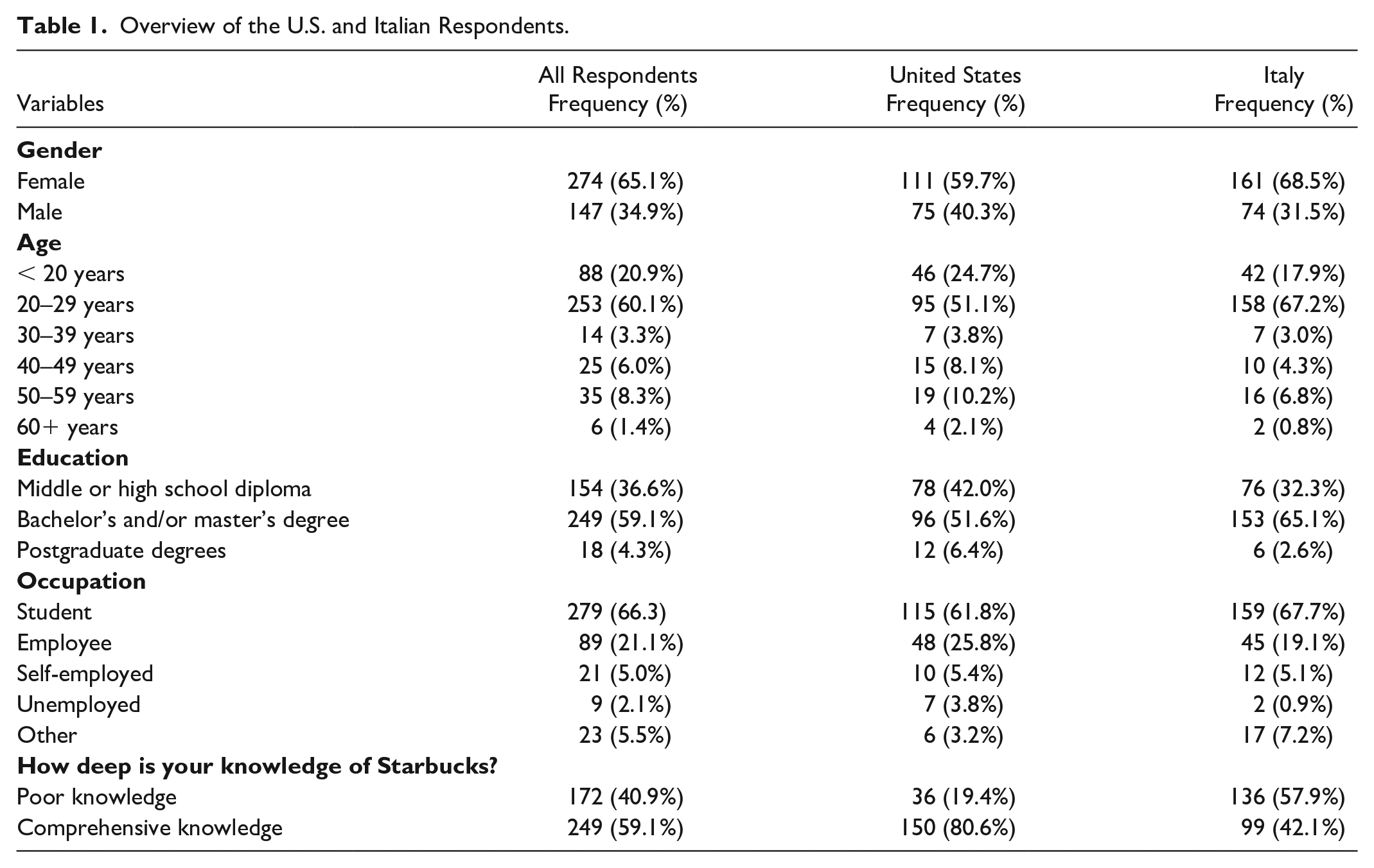
In both countries, the respondents were mainly female and aged between 20 and 29 years. Available statistics indicate that in the United States, consumers between 20 and 30 years purchase coffee most frequently from coffee shops (Rehm et al., 2020). In Italy, 77.5% of the population purchase coffee in coffee shops, and people in the 18 to 24 age group have the highest frequency of coffee consumption, immediately followed by those in the 25 to 34 age group (Ghedini, 2015). Moreover, Starbucks primarily targets younger adults, and consumers aged 18 to 24 account for 40% of the firm’s sales (Johnson, 2016). Therefore, the two samples appropriately reflected the most important segments of coffee shop consumers in terms of age. Most participants were female, students, and had high levels of education, which was likely influenced by the contacts in the authors’ networks. In other countries, studies approaching customers at coffee shops using systematic sampling reported similar results regarding the high percentage of females and students (Son et al., 2021). However, the degree of representativeness of the sample could not be assessed. Nonetheless, to grasp some of the potential implications of the sample composition for each country, we estimated the effects of gender (female – male), occupation (students – nonstudents) and education (middle or high school diploma – higher levels of education) on the two endogenous variables, brand quality and brand image. No significant effect emerged (p > .10). In addition, for each country, we compared the mean values of the four latent variables via t tests (female – male; students – nonstudents; middle or high school diploma – higher levels of education) and no significant difference was found (p > .10). As expected, the level of knowledge regarding Starbucks differed between the company’s home country and Italy, with 80.6% and 42.1% of respondents, respectively, reporting comprehensive knowledge of the Starbucks brand. Table 1 presents an overview of the profiles of U.S. and Italian respondents.
Overview of the U.S. and Italian Respondents.
Measurement Model Evaluation
For all latent variables, consistent with prior operationalization of the selected measures, measurement models were specified as reflective. For both samples, all outer loadings were greater than 0.70, except one item that had loadings greater than 0.60 (0.682 and 0.613 in the U.S. and Italian samples, respectively). For the other items, the values of the outer loadings indicated that more than 50% of the variation of each item was explained by the construct it was intended to measure (Table 2). Therefore, indicator reliability was confirmed (Hair et al., 2019). Internal consistency reliability was then evaluated. Composite reliability ranged between 0.70 and 0.95 for all constructs in both groups. Moreover, Cronbach’s alphas and exact reliabilities ρ A were all between 0.70 and 0.90. Therefore, internal consistency reliability was confirmed (Hair et al., 2017). Convergent validity was also confirmed, as the average variance extracted (AVE) was well above the threshold of 0.50 for each construct (Hair et al., 2019). Then, we checked the discriminant validity via both the Fornell-Larcker criterion and heterotrait-monotrait ratio of the correlations (HTMT). The square root of each construct’s AVE was greater than its highest correlation with any other construct, thus meeting the Fornell-Larcker criterion (Fornell & Larcker, 1981; Table 3). Finally, all HTMT ratios for both groups were below the cutoff of 0.85 and significantly differed from 1 (Henseler et al., 2015). Therefore, discriminant validity was also confirmed.
Measurement Model Assessment for Both Samples (United States – Italy).

Discriminant Validity: Fornell-Larcker Criterion.

The correlations among constructs for the U.S. sample are shown below the diagonal, while the correlations among constructs for the Italian sample are shown above the diagonal. The square roots of the AVE for each construct in the U.S./Italian samples are reported in bold on the diagonal.
Structural Model Assessment
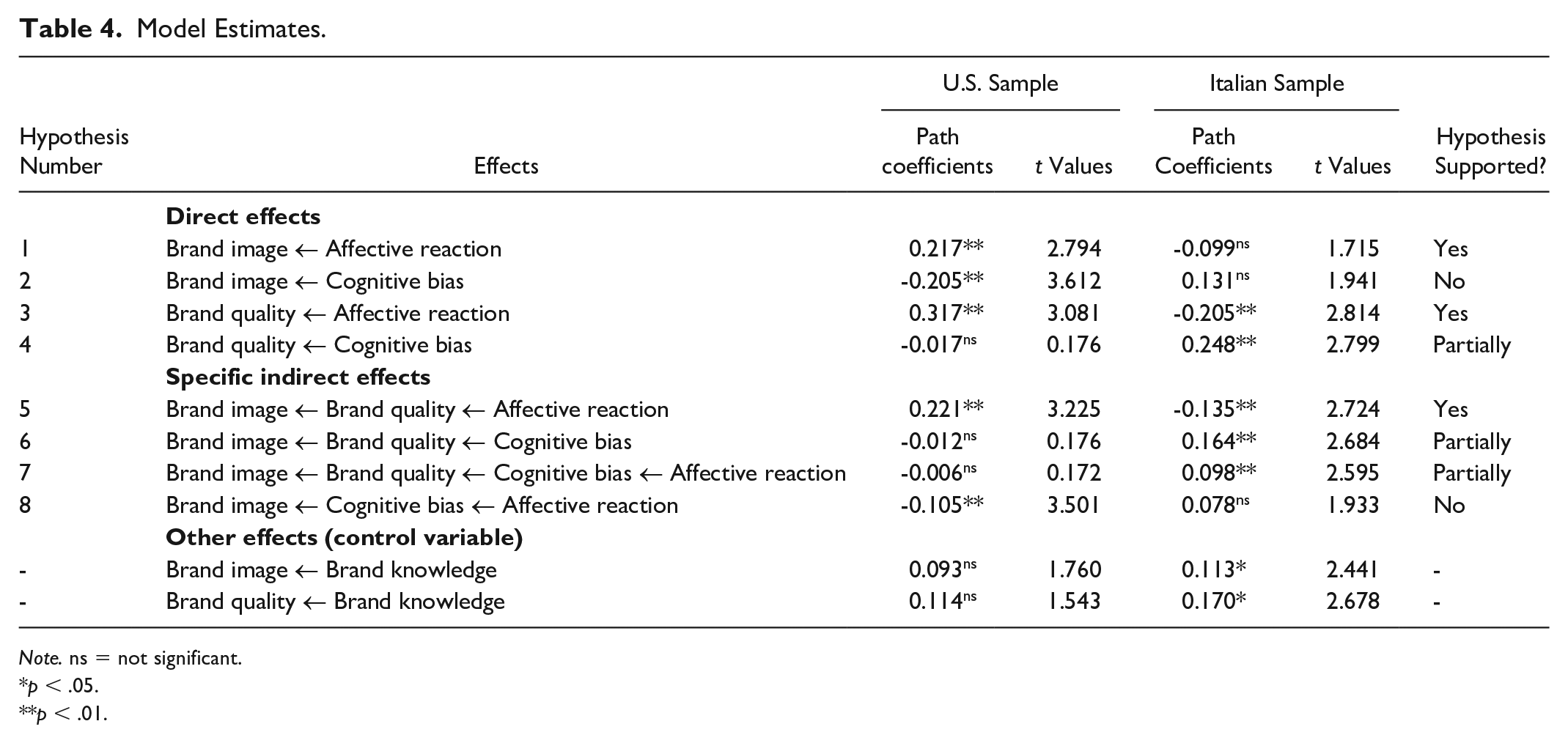
The structural model was evaluated for both groups. First, all inner variance inflation factor (VIF) values were below the cutoff of 3 (the highest value was 1.733), demonstrating that there were no collinearity issues (Hair et al., 2019). The second step of the structural model assessment included evaluating the significance and relevance of the structural model relationships through multigroup analysis. However, before running such analyses, measurement invariance (also called measurement equivalence) needed to be confirmed to ensure that both participant groups attributed the same meaning to the constructs (Hair et al., 2018). To assess measurement invariance, we applied the measurement invariance of the composite models routine (Henseler et al., 2016). Specifically, we ran a permutation test and found that none of the correlations between the composite scores of the U.S. and Italian samples was significantly different from 1. Therefore, compositional invariance was confirmed (Henseler et al., 2016). Since configural invariance and compositional invariance were met, we conducted the multigroup analysis. The results of the estimation of the structural path relevance and significance obtained through the bootstrapping procedure (5,000 samples) are presented in Table 4. This procedure also allowed us to conduct a multiple mediation analysis to simultaneously estimate all the specific indirect effects, thus avoiding inflated estimations (Hair et al., 2017).
Model Estimates.
Note. ns = not significant.
p < .05.
p < .01.
The analysis highlighted that affective reaction had a significant direct effect on the brand image only in the United States. Therefore, H1 was supported. However, contrary to expectations, in the United States, cognitive bias had negative direct effects on brand image. Hence, H2 was rejected. In addition, in the United States, affective reaction had positive direct effects on brand quality, while in Italy it had negative direct effects. Hence, H3 was supported. H4 suggested that cognitive bias has positive direct effects on brand quality in both countries. However, the direct relationship between cognitive bias and brand quality was significant and positive only in Italy, while in the United States it was nonsignificant. Therefore, H4 was only partially supported.
Regarding the indirect effects, the results supported H5, suggesting that the specific indirect effect of affective reaction on brand image through brand quality is positive for domestic brands and negative for foreign brands. The specific indirect effect of cognitive bias on brand image through brand quality was positive only for foreign brands, and not for both foreign and domestic brands, as expected. Therefore, H6 was only partially supported.
The specific indirect effect of affective reaction on brand image through cognitive bias and brand quality was positive only for foreign brands and nonsignificant for domestic brands. Therefore, H7 was only partially supported. The specific indirect effect of affective reaction on brand image through cognitive bias was significant only for domestic brands, as hypothesized; however, contrary to expectations, the relationship was negative. Hence, H8 was rejected. Finally, the control variable, brand knowledge, had significant effects on image and quality, but only in Italy. No effect of brand knowledge was found in the United States, which may have resulted from a ceiling effect; more than 80% of the participants reported comprehensive brand knowledge.
In the next step, we evaluated the in-sample and out-of-sample predictive power. Regarding the in-sample predictive power, the coefficients of determination for the outcome variable brand image were R2 = 0.611 and R2 = 0.518 for the U.S. and Italian samples, respectively, indicating high predictive power (Hair et al., 2017). To assess the out-of-sample predictive power, we applied the PLSpredict procedure (Shmueli et al., 2016, 2019). We ran PLSpredict with 10 folds and one repetition. The findings indicated that the Q2_predict values for all brand image items were greater than 0. We then inspected the PLS-SEM errors, concluding that they were not normally distributed. Therefore, we analyzed the mean absolute errors. For all brand image items in both groups, the prediction errors yielded by the PLS-SEM analysis were lower than the errors of the naïve linear regression model benchmark. Therefore, we concluded that the model had high out-of-sample predictive power (Shmueli et al., 2019).
Discussion
Theoretical Implications
The results of this study enhance the current understanding of how domestic and foreign consumers perceive international brands of coffee chains between the United States and Italy by acknowledging the effects of ethnocentrism. This study enriches prior research that adopted a unidimensional view of ethnocentrism and concluded that there was an inverse relationship between a person’s level of ethnocentrism and the appeal of international brands (Oh & Hsu, 2014; Woo et al., 2019). First, by separately examining the effects of the emotional and rational dimensions of ethnocentrism, this study revealed that, in the studied context, the impact of ethnocentrism is more complex. Specifically, this study showed that, for coffee chains, the two dimensions of ethnocentrism simultaneously exert opposite (positive and negative) effects in the home country and studied foreign country. Second, it was found that the direct and indirect mechanisms through which ethnocentrism influences consumer perceptions differ between the international brand’s home country and a new foreign country entered by the brand.
Regarding the emotional dimension of ethnocentrism, affective reaction was found to influence brand image both directly and indirectly for the brand in the domestic market, but only indirectly in the foreign market. In the domestic market, the present findings supported the well-established direct inverse relationship between ethnocentrism and customer interest in international brands (H1; Kock et al., 2019); the higher the level of affective reaction, the higher the preference for domestic versus foreign brands. Therefore, domestically, the direct relationship between affective reaction and customer-perceived image of the studied international brand is positive (i.e., the higher the affective reaction, the better the attitude toward the brand). In the domestic market, affective reaction had a further positive indirect effect on brand image through brand quality (H5). This effect is consistent with the established knowledge that ethnocentrism positively increases the perceived quality of domestic brands (Siamagka & Balabanis, 2015), and that perceived quality is a strong antecedent of brand image, specifically for coffee shops (Lin et al., 2021). Finally, in the domestic market, affective reaction had an indirect negative effect on brand image mediated by cognitive bias and, in turn, by brand quality (H8). The negative valence of this effect contradicts prior knowledge (Oh & Hsu, 2014). Later in this section, we will present some suitable explanations, which, to be substantiated, will require future research across different service brands and countries.
Contrastingly, in foreign markets, affective reaction does not influence the image of the studied coffee brand directly (H1), but only indirectly, through two specific indirect effects (H5 and H7). First (H5), in foreign markets, affective reaction has direct negative effects on brand quality (H3), which consumers then use as a cue to infer brand image. Second (H7), affective reaction has an additional positive indirect effect through cognitive bias and, in turn, brand quality. This result contradicts prior research findings indicating that ethnocentrism only has negative effects on customer perceptions of foreign brands (Balabanis et al., 2019). This finding is again connected to the specific role of cognitive bias discussed ahead. Thus, this study shows that the effect of affective reaction on customer perceptions of the studied coffee brand image in the foreign market is fully mediated by brand quality and cognitive bias. These findings are consistent with previous research regarding the summary and halo effects through which country of origin cues are elaborated by consumers (Han, 1989). In particular, the halo effect prevails when consumers do not have all the information necessary to directly elaborate the brand image, such as in new foreign markets (Nielsen & Spence, 1997).
The effects of the rational dimension (cognitive bias) contradict those in the literature, indicating that ethnocentrism had respectively positive and negative effects on brand attitudes in domestic versus foreign countries (Oh & Hsu, 2014; Woo et al., 2019). This study’s findings indicate that cognitive bias has a positive effect (indirect only) on brand image in a foreign country (H6) and negative effects (direct only) in the domestic market (H2). These results also partially contradict the hypotheses set in this study because we expected positive impacts of cognitive bias in both countries.
Hereafter we propose some arguments that may explain this unexpected finding, considering the nature of hospitality services and theories about the perceived brand globalness and localness of international brands. However, future research across different service brands and countries will be needed to corroborate and generalize these arguments. In the case of hospitality services, the concept of importing becomes blurred, as services are delivered in each country by (mostly) local employees (Chang & Ma, 2015). Therefore, customers in each country will interact with local employees during service delivery, and service quality emerges in service encounters (Grönroos, 2001; Kashif & Udunuwara). Studies about the perceived brand globalness and localness of international brands found that they are separate but coexisting dimensions of customer cognitive perceptions of international brands (Liu et al., 2021). In addition, perceived brand localness has a stronger impact than perceived brand globalness on brand evaluations in mature countries (Mandler et al., 2021), and the international brand’s choice to hire local employees increases perceived brand localness (Halkias et al., 2016). Therefore, one suitable explanation that future research could examine is that when foreign consumers apply cognitive efforts, they may perceive the international brand as “more local,” because the service is provided by local personnel who guarantee the outcome quality (Wang et al., 2020).
Additionally, we also expected positive effects of cognitive bias on the coffee chain’s brand image in the domestic market. However, the findings revealed non-significant (H6 and H7) or negative effects (H2 and H8). Specifically, previous replication studies reported mixed findings indicating that, in the domestic market of international brands, perceived brand globalness and localness occasionally had nonsignificant effects on perceived brand quality because the effects’ confidence intervals included both negative and potential relationships (Liu et al., 2021; Mandler et al., 2021). However, no distinction had been made between goods and services. Based on this literature, future research may argue that our unexpected findings may indicate that when domestic consumers apply cognitive efforts, they may become skeptical and perceive the international brand as “less domestic.” They may feel that the international brand is not using local capabilities and workmanship to their full potential. Thus, while affectively supporting their international brand, domestic consumers may simultaneously be critical of the ability of the brand to utilize local skills to establish brand excellence. This argument would also be consistent with recent research showing that consumers develop both positive and negative attitudes toward domestic brands that have gone international (Mandler, 2019). Specifically, negative brand quality evaluations emerge as a result of consumer perceptions that international brands need to standardize their strategies and products to extend their reach into foreign markets, which can weaken a brand’s relationship with its home country (Mandler, 2019). Nonetheless, all these suggested arguments need to be confirmed (or disconfirmed) by future research, considering that our findings may also have been influenced by the composition of the research sample, which is a convenience sample and included high percentages of younger consumers, who “value both global and local options for consumption [. . .] fostering a ‘glocal mindset’” (Mandler et al., 2021, p. 1585).
Managerial Implications
These findings have immediate implications for international hospitality brands, specifically coffee chain brands. Many researchers and practitioners posit that, in the near future, ethnocentrism will be a major driver of consumer attitudes and behaviors in the hospitality industry. The present results indicate that the growing role of ethnocentrism causes both opportunity and threats for international coffee chain brands, specifically between United States and Italy. Managers are urged to be aware of the distinction between the emotional and rational components of ethnocentrism and consequently adopt different brand strategies in their domestic and foreign markets. Therefore, while international coffee chain brands can decide to largely standardize their brand positioning across markets, they should consider adapting their brand associations to ethnocentrism. In their domestic markets, brand managers should implement communication strategies to stimulate their customers’ affective ethnocentrism, thus associating their brand with the pride and love for purchasing from a domestic supplier.
However, international brand managers should not appeal to affective ethnocentrism when entering foreign markets because it negatively affects brand image. They should appeal to cognitive ethnocentrism instead. For example, they can communicate to consumers that they will hire local employees for their stores and rely on those employees’ skills and abilities to create high-quality products and experiences. Hence, employees’ training will become essential to enable a local touch to service encounters. Additionally, they can emphasize using local suppliers to source ingredients or products to meet local customers’ quality expectations. They can also opt to adapt their product offering and servicescape to show their interest in meeting the quality needs of local consumers more precisely. Overall, appeals to cognitive ethnocentrism should emphasize brand quality which, as noted in our study, is a cue foreign customers use to form brand image perceptions. In the medium term, these strategies may reduce the negative effects of affective ethnocentrism and establish a clear brand image and an affective relationship between the brand and foreign customers.
Limitations and Suggestions for Future Research
By addressing the specific case of international coffee chains between the United States and Italy, these findings represent a novel contribution toward advancing current understanding of the much-overlooked role of ethnocentrism in the hospitality industry. However, several limitations should be mentioned. The study considered only one international coffee chain brand and used data from only two countries, which are also characterized by different coffee cultures. Studying more brands, including local brands, and collecting data in more countries is needed to generalize the findings. Further studies are required to understand how the effects of ethnocentrism may vary by country based on specific cultural values, considering factors such as cultural sensitivity and cultural distance. More generalizable results could be obtained by considering both western and Asian countries as well as both emerging and mature countries. Moreover, the study considers only one case of coffee chains and does not consider other types of hospitality and tourism services providers, such as hotels, restaurants, and airlines. Differences among the types of providers may influence outcomes. For example, hotels are characterized by more scope for employee–guest interactions than coffee chains, which may provide employees with more opportunities to transfer brand localness to guests. Similarly, the inclusion of brands with different levels of global presence and different positioning strategies along the local-global continuum may highlight the boundary conditions of the effects found in this study. For this purpose, including measures for perceived brand globalness and perceived brand localness could be valuable. A continuous and more precise operationalization of the control variable “brand knowledge” could support more sophisticated analysis, including moderation analysis. Additionally, considering the simultaneous impacts of variables such as customer satisfaction and experience could enable researchers to more precisely distinguish the effects of ethnocentric tendencies from those of other variables. The convenience sampling and data collection technique adopted in this research represent a further limitation. The resulting two samples were both mostly composed of female, young, highly educated respondents, with a high incidence of students. Therefore, the findings could not be generalized to the whole population. Moreover, the cognitive evaluations found in the analysis may have been influenced by the participants’ education level. The use of a cross-sectional design represents another limitation. Understanding how the magnitude of ethnocentrism’s effects evolves over time after an international brand’s entry into a foreign market is also necessary to obtain a more in-depth understanding of this topic.
Conclusion
Many tourism and hospitality researchers and practitioners anticipate that, in the near future, ethnocentrism will have an increasing impact on consumer attitudes and behaviors. This study contributed to advancing the available knowledge on the mechanisms through which ethnocentrism influences customer perceptions of international coffee chain brands. In particular, the study highlighted that ethnocentrism can simultaneously have positive and negative effects on perceived brand quality and image through its emotional and rational components. The study also showed the different direct and indirect paths through which ethnocentrism exerts its effects in both domestic and foreign markets for international brands.
Supplemental Material
sj-docx-1-jht-10.1177_10963480221133778 – Supplemental material for Effects of Ethnocentrism on International Hospitality Brands: A Cross-Country Study of Starbucks
Supplemental material, sj-docx-1-jht-10.1177_10963480221133778 for Effects of Ethnocentrism on International Hospitality Brands: A Cross-Country Study of Starbucks by Dr.Fabio Cassia and Dr.Francesca Magno in Journal of Hospitality & Tourism Research
Footnotes
Declaration of Conflicting Interests
The authors declared no potential conflicts of interest with respect to the research, authorship, and/or publication of this article.
Funding
The authors received no financial support for the research, authorship, and/or publication of this article.

Supplemental Material
Supplemental material for this article is available online.
Author Biographies
References
Supplementary Material
Please find the following supplemental material available below.
For Open Access articles published under a Creative Commons License, all supplemental material carries the same license as the article it is associated with.
For non-Open Access articles published, all supplemental material carries a non-exclusive license, and permission requests for re-use of supplemental material or any part of supplemental material shall be sent directly to the copyright owner as specified in the copyright notice associated with the article.
