



Abstract
The study investigates whether governance and human agency act as intervening factors in the context of destination competitiveness and human development. This study employs the capability approach—that is, operationalizing human agency from an empowerment (feminist) perspective—and employed a case study research strategy to highlight the criticality of context. The results point to a bidirectional relationship between destination competitiveness and human development. Findings support three requisites: empowering people through occupational opportunities, promoting tourism toward sustaining human development, and placing agency over governance regarding public resource allocation. Surprisingly, results indicated that governance is lacking in the relationship between destination competitiveness and human development. Future research should concentrate on investigating urban versus rural destinations and gender roles, and in disaggregating employement indices to further understand the nature and forces of such relationships.
Highlights
Destination competitiveness and human development can be mutually reinforcing.
Governance does not have a significant impact on destination competitiveness and human development.
The role of human agency is critical in influencing the recursive relationship between destination competitiveness and human development.
Occupation opportunities are critical for residents’ well-being.
Introduction
Yearly, policymakers and business leaders watch international performance rankings such as the World Economic Forum Travel and Tourism Competitiveness Index (TTCI), and the International Institute for Management Development (IMD) Competitiveness Ranking as these rankings tend to influence domestic policy and public opinion (Das & DiRienzo, 2009; Han et al., 2022). For destinations and government officials, tourism performance is critical for obtaining residents’ support for further development, which hinges on the perceived benefits of tourism to residents (Pyke et al., 2016); however, benefits may not reach all residents given market distortions and human agency (Kubickova et al., 2017). Distortions stem from social arrangements and governance structures (Sen, 1998), such as unemployment and lack of financial credit, possibly leading to deprivation (Sen, 2000) and dispossession of human agency.
Moreover, people can change policy and influence society through individual and/or collective actions when they demand participation and rights in the decision-making process. These actions relate to human agency, linking behavior and environment with an outcome that can be enhanced or constrained by personal motivation, capabilities, social pressures, public action, and policy. Thus, the relationship between agency and governance refers to personal human agency behaviors stemming from life experience, aspirations, expectations, and interactions with others (Sen, 2000). Sen argued that such behaviors depend on physical and mental structures and valued positioning in comparison to others.
Sen’s reasoning has three implications. First, actions depend on disparate access to resources and social roles. Access is monitored by personal human agency characteristics (e.g., age, energy, sex) and social arrangements. These modulate a fulfilling life and its functioning, such as good health, self-respect, happiness, and social integration. Second, the contextual mechanisms (or conversion factors; Sen, 1985) include reasoning, resources, opportunities, and constraints that facilitate or hinder the contribution of tourism to residents’ human development. The third implication is whether mechanisms modulate outcome. This makes it hard to imagine that one set of practices has similar or the same effects on residents; thus, it becomes burdensome to apply a specific empirical context to research. This issue, then, provides justification for a case study research design.
This study attempts to understand how capabilities and context influence the relationship between competitiveness and human development. Interaction between governance and human agency may benefit or impede how residents lead their lives. Fukura-Parr (2003) argued that the interaction may benefit residents via women’s job opportunities, leading to their empowerment to demand their rights, possibly provoking conflicts in governance goals and human behavior. To illustrate, sustainability can only be achieved collectively (governance) while agency faces a strong incentive to individualize, thus fueling conflict.
These potential outcomes and ambiguity surrounding benefits of destination competitiveness (DC) to residents (Dwyer et al., 2000; Li et al., 2013; Seetaram et al., 2016) are this study’s foundational justification. The authors examined the interaction between DC and human development and investigated whether governance and human agency are intervening factors in shaping their relationship. The study argues that DC is, indeed, conceptually linked to human development, each mutually dependent and recursively related. In this sense, DC is characterized as a set of resources (e.g. infrastructure, human capital) that can provide memorable experiences to tourists, promote tourism demand, and enhance quality of life, anchoring the DC construct in demand and institutional theories. Destination competitiveness provides resources to support and sustain human development and its improvement. Higher-income countries reveal a healthier, more productive environment, with longer-living populations compared to lower-income countries, suggesting that income and possessions matter in shaping human development (Biagi et al., 2017). In this sense, human development expands human choice to pursue valued goals (Sen, 1993, 1999)—a mainstay of positive human agency growth.
In contrast, human development spearheads human choice (Sen, 1987, 1999) in pursuit of valued goals. This perspective shifts attention from inputs (income and possession) to outcomes (a good life). Ridderstaat et al. (2016a), Woo et al. (2015), and Croes (2012) found that quality of life influenced tourism development. Greater freedom and broader capabilities may improve DC. Human development includes and enhances health, education, and skills that are essential for DC; however, little is known about these influences, their nature, or their potential in relation to DC.
This study argues that individuals must be able to convert resources into achievements by combining their capacities and government involvement to make choices, act, and seize opportunities, but the tourism industry is characterized mainly by market distortions (government interventions) and failures (inefficiency), such as Baumol’s effect and rent-seeking behavior (e.g., companies lobbying government for grants/subsidies). The industry also reveals unequal access to benefits and opportunities given varieties of physical and social characteristics that affect life. These distortions and inequality can impact visitors’ memorable experiences which could impact destination promotion, the benefits of which filter down to residents’ well-being. Thus, this study hypothesizes that governance and human agency intervene in the relationship between DC and human development (and vice versa), where this relationship may either (i) disappear, (ii) strengthen, or (iii) weaken.
Tourism literature is silent or ambiguous on governance and human agency roles in shaping the outcome between destination competitiveness and human development. A recent study by Cronjé and du Plessis (2020) corroborates this claim. In this study, governance references rules, processes, goals, and delivered services that are required for order in a fragmented collectivity (Atkinson, 2003 ). Fragmentation is a destination’s quintessential feature influencing destination-planning practices (Amore & Hall, 2016). Fragmentation demands coordinated socioeconomic systems and building partnerships with multiple stakeholders in order to determine goals, actions, and desirable social outcomes. Tourism studies mainly focus on governance modes (Amore & Hall, 2016) that provide limited useful insights toward enhancing collaboration among stakeholders with multiple interests. There has been limited interest in understanding the relationship between governance and competitiveness, apart from Kubickova and Martin’s (2020 ) study, which did not, however, empirically test the relationship as this study does .
The authors broaden the concept of human agency away from market efficiency, as depicted in Kubickova et al. (2017), and operationalizes it from an empowerment (feminist) perspective by proxying human agency based on a concern for gender equity. This follows Fukuda-Parr (2003) and is consistent with the capability approach perspective discussed earlier. Combining human agency with governance is novel in destination competitiveness literature and reveals implications for more extensive theoretical development exposing how governance and human actions shape human development outcomes.
Following Sen’s conversion logic, the study centers on Malaysia and applies a three-stage least squares (3SLS) method. Malaysia is distinct due to its elected monarchy and focus on reconfiguring its tourism governance structure according to the 2020 to 2030 national tourism plan (Wijesinghe, 2022). Moreover, the recent study by Cronjé and du Plessis (2020) highlights the need to focus destination competitiveness studies on other continents than Europe. The 3SLS advantage is in solving for endogeneity, simultaneous equation systems, and addressing small samples (Adkinson, 1978). The paper is organized as follows: Section two discusses the literature review on destination competitiveness, human development, governance, and human agency, and presents the theoretical model. Section three focuses on the methodology of 3SLS analysis, and section four discusses the results. Lastly, section five concludes with the findings and implications.
Literature Review
Destination Competitiveness
In academia, the challenge to define and specify the concept of destination competitiveness is widely known due to its multidimensionality and the array of factors that may influence it (Fernández et al., 2020). The conceptual foundation of competitiveness theory oscillates between two schools of thought: the Ricardian theory of comparative advantage and the Porterian framework of competitive advantage (Croes & Kubickova, 2013). Earlier studies have focused on identifying factors that would characterize destination competitiveness (e.g., Crouch & Ritchie, 1999; Ritchie & Crouch, 2000), arguing that destination competitiveness depends on its comparative and competitive advantages (Michael et al., 2019). As of today, no universally accepted definition of competitiveness exists and over time the definitions have evolved and progressed, changing from market share oriented to sustainability oriented (Mednola & Volo, 2017).
At this time, no universal set of factors exists that would determine DC and that could be applied to all destinations (Goffi, 2013). Competitiveness is often defined from an instrumental perspective and the destination becomes only competitive if it converts several factors into tourism revenues (Li et al., 2013). Therefore, due to the complexity of the concept, this study defines destination competitiveness as a set of resources that can provide memorable experiences for tourists (satisfaction), promote tourism demand (productivity), and enhance quality of life. In this sense, memorable experiences lead to tourist satisfaction, reflected in tourist preferences, thus impacting spending and return intentions. This concept is based on the demand theory which centers on the relationship between consumer demand for goods and services and the price paid, hypothesizing that tourism receipts reflect demand and supply-side factors. This study echoed the destination competitiveness theory precepts that reflect a dynamic framework and unify the competitiveness theory with human development (Croes et al., 2020). Essentially, competitiveness provides the resources that can enlarge residents’ choices and their social connectedness.
Human Development
The focus on human development resulted from the disappointment in conceptualizing well-being as a reflection of material possessions and disillusionment with the existing gap between economic growth and improvements in the quality of life of many people. Sen (1993, 1999) propelled the framework that progress and development should enlarge people’s choices, opportunities, and the freedom to choose. Sen’s capability approach (CA) shifted attention from production to people, from economic growth to life’s value. His capability approach framework rested on three pillars: (i) opportunities (capabilities), (ii) achievements (functioning), and (iii) freedom to choose and seize opportunities. Capabilities refer to fundamental freedoms, such as being able to choose to live a healthy life, to study, to vote, to participate, and to belong, while functioning refers to what people do and who they are (e.g., having a job, being healthy, having self-respect).
How capabilities convert to functioning depends on the agency. Agency is about autonomy and a person’s ability to seize and use opportunities to improve their life conditions and well-being. The flowering or fading of agency relates to conversion factors that depend on a person’s autonomy, ability, and the social, economic, and cultural context. In this sense, Sen (1999) distinguishes individual, social, and environmental conversion factors. Individual factors are, for example, intelligence, gender, and disabilities; while social factors are social arrangements, legal frameworks, or population density (urban or rural context). On the other hand, environmental factors are, for example, geographical conditions (e.g., remote island vs. landlocked) and pollution. These conversion factors evaluate human development outcomes triggered by resources stemming from DC.
Another significant capability approach contribution to human development theory is the redefinition of the evaluative basis for assessing people and development. The evaluative basis moved away from economic performance (as the evaluative field for developmental efforts) and embedded the basis in the realm of improvements in human lives (as the primary development objective). The capability approach uses achievements (functioning) as critical indicators (Sen, 1999). Sen (1993, 1999) conceives achievements as opportunity and outcome (achieved quality of life). Sen’s capability approach impact is reflected in the United Nations Development Program’s (UNDP) Human Development Index (HDI). The HDI is an alternative to gross domestic product (GDP) for measuring human achievements. The HDI is a metric that indicates universal basic capabilities expressed in three HDI capabilities: (i) being knowledgeable, (ii) educated, and (iii) enjoying a decent living standard. The main contribution of the HDI metrics is the changing evaluative focus on the ability to convert resources into human development, shifting attention from inputs (income and possession) to outcomes (a good life) and to the role of freedom and entitlements people must have in order to choose to live a life they value.
Only a handful of tourism studies have centered on Sen’s capability approach to examine the relationship between destination competitiveness and human development (Biagi et al., 2017; Croes et al., 2020; Kubickova et al., 2017). This study heeds the call from these studies by integrating governance and agency as relevant conversion factors coloring the relationship between destination competitiveness and human development.
The Role of Governance and Agency Involvement in Destination Competitiveness
For many destinations, tourism plays a leading role in destination economic development, contributes to gross domestic product (GDP), and plays a crucial role in foreign revenues. Tourism also contributes to job creation (direct and indirect), promotion of entrepreneurship, and, for many developing economies, it provides a primary source of foreign currency income. However, until recently, the role of government has often been overlooked and the influence it has on destination competitiveness, one’s capabilities, and the quality of life one can choose.
The industry’s uniqueness is that almost 80% is predominantly made up of micro, small, and medium-sized enterprises (MSMEs; United Nations World Tourism Organization [UNWTO], 2020). As a result of the fragmented nature of tourism, scholars believe that only the government has the legitimate power to implement policies to create an environment for tourism to thrive (Devine & Devine, 2011) and compete. As Lee (2015) pointed out, destination competitiveness “requires a consistent long-term government policy that is optimally planned and efficiently implemented” (p. 883). Since tourism is more susceptible to market failure and distortion than other industries, government involvement is necessary.
Such participation should occur when it comes to new and renewed destinations, provision of infrastructure and facilities (Ruhanen, 2013), promotion of sustainable development (Lindström, 2020), maximization of social welfare (Hall, 2006), and the protection of public interest (Dredge, 2010). Societal arrangements could prompt behavior commensurate with governance precepts and goals, as was the case in Costa Rica, where proactive environmental behavior in the hotel industry was adopted (Rivera, 2004).
Conventionally, tourism studies relate governance with government—its political dimension—and the role of the state (Amore & Hall, 2016). These studies apply institutional theory, which analyzes how institutions shape tourism firms’ behaviors (e.g., strategies) and, thus, their performance (Nguyen, 2022; Stumpf & Swanger, 2017). Institutional theory characterizes governance from an institutional efficiency perspective (either in the market or in the provision of public services), and this perspective dominates the current debate on good governance. Kubickova and Campbell (2020) suggest that the focus on government is because government directly controls tourism planning and promotion in some form and shape, especially when it comes to developing economies.
The main critique of institutional theory is its narrow focus on efficiency and utility, precepts anchored on maximization. From Sen’s perspective, these criteria do not cover the whole spectrum of human behavior because social commitment induces a behavior beyond self-interest and includes commitment to family, a group, or idea. For example, gender inequality is a consequence of social failure. Additionally, according to Sen (1999), utility is a state of mind that adjusts expectations and aspirations to the inescapable reality of the chronically unemployed or the subjugated housewife.
The capability approach presents an alternative characterization of governance, using the lens of social justice, participation, and power, and integrating disadvantaged people (disabled, women, and the poor) into political conversation and discourse. This notion of governance stems from Sen’s conceptualization of human agency, which involves people’s role as active participants in societal progress, choices, arrangements, and rights. Sen’s concept of agency relates to "what a person can do in line with his or her conception of the good" (Sen, 1985, p. 206). Agency involves achievements and judgment of those achievements and consists of two aspects. The first pertains to autonomy, and the second to ability. Autonomy is the action taken to achieve something that a person values. At the same time, ability is the objective power that a person possesses and uses to achieve something that the person values (Alkire, 2008). The former focuses on a person’s values, while the latter involves skills, competencies, and knowledge.
However, Sen’s notion of agency also suggests a relational conception of society where the actualization of capabilities concerns the interaction of an individual’s capacities and abilities and their position relative to others in society, what Sen calls positional objectivity (Smith & Steward, 2009). Governance or societal arrangements can develop, enhance, or hinder agency activation and the realization of capabilities, such as being nourished, educated, and employed, and achieving self-respect and happiness. As Sen (1998) points out, capabilities are therefore a central social value and an undetachable social product. Thus, social relations have a constitutive and instrumental role in promoting or hindering capabilities, constitutive because certain social relations could lead to social exclusion (e.g., Apartheid in South Africa), and instrumental because social relations consequences could lead to denial or lack of opportunities (e.g., poverty). For example, Sen (2008) argued that plural identities could be powerful sources of peace, despite deprivation and destitution. The role of identity in tourism is also highlighted in studies by Bond and Falk (2013) and Lepp and Harris (2008).
The Model and Hypotheses
Previously, the authors stated that human development is multidimensional, including commodities, possessions, education, health, freedoms, and human rights. This study’s model assumes that destination competitiveness generates tourism resources (e.g., jobs, income, businesses) to improve human life. Moreover, the study also contends that destination competitiveness includes the ability to deliver (memorable) experiences revealed in tourism receipts captured by businesses, households, and the government. These memorable experiences also trigger higher consumption, more occupational opportunities, choices, and intentions to return. It is reasonable to assume that income (while not the ultimate development objective) is critical in fomenting active participation in society and enabling people to have the freedom of economic choices . In other words, income is fundamental for achieving freedom because lack of economic choices impairs human freedom.
Resource distribution (equality) and the opportunities an individual requires to lead the life they value are relevant and meaningful life outcomes. Given this perspective, the standards defining human development include a range of choices, freedom to choose, and resources to achieve choices (Kubickova et al., 2017). This demand and productivity premise follows the works of Biagi et al. (2017), Ridderstaat et al. (2016a), Woo et al. (2015), and Croes (2012).
In addition, it can be argued that lack of such income could hinder destination development (human development) as fewer tourists means fewer tourism receipts, fewer occupational opportunities, and fewer choices for residents, thus having negative impact on residents’ quality-of-life. This was demonstrated during Covid-19 pandemic, for example, when many destinations collapsed due to lack of tourism. Furthermore, over-tourism (especially in developing economies) has similar results as over-tourism often leads to large leakages (benefiting only a few) and environmental destruction, and puts stress on local infrastructure and residents. This is where governments often fail to provide economies of scale which help to improve efficiency and service quality, and also help with destination development. Thus, a balanced approach is needed as human development is the ultimate objective of destination competitiveness, and competitiveness is a critical source of resources. Therefore, it can be hypothesized that destination competitiveness positively affects human development (Hypothesis 1).
H1: Destination competitiveness positively affects human development.
However, human development has two sides. The first refers to the previous considerations, which consider human development as the ultimate objective of destination competitiveness (DC). This assumption echoes the DC definition proffered by Crouch and Ritchie (1999). The second side articulates the notion that human development is the source of DC. A healthier life and an educated workforce could lead to higher productivity, greater freedom, and broader capabilities, which may improve DC. Therefore, the second hypothesis posits that human development has a positive effect on DC (Hypothesis 2).
H2: Human development has a positive effect on destination competitiveness.
Following Ridderstaat et al. (2016a), the study also hypothesizes a bilateral relationship between DC and human development (Hypothesis 3).
H3: A bilateral relationship exists between destination competitiveness and human development.
As noted earlier, the plausible bilateral relationship between destination competitiveness and human development may be affected by the level of agency commitment/involvement and the institutional framework. Agency and governance may be considered conversion factors that intervene in the relationship between DC and human development. Previous works in the tourism literature have suggested that DC may not automatically lead to human development because the quality of education and healthcare are typically contingent on public resources and, hence, on governance and the agency commitment to charge public resources towards these domains (Croes et al., 2018).
Similarly, it would be wrong to assume that a mere expansion of capabilities (education, health, democracy, and infrastructure) is enough to trigger and sustain growth. Policies to incentivize, create institutional frameworks, and promote economies of scale are needed to benefit from these capabilities effectively (Binder & Coad, 2010; Easterly, 2000). In other words, these capabilities depend on tourism’s economic strength, policy choices, and benefit allocation; however, it is still unclear if it mediates or moderates such relationships. Therefore, the study hypothesizes that agency intervenes between destination competitiveness and human development (Hypothesis 4) while governance intervenes between destination competitiveness and human development (Hypothesis 5). The sign of agency and governance is ambiguous because the level and quality of both constructs depend on the intertwining of political, economic, social, and cultural contexts. Therefore, the sign cannot be established a priori but is an empirical question.
H4: Agency acts as an intervening variable between destination competitiveness and human development.
H5: Governance acts as an intervening variable between destination competitiveness and human development.
The proposed theoretical model is depicted below (Figure 1). The theoretical model can be expressed according to the following equation based on Binder and Coad (2010):

where b is a vector of functionings (human development), which are dependent on
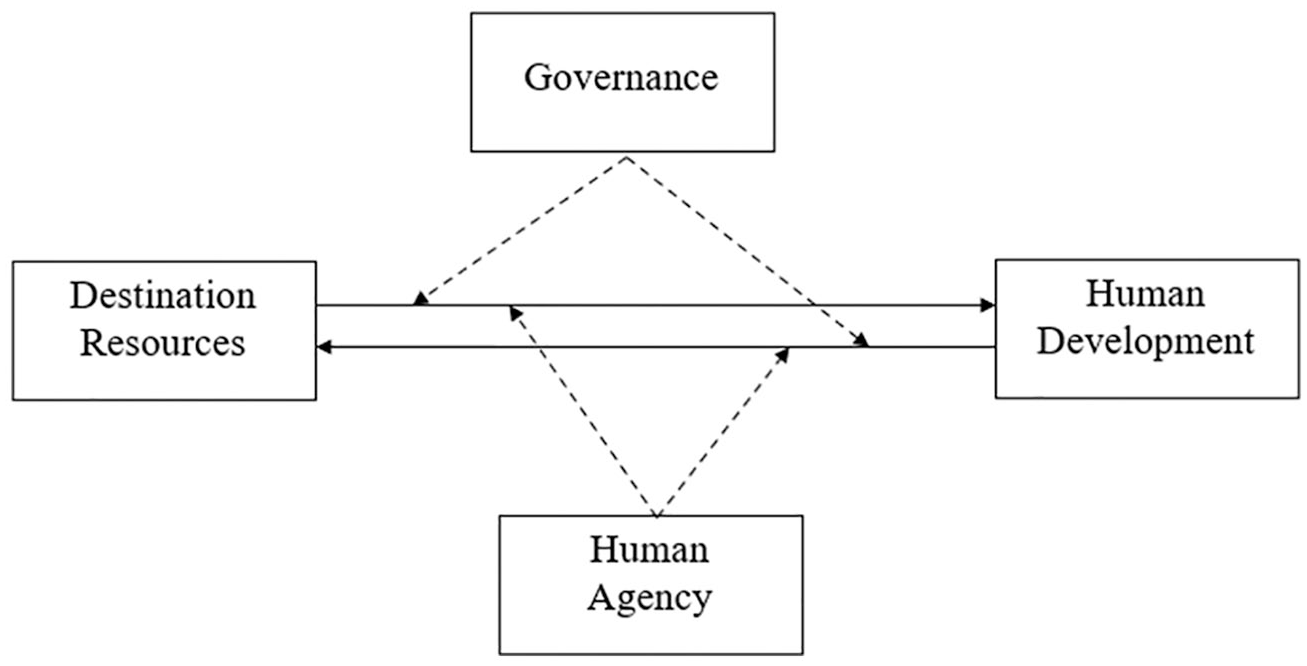
The Theoretical Model.
Methodology
The Case Study Approach
Malaysia was utilized as this study takes a destination-centered approach, assuming the destination to be the unit of analysis. Malaysia, in southeastern Asia, is characterized by a multi-ethnic population and an elected monarchy. It has been an important economic and trade link between the islands of Southeast Asia and the mainland. The government is characterized as a federal parliamentary constitutional monarchy. The country has transformed itself from a producer of raw materials to an upper-middle-income country, attracting companies in technology and knowledge-based industries. Most of the gross domestic product (GDP) comes from services, followed by industry and agriculture (Central Intelligence Agency [CIA], 2022).
In 2019, travel and tourism in Malaysia contributed 13.3% to the country’s GDP (Knoema, 2022), increasing about a half percentage point since 2000. The country’s Human Development Index [HDI] increased from 0.723 in 2000 to 0.81 in 2019, establishing Malaysia as a solid high human development country. Additional information on Malaysia and its development over time are provided in Table 1.
Country Overview.
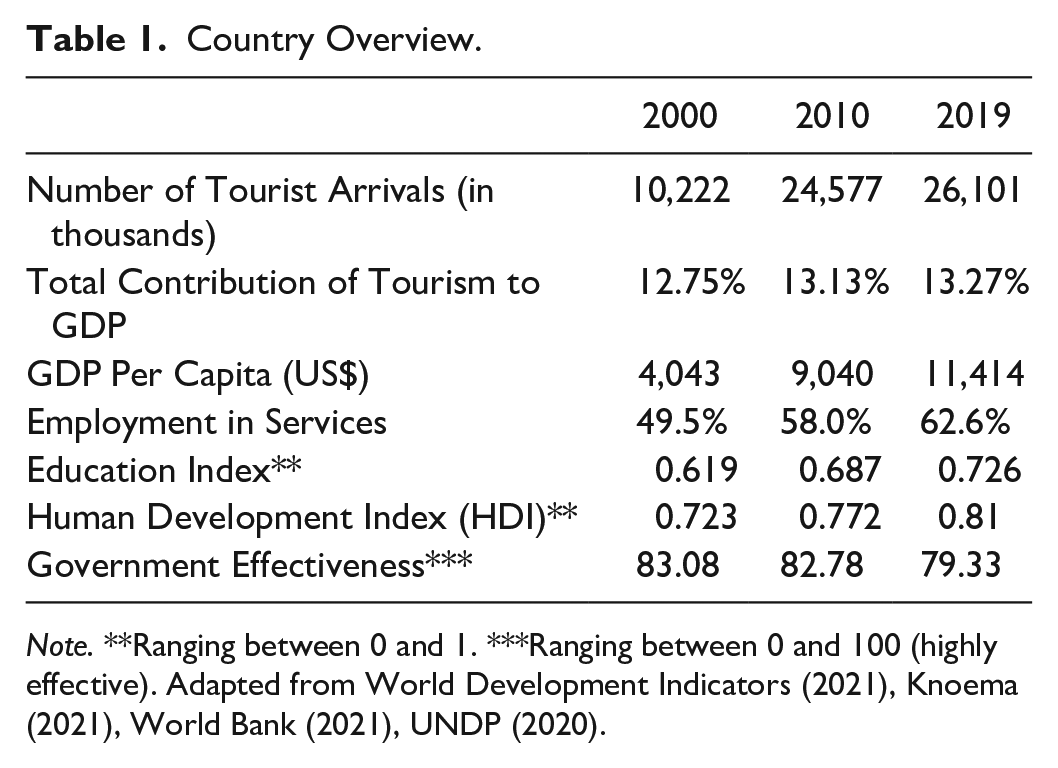
Note. **Ranging between 0 and 1. ***Ranging between 0 and 100 (highly effective). Adapted from World Development Indicators (2021), Knoema (2021), World Bank (2021), UNDP (2020).
In recent years, the contribution of travel and tourism to Malaysia’s GDP fluctuated substantially. In the 1990s, tourism made up around 3.8% of the GDP, increasing to 16.1% in 2014 (Habibi, 2017). In 2019, Malaysia received over 26 million arrivals with more than 70% arriving from Southeast Asia, specifically Singapore (11 million), Indonesia (3.3 Million), and Thailand (2 million), followed by Europe (1.2 million) and South Asia (1 million; UNWTO, 2019 ).
Between 2010 and 2014, visitors’ average length of stay in Malaysia was between 8.5 and 9.1 nights. However, in 2015, the average length of stay drastically shortened to 5.8 nights, reaching 6.2 nights in 2018 and 7.6 nights in 2019 (Department of Statistics, Malaysia, 2022). This decrease may have been impacted by either increased competition or the tragic disappearance of Flight 370 (operated by Malaysia Airlines and flying from Kuala Lumpur airport) and Malaysia Airlines Flight 17 (which was shot down over Ukraine in 2014). In Malaysia, tourism is one of the primary sources of employment, accounting for one in six jobs, as reported in 2019 (WTTC, 2021). According to 2019 WEF report, Malaysia ranks 29th globally, with a score of 4.5 (based on 7-point scale). Several studies have been conducted using Malaysia as a case study. These studies have mainly examined the inbound tourism demand revolving around income, tourism prices, exchange rates, and Halal tourism (Azali et al., 2021; Tang, 2018; Wong, 2017; Zainuddin et al., 2016). However, they have not looked at destination competitiveness, the impact of institutional involvement, or the human agency’s role in destination competitiveness.
In general, governance occurs at different geographical scales, at transnational, national, regional, or local levels. It can be argued that these scales are interconnected. Therefore, understanding the impact these policies have at country level will provide further understanding of the role of these policies have at the destination level. As Bramwell and Lane (2011) pointed out, the use of “geographical scale is a particularly valuable device for drawing out key differences in emphasis and application within tourism planning” (p. 416). For that reason, the country approach was adopted in this study.
Data
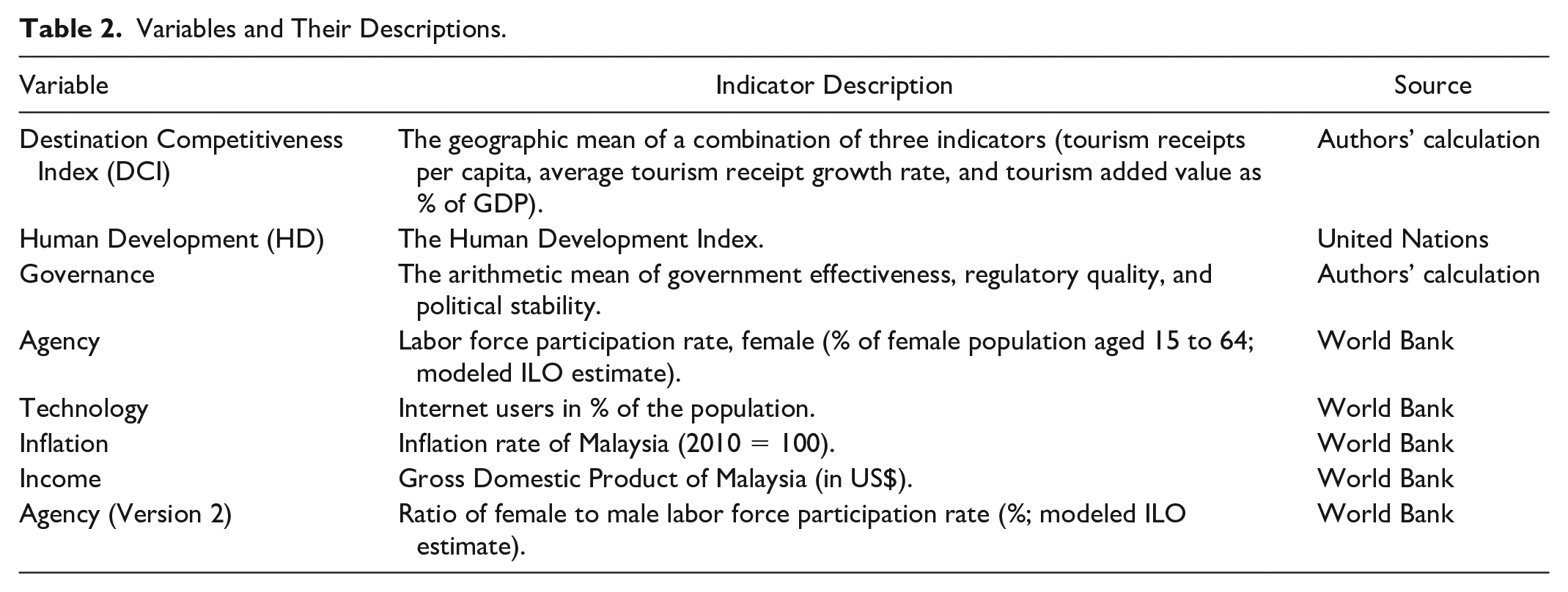
The data were collected from various sources, mainly from the World Bank. Table 2 describes the applied variables, their proxies, and their description. The calculation of the destination competitiveness index followed the same calculation method used by Croes and colleagues (2020). The index was calculated as a geometric mean of three variables: (i) tourism receipts per capita, (ii) average tourism receipt growth rate, and (iii) tourism value-added as a percent of the gross domestic product. These three indicators were first normalized before calculating the destination competitiveness index. The variables were collected for the years 1996 to 2018, accounting for 23 observations.
Variables and Their Descriptions.
The Method of Analysis
The study applied unit root testing and Three-Stage Least Squares (3SLS) to analyze the data. The investigation tested the collected data first for stationarity using the Augmented Dickey-Fuller test (ADF), the Phillips-Perron test (PP), and the Modified Dickey-Fuller test based on general least squares (PDF-GLS; Dickey & Fuller, 1979; Elliott et al., 1996; Phillips & Perron, 1988). Testing for stationarity is needed to avoid spurious regression results (Gujarati & Porter, 2009). Stationary variables are characterized by having a constant mean and variance, where the covariance value between two time periods depends only on the distance between the two periods (Gujarati, 2011). The findings from the unit root test will determine if the study needs to pursue additional cointegration tests.
Next, the study estimated the relationships between the two constructs (destination competitiveness and human development) and the mediators/moderators (governance and agency). The study applied the 3SLS regression method to estimate a system of equations by the Seemingly Unrelated Regression Estimation (SURE) approach. The 3SLS is one of the most common system estimation methods in structural equation modeling, which is more efficient than estimating each equation separately using other approaches, such as the Two-Stage Least Squares (Wooldridge, 2013). The 3SLS integrates two-stage least squares and seemingly unrelated regression (Henningsen & Hammann, 2007), allowing us to jointly estimate a series of individual equations and achieving more efficient advantages than individually fitting equations via two-stage least squares (Gu et al., 2017).
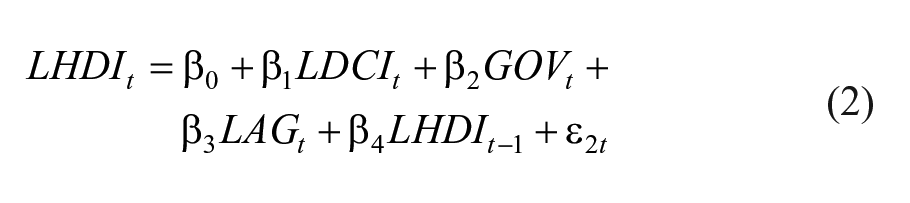
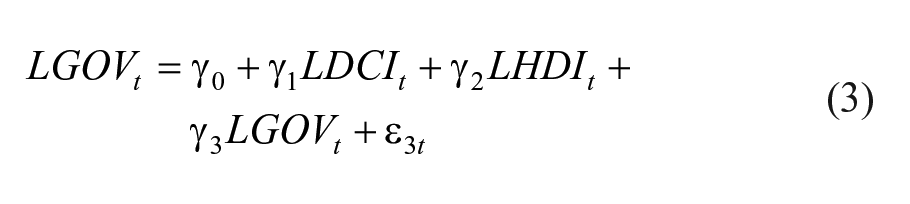
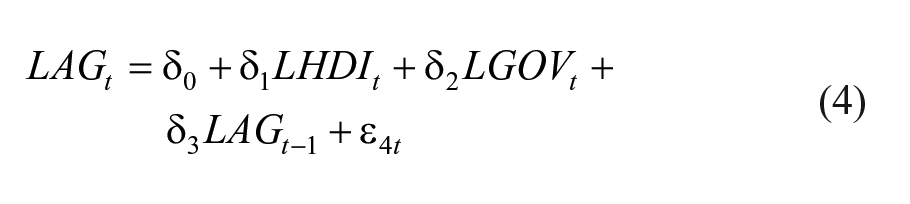
The applied models in the study were as follows:
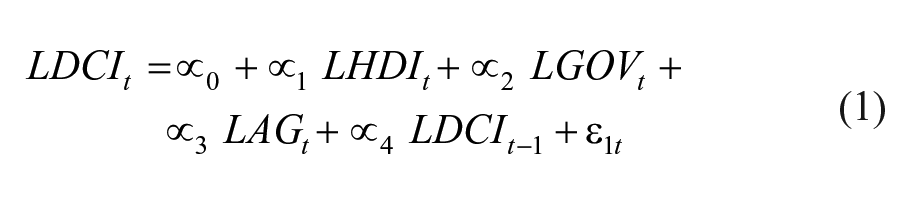
where
L = Logarithm.
DCI = Destination competitiveness index.
HDI = Human development index.
GOV = Governance.
AG = Agency.
α, β, γ, δ = Coefficients.
ε1..ε4 = Error terms.
The presented models all include a lagged version of the dependent variable to consider a possible structural dependency on past periods, an assumption not uncommon, according to Kennedy (2008). The instruments used in the 3SLS approach included the original variables and logarithms of several indicators involved in the study, as indicated in Table 4.
Results
The study investigated the relationship between DC and human development as presented in the Appendix (see online supplementary material), suggesting that DCI has a volatile evolvement, while HDI indicates a slightly steady upward trend. According to the figure in the Appendix, it is unclear whether there is a relationship between the two constructs. However, Malaysia appears to depict a human development-lopsided destination, like several Latin American countries, according to the findings from Croes and colleagues (2020).
The study then examined the results from the unit root tests. Table 3 suggests that the variables were either I (0) or 1 (1), which means that they could be integrated at the level or the first difference form. Therefore, the authors used the variables’ level form I (0).
Unit Root Test Results.
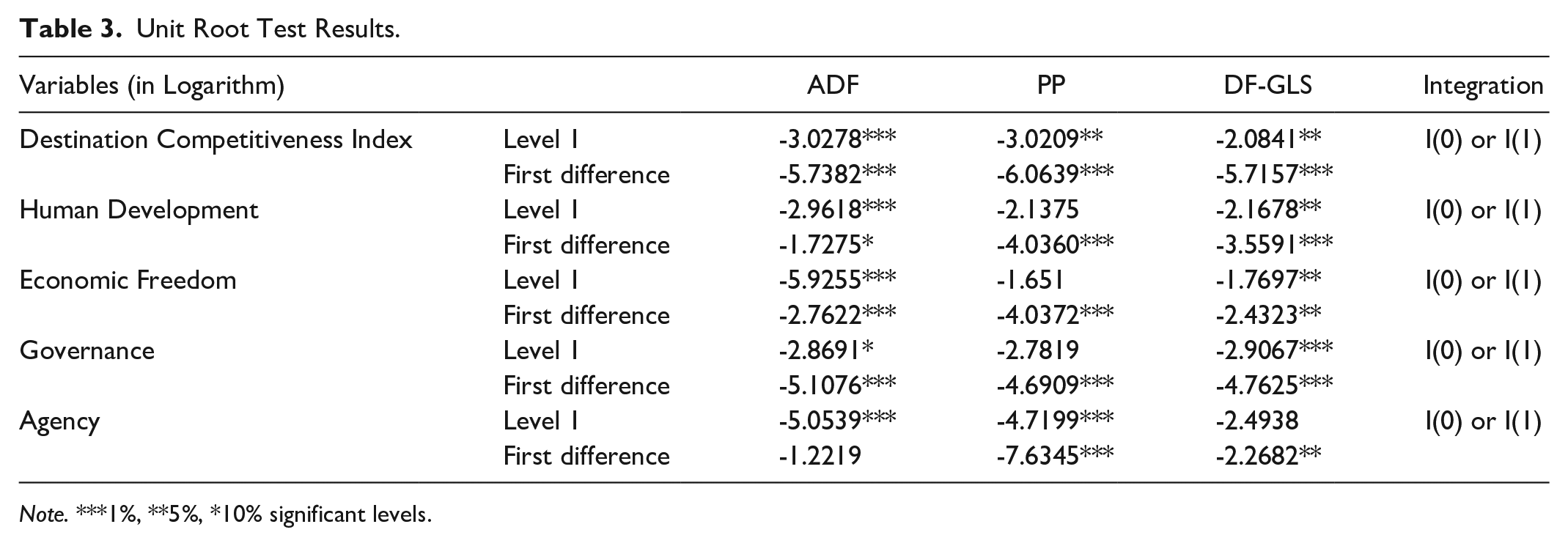
Note. ***1%, **5%, *10% significant levels.
Table 4 reveals the results of the 3SLS regression. The variables were transformed into logarithms to narrow the range of the variability of variables, which could make the estimation less sensitive to extreme values (Wooldridge, 2013).
Three-Stage Least Squares’ Results (Variables in Logarithm).
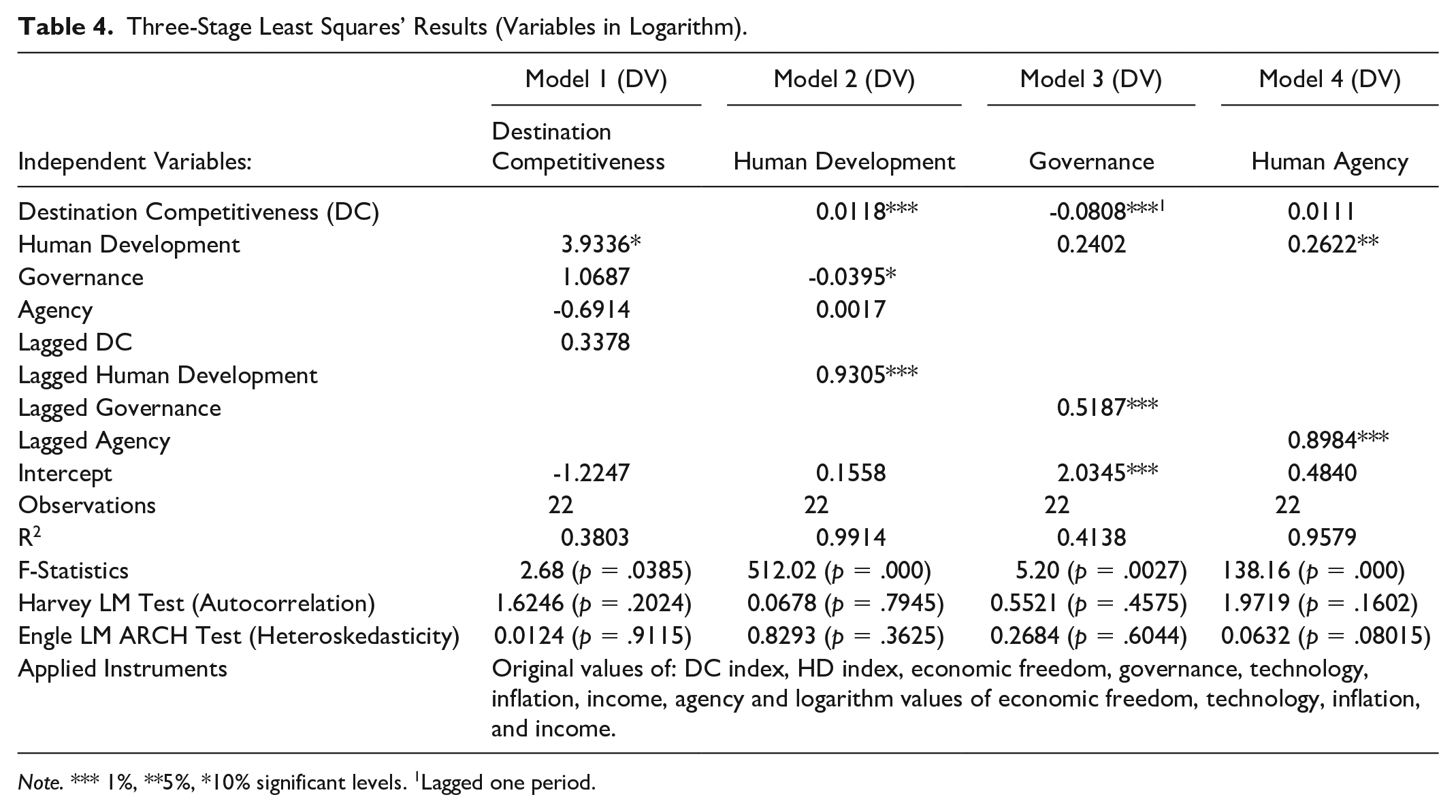
Note. *** 1%, **5%, *10% significant levels. 1Lagged one period.
The regression analysis included four models following the equations (1–4). Model 1 uses DCI as the dependent variable and Human Development, GOV, and AG as the independent regressors. Model 2 applies Human Development as the DV, while DCI, GOV, and AG are independent regressors. Model 3 employs GOV as the DV, while the others were the independent regressors, and Model 4 applies AG as the DV and the others as the independent regressors. The first model indicates that Human Development (HDI) is positive and statistically significant, albeit at the 10% influence, in explaining the Destination Competitiveness Index (HDI). While GOV had a positive sign, the result shows that GOV did not significantly influence destination competitiveness. The results are inconsistent with the findings of Lee (2015), Tang (2018), and Tang and Tan (2018). Similarly, AG had a positive sign, albeit with no significant impact on DCI. The results confirm Hypothesis 1 but disconfirm Hypotheses 4 and 5.
The results indicate that DC (DCI) had a significant positive impact on Human Development (HDI) at the 1% level in the second model. This result confirms Hypotheses 2 and 3 and suggests, together with Model 2, a bilateral relationship between DC and human development. The results are consistent with the studies of Ridderstaat et al. (2016a). Moreover, Model 2 indicates that GOV had a significant negative impact (at 10%) on human development, while AG had a positive and significant influence on human development. Model 3 reveals a similar pattern to Model 2, with DC showing a significant negative impact (at 1% level) on GOV.
In comparison, Model 4 suggests a significant positive impact of human development on AG (at the 5% level). Therefore, the study disconfirms Hypothesis 4 and confirms Hypothesis 5. Models 2 and 4 reveal high R-squares indicating good model fit, which indicates the significant and robust role of agency moderating the relationship between DC and human development. This result is consistent with the findings of Kubickova et al. (2017).
The model statistics were acceptable. The F-statistics were statistically significant, indicating that at least one applied variable was relevant for data fitting. The Harvey LM test for autocorrelation came out statistically not significant, implying that the null hypothesis of no autocorrelation in each equation could not be rejected. Similarly, the Engle LM ARCH Test statistics were not statistically significant, implying no heteroscedasticity in the equation results.
Conclusion
The study had two main objectives. First, it examined the potential relationship between destination competitiveness and human development. The central premise of this study was that human development was the ultimate objective of destination competitiveness and a critical source of competitiveness, which resonates with the study of Ridderstaat et al. (2016a). Destination competitiveness is a critical source of resources to households, firms, and government, while human development refers to people’s capabilities to actively participate in society’s development, however, neither of these resources spread evenly across the population (trickle down) nor would there be enough economic demand for capabilities. Resources or capabilities can reinforce or weaken each other. Second, the study sought to identify the potential channels that either reinforce or attenuate the relationship between destination competitiveness and human development. Sen’s capability approach and institutional theory identified human agency and governance as intervening variables affecting the relationship between destination competitiveness and human development.
The implementation of the previously described research objectives made four relevant contributions. First, the study showed the bilateral reinforcing relationship between DC and human development, which means that sustained investment in human development following the sustainable development goals’ precepts is challenging without simultaneous encouragement of destination competitiveness. Second, the study expanded the conceptualization of governance. Typically, institutional theory characterizes governance with market efficiency. The integration of Sen’s capability approach broadened the governance informational basis by including efficiency, empowerment, and social justice, shedding new light on the complex relationship between tourism destination competitiveness and human development. Third, broadening the governance conceptualization also facilitated the inclusion of equity as a critical component in this analysis of the relationship between DC and human development. The notion of equity has received heightened attention in the current debate in development research (Fukudu-Parr, 2003; Garces, 2020; Hartman, 2014). The inclusion of equity is another contribution of this study, measured by the ratio of female to male labor force participation. This proxy enabled an impression about expanding human rights and freedom, two fundamental capability approach tenets. Additionally, centering attention on equity allowed a glimpse into the distribution of achievements, which expands the interpretation of the Human Development Index. The use of gender metrics is in sync with the broader human development discourse, as illustrated in the 1995 Human Development Report. The gender metrics also tie in with the notion of human agency, the study’s fourth contribution. Occupational choices are critical for living standards and well-being, as they relate to an individual’s income level, transform social status and recognition, and lead to inclusion, participation, and self-regard (Hartman, 2014).
The study found that destination competitiveness had a significant positive effect on human development, while human development had a reciprocal positive effect on DC. By confirming Hypotheses 1 and 2, the findings corroborated the logical outcome of reinforcing forces affecting these two constructs. Consequently, Hypothesis 3 is also confirmed. These three findings are consistent with the studies of Croes et al. (2020), Ridderstaat et al. (2016a), Abreu-Novais et al. (2016), and Azzopardi and Nash (2016). In contrast, when dissecting the countries in Latin America, Croes et al. (2020) found that the mutual relationship between DC and human development seemed to work at lower development levels. This study is inconsistent with such results since the United Nations considers Malaysia to be an upper middle-income country with a high Human Development Index.
The critical reinforcing force in influencing the reciprocal relationship between DC and human development is human agency, consistent with findings from the Hartman (2014) study. This result coincides with a central capability approach tenet: once individuals have basic capabilities, they fend for themselves and decide what is best for them. The surprising result is the lack of significant impact governance had on the relationship between DC and human development. Malaysia’s economy seemed strong prior to Covid-19, enjoying an upward trajectory, averaging growth of 5.4% since 2010. The World Bank expects the country to transition from an upper-middle-income economy to a high-income economy by 2024. This remarkable growth seems to be due to government intervention as the country became one of the most open economies in the world. Moreover, the government also pushed policies and programs to benefit the most vulnerable population sectors, achieving impressive results with the microfinance program Amanah Ikhtiar Malaysia (AIM).
The AIM program aimed to reduce ethnic income disparities and empower women (Haque et al., 2021). Women’s empowerment seems evident from the increasing trend of women’s participation in the labor force. The female to male labor participation rate increased from 57.4% in 1995 to 66.5% in 2019 (an increase of nearly 16%). There is evidence that human agency played a role in bringing about change in the political outlook for women by enlarging their opportunities, rights, and freedom (Haque et al., 2021). The impact of this change is revealed in the low unemployment rate of 4.3% in 2021.
Although implementation of government programs seems effective, the governance measures also included a regulatory framework and political stability. The latter component (political stability) seems especially to be the Achilles heel of Malaysia. The average score for political stability from 1996 to 2018, estimated by the authors based on the data from the Heritage Foundation, is 53.4 out of a 100 scale. This score is below average and affects the political environment in the country with adverse polarization effects. These effects hinder the social connectedness of people to diverse social and economic networks and emerging economic sectors that could propel economic growth and well-being. This unbecoming situation is what Sen (1993, 1999) referred to as conversion factors that bear upon occupational choices and opportunities, inclusion, and freedom. The Malaysian tourism sector enjoys a respectable Travel and Tourism Competitiveness Index rank of 29 (WEF, 2019), but still shows weakness regarding prioritization of travel and tourism, hygiene and health, environmental sustainability, and tourist service infrastructure. Falatoonitoosi et al. (2022) highlight the criticality of sustainable development for human prosperity. Primarily, health and sustainability are concerned considering the ongoing Covid-19 pandemic and the heightened attention on climate change.
The theoretical implications of this study are that destination competitiveness and human development can be mutually reinforcing in upper-middle-income countries whenever agency is the condition that channels reinforcement. Agency seems to supersede governance in regard to public resource allocation choices for tourism. Furthermore, empowering people through occupational opportunities is critical for reinforcing the link between DC and human development. An increase in basic capabilities, such as the availability of education, does not automatically lead to more and better jobs. The reinforcing nexus exists only when availability matches the demands and possibilities in the labor market.
The managerial implications of this study are twofold. Promoting tourism through arrivals and higher spending could generate the necessary resources and opportunities for sustaining human development; however, the ensuing resources and opportunities resulting from tourism promotion remain dependent upon destination managers prioritizing travel and tourism through more a effective allocation of public resources, improvement of tourist service infrastructure, hygiene, public health at tourism destinations, and public areas and facilities. Improving Malaysia’s brand image on these issues seems crucial (Hussin & Buchmann, 2019; Wijesinghe, 2022); however, employing best practices when engaging in activities to enhance Malaysia’s supply shortfalls—as suggested by Hussin and Buchmann (2019) and Wijesinghe (2022)—should be done with caution. If context (instigated by human diversity and circumstances) matters, then it is hard to imagine that a single set of practices would be suitable in all contexts. Rodri’s (2008) study, entitled Second-Best Institutions, warns against blindly applying best practices. This suggestion is echoed by Croes and colleagues’s (2018) study in Malta. Finally, destination managers should show honesty and transparency about the real economic, social, and environmental costs of tourism, and develop Malaysia-specific plans and programs that tackle these problems.
Limitations and Future Research
The authors acknowledge and address three limitations within the research study to help guide future inquiry. First, the study mainly centered on revealing averages which illuminate the full scale of diversity within Malaysia. In the field of geography, for example, diversity indicates urban versus rural and socioeconomic strata. While the inclusion of a gender metric touched upon the notion of diversity and inclusiveness, it is not enough to do justice to Sen’s capability approach. People weigh opportunities differently and have different motivations and aspirations. The second limitation is that the study focused on indices that compressed information. While indices are simple and easy to comprehend, they may hide crucial information that could provide a more detailed description and in-depth understanding of the dynamic and complex nexus between DC and human development. It is also recommended that longitudinal research—spanning several years in order to measure whether differences exist—be considered. Finally, the data are also a limitation due to the (very) small sample size and the fact the data are pre-Covid-19 so the situation may have changed. Future research should disaggregate these indices to get a more granular understanding of the nature and forces that impact the nexus between DC and human development, while including people’s experiences with their living conditions. Moreover, variation may exist depending on the investigated destination (developed/developing/small island). Therefore, analyzing other destination categories is suggested to see if differences exist, and how the role of government impacts such models.
Supplemental Material
sj-pdf-1-jht-10.1177_10963480221140022 – Supplemental material for Destination Competitiveness and Human Development: The Compelling Critical Force of Human Agency
Supplemental material, sj-pdf-1-jht-10.1177_10963480221140022 for Destination Competitiveness and Human Development: The Compelling Critical Force of Human Agency by Robertico Croes, Marketa Kubickova and Jorge Ridderstaat in Journal of Hospitality & Tourism Research
Footnotes
Declaration of Conflicting Interests
The authors declared no potential conflicts of interest with respect to the research, authorship, and/or publication of this article.
Funding
The authors received no financial support for the research, authorship, and/or publication of this article.

Supplemental Material
Supplemental material for this article is available online.
Author Biographies
References
Supplementary Material
Please find the following supplemental material available below.
For Open Access articles published under a Creative Commons License, all supplemental material carries the same license as the article it is associated with.
For non-Open Access articles published, all supplemental material carries a non-exclusive license, and permission requests for re-use of supplemental material or any part of supplemental material shall be sent directly to the copyright owner as specified in the copyright notice associated with the article.
