



Abstract
As emerging digital technologies have been used for disruptive innovation and business models, an essential component for hospitality researchers and practitioners is to determine the role of disruptive technologies and innovation in hospitality businesses. This study synthesizes prior research on disruptive innovation and identifies disruptive technologies in the hospitality context. A thematic analysis was performed through a computer-assisted qualitative data analysis approach using 23 publicly traded hospitality companies. Results reveal that disruptive technology and innovation are among the most critical strategic aspects in contemporary hospitality firms. This study provides contributions to hospitality researchers and practitioners to implement disruptive technologies for superior business performance. This study is among the first to introduce and synthesize disruptive technologies and innovation in the hospitality context.
Keywords
Highlights
The current landscape of disruptive innovation and technologies is presented.
The emerging topic of disruptive innovation is evident in recent tourism studies.
A computer-assisted qualitative data analysis approach is presented.
The gap in introducing disruptive technologies and synthesizing them with disruptive innovation in the hospitality context has been under-researched.
Innovation in services is a catalyst for customer satisfaction, business success, economic growth, and industry expansion in the hospitality industry (Ostrom et al., 2010; Snyder et al., 2016). While innovation is crucial to move hospitality businesses forward, technology-driven innovations are even more important to enhance the customer experience, satisfaction, and behavioral intentions (M. A. Khan, 2020; M. Lee et al., 2019). Due to the recent, rapid development of information and communication technologies (ICTs), contemporary hospitality firms have been implementing ICTs to redesign existing services or processes or develop new service offerings (DeFranco & Lee, 2019). Therefore, prior hospitality research on innovation has focused on examining the antecedents and outcomes of innovative hospitality services (S. Lee et al., 2021).
However, these technological advancements create new business opportunities, radical changes in the business environment, and unexpected threats (Perelygina et al., 2022). For example, Booking.com, one of the most successful online travel agencies, emerged from the evolution of the internet in the early 2000s and became the main distribution channel in the hospitality industry. Based on sharing economy and digital technologies, Airbnb presents new values, offers unique value propositions, and develops its own innovations (Guttentag, 2015; Zach et al., 2020), in turn competing against and dominating the traditional hospitality market players. These new disruptive entrants are called “disrupters” and can be generally understood under the concept of “disruptive innovation.”
Disruptive-innovation theory (Christensen, 1995) explains why dominant incumbents failed in their competition with new entrants in the market (or industry), introducing the concept of “disruptive technology.” Disruptive technology can be defined as a technology that changes the bases of competition by changing the performance metrics along which firms compete (Bower & Christensen, 1995). Some studies (e.g., Christensen & Raynor, 2003; Hang et al., 2013) extend the original concept of disruptive technology into disruptive innovation, referring to disruptions in technology or disruptions in products/services and business models. It is suggested that disruptive innovation leads to digital innovation, an increase in sales and revenues, productivity growth, or a firm’s superior market value. In the marketplace, disruption can be triggered by new entrants with disruptive business models, new technologies, or changes in consumer behavior (Zach et al., 2020). When faced with an innovative disruptor, existing firms (i.e., incumbents) may have two strategies to survive in the marketplace: strengthening the existing or adopting the new business model (Osiyevskyy & Dewald, 2015).
In hospitality management, disruptive innovation has been used as a theoretical lens not only to understand disrupters (e.g., Airbnb) in the marketplace (Guttentag, 2015; Guttentag & Smith, 2017) but also to analyze incumbents’ (e.g., lodging firms) strategic reactions or market value (Zach et al., 2020). Despite the existence of innovations in the hospitality industry, disruptive innovation has not been utilized as an emerging topic for researchers or practitioners. Although emerging digital technologies have been used for disruptive innovation and business models, there is no study introducing disruptive technologies and synthesizing them with disruptive innovation in the hospitality context. Furthermore, there exist ambiguities and inconsistencies in understanding and identifying disruptive innovation, thus lacking a clear conceptualization.
There is potential value in promoting disruptive-innovation research under the hospitality industry lens. Therefore, the current study aims to explore the critical role of disruptive technologies and innovation in hospitality businesses. In particular, the current study attempts to (a) synthesize prior research on disruptive innovation and disruptive technologies, (b) identify disruptive-innovation practices and/or disruptive technologies in the hospitality context, and (c) recommend future agendas for academia and industry. The study findings will help to suggest future research directions for hospitality researchers and provide industry practitioners with practical implications.
Literature Review and Research Background
Disruptive Innovation
Coined in the early 1990s by Clayton Christensen, disruptive innovation has become virtually ubiquitous from Wall Street to Silicon Valley. Consequently, it is also one of the most misunderstood and misapplied terms in the business world. The term “disruption” denotes a form of breakthrough that takes place in rapidly changing markets (Christensen, 1995; Christensen et al., 2018). Innovations are necessary to keep businesses moving forward, while disruptive innovation may alter industry structures (Viglia et al., 2018). Disruptive innovations are typically not breakthrough technologies that make good products better; rather, they are innovations that make products and services more accessible and affordable, thereby making them available to a larger population (Christensen et al., 2015). For example, a rise in automation and robots disrupts the workforce, replacing humans with cheaper, more reliable machines (Simplilearn, 2022).
Disruptive innovations tend to target the low end of the market, where customers are viewed as less profitable by leading companies, or they focus on nonconsumers whose alternative is nothing at all. As such, a few innovations can truly be labeled “disruptive.” For example, some may see disruptive as an affordable luxury hotel with shared bathroom accommodation. This is not entirely an innovation but troublesome to the traveler, nonetheless. Disruptive innovations are a positive force not only in the traditional business sense but also socially and economically. They can make industries like education, health care, and global development more accessible and affordable. Disruptive innovation provides consumers with smaller, simpler, cheaper, and more convenient technologies (Adeyinka-Ojo & Abdullah, 2019), and the emergence of disruptive innovation is not new to the hospitality and tourism industry. These industries have seen the emergence of 5G wireless, robots and automation, and shared economies, to name a few. However, disruptive innovation has yet to be thoroughly conceptualized using hospitality firms as the pivot point to further explore how disruptive technologies impact consumer intentions.
Theory of Disruptive Innovation
Just as innovations take a fast approach to change the industry, disruptive-innovation theory is ever evolving. In the broadest definition, Christensen et al. (2018) define the theory of disruptive innovation as a competitive response to new innovations. Further, if a technology that enters the market seems sustainable, newer innovative threats will attempt to eliminate the existing innovation. If disruptive innovation is introduced, new entrants will keep the innovation in motion (Denning, 2016).
Business and technology industries praise Christensen’s theory; however, academics have critiqued its generalizability. Thus, the theory of disruptive innovation contains three components: (a) it must contain an enabling technology, (b) it must have an innovative business model, and (c) a coherent value network must exist (Christensen, 1995). Additionally, King and Baatartogtokh (2015) have identified four key factors that enhance further understanding of the theory: (a) that incumbents in a market are improving along a trajectory of sustaining innovation, (b) that they overshoot customer needs, (c) that they possess the capability to respond to disruptive threats, and (d) that they end up floundering as a result of the disruption. It has been stated that the whole theory applies only once all factors have been met. Coinciding with the ever-changing hospitality industry, firms typically perform with continuous innovations to delight customers; therefore the current theory may lack thoughtfulness in this manner. Christensen and other scholars alike envision a way for this theory to evolve and embrace technological advancements that are truly disruptive in any industry (Denning, 2016). For example, blockchain is often associated with cryptocurrencies, but the technology has a much broader application. Used in the automotive industry, insurance, and retail goods, blockchain was an entrant that met all components of the theory.
Extant literature has begun to address disruptive innovation in hospitality, given that larger innovations are not standard in this sector (Dogru et al., 2019). However, disruptive innovation and change regarding disruptive technologies have yet to be explored through the lens of the hospitality firm. More through social innovations, such as the business of sharing economies, has the theory of disruptive innovation been introduced (Martin & Upham, 2016). Still, Dogru et al.’s (2019) study on the disruption of Airbnb in the hotel sector examines whether this impactful growth truly makes a case to meet the criteria for the theory of disruptive innovation. In this regard, the findings are consistent with all tenets of the theory. However, the economic impact of the incumbent (hotel industry) does not truly transform the market.
Disruptive Technologies
“Disruptive technology” refers to a technology that changes the bases of competition by changing the performance metrics along which firms compete (Bower & Christensen, 1995). Bower & Christensen’s (1997) work, The Innovator’s Dilemma , has contributed to our understanding of the impact of technological innovations on the fates of firms and the dynamics of industries (Danneels, 2004), and technological disruptions are transforming industry structures, processes, and practices (Buhalis et al., 2019). The products based on the disruptive technology in the first stage satisfy only a niche market segment; entrant firms that supported the disruptive technology displace incumbent firms that supported the prior technology (Danneels, 2004). Still, over time, with research-and-development investments, the performance of disruptive technology improves, satisfying the requirements of mainstream markets.
In most conceptual frameworks, disruptive innovation may occur in established industries due to both technological and nontechnological factors (Christensen & Raynor, 2003). Particular technology must play a crucial role in disruptive innovation, and it could be termed disruptive technology (Bower & Christensen, 1995). Although slight variations exist between disruptive innovation and technology, much of the existing literature blends the use of these concepts. According to Buhalis et al. (2019), disruptive technologies are ones that can drive a disruptive change, having “unprecedented impacts at the macro-societal and micro levels that create disruption in industry structures resulting in a breadth of service innovation” (p. 486). For this research, “disruptive technology” refers to the type of technology that changes the bases of competition and performance metrics and impacts society and service structures.
Currently, 11 key disruptive technologies that impact the hospitality industry have been identified: (a) Internet of Things, (b) Industry 4.0, (c) big data, (d) blockchain technologies, (e) artificial intelligence (AI), (f) chatbots, (g) voice and facial recognition, (h) digital business platform; (i) virtual reality (VR)/augmented reality (AR), (j) 5G, and (k) autonomous devices. Table 1 summarizes the reported disruptive technologies from extant disruptive innovation literature.
Disruptive Technologies From Prior Research on Disruptive Innovation.
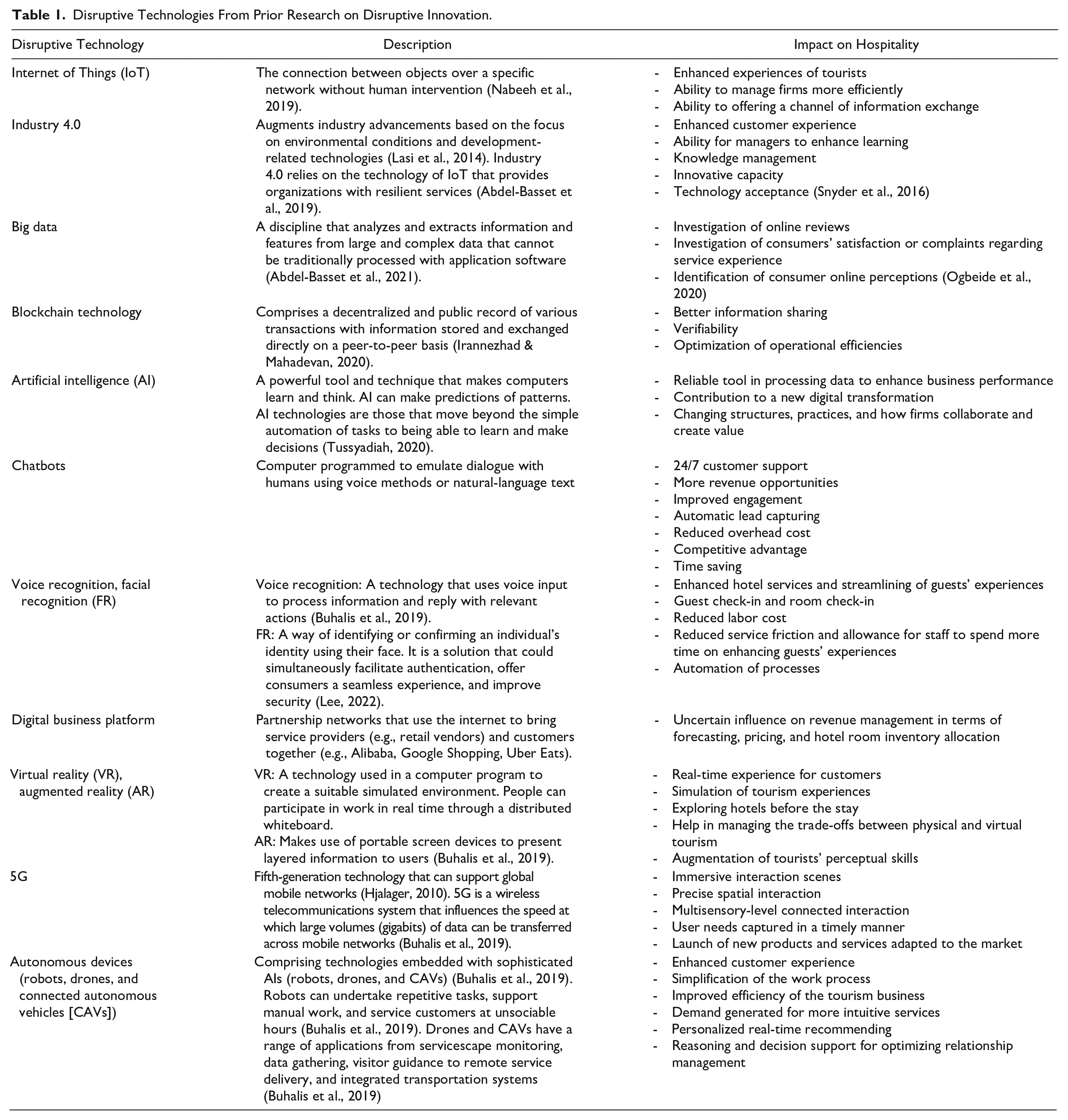
As shown in Table 1, disruptive technologies play a crucial role in the way the hospitality industry is managed, particularly in how supply and demand are linked, creating environments that transform hospitality structures, processes, and practices. Recent technological advancements impact hospitality firms and customers. From the perspective of firms, disruptive technologies allow for managing businesses more efficiently in terms of verifiability, knowledge management, innovative capacity, simplification of the work process, and more revenue opportunities. For customers, technological evolution enhances their experience in terms of investigating online reviews, consumers’ satisfaction or complaints, technology acceptance, real-time experience for customers, exploring hotels before the stay, and augmenting tourists’ perceptual skills. No matter the disruptive technology, there remain ambiguities in identifying disruptive innovation. The current study explores the role of disruptive technologies in the hospitality sector.
Research Methodology
Computer-Assisted Qualitative Data Analysis Approach
This study employs a computer-assisted qualitative data analysis (CAQDA) from hospitality firms’ CEO letters and corporate reports to identify current disruptive innovation practices and disruptive technologies in the hospitality industry. CAQDA originated from content analysis, which is a research method that uses a set of procedures to uncover the presence of specific concepts or themes from the text (Weiss et al., 2005). Content analysis is typically performed by trained human analysts who capture and interpret meaningful concepts based on predefined or emerging codes (Indulska et al., 2012). Recently, CAQDA has been considered and accepted as a respectable strategy for qualitative data analysis due to its efficiency, speed, rigor, objectivity, and capacity to analyze the content of huge amounts of text materials (Crofts & Bisman, 2010; Indulska et al., 2012).
In general, there are two types of content analysis, conceptual analysis and relational analysis (Smith & Humphreys, 2006). Conceptual analysis focuses on capturing the presence, frequency, and centrality of concepts, whereas relational analysis reveals the co-occurrence of concepts and their relationships within the documents (Indulska et al., 2012; Smith & Humphreys, 2006). CAQDA is one of the text analysis techniques using text mining and a series of statistical algorithms and facilitates both conceptual analysis and relational analysis through multiple approaches, such as hyperspace analog to language, latent semantic analysis, and data-mining tools (Cheng & Edwards, 2019; He et al., 2013; Indulska et al., 2012; Weiss et al., 2005). CAQDA allows us to identify predefined or emergent concepts and relationships and to discover new knowledge, insights, and hidden patterns from text documents (Weiss et al., 2005).
Sample and Data Collection
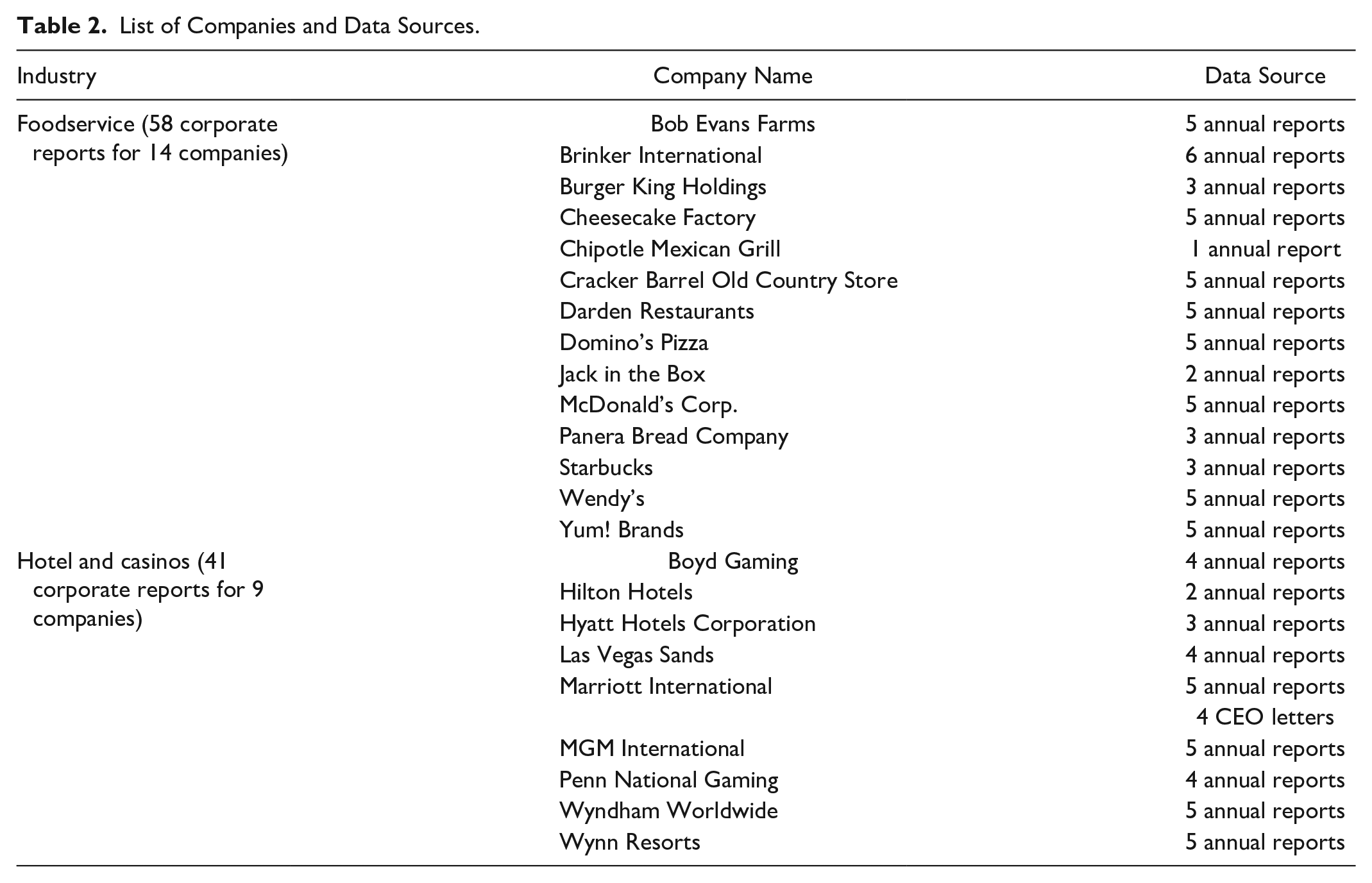
To explore the importance of disruptive-innovation-and-technology practices in the hospitality industry, hospitality firms’ official reports (e.g., CEO letters, annual reports) were collected. Those corporate reports are issued annually and often used to communicate directly with the individual stakeholders and institutional investors. These letters and reports are developed to reflect firms’ priorities and present main business activities, CEOs’ or firms’ strategic orientations, outstanding performance, and future directions. Thus, previous studies considered these reports as one objective and accurate resource and used them for academic research (e.g., Lee et al., 2019). In the current study, we collected CEO letters and annual reports available on company websites, ranging between 2016 and 2021. This study focuses on publicly traded hotels, casinos, and restaurant firms listed in the Fortune 1000 as suggested by prior research (Bouten et al., 2011, Branco & Rodrigues, 2008; S. Lee et al., 2021). The final data set includes 58 corporate documents for foodservice companies and 41 corporate documents for hotel and casino companies. Table 2 presents a list of companies included in the CAQDA. The most recent and publicly available corporate documents were collected for the main analysis of the current study.
List of Companies and Data Sources.
Data Analysis
To address the proposed research questions, we utilize Leximancer V4.5 software (see http://www.leximancer.com), which is one of the most popular CAQDA software packages (e.g., Smith & Humphreys, 2006). Leximancer has been widely accepted across various academic disciplines due to its reliability, reproductivity, visualization capacity, and validity (Indulska et al., 2012; D. Kim & Kim, 2017; Smith & Humphreys, 2006). As suggested by prior CAQDA research (e.g., Iacobucci & Churchill, 2010; S. Lee et al., 2021; Sinkovics & Alfoldi, 2012; Sinkovics et al., 2005), we followed a linear six-stage approach, as shown in Figure 1.

Computer-Assisted Qualitative Data Analysis Process.
According to Figure 1, the main data analysis involved two stages, Stage 5 and Stage 6, in the overall research process. After an initial analysis, we added some terms related to disruptive technologies and innovation resulting from our literature review as shown in Table 1 to fully capture the theme of disruptive technologies and innovation. In Stage 5, Leximancer was used to uncover specific themes and concepts based on their presence and frequency (i.e., conceptual content analysis) and perform relational extraction based on their relationships (i.e., relational content analysis) (Smith & Humphreys, 2006; Stockwell et al., 2009). In Stage 6, we interpreted and compared the findings of corporate documents of both hotel and casino companies and foodservice companies based on disruptive innovation and technologies.
Results
Results of the CAQDA in Leximancer are based on two types of content analysis: conceptual analysis and relational analysis (Smith & Humphreys, 2006). Conceptual analysis results present the presence, frequency, and centrality of concepts, while relational analysis results reveal the co-occurrence of concepts and their relationships in corporate reports (Indulska et al., 2012; Smith & Humphreys, 2006).
Conceptual Content Analysis Results: Main Themes and Concepts
Leximancer identifies the concepts frequently mentioned in corporate documents and the themes and sets of concepts. The concept refers to the collection of words that are used together throughout the text data, while the theme represents the clusters of concepts appearing together often (Leximancer, 2018). Table 3 shows the 10 themes and the concepts of each theme uncovered from corporate documents for all companies. “Connectivity” represents the relative importance of a theme. “Hits” indicates the number of text excerpts that match the concepts within each theme. The name of each theme is related to the concept name that most frequently occurred in that theme. The authors reviewed each theme and its concepts and renamed some of the themes based on the identified concepts.
Main Themes and Concepts in the Hospitality Companies.
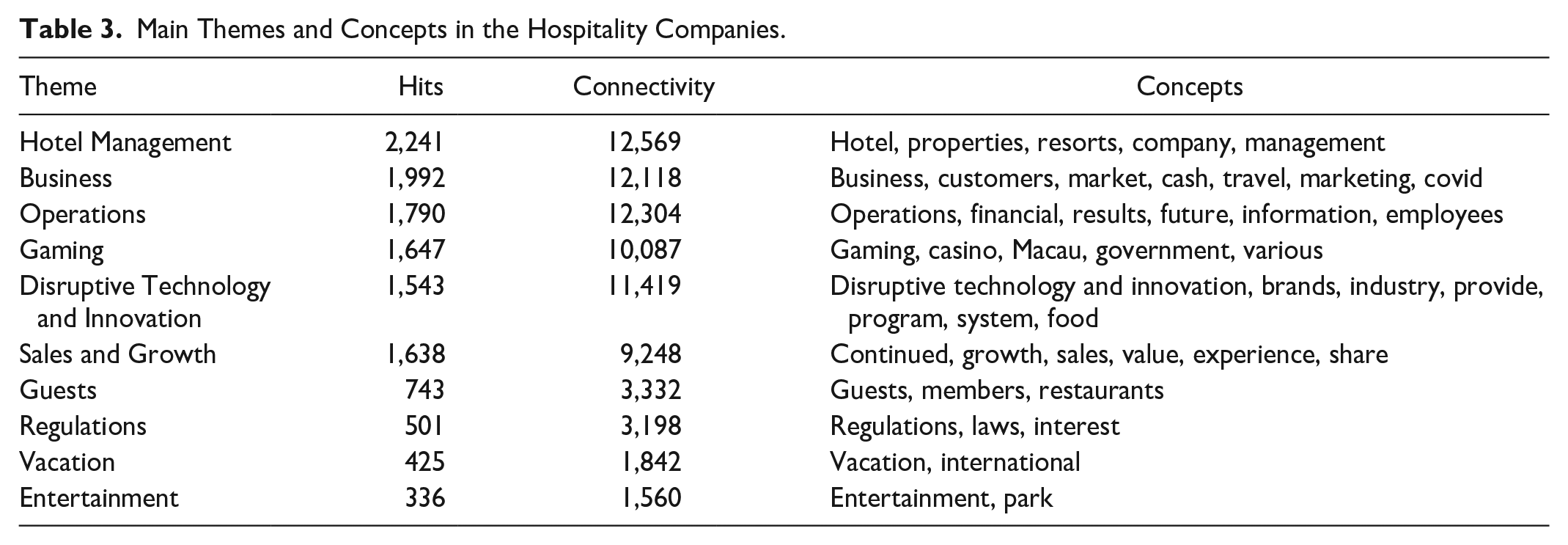
In the hospitality corporate documents, Leximancer identified 38 concepts and 10 themes. According to Table 3, there are 10 themes, including Hotel Management, Business, Operations, Gaming, Sales and Growth, Disruptive Technology and Innovation, Guests, Regulations, Vacation, and Entertainment. For each theme, the numbers for hits and connectivity were automatically calculated and shown with the concepts used together in each theme. Then, the themes and their concepts were mapped to each other through the Leximancer concept-mapping algorithm (Stockwell et al., 2009), as shown in Figure 2. The color of the theme circle indicates the relative importance of each theme since the themes are heat-mapped to demonstrate their significance. For instance, the most important theme (i.e., Hotel Management) appears in red, and the next theme, Business, is in yellow. Each theme circle contains the main concepts, and each concept is connected to other concepts if they frequently occur together in the text.
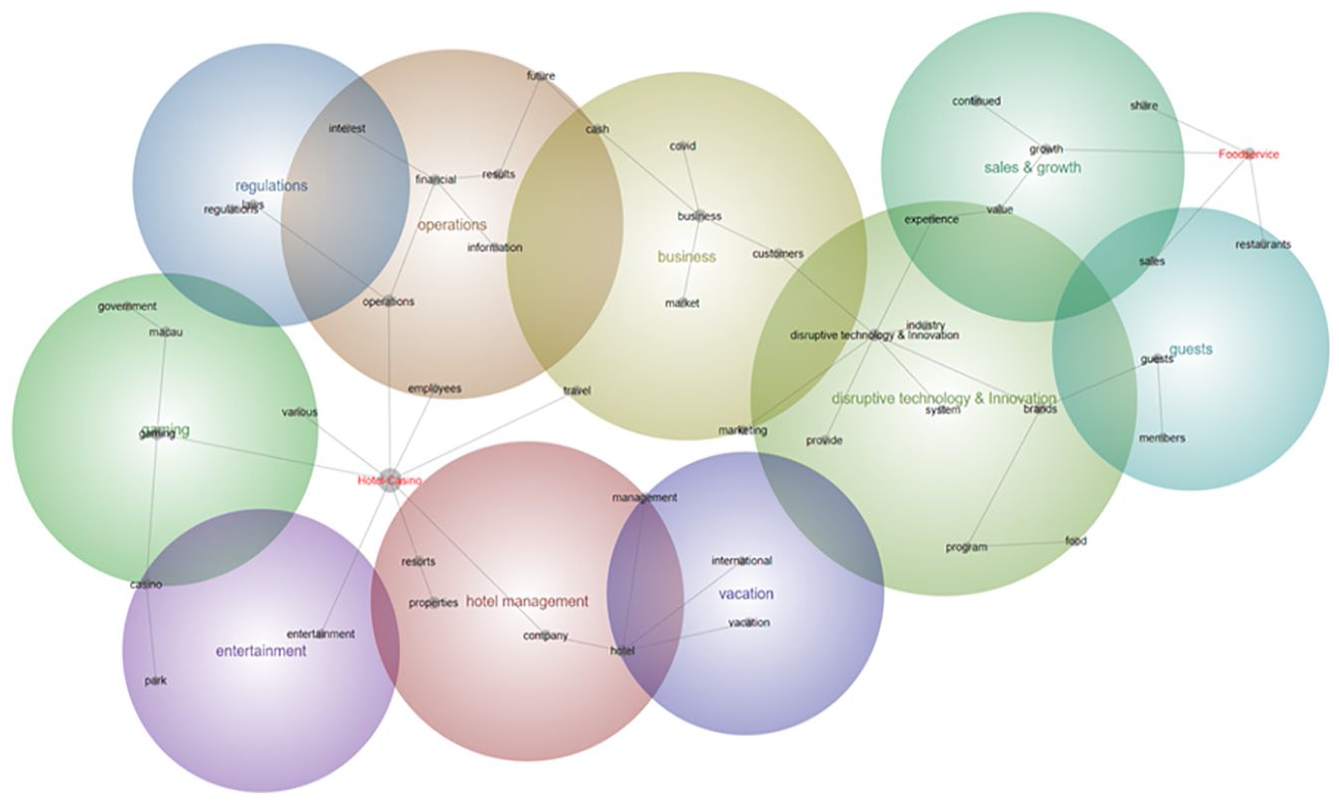
Theme Concept Map of the Hospitality Companies.
For example, the theme Hotel Management is a prominent theme and is mentioned 2,241 times in the hospitality corporate documents. The Hotel Management theme includes the concepts hotels, properties, resorts, company, and management and represents specific concepts related to managing hotels and resorts and corporate issues. These findings indicate that hospitality firms focus on describing their management practices, businesses, specific operations, and business performance for their properties, resorts, customers, and the company itself in their corporate documents. According to the thematic analysis results, Disruptive Technology and Innovation is the fifth major theme, considered one of the most critical strategic aspects in contemporary hospitality firms. All 10 themes and their concepts are shown in Table 3 and Figure 2.
Furthermore, a CAQDA approach allows us to identify the concepts connected to two subsectors of hospitality companies (i.e., foodservice, hotel and casino companies) and further compare the two groups. Table 4 and Figure 3 compare the main concepts between foodservice companies and hotel and casino companies to identify the unique issues of each industry. The count is the number of times a concept appears in the text. Likelihood percentage indicates the proportion of text segments shared by a tagging concept (i.e., foodservice vs. hotel and casino companies) and another concept, presenting conditional probabilities given both conditions (e.g., the concept disruptive technology and innovation in the foodservice companies). Foodservice companies clearly prioritize their businesses, such as restaurant (first) and food (second); business performance and sustainable success (e.g., growth, continued, share, brands, value); and stakeholders, including guests, members, customers, and industry. On the other hand, hotel and casino companies emphasize not only their businesses (e.g., gaming, resorts, casino, park, hotel, properties, travel, financial) but also legal (e.g., regulations, laws, government) and organizational (e.g., information, employees) issues.
Top 20 Concepts of Foodservice Versus Hotel and Casino Companies.
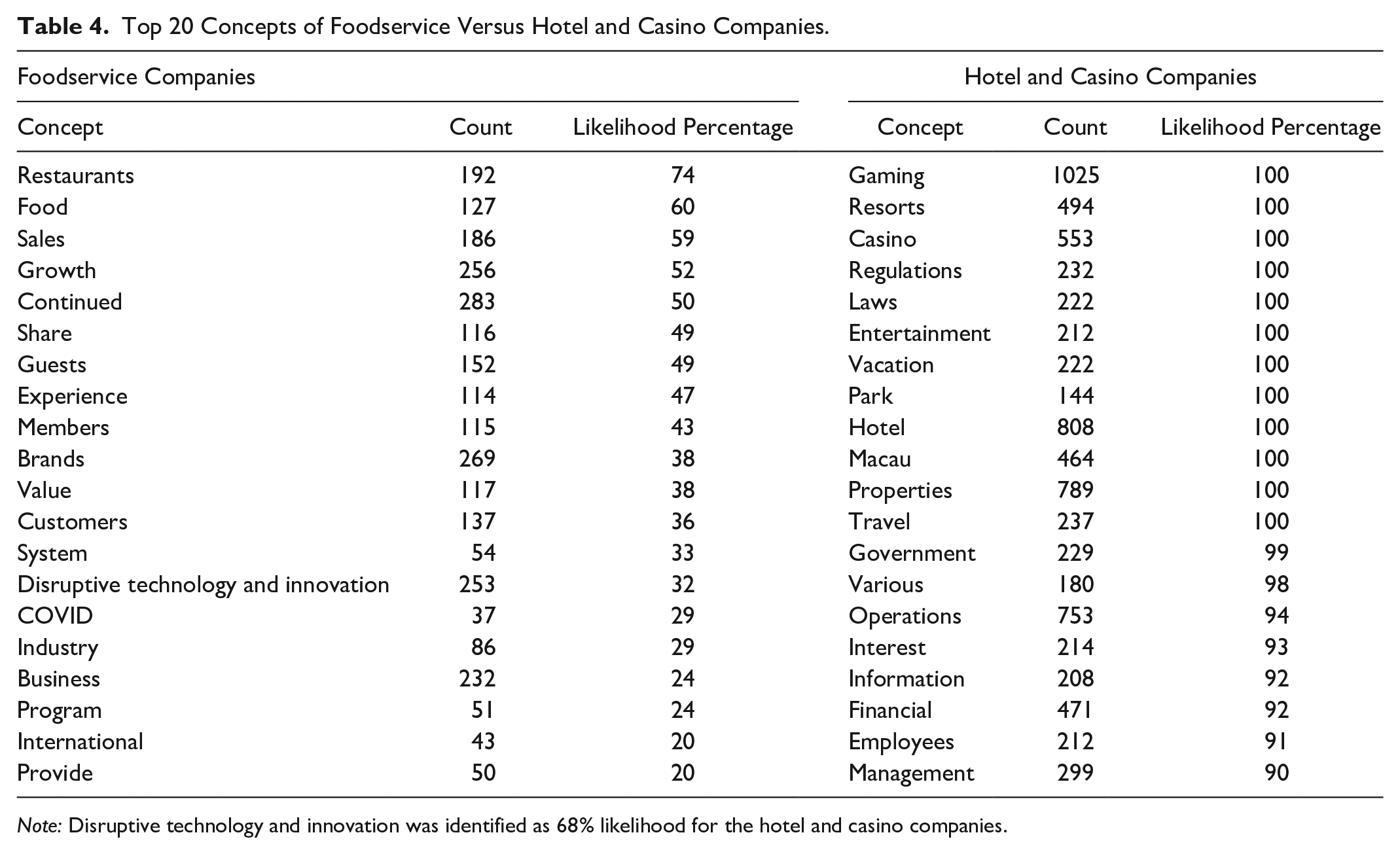
Note: Disruptive technology and innovation was identified as 68% likelihood for the hotel and casino companies.
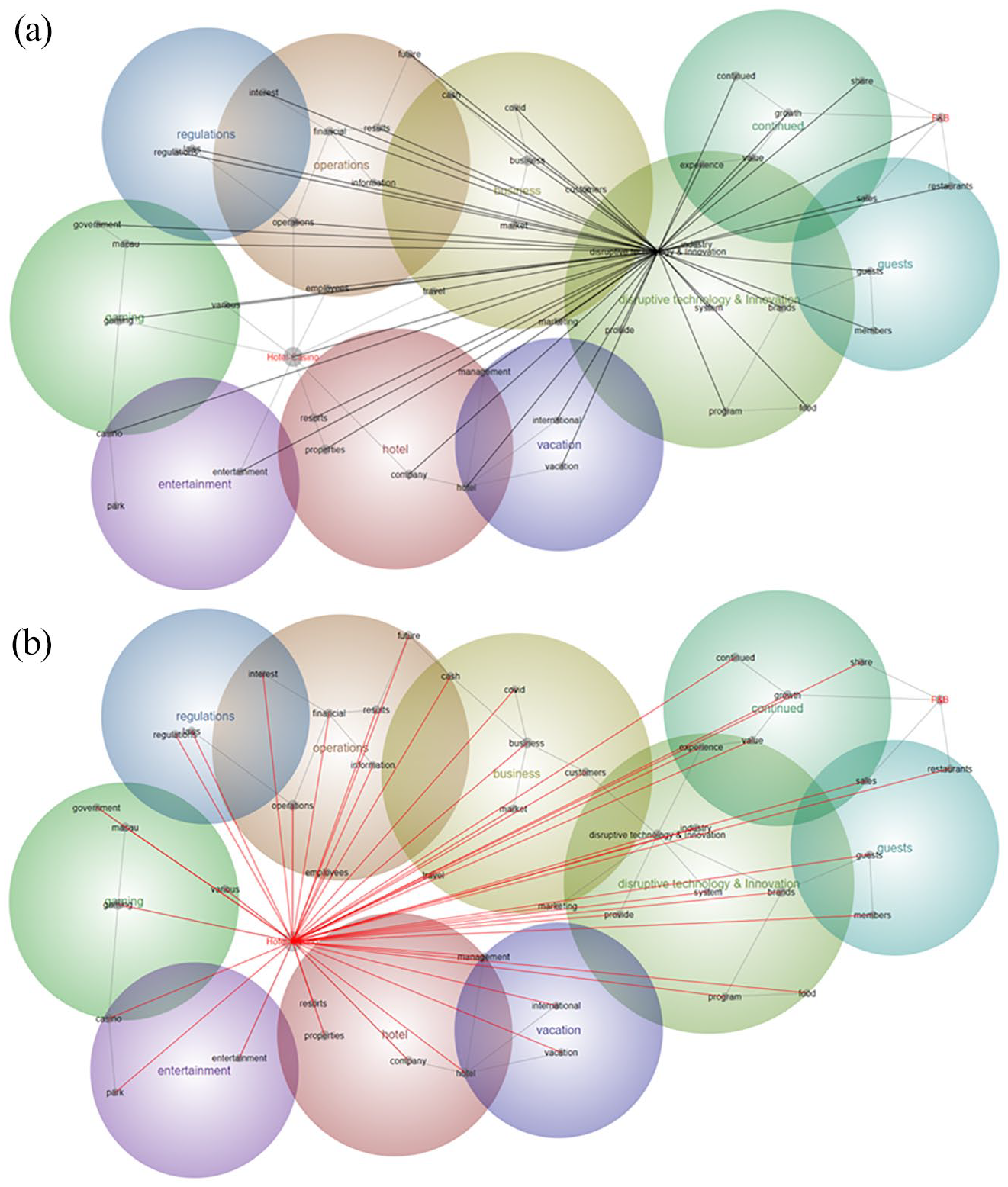
Theme Concept Map of Foodservice Versus Hotel and Casino Companies.
Conceptual and Relational Content Analysis Results: Disruptive Innovation and Technology
The CAQDA approach using Leximancer found that the Disruptive Technology and Innovation theme is one of the major themes identified from corporate documents. This theme includes major concepts such as disruptive technology and innovation, brands, industry, provide, program, system, and food. Quotation examples related to disruptive technology and innovation type (e.g., Table 1) are provided as shown in Table 5.
Disruptive Technology and Innovation Examples in the Hospitality Industry.
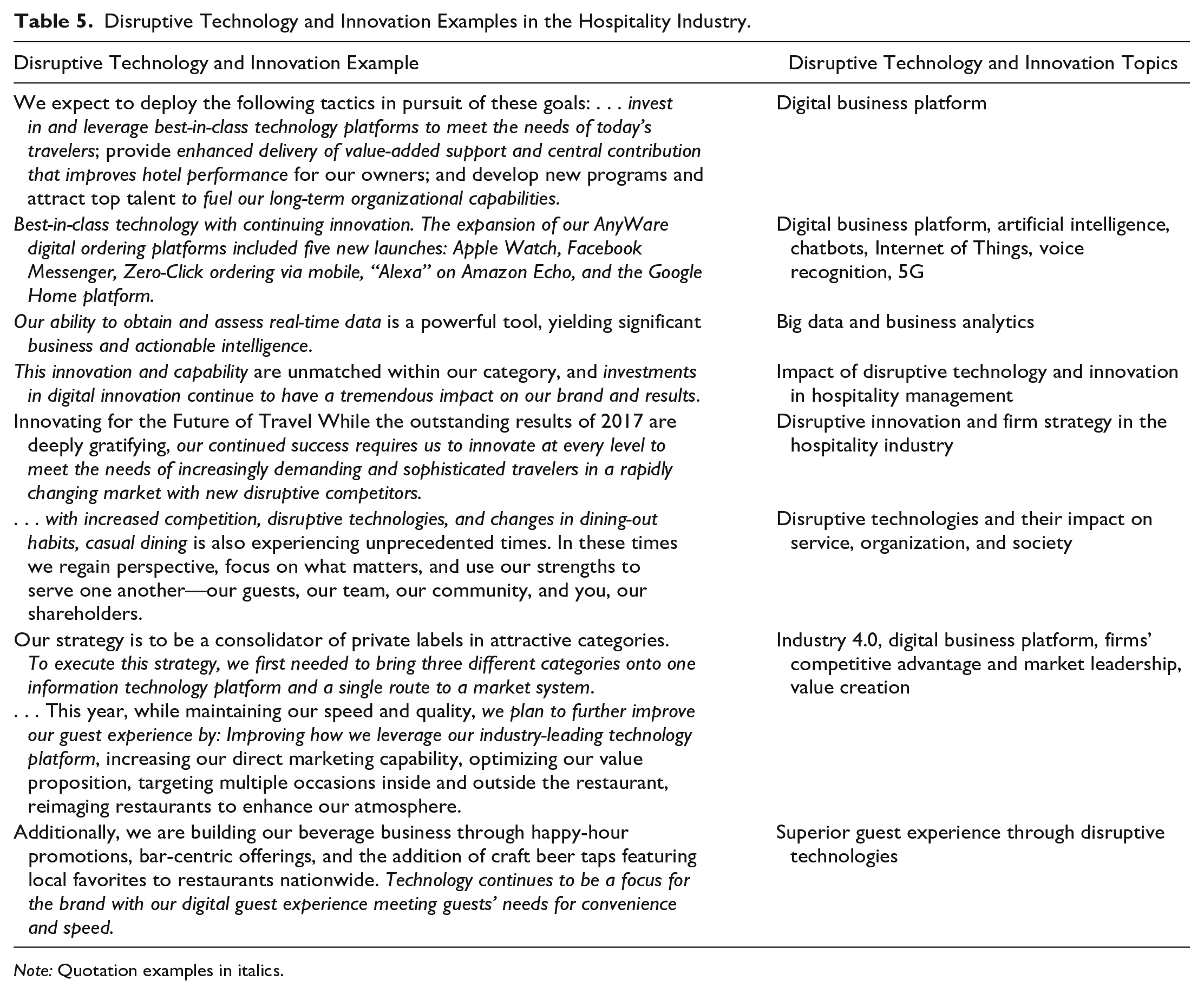
Note: Quotation examples in italics.
Disruptive technology and innovation are closely related to technology-, system-, and information-related areas in the hospitality industry. Supplemental Table 6 (available online) and Figure 4 present other concepts directly and indirectly related to the concept disruptive technology and innovation. By adopting and implementing emerging technologies, hospitality firms try to satisfy their stakeholders (e.g., guests, customers, franchises) and alter the domestic and international market by improving management, marketing, firm growth, and sales and providing continuous effort toward superior customer experience. For example, contemporary hospitality firms strategically utilize disruptive technologies by (a) implementing new information systems for decision-making, marketing, management efficiency, employees’ job performance, and market monitoring; (b) providing superior service experiences and innovative services for customer satisfaction; (c) enhancing sales, brand image, and business and market performance; (d) meeting rapidly changed expectations and needs of domestic and international customers; and (e) pursuing continuous growth strategies.

Concepts Related to the Concept Disruptive Technologies and Innovation.
Discussion and Conclusion
This study aims to examine disruptive practices and how they were used by hospitality businesses. To achieve this goal, we discussed and integrated previous studies examining disruptive innovation and various disruptive technologies. A CAQDA approach was used to identify disruptive-innovation practices and disruptive technologies by analyzing hospitality firms’ corporate documents. Therefore, our research findings provide a better understanding of disruptive innovation and technologies and expand and integrate our knowledge and practices in the hospitality context. The current study also offers new research areas and practical implications.
As shown in Tables 3 and 4 and Figures 2 and 3, the findings of the thematic analysis confirm what prior disruptive-innovation-and-technology research has suggested. Disruptive Technology and Innovation was identified as one of the top five themes based on connectivity (i.e., relative importance, likelihood percentage), meaning that hospitality companies consider disruptive technologies and innovation as the main strategic orientation and emphasize its critical role for the company and its stakeholders.
Based on the aforementioned results, we further analyzed the thematic analysis results by comparing two groups (foodservice vs. hotel and casino companies) as suggested by prior research (e.g., S. Lee et al., 2021). While disruptive technology focuses on satisfying a niche market segment and displacing incumbent firms that supported the prior technology in the first stage (Danneels, 2004), over time, with research-and-development investments, the performance of disruptive technology plays a critical role in improving and satisfying the requirements of mainstream markets. Disruptive innovation may occur when new entrants and conditions challenge and change industry structures and the behavior of actors (Buhalis et al., 2019), influencing the relationships between stakeholders and leading to changes in market structures (Viglia et al., 2018).
Foodservice companies emphasized the concept disruptive technology and innovation along with other concepts, and its relevance percentage was 32% uncovered by CAQDA. For hotel and casino companies, disruptive technology and innovation was identified as 68% along with other concepts, such as their current businesses and legal and organizational issues (S. Lee et al., 2021). This finding indicates that the likelihood of 32% approximates the conditional probability that disruptive technology and innovation can be mentioned or emphasized in any corporate documents of foodservice companies. For hotel and casino companies, disruptive technology and innovation was not in the top 20 concepts, but its likelihood percentage (i.e., 64%) was much higher than in the foodservice company group, as shown in Table 4. This is because foodservice companies have prioritized their business operation, business performance, and sustainable success due to serious market competition and have just begun their investment in the implementation of disruptive technologies and innovative services (Digital Marketing Institute, 2020). On the other hand, hotel and casino companies have adopted digital disruption and offered innovative technology-driven services for the past two decades (M. Khan & Khan, 2009; M. Lee, 2022; Technology, 2020).
Disruptive Innovation Practices and/or Disruptive Technologies in the Hospitality Context
The findings of this study reveal that disruptive technology and disruptive innovation are among the most critical strategic aspects in contemporary hospitality firms. A main reason hospitality firms may not be quick to adopt a disruptive-innovation strategy is that industry innovations change too rapidly to adjust for long-term commitment or change to benefit the guests and employees. Backed by disruptive-innovation theory, this rapid change opens firms to potential threats (Christensen, 1995). Although innovative incumbents, such as Airbnb, have successfully applied innovation to the hospitality business, the theory has yet to determine if such innovation falls within a true disruption of the market (Dogru et al., 2019).
By introducing disruptive-innovation concepts and disruptive technologies to the hospitality industry, practitioners can implement disruptive technologies for superior business performance and customer satisfaction. As shown in Table 1, the study has identified various disruptive technologies in the general business sectors. Hospitality managers may implement these technologies (e.g., chatbot, voice/facial recognition, VR/AR) for customers to have a better service experience, leading to technology-driven innovation. Hospitality firms (i.e., incumbents) can improve their management and operations through smart technologies, big-data analytics, and digital business platforms to compete against disrupters, achieving sustainable competitive advantages.
Furthermore, this study identified disruptive technologies from prior research on disruptive innovation. Therefore, future research can specifically address disruptive-technology implementation for superior service experience and new value propositions for established hospitality firms and new incumbents or disrupters.
Future Agenda Recommendations for Academia and Industry
For academia
The findings of this study suggest directions for future research in disruptive innovation. Disruptive-innovation research in the context of hospitality is only in the early stage. Currently, there is no universally accepted disruptive-innovation scale. Although initial research in the hospitality field is emerging, case studies and literature reviews remain at the forefront. Future research calls for the conceptualization of hospitality disruptive innovation and technology. Research endeavors are also needed to develop scientific scales to measure the construct of disruptive innovation in the hospitality context. Given the complex size and scope of the hospitality business, different business sectors, such as hotels, casinos, restaurants, clubs, and events, should be included to cross-check the validity of the measurement scale.
Another area of research may lie in how disruptive technologies and innovation improve customer experience when they consume hospitality products and services. Overall, the impact of disruptive technologies on the hospitality industry optimizes firms more efficiently and contributes to digital transformation for businesses and travelers alike (Ogbeide et al., 2020). From the consumer side, the analysis of consumers’ perspectives or their influence in the development of disruptive technologies is of utmost importance, namely, how consumers cope with and adapt to the rapid changes, innovation, and development of technology. Therefore, it remains critical for the hospitality industry to enhance the consumer journey.
The current study offers a new methodological approach to measure disruptive innovation and technology implementation by employing a CAQDA approach. Since there has been a lack of research on disruptive innovation, there is no straightforward way to measure disruptive innovation or disruptive-technology implementation. CAQDA is a rigorous and specific qualitative approach that addresses some methodological limitations related to traditional human coding. Thus, the current study introduces a CAQDA approach for disruptive-innovation research and theory development. Future research may use CAQDA to analyze research articles and provide a more in-depth research agenda, which we were not able to do in the current study due to a lack of academic research publications (e.g., H. Kim & So, 2022).
For industry
From an industry standpoint, the implementation and development of disruptive technologies are impactful in the financial performance of industries. Considering this impact on financial performance, hospitality companies should develop and analyze key performance indicators that could measure and assist managers in their decision-making. In addition, to increase their revenues and reduce innovation costs, hospitality firms could focus on the development of new industries’ strategies for opportunities for collaboration instead of competing against each other in the process of developing new technologies.
Furthermore, hospitality firms need to consider their stakeholders and key performance indicators carefully when planning disruptive innovation and technology implementation. Various factors influence disruptive innovation at multiple levels, including the individual, firm, industry, nation/economy, and network/system levels (Buhalis et al., 2019). Therefore, disruptive-innovation strategy for both the disrupters and the incumbents needs to be considered from a multilevel perspective to meet various stakeholders’ needs and expectations. It is also meaningful for disrupters and start-ups to focus on a specific market or level because they do not have many resources to compete with the incumbents.
Limitations and Future Research Directions
This study, like all theme analysis–based research, has limitations. CAQDA can offer insight into disruptive technologies and innovations in the context of hospitality firms. Still, other in-depth assessments often provide a more accurate and complete picture of hospitality firms. Using varied methods of data collection, such as in-depth interviews and focus groups, with hospitality firm management and CEOs could yield more descriptive and meaningful data to investigate what disruptive technologies are most beneficial to guests and firms alike.
Limited data sources and an unbalanced sample size collected from only 23 hospitality firms can be another limitation. While data were collected through annual CEO letters of publicly traded companies, future studies could expand data collection beyond foodservice, hotels, and casinos. Comparing hospitality and tourism disruptive technologies and innovation is another option to enhance the scope of the current study. This could provide valuable insight into disruptive technologies at tourist destinations and improve a firm’s market value.
Finally, this study identified disruptive technologies from prior research on disruptive innovation. Therefore, future research could specifically address disruptive-technology implementation for superior service experience and new value propositions for established hospitality firms and new incumbents or disrupters.
Supplemental Material
sj-docx-1-jht-10.1177_10963480231156080 – Supplemental material for Disruptive Technologies and Innovation in Hospitality: A Computer-Assisted Qualitative Data Analysis Approach
Supplemental material, sj-docx-1-jht-10.1177_10963480231156080 for Disruptive Technologies and Innovation in Hospitality: A Computer-Assisted Qualitative Data Analysis Approach by Minwoo Lee, Annamarie D. Sisson, Rui Costa and Billy Bai in Journal of Hospitality & Tourism Research
Footnotes

Supplemental Material
Supplemental material for this article is available online.
Author Biographies
References
Supplementary Material
Please find the following supplemental material available below.
For Open Access articles published under a Creative Commons License, all supplemental material carries the same license as the article it is associated with.
For non-Open Access articles published, all supplemental material carries a non-exclusive license, and permission requests for re-use of supplemental material or any part of supplemental material shall be sent directly to the copyright owner as specified in the copyright notice associated with the article.
