



Abstract
Market research highlights Generation Z’s increasing demands for digital brand experiences that inspire word-of-mouth sharing. Virtual reality (VR), an immersive affordances technology, holds promise for experiential marketing due to its power to transform experiences. Yet, limited research has examined how VR influences different facets of brand experiences that empower brand engagement and word-of-mouth. In Study 1, a laboratory experiment demonstrates that VR prompts higher sensory, intellectual, and behavioral brand experiences and word-of-mouth compared to static images and 360° tours, with equal brand engagement as a 360° tour. Study 2 corroborates these findings through a thematic analysis of qualitative insights from Generation Z consumers. This research underscores VR’s vital role in fine-tuning brand experience and brand engagement in the experiential marketing context.
Highlights
Generation Z craves digital brand experiences, inspiring word of mouth.
Our experiment shows that VR boosts sensory, intellectual, and behavioral experiences.
VR elevates word-of-mouth and prompts equal brand engagement as a 360° tour.
Qualitative insights validate VR’s ability to change the meaning of the experience.
Introduction
Comprising 21% of the U.S. population, Generation Z (Gen Z), defined as those born between 1997 and 2012, is garnering the interest of marketers because they prefer experiences, authenticity, purpose, and a work-travel blended lifestyle (O’Neill et al., 2023). As the first cohort that grew up with technology, Gen Z prefers video games over traveling (Statista, 2023), tech-forward mobile shopping experiences, social platforms, and immersive affordances (e.g., virtual try-ons, gamified build-your-own content; Shelley, 2022; Turner, 2015; Wertz, 2022). To attract Gen Z, hotels are encouraged to fine-tune brand storytelling by designing more interactive and game-like experiential marketing content, “that directly engages consumers and invites and encourages them to participate in a branded experience” (American Marketing Association [AMA], 2023, para. 1). Since “Gen Z enjoy discovering things first and being part of an active peer community that shares new social experiences and adventures” (O’Neill et al., 2023, para. 12), leveraging experiential marketing rooted in digital experiences—a preference held by 76% of Gen Z—can effectively nurture brand advocacy (Fromm, 2023).
Metaverse is described as the collection of hyper-sensory experiences that offer new branding opportunities and business models, using 3D and digital transactions (Dwivedi et al., 2022). Among metaverse-enabling technologies, hospitality and tourism practitioners are especially interested in virtual reality (VR), virtual worlds, and 3D content. VR is viewed as a promising avenue for experiential marketing of services, which enables consumers to immerse themselves in branded interactive virtual worlds that blend with physical reality (Zarantonello & Schmitt, 2023). Existing hospitality and tourism scholarly research sought to understand the aspects of virtual experiences, including presence, immersion, and reality (Flavián et al., 2019; Tussyadiah et al., 2018), and outcomes such as attitudes and visit intention (Jung et al., 2018; Tussyadiah et al., 2018). Limited research has explored how VR as an experiential marketing tool empowers experience and engagement with brands (de Regt et al., 2021; Rather et al., 2023; Wei, 2019). Second, brand experience in VR marketing was typically measured as a unidimensional—rather than a multi-dimensional—construct (Zarantonello & Schmitt, 2023). Third, VR studies investigated how consumers viewed technological features, instead of the change in the communication process (Mahr & Huh, 2022).
Given Gen Z’s interest in metaverse travel (Nguyen, 2022), we propose that VR experiential marketing (Slevitch et al., 2022) can serve as a conversation starter in Gen Z community (Chen et al., 2018). Drawing on the technology affordances perspective (Evans et al., 2017) and an experiential view of service consumption (Zarantonello & Schmitt, 2023) we examine how varying technology affordance in marketing communications differently empowers brand experience dimensions, engagement, and experience sharing in the pre-experience phase of customer journey.
This study advances the literature on hotel brand experiences by examining how VR marketing of new hotel environments influences brand experience dimensions in a controlled experiment with meticulously crafted visual stimuli that vary in interactivity (Veloso & Gomez-Suarez, 2023). We focus on Gen Z’s responses to new hospitality brands. Second, we benchmark VR against static images and 360° tours in prompting sensory, affective, intellectual, and behavioral brand experience and word-of-mouth (WOM), following Zarantonello and Schmitt’s (2023) call for considering the brand experience multidimensionality. Furthermore, we shed light on the nuanced impact of virtual reality (VR), images, and 360° tours on brand engagement before the actual experience, diverging from prior research that emphasized individual VR involvement (Rather et al., 2023). We also investigate how VR indirectly influences word-of-mouth (WOM) through experience and engagement. Additionally, our qualitative study delves into how Gen Z perceives affordances in hotel marketing communications, ultimately driving them to share brand experiences to influence others.
Theoretical Background
Technology Affordances in Experiential Communications for Gen Z Consumers
Gen Z, growing up as digital natives with a global mindset, wields the power to transform the hospitality and tourism industry by engaging in organizing family vacations, seeking authentic experiences, and embracing technology-enhanced services (Robinson & Schänzel, 2019). Market research indicates that Gen Z is less content with current customer experiences than previous generations. This phenomenon is partially linked to their formative years coinciding with the COVID-19 pandemic which heightened Gen Z’s appreciation for “phygital” encounters, blending digital and physical experiences (Fromm, 2023). For example, Gen Z gravitates toward immersive museum displays facilitated by technology affordances (Robaina-Calderín et al., 2023). Drawing on the technology affordances perspective, this research delves into Gen Z’s response to VR experiential marketing, exploring how affordances—material features that guide usage and users’ relations with technology—shape their interactions with technology in a given context. By understanding this multifaceted relationship between users and affordances that are distinctive from a structural feature of technology (Evans et al., 2017), we aim to uncover insights that inform effective marketing strategies for the dynamic Gen Z.
Service brand encounters, whether physical or virtual, transcend mere human-technology mediation by shaping cooperation and value creation (Mahr & Huh, 2022). New technologies have agency and human-like traits (Odekerken-Schröder et al., 2022), granting them affordances—features like interactivity, conversation, modality, immersion, traceability, and anonymity. These affordances impact service communication and experiences, activating cognitive heuristics in users. (Evans et al., 2017; Oh & Sundar, 2015). Consequently, the nature of brand experiences hinges on how customers interpret and respond to these communication outcomes, facilitated by technological affordances (Mahr & Huh, 2022). Recent research in hospitality and tourism embraced the concept of affordance to explore value creation, constraints (Cheng et al., 2021; Lei et al., 2019), relative advantage, trust, and usage intention in technology-enabled services (X. Y. Leung et al., 2023). Our study aligns with the perspective of affordance as a complex, dynamic, relational concept that enables communication results (Mahr & Huh, 2022), viewing affordance as a catalyst for transforming the nature of hospitality experiences, complementing Zarantonello and Schmitt’s (2023) experiential lens focused on VR technologies.
Experiential VR Consumption Framework
VR holds immense promise for shaping our perception of service consumption. To understand its impact, we delve into consumer psychology, exploring how VR influences thoughts, emotions, barriers, and needs. Zarantonello and Schmitt’s (2023) experiential VR consumption framework integrates three conceptual approaches, revealing how consumers derive brand meanings from VR. Phenomenologically, brand experiences unfold across four dimensions: sensory (stimulating the senses), affective (emotional interactions), intellectual (thoughts arising from the experience), and behavioral (actions favoring the experience) (Brakus et al., 2009). These dimensions intersect with the consumer journey—pre-consumption, consumption, and post-consumption—where VR uniquely influences decisions, personal outcomes, and brand-related results. Contextual factors, such as antecedents and mediators, further shape this dynamic. In the pre-experience stage, VR fuels alternative evaluation, often sparking fantasies (de Regt et al., 2021). Building on the technology affordance perspective, we theorize that changes in VR’s affordances could alter the meaning of brand experiences and their outcomes. Given Gen Z’s inclination toward early trend adoption, providing “phygital” experiences could significantly enhance pre-consumption experience (Batat & Hammedi, 2023; Bogicevic et al., 2019). Because Gen Z’s perceptions of a hospitality business’ technology innovativeness elevate product and brand responses (Ding et al., 2022), Gen Z seeks to connect with new brands that resonate with innovativeness (Bogicevic et al., 2021).
In the pre-experience phase, hospitality and tourism brands resort to promotional “sneak previews” of offerings (Destination Hotels, 2019), envisioned as visually exciting static images or dynamic videos. VR takes previewing services further by offering interactivity, immersion, and modality richness (e.g., visual, proprioceptive, haptics) affordances (Van Kerrebroeck et al., 2017; Wei, 2019; Wiedmann et al., 2018), awakening and leaving lasting impressions (Edvardsson et al., 2005). Compared to 360° tours and static image previews, VR affords greater interactivity, or the ability of users to manipulate the environment (Bogicevic et al. 2019; Robaina-Calderín et al., 2023), enhancing cognitive engagement and transportation into the brand’s world (de Regt et al., 2021), allowing consumers to relate the VR experiences to their selves (Bogicevic et al., 2021). Immersion affordance levels of VR, systems (headset, mobile, vs. 360° tour) evoke different affective (psychological engagement and enjoyment) and conative responses (behavioral engagement and intention; Robaina-Calderín et al., 2023).
VR plays a crucial role in the initial stages of the customer journey, capturing attention, sparking interest, and providing insights into plausible experiences (Yeh et al., 2017). For remote selling and e-commerce in tourism and hospitality, where 2D presentations fall short, VR bridges the gap by conveying realistic brand impressions (Hollebeek et al., 2020). VR indirectly enriches brand experiences due to its heightened presence and ability to evoke mental imagery (Bogicevic et al., 2019). Unlike images that inform about the hotel brand, VR consumption is truly experiential. Further clarity is needed to ascertain whether VR alters all or selected dimensions of brand experience, compared to less interactive previews like 360° tours and images (Zarantonello & Schmitt, 2023).
How VR Empowers Brand Experience Dimensions
Interactivity affordance in virtual environments allows consumers to manipulate aspects of their experience, providing immediate, multisensory feedback (Jin, 2009). The greater degree of interactivity, immersion, and human-device contact enhances sensory stimulation (Flavián et al., 2019). Extended sensations from VR stimuli align with elevated sensory brand experiences in the pre-experience phase, contingent on users’ willingness to change their visuospatial perspective (Batat & Hammedi, 2023; Zarantonello & Schmitt, 2023). Consumers report intense emotional experiences in VR retail environments and 360° tours of destinations (Kim et al., 2020; Marchiori et al., 2017; Martínez-Navarro et al., 2019; Papagiannidis et al., 2017; tom Dieck et al., 2018; Tussyadiah et al., 2018), but to a lesser degree than immersive VR (Flavián et al., 2021, Kang, 2020). The affective responses to VR are due to an amplified sense of presence (Diemer et al., 2015; Kang, 2020), suggesting VR could direct affective responses toward a brand, resulting in a higher affective brand experience compared to 360° tours or images.
Presentation interactivity affords cognitive responses like product knowledge, recall, and recognition (Li et al., 2001; Oh & Sundar, 2015; Park et al., 2008). AR and VR in tourism provide cognitive stimulation, evidenced in improved learning outcomes from enhanced presence (Javornik, 2016; Kang, 2020; tom Dieck et al., 2018). VR stimulates learning as well as 360° tours and better than static images (McLean & Barhorst, 2022). However, findings are inconclusive (Zarantonello & Schmitt, 2023), leading to the proposition that VR previews activate a higher intellectual brand experience than 360° tours and static images. Brakus et al. (2009) describe behavioral experience as consumers’ perceptions of a brand’s ability to create bodily experiences and actions. Congruently, high-arousal tourists show increased action behavior with VR (Yeh et al., 2017). VR increases behavioral engagement, namely aiding and recommending brands beyond purchase (Flavián et al., 2021; Robaina-Calderín et al., 2023), suggesting that VR empowers action-oriented, behavioral brand experience.
Once seen as a structural element enhancing user experiences (Jin, 2009), interactivity is currently viewed as part of a socio-technical system enabling unique communication outcomes (Mahr & Huh, 2022). User experience with technology systems was examined as immersive interaction or presence/telepresence, with interactivity contributing to telepresence (Yeh et al., 2017). Embracing the perspective of Mahr and Huh (2022), which treats technology affordance as a dynamic and relational concept, we propose that preview modes—designed features with varying levels of technology affordances—extend beyond influencing user experience (i.e., presence) to enhance the perception of altered levels and types of brand experiences. The interaction between a user/consumer and the preview mode, powered by the underlying interactivity affordance, targets singular dimensions of the brand experience. Together, we put forth the following hypotheses:
How VR Empowers Brand Engagement
Brand engagement, distinct from mere involvement, is a psychological state derived from interactive brand or organization experiences (Brodie et al., 2011). It transcends singular interactions or object-specific encounters (Chandler & Lusch, 2014), allowing the formation of a reciprocal relationship in virtual spaces mediated by human-computer interactions different from user engagement with technology/devices (Mollen & Wilson, 2010). High interactivity through VR can captivate and foster cognitive and affective brand commitment (Mollen & Wilson, 2010; Zarantonello & Schmitt, 2023). Whereas VR-driven engagement is evident in tourism branding before visitation (Rather et al., 2023), VR elicits similar emotional engagement levels as in-person visits but higher than 2D videos (Wagler & Hanus, 2018). Findings are mixed on whether VR user engagement outperforms less interactive media for Millennial and Gen Z users (Robaina-Calderín et al., 2023). Studies adopting the technology embodiment perspective that user experiences are mediated by devices intertwined with users’ bodies reveal that VR induces the same user engagement as a 360° tour (Flavián et al., 2021). Addressing these discrepancies through the technology affordance lens, we suggest that higher interactivity affords a greater sense of personal agency, enhancing engagement (Mahr & Huh, 2022; Odekerken-Schröder et al., 2022). We propose the following:
WOM Intention of Branded VR Experience Among Gen Z
Zarantonello and Schmitt’s (2023) framework suggests that sharing about VR experiences is a key post-consumption behavior that strengthens brand relationships. In hospitality, WOM allows customers to learn from others’ experiences. Reviews—a form of WOM—are crucial for accommodation choices, with 40% of customers writing reviews after positive experiences (Reviewtrackers, 2022). Despite extensive hospitality research on WOM-seeking and WOM-giving behaviors (Yen & Tang, 2015), the role of VR in remembering experiences and enhancing WOM is not fully understood (Zarantonello & Schmitt, 2023).
Drawing upon the technology affordance lens, interactivity affordance evolves user communications, including WOM (Ciuchita et al., 2022). VR’s interactivity affordances, like synchronicity and active control, make experiences memorable, leading to more WOM and continued VR use (W. K. Leung et al., 2022). However, previewing hotels in VR does not consistently enhance WOM among Gen Z students (Slevitch et al., 2022). Gen Z values experiential over material consumption, and experiential WOM has more conversational value (Bastos & Brucks, 2017; Bastos & Moore, 2021). In the phygital world, Gen Z may find VR experiences more shareable than images, because WOM about experiential consumption outperforms WOM about material consumption (Batat & Hammedi, 2023). Experiential WOM has greater conversational value for the recommender (Bastos & Brucks, 2017). Thus, for Gen Z who seek connections with brands and others, VR could be a stronger motivator for sharing hospitality experiences compared to 360° tours and static images:
The Downstream Effects on Brand Engagement and WOM
Customers learn about brands from information or experience with brands and are motivated to create value by sharing their knowledge with others in their network (Hollebeek et al., 2019). This process is essential for engagement and also coincides with engagement (Hollebeek et al., 2019). Likewise, a socio-technical systems perspective that takes into account technology affordances, views sharing personal experiences as a way of fostering engagement (Morgan-Thomas et al., 2020).
Hollebeek and colleagues’ (2020) VR-based brand journey model proposes that pursuing VR-based experiences in the pre-experience stage of the journey leads to multi-faceted VR-based engagement at the intra-experience stage of the journey. The intra-experience stage of VR-based engagement is vital for consumer-brand interactions and subsequent brand relationship outcomes. Building on frameworks of VR experiential consumption and VR brand journey we speculate that brand engagement, as a sustained, “beyond the transaction” relationship between a brand and a consumer, could be the link between VR brand experience and consumers’ intentions to share the experience with others (Hollebeek et al., 2020, Zarantonello & Schmitt, 2023). We propose that VR preview affects WOM indirectly, through brand experience and brand engagement:
The proposed conceptual framework is displayed in Figure 1.
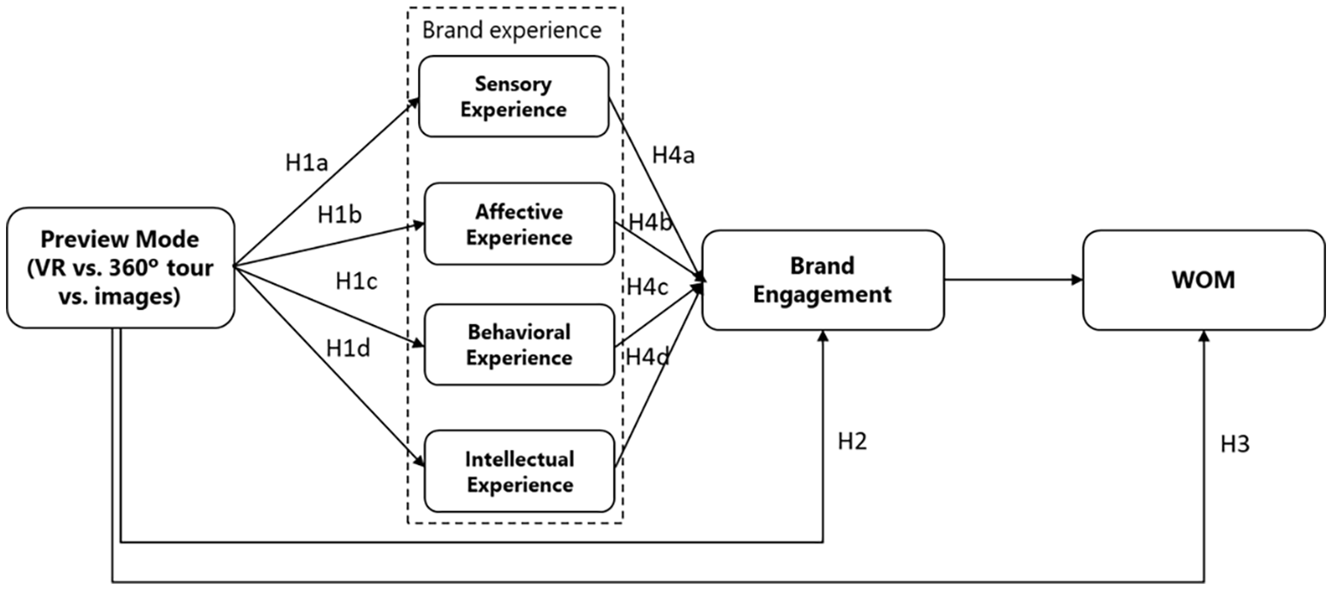
Conceptual Framework.
Study 1: Laboratory Experiment
The study was conducted as a laboratory experiment with three conditions ordered by their level of interactivity affordance from highly interactive to static: VR service preview, 360° tours, and static images. A VR hotel suite for a new European hotel was developed for this experiment by a professional VR development studio, replacing real brand elements with a fictitious brand to avoid bias. The VR suite, created in Unreal Engine and accessed via an HTC Vive headset, allowed participants assigned to VR preview to walk around, interact with objects, and receive multisensory feedback. For consistency, those assigned to a 360° tour made from 3D renderings were able to orbit the view around selected points by clicking the mouse. In the third condition, 12 high-resolution renderings of the entire suite were used to create an image slider that transitioned images by clicking on arrows (see Figure 2).
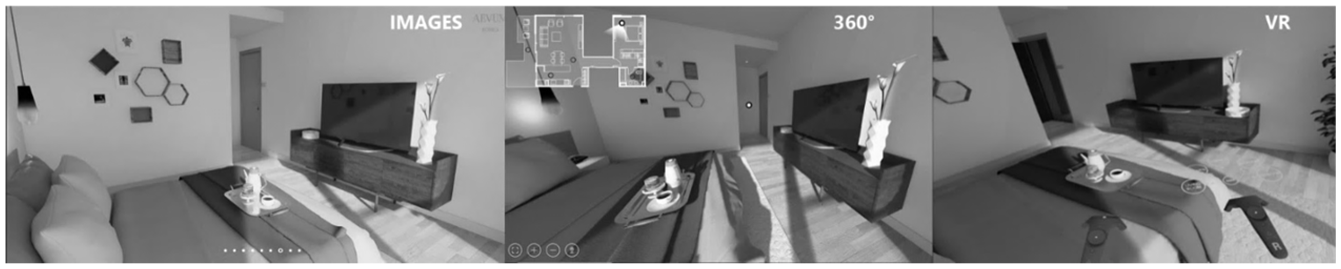
Experimental Conditions.
Procedures and Sample
The data collection took 5 weeks in a designated laboratory at a university campus equipped with VR equipment. Emails were sent to a list of randomly selected students from a large university and the mailing lists of university employees, inviting them to participate in a study about hotels in return for $15 gift card. The population of interest were actual and potential customers of extended-stay hotels. In all, 177 participants who were cleared for participation (i.e., born in 1997 or later, with no risk of motion sickness, cybersickness, or seizures) were assigned at random to one of three conditions (static images, a 360° tour, and VR). All participants across the three conditions were instructed to imagine they were planning a longer trip. They were presented with a fictitious, new hotel brand and invited to complete a structured survey. A trained researcher followed a scripted tutorial explaining to all participants in the sample how to navigate each preview and independently explore the hotel suite.
The sample was 73.4% white, 69.5% female, and with a household income over $75,000 (58.5%). Participants had experience with extended-stay hotels (31.6%) and some experience with VR (38.4%). On average, it took participants 21.7 minutes to participate in the study. No effect of duration on the dependent variables was detected: Pillai’s Trace = .051, F(6,168) = 1.51, p = .178.
Measures
All survey questions were adapted from existing literature and captured on 7-point Likert-type scales. The level of preview interactivity was assessed through an item from Kalyanaraman and Sundar (2006); brand experience through Brakus and colleagues’ (2009) 12-item, four-dimensional scale (sensory α = .85, affective α = .87, behavioral α = .83, and intellectual experience α = .90); brand engagement (α = .884) through six items from Hollebeek and colleagues (2014), and WOM (α = .899) via four items from Eisingerich and colleagues (2015). We also gathered qualitative comments via an optional open-ended question that prompted participants to write a review about their experience with a fictitious hotel brand.
The manipulation checks were adapted from prior research (Bogicevic et al., 2019, 2021; McLean & Barhorst, 2022; Willems et al., 2019), including one item for perceived interactivity “Please rate the extent to which the preview is interactive (1 = not at all interactive, 7 = extremely interactive)” and an item for static versus dynamic representation “Please rate the extent to which the preview offers a dynamic representation of the hotel suite (1 = very static, 7 = very dynamic).” Participants also indicated what preview they saw via a multiple-choice question.
Results
Manipulation checks
Participants correctly differentiated among the three types of previews: χ2(4) = 293.55, p < .001, with 98.1% correctly selecting images preview, 98.3% a 360° tour, and 86.6% VR, which provided support for our manipulations. A one-way ANOVA test on perceived interactivity was statistically significant: F(2,174) = 40.25, p < .001. Pairwise comparisons using the Tukey HSD test demonstrated that VR preview (MVR = 5.98) was perceived as significantly more interactive than images (Mimages = 4.10, p < .001) and marginally more interactive than a 360° tour (M360 = 5.58, p = .08). A 360° tour was more interactive than images preview (p < .001). Previews differed in their perceived dynamic representation: F(2,174) = 8.25, p < .001, with VR (MVR = 6.52) perceived as more dynamic than both the images (Mimages = 5.08, p < .005) and a 360° tour (M360 = 6.07, p < .05). 360° tours and images were perceived as equally dynamic. Participants rated the scenario as easy to imagine (“How difficult was it for you to imagine yourself in this hotel brand scenario?”; M = 5.70; t = 15.29, p < .001) and highly realistic (“How realistic was this hotel brand scenario?”; M = 5.80; t = 18.87, p < .001, compared to the scale midpoint on a 1–7 scale).
Brand experience dimensions
Hypothesis 1 proposed that the VR preview mode results in higher (a) sensory, (b) affective, (c) intellectual, and (d) behavioral brand experience compared to a 360° tour and images preview. The results of a three-group MANOVA test indicated that the multivariate main effect of preview mode on the four dimensions of brand experience was significant: Pillai’s Trace = .399, F(8, 344) = 10.70, p < .001. The results of univariate tests ANOVA suggested significant effects of preview mode on sensory experience: F(2, 176) = 9.88, p < .001, behavioral experience: F(2, 176) = 36.29, p < .001, and intellectual experience: F(2, 176) = 6.99, p < .01. Specifically, VR induces higher sensory experience (MVR = 6.32) compared to images (Mimages = 5.71, p < .001) and a 360° tour (M360 = 5.72, p < .001), providing support for H1a. Furthermore, VR induces higher behavioral experience (MVR = 4.90) compared to both images (Mimages = 3.15, p < .001) and a 360° tour (M360 = 3.70, p < .001), as well as higher intellectual experience than other previews (MVR = 5.50 vs. Mimages = 4.75, p< .01; MVR = 5.50 vs. M360 = 4.67, p < .01), providing support for H1c and H1d. All three preview modes elicit equal levels of affective experience with a hotel brand: F(2, 176) = 1.77, p = n.s., thus rejecting our H1b.
Brand engagement and WOM
To test Hypothesis 2—that VR preview mode motivates higher brand engagement than a 360° tour and images preview—a one-way ANOVA was conducted. The effect of preview mode on brand engagement was statistically significant: F(2, 174) = 3.21, p < .05, despite the marginal differences in brand engagement generated by VR compared to images (MVR = 5.84 vs. Mimages = 5.38, p = .056) and equal brand engagement to the 360° tour (M360 = 5.44, p = .103), thus partially supporting our H2. Another one-way ANOVA tested Hypothesis 3 and demonstrated statistically significant elevated WOM from VR preview than the 360° tour and the images preview: F(2, 174) = 22.91, p < .001. Those who see a hotel in VR are more likely to share WOM about the hotel than those who see images (MVR = 5.89 vs. Mimages = 4.45, p < .001) or a 360° tour (M360 = 4.48, p < .001), thus supporting H3.
Serial mediation
A serial mediation of the effect of service preview mode on WOM via four brand experience dimensions and brand engagement, proposed in Hypothesis 4, was tested using PROCESS macro with two dummy variables for preview as predictors, four brand experience dimensions as parallel mediators, and brand engagement as a serial mediator (Model 80; Hayes, 2022). The results indicated serial mediation effects via two paths. Specifically, the confidence intervals of the indirect effects of two preview dummy variables on WOM through sensory experience and brand engagement excluded zero (XVR vs. Images = −.07, 95% CI [−.173, −.005] and XVR vs. 360 = −.07; 95% CI [−.159, −.005]). Likewise, the confidence intervals of the indirect effects of two preview dummy variables on WOM through intellectual experience and brand engagement excluded zero (XVR vs. Images = −.08, 95% CI [−.180, −.017] and XVR vs. 360 = −.09; 95% CI [−.190, −.022]). In sum, VR prompts higher WOM than both images and a 360° tour via an indirect path through sensory brand experience and engagement as well as the indirect path through intellectual brand experience and engagement. The results provided only partial support for Hypothesis 4 by supporting H4a and H4d.
Qualitative comments
To explore how VR changes the meaning of experience in the pre-experience phase, a thematic analysis of 114 complete qualitative WOM comments in the study was conducted using an inductive analysis approach. The comments were divided into different groups based on the experimental condition and analyzed separately. Different themes emerged when previewing a hotel in VR compared to a 360° tour and images previews. The respondents in VR condition emphasize immersion affordance in the VR hotel preview. They describe being able to “almost feel the breeze off the water and the warm sun on the patio,” indicating that the VR preview provides a more sensory and immersive experience compared to a 360° tour or images. The second theme is cognitive evaluation of the VR preview illustrated in comments on technology affordances, interactive and engaging experience which stimulates curiosity, and the hotel brand which is perceived as cool and aesthetically appealing. While the comments generally evoked positive emotions, they prompted confidence in the hotel brand, willingness to learn about the hotel, and desire to visit and explore the hotel. Some respondents even mention feeling like they were in a movie or living an extravagant life, indicating that the VR experience creates a sense of escapism and fantasy. In summary, the immersive nature of the VR experience has a persuasive effect on the respondents, influencing their decision-making process. In contrast, the respondents in the images conditions of the hotel tend to focus more on design aesthetics mentioning positive aspects such as cleanliness, modern design, and appealing décor but also the quality of the computer-generated images. Interestingly, the 360° tour prompted comments on design aesthetic but mostly cognitive evaluations of the environment, which was seen as video-game-like.
Study 2: Qualitative Study
Procedures and Analytical Approaches
To understand the mechanisms behind the distinctive effect of previews that vary in interactivity affordance on brand experience and delve deeper into themes that reflect the changed meanings of experiences and outcomes, such as engagement and WOM, we conducted a qualitative study with a sample of 39 adult Gen Z American consumers, aged 18 to 26, recruited on Prolific for a $5 compensation. Study 2 was a survey soliciting thoughts and opinions about different types of marketing visuals, closed-ended questions about individuals’ experience with traveling, computer-generated images, 360° tours and VR, basic demographic characteristics, and quantitative information. Data collection was carried out until the saturation of insights from qualitative data was reached (Huang et al., 2023).1 The average age of participants was 23.5, with 43.6% being women,13.3% transgender, 38.5% identifying as Caucasian, 86.5% holding some college degree at minimum, and 54.1% reporting an annual income over $50,000.
All participants received the following instructions without any visuals: “When viewing marketing materials of a hotel you were looking to book for your trip, you might have considered what impression the hotel leaves on you, and how the hotel makes you feel, think, or act.” Subsequent open-ended questions asked participants to provide general thoughts about hotel images, 360° tours, and VR previews, and to describe their experiences with each preview, and explain what preview would motivate engagement with a hotel and telling others about their hotel preview experience. Responses were a minimum of 220 characters long for each question, totaling 21,484 words.
The qualitative analysis combined inductive and deductive approaches in two stages: (1) a thematic analysis of open-ended responses to questions, and (2) a deductive content analysis matching themes word co-occurrence with theoretical constructs from Study 1 framework (Bingham, 2023). Leximancer (Version 5.0) was used to perform automatic thematic analysis, transforming text into semantic patterns based on word co-occurrences (Smith & Humphreys, 2006), while data processing involved stemming and lemmatization to refine concepts and classify similar words into different groups (e.g., “virtual reality” vs. “virtual tour”). Common English language stop words were removed and the theme size was set at 35% to show themes visually. In the deductive stage, two researchers developed a categorization matrix (Elo & Kyngäs, 2008) by sorting data into pre-determined categories of immersion, interactivity, and brand experience dimensions, as well as across images, 360° tours, and VR preview modes. Categories were used to illustrate the comparison of outcomes of affordances identified by consumers (e.g., feel more immersed, bringing spatial perspective) and the changed meanings of each brand experience dimension across three preview modes (Elo & Kyngäs, 2008). Specifically, iterative comparison between extracted patterns of themes and concepts suggested whether observed data aligned with or contradicted the findings in Study 1, thus explaining the theoretical underpinning of how technology affordances in experiential marketing reshape the nature of brand experiences (Bingham, 2023).
Results
Separate thematic analyses for three previews identified 10 themes each (Figure 3). “Hotel” and a respective type of preview (VR or 360° tours or images) were the top two themes identified across all three conceptual maps. Other themes reflected concepts mentioned uniquely for different preview types. The analysis of VR preview comments revealed the theme “virtual,” unifying concepts around virtual experience and use about actual usage of VR. The 360° tours thematic analysis recognized the theme “feel” connecting concepts of feelings, thoughts, and senses stimulated by 360° tours and the theme “view”—the ability to view things in 360° tours. The images preview map identified the theme “look,” describing what is shown on images, and the theme “senses,” illustrating stimulated thoughts and senses.
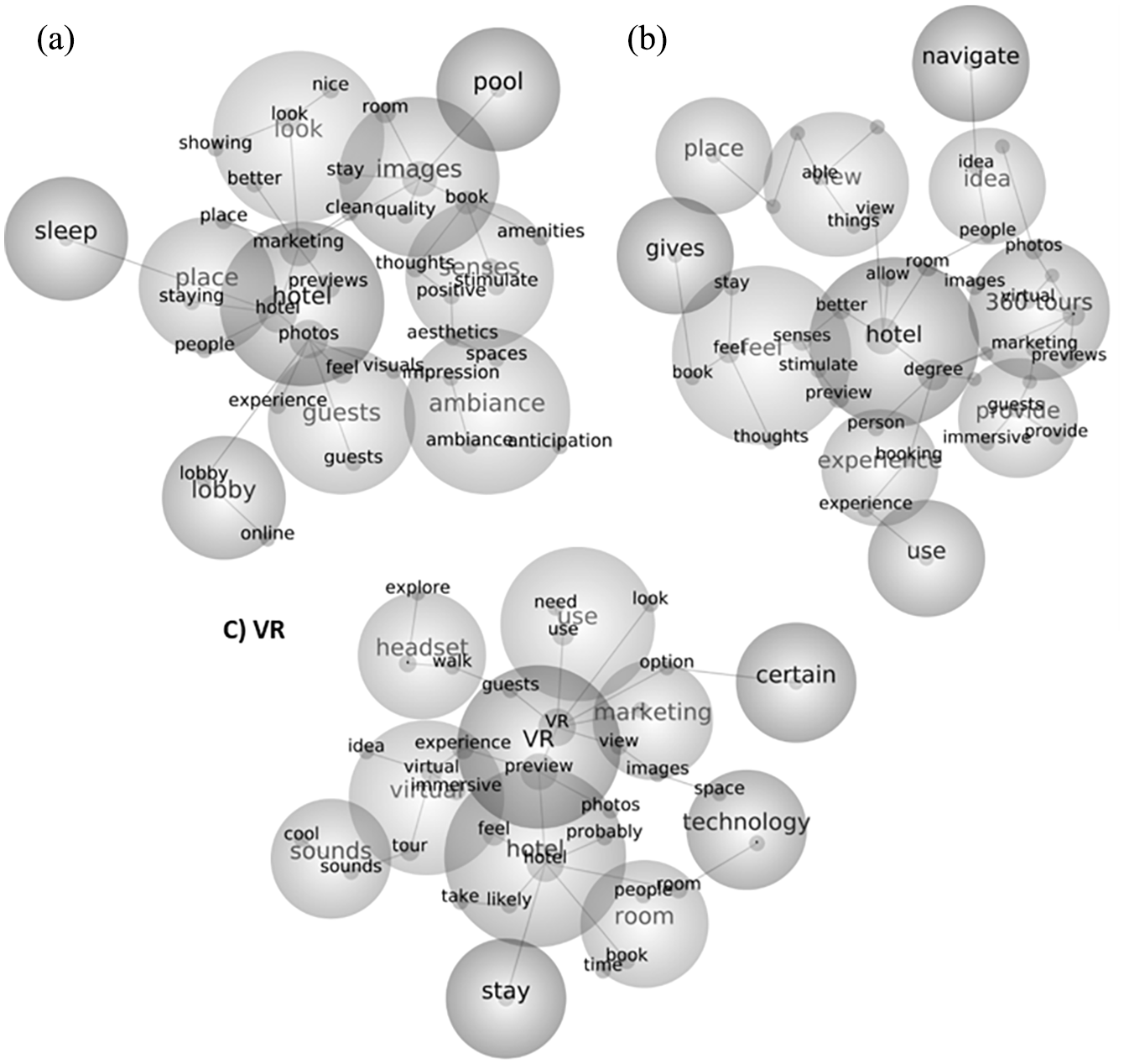
Key Themes in Experience Construct: (a) images, (b) 360° tours, and (c) VR.
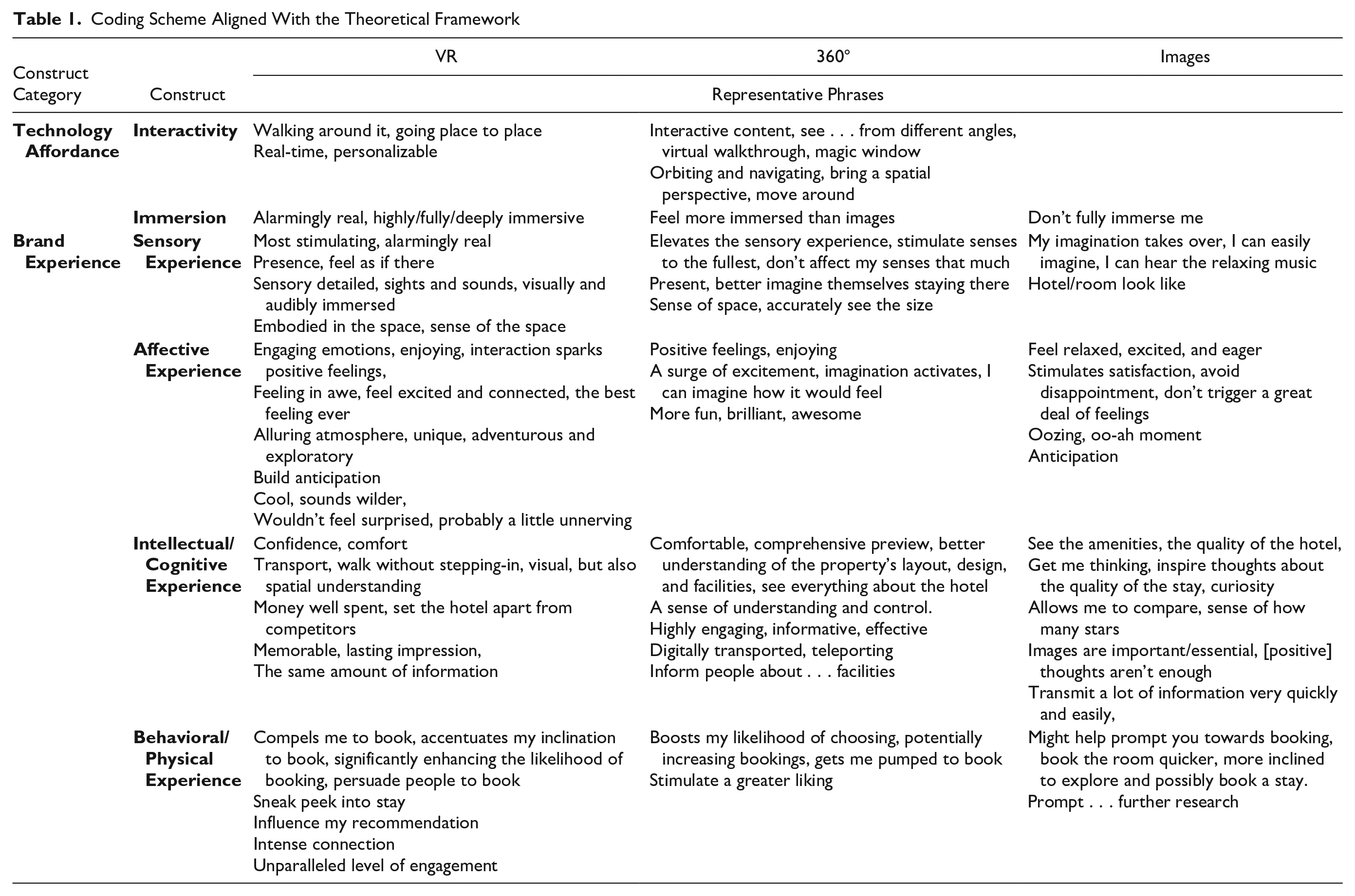
Guided by the Study 1 theoretical framework, the word co-occurrence patterns among the themes and concepts were examined to explore perceptions of affordances, their outcomes, and experience narrative descriptions in Stage 2 analysis (Table 1). Variability in interactivity and immersion affordances was observed across three previews, with images perceived as the least immersive, not interactive at all, followed by 360° tours, and VR as the most immersive and most interactive. While outcomes of affordances such as “orbiting and navigating” were common for 360° tours, one participant recognized that “both styles are very interactive and I’m certain the VR previews are personalizable.”
Coding Scheme Aligned With the Theoretical Framework
Sensory experience
The three previews evoke different meanings of sensory experience with the hotel brand. While images stimulate a sense of sight and what a hotel/room looks like, the sensory experience is activated only when participants consciously involve themselves in the mental imagery process (Bogicevic et al., 2019) and report that “imagination takes over as [they] envision staying there, mentally feel the calm mood.” Unlike images, 360° tours and VR elevate the sensory experience and foster presence, with VR being more sensory detailed, allowing participants to feel “embodied in the space.”
Positive emotions like excitement and enjoyment define the affective experience with all hotel previews. Images evoke satisfaction and prevent disappointment. Other previews inspire favorable brand attitudes, for example, 360° tours are “fun, brilliant, awesome,” while VR is “cool, wilder,” enhancing appeal with an “alluring atmosphere” and “adventurous and exploratory” vibe; yet some fear VR may spoil the actual visit.
Intellectual/Cognitive Experience across previews involves understanding hotel features and anticipating the stay’s quality. Image previews excel in “transmit[ting] a lot of information very quickly and easily” and evoking quality-related thoughts, and 360° tours and VR interactivity affordances shift cognitive experience towards “spatial understanding” of the layout, design, controllability, and narrative interaction and transportation. VR allows users to “walk without stepping-in,” while 360° tours “digitally transport” them into the venue. VR’s “lasting impression” prompts strategic thinking about consumption, with participants feeling that VR “set[s] [the hotel] apart from competition” and indicates a “better hotel” where their “money would be well spent” (Zarantonello & Schmitt, 2023).
Behavioral/Physical Experience was consistently described as an enhanced likelihood to book the hotel after viewing all three previews. However, VR empowers conclusive qualifiers for booking action, for example, “accentuates inclination” and “significantly enhancing.” While physical actions toward the hotel from images “prompt further research” and “stimulate greater liking” from 360° tours, VR fosters an “unparalleled level of engagement” and “intense connection,” which suggests a more intense behavioral experience.
Both User and Brand Engagement with each preview reflect the interplay between hotel, participants, and experiential marketing. The effectiveness of VR over 360° tours and images is inconclusive. Participants suggested that VR “offers the highest level of engagement, immersing users fully,” increasing the likelihood of them “book[ing] a hotel and share[ing] it with friends.” However, concerns arise that VR’s “too much detail” might reduce the “mystique around the stay.” A strong co-occurrence of concepts “likely,” “tell,” and “experience” suggests that VR previews are seen as conversation starters, with a high potential for WOM, due to their uniqueness: “VR offers an extraordinary and memorable experience that stands out in conversations and on social media,” especially since VR in hotels is not commonplace: “It’s a conversation starter, and it has that ‘wow’ factor that makes for compelling social media content.”
Discussion
VR is acknowledged as a medium that delivers meaningful consumer experiences in tourism and hospitality (Tussyadiah et al., 2018; Wei, 2019). This study compares three preview modes—VR, 360° tours, and static images—and their impact on brand experience dimensions, brand engagement, and WOM intentions among Gen Z consumers. Our controlled experiment showed that VR enhances sensory, intellectual, and behavioral experiences with a hotel brand more than other previews, but not affective experience. Despite the recognized emotional responses to VR (Kim et al., 2020; tom Dieck et al., 2018; Tussyadiah et al., 2018), our results found VR’s affective responses comparable to less interactive previews. Findings are limited to novel hospitality brands with which consumers lack prior emotional connection, suggesting that VR’s marketing may be redundant for brands already emotionally established with consumers (Kim et al., 2020). We also acknowledge that short exposure to VR stimuli of a fictitious brand may not evoke strong affective reactions. Additionally, VR’s influence on WOM among Gen Z is confirmed, indirectly increasing WOM through enhanced sensory and intellectual experiences compared to 360° tours and images (W. K. Leung et al., 2022). Subsequent qualitative study explored the deeper meanings and nature of brand experiences afforded by interactivity and immersion, through inspection of Gen Z’s thoughts, opinions, and experiences with the different previews. VR was found to add unique meaning to brand experience dimensions, such as sensory detail, embodiment, narrative interaction, product appeal, consumption planning, and connection, deemed share-worthy by Gen Z. These insights contribute to the understanding of VR’s role in experiential marketing and its effects on consumer engagement and WOM (Flavián et al., 2021; Papagiannidis et al., 2017; Van Kerrebroeck et al., 2017; Wagler & Hanus, 2018).
Theoretical Implications
The present study advances the theory in hospitality and tourism in several domains. First, this research empirically examines how VR marketing empowers changes in different dimensions of the hospitality brand experience for Gen Z consumers. Using a controlled experiment with realistic visual hotel stimuli varied in interactivity affordance, we validate VR as the most interactive preview compared to 360° tours and static images, and a powerful tool in the pre-experience phase, enhancing sensory, intellectual, and behavioral experiences compared to 360° tours and static images (Batat & Hammedi, 2023; Bogicevic et al., 2021; Zarantonello & Schmitt, 2023). Our findings suggest that interactivity affordance extends beyond user experience, resulting in unique communication effects for hospitality brands (Mahr & Huh, 2022).
Second, our experiment extends the tourism and hospitality brand experience research beyond correlational studies and consumers’ direct experiences with known brands (Wiedmann et al., 2018). While previous research has emphasized VR’s impact on arousal or pleasure (Slevitch et al., 2022; Yeh et al., 2017), our study did not find VR to significantly enhance affective experience. We encourage further research to explore VR’s potential for established brands with emotional consumer connections (Kim et al., 2020). This study directly answers Zarantonello and Schmitt’s (2023) call to examine the multidimensionality of VR experience by showing how different preview interactivity affordance affects four experience dimensions and expands possible meanings of experience.
Third, our research indicates VR’s marginal difference in brand engagement versus other previews (Rather et al., 2023), and its stronger influence on WOM, driven by sensory and intellectual experiences (Le et al., 2021; Slevitch et al., 2022). Qualitative data support VR’s unique communicative effects, with Gen Z sharing distinctive experiences via WOM to connect and influence others (Turner, 2015). These findings align with studies on VR’s indirect impact on behavioral outcomes through presence and engagement as a mediator (Kim et al., 2020; Touni et al., 2020; Tussyadiah et al., 2018; Wei, 2019), responding to calls for understanding VR’s influence on consumer thinking and engagement (Zarantonello & Schmitt, 2023).
Managerial Implications
The current study provides valuable implications for hospitality managers. The study highlights VR’s transformative role in hotel marketing, offering immersive previews that enrich sensory, intellectual, and behavioral experiences (Voorhees et al., 2017). Drawing from these findings, marketers can leverage VR to benchmark the dominant experience dimension for their brand and empower specific facets of experience, such as memorability, sensory detail, embodiment, connection, and marketing appeal. However, accessibility may limit VR’s reach to luxury hotel properties, as recognized in our qualitative study.
Furthermore, managers should be conscious of the conversational value of using VR experiential marketing (Bastos & Brucks, 2017), particularly for Gen Z, who value digitally-forward features. Our study offers a solution for managers at low-technology tourism destinations to appeal to Gen Z tourists with digital and gamified tourism experiences in VR or 360° tours (Skinner et al., 2018).
Finally, the current research advises marketers to persuade Gen Z consumers to recommend VR hotel tryouts as a compelling tool to empower indirect brand experience, engagement, and WOM for a new hospitality brand. VR’s conversational value can boost word-of-mouth, especially when used in event-based marketing, online communities such as Twitch, or on-property upselling and cross-selling (Bastos & Brucks, 2017). Hospitality managers are encouraged to use VR to engage Gen Z, who are likely to share their experiences and influence others (Briggs, 2023). Our qualitative study findings show that the Gen Z market responds well to VR experiences because Gen Z are confident in their ability to be opinion leaders and influence others, which could make them powerful advocates for experiences with brands they favor (Briggs, 2023).
Limitations and Future Research
This study’s limitations suggest areas for future research. First, it did not consider pre-existing brand perceptions, so future studies could explore VR’s indirect effects on actual behavior with known brands via different paths (e.g., preview of a familiar brand → brand engagement → brand experience; Hollebeek, 2011). The research used a Gen Z student sample with limited diversity; subsequent studies should include broader demographics. While the sample in Study 2 is more representative of the general Gen Z U.S. population, this qualitative study focused more on themes and associations among them, rather than sample representativeness.
This study assessed self-reported affective experiences, engagement, and WOM intentions that rarely translate to WOM behavior. Future research could examine actual WOM behavior toward VR experiences and brands and complement self-reported measures with neuro-tracking and biophysical data. Similarly, follow-up studies could examine the changes in behavioral proxies and dyadic decision-making in the metaverse platforms (e.g., Spatial or Engage) on demographically more diverse samples of travelers with different needs.
Furthermore, no differences were found in brand experience or engagement based on prior VR experience as only one-third of the respondents tried VR before participation. As VR becomes more common, its effects on brand experience and WOM could attenuate. While VR offers realistic service previews, it may create inflated expectations, especially for experience-seeking consumers. Research should consider how VR affects expectations of hedonic versus utilitarian services, and whether withholding information could enhance the surprise element during the consumption phase through the mechanism of unexpected incentives (Valenzuela et al., 2009).
Conclusion
To advance the literature on VR experiential marketing in hospitality, this research examined (1) the differences in the four brand experience dimensions empowered by hotel previews (VR vs. 360° vs. static images); (2) the effect of VR hotel preview on brand engagement and WOM; (3) the spillover effect of VR preview on WOM through the four brand experience dimensions and brand engagement for Gen Z hospitality consumers; and (4) the changed meaning of brand experience through consumer narratives. The findings revealed that VR enhances sensory, intellectual, and behavioral experiences compared to static images and 360° tours, while affective experiences remain equal. VR boosts WOM compared to other formats and this effect is mediated serially through sensory and intellectual brand experiences and engagement. The experience narratives from VR versus other previews emphasize multi-sensory stimulation, embodiment, indication of consumption planning, and others, which are more likely to be shared by Gen Z. These findings extend the hospitality research by examining the multidimensionality of hospitality brand experience in the context of VR experiential marketing targeting Gen Z, and showing that hospitality brands that enable sensory and cognitive experiences of Gen-Z can increase brand engagement and willingness to share their brand experience in the before-consumption phase of journey. Our findings can guide hospitality marketers in selecting VR marketing to enrich customers’ intellectual and sensory brand experiences that indirectly motivate referrals.
Footnotes
Declaration of Conflicting Interests
The authors declared no potential conflicts of interest with respect to the research, authorship, and/or publication of this article.
Funding
The authors disclosed receipt of the following financial support for the research, authorship, and/or publication of this article: This research has been supported by Case 3D VR development studio and the Ohio State University Alumni Grant for Graduate Research and Scholarship.
