




Abstract
Efforts to promote gender equality have recognized the importance of involving men and boys. Yet, in general, we have done little in terms of large-scale research in the Global South to understand how men are responding to the global gender equality agenda. This article presents findings from the International Men and Gender Equality Survey (IMAGES), one of the most comprehensive efforts of its kind to gather data on men’s attitudes and practices related to gender equality in eight low- and middle-income countries: Brazil, Chile, Mexico, India, Bosnia and Herzegovina, Croatia, Democratic Republic of Congo, and Rwanda. It provides a current picture of men’s attitudes about gender and gender equality, explores the determinants of equitable attitudes, and investigates the associations between equitable attitudes and relationship behaviors. We find that men report positive but ambivalent attitudes toward gender equality, and that education, income, and more equitable practices in men’s childhood homes are associated with men’s more equitable attitudes and practices. Finally, we show that in most countries, men’s equitable attitudes are also associated with more equitable practices, including more participation in the home and reduced use of violence, as well as higher sexual satisfaction. The findings suggest both the need for program approaches that change attitudes, as well as policy and structural approaches that create lived experiences of gender equality for men. Given how much early childhood experiences influenced men's adult attitudes and practices, the findings also emphasize the need for programs and policies to promote equitable caregiving.
Introduction
In the context of international development, there has been growing recognition of the role of masculinities in shaping men’s identities, attitudes, and practices, and increasing agreement that engaging men and boys must be a key part of the global gender equality agenda (Connell 2005; Connell and Messerschmidt 2005; Greig, Kimmel, and Lang 2000). This agenda, while not uniform or universally agreed on, is encapsulated in part in global agreements such as the Beijing Declaration and Platform for Action, the Convention on the Elimination of All Forms of Discrimination against Women, and the Millennium Development Goals, and has focused on empowering women and removing barriers to their access to education, health, economic opportunities, and participation in social and political life. Clear advances have been made toward these goals, especially in education and increasing women’s political representation (International Center for Research on Women [ICRW] 2008). But progress in other areas that require engaging men in redefining masculinity and power—reducing violence against women, increasing women’s income relative to men’s, and reducing inequalities related to the care burden—has lagged in both developing and developed countries.
The field of men and masculinities studies emphasizes an understanding of gender as relational and structural, and highlights the multiplicity, hierarchy, and changing nature of masculinities in the context of historical, social, and material realities (Connell 1995; Connell and Messerschmidt 2005). It seeks to understand how men are socialized, how men’s roles are socially constructed (in constant interaction with women’s roles), how these roles and power dynamics change over the lifecycle and in different social contexts, and how they shape men’s actions and practices (Aboim 2009; Connell 1995; Courtenay 2000; Walker 2005). This perspective considers men as capable of change (and masculinities as changing and changeable), and indeed, sees men as necessary partners integral to creating social change around gender equality (Connell 2005). Recent literature has focused on highlighting the global and transnational forces that, in addition to the local and contextual, shape masculinities and their relation to gender equality.
In the context of these rapid changes—in economic realities and international (and local) discourses around women’s rights and gender equality—recent research has documented the emergence of new, less oppressive, and more equitable forms of masculinities. For example, Hearn et al. (2012, 18) describe how gender equality discourses have influenced one of several uses of the concept of hegemonic masculinity that is “less authoritarian, less violent, more emotional, and more gender equality oriented than other and earlier masculinities”. We find such examples not only in Sweden but also around the world, where men are redefining new and more equitable ways of being men (e.g., Barker 2000; Connell 2005; Sideris 2004). Emerging evidence from international surveys also suggests that men’s attitudes (on a limited range of issues) are becoming more equitable over time: for example, a recent longitudinal analysis of Demographic and Health Survey (DHS) data in fifteen low- and middle-income countries found significant and substantial increases in the percentage of men who rejected justifications of violence against women in most countries (Pierotti 2013).
At the same time, studies document the persistence (and emergence or reemergence) of aggressive and violent aspects of masculinity, sometimes linking these masculinities to men’s poverty or inability to fulfill the provider role. In addition, studies document a deep sense of ambivalence about gender equality and even backlash against it among some men in some settings. This ambivalence may reflect uneasiness with changing dynamics of gender relations and public discourses about gender equality, with men sometimes viewing women’s newly empowered position as marginalizing and disempowering to them. National and international discourses around gender equality—as well as policies and programs to promote it—are constantly reshaping masculinities and gender relations at multiple levels: in terms of men’s identities, in their interactions, and at the macro level (and vice versa). These changes can result in men experiencing (and reporting) ambivalence or conflicting feelings about gender equality—perhaps supporting it as a concept, but rejecting the day-to-day implications in their own lives or relationships (Aboim 2009; Barker and Verani 2008; Dworkin et al. 2012; George 2006; Kimmel 1987; Morrell 2002; Sideris 2004; Walker 2005).
All of these reasons affirm the need to understand men’s attitudes toward and practices related to gender equality, particularly in Global South settings where progress toward equality has been more limited. Furthermore, in general, apart from some key topic areas (sexual and reproductive health, HIV, and gender-based violence), we know relatively little about men’s views about gender equality in a comprehensive sense and about related policies, especially outside of Western industrialized economies. In short, we have done little in terms of large-scale research in the Global South to explore how men are responding to the global gender equality agenda.
Exploring the variation in men’s attitudes and understanding why some men are more supportive of gender equality and nonviolence is an important step toward engaging men in this process and toward implementing appropriate policies. Much of the literature that has examined variations in attitudes related to gender equality draws (often implicitly) on theories related to men’s exposure or socialization, positing that men who are exposed to more equitable households, to more educated mothers, and to less violence, are more likely to internalize and support equality. This perspective has found support in studies in the Global North. For example, Bolzendahl and Myers (2004), examining attitude change in the United States, found that respondents’ education and mother’s education have a positive association with more gender-equitable attitudes among men. Studies about violence also draw on exposure and socialization theories, documenting the “intergenerational transmission of violence” where men who experienced violence in their childhood home have a greater likelihood of perpetrating violence as adults (Flood and Pease 2009; Heise 1998).
In the Global South, analyses of the DHS and the World Values Survey generally suggest that greater exposure to gender equality (through higher education, urbanization, or media access) and to women in nontraditional roles leads to more equitable attitudes. For example, an analysis of men and women’s attitudes in seventeen African countries showed that increasing educational attainment, wealth status, urbanization, access to media, and joint decision making were associated with lower odds of men justifying violence against women in most countries (Uthman, Lawoko, and Moradi 2009). However, while these surveys capture some important dimensions of gender equality, they are focused on violence or on women’s roles and do less well on capturing aspects of masculinity, for example, around sexuality and reproductive health behaviors, as well nuanced measures of actual exposure to equitable role models during childhood.
This article presents findings from the International Men and Gender Equality Survey (IMAGES), one of the most comprehensive efforts to gather household survey data on men’s attitudes and practices related to gender and gender equality in eight low- and middle-income countries: Brazil, Chile, Mexico, Bosnia and Herzegovina, Croatia, India, Rwanda, and the Democratic Republic of Congo (DRC). We address three broad research questions: are men supportive of gender equality? What factors are associated with support for gender equality? And finally, are attitudes supportive of gender equality related to men’s reported practices—the ways they live their lives in relation to women? Drawing on previous literature and theoretical perspectives, we hypothesize that men’s support for gender equality varies across and within countries, that greater exposure or socialization to equitable ideals and models (through education, employment, and childhood family dynamics) results in more support for gender equality, and that equitable attitudes do translate into (admittedly, self-reported) equitable practices.
A note on terminology and local context: we recognize that definitions of what “gender equality” and “equitable” mean are locally constructed and vary even across settings that appear quite similar (e.g., Teigen and Wangnerud 2009) as well as across individuals and groups of individuals. For this reason, we used the terms “gender equality” and “equality between men and women” in questions, and we devised multiple questions that sought to assess attitudes on specific dimensions of gender equality (in terms of equal access to employment, to political office, to education, to household decision-making and resource use, and to caregiving or domestic work). In this article, we often use the terms “gender equality” and “gender equitable” as shorthand, instead of describing these specific survey items. We use these terms to encompass both attitudes and practices: generally, we define as “equitable” men who report attitudes that support gender equality and reject strict, traditional (and unequal) gender roles and violence against women. We also use the term “equitable” to refer to men’s practices that contribute to equality, for example, not using violence or participating equally in household tasks and caregiving. Certainly, we recognize the complex relationship between attitudes and practices: men may report attitudes that support equality or equality in some domains, but not behave in ways that are aligned to these attitudes. Conversely, men might be equitable in their behaviors but not their attitudes. Indeed, one goal of this study is to examine the associations between what we define as equitable attitudes and equitable practices.
Survey research, especially when examined across multiple countries and contexts as in this study, gives us useful indicators of broad patterns around gender equality (Connell 2005). More detailed and contextualized analyses of each setting can be found in the specific country or regional reports, and in the qualitative components carried out together with the survey in each of the research sites. IMAGES provides a unique opportunity to explore a broader range of gender attitude measures, as well as link them to men’s day-to-day practices in a cross-national, comparative study. The trade-off in such a multicountry study is that country specificity and context are sometimes diluted in the survey results, even as they were explored in qualitative research in each setting. Nonetheless, as described in the Methods section, efforts were made to ensure that the definitions of gender equality and the specific questions were adequately tested and appropriately adapted in all the research sites to the extent possible.
Data and Methods
The data for this study come from IMAGES men's surveys, coordinated by Promundo and the ICRW and carried out with other local research partners, in eight countries—Brazil, Chile, Mexico, India, Rwanda, DRC, Bosnia, and Croatia—collected between 2009 and 2012 with a total of 10,490 participants aged 18 to 59. Following the design of the World Health Organization’s multicountry study on violence against women, the survey was carried out as a representative household survey in one or more urban settings in each country, with the exceptions of Rwanda and Bosnia, where it is nationally representative. In general, within a survey location, neighborhoods or blocks were chosen based on population distributions from the most recent census data, and stratified random sampling and probability proportion to size (PPS) sampling methods were used within each neighborhood or community to ensure the inclusion of adequate sample sizes. Table 1 presents additional data collection details.
IMAGES Data Collection Details.
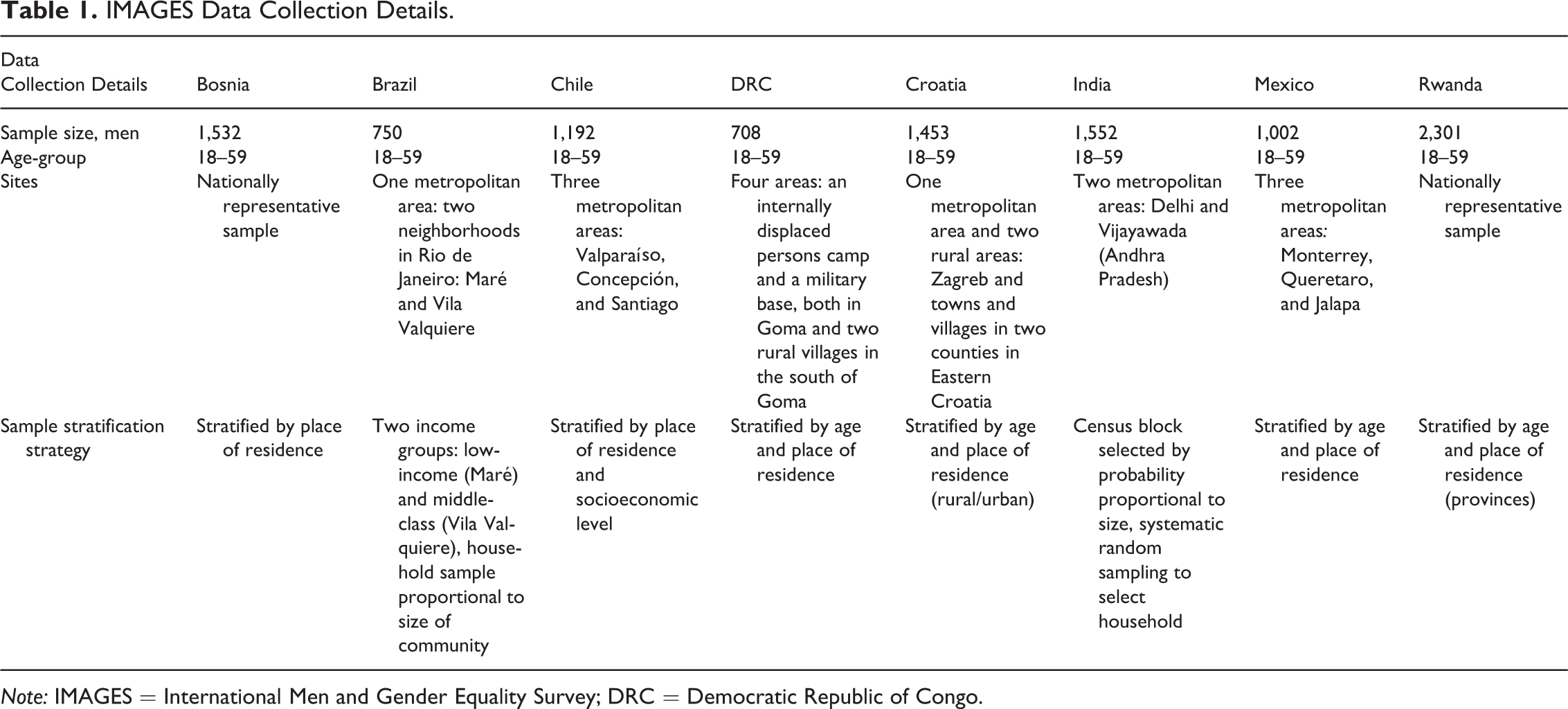
Note: IMAGES = International Men and Gender Equality Survey; DRC = Democratic Republic of Congo.
IMAGES assessed the current practices and attitudes of men on a range of issues including attitudes about women and masculinity, employment, education, childhood experiences, parenting, health and quality of life, partner/spousal relations, sexual behavior, and violence. The questionnaire had approximately 250 items 1 and took between forty-five minutes and an hour to complete. It was is based in part on the Norwegian study, Gender Equality and Quality of Life Survey, carried out by the Nordic Gender Institute (NIKK) and the Work Research Institute, and financed by the Norwegian Ministry of Children and Equality, as well as on other standardized instruments and on Promundo’s and ICRW’s experience in researching men and masculinities. The format—self-administered versus interviewer administered—varied slightly by country. In all settings, male interviewers interviewed male respondents, except in Mexico where most interviews were carried out by female interviewers. Response rates varied between approximately 50 percent and over 90 percent. Researchers attributed higher refusal rates in some settings to fear and distrust related to high levels of public violence and fear, for example, in Mexico and middle-class neighborhoods in Brazil. The study protocol was approved by the ICRW’s institutional review board (IRB) and by in-country IRBs, when such existed, and all research sites followed standard practices for carrying out research on intimate partner violence (World Health Organization [WHO] and Program for Appropriate Technology in Health 2005).
The organization of the research also varied by country: in some countries, the research was conducted primarily by partner organizations with support from the coordinating organizations. In other countries, the coordinating organizations actually served as data collection leads. In each country, the research lead maintained ownership of the data and produced a country (or regional) report; Promundo and ICRW are responsible for multicountry comparisons, and as such, maintain the multicountry data sets.
The countries included in this study span three continents and range widely in terms of economic development and existing indicators of gender equality, as well as historical and cultural context. On the most recent Human Development Index, the Latin American and Balkan countries are classified as high or very high, India is classified as medium, and Rwanda and the DRC rank as very low (United Nations Development Programme [UNDP] 2013). 2 On the Gender Inequality Index, 3 Croatia ranks in the top thirty most equitable countries; Chile, Brazil, Mexico, and Rwanda are toward the middle, and India and the DRC are in the bottom twenty countries, with the DRC ranked essentially last in both indexes. Nevertheless, all the countries have made public commitments to gender equality and have a range of policies and programs in place to promote gender equity (Barker, Greene, et al. 2010).
Of course, these indicators give only a glimpse into the complexity and specificity of masculinities and gender relations in each context, 4 and capturing these complexities in survey research is challenging. The researchers took several steps to address these challenges in the design of IMAGES. In each country, the survey was adapted, translated, and back-translated in some cases, and pretested in close collaboration with local partner organizations with experience in gender and masculinities. Pretesting ensured that the original meaning of questions in English was as close as possible. This meant that questions were adapted, added, or removed as appropriate in each context. However, as emphasized by other transnational, comparative research projects, the partners recognized the importance of not “prioritiz[ing] differences between men over commonalities of and among men” and most of the questionnaire was similar in all but Croatia (Hearn et al. 2007; Pringle et al. 2011, 2). In addition, in all but Croatia, IMAGES was carried out alongside qualitative research. In four countries (Brazil, Chile, Mexico, and India), this qualitative component focused on men involved in atypical (equitable) caregiving practices (Barker, Greene, et al. 2012). In other countries, qualitative research focused on understanding masculinities and household gender dynamics, sometimes in the context of conflict. The decision for the focus of the qualitative research was made based on existing research in a given country, and the findings were used to inform the design and interpretation of the present study. 5 Finally, acknowledging differences in the construction of masculinities across countries, the main variable representing gender-related attitudes (the Gender Equitable Men [GEM] scale, described subsequently) is specific to each country in terms of the items included in the scale. Still, we acknowledge the inherent challenge in such cross-national research—namely, that men in different contexts, as well as men differently positioned in the same context, may interpret questions differently. To minimize these gaps, we had frequent seminars with all the research teams and each country team included gender or masculinity researchers who were multilingual and experienced with asking such questions in their contexts.
Measures
This section presents an overview of the variables included in the present analysis. Additional details on the specific coding of variables are presented in Table 2.
Variable Coding Details.
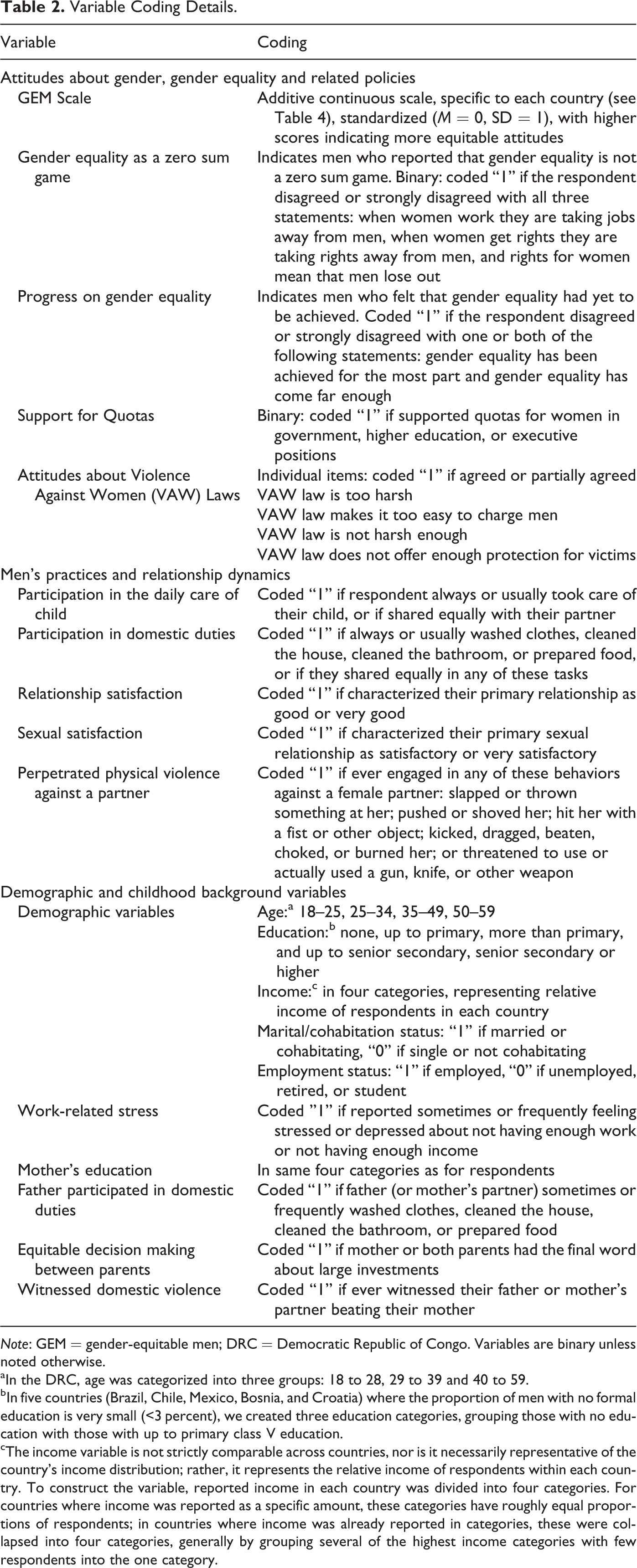
Note: GEM = gender-equitable men; DRC = Democratic Republic of Congo. Variables are binary unless noted otherwise.
aIn the DRC, age was categorized into three groups: 18 to 28, 29 to 39 and 40 to 59.
bIn five countries (Brazil, Chile, Mexico, Bosnia, and Croatia) where the proportion of men with no formal education is very small (<3 percent), we created three education categories, grouping those with no education with those with up to primary class V education.
cThe income variable is not strictly comparable across countries, nor is it necessarily representative of the country’s income distribution; rather, it represents the relative income of respondents within each country. To construct the variable, reported income in each country was divided into four categories. For countries where income was reported as a specific amount, these categories have roughly equal proportions of respondents; in countries where income was already reported in categories, these were collapsed into four categories, generally by grouping several of the highest income categories with few respondents into the one category.
To understand men’s attitudes about gender and gender equality, we examined three dimensions of support for gender equality: (1) attitudes related to gender roles and norms (including sexuality) as captured by the country-specific GEM scale (see Table 3), 6 (2) perceptions of power and progress on gender equality, and (3) support for specific policies to promote equality, including quotas for women in specific fields and laws related to violence against women. A note on our coding choices here is warranted: we coded most nondemographic variables as binary (0, 1). For the purpose of this broad overview article, this allowed for data reduction, clearer and more concise presentation, and consistency across countries and across variables with slightly varying response options. The cost to such coding is a loss of variation; we hope that future analyses will delve into these variations in greater depth. 7 The GEM scale, which was chosen as the focus of the multivariate analyses and used as both the dependent variable and as an independent variable in subsequent analyses, is a continuous variable. The GEM scale was designed to measure men’s attitudes and has been widely tested and validated in diverse settings (Pulerwitz and Barker 2008; Shattuck et al. 2013).
GEM Scale Items.
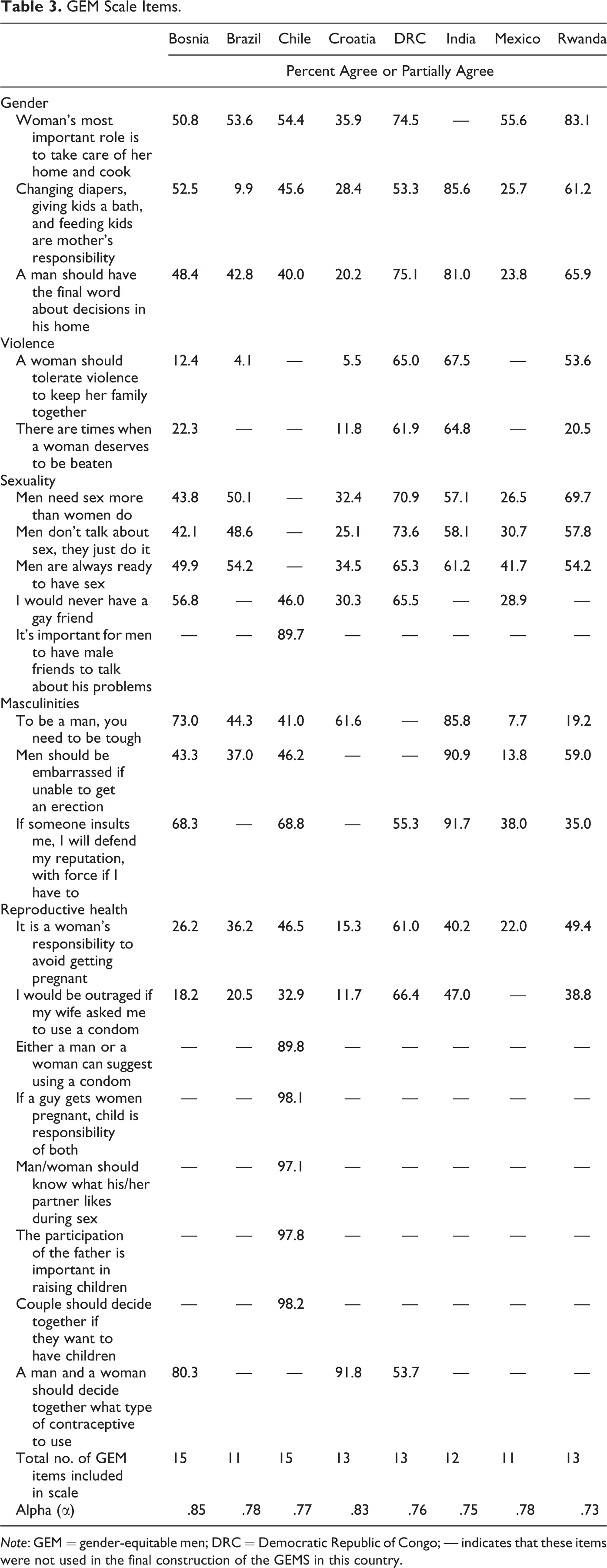
Note: GEM = gender-equitable men; DRC = Democratic Republic of Congo; — indicates that these items were not used in the final construction of the GEMS in this country.
To address the question of whether men’s attitudes are associated with their practices and relationship dynamics, we examine five specific measures: participation in the care of their children, participation in domestic tasks, general relationship satisfaction, sexual satisfaction in the primary relationship, and violence perpetration against a female partner. These variables are used as dependent variables in the multivariate analyses, 8 and were selected to provide an overview of a range of different practices and dynamics across important domains: housework, involvement with children, and relationship satisfaction. IMAGES offers a range of other questions on practices and relationship dynamics that could be examined in future studies.
To assess what individual and family factors are associated with more gender-equitable attitudes, we included two sets of variables: basic demographic variables and descriptors of gender dynamics in the childhood home. Demographic variables include age, education, income, marital/cohabitation status, and employment status. Given the ubiquitous emphasis on men’s roles as providers and the important part this plays in the construction of masculinities across cultural settings, we included a measure of work-related stress, capturing men’s reports of feeling stressed or depressed about not having enough work or not having enough income. We suggest that men’s reports of experiencing such stress are more indicative of men’s socioeconomic realities than only asking about monthly income or employment status.
We hypothesize that living in a more equitable household—where mothers are educated and participate in decision making, and where fathers participate in domestic duties—allows boys to internalize views of men and women as equal, and of men as caregivers, highlighting the intergenerational transmission of gender-equitable behavior and attitudes. Four variables were included to capture the gendered dynamics in the respondent’s childhood home: mother’s education, father’s participation in domestic duties, equitable decision making between parents, and witnessing violence against the mother. A substantial number of responses were missing for the demographic and childhood experiences variables. To maximize the sample size, we included a “missing” category for each variable in the multivariate analyses; analyses without the missing values yielded essentially the same results. 9
Analytic Strategy
This analysis had three main parts. First, we generated descriptive tables and figures and used t-tests and χ2 tests to test associations between attitude measures. In addition, bivariate logistic regressions were conducted to examine the association between the GEM scale and other gender attitude measures. Next, we conducted multivariate linear regression analyses separately for each country, with the GEM scale as the outcome and demographic and childhood experiences variables as the predictors. Finally, to assess the relationship between attitudes and behaviors, we regressed the GEM scale on each of the behavioral and relationship dynamic variables, controlling for the same demographic and childhood experience variables.
Results
The results section is organized as follows: in Section I, we provide a general description of the men in the sample, including their demographic and childhood background, and their practices and relationship dynamics. In Section II, we explore the various dimensions of men’s attitudes about gender equality and the relationships between these attitudes. In Section III, we examine predictors of men’s equitable attitudes. Finally, in Section IV, we analyze the relationship between equitable attitudes and men’s relationship practices.
Section I: Sample Description
Table 4 provides a general overview of the men in the sample. In general, men have completed primary education with some secondary education. Most men were married or living with a partner, with the exception of Chile and Bosnia where fewer than half of the sample cohabitated. Most men were employed, ranging from 56 percent in Bosnia to 96 percent in Rwanda. However, a high percentage of men, ranging from 34 percent in Brazil to 88 percent in Mexico, reported ever experiencing significant stress related to not having enough work or income.
Descriptive Statistics.
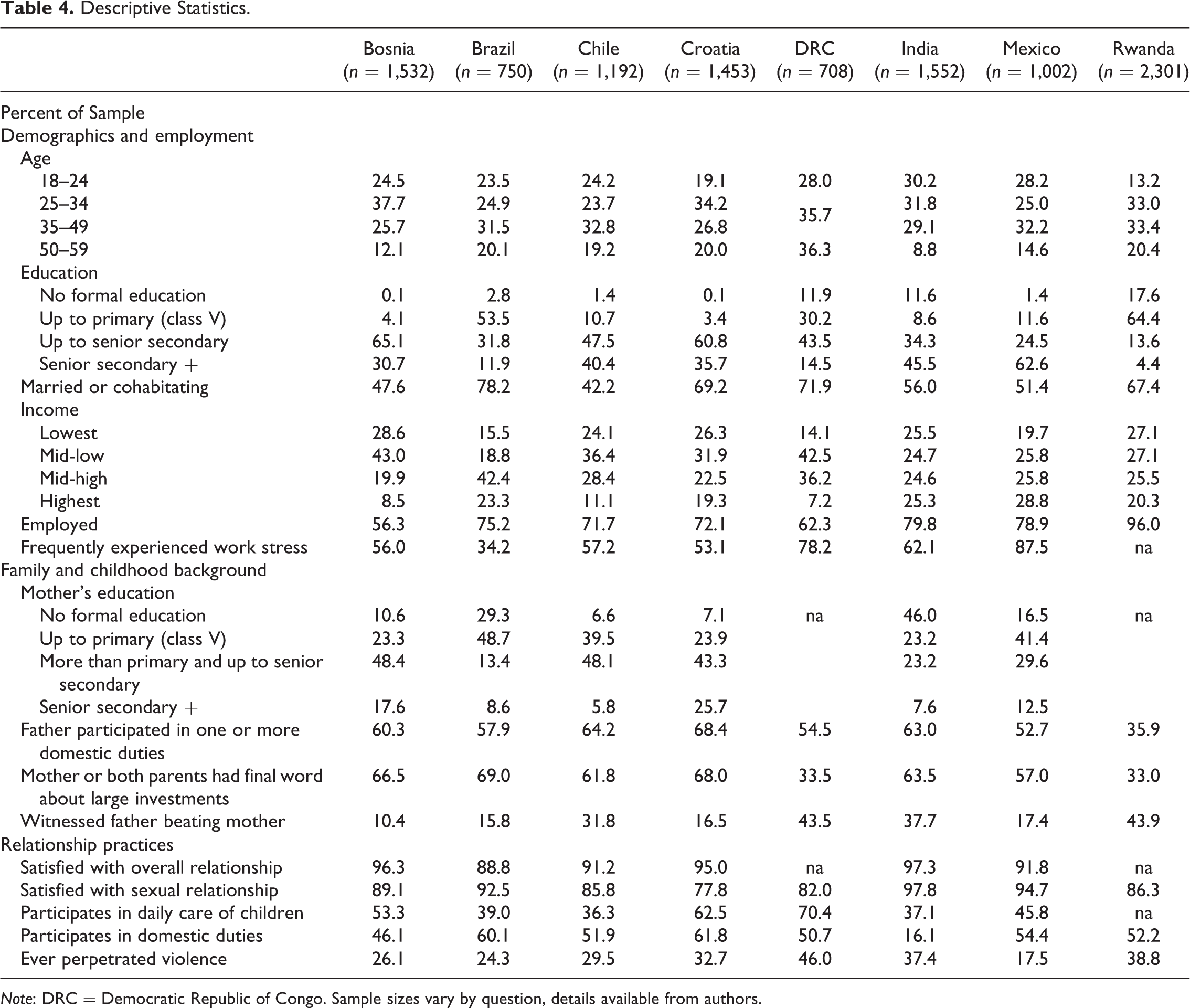
Note: DRC = Democratic Republic of Congo. Sample sizes vary by question, details available from authors.
Men’s reports of their mother’s level of education varied dramatically across countries: a large proportion of mothers in Brazil (29 percent) and India (46 percent) have had no formal education; in other countries, most had at least primary education. 10 In six countries, approximately two-thirds of men reported that their mother or both parents had the final word about large investments; the exceptions were Rwanda and the DRC, where the proportion is only about one-third. In addition, in all countries except Rwanda, half or more men reported that their fathers participated in at least one domestic duty. Levels of violence witnessed in the home also varied widely, from 10 percent in Bosnia to approximately 44 percent in Rwanda and the DRC.
Table 4 also presents an overview of men’s relationship experiences and practices. The vast majority of men reported being satisfied or very satisfied with their relationship overall and with their sexual relationship in particular. Their relationships are not necessarily equitable: less than 40 percent of men in Brazil, Chile, and India report participating in the daily care of children. Even fewer—between 16 percent in India and 62 percent in Croatia—report participating in other domestic duties. Levels of violence were also high: between 17 percent and 46 percent of all men reported having ever perpetrated violence against a female intimate partner. The rates were lowest in Mexico, and highest in India, Rwanda, and the DRC.
Section II: Attitudes about Gender Equality
Men showed tremendous variation in their gender-related attitudes as measured by the GEM scale, with India, Rwanda, and the DRC showing the most inequitable attitudes. Table 3 presents the responses to each attitude question by country. In terms of roles in the home, sexuality, reproductive health, and gender-based violence, men from India, Rwanda, and the DRC consistently reported the least equitable attitudes across the settings studied. For example, for the statement “a man should have the final word about decisions in his home,” only 20 percent of men in Croatia agreed whereas 66 percent in Rwanda, 75 percent in DRC, and more than 80 percent in India agreed with the statement.
Table 5 presents attitudes about gender equality and related policies. With the exception of men in India and the DRC, men were generally supportive of gender equality (when we asked about it as a broad concept) and did not see it as a loss for men, with 78–89 percent saying that rights for women were not a zero sum game. In India and the DRC, on the other hand, half or more men felt that men did in fact lose out when women gained rights or power. At the same time, substantially smaller proportions of men felt that more progress was needed on gender equality: between 26 percent (India) and 71 percent (Croatia) of men felt that more progress was needed; the rest felt that gender equality had gone far enough or had already been achieved. Interestingly, when we investigate the relationship between men’s attitudes about gender equality as a zero sum game and their attitudes about progress on gender equality (Figure 1), we find that in all countries, a substantial proportion of men (between 19 percent in DRC and 48 percent in Chile) reported that equality is not a zero sum game, but that it has come far enough already or has been achieved; in Chile and Mexico, the highest proportion of men fell into this category. Thus, while men don’t see gender equality efforts as a loss for them (or know to provide the socially desirable response), a substantial proportion feels that there isn’t a need for additional intervention or change. In India, the highest proportion (44 percent) felt that gender equality is a zero sum game and that it has come far enough; the next highest proportion (31 percent) reported that it is not a zero sum game, but has come far enough, similarly reflecting strong ambivalence about the changing roles of men and women in society. It is important to highlight that in this comparison we define as “more equitable” men who do not see gender equality as a loss for men and who believe that more progress is necessary. Certainly, one could imagine men who strongly support gender equality and the need for more progress, but who believe it requires a loss for men. Still, this group comprised only a small proportion of men in most IMAGES settings, and theoretical perspectives suggest that progress toward gender equality is rooted in men recognizing the benefits of equality for themselves (Bolzendahl and Myers 2004; Connell 2005).
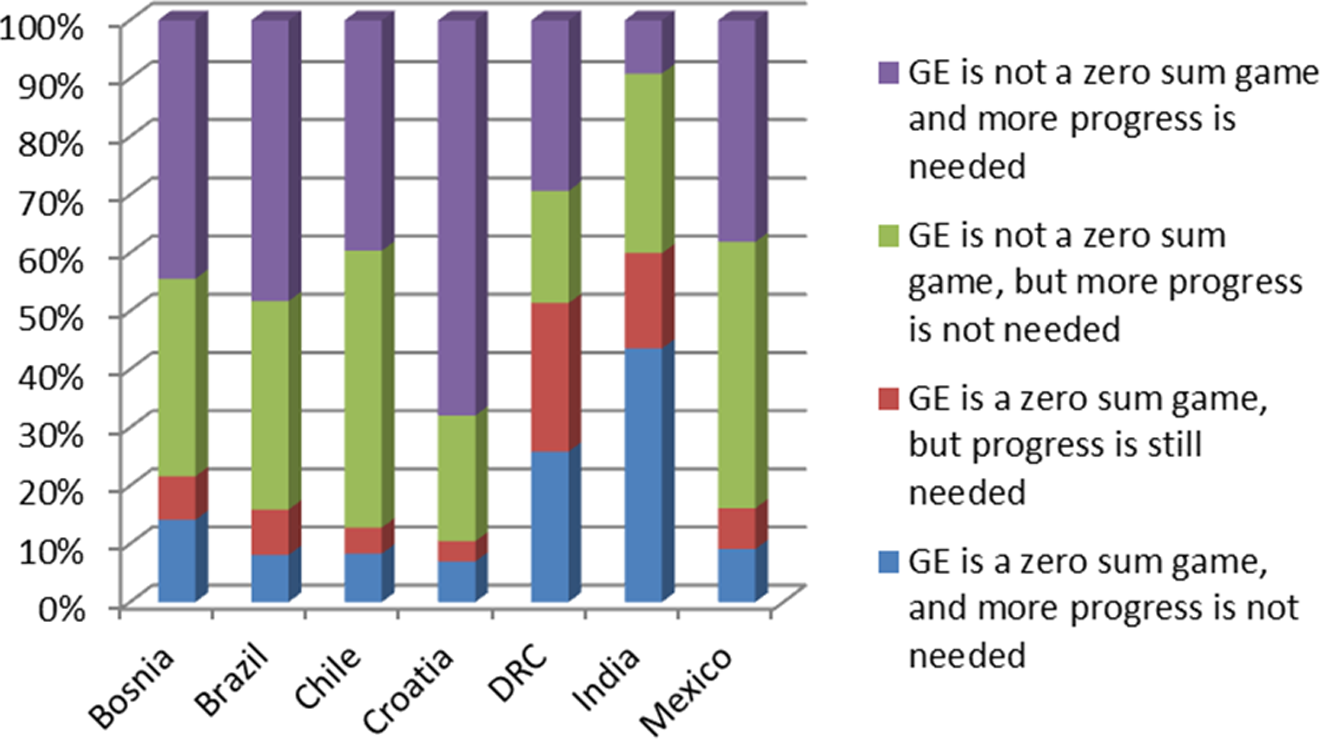
Overlap between men’s attitudes about gender equality (GE) as a zero-sum game and progress needed on GE.
Attitudes about Gender Equality.
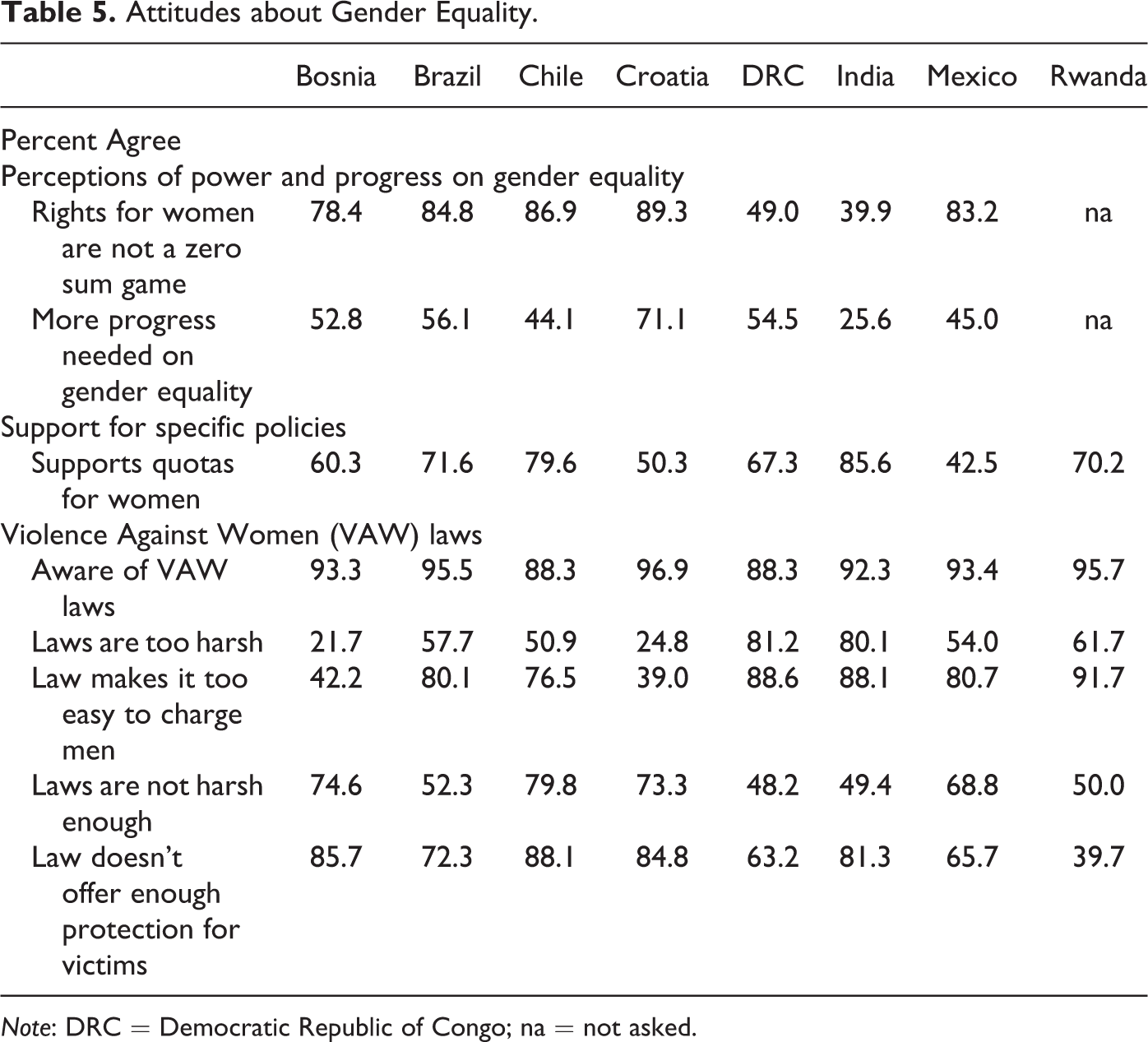
Note: DRC = Democratic Republic of Congo; na = not asked.
In terms of policies related to gender equality, men’s support for quotas for women in executive positions, universities, or government varied regionally but in all places was lower than their support for gender equality as a broad, unspecified societal goal. It was very high in India (86 percent), South America (Brazil 72 percent and Chile 80 percent), and Africa (Rwanda 70 percent and DRC 67 percent), lower in Europe (Croatia 50 percent and Bosnia 60 percent), and lowest in Mexico (43 percent). While the vast majority of men in the study—between 88 percent (Chile and DRC) and 97 percent (Croatia)—were aware of their country’s existing laws about violence against women (VAW), the results reveal men’s varied and complex attitudes about these laws, including substantial proportions that reported that the laws were both too harsh and not harsh enough (results available from authors). It may be that men have different opinion related to different aspects of the law, or do not have a clear understanding of the laws, or are still formulating their attitudes toward them. Bosnia and Croatia were exceptions, showing that men in these countries feel the laws are appropriate and effective.
To check whether the GEM scale would be an appropriate measure to use for additional analyses, we examined the associations between the GEM scale and other measures of gender equality using logistic regression (Table 6). In all countries, men with higher (more equitable) scores on the GEM scale had significantly higher odds of reporting that gender equality is not a zero sum game (odds ratios ranging between 1.4 and 2.4) and that more progress was needed on gender equality (odds ratios ranging between 1.1 and 2.9), though in Brazil the association with progress on gender equality was only borderline significant (p < .10). In terms of attitudes about the VAW laws, in all countries except India, men with more equitable GEM scores were less likely to say that the existing VAW law was too harsh. In India, on the other hand, higher GEM scores were associated with higher odds of critiquing the law as too harsh. Reflecting the descriptive results, mixed patterns were found for the other attitudes about the VAW laws. As described earlier, the relationship between GEM and attitudes about quotas is also complex: in six countries, more equitable responses on GEM were associated with higher odds of supporting quotas. In Brazil and Mexico, however, the reverse was true, suggesting that support for quotas may be capturing other attitudes beyond gender, such as attitudes regarding government mandates or interference with markets, or the historical use of quotas to resolve social divisions, which is a feature of Indian social policy but that is currently highly contested in Brazil (in the case of policies using quotas to increase the enrollment of individuals from ethnically disadvantaged groups in public universities).
Bivariate Associations between GEM Scale and Gender Attitude Measures (Odds Ratios).
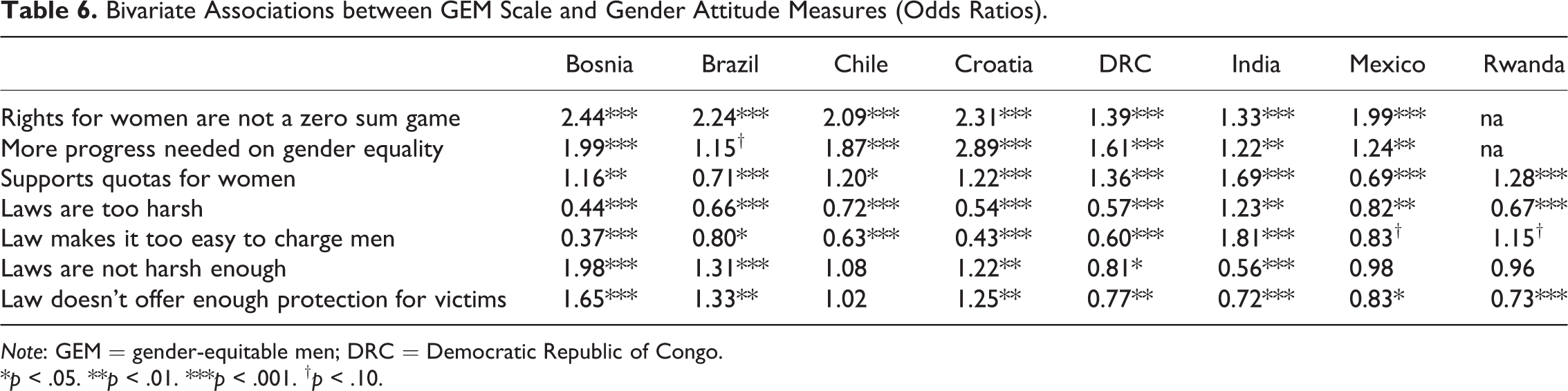
Note: GEM = gender-equitable men; DRC = Democratic Republic of Congo.
*p < .05. **p < .01. ***p < .001. † p < .10.
Section III: Determinants of Equitable Attitudes
Table 7 presents the results of multivariate ordinary least squares regression analyses of demographic and childhood background variables on the GEM scale in each of the eight countries. Men’s educational attainment, especially at the secondary level or above, emerged as a consistent predictor of more equitable attitudes in all the eight countries (βs ranging from .25 in India to .69 in Mexico). What this finding suggests is that completing some secondary education for men, together with ongoing efforts to ensure girls’ education, may be a key strategy for promoting and achieving gender equality. Higher income was associated with more equitable attitudes in Brazil, Chile, India, and Rwanda, but, surprisingly, with less equitable attitudes in the DRC, perhaps because men with the highest (though still highly unstable) income were members of the military (who generally had less equitable attitudes). In Bosnia and Croatia, income was not significantly associated with attitudes, perhaps reflecting their comparatively lower levels of income inequality and more widespread support for gender equality (World Bank 2013). The other demographic and employment-related variables—age, marital/cohabitation status, employment, and work stress—showed few consistently significant associations (and sometimes contradictory) across countries.
Results of Multivariate OLS Regression of Demographic and Childhood Experiences on GEM Scale.
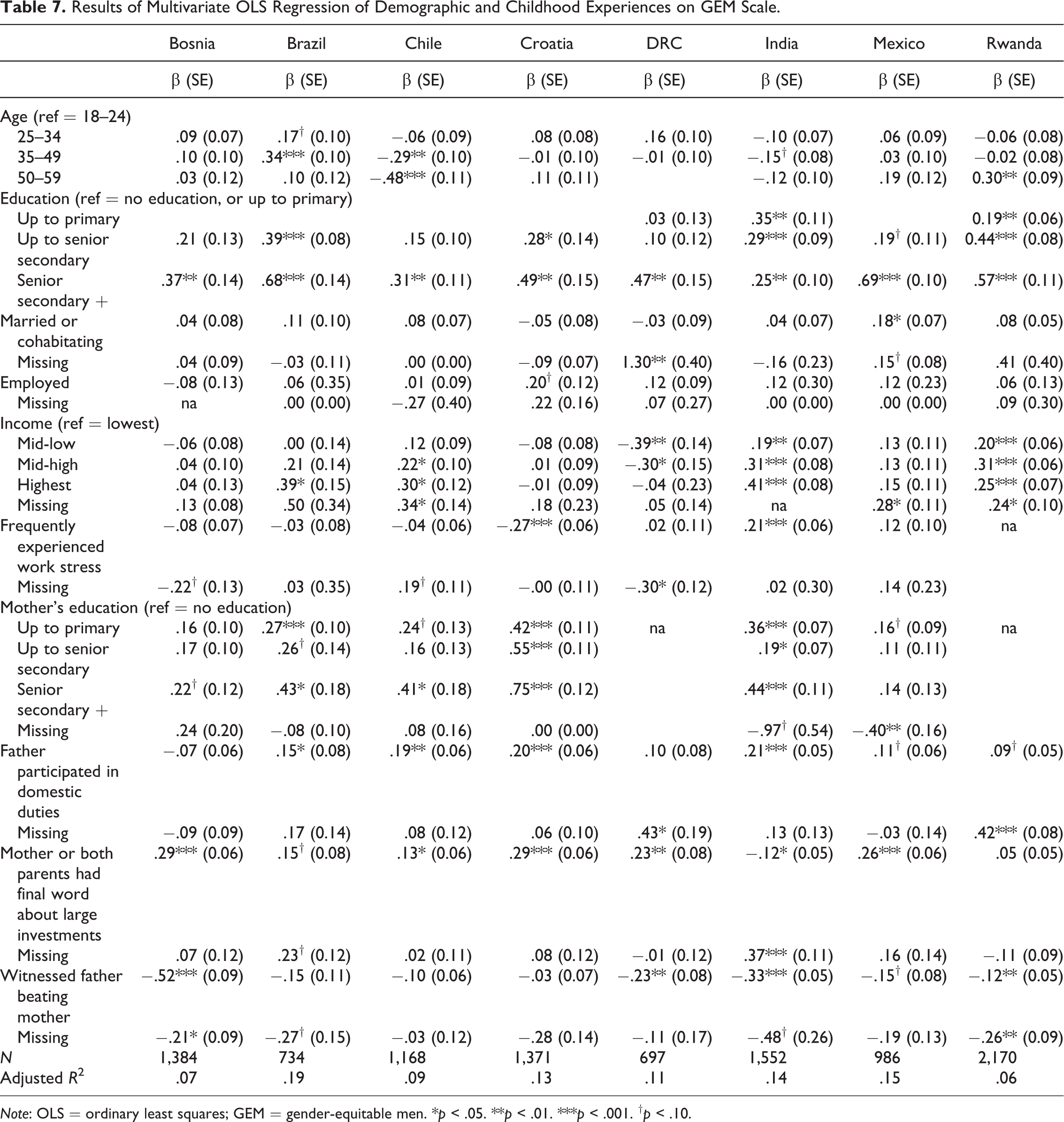
Note: OLS = ordinary least squares; GEM = gender-equitable men. *p < .05. **p < .01. ***p < .001. † p < .10.
Mother’s education and the gender dynamics in men’s childhood homes also emerged as important predictors of men’s attitudes. Mother’s educational attainment was associated with men’s more equitable attitudes in all six countries that asked about it, though it was only borderline significant in Bosnia and Mexico (p < .10). The association between men’s reports of their fathers’ participation in domestic duties and gender attitudes was positive and significant in Brazil, Chile, Croatia, and India, and borderline significant (p < .10) in Mexico and Rwanda. In addition, men who grew up in households where their mother alone or both parents made joint decisions about large investments had more equitable attitudes in six of the eight countries: Brazil (p < .10), Chile, Croatia, Mexico, Bosnia, and DRC. In India, on the other hand, men’s reports of equitable decision making between parents were significantly associated with men’s less equitable attitudes. Finally, witnessing violence against one’s mother was associated with less equitable attitudes in India, Mexico (p < .10), Rwanda, and the DRC. Thus, at least one variable related to gender dynamics in the childhood home was associated with attitudes in each setting. Overall, the demographic, work, and childhood variables explained between 6 percent and 19 percent of the variance in attitudes by country.
Section IV: Associations between Attitudes and Practices
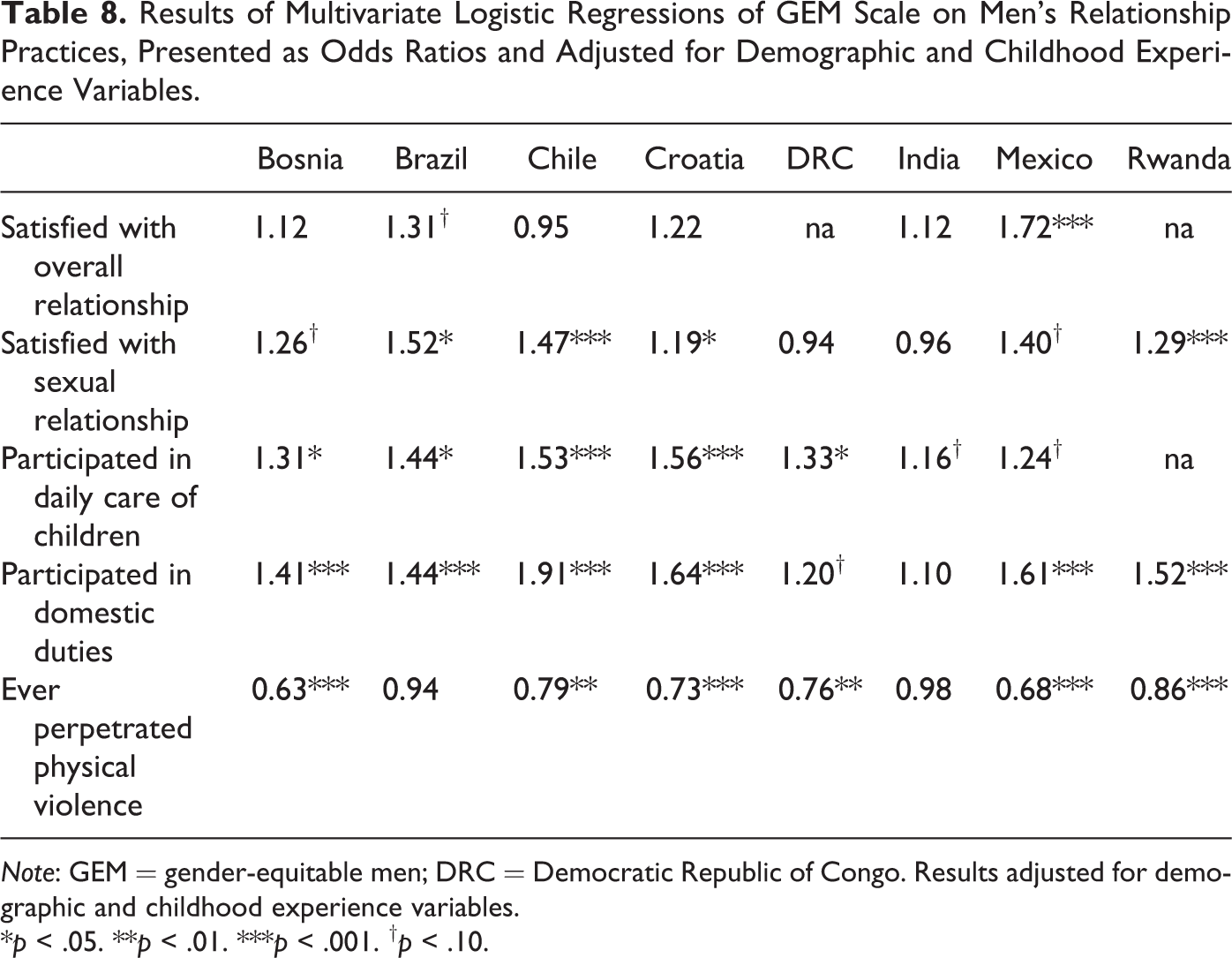
Logistic regression analyses were conducted to assess the associations between men’s gender-related attitudes and a range of relationship experiences and practices, controlling for the demographic, work, and childhood background variables included in the analysis presented in Section III. The results are presented in Table 8. Overall, in nearly all countries, men’s more equitable attitudes were associated with more equitable practices. With one exception, men’s more equitable attitudes were associated with higher odds of participating in the daily care of children and in domestic duties, though in some countries the results were only borderline significant (p < .10). The exception was India, where the association between GEM score and participation in domestic work was also positive, but not significant. Men with more equitable attitudes were also less likely to have ever perpetrated intimate partner violence in six of the eight countries; in India and Brazil, the results were similar but not significant. Finally, men with more equitable attitudes were more likely to report that they were satisfied or very satisfied with their primary, intimate relationship in Mexico and Brazil (p < .10), and that they were satisfied or very satisfied with their sexual relationship with their primary partner in six countries: Brazil, Chile, Croatia, Rwanda, Bosnia (p < .10), and Mexico (p < .10). The important conclusion that emerges here is that equitable attitudes on the part of men are not just positive for women, but also bring benefits for men—suggesting the possibility that gender equality can be viewed beyond the prism of a zero sum game. In short, the finding suggests that men can see “what’s in it for them” if they believe in and live gender equality.
Results of Multivariate Logistic Regressions of GEM Scale on Men’s Relationship Practices, Presented as Odds Ratios and Adjusted for Demographic and Childhood Experience Variables.
Note: GEM = gender-equitable men; DRC = Democratic Republic of Congo. Results adjusted for demographic and childhood experience variables.
*p < .05. **p < .01. ***p < .001. † p < .10.
Discussion
This article provides a current picture of men’s attitudes about gender and gender equality, explores the determinants of equitable attitudes, and investigates the associations between equitable attitudes and relationship behaviors in eight low- and middle-income countries. We find that, in general, men report positive but complex attitudes toward gender equality, and that education, income, and more equitable practices in men’s childhood homes are associated with men’s more equitable attitudes. We also show that, with the exception of India where in some instances GEM scores did not predict outcomes in the expected direction, men’s equitable attitudes are associated with more equitable practices, including more participation in the home and reduced use of violence, as well as higher relationship and sexual satisfaction. These results affirm two overarching conclusions. First, the findings provide additional support to the exposure/socialization hypothesis (Bolzendahl and Myers 2004; Flood and Pease 2009), and suggest that how boys learn and internalize equitable or inequitable norms in their childhood home (and presumably, other settings) influences their attitudes as adult men. Second, the findings suggest a close link between equitable attitudes and practices across multiple settings.
In addition to these conclusions, we extend the previous research in several ways. First, the IMAGES data allow us to examine a broader range of attitude measures than commonly used in other large-scale comparative studies, in countries that have relatively less research on these topics, on a broader range of topics than previous studies on men and gender have, and at a larger scale than many rich but smaller qualitative studies. In addition, IMAGES contains detailed measures of gender dynamics in the childhood home, and our analysis shows that these are significant predictors of adult attitudes. Finally, we show that equitable attitudes are related to a wide range of equitable practices and outcomes.
It is encouraging to find that men are generally positive about gender equality: in most countries, men did not perceive gender equality as a “zero sum game” where gains for women meant losses for men, and generally supported public policy initiatives such as quotas to improve the participation of women in government, education, and business. These high levels of support have not yet translated into equality for women in practice in most of these settings, as demonstrated by low levels of men’s participation in household and caregiving tasks, and in high levels of violence. It may be that men endorse gender equality in a general way, influenced in part by the local and international discourse on gender equality, but that these attitudes do not necessarily play into practice in their own lives. The more specific questions included in the GEM scale are better at tapping into the realities of what gender equality means at a personal level, and in fact, we observe that these equitable attitude measures generally receive less support.
Consistent with previous literature, we also observe ambivalence about gender equality (Dworkin et al. 2012; Shefer et al. 2008; Sideris 2004). For example, though men generally did not see gender equality as a zero sum game, they often felt that it had already come far enough or had already been achieved, despite reporting practices—participation in the household and levels of intimate partner violence—that strongly suggest that this is not the case. These contradictions, and lower support for gender equality overall, are particularly acute in the lowest income countries—India, Rwanda, and the DRC, though certainly present in other countries as well. Qualitative data linked to the IMAGES study tell us that in these countries there is still a perception of gender equality being externally imposed (e.g., Slegh et al. 2012). It may also be that the extreme poverty in these settings (with specific dimensions and realities in each country) leads to a higher degree of competition for resources and therefore less support for gender equality (Seguino 2007).
The economic context was not fully deterministic of men’s attitudes however, support for quotas, for example, was highest in India and lowest in Mexico, Bosnia, and Croatia which have higher levels of economic development. As previous studies emphasize, men’s ideas about gender equality are rooted in specific historical, political, and material contexts. The variations we observe in men’s support for quotas and VAW laws highlight how multidimensional attitudes around gender are, and how other beliefs and values based on local realities (e.g., about the role of government and free markets, or about the fair and consistent application of the law) interact with gender ideologies. While these policies are widely used as instruments to promote gender equality, in many settings they conflict or come up against other beliefs and ideologies. For example, in the Norwegian Gender Equality and Quality of Life survey, negative attitudes about gender equality were associated with anti-immigrant attitudes and perspectives against public interference in private life (Holter, Svare, and Egeland 2009). 11 The only country where IMAGES examined this was in Bosnia, where an association was found in terms of negative attitudes or prejudice toward individuals from other ethnic groups and holding gender inequitable attitudes (Dusanic 2012). Future research and applications of IMAGES should examine the ways in gender-inequitable attitudes are related to other anti-progressive attitudes. In addition, in-depth qualitative studies exploring public perceptions of these policies could illuminate barriers to their acceptance and implementation, as well as suggest ways for government and civil society to carry out more nuanced, long-term and wider reaching public education—particular outreach to men—about these laws. For example, campaigns can go beyond the simplistic messages that “violence against women is against the law” that still prevail in some parts of the world. It is also essential to address the actual implementation of such laws and policies to ensure they are fairly and consistently applied, and to build the capacity of public sector actors such as the police and courts, and to create accountability and transparency in the implementation of such laws so that the general public is informed about how such laws and policies are being implemented.
The second part of this analysis highlights factors that may promote more equitable attitudes among men. Consistent with previous studies and theoretical perspectives on socialization and exposure, men’s education emerged as an important predictor of equitable attitudes: in all countries, men with higher educational attainment, particularly secondary education and above, had more equitable attitudes than those with less education. With the exception of India, higher levels of respondent education and mother’s education were also generally associated with more equitable views on gender equality as a zero sum game, and on progress toward gender equality (results not shown). Women’s education has been highlighted as a key to promoting women’s empowerment (King and Hill 1993; World Bank 2012); clearly, education for men, particularly at the secondary level, also contributes to this goal. Education can provide exposure to new ideas and norms, develop critical thinking skills, and allow for opposite sex interactions that help break down traditional views of gender roles. However, it is important to emphasize that gender-inequitable notions exist in every strata of society, that educational systems have been shown to reproduce gender and other social inequalities, and that, therefore, simply focusing on increasing levels of education and economic development without direct attention to transforming gender norms and gender regimes within the education system may not necessarily translate into more equitable societies.
Men’s childhood home experiences also appear to influence their support for gender equality as adults. Men who reported a more equitable childhood home environment were generally more likely to have more equitable attitudes. The results for mother’s educational attainment were the most consistent across the six settings where it was asked; as highlighted by previous literature, women’s education, in addition to the many other benefits it provides, contributes to the development of more equitable sons. The other variables we examined—father’s participation in domestic duties, shared decision making between parents, and witnessing violence in the home—showed statistically significant associations in at least half of the settings. We used a limited set of indicators: future studies could examine other childhood home (and other settings) indicators, develop an index to capture multiple dimensions of equity in the household, and explore in more detail the relative importance of different dimensions of equity in the home. Still, our findings suggest that substantial intergenerational learning occurs in the childhood home, where men and fathers who participate (more) equally in the home normalize such behavior and provides exposure to less stereotypical roles for both men and women. 12 Thus, interventions to promote men’s involvement in the home and with parenting may yield benefits for the present and next generation as well, and interventions and policies promoting men’s equitable participation in caregiving may have tremendous multiplier effects.
While we often assume a disconnect between attitudes and behaviors, the final set of findings from this study instead shows strong associations between gender-equitable attitudes and relationship experiences and practices, also reported in the Norwegian Gender Equality and Quality of Life study (Holter, Svare, and Egeland 2009). Previous studies that have found a strong link between attitudes and behaviors have generally focused on sexual and reproductive health behaviors and on perpetration of violence; here we show how attitudes are associated with more equitable behaviors in other relationship or life domains as well. Given this article’s focus on gender-equitable attitudes, we concentrated specifically on the relationship between attitudes and practices; additional factors influencing equitable practices require further exploration. For example, the Norwegian survey found that gender-equitable practices were driven more by material and practical realities (e.g., balance of economic resources of the couple) than by attitudes or ideologies. Similarly, the qualitative study from four of the IMAGES research sites found that men who were highly involved in caregiving practices did so largely because of life circumstances, not due to their more equitable than average attitudes (Barker, Greene, et al. 2012). We found that among this group of men, their attitudes became more equitable as a result of having been compelled to do more caregiving rather than the other way around. At the same time, evidence from numerous evaluations of gender transformative programs to change men’s attitudes and social norms shows positive changes in both attitudes and behaviors (Barker, Ricardo, et al. 2010; Pulerwitz et al. 2006). Taken together, these findings suggest both: (1) that social norms related to masculinity need to be addressed as part of policies and programs and (2) that the experiences and structures around men and boys must change, so that they live and learn gender equality in their local context.
Specifically, our findings suggest that in addition to changing structures and policies, there is a need to deconstruct the inequitable attitudes and norms that many men and boys continue to internalize related to gender roles, power, and violence. A growing body of evaluation data confirms that men and boys can and do change as a result of well-designed efforts, including group education, community outreach, mass media campaigns, and health and social services that seek to engage them. In fact, a 2007 review of this evidence concluded that interventions that promoted the questioning of traditional norms related to masculinity were most likely to be effective in terms of changing behaviors and attitudes (WHO 2007).
The importance of both education and an equitable home environment, and the clear links between attitudes and behaviors suggest several avenues for continued intervention. Improving access to and participation in education (especially secondary and higher education) for both boys and girls, incorporating gender programming into schools and teacher training programs, and working to make school systems more equitable may contribute to promoting gender equity. Barker, Verma, et al. (2012) describe initiatives in Brazil, India, and the Balkans where school-based participatory activities that promote critical reflection about gender norms lead to measureable changes in these norms with positive outcomes for boys and girls and have the potential to be scaled up. This study also highlights the need for interventions to engage men in parenting, including in more equitable role sharing and decision making in the home, and as part of campaigns to reduce violence, as these behaviors have implications for the attitudes and behaviors of their children. These interventions should include both program and policy initiatives that reject narrow views of men as singularly opposed to gender equality and as incapable of change, and instead recognizing the realities and nuances of men’s lives and promoting and facilitating men’s participation in caregiving and violence prevention. At the policy level, in middle-income countries, promoting paid paternity leave (along with maternity leave) has been a key strategy in countries with the majority of the workforce in the formal sector. Health sector approaches that deliberately reach out to men and make sexual and reproductive health services more amenable and attractive (and convenient) for men have also showed evidence of impact.
Finally, it is clear that some men are practicing and living at least some elements of gender equality. Efforts to promote gender equality should tap into the support that some men already show for gender equality and women’s empowerment, despite the apparent contradictions in men’s responses that support for gender equality in the abstract while resisting it in practice. Furthermore, given the strong evidence that men who hold more equitable views are more likely to report being satisfied in their intimate and sexual relationships, interventions and explanations of laws and policies need to frame gender equality as a public good with benefits for both men and women.
As noted earlier, this study is not without limitations. In most countries, the sample was drawn from urban areas, and as such is not representative of all men in these countries. Another possible limitation is that the GEM scale and income measures are specific to each country. While this precludes a strict comparison across countries, we consider it a strength that these measures represent meaningful constructs and realities in each setting. Still, as survey research on men and masculinities in the Global South continues to grow, we anticipate changes and adaptations of the GEM scale. Most importantly, the study relies on self-reported attitudes and behaviors. It may be that men, especially those with higher levels of education and income, are aware of the pervasive emphasis on gender equality and are providing socially desirable responses. Finally, the focus on multiple countries and multiple outcomes meant that we did not delve in depth into the specific context in each setting; individual country reports and articles (available at www.promundo.org.br) provide additional information. Nevertheless, this study provides a unique overview of men’s attitudes and practices regarding gender equality, highlighting mechanisms and opportunities for change.
The journey to gender equality as a believed and lived experience for men is not straightforward, nor uniform. IMAGES finds that there is both ambivalence about and resistance to gender equality, but also, that change is possible. For example, men are highly ambivalent on laws about violence against women, showing at one level that the laws are having an effect but also showing men’s continuing sense of patriarchal privilege. Nevertheless, as populations become more urban in many low- and middle-income countries, and as they achieve higher educational attainment rates, our findings suggest that we can expect to see more equitable attitudes and practices. When men are compelled by life circumstances—whether unemployment or other reasons—to carry out more caregiving or domestic activities, they may also internalize more gender-equitable norms. And, finally, when men live gender equality as children and see it practiced by their parents or caregivers, they are more likely to practice it themselves as adults, affirming the importance of caregiving practices and childhood realities as a foundation for promoting gender equality with men. All of these pathways to change suggest that efforts to promote gender equality must recognize the essential and active role that men play in perpetuating or challenging inequalities, and must address—including through policy and programming—the circumstances and factors that contribute to maintaining rigid norms and resulting inequalities.
Footnotes
Acknowledgments
We extend our special thanks for contributions to the IMAGES questionnaire and the research process to Rachel Jewkes, Medical Research Council, South Africa; Margaret Greene, GreeneWorks Consulting; Jørgen Lorentzen, Center for Gender Research, University of Oslo, Norway; Øystein Gullvåg Holter, Center for Gender Research, University of Oslo; Robert Morrell, University of Cape Town, South Africa; Abhijit Das, Centre for Health and Social Justice, India; Dean Peacock, Sonke Gender Justice, South Africa; Benedito Medrado, Instituto Papai, Brazil; and Elizabeth Sussekind, Pontificada Universidade Catolica, Rio de Janeiro, Brazil. We also thank James Lang and Emma Falu of Partners for Prevention for their input and support. We are grateful to a number of ICRW colleagues who contributed to the research process, including Ellen Weiss, Sandy Won, Lindsay Kin, and Mary Ellsberg. At Promundo, we would like to thank Tatiana Moura, Jane Kato-Wallace, Fabio Verani, Hugo Correia, Rafael Machado, Anna Luiza Almeida, and Piotr Pawlak. Special thanks as well to John Crownover, CARE NW-Balkans. Finally, we extend our gratitude to all the interviewers and to all the women and men who agreed to be interviewed for the study.
Authors’ Note
This publication was produced as part of the Men and Gender Equality Policy Project, coordinated by Promundo and the International Center for Research on Women (ICRW). All conclusions and opinions are those of the authors and do not reflect the official position of any of the donors. Gary Barker, Manuel Contreras-Urbina, Brian Heilman, Ajay Singh, and Ravi Verma, all of the International Center for Research on Women at the time, and Marcos Nascimento of Instituto Promundo coordinated IMAGES. The country surveys were coordinated and authored by Srdjan Dusanic and Perpetuum Mobile Centre for Youth and Community Development (Bosnia); Márcio Segundo, Marcos Nascimento and Christine Ricardo at Promundo (Brazil); Francisco Aguayo and Michele Sadler at CulturaSalud (Chile); Natasa Bijelic at CESI—Center for Education, Counseling and Research (Croatia); Henny Slegh and Gary Barker at Promundo, Benoit Ruratotoye at the Institute for Mental Health Goma, and Tim Shand at Sonke Gender Justice (DRC); Ravi Verma and Ajay Singh at International Center for Research on Women (India); Juan Guillermo Figueroa at El Colegio de México, México, D.F. (Mexico); and Henny Slegh, Augustin Kimonyo, Fidèle Rutayisire and Edouard Munyamaliza at Rwanda Men’s Resource Centre (Rwanda).
Declaration of Conflicting Interests
The author(s) declared no potential conflicts of interest with respect to the research, authorship, and/or publication of this article.
Funding
The author(s) disclosed receipt of the following financial support for the research, authorship, and/or publication of this article: The IMAGES project was generously funded by the John D. and Catherine T. MacArthur Foundation, the Government of Norway (Ministry of Foreign Affairs and Norad), the Ford Foundation and an anonymous donor. Portions of the analysis and country-level work were supported by CARE-Norway (Bosnia and Croatia); UNDP (Rwanda); the Swedish International Development Cooperation Agency (DRC), and UNIFEM and UNFPA (Chile).